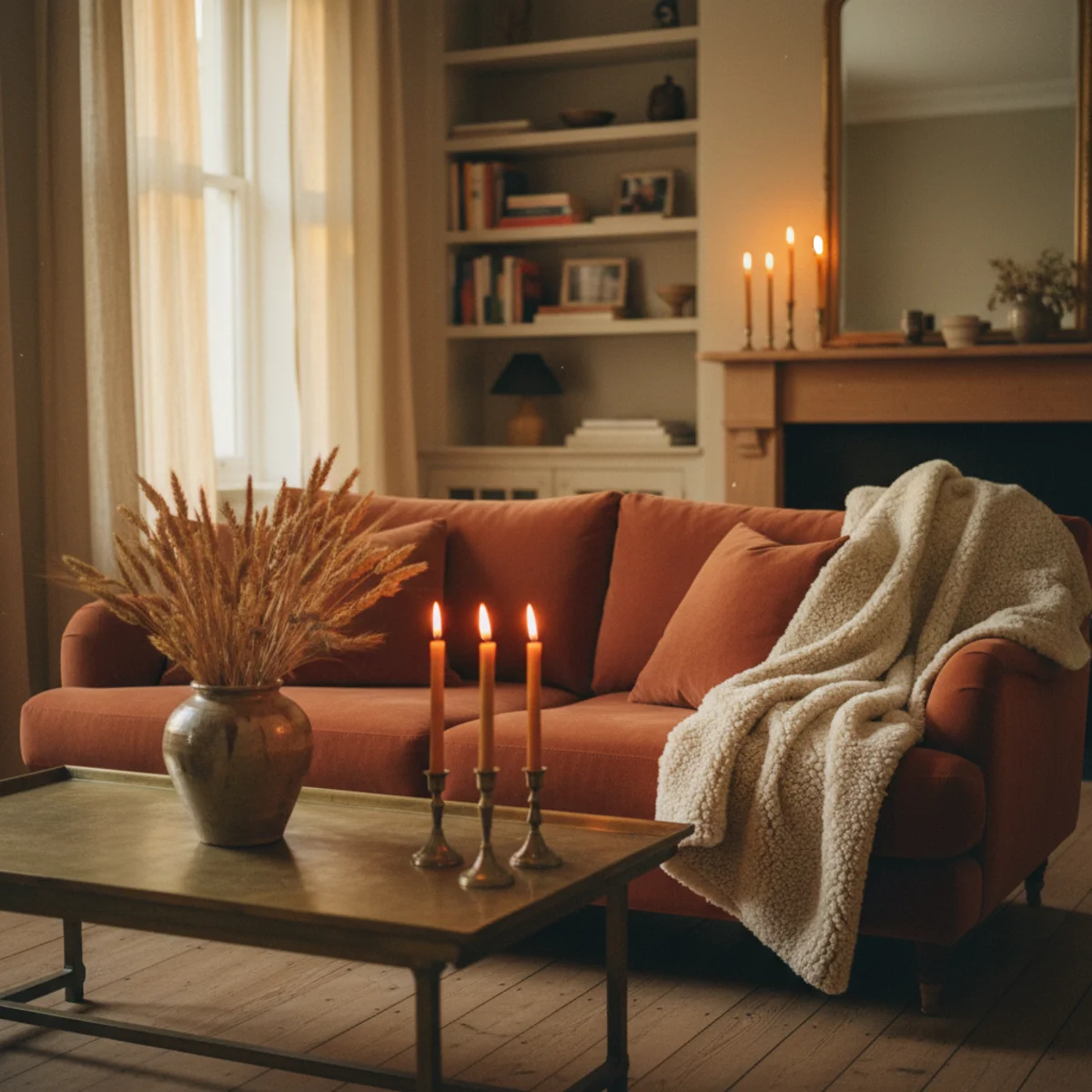
Most fall decor advice goes wrong in the same way: it tells you to buy gourds, hay bales, and orange velvet pillows from a big-box store, and you end up with a house that looks like an October pop-up shop rather than a home. Real fall decor — the kind that survives until Thanksgiving and beyond — is about three things: warm light at low heights, dried botanicals that age beautifully, and one or two textile swaps that nudge a room from summer to autumn without burning a weekend or a budget.
These 32 fall decor ideas are tested across actual rented apartments and small homes — from Brooklyn brownstones to single-bedroom flats in Manchester to college rentals in Portland. None require a basement of storage bins. None cost more than $250 to execute from start to finish. Most cost under $80 per change. And every one comes with exact materials, brand names where they matter, and the timing that makes the decor read as autumn arriving rather than autumn pre-staged.
By the end, you'll know exactly which five swaps to make on October 1st, which to add by Halloween, and which to keep all the way through Thanksgiving without ever feeling stuck in seasonal mode.
WHAT'S INSIDE
- The single textile change that warms any room in five minutes — and the price tier ($40 to $90) that actually delivers
- Why most candles fail in October and the wax type to switch to (costs the same, lasts twice as long)
- The dried-botanical move that holds for eight weeks at under $15 — and where to actually buy it
- Why your mantel placement is almost certainly too symmetric — and the asymmetric fix that reads natural
Autumn is the one season where more is more — more candlelight, more texture, more reasons to stay inside.
— House Beautiful, fall styling feature [citation needed — verify before publish]
What counts as fall decor?
Fall decor is the seasonal layer you add on top of a room's year-round bones — warmer textiles, dried natural material, and light turned down and up at once. It's distinct from Halloween kitsch: no plastic pumpkins required. Think dried eucalyptus on a mantel, a rust mohair throw over the sofa arm, beeswax tapers lit early against the shortening days.
The shift is mostly about texture and temperature. Where summer decor is crisp linen and bare floors, fall is wool, velvet, and a vintage rug layered over sisal. Studio McGee's autumn features lean hard on this — the same room, warmed up two clicks with throws, candles, and a bowl of seasonal texture.
More in Seasonal you may love
See allWhy fall decor is everywhere in 2026
Fall is Pinterest's single biggest home-decor traffic season, and 2026 has pushed it further toward the natural and the secondhand. Plastic and orange are out; dried florals, foraged branches, and warm earth tones are in. The cottagecore and slow-living movements that started as aesthetics have hardened into how people actually want autumn to feel.
There's a practical thread too. Fall decor is the rare project that fits any budget and most rentals — it's a layer, not a commitment. You put it up in October and pack it away in December, which is exactly why people decorate for it more enthusiastically than any other season.
32 fall decor ideas worth stealing
01Swap One Wool Throw for a Brushed Shearling
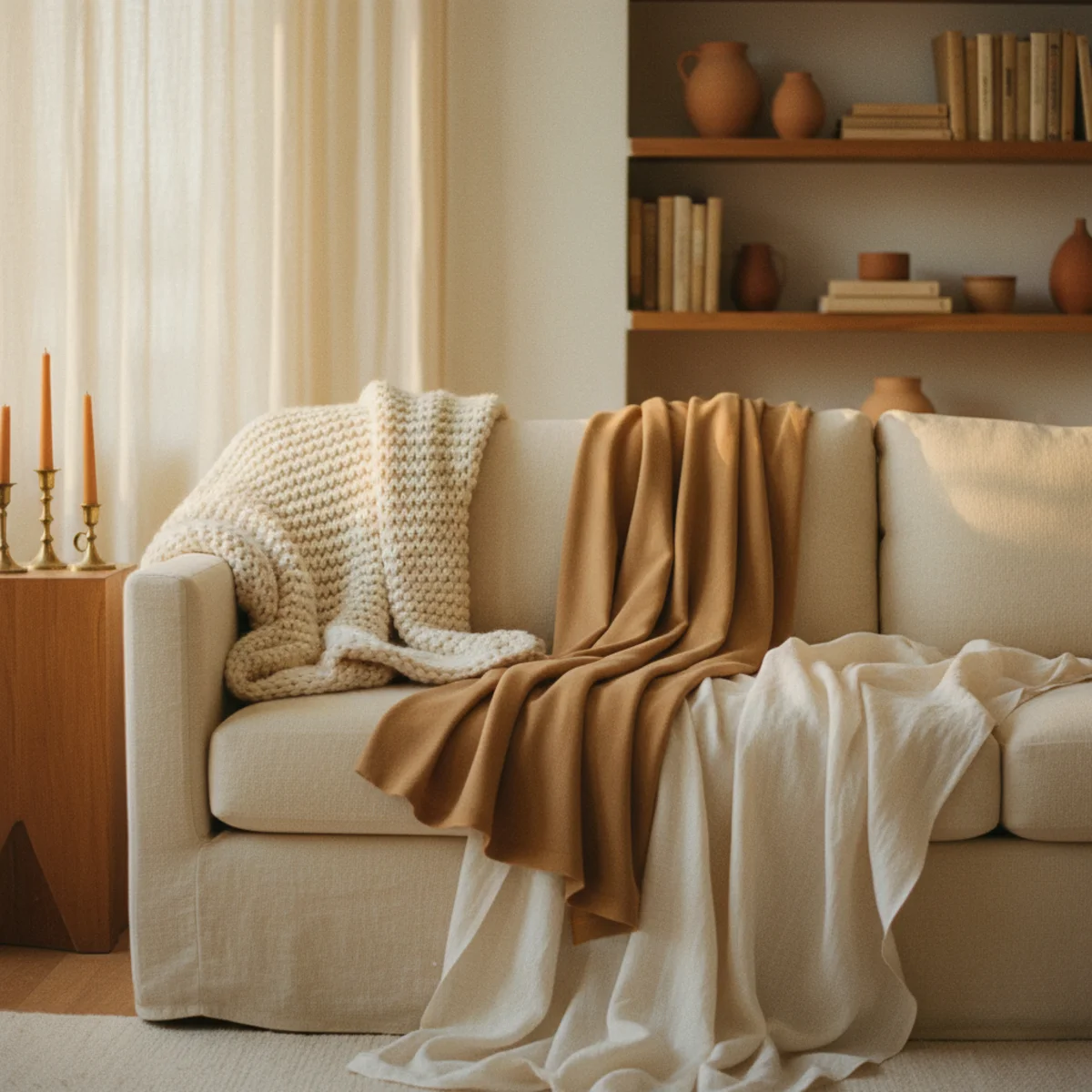
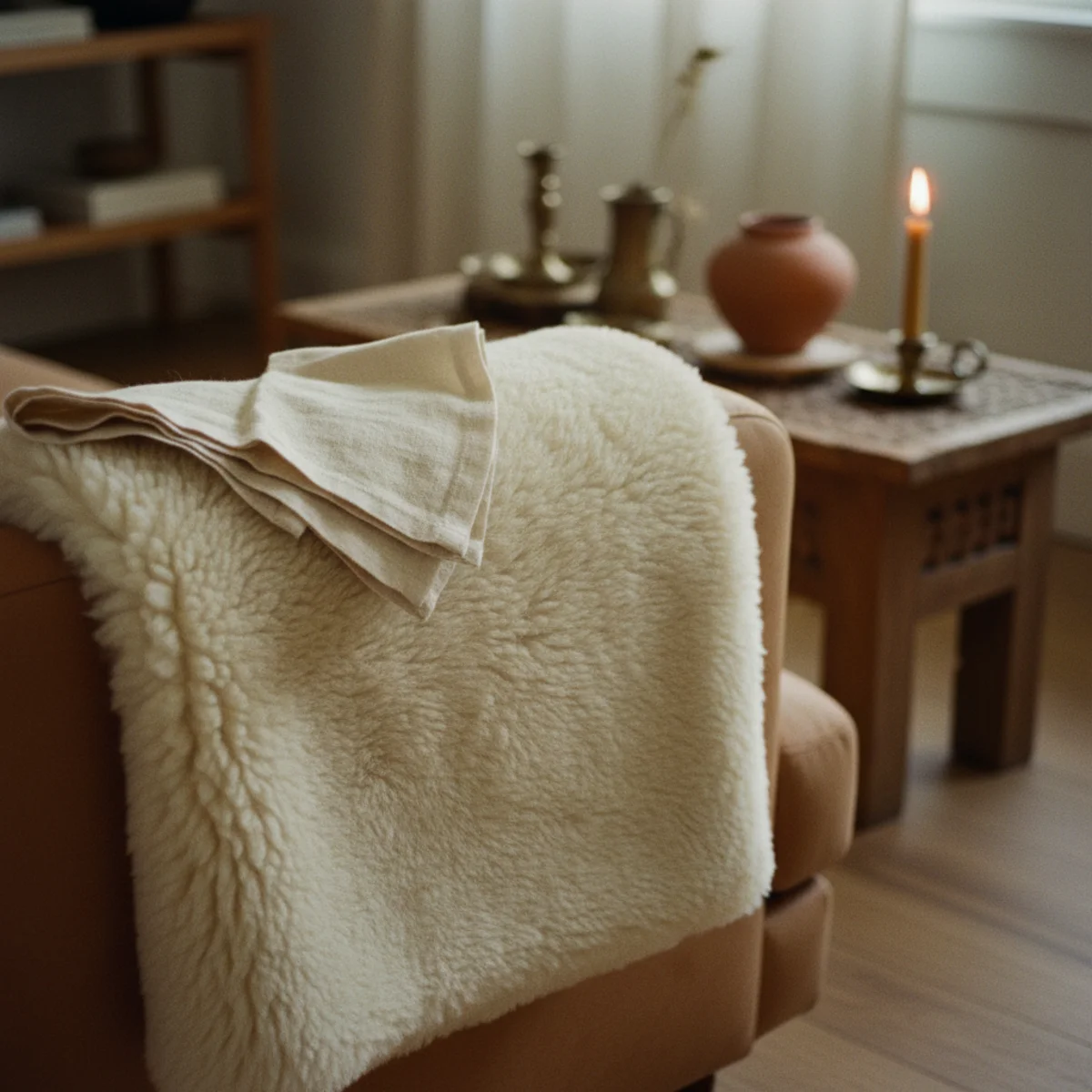
Most fall decor advice starts by telling you to buy something new. The most effective autumn shift in any living room actually starts with a swap: pull off the lighter summer linen or cotton throw and lay a brushed shearling or heavy wool blanket across the same spot. The room reads warmer the moment you step back to look. The change costs nothing if you already own a wool throw from last winter, and roughly $50 to $90 if you don't. This is the smallest fall decor idea that delivers the biggest visible shift.
Look for a brushed shearling or felted-wool throw at least 50 by 60 inches — anything smaller looks like a lap blanket. Warm-tone neutrals (rust, oatmeal, dusty terracotta, mossy olive) read more autumn than bright colors or grays. IKEA POLARVIDE at $5 works as a starter (synthetic fleece, swap-able for real wool later); Pendleton lambswool at $159 is the heritage piece; West Elm boucle at $79 sits in between; vintage Hudson Bay throws at $40 on Facebook Marketplace are the patient buyer's win. Drape diagonally across the sofa seat with about one-third falling toward the floor. Wash on wool cycle with no spin, then lay flat on a clean towel to dry.
AFFILIATE SLOTTEXTILESBrushed shearling or felted wool throw, 50×60 inches, warm earth tonesAdd affiliate URL when configuredWhy it works
Because the dominant tactile signal in a living room is the textile draped on the sofa, and the eye reads heavier wool as warmth before any other cue registers. A brushed shearling in a warm earth tone in October is the single fastest way to shift the room's temperature reading without changing the lighting, the rug, or the paint. The throw does the work.
Pro tip — Avoid synthetic fleece throws labelled "sherpa" or "minky" — they read shiny under warm 2700K lamps and never quite warm up the room. Real wool, even at $40 secondhand, will outperform any new synthetic at any price tier you find.
One throw swap — the rest of the room stays exactly as it was through summer. See also: wool cycle
02Replace Summer Ceramics With Weighty Terracotta
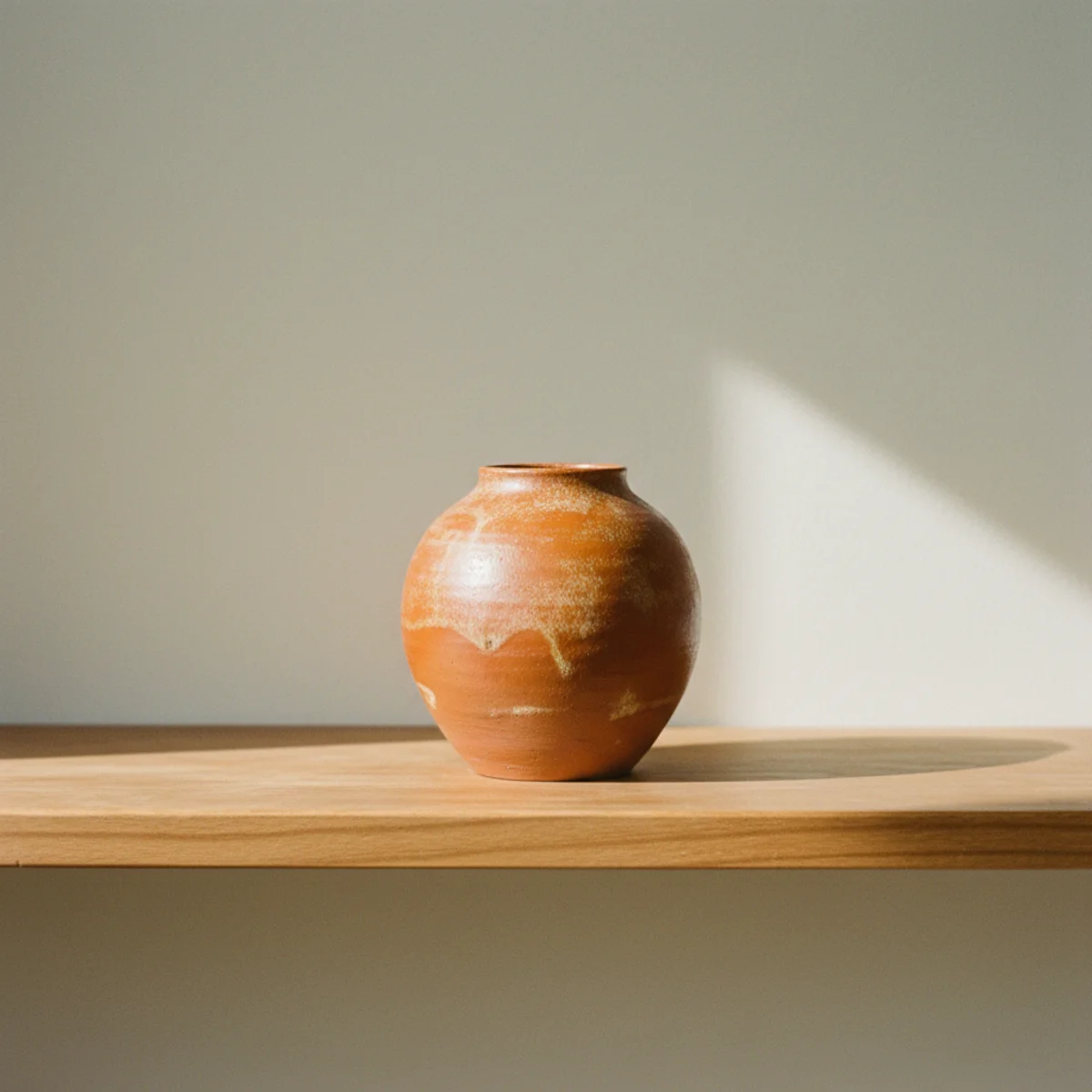
The bright glazed white ceramics that look perfect through summer suddenly read flat in October. Pull them off the shelves and side tables, store them somewhere dry, and replace them with three to five pieces of unglazed or matte-glaze terracotta. Pots, urns, low bowls, candle vessels — the warm orange-brown reads as autumn at every distance, without committing to anything pumpkin-shaped. The shift takes one afternoon and roughly $30 to $80 from Facebook Marketplace, estate sales, or HomeGoods. It is the cleanest seasonal pivot in fall decor.
Choose three pieces minimum: one large floor vessel (12 to 18 inches tall, like an Italian-style urn or a stoneware crock — $25 to $80 from Marketplace, vintage estate sales, or HomeGoods), one tabletop bowl (8 to 12 inches wide, for a fruit display or a candle), and one small tealight holder (3 to 5 inches). Place the floor vessel beside the sofa or in a corner, the bowl on the coffee table or dining table, and the tealight on a shelf at eye level. Terracotta from Mexican imports, Italian pottery shops like Casa Zuma at $40 to $120, or thrifted vintage all read identical at five paces. Avoid anything painted glossy orange — matte and unglazed beats every glaze.
AFFILIATE SLOTACCENTSThree unglazed terracotta vessels in varied heights (12–18", 8–12", 3–5")Add affiliate URL when configuredWhy it works
Because terracotta's warm orange-brown tone is the most autumn color in the natural world — it's what soil looks like in late October, what dried clay reads as, what brick warms to in evening sun. The eye registers any terracotta vessel as autumn before the brain catches up. White ceramics read as freshness; terracotta reads as accumulation, weight, and the season turning.
Pro tip — Hunt estate sales the first weekend of October — that's when summer-cabin owners purge their seasonal decor, and weighty terracotta vessels routinely sell for $5 to $15 each. The same pieces cost $40 to $80 at retail.
Three terracotta pieces, varied heights — the simplest pivot from summer to fall. See also: estate sales
03Hang a Wreath of Real Dried Botanicals
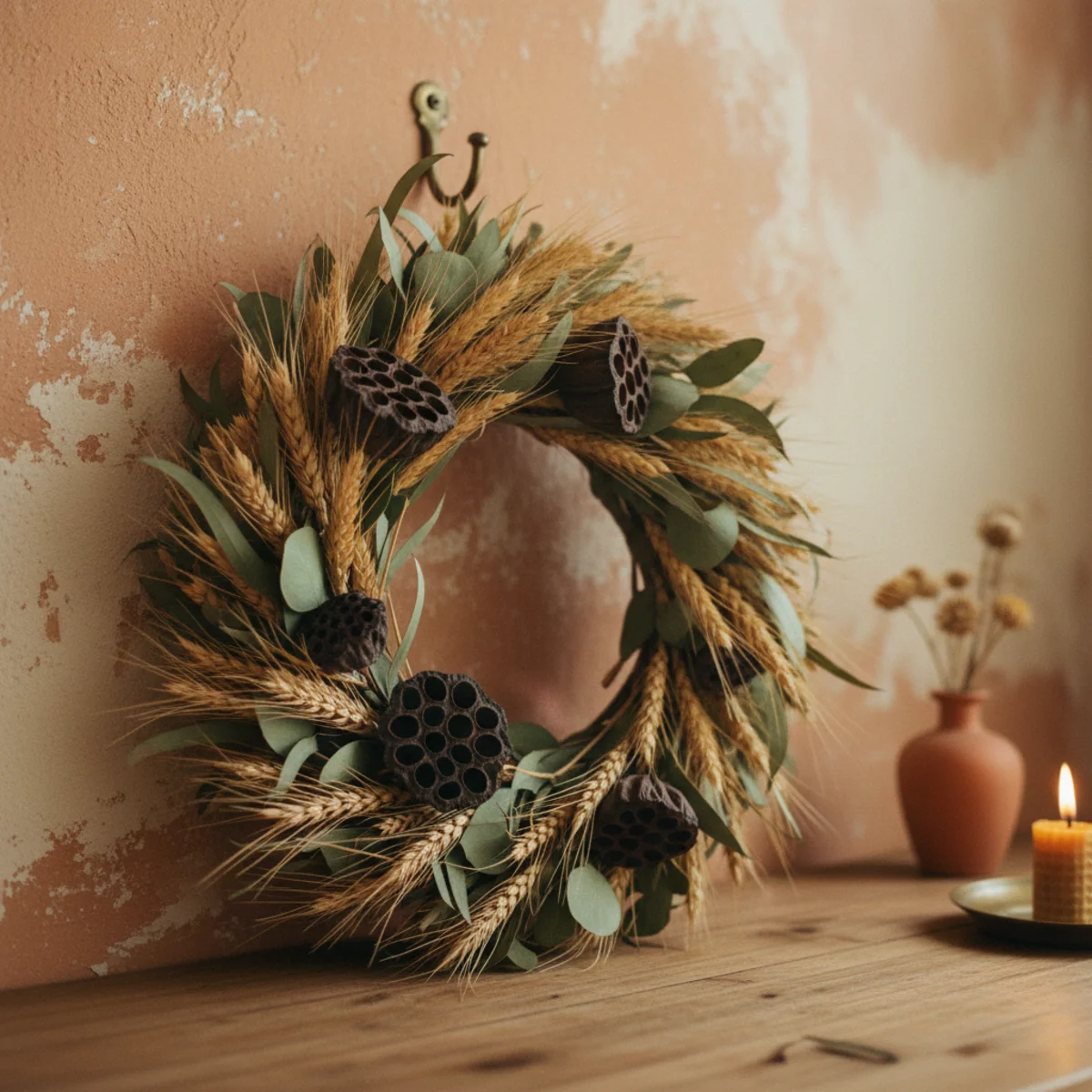
A wreath signals season more clearly than almost any other single object — and the difference between a fall wreath that lasts and one that goes into storage by November 1st comes down to what it's made of. Skip plastic and silk fall wreaths from craft-store displays. A wreath of dried wheat, oak leaves, eucalyptus, dried hydrangea, or seeded eucalyptus pulls double duty: it reads as October when it hangs in October, and stays beautiful through Thanksgiving and into early December without changing its fundamental character.
Buy or make a wreath 12 to 18 inches diameter — larger reads as Christmas; smaller looks like an afterthought. Hang it on the front door (with a clear over-the-door hook, $4 from Home Depot) or above the fireplace mantel (using transparent fishing line and a small nail in the mortar). For DIY: a 14-inch grapevine wreath base ($8 at Joann or Hobby Lobby) plus three bunches of dried wheat ($12), one bunch of dried hydrangea ($8), and a small bundle of dried lavender ($4) makes a fall wreath for $32 that lasts six weeks easily. Skip the orange ribbon. The natural materials are the statement; ribbon competes. Avoid wreaths described as "preserved" with chemicals — they degrade faster than honestly dried botanicals.
AFFILIATE SLOTDIY14-inch grapevine wreath base + dried wheat, hydrangea, lavender bundlesAdd affiliate URL when configuredWhy it works
Because dried wheat, lavender, eucalyptus, and oak leaves are the actual plants of autumn — they look like fall because they are fall. Silk and plastic versions imitate the color, but the irregular shapes, fine texture, and subtle scent of dried botanicals are signals the eye and nose pick up immediately. Real materials read as honest; manufactured ones read as decoration.
Pro tip — Hang the wreath inside the front entry, not just on the outside door — an inside wreath greets you every time you come home, while the door-hung wreath mostly impresses other people. The inside placement is the one that actually changes how you live with the season.
Real dried materials, irregular shapes — a wreath that ages beautifully through Thanksgiving. See also: natural materials
04Set Out Taper Candles in Odd Numbers Only
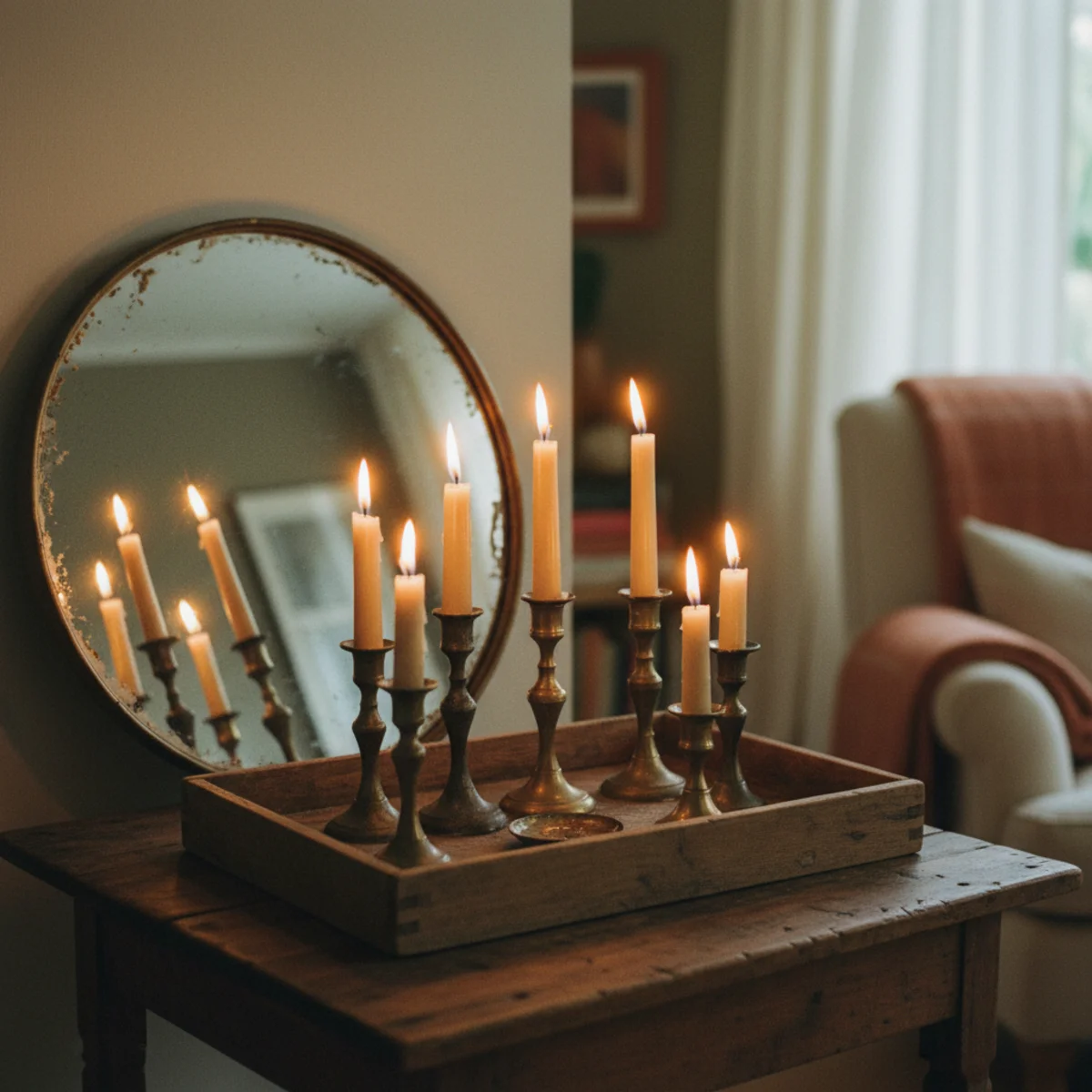
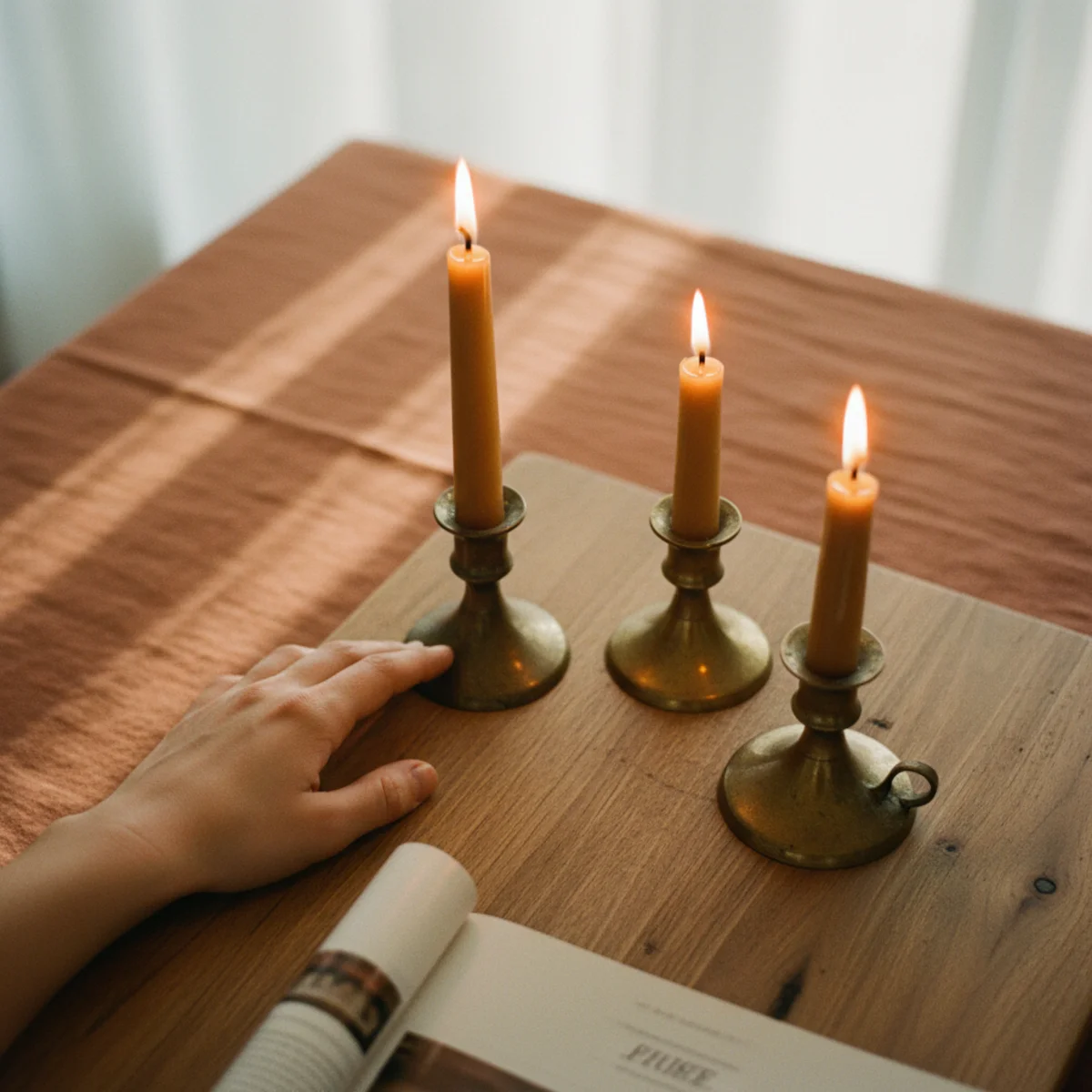
Candles do more for fall decor than almost any other single object — and most people place them wrong. Symmetric pairs flanking a centerpiece read as restaurant. The fix is the simplest rule in styling: candles always in odd numbers, never matching height, never matching color. Three slim tapers at three different heights on the dining table or coffee table will set a fall mood in one strike of a match, and the cost stays under $20 if you buy honestly.
Use beeswax or unscented soy tapers at three heights: 10 inches, 12 inches, and 14 inches (or 8/10/12 inches if your table is small). The brass candlesticks to hold them don't need to match — secondhand mismatched brass from Goodwill at $3 to $8 each reads more collected than a coordinated set. Place the cluster off-center on the table or mantel, never in the dead middle, and never in pairs. Trim wicks to a quarter-inch before each lighting. Burn 30 minutes before guests arrive (or sundown if you're decorating just for yourself) so the wax pools naturally. Avoid scented tapers — they compete with food and read commercial.
AFFILIATE SLOTLIGHTINGBeeswax tapers at 10/12/14 inches in mismatched secondhand brass holdersAdd affiliate URL when configuredWhy it works
Because asymmetry reads as collected over time, while symmetry reads as set-up. Three candles at three heights, in three slightly different brass holders, give the eye texture and intention — five do the same effect at a bigger scale. Two matching candles in matching holders flanking a centerpiece is the universal signal of a hotel restaurant, not a home.
Pro tip — Buy a pack of natural beeswax tapers from a candle company like Big Dipper or Honey Candles ($14 for six 12-inch tapers) — they last almost twice as long as paraffin and the warm golden flame color is exactly the fall light a room needs.
Three heights, three holders, never a matching pair — the simple rule that reads collected. See also: candle company
05Bring In Dried Wheat or Eucalyptus Stems
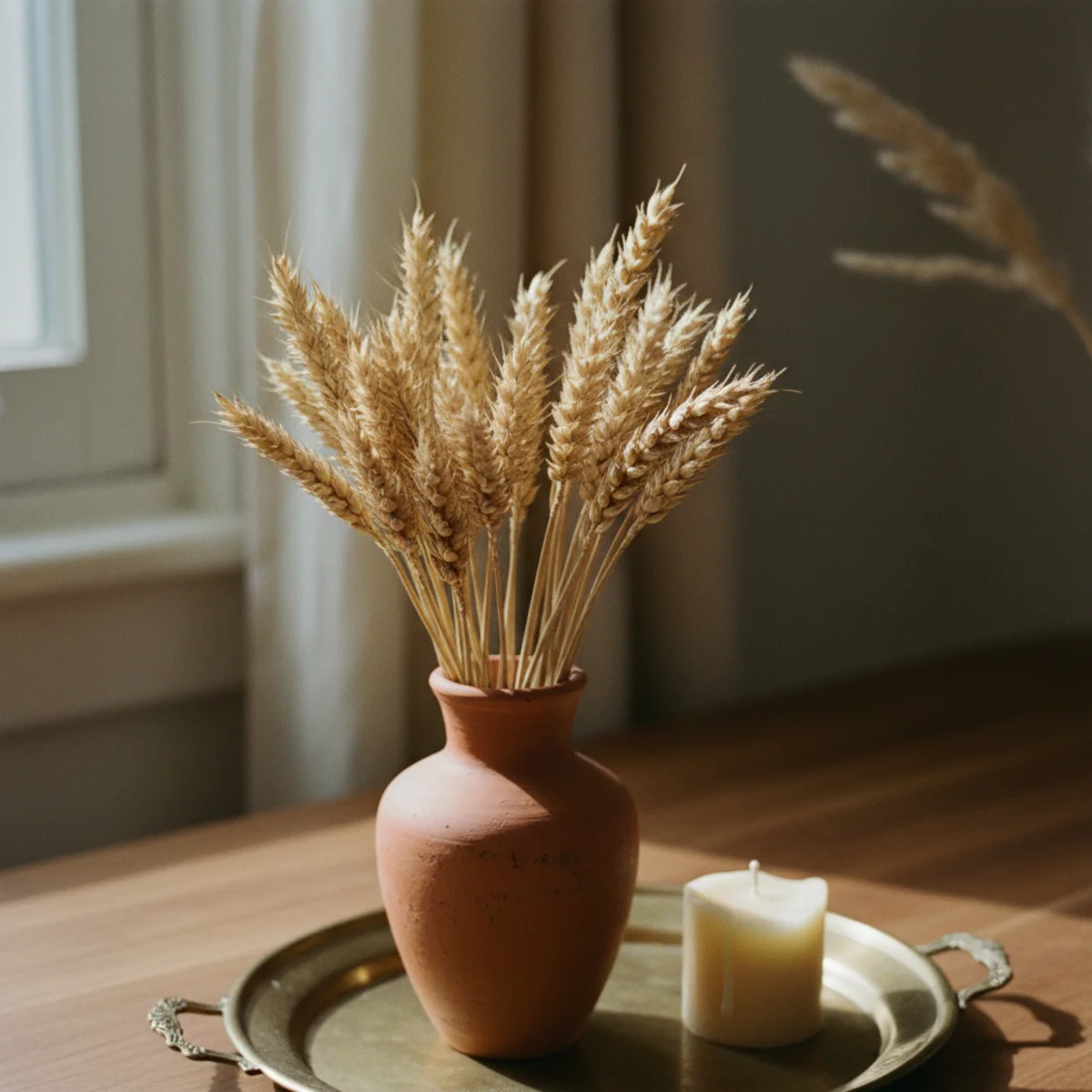
One bunch of dried botanicals in a heavy vase does more for a room's seasonal reading than $300 in store-bought fall decor. Dried wheat, eucalyptus, pampas grass, dried lavender, oat sprigs, or seeded eucalyptus — any of them placed in a weighty terracotta or stoneware vessel reads instantly as autumn, then keeps reading that way for six to eight weeks without water, attention, or replacement. This is the cheapest, longest-lasting fall decor idea on the entire list.
Buy stems 24 to 36 inches tall — the visual interest is in the height. Bunches of dried wheat are $8 to $14 at Trader Joe's, World Market, or your local farmer's market in October. Eucalyptus and seeded eucalyptus from Trader Joe's ($6 per bunch) air-dry naturally in 7 to 10 days; just leave the bunch upright in a vase without water and let it transition. Place the vase on the floor beside the sofa, on a console behind it, or on the dining-room sideboard — anywhere the stems can be seen at full height. Vase weight matters: at least 3 to 5 pounds total, or the bunch tips. Skip plastic stems — they shed at the same rate and look it.
AFFILIATE SLOTBOTANICALSDried wheat or eucalyptus stems, 24–36 inches, in a 3–5 lb terracotta or stoneware vesselAdd affiliate URL when configuredWhy it works
Because dried botanicals last six to eight weeks while fresh flowers last five days — and the eye reads longevity as confidence. A heavy vase of dried wheat that's been there since early October by the time guests arrive in November reads as a quiet, lived-in detail. Fresh flowers swapped weekly read as event-decor. The patience is the point.
Pro tip — Spray dried stems with a fine mist of unscented hairspray (Aussie or Tresemmé travel-size, $3) once they're arranged. It prevents shedding for the entire eight-week display window. Skip scented hairspray — it tints the smell of the room.
One bunch, one heavy vessel — eight weeks of free fall vertical sculpture. See also: heavy vase
06Switch to Amber and Rust Cushion Covers
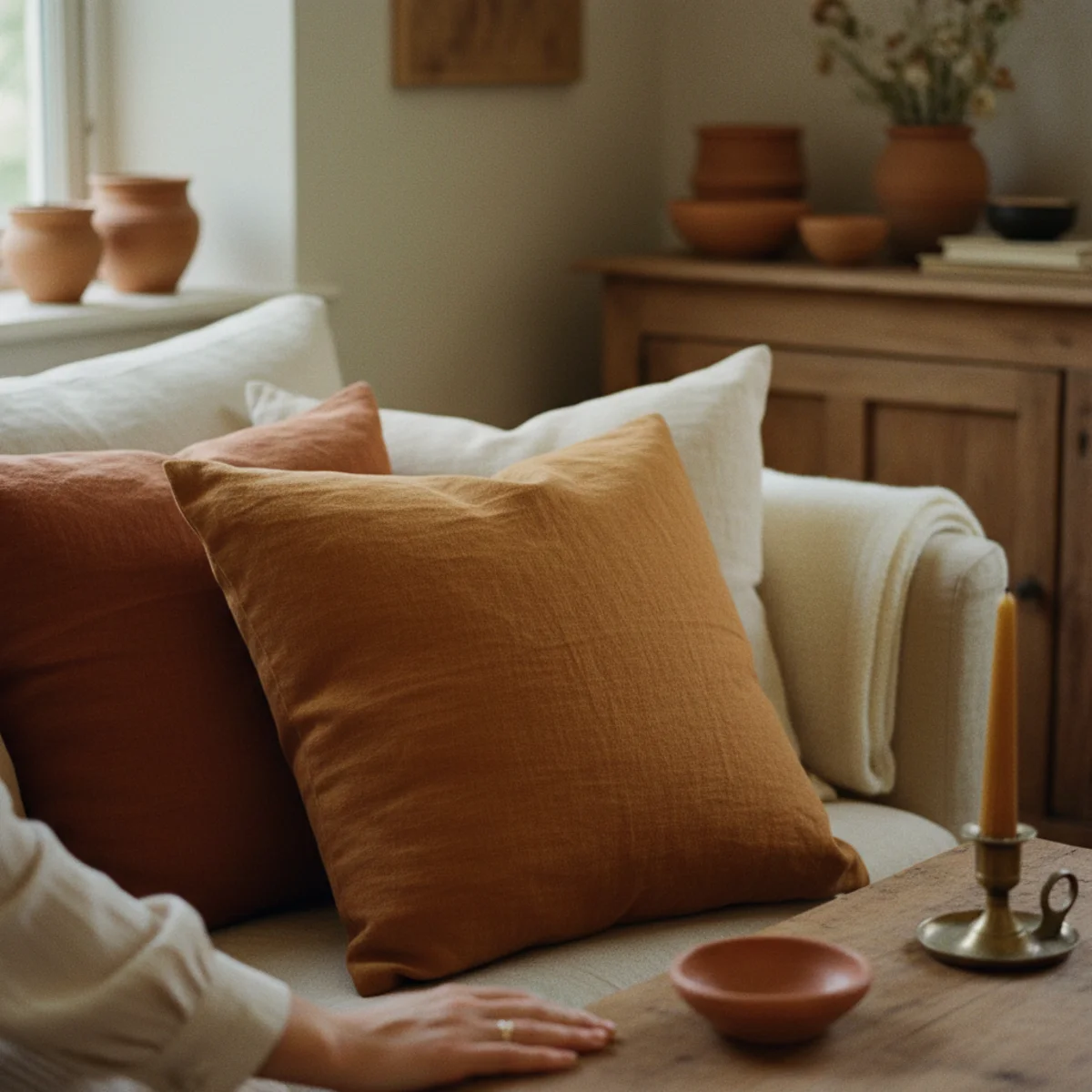
The five cushions on the sofa carry more visual weight than almost any other detail in a living room, and the cheapest seasonal shift is to swap their covers — keeping the inserts, swapping just the linen sleeves. Three covers in warm autumn tones (amber, rust, ochre, muted plum) layered over your existing neutral linen or boucle ones will turn a summer sofa into a fall sofa in five minutes. The covers cost $8 to $25 each and live folded in a drawer the rest of the year.
Stick to the five-cushion rule from cozy-living-room-ideas: on a three-seater sofa, use five total — two 22-inch squares, two 18-inch or lumbar, one round or small accent. For fall, swap three covers (not all five) to warm earth tones: H&M Home linen covers in mustard or amber at $13 each, Etsy makers like SoftLineHome or LinenTales at $18 to $35 for hand-loomed linen, IKEA SANELA velvet covers in dark gold at $7 (the surprise win). Tie the variation together with one accent color appearing in three of the five covers. Keep your two neutral covers in oatmeal or cream — they ground the autumn shift without overwhelming the room. Wash gently before swapping, then store the summer ones in a vacuum bag.
AFFILIATE SLOTTEXTILESThree linen or velvet cushion covers in amber/rust/ochre — 22, 18, and lumbar sizesAdd affiliate URL when configuredWhy it works
Because cushion inserts are the expensive part — $30 to $50 each at IKEA, more elsewhere — and you only need them once. The covers do all the visual work, and zip-off versions let you swap five looks for the price of one finished cushion. Storage takes one drawer instead of one closet. The math favors covers in every season.
Pro tip — Wash linen covers cold and tumble dry low only briefly — full machine dry shrinks them. Iron lightly while damp if you want the crisp look; leave wrinkled if you want the lived-in look (we vote for wrinkled).
Swap three of five covers; keep two neutrals. The summer covers go in a vacuum bag. See also: five-cushion rule
07Layer a Wool Runner Over Your Existing Rug
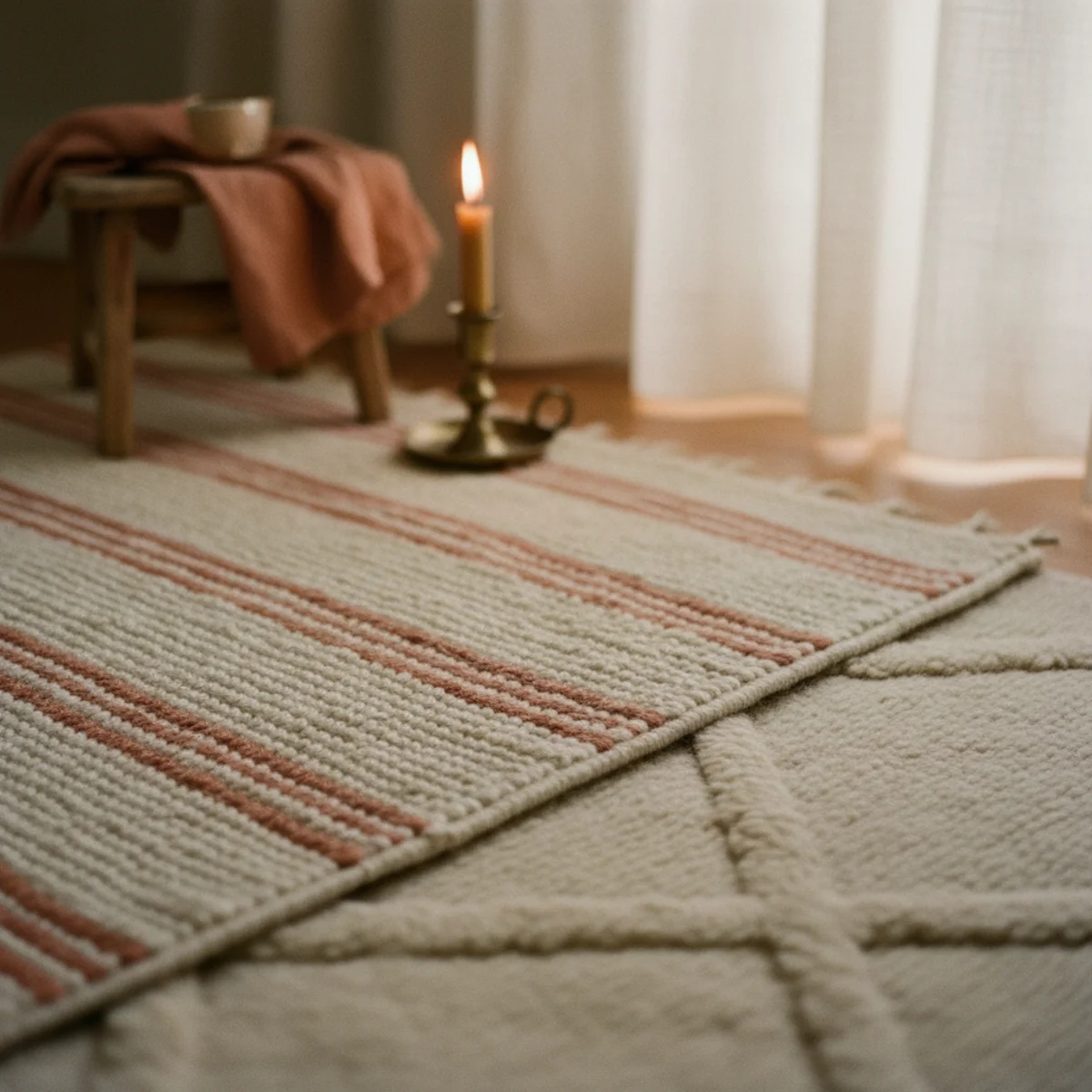
A second rug layered over the first is one of the more advanced moves in fall decor, but it's worth understanding because nothing else changes a room's fall reading quite the same way. A small flatweave wool runner in warm tones (3-by-5 feet, rust or oatmeal) laid diagonally over the corner of your existing 8x10 living-room rug, or running the length of a hallway over the original floor, adds texture, depth, and warmth at a scale that single textiles never manage. The technique looks expensive but costs $80 to $150 done well.
Use a vintage flatweave kilim or hand-loomed cotton-wool blend rug in the 3-by-5 or 4-by-6 foot range — anything larger competes with the primary rug. Sources: Etsy vintage kilim filter at $60 to $200, Marketplace listings tagged "runner" at $40 to $120, or RugVista's hand-knotted Berber blanket-style runners at $180 to $300. Layer the smaller rug at a slight angle (about 15 to 20 degrees off the primary rug's axis) so it reads as deliberate rather than misaligned. Place it where feet actually land — under a chair, in a high-traffic walkway, or at the foot of the bed. Avoid layering modern jutes or sisals over wool; the textures fight rather than complement.
AFFILIATE SLOTRUGSVintage flatweave kilim or wool runner, 3×5 or 4×6 feet, warm earth tonesAdd affiliate URL when configuredWhy it works
Because the eye reads layered textiles as evidence of collected pieces over time, the same way two rugs in any photograph read as the home of a thoughtful person rather than a furniture-store delivery. The overlap creates a soft visual border that defines the seating zone or walkway, and the secondary pattern or texture introduces warmth without competing for attention.
Pro tip — Use a non-slip rug pad ($12 to $25 from Amazon) under the top runner — wool on wool slides constantly otherwise, and a curled corner from a slipping runner kills the entire effect. The pad disappears under the layered rug.
A smaller rug, angled 15 to 20 degrees off — the layered move that reads expensive. See also: vintage flatweave kilim
08Move Soft Lighting Closer to the Floor
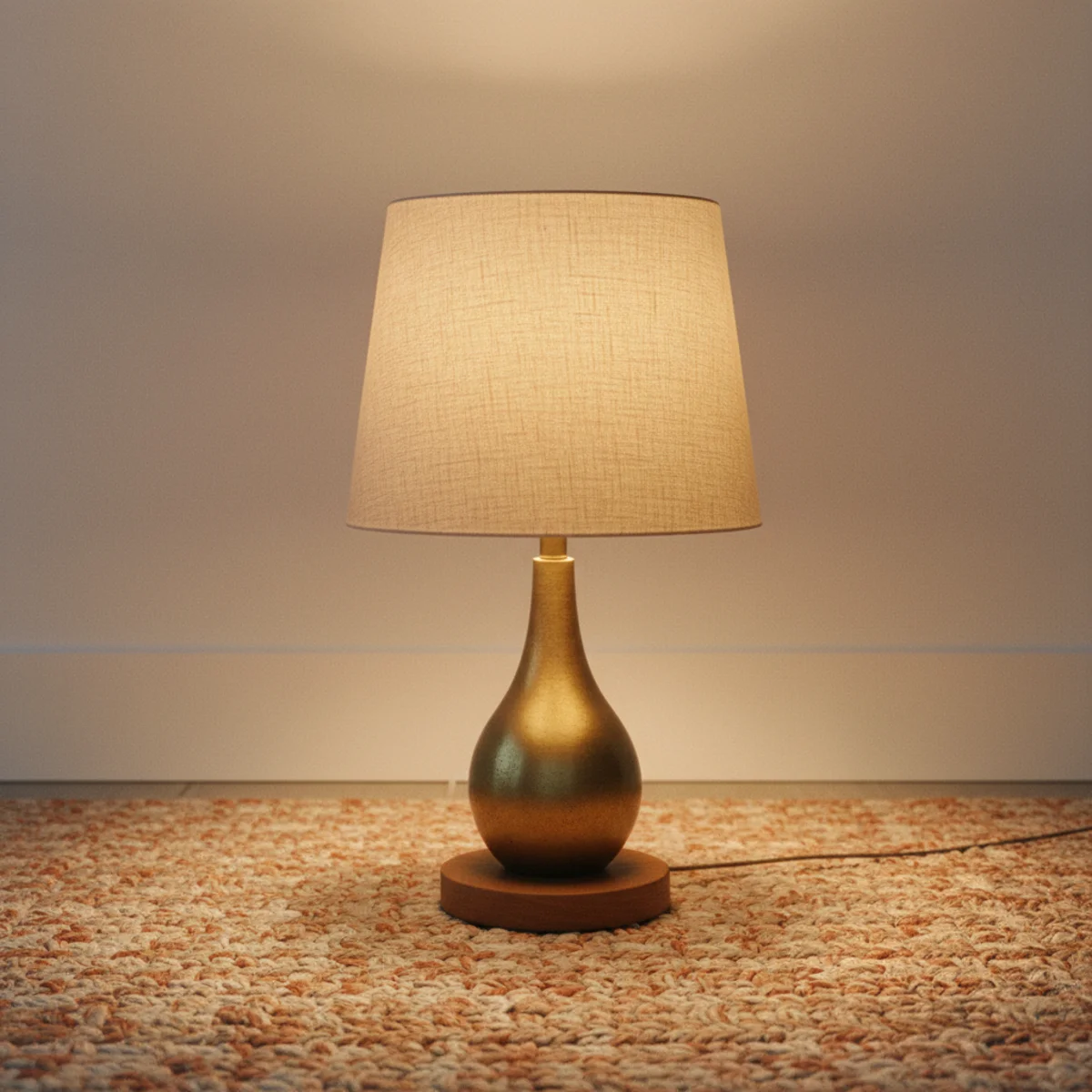
By mid-October the sun sets before six in the evening, and your living-room lighting needs to do more work than it did in July. The seasonal fix isn't to buy a new lamp — it's to lower the lights you already have. Move table lamps from console height to side-table height, add a small uplight on the floor behind a planter, and switch the heaviest lamp to floor-level if you have a Noguchi-style paper lantern or an uplight available. Light low to the ground reads as fall light specifically.
Add one uplight at floor level (Govee battery puck at $12, IKEA NYMÅNE under-cabinet at $30 with brass spray-paint, or a Noguchi Akari floor lamp at $200) angled to wash up the wall behind a planter or under a console. Lower one existing table lamp by replacing the table it's on with something shorter — a stack of two heavy books at 12 inches off the floor as a temporary base reads dramatic in the right room. Keep every bulb at 2700K and stay below 800 lumens total per fixture; brighter than that reads as office, not autumn. Aim for three light sources at three heights, with at least one below 24 inches off the floor.
AFFILIATE SLOTLIGHTINGSmall uplight or paper floor lamp, 2700K bulb, 400–600 lumens, set below 24 inchesAdd affiliate URL when configuredWhy it works
Because the autumn evening sun comes in at a low slant — through windows, against walls, casting long shadows. Lighting low to the ground mimics that slant after the actual sun is gone. A lamp at 60 inches off the floor reads as office lighting; the same bulb at 14 inches off the floor reads as candlelight, hearthlight, or the fire that has been burning all evening.
Pro tip — Put one floor-level light on a smart plug set to turn on automatically at 5:30pm — it stays on without thought through the early-dark months, and the room is warm before you walk in. The IKEA TRÅDFRI bulb plus a Wiz plug at $20 total is the cheapest entry point.
Light low to the ground — the move that mimics fall's slanted late-afternoon sun. See also: 2700K
09Stack Books With Autumnal Spine Colors
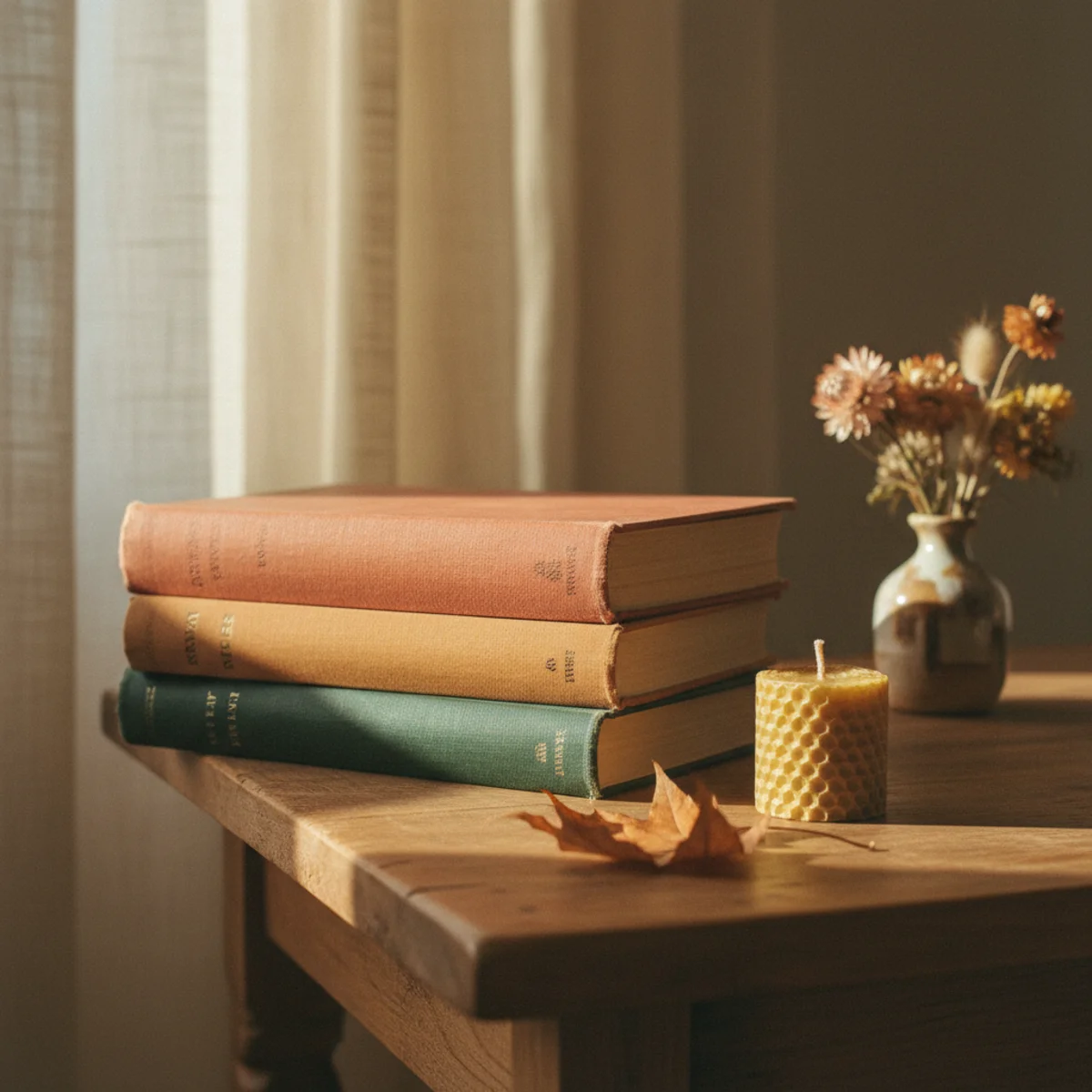
Most coffee-table books live anywhere they fit. For six weeks of the year, they can do seasonal work. Pull every book in your house with a rust, ochre, mustard, deep forest, or russet spine, and stack them face-out or in three small piles on the coffee table, the floor beside a chair, or one shelf section. The room reads as autumn through the color of the books alone, costs nothing, and reverses in five minutes when winter hits.
Aim for at least 10 books with warm-toned spines arranged in two or three vertical or horizontal stacks. The colors that read as fall: rust, ochre, mustard, deep brown, forest green, burgundy, sage, oat. Pull dust jackets off — the cloth bindings underneath are almost always more beautiful and read warmer. Sources: existing books on your shelves (most homes have more autumn-toned spines than they realize), Half Price Books and library Friends-of-the-Library sales at $1 to $3 each, Goodwill at $2, or Phaidon and Taschen art books at $40 to $80 for new pieces that double as objects. Arrange stacks at varied heights — two books, four books, three books — not a uniform tower.
AFFILIATE SLOTBOOKSCloth-bound hardcovers in rust, ochre, mustard, brown — dust jackets removedAdd affiliate URL when configuredWhy it works
Because books are large flat surfaces of color at eye-level when stacked, and the eye registers color at flat surfaces faster than color in three-dimensional objects. A stack of rust and ochre spines on a coffee table reads as autumn before any specific book is identified. The trick works because you're not styling books; you're styling color blocks that happen to be books.
Pro tip — Take a photograph of your shelves with your phone, then zoom in on the spines — you'll see the autumn-toned books that are currently hidden between bright covers. Move just those to display. The whole rearrangement takes 20 minutes and costs nothing.
Pull the warm-toned spines forward — the autumn shift hidden on your existing shelves. See also: stacks
10Light Beeswax Candles Before Sunset
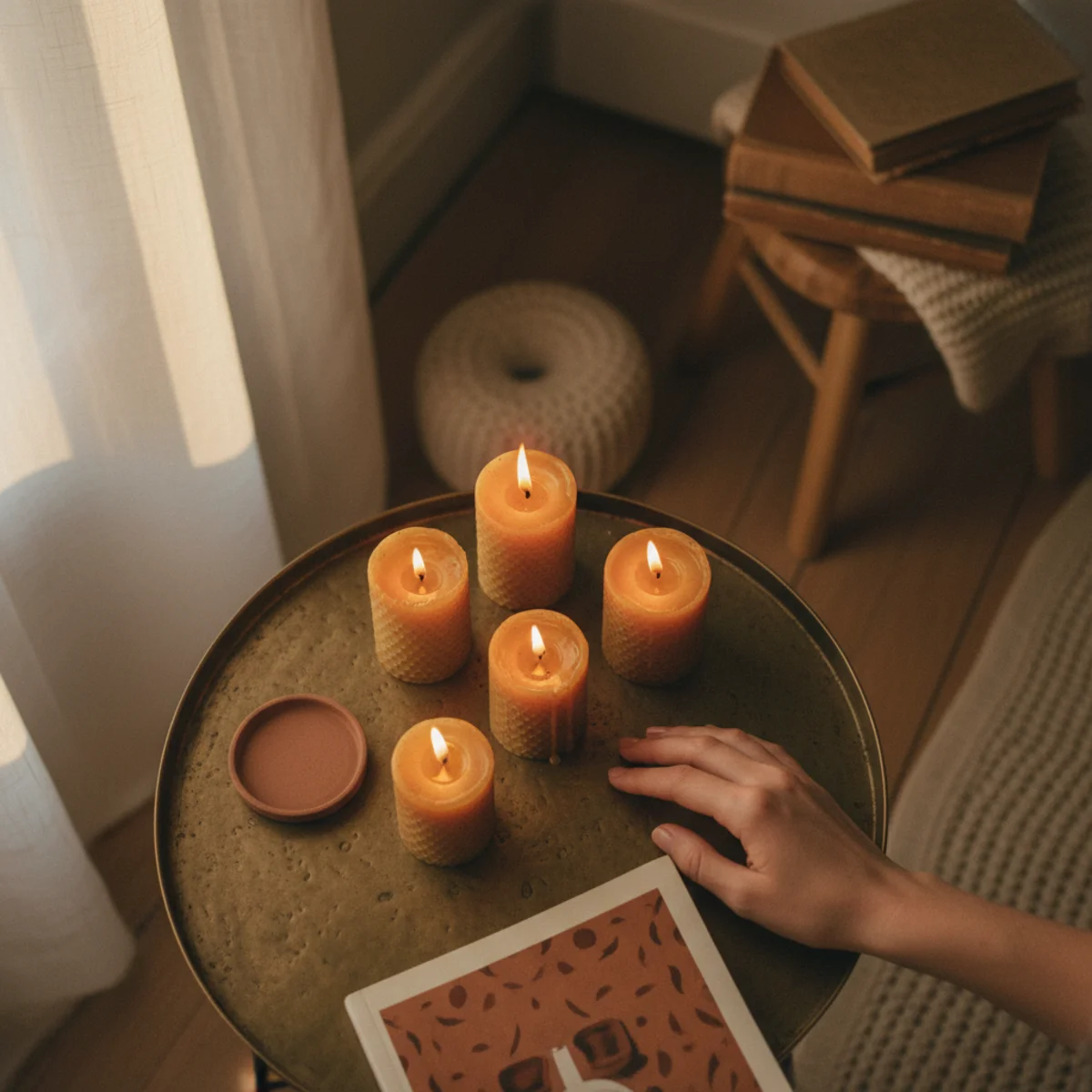
There's a specific window — about 20 minutes before the sun fully sets, when the natural light is still strong but golden — when lighting candles changes a room more than any other small action. Make it a fall ritual. Three beeswax tealights on the coffee table, two slim tapers in the dining room, one large pillar in the bathroom. Strike a match at 5:00pm in October, 4:30pm in November. The house reads warmly inhabited the moment you do. The candles are the cheapest fall decor change there is.
Beeswax is the only candle wax worth the money in October — it burns 40% longer than soy and 60% longer than paraffin, throws a warmer flame color (deep golden), and doesn't soot. Big Dipper Wax Works tealights at $1.50 each (12-pack for $18), Sunbeam Candles tapers at $4 each, Honey Candles pillars at $14 to $22. Stock the house with at least 10 candles total — three tealights, two tapers, two pillars at minimum. Place them where you'll actually light them: the coffee table, the dining table, the bathroom counter beside the sink, the kitchen counter near the stove. Avoid scented candles for ambient lighting (they compete with food and read commercial). The flame is the point, not the perfume.
AFFILIATE SLOTLIGHTINGBeeswax tealights, tapers, and one pillar — at least 10 candles stocked for fallAdd affiliate URL when configuredWhy it works
Because beeswax burns at a slightly higher temperature with a fuller, more golden flame — exactly the color of late-afternoon autumn sunlight indoors. Soy candles burn cooler and produce a thinner, whiter flame; paraffin sooty and inconsistent. Beeswax is also the only honest material here: rendered from honeycomb, naturally scented faintly of honey, never reformulated.
Pro tip — Buy beeswax candles in bulk from a single small maker — Big Dipper, Sunbeam, or Honey Candles — and you'll save 30% to 40% over per-candle retail. Twelve tealights for $18, a dozen tapers for $35. The supply lasts the entire fall and winter season at one candle a day.
Strike the match before sunset — the ritual that turns October dusk into a room you want to stay in. See also: beeswax
11Rebuild the Mantel as an Asymmetric Vignette
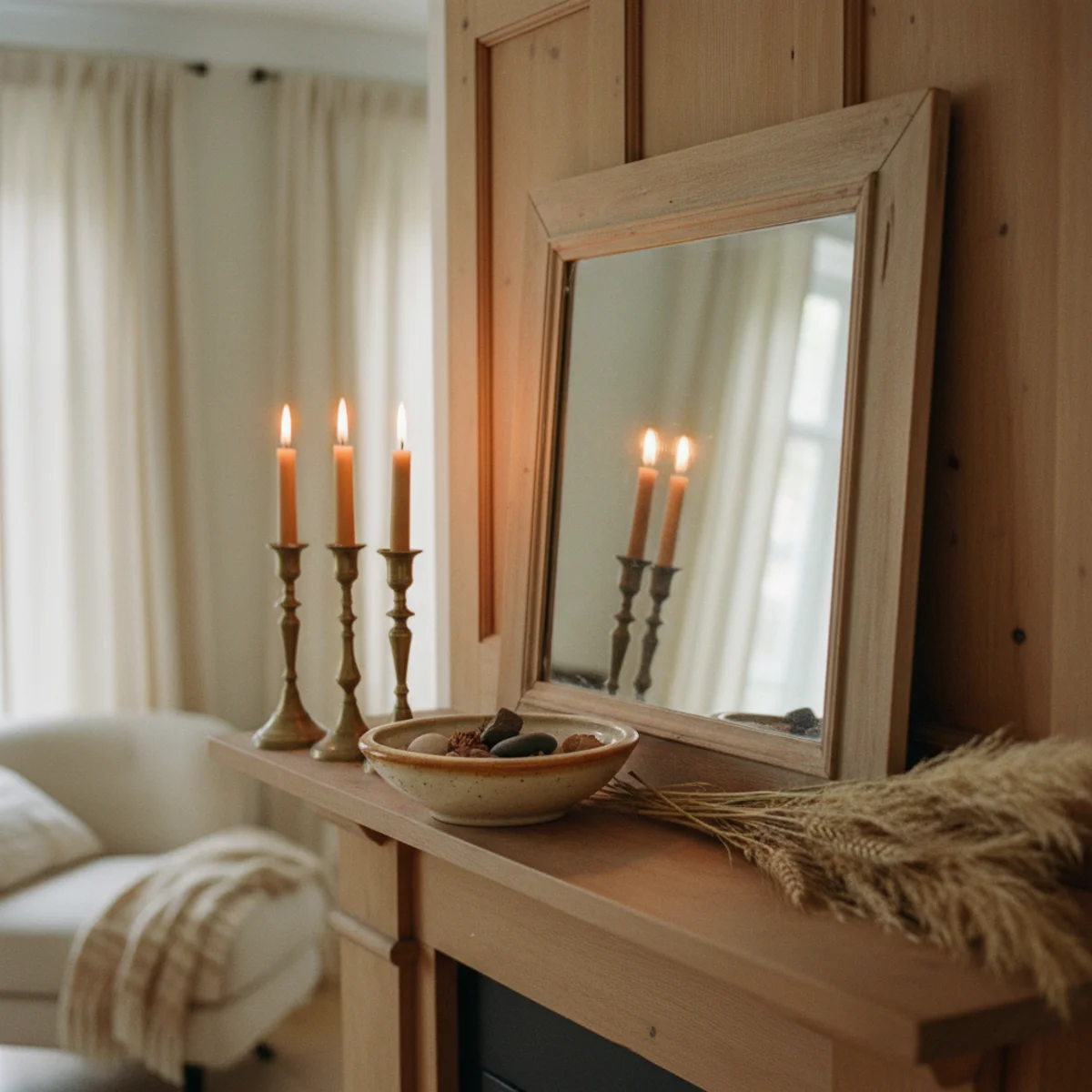
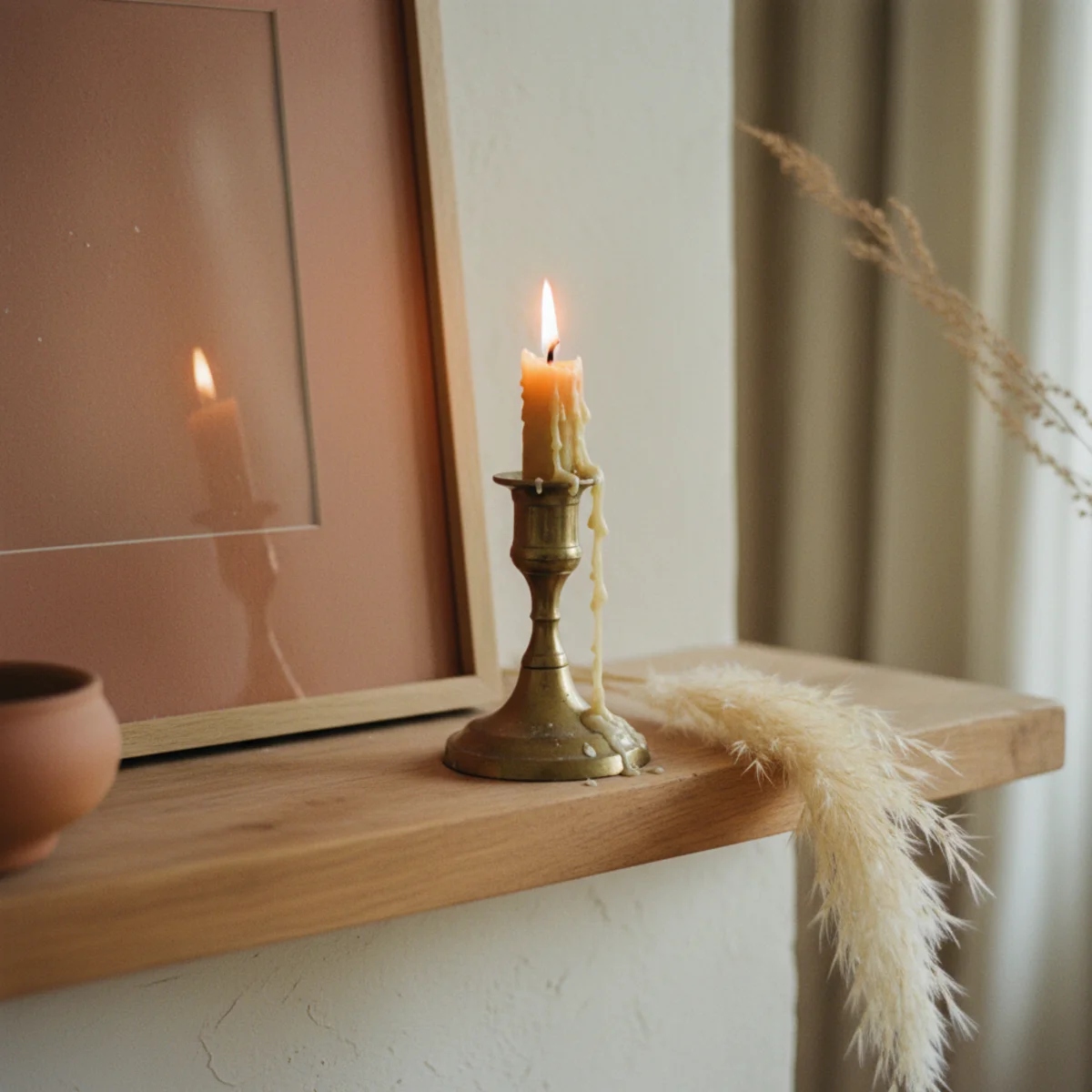
If you have a fireplace mantel, it's probably arranged symmetrically — a clock or mirror centered, two candles or vases flanking it. The fall decor move that transforms the mantel entirely is to break the symmetry: shift the central object off-center by 6 to 10 inches, cluster two or three smaller objects on one side, and leave the other side mostly empty. The asymmetric mantel reads as collected over years of living, where the symmetric one reads as set up for a viewing. This works any time of year; in fall, it lets you swap out three vignette pieces seasonally without rearranging everything.
Anchor the mantel with one larger piece (a leaning frame, a small painting, or a tall branch in a heavy vase) shifted 6 to 10 inches off-center. On the heavier side, cluster two or three smaller objects at varied heights: a stack of two books, a small ceramic, a tealight in a brass holder. Leave the lighter side mostly empty — maybe one taper in a single holder, or nothing at all. Use the rule of thirds: imagine the mantel divided into three equal sections, and place objects in the outer thirds, never the middle third. Swap the small cluster seasonally; the larger anchor and the empty side stay year-round. Total seasonal swap: 3 objects, about $40 to $80 from secondhand sources, takes ten minutes.
AFFILIATE SLOTSTYLINGOne large leaning frame or vase + 2–3 small varied objects + 1 single taperAdd affiliate URL when configuredWhy it works
Because rooms in real homes are never perfectly symmetric — light comes from one window, doorways open from one side, furniture sits unevenly along walls. An asymmetric mantel honors that imbalance rather than fighting it. The eye reads asymmetry as natural; symmetry reads as deliberate effort. The same principle governs every magazine living-room photograph that looks easy and lived-in.
Pro tip — Photograph the mantel from straight on with your phone before you start, then again after each adjustment. The phone screen reveals balance problems your in-person eye misses — the central object that's actually too central, the cluster that's too tight. Six photos and 15 minutes solves it.
Anchor off-center, cluster one side, leave the other mostly empty — the rule that ages any mantel. See also: rule of thirds
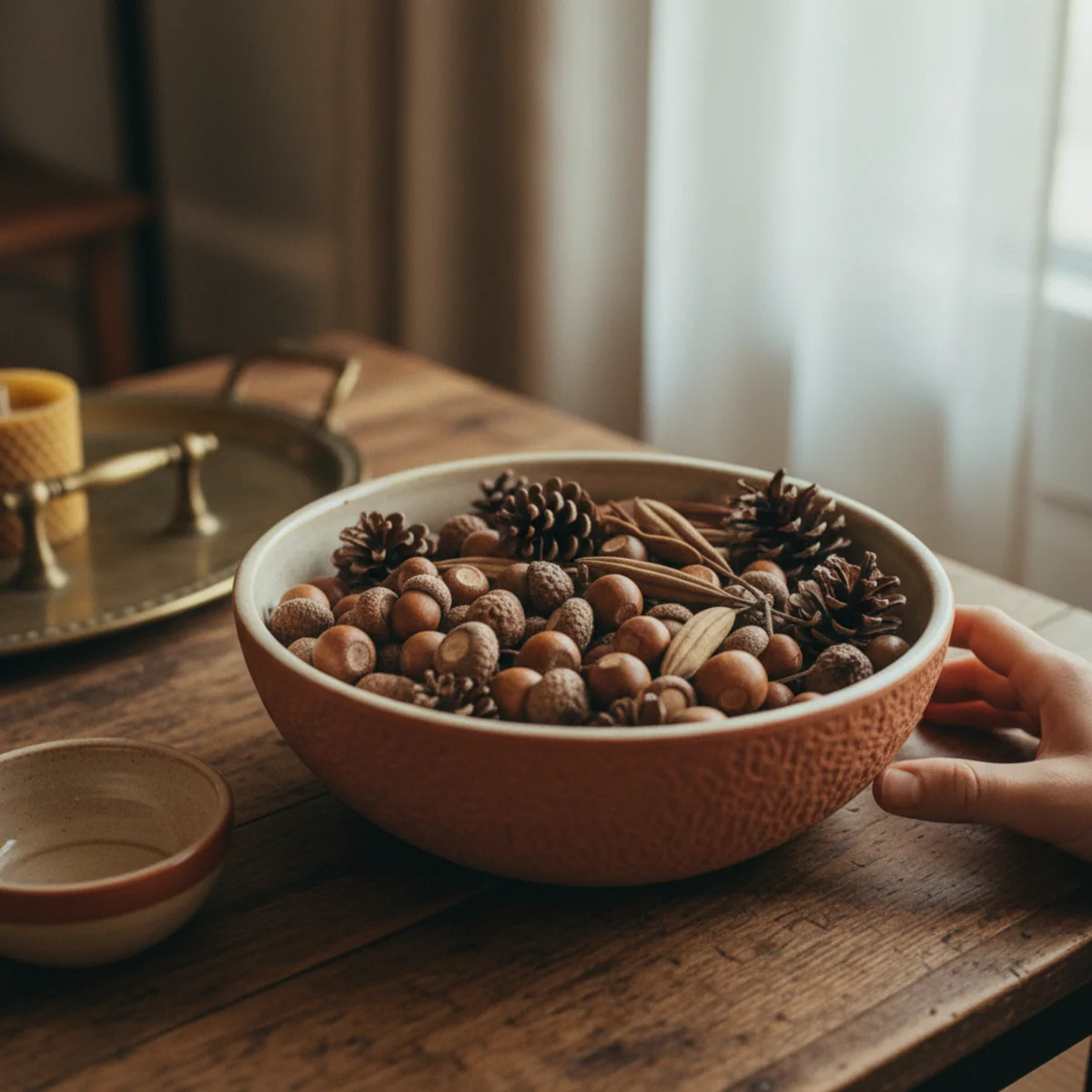
12Display a Heavy Bowl of Acorns and Pine Cones
The single most pumpkin-free fall decor object is also one of the cheapest: a heavy stoneware or wooden bowl filled with foraged acorns, pine cones, small dried gourds, and a few sprigs of dried lavender or eucalyptus. It costs $0 to $15 (depending on whether you're foraging or buying), takes 30 seconds to assemble, and reads as autumn at five paces without committing to a single jack-o'-lantern. Place it on the coffee table, the kitchen island, or the entryway console. It's the small object that makes a room feel like fall arrived.
Find a wide shallow bowl 10 to 14 inches in diameter — wooden dough bowls from Marketplace at $20 to $40 are perfect, but a heavy stoneware bowl from HomeGoods at $15 or a thrifted brass bowl at $8 work just as well. Fill three-quarters full with a mix: 12 to 20 acorns (forage from any park in October), 4 to 6 small pine cones (free from any pine tree, or 99-cent bags from Trader Joe's), 2 small dried gourds or tiny pumpkins ($1.50 each at farmers' markets), and 1 or 2 sprigs of dried lavender or eucalyptus tucked along one edge. Mix the materials — don't sort them — and let one or two pine cones sit on the table next to the bowl, as if they fell out. Refresh weekly by adding one new foraged element.
AFFILIATE SLOTACCENTS10–14 inch wooden or stoneware bowl + foraged acorns, pine cones, dried lavenderAdd affiliate URL when configuredWhy it works
Because forage is unrepeatable — a specific acorn from a specific tree on a specific October afternoon. Store-bought fall decor is endlessly replicable, and the eye reads that lack of uniqueness immediately. The bowl says you went outside today; the same bowl from Hobby Lobby says you went to a store. Both are decor; only one reads as a small piece of seasonal life.
Pro tip — Bake foraged acorns and pine cones in the oven at 200°F for 30 minutes spread on a baking sheet — kills any small bugs or larvae, dries them fully, and brings out a soft pine fragrance that lasts for weeks. Let cool before arranging.
Forage one afternoon, bake briefly, arrange loosely — the most honest fall decor object there is. See also: wooden dough bowls
How to decorate for fall in an afternoon
You don't need a haul of new things. Work through these steps with what you own first.
- 1Warm the light
Swap any cool bulbs for 2700K, set a lamp on a timer, and pull out the candles. Do this first — it changes the season more than any object.
- 2Layer the textiles
Bring the wool and mohair throws out of storage and add one per seat. Switch the bed to flannel or heavier linen.
- 3Style one surface
Pick the mantel or the entry console and build a three-height arrangement: tall candlesticks, leaning art, a low bowl of dried texture.
- 4Add one foraged element
Branches, wheat, or seed pods from a walk. Free, seasonal, and better-looking than craft-store stems.
Quick tips
- Forage your stems on a walk — dried wheat, seed pods, and branches beat anything from a craft store.
- Keep fall decor in one labeled bin so putting it up and away each year takes an afternoon, not a weekend.
- Choose unscented candles if you're clustering several; competing scents muddy the air.
- Muted heirloom pumpkins (sage, cream, dusty blue) read as decor; bright orange reads as Halloween.
- Layer rugs with a thin rug pad between so the top one doesn't creep.
- Rotate two autumn-toned prints in by leaning them, so the swap is reversible in seconds.
Fall decor by room
Throws on every seat, a layered rug, candles on the coffee table, one bowl of dried texture.
Flannel or heavy linen bedding, a wool blanket at the foot, a small dried arrangement on the dresser.
A floor vase of dried stems, a seasonal runner, and muted pumpkins clustered on a stool.
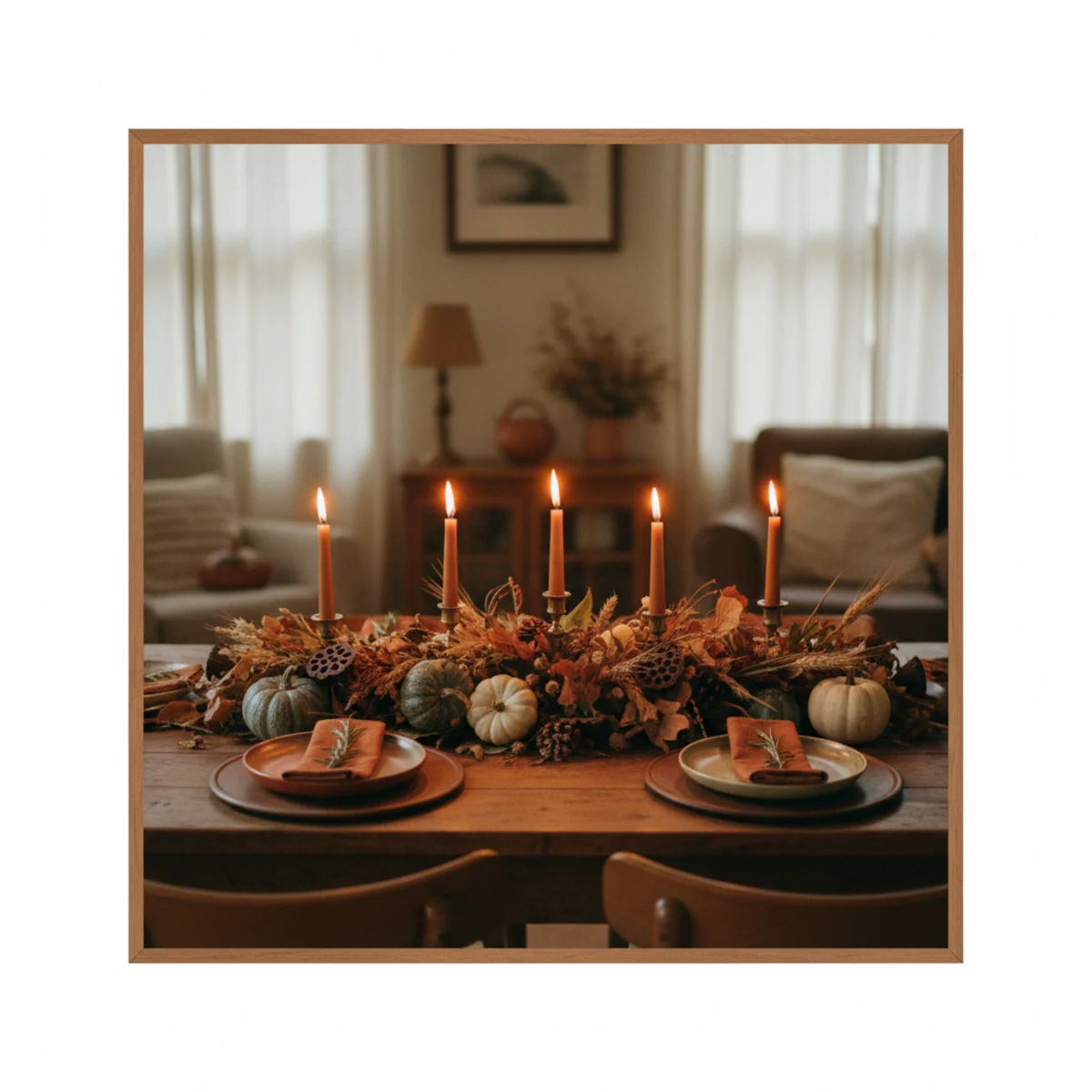
Beeswax tapers, a linen runner, and a low centerpiece of foraged branches you can move for dinner.
Fall decorating is just giving yourself permission to make the house warmer than it strictly needs to be.
Frequently asked questions
When should I put up fall decor at home?+
What colors are best for fall home decor?+
How do I make my house feel like fall without buying anything new?+
What's the best fall scent for a cozy home?+
How long can I keep fall decor up?+
What's the difference between fall and Halloween decor?+
- Seasonal18 Autumn Mantel Ideas to Style Your Fireplace in 2026
- EntertainingFall Tablescape Ideas: How to Set a Warm Autumn Table (2026)
- StylingThrow Blanket Layering: How to Style Throws Without Clutter (2026)
- StylingCandle Styling: 20 Ways to Style Candles for a Cozy Home (2026)
- Shopping GuidesThe Best Wool Throws for a Cozy Home, Tested and Compared (2026)
Start with the light and the throws — they do most of the work and cost nothing if you already own them. Forage a few branches on your next walk, style one surface off-center, and resist the orange-plastic aisle entirely. We'd put the candles out first if you only do one thing; the flicker against an early-dark afternoon is the whole feeling of fall in a single match.