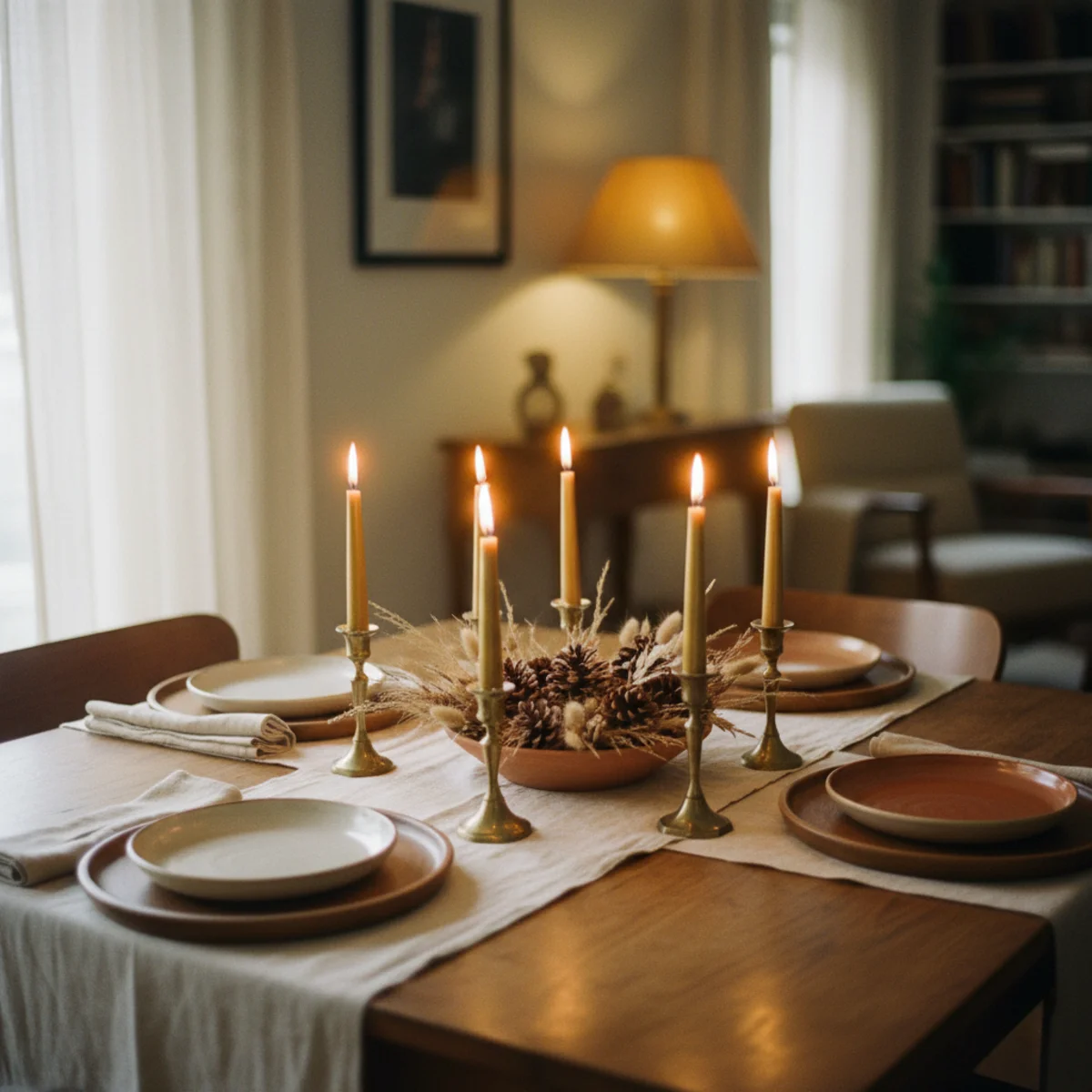
These twelve cozy tablescape principles are tested across actual family meals, dinner parties, holiday gatherings, and ordinary weeknight dinners in real warm homes. Each move below names specific materials (linen runners, beeswax tapers, hand-thrown ceramics, foraged greenery), exact arrangement rules (low centerpieces below sightline, brass and wood mixing, place-setting layering), and low-cost or no-cost techniques that produce dinner-table atmosphere without requiring catering-level investment. The goal is tables that feel personal and warm rather than formally styled.
Most tablescape failures come from either over-doing it (formal place settings with chargers, multiple glassware, decorative napkin rings) or under-doing it (bare table with plain dishes, no candles, no centerpiece). The cozy alternative finds the middle: layered linen, taper candle running down center, low foraged greenery, mixed-but-related dishes, cloth napkins, brass and wood mixing through. The simplicity is deceptive — the layering still requires specific decisions across multiple elements.
By the end of this guide, you'll know exactly which moves transform any dinner table from plain to memorable — the linen runner layering, the taper candle line down the center, the low foraged centerpiece, the mixed-but-related dishes, the cloth napkins with texture, and the seven other principles that turn meals into atmospheric experiences.
WHAT'S INSIDE
- Why a linen runner or full tablecloth is the foundational tablescape move
- The taper candles down the center rule that beats any seasonal centerpiece
- The low-centerpiece principle that preserves sightlines for actual conversation
- The foraged greenery centerpiece that costs $0 and outperforms florist arrangements
A good table makes people forget the time. Low candlelight and something growing down the center does more than any place setting.
— Domino entertaining feature [citation needed — verify before publish]
What makes a tablescape cozy?
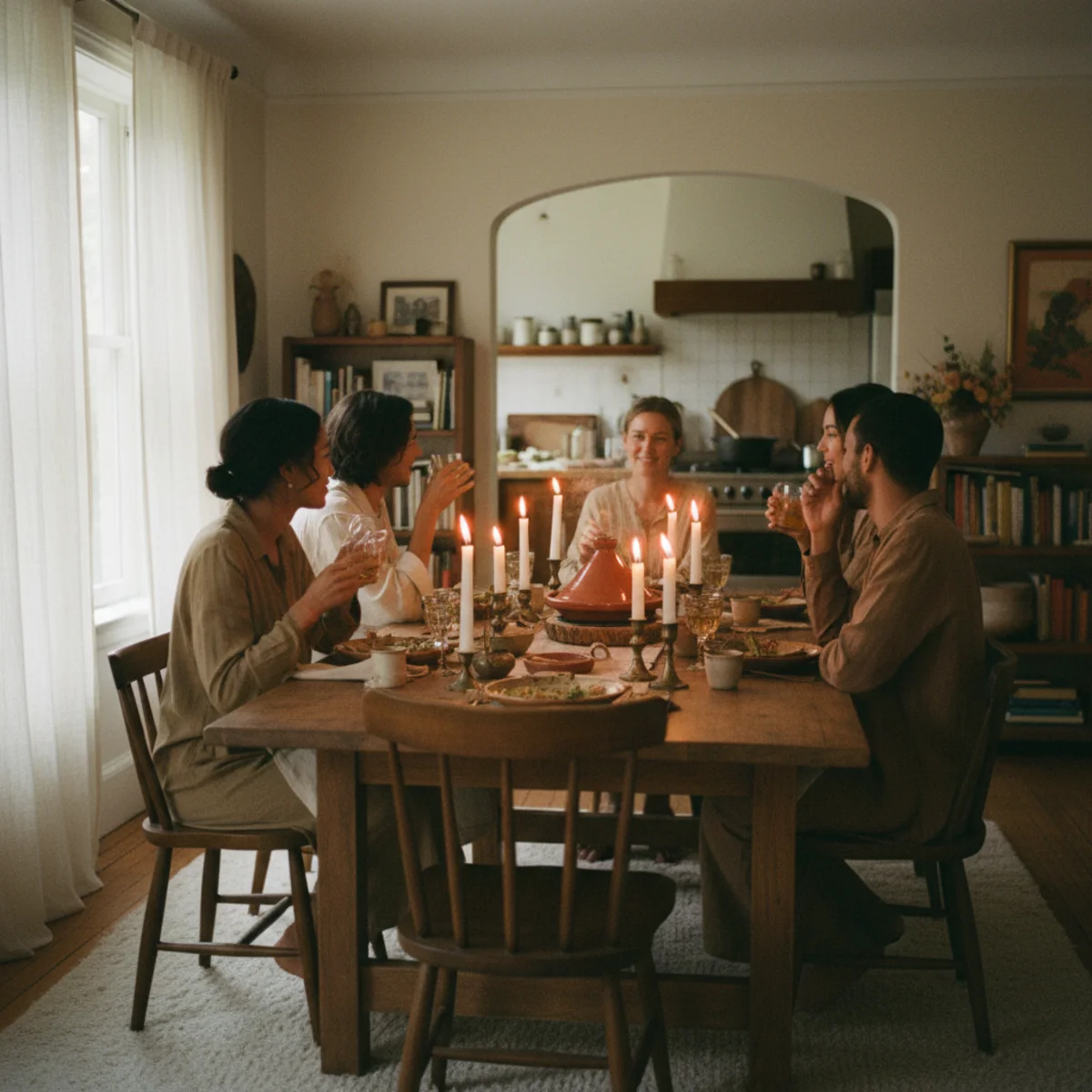
A cozy tablescape layers natural textures, warm low light, and a low centerpiece into a table that feels gathered rather than formal. The signals are consistent: a linen runner or cloth with some rumple to it, candlelight at face height, mismatched-but-related dishes, and a centerpiece you can see over and talk across.
The defining move is light. Candlelight at table height — beeswax tapers in brass holders, a cluster of pillars, or both — turns an ordinary dinner into an event in a way overhead lighting never can. Keep the centerpiece low (foraged branches in a shallow vessel, a runner of greenery, a few candles) so it brings the table together rather than walling guests off from each other. Cozy comes from warmth and conversation, not from perfection.
More in Entertaining you may love
See allWhy cozy tablescapes are everywhere in 2026
As entertaining shifted from formal to casual and kitchen-centered, the cozy tablescape replaced the matched-china formal setting as the way people set a table for guests. Pinterest's tablescape and table setting searches spike around every gathering season, and the look has gone warm and natural — linen, candlelight, foraged greenery over crystal and symmetry.
The slow-living and gather-at-home movements drive it. People want tables that make guests linger, and the research is intuitive: low warm light and a relaxed, layered table set a mood that formal settings can't. A cozy tablescape says <em>stay a while</em> rather than <em>mind your manners</em>, which is exactly the welcome most hosts are after now.
22 cozy tablescape ideas
01Layer a Linen Runner or Cloth
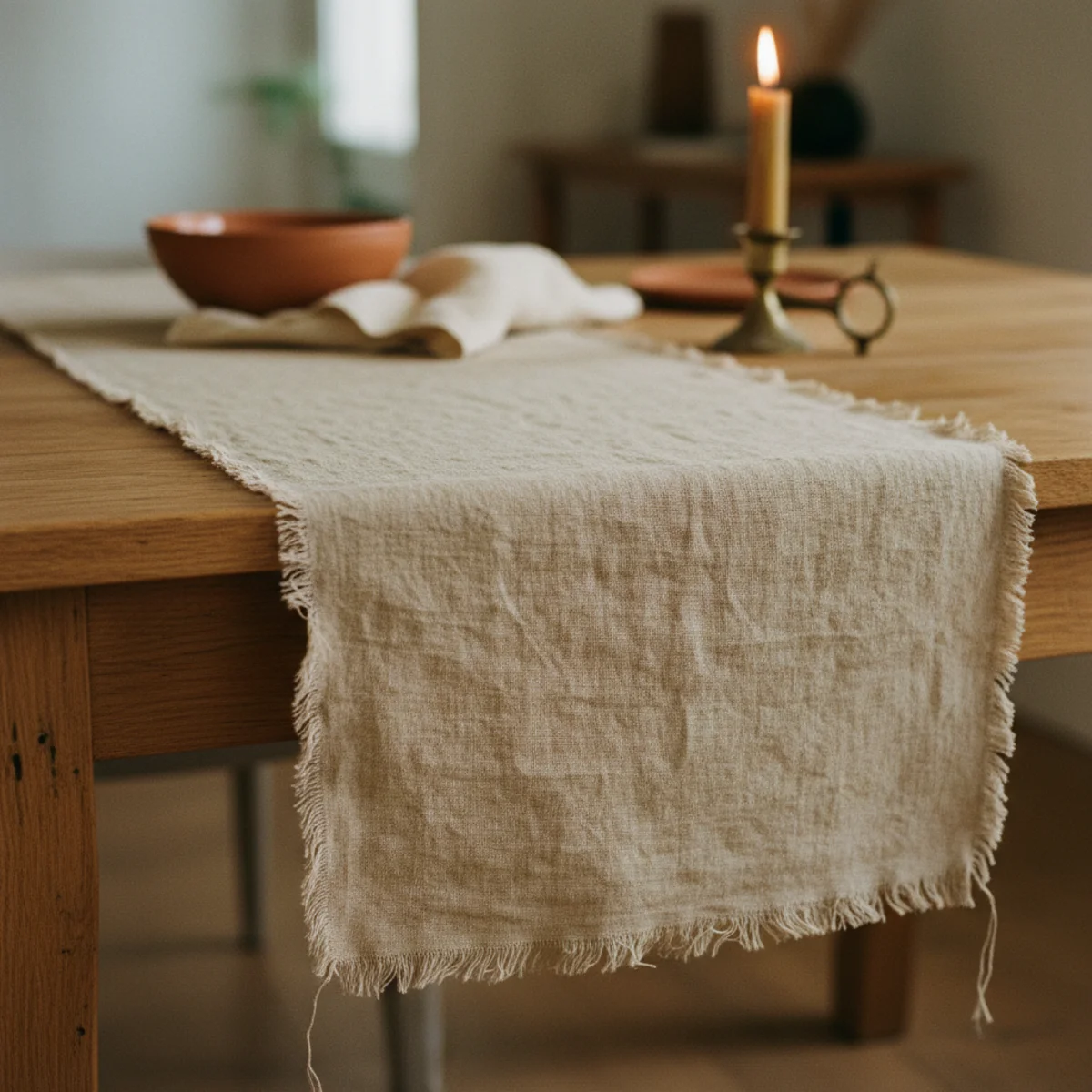
The foundational cozy tablescape move is layering linen on the table — a runner down the center (for casual or modern tables) or a full tablecloth (for formal or vintage tables). The linen layer softens the architectural lines of the table itself, adds natural texture, and provides the base layer that every other styling element builds against. Cost: $40 to $150 for the linen layer; impact: foundational.
Linen runner versus tablecloth: RUNNER — 14 to 20 inches wide, 84 to 120 inches long (sized to extend 8-14 inches past each table end), in cream, oat, terracotta, or sage washed linen at $40-100 from Quince, Magic Linen, or Etsy artisans. Best for casual dinners, modern dining tables where the wood is part of the aesthetic. TABLECLOTH — full table coverage with 12-18 inches of overhang on each side, in cream, oat, or natural linen at $80-250 from Quince, Coyuchi, Brooklinen, or vintage at $20-80 from estate sales. Best for formal occasions, dinner parties, when the table itself isn't a primary visual element. CARE — wash linen 2-3 times before first use to develop the soft slightly-wrinkled aesthetic. Iron lightly if you want crisp; leave wrinkled for casual cozy. AVOID: cotton-polyester blends (wrong drape and texture), bright white linen (shows every spot), patterned or printed tablecloths (compete with the rest of the styling).
AFFILIATE SLOTBASEWashed linen runner (14-20 inches wide, 84-120 inches long) OR full tablecloth in cream, oat, terracotta, or naturalAdd affiliate URL when configuredWhy it works
Because the bare table — even beautiful wood — reads as utilitarian eating surface where the linen-layered table reads as styled dining space. The linen softens the architectural rectangle of the table, adds natural-fiber texture that the room's overall aesthetic benefits from, and provides foundation for every other element (candles, centerpiece, place settings). Without the linen, individual elements struggle to relate to the table; with the linen, they unify into composition. The single foundational layer multiplies the impact of everything else.
Pro tip — Choose a linen runner or tablecloth in slightly contrasting tone to your dishware — if your dishes are cream or white, choose oat or terracotta linen; if your dishes are colorful, choose cream or natural linen. The contrast lets each layer read distinctly rather than blending into uniform tone.
Oat washed linen runner with overhang — the foundational layer that everything else builds against. See also: Quince
02Run Taper Candles Down the Center
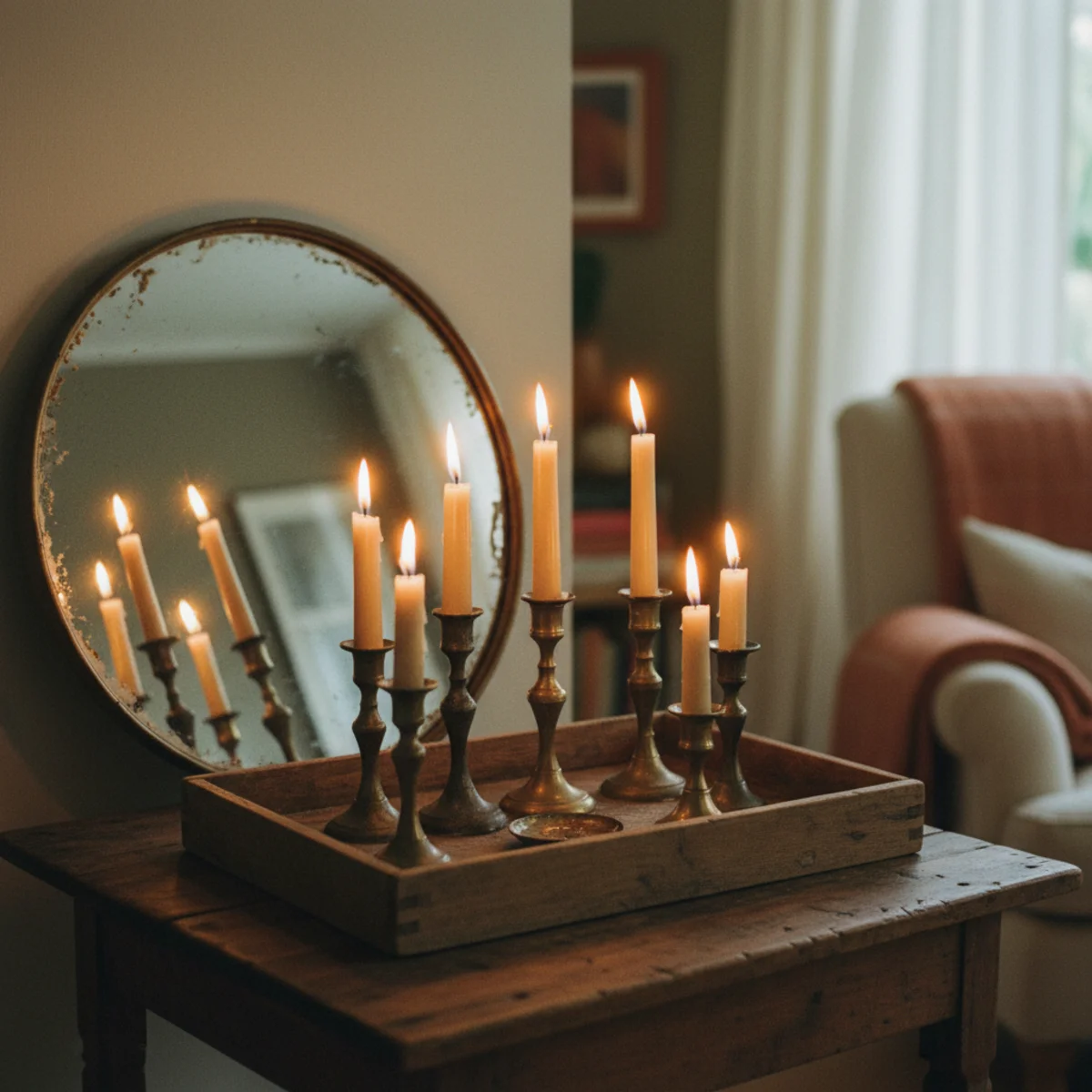
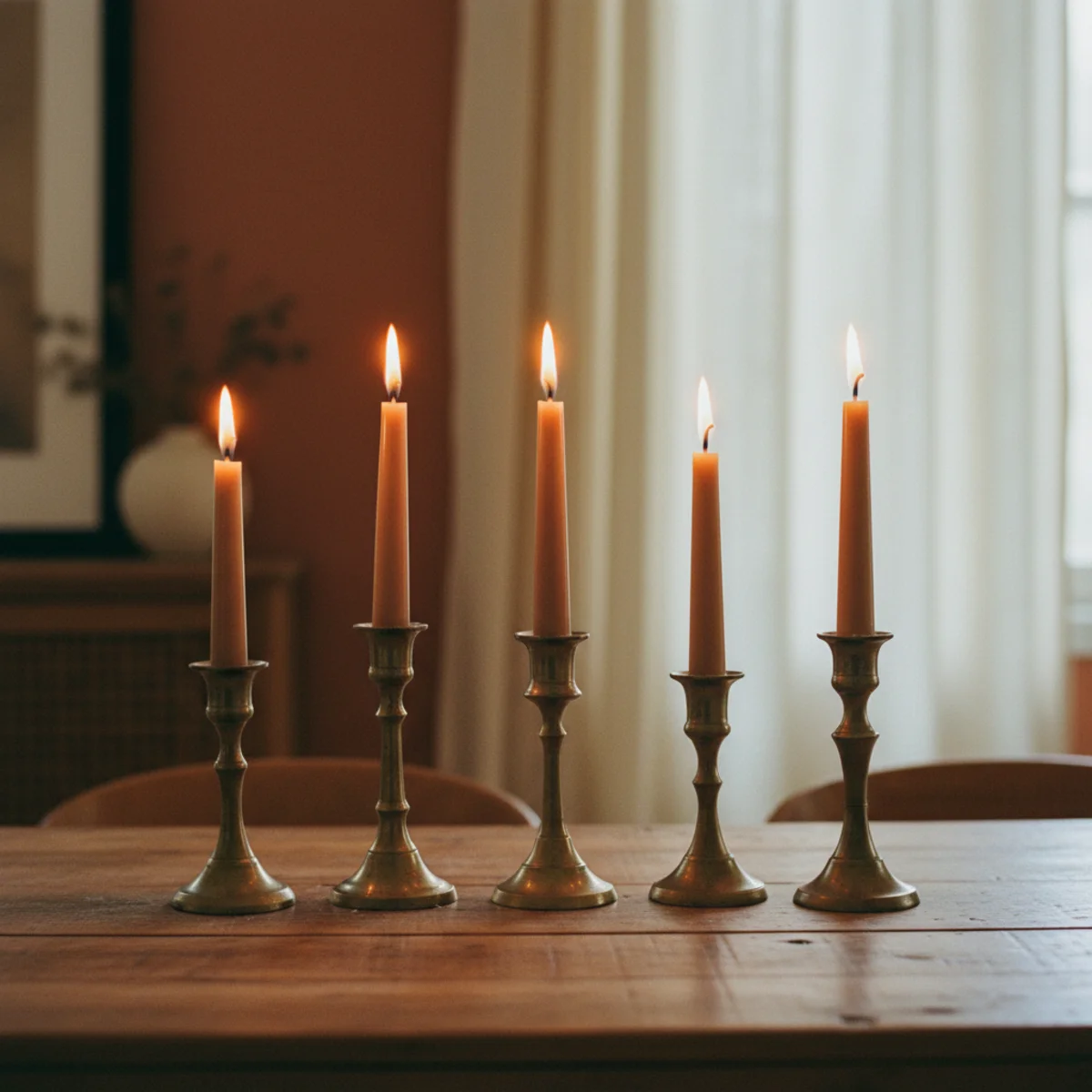
The classic cozy tablescape move: 4 to 7 taper candles in mixed vintage brass or ceramic holders running down the center of the table, spaced 8 to 12 inches apart. The line of warm flames provides flattering low light for dining conversation, adds vertical interest, and creates the atmospheric ambiance that distinguishes memorable dinners from ordinary ones.
Taper-line setup: 4 TO 7 BRASS OR CERAMIC HOLDERS spaced 8-12 inches apart down the linen runner. Holder height: 6 to 10 inches (the tapers then reach 14 to 22 inches above the table — at or slightly above seated eye level but not blocking sightlines across). MIX MATCHED AND COORDINATED HOLDERS rather than identical: three of one design + two of another + one accent reads collected, where six identical holders read commercial. TAPER COLORS — ivory beeswax, cream, natural honey for neutral elegance; or warm earth tones (terracotta, deep rust, olive) for seasonal punctuation. SOURCES — vintage brass candlesticks at $5-30 each from estate sales, antique stores, Marketplace; hand-thrown ceramic holders from Etsy artisans at $20-80 each. CANDLE LIGHTING TIMING — light all candles 15 to 20 minutes before guests arrive or before the meal starts so the cluster is fully glowing when people sit down. The visible line of warm flickering flames is what defines the cozy tablescape atmospherically.
AFFILIATE SLOTCANDLES4-7 tapers down table center spaced 8-12 inches apart in mixed coordinated brass/ceramic holders 6-10 inches tallAdd affiliate URL when configuredWhy it works
Because the repeated vertical lines of taper candles create visual rhythm down the long horizontal table — the eye reads the line as composed design rather than as scattered placement. The height of the tapers (in 6-10 inch holders) also positions the flame at the right level for cross-table conversation — high enough to provide light without being below sightline, low enough not to block faces. The single-line composition reads more elegant than scattered candle groups for formal dining specifically. And the warm 2700K candle flame is the primary atmospheric light source during the meal.
Pro tip — Choose tapers that fit your holders snugly — tapers that wobble in too-large holders read as accidental, tapers that don't fit are useless. Standard taper diameters: 7/8 inch (most common), 13/16 inch (slightly thinner), 1 inch (slightly thicker). Buy holders and tapers in matching diameters; test fit before the dinner party.
Six beeswax tapers in mixed brass holders down the table center — the classic atmospheric move. See also: candle-styling
03Keep the Centerpiece Low
The single most-important tablescape rule for dining tables specifically: keep the centerpiece BELOW seated sightline (roughly 12 to 14 inches above the table surface). Tall floral centerpieces or stacked decorative elements that rise above 14 inches block conversation across the table, which makes the styling fight the actual purpose of dining. The low centerpiece preserves sightlines while still adding visual interest.
Low centerpiece principle: HEIGHT LIMIT — centerpiece elements should sit between 4 and 14 inches above the table surface. Anything taller blocks conversation across the table. EXCEPTIONS — taper candles in 6-10 inch holders are acceptable above this limit because flames are narrow enough not to block sightlines significantly. WIDTH — centerpiece should be no wider than 50% of the table width to leave room for dishes and serving pieces. LENGTH — can extend the full length of the table (runner of greenery + candles) without blocking sightlines because length doesn't impede cross-table viewing. BAD CHOICES — tall floral arrangements ('look at all this height!'), candlelabras with multiple branching candles at varying heights, decorative obelisks, anything 'statement' that prioritizes drama over function. GOOD CHOICES — low foraged greenery, scattered small candles, low ceramic bowls with seasonal contents, single low arrangement of citrus or pomegranates. The discipline favors function over display while still allowing significant visual interest within the height constraints.
AFFILIATE SLOTDISCIPLINECenterpiece elements 4-14 inches above table; never above 14 inches except narrow taper candlesAdd affiliate URL when configuredWhy it works
Because dining tables are functional surfaces for eating and conversation — and any styling that interferes with conversation undermines the table's purpose. Tall centerpieces force guests to peek around them or to angle around the visual obstruction; the slight friction reduces conversation flow across the meal. Low centerpieces add visual interest without interfering, preserving the dining function while still creating styled atmosphere. The rule is borrowed from formal table-setting traditions (high-end restaurants enforce it) and applies equally to casual cozy tablescapes.
Pro tip — Test the centerpiece height by sitting at the table before guests arrive — your eye-line across the table to the opposite seat should be clear. If you can't see the chair on the opposite side without leaning to one side, the centerpiece is too tall. Adjust before guests arrive.
Low foraged greenery below 14 inches — visual interest that preserves cross-table sightlines. See also: dining-nook-ideas
04Forage the Centerpiece
The most genuine cozy tablescape centerpiece is foraged from outside — fresh sprigs from yard trees, branches from neighborhood walks (with permission), wildflowers from meadow, dried botanicals from autumn yard cleanup. The foraged centerpiece costs $0, signals authentic warm-home connection to nature, and changes with seasons naturally without requiring florist purchases.
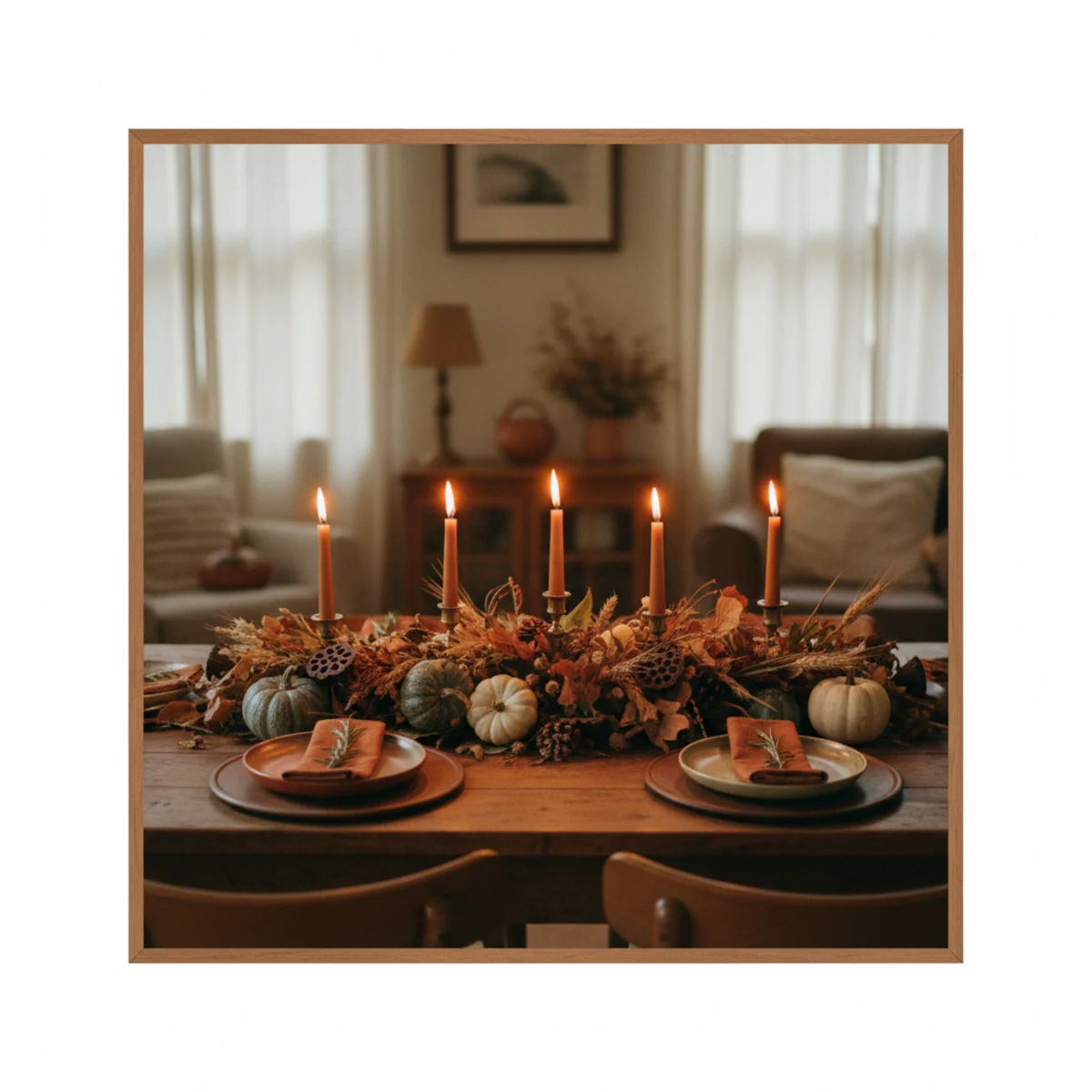
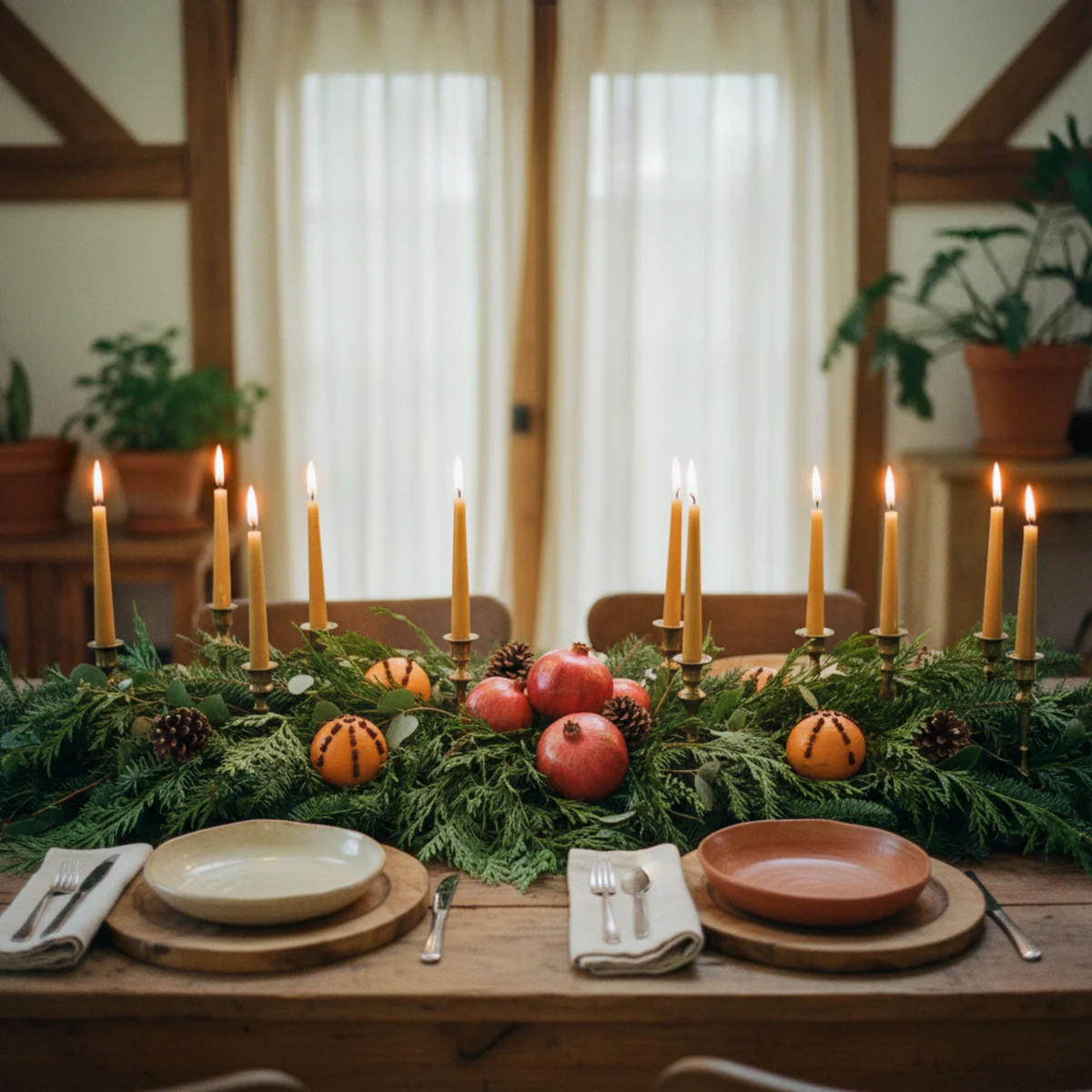
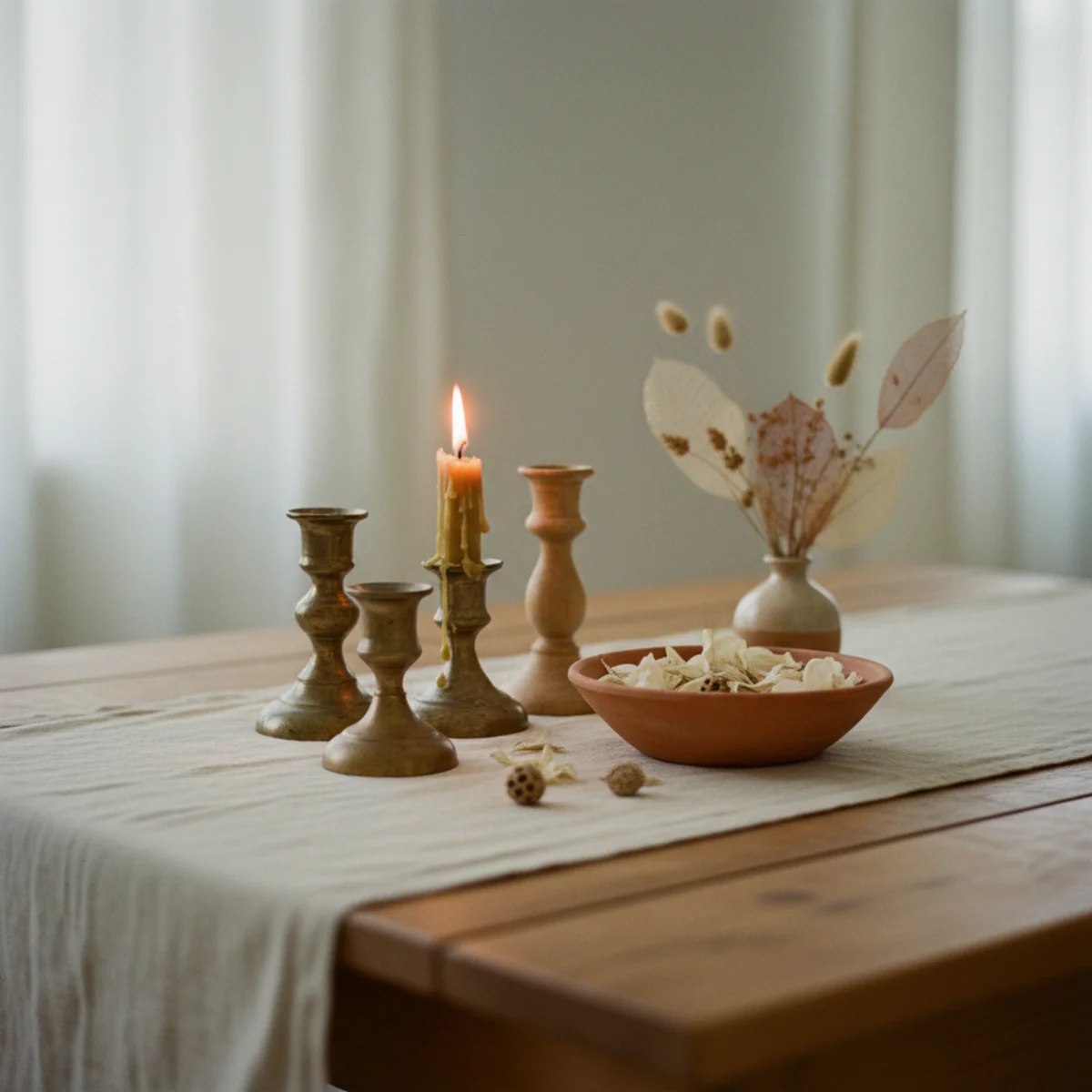
Foraged centerpiece options by season: SPRING — fresh-cut tulips from yard, branches with new buds (forsythia, dogwood, magnolia), fresh herbs (basil, mint, parsley) in small ceramic bowls. SUMMER — wildflowers from meadow walks, fresh-cut hydrangeas, herbs in bloom (rosemary, lavender, thyme flowers). FALL — small pumpkins and gourds from garden, autumn branches with colored leaves (oak, maple), dried wheat stalks, late-season herbs going to seed. WINTER — evergreen branches (pine, cedar, eucalyptus, fir from yard), dried foliage from autumn (eucalyptus, lavender, dried hydrangea), small pinecones, citrus from grocery store. DISPLAY OPTIONS — small ceramic bowls with water (for fresh-cut stems), small hand-thrown vases (5-8 inches tall, low enough for centerpiece rule), simple wooden trays with arranged elements, single low ceramic platter with scattered seasonal pieces. The foraged approach IS the warm-home aesthetic; florist arrangements often read commercial by comparison.
AFFILIATE SLOTCENTERPIECESeasonal foraged from yard or walks: spring branches/tulips, summer wildflowers/herbs, fall branches/gourds, winter evergreensAdd affiliate URL when configuredWhy it works
Because foraged greenery has irregular shapes, varied heights, natural color variation, and visible source-context that florist arrangements specifically lack. Florist arrangements are designed for perfection and uniformity; foraged centerpieces have the wabi-sabi imperfection that warm-collected aesthetic values. The seasonal connection also matters — your foraged centerpiece will change naturally with what's available in your yard or neighborhood, signaling that the table responds to actual seasons rather than to commercial florist supply chains. And foraged is free; the cost difference is significant for households that style tables regularly.
Pro tip — Walk through your yard or neighborhood 15 minutes before setting the table to forage centerpiece materials — even in winter, branches, evergreens, and dried botanicals are available almost everywhere. The brief walk also becomes part of the meal preparation ritual, connecting the meal more genuinely to the season and place where you're hosting.
Foraged evergreens, dried hydrangeas, pinecones — seasonal centerpiece for $0 in materials. See also: warm-home aesthetic
05Mix Dishes That Relate, Not Match
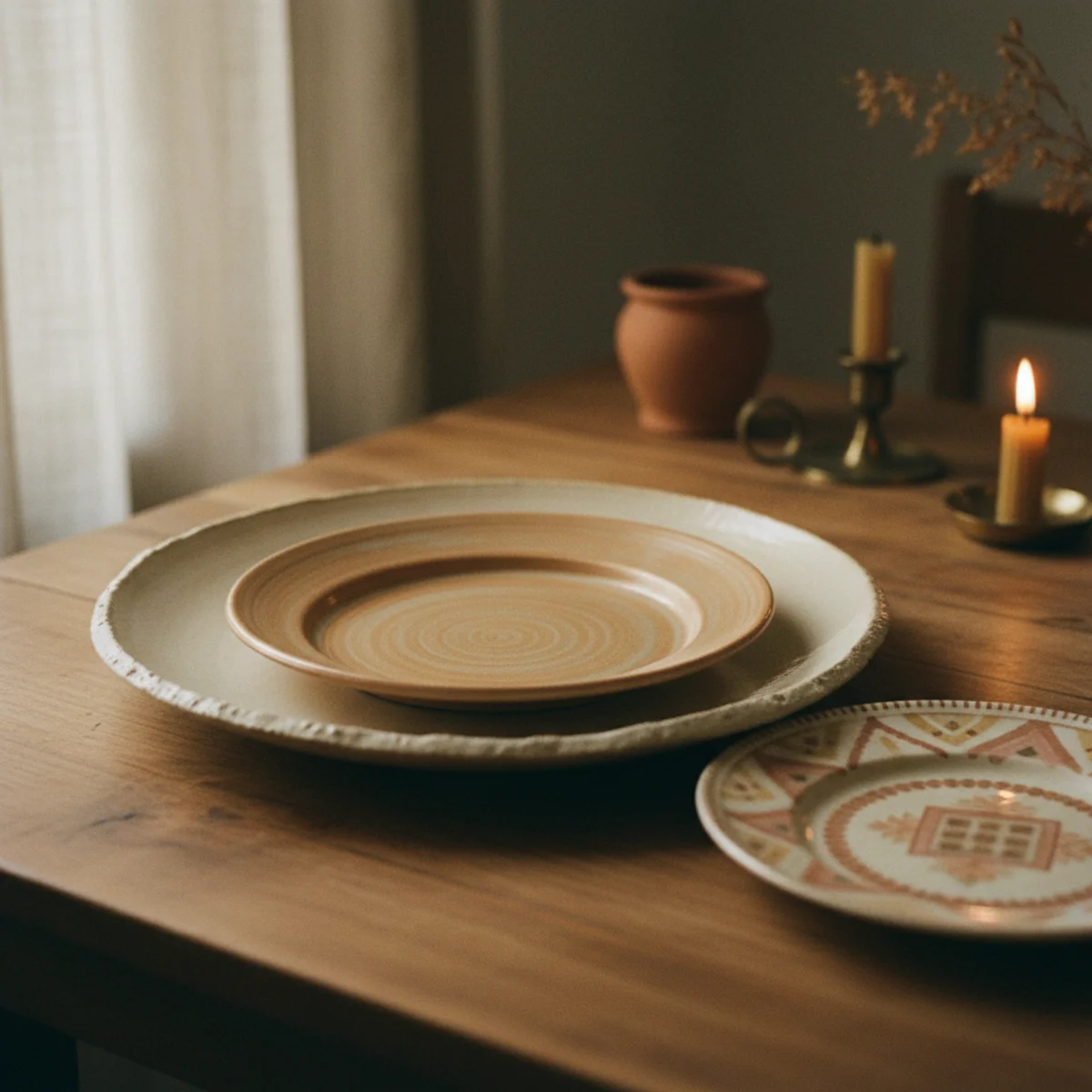
Cozy tablescape dish strategy: mixed-but-related dishes rather than perfectly matched sets. Three coordinated cream stoneware plates + one hand-thrown ceramic salad plate + vintage pressed glass for water creates the collected warm-home aesthetic where 6 identical pieces of bridal china reads as formal commercial display.
Mixed-dishes principles: PRIMARY DINNERWARE in cream, oat, or warm tone stoneware (ceramic, not porcelain) — 6 to 8 matching plates as the base set ($150-400 from Heath Ceramics, East Fork, Pottery Barn, or thrifted at $20-80 from estate sales). ACCENT PIECES from different sources but coordinated palette — hand-thrown salad plates, dessert plates, bread plates from Etsy artisans at $20-60 each. VINTAGE PRESSED GLASS or stemmed glassware for water and wine — varied designs but coordinated heights and colors ($2-15 per piece thrifted, $20-60 retail). SILVERWARE — vintage silver-plate from estate sales at $40-150 for full place setting, OR modern matte finish from Heath or Etsy at $80-300, OR simple thrifted mixed silver for budget option. SERVING PIECES — wooden boards, hand-thrown ceramic platters, vintage brass trays for serving family-style. The discipline: pieces should share warm-palette tone and similar weight, but differ in specific design, era, or maker. The intentional unevenness signals 'collected over years' where perfect matching signals 'purchased as set.'
AFFILIATE SLOTDISHWAREMatching cream/oat stoneware base set + mixed accent pieces from different sources + vintage glassware + thrifted serving piecesAdd affiliate URL when configuredWhy it works
Because matching sets read as commercial display where mixed pieces read as accumulated household. The visual difference is significant — guests register matched as 'formal occasion, performed display' and mixed as 'real home, family gathering.' The matched-set aesthetic also pulls toward formality (people behave more formally when dining on obviously expensive matching china); mixed pieces signal casual warmth that supports actual conversation and connection. Plus mixed allows you to build the collection slowly across thrifting, gifts, and considered purchases rather than requiring large one-time investments.
Pro tip — Buy serving pieces (wooden boards, hand-thrown platters, vintage brass trays) at thrift stores and estate sales — these accent pieces add the most character to mixed-dish tablescapes at the lowest cost. A $15 vintage brass tray for serving cheese or bread adds significantly more warm-collected character than $50 spent on additional matching dinner plates.
Heath base set, mixed ceramic accents, vintage pressed glass — collected over years, not bought as set. See also: Heath Ceramics
06Add Cloth Napkins With Texture
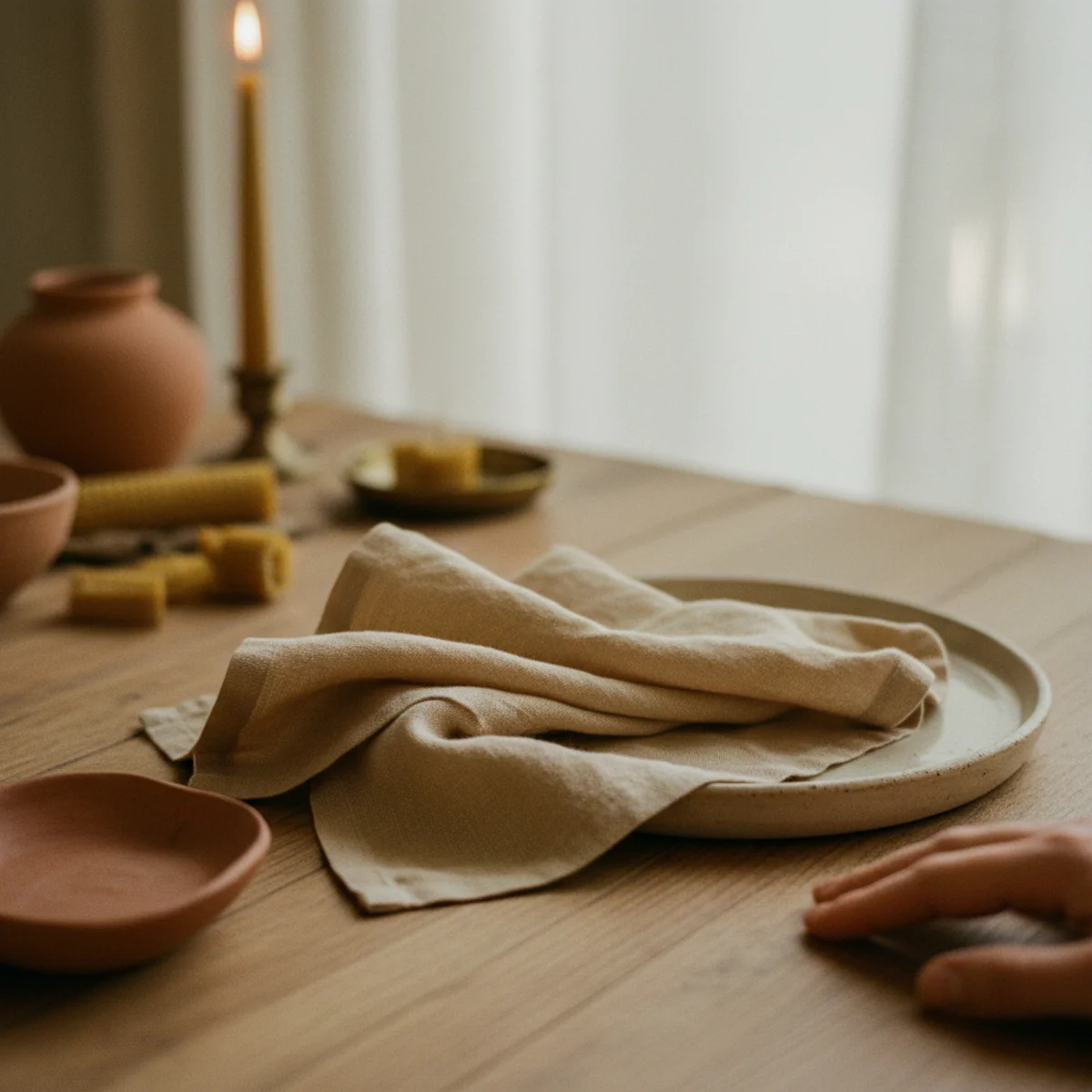
Cloth napkins are non-negotiable for cozy tablescapes — paper napkins immediately signal casual disposable rather than considered meal. The cloth choice matters too: textured natural-fiber napkins (linen, washed linen, cotton with visible weave) outperform smooth polished cotton or polyester blends. Cost: $20 to $80 for set of 6 quality cloth napkins; impact: significant.
Cozy cloth napkin specs: WASHED LINEN in cream, oat, terracotta, sage, or natural ($30-80 for set of 4-6 from Quince, Magic Linen, Etsy artisans). The washed-linen wrinkly texture is the most-cozy aesthetic. COTTON WAFFLE WEAVE napkins ($25-60 for set of 6 from Brooklinen, Parachute, Williams-Sonoma) for casual everyday use. VINTAGE COTTON napkins at $5-15 each from estate sales — often gorgeous hand-embroidered or hand-stitched pieces at lower cost than new retail. THRIFTED LINEN at $2-8 each from thrift stores. AVOID: bright white polyester-blend restaurant napkins, paper anything, overly-pressed crisp cotton that reads as formal restaurant. SIZE — standard napkin 18x18 to 20x20 inches; larger cocktail napkins (12x12) for casual or appetizer service. FOLDS — simple loose folds (folded in thirds or in halves, no decorative origami napkin folds). The slightly-rumpled relaxed posture matches cozy tablescape aesthetic; formal folds fight it.
AFFILIATE SLOTNAPKINSWashed linen ($30-80 for 4-6) OR cotton waffle ($25-60 for 6) OR vintage cotton from estate sales at $5-15 eachAdd affiliate URL when configuredWhy it works
Because cloth napkins are the single most-noticed dining detail by guests — and the difference between paper and cloth signals 'casual quick meal' versus 'considered meal worth showing up for.' The texture variation also matters tactilely throughout the meal (guests use napkins constantly); a soft washed linen napkin against the hand registers as quality where a crisp polyester or paper version registers as institutional or disposable. The compound effect across the entire meal (dozens of napkin-to-hand touches per guest) is significant.
Pro tip — Wash linen napkins 2-3 times before first use to develop the soft slightly-wrinkled aesthetic — fresh-from-package linen napkins are stiff and uniform but break in dramatically with multiple washes. The character that linen napkins specifically get credit for emerges only after the breaking-in process.
Washed linen napkin with slubby texture and loose fold — non-negotiable for cozy tablescape. See also: Quince
07Cluster Pillars for a Centerpiece
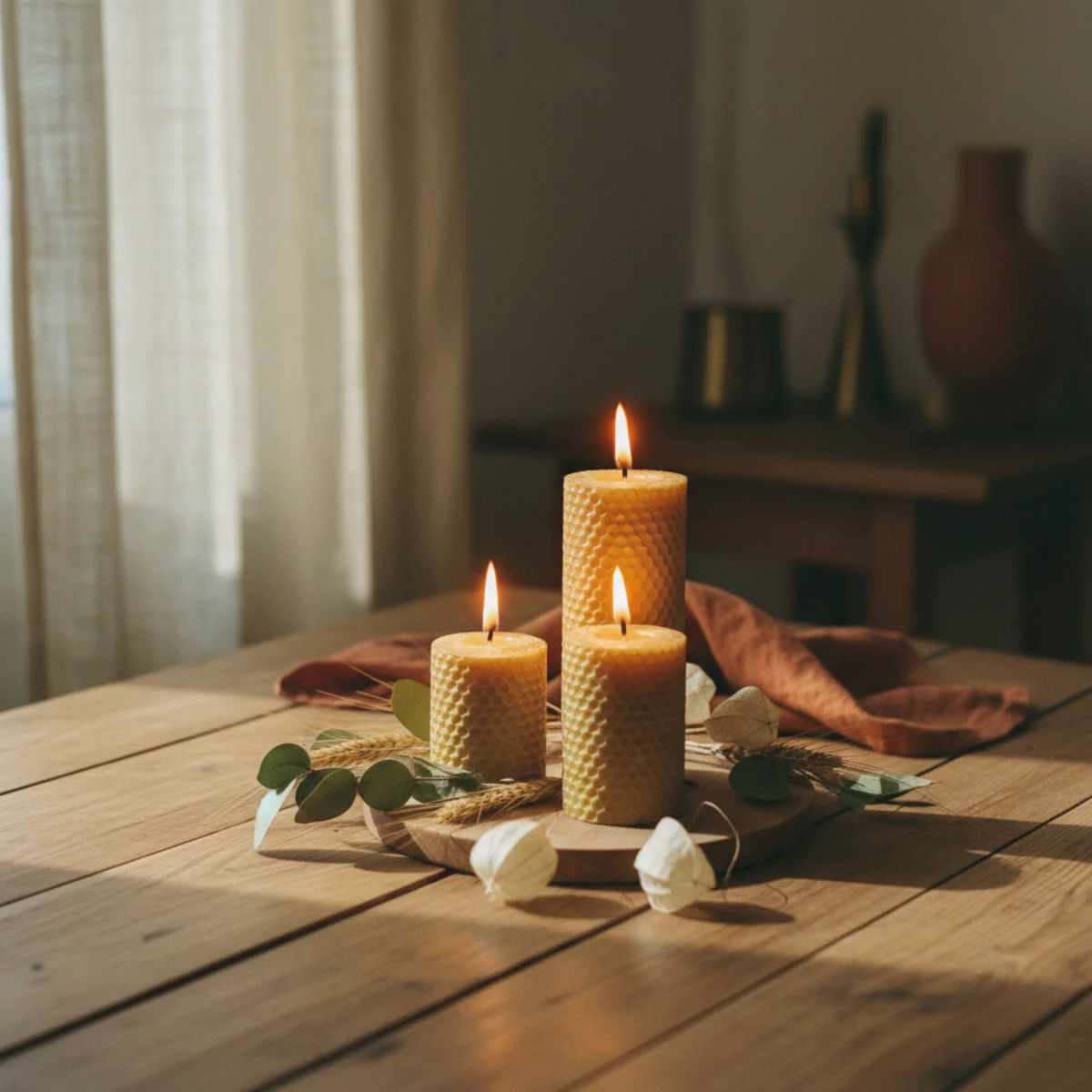
Alternative to the taper-line: cluster 3 to 5 pillar candles of varying heights in the center of the table on a wooden tray or stone slab. The cluster works especially well for round tables (where the taper line doesn't fit the geometry) and for casual family meals where the formal taper-line might read too dressed-up. Cost: $15 to $50 for the cluster; impact: warm focal point.
Pillar cluster setup: 3 TO 5 PILLAR CANDLES in varying heights and widths — one tall (8-10 inches), two medium (5-7 inches), two short (3-4 inches) — in cream, ivory, beeswax-natural, or warm earth tones ($5-15 per pillar from Walmart, Target, or specialty candle shops). MIXED WIDTHS — pillars at 2.5 to 4 inches wide for visual mass and substantial burn time. CLUSTER POSITION on a small wooden tray (8-12 inches across, $15-40 from Marketplace or kitchen retailers), stone slab, or vintage brass tray. STAGGER the heights so the cluster reads as composition: tallest in back-center if approached from primary side, medium and short candles arranged forward. ADD SMALL ELEMENTS around the candle cluster — small pinecones, smooth stones, sprigs of greenery, dried orange slices on twine — that fill spaces without competing with the candles. The cluster works well for round tables (4 to 6 inches diameter for 4-person tables) where the elongated taper line doesn't fit the geometry. The cluster also works for casual family meals where formal taper line reads overdressed.
AFFILIATE SLOTCANDLES3-5 pillars at varying heights (8-10/5-7/3-4 inches) clustered on wooden tray or stone slab; ideal for round tablesAdd affiliate URL when configuredWhy it works
Because round tables specifically don't accommodate the long taper line well — the line that fits a rectangular table feels stretched and awkward across a round one. The pillar cluster works geometrically with round tables, and the lower height of pillars (versus taller taper-in-holder height) creates intimate central focal point rather than vertical lines crossing the table. The cluster also reads more casual than the taper line, which is appropriate for everyday family meals where the more elaborate taper-line setup feels overdressed. The choice between taper-line and pillar-cluster depends on table shape and meal formality.
Pro tip — Use beeswax pillars rather than paraffin for the cluster — the warmer flame and natural honey scent outperform paraffin atmospherically, and the longer burn time (30-50 hours per pillar versus 20-30 for paraffin) makes them more cost-effective across regular use. Beeswax pillars at $10-25 each from Etsy beekeepers or specialty candle shops.
Five pillars at varying heights on wooden tray — pillar cluster alternative for round tables. See also: candle-styling
08Bring In Warm Brass and Wood
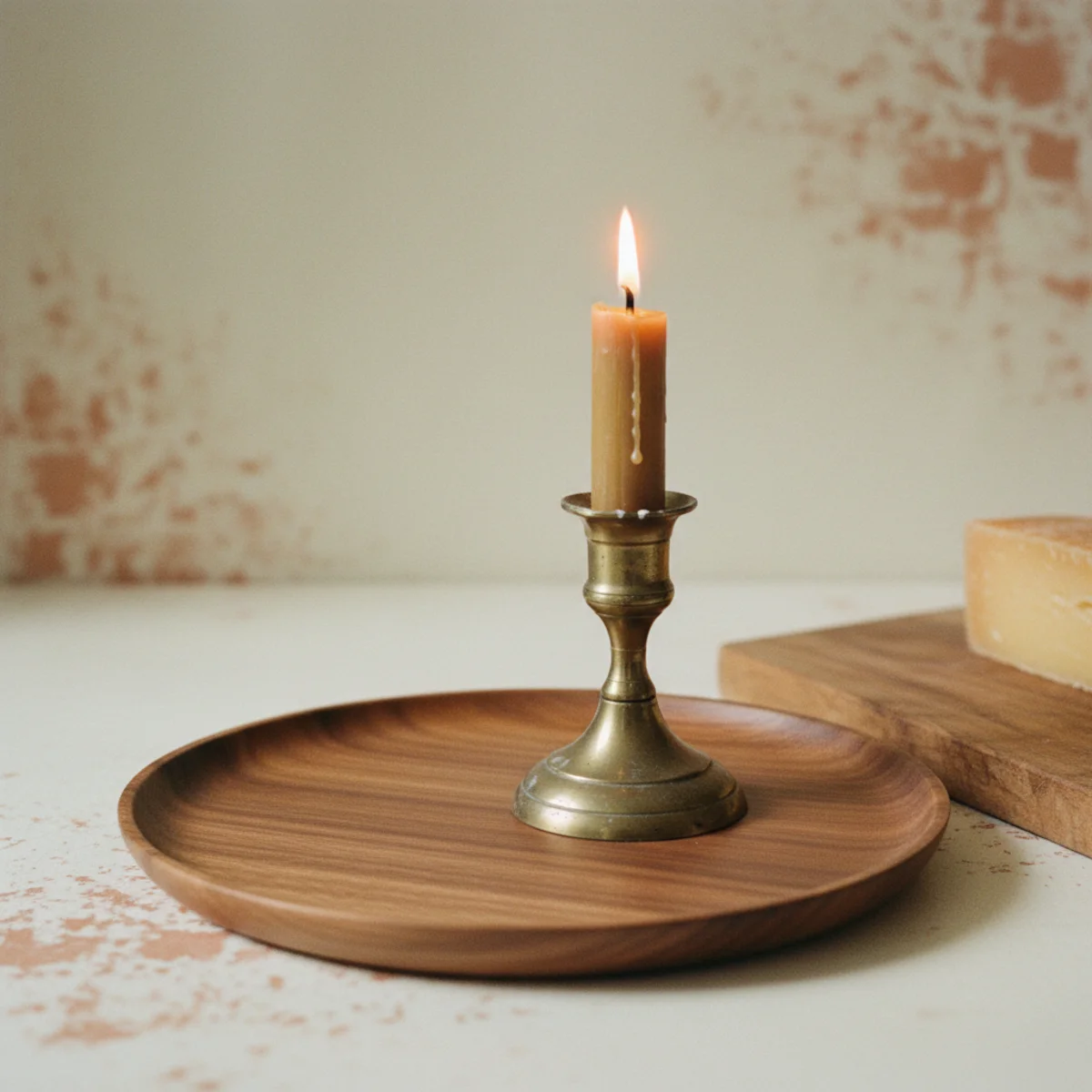
Cozy tablescapes integrate warm metals and woods throughout — brass candleholders, wooden cutting boards as serving pieces, wooden bowls for bread or salt, oiled bronze flatware (or vintage silver), wooden napkin rings if you use rings at all. The consistent warm-metal-and-wood language ties the table together and reinforces warm-collected aesthetic.
Warm metal and wood integration: CANDLE HOLDERS in vintage brass at $5-30 each from estate sales (per candle-styling rule 9). WOODEN CUTTING BOARD for bread or cheese service — large 12 to 18-inch walnut or oak board at $40-150 retail or $10-40 thrifted. WOODEN SALT BOWL — small 3-5 inch carved wood or hand-thrown ceramic bowl with rough salt or sea salt for the table ($5-30). WOODEN HANDLES on serving utensils — vintage bone or wood-handled serving fork and spoon at $10-40 per set from estate sales. VINTAGE BRASS TRAYS for service ($10-50 thrifted) or wooden trays. AVOID stainless steel modern serving pieces, chrome utensil rests, silver-colored decorative elements — all cool metal language fighting warm tablescape aesthetic. The consistent warm-metals-and-wood signature across multiple table elements is what makes the styling read unified rather than piecemeal.
AFFILIATE SLOTMATERIALSBrass candleholders + wooden serving boards + wooden bowls + bronze or vintage silver flatware - all warm metal/wood, never chromeAdd affiliate URL when configuredWhy it works
Because table elements are viewed up-close and processed individually by each guest across the meal — and inconsistent metal/material language (brass candleholders but stainless serving spoon, wooden cutting board but chrome napkin ring) breaks the warm aesthetic at the small-detail level. Consistent warm metals across all visible elements unifies the table and signals deliberate styling. The discipline applies to small details that wouldn't seem to matter individually but compound visually.
Pro tip — Audit your existing serving pieces and replace any chrome or stainless steel items with wood, brass, or oiled bronze alternatives over time — one swap per quarter ($10-50 per swap from estate sales) gradually shifts the entire serving collection toward warm metal language. The slow accumulation costs little and transforms the visual coherence across years.
Brass candleholders, walnut board, ceramic salt bowl, vintage silver — consistent warm metal and wood. See also: candle-styling rule 9
09Add Seasonal Fruit or Produce
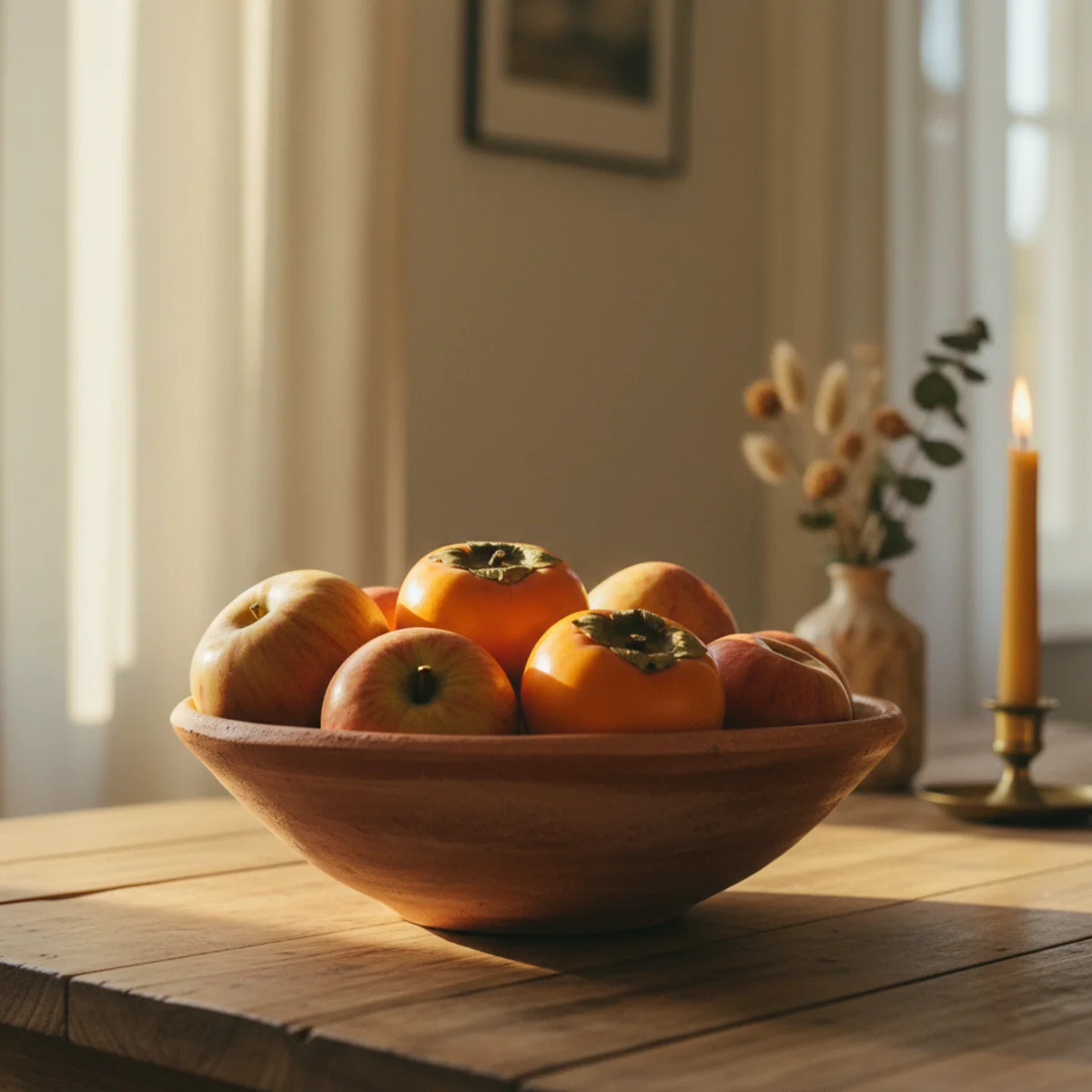
Beyond candles and greenery, cozy tablescapes benefit from seasonal fruit or produce as visual element — bowls of citrus in winter, summer berries in season, autumn pomegranates and figs, spring strawberries and asparagus. The produce adds bright color against the warm-restrained palette, signals seasonal connection, and is functionally useful (often served as part of the meal). Cost: $5-15 weekly; impact: warm visual punctuation.
Seasonal produce by season: WINTER — bowl of mixed citrus (oranges, lemons, blood oranges, clementines) — bright orange against muted winter palette, also useful for cooking ($5-12 per bowl, refresh weekly). SPRING — fresh asparagus tied with twine, strawberries in small ceramic bowl, fava beans in green pods, fresh herbs in small bowls. SUMMER — peaches, plums, cherries, berries in low ceramic bowl ($8-15), tomatoes from garden if available, sliced melons. AUTUMN — pomegranates (whole and split open showing seeds), figs, persimmons, small pumpkins and gourds, late grapes. DISPLAY OPTIONS — low wide ceramic bowl, wooden bowl, small wooden cutting board, vintage brass tray. Position centrally on the table beside the candle line or pillar cluster. The bright color of the fresh produce adds the visual punctuation that all-neutral tablescapes can lack, and the seasonal rotation keeps the styling responsive to actual seasons rather than to commercial florist supply.
AFFILIATE SLOTSTILL LIFESeasonal produce in low wide bowl - winter citrus, spring asparagus/berries, summer stone fruit, autumn pomegranates/figsAdd affiliate URL when configuredWhy it works
Because produce serves multiple functions simultaneously: bright color contrast (against neutral palette), seasonal connection (signaling what's actually available in current season), functional usefulness (often eaten as part of the meal or post-meal), and warm-home authenticity (signals 'real household with real cooking' rather than purely styled display). The combination is hard to replicate with purely decorative elements. Many cozy tablescapes feel incomplete without the bright color note that fresh produce provides.
Pro tip — Refresh the produce bowl weekly across seasons — the rotation costs only $5-15 per refresh and keeps the centerpiece visually active rather than becoming background. The weekly refresh also becomes part of meal planning (you're more likely to actually eat seasonal produce when it's prominently displayed on the dining table).
Bowl of winter citrus — bright color against muted winter palette, refresh weekly. See also: winter-decor
10Use Place Cards Sparingly
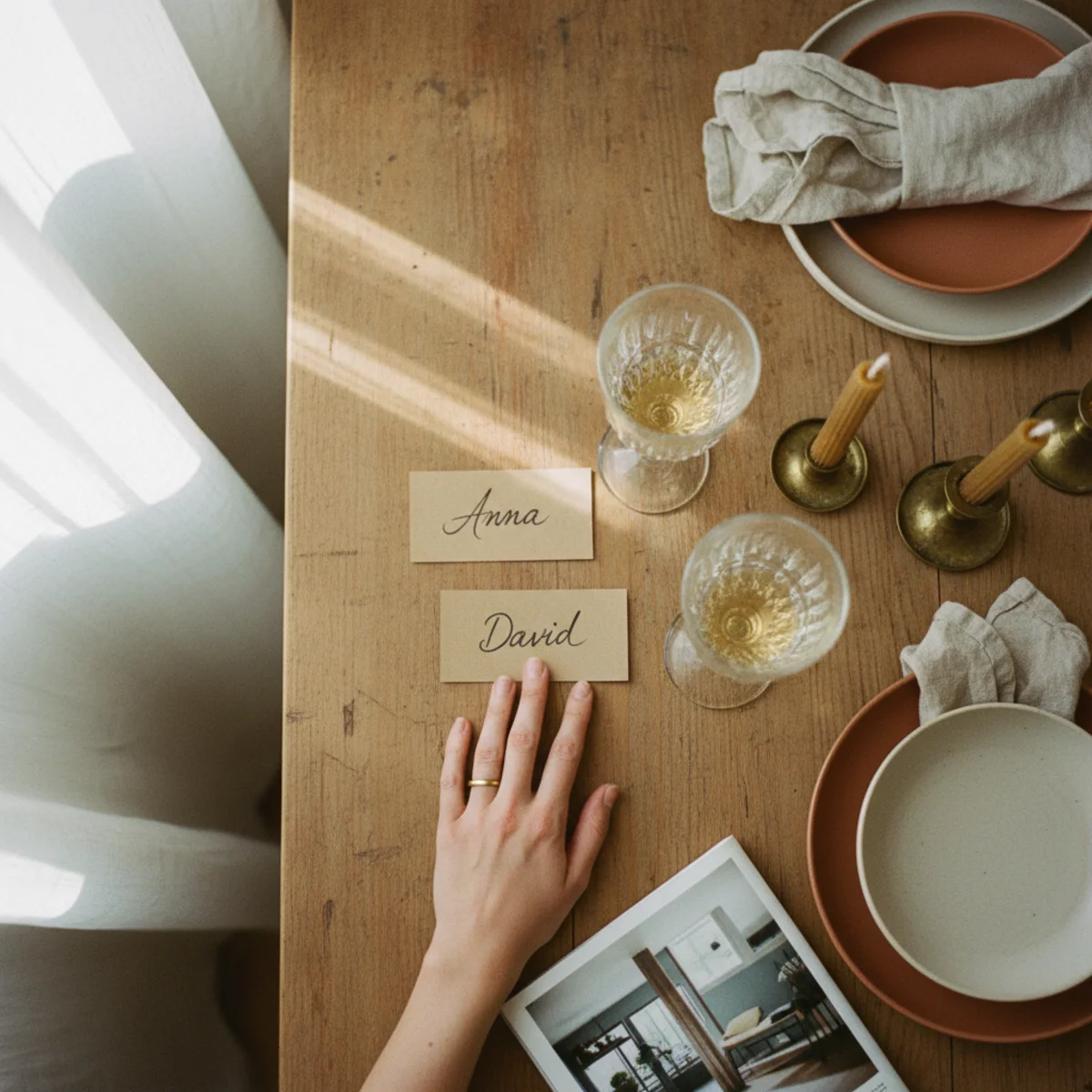
Place cards add character to dinner parties but should be used sparingly — only when actual seating planning matters (formal dinners, large gatherings, when conversation flow needs orchestration). For casual family meals and intimate dinners (4-6 guests), skip place cards entirely. When used, handwritten cards on natural materials outperform printed cards or commercial place card holders.
When to use place cards: FORMAL DINNERS where seating arrangements matter for conversation flow (8+ guests, strategic mixing of household members and outside guests). LARGE GATHERINGS (10+ people) where avoiding 'where do I sit?' confusion matters for smooth meal start. SPECIAL OCCASIONS that warrant the slightly formal touch (anniversaries, milestone birthdays, holiday hosting). When NOT to use: casual family meals, intimate dinners with close friends, any meal where the conversation will naturally flow regardless of seating arrangement. PLACE CARD MATERIALS — small natural-fiber paper cards (handmade or thick textured paper) at $5-15 for set of 12, OR small wooden tags at $1-3 each from Etsy or craft stores. WRITING — hand-written in dark ink (black, deep brown, or oxblood), not printed. PROP UP with small brass or wooden card holders ($5-15 each), or simply lean against the wine glass at each setting. AVOID — commercial printed place cards from party supply stores, plastic place card holders, anything reading as commercial or impersonal.
AFFILIATE SLOTDETAILSHand-written place cards on natural-fiber paper or wooden tags only for formal dinners 8+ guests; skip for casual mealsAdd affiliate URL when configuredWhy it works
Because place cards introduce formality — and unnecessary formality at casual meals breaks the cozy aesthetic that the rest of the styling supports. The same handwritten place card that reads as charming at a formal dinner reads as oddly formal at a casual family meal. The discipline is matching the place-card decision to the meal's actual formality level. For most cozy tablescape settings, no place cards is the right answer; reserve them for occasions where actual seating planning serves real purpose.
Pro tip — When using place cards, write them at the same time as setting the table (during the 30 minutes before guests arrive) rather than pre-printing — the handwritten just-prepared posture reads warmer than pre-printed commercial cards. Use a quality pen (Lamy Safari or Pilot Metropolitan with dark brown ink at $30 for the pen, $5 for ink) for the right line quality.
Hand-written natural-paper card leaning against wine glass — formal-occasion use, sparingly applied. See also: natural-fiber paper
11Layer a Charger or Wood Plate
Adding a charger plate (large decorative plate under the dinner plate) or wooden plate adds visual layering at each place setting. The charger isn't functional (it doesn't hold food) but it adds compositional depth, frames the dinner plate, and signals considered formal-but-casual styling. Cost: $15-80 per charger; impact: significant layering effect.
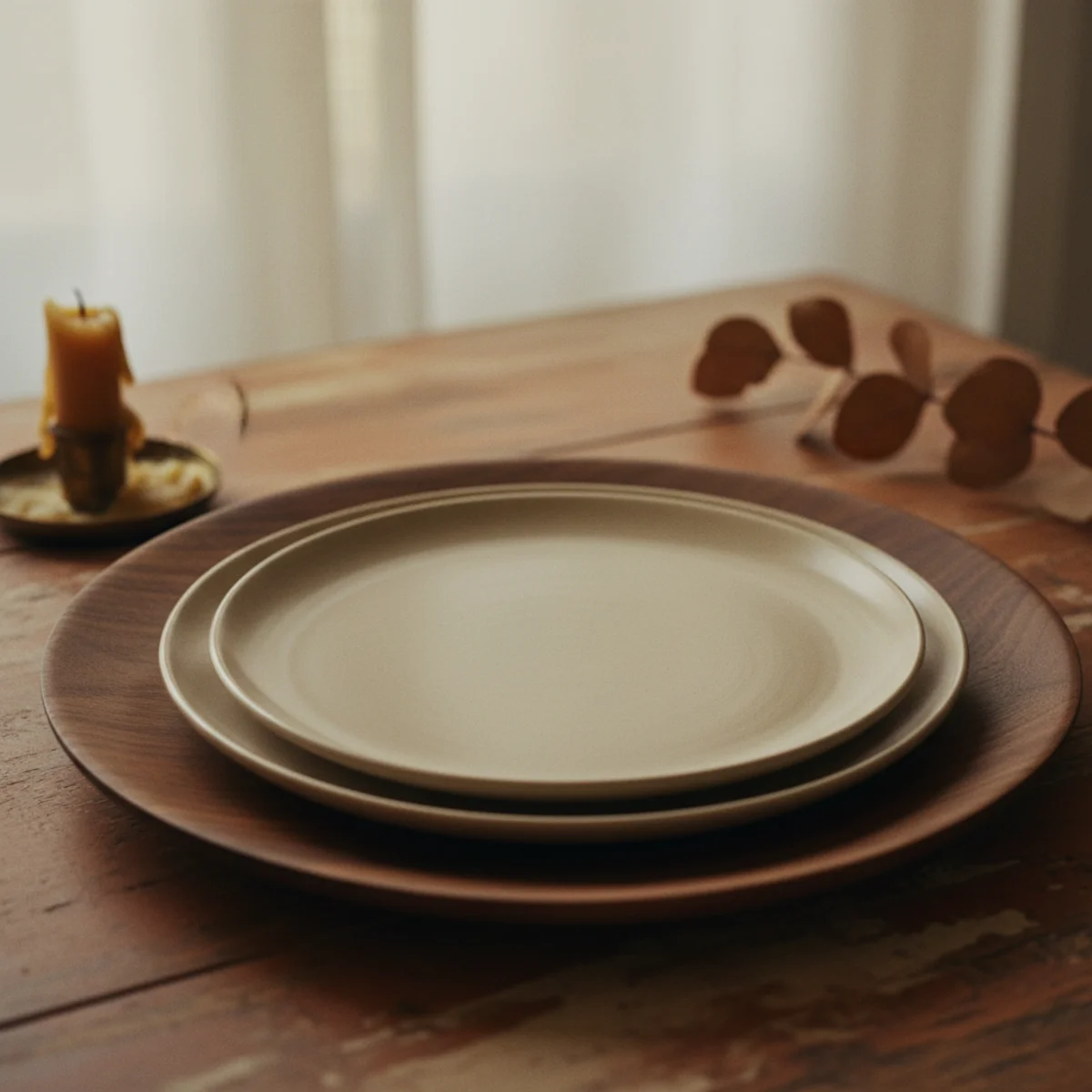
Charger plate options: WOODEN ROUND CHARGERS — 12 to 13 inches diameter in walnut, oak, or olive wood ($20-50 each from World Market, Pier 1, or Etsy artisans). The natural wood reads especially warm under ceramic dinner plates. RATTAN OR WOVEN CHARGERS — natural fiber 12-13 inches diameter ($15-40 each from Target Threshold or vintage at $5-20 from estate sales). Provides texture contrast against smooth ceramic plates. CERAMIC CHARGERS — colored or patterned ceramic plates 12-13 inches in warm earth tones ($25-80 each from Anthropologie, World Market, or Etsy). VINTAGE BRASS OR METAL TRAYS as chargers ($10-40 thrifted) for occasional use. PLACEMENT — charger on the placemat or directly on linen runner/tablecloth, dinner plate centered on top with 0.5-1 inch of charger visible around the plate edge. The chargers stay for the meal (under each plate), but are removed for dessert or coffee course if desired.
AFFILIATE SLOTPLACE SETTINGWooden round chargers (12-13 inches, walnut/oak/olive) OR rattan/woven chargers OR ceramic chargers in warm earth tonesAdd affiliate URL when configuredWhy it works
Because the visible 0.5 to 1-inch border of charger around each dinner plate creates compositional framing — the eye reads the dinner plate as displayed within a setting rather than as floating on the linen. The added depth at each place setting multiplies across the table (8 place settings each with chargers = 8 framed compositions). The wooden or rattan chargers also add the natural-material language at the place setting level, reinforcing warm-collected aesthetic. The trade-off: chargers add another item to wash after the meal, which makes them better-suited for special occasions than for everyday meals.
Pro tip — Source wooden round chargers from Etsy artisans for the best quality-to-price ratio — handmade wooden chargers at $25-50 each from independent makers outperform $20-30 chargers from chain retailers in both quality and aesthetic. The Etsy makers also offer warm earth tone wood options that big-box retailers don't typically stock.
Walnut charger under cream dinner plate — layered place setting with visible compositional framing. See also: Etsy artisans
12Light the Room Low Around the Table
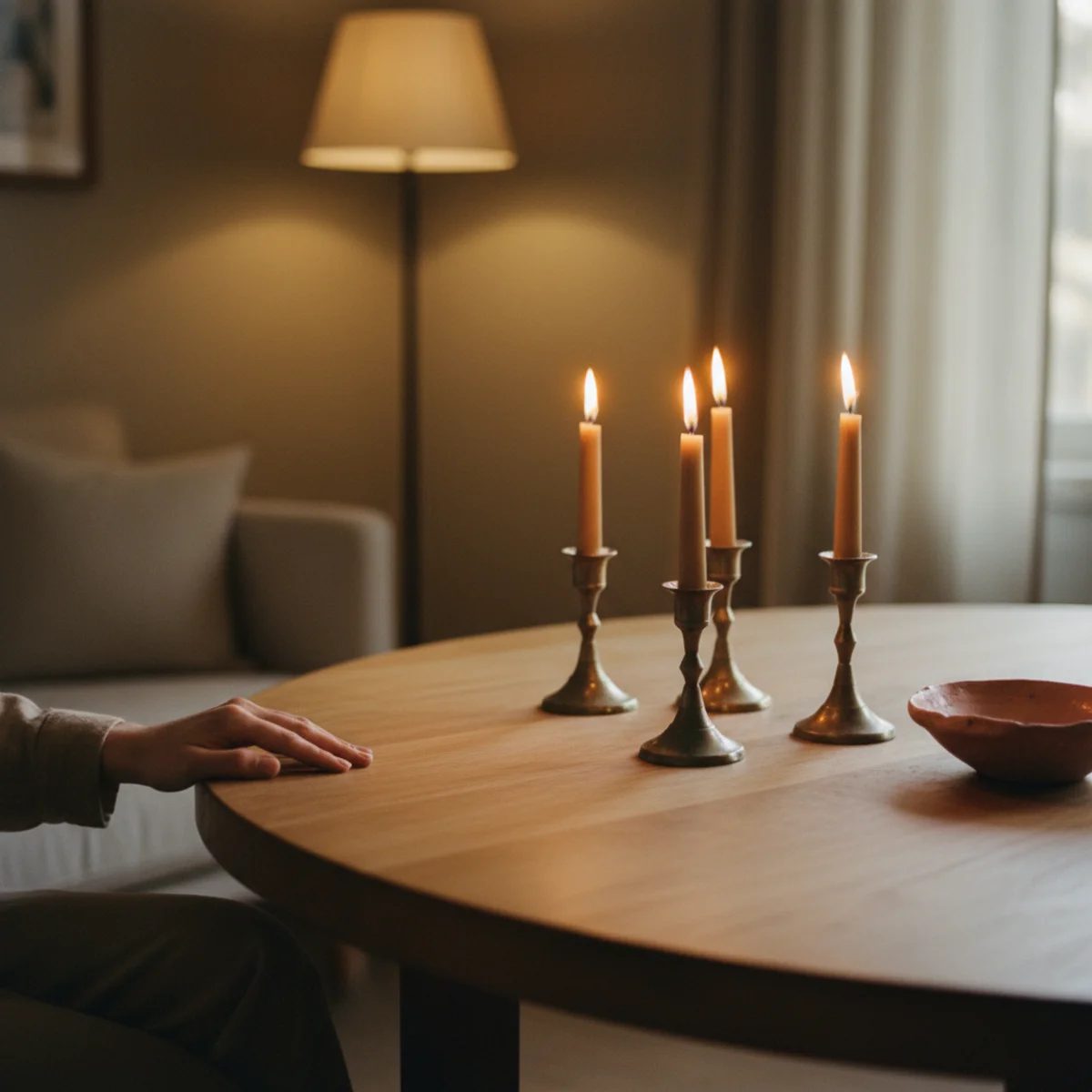
Cozy tablescape lighting depends on the room around the table being dim — the candles on the table provide most of the meal's lighting, with overhead and ambient room lighting dimmed significantly. The contrast between bright table and dim room creates the atmospheric pool of warm light that transforms the meal experience. Cost: $0 if you already have dimmer switches, $50-200 to add them.
Tablescape lighting protocol: DIM OVERHEAD LIGHTING (dining room overhead chandelier or pendant) to 10-25% brightness — barely lit, just enough not to be completely dark. The dimmer switch ($25 from Lutron) controls this if you don't already have one. AMBIENT ROOM LIGHTING (table lamps in adjacent living room visible from dining table) at 50-70% — provides distant warm glow without competing with table. TABLE CANDLES (per rule 2 taper line or rule 7 pillar cluster) at FULL brightness — these become the meal's primary light source. SCONCES — if available beside the dining table or in adjacent walls, at 50-70% for ambient supplementation. OUTSIDE LIGHTING through windows — close drapes during winter evenings (per winter-decor rules) to prevent dark windows from feeling like external pressure. TIMING — adjust all lighting 5 minutes before guests arrive so the room is in 'dinner mode' when they walk in, not adjusted-during-the-meal. The dim-room + bright-candles contrast is what creates the intimate atmospheric quality that cozy tablescapes are known for.
AFFILIATE SLOTAMBIENTOverhead at 10-25%, adjacent room lamps at 50-70%, table candles at full brightness; adjust 5 min before guests arriveAdd affiliate URL when configuredWhy it works
Because contrast is what makes candle light read as atmospheric pool — without dim surroundings, the candles compete with ambient bright light and read as decorative addition rather than as primary atmospheric source. The dim-room context lets the candles become the meal's actual lighting, which transforms the dining experience emotionally. The brain reads 'we are gathered around the warm light, the outside world is dim' — which is the deeply evolutionary signal of safety and intimacy that humans have associated with fire-lit gatherings for hundreds of thousands of years.
Pro tip — Install Lutron Caséta or other smart lighting if you don't already have dimmer switches — the $50 per switch investment lets you set 'dinner' scenes via voice control or single button press, automating the lighting transition every time you host. The automation makes the dimming actually happen every meal rather than being skipped due to switching-effort friction.
Dim overhead, warm ambient lamps, bright table candles — contrast that makes candle light the primary atmosphere. See also: Lutron Caséta

How to set a cozy tablescape step by step
Layer from the base up, and let the candlelight do the heavy lifting.
- 1Lay the base layer
Start with a washed-linen runner or cloth down the center, letting it wrinkle naturally rather than pressing it flat.
- 2Run the candles and centerpiece
Place beeswax tapers at varied heights and a low centerpiece of foraged greenery down the middle, keeping everything low enough to see over.
- 3Set each place warmly
Add a wooden charger or woven mat, a relating-not-matching plate, and a loosely folded linen napkin with a sprig tucked in.
- 4Lower the room light
Dim or kill the overhead and let the table's candlelight and a few surrounding lamps carry the room.
Quick tips
- Let the linen runner wrinkle; pressing it flat undoes the relaxed warmth.
- Keep the centerpiece low enough to see and talk across — if you can't, it's too tall.
- Forage the greenery; olive, eucalyptus, and seasonal branches cost nothing and last the night.
- Use unscented candles at the table so they don't compete with the food.
- Kill the overhead light once everyone's seated and let the candles take over.
- Mix dishes that share a tone or material rather than buying a matched set.
Tablescapes for different gatherings
A runner, a few tapers, and a bowl of citrus — five minutes, no special dishes.
Dried wheat and foraged branches, brass tapers, and warm rust linen; see our autumn mantel guide for the palette.
Evergreen down the center, clustered beeswax pillars, and mismatched cream plates for a warm, un-fussy feast.
A single low runner of greenery and two or three tapers — scaled down but just as warm.
A cozy table makes people forget their phones and lose track of the hour. That's the whole point of setting one.
Frequently asked questions
How do I set a cozy tablescape on a budget?+
What's the rule for centerpiece height?+
What kind of candles should I use for a tablescape?+
Should I use a tablecloth or runner?+
Can I mix different dishes for a cozy tablescape?+
How do I light my dining room for dinner?+
A cozy tablescape is candlelight at face height, a low centerpiece you can talk across, and linen relaxed enough to ring with wine. Forage the greenery, mix the dishes you have, and kill the overhead once everyone sits down. We'd run a dozen beeswax tapers down a wrinkled linen runner before fussing over place settings — the light is what makes guests forget their phones and lose the hour, which is the only measure of a table that worked.