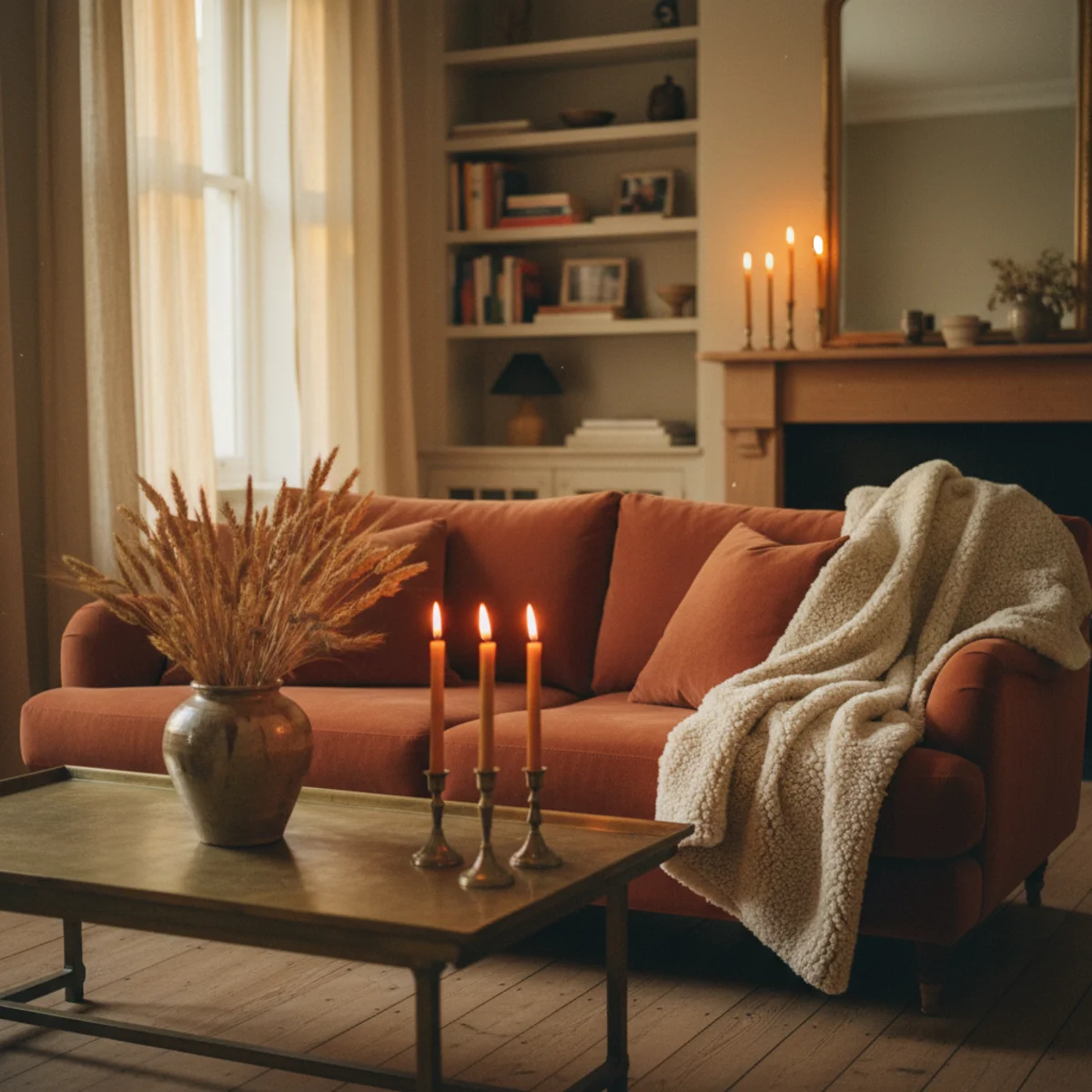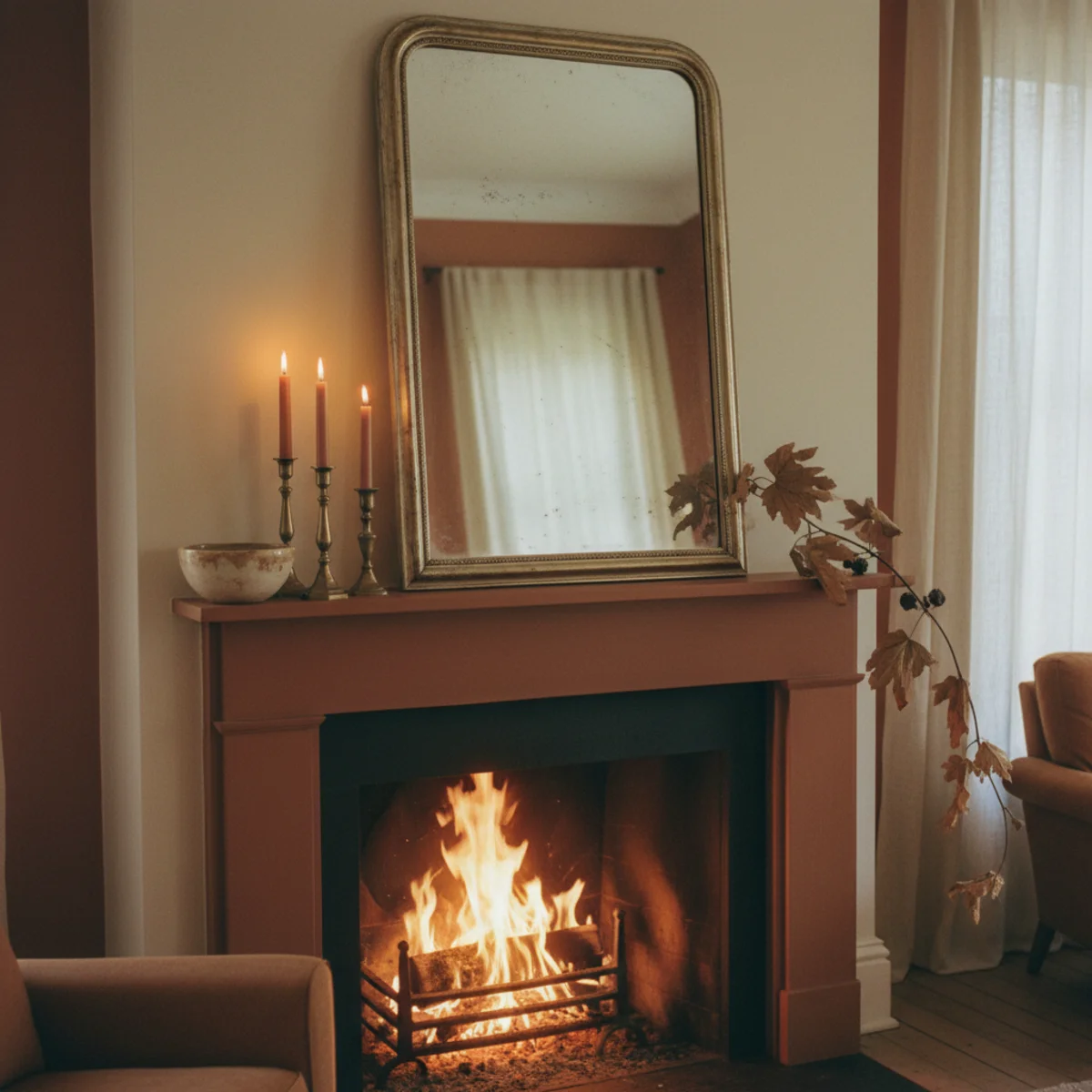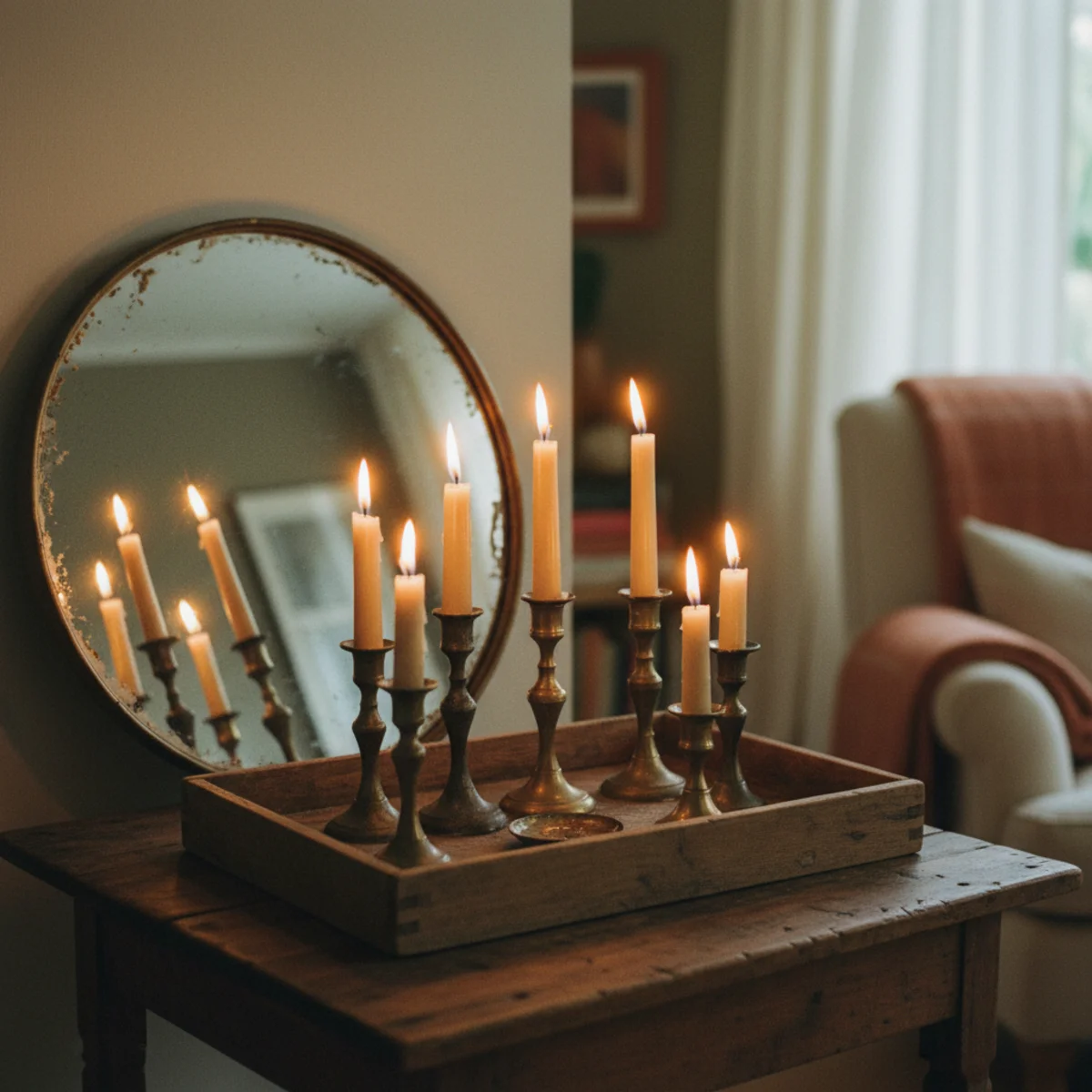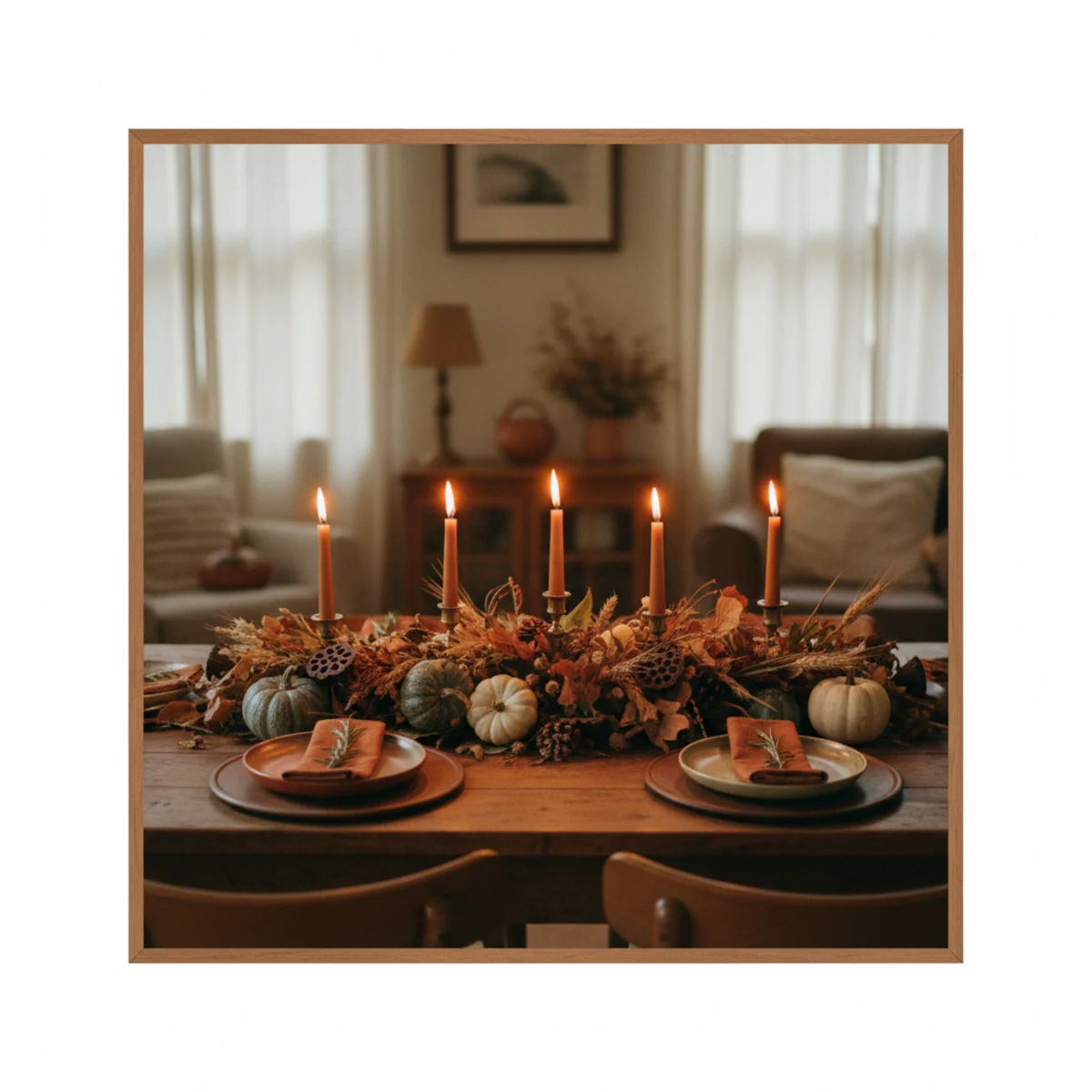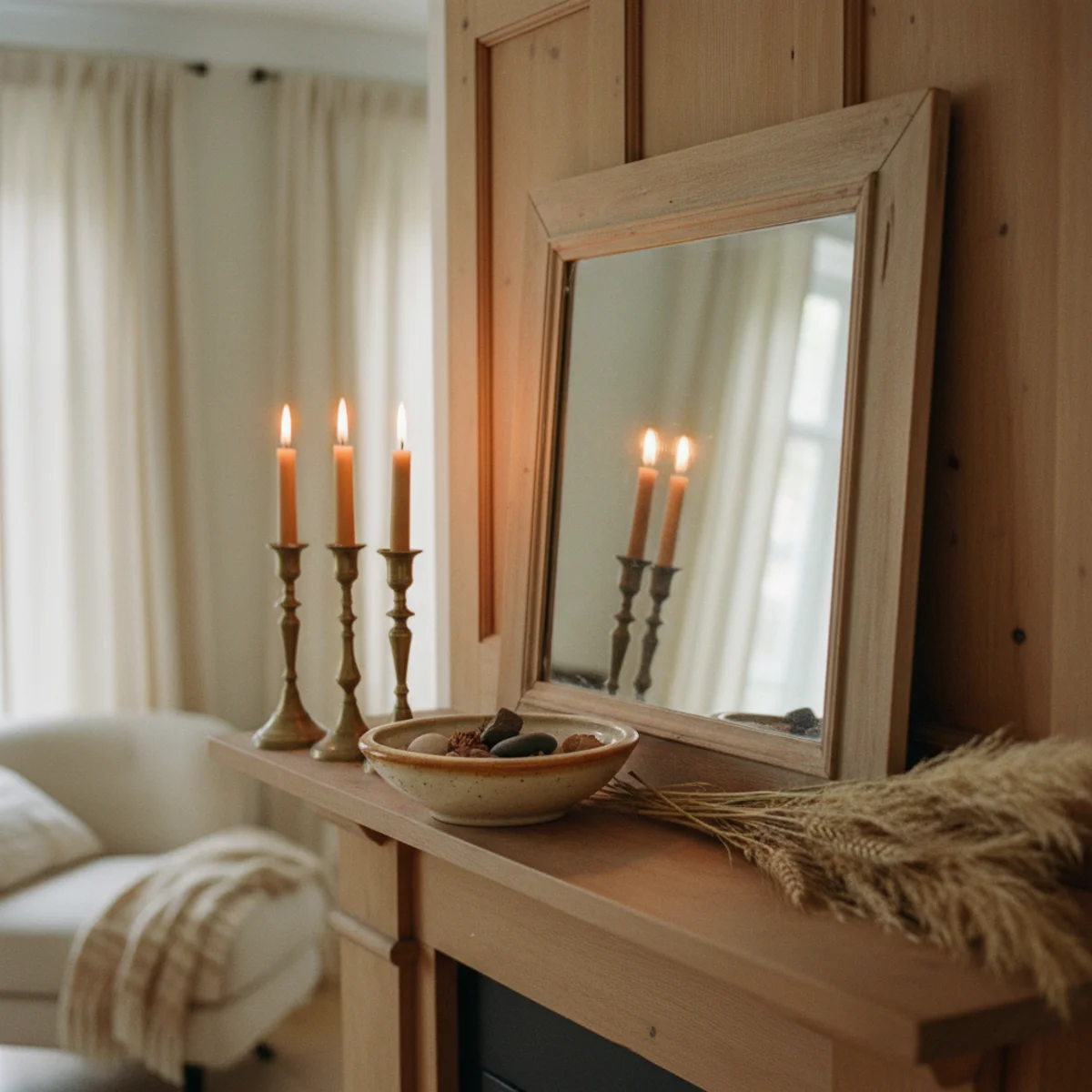
These eight autumn mantel ideas are tested across real autumn seasons in actual warm homes — September through November transitions, the specific shift from late-summer styling to deep-fall warmth, the practical considerations of fresh greenery sourcing and candle inventory. Each move below names specific materials (dried grasses, vintage brass, foraged branches), exact arrangement principles (off-center heavy weighting, three height planes, beeswax tapers lit at dusk), and budget-conscious sourcing (yard foraging, estate sales, no fast-decor-aisle purchases). The goal is autumn mantels that feel genuinely seasonal rather than commercially seasonal.
Most autumn mantel failures come from over-relying on the seasonal craft aisle (fake leaves, pre-made garlands, decorative pumpkins in unnatural colors, light-up gourds) which collectively read as commercial display rather than warm-home celebration. The fix is grounding the mantel in real autumn elements — actual dried grasses, real branches with seasonal leaves still attached, real beeswax candles, real foraged pine cones and acorns. The combination produces autumn mantels that connect to the actual season outside rather than to the manufactured idea of autumn.
By the end of this guide, you'll know exactly which moves transform any mantel into an authentic autumn vignette — the three-height brass candlestick arrangement, the leaning frame instead of hung art, the off-center dried grasses, the grounding low bowl with seasonal contents, the trailing vine, the warm-toned anchor, the stacked books for mid-layer, and the beeswax tapers lit specifically at dusk for the autumn atmosphere.
WHAT'S INSIDE
- The brass candlesticks at three heights that anchor every autumn mantel composition
- Why a leaning frame outperforms hung art for the casual collected autumn aesthetic
- The dried grasses off-center principle that signals authentic autumn without seasonal aisle purchases
- The beeswax tapers lit at dusk — the specific timing that transforms the autumn mantel atmospherically
A mantel is a stage in three planes — tall, mid, low. Get those, and almost anything you place reads as styled.
— Studio McGee blog [citation needed — verify before publish]
What makes a mantel look styled?
A well-styled mantel works in three planes: a tall element (candlesticks, branches, a leaning frame), a mid layer (smaller objects, a clock, a vase), and a low grounding piece (a shallow bowl, stacked books, a trailing vine). Get those three heights working and the arrangement reads as intentional rather than placed.
The other half is asymmetry. A mantel styled dead-center, mirror-image left to right, looks like a furniture catalog. Weight the arrangement to one side, let one element overlap another, and pull a stem off-balance — and it reads as a home where someone with an eye lives. Autumn just supplies the warmest materials to do it with: dried wheat, brass, foraged branches.
More in Seasonal you may love
See allWhy fall mantels are everywhere in 2026
The mantel is the most-photographed surface in seasonal home content, and the autumn mantel is its peak — Pinterest's autumn mantel and fall fireplace searches spike every September. As the warm, natural aesthetic took over, the look shifted from orange-and-gourd kitsch to dried florals, aged brass, and earthy tone.
It's also the highest-impact small project there is. A mantel is a contained surface, so a confident seasonal arrangement transforms a whole room's feel in ten minutes for the cost of a few dried stems. Designers point to it as the ideal place to be bold, because the small scale makes a statement without overwhelming the room.
18 autumn mantel ideas to mix and match
01Brass Candlesticks at Three Heights
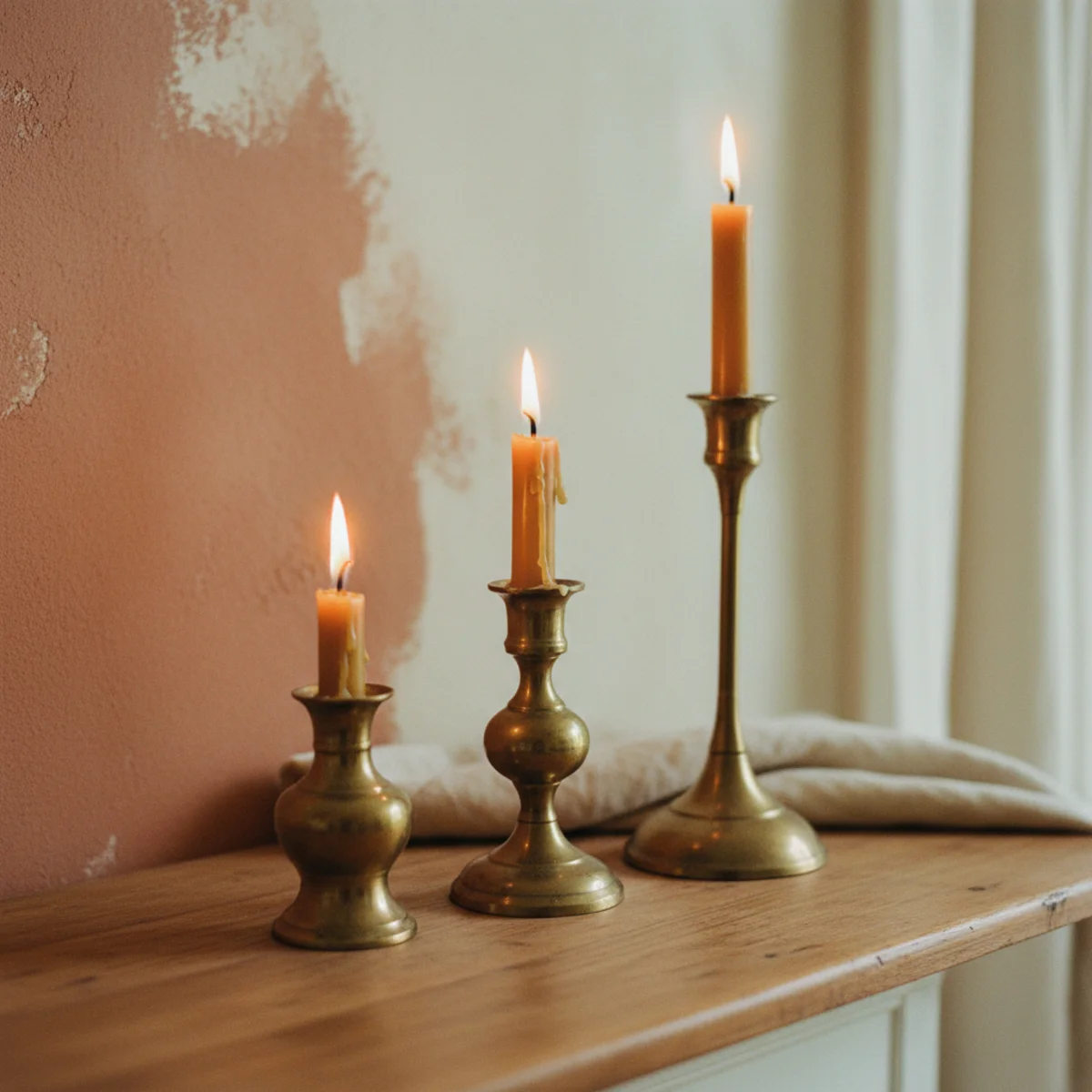
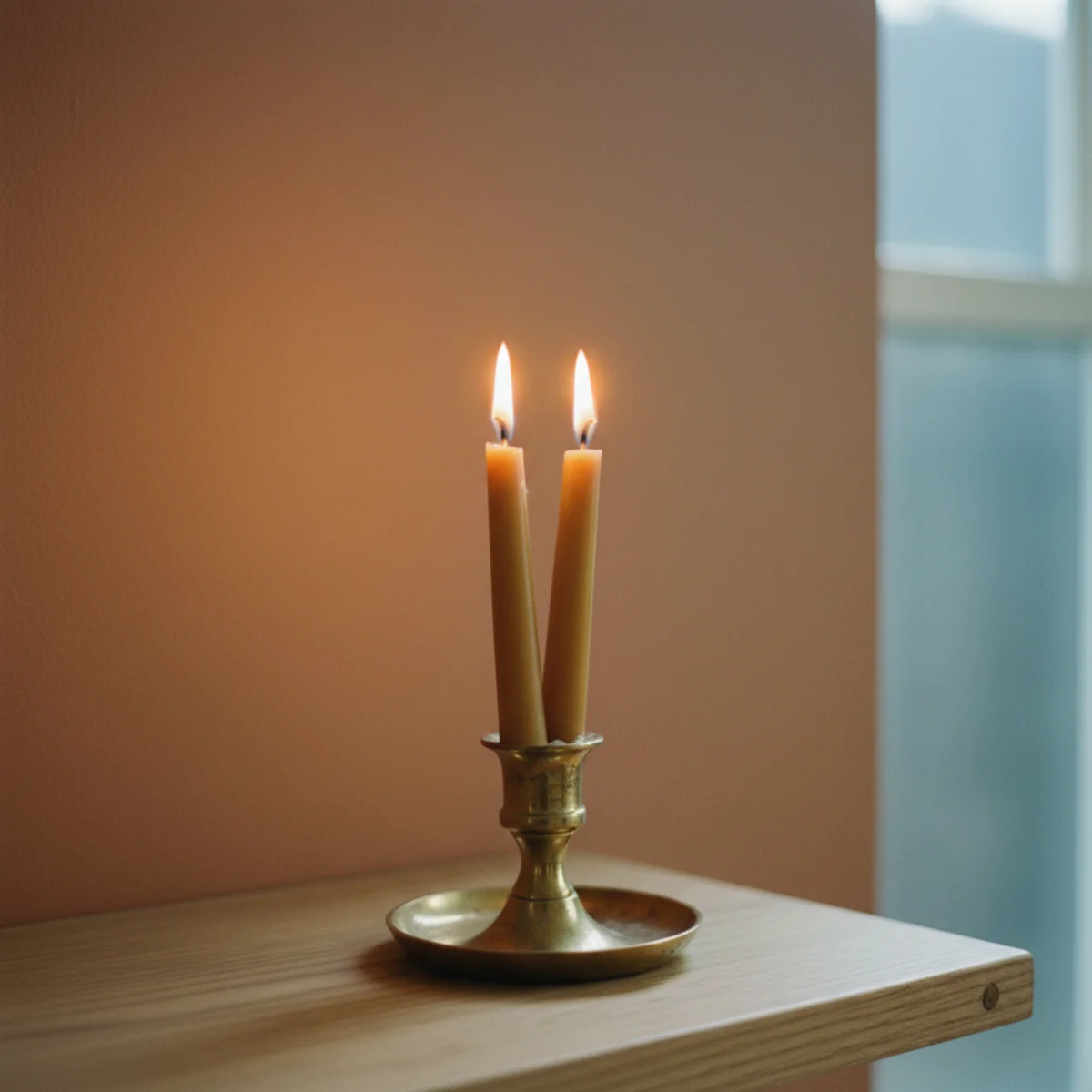
The foundational autumn mantel element is a cluster of 3 to 5 vintage brass candlesticks at varying heights, positioned on the heavy side of the mantel. The mixed heights create vertical interest, the warm brass tone signals fall warmth, and the lit beeswax tapers provide the atmospheric flicker that defines autumn evenings indoors. Cost: $15 to $100 for the brass cluster; impact: foundational.
Three-height brass candlestick cluster: TALLEST CANDLESTICK at 10-12 inches with taper reaching 16-22 inches above mantel surface — positioned at back of cluster. MEDIUM CANDLESTICKS at 6-8 inches with tapers reaching 12-14 inches above mantel — positioned forward and to the sides of the tall. SHORT CANDLESTICKS at 3-5 inches with tapers reaching 6-9 inches above mantel — positioned at the front of the cluster, hugging the mantel surface. MIXED STYLES — three different candlestick designs rather than matching set (matched sets read commercial; mixed cluster reads collected). SOURCES — vintage brass at $5-30 each from estate sales, antique stores, Marketplace; aged-brass reproductions at $15-50 each from Anthropologie, Magnolia, or specialty retailers. TAPERS — 100% pure beeswax in cream, honey, or natural tone at $6-15 per taper (Etsy artisan makers, Beehive Collection, local beekeepers, or Whole Foods natural grocers). Mix taper colors slightly (some cream, some honey) for visual variation. POSITION cluster on the heavy side of the mantel (per fireplace-mantel-decor off-center weighting rule).
AFFILIATE SLOTANCHOR3-5 vintage brass candlesticks at varying heights (10-12/6-8/3-5 inches) with 100% pure beeswax tapers in cream/honeyAdd affiliate URL when configuredWhy it works
Because brass combines multiple autumn-relevant qualities: warm metal tone that matches autumn palette, aged patina that signals warm-collected character (which matches autumn's harvest aesthetic), and functional candle-holding that provides the atmospheric flicker autumn evenings need. The mixed heights also create the visual layering that compresses the entire mantel composition into composed vertical journey for the eye. The cluster anchors the heavy side of the mantel and provides the warmest visual element across the whole composition. Without the brass cluster, autumn mantels lack the central warm-toned focal point that ties the seasonal styling together.
Pro tip — Source vintage brass candlesticks at autumn estate sales specifically — September and October estate sales typically yield 4 to 8 vintage brass candlesticks at $5 to $20 each as households downsize before winter. Saturday morning hunting in October is the best brass-sourcing window of the year.
Five vintage brass candlesticks at three heights with beeswax tapers — the autumn mantel anchor. See also: fireplace-mantel-decor
02A Leaning Frame Instead of a Hung One
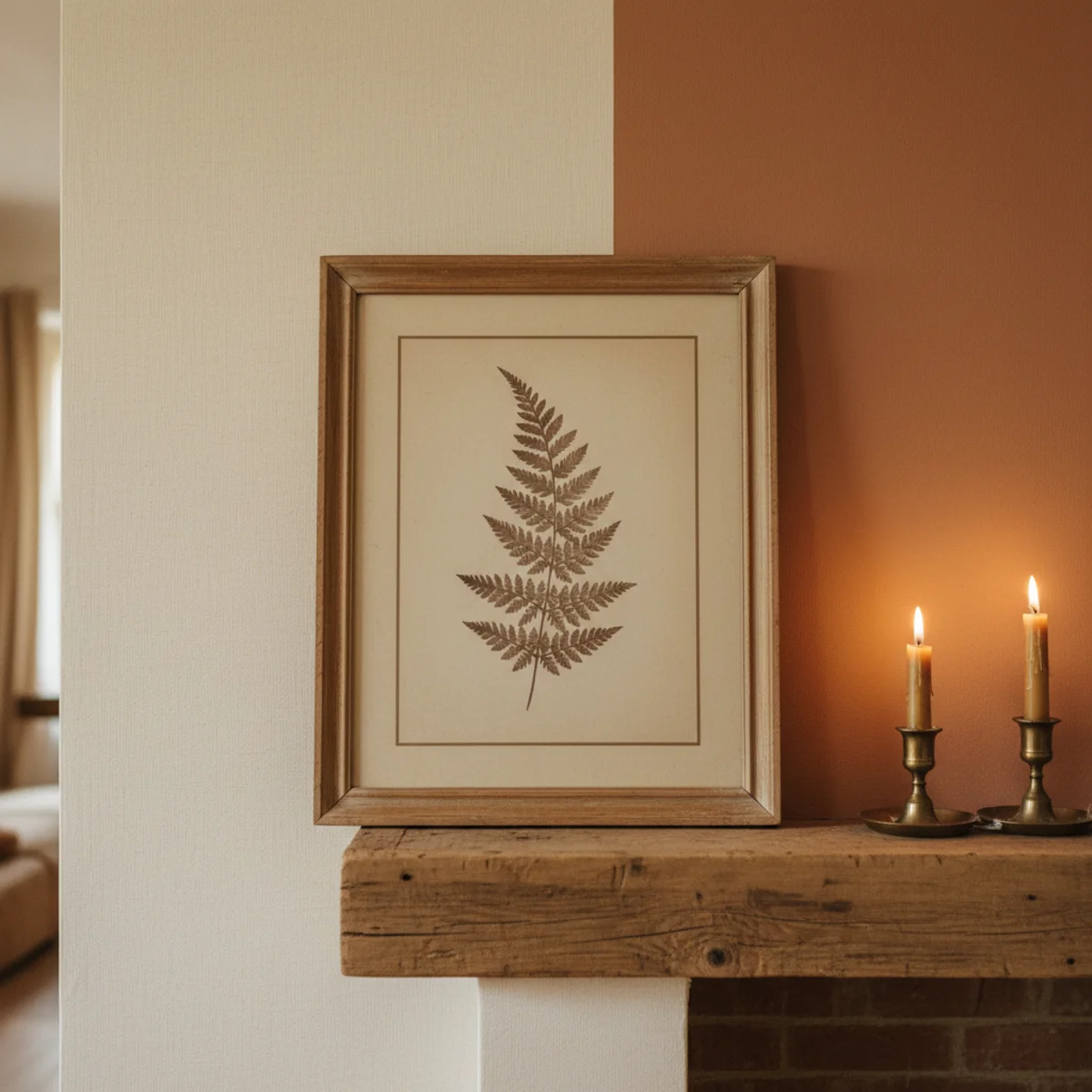
The autumn-mantel art decision: lean a large frame against the wall rather than hanging one centered above. The leaning posture reads as casual and intentional (matching warm-collected aesthetic), allows easier seasonal rotation, and creates the layered depth that flat-hung art cannot. For autumn specifically, choose warm-toned art: vintage botanical with fall foliage, autumn landscape photograph, abstract painting in warm earth tones, or vintage pressed-leaf framed display.
Leaning frame specifications: SIZE — 60-80% of mantel width (24-40 inches for typical 36-50 inch mantel widths). FRAME TYPE — vintage gilded brass frame, warm wood frame (walnut, oak, or warm-stained pine), or simple matte black frame with warm-toned art inside. ART OPTIONS — vintage autumn landscape ($60-300 from antique stores, estate sales, or Etsy), vintage botanical print with fall foliage ($40-200 from antique stores or Etsy), abstract painting in warm earth tones (terracotta, deep rust, ochre, olive at $100-1,000 from local artists or Etsy), framed pressed-leaf display from autumn yard ($20-80 DIY or $80-200 from Etsy artisans), vintage oil painting in autumn palette ($80-400 from estate sales). POSITION leaning against wall with bottom edge resting on mantel, slight backward tilt 3-5 degrees, slightly off-center toward the heavy side of the mantel. The leaning posture also allows partial overlap by the brass candlestick cluster for layered depth (per fireplace-mantel-decor overlap principle).
AFFILIATE SLOTANCHORLeaning frame 60-80% mantel width with vintage autumn landscape, botanical print, abstract warm-earth-tone, or pressed leavesAdd affiliate URL when configuredWhy it works
Because leaning posture reads as 'recently placed for this season' rather than as 'permanently installed' — which suits the seasonal nature of autumn mantel styling specifically. Hung art with bracket installation signals permanent decor commitment; leaning frames signal seasonal rotation that the autumn mantel benefits from. The leaning approach also lets you swap to winter art for the holidays, then spring art, then summer art across the year without re-hanging hardware. The seasonal rotation is part of what makes a mantel feel responsive to actual seasons.
Pro tip — Frame pressed autumn leaves from your own yard for a $20-30 DIY frame option that beats commercial autumn art entirely — collect 5-7 leaves in mid-October during peak color, press between heavy books for 1-2 weeks, then mount in simple matte frame ($15-25 from craft store) for the most personal possible autumn mantel art.
Vintage gilded brass frame leaning against the wall — casual seasonal posture that hung art cannot match. See also: fireplace-mantel-decor
03Dried Grasses Pulled Off-Center
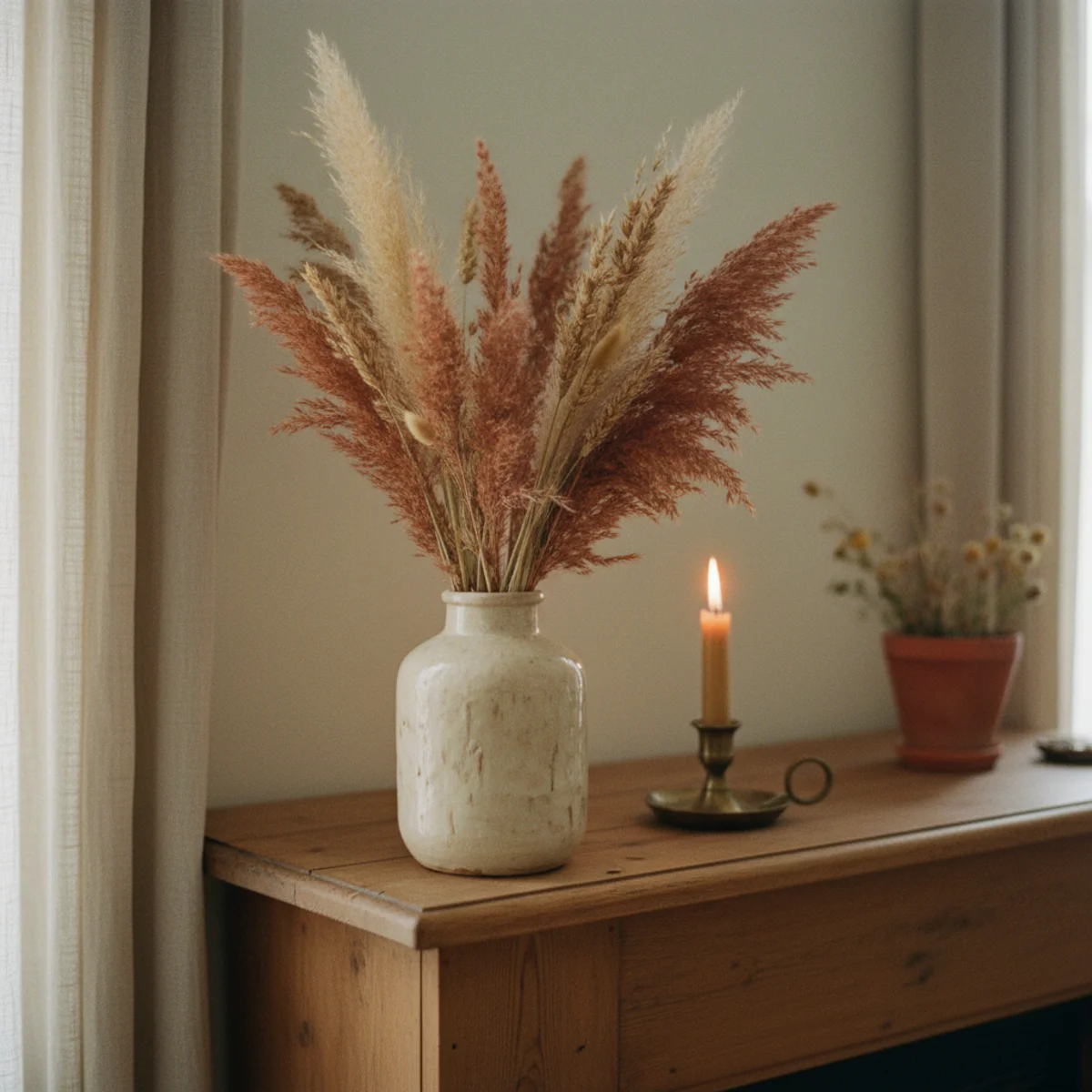
The signature autumn mantel element: a tall arrangement of dried grasses (wheat, pampas, oats, fall foraged grasses) in a heavy ceramic or vintage glass vase, pulled to one side of the mantel rather than centered. The dried grasses add vertical height, organic shape, and natural autumn color (warm tans, gold, beige) that fight nothing else in the composition.
Dried grasses sources and arrangement: DRIED WHEAT STALKS in heavy ceramic or vintage glass vase — natural gold-tan color, 24-36 inches tall, full bouquet of 15-25 stalks ($10-30 per bunch from Trader Joe's, Whole Foods, or Etsy dried flower shops). DRIED PAMPAS GRASS in tall heavy vase — natural cream-tan color, 30-48 inches tall, single stalk or bouquet ($15-40 per stalk from Etsy or specialty florists). DRIED OATS, RYE, OR BARLEY — similar to wheat but with slightly different visual character ($10-25 per bunch). FORAGED FALL GRASSES from yard or fields — free, varied species, completely authentic ($0 if you have access). VASE OPTIONS — heavy ceramic vessel 6-10 inches tall (vintage at $15-50 from estate sales, new at $30-100 from Etsy artisans), or tall clear glass vase 8-14 inches tall for transparent display. POSITION on the heavy side of the mantel (per off-center weighting rule) with the grasses extending 18-30 inches above the mantel surface. The dried grasses provide the tallest vertical element of the composition.
AFFILIATE SLOTVERTICALDried wheat, pampas, oats, or foraged grasses 24-36 inches tall in heavy ceramic or glass vase, positioned off-centerAdd affiliate URL when configuredWhy it works
Because dried grasses carry inherent autumn semantic — wheat, oats, dried grasses all signal harvest season and post-summer agricultural rhythms that the mantel ties into. The natural warm tones (gold, tan, beige, cream) match autumn palette without requiring saturated 'autumn colors' from craft store. The organic shape of grass bouquets also softens the architectural lines of the mantel rectangle. The dried versus fresh choice also matters: dried lasts the entire autumn season (8-12 weeks) without requiring water or freshness maintenance, where fresh flowers would need weekly replacement.
Pro tip — Forage your own dried grasses from local fields or yards in late summer (August-September) before peak fall — the grasses dry naturally on the stalks during this period, and free foraging produces more authentic-looking arrangements than purchased dried grass. Cut grass stalks 30-40 inches long, bundle with twine, hang upside down in dry place for 1-2 weeks until completely dry, then arrange in vase.
Dried wheat bouquet in vintage ceramic vase off-center — the autumn mantel's tallest vertical element. See also: vintage ceramic
04A Low Bowl to Ground It
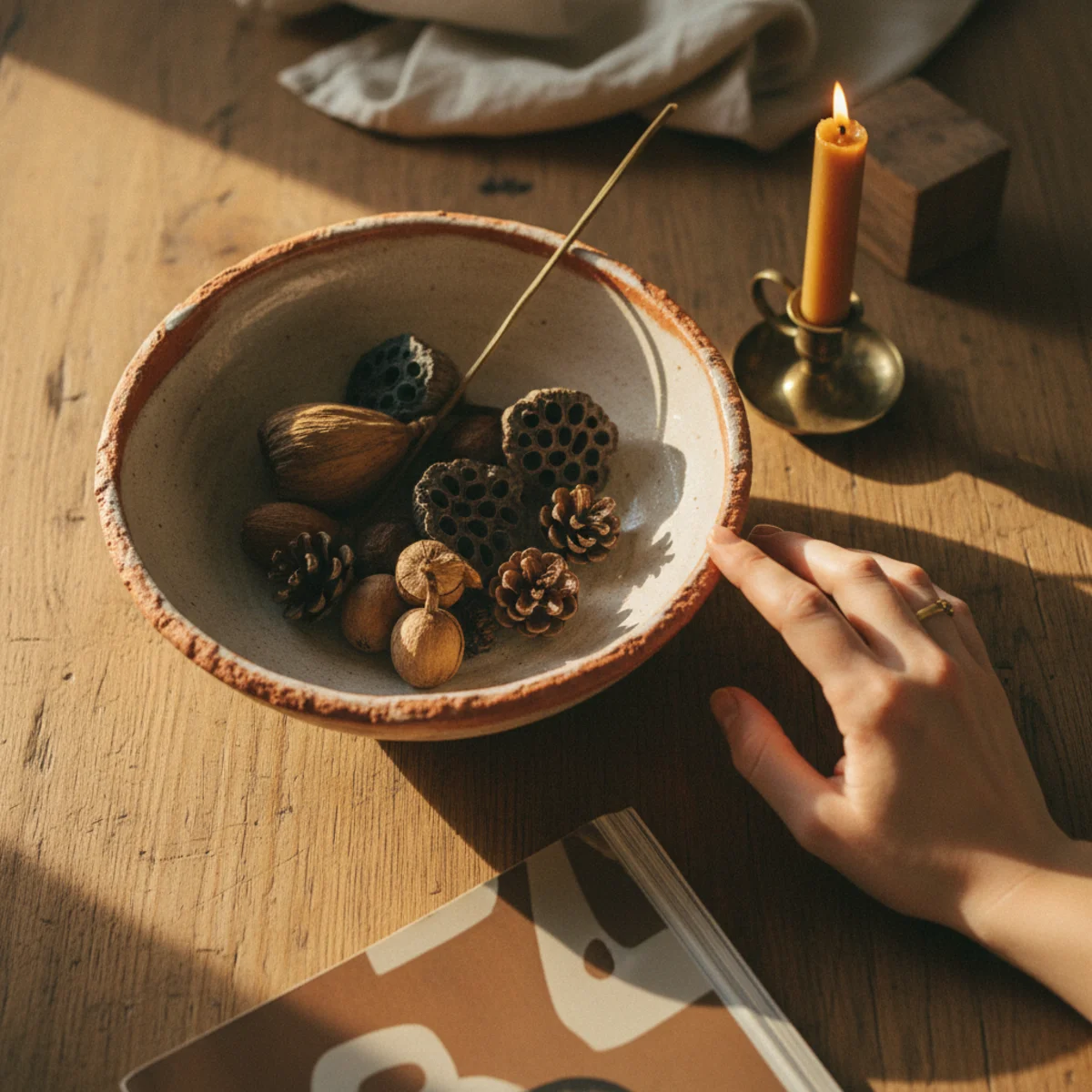
A low wooden, ceramic, or brass bowl positioned on the mantel surface (within the low height plane, hugging the surface) provides grounding for the composition and functional space for seasonal autumn contents. Fill with mini pumpkins from garden, acorns from yard, pinecones from autumn walks, dried citrus and cloves, or small smooth stones. The bowl reads as functional-decorative rather than purely styled.
Grounding bowl specifications: BOWL SIZE — shallow, 6 to 12 inches across, 2 to 4 inches deep. BOWL MATERIAL — warm wooden bowl (walnut, oak, or olive wood at $15-60 from Marketplace, antique stores, or kitchen retailers), hand-thrown ceramic vessel ($20-80 from Etsy artisans or local pottery), vintage hammered brass bowl ($15-40 thrifted), or simple stone slab. AUTUMN CONTENTS — MINI PUMPKINS from garden or farm stand ($5-15 for assortment of 4-6 mini pumpkins in white, orange, green, or speckled). ACORNS from oak trees in autumn ($0 if foraged) with cap intact for character. PINECONES from autumn walks in various sizes ($0 if foraged, or $5-15 per bag from craft store if needed). DRIED CITRUS SLICES (oranges dried in oven at 200°F for 4-6 hours) at $5-15 worth of fresh oranges yielding dozens of slices. WHOLE CLOVES and CINNAMON STICKS in the bowl for autumn scent ($5-10). POSITION the bowl on the heavy side of the mantel, often beside or in front of the brass candlestick cluster.
AFFILIATE SLOTGROUNDINGShallow wood/ceramic/brass bowl 6-12 inches with mini pumpkins, acorns, pinecones, dried citrus, cinnamon, whole clovesAdd affiliate URL when configuredWhy it works
Because the bowl provides visual gravity at the bottom plane — anchoring the composition to the mantel surface and preventing the upper elements (dried grasses, brass candlesticks, leaning frame) from floating. Without a grounding element at low plane, the composition can feel top-heavy. The seasonal contents also tell the autumn story most directly — mini pumpkins and acorns are unambiguously fall, where dried grasses could be late summer or autumn. The bowl is also functionally useful (the contents can be touched, smelled, used) which reinforces warm-collected ethos.
Pro tip — Refresh the bowl contents in mid-October when peak autumn elements become available — early September bowls might have late-summer dried grasses and early acorns; mid-October bowls add mini pumpkins, peak-color leaves, full pinecones. The seasonal refresh keeps the autumn mantel responsive to actual autumn progression rather than static across 10 weeks.
Wooden bowl with mini pumpkins, acorns, pinecones, dried citrus — autumn story at the grounding plane. See also: fireplace-mantel-decor
05A Trailing Vine Off One End
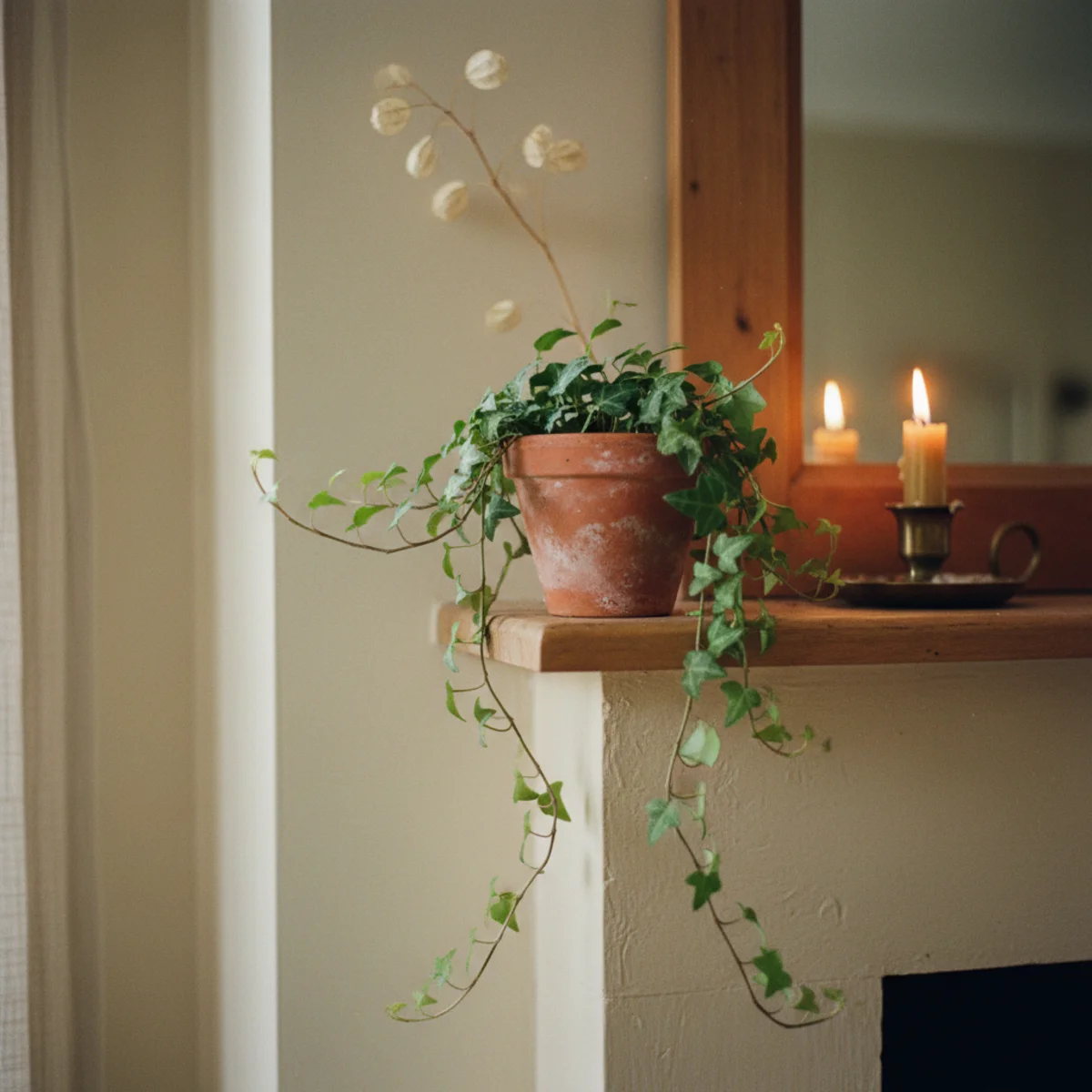
Trailing greenery off one end of the autumn mantel adds organic shape and natural movement to the composition. Best options for autumn: dried bittersweet vine with orange berries, dried eucalyptus garland, real or preserved fall leaves on a strand, dried wheat stalks tied together as garland. The trailing element softens the rectangular mantel edges and draws the eye along the mantel length.
Trailing vine options for autumn: DRIED BITTERSWEET VINE with orange berries — quintessential autumn trailing element, 3-6 feet long, $10-30 per strand from farmers markets or Etsy fall harvest shops. DRIED EUCALYPTUS GARLAND in warm tones — 6-10 feet long, $20-60 per strand from Etsy or specialty florists. PRESERVED FALL LEAVES STRAND — dried oak, maple, or birch leaves on twine or wire backing, 4-6 feet long ($25-60 from Etsy or DIY for $5-10 with foraged leaves and twine). DRIED WHEAT STALK GARLAND — bunch of wheat stalks tied together with jute twine, draped along mantel, $15-30 to make from $10-20 worth of wheat bunches. POSITION the trailing element off one end of the mantel with 8-14 inches of overhang past the mantel edge — significant enough to read intentional, not so significant it competes with the brass candlestick cluster on the heavy side. The trail can extend toward the heavy side (reinforcing the off-center weight) or toward the light side (adding visual continuation from heavy to light).
AFFILIATE SLOTGREENERYDried bittersweet vine, eucalyptus garland, preserved fall leaves, or wheat stalk garland with 8-14 inches off-end overhangAdd affiliate URL when configuredWhy it works
Because the trailing organic shapes break the architectural rectangular lines of the mantel itself — the mantel is a horizontal rectangle, and trailing elements extending past its edges soften those rigid lines with curved natural shapes. The visual contrast between rectangular mantel and organic greenery is part of what makes the autumn composition feel warm and seasonal rather than stiff and decorated. The trailing element also draws the eye along the mantel length, creating directional flow that flat arrangements miss.
Pro tip — Anchor trailing garland with small finishing nails or removable wall hooks ($5-10 for set of 10 from hardware store) at strategic points along the mantel to prevent the trail from sliding off — the small anchor points are invisible from across the room but prevent the frustrating mid-evening drape collapse that loose garland can produce.
Dried bittersweet vine with orange berries trailing 12 inches off the end — organic shapes for the rigid mantel. See also: fall-decor-ideas
06A Vintage Clock or Mirror as Anchor
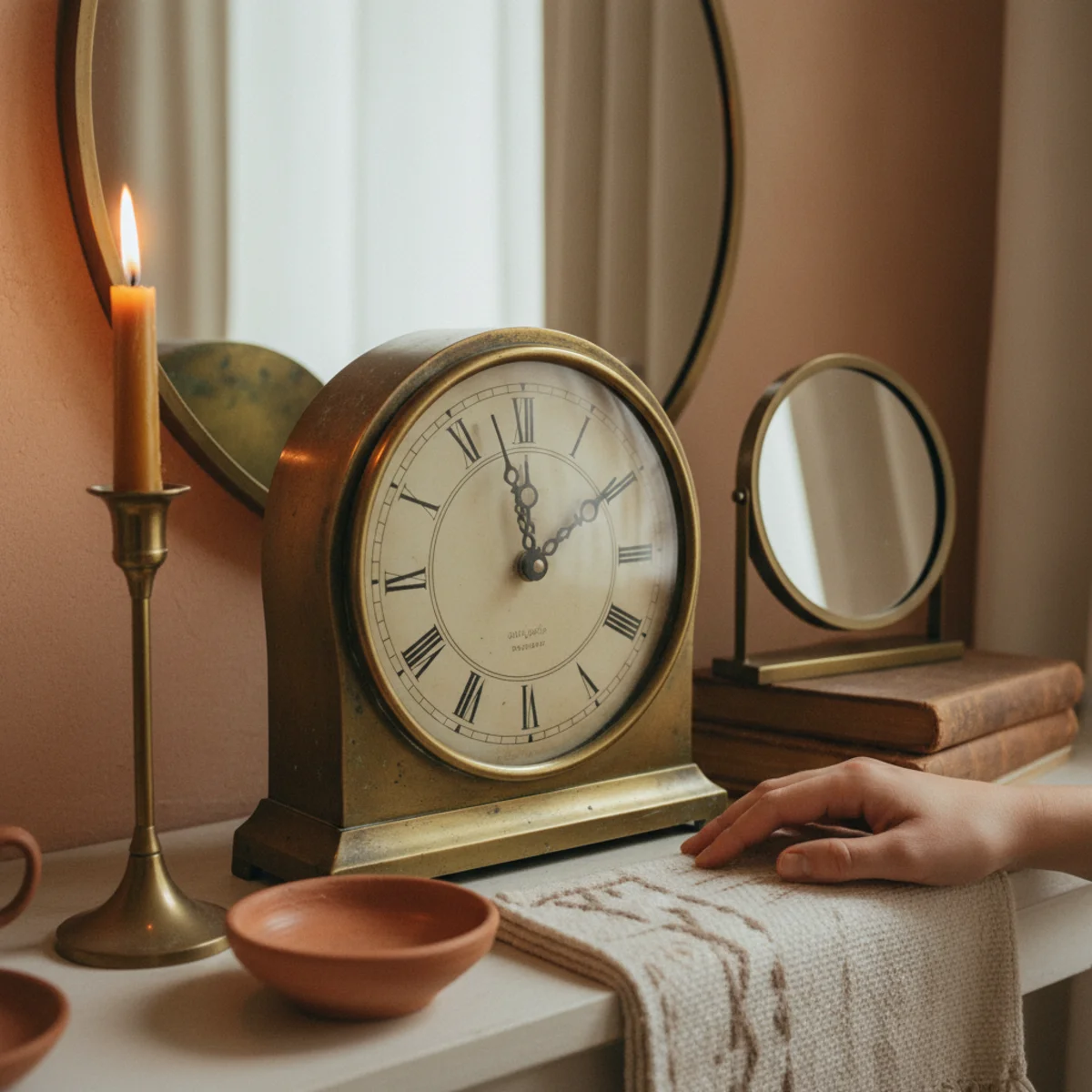
Alternative or supplementary to the leaning frame: a vintage clock or vintage mirror at mid-height plane provides additional visual anchor and warm-collected character. Vintage mantel clocks specifically work for autumn (the mechanical character matches autumn's harvest aesthetic), and vintage mirrors reflect the lit candles for compound atmospheric effect.
Vintage clock and mirror options: VINTAGE MANTEL CLOCK in brass, wood, or marble — 6 to 14 inches tall ($30-200 from estate sales, antique stores, or Marketplace). Working mechanical clocks preferred (the ticking adds subtle acoustic element). VINTAGE WALL CLOCK leaned against the wall as smaller anchor — 12-20 inches diameter ($60-300 vintage). VINTAGE WALL MIRROR in gilded brass or wood frame — 16-30 inches diameter or rectangular ($60-300 vintage). POSITION the clock or mirror at MID-HEIGHT PLANE (per three-height rule from fireplace-mantel-decor), positioned to balance off-center weighting or to fill the transition zone between heavy and light sides. If the mantel has a leaning frame anchor already, the vintage clock works as secondary mid-anchor; if the mantel uses only the clock as anchor, position it more centrally with the brass candlestick cluster beside. CLOCK BENEFITS — the working mechanical signal reinforces autumn aesthetic of meaningful objects rather than purely-decorative styling. MIRROR BENEFITS — reflects lit candles at dusk for compound warm-light effect during evening autumn hours.
AFFILIATE SLOTANCHORVintage mantel clock 6-14 inches OR vintage wall mirror 16-30 inches at mid-height plane as primary or supplementary anchorAdd affiliate URL when configuredWhy it works
Because both options carry warm-collected character that matches autumn aesthetic — vintage objects accumulate the patina and irregularity that signal warm-collected home, which fits autumn's harvest/gathering associations. The mechanical clock specifically signals 'real working object' rather than purely-decorative styling, which reinforces autumn's authenticity ethos. The mirror reflects lit candles at dusk for compound atmospheric effect that's especially noticeable during shorter autumn evenings when candle-lit interior reading versus dark window outside creates strong visual contrast.
Pro tip — Wind vintage mechanical clocks on Saturday mornings (when many estate sales also happen) — the weekly ritual makes the clock a real working object rather than ornamental piece. The acoustic ticking becomes part of the autumn evening atmosphere, especially as candles burn and the household settles into the season's slower indoor rhythm.
Vintage brass mantel clock at mid-height — mechanical character that suits autumn warm-collected aesthetic. See also: fireplace-mantel-decor
07Stacked Books for a Mid Layer
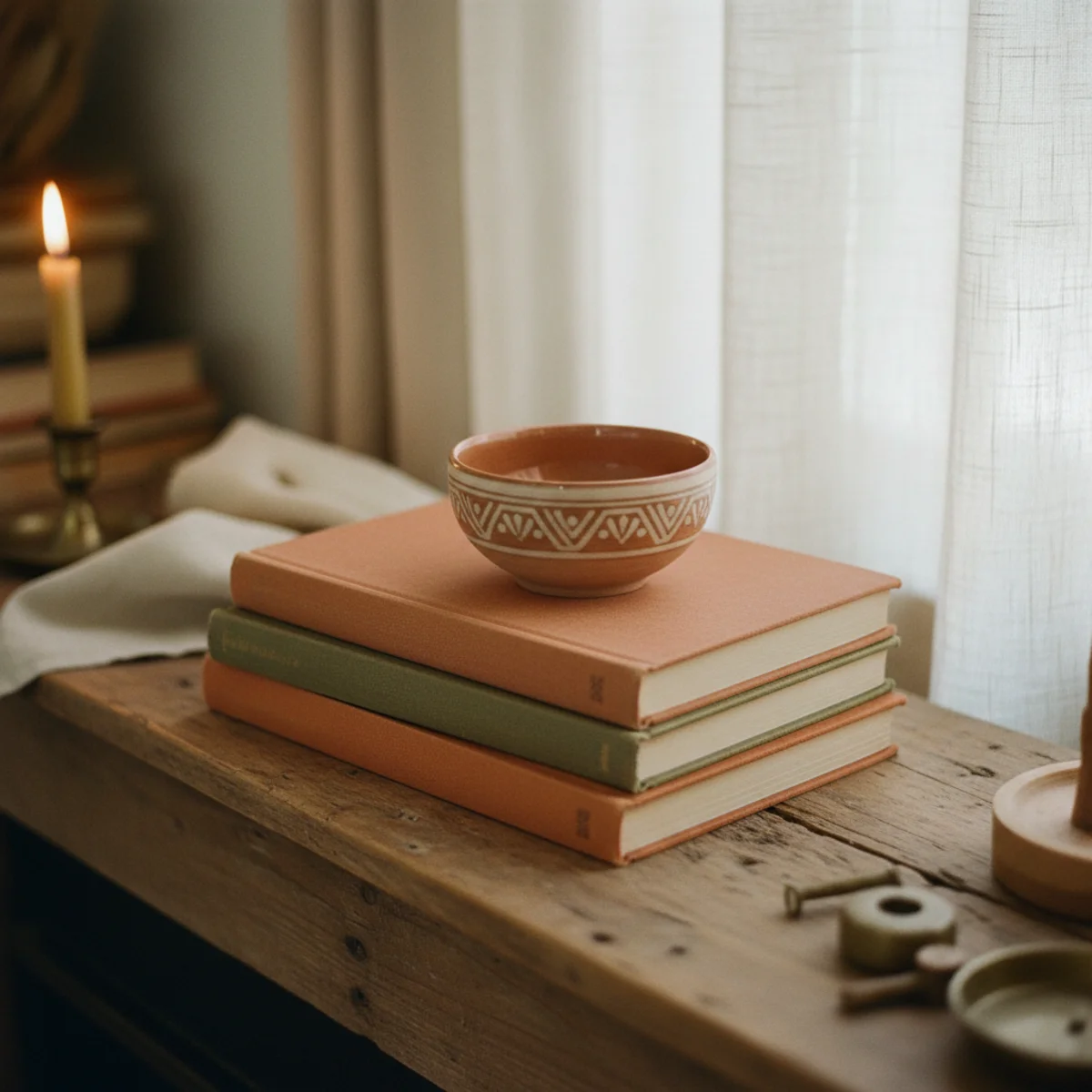
Stacking 2 to 4 hardcover books on the mantel under a candlestick or small ceramic object creates the mid-height plane that the autumn composition needs. Best autumn books: leather-bound vintage volumes, books with warm earth-tone cloth bindings (cream, terracotta, deep red, olive), hardcovers with hand-stamped or embossed spines. The books also signal real reading household, which matches autumn's slow indoor rhythm.
Book-as-riser specifications for autumn: 2 TO 4 HARDCOVER BOOKS stacked horizontally with spines facing outward. AUTUMN-APPROPRIATE BOOK TYPES — leather-bound vintage volumes ($3-15 per book at estate sales, $10-40 retail), cloth-bound hardcovers in warm earth tones (cream, terracotta, deep red, olive, navy at $5-25 each from used bookstores), poetry collections or literary fiction with beautiful spines, illustrated nature books or autumn-themed literary works. STACK SIZE — 2 to 4 books creates 2 to 6 inches of additional height; 5+ books reads as bookcase rather than as compositional element. POSITION the stack on the heavy side of the mantel, positioned to support a candlestick, small ceramic vessel, or vintage clock on top. The books transform a flat mantel surface into multi-height surface and contribute warm-collected character. They also signal real reading household — appropriate for autumn's slow indoor rhythm when households genuinely read more than other seasons.
AFFILIATE SLOTRISER2-4 hardcover books with warm earth-tone or leather spines under candlestick, vintage clock, or small ceramicAdd affiliate URL when configuredWhy it works
Because books carry inherent autumn semantic — autumn is the season most associated with indoor reading, slower household rhythm, and accumulated knowledge. Books on the mantel reinforce these associations directly. The visible warm earth-tone spines also add color and pattern variation without requiring additional decor purchases. And books with character (leather binding, hand-stamped titles, vintage cloth covers) carry the warm-collected aesthetic that autumn mantels specifically value. Compared to generic decorative blocks as risers, books contribute meaning that decorative objects cannot.
Pro tip — Plan autumn book displays in advance during summer estate sales — September and October estate sales typically have higher prices on autumn-themed or warm-toned books, where July and August sales have lower prices. Build the autumn book collection at summer pricing for fall mantel display.
Three leather-bound vintage books with brass candlestick on top — risers carrying autumn reading semantic. See also: shelf-styling-ideas
08Beeswax Tapers, Lit at Dusk
The defining autumn mantel moment is dusk-lighting — the daily ritual of lighting all the beeswax tapers as the autumn afternoon transitions to evening. The candles burn for 2-4 hours during the cozy evening window, transforming the mantel from daytime-styled to evening-glow. Cost: $30-80 in beeswax tapers for the autumn season; impact: the daily atmospheric moment that defines autumn indoors.
Dusk-lighting ritual: TIMING — light all mantel tapers at 4:30 to 5:00pm during October, 4:00 to 4:30pm during November as days shorten. The pre-darkness lighting creates the gradual transition effect as outside windows darken and inside candle light becomes the primary atmospheric source. BEESWAX TAPER SOURCING — 100% pure beeswax (not blend) at $6-15 per taper from Etsy artisan makers, Beehive Collection, local beekeepers at farmers markets, or Knorr Beeswax at Whole Foods. AUTUMN COLORS — cream, honey, natural beeswax-yellow. Burn time: 6-8 hours per taper, so 3-5 candles in cluster burn 3-4 evenings before replacement. LIGHTING TECHNIQUE — use long matches or stick lighters; light the back/tallest candle first, then medium, then short for visual progression. SAFETY — keep tapers 6+ inches from any flammable elements (vine, leaves), never leave unattended overnight, snuff (not blow) at end of evening to prevent wax splatter. The dusk-lighting becomes daily autumn ritual that defines the season's evening atmosphere indoors.
AFFILIATE SLOTRITUAL100% pure beeswax tapers lit daily at 4:30-5:00pm October, 4:00-4:30pm November; stock 24-36 tapers at season startAdd affiliate URL when configuredWhy it works
Because autumn evenings are when the mantel composition genuinely earns its keep — the daytime styling is preparation; the lit-candle evening is the actual atmospheric moment. The transition from daylight to candlelit is also one of autumn's most-defining sensory experiences (the shortening days, the gradual darkness, the warm fire and candle response). The mantel becomes the focal point of this daily transition specifically because the candle light contrasts against the darkening windows behind. Without dusk-lighting, the mantel is just styled objects; with it, the mantel is the active heart of autumn evening atmosphere.
Pro tip — Stock 24-36 beeswax tapers at the start of autumn (early September) for the entire season's supply — order $80-120 worth at once for bulk pricing advantage and to ensure consistent supply across 10-12 weeks of nightly use. Running out of tapers mid-autumn breaks the daily ritual; bulk stocking prevents the gap.
Five beeswax tapers lit at dusk — the daily autumn ritual that defines evening atmosphere indoors. See also: candle-styling
How to style an autumn mantel step by step
Ten minutes, four moves. Build it in planes from back to front.
- 1Set the tall anchor to one side
Lean a frame or mirror at the back, weighted left or right of center. This breaks the symmetry from the start.
- 2Add the tall organic element
Place candlesticks or a vase of dried grasses near the anchor, varying the heights. Odd numbers, staggered.
- 3Build the mid layer
Add stacked books, a clock, or a smaller vessel between the tall pieces to fill the middle plane.
- 4Ground it with a low piece
Finish with a shallow bowl or a trailing vine at the base, and let one element overlap another so nothing floats.
Quick tips
- Forage your stems on a walk — dried wheat, seed pods, and branches beat craft-store versions.
- Work in odd numbers; three or five objects always group better than two or four.
- Let one element overlap another so the arrangement reads connected, not lined up.
- Add a mirror or burn real candles so the mantel glows at night, which is when it earns its keep.
- Pull the whole arrangement toward one end and leave the other lighter for deliberate asymmetry.
- Change just the low bowl's contents month to month to refresh the mantel with zero effort.
Mantel styling for different fireplaces
Fewer, taller elements — a leaning frame, two candlesticks, one low bowl — so the shelf doesn't crowd.
Weight a full arrangement to one side and leave deliberate negative space on the other, rather than spreading evenly.
Style a console or floating shelf the same way — three planes, asymmetry, seasonal material.
Lean into the texture with warm brass and dried naturals; skip anything sleek that fights the rough surface.
A mantel styled dead-center looks like a furniture catalog. Pull it off-balance and it looks like a home.
Frequently asked questions
How do I decorate a mantel for autumn?+
What materials should I use for an autumn mantel?+
Should the mantel decor be symmetric or off-center for autumn?+
How long should an autumn mantel display stay up?+
What's the difference between an autumn mantel and a Christmas mantel?+
What candles should I use for an autumn mantel?+
Style your mantel in three planes — tall, mid, low — and weight the whole thing to one side. Forage the stems, work in odd numbers, and let one piece overlap another so nothing floats. We'd burn real beeswax tapers rather than leave them pristine; a mantel earns its keep at night, when the candlelight turns a styled shelf into the warmest thing in the room. Ten minutes, a few dried branches, and the whole room shifts into autumn.