This guide covers actual candle wax types, wick choices, and fragrance approaches tested across real cozy home use — daily evening burning, atmospheric dinner candles, bedside reading sessions, mantel taper lines, kitchen window candles. Each category below names specific materials (beeswax, soy, coconut-soy blends, paraffin), specific wick options (cotton, wood), specific fragrance sources (natural essential oil, blends), the price ranges at quality versus budget, the best brands and where to actually buy, and what makes that choice the right one for specific use cases.
Candle category matters because the wax determines burn quality, throw, scent purity, and what gets released into your air over 4-8 hours of evening use. The eight categories below cover the real decision points — wax type (beeswax, soy, coconut-soy, paraffin), wick type (cotton, wood), fragrance source (essential oil, natural blend, synthetic), and the explicit category for what to skip (cheap heavily-synthetic jar candles which dominate the budget candle market but fail at every level that matters for cozy home use).
By the end of this guide, you'll know which candle to buy for each cozy home use case — the beeswax taper for clean atmospheric burn, the soy scented all-rounder, the coconut-soy premium pick, the cotton versus wood wick decision, the natural fragrance specification — and which to skip (cheap heavily-synthetic jars that dominate the budget candle market).
WHAT'S INSIDE
- Why beeswax is the clean long-burn choice for unscented atmospheric candles
- The soy scented all-rounder — best value across most cozy home scented candle use
- Coconut-soy blends for premium scent throw at higher price points
- Which candles to skip entirely (cheap heavily-synthetic jar candles fail at every level)
Buy fewer, better candles and burn them often. A good beeswax candle is cheaper per hour than a cheap one that tunnels and smokes.
— Real Simple [citation needed — verify before publish]
What makes a good candle?
A good candle comes down to wax type, wick quality, and — if scented — the quality of the fragrance. The wax matters most: beeswax burns the longest and cleanest and lightly scents the air with honey; soy burns clean and holds added fragrance well; coconut and soy blends are premium options; and paraffin, the cheapest, burns fastest and can soot and smell synthetic.
The wick and the burn are where cheap candles fail. A quality candle has a wick sized to melt the full diameter of the wax, so it burns evenly without tunneling down the middle, and it doesn't throw soot. For scent, natural essential-oil fragrances read cleaner than synthetic ones, which can smell harsh or give some people headaches. Burned often and trimmed properly, a good candle is genuinely cheaper per hour than a cheap one that tunnels and wastes half its wax.
More in Shopping Guides you may love
See allWhy candle quality matters more in 2026
As the warm, hygge-influenced home took hold, candles shifted from an occasional treat to a daily atmosphere layer — and people started caring about what they're actually burning. Pinterest's best candles and clean candle searches climb every year, toward beeswax, soy, and natural-fragrance options over cheap paraffin.
The honest driver is twofold: clean-burning matters more when you're burning candles daily in a closed room, and a buy-fewer-better mindset makes a quality candle worth it. As hygge made candlelight a core part of the cozy home, the cheap-paraffin-that-tunnels candle gave way to beeswax and soy that burn clean, last longer, and are genuinely better value per hour despite the higher sticker price.
The best candle types, compared
01Beeswax — The Clean Long Burn
Beeswax is the all-rounder wax for unscented atmospheric candles — clean-burning (releases negative ions, no soot, no petroleum byproducts), naturally honey-scented without added fragrance, and significantly longer-burning than other waxes (a 10-inch beeswax taper burns 7-9 hours versus 4-6 hours for paraffin). For taper candles specifically, beeswax is the right choice; for scented candles, soy or blends fit better.
Best beeswax candle brands: PURE BEESWAX TAPERS — Big Dipper Wax Works at $6-15 per taper, Beehive Collection at $10-20 per taper, Knorr Beeswax at Whole Foods at $8-12 per taper, Etsy artisan beekeepers at $5-12 per taper (often best quality-to-price). PURE BEESWAX PILLARS — Big Dipper Wax Works at $12-30 per pillar, Honey Candles at $15-40 per pillar, Beehive Collection at $20-50, Local beekeepers at farmers markets at $10-25. PURE BEESWAX TEALIGHTS — Big Dipper $8-15 per pack of 9, Etsy makers $10-20 per pack of 12. LOOK FOR — 100% pure beeswax (NOT beeswax-paraffin blend marketed as 'beeswax'), natural color (honey-gold or cream-white, not bleached pure white), cotton wick included. SOURCES: order online from artisan beekeepers for best prices, or buy at local farmers markets where independent beekeepers often sell directly. AVOID: 'beeswax blend' marketed as beeswax (typically 20-30% beeswax with 70-80% paraffin), pure white bleached beeswax (chemical bleaching defeats the purity advantage), 'beeswax-scented' candles (synthetic scent fragrance, not actual beeswax wax).
AFFILIATE SLOTWAX100% pure beeswax for taper candles, pillars, and tealights from Big Dipper, Beehive Collection, Honey Candles, Knorr, Etsy artisansAdd affiliate URL when configuredWhy it works
Because beeswax burns cleaner than any other common candle wax — releases negative ions that can improve air quality, produces no soot or petroleum byproducts, has natural honey scent without added fragrance, and burns significantly slower than other waxes (extending burn life and per-hour cost-effectiveness). The clean burning matters specifically for evening atmospheric candles when families spend extended hours in the same room with multiple candles burning. The slower burn also matters for taper candles used in candlestick clusters — a single beeswax taper might last 3 to 4 evening sessions where the same length paraffin taper lasts only 2. The combined effect makes beeswax the right choice for unscented evening burning even at the higher upfront cost.
Pro tip — Buy beeswax tapers in bulk during fall (September-October) for the entire winter season — many artisan beekeepers offer 12-24 taper bulk pricing that brings the per-taper cost down to $4-8 versus $8-15 at retail. The bulk approach also ensures consistent supply across the long candle-burning fall and winter season.
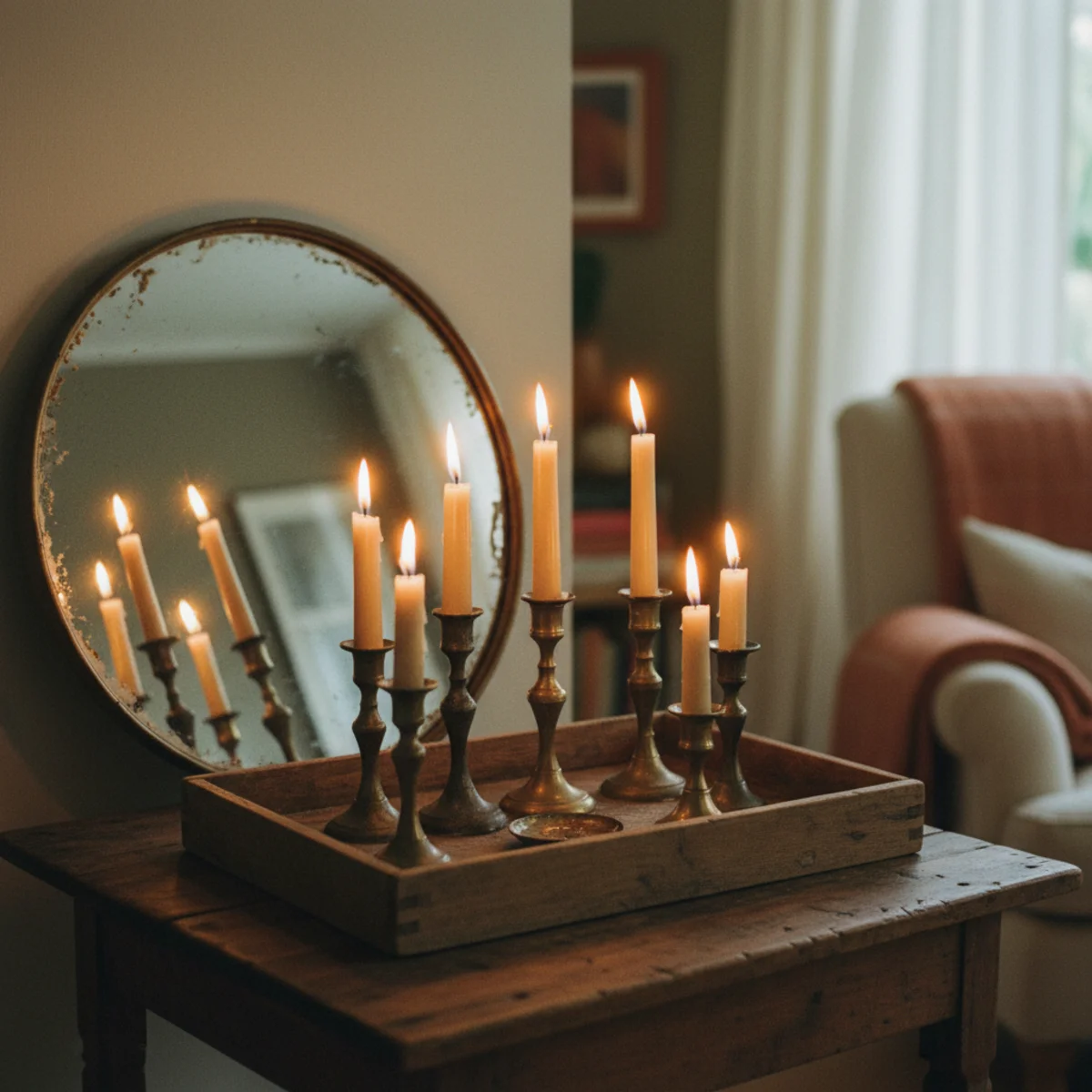
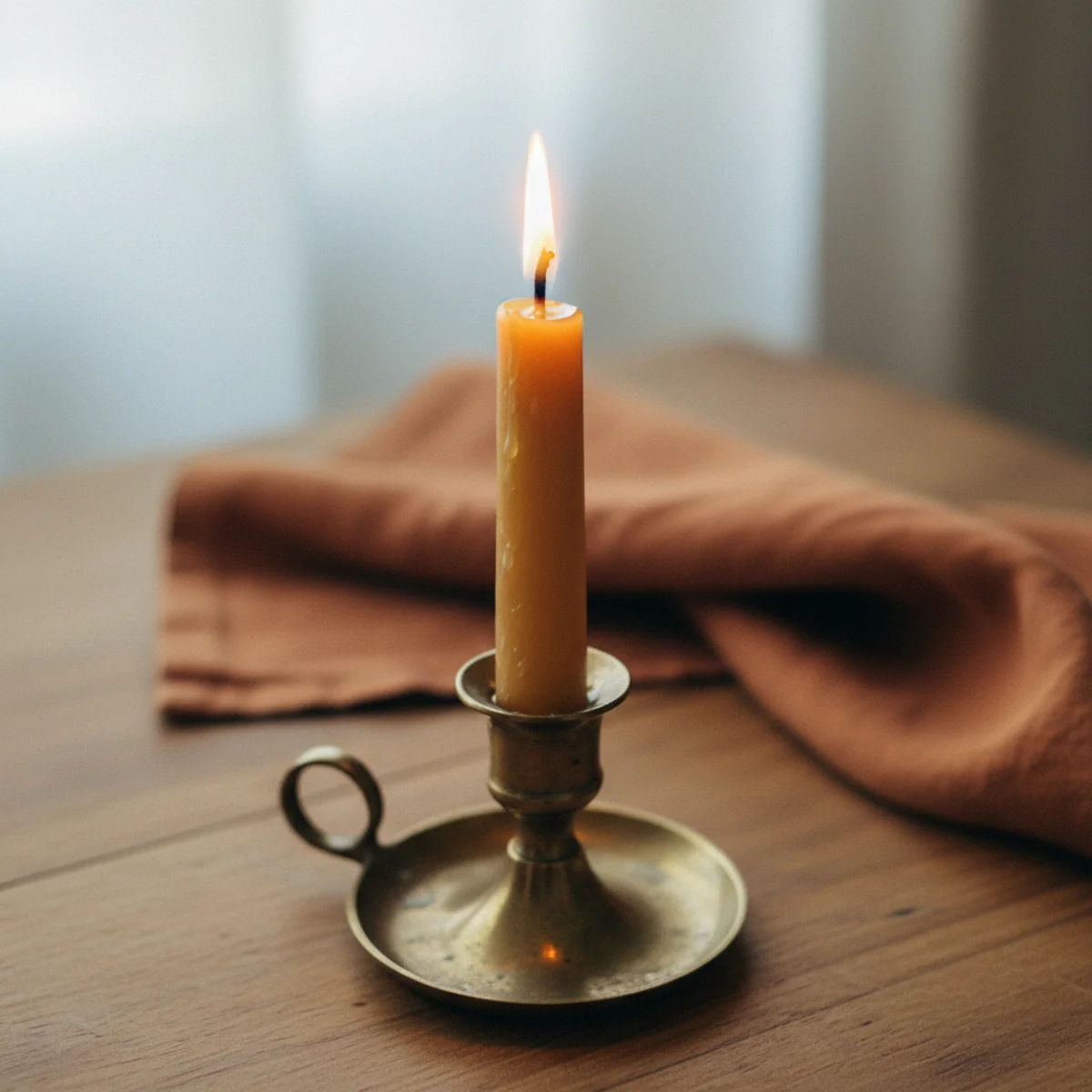
Honey-gold beeswax tapers burning clean — the unscented atmospheric all-rounder. See also: candle-styling
02Soy — The Scented All-Rounder
Soy wax is the all-rounder for scented candles — clean-burning (releases no petroleum byproducts), holds fragrance well, burns longer than paraffin, and at significantly lower price than coconut-soy blends. For most households buying their first or main scented candles, soy is the right answer. Price range: $20-50 per quality 8-12 oz jar, with sweet spot at $25-40.
Best soy candle brands: P.F. CANDLE CO. at $24-36 per 7.2 oz soy candle (excellent scents like Teakwood & Tobacco, Amber & Moss, Sandalwood Rose), VOTIVO at $35-50 per 8-12 oz soy (premium scents), BROOKLINEN candles at $35-55 per 12 oz soy, ANTHROPOLOGIE soy candles at $30-50 per jar, ETSY ARTISAN MAKERS at $20-45 per jar (often best quality-to-price for unique scents), TARGET threshold soy at $15-25 (budget option that genuinely delivers), BATH & BODY WORKS THE WHITE BARN soy at $25-30 (mainstream option), DIPTYQUE at $40-100 per jar (premium with exceptional scent throw). LOOK FOR — 100% soy wax (NOT soy-paraffin blend), American-grown soybeans (sustainability and supply chain), natural essential oil fragrance (per item 7) or clearly-labeled natural fragrance blend. AVOID: soy-paraffin blends marketed as soy (typically 30-50% paraffin with 50-70% soy), 'soy-based' candles (the same misleading marketing), candles below $12 per 8 oz jar (almost certainly soy-paraffin blend with synthetic fragrance), 'Asian-imported soy' candles where supply chain transparency is unclear.
AFFILIATE SLOTWAX100% soy wax in 8-12 oz jars at $20-50 from P.F. Candle Co., Votivo, Brooklinen, Anthropologie, Etsy artisans, Target ThresholdAdd affiliate URL when configuredWhy it works
Because soy combines the clean-burning advantage of natural waxes (no soot, no petroleum byproducts) with the ability to hold fragrance effectively — soy wax has a porous structure that distributes fragrance oil throughout the candle, releasing it gradually during burning. Soy also burns longer than paraffin (typically 40-50 hours per 8 oz jar versus 25-35 hours for paraffin equivalent), making per-hour cost competitive even at higher initial prices. For most households wanting one type of candle that handles most cozy home use cases, soy at $25-40 per quality jar is the right answer; beeswax (above) excels at unscented atmospheric, coconut-soy blends (below) excel at premium scent throw, but soy is the broadest-fit choice.
Pro tip — Trim the wick to 1/4 inch before each burn — soy candles tunnel easily without wick maintenance, where trimmed wick produces even burn pool and full candle utilization. The 30-second pre-burn ritual extends candle life significantly and improves scent throw.
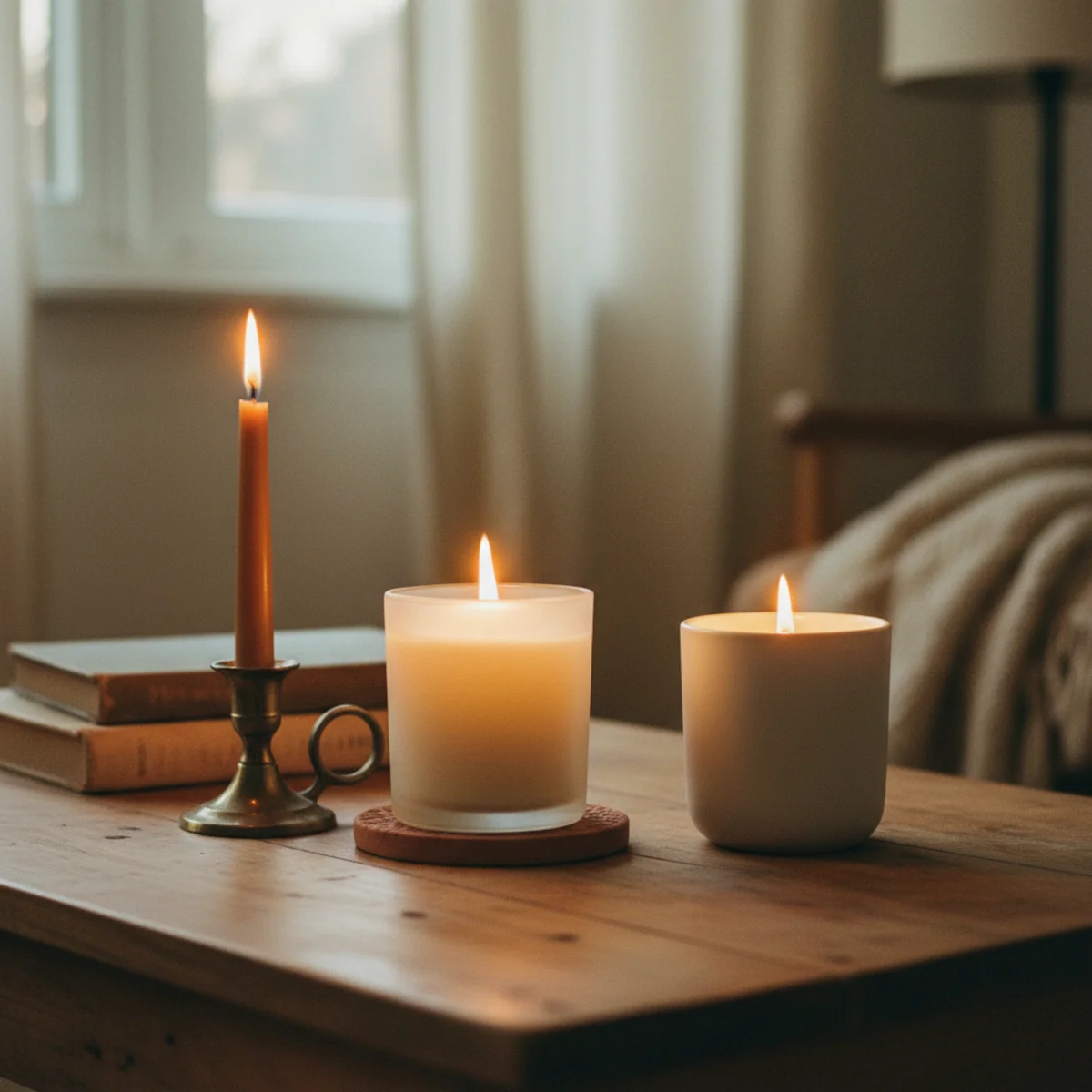
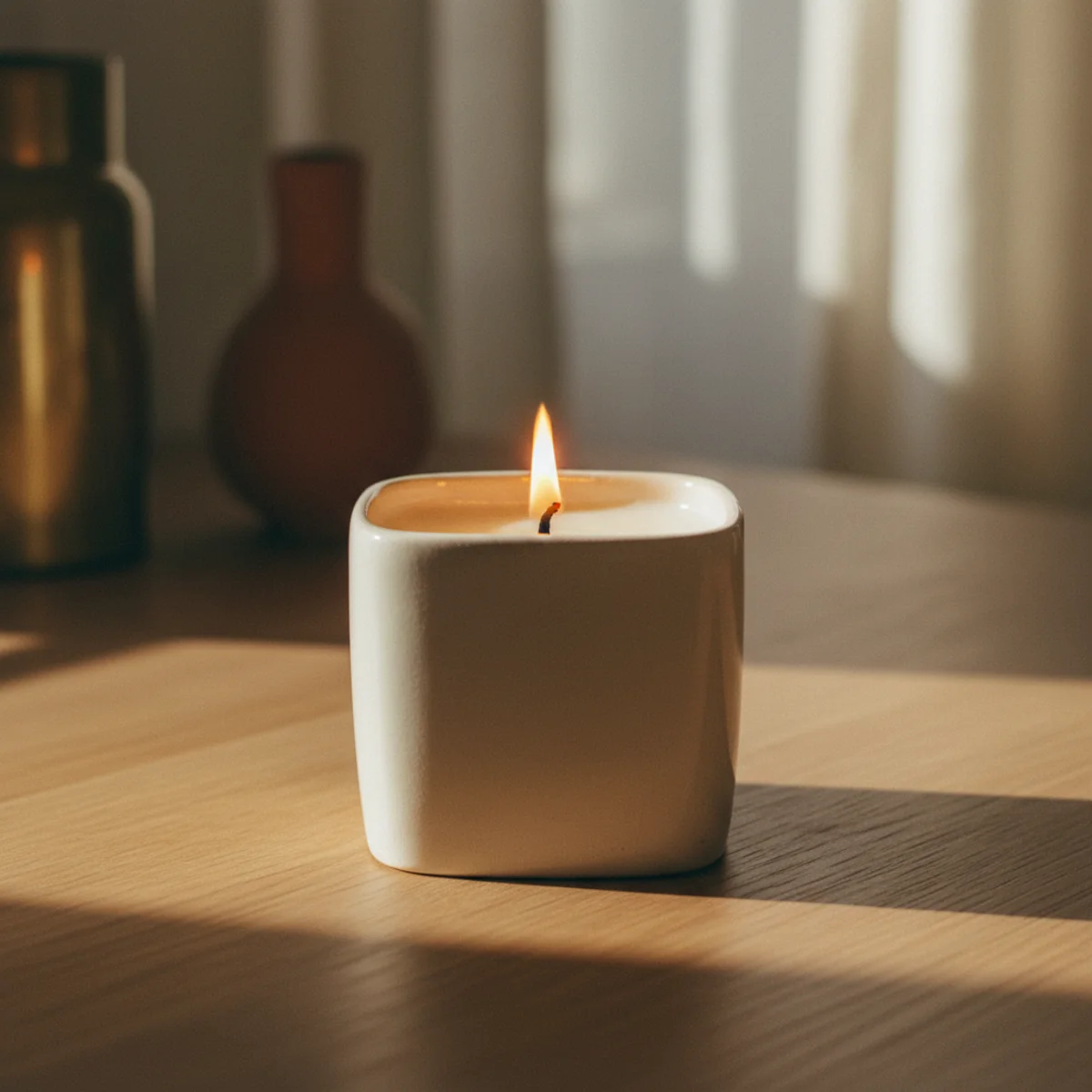
P.F. Candle Co. soy candle burning evenly — the scented all-rounder at the right value tier. See also: P.F. Candle Co.
03Coconut-Soy Blend — The Premium Pick
Coconut-soy blends are the premium scented candle wax — coconut wax holds fragrance significantly better than soy alone, producing stronger scent throw (the distance the scent travels from the candle) and longer-burning fragrance that doesn't fade across the candle's burn life. Price range: $40-100 per 8-12 oz jar; reserved for households where scent throw specifically matters.
Best coconut-soy blend candle brands: BOY SMELLS at $34-60 per 8.5 oz coconut-beeswax blend (exceptional scent variety, premium quality), HOMESICK at $40-60 per 13.75 oz coconut-soy blend, OTHERLAND at $36-60 per 8 oz coconut-soy, MATERIAE at $40-80 per 9 oz coconut-soy, SLOW NORTH at $35-50 per 8.5 oz coconut-soy, NORTHERN LIGHTS at $30-50 per 11 oz coconut-soy, ETSY ARTISAN MAKERS at $25-60 per jar (often custom coconut-soy blends), VOLUSPA at $40-90 per coconut-blend candle (premium luxury option). LOOK FOR — coconut wax percentage (higher coconut content typically improves scent throw; look for 30-50% coconut), natural fragrance or essential oil specifications, transparent wax sourcing. PREMIUM-LEVEL EXPECTATIONS — stronger scent throw than soy alone (scent reaches further across the room), longer fragrance retention during burn (the scent doesn't weaken at end of candle life), often slightly higher melt point producing cleaner burn pool. AVOID: 'coconut wax' candles that are mostly soy with coconut additive (look for actual coconut wax percentage), synthetic fragrance loaded coconut-soy (defeats the natural wax advantage).
AFFILIATE SLOTWAXCoconut-soy blend at $40-100 per 8-12 oz from Boy Smells, Homesick, Otherland, Materiae, Slow North, Voluspa, EtsyAdd affiliate URL when configuredWhy it works
Because coconut wax has porous structure that holds fragrance oil better than soy wax alone — the blend distributes more fragrance per unit volume of candle, releasing stronger scent throw across longer time. The difference is genuinely noticeable: a $50 coconut-soy candle produces scent throw across a 200 sq ft room that a $30 soy candle would only fill at 80-120 sq ft. For households where the scented candle is meant to actually scent the room (rather than provide subtle background scent), the upgrade matters. The trade-off is real — most cozy home use cases work fine with soy at $25-40, but for primary scent moments (entertaining, evening relaxation in larger rooms, master bedrooms over 200 sq ft), coconut-soy blends earn their cost premium.
Pro tip — Burn coconut-soy candles for 2-4 hours per session to maximize scent throw — short 30-60 minute burns don't fully develop the wax pool and underutilize the candle's scent capacity. The longer burn sessions also produce more even pool and full candle utilization without tunneling.
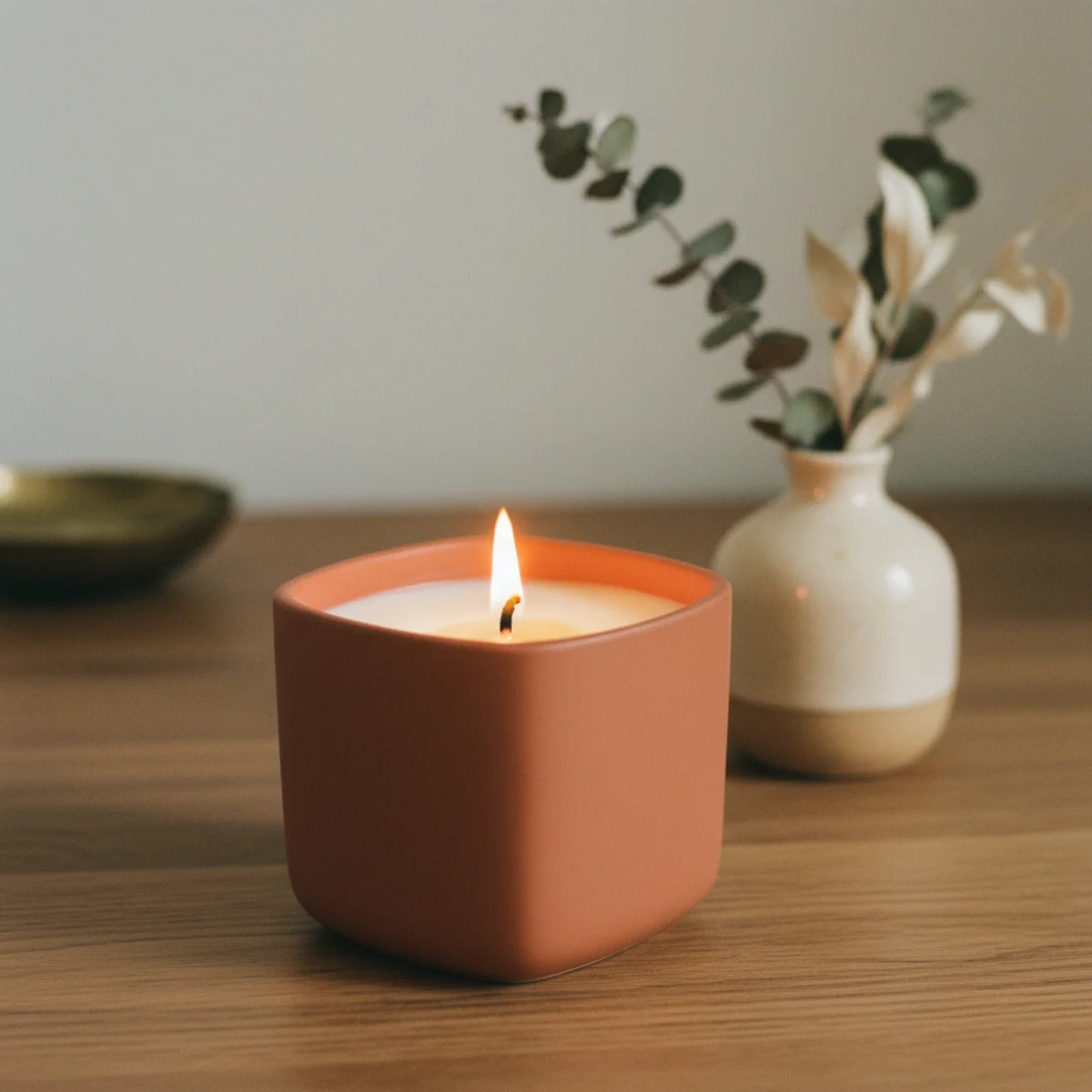
Boy Smells coconut-beeswax blend — premium scent throw across larger rooms. See also: Boy Smells
04Paraffin — Cheap but Compromised
Paraffin wax dominates the budget candle market and is the dominant wax in cheap candles (under $15 per 8 oz jar) because it's significantly cheaper than natural waxes. The trade-off is real: paraffin releases petroleum byproducts (it's a byproduct of crude oil refining), produces visible soot during burning, holds fragrance poorly (requiring more synthetic fragrance to compensate), and burns faster than natural waxes. Acceptable for occasional decorative use; not recommended for regular cozy home daily burning.
Paraffin candle context: BUDGET PARAFFIN CANDLES — most candles under $15 per 8 oz jar at Target, Walmart, dollar stores, big-box retailers. The cost advantage is real ($5-12 per jar versus $25-40 for quality soy). MAINSTREAM PARAFFIN — Yankee Candle, most Bath & Body Works candles, mainstream grocery store candles. ACCEPTABLE PARAFFIN USES — single-use decorative candles for events (where short total burn time minimizes the soot exposure), backup emergency candles (where occasional use doesn't justify natural wax investment), specific traditional uses (some religious or cultural candles are traditionally paraffin). DOWNSIDES THAT MATTER FOR DAILY USE — soot deposition on walls and ceilings over months of regular burning, petroleum byproduct release into indoor air, heavy synthetic fragrance load to compensate for poor scent retention, faster burn rate (lower per-hour cost-effectiveness despite cheaper purchase price), tendency to tunnel without proper care. THE COST-PER-BURN-HOUR MATH — a $30 quality soy candle burning 45 hours costs $0.67 per hour; a $10 paraffin candle burning 25 hours costs $0.40 per hour. Paraffin wins on raw burn-hour cost, but the air quality, soot accumulation, and scent quality differences favor natural wax for daily cozy home use. The break-even for monthly use is meaningful but daily use across years favors natural wax.
AFFILIATE SLOTWAXParaffin acceptable for occasional decorative use, events, emergency backup; NOT recommended for daily cozy home practiceAdd affiliate URL when configuredWhy it works
Because paraffin's specific disadvantages (petroleum byproducts, soot, synthetic fragrance) compound across regular use — single-occasion paraffin candle is fine, but daily evening burning across months produces meaningful indoor air quality impact and visible soot accumulation on walls and ceilings. The cumulative effect is what makes paraffin inappropriate for cozy home daily use even though individual paraffin candles burn acceptably. The decision is essentially: are these candles for occasional events (paraffin fine) or for regular cozy home practice (natural wax required)? Most readers of this guide want regular cozy home practice; paraffin doesn't fit.
Pro tip — Use existing paraffin candle inventory through occasional use rather than discarding — burning the existing candles for special occasions across the next year produces less waste than throwing them away, and gives you time to gradually transition to natural wax candles. The transition can be cost-controlled across 12-24 months.
Paraffin versus natural wax burn comparison — visible smoke and soot differences across daily use. See also: soy candles instead
05Cotton Wick — The Reliable Standard
Cotton wicks are the all-rounder wick choice — clean burning, consistent flame, no crackle, reliable across all wax types and candle sizes. For most candle purchases, cotton wick is the default. Most quality candle brands use 100% cotton wicks specifically; checking for cotton wick (versus cotton-poly blends or other materials) is part of quality candle evaluation.
Cotton wick specifications: 100% COTTON BRAIDED WICK — standard for quality natural wax candles. Burns clean, mushrooms minimally (small unburned tip that forms during burning), produces consistent flame. WICK SIZE — matched to candle diameter; small candle (1.5-2.5 inch diameter) uses small cotton wick, medium candle (2.5-3.5 inch) uses medium wick, large candle (3.5+ inch) uses large or double-wick configuration. SELF-TRIMMING WICKS — modern cotton wicks designed to curl over and burn the mushroom, reducing maintenance. WICK MAINTENANCE — trim to 1/4 inch before each burn (use scissors or specific wick trimmer at $5-15), keep wax pool free of wick debris, center the wick if it drifts. AVOID — cotton-polyester blend wicks (often called 'cotton wicks' but contain synthetic content), zinc-core wicks (older technology, can release zinc particles), lead-core wicks (BANNED in US but possible in some imports — always confirm lead-free). The single best wick maintenance practice: trim to 1/4 inch before EVERY burn session. The discipline produces clean burn, even pool, full candle utilization.
AFFILIATE SLOTWICK100% cotton braided wick (NOT cotton-poly blend), trimmed to 1/4 inch before each burn; dedicated wick trimmer recommendedAdd affiliate URL when configuredWhy it works
Because cotton wick technology has been refined across decades to produce clean, consistent, reliable burn — burns evenly without sputtering, doesn't produce smoke or crackle, works across all common candle waxes and sizes. Other wick materials (wood, hemp, paper-cored) have specific use cases where they excel, but cotton handles most cozy home candle use cases without compromise. The standardization also makes wick trimmers, wick maintenance, and burn troubleshooting more available — most candle care guides assume cotton wick. For households buying multiple candles across multiple categories (taper + soy jar + atmospheric beeswax), all cotton-wick is the simplest universal choice.
Pro tip — Buy a dedicated wick trimmer ($10-15 from candle shops or Amazon) rather than using regular scissors — wick trimmers have a small angled blade and base that catches the trimmed wick fragment, preventing it from falling into the wax pool. The fragment-catching matters; loose wick pieces in wax shorten candle life and produce uneven burning.
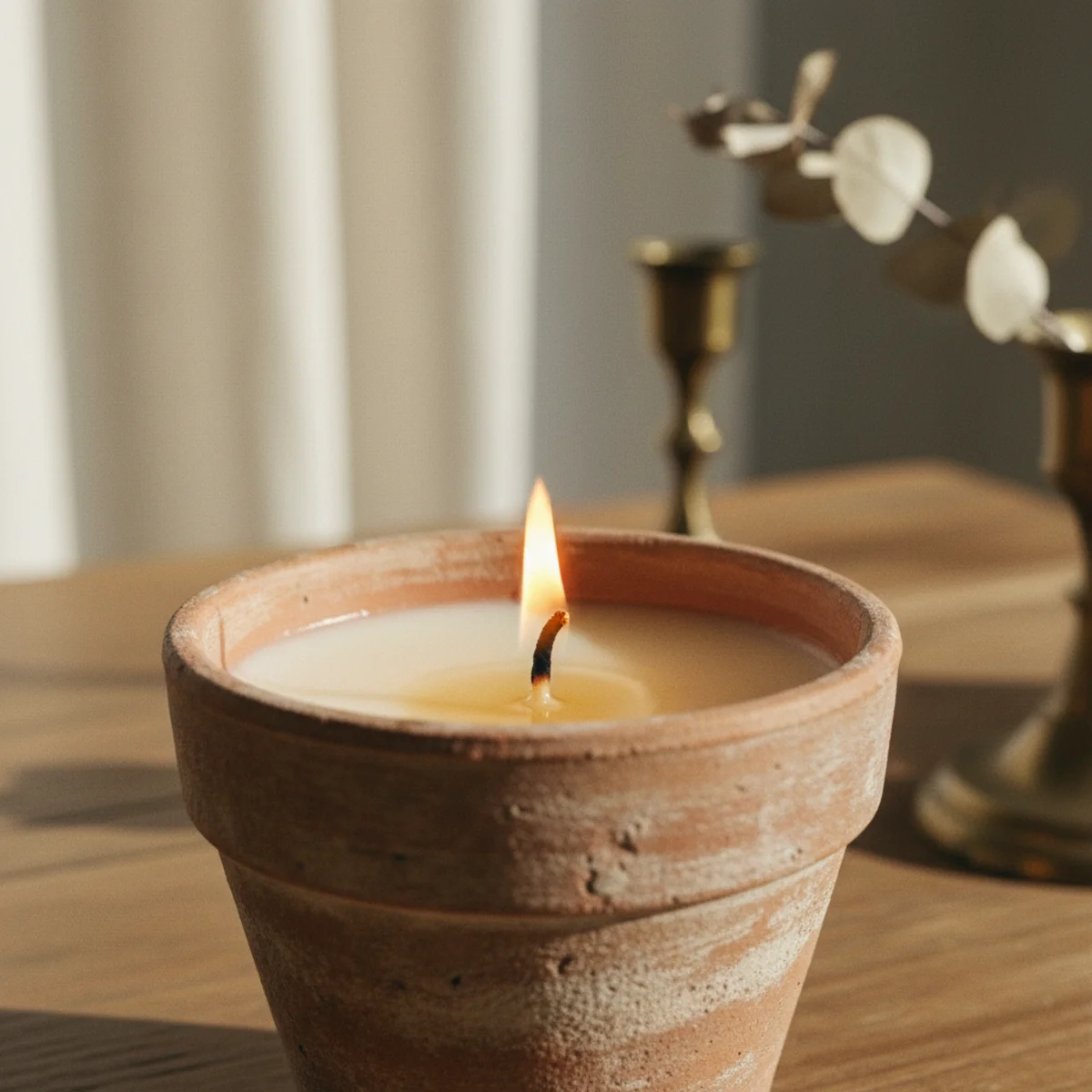
Cotton wick burning cleanly — reliable standard across most candle types and sizes. See also: candle-styling
06Wood Wick — The Crackle Option
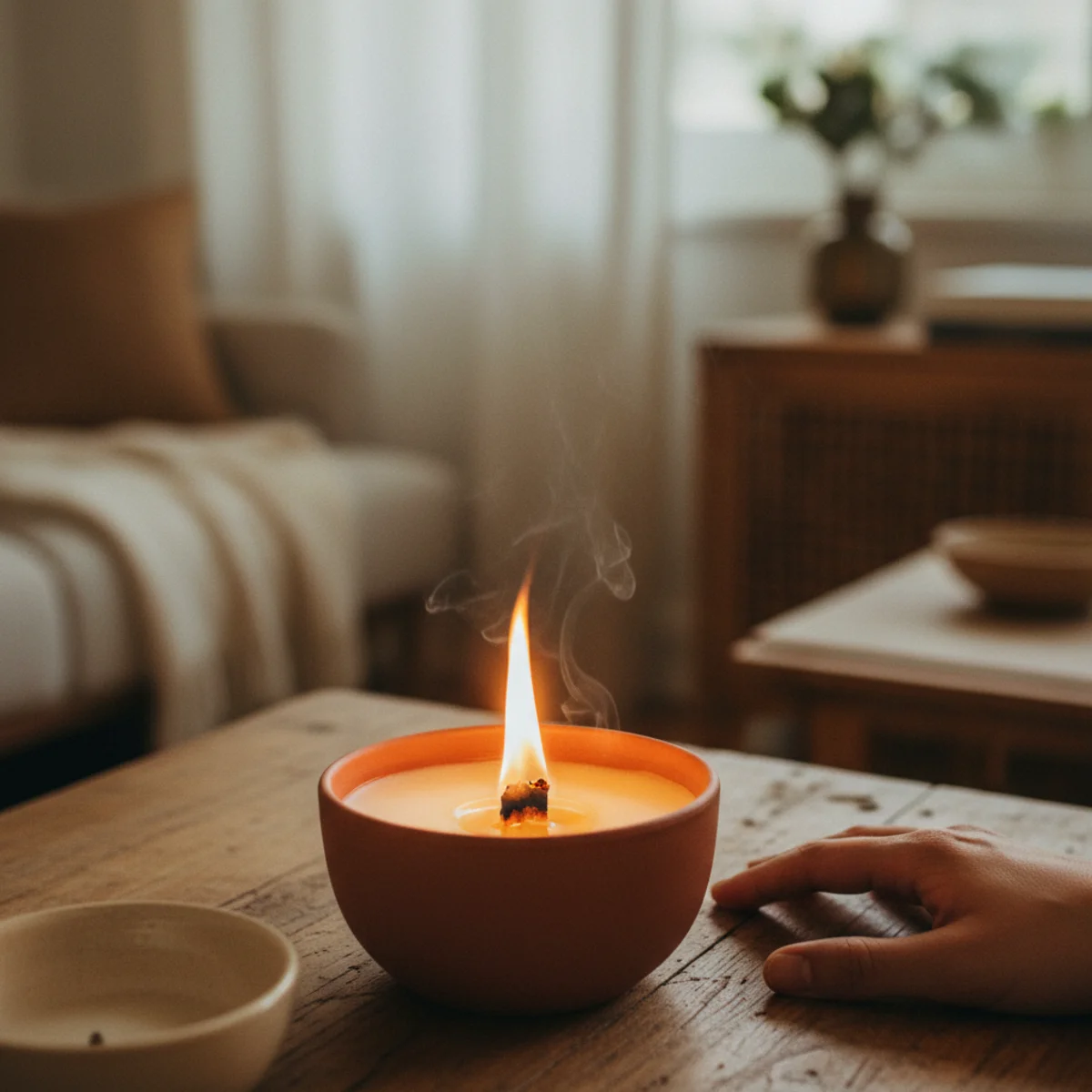
Wood wicks are the specialty option for candles where the wick itself becomes part of the atmospheric experience — they produce a gentle crackling sound during burning (similar to a small fireplace) and a horizontal flame that fans across the wax surface. Best for cozy evening atmospheric burning where the audio dimension adds to the ritual. Price premium: $5-15 more than equivalent cotton-wick candles.
Wood wick candle specifications: WICK MATERIAL — thin wood strip (typically cherry or birch wood) that produces gentle crackling acoustic as it burns. FLAME PROFILE — horizontal flame that fans across wax surface rather than vertical flame typical of cotton wicks. ACOUSTIC EFFECT — gentle wood-on-fire crackling sound that's noticeable but not loud, contributing to fireplace-like atmospheric audio dimension. BEST WOOD WICK BRANDS — WOODWICK (the dedicated brand, $20-30 per medium jar), HOMESICK with wood wick option ($40-60 per jar), some BRANCH BASICS candles with wood wicks, ETSY artisan makers ($25-45 per jar). LOOK FOR — quality wood (not paper-cored wicks that mimic wood appearance), pop-out and re-light specifications (some wood wicks require occasional pop-out maintenance to keep burning). MAINTENANCE — trim BEFORE first burn to about 1/8 inch (shorter than cotton wicks), trim between burns if mushrooming, may need occasional re-lighting after extinguishment if wick has burned down too far. BEST USE CASES — evening atmospheric burning beside reading chair, bathtub side during long bath, bedside during sleep transition, kitchen counter during cooking with windows open. NOT IDEAL FOR — dinner party scent throw (the acoustic adds distraction during conversation), bedrooms during light sleeping (audio sensitivity), households with pets/children where direct flame access is concerning.
AFFILIATE SLOTWICKWood wick for atmospheric crackling audio: WoodWick brand, Homesick wood wick option, some Etsy artisan makers at $20-60Add affiliate URL when configuredWhy it works
Because the gentle crackling adds an audio dimension to candle burning that contributes to fireplace-like atmospheric effect — for households without fireplaces, the wood wick provides similar acoustic warmth at much smaller scale. The horizontal flame profile also creates different visual aesthetic than cotton wicks (some find it more interesting; some prefer cotton's vertical flame). The trade-offs are real (price premium, more maintenance, occasional re-lighting needs), but for specific use cases (evening reading, bathtub atmosphere, fireplace-substitute burning), wood wicks earn their premium. The decision is essentially: do you want candle as multisensory ritual (wood wick) or candle as visual element only (cotton wick)?
Pro tip — Test one wood wick candle before committing to multiple — some households love the crackling audio while others find it distracting. The single-candle test costs $20-30 and reveals whether the wood wick effect matches your atmospheric preferences. If you love it, expand the collection; if not, stay with cotton wicks for the rest of your candle purchases.
Wood wick with horizontal flame — atmospheric crackling adds fireplace-like audio dimension. See also: reading-nook-ideas
07Natural Fragrance — The Clean Scent
Candle fragrance source matters as much as wax type for cozy home daily use. Natural fragrance (essential oils, natural fragrance oils derived from plants and herbs) versus synthetic fragrance (laboratory-created scent compounds) produces dramatically different effects on indoor air quality, headache susceptibility, and overall scent character. Look for candles specifying essential oil or natural fragrance; skip those listing 'fragrance' or 'parfum' as generic ingredient.
Natural fragrance specifications: PURE ESSENTIAL OIL FRAGRANCED CANDLES — fragrance derived entirely from plant essential oils (lavender, rosemary, sandalwood, bergamot, cedarwood). Brands: P.F. Candle Co. for many scents, Slow North, some Boy Smells lines, Etsy artisan makers specifically advertising essential oil fragrance. PRICE: typically $30-60 per jar. NATURAL FRAGRANCE BLENDS — essential oils mixed with naturally-derived fragrance compounds (not synthetic). Often labeled as 'natural fragrance,' 'botanical fragrance,' or 'plant-based fragrance.' Brands: Brooklinen, Homesick (some lines), Otherland (some lines), most quality independent makers. PRICE: $25-50 per jar. SYNTHETIC FRAGRANCE (TO AVOID FOR DAILY USE) — laboratory-created scent compounds, often listed as 'fragrance,' 'parfum,' or specific synthetic ingredients (linalool, geraniol, hexyl cinnamal). Brands: Yankee Candle, most Bath & Body Works, most mainstream grocery store brands. PRICE: $15-30 per jar. NATURAL FRAGRANCE ADVANTAGES — gentler on people with fragrance sensitivities, produces scent character closer to actual source material, doesn't accumulate problematic indoor air compounds across daily use, often more nuanced and authentic-smelling. AVOID — candles listing only 'fragrance' or 'parfum' as ingredient (typically synthetic), candles with very strong scent that masks natural wax character (often indicates heavy synthetic fragrance loading to compensate for poor wax).
AFFILIATE SLOTFRAGRANCEEssential oil fragrance from P.F. Candle Co., Slow North, Etsy artisans, OR natural fragrance blends from Brooklinen, Homesick, OtherlandAdd affiliate URL when configuredWhy it works
Because the candles burning during cozy evening hours are releasing their fragrance into the indoor air the household breathes for 4-8 hours per evening — and the fragrance source determines what specifically gets released. Synthetic fragrance compounds can include VOCs (volatile organic compounds), phthalates, and other chemicals that affect indoor air quality with cumulative daily exposure. Natural fragrance from essential oils and plant-derived sources produces gentler effects and typically smells more nuanced. The daily indoor air exposure across regular cozy home practice makes the fragrance source a non-trivial decision — especially for households with respiratory sensitivities, asthma, allergies, or migraines triggered by fragrance.
Pro tip — Read fragrance ingredient lists BEFORE purchase, not after — many candle brands obscure fragrance source on packaging but include detailed ingredient information on the product detail page online. Look for specific essential oil names (lavender essential oil, rosemary essential oil) rather than generic 'fragrance' listing. The 30-second pre-purchase check prevents the regretful candle bringing daily fragrance you don't want.
Essential oil fragranced candle with transparent ingredients — clean scent for daily cozy home use. See also: warm-minimalism
08Skip — Cheap Heavily-Synthetic Jars
The single most-important candle shopping warning: skip cheap heavily-synthetic jar candles entirely. These products dominate budget candle retail ($5-15 per 8 oz jar at Walmart, Target, dollar stores, big-box retailers) but fail at every level that matters for cozy home use — paraffin wax with petroleum byproducts, synthetic fragrance loaded heavily to overcome cheap wax, cotton-poly blend wicks that mushroom and tunnel, problematic indoor air quality across daily use.
Cheap synthetic candle identification: CHECK INGREDIENT TAGS — if 'fragrance' or 'parfum' is the only fragrance listing (no essential oils or specific natural ingredients), and wax is listed as 'paraffin' or 'wax blend,' the candle is heavily synthetic. PRICE INDICATOR — most candles under $15 per 8 oz jar fall in this category regardless of marketing claims. RED FLAG BRANDS — most generic store-brand candles (Walmart Mainstays, Target Threshold's budget tier, dollar store candles, gas station candles), seasonal big-box candle lines, fast-fashion home retailer candles, MAINSTREAM brands marketing for cheap (Yankee Candle's value tier, Bath & Body Works' lower-tier specifically). WHAT $15-25 SHOULD BUY INSTEAD — Target Threshold soy at $15-25 (genuine soy at budget), TJ Maxx or Marshalls discounted natural wax candles at $10-20 (clearance pricing on quality brands), Etsy artisan makers' smaller candles at $15-25, single-burn beeswax tealights ($10-15 for pack of 12 from artisan beekeepers). WHY CHEAP SYNTHETIC FAILS — paraffin soot accumulation on walls and ceilings across months of daily use, synthetic fragrance contributing to indoor air quality concerns, cheap wicks producing tunneling and uneven burn (poor candle utilization), fragrance fading quickly and unevenly across burn life. The daily-use compound effect makes cheap candles a false economy — the $10 candle burning poorly for 25 hours costs more per-hour than the $30 quality candle burning well for 50 hours when you factor in air quality and visual impact.
AFFILIATE SLOTAVOIDSkip cheap synthetic jar candles under $15; instead Target Threshold soy at $15-25, TJ Maxx clearance natural wax, Etsy artisans at $15-25Add affiliate URL when configuredWhy it works
Because cheap synthetic candles combine multiple disadvantages simultaneously — petroleum wax + synthetic fragrance + cheap wick + small jar size + poor scent throw — none of which can be fixed. Other budget choices have specific compromises (Target Threshold soy is real soy but with synthetic fragrance; Etsy budget candles vary widely in quality but at least name their ingredients), but cheap synthetic candles compromise on every dimension at once. The savings are real ($10 versus $30) but the costs across daily use (air quality, soot, scent fading, frustrating burn behavior) compound to exceed the price difference. For occasional use the cheap candles are tolerable; for regular cozy home practice they actively undermine the cozy goal.
Pro tip — Read fabric content tags or ingredient lists BEFORE purchase if budget candles tempt you — most cheap synthetic candles will openly list 'fragrance' (generic), 'paraffin wax,' and offer no transparency about wick material. The 30-second pre-purchase check reveals the candle category before committing. If you're tempted by under-$15 candles, choose Target Threshold soy specifically (which does list soy wax and is genuinely soy) rather than generic budget options.
Skip cheap synthetic — Target Threshold soy or Etsy artisans deliver real quality at similar budget price. See also: thrifted-decor-ideas

How to choose and burn candles well
Match the wax to the use, then burn it right to get your money's worth.
- 1Choose the wax for the purpose
Beeswax for clustering and daily clean burning, soy or coconut-soy for scent, and skip cheap paraffin for everyday use in a closed room.
- 2Check the wick and fragrance
Look for a cotton or wood wick sized to the candle's diameter, and natural or essential-oil fragrance over synthetic if it's scented.
- 3Burn it fully the first time
On the first burn, let the wax melt all the way to the edges — it takes a few hours and prevents tunneling forever after.
- 4Trim the wick each time
Trim the wick to a quarter inch before every burn to keep the flame even and stop soot.
Quick tips
- Burn a new candle fully to the edges the first time to prevent tunneling forever.
- Trim the wick to a quarter inch before every burn for an even, soot-free flame.
- Choose beeswax for daily clustering and clean burning, soy for scent.
- Avoid multiple competing scents in one room; one scent at a time.
- Look for cotton or wood wicks and natural fragrance over cheap synthetic.
- Do the per-hour math — a quality candle that burns clean beats a cheap one that tunnels.
The best candle by use
Unscented beeswax pillars and tapers — clean, long-burning, and honey-scented on their own.
A quality soy or coconut-soy candle with natural fragrance, burned one scent at a time.
A wood-wick candle for the crackle, or beeswax tapers in brass holders for the dining table.
A single quality scented candle, where one strong scent reads as a small luxury.
Candles are the cheapest atmosphere there is — but a cheap candle that tunnels and soots is the false economy. Buy fewer, better, and burn them often.
Frequently asked questions
Which candle should I buy for my cozy home?+
Are soy candles better than paraffin candles?+
What's the difference between beeswax and soy candles?+
Are scented candles bad for indoor air quality?+
How do I make a candle burn evenly without tunneling?+
How long should I burn a candle?+
Candles are the cheapest atmosphere in any home, but the gap between a good one and a bad one is wider than the price tag suggests. Choose beeswax for daily clustering and soy for scent, burn a new candle fully to the edges the first time, and trim the wick each burn. We'd do the per-hour math before buying cheap paraffin by the cartful; a quality candle that burns clean and even is genuinely cheaper per hour than the bargain one that tunnels, soots, and wastes half its wax. Buy fewer, better, and burn them often.