These twelve thrifted decor ideas are the field-tested rules our writers and readers use to turn $50 and an afternoon into rooms that read collected over decades. They cover what to hunt for (the specific materials and shapes that thrift well), how to spot the difference between a $20 piece worth carrying home and a $20 piece worth walking past, and where the secret sources are — including a few that thrift veterans never share publicly online.
Every rule below assumes the standard thrift store budget reality: under $50 per piece, under $250 for a whole room's worth of small finds, and a willingness to walk past four ugly things to find the one that's quietly beautiful. Brand names, exact thrift sources, and the price tiers that consistently deliver are noted where they matter.
By the end of this guide, you'll know exactly which six objects to hunt at your next Goodwill visit, which three to skip even when cheap, and the sniff-and-sunlight rule that prevents the most expensive thrift mistakes.
WHAT'S INSIDE
- The one $15 vintage object that visually outperforms a $300 new one — in every room
- Why solid wood and real wool are the only materials worth specifically targeting
- The smell test that saves you from the wrong $200 armchair purchase
- Where to find vintage oil paintings under $30 (and which three sources to skip)
The character in a room comes from the things you had to hunt for, not the things you could click to buy.
— Domino, on secondhand decorating [citation needed — verify before publish]
What makes thrifted decor work?
Thrifted decor is any secondhand piece — furniture, lighting, textiles, art, objects — bought from estate sales, thrift stores, consignment shops, or marketplaces and worked into a room. It's the backbone of the collected, warm-minimalist look because age and patina are things you genuinely cannot buy new.
The skill is in the edit. A room of nothing but thrift looks like a junk shop; a room with two or three good secondhand anchors — a brass lamp, a worn leather chair, an antique mirror — among newer basics looks layered and personal. The trick is buying for quality of material and bones, not for the dated shade or the chipped paint you can change.
More in Budget you may love
See allWhy secondhand decorating is everywhere in 2026
Two forces converged: budgets tightened, and the cold, brand-new look fell out of fashion. People want rooms that feel gathered over time, and the fastest route to that is buying things that actually were. Marketplace and estate-sale culture exploded, and "thrifted finds" and "secondhand decor" are among Pinterest's fastest-climbing home searches.
There's a sustainability thread too — keeping a solid oak dresser out of a landfill beats buying particleboard new — but mostly it's that secondhand is where the warmth is. A vintage wool rug with a faded corner out-warms a full cart of new synthetics, and costs less.
14 thrifted decor ideas and what to hunt for
01Buy the Lamp, Skip the Shade
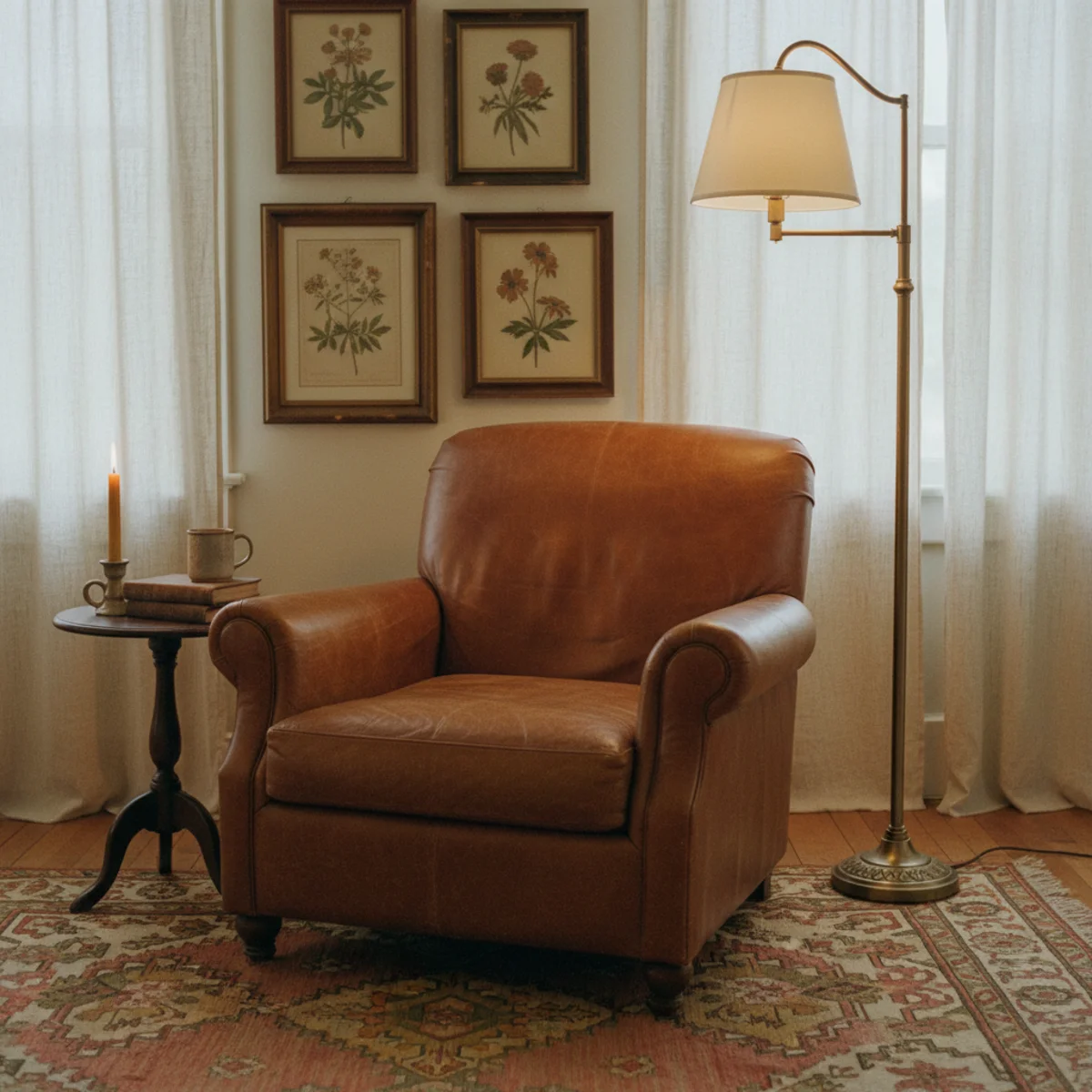
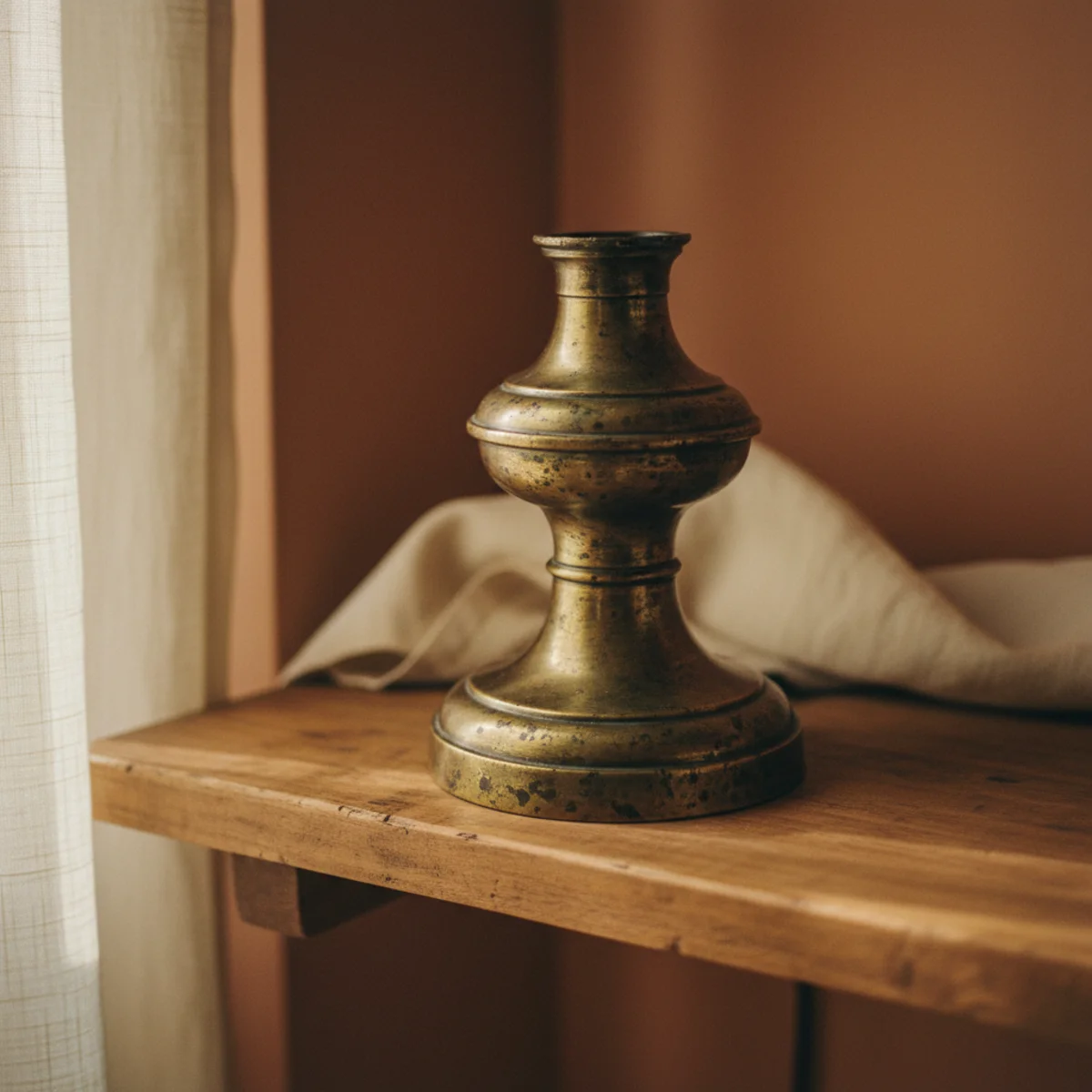
The most common mistake at any thrift store is buying a beautiful vintage lamp with an ugly shade — yellowed pleated polyester, scorched parchment, or a gold-tasseled 1990s disaster — and assuming you have to keep what came with it. You don't. Lampshades are independent objects, costing $15 to $60 new at IKEA or West Elm, and the lamp base is what makes the piece. Hunt thrift stores for brass, ceramic, and oak lamp bases at $8 to $25, replace the shade, swap in a 2700K warm bulb, and the lamp reads like a $300 design store piece.
Look for solid materials at the base: heavy brass (lift it — should weigh at least 3 lbs), thick ceramic (no chips at the rim or hairline cracks), oiled oak or walnut (knock the base — solid wood thuds, MDF clicks). Avoid plastic bases sprayed gold, anything with electrical cord visibly fraying near the socket, and bases with broken or missing harp brackets ($4 to replace at Home Depot). Shade dimensions: the shade diameter should be about 60% of the base height; the bottom of the shade should sit at eye level when seated. New drum shades from IKEA RINGSTA at $15, linen shades from World Market at $35, or custom shades from Etsy at $50 to $80. Total invested: $25 to $80, versus $200 to $400 retail.
AFFILIATE SLOTLIGHTINGVintage brass or ceramic lamp base + new linen drum shade + 2700K bulbAdd affiliate URL when configuredWhy it works
Because vintage lamp bases were built when materials were heavier and cheaper — solid brass castings, real ceramic glazes, oiled wood — while modern lamp bases at every price point use lighter, hollower construction. The base does the structural and aesthetic work; the shade is a consumable. Replacing a shade is the cheapest way to inherit the build quality of a $300 lamp for $30 to $50 total.
Pro tip — Carry a 2700K LED bulb with you when thrifting — most thrift stores don't plug in lamps to demo them, and a working bulb in your pocket lets you test electrical function before paying. If the cord sparks or doesn't light, skip it (no resale rewiring is worth $15).
Vintage base, new shade, warm bulb — the $30 thrift store lamp that reads $300. See also: 2700K warm bulb
02Hunt for Solid Wood and Real Wool Above All
The single biggest difference between successful thrifting and frustrating thrifting is knowing how to spot real materials in five seconds. Solid wood, real wool, brass, ceramic, glass, leather — these are the things worth carrying home. Particleboard, polyester, plastic, plated metals, and synthetic blends are the things to walk past, no matter how cheap they are. The two materials worth specific obsessive hunting: solid wood furniture and real wool textiles. Both age into beauty, both cost a fraction of new equivalents, and both are nearly impossible to fake convincingly at any price tier.
For solid wood: turn the piece over and look at the edge of the top — solid wood shows continuous grain pattern through the depth; veneer over particleboard shows a thin 1-to-2mm wood layer over compressed brown. Knock it: solid wood thuds, MDF clicks hollowly. Heavy is good (a small solid oak side table should weigh 12 to 18 lbs). Brand stamps from Pennsylvania House, Ethan Allen, Stickley, or Drexel Heritage signal mid-century quality. For real wool: check the tag (100% wool, or 80% wool blend minimum), feel the weight (felted wool throws should weigh 2 to 3 lbs minimum), and pinch a small section — real wool springs back; synthetic stays compressed. Avoid anything labelled "wool-like" or "wool-look."
AFFILIATE SLOTFURNITURESolid oak, walnut, or teak side table, console, or chair frameAdd affiliate URL when configuredWhy it works
Because both materials age into something more beautiful than they started — wool develops a softer hand and slightly faded patina; oak and walnut deepen in color and develop fine craze patterns in the finish. Particleboard and polyester do the opposite: they degrade visibly, peel at the corners, and pill on the surface. Buying these specific materials secondhand is the only way to get heirloom quality at thrift store prices.
Pro tip — Visit thrift stores on Mondays and Tuesdays mid-morning — donations from weekend cleanouts get processed Monday, and the best pieces hit the floor before Wednesday's regulars pick them up. Skip Saturdays unless you're willing to compete with every other Marketplace flipper in your city.
Two materials worth hunting specifically — solid wood and real wool, both nearly impossible to fake. See also: real wool throws
03Mirrors and Frames for Instant Patina
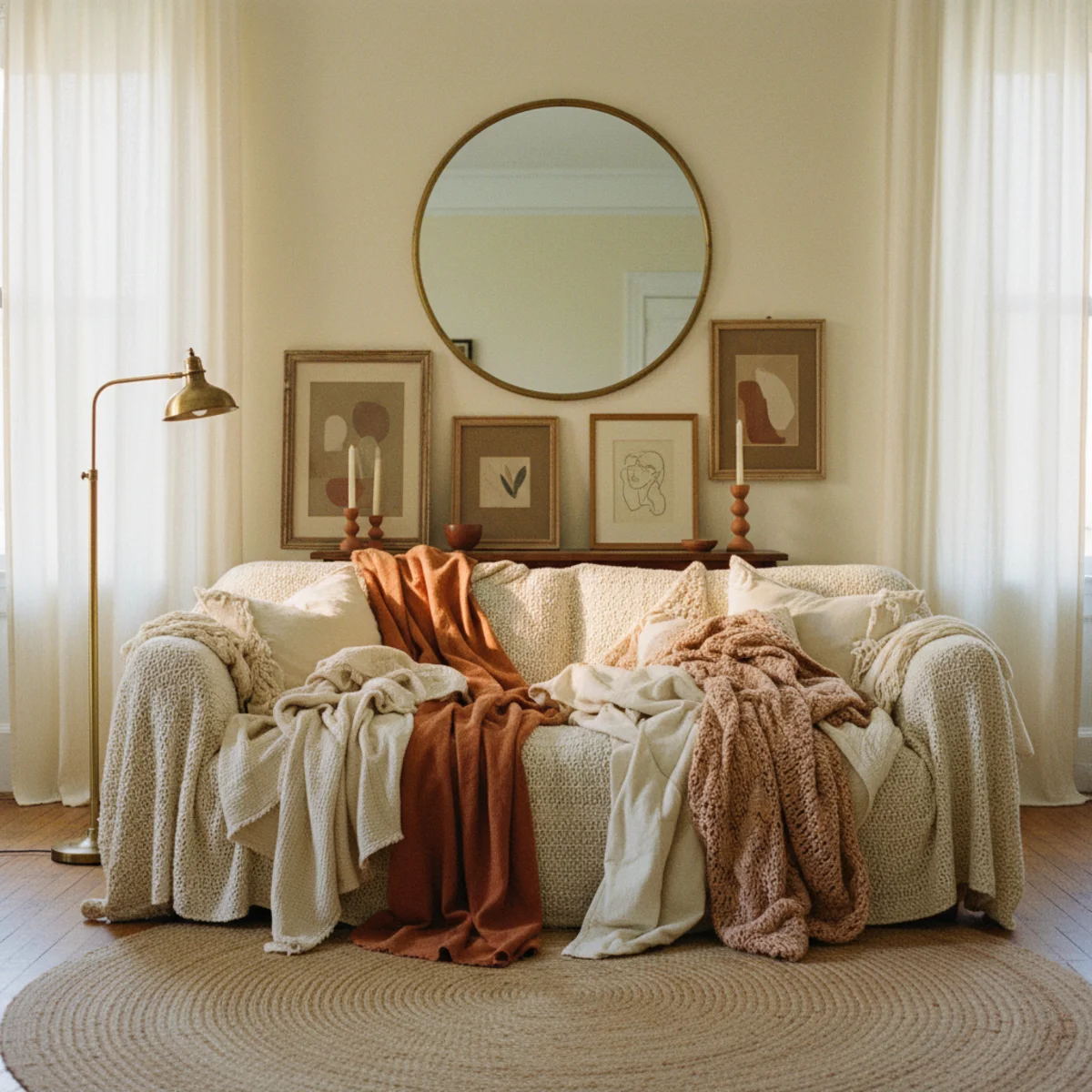
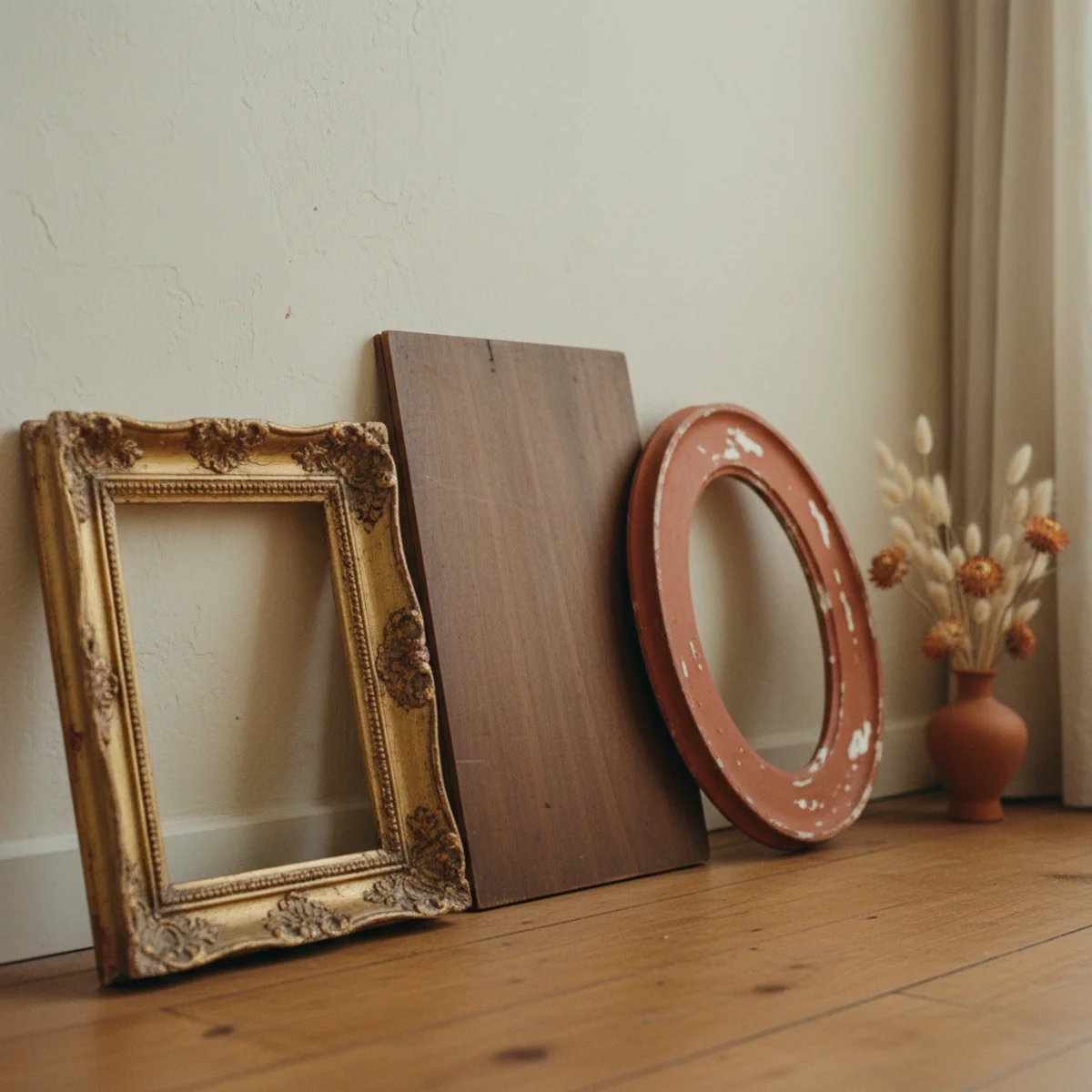
Old mirrors and old picture frames are the highest-impact, lowest-risk thrift store purchases for any cozy home. A 24x36 inch oval mirror in a tarnished brass or carved wood frame, hung above a console or in an entryway, instantly adds the visual depth and patina that no new mirror can replicate for ten times the price. Same with picture frames: a stack of mismatched vintage gilded or oak frames at $3 to $15 each will outperform every new gallery wall kit at any price tier. Both are widely available and almost always under $40.
For mirrors: hunt 18 to 36 inch sizes in oval, round, or rectangular shapes with carved wood, brass, or gilded plaster frames. Look for genuine silvering loss (small dark spots in the mirror itself) — that's a sign of pre-1970 manufacture and adds character. Check the back: real wood backing is good, cardboard is fine, but skip any with crumbling MDF or active mold smell. Sources: Goodwill at $8 to $25, ReStore (Habitat for Humanity) at $15 to $40, estate sales at $5 to $30. For frames: pull glass and matting if dirty (cheaper to replace at $5 each at Michaels) and remove any unfortunate prints. The frame is the asset. Hang frames empty as graphic elements, or fill with botanical pressings, vintage maps, or thrifted oil paintings.
AFFILIATE SLOTWALL DECORVintage mirror (oval or rectangular, 18-36 inches) plus 3-5 mismatched empty framesAdd affiliate URL when configuredWhy it works
Because both objects rely entirely on the patina of age — the subtle silvering loss in old mirror glass, the soft tarnish of brass frames, the worn gilding on plaster — and these qualities cannot be manufactured. New mirrors look new no matter how expensive they are; new frames look new no matter how distressed. The age of these objects is the entire point of buying them, and the price reflects only their availability, not their value.
Pro tip — Buy frames bigger than the artwork you'll eventually put in them — large white mats inside large vintage frames look gallery-quality and cost $5 from any craft store. A 5x7 photograph inside an 18x24 frame with a 4-inch white mat reads as serious art.
Old mirrors and frames — the patina you cannot buy new at any price tier. See also: gallery wall
04Trust the Sniff Test, Then the Sunlight Test
The single most important step in any thrift store furniture purchase happens before you reach the register: lift the piece and smell it. Real upholstered furniture, particularly older armchairs and sofas, often carries the smells of its previous home — cigarette smoke, mildew, cooking grease, pets, perfume — and some of those smells will not come out. The sniff test takes ten seconds, costs nothing, and saves you from buying the wrong thrift piece. After it passes, the sunlight test: drag the piece into direct sunlight for one minute to check what hidden stains the store fluorescents are hiding.
Smell test specifics: stick your nose directly into the upholstery seams and crevices, not just the surface. Slight mustiness is acceptable (will air out in two weeks of open windows). Cigarette smoke is not (rarely fully comes out, even with professional cleaning at $200+). Pet urine is not. Mildew that smells "wet" rather than dusty means active mold somewhere — walk away. Sunlight test: drag the piece into the window of the thrift store, or step outside if allowed. Stains that the store's fluorescent bulbs hide become obvious — water rings on wood, set-in stains on fabric, glue lines from previous repairs, color mismatches from sun fading. If the piece still looks good in direct sun, it's a real find.
AFFILIATE SLOTMETHODSSmell test and sunlight test before any upholstered purchaseAdd affiliate URL when configuredWhy it works
Because visual flaws — small stains, surface scratches, worn upholstery — are fixable or hide-able with throws and slipcovers. Olfactory flaws are usually permanent. A perfect-looking armchair that smells of cigarette smoke will continue to smell of cigarette smoke for years, eventually scenting the entire room. The smell of a piece is the most accurate signal of whether it was kept clean over its lifetime.
Pro tip — Take a photograph of any concerning stain or smell source and search "how to clean [stain type] from [furniture type]" on your phone before paying — three minutes of research saves you from the wrong $80 thrift store armchair purchase, and confirms whether a $200 piece is salvageable.
Smell first, sunlight second — ten seconds that save you from the wrong $200 buy. See also: professional cleaning
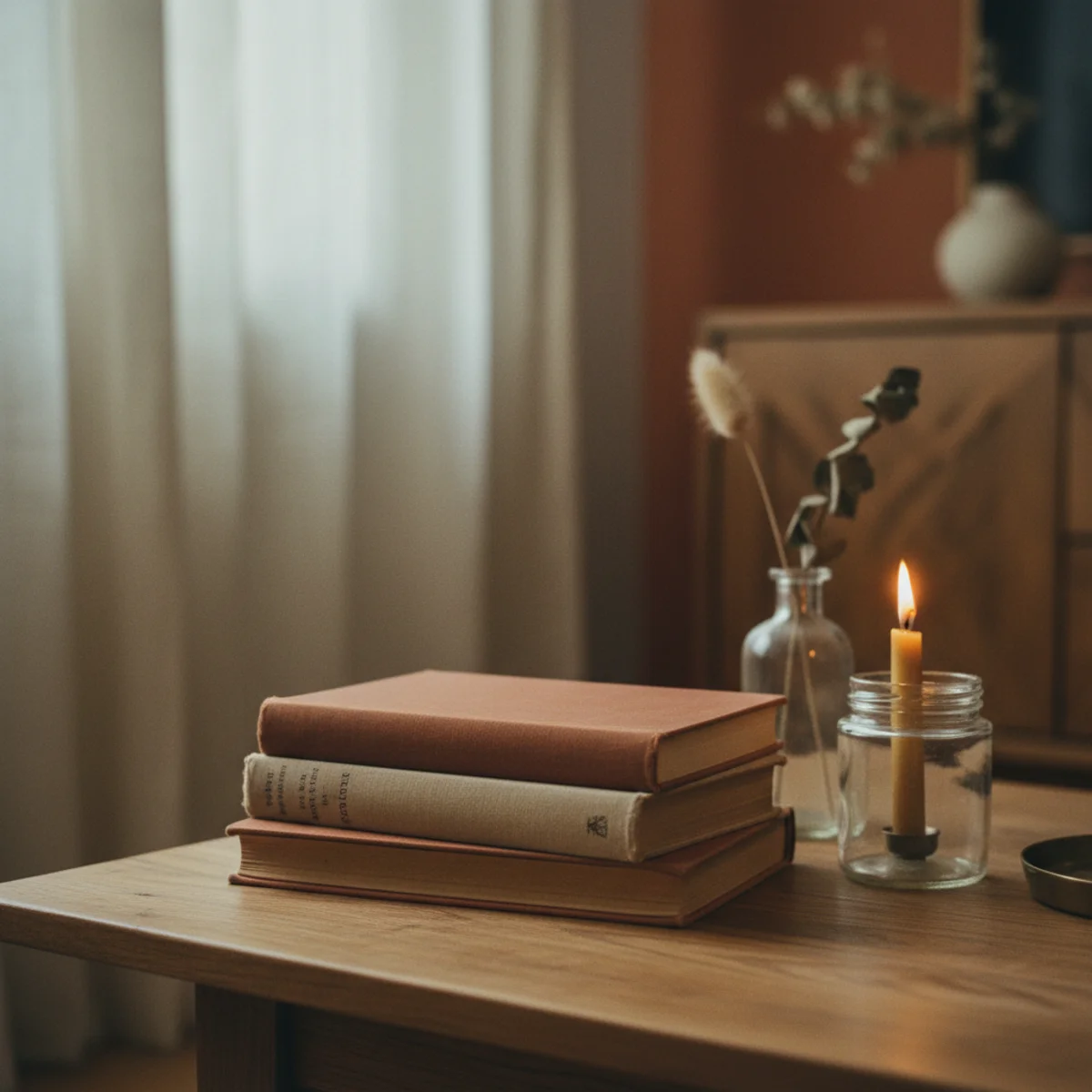
05Stacks of Real Books, Bought by the Pound
A bookshelf full of books costs more than people realize at retail — easily $400 to $800 to fill a single 6-foot bookcase with new hardcovers. The same shelf, filled with vintage cloth-bound books from Goodwill and library sales at $1 to $3 each, costs $40 to $80 and reads far more lived-in. Books are the cheapest, highest-impact thrift purchase for any room with visible shelving. Buy them by the pound when possible — many library book sales charge $5 to fill a paper grocery bag, which works out to about 50 cents per book.
Hunt at library Friends-of sales (most libraries hold one every quarter, usually advertised on the library's website), Goodwill at $1 to $2 per hardcover, Half Price Books clearance shelves at $1 to $3, and estate sales where entire personal libraries sell for $20 to $50. Focus on cloth-bound hardcovers (dust jackets removed), warm-toned spines (rust, brown, burgundy, oat, sage), and varied sizes — never matched volume sets. Skip mass-market paperbacks unless genuinely worn and read. For a 6-foot shelf, aim for 60 to 80 books. Mix horizontal stacks with vertical runs. Pull a few favorites out and lean them face-out for visual variety.
AFFILIATE SLOTBOOKS60-80 vintage cloth-bound hardcovers, dust jackets removed, warm-toned spinesAdd affiliate URL when configuredWhy it works
Because the visual character of books comes from age and use — softened cloth spines, slightly faded color, sun-warmed edges. New books in dust jackets all look like a bookstore display; old hardcovers with the jackets removed look like the residue of someone's actual reading life. The cost difference reinforces the choice: $80 for a styled shelf versus $800 for the same effect bought new.
Pro tip — Strip every dust jacket the moment you bring books home — the cloth bindings underneath are almost always more beautiful than the printed jackets, and the consistent color palette of stripped books transforms a chaotic shelf into a calm one. Save jackets in a closet for the rare books you'll read.
Sixty books at $1 each — the cheapest way to fill a shelf with collected character. See also: library Friends-of sales
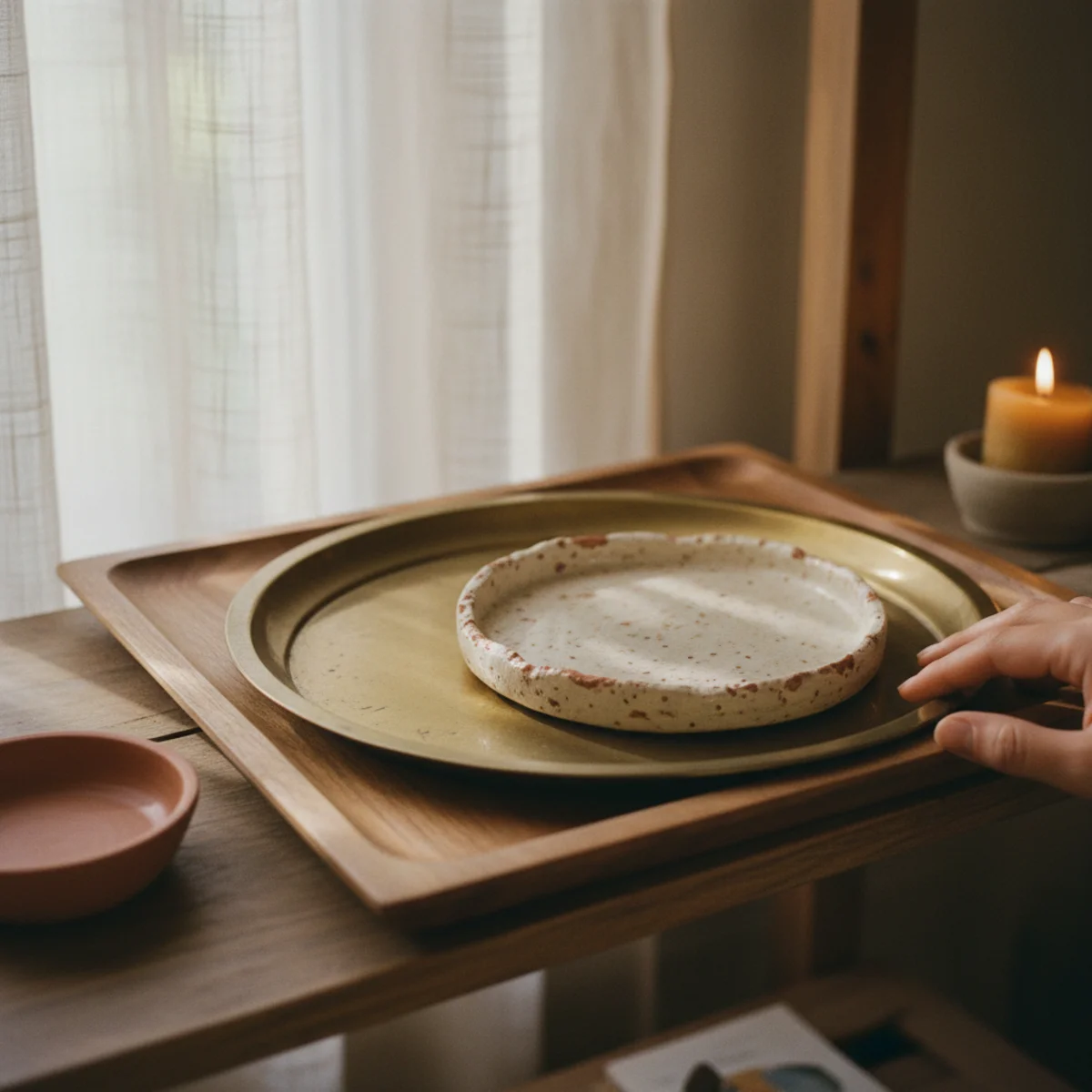
06Brass and Wood Trays Beat Glass Every Time
Trays anchor every flat surface in a styled cozy home — coffee tables, consoles, kitchen counters, bedroom dressers, bathroom vanities — and the cheapest place to find good ones is the thrift store. Avoid every glass and mirrored tray you'll see (they read sterile under warm light and show every fingerprint). Hunt instead for solid brass, oiled walnut, oak, rattan, and acacia trays at $5 to $20 each. Build a collection of three or four in varied sizes (12, 16, and 22 inches), and every surface in your home gets a defined center of gravity for under $60 total.
Solid brass trays (often vintage Israeli, Indian, or Moroccan) thrift at $8 to $18 each at Goodwill and ReStore — look for solid weight (not plated tin), and check the back for a hallmark stamp. Wooden trays in walnut, acacia, or teak run $5 to $15 at thrift stores; HomeGoods if you're impatient at $20 to $30. Rattan trays at $4 to $10 are everywhere. For coffee table use, choose 16 to 22 inches; for counters or dressers, 12 to 16 inches. Patina is the asset: tarnished brass and worn wood photograph better than polished new versions. If brass is too dark, a five-minute polish with Bar Keepers Friend and a soft cloth brings it back without removing character.
AFFILIATE SLOTDECORThree brass or wood trays in varied sizes (12, 16, 22 inches)Add affiliate URL when configuredWhy it works
Because trays contain the small visual clutter that otherwise scatters across every surface — remotes, coasters, candles, keys, mail — inside a defined rectangle that reads as intentional. Without a tray, every object looks scattered; with one, the same objects read as a styled vignette. The tray is the difference between a furnished home and a finished one, and the right trays cost almost nothing.
Pro tip — Buy one extra tray beyond what you think you need — they migrate constantly between rooms, get borrowed for serving guests, and you'll always want one in the kitchen as a coffee station that you also use in the bathroom on weekends. Trays are the rare object that you actually use more of than you plan to.
Brass and wood beat glass every time — and three trays at $50 total style every surface. See also: coffee table
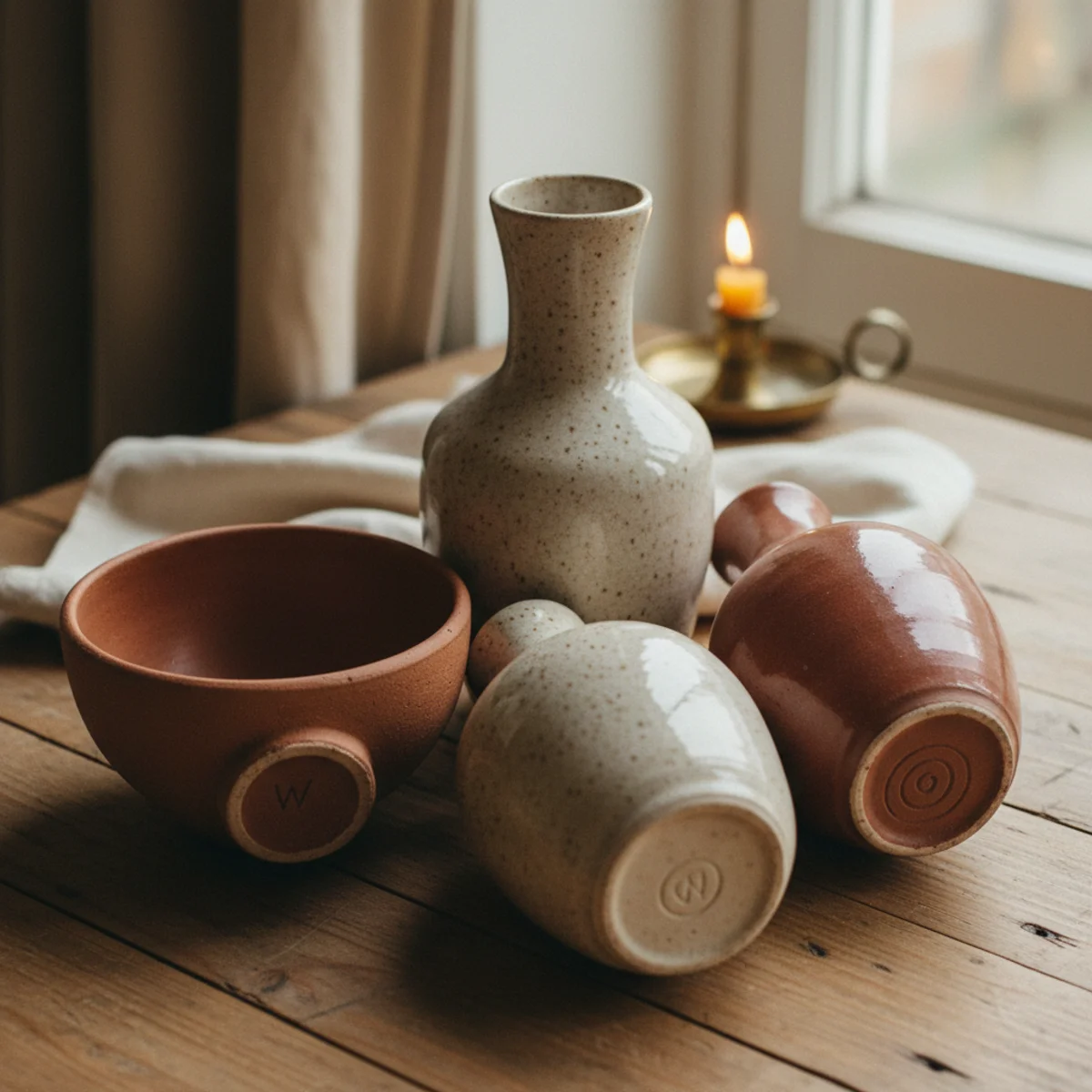
07Ceramic Vessels With Weight and Patina
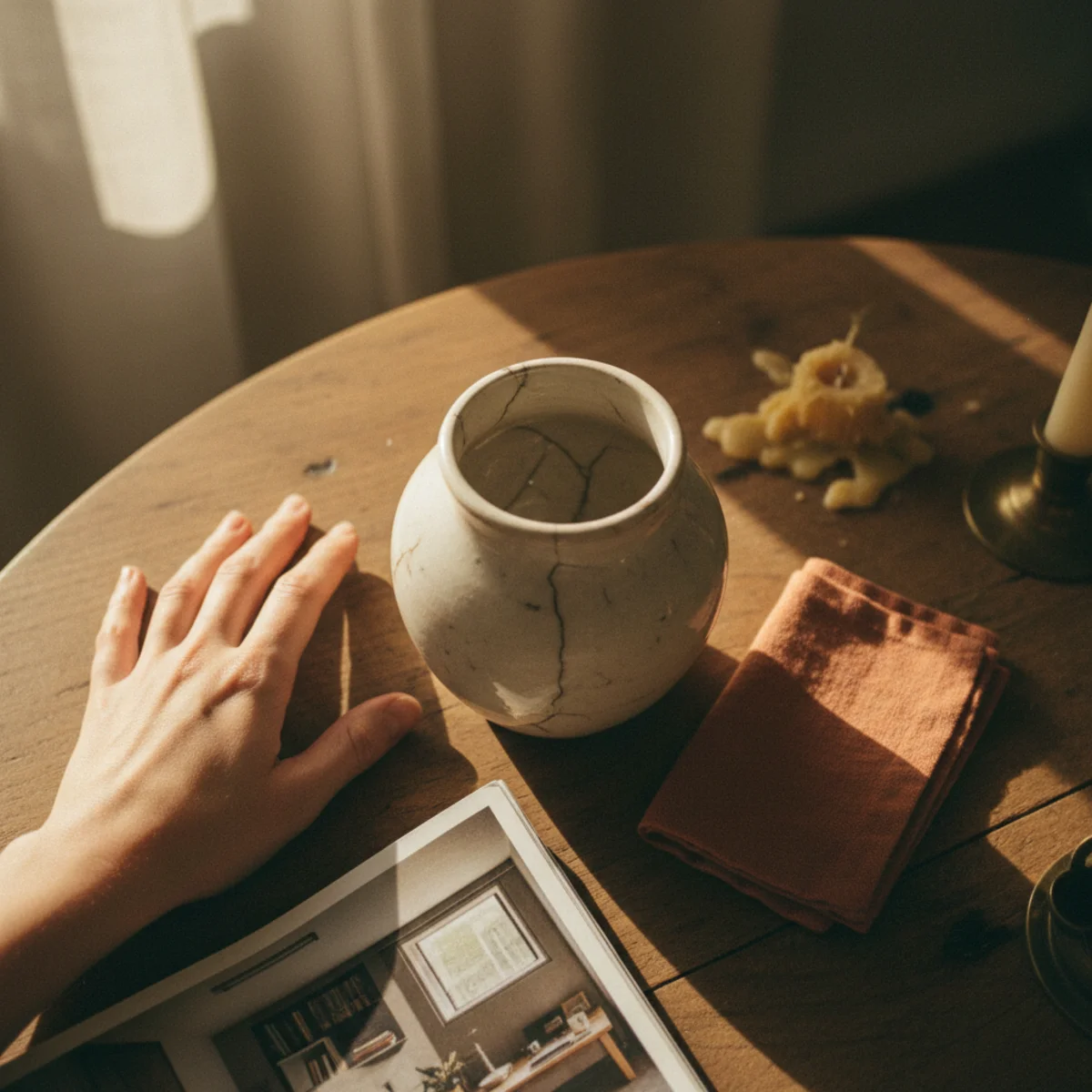
Ceramics — pots, urns, vases, bowls, vessels — are among the most-thrifted home decor categories, and the most rewarding. A heavy hand-thrown studio ceramic from the 1960s or 70s costs $5 to $20 at most thrift stores and would sell for $80 to $300 at a vintage shop. Weight is the signal: real fired clay is dense; modern decorative ceramics are lightweight cast porcelain. Hunt unglazed terracotta, matte-glaze stoneware, and earth-toned hand-thrown pieces. Avoid bright-glazed cheerful pieces unless they're a specific accent — warm earth tones thrift faster and read warmer in any room.
Look for stoneware with a maker's mark or signature carved into the base — these are signed studio pieces, often by mid-century American potters whose work sells at gallery prices. Even unsigned heavy stoneware in warm tones (terracotta, mustard, sage, olive, oat) thrift at $5 to $15 and read as $80 to $150 in any room. Sizes worth specific hunting: 8 to 12 inch low bowls (for coffee table styling), 12 to 18 inch floor vessels (corners and consoles), 4 to 6 inch small bowls (kitchen counters, bedside tables). Check rims for chips before paying. Skip painted or decaled ceramics — the surface treatment dates the piece. Pure form and natural glaze age timelessly.
AFFILIATE SLOTACCENTSHand-thrown stoneware vessels in earth tones, varied sizes (4-18 inches)Add affiliate URL when configuredWhy it works
Because the slight irregularity of hand-thrown clay — the asymmetric throw lines, the variations in glaze thickness, the small thumbprint at the base — reads as evidence of a human hand. Mass-produced ceramics are too perfect, and the perfection registers as cheap regardless of price. A $12 thrifted studio pot will photograph more beautifully than a $200 new piece, almost without exception.
Pro tip — Turn every ceramic upside down before paying — the base reveals everything. Hand-thrown studio pieces show throw rings and a centered foot; cheap cast ceramics show a perfectly smooth base and a mold seam. The bottom of the pot tells you whether the front of the pot is worth carrying home.
Heavy stoneware in warm earth tones — the studio ceramic look at thrift store prices. See also: warm earth tones
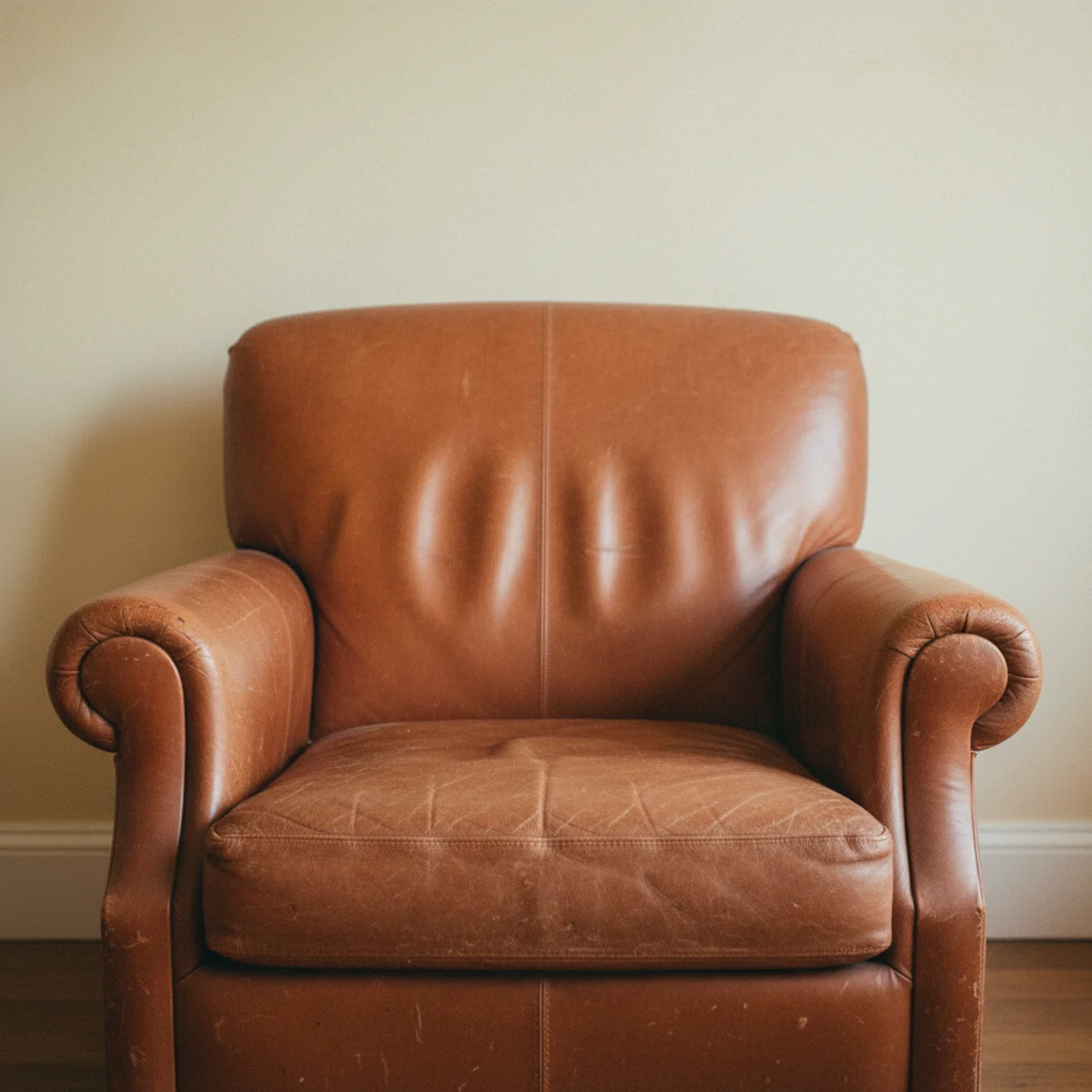
08A Worn Leather Armchair, Aged Better Than New
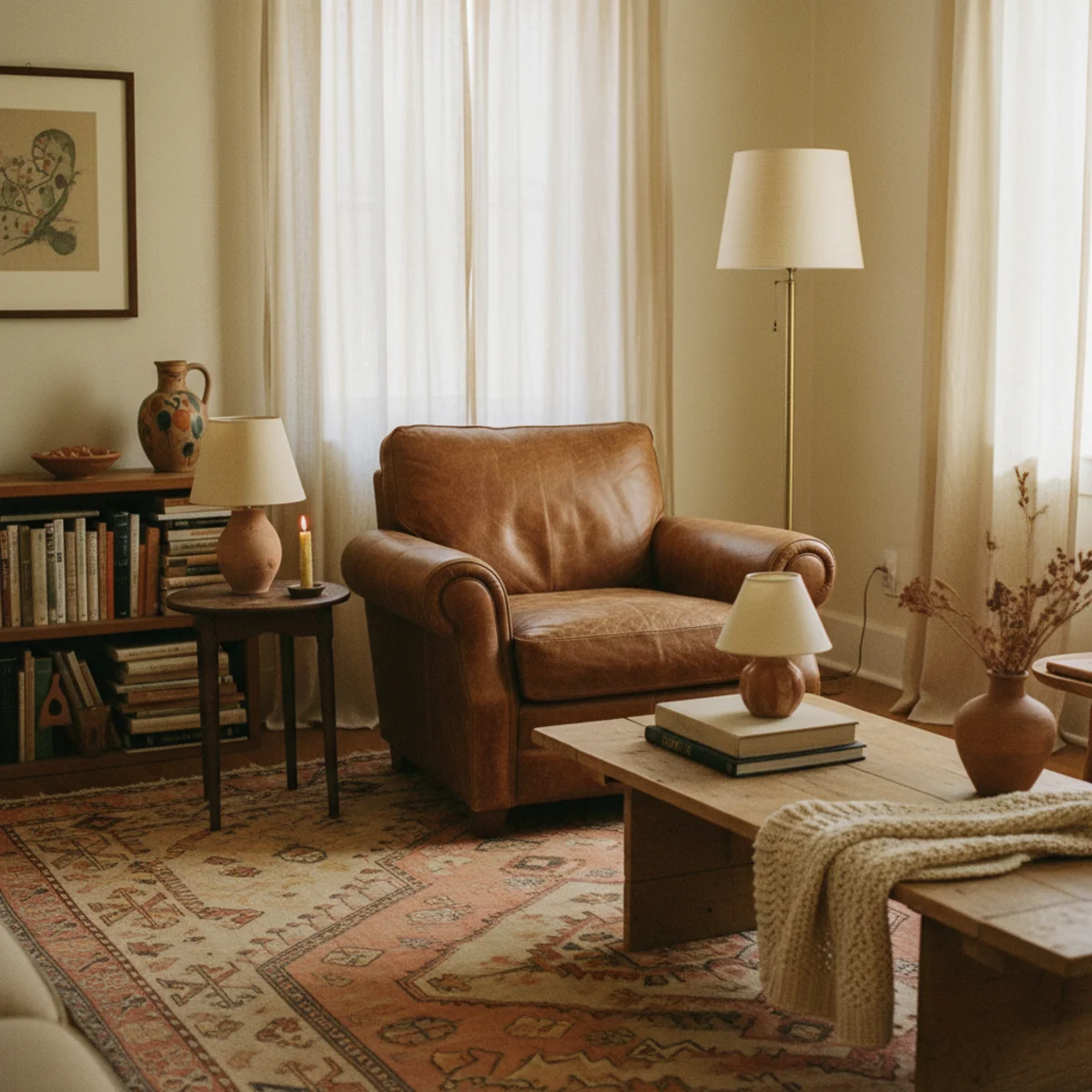
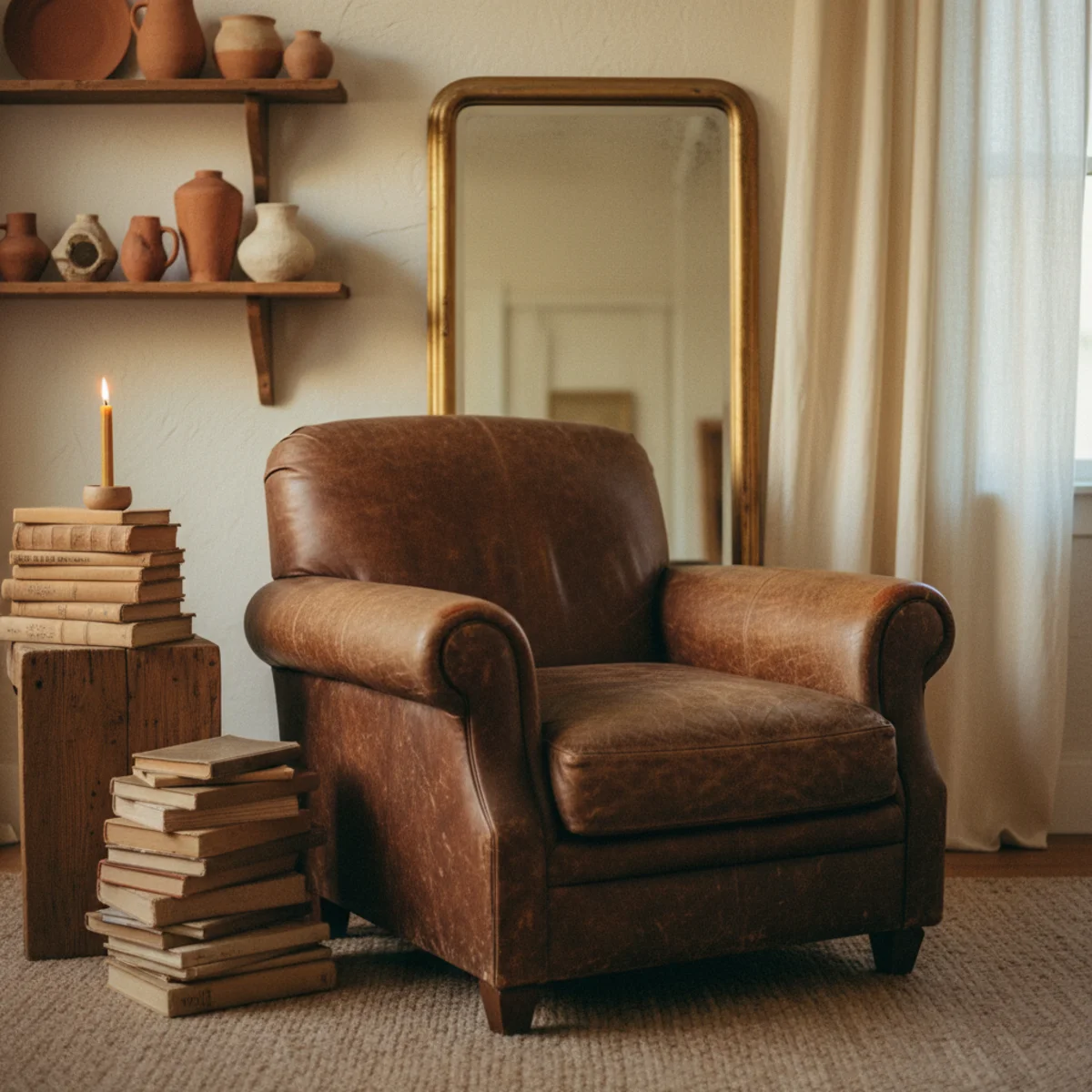
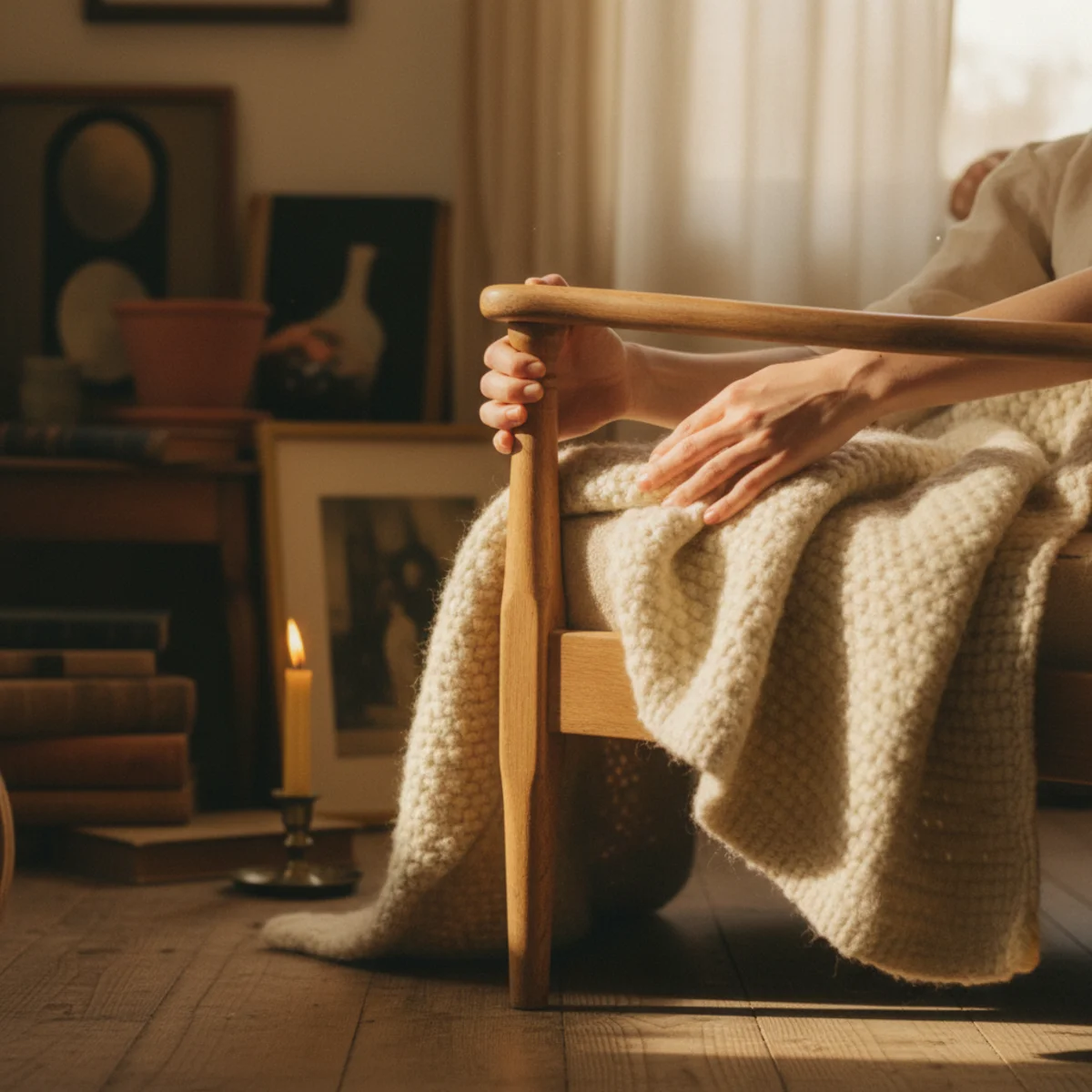
A worn leather armchair is the single most rewarding thrift store furniture purchase if you can find one and pass the smell test. Leather ages into character the way oak does — the surface darkens unevenly, small cracks and creases appear at high-stress points, the patina warms with sun and skin oil. New leather furniture at any price point lacks this, and pays a premium for trying to fake it. A genuine worn leather armchair at $80 to $250 from a thrift store, estate sale, or Marketplace listing outperforms a $1,500 new piece for cozy warmth.
Look for solid wood frames (knock the back panel — should thud, not click), real leather (not bonded leather or vegan polyurethane — pinch a small section; real leather has a soft give and a faint smell of dried oils), and joints with screws or pegs, not staples. Brand names worth hunting: Ralph Lauren Home, Restoration Hardware (older models, pre-2010), Pottery Barn (their leather club chairs from the 90s and 2000s), and any unmarked club chair from 1950 to 1990. Surface cracks and worn patches are features, not flaws. Cleaning: wipe down with a damp microfiber cloth, then condition once with Leather Honey ($25 from Amazon). Avoid "restoration" products; they remove patina.
AFFILIATE SLOTFURNITUREWorn leather club armchair, solid wood frame, smell-testedAdd affiliate URL when configuredWhy it works
Because leather is one of the only upholstery materials that genuinely improves with age — the surface develops a soft warmth that no chemical or factory treatment can replicate. Wear patterns at the seat and arms mark where the previous owner sat, read, slept; these marks read as evidence of life, not damage. New leather is shiny and stiff for years; worn leather is soft and warm from day one.
Pro tip — Search "leather chair" and "club chair" on Facebook Marketplace every Sunday evening — that's when sellers post the most listings after weekend purges. Filter by under-$250 and look for solid wood arms visible in the photos. Pickup is cash, no commitment until you see it in person.
Worn leather, soft patina, $150 from Marketplace — the chair that outperforms $1,500 new. See also: reading lamp
09Vintage Wool Textiles and Hand-Stitched Quilts
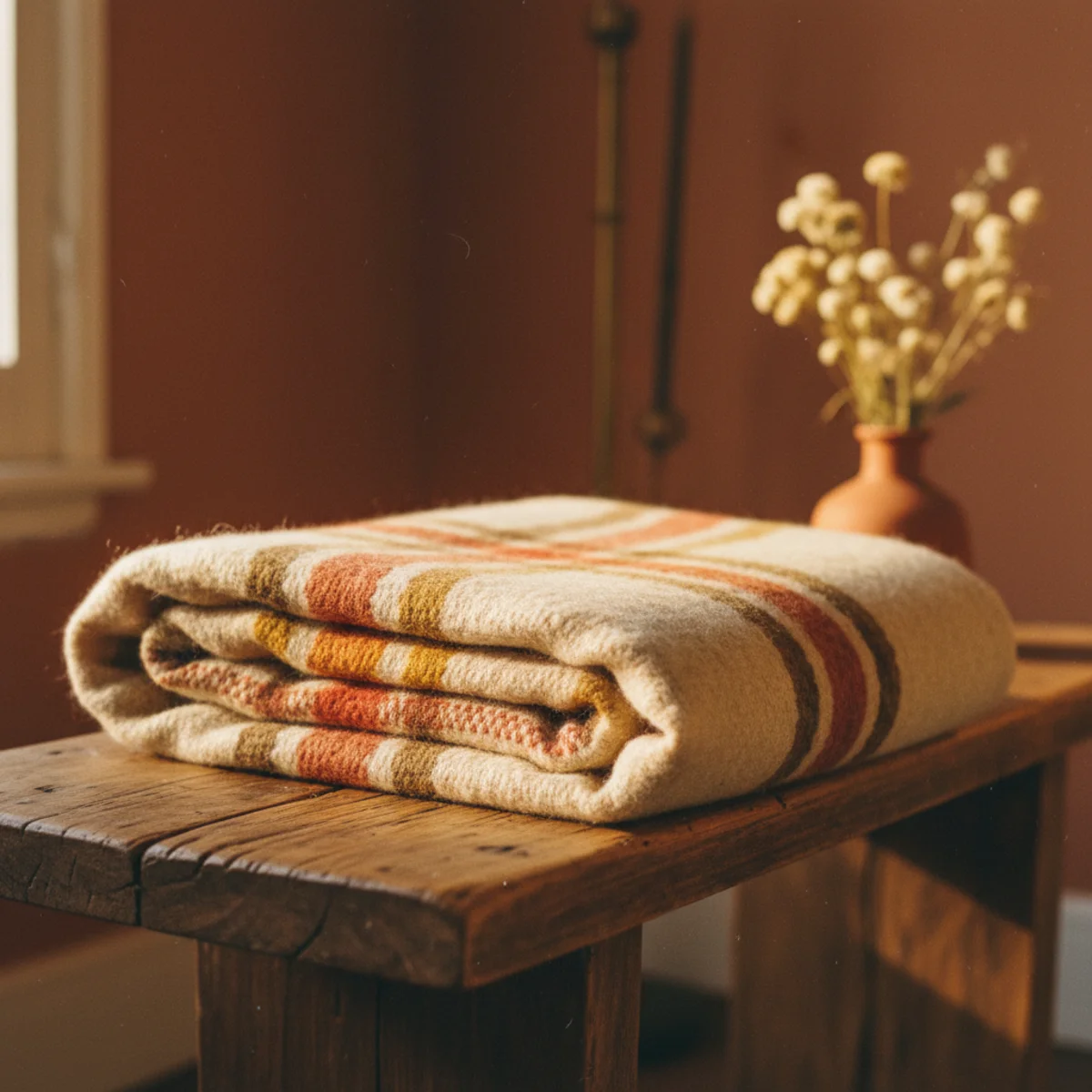
Real wool textiles — blankets, throws, rugs, runners — thrift well for the same reason hand-thrown ceramics do: they show evidence of slow making. Hand-stitched quilts in particular, often donated when the maker passes and the family doesn't quilt themselves, are the most undervalued home decor objects in any thrift store. A wool Pendleton-style blanket at Goodwill for $20 will outperform a $200 retail throw. A hand-stitched quilt at $25 from an estate sale outperforms every machine-quilted bedspread at any price.
For wool blankets: check the label or fiber test (burn a single thread — wool smells like burnt hair and ashes; synthetic plastic-melts). Pendleton, Hudson Bay, Faribault Mills, and Beacon blankets are the four classic American makers; their vintage pieces thrift at $20 to $80 and retail at $200 to $500. For quilts: look for hand-stitching (uneven, slightly irregular thread; not the perfect mechanical lines of machine-quilting), cotton or wool batting (not polyester), and natural cotton or linen face fabric. Sizes range from small lap (40x50) to full bed (80x90). Wash quilts gently on cold delicate cycle in a mesh bag, then air-dry flat on a sheet outdoors.
AFFILIATE SLOTTEXTILESVintage wool blanket OR hand-stitched cotton quilt (40-90 inches)Add affiliate URL when configuredWhy it works
Because both objects are made of natural fibers with thread irregularities, slight weave variations, and the gentle wear of years of use. New textiles in equivalent materials look manufactured no matter how artisanally they're marketed. A genuinely hand-stitched quilt from 1965 carries the time of its making in every uneven stitch — a quality that cannot be reproduced at any factory or any price point.
Pro tip — Hand-stitched quilts at thrift stores are most often found in the linens or bedding section, folded under other textiles. Pull every quilt off the shelf to check stitching density; the best ones are hidden under bedspreads and afghan blankets. Senior community estate sales are the richest source for quality quilts.
Hand-stitched and slowly woven — two textile categories that age into the warmest objects in a home. See also: Pendleton, Hudson Bay
10Wooden Stools That Double as Side Tables
Small solid wood stools — milking stools, vintage step stools, hand-carved African or Scandinavian stools — are the most versatile thrift store purchase under $30. They work as side tables beside a chair, plant stands beneath a window, ad-hoc seating when guests arrive, footrests in a reading nook, and risers for stacked books on a coffee table. One stool serves three or four functions; two solve every small-table problem a home has. Hunt them obsessively at any thrift store and never pay more than $25.
Look for solid wood (oak, walnut, teak, pine, beech) — never plywood or particleboard. Heights to target: 12 to 14 inches (low side table, plant stand), 16 to 18 inches (reading-chair side table, foot rest), 22 to 26 inches (counter-height seating). Top dimensions: 12 to 16 inches diameter for circular, 12x14 to 14x16 for rectangular. Check the joinery — pegged or doweled construction is best, screwed is fine, glued-only is suspect. Slight wobble can be fixed with felt pads under one leg ($4 from Home Depot); broken joints are usually not worth repair. Sources: Goodwill at $5 to $15, estate sales at $8 to $25, Marketplace at $10 to $30. Sand and oil with butcher block oil ($12) for a refreshed surface.
AFFILIATE SLOTFURNITURESolid wood stool, 12-18 inches tall, 12-16 inches acrossAdd affiliate URL when configuredWhy it works
Because every cozy room needs more small flat surfaces than the floor plan suggests — a place to set a cup of tea beside the chair, a small landing for a book, a riser for a plant. Stools serve all of these at a fraction of the cost of dedicated side tables. Their portability also means they can shift between rooms as needs change — and the inherent character of a real wooden stool reads warmer than any new accent table at any price.
Pro tip — Stack two stools at different heights beside an armchair — one at 12 inches for a mug and book, one at 18 inches for a small lamp or plant. The double-height arrangement reads more intentional than any single side table and costs about $25 total at thrift prices.
A $15 wooden stool — side table by day, footrest by night, plant stand by window. See also: reading nook
11Vintage Oil Paintings Under Thirty Dollars
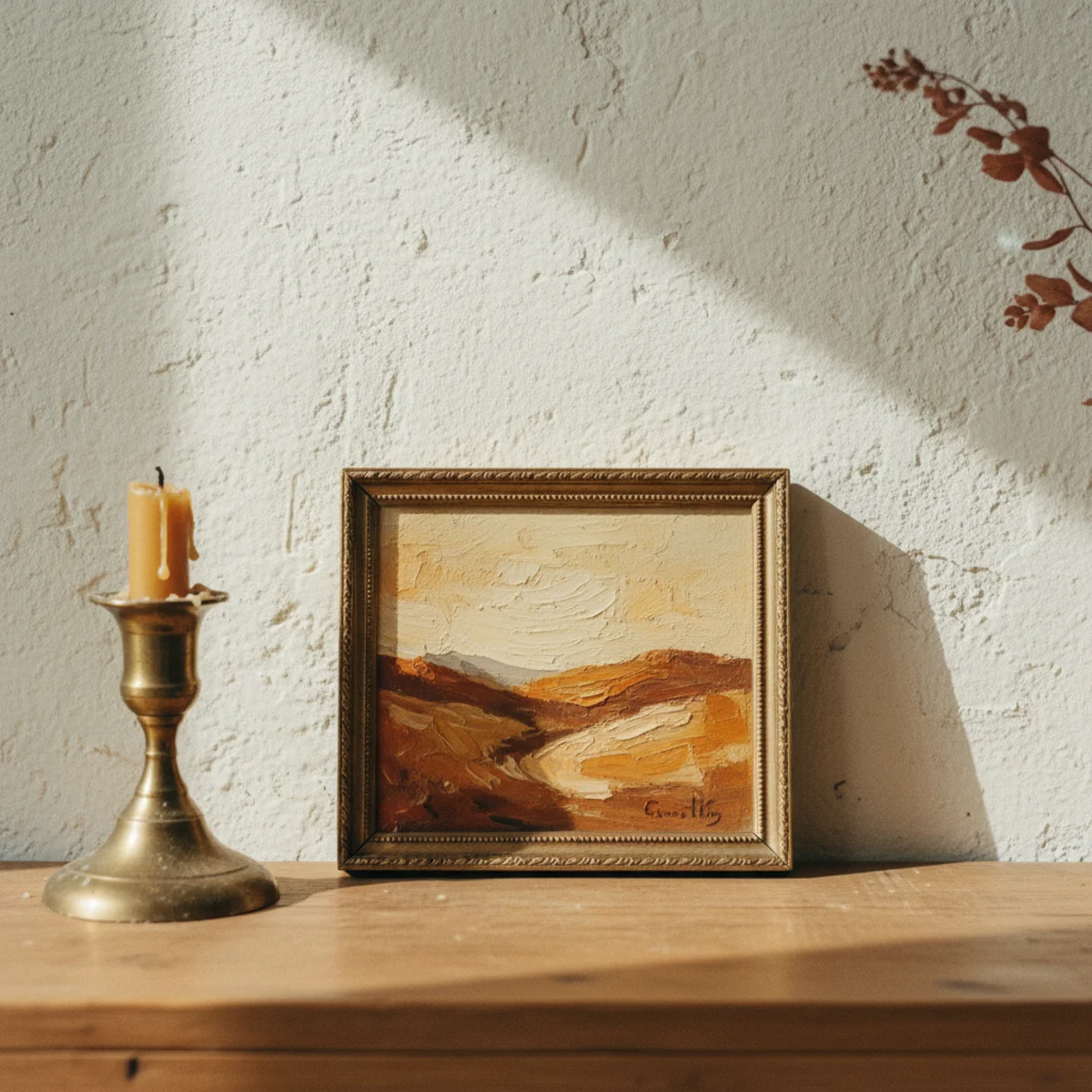
The single most underpriced category at most thrift stores is original oil paintings. Amateur and student oil paintings from the mid-20th century — landscapes, still lifes, floral studies, abstract experiments — thrift at $5 to $30 each and add the warmth and irregularity that no print or photograph can replicate. The colors are often warm earth tones (rust, ochre, sage, slate); the brush texture is visible; the canvases are often beautifully framed. This is the highest-impact wall decor purchase at any thrift store, full stop.
Hunt the wall-art section first at any visit. Look for oils (not prints — check the back; oils have a stretcher frame and visible canvas weave, prints are flat paper) on canvas or canvas board, 8x10 to 24x36 inches. The subject matters less than the color palette and the framing — warm-toned landscapes, dark moody still lifes, and abstract studies all work in cozy interiors. Frames count as part of the value: a $20 thrifted oil in a gilded vintage frame is a $200 wall object. Sources: Goodwill at $8 to $25, estate sales at $5 to $20, ReStore at $10 to $30. Avoid signed prints with mass-produced certificates; those are reproductions, not originals.
AFFILIATE SLOTWALL ARTOriginal oil painting on canvas, 8x10 to 24x36 inches, vintage frame preferredAdd affiliate URL when configuredWhy it works
Because the texture of brushwork — the visible thickness of paint, the way light catches the ridges of impasto strokes — reads as evidence of a human hand at work. Prints and photographs are flat; oil paintings have a literal dimensionality that the eye reads as warmth and depth. A $20 amateur landscape adds more visual interest to a wall than a $200 framed print, almost without exception.
Pro tip — Read the back of every oil painting before paying — names, dates, and city locations are often written in pencil on the canvas or stretcher. These notes turn an anonymous $15 thrift find into a piece with a small story, which makes guests linger at the wall and the painting itself read as more meaningful.
Original oil at $20 — warmer, deeper, more dimensional than any print at any price. See also: wall art
12Heavy-Weave Baskets for Visible Soft Storage
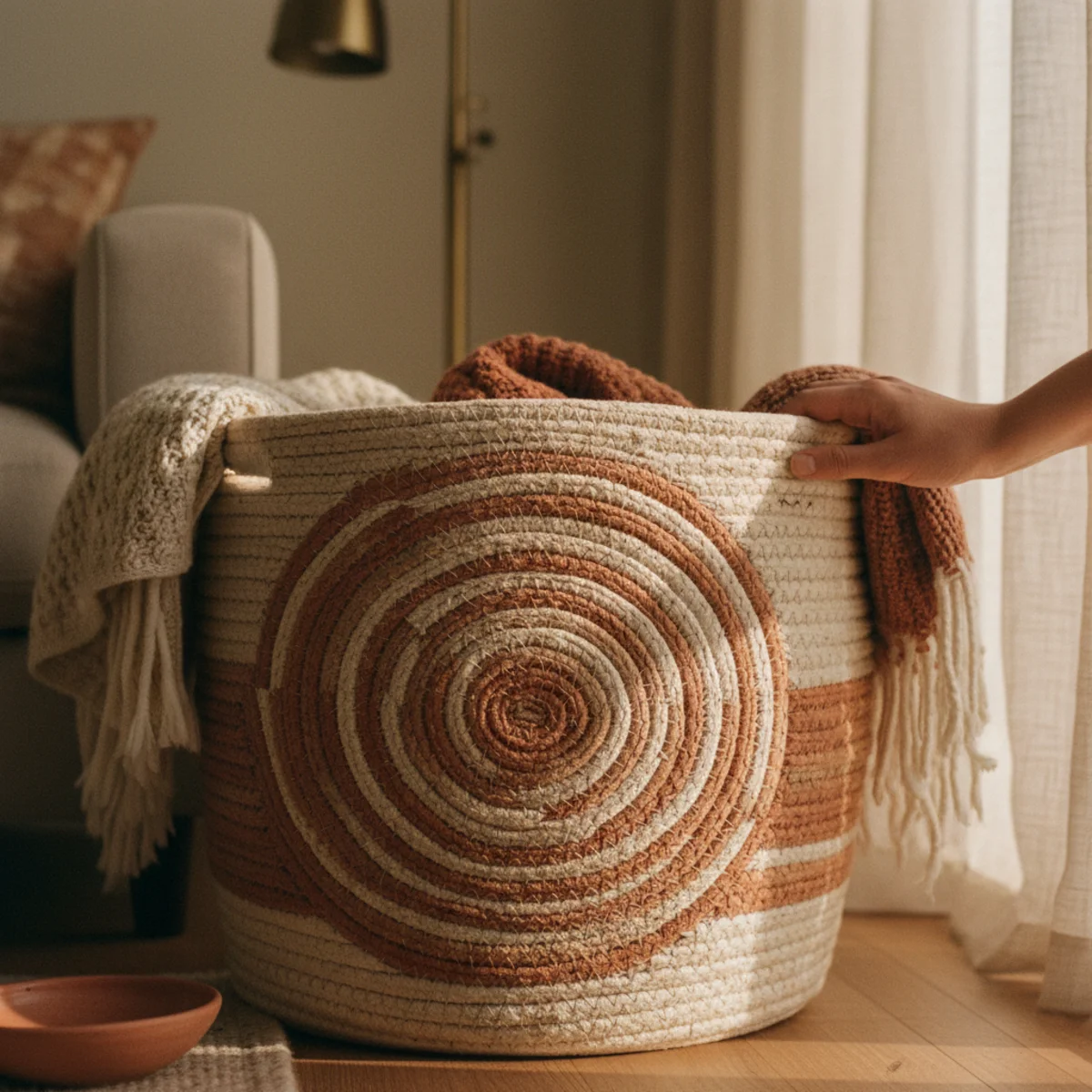
Every cozy home accumulates soft clutter — throws, magazines, knitting projects, kids' toys, extra cushions, kindling — and the best place to store all of it is in visible heavy-weave baskets. Thrift stores stock these constantly at $5 to $20 each, in seagrass, water hyacinth, rattan, jute, and willow. Two or three baskets in varied sizes — one tall by the sofa, one low under the coffee table, one medium beside the bed — handle every soft-storage need a room has, and the baskets themselves add warm natural texture to every corner they fill.
For sizes: one tall basket (16 to 22 inches diameter, 14 to 18 inches tall) for throws beside the sofa, one medium (12 to 16 inches diameter, 8 to 12 inches tall) for magazines or kindling, one low (10 to 14 inches diameter, 6 to 8 inches tall) for cushions or remote controls. Materials worth targeting: seagrass (most common, warm color, soft texture), water hyacinth (slightly darker, denser weave), willow (more rustic, looks French country), jute (rougher, more graphic). Avoid plastic baskets at any price, fabric-lined wire baskets (the fabric will pill), and anything labeled "rope" — usually polyester. Refresh dusty baskets with a vacuum brush attachment ($0) before placing.
AFFILIATE SLOTSTORAGEThree heavy-weave baskets in varied sizes (seagrass or willow preferred)Add affiliate URL when configuredWhy it works
Because baskets become part of the room's visual texture rather than disappearing into another space — and the soft items inside them are more likely to be actually used when they're at arm's reach. A throw rolled into a basket beside the sofa gets used three times a week; the same throw folded in a linen closet stays there. Visible storage is the practical version of a styled room, where utility and warmth coexist on the same shelf.
Pro tip — Buy one extra basket beyond what you think you need — like trays, baskets migrate constantly between rooms, and you'll discover six new uses for each one within a month. A spare basket also makes for the best impromptu gift wrapping for friends bringing produce or houseplants.
Three baskets, three sizes, three corners — soft storage that becomes part of the warmth. See also: rolled into a basket
How to shop secondhand for decor
Thrifting well is a skill. These four habits separate a great haul from a cart of regret.
- 1Go often, buy rarely
The stock turns over constantly, so frequent quick visits beat one long haul. Train your eye on materials and bones, not the whole styled piece.
- 2Inspect the bones
Knock for solid wood, check rug backs for dry-rot, test that drawers run true. Cosmetic flaws are fine; structural ones aren't.
- 3Buy what you can change cheaply
A dated shade, an ugly knob, a coat of grime — all fixable. Buy the brass base, the oak frame, the wool pile; change the rest.
- 4Air it out before it comes in
Sun and fresh air for a few days clears most smells. Condition leather, wash textiles, rewire lamps before the piece joins the room.
Quick tips
- Set a single category to hunt each trip — lamps, or frames, or rugs — so you don't drown in stock.
- Carry a tape measure; the best find is useless if it won't fit the wall.
- Photograph your room's palette so you can match tones on the spot.
- Lowball politely at estate sales on the final day; prices drop to clear.
- Budget for a rewire, a shade, or a wash — the fix is part of the cost.
- Walk away from anything with active woodworm, pet-urine stains, or a cracked frame — some damage isn't worth it.
Where to thrift, by source
Best for solid-wood furniture, brass lighting, and full sets sold cheap on the final day.
Best for books, frames, ceramics, and textiles; go often, since stock turns daily.
Best for larger furniture and rugs; filter by 'free' and nearby, and move fast on good listings.
Best for specific hunts — a particular brass lamp or vintage rug — when you know what you want.
The most expensive-looking rooms are usually the ones layered with the most patience, not the most money.
Frequently asked questions
What's the best day to thrift for home decor?+
What should I avoid buying at thrift stores?+
How do I know if a thrifted piece is worth the price?+
Where do thrift stores get their best stuff?+
Can I really decorate a whole room with thrifted finds?+
What's the best thrift store chain for home decor?+
Go often, buy rarely, and train your eye on materials over finished looks. Bring a tape measure, check the bones, and budget for the fix. We'd start with one secondhand anchor — a brass lamp or an antique mirror — and build the room around it slowly. The hunt is half the pleasure, and the rooms that come together over months always feel warmer than the ones that arrived in a single delivery.