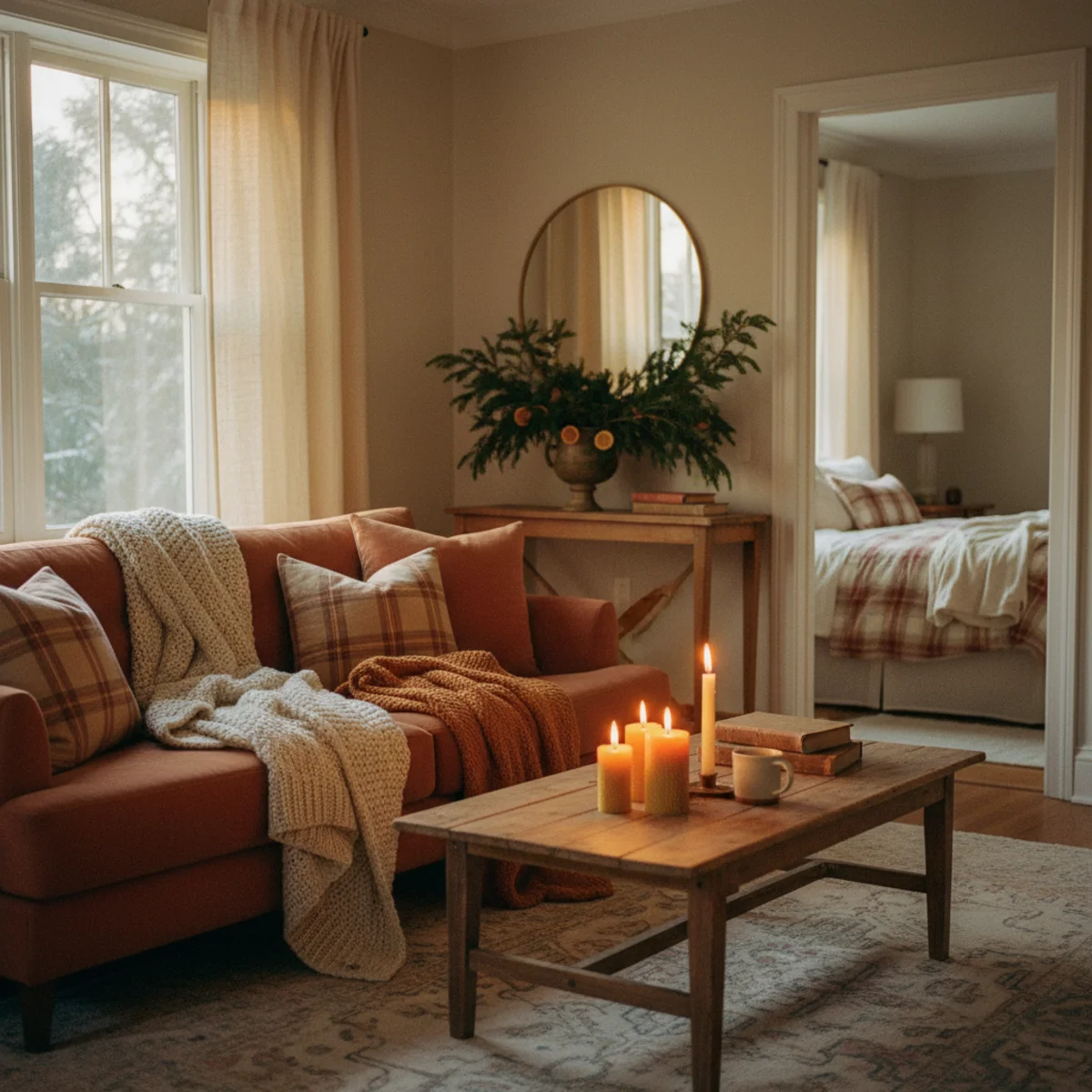
These twelve winter decor ideas are tested across the cold January-to-March stretch when households need cozy more than at any other time. Each move below names exact specifications — the second throw blanket per seating zone, the candle abundance per evening, the evergreen choices that last through winter, the bulb specs that match the longest dark hours. The goal is decor that makes the long dark months actually pleasant rather than just survivable.
Winter decor goes wrong when households leave Christmas decorations up too long or skip seasonal adjustment entirely and try to use summer-weight decor for the longest cold months. The fix is treating January-March as its own decorative season: heavier textiles, more candles, real evergreens that aren't holiday-specific, deeper lamps lit earlier, simmer pots replacing the holiday cinnamon. The shift carries the warm-home aesthetic through the months when it matters most.
By the end of this guide, you'll know exactly how to layer for winter — the second throw blanket per seating zone, the 8-10 candles lit by 4pm, the evergreen-not-Christmas botanical arrangements, the lamps timed to dusk, the simmer pot for the scent layer, and the seven other moves that turn dark January into the coziest season.
WHAT'S INSIDE
- Why doubling the throw blankets in January is the single most-noticed winter decor move
- The candle abundance (8 to 10 lit by 4pm) that compensates for short daylight hours
- Evergreen choices (pine, cedar, eucalyptus) that read 'winter' without reading 'Christmas'
- The simmer pot recipe that scents the whole house in 30 minutes for under $5
Winter is the season to make the house work for the mood, not the calendar. Warm light does more than any ornament.
— House Beautiful [citation needed — verify before publish]
What is winter decor?
Winter decor is the seasonal layer that carries a home from the holidays through the long gray months — distinct from Christmas decorating, which packs away in early January. It leans on warm light, heavier textiles, evergreen and natural touches, and a deepened, cozier palette rather than tinsel and ornament.
The defining move is heat, applied to light and texture. Where fall decor adds dried florals and rust throws, winter goes further: doubled wool blankets, flannel bedding, clustered candles lit early, and a few real evergreen clippings for scent and the only green that belongs indoors in January. It's the decor of staying in on purpose.
More in Seasonal you may love
See allWhy winter decor matters more in 2026
As remote work kept people home through the darkest months, winter stopped being a season to endure and became one to decorate for. The post-holiday slump — bare rooms after the tree comes down — drove demand for a deliberate winter layer that fills the gap until spring.
Pinterest's winter cozy home and hygge searches climb every January, and the look has gone warm and natural: evergreen over plastic, candlelight over string lights, deep earth tones over icy blues. The slow-living movement frames it well — winter as a season to slow down inside a warm room, not a holiday to clean up after.
28 winter decor ideas worth trying
01Double Up the Throws
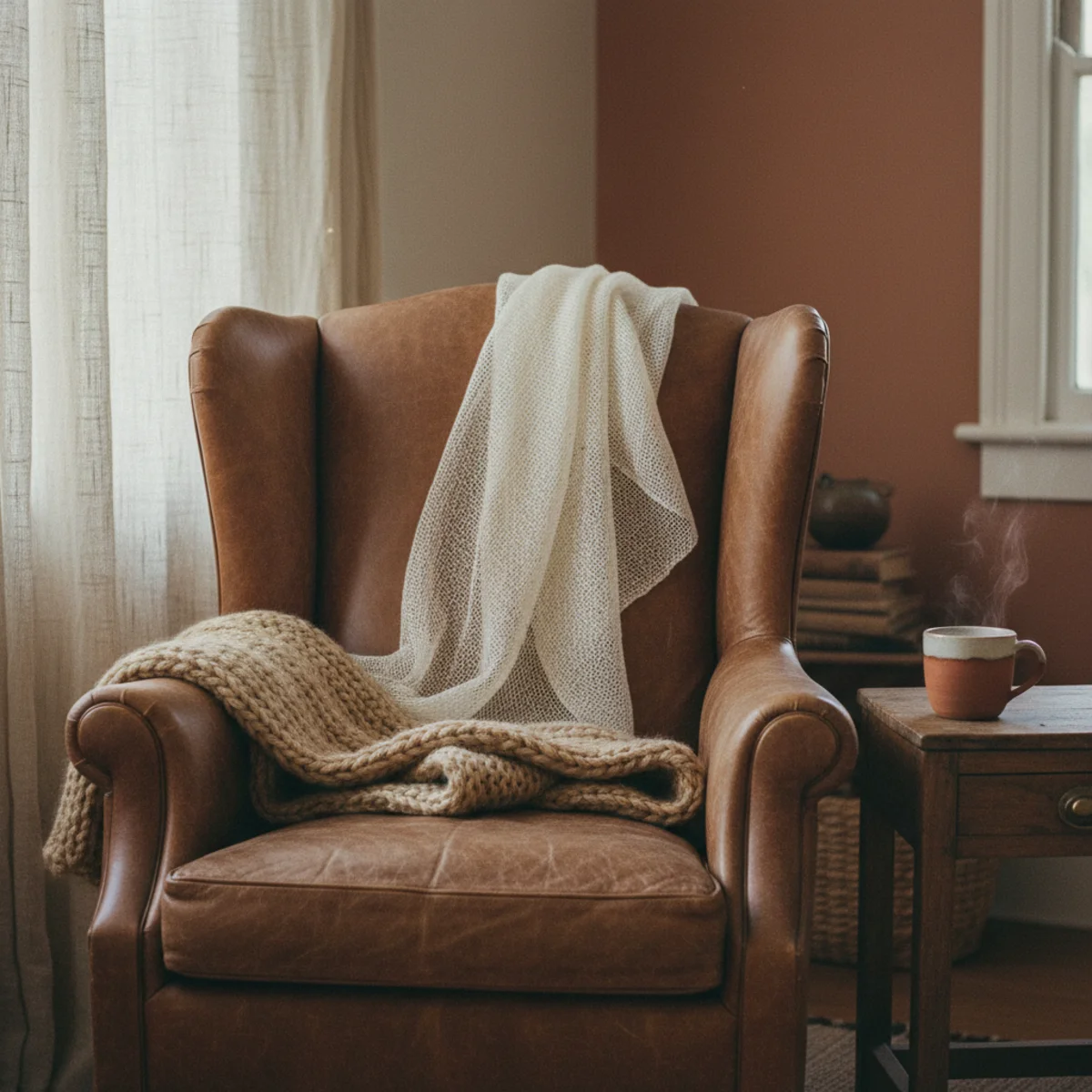
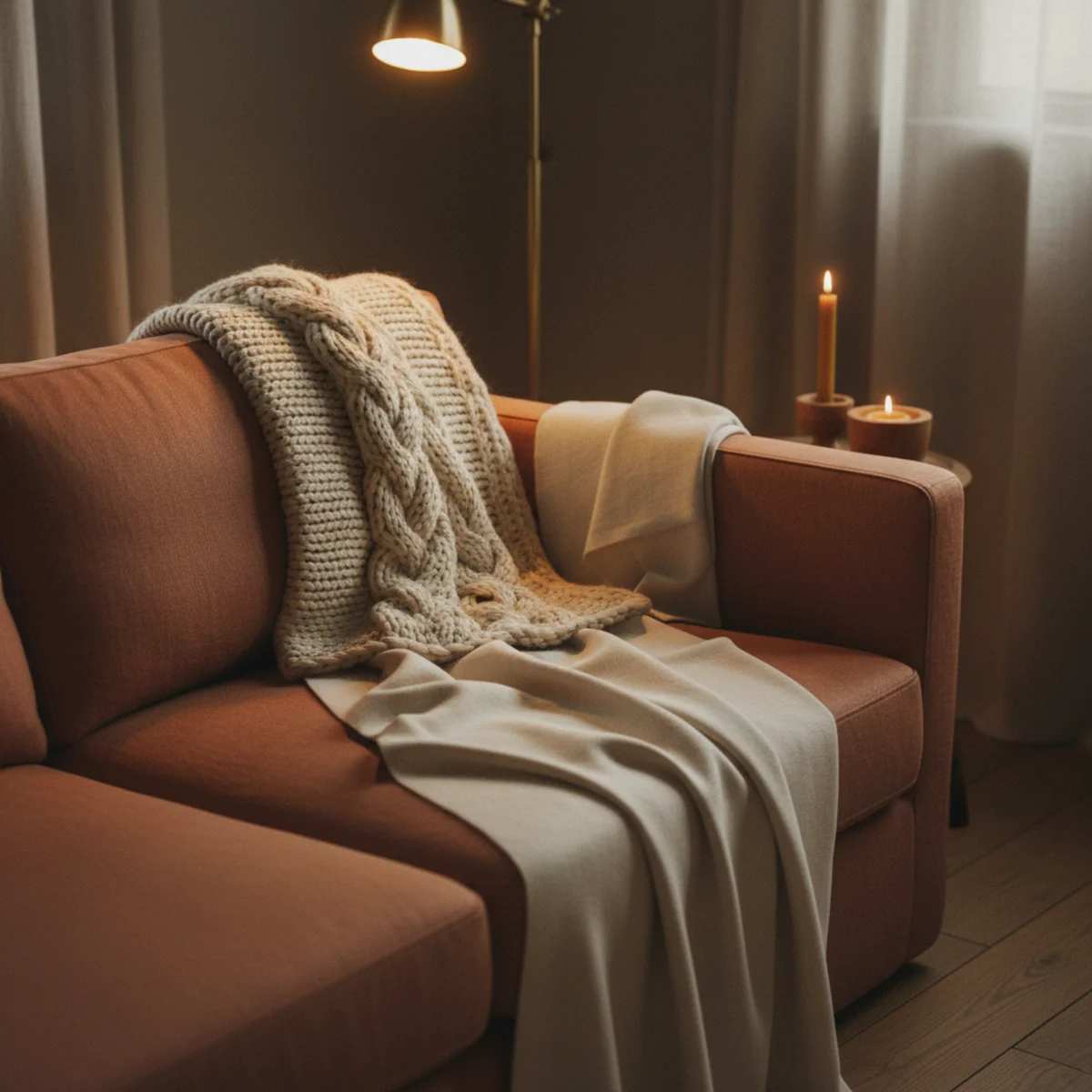
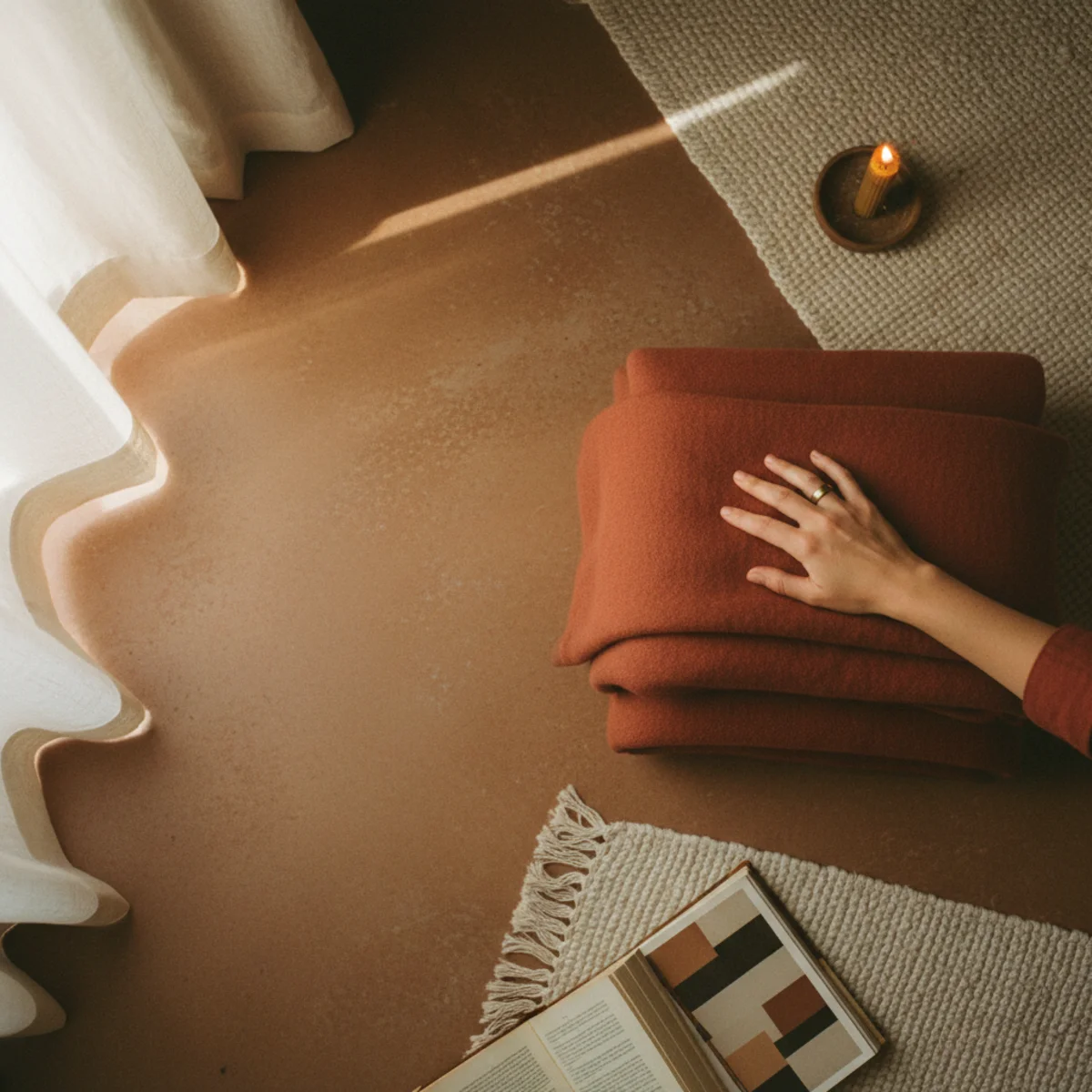
The single most-noticed winter decor move is doubling the throw blankets in every seating zone — two throws per sofa instead of one, two throws in the master bedroom, an extra throw at the reading chair. The visible textile abundance signals 'winter is here, we are cozy' in a way no other single move does. Cost: $80 to $200 to add a second throw to each zone; impact: significant.
Throw layering targets per zone: SOFA — 2 wool throws (one over the back, one folded over the arm), each 50x60 inches in cream, oat, terracotta, or sage. ARMCHAIR — 1 wool throw draped diagonally over back. MASTER BEDROOM — 2 throws layered at foot of bed (one wool, one cotton or linen) over the standard bedding. READING CHAIR or sofa second seat — 1 throw + 1 chunky knit throw for textural variation. GUEST BEDROOM — 1 throw at foot + 1 extra blanket folded on closet shelf. Sources: Pendleton secondhand at $40 each, West Elm boucle at $79, Lands' End wool at $80, IKEA INGABRITTA at $30 to $50. Total seasonal investment: $80 to $300 for the textile increase, which stays useful for 4 to 5 winter months annually for many years.
AFFILIATE SLOTTEXTILES2 throws per seating zone: 1 neutral wool (cream/oat) + 1 accent (terracotta/sage/rust)Add affiliate URL when configuredWhy it works
Because winter decor needs to function emotionally as well as visually — and visible warm textile abundance signals 'sheltered, warm, cozy' at a visceral level. One throw per seating zone reads as 'someone might use this'; two throws per zone reads as 'this is a winter house actively warm.' The double-throw is also functionally useful (you can grab one even if another is in use), which compounds the perception of practical winter readiness. The single move carries more emotional weight in January than any individual furniture purchase.
Pro tip — Choose one throw in a neutral tone (cream, oat) and one in a warm accent tone (terracotta, sage, rust) per zone — the contrast between the two throws reads as deliberate layering rather than as accidental accumulation. Both-neutral throws read as boring; both-accent throws compete; one of each reads as carefully composed.
Cream wool over the back, terracotta over the arm — doubled throws signal active winter coziness. See also: Pendleton secondhand
02Light More Candles, Earlier
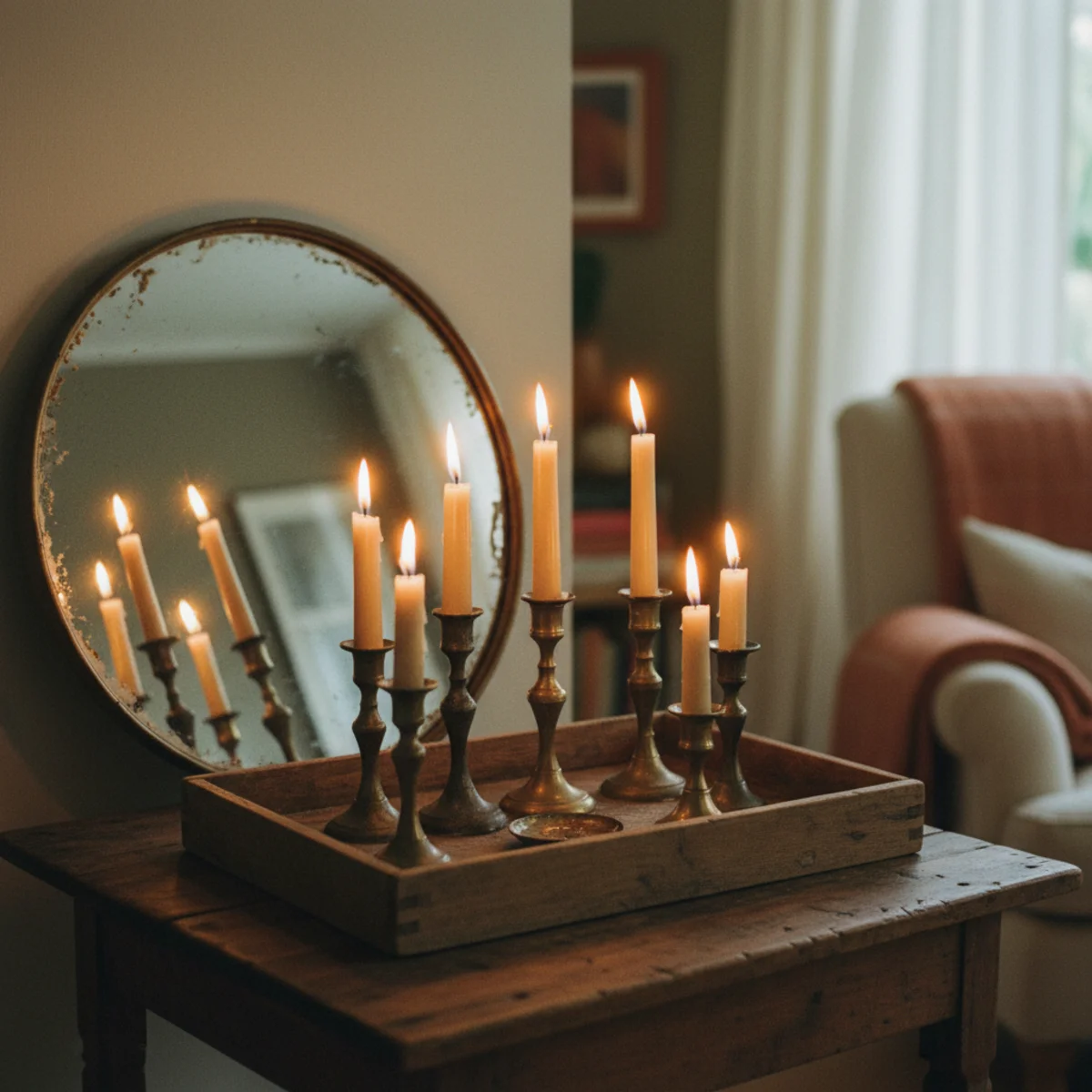
Winter compresses daylight hours dramatically — sunset at 4:30pm in many regions means 5 to 7 evening hours per night for almost 5 months. The fix is more candles, lit earlier — 8 to 10 candles burning by 4:00 to 4:30pm rather than waiting until full dark. The abundance of warm flicker compensates for the lost daylight, and starting earlier turns the dim transition hours into atmospheric ambiance rather than into anxiety.
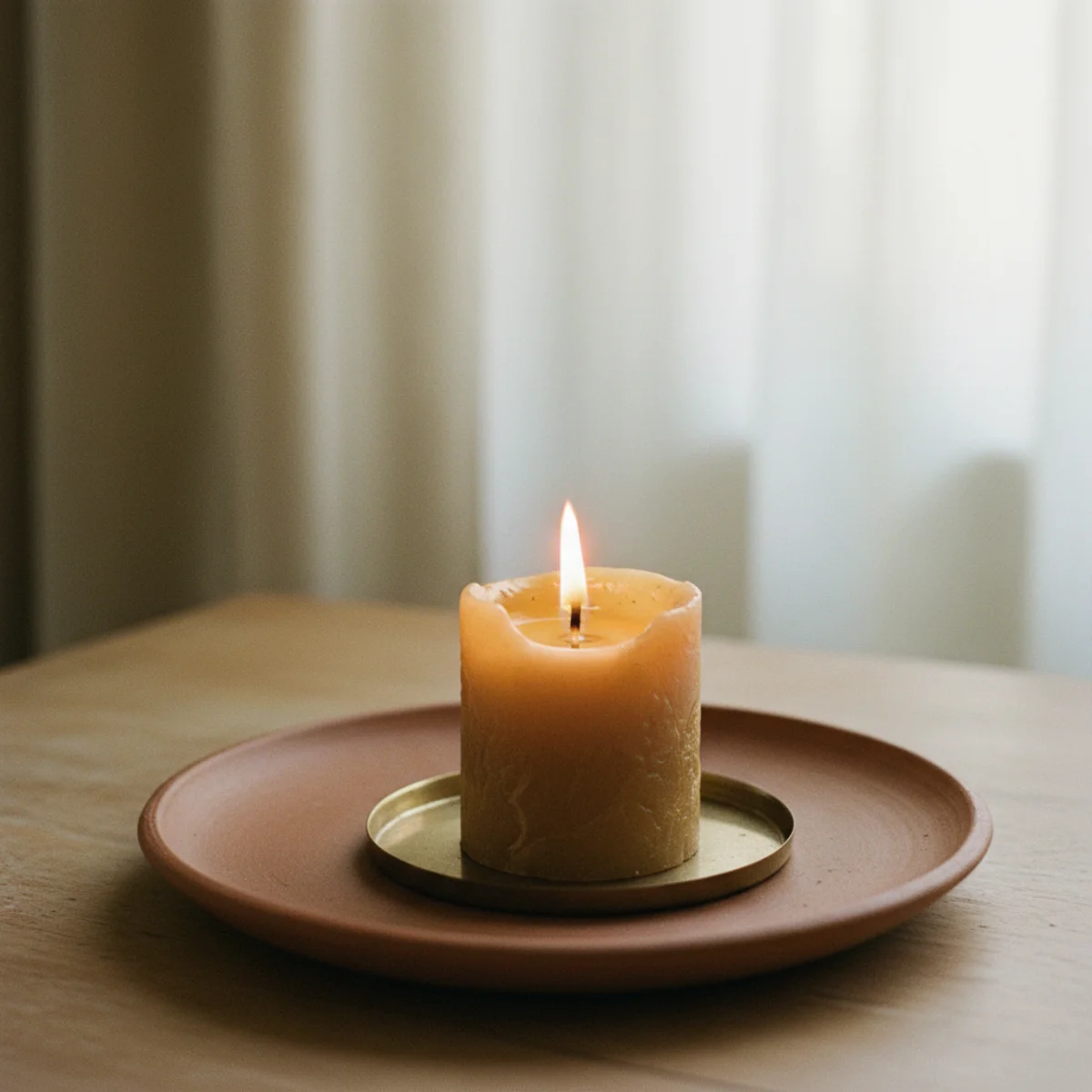
Winter candle protocol: 8 TO 10 CANDLES across the room by 4:00 to 4:30pm daily during winter months. Mix of: TAPER CANDLES in vintage brass or hand-thrown ceramic holders (Skultuna brass at $40 to $120, vintage thrifted at $10 to $30 per holder, $1 to $2 per taper, lasting 6 to 8 hours), PILLAR CANDLES in groupings of 3 to 5 on trays ($5 to $15 per pillar, lasting 30 to 50 hours), VOTIVES in small jars or candleholders ($1 to $3 each). Strategic positions: coffee table cluster of 3 to 4, console behind sofa with 2 to 3, dining table with 2 to 3, mantel with 3 to 5. Unscented or lightly scented; save heavily scented candles for bathrooms only. The 4:30pm-onward burn turns the dim winter evening into atmospheric warm-lit space rather than into the dim-anxious transition many households experience.
AFFILIATE SLOTLIGHT8-10 candles by 4:00-4:30pm: tapers in brass + pillars on trays + votives across surfacesAdd affiliate URL when configuredWhy it works
Because the dim transitional hour (4:30 to 5:30pm) is psychologically difficult in winter — neither daytime nor full evening, with rapidly fading natural light. Households that wait until full dark to add candles experience the dim hour as gloomy; households that light candles by 4:30 turn the dim hour into the atmospheric transition into evening. The hour earlier is small in candle-burn-time terms (1 extra hour, costing about 12 to 18 cents per candle in burn time) but transformational in emotional terms across 60 to 100 winter days.
Pro tip — Set a daily alarm for 4:30pm during winter — the cue prompts candle-lighting before the dim anxious hour begins. After 2 to 3 weeks the alarm becomes unnecessary; the routine establishes itself. Without the alarm initially, the lighting time drifts later and the dim transition starts taking the room back.
Eight candles lit by 4:30pm — turning the dim winter transition into atmospheric ambiance. See also: Skultuna brass
03Bring In Real Evergreen
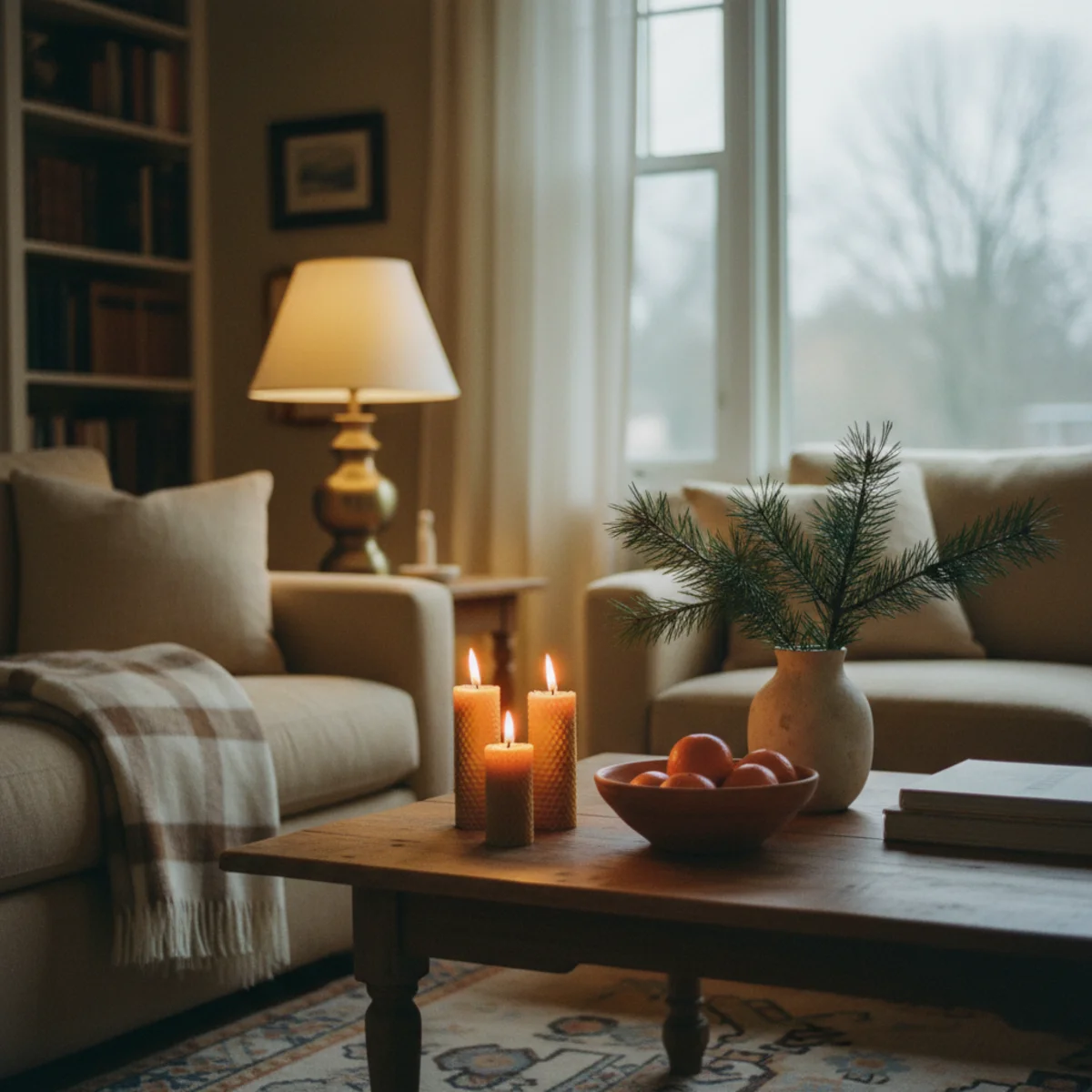
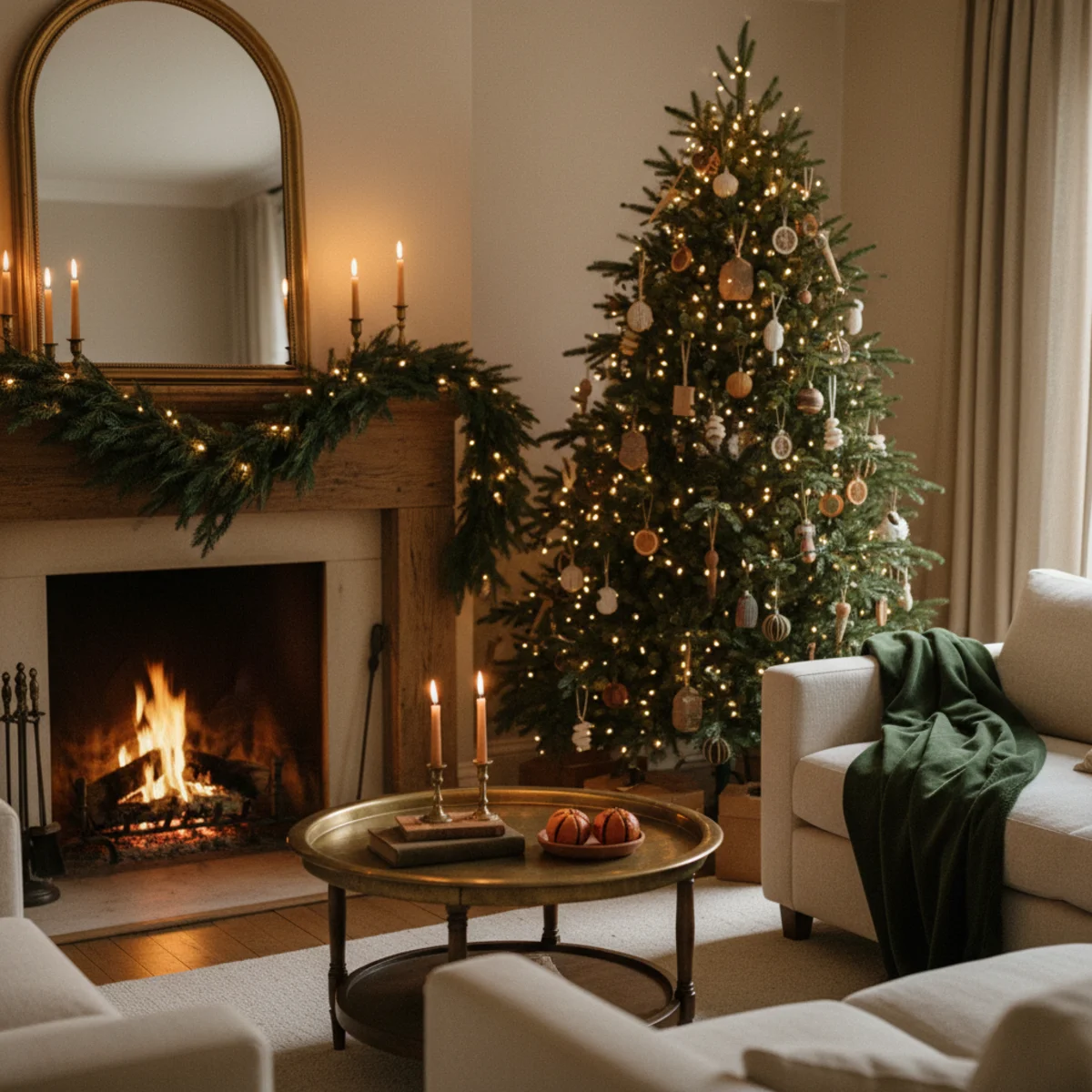
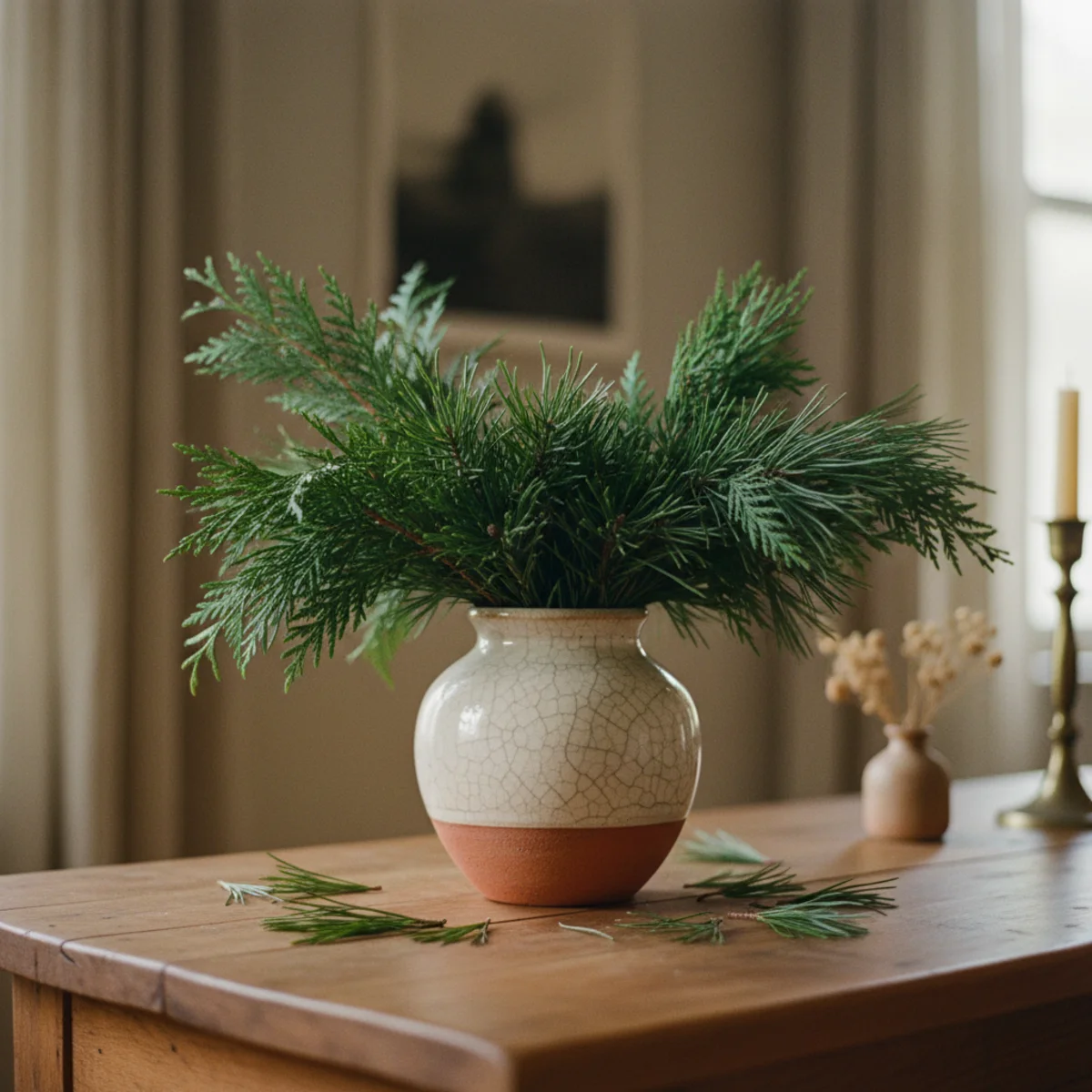
Winter decor benefits from real evergreens — pine boughs, cedar branches, eucalyptus, fir — but separated from explicit Christmas associations. Evergreen wreaths without red bows, large vases of pine branches without ornaments, cedar sprigs scattered across the mantel. The deep green reads as winter alive rather than as Christmas leftover, extending the evergreen aesthetic from December into January through March.
Best winter evergreen sources: PINE BOUGHS cut from yard trees (free, fresh-cut) or from tree lots after Christmas at $5 to $15 per bunch, CEDAR BRANCHES at $8 to $20 per bunch from farmers markets, EUCALYPTUS (silver dollar or seeded) at $5 to $15 per bunch (lasts 4 to 6 weeks fresh, then dries beautifully for another 6 to 8), FIR BRANCHES at $5 to $15 per bunch (December availability mostly). Display options: tall vase of pine and cedar branches at 24 to 36 inches in heavy ceramic vase, low evergreen sprigs scattered across a wooden cutting board on the dining table, evergreen wreath on doors and walls (without red bows or ornaments for winter-not-Christmas distinction), small evergreen sprigs in glass vases on bedside tables. Refresh every 3 to 4 weeks across the winter months; total budget $20 to $40 per refresh.
AFFILIATE SLOTNATUREPine + cedar + eucalyptus mix in tall heavy vase; sprigs across surfaces; wreaths without Christmas elementsAdd affiliate URL when configuredWhy it works
Because evergreens with ornaments, ribbons, and lights read as 'Christmas decor that hasn't been put away yet' from late December through February — a slightly sad signal of seasonal procrastination. The same evergreens without explicit Christmas elements read as 'intentional winter decor' that continues working through the longer winter season. The distinction is small but matters significantly for how visitors and household members perceive the decor. Drop the ornaments and bows when you take Christmas down; keep the evergreens longer.
Pro tip — Combine pine and cedar with eucalyptus in the same vase — the silvery eucalyptus contrasts with the deep green pine and warmer tan cedar, creating visual variety within the all-evergreen theme. The mixed-evergreen arrangement reads more sophisticated than single-species and works as long as the species share the winter-warm palette.
Tall vase of pine, cedar, and silver dollar eucalyptus — winter alive without reading as Christmas leftover. See also: fresh-cut
04Warm the Floors With Heavier Rugs
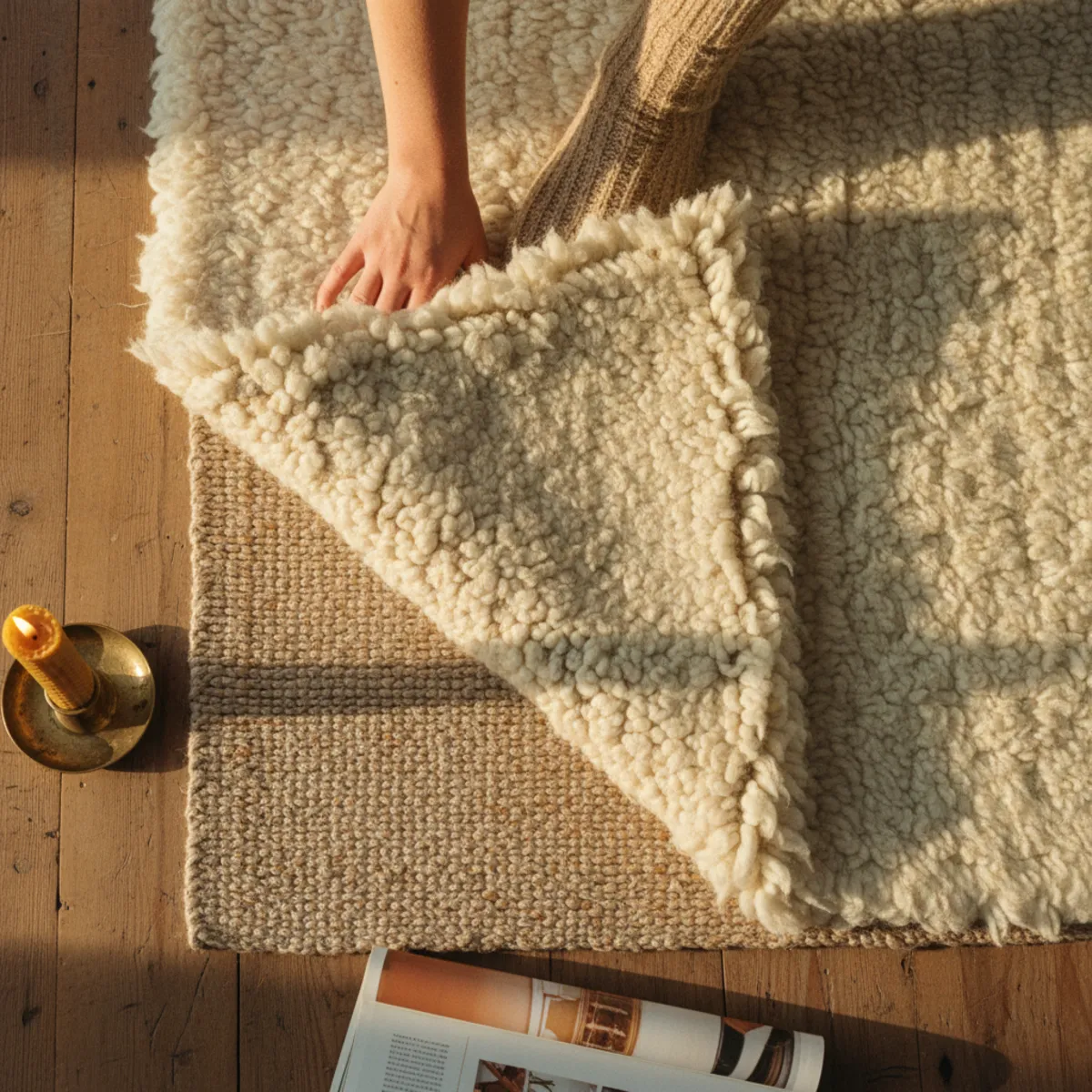
Cold hard floors are the winter-decor problem most households underestimate — bare floors physically cold underfoot, visually cold to the eye, acoustically harsh. The fix is heavier rugs through winter, layered or swapped from summer rugs. Thick wool, sheepskin layered on top, double rug-pad underneath — every move toward more textile warmth at floor level pays back across the cold months.
Winter rug strategy: SWITCH from summer flat-weave to winter wool — pull out the chunky Beni Ourain, the deep-pile wool, the vintage Persian for the cold months ($300 to $900 if you don't already own, or rotate from owned collection). LAYER SHEEPSKIN ON TOP — one or two sheepskins layered over the main rug at the seating zone, in front of the fireplace or beside the most-used chair ($80 to $200 each for genuine shearling). ADD A DOUBLE RUG PAD — thicker pad underneath the rug ($30 to $60) adds physical cushion and thermal insulation. SWAP THE BEDROOM RUG — winter-weight wool replacing summer flat-weave at the foot of the bed where feet first touch in the morning. The combined moves transform how the room feels physically during winter months.
AFFILIATE SLOTFLOORSwap to chunky wool + layer sheepskin on top + thicker rug pad underneath for the cold monthsAdd affiliate URL when configuredWhy it works
Because winter rooms get colder (especially basements and concrete-floor first floors), and the floor temperature affects how the whole room feels regardless of air temperature. A 68°F room with cold floors feels colder than a 65°F room with insulated warm rugs. The textile thickness also adds acoustic warmth (sound-absorption), which matters because winter brings more indoor time and conversation. Bare floors in winter compound to physical, visual, and acoustic cold; heavy warm rugs reverse all three.
Pro tip — Roll up summer's flat-weave rug and store it in a closet during winter months rather than mixing it with the heavy wool — the seasonal swap signals the change of seasons emotionally as well as practically. Many households rotate rugs annually like clothing; the seasonal change adds intentional ritual to winter preparation.
Chunky Beni Ourain wool with sheepskin layered on top — winter floor warmth at three temperature levels. See also: Beni Ourain
05Switch to Flannel and Heavier Linen
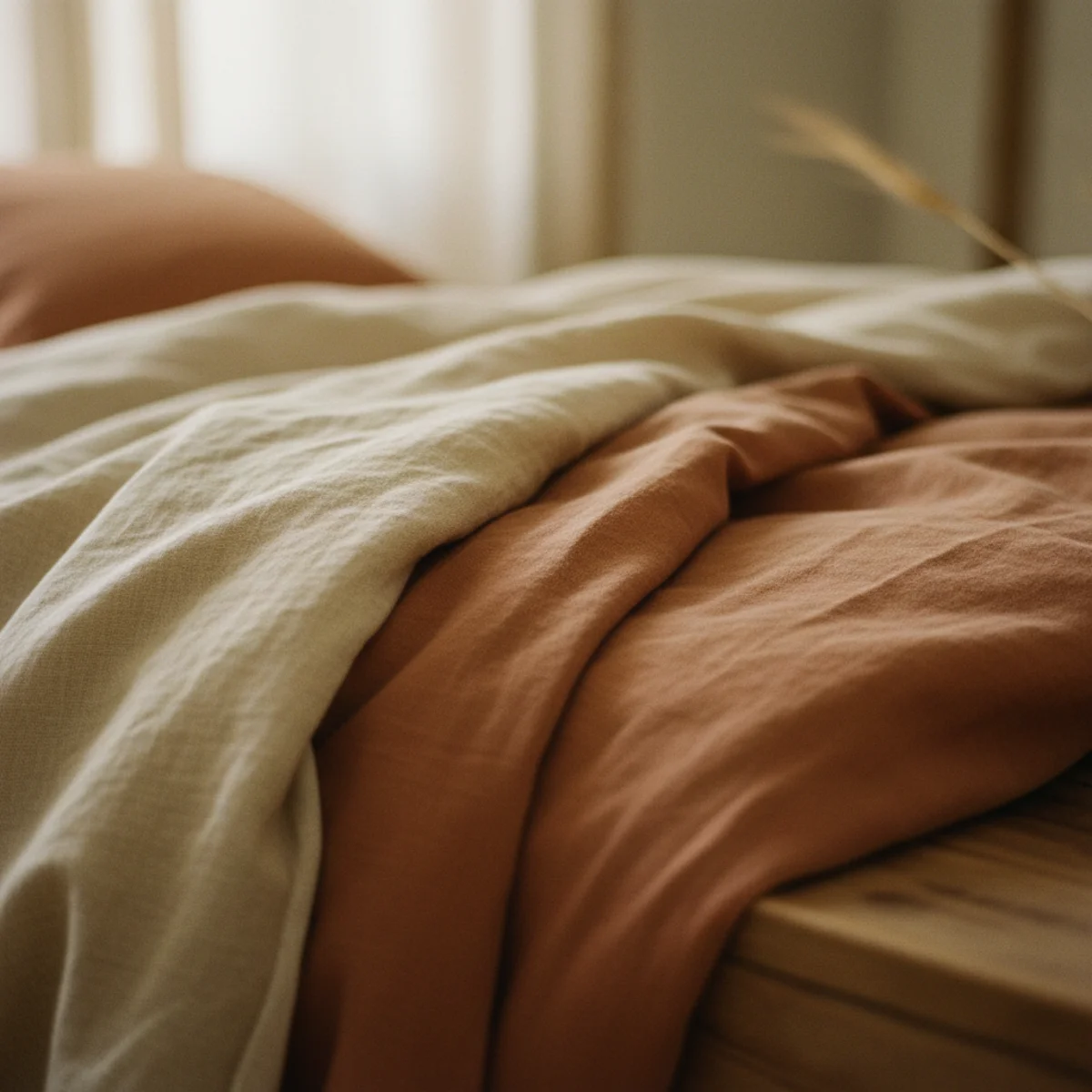
The bedroom and dining textiles benefit from a winter weight shift — flannel sheets replacing summer cotton, heavier washed linen replacing crisp summer linen, wool tablecloths replacing cotton ones. The shift is functional (genuine warmth in colder rooms) but also signals 'this is now winter' visually, which compounds the seasonal transition aesthetic.
Winter textile swaps: BEDROOM — switch from cotton percale or summer linen to flannel sheets ($60 to $150 from L.L.Bean, Garnet Hill, or Cuddledown) and heavier washed linen duvet covers ($150 to $400 from Quince, Coyuchi, or Brooklinen). Add a heavier duvet insert (down or wool) for the cold months. DINING — wool tablecloths or runners replacing cotton; warmer-weight cloth napkins (washed heavy linen instead of crisp summer linen). UPHOLSTERY — slipcovers in heavier linen or wool if you have removable slipcovers (Burrard, Sven, or thrifted vintage). The combined weight shift makes the entire household feel winter-prepared. Total cost: $200 to $500 for the seasonal bedding and textile shift across the household; reusable across many winters.
AFFILIATE SLOTTEXTILESSwitch bedding to flannel + duvet to heavier linen + tablecloths to wool for the cold monthsAdd affiliate URL when configuredWhy it works
Because dining tables, sofa upholstery, and other touched textiles communicate temperature directly to the body — crisp summer linen feels cool to touch, washed flannel and heavier linen feels warm. The textile temperature affects how the meal feels, how the seating feels, how the entire room feels regardless of air temperature. Households that swap textiles seasonally consistently report that their winter rooms feel warmer than households that keep summer-weight textiles all year, even at identical thermostat settings.
Pro tip — Wash all flannel sheets twice before first use to soften them — fresh flannel out of packaging is slightly stiff; two warm washes break in the fibers for the softness flannel is supposed to deliver. The same applies to heavy linen; the initial wash makes a significant difference in the textile feel.
Flannel sheets, heavy linen duvet, wool throw at the foot — winter textile weights that feel warm to the touch. See also: Quince
06Set Lamps on Sunset Timers
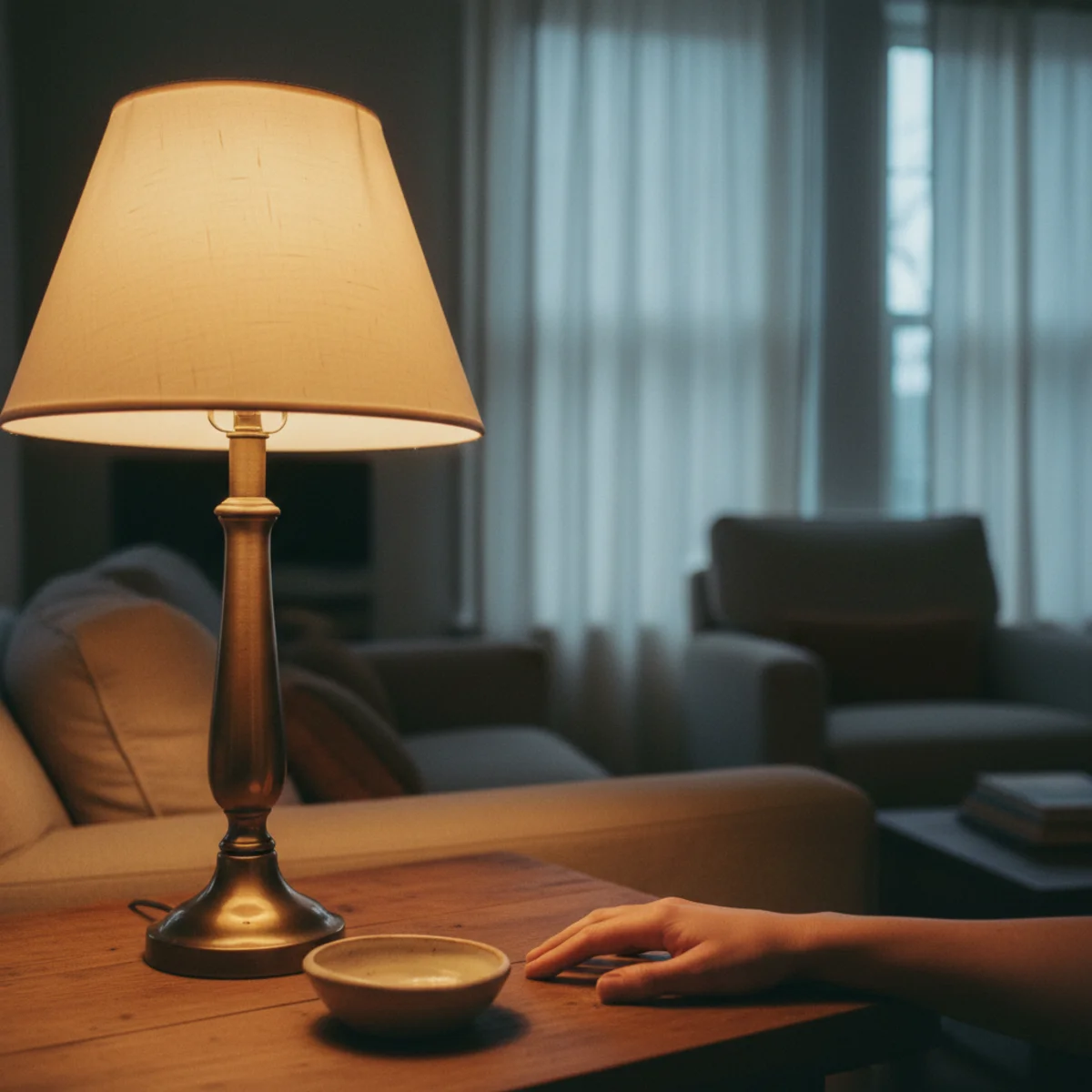
Winter sunsets at 4:30pm mean evenings start in mid-afternoon — and the lamps need to turn on then, not at 6:00 when habits trained on summer would suggest. Smart plugs scheduled to dusk (or to 4:30pm specifically during winter) ensure every lamp transitions to warm evening light at the right moment. The automation handles what household members forget during darkest weeks.
Winter lighting automation: SMART PLUGS on every table and floor lamp ($15 each from TP-Link Kasa or Amazon Smart Plug), 6 to 10 lamps minimum across the house. SCHEDULE to sunset (most smart plugs can use astronomical sunset rather than fixed times — this auto-adjusts as days shorten and lengthen across winter). ALTERNATIVE: use fixed 4:00 to 4:30pm during peak winter (December through February) when sunset is consistently early. UNIFIED CONTROL via Lutron Caséta smart bridge ($55) or Amazon Echo for one-button or voice-activated 'evening' scene. The automation ensures the warm transition happens daily even on the days household members forget or are away during sunset. The compounded effect across 100+ winter days is significant.
AFFILIATE SLOTLIGHTINGSmart plugs on every lamp scheduled to dusk; 6-10 lamps minimum; Lutron Caséta or Amazon Echo for unified controlAdd affiliate URL when configuredWhy it works
Because winter sunset happens during active work or family hours (4:30pm is school pickup, dinner prep, late-afternoon work) — exactly when manually flipping every lamp switch is least likely to happen. The lamps that don't get turned on during the dim transition mean the room enters full dark before any lamp lights, which forces the household to fumble through dark space to reach switches. Automation prevents this by lighting the lamps proactively at the right moment, so the household walks into pre-warmed rooms rather than into transition darkness.
Pro tip — Set the smart-plug schedule to start 15 minutes before sunset rather than at sunset — the lamps gradually take over from natural light as it fades rather than competing with still-bright daylight. The slight overlap reads more natural than an abrupt switch and prevents the brief 'is it night yet?' confusion that perfect sunset-timing creates.
Multiple lamps glowing warm at 4:30pm winter sunset — automation handles what habit doesn't. See also: TP-Link Kasa
07Layer a Rug Over Cold Floors
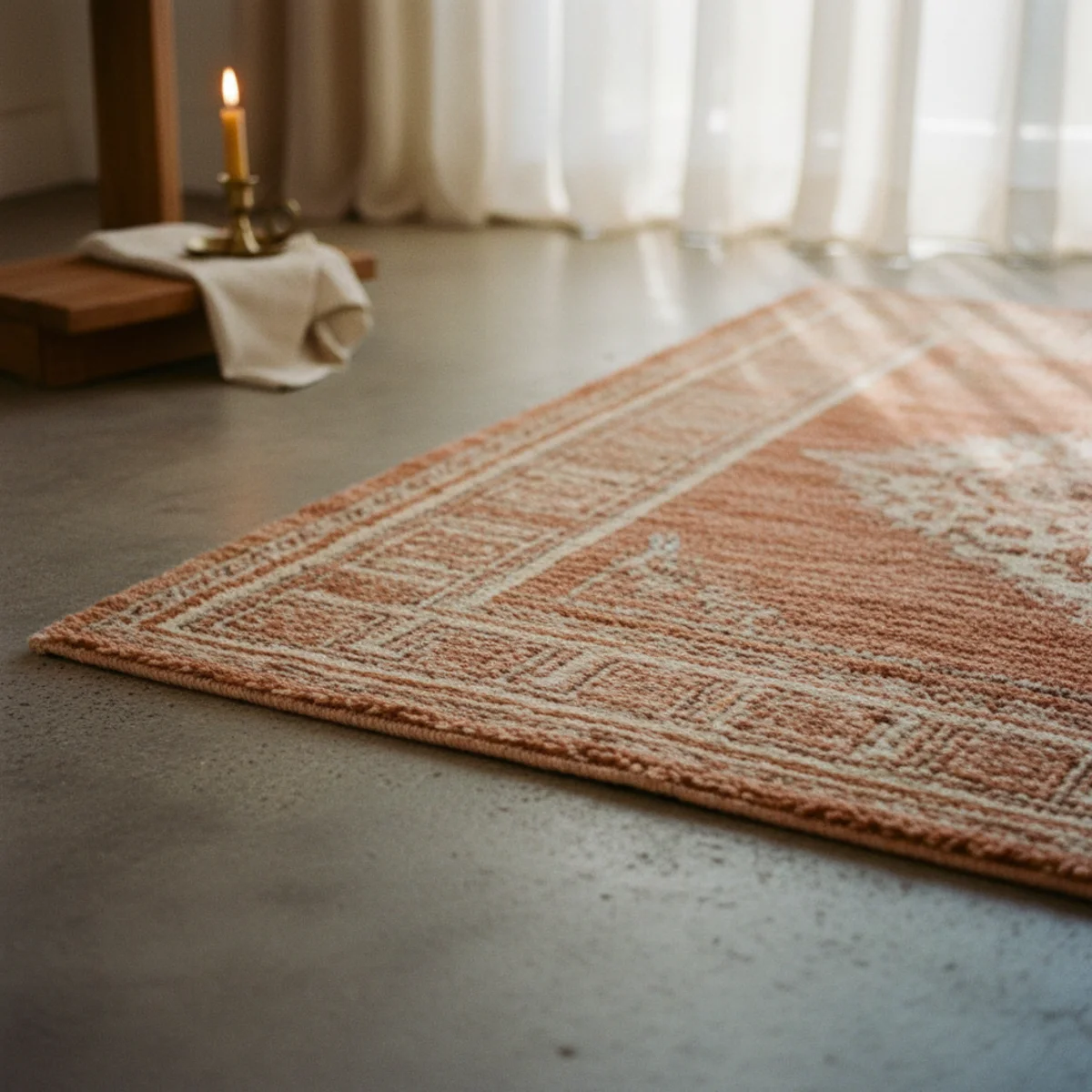
Beyond the heavy main rug (rule 4), winter benefits from adding rugs to rooms or zones that didn't have them in summer — the kitchen between sink and island, the hallway, the bathroom. The extra textile layers cover otherwise-cold surfaces and add the visual depth that summer-bare floors didn't need. Cost: $80 to $250 per additional small rug; impact: significant across cold-floor zones.
Additional winter rug zones: KITCHEN — runner or small rug between sink and island ($80 to $200 in durable wool or indoor-outdoor polypropylene), HALLWAY — narrow runner 2 to 3 feet wide x 6 to 10 feet long along the main traffic path ($100 to $300), BATHROOM — small bath rug (24x36 to 30x48 inches) in wool, cotton, or sheepskin ($30 to $150), ENTRY — runner from door to first room ($80 to $250 per entryway-decor rules), READING NOOK — small sheepskin or wool accent at the chair ($80 to $200). The cumulative additional rug layers reduce cold-floor exposure across the whole household during winter months. Roll up and store during summer; bring back out at the first cold week of fall.
AFFILIATE SLOTFLOORAdd rugs to kitchen, hallway, bathroom, entry, and reading nook for winter; store during summerAdd affiliate URL when configuredWhy it works
Because cold floors are localized — the kitchen tile in front of the sink, the bathroom tile after a shower, the hallway concrete or hardwood in unheated areas. Adding rugs to these specific cold zones eliminates the localized cold spots that affect daily comfort more than the broad temperature average. A small rug in front of the bathroom sink ($30) provides enormously more daily benefit during winter than its small cost would suggest, because the comfort improvement happens at the exact spot of daily friction.
Pro tip — Use seasonal-storage rotation for the extra winter rugs — store in vacuum bags in closets during summer months, pull back out at the first cold morning of fall. The annual rotation extends rug lifespan (no year-round wear) and signals the season change ritually.
Wool runner in kitchen, sheepskin in bathroom — eliminating localized cold spots that matter daily. See also: entryway-decor
08Add Velvet to the Mix
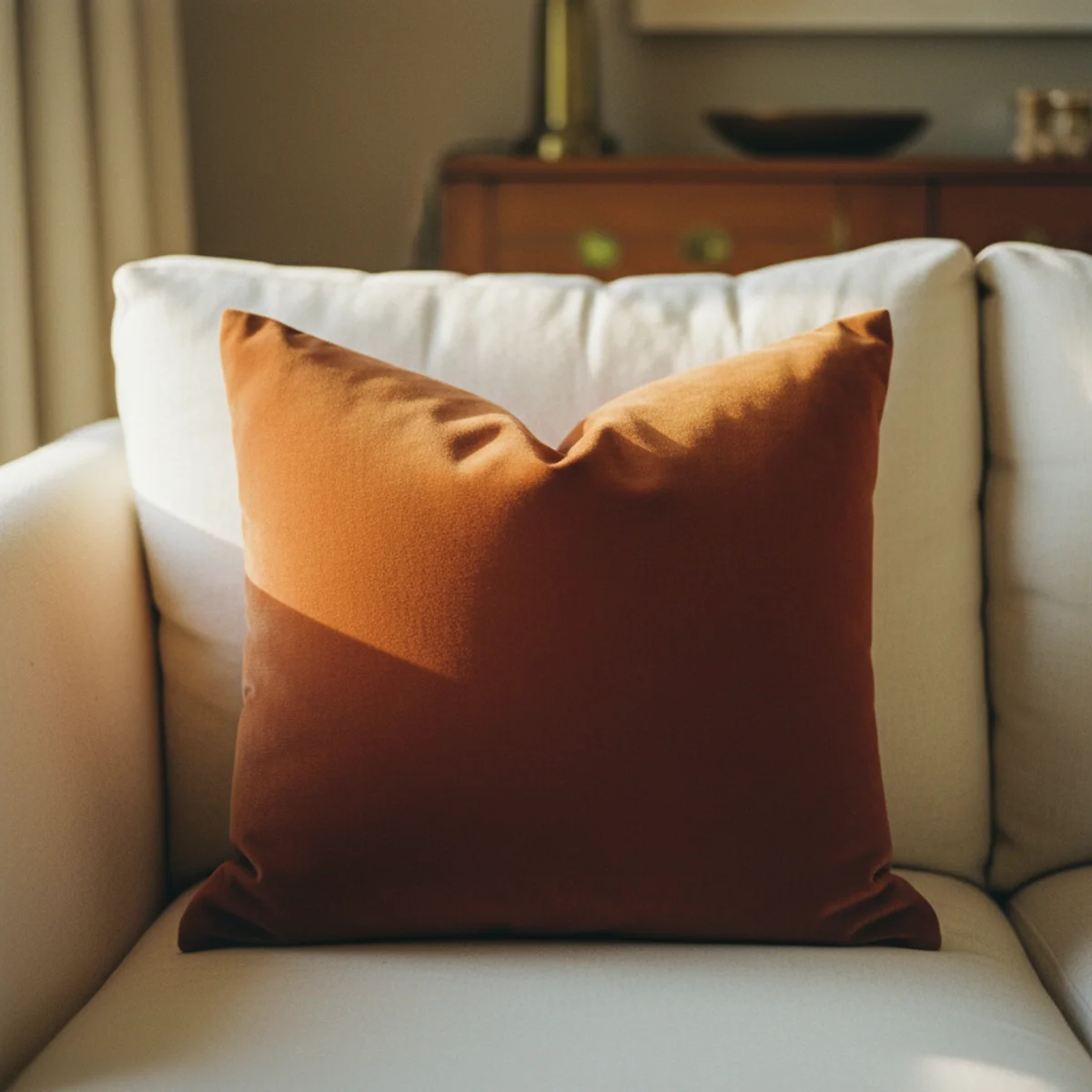
Winter rewards textiles that reflect light gently — and velvet is the textile that reads warmest in cold-month lighting. One or two velvet cushions on the sofa, a velvet throw, a velvet upholstered chair, or velvet drapery panels all add the slight sheen that catches warm lamp light and reflects it as soft warm glow. Cost: $40 to $150 per velvet piece added; impact: significant atmospheric depth.
Velvet additions for winter: 1 OR 2 VELVET CUSHIONS on the sofa among the linen and boucle ones (mixed-texture cushion arrangement per throw-blanket-layering rules; velvet adds the sheen-reflective layer). Best colors: deep terracotta, olive, warm rust, deep navy ($40 to $120 per cushion cover). ONE VELVET THROW draped over an armchair ($60 to $200 from West Elm, H&M Home, or Pottery Barn). VELVET CURTAINS in a deep saturated color (terracotta, olive, navy) — significant visual statement requiring $200 to $600 per panel for quality velvet. VELVET UPHOLSTERED CHAIR — single armchair in deep velvet ($400 to $1,500). The velvet should be one or two pieces, not the dominant fabric — too much velvet pulls the room toward Victorian-fussy, where small accents of velvet pull toward warm-luxurious.
AFFILIATE SLOTTEXTILES1-2 velvet cushions + 1 velvet throw + optional velvet chair or curtain panels in saturated tonesAdd affiliate URL when configuredWhy it works
Because velvet has a directional nap that catches and reflects light differently than flat fabrics — the slight sheen creates warm glow when lit by lamps and candles, which is exactly the lighting condition winter rooms experience for 6+ hours per evening. Linen and wool absorb light rather than reflect it; velvet reflects with directional softness that the eye reads as luxurious. The same lamps and candles light a velvet-containing room as a velvet-less room, but the velvet room reads warmer because of the reflective sheen.
Pro tip — Use velvet in saturated warm tones (terracotta, deep rust, olive, navy) rather than in lighter cream or oat tones — light velvet reads slightly dingy under lamp light, while saturated velvet glows. The richer color compounds the sheen effect into deeper warmth.
Terracotta velvet cushion and throw — sheen that catches lamp light and reflects as warm glow. See also: throw-blanket-layering rules
09Cluster Candles in the Window
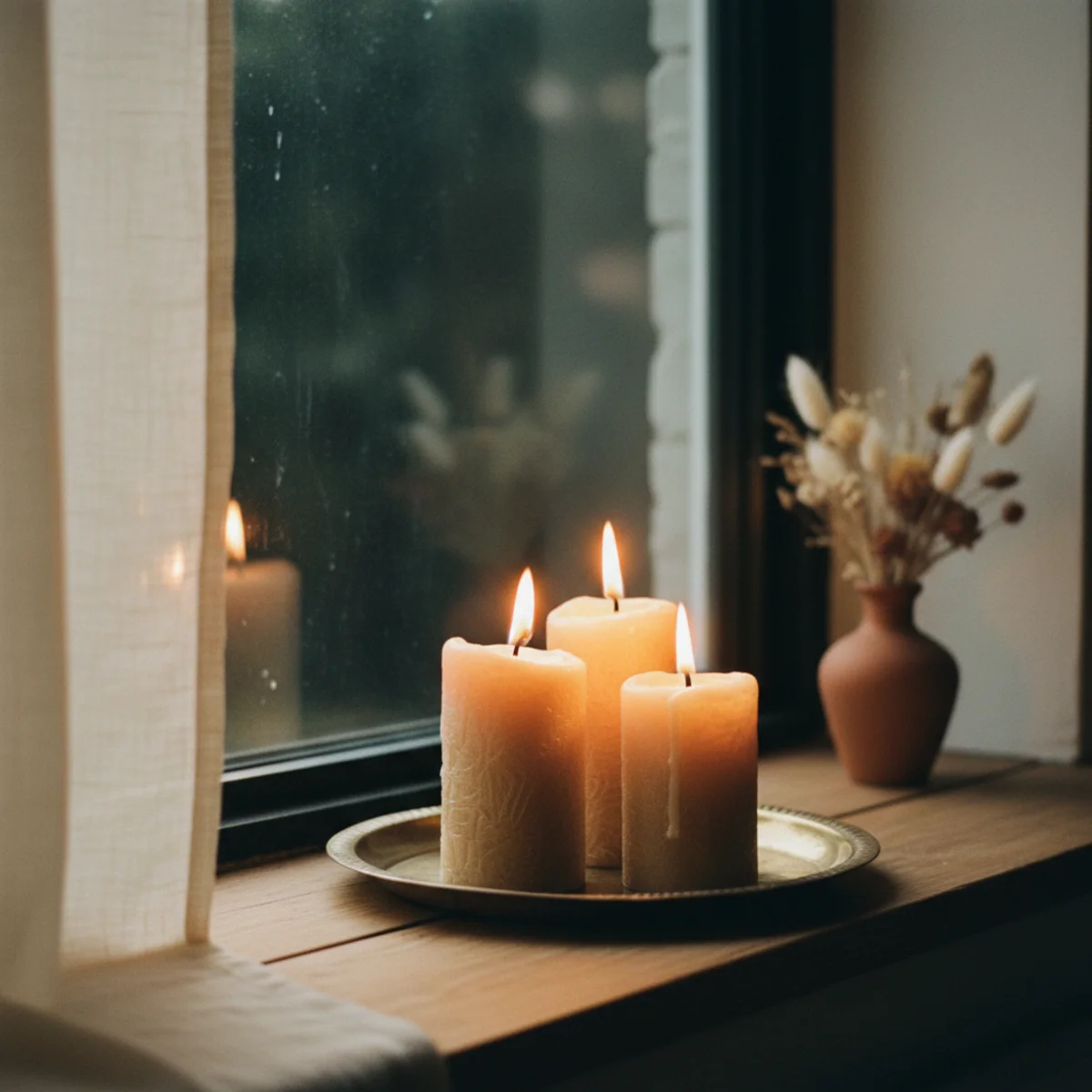
An iconic winter move that signals the season clearly from outside as well as inside: a cluster of candles in the windowsill or on a console directly in front of a window. The warm flicker visible from outside reads as 'warm home in cold winter night' to anyone passing by, while from inside the candle cluster reflects in the dark window glass for double the visual warmth.
Window candle clusters: 3 TO 7 CANDLES grouped on a windowsill or a small table directly in front of a window. Mix of pillar candles (3 to 5 inches tall), votives in glass jars, and small taper candles in vintage brass holders. Best windows: living room front window facing the street, dining room window beside the table, master bedroom window if visible. The reflection in the dark window glass (during winter evenings when the window is essentially a mirror) doubles the visual candle count and creates the warm-glow effect both inside and outside. Avoid: candles directly touching curtains (fire hazard), candles too close to heat sensors (false alarms). Battery-operated LED candles work if real fire-safety concerns exist, especially in households with pets or young children — modern LED flicker is nearly indistinguishable from real flame at evening distances.
AFFILIATE SLOTLIGHT3-7 candles clustered in windowsill or in front of dark window for doubled glow from reflectionAdd affiliate URL when configuredWhy it works
Because the reflected effect in dark window glass doubles the visible candle count and creates a glow effect that pure interior clusters cannot match. The exterior visibility also adds an emotional dimension: walking by other warm-window-lit homes during winter evenings is itself part of the season's emotional fabric, and your own home contributes to that shared experience. The candle-in-window is also a centuries-old winter symbol (originally a sign of welcome for travelers), which the design choice subtly invokes.
Pro tip — Use a metal or stone tray underneath the candle cluster to catch dripping wax — even careful candle-burning produces some wax drip, and a $10 tray protects the windowsill or table underneath. Choose a warm-toned brass or oxidized metal tray that adds to rather than detracts from the candle styling.
Five candles clustered in the window — dark glass reflecting doubles the warm winter glow. See also: vintage brass holders
10Bring Out the Heavy Drapes
Winter rewards heavier window dressings — the unlined linen panels that diffuse summer light should be supplemented or replaced with heavier wool, velvet, or lined linen panels for the cold months. The heavier drapes provide functional thermal insulation (significant for old houses with single-pane windows) and visual warmth, particularly when drawn during cold evenings.
Winter drape options: SWAP unlined linen panels for LINED LINEN PANELS in warmer earth tones during winter ($100 to $200 per panel from West Elm or Pottery Barn). UPGRADE to WOOL DRAPES — heavier wool panels ($150 to $400 per panel from specialty retailers, occasional finds at $40 to $100 from estate sales). ADD a SECOND LAYER over existing curtains — heavy wool or velvet panels behind the lighter linen, drawn for evenings, opened during daytime. INSTALL THERMAL CURTAIN LINERS behind existing curtains ($30 to $60 per pair from Amazon) for thermal benefit without changing the visible aesthetic. Draw heavier drapes 30 to 45 minutes before sunset during winter for maximum thermal benefit before the room cools.
AFFILIATE SLOTWINDOWSSwap to lined linen or add wool/velvet layer behind existing curtains; draw 30-45 min before sunsetAdd affiliate URL when configuredWhy it works
Because windows are the primary heat-loss zone in most homes — single-pane windows can lose 10 to 25 percent of room heat overnight without proper drape insulation. Heavier drapes (especially when drawn before sunset) trap warm air in the room and reduce the heating load required to maintain temperature overnight. The functional benefit is real (lower heating bills, warmer rooms) and the visual benefit compounds (heavier textiles reading as winter-ready). The combined functional-plus-aesthetic case makes the seasonal drape swap worth the effort.
Pro tip — Layer existing curtains with a second heavier panel rather than replacing entirely — keeps the lighter daytime curtains useful and adds the evening insulation. Use double-rod brackets ($10 to $20 from Home Depot) to mount both layers, with the heavier panel behind for evening pulling.
Heavy wool layer behind lighter linen — thermal insulation plus winter visual weight. See also: thermal curtain liners
11Run a Simmer Pot for Scent
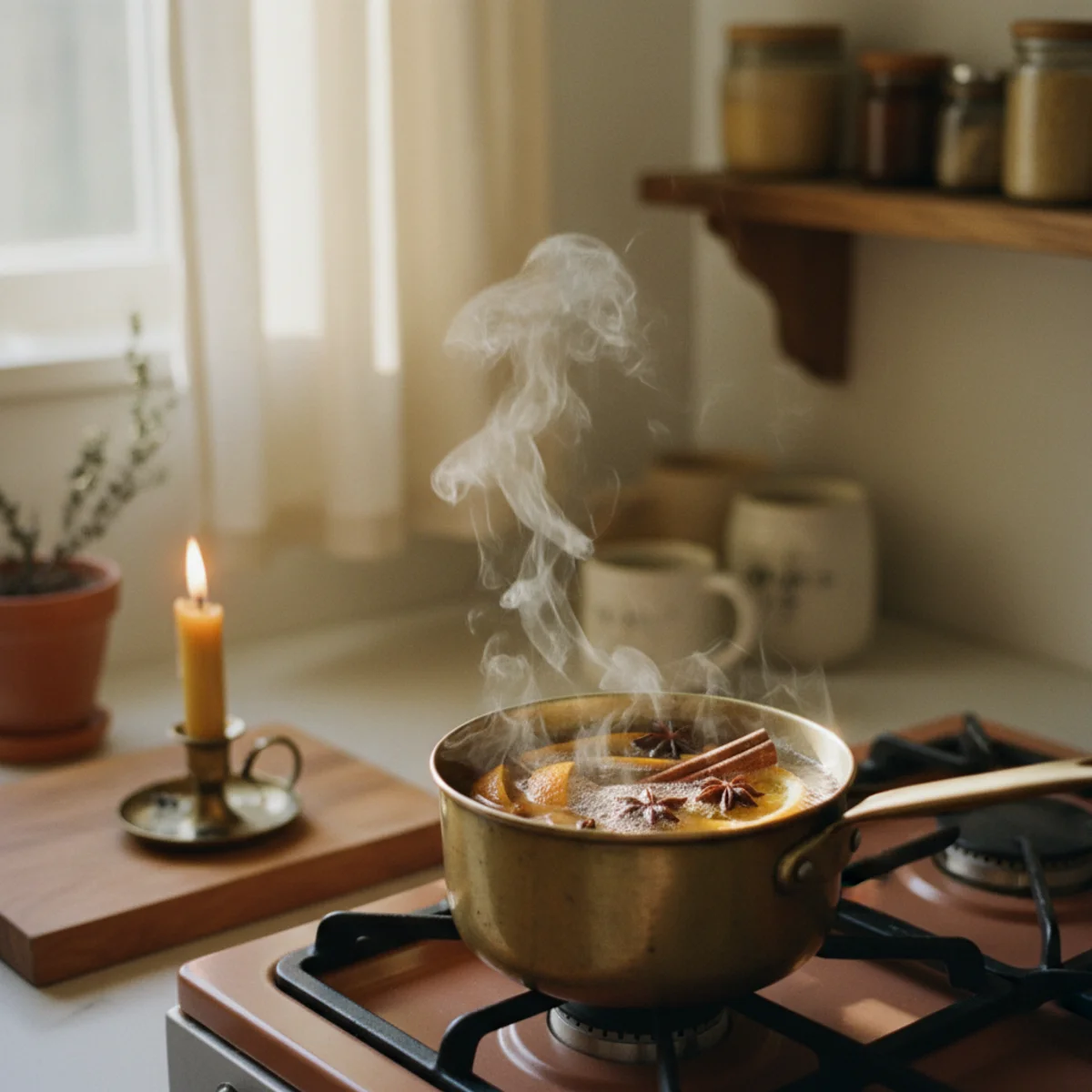
Winter rooms benefit from a scent layer — but skip the synthetic plug-ins and heavy scented candles. The fix is a simmer pot: a small pot of water with citrus peels, spices, and herbs simmering on low for 1 to 3 hours. The natural scent fills the house warmly without artificial chemicals, costs almost nothing ($2 to $5 per pot in ingredients), and uses household materials that would otherwise be discarded.
Standard simmer pot recipe: SMALL POT (1 to 2 quart) on stovetop set to low simmer. WATER (fill 2/3 full). INGREDIENTS — peels from 1 to 2 oranges, peels from 1 lemon, 2 cinnamon sticks, 4 to 6 whole cloves, 2 to 3 star anise pods, optional: 1 tablespoon vanilla extract, 1 small sliced apple, 1 sprig fresh rosemary. Simmer on low for 1 to 3 hours, refilling water as it evaporates. Total cost per pot: $2 to $5 in ingredients (mostly food waste already in the kitchen). VARIATIONS — Pine: spruce sprigs + cloves + cinnamon (most winter-forest scent). Bakery: vanilla + cinnamon + nutmeg (most kitchen-warmth scent). Citrus-Herb: orange peels + rosemary + bay leaves (lightest, fresh scent). Run a simmer pot 1 to 3 times per week during winter months for ongoing house-warm scent.
AFFILIATE SLOTSCENTSimmer pot 1-3 times weekly: water + orange/lemon peels + cinnamon + cloves + star anise + vanillaAdd affiliate URL when configuredWhy it works
Because synthetic scents (plug-ins, scented candles, room sprays) contain chemicals that some people find irritating or that overwhelm the natural scent profile of food and home. The simmer pot uses ingredients that the household already knows and tolerates — orange peels, cinnamon, vanilla — at low concentrations that scent the air without overwhelming. The natural origin also reads more authentically winter-cozy than the chemical-sweet of mass-produced 'winter' scented products. And it's nearly free.
Pro tip — Use a slow cooker or small electric simmer pot ($20 to $40 from Amazon) instead of a stovetop pot if you want to leave the scent running unattended or during work hours — the slow cooker handles 6 to 8 hours of low-temp simmer safely, where stovetop should be supervised. The slow cooker also frees up the stovetop for actual cooking while the simmer-scent runs.
Orange peels, cinnamon, cloves, star anise simmering — natural winter scent for $3 in ingredients. See also: scented candles
12Keep One Bowl of Citrus
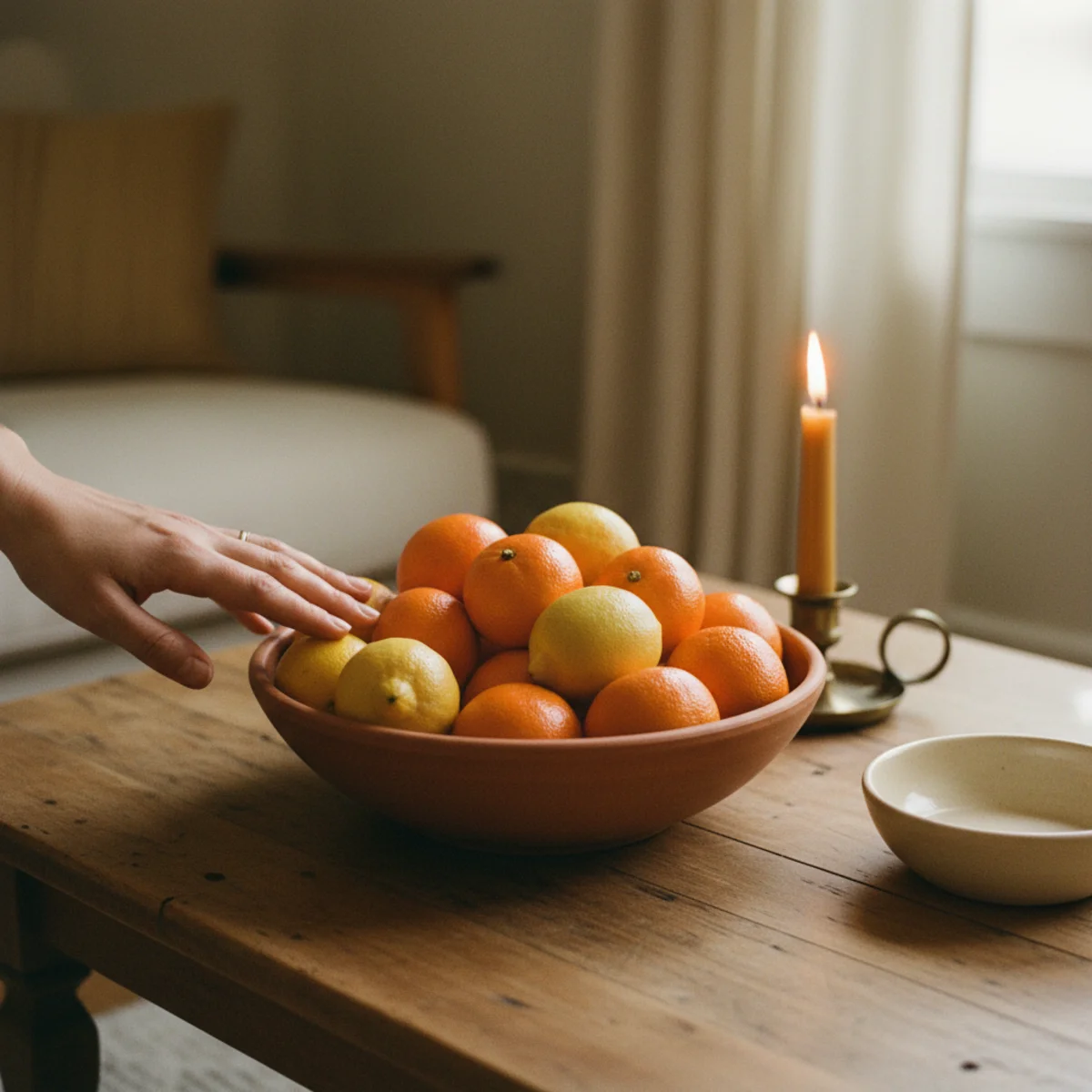
A bowl of fresh citrus on the dining table, console, or coffee table is the simplest winter still-life — oranges, lemons, clementines, blood oranges, grapefruits arranged in a wooden, ceramic, or brass bowl. The bright color is the antidote to winter monochrome; the citrus is also functional (eaten throughout the week, refreshed weekly), and the natural shapes contrast with everything else in the warm-restrained palette.
Best citrus bowl setup: WOODEN, CERAMIC, OR BRASS BOWL 10 to 14 inches across ($20 to $80 thrifted, $40 to $150 retail). 6 TO 12 CITRUS PIECES in mixed varieties: 3 to 4 oranges, 2 to 3 lemons, 3 to 4 clementines, optional 1 to 2 grapefruits, occasional blood oranges for color variation. ARRANGEMENT — pile slightly, not perfectly flat — overflow naturally with a few pieces standing tall above the rim. REFRESH WEEKLY — eat the citrus throughout the week, replace as needed. Total weekly cost: $5 to $12 for the citrus refresh. Position on dining table, kitchen island, or living room coffee table for daily visual impact and easy reach. The bright color is significant against the otherwise-restrained winter palette — read as winter's specific celebratory note.
AFFILIATE SLOTSTILL LIFEWooden, ceramic, or brass bowl with 6-12 mixed citrus pieces; refresh weeklyAdd affiliate URL when configuredWhy it works
Because citrus is at peak quality during winter months (when most citrus varieties are in season in northern hemisphere markets), and the bright color of oranges, lemons, and blood oranges is the seasonal antidote to the otherwise-muted winter palette. The brain reads bright orange and yellow as 'warm' even though they're cool-zone colors — the optical warmth complements the room's other warm elements. The functional aspect (actually eating the citrus) also reinforces winter's traditional emphasis on vitamin-C-rich foods during cold months.
Pro tip — Place the citrus bowl in the brightest natural-light spot in the room — the citrus colors come alive in good light and read washed-out in dim light. The bowl on the dining table beside a window during winter brunches becomes a small visual celebration; the same bowl in a dim corner reads as just fruit storage.
Wooden bowl, 10 pieces of mixed citrus — bright color against the muted winter palette. See also: wooden
How to transition a room into winter
Carry the room from fall into deep winter with what you own first.
- 1Turn the light warmer and earlier
Set lamps on timers for late afternoon, swap any cool bulbs for 2700K, and pull out the candles. Light is the whole game in winter.
- 2Double the textiles
Add a second throw to the sofa, switch the bed to flannel, and lay a thick rug over any cold floor.
- 3Bring in evergreen and scent
A few real cedar or pine clippings in a pitcher, and a simmer pot on the stove for the afternoon.
- 4Deepen the palette
Swap a couple of cushions or a throw to richer winter tones — oxblood, deep olive, warm charcoal — and store the lighter ones.
Quick tips
- Set a lamp on a timer for late afternoon — the single best winter mood fix there is.
- Mist real evergreen clippings every few days so they don't drop needles on the mantel.
- Run a simmer pot of citrus and spice instead of synthetic plug-ins; the scent fills the whole floor.
- Layer a thick rug over cold tile or laminate and roll it up again in spring.
- Keep heavy drapes floor-length to block drafts at the sill and hold heat.
- Store the holiday decor and the lighter-season textiles in the same labeled bins so the swap stays quick.
Winter decor by room
Doubled throws, a thick layered rug, candles clustered and lit early, evergreen on the mantel.
Flannel bedding, a wool blanket at the foot, a sheepskin by the bed, heavier curtains drawn against the cold.
A simmer pot for scent, a bowl of citrus, and a small warm lamp on the counter for dark mornings.
A flat-weave runner that handles slush, a row of hooks for heavy coats, and a warm lamp on a timer.
Winter is when a home stops being decorated and starts being lived in defiantly.
Frequently asked questions
What's the difference between winter decor and Christmas decor?+
When should I take down Christmas decorations and put up winter decor?+
How many candles should I burn during winter evenings?+
What plants and greenery work for winter decor without looking Christmas?+
Should I switch my bedding for winter?+
What's a simmer pot and why is it good for winter?+
- SeasonalHow to Make a Room Cozy for Winter: 9 Warm, Low-Cost Moves (2026)
- SeasonalCozy Christmas Decor: 28 Warm, Un-Tacky Holiday Ideas for 2026
- Shopping GuidesThe Best Wool Throws for a Cozy Home, Tested and Compared (2026)
- StylingCandle Styling: 20 Ways to Style Candles for a Cozy Home (2026)
- Cozy CornersFireplace Nook Ideas: 20 Ways to Style a Cozy Hearth Corner (2026)
Winter decorating is mostly about light and layers, not ornaments. Set a lamp on a timer, double the throws, light the candles early, and bring in a little real evergreen for scent. We'd start with the timer — arriving home to a warm-lit room on a gray afternoon is the whole feeling of a cozy winter house in one cheap switch. Don't leave the room bare when the tree comes down; give January its own warm layer and the long months pass softer.