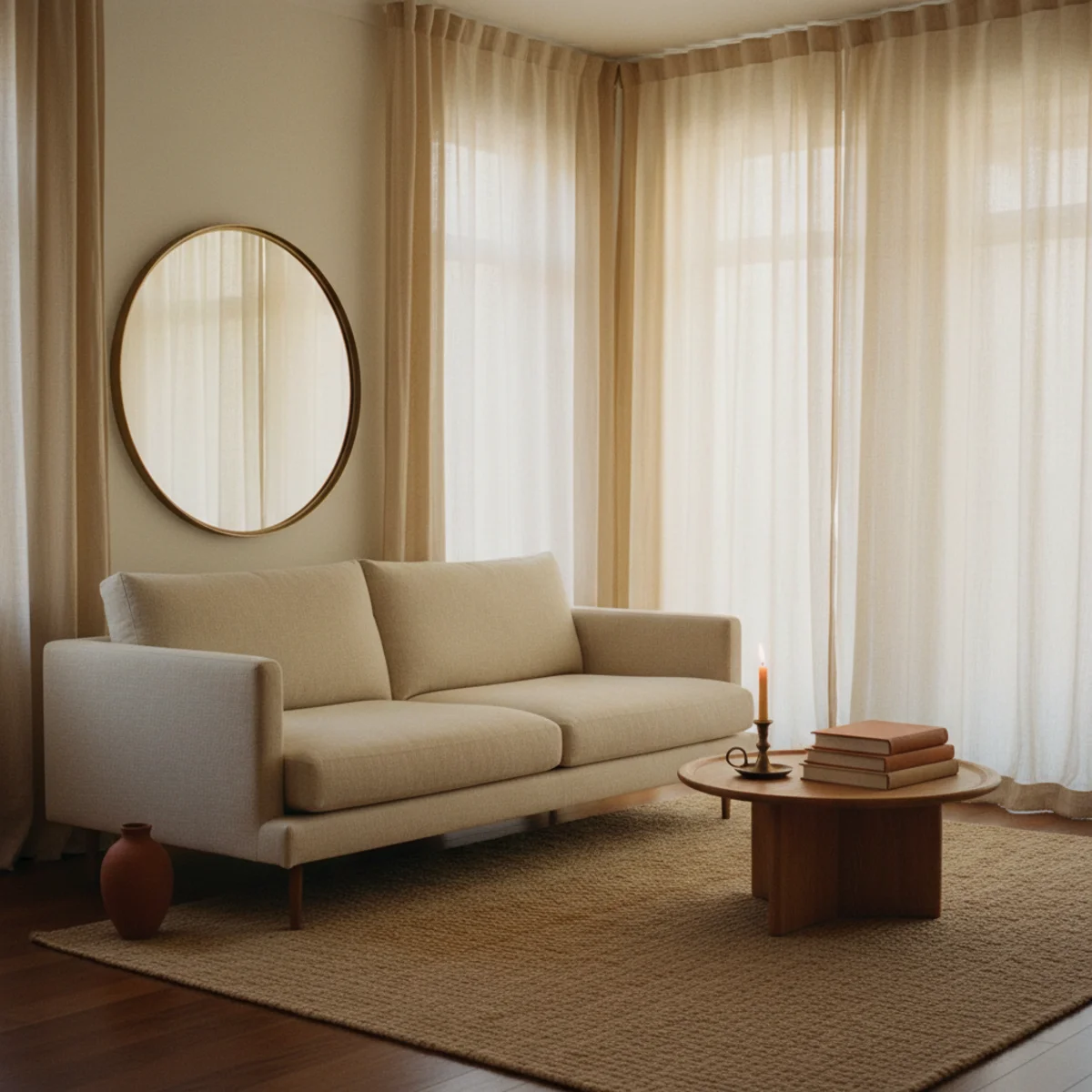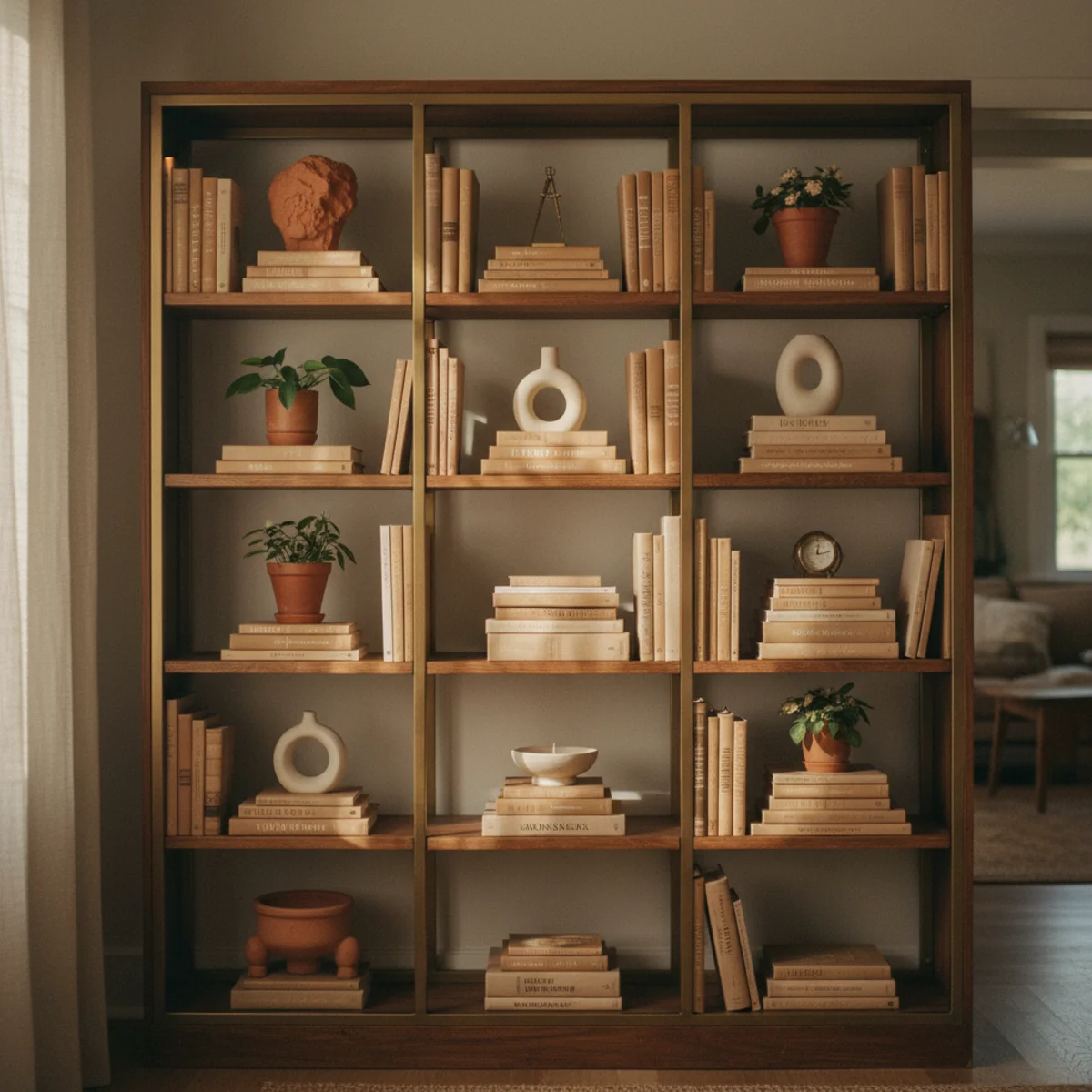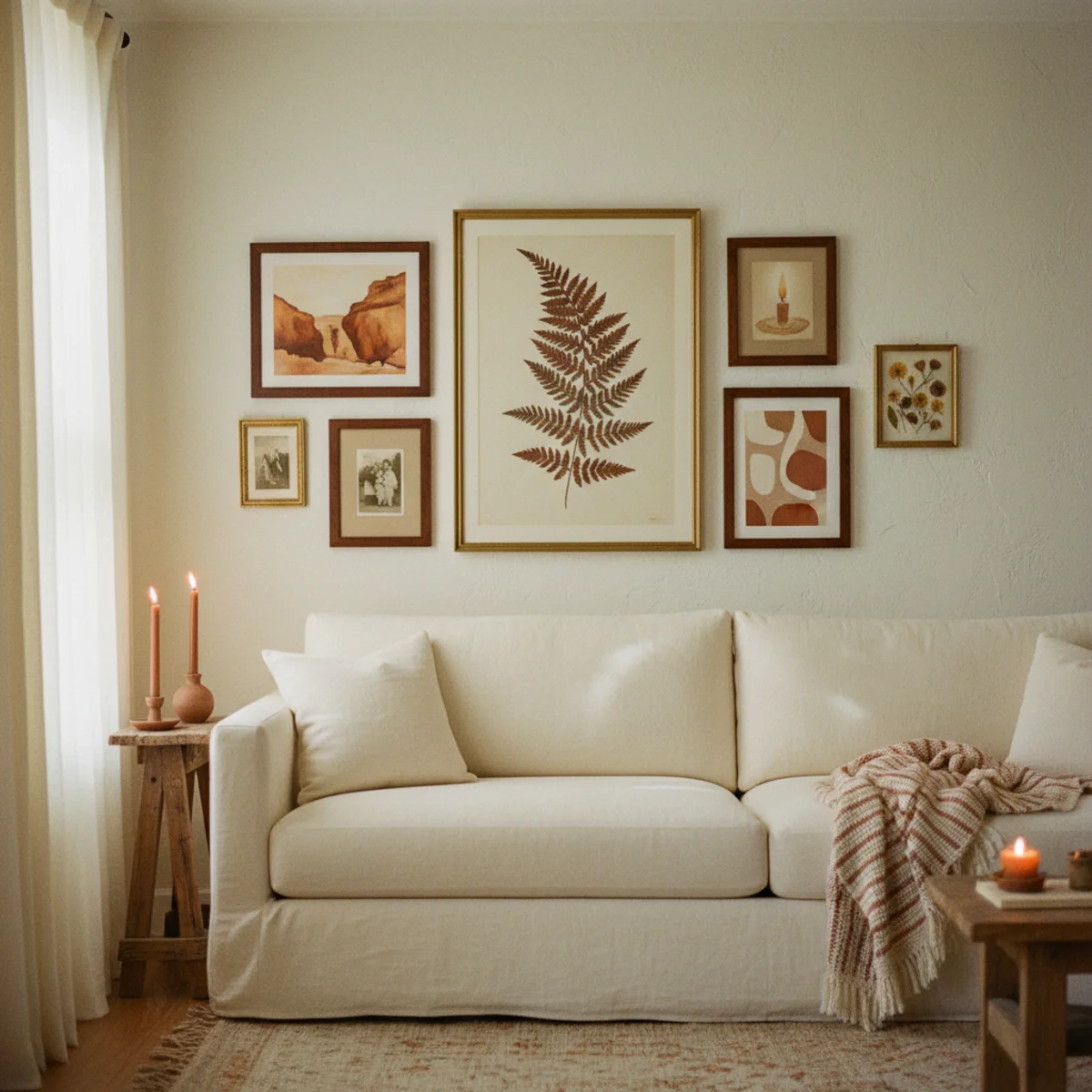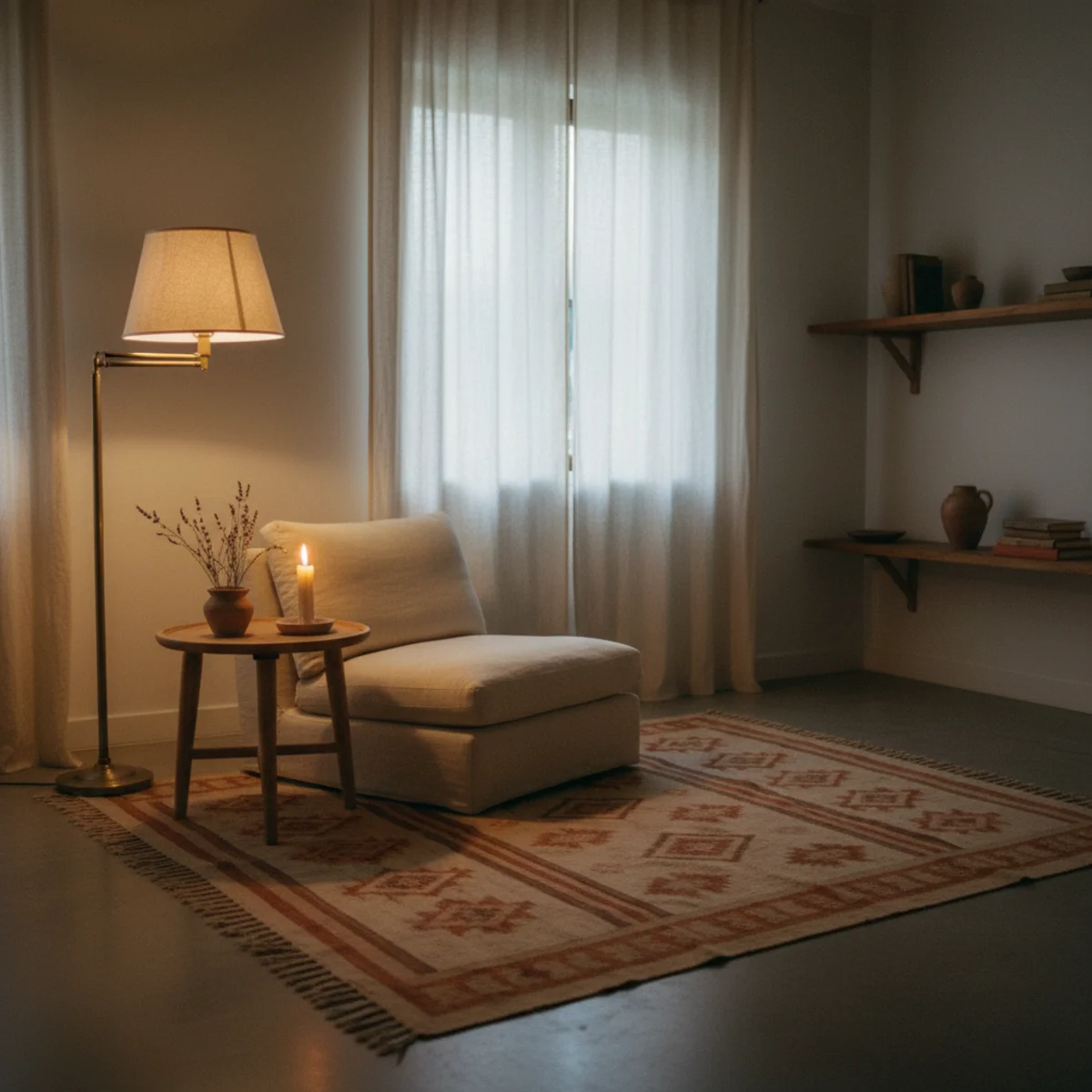
These eight TV integration principles apply across small living rooms — apartments, first homes, and any room under 250 square feet where the television and the seating need to share a single wall without the screen dominating the entire space. Each principle names the exact arrangement decision, the warm materials involved, and the specific visual discipline that makes the TV read as one element among several rather than as the room's defining object.
The fundamental approach is the same across all eight moves: treat the TV as architecture rather than as appliance. Architecture gets integrated into walls, framed by shelves, softened by plants, accompanied by lamps. Appliances sit on furniture and broadcast their function. The eight moves below convert the screen from appliance to architecture.
By the end of this guide, you'll know how to integrate a TV into a small warm living room — mounting it low over a long credenza, building bookshelves around the screen, leaning art beside it, adding a trailing plant at the corner, painting the wall a warm deep color, hiding every cord, placing a warm lamp beside the screen, and choosing a soundbar that matches the console.
WHAT'S INSIDE
- Why mounting low over a long credenza reads warmer than wall-mounting at eye level
- The bookshelves-around-the-screen approach that frames the TV as a composed architectural alcove
- The warm lamp beside the screen — the single most impactful atmospheric addition
- Hiding every visible cord — the move that converts the TV from appliance to architecture
Surround the television and it stops being the only thing in the room. Books, art, a plant, a lamp — anything that competes with the black rectangle.
— Apartment Therapy [citation needed — verify before publish]
Why the TV dominates a small room
A switched-off TV is a large, matte-black plane, and our eyes are drawn to the biggest area of contrast in a room. In a small living room there's no distance to dilute that pull, so the screen reads as the focal point whether you want it to or not.
The fix is to give the eye competition and to get the height right. A TV mounted too high — the classic mistake of putting it above a fireplace — forces an uncomfortable upward gaze and makes the whole wall feel like a sports bar. Surrounding the screen with books, art, and a plant, then bringing it down to seated eye level, lets it recede into a composition rather than blare from a bare wall.
More in By Room you may love
See allWhy warm media walls are everywhere in 2026
The TV-wall reveal is one of Pinterest's most-saved categories right now, and the look has shifted hard toward warmth: gone is the glossy black entertainment center, in its place are vintage credenzas, integrated bookshelves, and media walls in clay and olive that let the screen blend rather than blare.
Part of the driver is the picture-frame style TV that displays art when idle, but you don't need that hardware — a well-styled wall does the same job for free. The bigger driver is the general move toward warm, collected rooms: once everything else goes warm and layered, a bare black-glass setup looks out of place, and people fix it.
22 small living room TV ideas that work
01Mount It Low Over a Long, Low Credenza
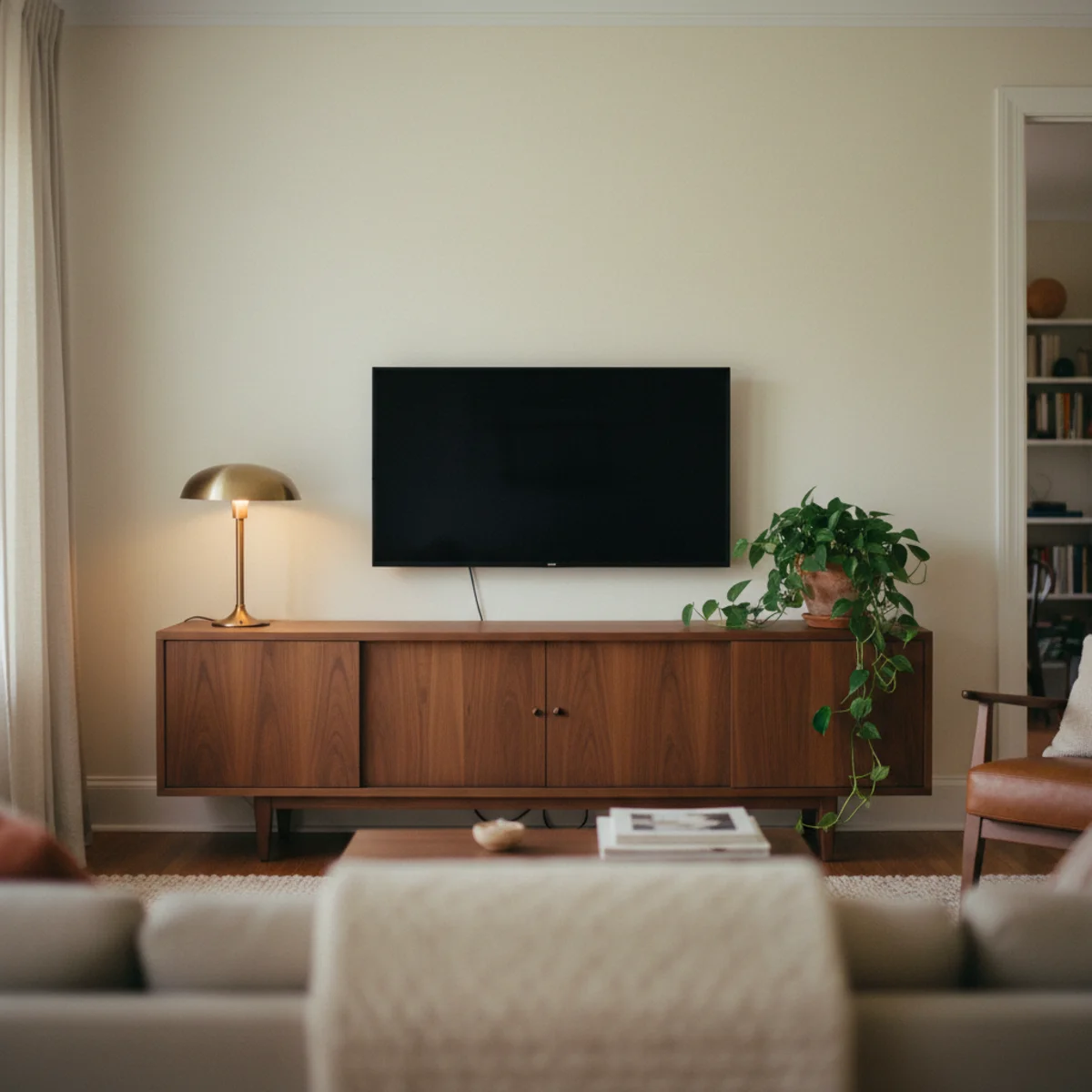
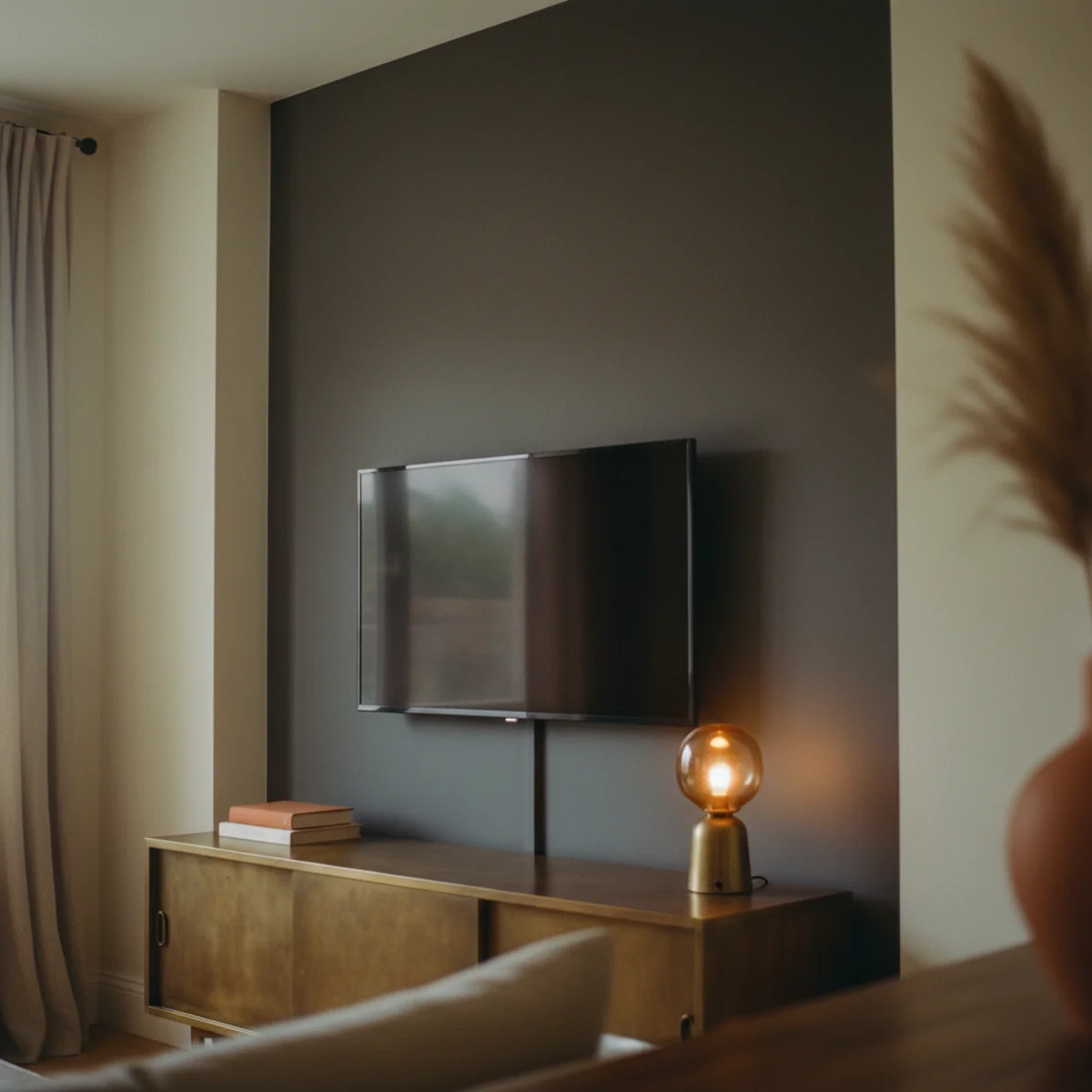
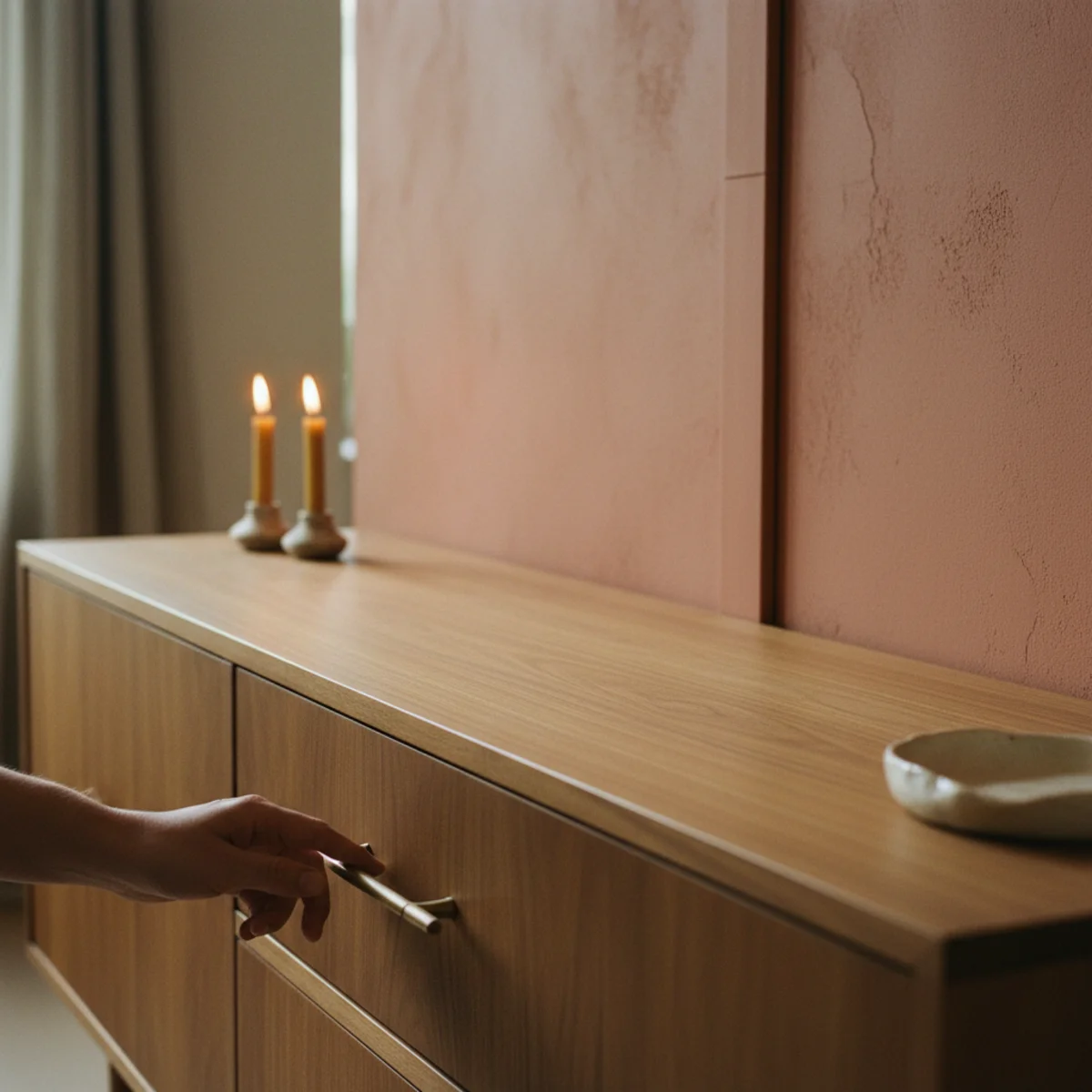
The most warm-reading TV arrangement: a flat-screen mounted at 24-36 inches from the floor (lower than standard eye-level mounting) over a long, low credenza, sideboard, or media console. The low mount plus the long credenza creates a horizontal composition rather than a single floating screen — the TV becomes the top element of a composed piece of furniture rather than a wall-mounted appliance.
Low credenza TV setup: TV HEIGHT — center of screen at 36-42 inches from floor for wall mount, or resting on credenza top at 28-36 inches. Lower than typical recommendations (which put screen center at 42-48 inches) but appropriate for living rooms where seated viewing happens at 7-10 feet. The lower height also makes the TV less dominant from standing positions in the room. CREDENZA DIMENSIONS — 60-72 inches wide (significantly wider than the TV) and 18-22 inches tall. The extra width on each side of the TV is essential: it frames the screen within a wider horizontal composition. WARM CREDENZA MATERIALS — vintage solid walnut or teak sideboard at $150-500 from estate sales (the ideal), or West Elm, Article, or CB2 modern media consoles at $500-1,200. CREDENZA TOP STYLING — objects on either side of the TV that widen the visual composition: small lamp on one side, small ceramic plant pot on the other, perhaps a small stack of books at one end. WALL ABOVE THE TV — keep the wall above the TV mostly clear (one small framed print or nothing) to prevent the TV from being surrounded by wall objects that compete with the screen.
AFFILIATE SLOTARRANGEMENTTV center at 36-42 inches from floor over 60-72-inch wide credenza; vintage walnut sideboard ($150-500) or modern console ($500-1,200); lamp + plant flanking the screenAdd affiliate URL when configuredWhy it works
Because it creates a furniture composition rather than a floating screen. The credenza's horizontal mass and the TV's vertical screen form a composed piece that the eye reads as 'designed furniture arrangement' rather than as 'television mounted on wall.' At standard high mounting, the TV dominates as a solitary dark rectangle; in a low-plus-wide-credenza composition, the TV is one element within a horizontal arrangement that also includes the warm wood of the credenza, the objects on its surface, and the floor plants or objects alongside.
Pro tip — Style the credenza top specifically to visually widen the composition beyond the TV's footprint — place a small table lamp 10-12 inches from the TV on one side so the lamp's warm glow expands the composition horizontally. The lamp both adds warmth and makes the overall credenza-plus-TV arrangement read as a wide composed element rather than as screen-plus-furniture.
Low mount over wide walnut credenza, lamp and plant flanking — TV as element within composed furniture rather than dominant screen. See also: cozy-living-room-ideas
02Build Bookshelves Around the Screen
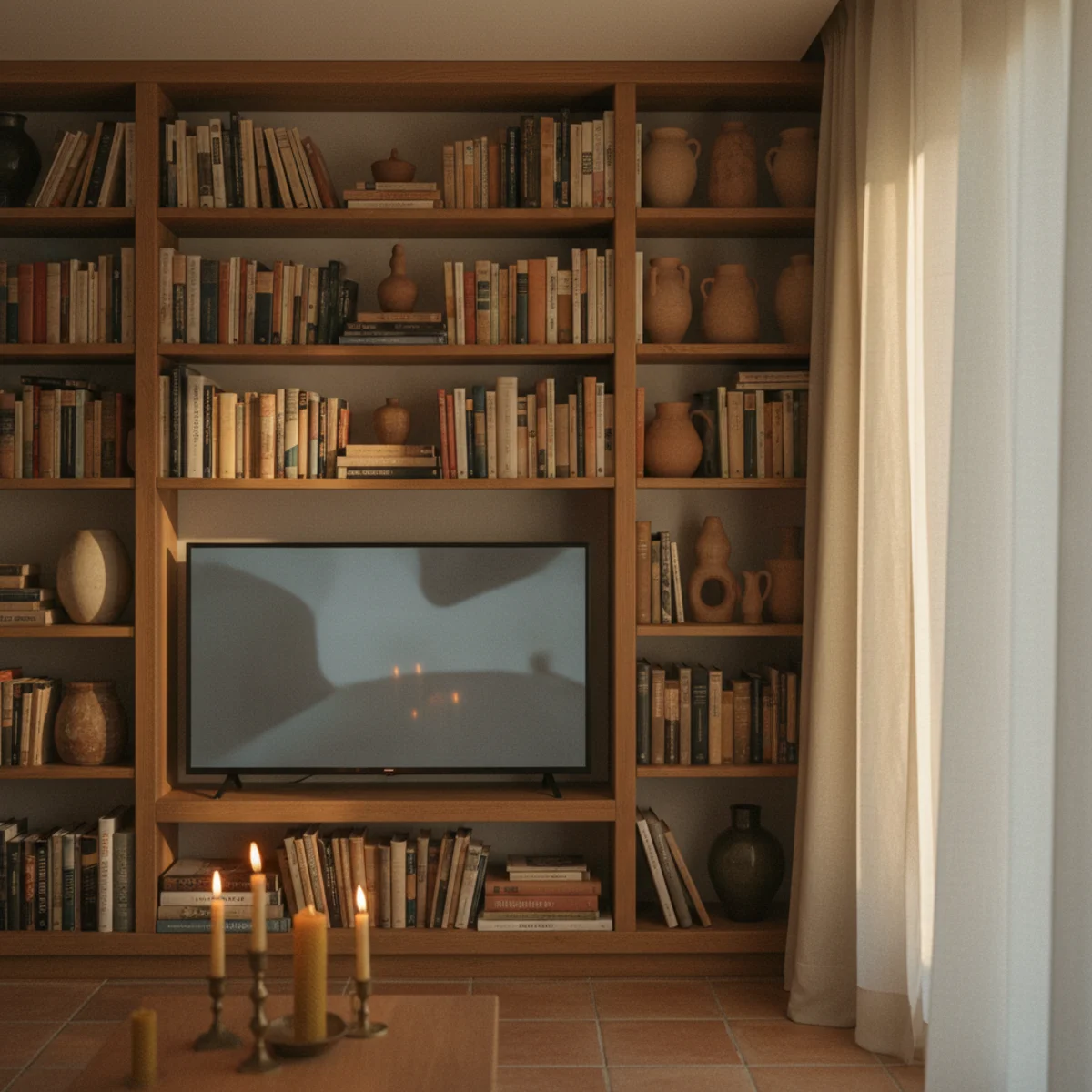
Flanking the TV with floor-to-ceiling bookshelves — real books, small ceramics, plants, and objects — creates the built-in alcove effect that makes the TV read as embedded in architecture rather than mounted on a wall. The books and objects visually compete with the screen at equal scale, reducing the TV's dominance. Cost: $200-600 for shelving units.
Bookshelf TV alcove approach: SHELVING UNITS — IKEA KALLAX or BILLY flanking the TV on each side ($80-200 per unit), stacked to ceiling height if possible. OR custom built-in using plywood and trim at $400-800 for the materials. OR vintage bookshelves from estate sales at $50-200 each. ARRANGEMENT — shelving units positioned directly beside the TV wall, as close to the screen as possible, creating a flanked look. SHELF STYLING — real books in warm earth-tone spines, small ceramics, a trailing plant from the top shelf, framed photographs or small prints, small objects from global travels. The mix of books and objects at the same visual density as the TV screen creates visual competition that reduces the screen's dominance. WARM LAMP ON SHELF — a small table lamp on one of the middle shelves, warm 2700K, positioned so its light casts onto the TV area and surrounding shelves. This lamp is part of both the shelf styling and the TV atmosphere. COLOUR — paint the TV wall and the back of the shelves the same deep warm color (per item 5) for the fully integrated built-in feel.
AFFILIATE SLOTARRANGEMENTIKEA KALLAX or BILLY flanking TV ($80-200 each), floor-to-ceiling; real books + ceramics + plants + small lamp; paint back panels same color as TV wallAdd affiliate URL when configuredWhy it works
Because the human visual system processes the TV screen and the book spines as competing sources of visual information at the same scale — the dense varied pattern of book spines and objects on either side provides enough visual interest at the same horizontal level as the TV that the screen doesn't dominate by default. The blank wall around a lone TV has no competition; the bookshelf wall has continuous visual material that makes the TV one element among many.
Pro tip — Style the bookshelf's middle tier (eye level when seated) most densely — books front-facing, a small plant, one small lamp, one ceramic. The middle tier is the most-viewed from the primary seating; making it the densest tier creates the most visual competition with the TV screen at exactly the right height.
Floor-to-ceiling bookshelves flanking the TV — books and objects at equal scale competing with the screen for visual attention. See also: shelf-styling-ideas
03Lean Art Right Beside It
Leaning framed artwork directly beside or flanking the TV — on the credenza surface, on a small easel beside the console, or hung immediately adjacent to the screen — brings warm art into the TV's immediate visual field and creates the impression of a curated gallery rather than a screen on a wall. The art's warm tones read against the screen's dark surface.
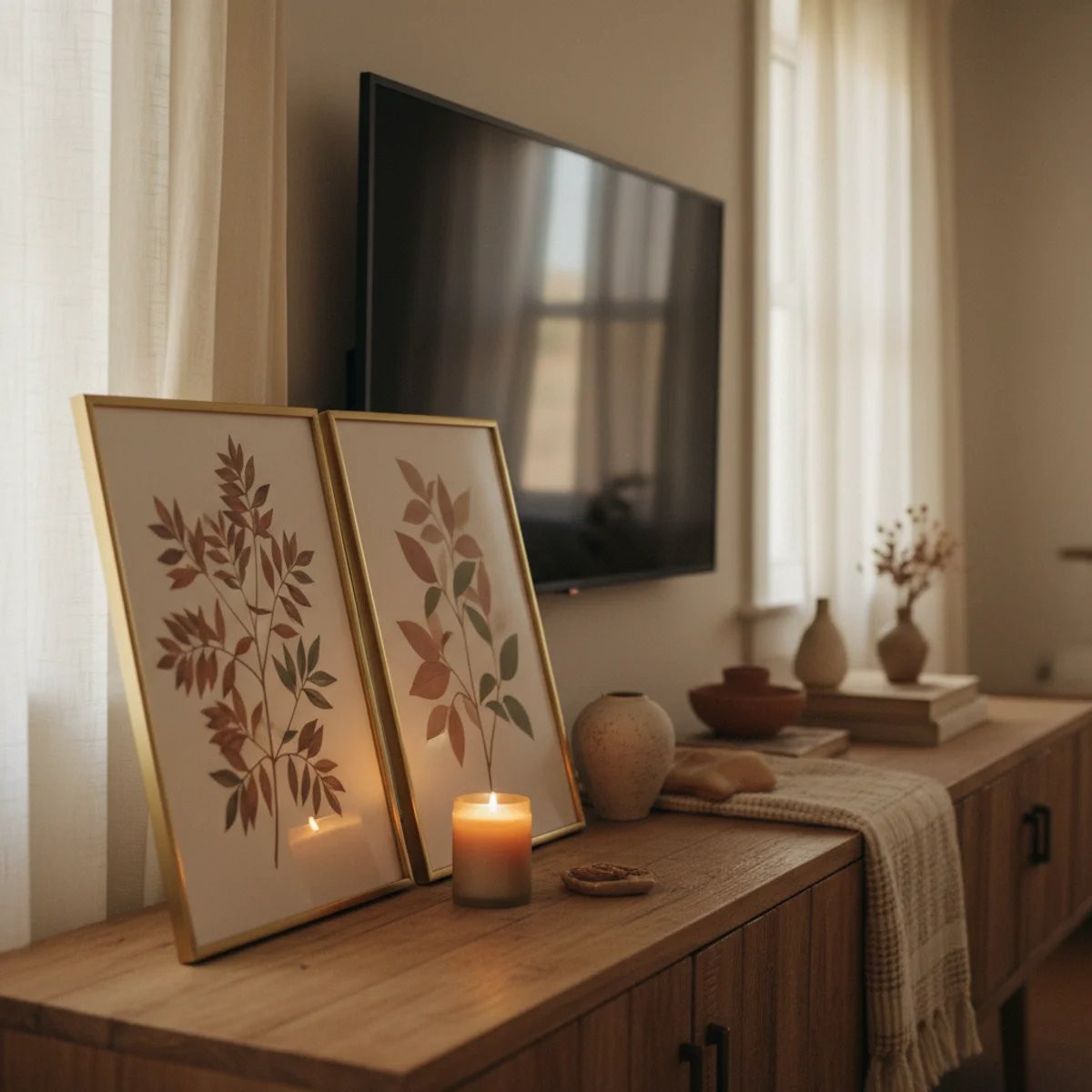
Art placement beside the TV: CREDENZA TOP — lean 2-3 framed prints or small paintings on the credenza surface beside the TV. Frames in aged brass, warm wood, or gilded finish. Sizes: 8x10 to 12x16 inches for credenza leaning. The leaned frames read as casual-collected rather than formally hung. BESIDE THE SCREEN — hang one larger print (16x20 to 20x24 inches) directly adjacent to the TV screen edge, so the art and screen sit at the same wall level. The proximity creates a composed relationship between art and screen rather than a screen floating isolated. ABOVE THE TV (ALTERNATIVE) — a large-scale vintage map or one large botanical print above the TV, extending upward to fill the wall above the screen. Keeps the TV at the bottom of the composition rather than the top. ART CONTENT for TV adjacency — warm-toned pieces specifically: vintage botanical prints, landscape paintings, warm-palette abstract, vintage maps. Cool-toned art (blues, greys) conflicts with the warm room palette; warm art in the screen's immediate visual field reinforces warm character despite the screen's presence.
AFFILIATE SLOTSTYLINGLean 2-3 warm-toned prints in aged brass or wood frames on credenza beside TV; OR hang one larger piece immediately adjacent; warm-palette art specificallyAdd affiliate URL when configuredWhy it works
Because the TV's immediate visual field is what the eye processes as the TV's context. Art that's 6 feet away reads as separate room decor; art leaned directly beside the TV reads as the TV's designed context. The warm art in the screen's immediate context says 'this is a designed area' rather than 'this is where the TV is.' Proximity is what makes the art's warming effect apply specifically to the screen's reading.
Pro tip — Use the TV-off screen as the backdrop for a leaned art arrangement when the TV is off — set up the credenza top art arrangement so it reads beautifully against the dark off-screen. The dark screen is a better backdrop for warm-toned art than most painted walls; it makes the warm gold, rust, and cream tones in the art pop forward.
Warm botanical prints leaned beside the screen — art in the TV's immediate visual field creating designed context rather than isolated appliance. See also: gallery-wall-ideas
04Add a Trailing Plant at the Corner
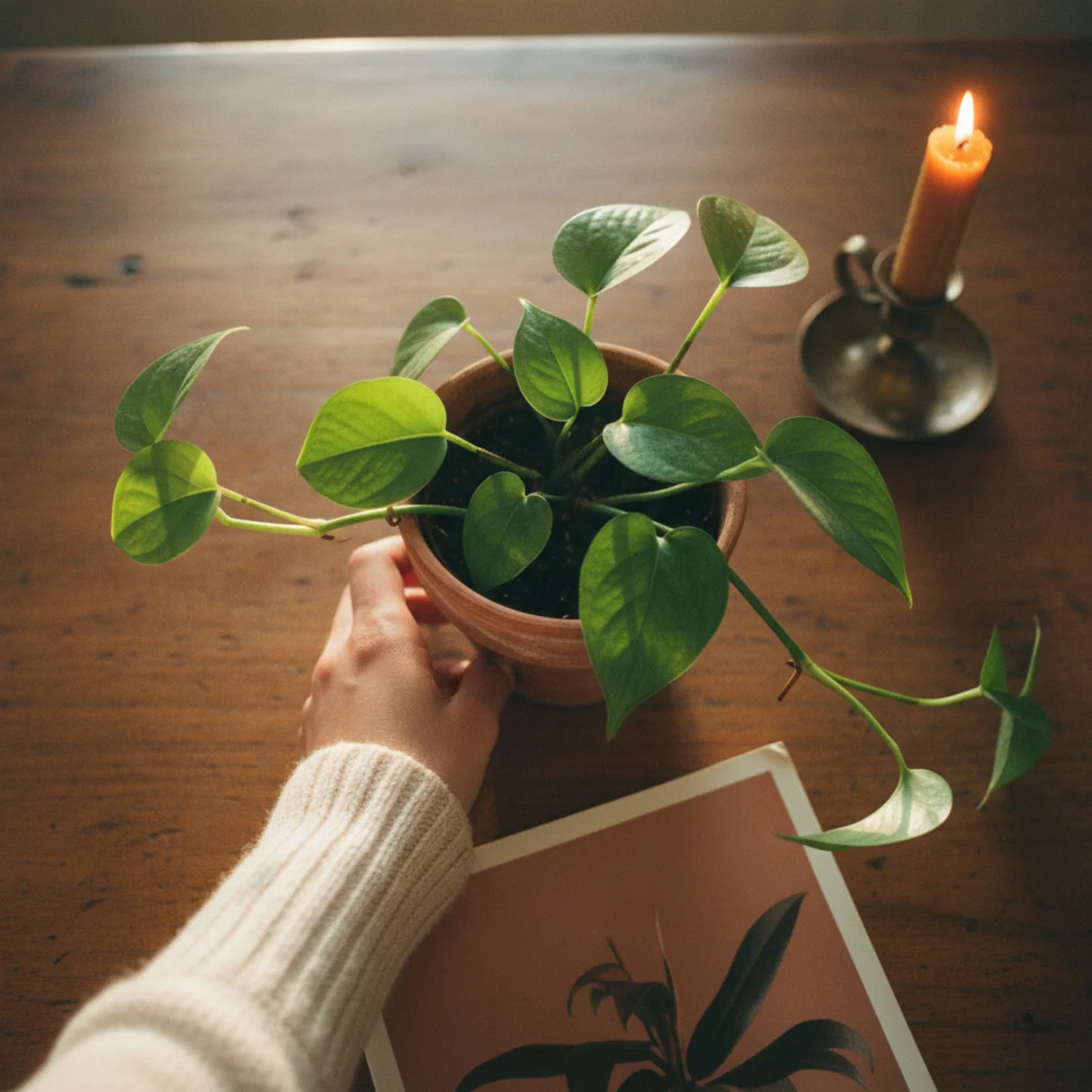
A trailing plant — pothos, philodendron, or string of pearls — positioned at one side of the TV arrangement (on the credenza, hanging from a nearby shelf, or in a floor plant at corner position) adds organic life to the screen's immediate context. The trailing vine softens the TV's hard geometric edges with organic movement.
Plant placement near TV: TRAILING PLANT ON CREDENZA — a small pothos in a terracotta pot at one end of the credenza, with trailing vines spilling toward the TV and away from it. After 4-6 weeks of growth, the vine creates a soft organic frame at the credenza level. FLOOR PLANT BESIDE TV WALL — a medium snake plant or small monstera in a terracotta pot at the corner of the TV wall. 2-3 feet tall, positioned so its leaves partially overlap the TV's visual field from angles. HANGING PLANT ABOVE TV AREA — a hanging pothos or philodendron from a ceiling hook above and to one side of the TV, with trailing vines falling beside the screen. Creates vertical organic element in an otherwise very horizontal composition. CARE CONSIDERATION — plants near televisions are typically away from windows (TVs are on interior walls). Choose low-light tolerant plants: pothos (most forgiving), ZZ plant, snake plant. VISUAL PRINCIPLE — the plant's organic form is the maximum contrast to the screen's rectangular geometry; this contrast is what makes the plant specifically effective in the TV's immediate context.
AFFILIATE SLOTORGANICTrailing pothos or philodendron on credenza end ($6-15), OR floor snake plant at TV-wall corner, OR hanging pothos above; low-light tolerant; terracotta potAdd affiliate URL when configuredWhy it works
Because the television is the room's most geometrically rigid element — a precise rectangle of dark glass — and the trailing plant is the room's most organically irregular element. The contrast between these two extremes (rigid geometry + organic irregularity) creates visual balance that neither achieves alone. The plant says 'this is a living room with a television' where the unaccompanied TV says 'this is a room defined by its television.'
Pro tip — Position the plant so trailing vines grow toward the TV rather than away from it over the first few months — plants grow toward light, and a plant positioned with the light source on the TV side will trail its longest vines toward the screen. The vine growing toward (and eventually past) the screen edge creates the most-organic TV integration effect naturally.
Trailing pothos at credenza end growing toward the screen — organic irregularity contrasting the TV's rigid geometry. See also: indoor-plant-corner
05Paint the TV Wall a Warm, Deep Color
Painting the TV wall a warm deep color — deep terracotta, navy, forest green, or warm charcoal — makes the dark TV screen recede into the wall rather than popping forward against a light background. Against a light cream wall, the dark TV screen reads as a dark object in a light field; against a deep-colored wall, the dark TV is barely distinguishable from the wall at normal room lighting levels.
TV wall paint options: WARM CHARCOAL — Farrow & Ball Off-Black 57 or BM Kendall Charcoal HC-166. The dark warm charcoal makes a dark TV screen nearly invisible against the wall when off. The warmest dark option. DEEP NAVY — F&B Hague Blue 30 or SW Naval SW 6244 (per navy-decor-warm principles). The TV's dark screen nearly matches deep navy; the TV reads as part of the wall. DEEP TERRACOTTA — BM Pottery 1297 or F&B Red Earth 64 at its darkest. Rich warm and the TV's dark screen contrast is warm-earth rather than dark-against-light. FOREST GREEN — F&B Calke Green 80 or BM Newburyport Blue HC-155 adjacent. EXECUTION — paint only the TV wall (accent wall) for maximum impact with minimal commitment and cost ($80-130 in paint). SURROUNDING WALLS in warm cream. SHELVING BACKS (if building flanking shelves) in the same deep color — this creates the fully-integrated built-in effect. WARM LIGHTING REQUIREMENT — any deep wall color requires warm 2700K lighting. A warm deep wall under cool overhead lighting reads as dark and oppressive; under warm lamp lighting it reads as enveloping and rich.
AFFILIATE SLOTCOLORWarm charcoal (F&B Off-Black 57), deep navy (F&B Hague Blue 30), or deep terracotta (BM Pottery 1297) on TV accent wall; cream surrounding walls; 2700K lighting essentialAdd affiliate URL when configuredWhy it works
Because the TV screen at rest is dark — dark glass, dark border, dark panel — and a light wall creates maximum contrast between the dark screen and the light wall surface, making the screen read as a prominently dark object. A dark warm wall minimizes this contrast; the screen nearly disappears into the wall when off and reads as slightly darker rectangle within a generally dark wall field when on. The color-matching-to-screen principle turns the TV's dark quality from a visual liability into a visual non-event.
Pro tip — Test the proposed wall color at full room dimensions before committing — paint a 24x36 inch sample area on the actual wall and assess the color against the TV (both on and off) under your specific warm lighting for 2-3 days. The TV-on versus TV-off color read reveals whether the screen disappears appropriately into the dark wall or still reads as prominent.
TV on warm charcoal wall — dark screen nearly invisible in the dark wall field rather than prominent object on light background. See also: warm-paint-colors
06Hide Every Visible Cord
Visible TV cords — HDMI cables, power cord, streaming box wire, soundbar cable — are the single most-impactful visual problem in any TV arrangement. One visible cord reads as appliance; zero visible cords reads as architecture. Hiding every cord costs $20-60 and converts the TV setup from functional to finished.
Complete cord concealment approach: IN-WALL CABLE KIT — the cleanest solution. A recessed wall plate system routes cords through the wall from the TV mounting position to the outlet below. $20-40 from DataComm or similar at Amazon or hardware stores. Requires one 2.5-inch hole behind TV and one behind the console. No electrical work needed; not a permanent installation. CORD COVER RACEWAYS — paintable plastic channel covers that mount on the wall surface and hide cord bundles. Paint to match wall color for near-invisible cord management. $8-20 from hardware stores. For the single-cord-from-TV-to-outlet run. CABLE CHANNEL ALONG WALL — flat adhesive cable channel (Wiremold) along the baseboard, routing all cords along the baseboard edge from TV area to outlet. $15-30. CORD ELIMINATION — cut the number of cords by eliminating devices: streaming sticks plug directly into TV USB port (no power adapter cord), soundbar connected via single optical or HDMI-ARC cable. Wireless HDMI eliminates most HDMI cables. THE RESULT — a TV with zero visible cords, mounted over a console, reads as an architectural element rather than as an appliance. The cord-elimination is the architectural conversion step.
AFFILIATE SLOTTECHNICALIn-wall cable kit ($20-40) OR cord raceway painted wall color ($8-20) OR baseboard cable channel ($15-30); eliminate unnecessary devices and cords firstAdd affiliate URL when configuredWhy it works
Because cords are the primary signal of appliance rather than architecture — they trail away from the device toward a power source, showing the device's dependence on external power and signaling 'plugged in' rather than 'installed.' Architecture is built into the wall; appliances are plugged into the wall. Hiding the cords conceals the appliance signal and allows the warm-room design choices (deep wall color, flanking shelves, trailing plant) to read as the dominant visual language rather than the utilitarian cord.
Pro tip — Use velcro cable ties ($5-10 for a pack of 20) to bundle and manage cords behind the console before routing to the outlet — the bundle reads significantly neater than individual cords regardless of whether they're visible, and makes the routing into a cord raceway or in-wall kit cleaner. Bundle first, then route.
Zero visible cords — the architectural conversion that no amount of styling around visible cables can replicate. See also: cozy-living-room-ideas
07Put a Warm Lamp Beside the Screen
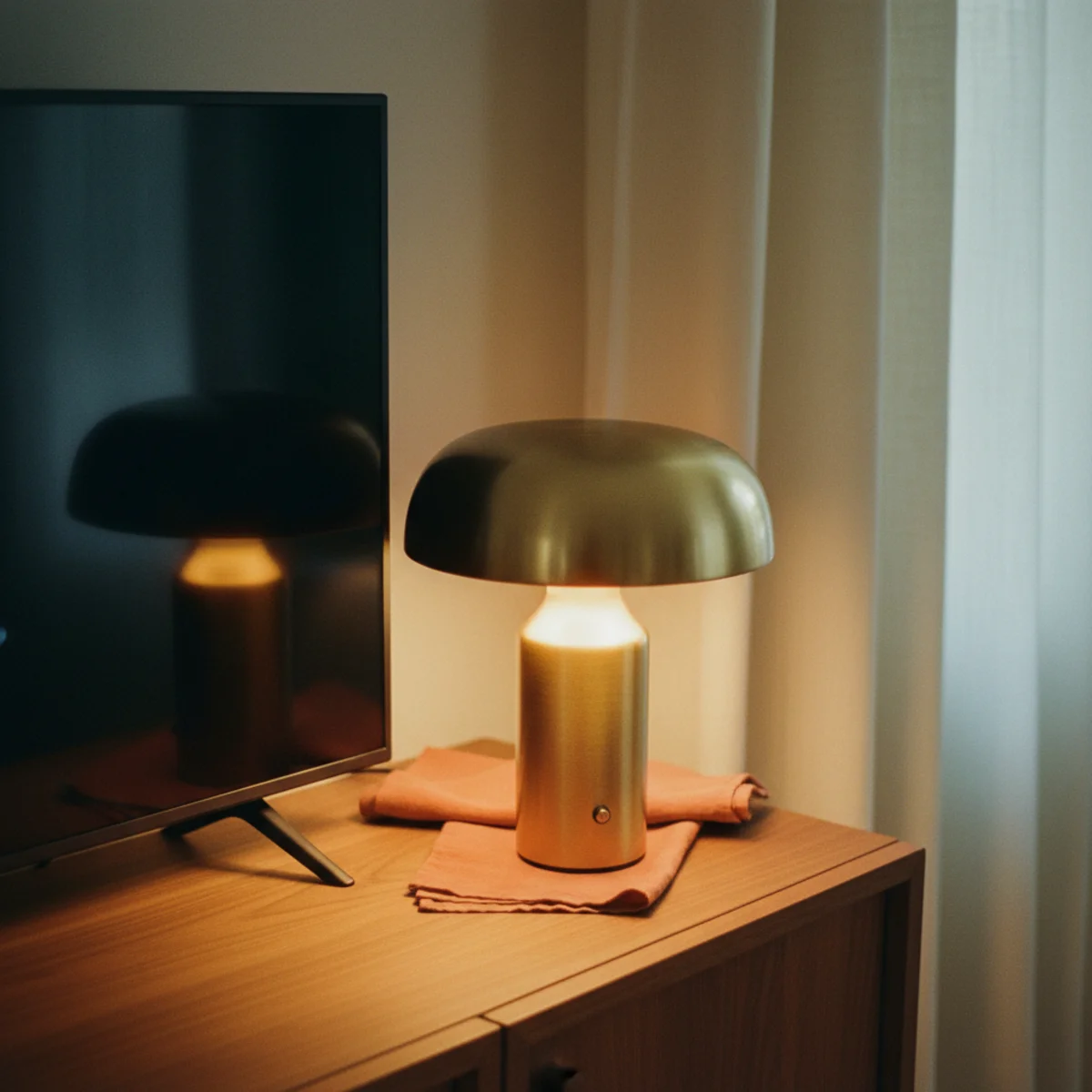
A warm table lamp at one side of the TV — on the credenza surface beside the screen, on a side table adjacent to the TV wall, or on a flanking bookshelf — provides warm ambient light in the TV's immediate visual field. The warm lamp glow beside the dark screen is the most-atmospheric TV viewing setup and visually integrates the TV into the warm room rather than making it a cold screen in a warm space.
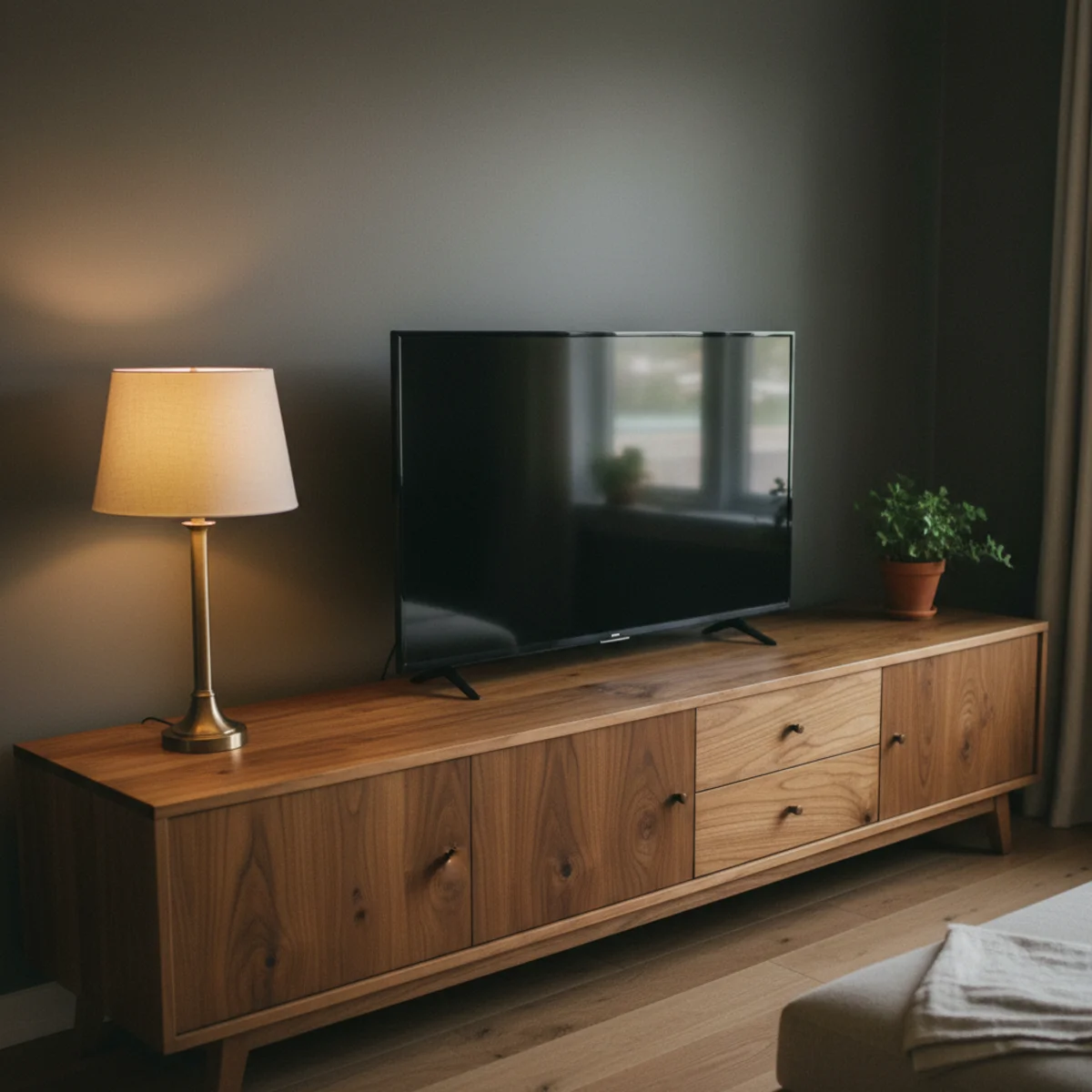
Warm lamp beside TV specifications: POSITION — on the credenza top 12-18 inches from the TV edge, OR on an adjacent side table at approximately TV height, OR on the middle shelf of a flanking bookcase. LAMP TYPE — small to medium table lamp with warm ceramic or brass base and natural linen shade. 40-60 watt equivalent warm LED (2700K) in the shade. $30-80 for a basic warm lamp, $60-200 for quality vintage or well-designed new lamp. VINTAGE BRASS TABLE LAMP — a vintage brass lamp from an estate sale at $20-60 is ideal: the aged patina next to the TV's modern material creates a warm material contrast. LIGHT LEVEL — the lamp should be on at medium-low intensity (smart plug dimmer or lamp dimmer) during TV viewing, creating a warm halo in the TV's immediate zone without producing glare on the screen. THE BIAS LIGHTING PRINCIPLE — a warm lamp behind or beside a TV reduces eye strain during viewing (the ambient light reduces the contrast between the bright screen and the dark room) and specifically warms the screen's visual context. The lamp is both functionally beneficial for TV viewing and aesthetically beneficial for warm room integration.
AFFILIATE SLOTLIGHTINGSmall brass or ceramic table lamp on credenza beside TV; 2700K at 40-60W equivalent; dimmed to medium-low during viewing; vintage brass from estate sales at $20-60Add affiliate URL when configuredWhy it works
Because the TV screen is the room's brightest element during viewing, and its high-contrast isolation in a dark room produces the visually cold 'movie theater' effect. A warm lamp at low intensity in the same zone creates ambient warmth around the screen, reduces the contrast, and makes the TV viewing feel like warm-room activity rather than like watching a cold screen in a dark space. The lamp earns its place twice: once for the aesthetic (warm visual context for the screen) and once for the function (reduced eye strain, more comfortable viewing).
Pro tip — Use a smart plug on the TV lamp to automatically turn it on when the TV turns on — a smart plug ($10-25) with a power-detection feature turns on the warm lamp whenever the TV is drawing power. The automation means the warm lamp is always on during TV viewing without any manual intervention.
Warm brass lamp beside the screen at medium-low — warm halo converting cold screen into warm-room viewing. See also: best-lamps-warm-light
08Choose a Soundbar That Matches the Console
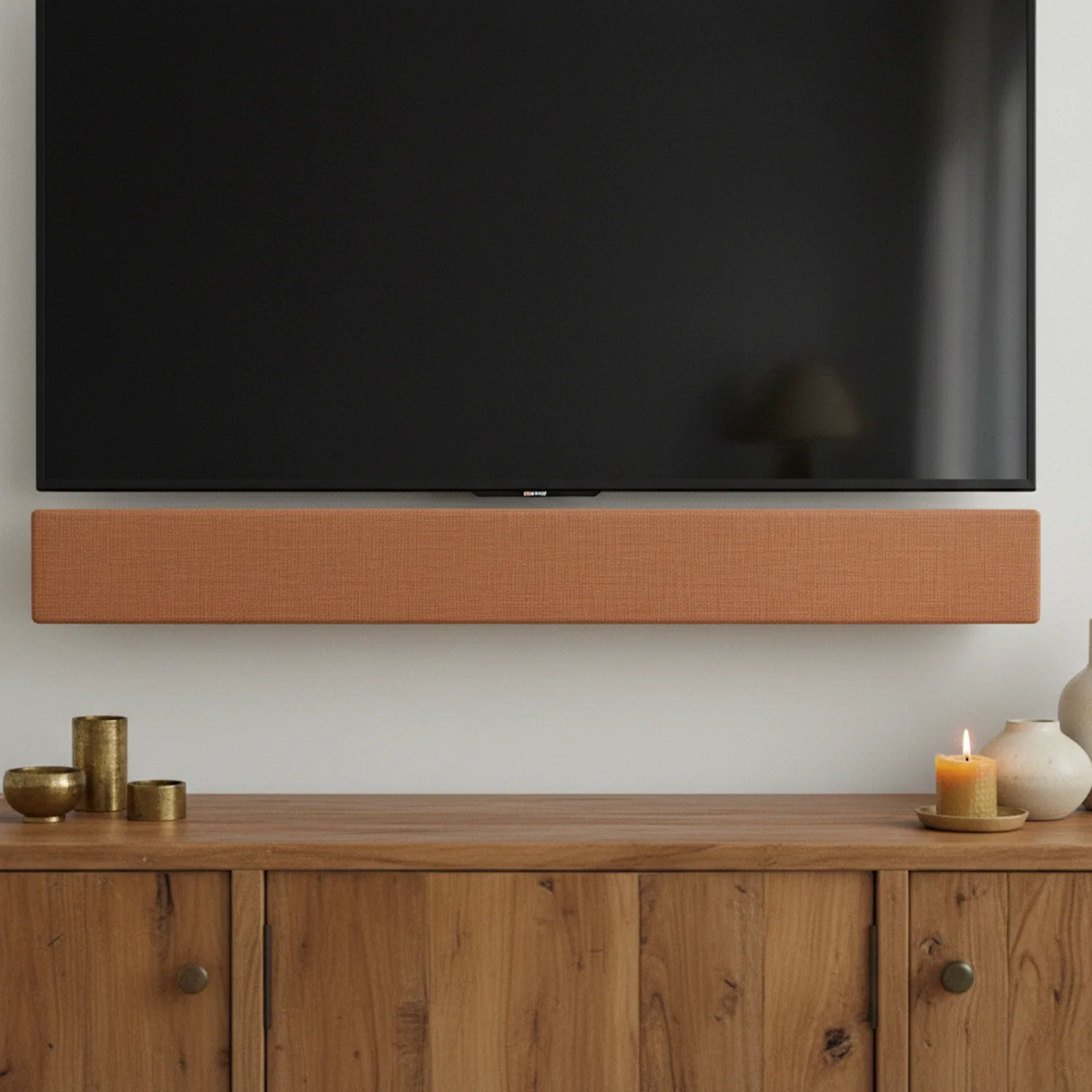
A soundbar — the most-commonly added TV accessory — should match the console's material language rather than the TV's technical aesthetic. A warm wood-veneered soundbar or a fabric-grille soundbar on a walnut credenza reads as part of the furniture composition; a glossy black or silver technical soundbar reads as another appliance on top of appliances.
Soundbar selection for warm room integration: WOOD VENEER SOUNDBARS — Sonos Arc and Sonos Beam in white or black, OR third-party soundbars with wood or fabric finishes. The Sonos white with cream or light wood credenza reads integrated. FABRIC GRILLE SOUNDBARS — some Bose and Yamaha soundbars have fabric grilles (available in cream or warm fabric covers) that read less technical than hard plastic. PLACEMENT — soundbar mounted below the TV screen (against the wall, above the credenza), NOT placed on top of the credenza between objects. Mounting below the screen keeps the credenza top clear for the warm objects (lamp, plants, leaned art). MATCHING PRINCIPLE — the soundbar should visually match the credenza: black soundbar on dark walnut credenza (same dark tone family), white/cream soundbar on light wood credenza (same light tone family). A mismatched soundbar (all-white soundbar on dark credenza) reads as a cold technical object. ALTERNATIVE — no soundbar. Modern TV audio has improved significantly; for casual viewing in small rooms, the TV's built-in speakers may be adequate. Removing the soundbar eliminates one more object from the credenda composition.
AFFILIATE SLOTACCESSORIESWood-veneer or fabric-grille soundbar matching credenza tone; mounted below TV not on credenda top; OR consider eliminating soundbar for simplified arrangementAdd affiliate URL when configuredWhy it works
Because the soundbar sits in the TV arrangement's primary visual zone — the credenda top between the TV and the warm objects. A soundbar that matches the credenda tone reads as part of the furniture; a soundbar that reads as separate technical equipment adds another cold technical object to a composition trying to minimize cold technical objects. The soundbar is the detail that separates a carefully integrated TV arrangement from a carefully styled room with an unstyled soundbar.
Pro tip — Place the soundbar in front of the credenda rather than on top of it — a soundbar positioned slightly in front of the credenda's leading edge, flush with the credenda face, reads as an architectural element of the credenda rather than as an object placed on the credenda. The positioning distinction reads as integrated versus placed.
Fabric-grille soundbar matching the walnut credenza — one more technical object integrated into the furniture composition. See also: cozy-living-room-ideas
How to set up a cozy TV layout step by step
Set the screen to the seat, not the wall's midpoint. Work in this order.
- 1Set the seating distance and angle
Place your main sofa a comfortable distance from the screen — roughly 1.5 to 2.5 times its diagonal — and square to it. In a small room this usually means the sofa on the opposite wall.
- 2Mark eye-level height
Sit where you'll watch, look straight ahead, and mark the wall. The center of the TV goes there — typically around 42 inches up. Resist mounting higher.
- 3Plan the cord route before drilling
Decide whether cords run in-wall or through a surface channel, and locate the outlet, before mounting anything. Retrofitting cord-hiding is the part everyone regrets skipping.
- 4Style the surround last
Once the screen is up and cords are gone, build the vignette — console, books, art, plant, lamp — so the TV becomes one element among several.
Quick tips
- Tilt the mount slightly down if you had to go even a little high; it eases the angle and cuts ceiling-light glare.
- Keep remotes in a small tray or inside a storage ottoman so surfaces stay clear.
- If you rent, a low media console plus leaning-art surround gives almost the whole mounted look with zero holes.
- Match the soundbar length to the credenza so the setup reads as one band.
- Use a matte screen or matte wall paint to kill daytime reflections.
- Group the styling objects in odd numbers so the surround reads composed, not symmetrical.
TV layouts for different small rooms
Mount the TV on a short wall and keep the sofa square to it down the length; avoid a corner mount that pulls the eye diagonally.
Skip the wall mount: a low media console plus leaning art and a trailing plant fakes the built-in look without a single hole.
A console that doubles as a room divider can hold the TV on one side and face the bed away from it.
Position the screen perpendicular to the window, not opposite it, so daylight doesn't wash out the picture.
The goal isn't to hide the television. It's to stop it from being the only thing in the room.
Frequently asked questions
How do I make a TV look good in a living room?+
How high should I mount my TV?+
What color should I paint the TV wall?+
How do I hide TV cords?+
What furniture should I put under a TV?+
Bring the screen down to eye level, hide the cords, and build a warm little world around it — a low console, some books, a plant, a lamp. We'd mount it over a thrifted credenza and lean a print against its edge; guests won't clock the TV until you turn it on. The television was never the problem. A lonely black box on a bare wall was, and that's a ten-minute fix.