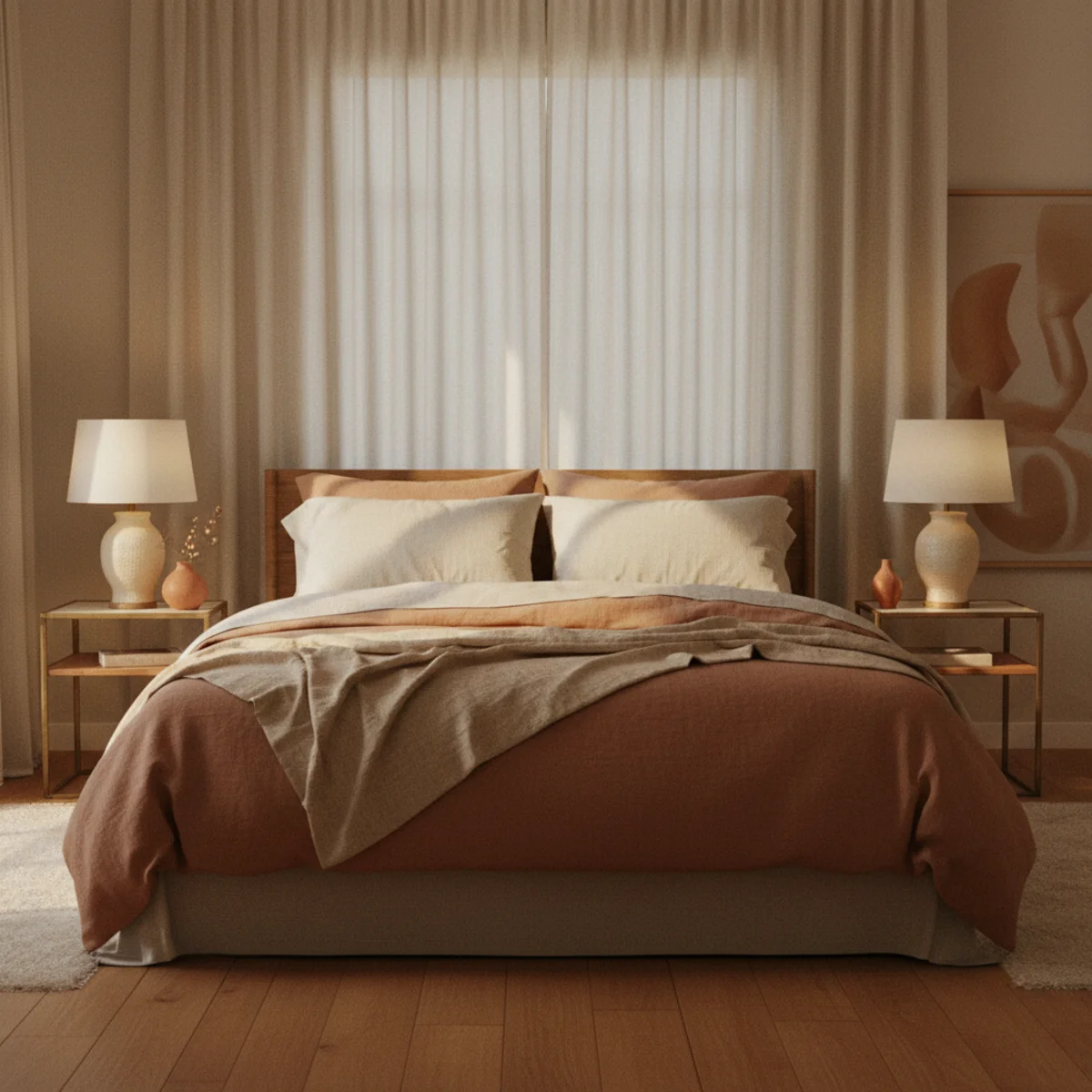
These twelve master bedroom ideas are tested in actual primary bedrooms — rooms between 130 and 300 square feet, with one or two windows, where the same two people sleep every night for years. Every decision below has been made dozens of times in real builds, and the recommendations name the exact bedding weights, lamp heights, paint codes, and rug positions that consistently deliver warmth without going chintzy.
The master bedroom is the only room in a home you spend eight hours a day in with your eyes closed — and another hour with them open before sleep and after waking. That hour of conscious presence is what the room must serve. Photo-worthy beds get the first hour wrong; carefully built bedrooms get it right.
By the end of this guide, you'll know exactly which linen weight to choose, the two bedside lamp heights that fix the most common bedroom lighting failure, the curtain rule that visually doubles a small bedroom's height, and the eight other moves that make a master bedroom read like a sanctuary instead of a showroom.
WHAT'S INSIDE
- The linen GSM (160-180) that's the bedding sweet spot — not too crisp, not too floppy
- Why most bedside lamps are wrong height — and the 22 to 26-inch fix
- The curtain rod placement (4-6 inches below ceiling) that visually raises any bedroom
- Why the room needs one clear surface, not five styled ones
The bedroom is the one room where doing less is the whole strategy. Soften the light, layer the bed, and stop.
— Studio McGee blog [citation needed — verify before publish]
What makes a master bedroom feel like a retreat?
A restful master bedroom is built on subtraction. The signals are consistent: low warm light, layered soft textures, a muted color scheme, and surfaces that aren't fighting for your attention. Where a living room can carry visual energy, a bedroom should release it.
The practical version: get the lighting and bedding right and you're most of the way there. A bedroom with paired warm lamps and washed-linen sheets feels considered even if the rest of the room is plain. Reverse it — beautiful furniture under a cold overhead bulb on scratchy sheets — and no amount of styling rescues it.
More in By Room you may love
See allWhy warm, layered bedrooms are everywhere in 2026
The sleep sanctuary has moved from wellness buzzword to genuine design priority. As more people work from home and screens follow them everywhere, the bedroom has become the one place people actively protect from stimulation — and it shows in how they're decorating it.
The look trending hardest is quiet warmth: washed linen in undyed tones, plaster-like wall finishes, paired vintage lamps, and palettes pulled from nature rather than a paint chip's brightest option. Elle Decor and House Beautiful have both tracked the rise of earthy, low-contrast bedrooms, and there's a clear backlash baked in — against the cold, gray, tufted-headboard bedroom of the late 2010s.
30 master bedroom ideas for a warmer room
01Layer Washed Linen in Undyed Earth Tones
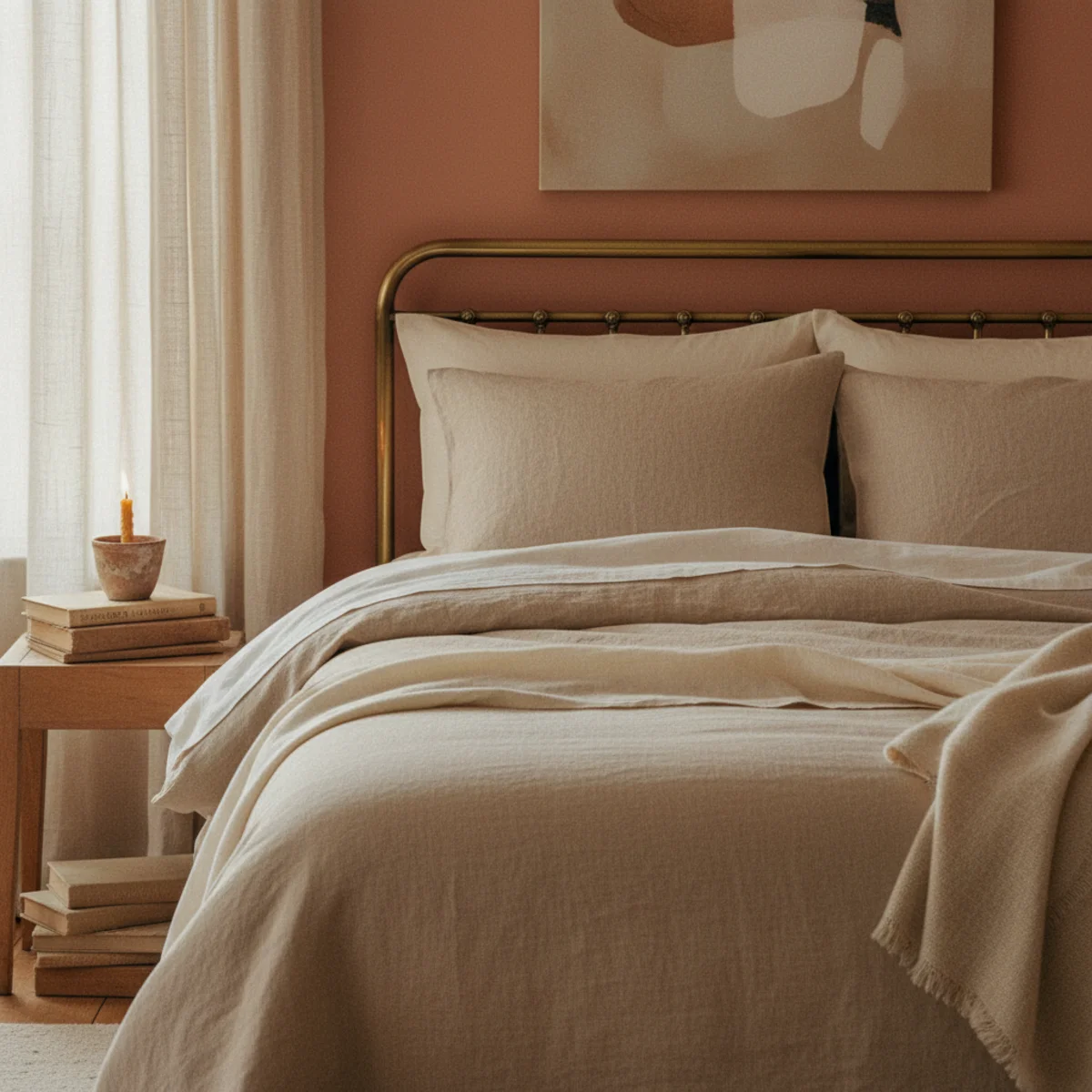
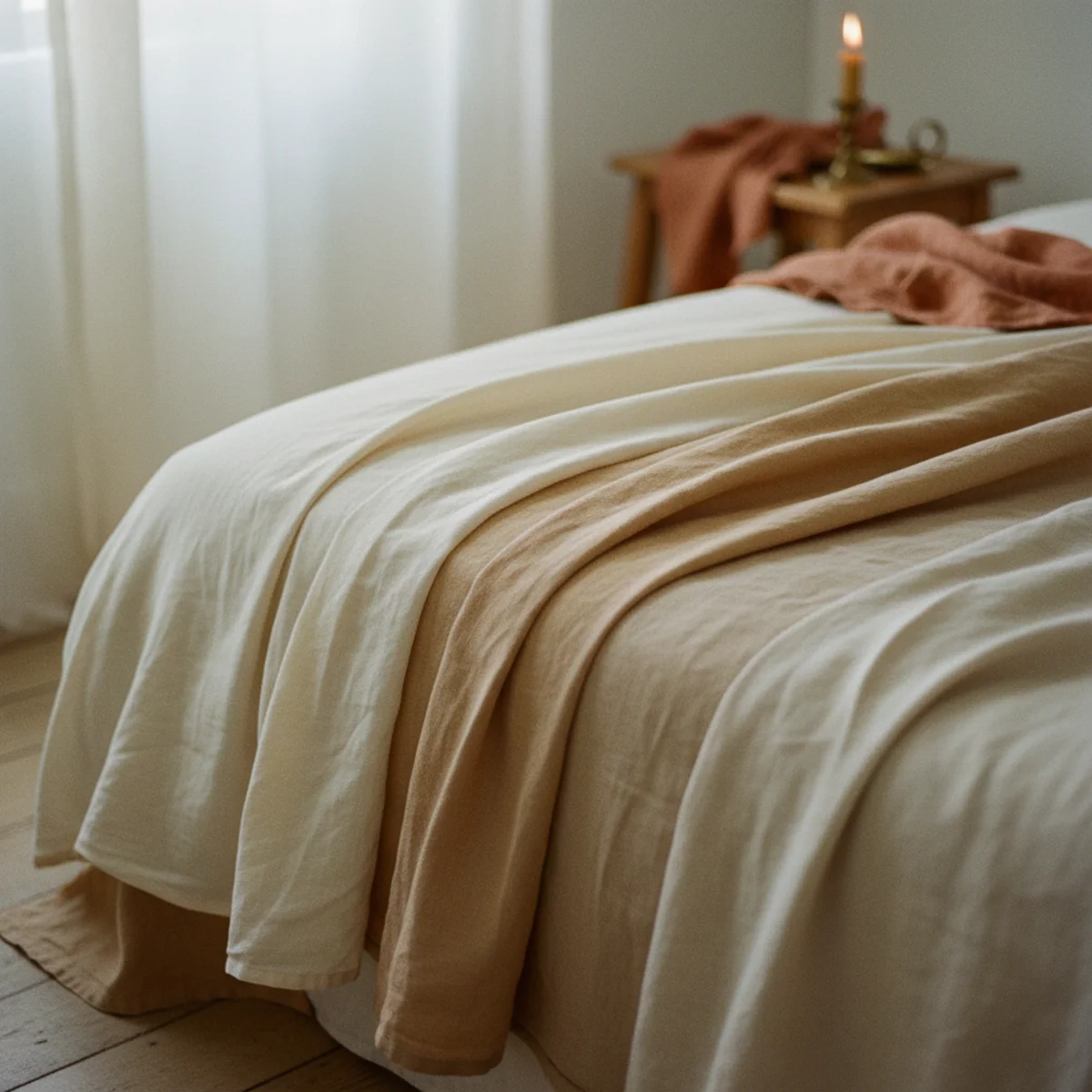
The bedding is the largest visual surface in any bedroom — and the wrong fabric chokes the warmth out of every other decision. Washed linen at 160 to 180 GSM in undyed earth tones (oat, sand, cream, soft clay) is the bedding that delivers warmth, breathability, and the slightly rumpled texture that reads as lived-in rather than commercial. Cotton percale reads crisp and hotel-like; sateen reads slippery; linen reads home.
Look for stonewashed linen at 160 to 180 GSM (medium weight) from Quince ($230 for full set), Coyuchi ($380), Cultiver ($480), or Magic Linen on Etsy ($220-$340). Stick to undyed earth tones — natural oatmeal, sand, soft clay, deep terracotta — and avoid bright whites (read commercial under 2700K lighting) and printed patterns (compete with the rest of the warm-home palette). Layer at minimum: fitted sheet, flat sheet, two pillowcases, one duvet cover. The wrinkles after washing are the entire point; never iron linen bedding.
AFFILIATE SLOTBEDDINGStonewashed linen at 160-180 GSM in undyed earth tones from Quince, Coyuchi, or Magic LinenAdd affiliate URL when configuredWhy it works
Because linen has a soft natural texture and visible weave irregularity that cotton percale and sateen can't replicate — and the texture reads as warmth from across the room. Linen also regulates temperature better (cooler in summer, warmer in winter), which is why hotels never use it (too expensive and unpredictable for daily laundry rotation) and why home bedrooms always should. The trade-off is wrinkles; the trade-up is everything else.
Pro tip — Buy linen one set at a time over several months rather than committing to a full bedding wardrobe at once — your preferences for weight, color, and brand evolve once you sleep on each. The first set tells you whether you actually want all-linen or a linen-and-cotton mix.
Linen at 170 GSM in oat — the bedding texture that makes a bedroom read like a sanctuary. See also: stonewashed linen
02Pair Two Warm Bedside Lamps at the Right Height
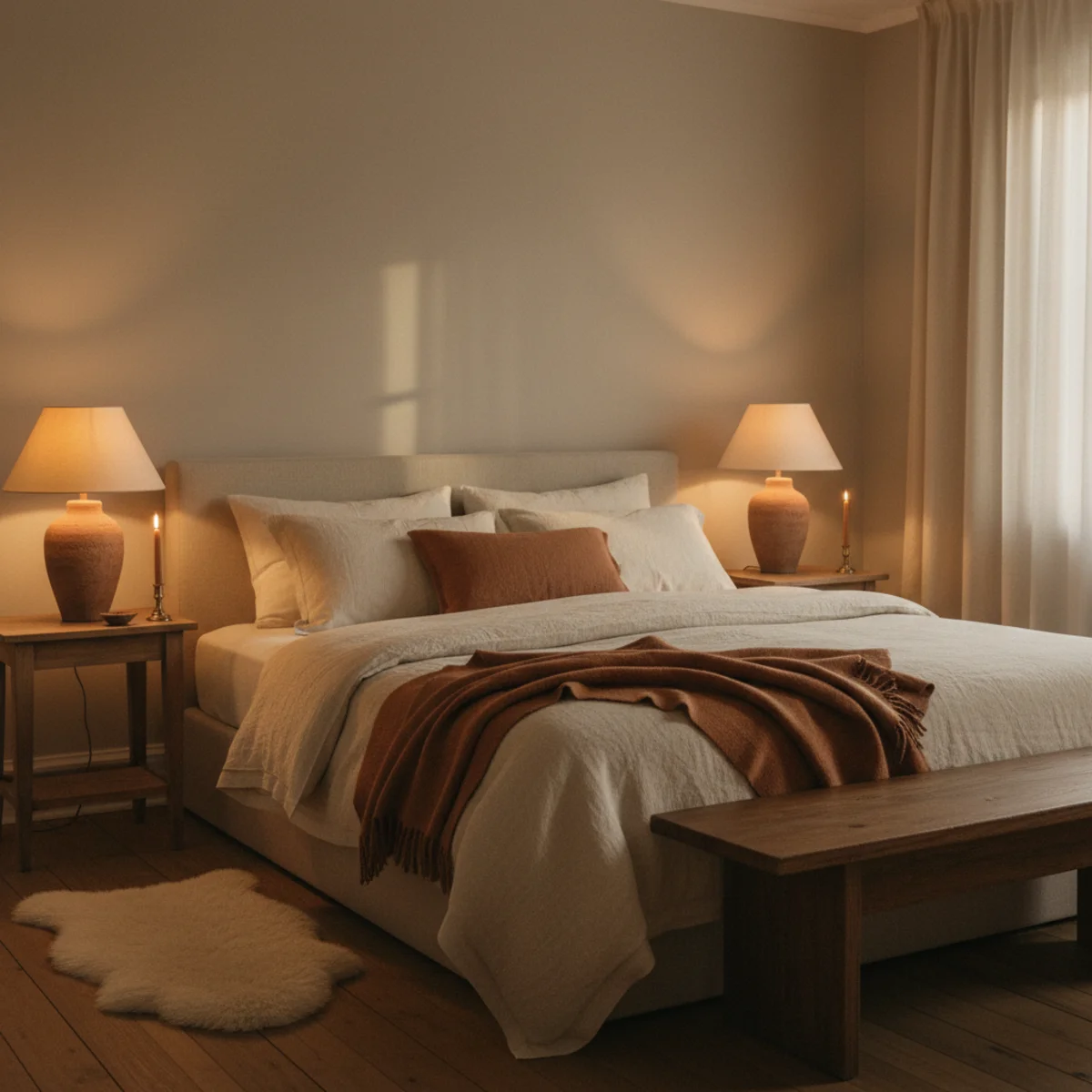
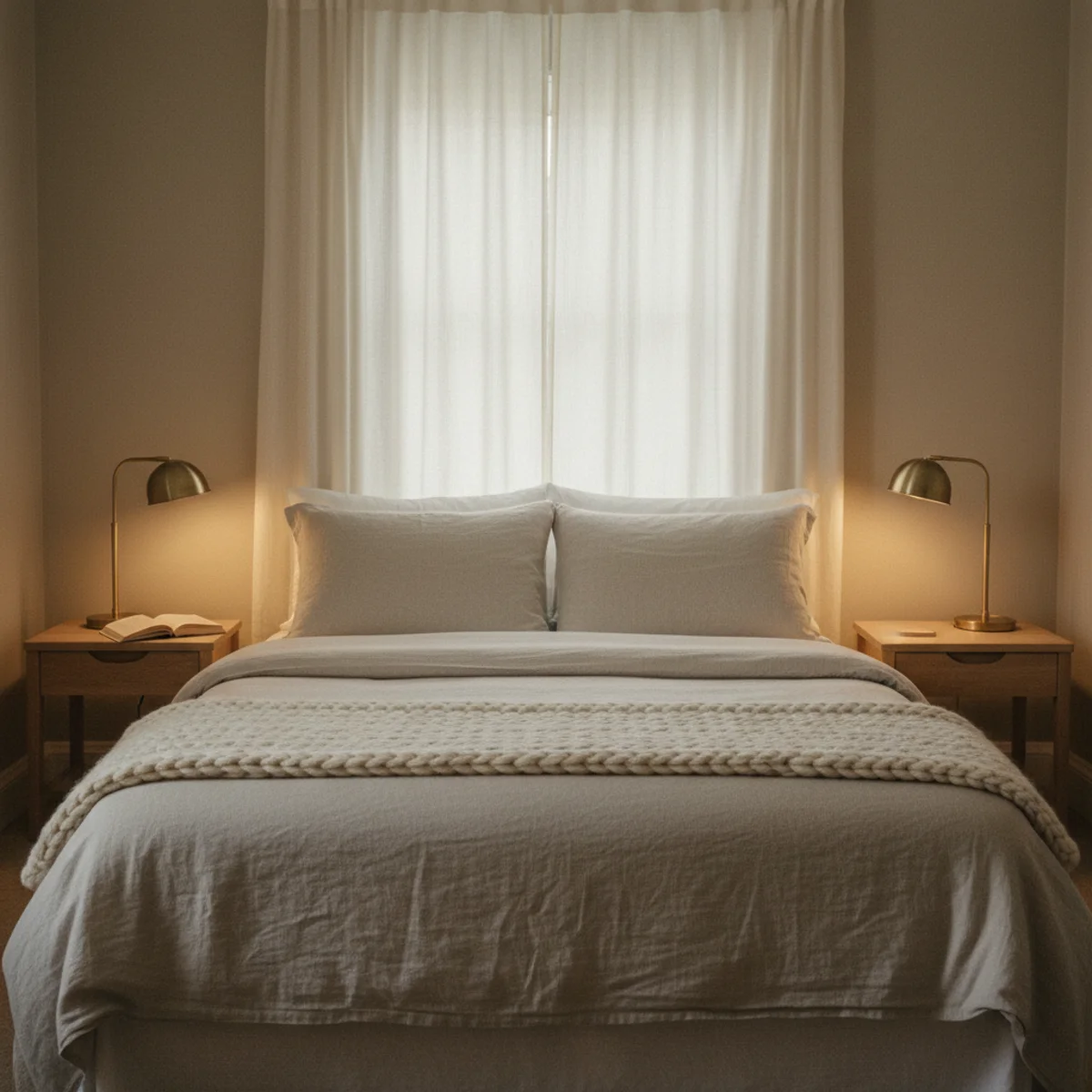
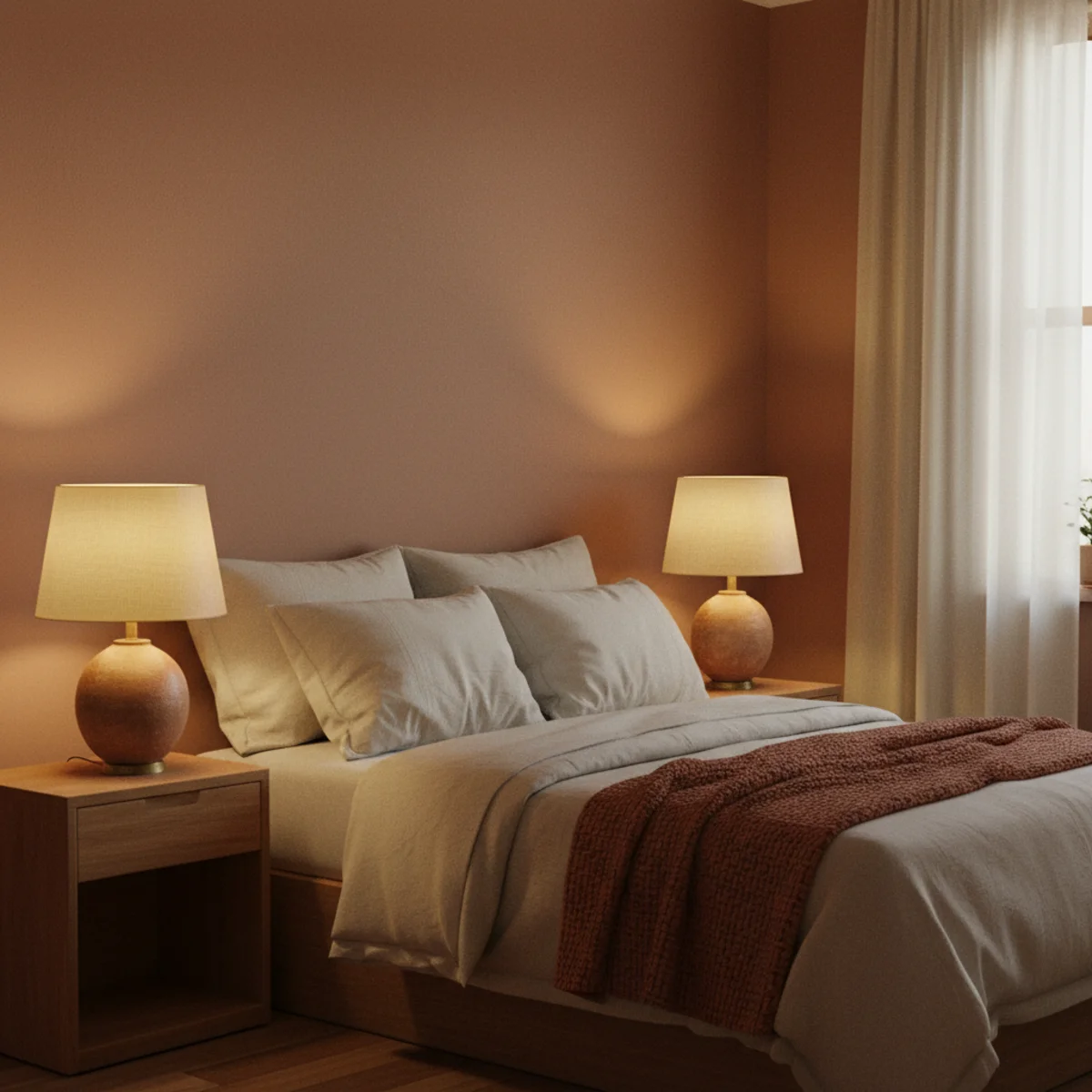
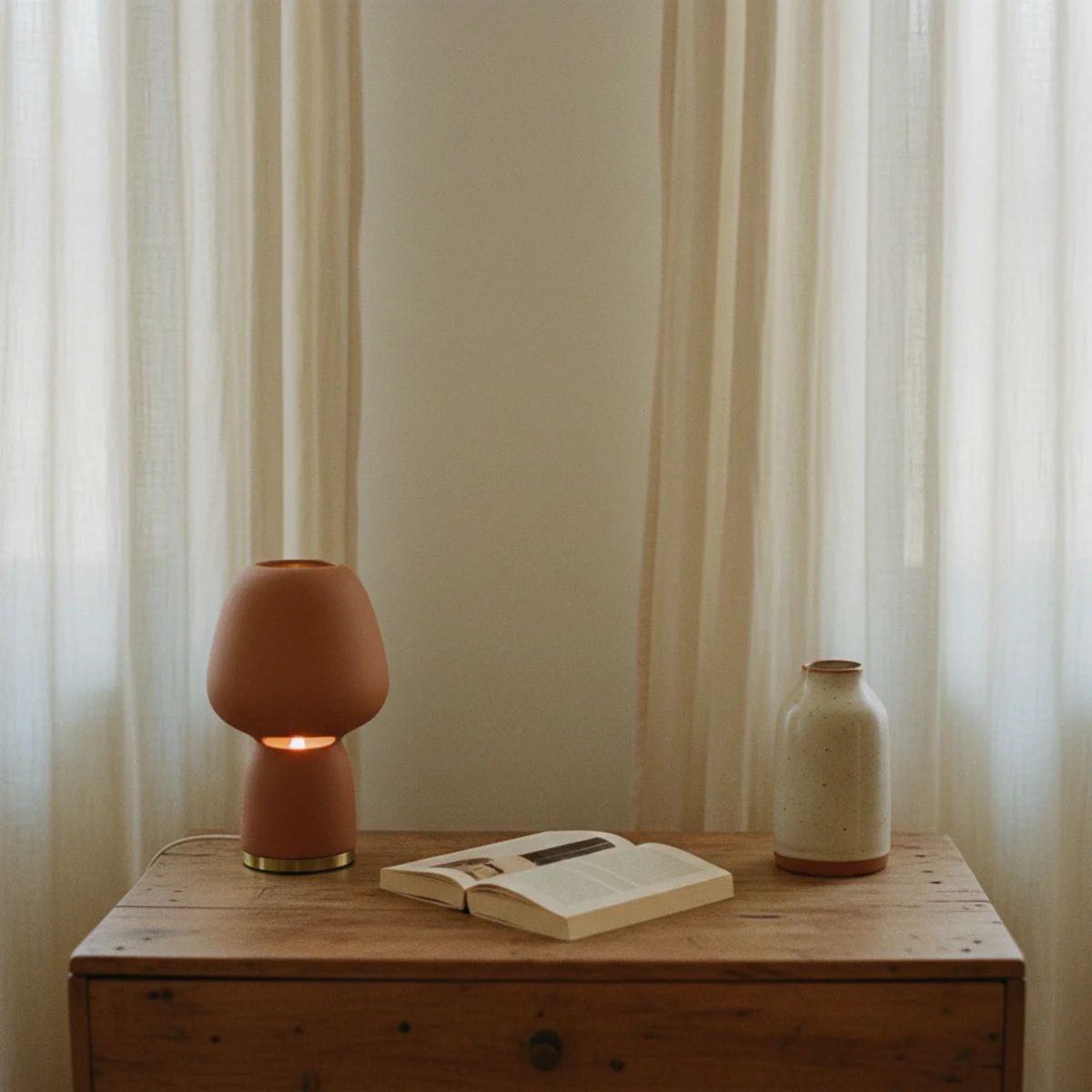
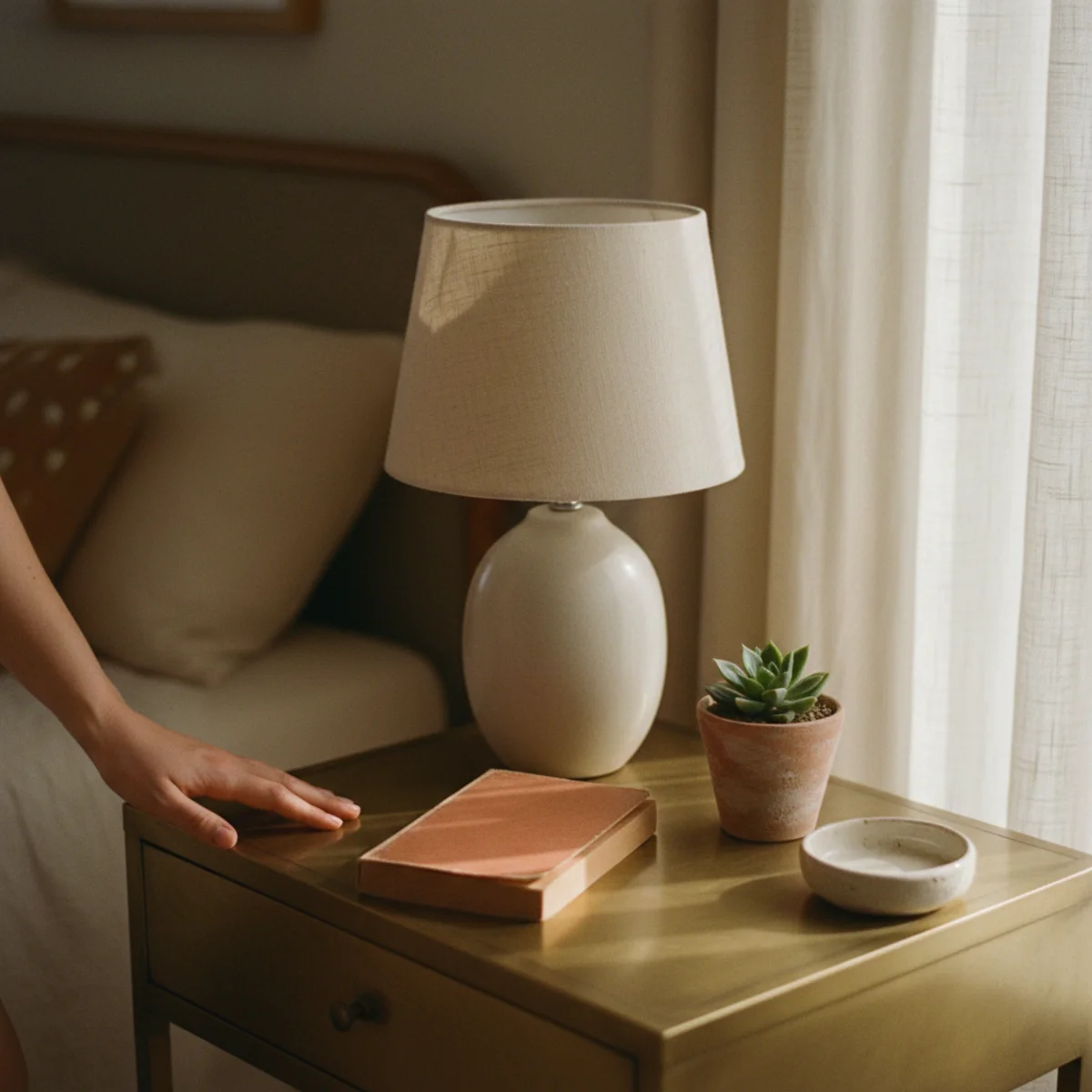
The single most-broken element in most master bedrooms is the bedside lamp — wrong height, wrong color temperature, wrong type entirely. The fix: a matched pair of bedside lamps, both 22 to 26 inches tall, both at 2700K bulbs, both positioned so the shade-bottom is roughly at eye level when sitting up in bed. The pair matters; one lamp creates uneven light, two creates the symmetric warm cocoon that bedrooms need.
Choose lamps 22 to 26 inches tall total (lamp plus shade), with linen, paper, or silk drum shades 10 to 14 inches across. Ceramic, brass, or oak bases. Position the shade-bottom at 50 to 56 inches above the floor when the lamp sits on a nightstand — this puts the bulb just above seated reading eye level. Two matched lamps, both with 2700K LED bulbs at 400 to 600 lumens (warmer and dimmer than living-room lamps). Avoid mounted wall sconces unless they're swing-arm — fixed sconces always end up positioned wrong for someone in the bed.
AFFILIATE SLOTLIGHTINGMatched pair of 22-26 inch lamps with 2700K bulbs at 400-600 lumensAdd affiliate URL when configuredWhy it works
Because reading in bed requires light coming over the shoulder onto the page — exactly like the reading-nook principle — and a lamp at the wrong height either lights the wall behind you (too low, ineffective) or glares into your eyes (too high). The 22 to 26-inch lamp height puts the bulb just above seated-in-bed eye level, with the shade dropping warm light onto the open book in your lap. Most bedside lamps fail at this; the fix is non-negotiable.
Pro tip — If your bedside lamps are on opposite sides of the bed and one partner reads while the other sleeps, install a smart plug on each lamp so the reading partner can dim or turn off without disturbing the sleeper. The $15 per smart plug is one of the highest-ROI bedroom upgrades available.
Two lamps, same height, same warm bulb — the symmetric cocoon every bedroom needs. See also: 2700K LED
03Hang Curtains High in Heavy Linen Panels
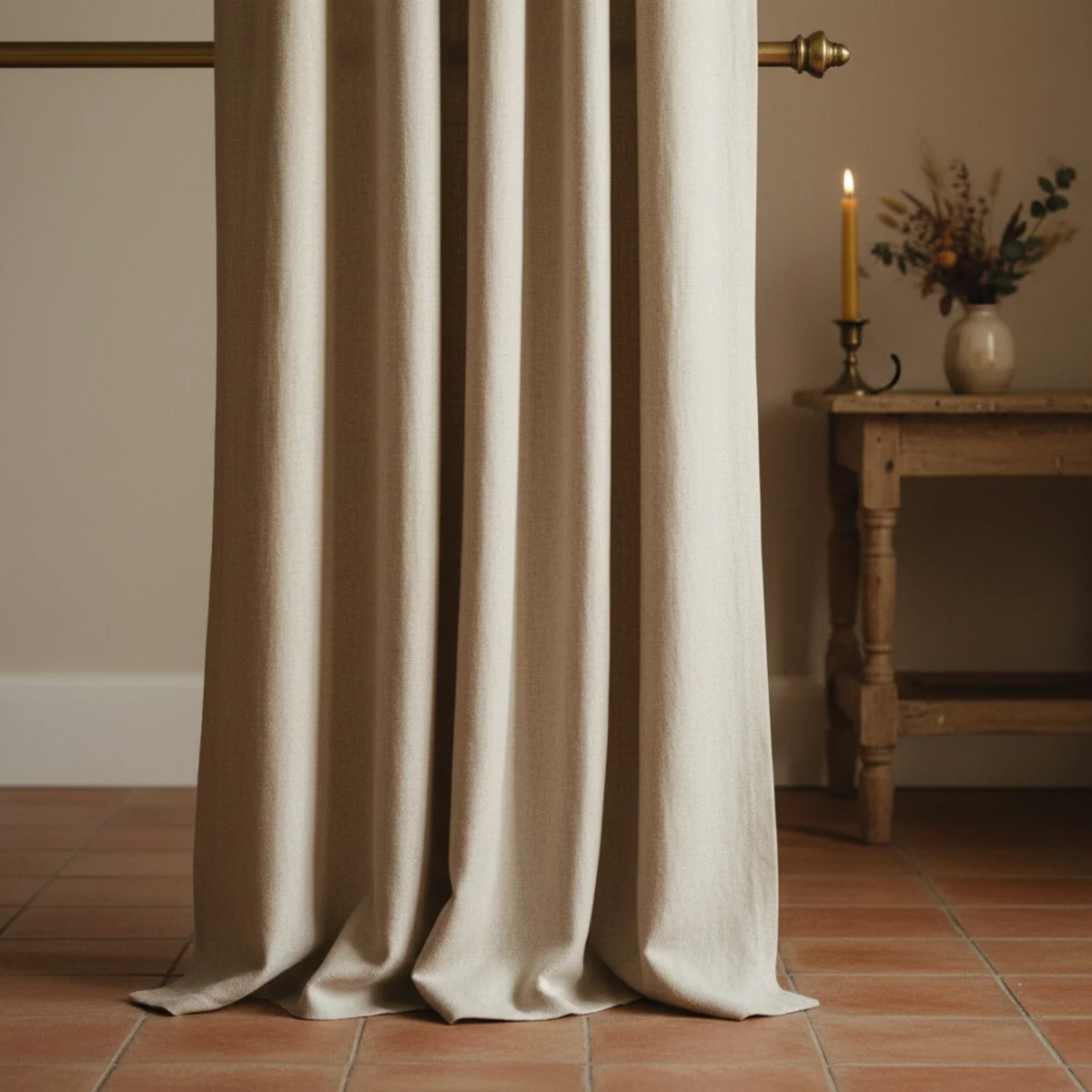
The single biggest visual upgrade for any master bedroom is hanging curtains higher and longer than you think — rod 4 to 6 inches below the ceiling (not just above the window), panels long enough to puddle 1 to 2 inches on the floor. Combined with heavy unlined linen fabric, the rule visually raises the ceiling and softens every other element in the room. Most bedrooms have curtains hung wrong; fixing this alone transforms how the room reads.
Mount the curtain rod 4 to 6 inches below the ceiling — never just above the window frame. Use simple iron or brass rods ($30 to $80 from West Elm or Pottery Barn). Hang two unlined linen panels per window in oat or natural cream ($50 to $150 per panel from IKEA AINA, Quince, or H&M Home). Panels should be 1.5 times wider than the window combined (so they look gathered when closed). Length: floor to ceiling minus rod position, plus 1 to 2 inches puddle. Iron lightly only if needed; rumpled is fine. Use ring clips ($8 IKEA) for hanging — no pocket sewing required.
AFFILIATE SLOTWINDOWSCurtain rod 4-6 inches below ceiling + unlined linen panels with 1-2 inch puddleAdd affiliate URL when configuredWhy it works
Because rod position 4 to 6 inches below the ceiling lets the curtain panels descend the full wall height — the eye reads continuous fabric from ceiling to floor, which signals tall windows even when the actual window is short. Curtains hung just above the window frame chop the wall into two sections (above curtain, below curtain), making the room read shorter. The ceiling-mount trick is one of the cheapest, fastest ways to make any bedroom feel more architectural.
Pro tip — If your existing curtain rod is mounted just above the window frame, move it to ceiling height this weekend before buying any new fabric — the rod relocation alone transforms how the existing panels read, and you can decide later whether new linen is worth the upgrade. The relocation takes 30 minutes; the visual change takes seconds.
Rod 4 inches below ceiling, panels puddling at the floor — the curtain rule that raises any bedroom. See also: unlined linen panels
04Choose a Restful, Earthy Wall Color
The bedroom wall color matters more than in any other room — you wake up to it every morning and fall asleep to it every night, accumulating thousands of conscious viewings. The right paint is muted, warm, and slightly darker than typical living-room tones — soft sage, plaster pink, warm clay, or muted off-white. The wrong paint is bright white (cold), gray (sterile), or saturated (energetic when you need restful).
Best master-bedroom paints: Farrow & Ball Setting Plaster 231 (plaster pink, see best-paint-for-warm-home), F&B Mizzle 266 (muted sage), Benjamin Moore Saybrook Sage HC-114 (warmer sage), F&B Pointing 2003 (warmest off-white). All have LRV between 47 and 85, providing the slightly dim quality that bedrooms need to feel cocooned without going dark. Apply to all four walls plus ceiling for the full sanctuary effect (skip the white ceiling instinct here especially). Pair with warm cream trim and 2700K lighting. Avoid cool grays, stark whites, and any blue-undertone paints.
AFFILIATE SLOTPAINTF&B Setting Plaster 231, Mizzle 266, BM Saybrook Sage, or Pointing on walls + ceilingAdd affiliate URL when configuredWhy it works
Because bedrooms are the room where conscious viewing happens at the brain's two most sensitive states: just before sleep (when calming colors register most strongly) and just after waking (when energizing colors register most strongly). A muted earthy bedroom paint calms going to bed and softens waking up. A bright energetic paint does the opposite, fighting the room's primary function. The paint compounds across thousands of nights.
Pro tip — Lie on the bed and look up at the ceiling for two full minutes — that's the view you'll have every morning before getting up. If the ceiling reads stark white against your warm walls, paint the ceiling in the same color as the walls. The matched ceiling completes the cocoon effect and removes the harsh white plane that pulls the room out of its restful tone every morning.
Setting Plaster on every surface, 2700K bedside lamps — the bedroom paint that calms going to bed and softens waking. See also: Setting Plaster
05Add a Real Headboard (or Build One)
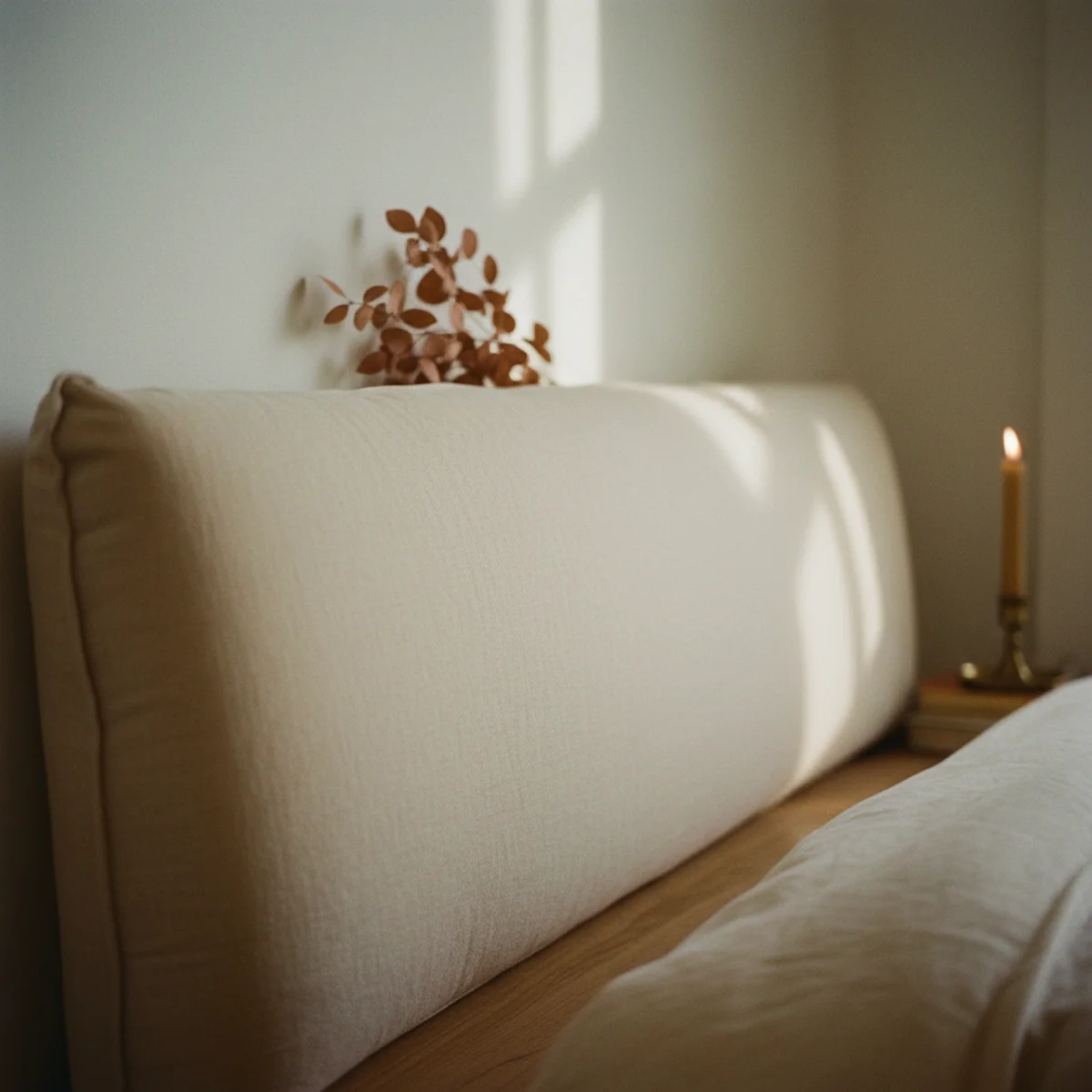
A bed without a headboard reads incomplete — like a sofa without a back. The headboard frames the bed, gives the eye a visual anchor, and provides physical support for sitting up to read. Almost any headboard beats none: upholstered, wood, rattan, painted plywood DIY at $40. The headboard is what separates a styled bedroom from a dorm room.
Three good options: UPHOLSTERED in linen, boucle, or velvet ($300 to $800 from West Elm, Article, or Pottery Barn, often $80 to $200 secondhand). SOLID WOOD in oak, walnut, or teak ($200 to $1500 retail, $80 to $300 secondhand). DIY PLYWOOD CUT-TO-SIZE wrapped in batting and linen fabric ($80 to $150 total, weekend project). For all options, headboard should be 12 to 18 inches taller than the top of the mattress, matching the bed width or wider by 2 to 4 inches on each side. Mount to wall studs or attach to the bed frame depending on type.
AFFILIATE SLOTFURNITUREUpholstered, solid wood, or DIY plywood headboard 12-18 inches above mattress topAdd affiliate URL when configuredWhy it works
Because the bed is the largest single visual element in any bedroom, and an unframed bed creates a visual gap above the mattress that the eye keeps reaching for. A headboard fills the gap and turns the bed into a complete piece of furniture rather than a mattress on a frame. The framed bed also signals comfort and care — the headboard reads as evidence that someone designed this room specifically for rest, not just slept here.
Pro tip — If buying a headboard is out of budget, build one from a 1x4 sheet of birch plywood ($25 at Home Depot), 1 inch of foam batting ($15 at JoAnn), and 2 yards of linen fabric ($25 at JoAnn). Wrap the foam over the plywood, stretch linen over the foam, staple to the back. The DIY upholstered headboard for $65 looks indistinguishable from $400 retail.
Linen-upholstered headboard, 16 inches above the mattress — the frame that turns a bed into a complete piece of furniture. See also: DIY upholstered headboard
06Build a Small Reading Corner
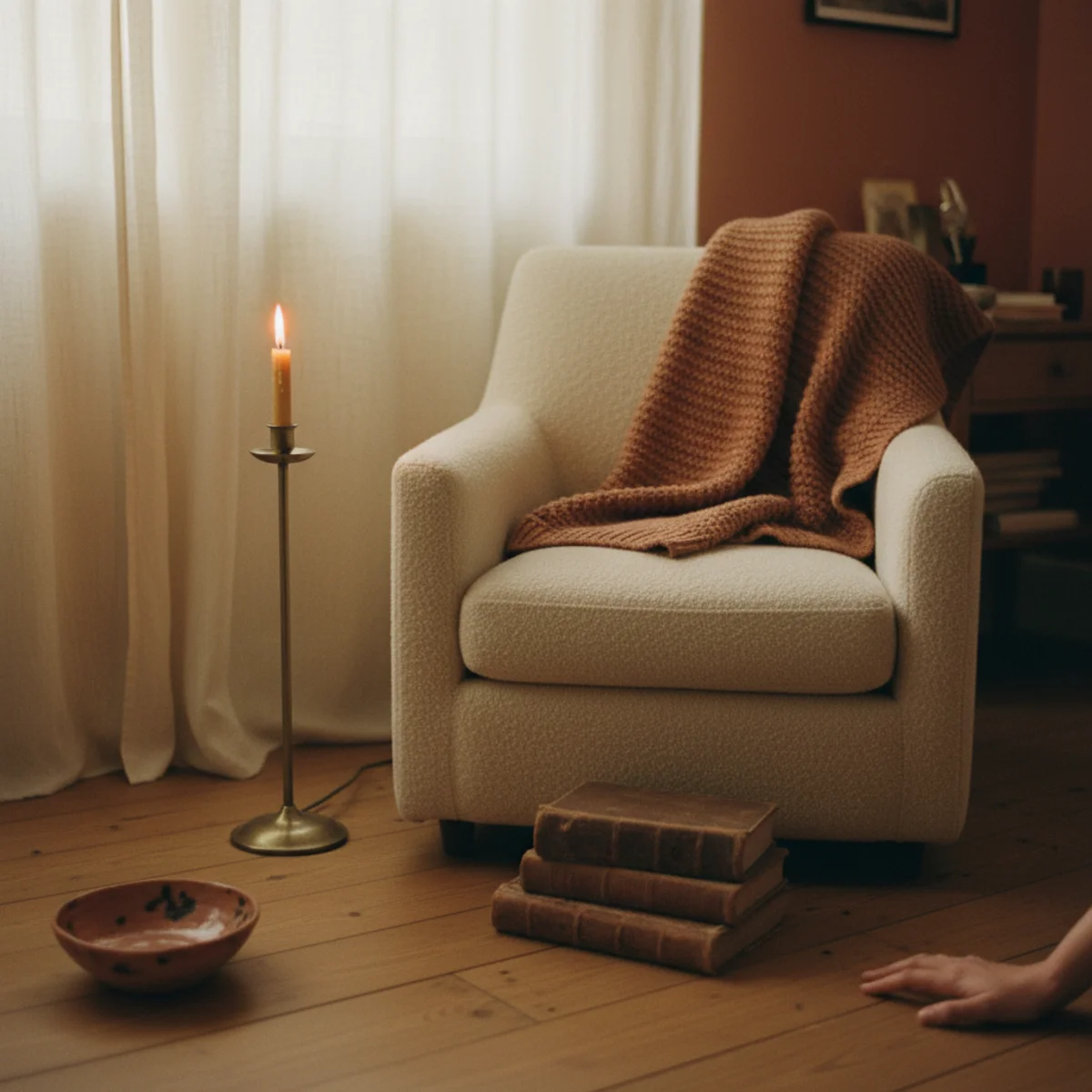
Every master bedroom benefits from a small reading corner — a chair, a side table, a lamp, somewhere that's not the bed. The reading corner separates evening reading from sleep, gives the bed back to sleeping, and creates a quiet destination within the room. Even tiny bedrooms can fit a 3-by-4-foot reading nook in an unused corner.
Minimum components: one armchair (worn leather, linen, or boucle, 17 to 19 inch seat height — see reading-nook-ideas), one small side table 22 to 28 inches tall, one floor lamp at 58 to 64 inches tall with 2700K bulb. Position the chair angled 30 to 45 degrees toward the window or lamp, never flush against a wall facing the bed. Add a wool throw across the chair back, one linen lumbar cushion, optional sheepskin. Add a small floor stack of books or a low bookshelf within arm's reach. Total budget: $250 to $500 if thrifted; up to $1,200 retail. The corner becomes the spot for the hour before sleep.
AFFILIATE SLOTZONEArmchair + side table + floor lamp at 2700K + small book stack in 3x4 foot cornerAdd affiliate URL when configuredWhy it works
Because reading in bed signals the brain to associate the bed with wakefulness and conscious activity — which interferes with sleep onset. A separate reading corner preserves the bed as a sleep-only space and gives evening reading its own dedicated zone. The two-zone separation (read here, sleep there) is one of the strongest sleep-hygiene moves available, and it costs nothing beyond the corner that was probably empty already.
Pro tip — Put the reading corner as far from the bed as the room allows — even 8 to 10 feet of separation reinforces the two-zone signal. If your bedroom is too small to separate, position the chair angled away from the bed so at least the visual direction is different.
Reading corner separated from the bed — the two-zone setup that lets the bed be a bed again. See also: reading-nook-ideas
07Layer Rugs Underfoot for Warmth
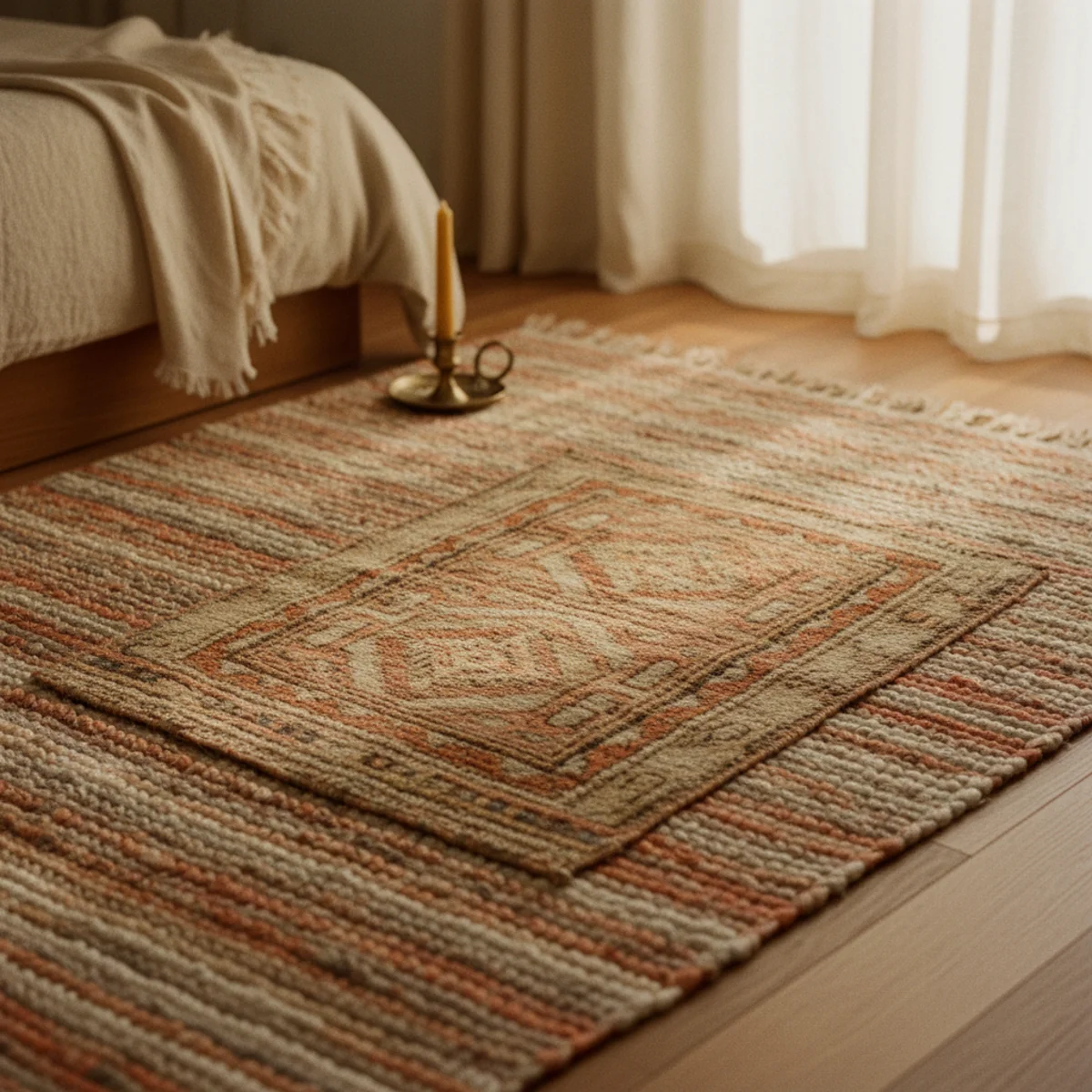
Bare floors beside a bed are cold underfoot in winter and unfinished-looking year-round. A large area rug under the bed plus a small bedside rug (or a single very large rug spanning the bed and adjacent floor) makes the bedroom feel warmer thermally and visually, and softens the morning transition from bed to standing. The rug layering also defines the bed as the room's primary zone.
Two approaches: SINGLE LARGE RUG — one 8x10 or 9x12 wool or jute rug positioned so it extends 18 to 24 inches beyond each side of the bed and 24 to 36 inches at the foot. The bed and at least the bedside legs of the nightstands sit on the rug. Cost: $300 to $1,500 (vintage Persian $400-$800; new wool from Rugs USA or Annie Selke $600-$1,200; jute $300-$500). LAYERED APPROACH — one medium rug under the foot of the bed extending into the room, plus two smaller bedside runners (2x3 or 2.5x4 feet) on each side. Cost: $200 to $500 total. Both work; the single large rug reads more designed, the layered approach reads more collected.
AFFILIATE SLOTFLOORSingle 8x10/9x12 rug under bed OR layered approach with bedside runnersAdd affiliate URL when configuredWhy it works
Because bare floors beside a bed are the first surface your feet touch each morning — the temperature and texture set the tone for the next thirty minutes of waking. Cold tile or wood reads as a small daily shock; a soft wool rug reads as a gentle transition. The morning rug touch is one of those tiny daily moments that compounds into how the room feels overall — repeated across 365 mornings per year, the difference is real.
Pro tip — If you can't afford a 9x12 rug, layer two cheaper 5x7 rugs side by side under the bed — the seam where they meet hides under the mattress, and the combined footprint matches a single large rug at half the cost. The trick works especially well with two identical jute or wool rugs from Rugs USA at $150 each.
9x12 wool rug under the bed extending two feet beyond each side — soft morning floor for 365 days a year. See also: vintage Persian
08Keep One Surface Clear and Lightly Styled
Bedrooms accumulate clutter faster than any other room — water glasses, books in progress, jewelry trays, charging cables, change. The fix is designating one styled surface (usually the dresser top or the long console at the foot of the bed) and keeping all the daily clutter contained in drawers, hidden trays, or the bedside table specifically. The styled surface stays clean. The room reads composed even when the day's clutter accumulates elsewhere.
Pick one prominent surface — the dresser top, a console at the foot of the bed, the windowsill — and keep it sparsely styled with 3 to 5 objects: a single small vase with dried branches, one stack of two books with a small object on top, one small framed photograph, one tray for keys or jewelry. Daily clutter (water glass, current reading, phone charger) lives only on the bedside table or inside drawers. Edit the styled surface monthly — anything that drifted onto it gets returned to where it belongs. The discipline is the styling.
AFFILIATE SLOTSTYLINGOne styled surface with 3-5 objects + bedside tray containing daily clutterAdd affiliate URL when configuredWhy it works
Because bedroom clutter creates background visual anxiety that interferes with sleep onset and morning calm — the brain registers every visible object as a small task or decision, and accumulated objects accumulate as cognitive load. One protected styled surface gives the eye a calm rest point amid the day's accumulated clutter on other surfaces. The single composed surface signals that the room is cared for, even when life happens elsewhere.
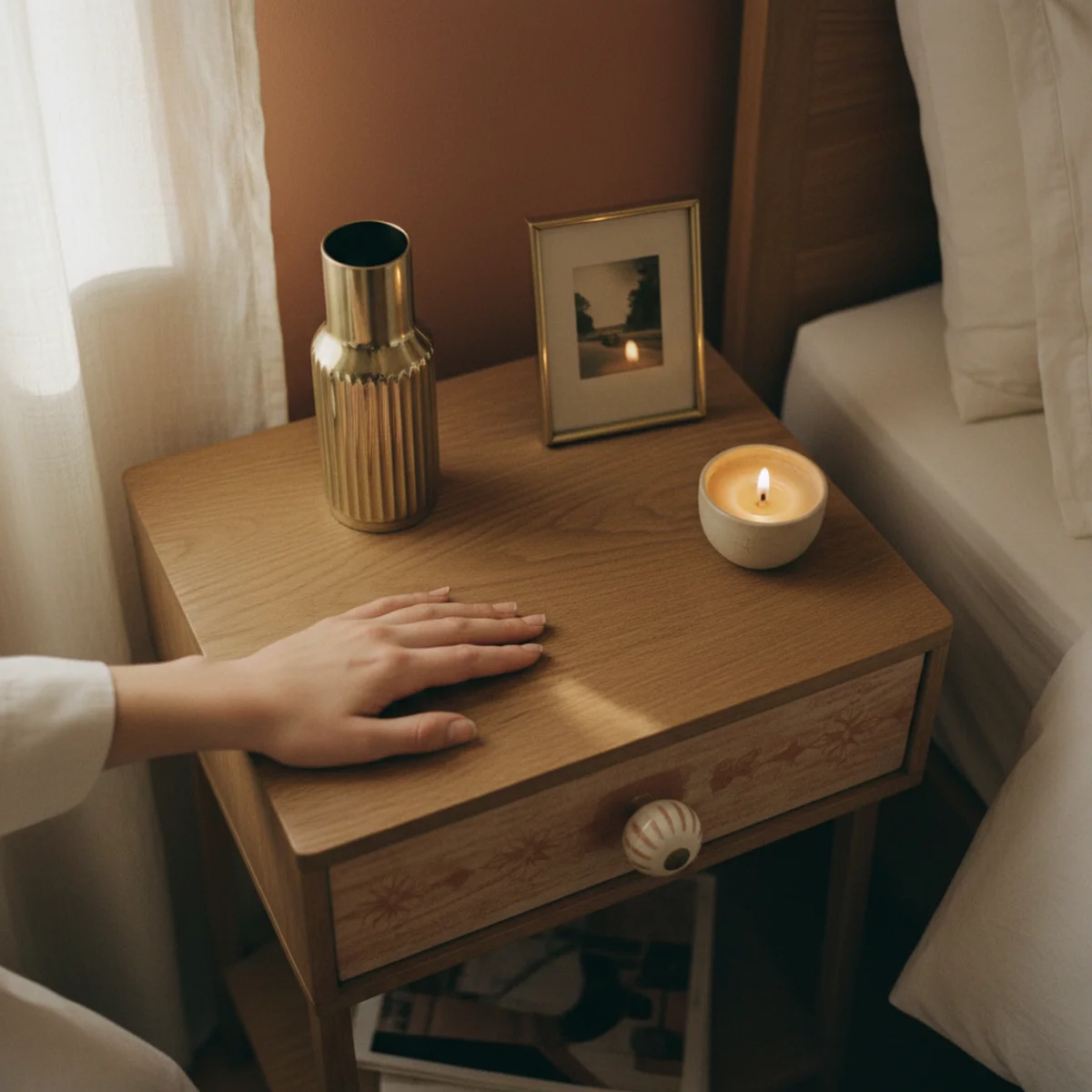
Pro tip — Add a small tray on the bedside table specifically for daily clutter (water glass, phone, reading glasses, current book) — the tray contains the chaos within a defined boundary, which keeps the clutter from spreading across the table or onto the styled dresser. A small wooden or brass tray at $15 to $40 is the small organizational move that protects the bedroom's calm.
One styled dresser top, three objects, daily clutter contained elsewhere — the discipline that protects bedroom calm. See also: single styled surface
09Add a Throw at the Foot of the Bed
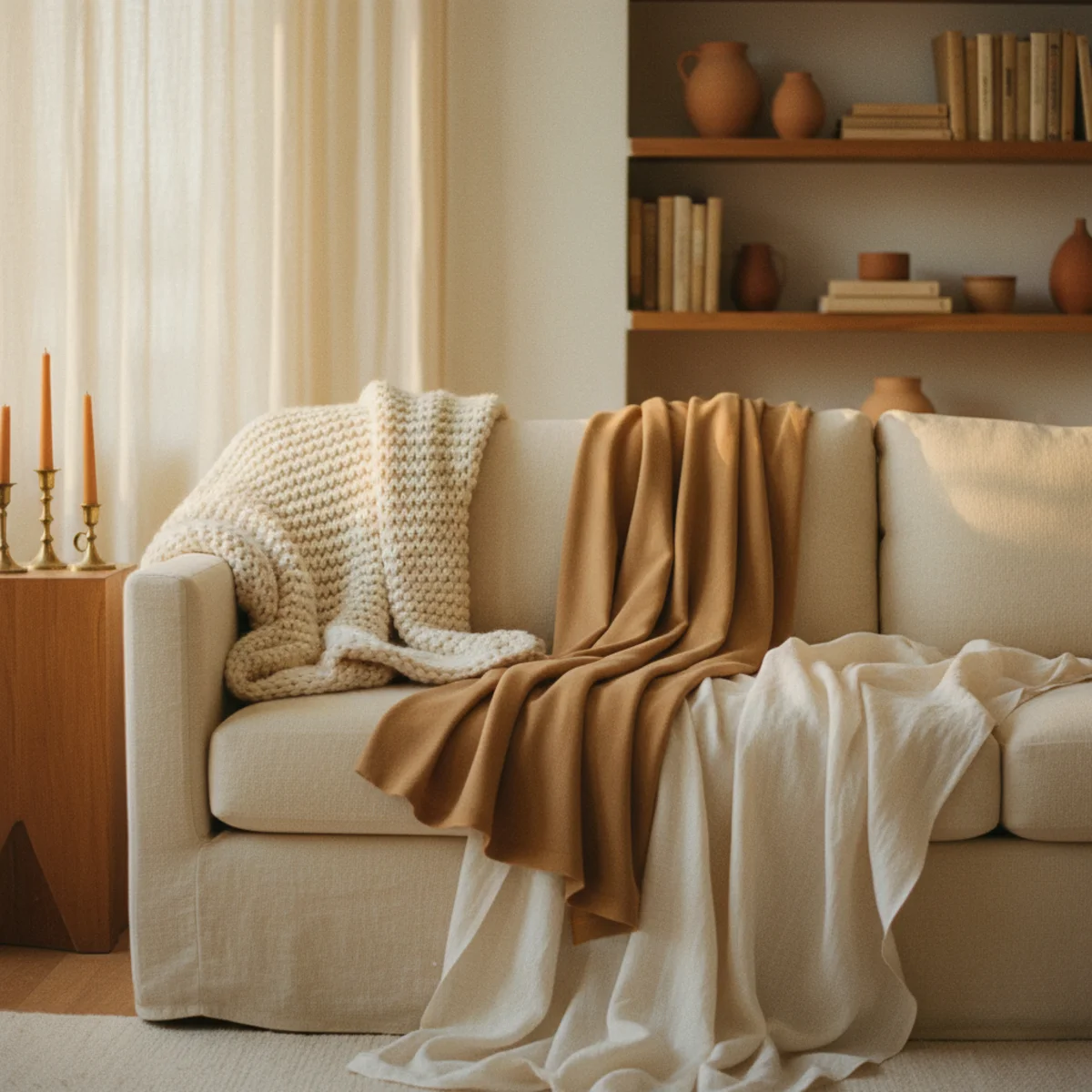
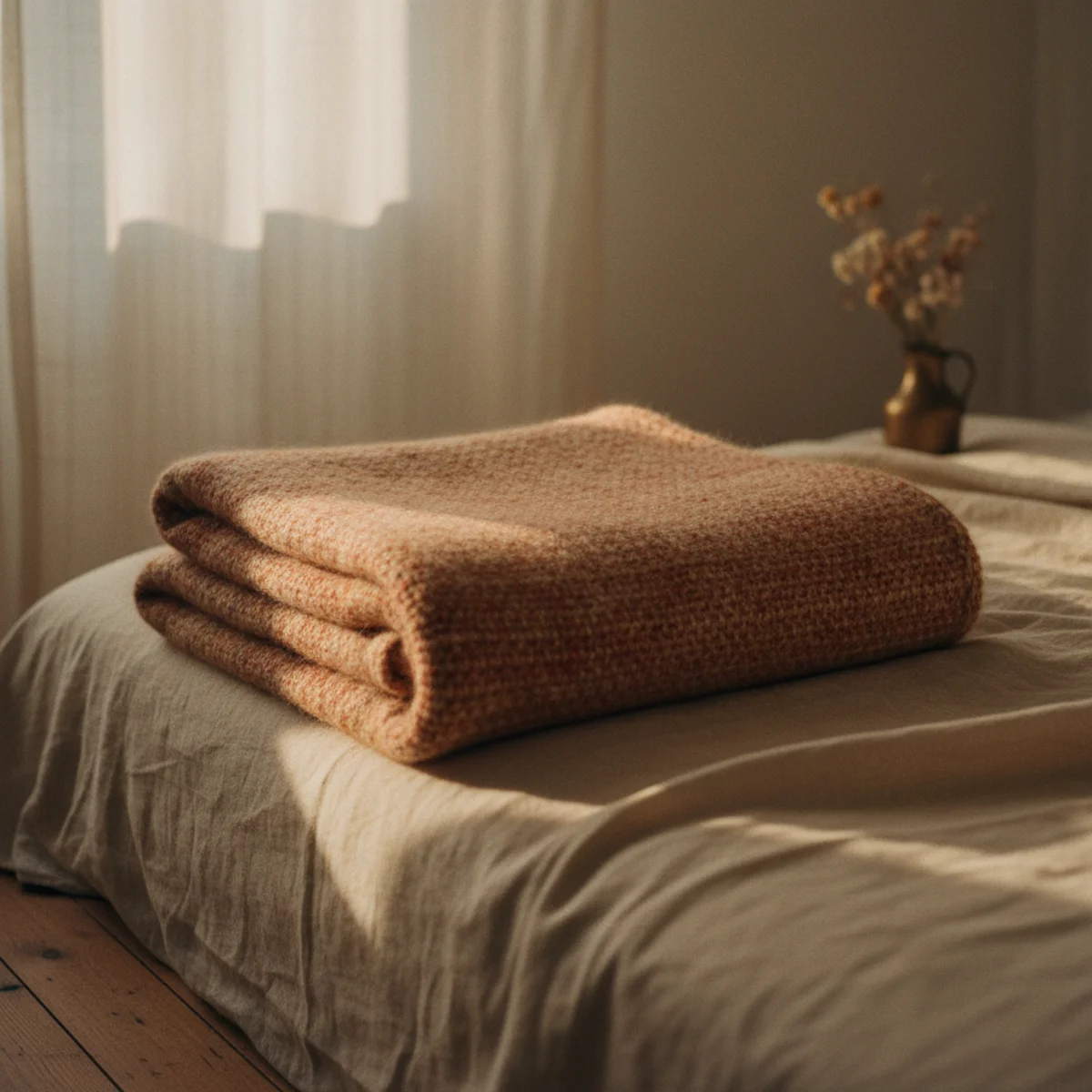
The folded or draped throw at the foot of the bed is the small styling detail that finishes any master bedroom. A wool or boucle throw, in a tone that complements the bedding without matching exactly, draped diagonally or folded flat across the bottom third of the bed. The throw also serves the practical purpose of extra warmth for cool nights — pulled up over the linen for an extra layer.
Choose a wool or boucle throw 50x60 inches in oat, rust, sage, or natural cream — tonally compatible with the bedding but with slight contrast. Cost: $40 secondhand Pendleton, $79 West Elm boucle, $150 Lands' End wool. Drape diagonally across the foot of the bed with one corner falling toward the floor and the opposite corner cascading slightly toward the bedside (per the throw-blanket-layering rules). Alternative: fold the throw in thirds and lay flat across the lower 18 to 24 inches of the bed. Both work; the diagonal reads more casual, the flat fold reads more hotel-formal.
AFFILIATE SLOTTEXTILES50x60 inch wool or boucle throw in oat, rust, sage, or cream, draped or folded at foot of bedAdd affiliate URL when configuredWhy it works
Because a fully made bed without a throw reads tight and overly formal — like a hotel bed prepared for a guest who hasn't arrived. The folded or draped throw breaks the uniformity of the bedding and signals that the bed is in active daily use. The throw also adds a small color or texture contrast that the all-linen bedding alone doesn't provide, anchoring the bed visually within the warmer broader bedroom palette.
Pro tip — Wash the throw once a year on a cold wool cycle and air-dry — well-cared-for wool throws become softer with age. A slightly worn, slightly nubby wool throw at the foot of the bed reads more sophisticated than a pristine new one, and the slight imperfection is part of why the bed reads lived-in.
One wool throw, draped diagonally — the small detail that finishes any made bed. See also: throw-blanket-layering rules
10Swap to Warm Metal Accents Throughout
Chrome and brushed nickel hardware on bedroom doors, drawer pulls, lamp bases, and curtain rods read cool and clinical against warm bedroom palettes. The fix is swapping every visible metal to aged brass, antique bronze, or oiled bronze. The swap is small per piece ($4 to $20 each) but compounds dramatically across a bedroom — every metal touch becomes a warmth signal rather than a chill point.
Audit every visible metal in the bedroom: drawer pulls (replace with aged brass or oiled bronze at $4 to $20 each from House of Antique Hardware, Hardware Hut, or Etsy), curtain rods (brass or oiled iron at $30 to $80 from West Elm), lamp bases (brass or warm-toned ceramic), bedside table edge accents, picture frame hardware, door handle (if cool, swap to brass or oiled bronze at $40 to $80 per handle). The cumulative effect of a dozen warm-metal swaps transforms how the bedroom reads thermally — without any large furniture changes.
AFFILIATE SLOTMETALSAged brass, antique bronze, or oiled bronze across all visible bedroom hardwareAdd affiliate URL when configuredWhy it works
Because the bedroom has more visible metal touches than most rooms — drawer pulls (often 6 to 12 per dresser), door handles, lamp bases, curtain rod brackets, picture frame hardware, headboard nailheads if upholstered. Each cool-toned metal touch creates a small chill point that the eye registers. Switching all of them to warm brass or bronze removes a dozen small visual interruptions at once, letting the warm palette read uninterrupted across every detail.
Pro tip — Replace one piece of hardware at a time over several months — drawer pulls one weekend, curtain rod the next, door handle later. The gradual swap reveals which warm metals work in your specific bedroom (brass vs bronze vs copper) without committing to one before seeing how it reads in your light.
Every visible metal in warm brass — small swap, dozens of warmth signals replace dozens of chill points. See also: House of Antique Hardware
11Hang Art Low and Quiet Above the Bed
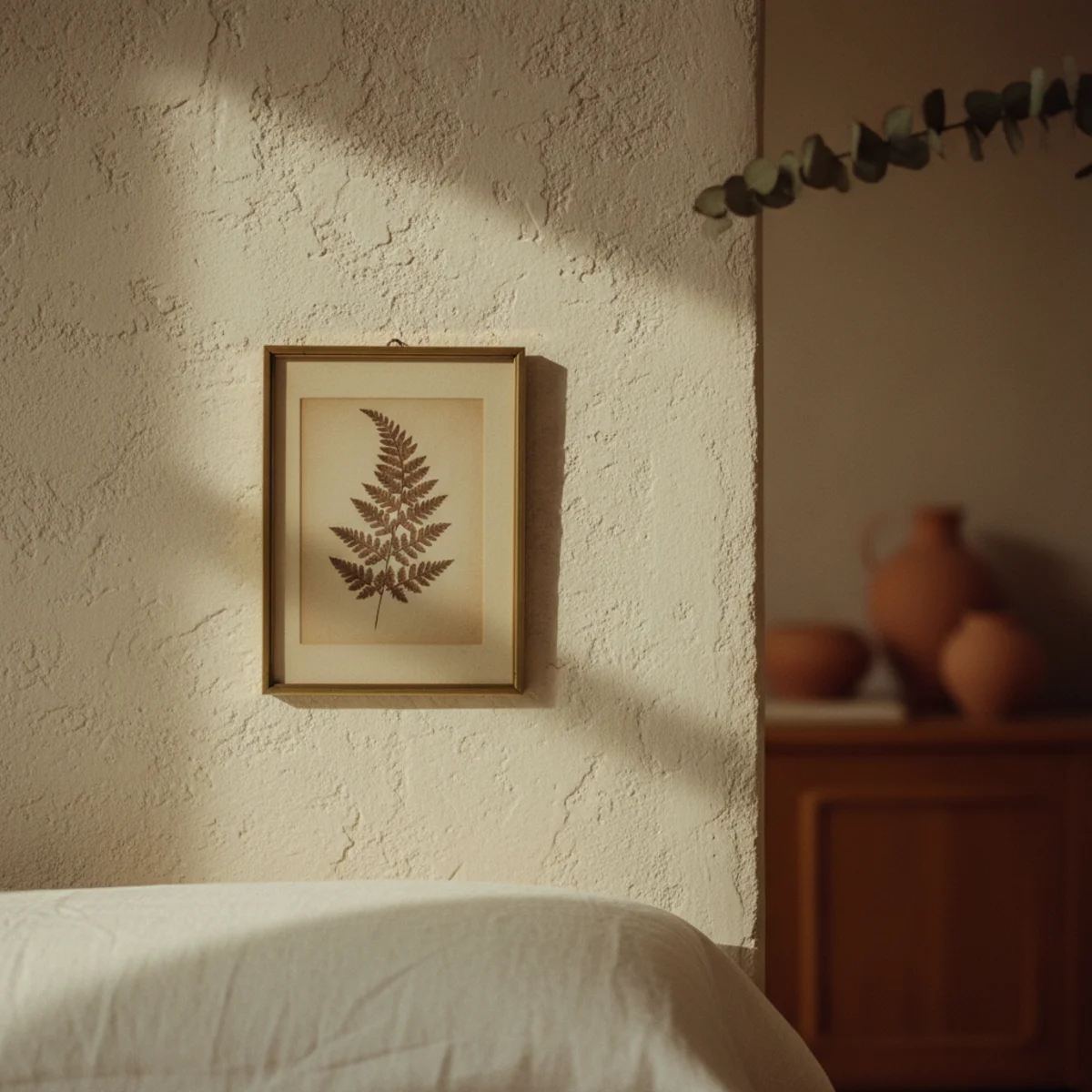
The wall above the bed is the most-photographed bedroom surface and the most-misjudged one. The instinct is to fill it with a large statement piece; the correct move is hanging art lower than feels natural, in muted tones that calm the brain rather than energize it. Quiet abstracts, vintage landscapes, single-color photography, dried botanicals — all work. Bright graphic art, geometric prints, and saturated paintings fight the bedroom's restful function.
Hang art 6 to 12 inches above the headboard (not 18 to 24 inches as standard guides suggest) — the lower position reads more intentional and creates a visual connection between bed and art. Choose pieces in muted tones (warm whites, oats, soft sages, dusty pinks, deep neutrals) rather than saturated bright colors. Subject matter: landscapes, abstracts, single-color photography, dried botanicals, vintage portraits in soft tones. Size: about 60 to 80 percent of the headboard width. Frame in warm wood (oak, walnut) or aged brass — never bright chrome or stark black.
AFFILIATE SLOTARTQuiet muted art hung 6-12 inches above headboard, 60-80% of headboard widthAdd affiliate URL when configuredWhy it works
Because bedroom art is viewed twice daily at the brain's two most sensitive states (before sleep, after waking), and saturated graphic art keeps the brain in active processing mode rather than letting it calm or wake gently. Muted quiet art lets the brain settle in the evening and ease awake in the morning. The art also stays in the brain's peripheral vision throughout the night during partial sleep states; calm visuals there support sleep quality, energetic visuals interrupt it.
Pro tip — If you have a beautiful bright energetic piece of art that you love, hang it in the reading corner instead of above the bed — the corner is where conscious daytime energy belongs, while the bed should be visually quieter. The art still gets visible space in the room; just not the wall directly above the sleeper's head.
Muted landscape, oak frame, 8 inches above the headboard — bedroom art that calms going to bed. See also: muted tones
12Hide the Tech and the Cords
The fastest way to ruin a beautifully built master bedroom is visible technology — TV mounted prominently, exposed charging cables, alarm clock with bright red LED, phone face-up on the bedside table. Technology fights the restful-sanctuary function the bedroom is supposed to serve. The fix is systematic hiding: TVs in cabinets or behind picture-light setups, chargers in drawer-based charging stations, phones face-down or in a different room entirely.
TV: ideally remove from the bedroom entirely (sleep research consistently supports this); if removal is impossible, mount inside a cabinet with doors that close, or mount low (eye-level from a sitting-up-in-bed position) with cables hidden inside a paintable raceway. Chargers: build a small drawer-based charging station with a hidden outlet (US$15 in parts from Amazon) — phones, smartwatches, and tablets charge inside the closed drawer at night. Alarm clocks: use a battery-powered analog clock or a smart speaker with a dim warm-tone display; avoid LED clocks with bright red digits. Phone: face-down on the bedside or, ideally, in a different room overnight.
AFFILIATE SLOTTECHTV in cabinet or removed; charging in closed drawer; analog or dim-display alarmAdd affiliate URL when configuredWhy it works
Because tech creates competing demands on attention during the brain's sensitive pre-sleep and post-wake states — the visible glow of an LED clock, the buzz of a charging phone, the dark presence of a powered-off TV all signal to the brain that activity is possible nearby. A bedroom with no visible tech signals only rest. The compounding effect across hundreds of nights is real and meaningful for sleep quality and morning calm.
Pro tip — Try one bedroom-tech-free week as an experiment — move the phone to a different room overnight, remove the TV if portable or cover it with a textile if mounted, swap the LED alarm clock for an analog one. The change in sleep onset and morning mood is usually obvious within 3 to 5 nights, and the experiment cost almost nothing.
No TV, no cords, no LED — bedroom tech invisibility for sleep quality that compounds across nights. See also: tech invisibility
How to refresh a master bedroom step by step
You don't need to start over. Work through these steps in order and stop when the room feels right.
- 1Fix the light
Replace the overhead-as-main-light habit with two warm bedside lamps and one other low source. Swap any cool bulbs for 2700K. Do this first — it changes the room most and costs least.
- 2Upgrade what touches your skin
Invest in washed-linen sheets and one good throw. This is where the budget goes; everything else can wait or come secondhand.
- 3Calm the color and clutter
If the walls are stark or cool, repaint in a warm, muted tone. Clear every surface, then add back only what earns its place.
- 4Anchor and layer
Add a headboard if you lack one, a rug at the bedside, and curtains hung high. These give the room its finished, layered base.
Quick tips
- Put your bedside lamps on a smart plug so the room is warm-lit before you walk in and dims on schedule at night.
- Keep at least one nightstand surface mostly clear; a bedroom reads as restful in direct proportion to its empty surfaces.
- Wash linen on gentle and skip the dryer sheets — the line-dried hand is part of the appeal.
- Rotate throw and pillow covers seasonally: lighter linen in summer, heavier wool and flannel in winter.
- Resist adding a TV; if one's already there, the small-room TV guide shows how to make it recede.
- Choose lamp shades that glow rather than spotlight — parchment, linen, or pleated fabric over bare bright bulbs.
Master bedrooms for different spaces
The same calm at tighter scale — paired slim lamps, a low headboard, and a single rug rather than layered ones.
Room for a seating area or a bench at the foot, but the same low-light, layered-texture rules keep it from feeling like a hotel lobby.
Priority order: linen sheets, two warm lamps, paint. That trio delivers most of the retreat feeling for the least money.
Lean on movable layers — bedding, lamps, rugs, leaning art — and let the wall color wait.
A bedroom should ask less of you than any other room. Fewer choices, softer light, nothing to straighten before you can rest.
Frequently asked questions
What's the best linen weight for bedroom bedding?+
How high should I hang curtains in a bedroom?+
What's the right paint color for a master bedroom?+
How tall should bedside lamps be?+
Should the bedroom have a TV?+
What kind of rug works best in a bedroom?+
- By RoomBedroom Cozy Ideas: 26 Warm, Restful Ways to Decorate in 2026
- Shopping GuidesThe Best Linen Bedding for a Cozy Bed, Tested and Compared (2026)
- Cozy CornersCozy Bedroom Inspo: 26 Warm, Restful Ideas for 2026
- StylingThrow Blanket Layering: How to Style Throws Without Clutter (2026)
- Shopping GuidesThe Best Bedding for a Cozy Bed, Tested and Compared (2026)
Tonight, do one thing: turn off the overhead and switch on a warm lamp instead. Notice how the room changes. That single move — light, low and warm — is the heart of every restful bedroom. Build from there with linen and a calmer color, and spend on the things that touch your skin before anything bolted to a wall. The room you sleep in should ask the least of you. Make it so.