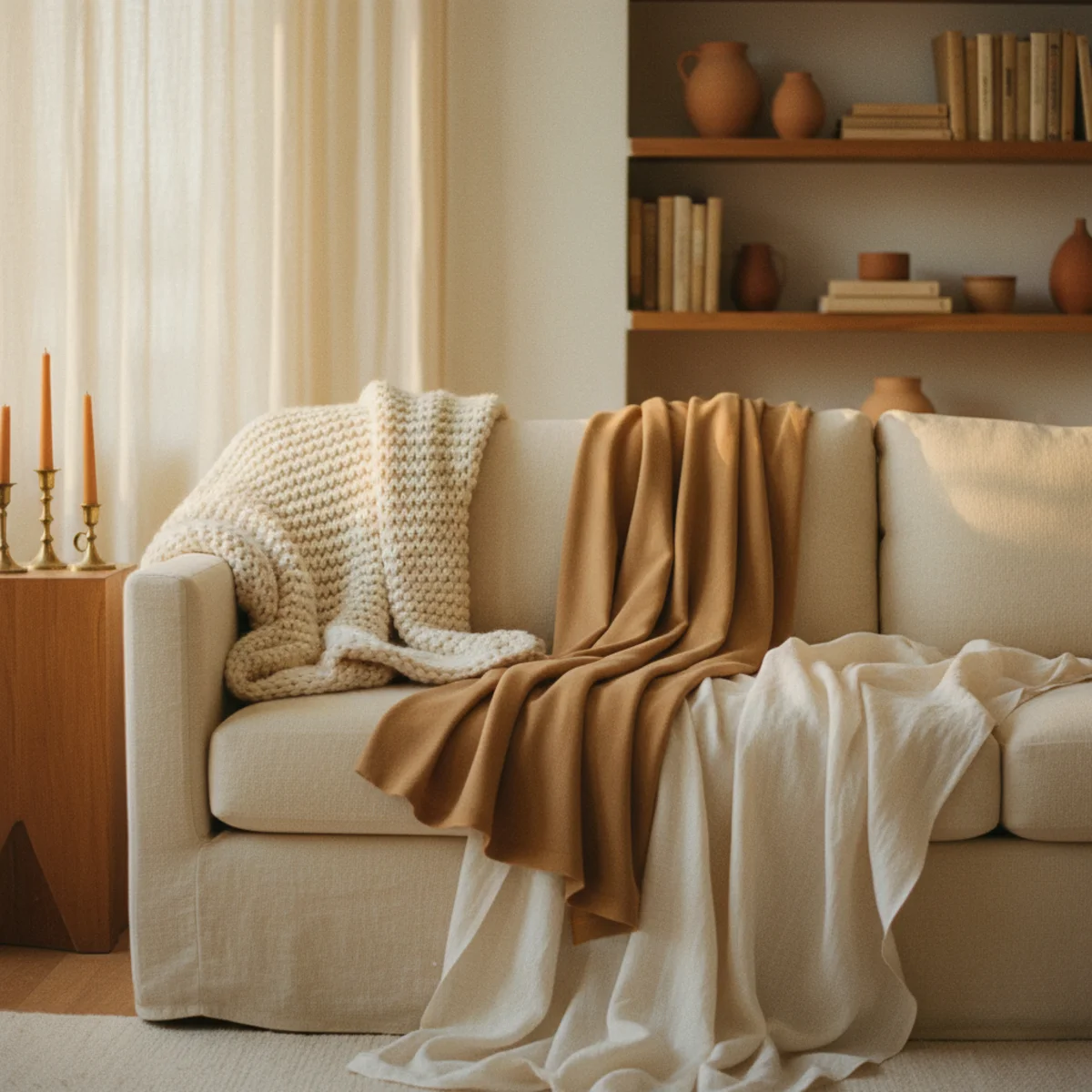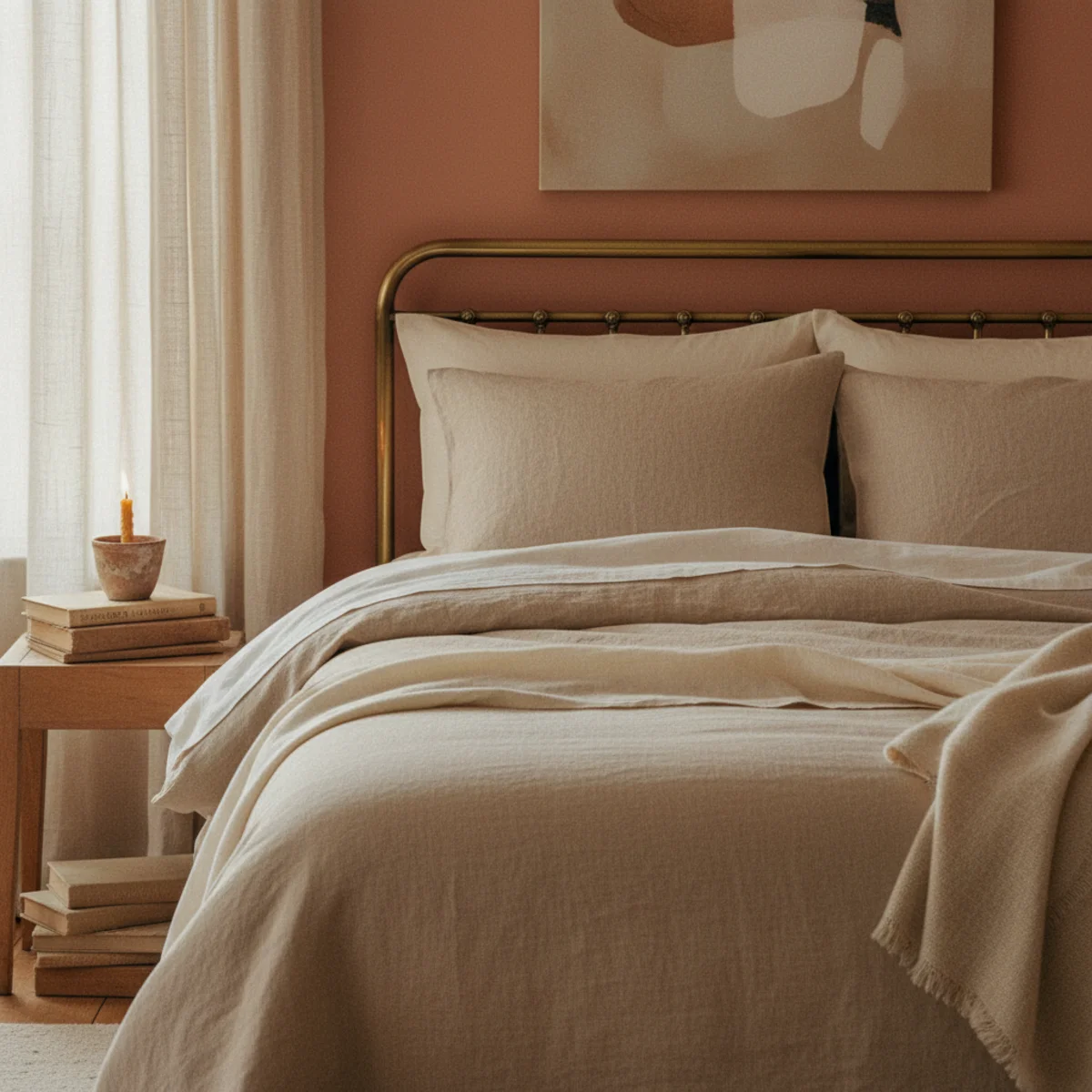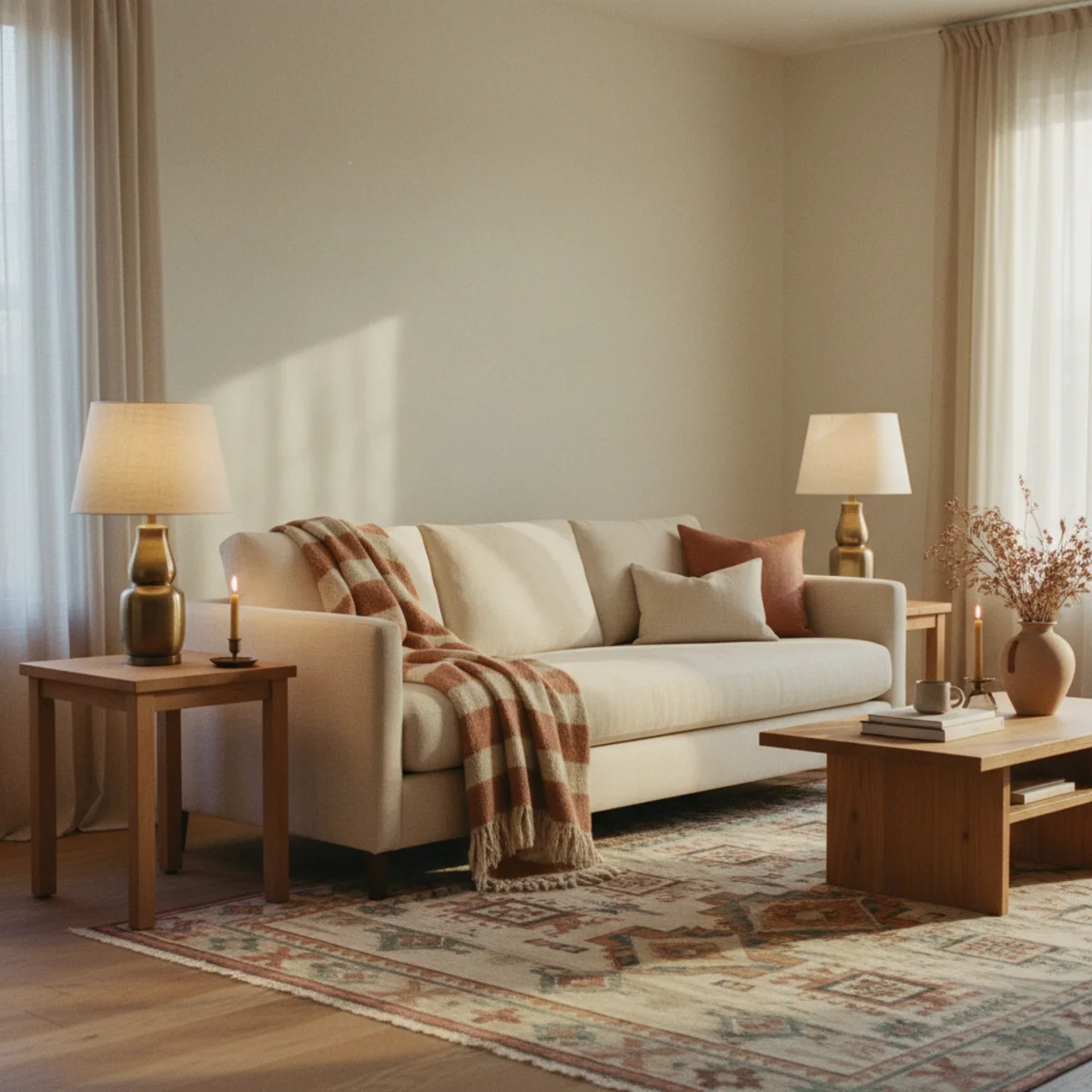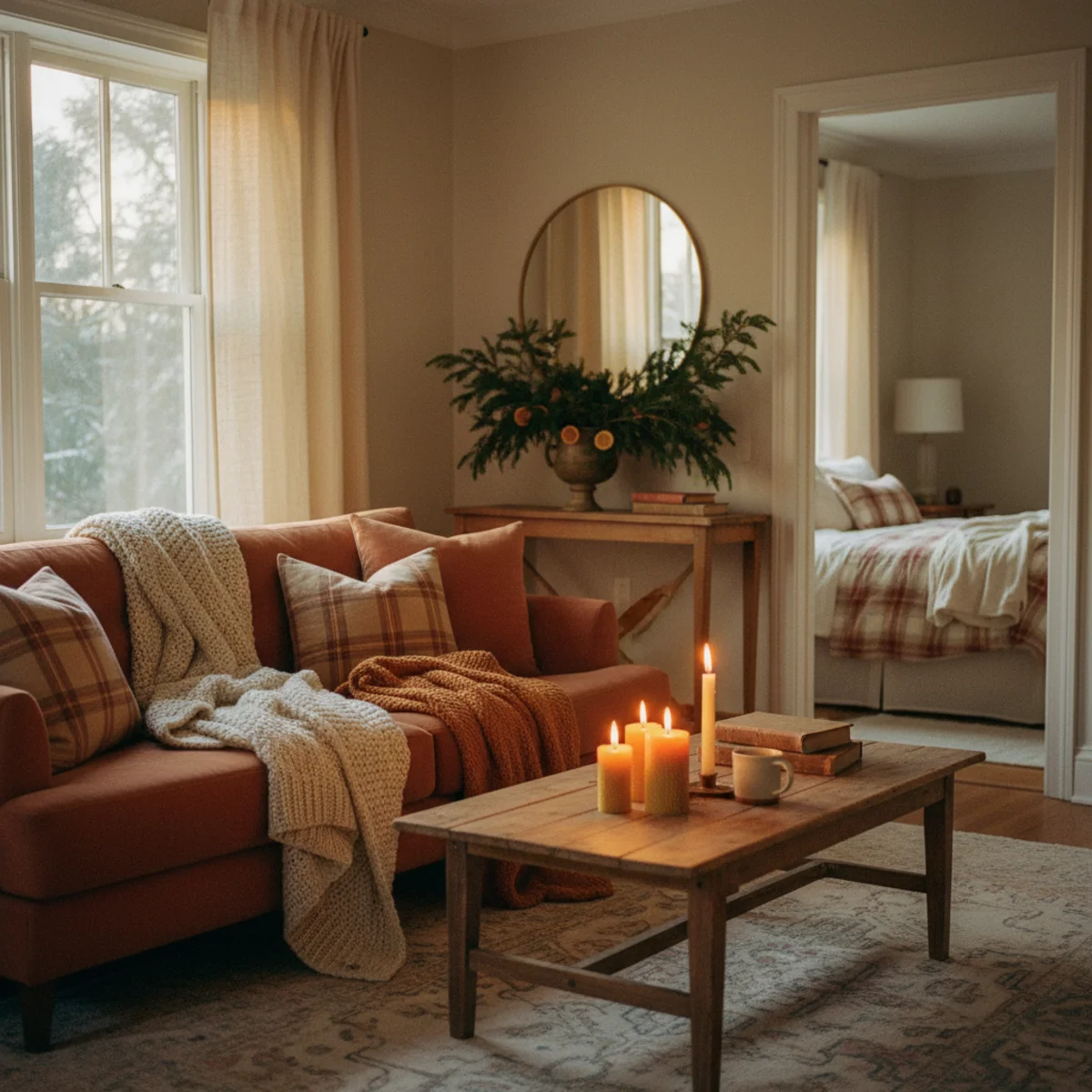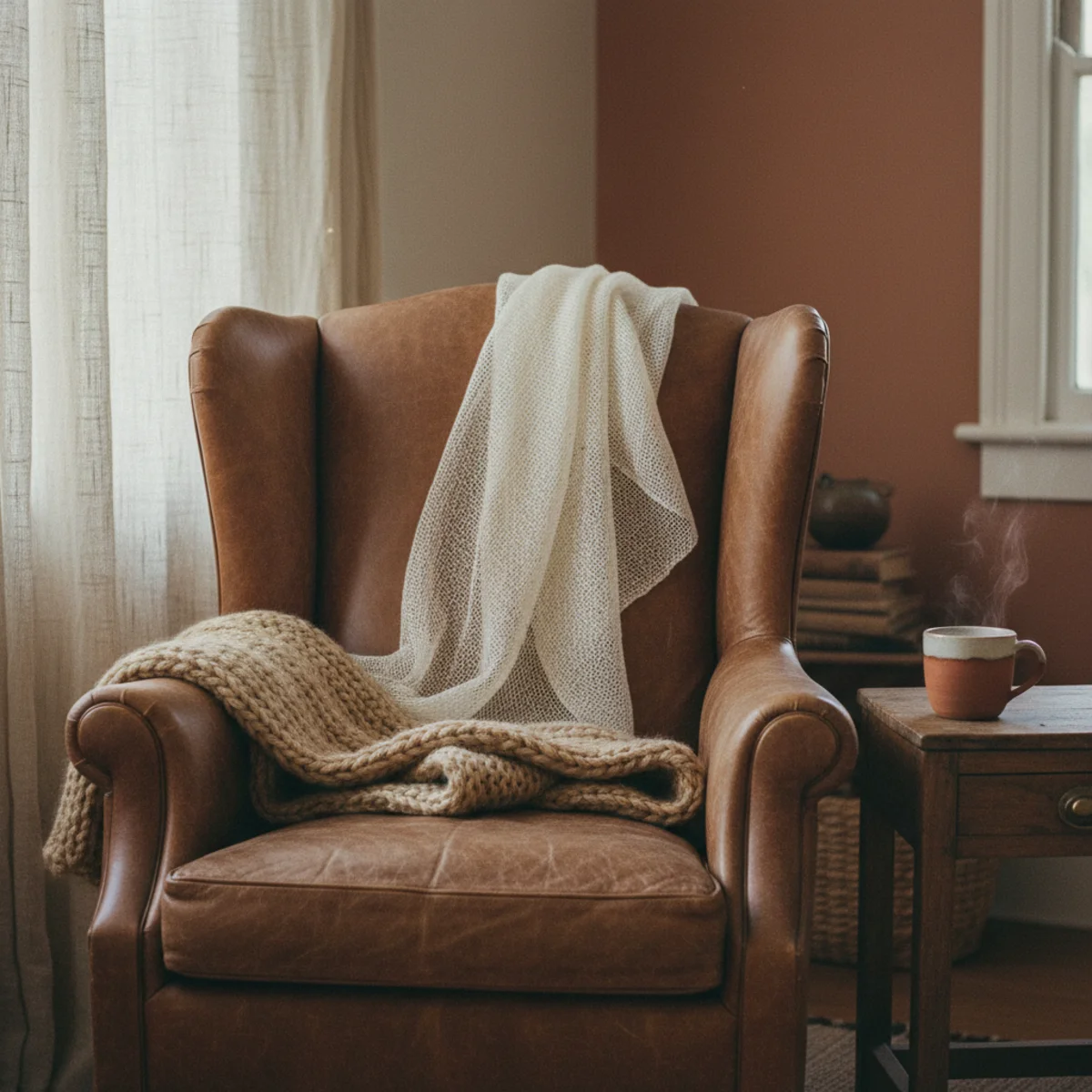
This guide covers actual throw blanket fibers tested across multiple seasons of real-life use — daily layering on sofas, foot-of-bed display, reading-corner wrap-up, occasional outdoor use on porches and patios. Each category below names the specific fiber characteristics (warmth-to-weight ratio, durability, drape, washing requirements), the price ranges at quality versus budget, the best brands and where to buy, and what makes that fiber the right choice for specific use cases. The goal is matching throw fiber to actual use rather than buying based on visual appeal alone.
Throw blanket categories matter because the fiber determines daily experience — merino versus mohair feels different against skin; alpaca handles cold differently than wool; cotton waffle weave layers differently than chunky knit. The eight categories below cover every legitimate option, with one explicit category for what to skip (acrylic and acrylic blends, which dominate the budget throw market but fail at every functional and aesthetic level).
By the end of this guide, you'll know exactly which wool throw fiber works for your specific use case — the all-rounder merino, the luxury mohair blend, the durable lambswool, the lighter cotton waffle, the warm-climate linen, the featherweight alpaca, the splurge cashmere — and which to skip entirely (acrylic blends).
WHAT'S INSIDE
- Why merino wool is the all-rounder that fits most homes and most use cases
- The mohair blend luxury pick — warmer, softer, and significantly more expensive
- The cotton waffle weave layer that works in warm climates and summer months
- Which blends to skip entirely (acrylic dominates budget but fails everywhere it matters)
Buy the best blanket you can afford and use it every day. It's the one piece of decor your hands touch more than your eyes.
— Real Simple [citation needed — verify before publish]
What makes a good wool throw?
A good wool throw balances warmth, hand-feel, and durability for how you'll actually use it. The fiber matters most: merino is soft and resists pilling, mohair is the warmest and softest but sheds early, lambswool sits in between, and cotton or linen throws trade warmth for breathability and a crisper drape.
Weave and weight matter nearly as much. A chunky knit reads cozy and adds visual texture; a flat herringbone or waffle reads refined and layers cleanly under a heavier throw. The thing to avoid is acrylic and acrylic blends — they pill permanently after a wash or two and, as we found, look cheap from clear across the room.
More in Shopping Guides you may love
See allWhy the right throw matters more in 2026
As warm minimalism made texture the main event in restrained rooms, the throw stopped being an afterthought and became a deliberate textile choice. People are buying fewer, better throws and treating them as the room's softest layer rather than a clearance-aisle grab.
The secondhand angle matters here too: a vintage wool or mohair throw often out-performs a new synthetic one and costs less, which is why "wool throws" and "throw blanket layering" climb together every fall. Spend on the fiber, not the label, and a good throw lasts decades.
The best throw materials, compared
01Merino Wool — The All-Rounder
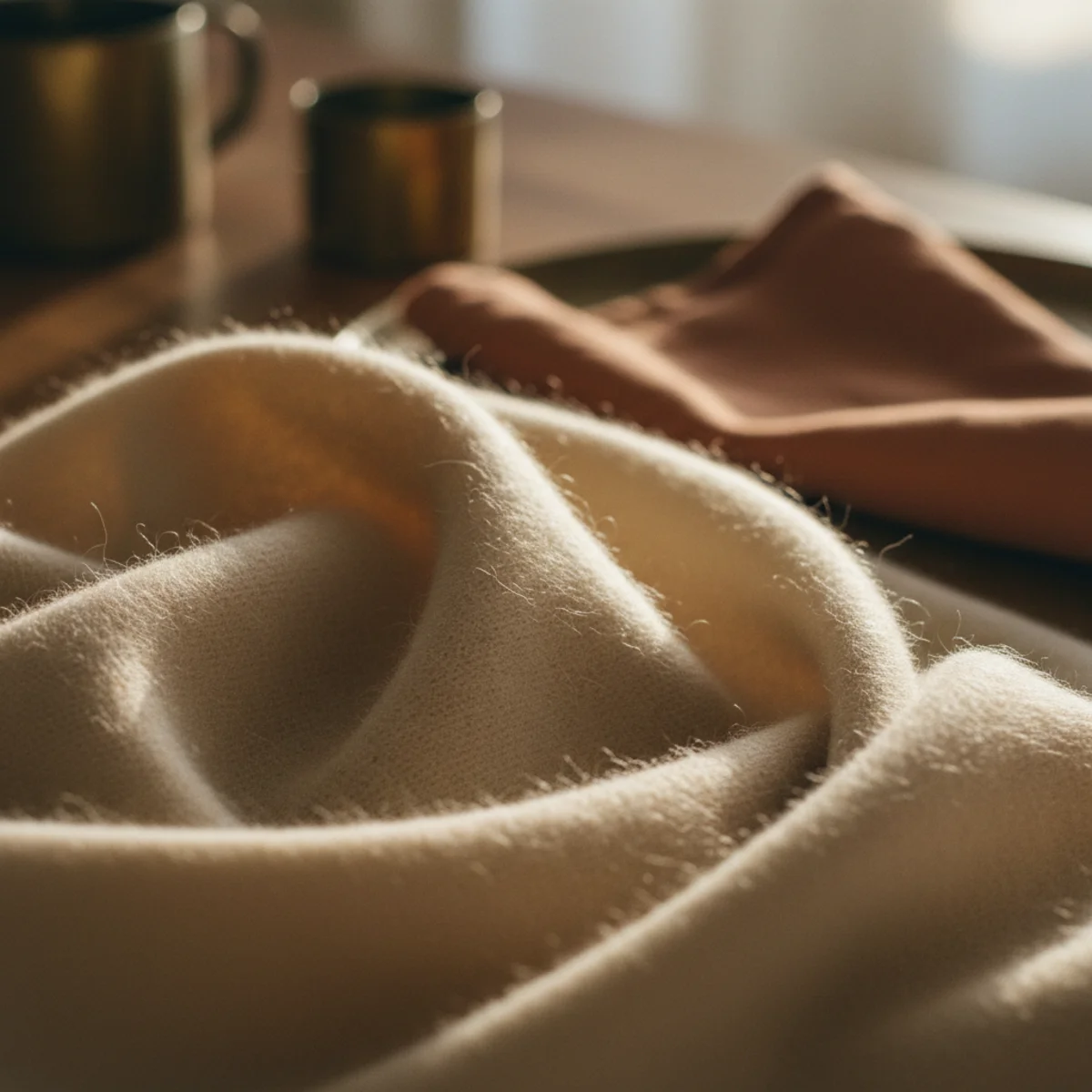
Merino wool is the all-rounder throw fiber — soft enough against skin for direct wrap-up without irritation, warm enough for cold climate use, durable enough for daily handling, washable enough for real-life messes. For most households buying their first or main throw, merino is the right answer. Price range: $60 to $200 for quality, with the sweet spot at $80 to $150.
Best merino wool throw brands: PENDLETON merino at $80-150 per throw (50x60 inches), CB2 merino at $80-130, WEST ELM merino at $80-150, EVERLANE merino at $80-100, BROOKLINEN merino at $99-129, FAHERTY merino at $100-150, LANDS' END merino at $80-130, IKEA INGABRITTA at $30-50 (budget option that genuinely delivers despite the price). Look for: 100% merino or merino-cotton blend (NOT merino-acrylic), oeko-tex certified, 50x60 inch standard size or 60x80 for larger applications. Color choices: cream, oat, terracotta, sage, deep rust — all warm earth tones consistent across multiple throw makers. CARE — most quality merino is machine washable (cold water, mild detergent, lay flat to dry) where lower-grade wool requires dry cleaning; check the care tag before purchase.
AFFILIATE SLOTFIBER100% merino or merino-cotton blend at $60-200 from Pendleton, CB2, West Elm, Everlane, Brooklinen, Faherty, IKEAAdd affiliate URL when configuredWhy it works
Because merino fiber combines fine micron count (soft against skin), high lanolin content (natural water resistance), good thermal regulation (warm but breathable), and durability (resists pilling and wear). The combination handles every common throw use case adequately: sofa layering (durable enough), wrapping up (soft enough), occasional spills (washable enough), seasonal storage (resists moths better than other wools). Other fibers excel in specific qualities (mohair softer, alpaca warmer, cashmere finer) but merino is the most-balanced general performer. Most households need one throw that works for everything; merino is that throw.
Pro tip — Wash merino throws in mesh laundry bags ($5-10 from Amazon) to extend their lifespan — the bag prevents tangling, snagging, and the slight pilling that can happen with multiple wash cycles. The extra step adds 30 seconds per wash and significantly extends the throw's useful life across years of regular use.
Cream merino throw — the all-rounder fiber that handles every common throw use case. See also: Pendleton
02Mohair Blend — The Luxury Pick
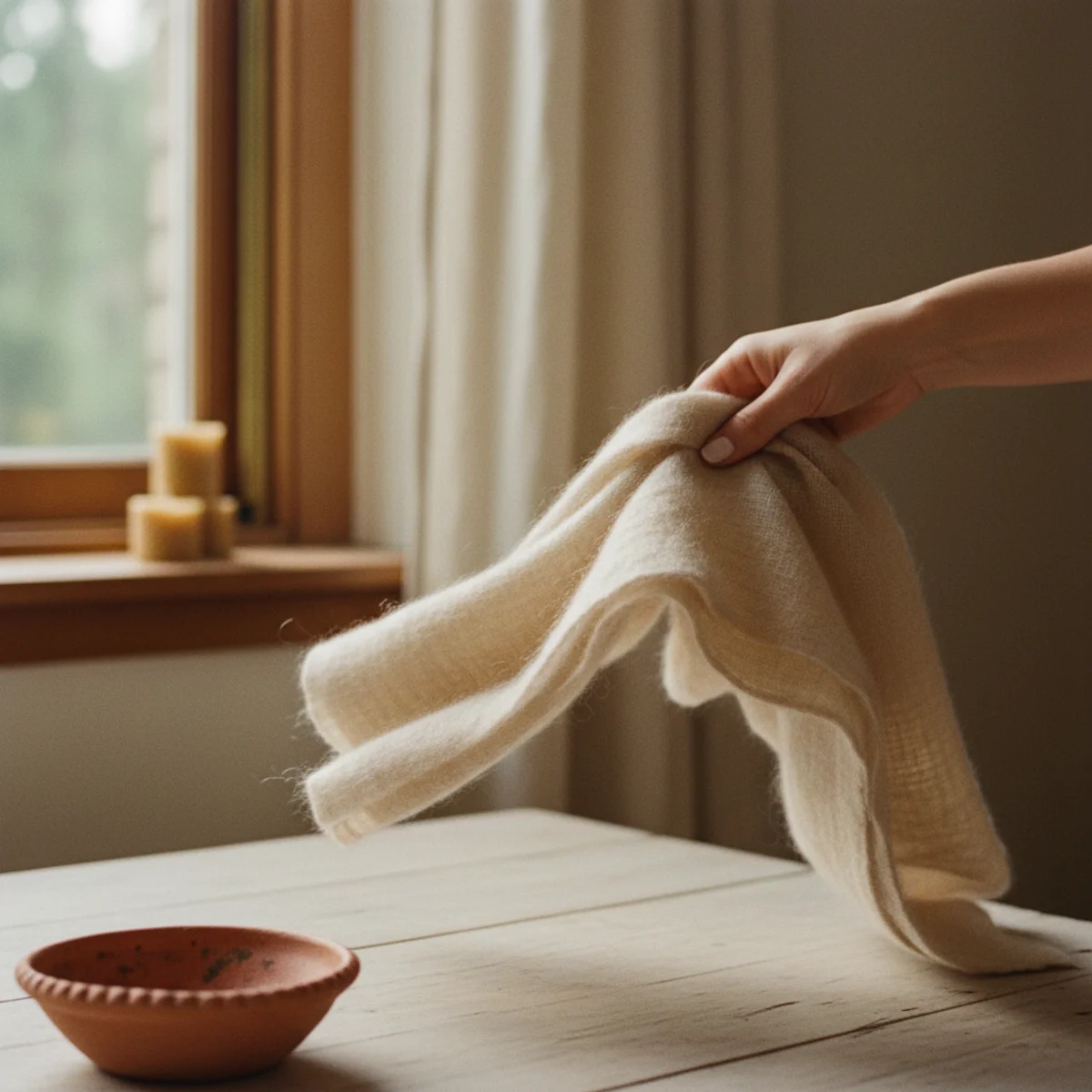
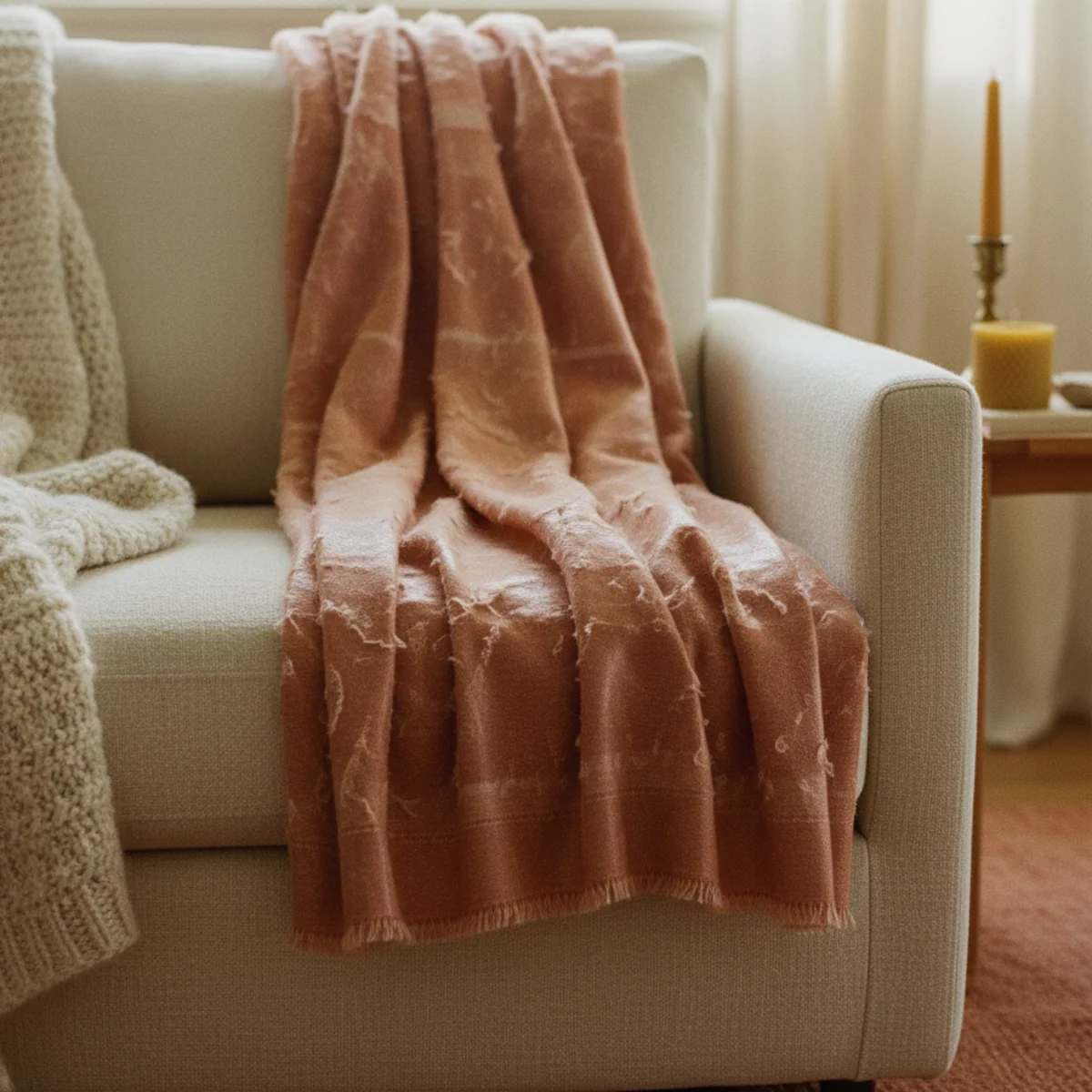
Mohair (or mohair-blend) throws are the luxury throw category — significantly softer than merino, with longer fiber length creating fluffier loftier appearance, and meaningfully more expensive. Pure mohair runs $150 to $500; mohair-merino blends in the $120 to $250 range capture most of the mohair benefit at lower cost.
Best mohair throw brands: BURBERRY MOHAIR at $300-500 (when on sale), WEST ELM MOHAIR BLEND at $120-200, REJUVENATION MOHAIR at $200-300, ANTHROPOLOGIE MOHAIR BLEND at $150-250, BRAHMS MOUNT mohair at $200-400 (artisan New England maker), JONATHAN ADLER mohair at $200-350. Look for: mohair content listed prominently (40-100% mohair, with remainder typically merino or cashmere for blend), 50x60 inch standard or 60x80 inch larger. Colors: cream, oat, terracotta, sage, deep rust, blush. The fiber length creates the distinctive 'fuzzy halo' that distinguishes mohair from smooth merino. CARE — mohair generally requires dry cleaning OR very gentle hand washing; less practical than merino but justified by the luxury feel. The mohair throw becomes a heirloom-level piece across decades.
AFFILIATE SLOTFIBER100% mohair $150-500 OR mohair-merino blend $120-250 from Burberry, West Elm, Rejuvenation, Anthropologie, Brahms MountAdd affiliate URL when configuredWhy it works
Because mohair fiber has longer staple length than merino, which creates the distinctive lofty 'halo' appearance, dramatically increases softness against skin, and provides better warmth-to-weight ratio. The visual difference is striking — mohair throws read as decadent and luxurious where merino throws read as practical. The tactile difference is equally significant — mohair feels noticeably softer in direct skin contact. The trade-offs (3x to 5x the price, more care required) are justified for households that want a heirloom-quality throw and use it as a key visual element in the room.
Pro tip — Buy mohair-merino blends rather than 100% mohair if budget matters — the 40-60% mohair content captures most of the visual and tactile benefit at 50-70% of the price. The blends also handle real-life use slightly better (somewhat more durable, slightly easier to clean) while still reading as luxury.
Cream mohair-blend with lofty halo — luxury throw with distinctive fluffy character. See also: Rejuvenation
03Lambswool — The Durable Middle
Lambswool falls between merino and standard wool — soft enough for most direct skin contact, more durable than merino against pilling and wear, and typically less expensive ($40 to $100 per throw). For households wanting wool throws that survive heavy daily use (kids, pets, sofa frequent-use), lambswool is often the better choice than fancier merino.
Best lambswool throw brands: PENDLETON LAMBSWOOL at $80-140, LL BEAN LAMBSWOOL at $60-120, EDDIE BAUER LAMBSWOOL at $50-100, GARNET HILL LAMBSWOOL at $80-130, IRISH LAMBSWOOL from John Hanly or Avoca at $70-150 (imported Irish lambswool is particularly nice for the price). Look for: 100% lambswool or lambswool-merino blend, 50x60 inch standard. Colors: warm cream, oat, terracotta, deep rust, sage, navy. The slightly coarser fiber compared to merino creates more visible weave texture (often read as visual character rather than as defect). CARE — typically machine washable with gentle cycle and cold water; more forgiving than mohair, less precious than cashmere. Lambswool throws often last 15+ years with regular use because of the durability advantage.
AFFILIATE SLOTFIBER100% lambswool or lambswool-merino blend at $40-150 from Pendleton, LL Bean, Eddie Bauer, Garnet Hill, Irish makersAdd affiliate URL when configuredWhy it works
Because the slightly coarser lambswool fiber resists pilling and wear better than fine merino, which extends throw lifespan significantly across heavy use households. The fiber is still soft enough for direct skin contact (especially after washing 2-3 times to soften further) and looks visually similar to merino. The lower price point ($40-100 versus $80-200 for merino) also lets you buy multiple lambswool throws to layer or distribute across rooms, where the same budget might only afford one merino. Households with kids, pets, or significant daily sofa use specifically benefit from lambswool's durability advantage.
Pro tip — Wash lambswool throws 2-3 times before first use to soften them — fresh lambswool can feel slightly stiff or coarse, but washing breaks in the fibers significantly. Many households find their lambswool throws develop the right softness only after the first 3-5 wash cycles; the initial softness is not representative of long-term feel.
Oat lambswool with visible weave — durable middle option for households with heavy daily use. See also: John Hanly
04Cotton Waffle Weave — The Light Layer
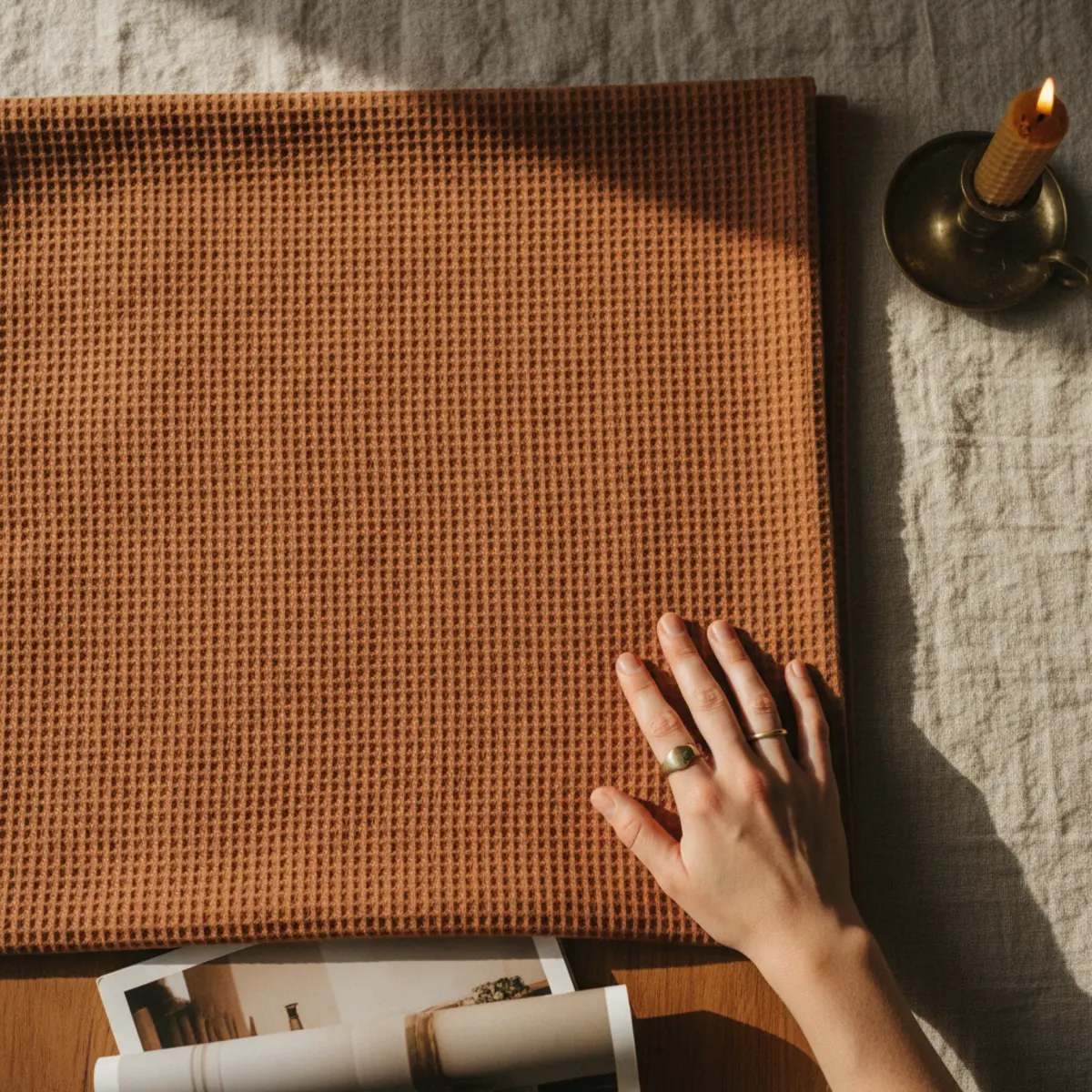
Cotton waffle weave throws fill the lighter-weight throw category — perfect for warm-climate use, summer months, layering over heavier wool, or as the everyday casual throw. The textured waffle weave catches air for insulation while staying breathable, providing genuine warmth at lower weight than wool. Price range: $40 to $120.
Best cotton waffle weave throw brands: BROOKLINEN WAFFLE at $79-99, COYUCHI WAFFLE at $80-130, QUINCE WAFFLE at $60-90, PARACHUTE WAFFLE at $90-130, BOLL & BRANCH WAFFLE at $80-120, TARGET THRESHOLD WAFFLE at $30-50 (budget option that delivers), SNOWE WAFFLE at $99-149. Look for: 100% cotton (not cotton-polyester blend), waffle or honeycomb texture, 50x60 inch standard or 60x80 larger. Colors: cream, white, oat, terracotta, sage, light blue. The breathable cotton works year-round but particularly shines in summer when wool feels too warm. CARE — fully machine washable, dryer-safe on low, no special handling required. The cotton waffle throw is the most practical for everyday casual use — the easiest to clean, most forgiving of spills and stains, lowest stakes for kids and pets.
AFFILIATE SLOTFIBER100% cotton waffle weave at $40-150 from Brooklinen, Coyuchi, Quince, Parachute, Boll & Branch, TargetAdd affiliate URL when configuredWhy it works
Because the waffle texture creates small air pockets that provide thermal insulation without the weight or density of wool — a cotton waffle throw weighs roughly half what an equivalent wool throw weighs while providing 60-70% of the warmth. The breathability advantage matters in warm climates (Florida, Texas, Arizona) where wool throws feel too warm even in cooler seasons, and in summer use anywhere. The cotton washability also makes it the highest-stakes-friendly throw — toddler's snack accident becomes minor cleanup rather than dry-cleaning crisis.
Pro tip — Buy cotton waffle throws specifically for guest bedrooms — the easy-care quality means guests can use them freely without worrying about damage, and the breathability handles guests with unknown temperature preferences. A $79 Brooklinen waffle throw at the foot of every guest bed transforms guest comfort with minimal investment.
Cream cotton waffle weave — light layer for warm climates and summer months. See also: Brooklinen
05Linen — The Warm-Climate Choice
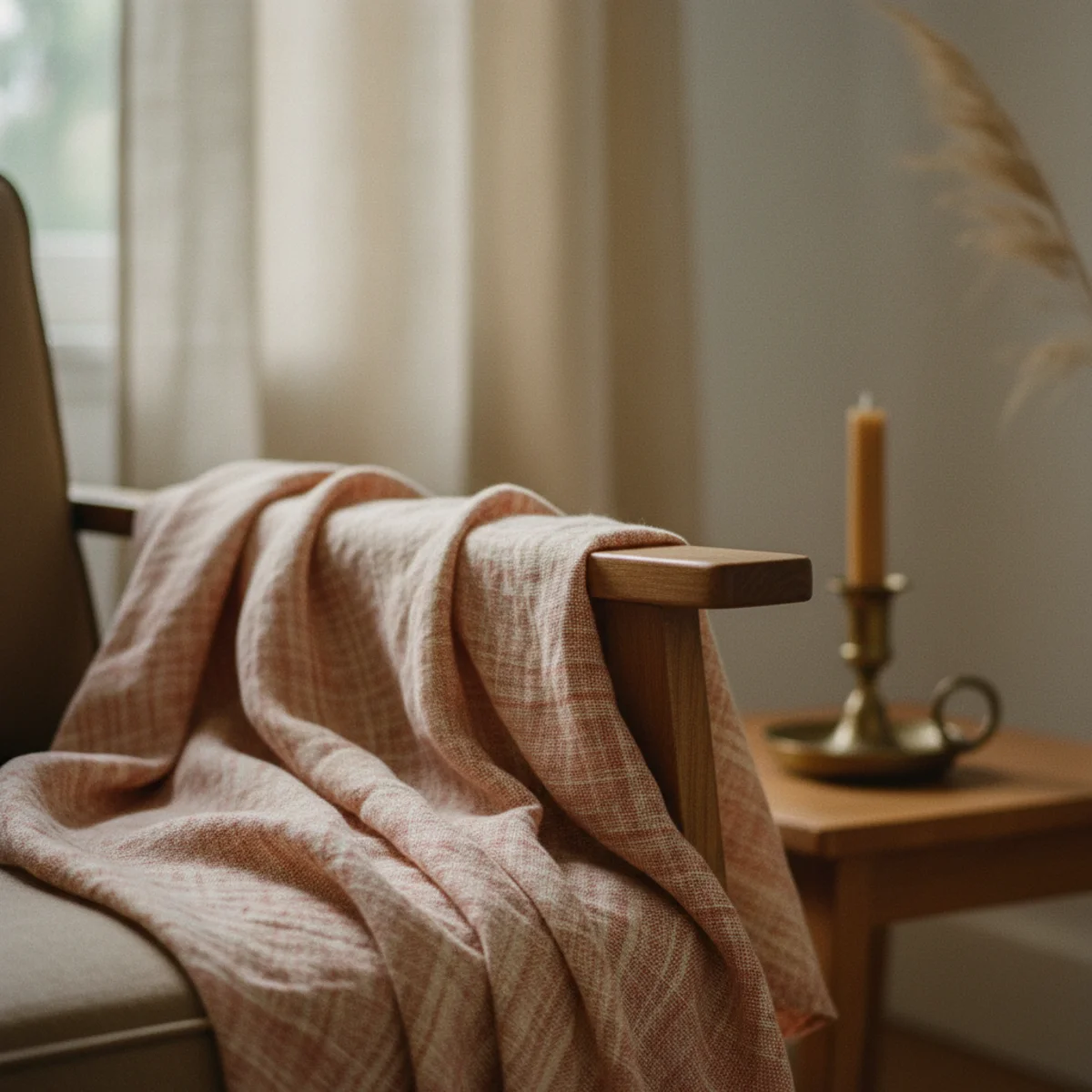
Linen throws fill the warm-climate and summer-evening throw category — substantially lighter than wool, with the slubby natural-fiber visual character that fits warm-home aesthetic, and at price points similar to merino. Best for warm climates where wool reads too heavy, and for summer evening use anywhere.
Best linen throw brands: QUINCE LINEN at $80-100, COYUCHI LINEN at $90-140, MAGIC LINEN at $60-110, BROOKLINEN LINEN BLANKET at $99-149, REJUVENATION LINEN at $120-200, PARACHUTE LINEN at $99-140, ETSY ARTISAN LINEN at $60-200. Look for: 100% linen (typically European or Belgian flax), washed for soft texture rather than crisp, 50x60 inch or 60x80 inch. Colors: cream, oat, terracotta, sage, blush, deep rust. The slubby natural texture is the distinctive visual character. CARE — machine washable (cold or warm), dryer-safe on low, develops better character with repeated washing rather than degrading. Linen throws specifically improve with use across years where many other throws degrade. AVOID: crisp un-washed linen, linen-cotton blends (better choice is washed linen or 100% cotton waffle), heavy linen (more for bedding than throws).
AFFILIATE SLOTFIBER100% washed linen at $60-200 from Quince, Coyuchi, Magic Linen, Brooklinen, Rejuvenation, Parachute, Etsy artisansAdd affiliate URL when configuredWhy it works
Because linen fiber is naturally cool-feeling against skin (significantly more so than wool) and highly breathable — exactly the properties needed when ambient temperature is already warm. The slubby visual character also matches warm-home aesthetic without reading too heavy or formal. Linen washes well, ages beautifully, and develops the slightly-wrinkled lived-in quality that suits cozy decor. The fiber lasts decades with regular use, making linen throws a long-term investment despite the higher initial cost. For households in southern US states, southwest, southern Europe — linen often outperforms wool as the primary throw choice.
Pro tip — Wash linen throws 2-3 times before first use to develop the soft slightly-wrinkled aesthetic — fresh-from-package linen is slightly stiff but breaks in dramatically with multiple washes. The character that linen specifically gets credit for emerges only after the breaking-in process.
Washed oat linen with slubby texture — warm-climate and summer alternative to wool. See also: best-linen-bedding
06Alpaca — The Featherweight Warmer
Alpaca throws are the featherweight warm fiber — significantly lighter than equivalent wool throws while providing the same or greater warmth, and softer than most wool varieties. Price range: $100 to $400 with sweet spot at $150 to $250. Particularly suited for cold climates where weight matters (older adults, anyone who finds wool throws too heavy).
Best alpaca throw brands: PARACHUTE ALPACA at $150-200, REJUVENATION ALPACA at $200-300, ARGENTINE OR PERUVIAN ARTISAN ALPACA from Etsy at $100-300 (often best quality-to-price), NATURAL HABITAT ALPACA at $150-300, JONATHAN ADLER ALPACA BLEND at $200-400. Look for: 100% alpaca (Peruvian or Argentine origin, baby alpaca for highest quality), 50x60 inch standard. Colors: cream, oat, deep rust, terracotta, charcoal, black-and-cream stripes. The hollow alpaca fiber traps air for insulation while weighing significantly less than wool — a 50x60 inch alpaca throw might weigh 2 pounds where the equivalent wool throw weighs 3.5 pounds, providing similar warmth. CARE — typically requires hand washing or dry cleaning; less practical than merino but reasonable for the use case. SUSTAINABILITY consideration — Peruvian alpaca is generally considered more sustainable than other wool varieties due to lower environmental impact of alpaca farming.
AFFILIATE SLOTFIBER100% alpaca (Peruvian/Argentine, baby alpaca preferred) at $100-400 from Parachute, Rejuvenation, Etsy artisansAdd affiliate URL when configuredWhy it works
Because alpaca fiber is hollow (the only common throw fiber with this property), which traps air for insulation while keeping overall weight low. The same throw size in alpaca weighs roughly 60% of the wool equivalent while providing equal or greater warmth. The lighter weight matters significantly for older adults (some find heavy wool throws fatiguing), for warm-climate use of warm throws (the warmth without the weight), and for layering (alpaca over wool adds warmth without doubling weight). The hypoallergenic nature also helps households with wool sensitivities.
Pro tip — Source alpaca throws directly from Argentine or Peruvian artisans through Etsy when possible — the direct-from-source quality often exceeds U.S. retail brands at half the price, and the cultural connection to the fiber's origin tradition adds meaning. Etsy alpaca makers typically range $100-300 for excellent quality.
Cream baby alpaca with subtle sheen — featherweight warmth from hollow fiber. See also: Parachute
07Cashmere — The Splurge
Cashmere is the splurge throw category — the finest fiber (lower micron count than merino, dramatically softer than any other wool), the most luxurious feel, and the highest price. Price range: $200 to $1,500+ depending on weight, quality grade, and brand. Reserved for specific households where the throw is a primary visual element and budget supports it.
Best cashmere throw brands: WHITE & WARREN CASHMERE at $400-700, BURBERRY CASHMERE at $500-1,200, REPETTO/PARIS CASHMERE at $400-800, JIA CASHMERE at $300-500, MAGNIBERG CASHMERE at $600-1,000, BLOOMINGDALE'S CASHMERE COLLECTION at $200-500 (when on sale, otherwise full retail $400-900), VARIOUS ETSY ARTISANS at $300-700. Look for: 100% cashmere (the percentage matters significantly — even 5% other fibers diminishes the cashmere experience), 2-ply or higher weight grade for substantial drape, 50x60 inch standard or 60x80 inch larger. Colors: cream, oat, blush, terracotta, deep rust, charcoal, navy. The fiber softness is the defining quality — significantly softer than even mohair or alpaca. CARE — almost always requires dry cleaning OR very gentle hand washing; precious enough to handle carefully. Cashmere throws become heirloom-level objects that pass down across generations with proper care.
AFFILIATE SLOTFIBER100% cashmere (2-ply or higher) at $200-1,500+ from White & Warren, Burberry, Repetto, Jia, Magniberg, Bloomingdale's, EtsyAdd affiliate URL when configuredWhy it works
Because the fiber softness is genuinely without equal among throw materials — direct skin contact with cashmere feels qualitatively different from contact with even high-quality mohair or merino. For households where the throw is a primary visual focus (key element on the most-photographed sofa, foot-of-the-best-bed throw, hero piece in a styled space), the splurge can justify itself across daily use over years. The fiber also ages beautifully with proper care, developing subtle patina and softness improvements that other throws don't show. The trade-off is real — most households don't need cashmere, but for those that want it, the daily luxury compounds significantly.
Pro tip — Source cashmere when seasonal sales hit major retailers — Bloomingdale's, Saks, Nordstrom often discount cashmere 30-50% during summer (off-season for throws) and after the holidays. Spending $300 on cashmere on sale is significantly better than $700 retail; the patience pays off.
Cream cashmere with subtle sheen — splurge category for households where throw is primary visual element. See also: Bloomingdale's
08Skip — Acrylic and Acrylic Blends
The single most-important shopping guidance: skip acrylic throws and acrylic-wool blends entirely. Despite dominating the budget throw market ($15 to $50 retail), acrylic fails at every level that matters — feels coarse and squeaky against skin, pills aggressively within 6 months, looks visibly synthetic, doesn't breathe, generates static, and contributes to microplastic pollution. The $30 acrylic throw is genuinely worse than no throw at all.
Acrylic identification and rejection: CHECK THE FABRIC CONTENT TAG — anything listing 'acrylic,' 'polyester,' 'microfiber,' 'rayon,' or 'modacrylic' should be rejected for throw use. RED FLAG BRANDS — most big-box and budget retail throw lines (Target, Walmart, Marshalls, TJ Maxx budget-tier throws, Costco budget throws) primarily sell acrylic. Even brands selling 'wool throws' often produce wool-acrylic blends with 60-80% acrylic content marketed as wool. WHAT $30 SHOULD BUY INSTEAD — IKEA INGABRITTA at $30-50 (100% wool, not blend), thrifted vintage wool throws from estate sales at $5-30, secondhand Pendleton blankets at $20-40 from Marketplace. The thrifted alternatives consistently outperform new acrylic at lower price. WHY ACRYLIC FAILS — the synthetic fiber doesn't breathe (sweats when wrapped), pills aggressively (looks worn within months), generates static electricity (uncomfortable in cold-air conditions), contributes microplastics to water systems (every wash releases thousands of microfibers), feels qualitatively different against skin than natural fibers.
AFFILIATE SLOTAVOIDREJECT: acrylic, polyester, microfiber, rayon, modacrylic, and acrylic-blend throws regardless of brand or priceAdd affiliate URL when configuredWhy it works
Because acrylic is petroleum-based synthetic plastic, not a textile fiber in the traditional sense — and it carries all the disadvantages of plastic in textile form (doesn't breathe, generates static, doesn't biodegrade, releases microplastics). The 'wool look' that acrylic blends attempt to mimic always fails because the fiber's inherent properties prevent it from feeling, draping, or aging like wool. The dominant marketing of acrylic as cheap wool alternative misleads consumers into thinking the trade-off is just price; the trade-off is actually fundamental fiber quality. Better $20 thrifted wool exists for the same price as $30 acrylic new.
Pro tip — Read fabric content tags BEFORE purchase, not after — bring reading glasses or a magnifier to brick-and-mortar throw shopping since the content tags are intentionally tiny on most budget throws. Online shopping, use Ctrl-F to search the product description page for 'acrylic' before purchasing; if found, skip the product.
Skip acrylic throws — thrifted wool at $20-40 outperforms new acrylic at $30-50 every time. See also: thrifted vintage wool throws
How to choose the right throw
Match the fiber to how and where you'll use it. Four questions sort it quickly.
- 1Decide where it lives
A daily-use family sofa wants durable lambswool or washable cotton; a bedroom accent can take delicate cashmere or mohair.
- 2Pick warmth for your climate
Cold climate and winter use: mohair or alpaca. Warm climate or hot sleeper: linen or cotton waffle. Year-round: merino.
- 3Check the fiber, not the label
Read the content tag. Aim for 100% natural fiber or a high-wool blend; avoid anything majority acrylic, which pills permanently.
- 4Feel the weave
Tight, even weaves wear better and pill less. Chunky knits add texture; flat weaves layer cleanly under a heavier throw.
Quick tips
- Wash wool gently and air-dry; the dryer destroys the loft.
- Expect new wool and mohair to shed for two to three months, then stop.
- Shake throws out weekly instead of laundering often — it keeps them lofted and clean.
- Buy one good throw and layer it over cheaper cotton rather than three mediocre ones.
- Check secondhand first; vintage wool and mohair often beat new synthetics for less.
- Store off-season throws clean and in breathable cotton bags, not plastic, to avoid moths and must.
The best throw by use
Lambswool or washable cotton waffle — durable, forgiving, and easy to clean.
Mohair or alpaca — the warmest, softest options when the nights turn cold.
Cashmere or fine merino — soft, light, and reserved for low-traffic luxury.
Linen or cotton waffle — breathable texture without the heat of wool.
A wool throw sheds for the first three months, then becomes the softest thing you own. Worth it.
Frequently asked questions
Which wool throw should I buy first?+
Is acrylic wool blend okay for a throw?+
What's the difference between merino and mohair?+
Are cotton throws as warm as wool?+
What about cashmere — is it worth the price?+
How do I take care of a wool throw?+
Match the fiber to where the throw will live: durable lambswool or washable cotton for a daily sofa, mohair or alpaca for winter warmth, cashmere only for a low-traffic bedroom. We'd buy one excellent mohair throw and layer it over cheaper cotton rather than three mediocre blankets — and we'd check secondhand first, where vintage wool routinely beats new synthetic for less. Whatever you choose, skip the acrylic. It's the one false economy your hands will notice every single day.