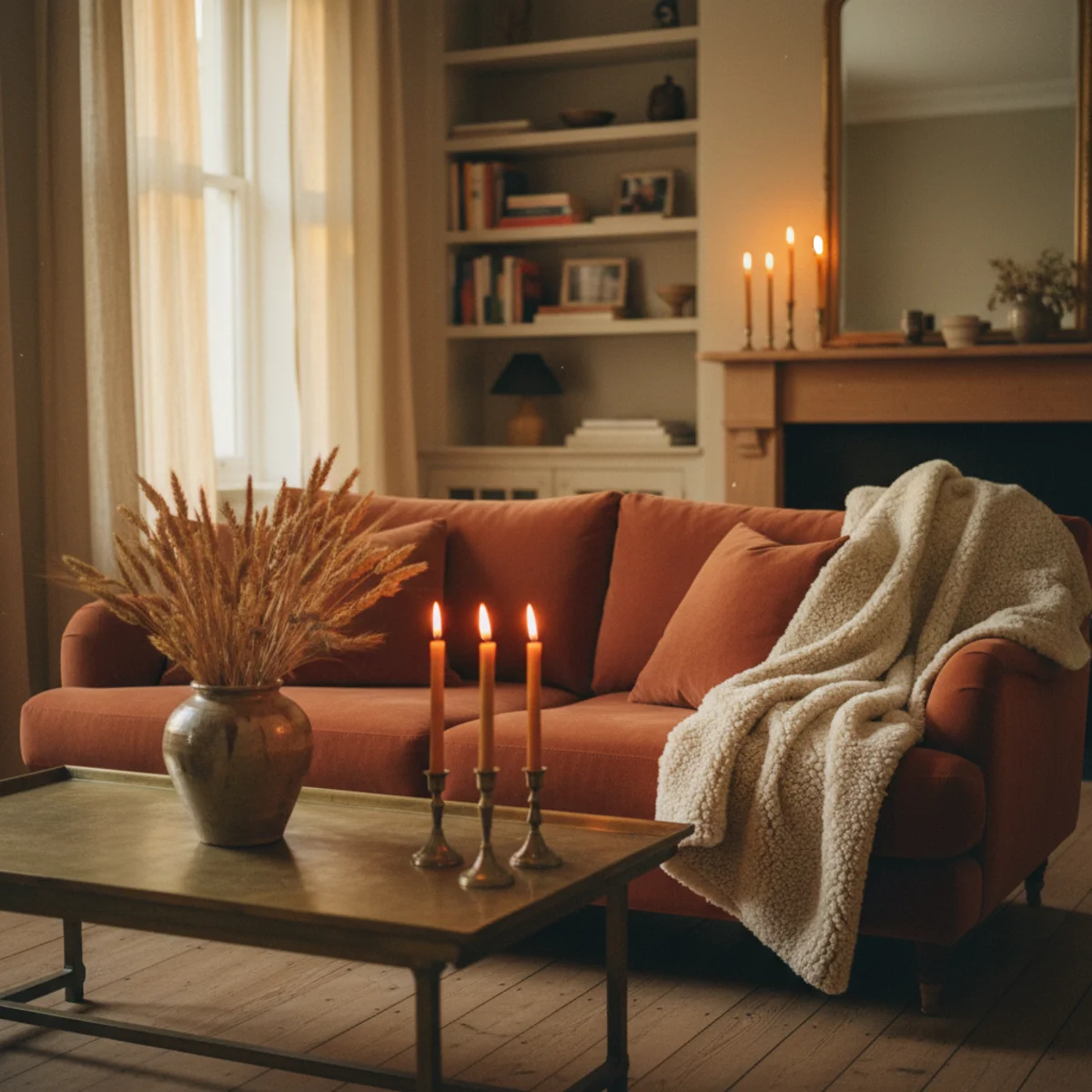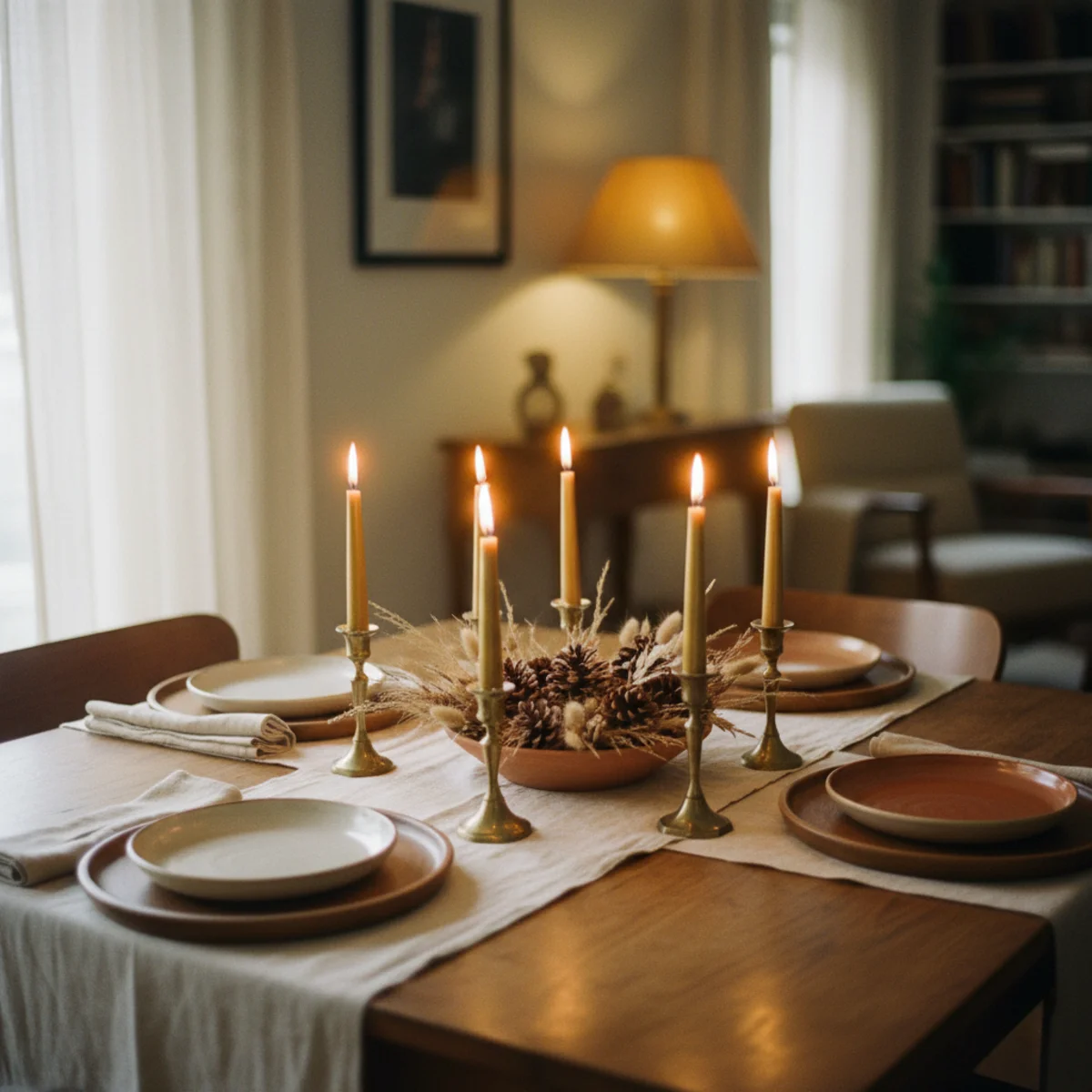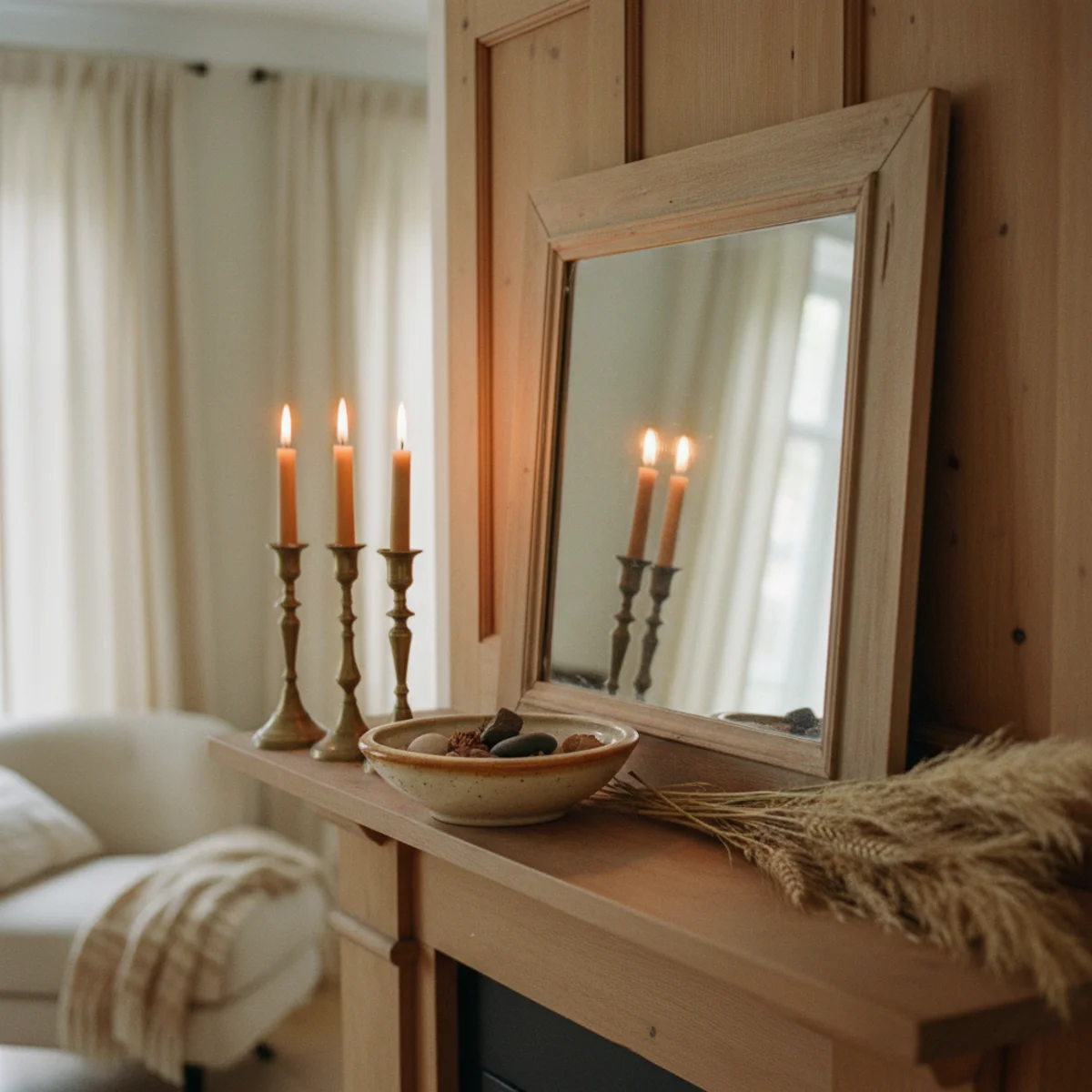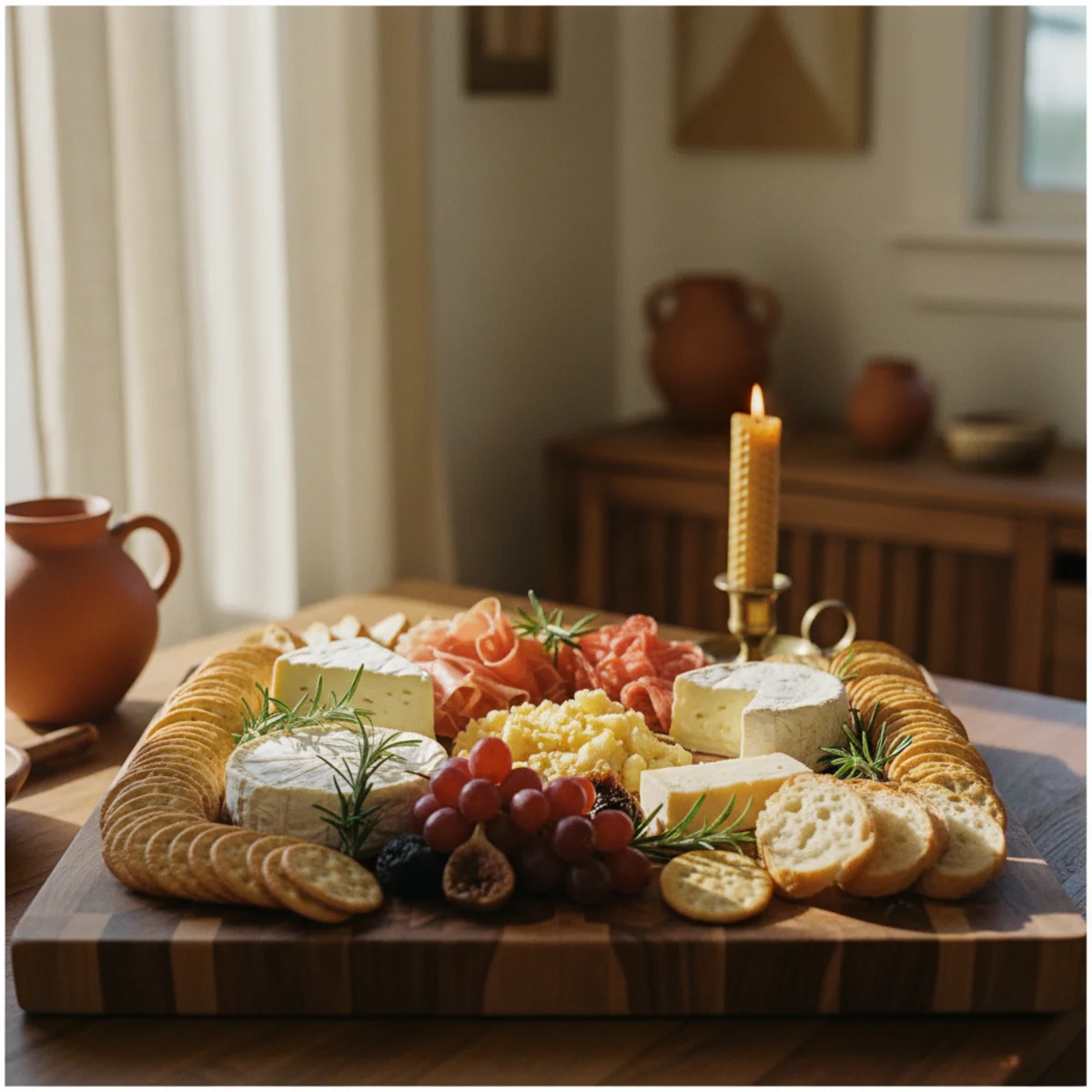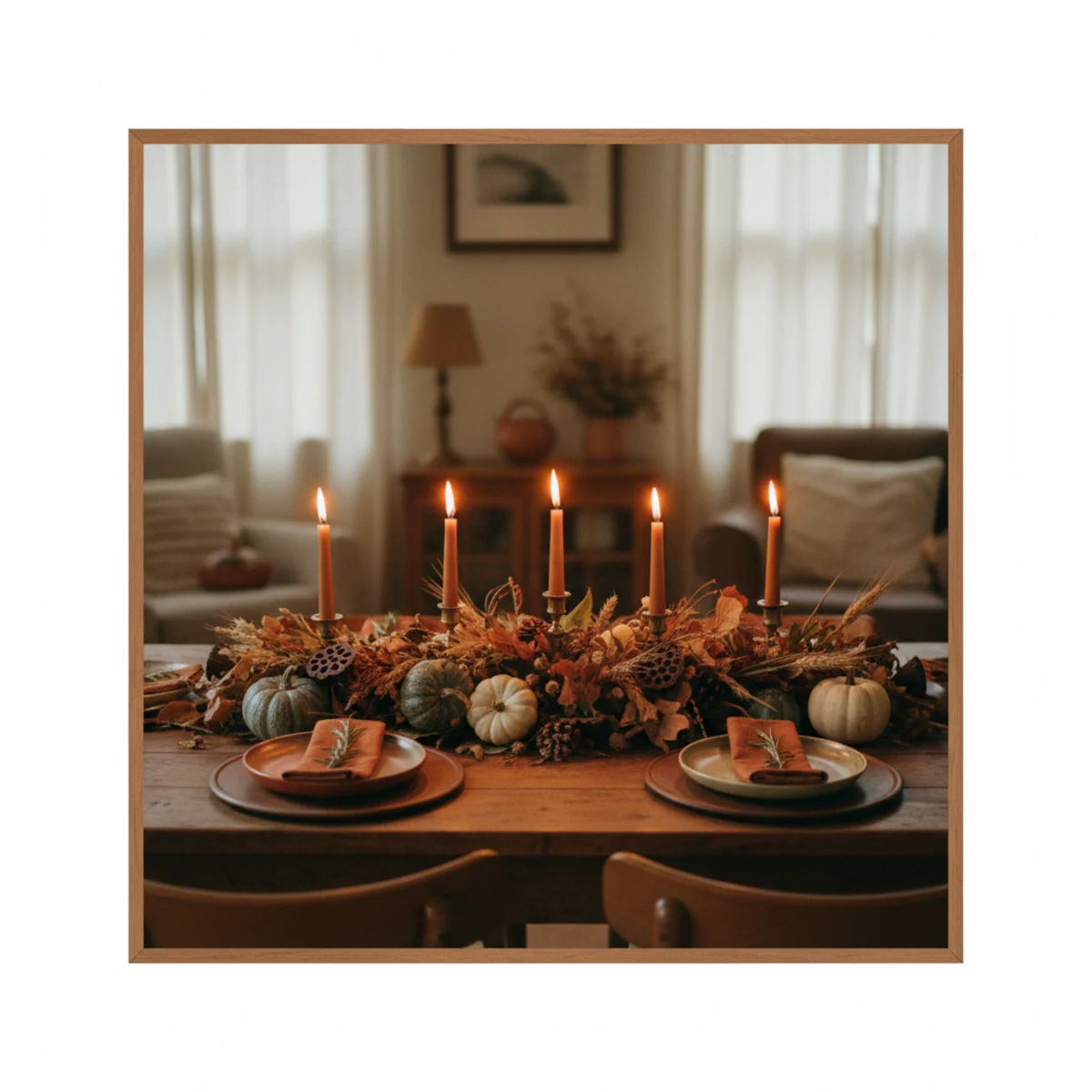
These twelve fall tablescape principles apply to both formal fall dinner gatherings and casual family autumn dinners. Each principle names specific seasonal materials (dried foliage, heirloom pumpkins, seed pods, beeswax candles in amber), specific arrangement rules (low centerpiece discipline, off-center weighting, the abundant-but-natural standard), and low-cost or free sourcing from yards, farmers markets, and autumn walks that make the fall tablescape the most achievable of the seasonal table styles.
Most fall tablescape failures come from over-relying on mass-produced commercial autumn decor — plastic gourds in unnatural colors, pre-made artificial leaf garlands, commercial orange-and-black color stories from the Halloween aisle. The fall tablescape that reads as genuinely warm and seasonal uses real materials: actual dried botanicals, actual heirloom pumpkins in their natural tones, foraged seed pods and leaves, and amber-toned beeswax candles. The authentic materials cost less than commercial alternatives and read far better.
By the end of this guide, you'll know how to build a genuinely warm fall tablescape — the dried foliage centerpiece, the amber beeswax candle cluster, the warm earthy palette, the heirloom pumpkins, the low-centerpiece discipline, the earthy mismatched plates, the clove-studded fruit, the linen napkins with herb sprig, the scattered seed pods, the brass and wood material language, the dim room lighting protocol, and the abundant-but-natural organizing principle.
WHAT'S INSIDE
- Why dried foliage runs as the centerpiece rather than fresh florals for fall specifically
- Amber and beeswax candles — the candle color that maps to fall's light most exactly
- Heirloom pumpkins in their natural earth tones — specifically not commercial orange Halloween pumpkins
- The abundant-but-natural principle — the fall equivalent of the holiday's abundant-but-un-fussy
The autumn table is the warmest of the year. Dried foliage, candlelight, and earthy tones do more than any plastic gourd.
— Domino entertaining feature [citation needed — verify before publish]
What makes a fall tablescape warm?
A warm fall tablescape layers dried and natural autumn foliage, abundant candlelight, a warm earthy palette, and relaxed natural place settings into a table that feels harvest-abundant and gathered. It's the seasonal cousin of any cozy tablescape, dressed in autumn's materials — dried wheat, foraged branches, seed pods, small pumpkins or gourds, and rust, ochre, and amber tones.
The defining quality is natural abundance over themed kitsch. The warm version uses real dried foliage and a few genuine seasonal touches — clove-studded fruit, small heirloom pumpkins, foraged branches — rather than orange plastic gourds and synthetic leaves. Candlelight at face height in amber and brass carries the warmth; a low centerpiece you can see over keeps it gathered; and mismatched plates in earthy tones read collected. Abundant, natural, and warm-toned is what makes an autumn table feel like a harvest rather than a craft-store display.
More in Entertaining you may love
See allWhy fall tablescapes are everywhere in 2026
The autumn gathering season drives a spike in table-setting interest every year, and the warm, natural fall tablescape replaced the orange-and-plastic-gourd version — Pinterest's fall tablescape and autumn table searches climb every September, toward dried foliage, candlelight, and earthy tones.
The honest appeal is that fall is the season of gathering, and the warm autumn table sets the mood for the long harvest dinners people host most. As the natural-decor and cozy-entertaining movements spread, the fall table followed: dried wheat and foraged branches over plastic, beeswax candlelight over novelty, earthy rust and amber over bright orange. The 2026 fall tablescape is warm, abundant, and natural — built for lingering as the evenings draw in.
12 fall tablescape ideas
01Run a Dried Foliage Centerpiece
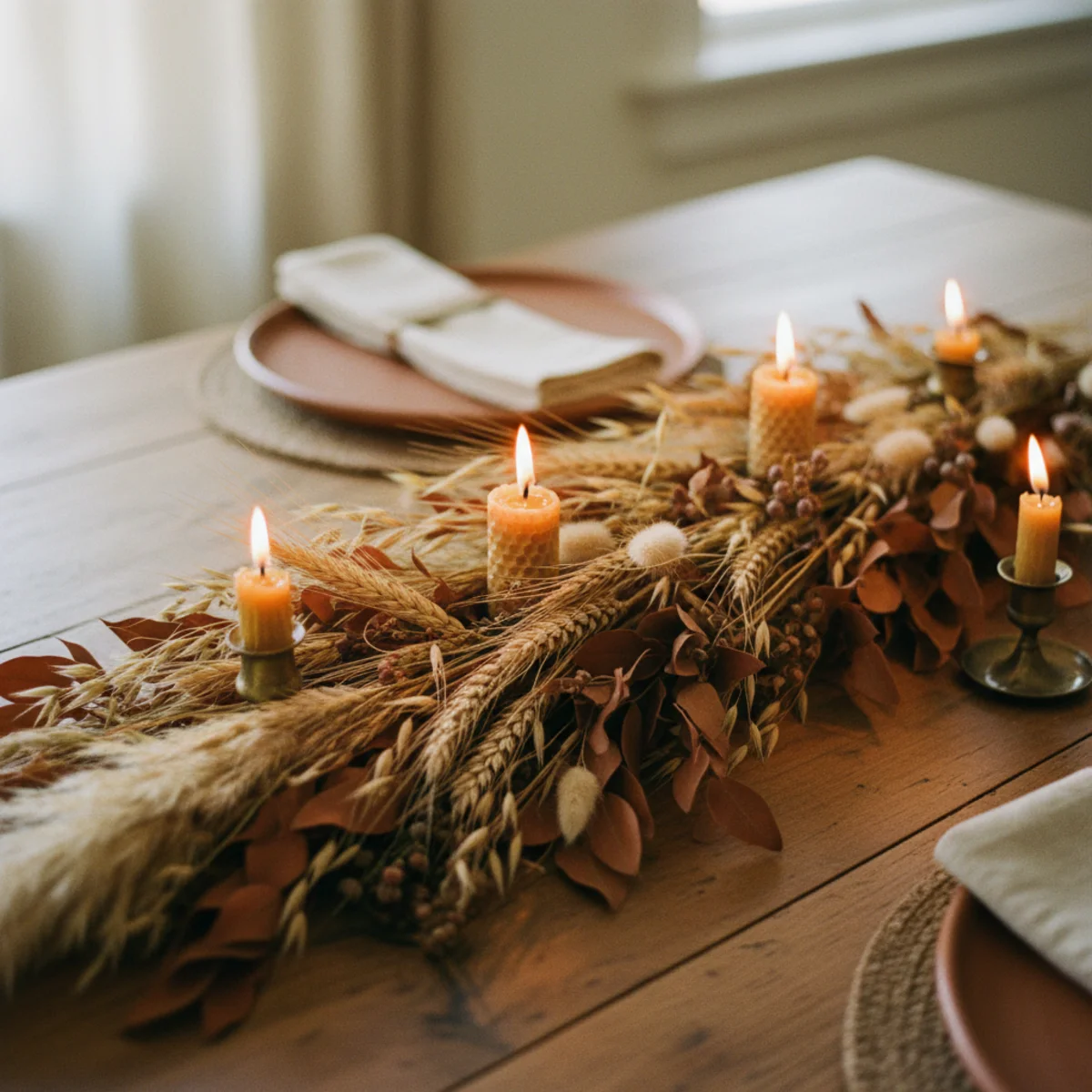
The fall tablescape's centerpiece should be dried foliage rather than fresh flowers — dried wheat stalks, dried grasses, dried seed heads, dried eucalyptus, preserved autumn leaves. Fresh florals are the spring and summer centerpiece material; fall's authentic centerpiece material is what the season produces: dried, preserved, turned golden and russet by the end of the growing cycle. Cost: $0-30 depending on foraging versus purchasing.
Dried foliage centerpiece options: DRIED WHEAT STALKS — 12-18 stalks laid horizontally in a loose arrangement down the table center, or bundled and placed in a low ceramic vessel. $10-20 per bunch from Trader Joe's, Whole Foods, or Etsy. DRIED PAMPAS OR PLUME GRASSES — low-cut arrangement 8-12 inches tall, 2-3 stalks in a low ceramic bowl. $10-25 per stalk. PRESERVED AUTUMN LEAVES — collected from yard at peak color and pressed under heavy books for 1 week, then arranged in a flat low display. Free from any yard with deciduous trees. DRIED SEED HEADS — dried poppy heads, lotus pods, dried sunflower heads, milkweed pods (foraged). Free if foraged. MIXED ARRANGEMENT — combine 2-3 of above in a long low arrangement running 60-70% of table length. The mixed-foliage fall centerpiece reads more abundant and season-specific than any single element. PLACEMENT — same as all tablescapes: center of table, below 14 inches for conversation sightline preservation. Dried foliage naturally lies low when arranged in horizontal running fashion.
AFFILIATE SLOTCENTERPIECEDried wheat stalks, pampas grass, preserved autumn leaves, or dried seed heads laid low down table center; free if foraged, $10-25 if purchasedAdd affiliate URL when configuredWhy it works
Because fall IS the season of drying and preservation — the garden's end-of-growing-cycle, the harvest of dried herbs and botanicals, the grain fields after harvest. Fresh florals would fight the season's authentic material character; dried foliage expresses it. A fall table with fresh-cut tulips reads as spring material in fall setting; a fall table with dried wheat and preserved autumn leaves reads as fall. Authentic seasonal materials are what distinguish warm seasonal tablescapes from generic decorating.
Pro tip — Collect dried foliage from your yard in September and early October while the season is at its best — cut wheat-like grasses, gather dried seed pods, collect fallen autumn leaves at peak color. Bundle and hang upside down in a dry spot for 1-2 weeks. The foraged collection produces more varied and authentic fall foliage than any purchased bundle.
Dried wheat, preserved leaves, dried grasses laid low — fall's authentic harvest material as the table's center. See also: autumn-mantel-ideas
02Cluster Amber and Beeswax Candles
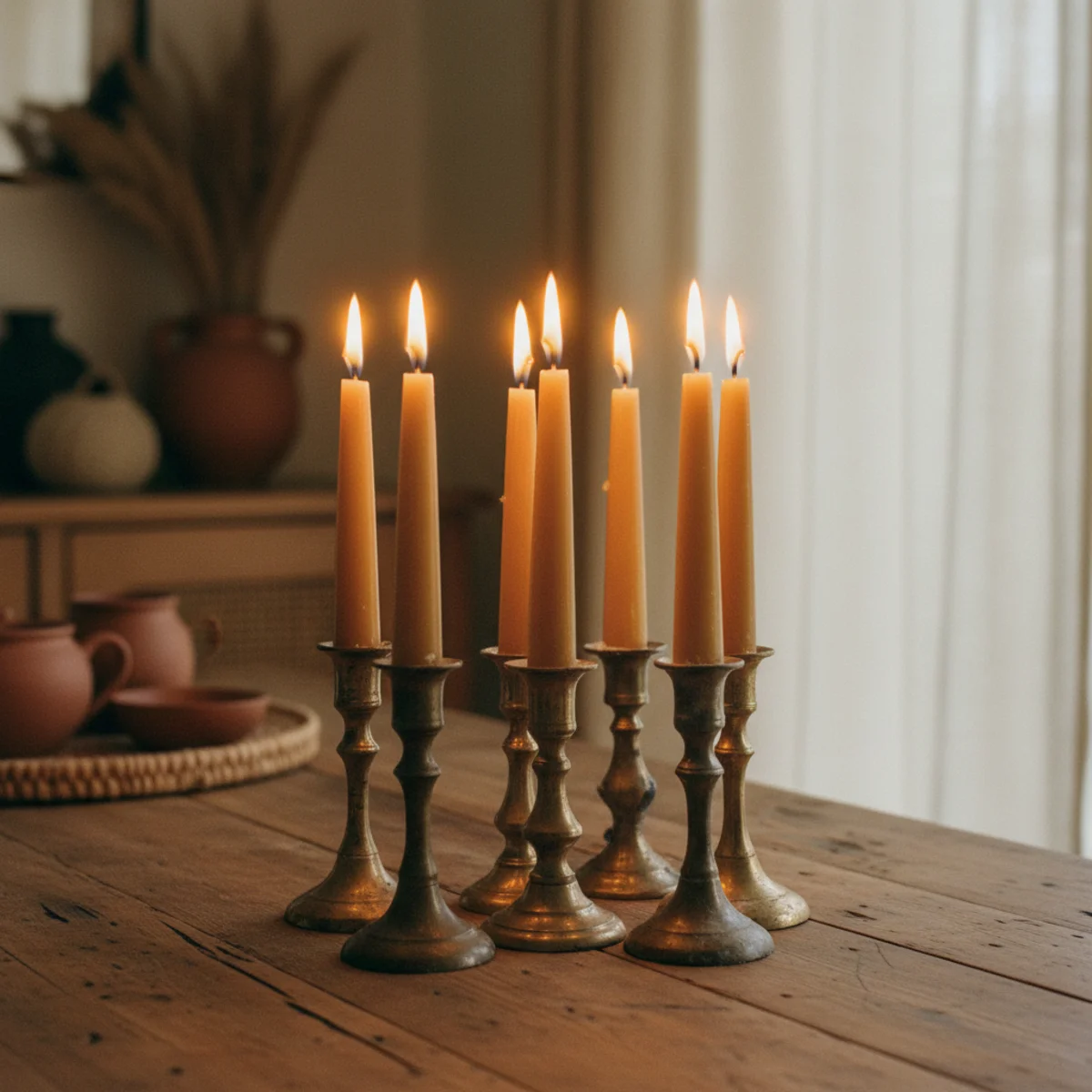
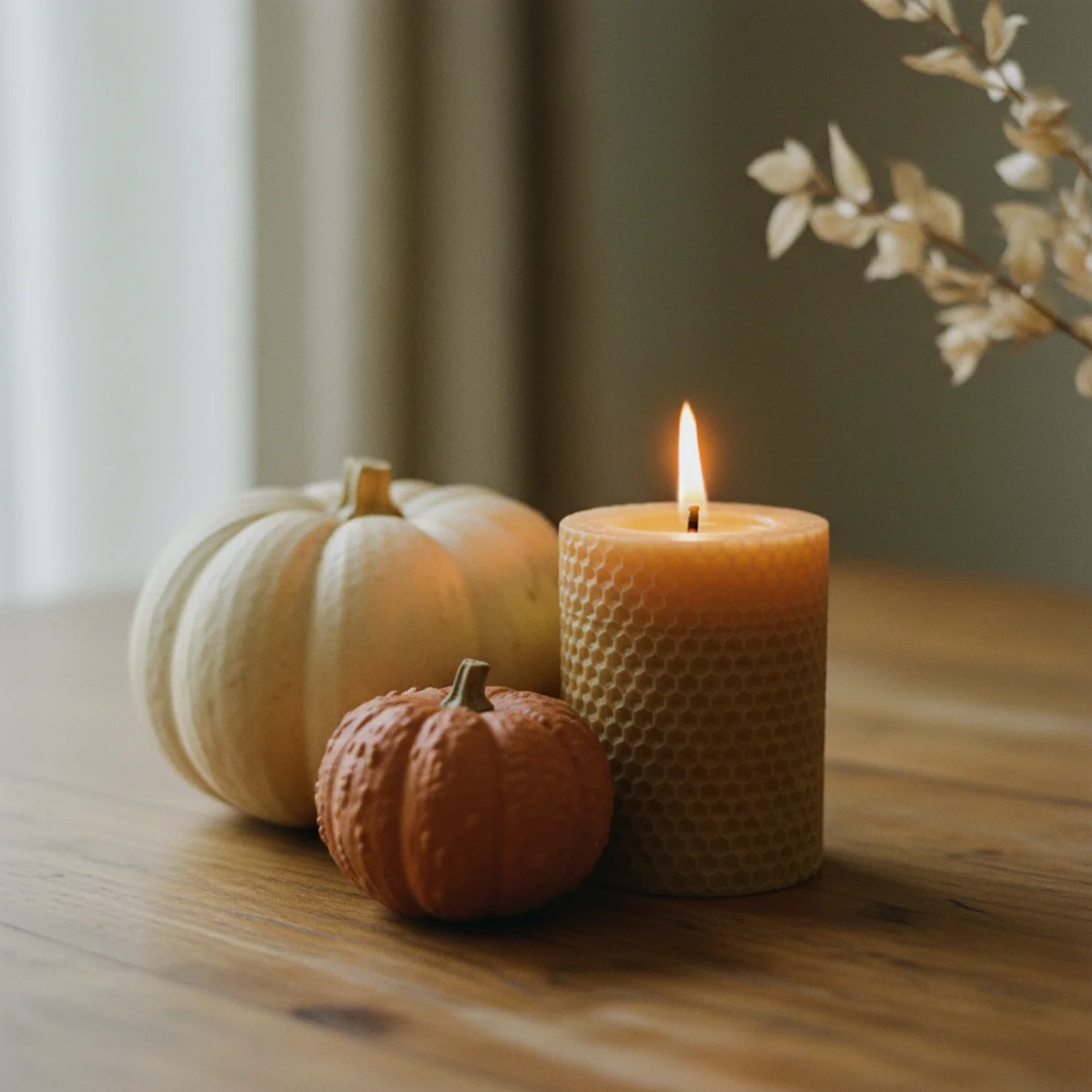
Fall candlelight should favor amber and beeswax tones — the warm honey-gold of natural beeswax candles exactly matches fall's amber light quality and harvest palette. A cluster of 4-7 beeswax tapers in mixed vintage brass holders plus 2-3 pillar candles distributed along the dried foliage centerpiece produces the warm-cave fall dining atmosphere at its most-authentic.
Fall candle cluster specifics: BEESWAX TAPERS — natural beeswax honey-gold color specifically (not bleached white beeswax for fall — the amber tones are the fall-specific quality). 4-7 tapers in mixed vintage brass holders of varied heights. $6-15 per taper from Etsy artisan beekeepers or Beehive Collection. AMBER-TONED PILLAR CANDLES — 2-3 beeswax pillar candles in amber or honey tone, 3-6 inch heights, distributed along the foliage centerpiece. $10-25 each. HOLDER VARIETY — vintage brass candlesticks (3-5 inches to 10-12 inches tall), mixed designs but all in aged-brass family. Estate sales at $5-20 each. AMBER GLASS VOTIVE HOLDERS — an alternative to brass: amber-colored glass votive holders with beeswax tealights ($1-3 per tealight, amber holders at $5-15 each) scatter warm amber-through-glass light along the table. THE FALL CANDLELIGHT QUALITY — natural beeswax burning through amber glass or in natural beeswax tapers produces the golden light that fall's shorter days and harvest associations specifically call for. Not the brighter white light of bleached tapers; the warm honey-gold of natural beeswax.
AFFILIATE SLOTCANDLES4-7 natural honey beeswax tapers in mixed brass holders + 2-3 beeswax amber pillars; OR amber glass votives with beeswax tealights along foliage centerpieceAdd affiliate URL when configuredWhy it works
Because fall's natural light is specifically amber-golden — the lower sun angle of autumn (versus summer's higher direct sun) produces warm angled light that falls in long golden rays through windows. The autumn afternoon light, the harvest moon, the first firelight of the season are all amber-toned. Natural beeswax candles burning at the table replicate and amplify this specific amber-golden fall light quality. Bleached white beeswax, paraffin, or very pale candles don't carry this specificity; natural honey-toned beeswax does.
Pro tip — Stock natural-honey-beeswax tapers specifically for fall table use — the natural unbleached beeswax is the fall-specific candle material, where bleached white beeswax works better for spring and summer and deep-dyed tapers (terracotta, forest green) work for holiday-specific settings. The amber honey-gold is fall's canonical candle tone.
Honey-amber beeswax tapers in brass holders with amber glass votives — fall's golden candlelight quality along the harvest centerpiece. See also: candle-styling
03Choose a Warm Earthy Palette
Fall tablescape palette: all warm earth tones — deep terracotta, warm rust, burnt ochre, deep warm brown, cream, and natural wood. Not commercial orange-and-black Halloween palette; not artificially bright autumn colors. The authentic fall table palette is the same warm earth colors that the actual season produces: mellow leaves, wheat stalks, weathered gourds, baked clay.
Fall table palette implementation: PRIMARY — warm cream and natural linen as the table base (tablecloth or runner in cream or warm oat). SECONDARY — terracotta (ceramic plates, napkin colors, pumpkin colors), warm rust (textile accents), deep warm brown (leather napkin rings if using, wooden boards, brown pottery). ACCENT — muted deep gold/ochre (possibly a candle color or ceramic glaze), warm deep red-rust (dried foliage in deep autumn tones, possibly one stem color). WHAT TO AVOID — bright commercial orange (reads Halloween rather than harvest), black and orange combination (explicitly Halloween, not warm fall), bright yellow (too saturated, not fall), chartreuse (wrong season), any cool-toned color (grey, bright white, cool blue). THE EARTHY READ — the fall table that reads as warm and seasonal uses the entire warm-earth family in muted, deep, complex tones rather than the bright-saturated individual colors that commercial fall decor offers. Deep terracotta rather than bright orange; warm rust rather than bright red; muted ochre rather than bright yellow. All colors as if slightly weathered by the autumn sun.
AFFILIATE SLOTPALETTECream/oat linen base + terracotta + warm rust + ochre + deep warm brown; muted and earthy throughout; no bright commercial orange or Halloween-adjacent paletteAdd affiliate URL when configuredWhy it works
Because real autumn — the season itself — is warm and muted rather than bright and commercial. Actual dried leaves are muted gold, rust, and brown; actual dried wheat is warm honey-tan; actual heirloom pumpkins are deep terracotta, pale cream, dusty green, and warm orange — not the saturated orange of commercial Halloween carving pumpkins. The warm earthy palette references the actual season while commercial bright fall colors reference the commercial representation of the season.
Pro tip — Photograph your fall tablescape in late afternoon light (around 4pm in October) for the truest read on whether the palette is achieving the warm fall quality — the warm angled autumn afternoon sun reveals whether the palette reads as genuinely warm and earthy or as too bright/commercial. The late-afternoon fall light is both a beautiful time to photograph and the most-honest assessor of fall palette authenticity.
Oat linen, terracotta, warm rust, ochre, natural wood — the muted earthy palette of actual autumn rather than commercial fall. See also: terracotta-color-palette
04Add Small Heirloom Pumpkins
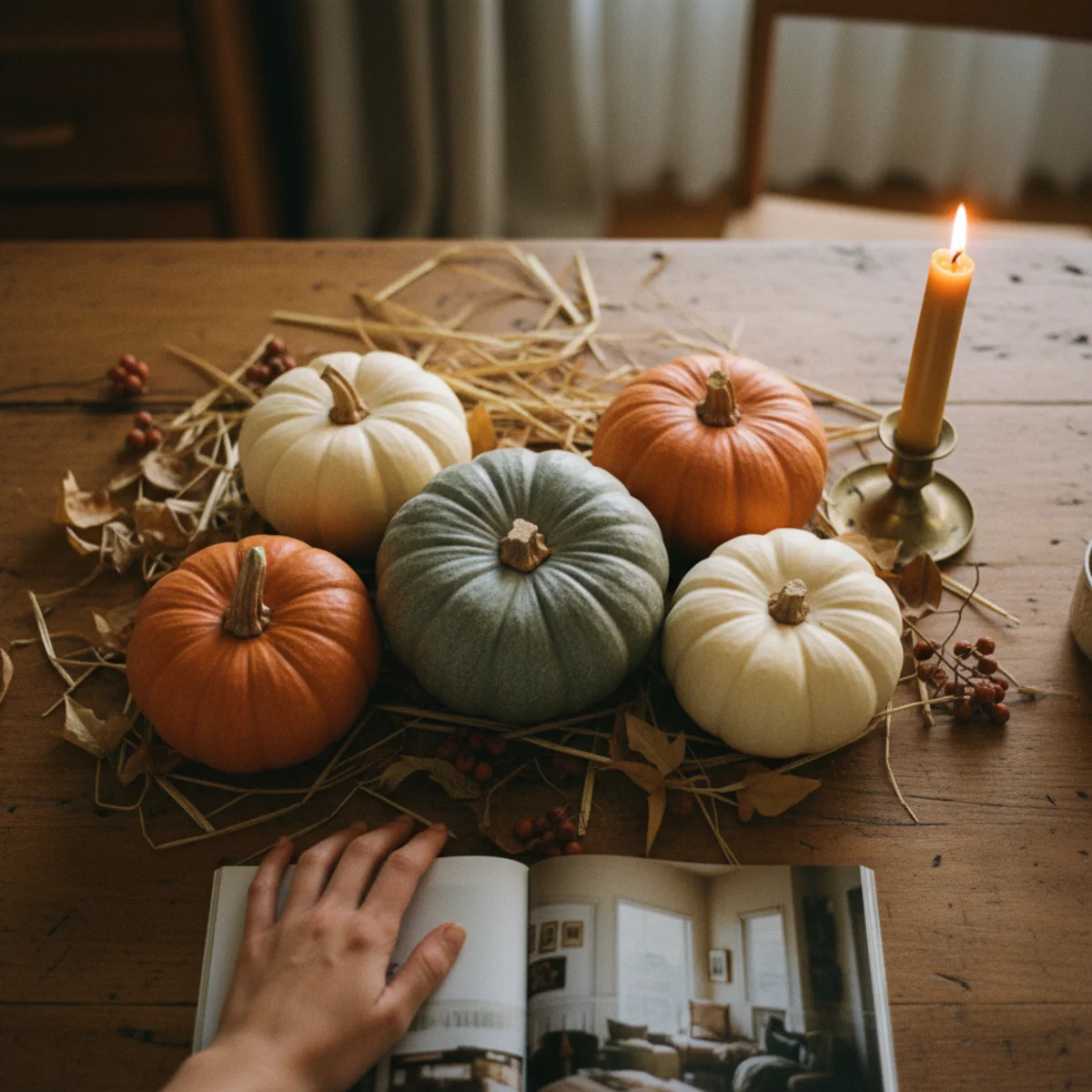
Heirloom pumpkins and gourds in their natural palette — blue-green Jarrahdale, cream and orange Cinderella, white Lumina, pale yellow Fairy Tale, deep terracotta Long Island Cheese — are the fall table's most-visual seasonal element. Specifically not commercial bright-orange Halloween carving pumpkins; the heirloom varieties' natural palette is the fall table's earthy color story.
Heirloom pumpkin selection and use: VARIETY TYPES — Jarrahdale (dusty blue-green, flat shape), Cinderella (ribbed, orange-and-cream), Lumina (white), Fairy Tale (tan-orange, flat ribbed), Long Island Cheese (deep terracotta-orange, flat cheese shape), Butternut (tan, smooth). Farmers markets at $2-8 each for small to medium sizes. ARRANGEMENT on table — scatter 5-10 small heirloom pumpkins (4-8 inch diameter range) throughout and around the foliage centerpiece, nestled between candles and dried botanicals. The varied palette (one blue-grey, two cream, one terracotta-orange, one pale yellow) creates earthy color variation without any piece being dominant. SIZE DISCIPLINE — small pumpkins (4-8 inches) stay below the 14-inch sightline requirement. Avoid placing large pumpkins (10+ inches) on the table — they block conversation. CARE — heirloom pumpkins last 3-6 weeks at room temperature if kept dry. The table display doesn't require water; they age gracefully.
AFFILIATE SLOTSEASONAL5-10 small heirloom pumpkins (4-8 inch diameter) in varied natural palette (Jarrahdale, Cinderella, Lumina, Fairy Tale) scattered throughout foliage; $2-8 each from farmers marketsAdd affiliate URL when configuredWhy it works
Because heirloom pumpkin varieties reflect the actual diversity of cucurbit cultivation across centuries — the blue-grey Jarrahdale, the ribbed Cinderella, the flat cheese pumpkin are all genuine heirloom varieties with their own flavor, color, and form traditions. Commercial orange Halloween pumpkins were bred for consistent size, color, and carveability — qualities that serve Halloween purposes but not harvest table purposes. Heirloom varieties' palette (dusty blue, pale cream, terracotta orange, pale yellow) reads as natural diversity where commercial orange reads as single-purpose manufactured uniformity.
Pro tip — Source heirloom pumpkins at farmers markets in the first two weekends of October — the selection is widest in early October before peak Halloween demand depletes interesting varieties. Buy 2-3 of each preferred variety to cluster similar types while maintaining overall palette variety across the table.
Blue Jarrahdale, cream Lumina, terracotta Cinderella among dried foliage — heirloom variety palette versus commercial orange uniformity. See also: autumn-mantel-ideas
05Keep the Centerpiece Low
The fall table's centerpiece discipline: every element below 14 inches above the table surface for sightline preservation at a seasonally-crowded table. Fall gatherings (Thanksgiving, Halloween dinners, harvest celebrations) typically have more guests than ordinary dinners; the low-centerpiece rule is more critical, not less, when tables are fully populated.
Fall centerpiece height discipline: DRIED FOLIAGE — when arranged horizontally as a running centerpiece, dried wheat, grasses, and leaves naturally stay below 10-12 inches. Only upright arrangements approach or exceed 14 inches; keep them at the far ends of the table (acceptable for end positions where they don't block central conversation). PUMPKINS — small heirloom pumpkins at 4-8 inches well under the height limit. Very large pumpkins (10-12 inch height) should not be on the table surface. CANDLES — same exception as always: beeswax tapers in holders up to 12 inches total height acceptable because narrow flame diameter doesn't obstruct sightlines meaningfully. AMBER GLASS VOTIVES — 2-4 inches tall, well within height limit. THE VISUAL ABUNDANCE WHILE STAYING LOW — the fall table can achieve extraordinary visual abundance within the 14-inch limit: running dried foliage + small pumpkins nestled throughout + scattered seed pods + amber votives + low pillar candles creates a richly dense centerpiece entirely below sightline. The abundance-below-14 is the fall table's particular achievement.
AFFILIATE SLOTDISCIPLINEAll elements below 14 inches; dried foliage horizontal, pumpkins 4-8 inches, amber votives 2-4 inches; tapers only exception; survey from all four seated positionsAdd affiliate URL when configuredWhy it works
Because fall's most-important dinners (Thanksgiving, harvest celebrations) are typically the year's largest gatherings — the tables are fullest, the conversations are most meaningful, the connections are most valued. The fall table specifically should serve these conversations rather than impede them. A Thanksgiving table with blocked sightlines frustrates the gathering at the exact moment the gathering most deserves to work. No centerpiece abundance compensates for the conversation obstruction that tall elements produce.
Pro tip — Survey the table setup from a seated position at each end and each side before guests arrive — the 4-position check ensures that no centerpiece element blocks sightlines in any direction across the table. The check takes 5 minutes and catches height violations that aren't visible from the standing setup position.
Full fall abundance — dried foliage, pumpkins, candles, seed pods — all below 14 inches preserving the sightlines for conversation. See also: cozy-tablescape-ideas
06Use Mismatched Earthy Plates
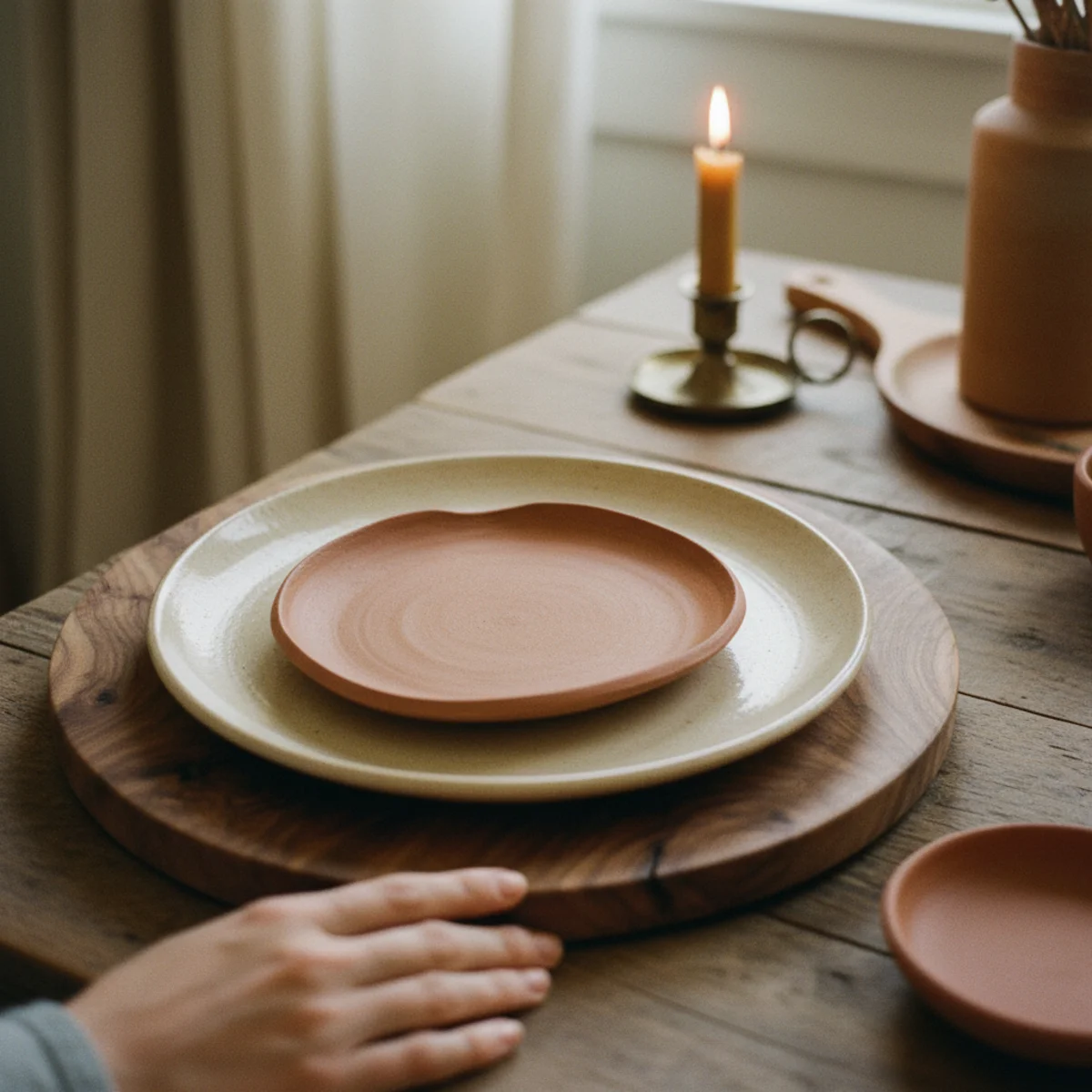
Fall tables specifically benefit from mismatched earthy plates — cream stoneware base with varied terracotta-adjacent accent plates: hand-thrown ceramics in warm earth tones, vintage brown stoneware, antique ironstone in cream with warm undertone, vintage slip-trailed earthenware. The collected earthy ceramic look reinforces the harvest-abundance aesthetic that fall tables specifically call for.
Fall plate and dishware strategy: BASE DINNER PLATES — cream or warm-toned stoneware (East Fork, Heath, Farmhouse Pottery, or thrifted white ironstone at $150-400 for 8-place setting). FALL ACCENT PLATES — hand-thrown earth-tone ceramics from Etsy artisans ($20-50 each), vintage brown stoneware salad plates from estate sales ($3-10 each), vintage slip-trailed earthenware from antique stores ($15-40 each). WOODEN CHARGER PLATES — warm walnut or oak round chargers ($20-50 each) under the dinner plates for fall's warmest place-setting composition. FALL CERAMIC PALETTE — the specific fall ceramic ideal: cream, warm brown, muted terracotta, deep warm amber, and the specific color of naturally-fired earthenware. No bright white commercial plates; no cool grey ceramics. SERVING PIECES — large ceramic platters in warm earthy tones, wooden boards for bread and carved meats, vintage stoneware serving bowls. The family-style fall dinner with its serving vessels on the table is part of the fall harvest visual abundance.
AFFILIATE SLOTDISHWARECream stoneware base + hand-thrown earth-tone accent plates + wooden walnut chargers + vintage stoneware salad plates; family-style ceramic serving piecesAdd affiliate URL when configuredWhy it works
Because fall is the harvest season — and harvest associations are with earthenware, with the vessels of preservation and storage (the brown stoneware crocks, the earthenware pitchers, the terracotta storage vessels) rather than with formal porcelain or commercial white dinner china. The earthy mismatched ceramic table references this harvest vessel tradition directly. Formal matched china in a fall harvest setting creates tonal mismatch; earthy collected ceramics feel like the table belongs to the season.
Pro tip — Add one or two hand-thrown terracotta-glazed ceramic pieces to the place setting mix specifically for fall — a single hand-thrown bowl or plate in warm terracotta glaze from a local potter ($25-50) at each setting creates the fall-earthenware quality that no commercial plate achieves. Keep it as the accent within the cream stoneware base.
Walnut charger, cream stoneware, hand-thrown terracotta accent plate — earthy collected ceramics referencing harvest vessel tradition. See also: cozy-tablescape-ideas
07Add Clove-Studded Fruit
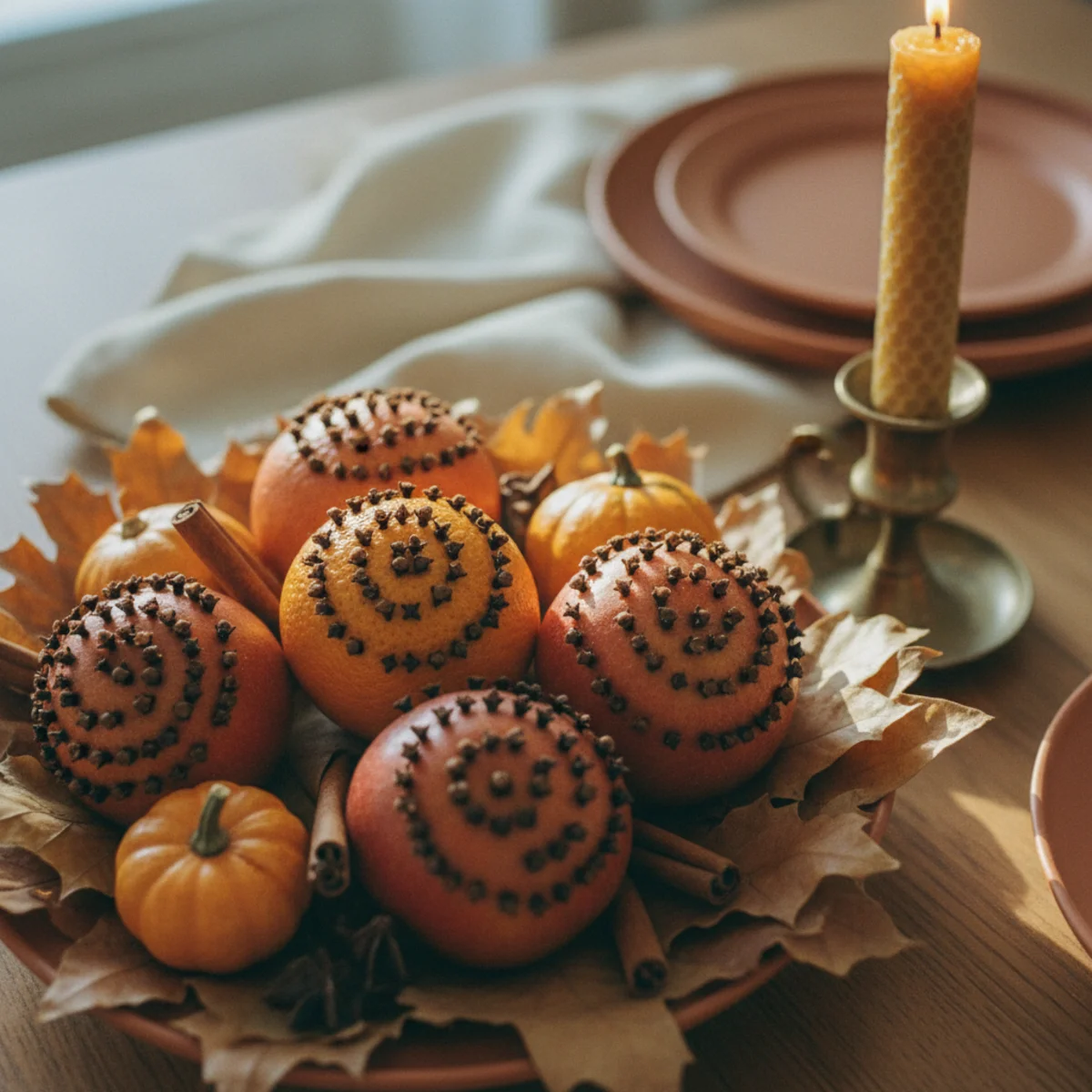
Clove-studded apples and oranges (pomander variations) nestled throughout the fall foliage centerpiece add the autumn-spice fragrance that fall tables specifically benefit from. The warm clove-and-apple scent is specifically fall; the small studded fruits are tactilely interesting for guests to pick up and hold; and the DIY process can involve household members in fall table preparation.
Fall clove-studded fruit specifics: FALL FRUIT CHOICES — small firm apples (Granny Smith or Honeycrisp for longest freshness, $1-3 each), small oranges or mandarins ($1-2 each). The apple-and-clove combination is specifically fall; the orange-and-clove is more winter-holiday. Mix both for mid-autumn gatherings. STUDDING PROCESS — same as holiday pomanders (per holiday-table-decor item 5): pierce skin with toothpick, press cloves into holes in desired pattern. Apple skin requires slightly more pressure than orange. PARTIALLY-STUDDED OPTION — stud only a band around the apple's equator or a spiral from stem to base. Takes 5-10 minutes per fruit versus 20-40 minutes for fully-studded. QUANTITY — 6-10 studded fruits for a 6-8 person fall table. PLACEMENT — nestled among pumpkins and dried foliage throughout the centerpiece, not separately arranged. FRESHNESS — studded apples last 3-5 days at room temperature before beginning to wrinkle. Make 1-2 days before the gathering. SCENT PROJECTION — the clove-studded fruit's scent fills the table zone (approximately 4-foot radius) and deepens over 24 hours as the clove oil penetrates the fruit skin.
AFFILIATE SLOTSEASONAL6-10 small clove-studded apples (most fall) and oranges mixed; partially-studded takes 5-10 min each; nestled among foliage and pumpkins; make 1-2 days aheadAdd affiliate URL when configuredWhy it works
Because clove has been specifically associated with autumn preservation and harvest for centuries — cloves were used in preserving fall produce (spiced cider, mulled wine, preserved fruits) and the scent of clove-studded fruits at a fall table references this historical practice directly. The apple-and-clove scent combination is one of the most-immediately recognizable fall sensory signals; it triggers the same olfactory-memory response that fresh pine does at winter holidays. No commercial candle or diffuser replicates this as faithfully as the actual clove-studded fruit.
Pro tip — Make studded fruits a fall gathering preparation activity with children — the fruit-piercing and clove-pressing is simple enough for children from about age 6 upward, and the activity fills 30-45 minutes of fall-day pre-dinner preparation. The fruits the children made are then on the table at the gathering; the connection to the making is part of the fall memory.
Clove-studded apples and oranges among the foliage — autumn-spice fragrance from historical fall preservation practice. See also: autumn-mantel-ideas
08Layer Linen Napkins With a Sprig
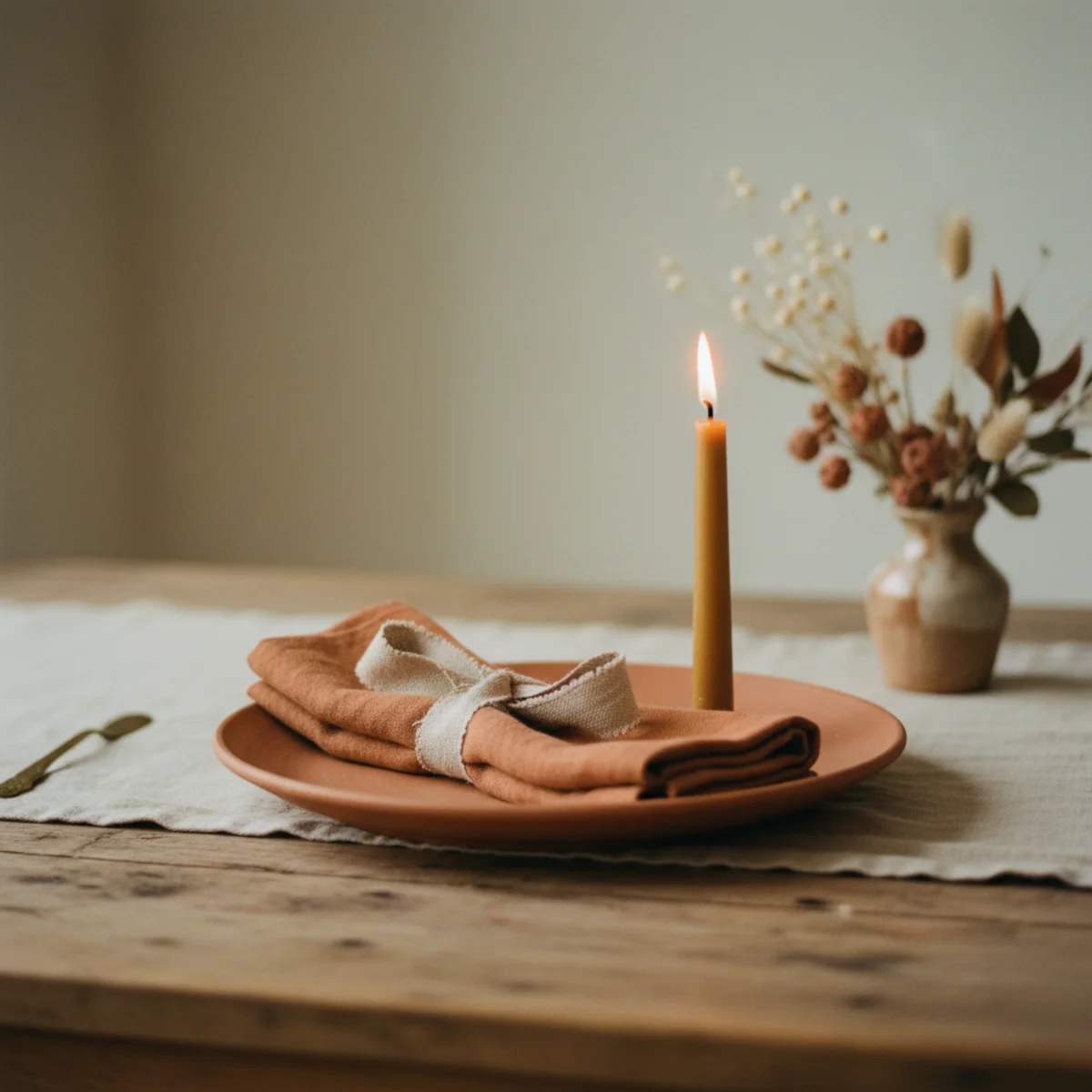
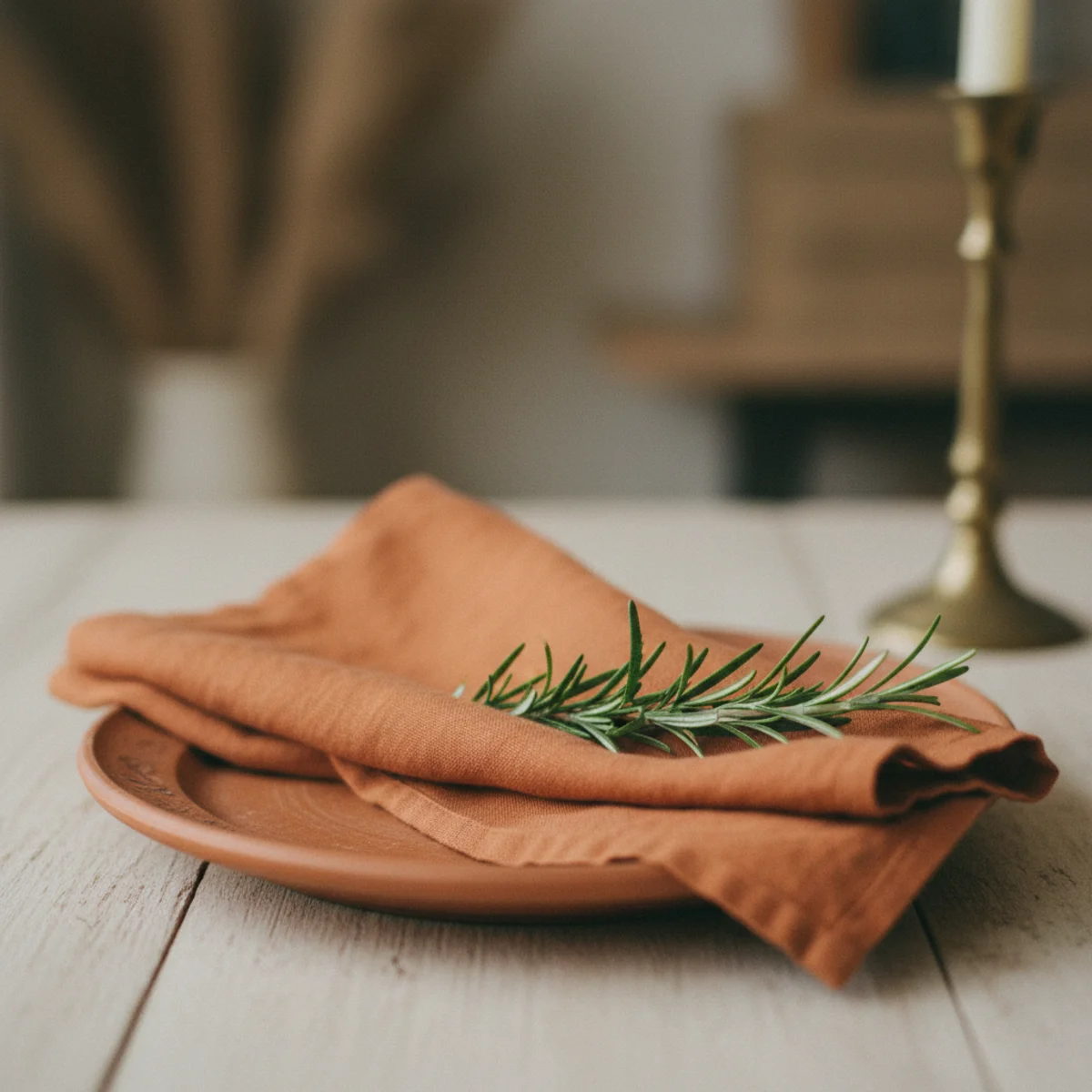
Fall table napkins: washed linen in cream, oat, or warm terracotta, loosely folded, with a single fresh herb sprig or small dried botanical tucked into or beside the fold — a sprig of rosemary, a small dried bay leaf cluster, a short stem of dried lavender, or a small fallen autumn leaf with the stem trimmed. The sprig adds a living-world gesture to the place setting at near-zero cost.
Fall napkin-with-sprig specifics: NAPKIN FABRIC — washed linen in cream, oat, warm rust, or deep terracotta ($30-60 for set of 6 from Quince or Magic Linen). FOLD — half-fold (once in half into wide rectangle) or loose third-fold. Not origami or ring-folded. FALL SPRIG OPTIONS — fresh rosemary sprig ($0 from kitchen herb plant or $2-4 per bunch from grocery), dried bay leaf cluster ($0 from your own bay tree or $3-5 per packet grocery), small dried lavender stem ($0 if growing own, $1-2 per stem from farmers market bunch), pressed autumn leaf (oak, maple, or sweet gum leaf pressed for 1-2 weeks until crisp). PLACEMENT — tucked into the fold of the napkin with the sprig extending 2-3 inches beyond the fold edge. Or laid on top of the folded napkin. VISUAL QUALITY — the napkin sprig is an individual gesture to each place setting — each guest arrives to find their personal napkin with a small natural element. The gesture is small; the warmth it communicates is significant. FALL PALETTE NAPKINS — the choice between cream/oat and terracotta/warm rust napkins is the single biggest napkin palette decision for fall. Warm rust napkins against cream plates read as deep fall; cream napkins against terracotta accent plates read as lighter fall.
AFFILIATE SLOTNAPKINSWashed linen in cream, oat, or warm rust; loose half-fold or third-fold; fresh rosemary/sage sprig OR dried bay/lavender tucked into fold; $30-60 for 6 from Quince/Magic LinenAdd affiliate URL when configuredWhy it works
Because the sprig transforms the napkin from functional textile to personal place gesture — the host specifically placed a small natural element with each person in mind. The same napkin without the sprig is a well-chosen folded textile; with the sprig it's a small individual expression of seasonal welcome. The sprig's organic form also adds the natural-world connection that the rest of the fall table's dried botanicals, pumpkins, and seed pods express throughout.
Pro tip — Cut the herb sprigs or dried botanicals just before setting the table rather than hours ahead — fresh rosemary and sage lose their fragrance quickly after cutting; the fresh-cut sprig releases its fall herb scent when touched by the guest picking up the napkin. The fragrance moment is part of the welcome.
Warm rust linen with rosemary sprig — the individual place gesture that transforms napkin from textile to seasonal welcome. See also: cozy-tablescape-ideas
09Scatter Seed Pods and Pinecones
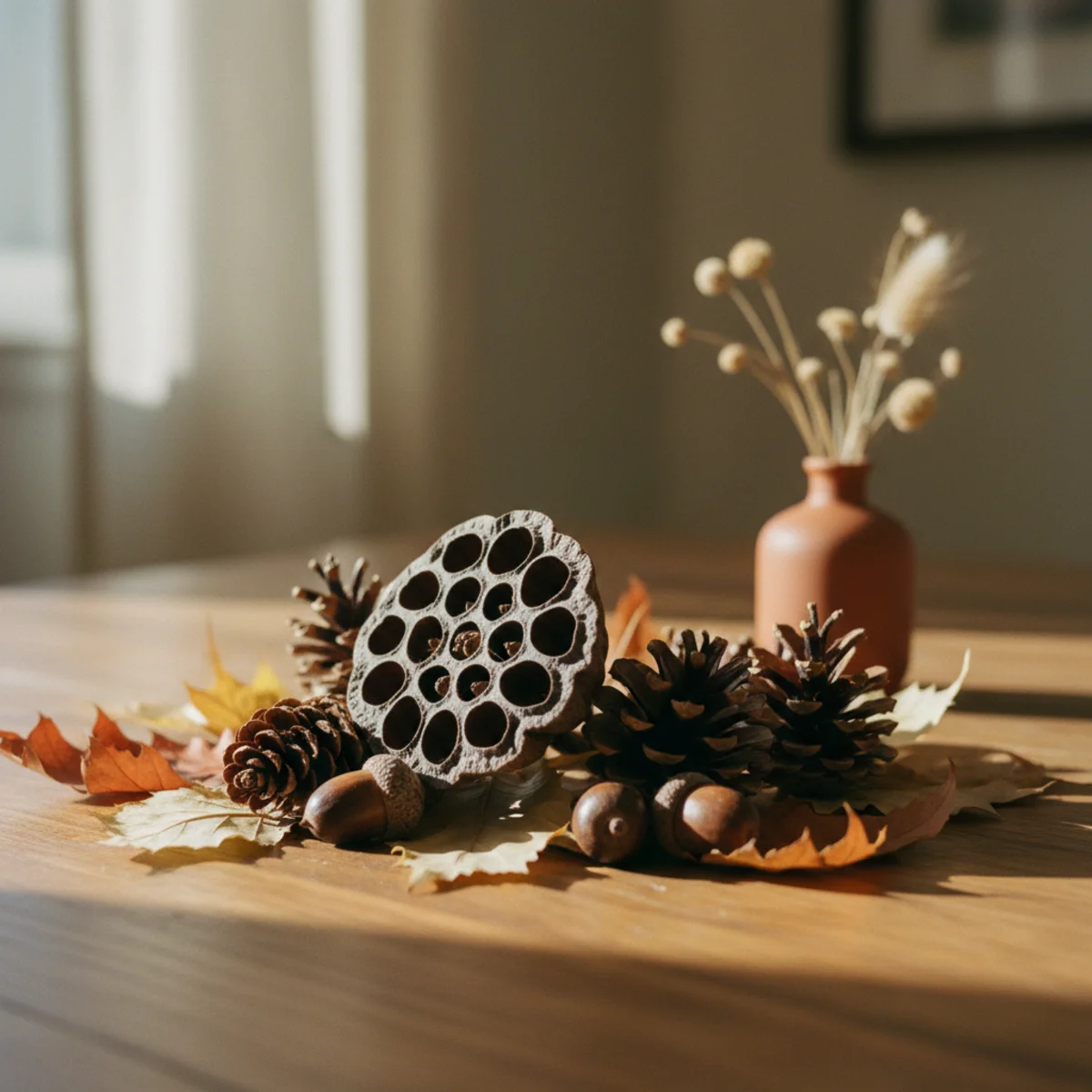
Dried seed pods (lotus pods, poppy heads, dried milkweed, dried cone flowers), small pinecones of varied species, and dried acorns with their caps scattered throughout the foliage centerpiece add organic texture variety at zero cost if foraged. These secondary elements fill visual gaps in the centerpiece, add close-range textural interest, and continue the fall-harvest-collection narrative.
Fall foraged seed pod and pinecone specifics: SEED PODS — lotus pods ($0 if growing own lotus, $10-20 per dried bunch from craft stores or Etsy), dried poppy seed heads ($0 if growing own poppies, $8-15 per bunch), dried cone flowers/echinacea heads ($0 if growing own), dried milkweed pods (free if foraged from roadsides or field edges in October). PINECONES — collect from neighborhood walks in October in 3-4 varieties if possible: small spruce cones (under 2 inches), medium pine cones (2-4 inches), large ponderosa or Jeffrey pine cones (4-8 inches). Free from any conifer tree in the neighborhood with permission. ACORNS — collected from oak trees in October with caps intact. Free from any oak tree. PLACEMENT — scatter irregularly throughout and at the base of the foliage centerpiece. Also scatter some between the heirloom pumpkins and at the ends of the foliage runner. THE FREE MATERIALS PRINCIPLE — the seed pods and pinecones that complete the fall table centerpiece are entirely free if foraged on autumn walks in October. The fall table's most-authentic elements cost nothing; the commercial purchases are supplements rather than substitutes.
AFFILIATE SLOTNATURALLotus pods, dried poppy heads, dried echinacea, milkweed pods; small/medium/large pinecones; acorns with caps; scattered throughout foliage at zero cost if foragedAdd affiliate URL when configuredWhy it works
Because they are the actual fall landscape's harvest — the season's seed production visible in desiccated form, the conifer's reproduction vessels, the tree's stored future scattered across the fall forest floor. Placing these at the dinner table brings the actual fall season indoors in its most direct form. Purchased decorative elements approximate the season; foraged elements ARE the season.
Pro tip — Wash and dry pinecones before table use — freshly-fallen pinecones may harbor small insects, sap residue, or moisture that can transfer to the linen tablecloth. Bake pinecones at 200°F for 30-45 minutes (which also makes them fully open if they arrived partially closed), let cool completely, then arrange. The baked pinecones are clean, fully opened, and fully dried.
Lotus pods, pinecones, and acorns among the foliage — the fall forest floor's harvest brought to the dinner table. See also: fall-decor-ideas
10Bring in Brass and Wood
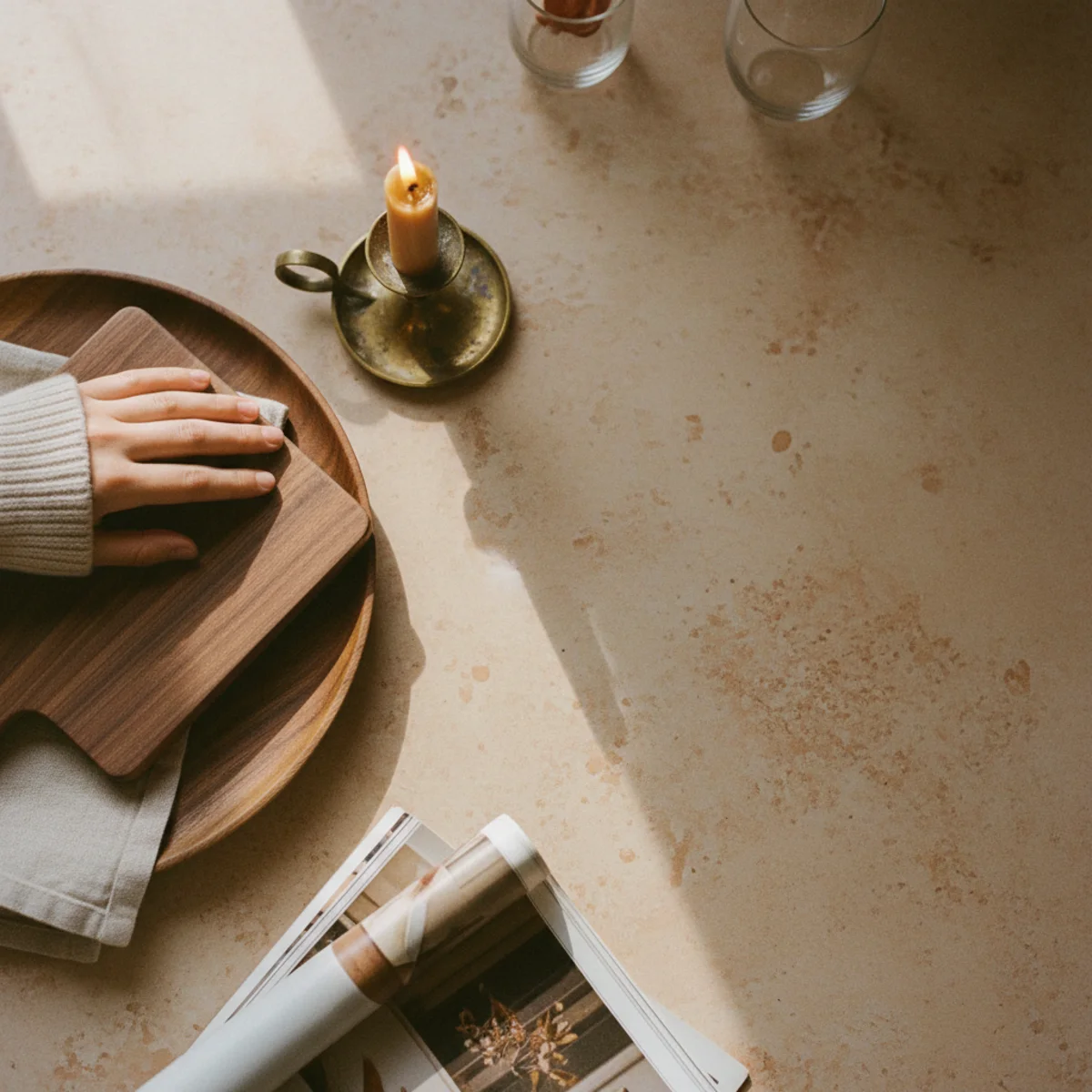
The fall table's material language should be entirely warm — aged brass candlesticks, wooden charger plates, wooden serving boards, wood-handled serving utensils, perhaps a single vintage brass tray for service items. The warm-metals-and-wood language is even more critical for fall than for ordinary dinners because fall's dried botanical and earthy ceramic elements specifically require the warm material context to read as composed rather than as casual.
Fall table brass and wood specifics: CANDLEHOLDERS — full vintage brass cluster (per item 2), no chrome or stainless. CHARGER PLATES — wooden round chargers in walnut or warm oak ($20-50 each). The wooden charger is the single most-warm place-setting addition for fall specifically; it frames the earthy ceramic plate against a warm wood surface. SERVING BOARDS — walnut or oak boards for bread, carved meats, cheese (at 12-18 inches each, $40-150 from kitchen retailers or thrifted). SERVING UTENSILS — wood-handled serving fork and spoon, vintage silver-plate serving pieces from estate sales ($15-40 per set). ADDITIONAL WARM METAL — vintage brass tray for serving small sauce or condiment pieces, brass napkin rings if using rings (though loose fold is preferred for fall). THE HARVEST TABLE PRINCIPLE — brass and wood together at the fall table are the warm-metal language of harvest tradition specifically: brass measures, wooden scoops, the farmhouse tools of harvest work. The material language connects to the season's historical agricultural associations.
AFFILIATE SLOTMATERIALSVintage brass candlesticks + wooden walnut/oak charger plates + serving boards + wood-handled serving utensils; no chrome or stainless for fall tableAdd affiliate URL when configuredWhy it works
Because fall's harvest associations are with the actual tools and vessels of agricultural harvest — brass measures and scoops, wooden bowls and boards, earthenware storage crocks. The brass-and-wood language at the fall table references these harvest-tool materials directly, creating the warm collected agricultural character that distinguishes warm fall tables from merely seasonal ones. The same materials read more specifically right in fall than in any other season.
Pro tip — Source wooden charger plates specifically in late September or early October — fall is when retailers stock their heaviest wooden charger inventory, and HomeGoods, TJ Maxx, and Cost Plus World Market typically have the best selection of warm walnut and oak charger plates at the widest range of prices ($15-50 each) during this period.
Walnut charger, brass candlestick, walnut serving board — the harvest-tool material language specifically right for fall. See also: cozy-tablescape-ideas
11Lower the Room Light
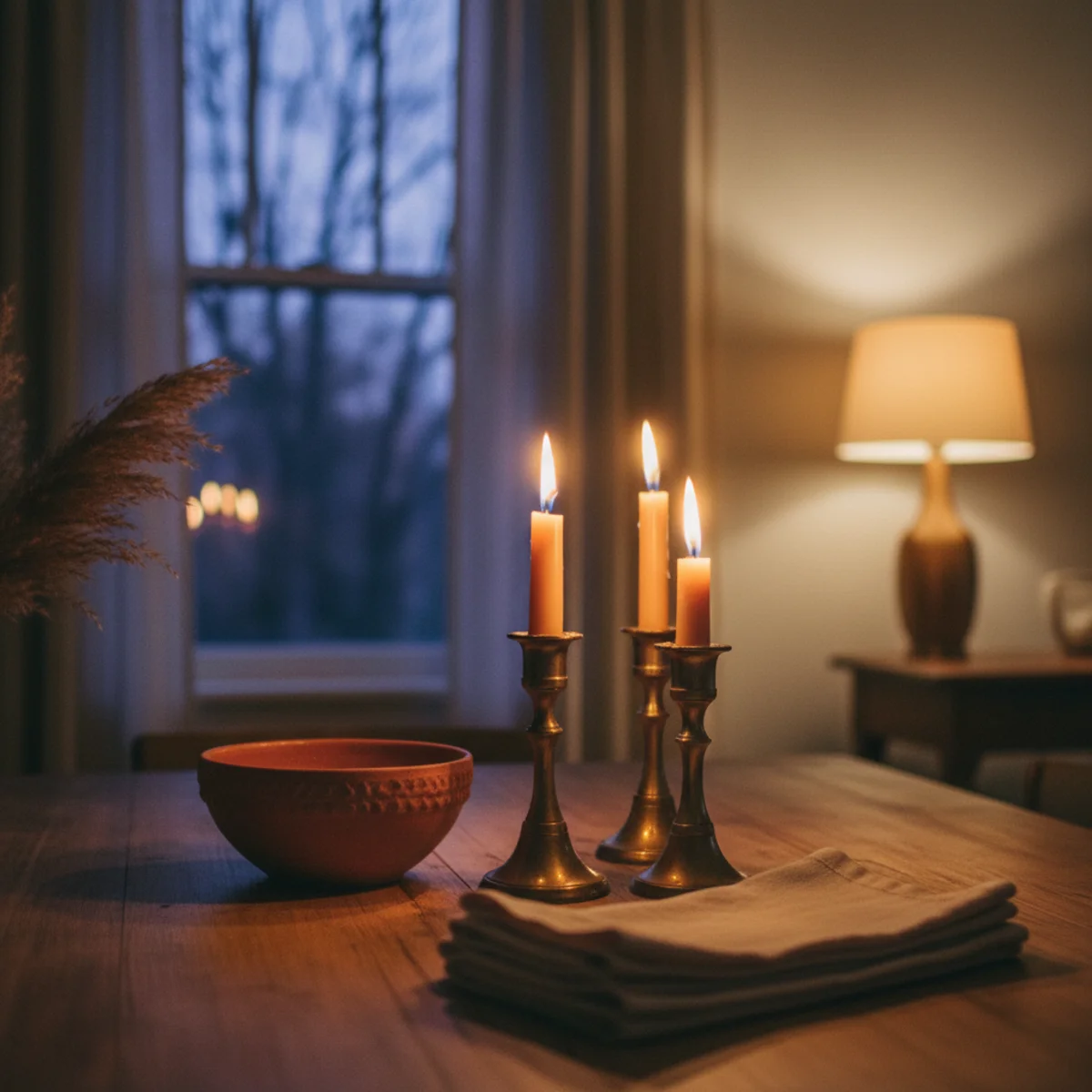
The fall table's ambient room lighting protocol: the warm dim-room-bright-candles approach (per cozy-tablescape-ideas) acquires additional fall-specific significance. Autumn evenings are specifically the season when the shortening days and early-arriving darkness make warm candlelit rooms feel most meaningful — the gathering around warmth against the encroaching dark that autumn represents.
Fall table lighting protocol: OVERHEAD — 10-20% maximum during fall dinner, or off. As days shorten from September through October, the early darkness (5-6pm) makes overhead-off candlelit dining possible at dinner timing without unusual protocol. AMBIENT ROOM LAMPS — 50-60% warm 2700K throughout adjacent spaces. Fall is the season when warm lamp light throughout the room adds to the candle atmosphere rather than competing with it. FIREPLACE — if you have a working fireplace in or adjacent to the dining room, light it for fall dinners. The combination of fireplace and table candles during an October dinner is the most-complete expression of warm home fall entertaining. TABLE CANDLES — full amber beeswax taper cluster at maximum for fall (4-7 tapers plus 2-3 pillars per item 2). THE EARLY DARKNESS ADVANTAGE — autumn's early darkness is a gift to fall table candlelit dinners. A 7pm fall dinner has been dark for 2+ hours by seating time; the candlelit dim room reads as atmospheric rather than as dramatic choice. The same dinner protocol in June requires more effort to achieve the dim room because sunset at 8:30pm works against it.
AFFILIATE SLOTLIGHTINGOverhead 10-20% or off; room lamps 50-60% 2700K; fireplace lit if available; full amber beeswax candle cluster as primary table light; autumn's early darkness is an advantageAdd affiliate URL when configuredWhy it works
Because the contrast that makes candlelit tables atmospheric — bright warm table in a dim surrounding room — is naturally provided by fall's short days. In summer, achieving the dim-room-bright-table effect requires active dimming. In fall, the room is naturally dim at dinner time and the candles naturally become the primary light source without deliberate management. The season itself creates the conditions; the host only needs to not turn on the overhead lights.
Pro tip — Set a phone alarm for 20 minutes before fall guests arrive to trigger the candle-lighting-and-dimming protocol — fall dinners especially benefit from the pre-arrival ritual because the dramatic difference between arriving to a candlelit dim room versus arriving to a bright overhead-lit room is the fall table's first impression. The alarm prevents the common autumn-dinner failure of being so busy with food preparation that the atmospheric setup gets skipped.
Amber candles as primary light in autumn's early darkness — the season providing the conditions naturally. See also: cozy-dinner-party-ideas
12Keep It Abundant but Natural
The fall tablescape's organizing principle: abundant but natural. More than ordinary dinner tables — more botanicals, more pumpkins, more seed pods, more candles, more seasonal fruit — but all from natural sources (foraged, farmers market, yard cutting) rather than from the commercial autumn decor aisle. Abundance from the season itself rather than from retail.
Abundant-but-natural standard: ABUNDANCE MARKERS — the fall table should feel rich with seasonal material: full running foliage centerpiece, 5-10 small pumpkins nested throughout, 6-10 clove-studded fruits, 8-15 seed pods and pinecones, amber candles distributed throughout, autumnal fruit bowl at one end (pomegranates or persimmons). MORE than a typical dinner table. NATURAL SOURCES — foraged seed pods (free), farmers market heirloom pumpkins ($2-8 each), yard-clipped dried foliage ($0), pinecones from neighborhood walks (free), hand-studded pomander fruits ($5-15 total). The majority of the visual abundance is free or very low cost if sourced from natural origins. WHAT TO AVOID — commercial pre-made 'fall centerpiece' sets (always artificial), plastic or artificial gourds, dyed-in-unnatural-colors craft gourds, artificial leaf garlands, Halloween-aisle orange-and-black color story. NATURAL POSTURE — same as holiday tables: all elements placed with natural casual posture rather than precise symmetrical arrangement. The fallen leaf that isn't quite flat, the pinecone at an angle, the dried foliage that curls naturally. SEASONAL AUTHENTICITY — the abundant-but-natural fall table reads as harvest abundance from the actual season; the abundant-but-commercial fall table reads as seasonal retail participation. The difference is felt immediately by guests even when they can't articulate it.
AFFILIATE SLOTPRINCIPLEFull seasonal abundance (foliage, pumpkins, seed pods, candles, studded fruits) all from natural sources (foraged, farmers market, yard); avoid commercial artificial autumn decorAdd affiliate URL when configuredWhy it works
Because natural materials carry seasonal specificity — the foraged lotus pod, the Jarrahdale heirloom pumpkin, the apple-and-clove pomander — that commercial products specifically cannot. The commercial 'fall centerpiece' is designed for year-round production, market appeal, and consistent appearance rather than for authentic seasonal expression. Natural materials come from the actual season; they carry the season's specific character in their form, their fragrance, and their variation. Abundance from natural sources is the fall table's highest achievement.
Pro tip — Calculate the fall centerpiece's natural-origin percentage before the gathering — what fraction of the table's visible elements came from the yard, neighborhood, or farmers market rather than from a retail store? The higher this fraction, the more authentically seasonal the table. Target 70%+ from natural sources; commercial purchases as supplements for hard-to-source natural elements only.
Full fall abundance from natural sources — foliage, pumpkins, seed pods, candles, studded fruits sourced from the actual season. See also: cozy-dinner-party-ideas
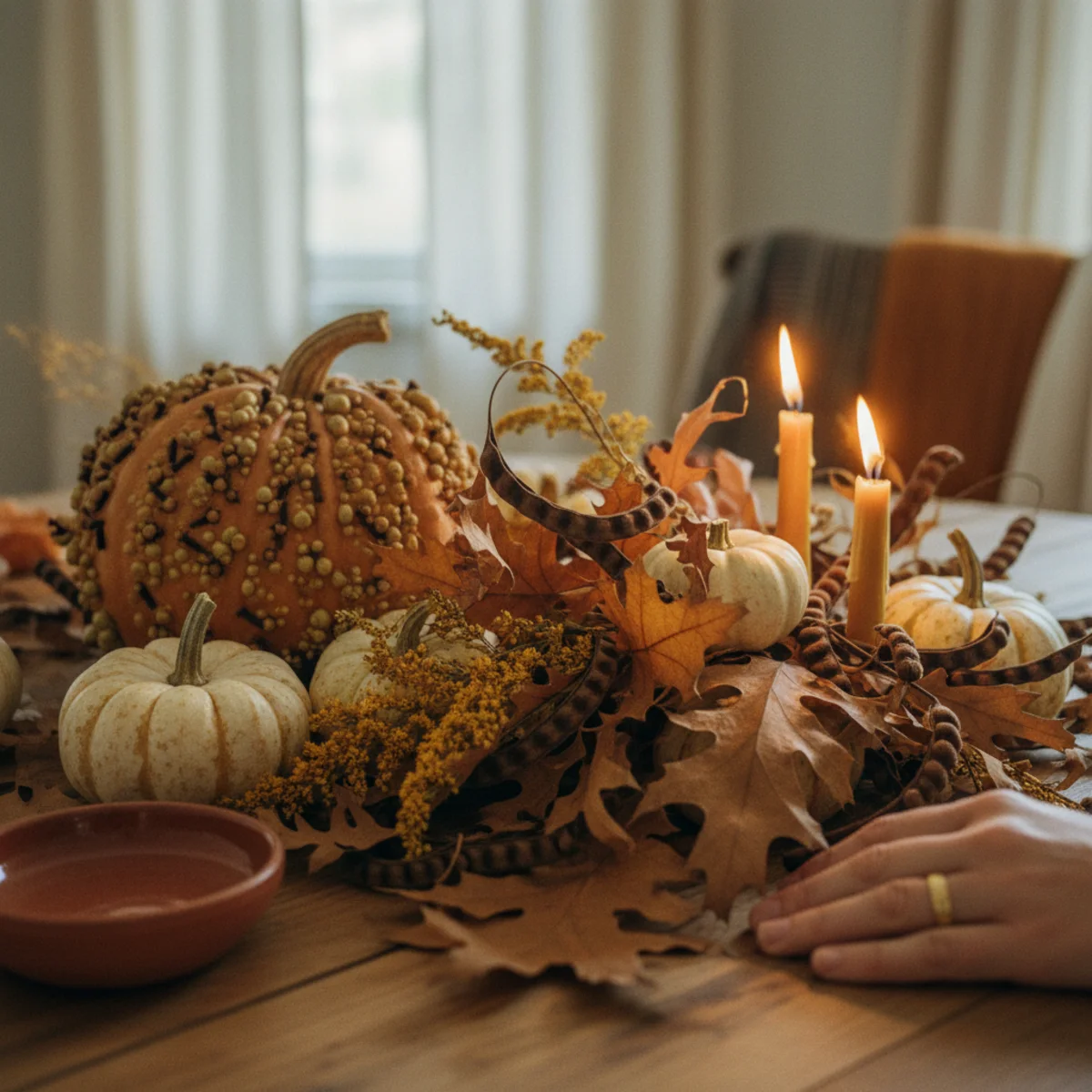
How to set a fall tablescape step by step
Dried foliage, candlelight, earthy tones, abundant but natural. Work in this order.
- 1Lay the dried foliage runner
Run dried wheat, grasses, and foraged branches down the center as the natural autumn centerpiece, kept low enough to see over.
- 2Add amber candlelight
Place beeswax tapers and amber votives at varied heights along the runner — enough warm light that the overhead can go off.
- 3Set earthy natural places
Add wooden chargers, mismatched earthy-toned plates, and rust or ochre linen napkins with a wheat or herb sprig tucked in.
- 4Tuck in seasonal touches and lower the light
Scatter small heirloom pumpkins, clove-studded fruit, seed pods, and pinecones, then dim the overhead and let the candlelight carry the room.
Quick tips
- Forage the dried wheat, branches, and pods on a walk; they read better than craft-store stems.
- Use amber glass and beeswax candles for an especially warm autumn glow.
- Lean earthy — rust, ochre, amber — rather than bright orange.
- Choose muted heirloom pumpkins over bright orange ones.
- Keep the centerpiece low enough to see and talk across.
- Dim the overhead once everyone's seated and let the candlelight lead.
Fall tables by occasion
A generous dried-foliage runner, abundant candlelight, heirloom pumpkins, and mismatched earthy plates for the harvest feast.
A simple dried-wheat runner and a few tapers; see our cozy dinner party guide.
A low runner of dried grasses and a few candles — abundant warmth at an intimate scale.
Carry the dried-foliage palette to the mantel; see our autumn mantel ideas guide.
The autumn table is the warmest of the year — dried foliage, amber candlelight, and earthy tones, built for the dinners that run late.
Frequently asked questions
How do I set a fall tablescape?+
What are the best fall tablescape ideas for Thanksgiving?+
What pumpkins should I use for a fall tablescape?+
How do I make a fall centerpiece for the dining table?+
What candles should I use for a fall tablescape?+
What are good fall tablescape colors?+
The autumn table is the warmest of the year, set for the season of gathering — and the warm version skips the orange-and-plastic-gourd cliché for dried foliage, amber candlelight, and earthy tones. Run a dried-wheat runner down the center, cluster beeswax tapers, tuck in muted heirloom pumpkins, and dim the overhead. We'd forage the wheat and branches on a walk and lean into rust and ochre before anything else; natural abundance reads as harvest where plastic reads as craft store. Build it warm and natural, and the long autumn dinners run late by the candlelight.