These twelve fireplace mantel decor principles are tested across actual fireplaces — wood-burning, gas, electric, and decorative-only mantels in rooms ranging from small apartments to large family homes. Each move below names exact dimensions (mirror size relative to mantel width, candle heights, greenery overhang), exact placement rules (off-center anchor positioning, three-plane height layering, negative space allocation), and exact materials (warm-tone anchors, brass candlesticks, real greenery). The goal is mantel styling that reads composed from across the room rather than as accumulated objects on a horizontal surface.
Most mantel failures come from arranging too many objects in a symmetric flat line at single height. The visual signature: tall vase + medium frame + medium frame + tall vase, all the same distance from the front edge, all the same color family, all at the same approximate height. The eye reads this as uniform display and moves on. The fix is composition discipline — anchor, height variation, deliberate asymmetry, and intentional negative space. The same objects arranged with these principles read as styled vignette rather than as horizontal lineup.
By the end of this guide, you'll know exactly which principles transform any mantel from awkward shelf to anchored vignette — the large leaning mirror, the three-height plane composition, the off-center visual weighting, the brass candlestick clusters, the trailing greenery, the negative-space discipline, and the six other moves that solve mantel styling permanently.
WHAT'S INSIDE
- Why a single large leaning anchor mirror outperforms small hung art every time
- The three-height-plane rule that makes mantels read composed rather than flat
- The off-center weighting principle that's specifically more interesting than symmetric arrangement
- The negative space discipline — at least one side of the mantel staying intentionally empty
The mantel is the room's mantelpiece in every sense — the line everyone reads first. Style it like the headline it is.
— Architectural Digest [citation needed — verify before publish]
What is good fireplace mantel decor?
Good mantel decor balances a large anchor piece — usually art or a mirror — against a layered, asymmetric arrangement of smaller objects across three height planes. It reads as composed because the eye has one clear focal point and a varied path of smaller pieces to follow, all weighted to one side rather than mirrored.
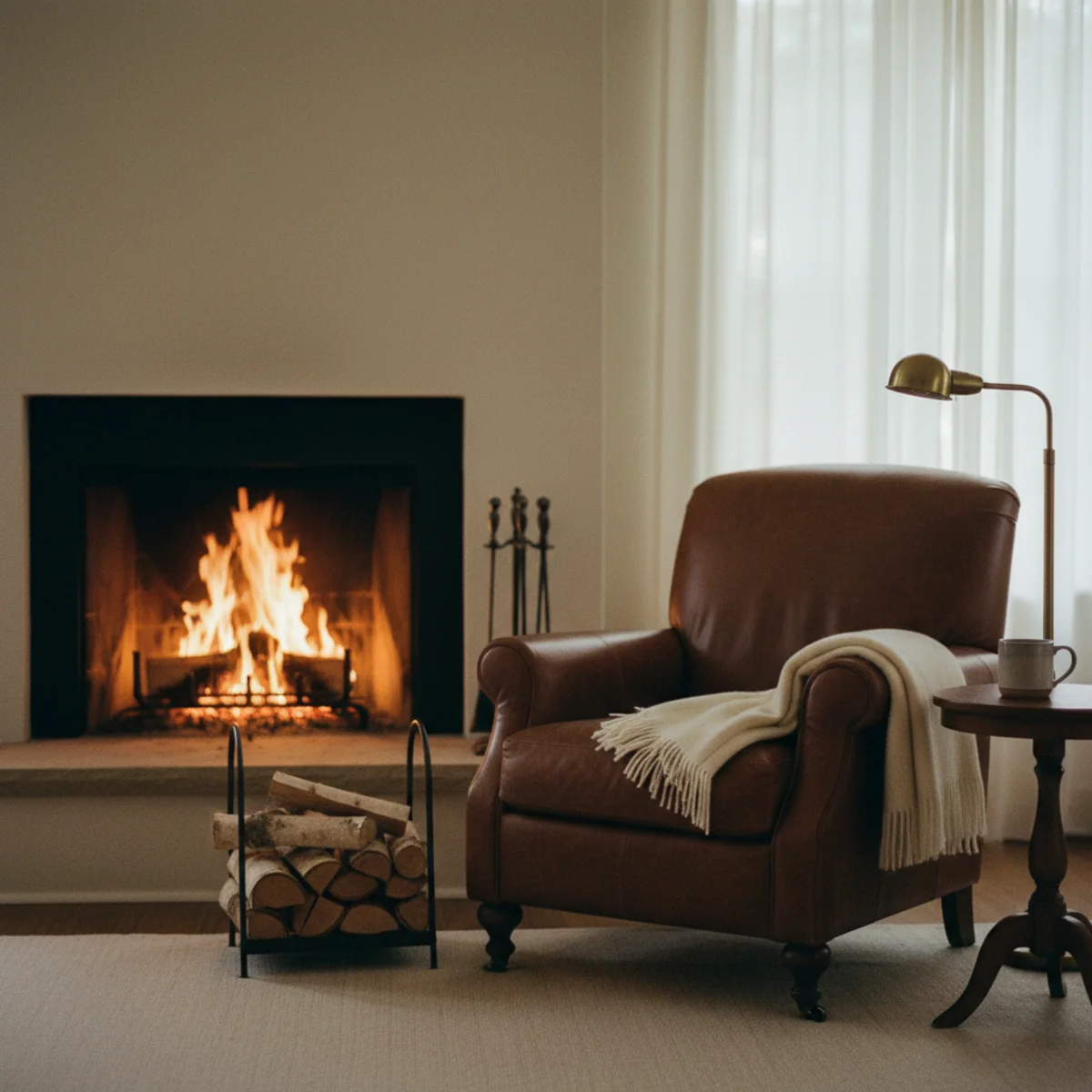
The anchor does most of the work. A large leaning mirror or framed piece, set behind the mantel and weighted off-center, gives everything else something to relate to. Without it, a mantel of small objects looks scattered. With it, even a few candlesticks and a low bowl read as intentional. The fireplace below grounds the whole composition, which is why mantels are the easiest surface in the house to style well.
More in Styling you may love
See allWhy mantel styling matters more in 2026
The fireplace remains the architectural focal point of most living rooms, and as open-concept homes blurred other rooms together, the mantel became the one fixed stage for seasonal and personal display. Pinterest's fireplace mantel and mantel decor searches stay high year-round, spiking each season.
The current look is warm and layered — a large anchor mirror, vintage brass, natural materials, and a palette of clay, oat, and olive rather than glossy symmetry. Designers writing for House Beautiful treat the mantel as the room's signature line, the place to make a confident statement that sets the tone for everything below it.
24 fireplace mantel decor ideas
01Lean a Large Anchor Mirror
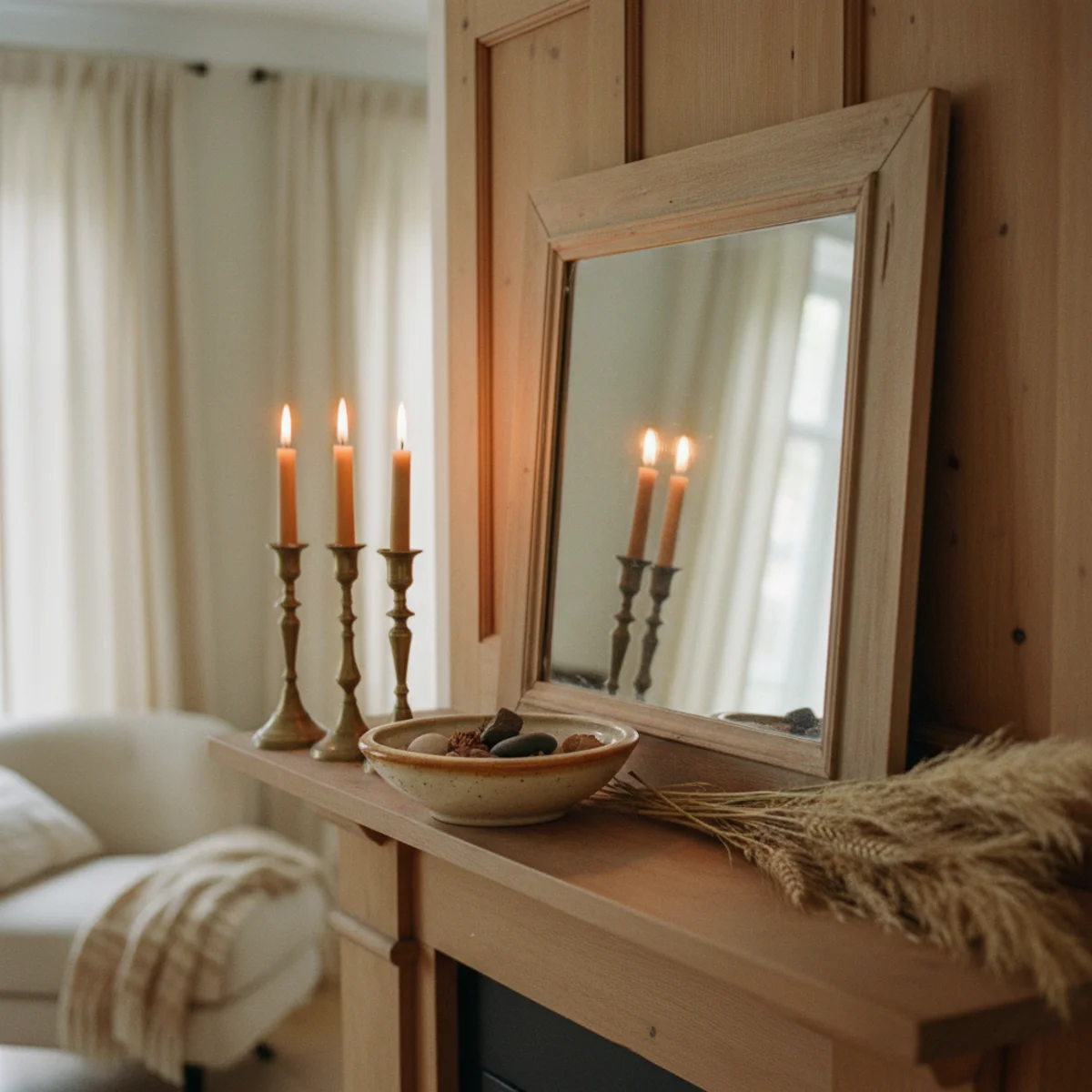
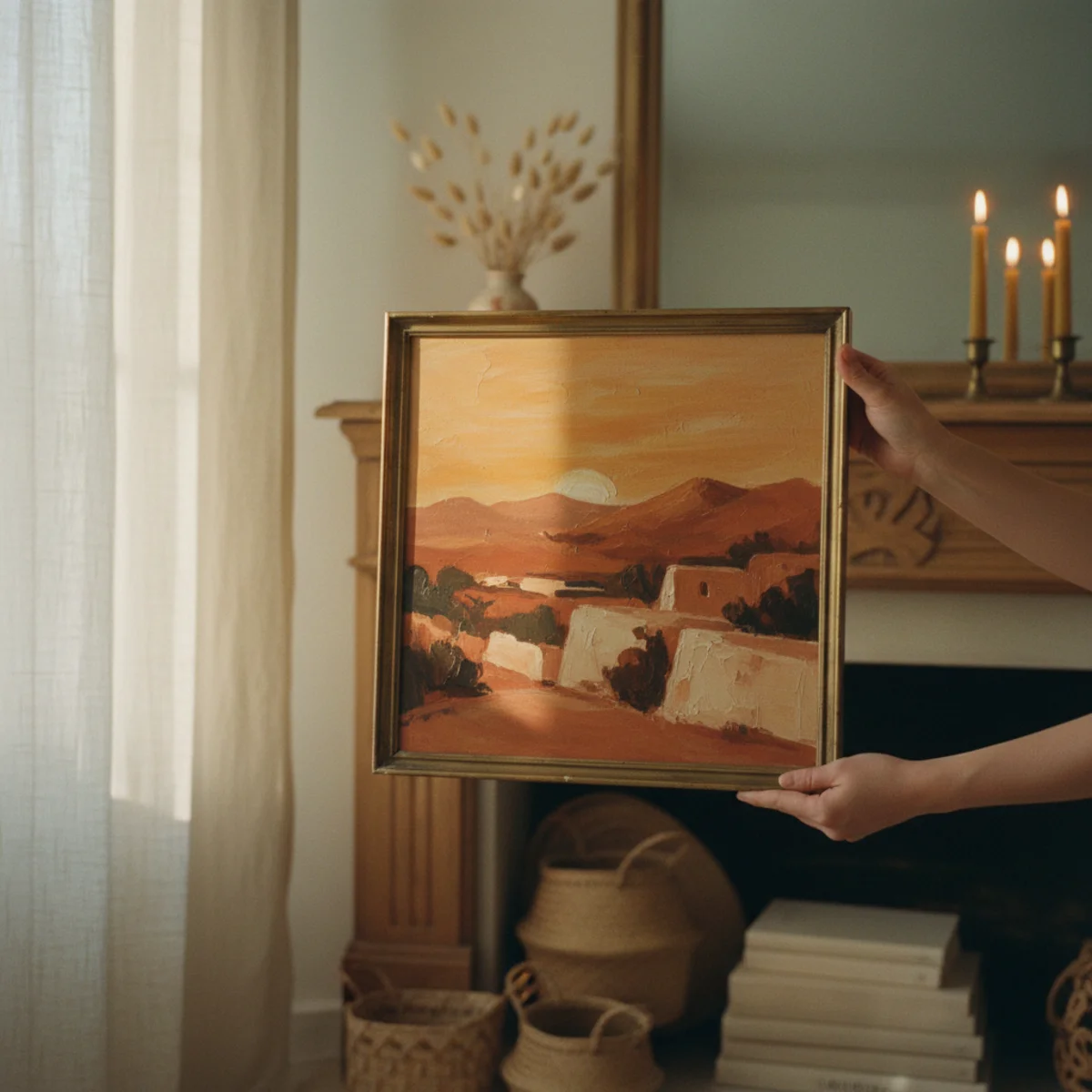
The single most-effective mantel styling move is leaning a large mirror (or large piece of art) against the wall behind the mantel rather than hanging it centered above. The leaning posture reads casual and intentional; the large scale anchors the composition; the reflective surface multiplies any candle or warm-light source nearby. Cost: $60 to $400 for the mirror; impact: foundational for everything else.
Mirror anchor specs: SIZE — 60% to 80% of mantel width (for a 60-inch mantel, mirror 36 to 48 inches wide; for a 48-inch mantel, mirror 30 to 40 inches wide). The mirror should read substantial relative to the mantel without overwhelming the room above. SHAPE — round, oval, or arched mirror reads warmer than rectangular; vintage gilded or aged-brass frames signal warm-collected aesthetic; thrifted antique mirrors at $40 to $200 outperform new mass-produced mirrors. POSITION — lean against the wall with the bottom edge resting on the mantel surface, slight backward tilt (3 to 5 degrees) toward the wall. CENTERING — lean slightly off-center (per rule 3) rather than perfectly centered for the off-center weighting effect. ALTERNATIVE ANCHOR — large piece of art (oil painting, vintage botanical, abstract piece, vintage photograph) at same size proportions ($80 to $500 for substantial vintage art from Etsy, Marketplace, or estate sales).
AFFILIATE SLOTANCHORLarge mirror or art at 60-80% mantel width, leaned against wall with bottom resting on mantel surface, slightly off-centerAdd affiliate URL when configuredWhy it works
Because leaning posture reads as 'recently placed, slightly casual' where hung art reads as 'permanently installed, decorative.' The casualness fits warm-collected aesthetic far better than formal hung art. The size also matters — small hung art (24 by 24-inch piece centered above a 60-inch mantel) reads as undersized and floating, where a 40-inch leaning mirror or piece of art reads as appropriately anchored. The leaning approach also lets you swap anchors seasonally without re-hanging hardware. Functionally and aesthetically, leaning wins.
Pro tip — If your fireplace has an existing TV mounted above the mantel that can't be removed, use a smaller leaning anchor (24 to 30 inches) positioned beside the TV rather than hanging art separately — the asymmetric leaning piece beside the TV reads more intentional than trying to compose around the TV. The TV becomes the dominant feature; the leaning piece accent rather than competing.
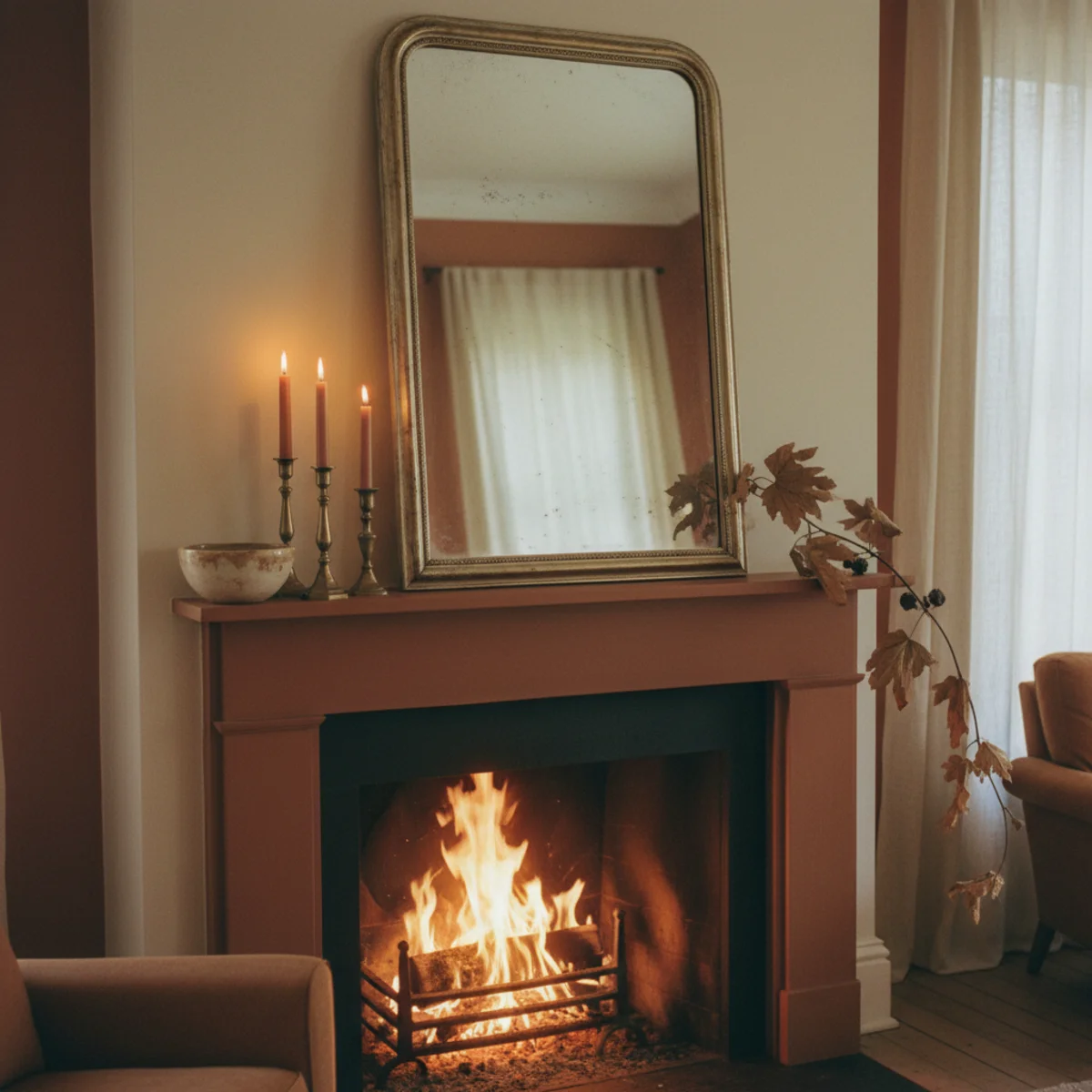
Vintage gilded mirror at 40 inches leaning against the wall — anchor that everything else builds around. See also: thrifted antique mirrors
02Work in Three Height Planes
Mantel composition requires three distinct height planes — tall (above mantel anchor: tall vase, tall candle, tall branch), medium (mid-mantel: medium frame, medium pillar, ceramic vessel), and low (along the mantel surface: low bowl, books, small candleholders). The visual layering at three heights creates the composed effect that single-height arrangements specifically lack.
Three height planes setup: HIGH PLANE (above mantel surface by 14+ inches) — tall taper candles in tall holders (10 to 14-inch combined height), tall branch in vase (15 to 30 inches), tall vintage object. Position 1 to 2 high items. MEDIUM PLANE (6 to 14 inches above mantel) — medium pillar candles (5 to 8 inches), medium framed art (8 to 12 inches), ceramic vessels (6 to 10 inches). Position 2 to 3 medium items. LOW PLANE (2 to 6 inches above mantel, hugging the surface) — short pillar or votive candles, small ceramic bowls, stacked books, small framed photos, single small object. Position 2 to 4 low items. The total composition: roughly 5 to 9 objects distributed across three height tiers, with the highest object as visual peak and the lowest objects grounding the composition.
AFFILIATE SLOTCOMPOSITIONThree height planes: tall (14+ inches above mantel), medium (6-14 inches), low (2-6 inches); 5-9 objects totalAdd affiliate URL when configuredWhy it works
Because the eye reads height variation as compositional intentionality — three distinct heights create journey for the eye (low to medium to high to medium to low), where single-height arrangements compress into a flat lineup. The journey is what registers as 'styled composition' versus 'arranged objects.' The three-plane rule applies to all surface styling but is especially important on mantels because they're long horizontal surfaces that risk reading as undifferentiated stripes without the height layering.
Pro tip — Measure your three height planes from the mantel surface, not from the floor — the mantel itself is at roughly 50 to 56 inches above the floor, and the planes are relative to that mantel surface, not to standing eye level. A 'tall' mantel object only needs to be 14+ inches above the mantel surface (reaching 65 to 70 inches above floor); standing-eye-level measurements lead to wildly oversized mantel objects.
Tall branch in vase, medium pillar candles, low bowl with books — three height planes creating composed journey. See also: shelf-styling-ideas
03Weight the Arrangement Off-Center
Symmetric mantel arrangements (matching candlesticks flanking centered mirror with matching vases beside) read as formal commercial display. The fix is deliberate off-center weighting — most of the visual mass concentrated on one side (typically the dominant side from primary seating viewing angle), with smaller balancing element on the other side. The asymmetric balance reads as intentional composition where symmetric reads as default.
Off-center weighting principle: PICK THE HEAVY SIDE based on primary viewing angle from main seating — typically the side closer to where people enter the room or where they sit. CONCENTRATE 60-70% OF VISUAL MASS on the heavy side: anchor mirror leans slightly toward this side, cluster of candlesticks on this side, ceramic vessel with branches here. PROVIDE BALANCING ELEMENT on the light side: single tall element (one tall candle, one tall branch) or one small grouping (small framed photo + small ceramic) — but significantly less mass than the heavy side. THE GAP between the heavy side cluster and the light side balancing element should be visible (per negative space discipline rule 10). MEASURE: stand at primary viewing position; if both sides feel equally weighty, you're symmetric and need to shift. The composition should feel slightly asymmetric and intentional rather than perfectly balanced.
AFFILIATE SLOTCOMPOSITION60-70% visual mass on heavy side (toward primary viewing angle) + balancing single element on light sideAdd affiliate URL when configuredWhy it works
Because symmetric arrangements default to commercial display aesthetic (think hotel lobby mantel) where the eye processes quickly and moves on. Asymmetric balanced arrangements require the eye to work harder to find the balance — and that visual work registers as 'styled composition' rather than 'placed for symmetry.' The principle is borrowed from Japanese flower arrangement and classical painting; the asymmetry creates interest where symmetry creates predictability.
Pro tip — If you have matching candlestick pairs you want to use, cluster both on the heavy side (with one slightly forward of the other) rather than splitting them to flank the mirror — the asymmetric cluster of two matching candlesticks reads more composed than the symmetric flanking arrangement.
Heavy side with candlesticks and ceramic, light side with single tall branch — off-center asymmetric balance. See also: Japanese flower arrangement
04Cluster Brass Candlesticks
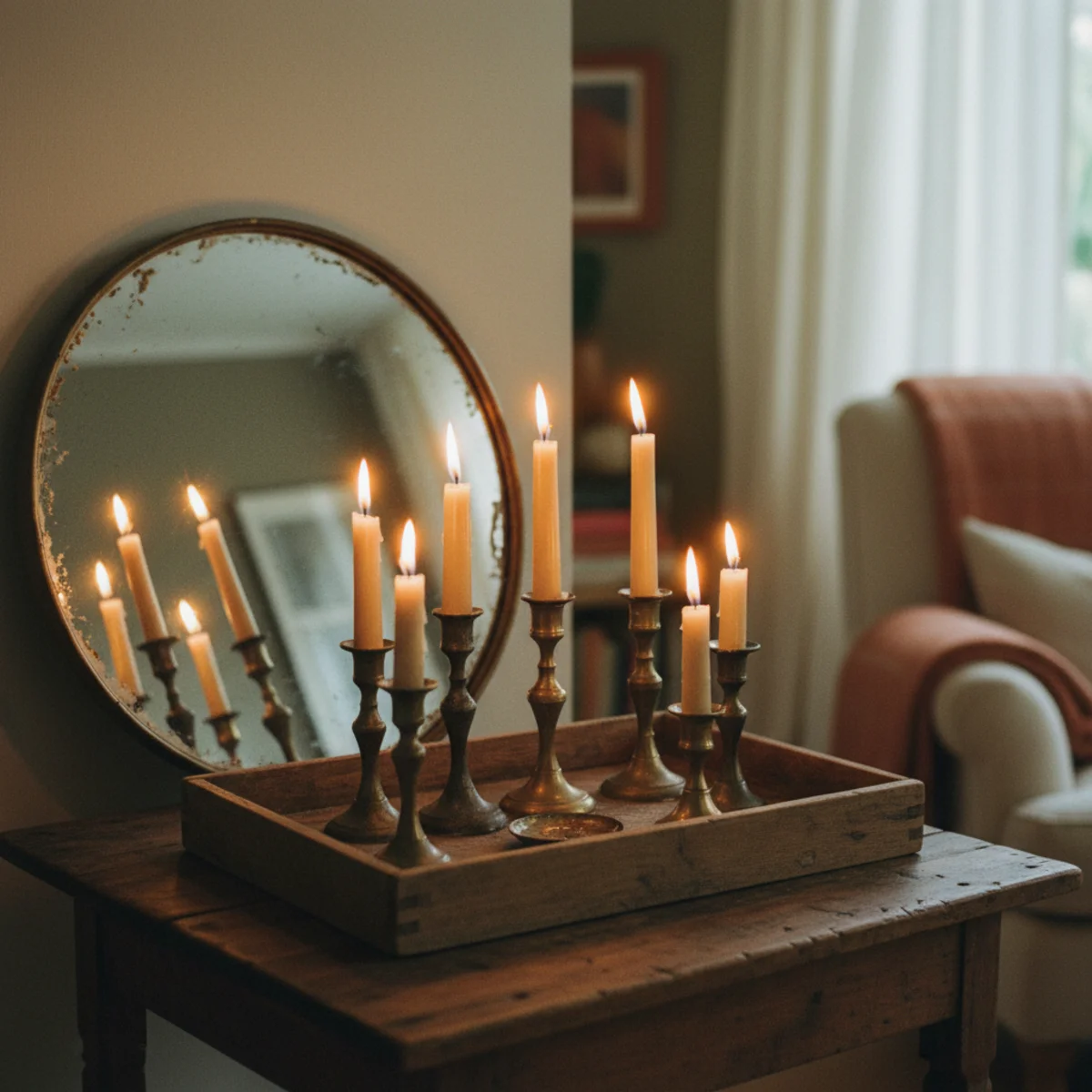
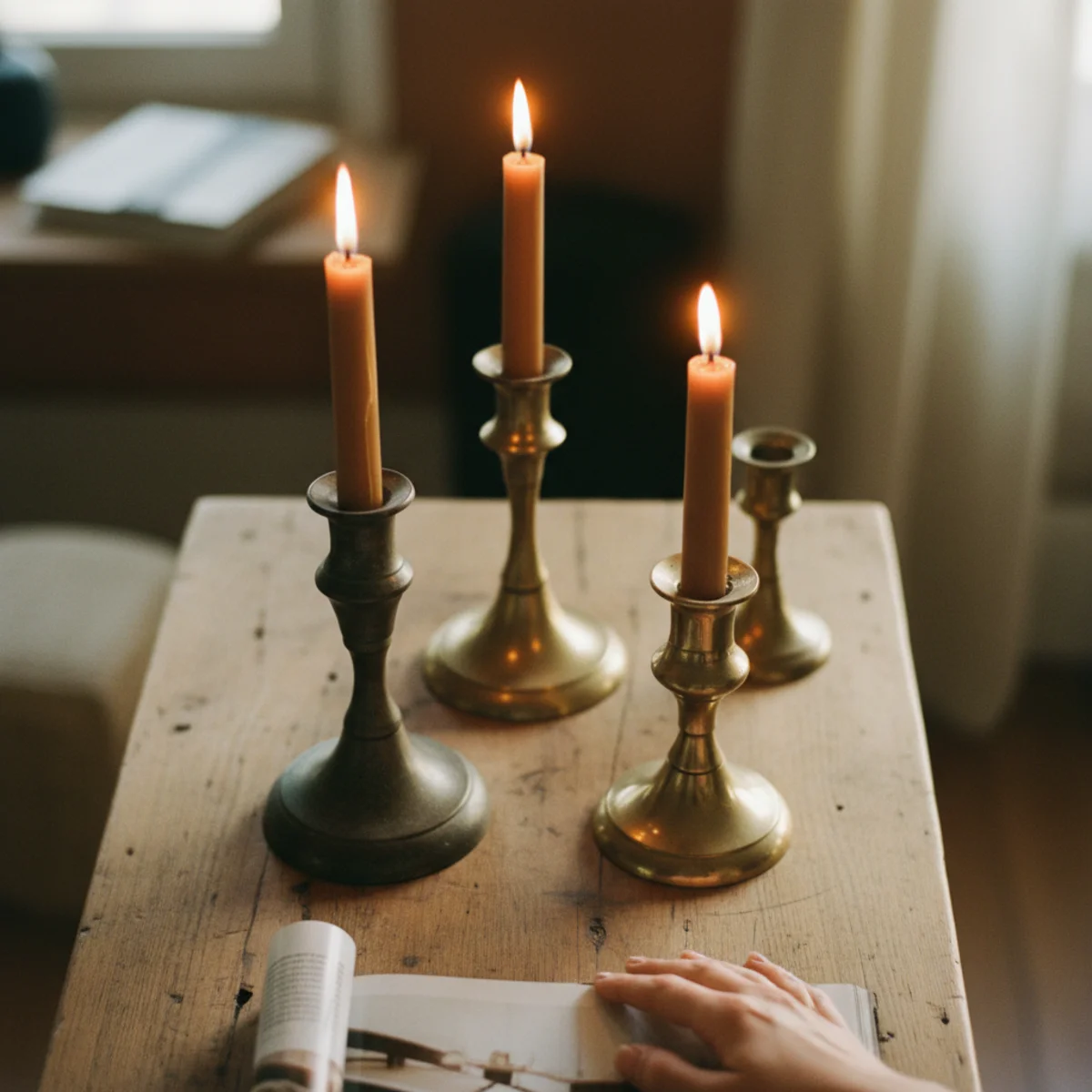
A cluster of vintage brass candlesticks at the heavy side of the mantel is the iconic warm-styled mantel element. Three to five candlesticks of varying heights with taper candles, all in aged brass, all positioned within a 10 to 14-inch zone — the cluster anchors the heavy side visually and provides the candlelight that mantels specifically benefit from during evening hours.
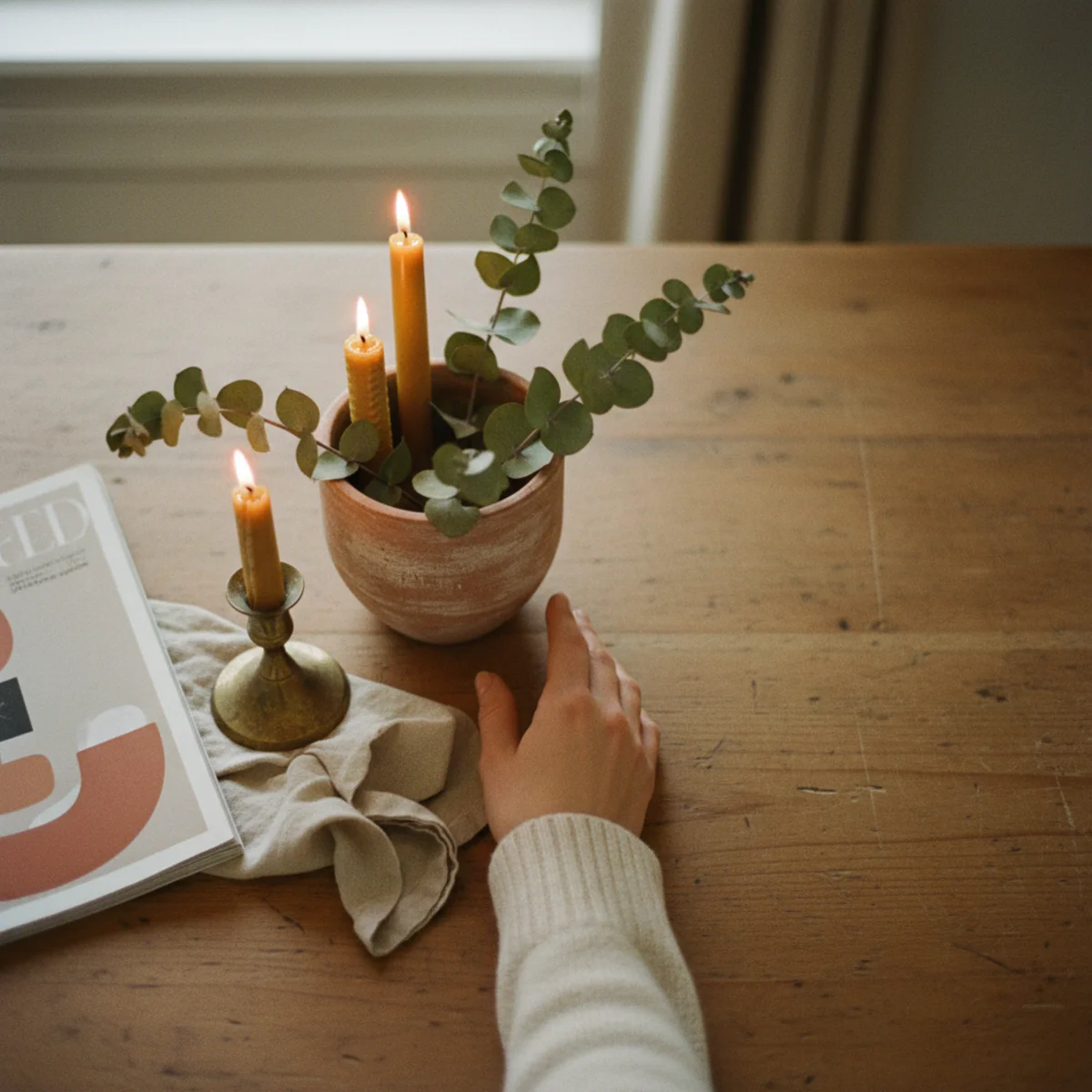
Brass candlestick cluster specs: 3 TO 5 VINTAGE BRASS CANDLESTICKS varying in height from 4 to 12 inches ($5 to $30 each from estate sales, antique stores, Marketplace). TAPERS IN HONEY OR CREAM beeswax ($1 to $2 per taper, lasting 6 to 8 hours). MIXED STYLES — three different candlestick designs rather than matching set (matched sets read commercial; mixed-style cluster reads collected). POSITION the cluster on the heavy side of the mantel (per rule 3), within a 10 to 14-inch horizontal zone — close enough that the candles read as one group, not so close they touch. STAGGER the heights so the cluster reads as composition rather than as line: tallest in back-center, medium and short candles arranged in front and to sides. LIGHTING TIMING — light candles 30 to 45 minutes before guests arrive or by 4:30pm during winter for full atmospheric effect.
AFFILIATE SLOTCANDLES3-5 vintage brass candlesticks at varying heights 4-12 inches, mixed styles not matching set, with beeswax tapersAdd affiliate URL when configuredWhy it works
Because brass candlesticks combine multiple cozy-mantel signals into one element: warm metal (aged brass patina), functional warmth (lit taper flames), vertical interest (the candles add height), and warm-collected character (vintage versus new makes the difference). The cluster of 3 to 5 also creates the odd-number compositional discipline (per candle-styling rules) within the larger mantel composition. The single element does most of the heavy lifting; everything else builds around it.
Pro tip — Source vintage brass candlesticks at estate sales rather than buying new — Saturday morning estate sales typically yield 4 to 8 vintage brass candlesticks at $5 to $20 each, which is the same cost as buying new mass-produced 'antique-style' candlesticks that miss the actual patina and irregularity. The vintage difference is substantial; mass-produced reproductions cannot match the aged real thing.
Five vintage brass candlesticks at staggered heights — the cluster that anchors the heavy mantel side. See also: candle-styling rules
05Let One Element Overlap the Anchor
An underused mantel composition trick: position one element so it slightly overlaps the leaning anchor mirror or art. The overlap creates layered depth, signals intentional composition, and prevents the anchor from reading as separate from the foreground items. The overlap can be a tall branch reaching across the mirror, a tall candlestick crossing the lower portion, or a framed photo leaning at the mirror's edge.
Overlap techniques: TALL BRANCH IN VASE positioned so the branches reach across the lower 20-30% of the leaning mirror, creating visual depth where branch meets mirror. TALL CANDLESTICK positioned so the candle taper extends across the bottom edge of the mirror. SMALL FRAMED PHOTO leaning against the larger leaning mirror, overlapping the mirror's lower-left or lower-right corner. SECONDARY ANCHOR ITEM (smaller piece of art or vintage object) leaning against the larger anchor mirror, deliberately overlapping it. The overlap should be MEANINGFUL (clearly intentional, not just slight) but PARTIAL (10 to 30% of the anchor's surface) — full overlap defeats the anchor's purpose. The technique adds the layered depth that flat mantel arrangements lack.
AFFILIATE SLOTCOMPOSITIONTall branch, candlestick, or smaller anchor partially overlapping leaning mirror at 10-30% of mirror surfaceAdd affiliate URL when configuredWhy it works
Because overlap creates the foreground-background relationship that flat arrangements miss — when one element crosses another, the eye reads the closer item as foreground and the partially-covered item as background, which adds depth perception to the otherwise-flat mantel surface. Without overlap, every item reads at the same depth plane and the composition feels two-dimensional. The overlap is a small move with significant compositional impact — adds the third dimension that mantels otherwise lack.
Pro tip — Position the overlap on the bottom 1/3 of the leaning anchor (not the top or middle) — bottom overlap reads as 'grounded layering' where top or middle overlap reads as 'accidentally placed in front.' The lower position also preserves the upper portion of the anchor as visible focal point.
Branches reaching across the mirror's lower portion — overlap that adds compositional depth. See also: leaning mirror
06Add a Low Grounding Bowl
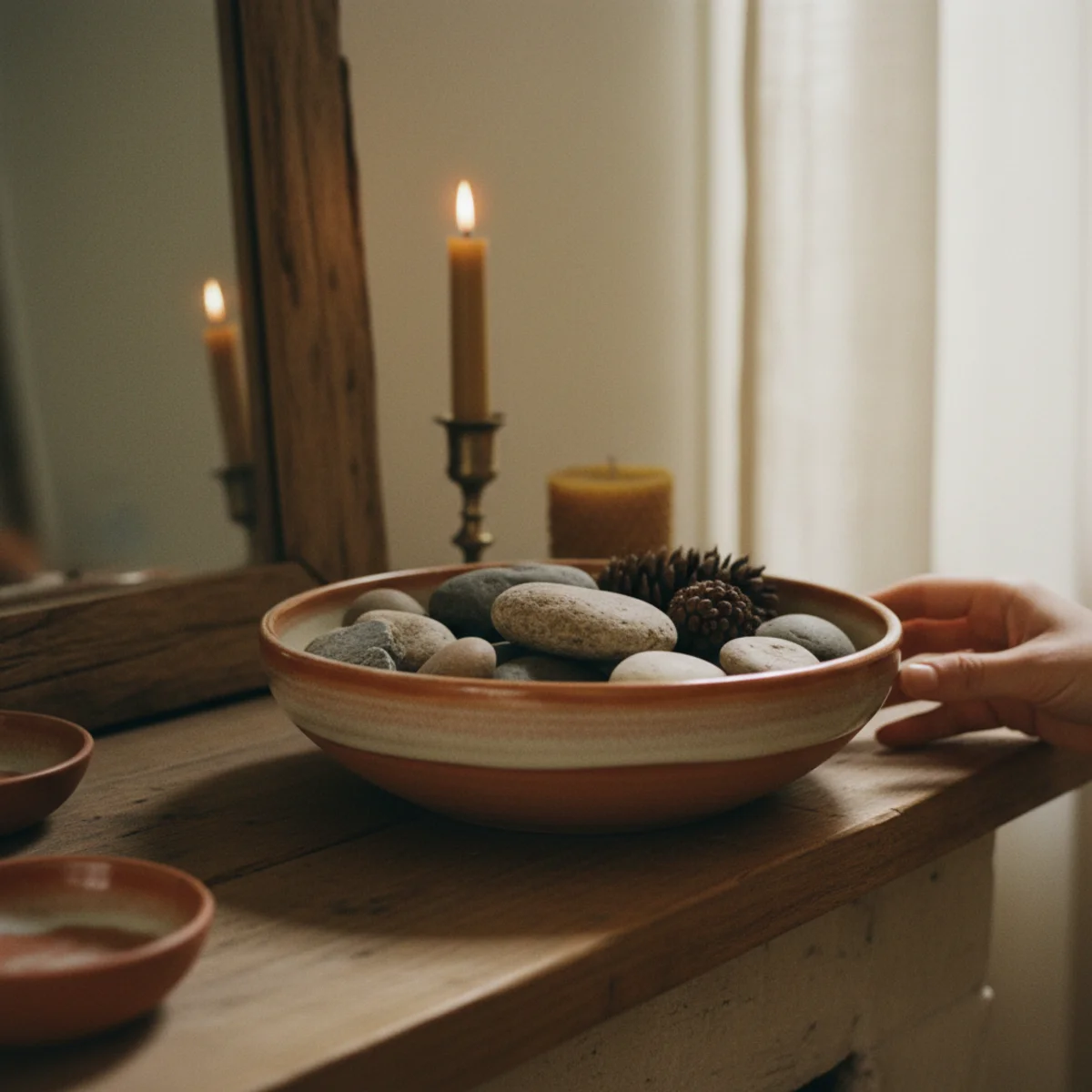
A low ceramic or wooden bowl on the mantel surface (within the low height plane, hugging the surface) grounds the composition and provides functional space for small seasonal items (small pinecones, citrus and cloves bowl, sprigs of greenery, sometimes guest jewelry being styled). The low bowl is the compositional anchor at the bottom plane that the upper elements relate to.
Grounding bowl specs: SHALLOW BOWL — 6 to 12 inches across, 2 to 4 inches deep, in warm ceramic, wood, brass, or stone ($15 to $80 retail, $5 to $30 thrifted). POSITION on the heavy side of the mantel surface, within the candlestick cluster zone or just below it. FILL with seasonal contents: SUMMER — small pinecones from yard, small smooth stones, sprigs of dried lavender. FALL — small acorns, mini gourds, dried orange slices. WINTER — pine cones with cinnamon sticks, dried citrus and cloves, small evergreen sprigs. SPRING — small stones with fresh moss, dried botanicals. The seasonal rotation keeps the bowl from becoming visual background. The bowl reads as functional-decorative element rather than as purely styled, which signals warm-collected intentionality.
AFFILIATE SLOTGROUNDINGShallow ceramic/wood/brass/stone bowl 6-12 inches with seasonal contents - pinecones, acorns, stones, dried citrusAdd affiliate URL when configuredWhy it works
Because the bowl provides visual gravity at the bottom plane — anchoring the composition to the mantel surface and preventing the upper elements from floating. Without a grounding element at low plane, the composition can feel top-heavy or floating; with the bowl, the composition has visual stability. The bowl is also functionally useful (seasonal rotating display, sometimes practical storage), which reinforces warm-collected ethos.
Pro tip — Rotate the bowl contents weekly during peak seasons (fall and winter) — the brief refresh keeps the styled vignette visually active rather than becoming background. The 5-minute weekly refresh costs almost nothing and maintains visual interest across the mantel's most-decorated months.
Wooden bowl with pine cones and cinnamon sticks — grounding element at the low height plane. See also: wooden
07Stack Books as Risers
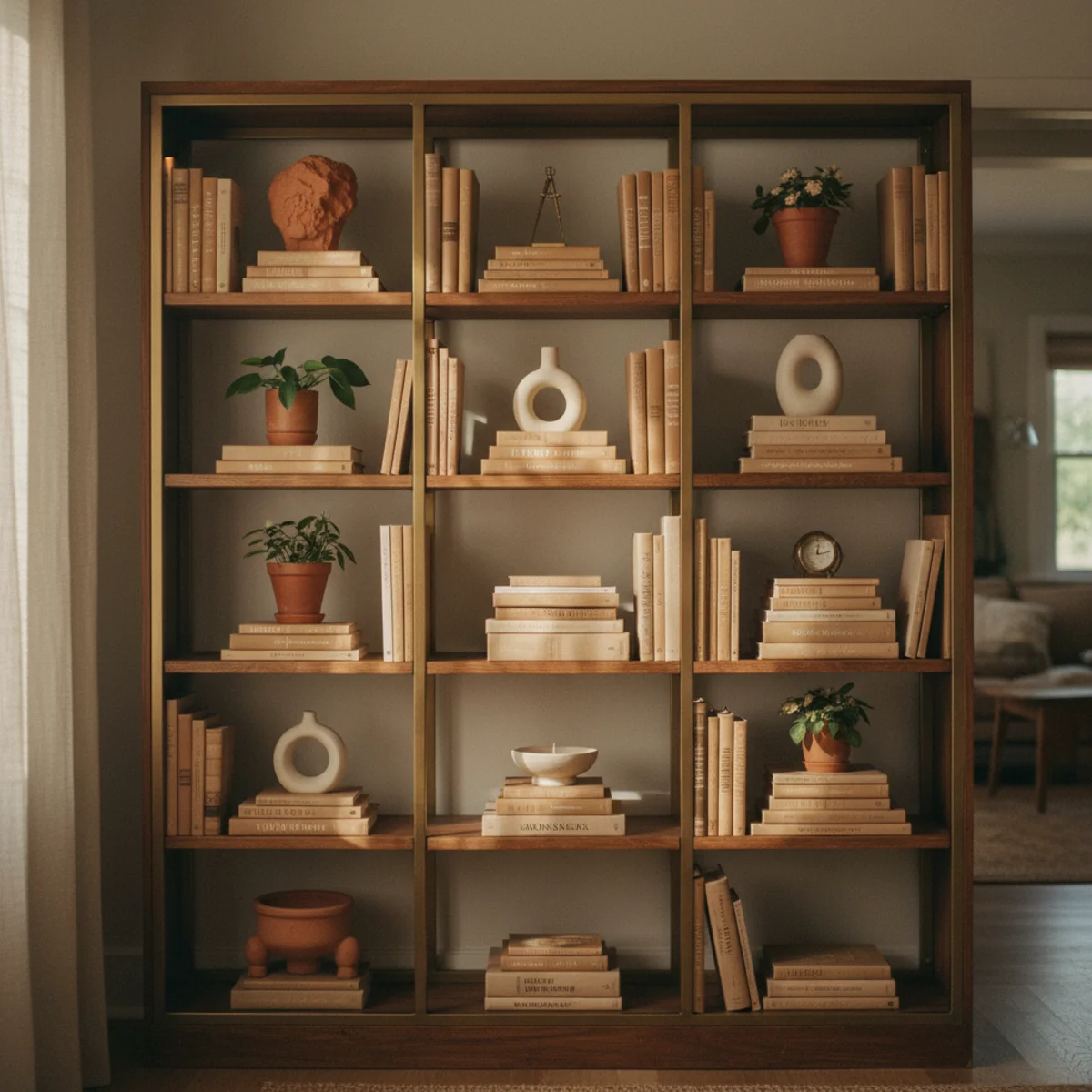
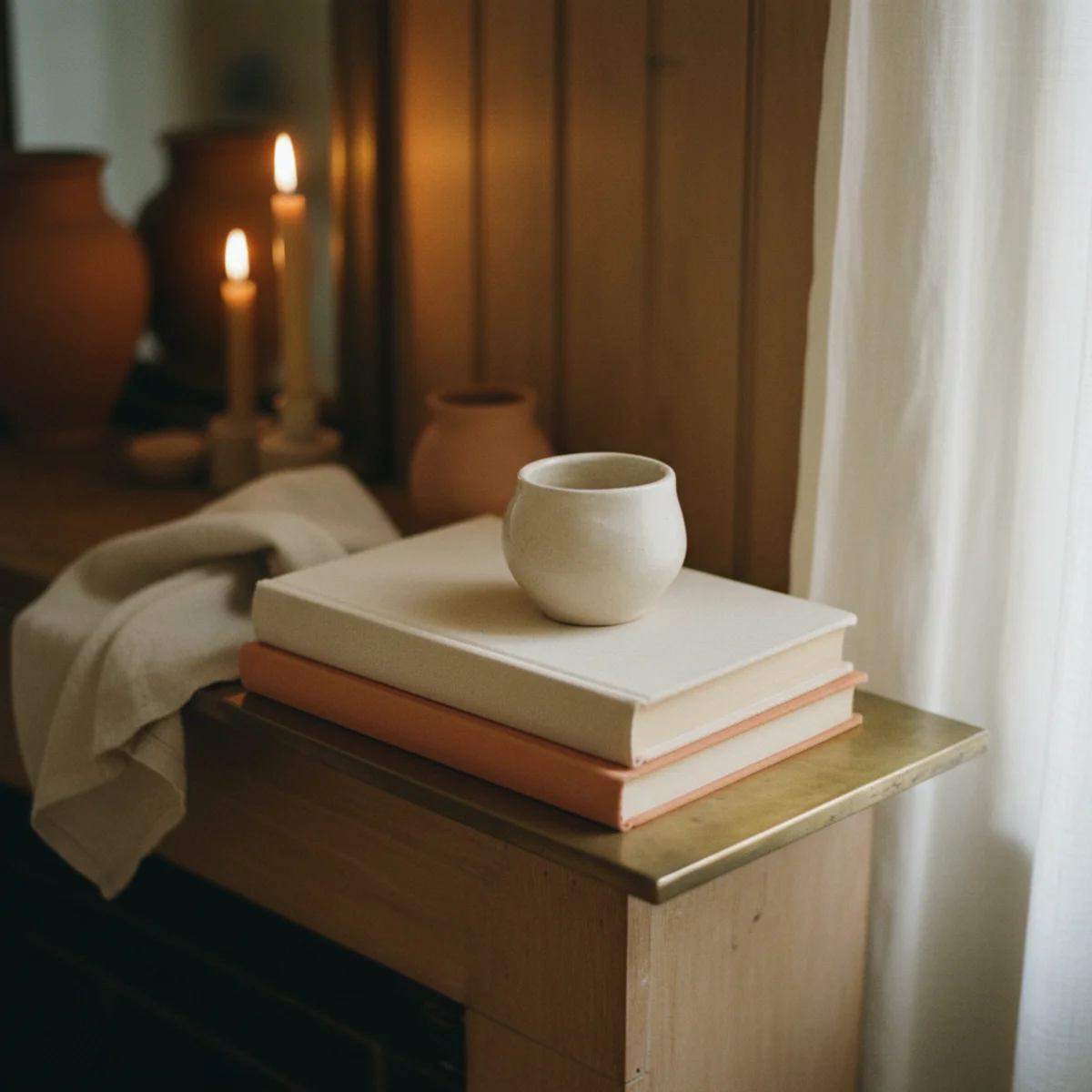
Stacking 2 to 4 hardcover books on the mantel under a candlestick, ceramic object, or other element creates additional height variation and adds compositional weight. The books also signal 'real home with real books' rather than 'styled vignette with display objects.' Best books: leather-bound vintage, books with cloth bindings in warm earth tones, hardcovers with beautiful spines.
Book-as-riser specs: 2 TO 4 HARDCOVER BOOKS stacked horizontally with the spines facing outward (visible to the room). Best spine types: LEATHER-BOUND VINTAGE BOOKS (estate sales at $3 to $15 each), CLOTH-BOUND HARDCOVERS in warm earth tones (cream, terracotta, olive, navy at $5 to $25 each from used bookstores or vintage), HAND-STAMPED OR EMBOSSED TITLES on the spines for character. STACK SIZE — 2 to 4 books creates 2 to 6 inches of height; 5+ books reads as bookcase rather than as riser. POSITION the stack on the heavy side of the mantel, positioned to receive a candlestick, small ceramic, or framed photo on top. The books transform a flat surface into multi-height surface; the topper element reads as elevated and substantial. The books themselves contribute warm-collected character.
AFFILIATE SLOTRISER2-4 hardcover books with warm earth-tone spines or leather binding under candlestick, ceramic, or framed photoAdd affiliate URL when configuredWhy it works
Because books carry inherent character — they suggest reading, thinking, and accumulated knowledge that decorative blocks cannot. Plus books are functionally real (you might actually read them) rather than purely decorative. The visible spines also add color and pattern variation to the mantel composition without requiring additional decor pieces. Generic decorative blocks read as 'purchased for the purpose of being riser'; books read as 'these books happen to be on the mantel right now.'
Pro tip — Buy books at estate sales and used bookstores for the most beautiful warm-earth-toned spines at lowest cost — $3 to $10 per book at estate sales versus $20 to $50 per book retail for similar visual quality. Build a small collection of mantel-worthy books over 2 to 3 estate sale visits; you'll find dozens of options that exceed retail decorative-book quality.
Three leather-bound vintage books with brass candlestick on top — risers that contribute warm-collected character. See also: estate sales
08Trail Greenery Off One End
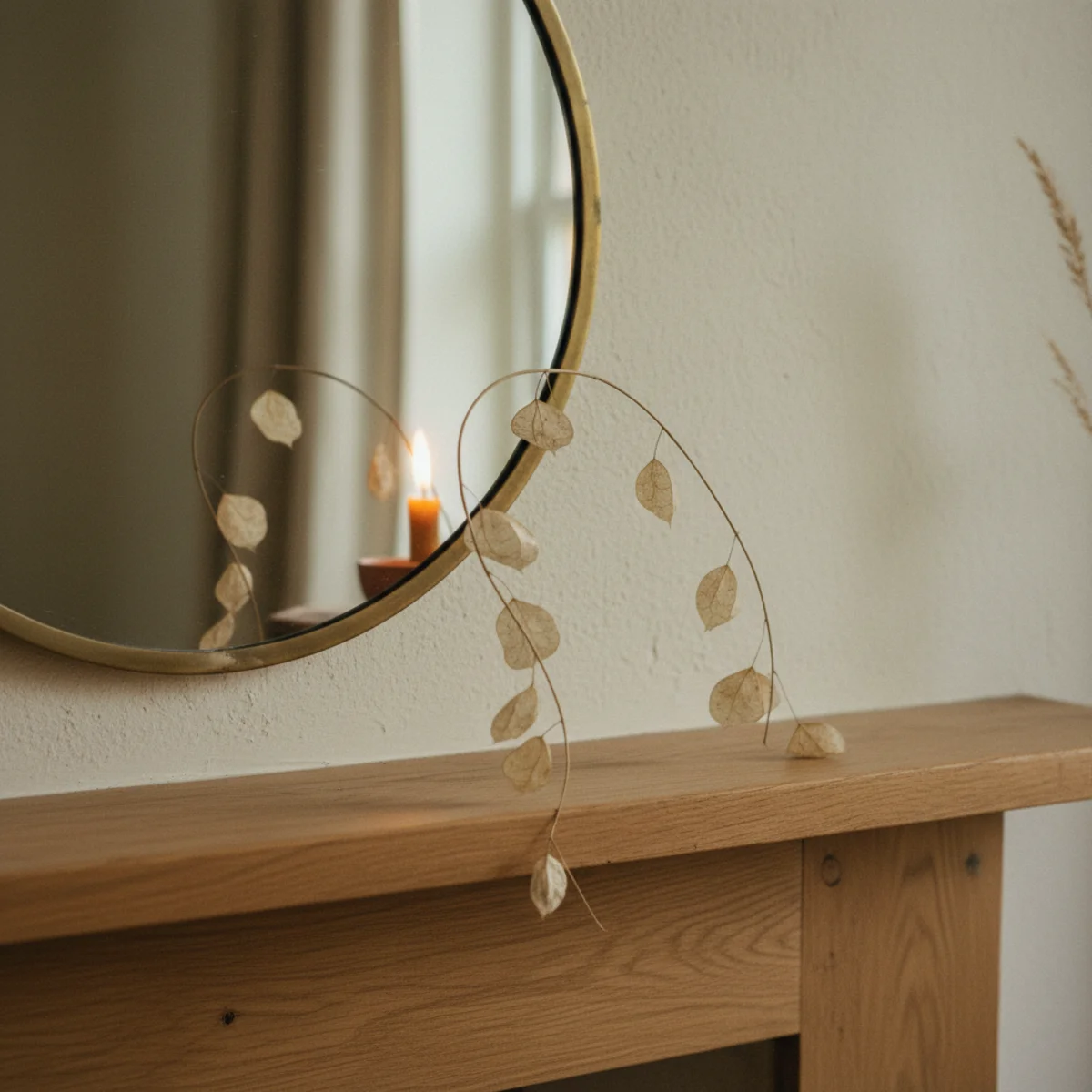
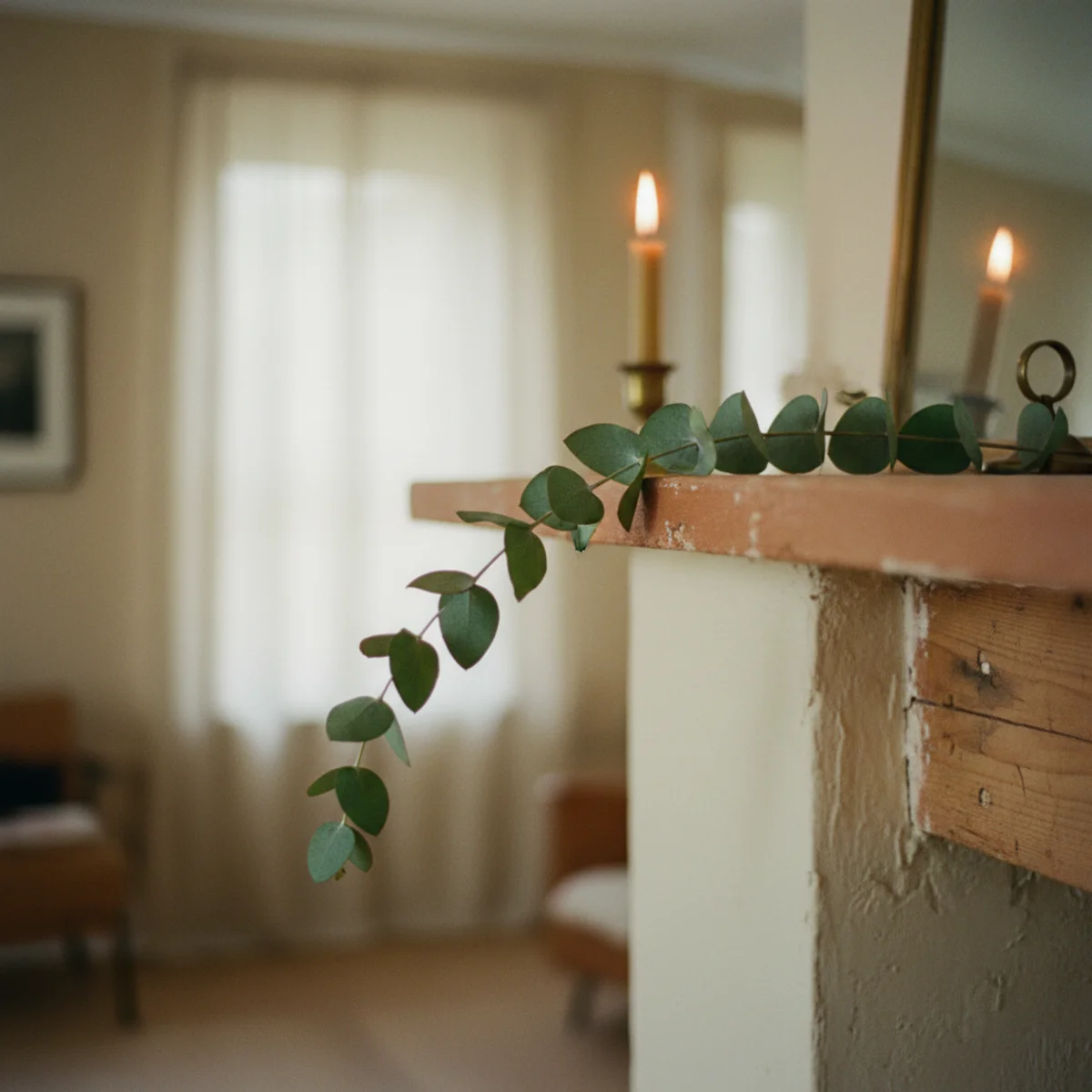
Greenery trailing off the end of the mantel — a strand of garland, branches in a vase with foliage extending sideways, or fresh-cut sprigs with intentional droop — adds organic shape and natural movement to the otherwise-static mantel composition. The trailing element draws the eye along the mantel length and softens the architectural edges.
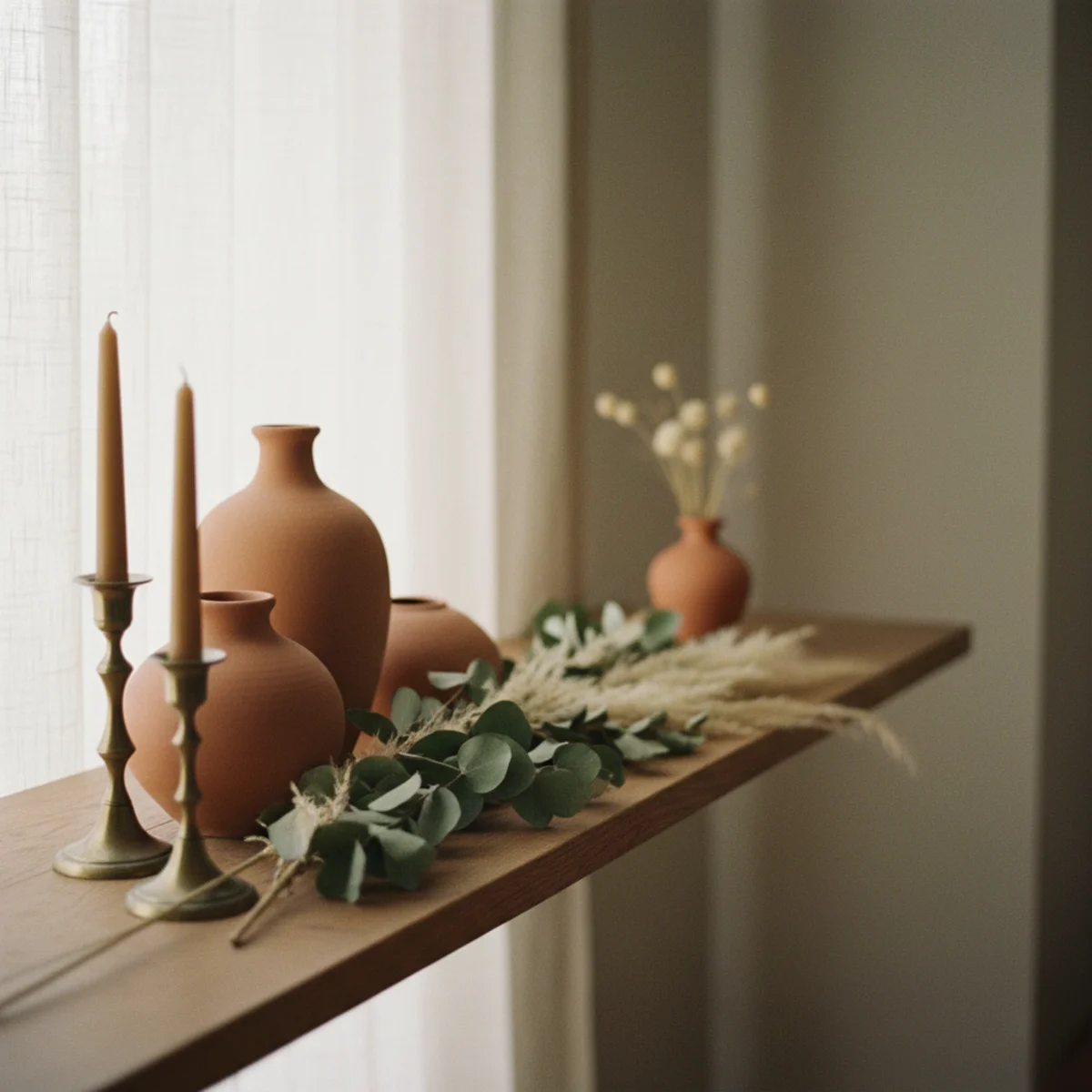
Trailing greenery options: FRESH GARLAND STRAND — 4 to 8-foot strand of fresh pine, cedar, eucalyptus, or mixed evergreen ($8 to $25 per strand from tree lots or farmers markets) draped along mantel with 8 to 14 inches of overhang on one or both ends. SOFTER ALTERNATIVE — branches in tall vase with foliage extending sideways past vase edge (eucalyptus, olive, magnolia, fresh-cut from yard at zero cost or $5 to $15 from grocery florist). DRIED ALTERNATIVE — dried eucalyptus or dried wheat in tall vase with foliage extending sideways at $10 to $25 per bunch, lasting 1 to 2 years. POSITION the trailing element on the heavy side of the mantel (matching the off-center weighting) or trailing off the opposite light side to add visual continuation. The drape or extension should be CLEARLY INTENTIONAL — 6+ inches of overhang reads as styled, where 1 to 2 inches reads as accidental.
AFFILIATE SLOTGREENERYFresh garland 4-8 feet draped with 8-14 inch overhang OR branches in vase extending sideways past vase edgeAdd affiliate URL when configuredWhy it works
Because the trailing organic shapes break the architectural straight lines of the mantel itself — the mantel is a horizontal rectangle, and greenery extending past its edges softens those rigid lines with curved natural shapes. The visual contrast between rectangular mantel and organic greenery is part of what makes the composition feel warm and inhabited rather than stiff and styled. The trailing element also draws the eye along the mantel length, creating directional flow that flat arrangements miss.
Pro tip — Mist fresh garland every 3 to 4 days with a spray bottle to extend its freshness — fresh evergreen draped on a mantel typically lasts 2 to 4 weeks indoors with regular misting, where unmisted garland dries out within 1 to 2 weeks. The 30-second weekly misting transforms ongoing mantel decor cost from $25 weekly to $25 every 3 to 4 weeks.
Fresh garland trailing 12 inches off the mantel end — organic shapes softening rigid rectangular lines. See also: winter-decor
09Choose a Warm-Toned Anchor
The anchor mirror or art should be in warm tones — gilded brass frame, walnut or warm oak frame, aged-brass mirror frame, or art with warm earth-tone palette. Cool-toned anchors (silver frames, chrome edges, blue or grey art) fight the warm-mantel aesthetic regardless of how good the surrounding styling is. The anchor's color temperature determines the whole mantel's color temperature.
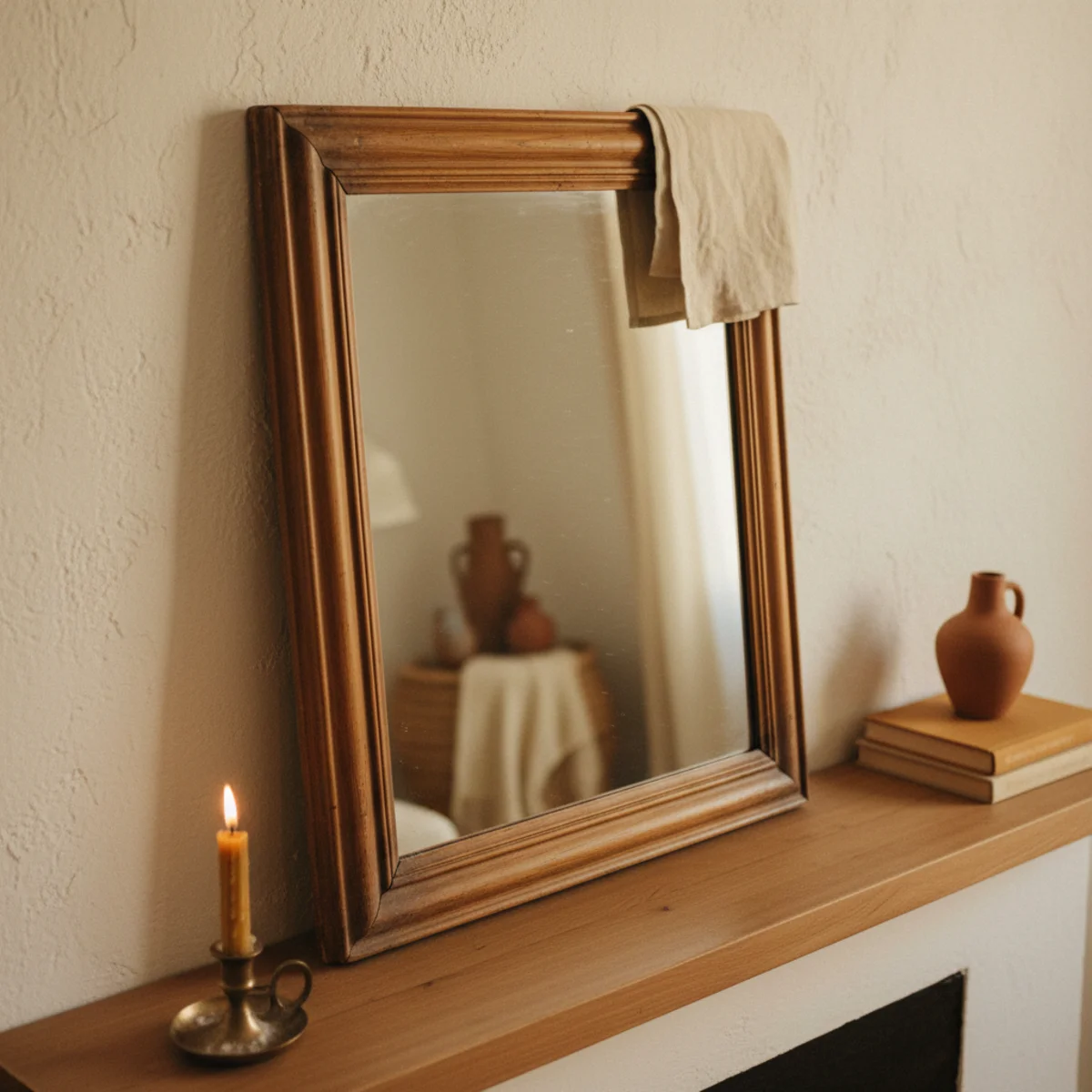
Warm-anchor options: VINTAGE GILDED BRASS FRAME on mirror or art — aged gold tone, slight patina, irregular finish ($60 to $300 thrifted, $200 to $600 retail). WALNUT, WARM OAK, OR TEAK FRAME — natural wood with visible grain ($40 to $200 for substantial frame). AGED-BRASS MIRROR FRAME — modern reproduction with antique finish if vintage isn't accessible ($80 to $400 from Anthropologie or specialty retailers). WARM EARTH-TONE ART — vintage botanical with terracotta or olive palette, landscape with autumn colors, abstract in warm earth tones ($80 to $500). AVOID: silver-toned frames (cool metal language), chrome or stainless edges, blue-grey art palettes, cool-modern frames with sharp black lines. The anchor's warmth sets the mantel's whole palette tone; cool anchors fight every other warm element.
AFFILIATE SLOTANCHORVintage gilded brass, walnut/oak frame, aged-brass mirror, or warm earth-tone art - never cool silver/chrome/greyAdd affiliate URL when configuredWhy it works
Because the anchor is the largest single visual element on the mantel — its color temperature dominates the composition. A 40-inch leaning mirror in warm aged-brass frame against the wall radiates warm tone across the entire mantel space; the same 40-inch mirror in cool silver frame radiates cool tone that fights everything else. The single anchor decision multiplies in impact through the rest of the composition.
Pro tip — If you have an existing cool-frame mirror you want to use, consider re-finishing with warm metallic paint (Modern Masters Metallic Antique Brass at $20 per quart, two-coat finish) to convert from cool to warm — the DIY conversion costs $30 and one evening, transforms the anchor from fighting to supporting warm aesthetic.
Vintage gilded brass round mirror with aged patina — warm anchor that supports every other element. See also: best-paint-for-warm-home
10Keep Negative Space on One Side
The single most-counterintuitive mantel principle: at least one section of the mantel should stay intentionally empty. Most mantels fail because every horizontal inch gets covered with objects, eliminating the breathing room that makes the styled side read as composition. Keep one third to one half of the mantel length visibly empty — usually the light side — so the eye can rest before processing the styled heavy side.
Negative space discipline: HEAVY SIDE — styled with anchor, cluster of candlesticks, low bowl, books, trailing greenery, ceramic vessel (per rules 1-9). 60 to 70% of total mantel mass concentrated here. LIGHT SIDE — significantly less mass: ONE balancing element (single tall candle or single tall branch) or small grouping (small framed photo, single small ceramic) or NOTHING AT ALL. The light side should have at least 12 to 24 inches of visibly empty mantel surface from edge of last object to mantel edge. CENTER OR TRANSITION ZONE — usually visibly less occupied than heavy side, possibly entirely empty. THE COMMON FAILURE: extending styling across the whole mantel length to 'fill' it. Every mantel benefits from intentional empty space; without it, the styling reads as accumulation rather than as composition.
AFFILIATE SLOTDISCIPLINE30-40% of mantel length visibly empty; heavy side concentrates styling, light side single element or nothingAdd affiliate URL when configuredWhy it works
Because the empty space functions as visual rest — places for the eye to breathe between processing styled elements. Without empty space, the entire mantel reads as continuous visual demand, which the brain processes as cluttered rather than composed. The styled elements need surrounding emptiness to read as deliberate vignettes; without the contrast of empty against styled, both register as visual noise. The 30-40% empty space rule is what allows the 60-70% styled mass to feel intentional.
Pro tip — Take a photo of your mantel from your primary seated position before and after applying the negative-space principle — the visual difference is dramatic. Most home mantels improve significantly by removing 30 to 50% of their objects, leaving the resulting empty space as intentional rather than as 'missing decoration.' Trust the empty space.
Heavy styled left, mostly empty right — negative space discipline that makes the styled side read intentional. See also: warm-minimalism
11Add a Vintage Clock for a Mid Anchor
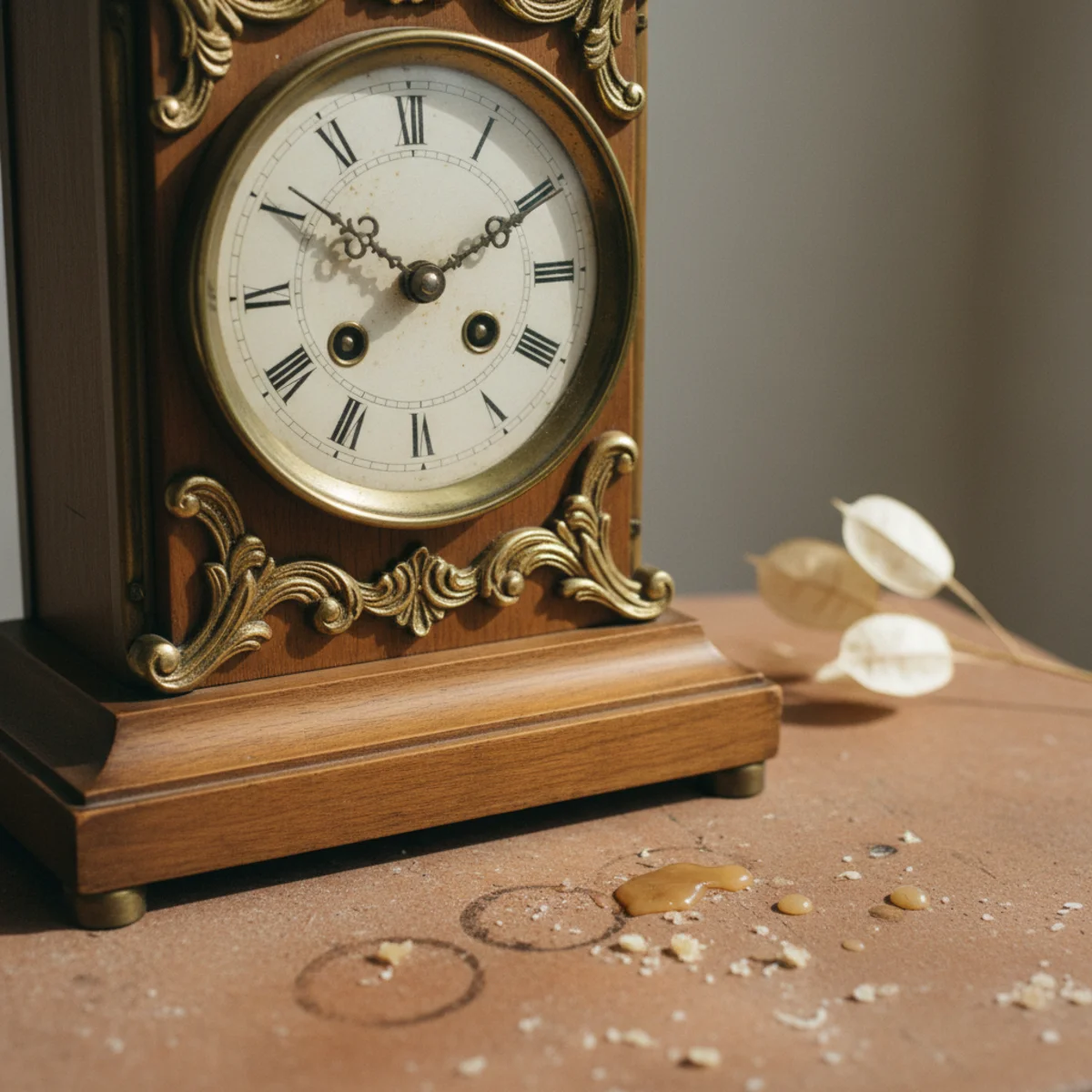
If your mantel feels too sparse or needs a second anchor besides the leaning mirror, a vintage clock at the mid-height plane works perfectly. The clock's circular shape contrasts with rectangular frames and books, its mechanical character adds visual interest, and its functionality (real ticking clock telling real time) reinforces warm-collected ethos rather than purely-styled aesthetic.
Vintage clock options: VINTAGE MANTEL CLOCK in brass, wood, or marble — 6 to 14 inches tall ($30 to $200 from estate sales, antique stores, or Marketplace). LARGE WALL CLOCK leaned against the wall as smaller anchor — 14 to 24 inches diameter ($60 to $300 vintage). SMALL CARRIAGE CLOCK on a book stack — petite vintage clock 4 to 8 inches tall ($40 to $200 from antique stores or eBay). Position the clock at MID-HEIGHT PLANE (per three-height rule), positioned to balance off-center weighting or to fill the transition zone between heavy and light sides. PREFER WORKING vintage clocks if possible — the ticking adds subtle acoustic element to the mantel composition. Wind weekly if mechanical, replace battery annually if quartz movement.
AFFILIATE SLOTANCHORVintage mantel clock 6-14 inches OR large wall clock 14-24 inches leaned at mid-height; prefer working mechanicalAdd affiliate URL when configuredWhy it works
Because clocks combine multiple compositional qualities into one element: circular shape (contrast against rectangular frames), mechanical character (warm-collected versus mass-produced), functional reality (it tells time), and substantial visual mass (anchor presence). The clock also reads as 'inhabited home' element — a real working clock in real warm-styled space — where decorative objects without function can read as showroom display. Working vintage clocks specifically are heirloom-quality and accumulate emotional weight across years.
Pro tip — Wind vintage mechanical clocks at the same time each week (Saturday morning works well for many households) — the weekly ritual makes the clock a daily presence rather than ornamental object. The acoustic ticking also becomes part of the room's character; many households grow to love the gentle sound across years of use.
Vintage brass mantel clock at mid-height plane — mid-anchor that ticks. See also: antique stores
12Reflect Candlelight at Night
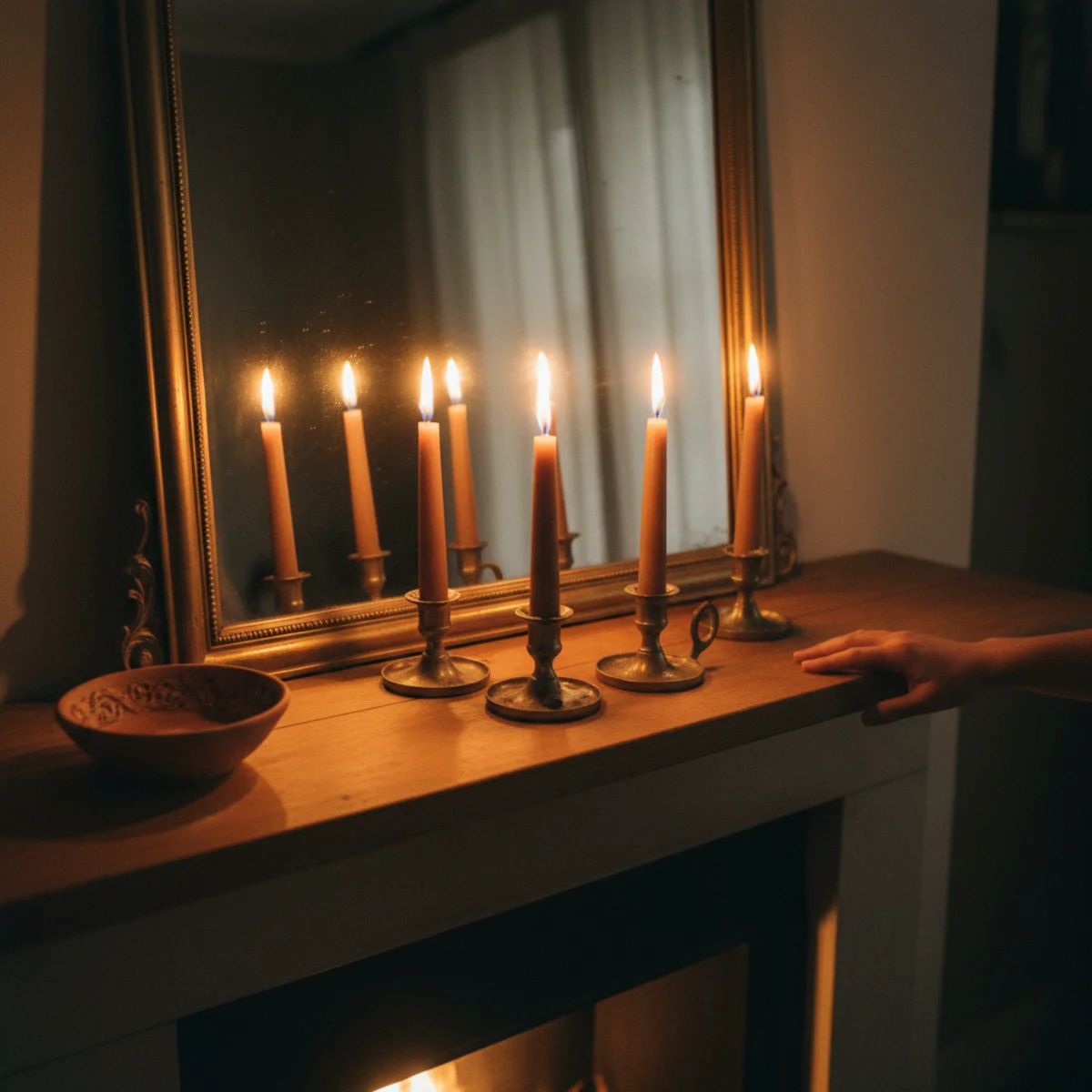
The final mantel principle is the evening transformation — the styled mantel should read different (and significantly better) when candlelit at night versus when viewed in daylight. The leaning mirror reflects the lit tapers; the brass surfaces catch and warm the light; the entire mantel becomes a warm-glowing vignette during the cozy evening hours. Plan the mantel composition specifically for this evening effect.
Evening transformation strategy: ANCHOR MIRROR reflects all lit candles — position candlesticks so flames are visible in the mirror reflection (2 to 4 inches in front of the mirror surface for clear reflection without flame proximity damage). BRASS SURFACES catch and reflect candlelight — the aged brass candlesticks themselves, brass frames, brass clock all glow when lit by adjacent candles. LIGHT TAPERS BY 4:30PM during winter, 7PM during summer — the cluster of 3 to 5 lit beeswax tapers transforms the mantel from daytime-styled to evening-glow. DIM SURROUNDING ROOM lighting so the mantel becomes one of the brighter zones in the room — fireplace alone (real fire) or candles provide the only mantel-zone lighting during evenings. The compounded warmth (multiple lit tapers, reflected in mirror, glowing across brass surfaces) creates the evening effect that makes mantel styling worth the daily investment.
AFFILIATE SLOTTRANSFORMATIONPosition candlesticks 2-4 inches in front of mirror for reflection; light tapers by 4:30pm winter or 7pm summer; dim surrounding lightsAdd affiliate URL when configuredWhy it works
Because mantels are viewed for many more hours during evening than during daylight in typical use — the household sits in the living room during evening, looking at the mantel across the room. The styling should optimize for this primary viewing condition, not for occasional daytime photos. The evening warm-glow effect is what makes mantel styling actually function as warm-home decor; daytime appearance is secondary to evening atmosphere. Position the styling specifically so that lit candles + mirror reflection + brass surfaces compound the warm light during the cozy hours.
Pro tip — Photograph your mantel in the evening with candles lit and surrounding lights dimmed — the night-version of your mantel is the version that matters most for cozy evaluation. Use the evening photo as your reference for adjustments; daytime photos miss the primary effect the styling is supposed to produce.
Lit tapers reflected in mirror, glowing across brass surfaces — the evening transformation that styling enables. See also: candle-styling
How to style a fireplace mantel step by step
One method, every season. Build from the anchor outward.
- 1Place the anchor first
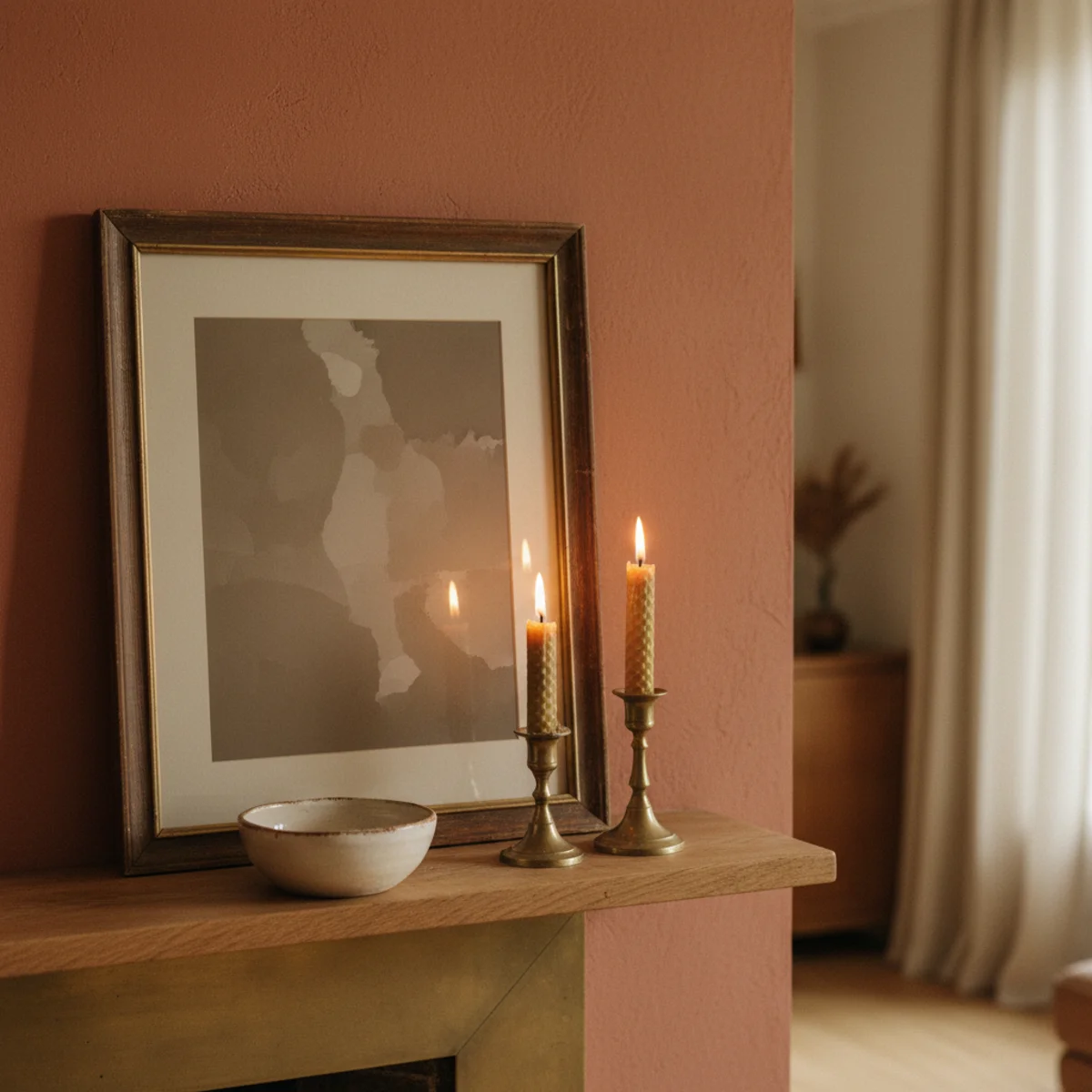
Lean a large mirror or framed piece at the back, weighted to one side of center. This is the foundation everything relates to.
- 2Add the tall layer
Set candlesticks, a vase, or branches near the anchor at varied heights, on the same weighted side.
- 3Build the mid and low planes
Add stacked books or a clock for the middle, then a low bowl at the base. Let one piece overlap the anchor.
- 4Edit for asymmetry and space
Step back. Pull the grouping further to one side, leave the other end lighter, and remove anything that crowds.
Quick tips
- Lean a large anchor mirror or art before placing anything else — it's what makes the small pieces read as styled.
- Weight the whole arrangement to one side and leave the other end deliberately sparse.
- Work in three height planes and odd numbers; raise short pieces on stacked books.
- Burn real candles and set them near a mirror so the mantel glows at night.
- Refresh the mantel each season by changing only the low bowl and the greenery, leaving the anchor in place.
- Let one element overlap the anchor so the layers connect and nothing floats.
Mantel decor by season
Fresh branches or wildflowers in the low bowl, lighter art, trailing green ivy off one end.
Dried wheat and grasses, brass candlesticks, a bowl of acorns or quince; see our autumn mantel guide.
Evergreen clippings, clustered beeswax candles reflected in the mirror, deeper-toned art.
A large anchor mirror, a few brass candlesticks, and stacked books — swap only the seasonal low layer.
A mantel is the headline of the room. Lean an anchor, layer to one side, and let the firelight do the rest.
Frequently asked questions
How do I style a fireplace mantel?+
How big should a mantel mirror be?+
Should mantel decor be symmetric or asymmetric?+
What should I put on my mantel besides a mirror?+
How do I make my mantel look cozy?+
How much empty space should a mantel have?+
Lean a large anchor mirror or piece of art first, weighted to one side, then layer candlesticks, books, and a low bowl across three planes in front of it. We'd build a permanent base and change only the low seasonal layer — it keeps the mantel looking intentional all year for almost no ongoing effort. Burn real candles in front of the mirror at night; that doubled, flickering light is the moment a styled mantel becomes the warmest headline in the room.