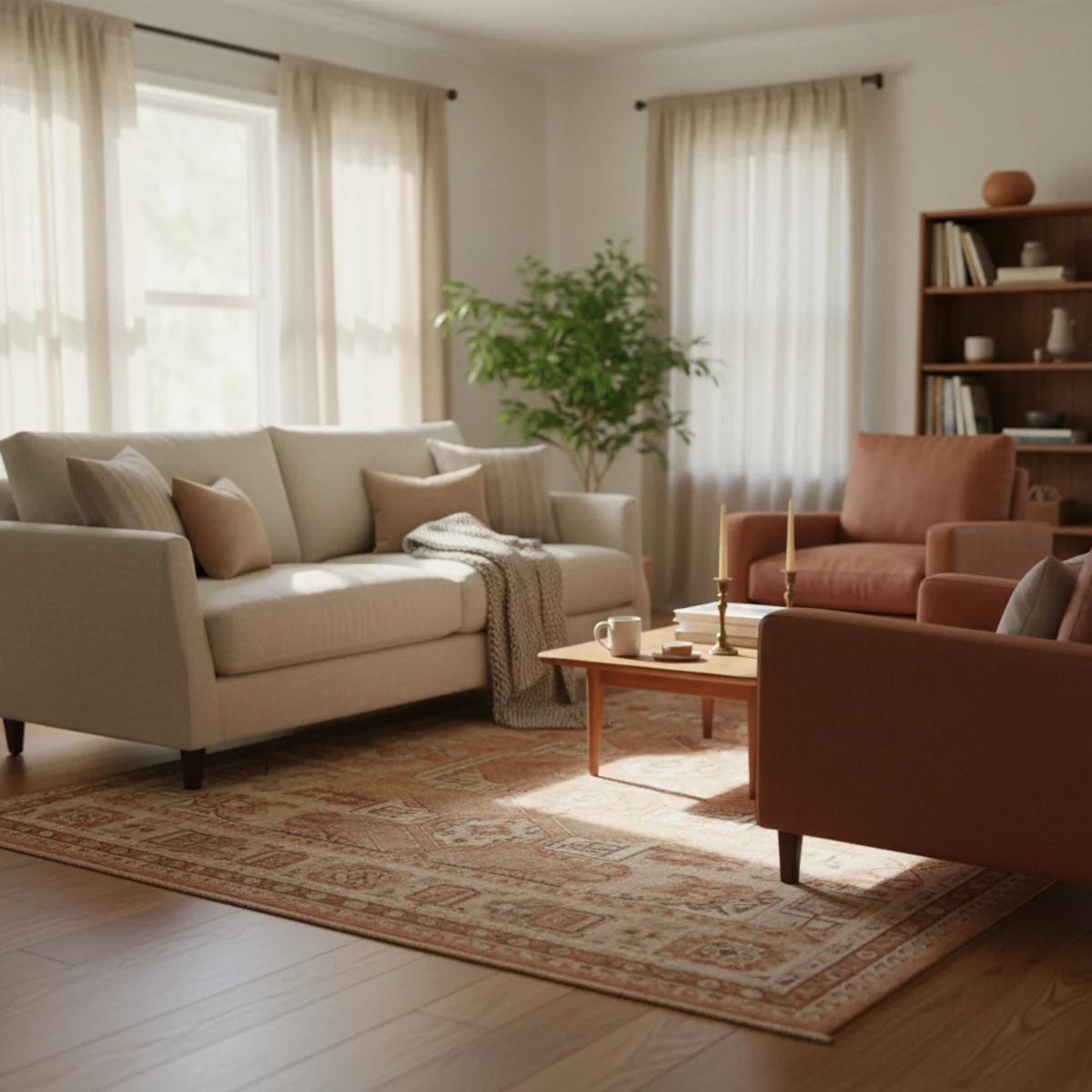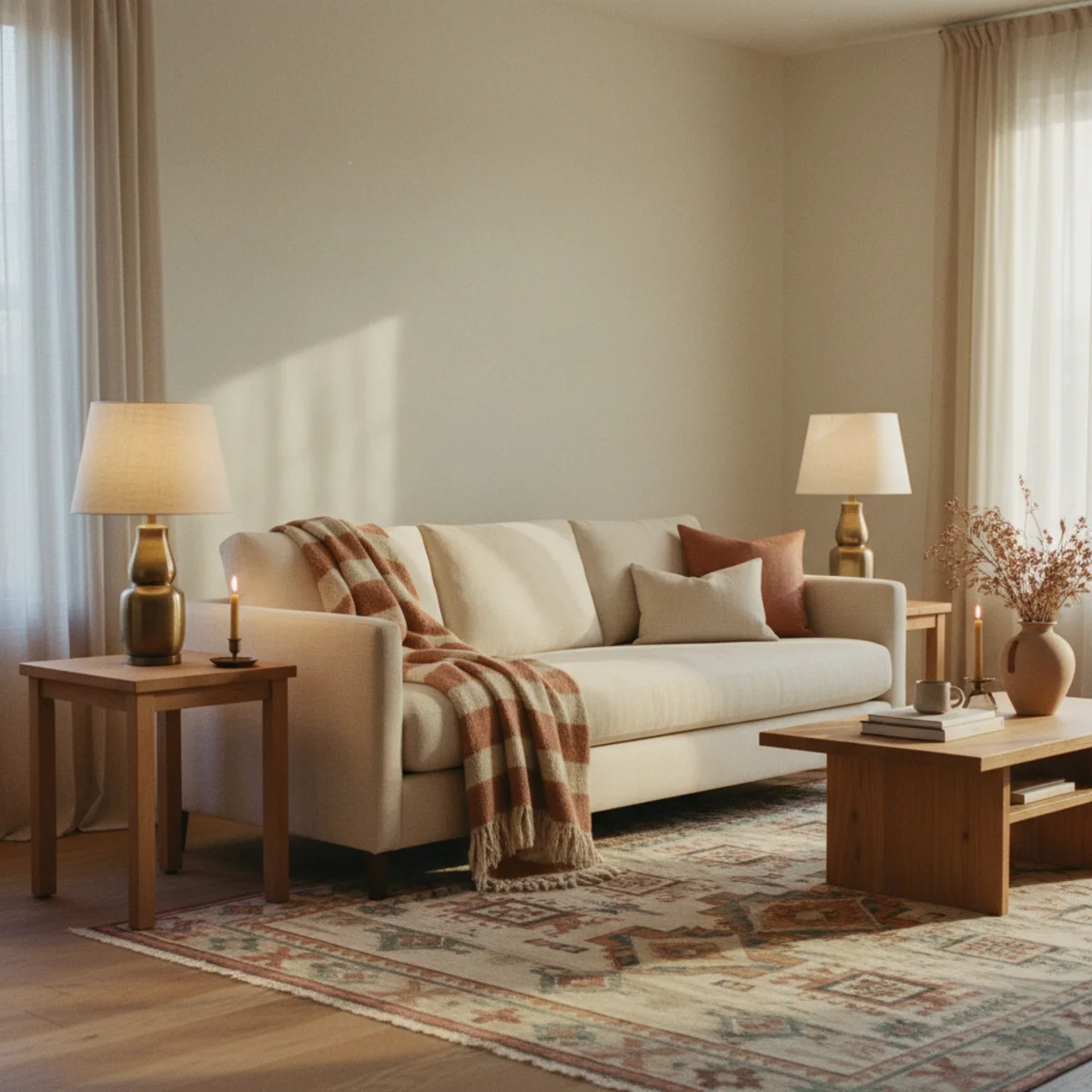
This guide covers actual area rug materials tested across real home use — daily foot traffic, furniture weight compression, cleaning requirements, aging quality, visual warmth, and sensory character underfoot. Each category below names the specific material properties, the price ranges at quality versus budget, the best brands and where to buy, what makes that material the right choice for specific rooms and use cases, and what makes it the wrong choice for others.
Area rug categories matter because the material determines daily experience — wool and polypropylene feel completely different underfoot, age completely differently across years, and read completely differently visually at close range. The eight categories below cover every legitimate option with one explicit category for what to skip regardless of price point.
By the end of this guide, you'll know which area rug material fits your specific room and use case — the all-rounder wool, the high-character vintage wool, the affordable natural-fiber jute and sisal, the washable cotton option, the durable wool-sisal blend, the heirloom Persian and Oriental, the layering strategy, and which to skip entirely (cheap polypropylene).
WHAT'S INSIDE
- Why wool is the area rug all-rounder that fits most homes and most rooms
- Vintage wool — the highest character-per-dollar area rug source available
- Jute and sisal — the affordable natural-fiber base for summer and warm-climate homes
- The layering strategy that produces more visual interest than any single expensive rug
The rug is the foundation of the room. Spend here, buy the right fiber, and everything you put on top of it works better.
— Architectural Digest [citation needed — verify before publish]
What makes a good area rug?
A good area rug comes down to fiber, weave, and the right size for the room. Wool is the gold standard — warm, durable, naturally stain-resistant, and it ages beautifully; vintage wool rugs offer the best value and character of all. Jute and sisal are affordable and texturally warm but rough underfoot, cotton is washable but less durable, and synthetic polypropylene is cheap and stain-proof but reads and feels exactly that.
Size is the most common mistake. A rug that's too small makes a room look cramped and disjointed — the front legs of the seating should sit on it at minimum, and ideally all the legs do. The other quiet truth is that vintage and antique wool rugs frequently beat new ones on both quality and price, since they were made to last and have already proven they do. Buy the right fiber at the right size, and the rug anchors the whole room.
More in Shopping Guides you may love
See allWhy the right rug matters more in 2026
As warm, layered rooms took over, the rug stopped being an afterthought and became the anchor people build a room around — Pinterest's area rug and vintage rug searches climb every year, increasingly toward wool, vintage, and layered natural-fiber looks over cheap synthetic.
The honest driver is that the rug does more for a room's warmth than almost any other single purchase, and the buy-fewer-better, secondhand-first shift suits it perfectly. A good wool rug — especially a vintage one — lasts decades, improves with age, and out-warms a cart of cheap synthetics. As layering rugs over jute became a defining warm-home move, knowing which fibers are worth it became essential rather than optional.
The best area rug types, compared
01Wool — The Gold Standard
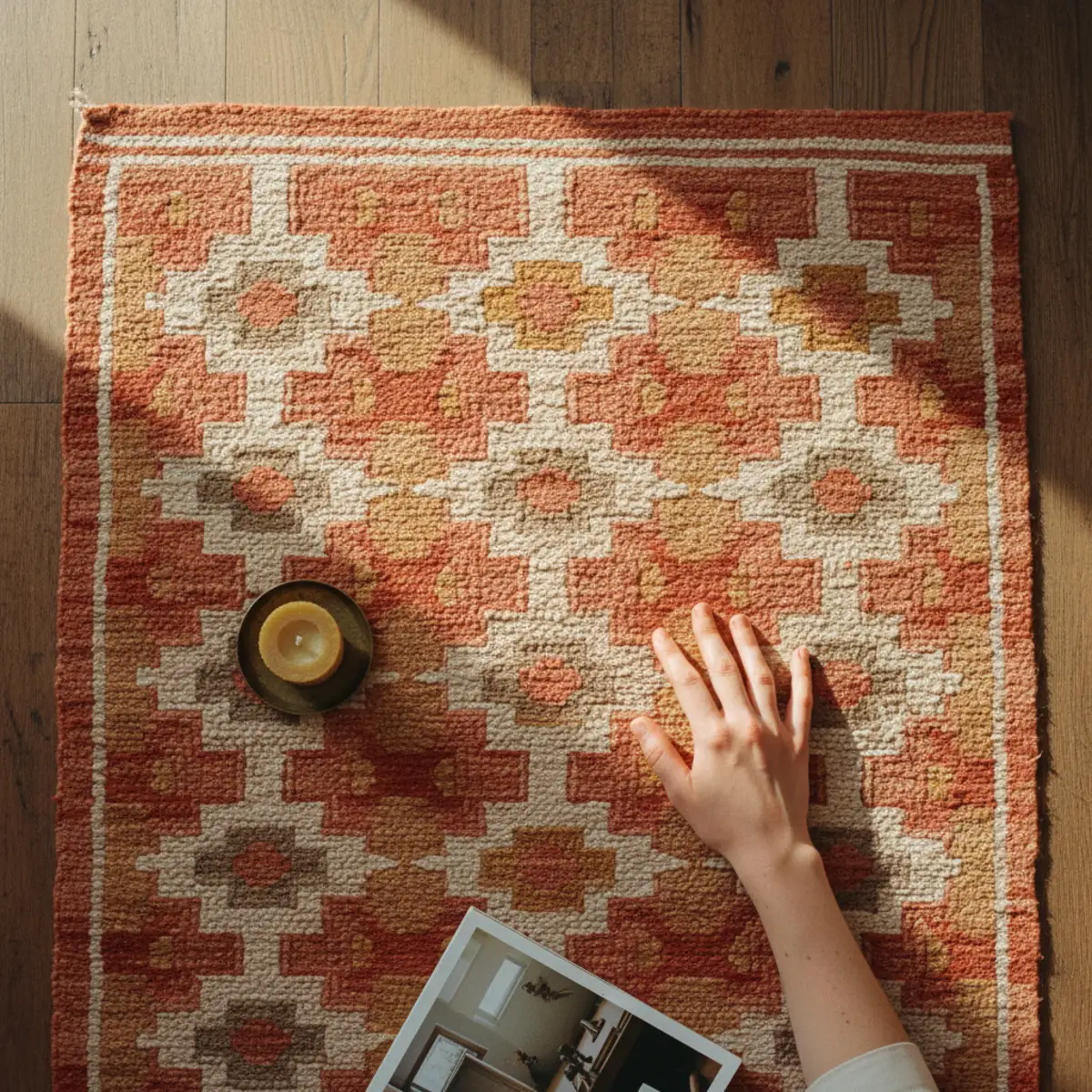
Wool is the area rug all-rounder — naturally stain-resistant (lanolin in the fibers), warm underfoot, durable (a quality wool rug lasts 20-50 years with proper care), available in the widest variety of patterns and pile heights, and the best-aging material in rugs. For most households buying their first or main area rug, wool is the right answer. Price range: $200 to $2,000 for a quality 5x8 depending on hand-knotted versus machine-woven and pile style.
Best wool rug sources and specifications: HAND-KNOTTED WOOL — highest quality, made by hand one knot at a time (KPSI or knots-per-square-inch determines density and durability). Sources: Pottery Barn ($300-1,500 for 5x8), West Elm ($250-1,200 for 5x8), Loloi ($200-1,000), RH ($400-2,500), Rugs USA ($150-800). MACHINE-WOVEN WOOL — more consistent surface than hand-knotted, lower cost, still excellent quality. Sources: Dash & Albert, Pottery Barn Machine-Woven, CB2 ($200-800 for 5x8). CHUNKY WOOL OR HAND-LOOMED — thick pile, casual texture, excellent for bedrooms. Lorena Canals, Loloi, Anthropologie ($200-800). NATURAL WOOL COLORS — undyed wool in cream, oat, and natural brown tones is the most-authentic and most-long-lasting. Dyed wool (terracotta, sage, navy) follows the same aging rules as dyed linen bedding — lighter and more muted dyes last longer. CARE — vacuum regularly (no beater bar on loop pile), spot-treat spills immediately, professional cleaning every 2-3 years for heavily-trafficked rugs. SIZES — 5x8 for under most sofas, 8x10 for larger rooms, 2x3 for bedside or kitchen.
AFFILIATE SLOTMATERIALHand-knotted or machine-woven 100% wool at $200-1,500 for 5x8 from Pottery Barn, West Elm, Loloi, Dash & Albert, Rugs USAAdd affiliate URL when configuredWhy it works
Because wool combines the qualities that warm home aesthetic values simultaneously: natural material (visible fiber texture), warm underfoot (lanolin content provides slight warming quality), genuine aging (wool develops patina with use rather than wearing out as polypropylene does), and visual warmth (wool's natural fiber irregularity reads warm in photographs and in person). Synthetic alternatives can approximate wool's appearance in photos; they cannot replicate the sensory experience of walking on real wool barefoot, which is one of the most-specific warm-home pleasures.
Pro tip — Buy one size larger than you think you need — most rooms benefit from a rug sized to extend at least 12-18 inches beyond the primary furniture on all sides (under front sofa legs at minimum, ideally under all four legs). The most-common rug-buying mistake is undersizing; a 5x8 rug that should be an 8x10 makes the room feel smaller rather than larger.
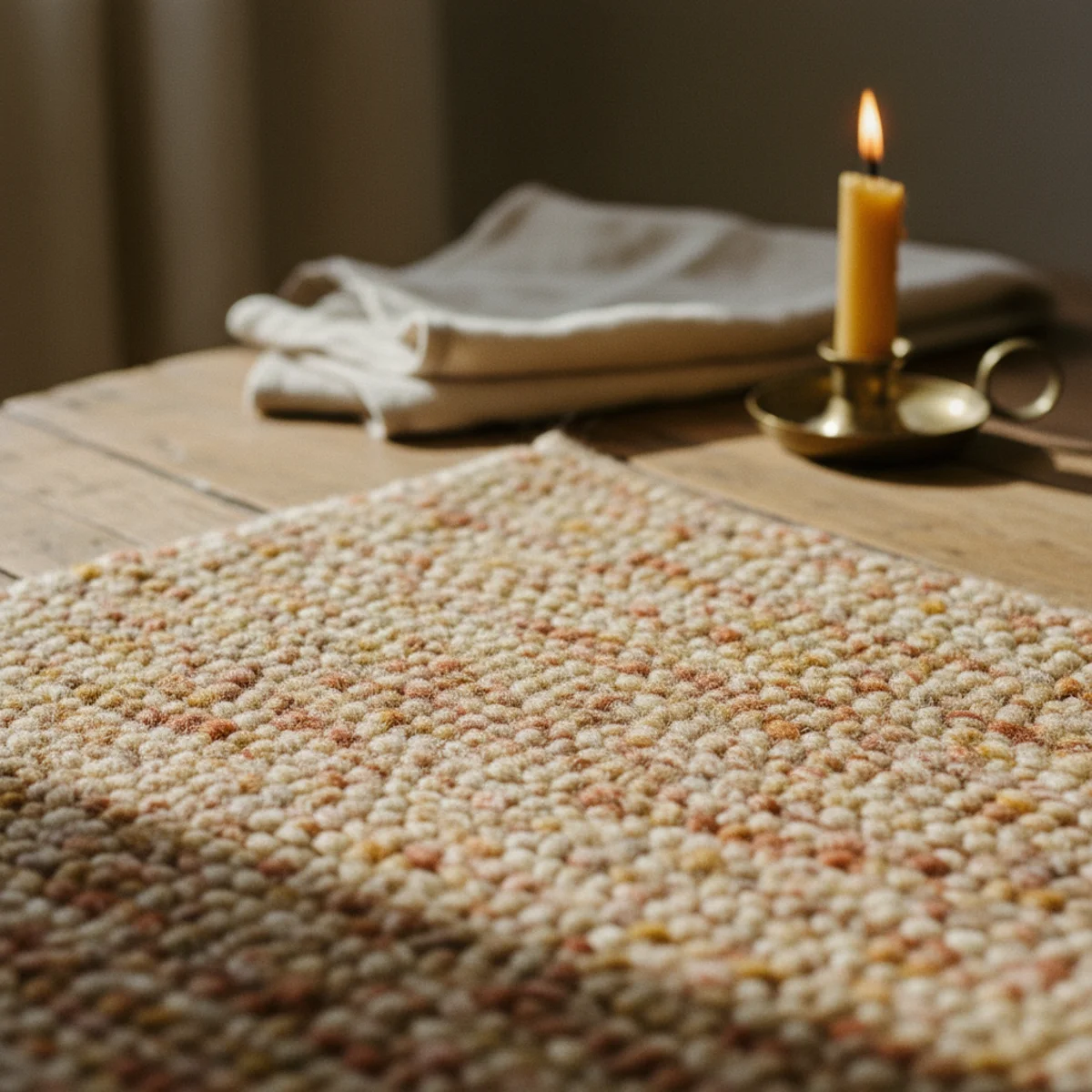
Hand-knotted cream wool rug — the all-rounder material that fits most rooms and ages into greater beauty. See also: cozy-living-room-ideas
02Vintage Wool — The Best Value
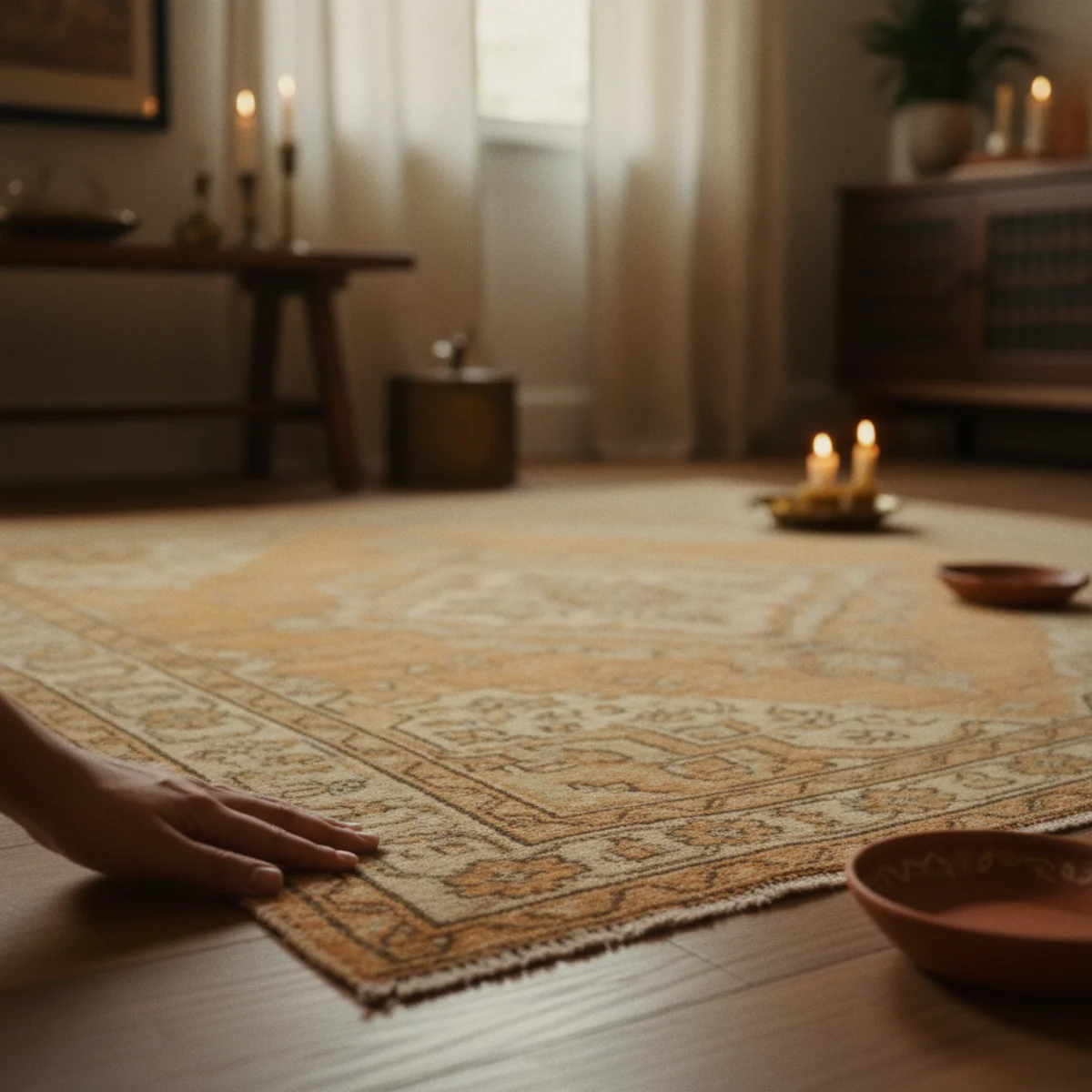
Vintage and antique hand-knotted wool rugs (Persian, Turkish, Afghan, Caucasian, Tibetan) are the highest-value area rug category — they deliver more visual character, more material quality, and better aging than any new rug at equivalent or often lower price. A $400-800 vintage Persian from an estate sale or rug dealer outperforms a $600-1,200 new machine-woven rug in every aesthetic dimension.
Vintage wool rug sourcing: ESTATE SALES — the best source for underpriced vintage rugs. Look specifically in older neighborhoods where the original household may have owned authentic vintage rugs at $100-500 for 5x8 pieces in good condition. Saturday morning estate sales. ONLINE VINTAGE DEALERS — Rugs USA Vintage, eBay vintage rugs (filter by sold price to understand market), Chairish vintage rugs, Etsy vintage rug sellers. Prices: $200-1,500 for 5x8 vintage hand-knotted depending on age, condition, and pattern. LOCAL ORIENTAL RUG DEALERS — many local rug dealers have vintage inventory that can be assessed in person ($400-3,000 for quality pieces). CONDITION ASSESSMENT — low pile (worn down to near the foundation) is acceptable if the colors and pattern are still visible and the foundation is intact. Foundation damage (holes, large areas of exposed warp and weft) is problematic. Fringe condition matters less than foundation condition. THE CHARACTER ADVANTAGE — genuine vintage wool rugs have color that has mellowed through decades of use, pile that has softened and compacted into a warm texture, and sometimes repair evidence (hand-stitched patches, rewoven sections) that adds authentic character. This quality cannot be manufactured.
AFFILIATE SLOTMATERIALVintage hand-knotted Persian/Turkish/Afghan/Caucasian from estate sales ($100-500), online vintage ($200-1,500), or local rug dealers ($400-3,000) for 5x8Add affiliate URL when configuredWhy it works
Because genuine vintage hand-knotted rugs were made with higher-quality wool (older sheep breeds, traditional dyeing methods, higher KPSI) than most contemporary equivalents, and they have already undergone the aging process that new rugs require decades to complete. The mellow color, the compacted pile, the specific patina of a well-used vintage rug is the result of the specific years it has lived through; no manufacturing process can replicate it. Additionally, vintage rugs appear at under-market prices at estate sales because heirs don't recognize their value.
Pro tip — Learn to assess vintage rug quality with a simple bend-test — fold a small section of the rug to inspect the back. Count the knots per square inch (more knots per inch = higher quality). Check that the foundation (the warp threads visible from the back) is intact without brittleness. Check that the pile is even (worn areas are fine; bald sections with exposed foundation are problematic).
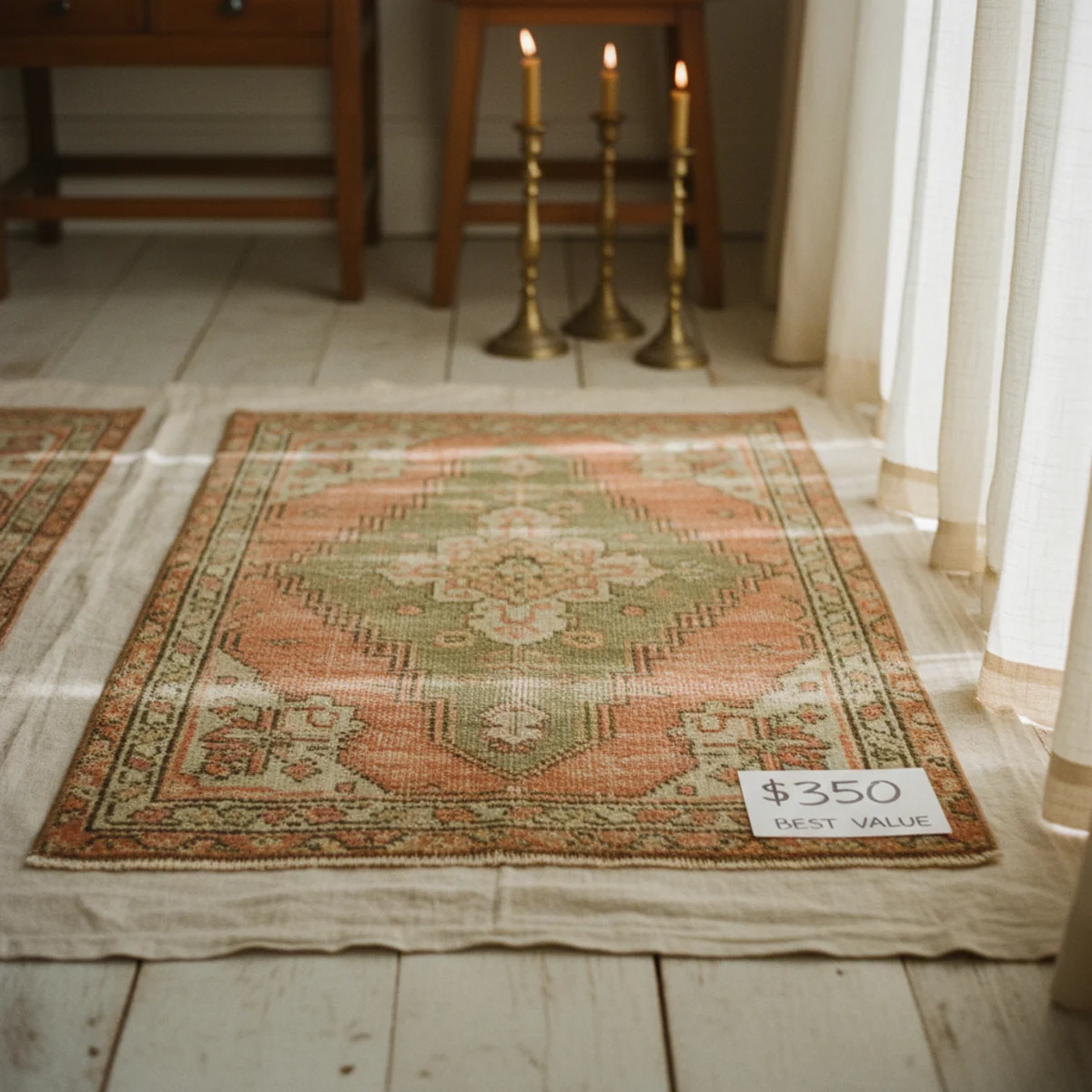
Vintage Turkish wool rug with mellowed color and compacted pile — character impossible to manufacture, available at under-market prices. See also: thrifted-decor-ideas
03Jute and Sisal — The Affordable Base
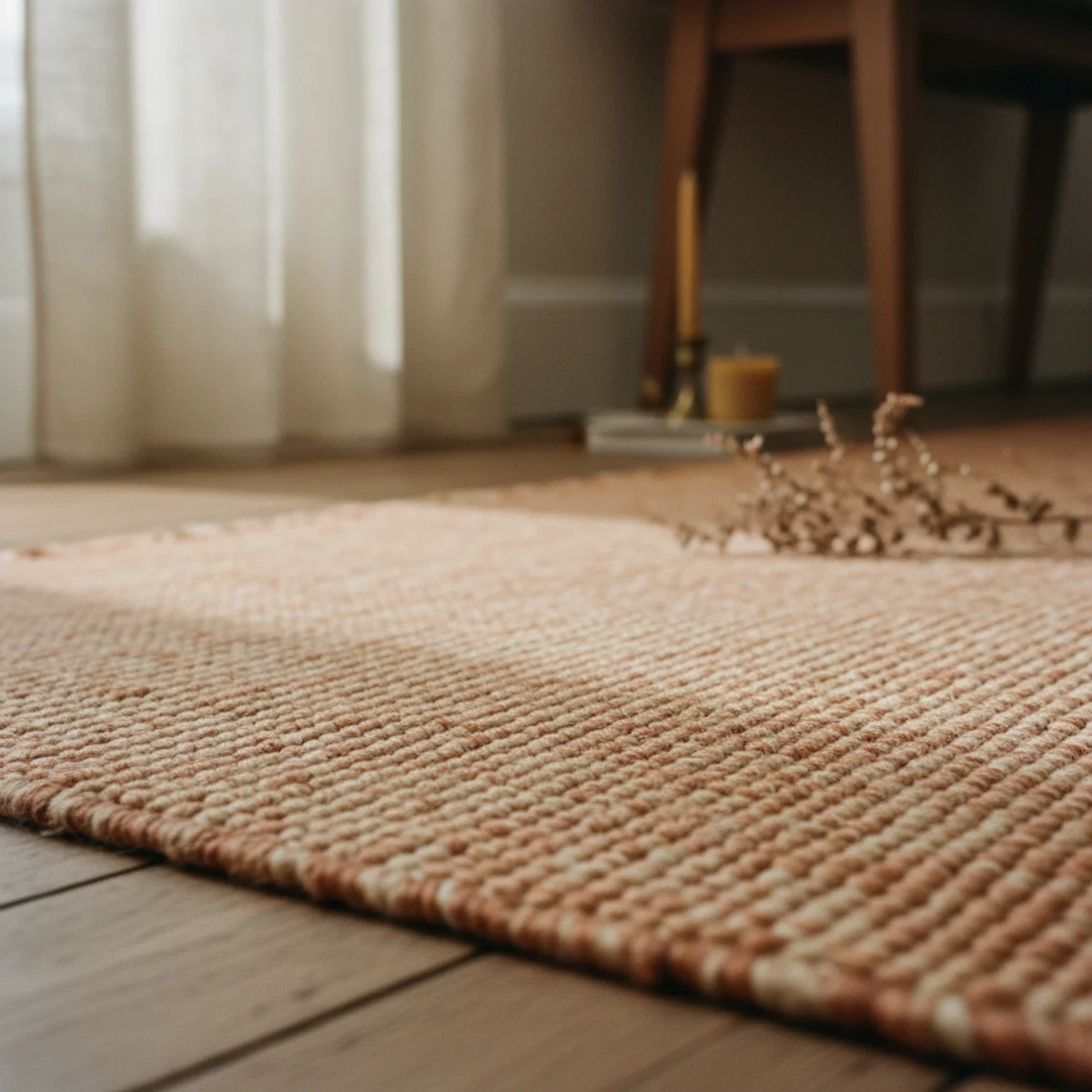
Jute and sisal are the affordable natural-fiber base rugs — at $80-250 for a quality 5x8, they deliver natural material character (warm honey-tan tones, woven organic texture, natural fiber underfoot feel) at a fraction of wool's price. Best for summer months, warm climates, casual areas, layered-under-vintage-rug setups, and households that want natural material without wool investment.
Jute versus sisal specifics: JUTE RUGS — softer underfoot than sisal, warm honey-tan color, braided or flat-weave construction. More appropriate for living rooms and bedrooms where barefoot comfort matters. $80-200 for 5x8. Sources: IKEA ($40-80 for smaller sizes), HomeGoods ($60-150), World Market ($80-200), Rugs USA ($80-200), Pottery Barn ($150-300). SISAL RUGS — coarser texture than jute, slightly more formal appearance, better durability for heavy traffic areas. $100-300 for 5x8. Sources: Pottery Barn, West Elm, Dash & Albert ($150-400). SEAGRASS — smoothest texture of natural fibers, slight sheen, waterproof (best for humid areas), $100-300 for 5x8. LIMITATIONS — all natural fiber rugs: absorb moisture (prone to mold in damp climates without proper ventilation), scratchy on bare skin at harsher end of range (jute is softest), not appropriate for high-moisture areas (bathrooms, outdoor spaces except seagrass). LAYERING USE — jute and sisal as base layers under a smaller vintage or wool rug produces two-rug visual interest at the cost of one good rug plus an affordable natural-fiber base. CARE — vacuum regularly without beater bar, spot-clean (never fully saturate with water), dry completely if wet to prevent mold.
AFFILIATE SLOTMATERIALJute (softer, $80-200) or sisal (coarser, $100-300) for 5x8; IKEA, HomeGoods, Pottery Barn, Rugs USA sources; best for layering or warm-climate/summer useAdd affiliate URL when configuredWhy it works
Because natural fiber IS the quality — the organic texture of woven jute, the warm honey-tan that comes from the plant material, the irregular weave that reveals handcraft origins. These qualities cannot be replicated in synthetic materials at any price. A $100 jute rug reads as more authentically natural than a $400 polypropylene rug designed to look natural because the jute IS natural. The trade-off is durability (natural fibers wear faster than synthetics) and moisture sensitivity, not visual quality.
Pro tip — Buy a rug pad specifically designed for natural-fiber rugs (not standard grippers) — natural fiber rugs are thinner and stiffer than wool pile, and require non-adhesive rug pads that grip without sticking. Adhesive rug pads can pull at the natural fibers and damage jute and sisal. Look for open-weave non-slip pads at $20-50 for a 5x8.
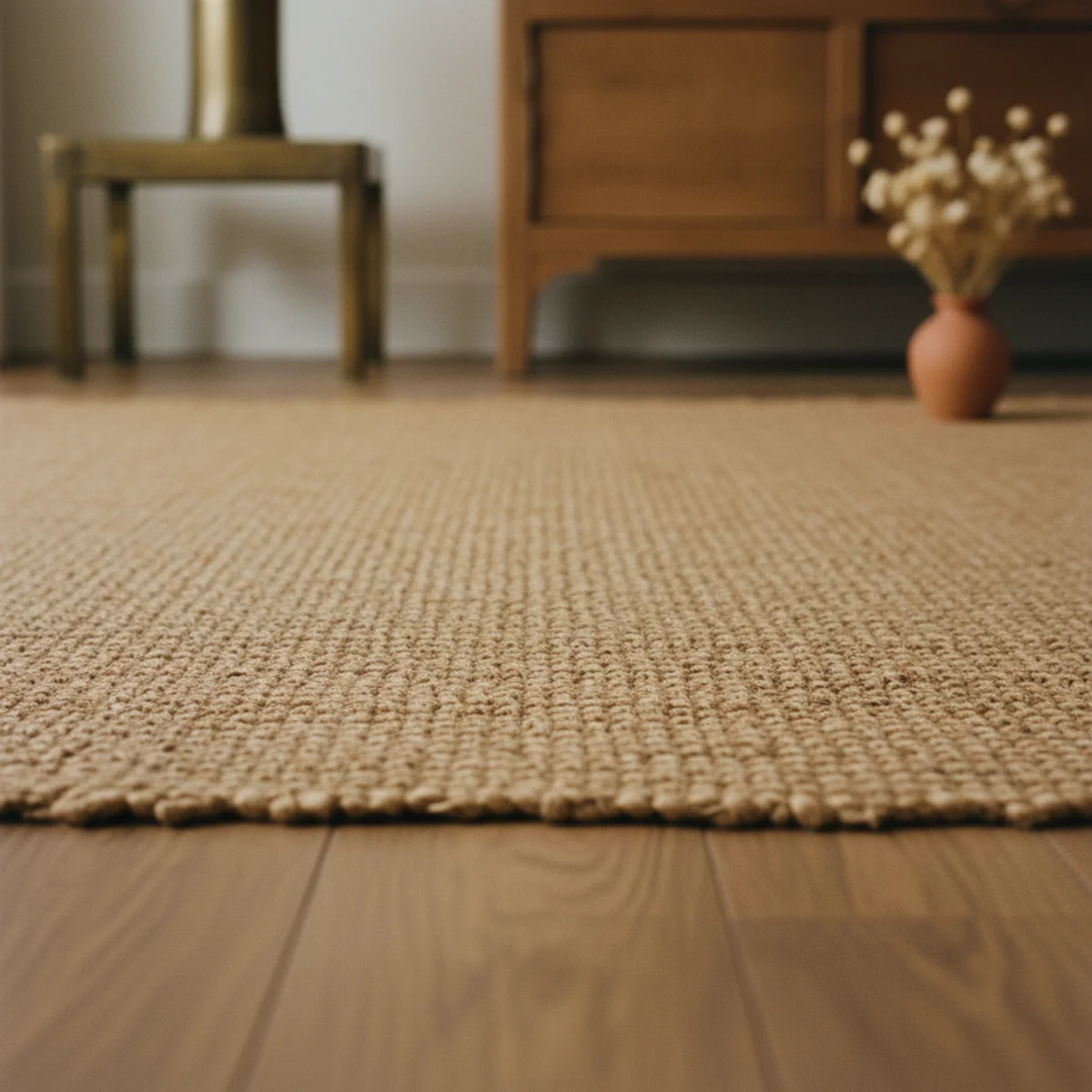
Honey-tan jute flat-weave — natural material character at a fraction of wool's cost. See also: summer-decor-ideas
04Cotton — The Washable Option
Cotton area rugs are the washable-friendly rug category — the only widely-available rug material that can be laundered at home (for smaller sizes) or professionally cleaned easily (for larger). Best for homes with young children, pets, high-traffic areas with frequent spills, and any space where the ability to fully clean the rug matters more than pile depth or maximum durability.
Cotton area rug specifics: WASHABLE COTTON RUGS — flat-weave or low-pile cotton rugs at $60-300 for 5x8, many machine-washable in home washing machines up to 5x8 size. Brands: Ruggable ($200-500, proprietary washable system with two-layer rug + pad), Lorena Canals ($150-400, certified washable), many Target and Amazon flat-weave options ($50-200). HIGHER QUALITY COTTON — dhurrie rugs (Indian flat-weave cotton, often with geometric patterns) at $100-300 for 5x8 from Pottery Barn, West Elm, or Etsy. These are not necessarily machine-washable but spot-clean easily. COTTON LIMITATIONS — flat texture (no pile depth), less visually warm than wool or vintage rugs, slightly less durable than wool in high-traffic areas. ADVANTAGES — fully washable (unique value), lower cost than wool, often available in warm earth-tone palette, appropriate for informal/casual spaces. BEST USE CASES — kitchen (frequent cooking spills), children's rooms (frequent accidents), playrooms, casual indoor-outdoor adjacent spaces, mudrooms.
AFFILIATE SLOTMATERIALMachine-washable cotton: Ruggable ($200-500), Lorena Canals ($150-400), or flat-weave dhurrie ($100-300 from Pottery Barn/West Elm); for kitchens, children's rooms, high-spill areasAdd affiliate URL when configuredWhy it works
Because cotton's fiber structure allows full immersion in water (unlike wool, which felts when agitated wet) and its flat-weave construction dries quickly and thoroughly. The washable quality is genuinely unique among area rug materials — wool, jute, sisal, and silk all require professional cleaning or very careful spot-treatment. For households with the specific use case (young children, messy pets, kitchen proximity), the washable cotton rug's value is not visual quality but functional adaptability.
Pro tip — Use Ruggable specifically for kitchen areas and under dining tables — the Ruggable's two-layer system (printed cover + non-slip pad) allows the cover to be removed and machine-washed without moving the pad. For the highest-spill-probability areas (under the dining table during holidays, in front of the kitchen sink), the washable cover prevents the rug-replacement cost that spills produce with any non-washable alternative.
Cotton flat-weave dhurrie — the washable option where cleaning priority outweighs pile depth. See also: cozy-kitchen-ideas
05Wool-Sisal Blend — The Durable Middle
Wool-sisal blends combine wool's softness and warm visual character with sisal's durability — producing a rug that outperforms pure sisal underfoot (softer) and pure wool in high-traffic durability. Best for hallways, high-traffic living rooms, and any space where both natural-material character and durability above standard wool are required.
Wool-sisal blend specifications: CONSTRUCTION — typically 80-100% wool pile woven into a sisal base, or wool and sisal fibers blended throughout. The sisal foundation or fiber content adds dimensional stability and abrasion resistance. APPEARANCE — warm natural tones, slightly more structured texture than pure wool, natural fiber character from both components. DURABILITY — notably better than pure wool in high-traffic applications; the sisal content resists crushing and maintains pile height better under heavy foot traffic. PRICE — $200-600 for 5x8 (similar to quality wool, slightly premium over pure sisal). Brands: Pottery Barn, West Elm, Dash & Albert, Restoration Hardware (all offer wool-sisal blends). BEST USES — hallways (highest-traffic area in most homes, where pure wool shows wear faster), living rooms with heavy furniture movement, homes with very active foot traffic. TEXTURE — slightly coarser than pure wool, which some households prefer (less like furniture, more like natural material); others find it too scratchy for bare feet.
AFFILIATE SLOTMATERIALWool-sisal blend rug at $200-600 for 5x8 from Pottery Barn, West Elm, Dash & Albert; best for hallways and high-traffic living areasAdd affiliate URL when configuredWhy it works
Because the combination specifically addresses the trade-off between wool's warmth and visual character (which pure sisal lacks) and sisal's durability in high-traffic use (which pure wool delivers less of). Neither material alone achieves both simultaneously; the blend achieves both adequately. For the specific use case (high-traffic area where both natural character and durability matter), the blend outperforms either pure material.
Pro tip — Test the blend's texture on bare feet before purchasing for bedroom use — some people find wool-sisal blends comfortable for living room use (shoes often) but too scratchy for bedrooms (bare feet always). The same texture that reads as pleasantly natural in a hallway reads as scratchy at the bedroom beside the bed at 7am.
Wool-sisal blend in a high-traffic hallway — the durable-middle where both material character and traffic durability matter. See also: entryway-decor
06Persian and Oriental — The Heirloom
Antique and semi-antique Persian, Turkish, Afghan, and other Oriental hand-knotted rugs are the area rug heirloom category — rugs that last generations with proper care, carry profound craft heritage (centuries of regional design traditions), and improve with age rather than declining. The best investment in warm home area rugs at any price point.
Persian and Oriental rug specifics: AGE CATEGORIES — ANTIQUE (100+ years old): $500-20,000+ for 5x8 depending on origin, condition, rarity. SEMI-ANTIQUE (50-100 years): $400-5,000. VINTAGE (20-50 years): $200-2,000. ALL AGES available at estate sales, specialized rug dealers, and online vintage marketplaces. REGIONAL TYPES — PERSIAN (Iran): Tabriz, Heriz, Kashan, Qum, Isfahan — characterized by floral medallion designs; TURKISH (Turkey): Oushak, Kilim, Bergama — warm earth tones, geometric patterns; AFGHAN: bold geometric, rich deep colors; CAUCASIAN (Azerbaijan, Armenia): bold geometric, tribal patterns. QUALITY INDICATORS — KPSI (knots per square inch): fine = 100-400+ KPSI, coarser tribal = 30-100 KPSI. Finer rugs are more detailed and typically more expensive. Good foundation, even pile, no repairs-through are quality signals. INVESTMENT PERSPECTIVE — quality antique and semi-antique Oriental rugs have historically maintained or appreciated in value. A $1,000 antique Oushak is both a warm home furnishing and a store of value.
AFFILIATE SLOTMATERIALAntique/semi-antique Persian, Turkish, or Afghan hand-knotted from estate sales, rug dealers, or vintage online; Oushak Turkish as accessible entry point at $300-700 for 4x6 or 5x8Add affiliate URL when configuredWhy it works
Because they are genuinely made by hand by individual weavers, often following centuries-old regional design traditions, in wool that comes from specific regional sheep breeds whose fiber quality cannot be replicated. A 19th-century Tabriz Persian was made by a specific weaver in a specific city, following patterns developed over multiple generations, from wool that no longer comes from the same breed of sheep raised in the same region. The craft history is irreplaceable and non-replicable. Purchasing an antique or vintage Oriental rug participates in this history and preserves it.
Pro tip — Start with a relatively affordable vintage Oushak or Turkish kilim ($300-700 for a 4x6 or 5x8) as your first Oriental rug investment — Oushak rugs are typically understated in color (mellow amber, cream, soft green) and pattern, making them the most-universally-suitable Oriental rug type for warm home aesthetic. They're also less prestigious than rare Persian types, which makes them more affordable entry points.
Semi-antique Oushak Turkish hand-knotted rug with mellow amber and cream — craft heritage that improves across generations. See also: english-country-decor
07Layering Two Rugs
Layering two rugs — a larger natural-fiber base (jute or sisal) under a smaller vintage or wool rug — produces more visual interest and apparent richness than any single rug at equivalent or higher cost. The two-rug layering approach is the most-effective area rug styling technique and is appropriate in any room with sufficient space.
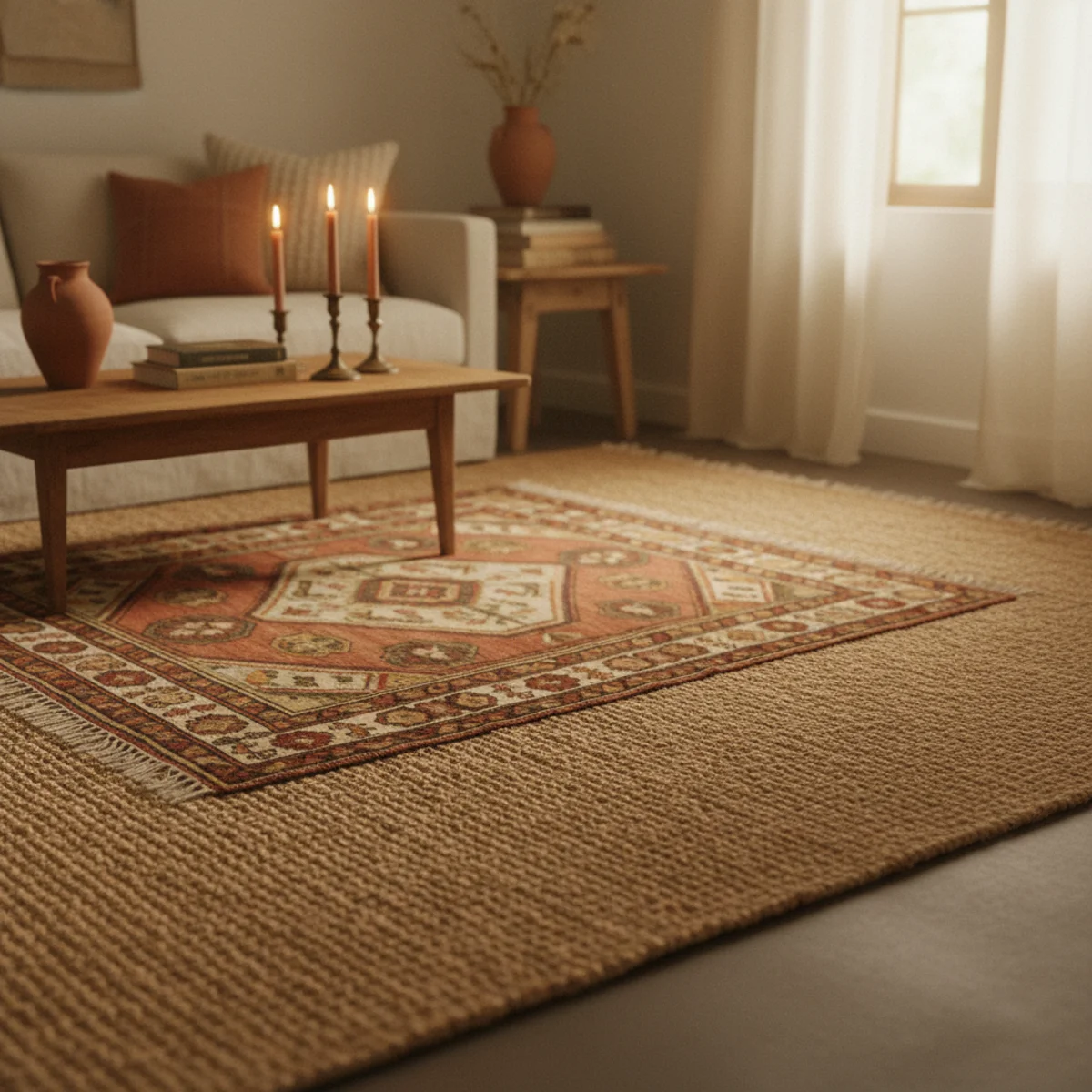
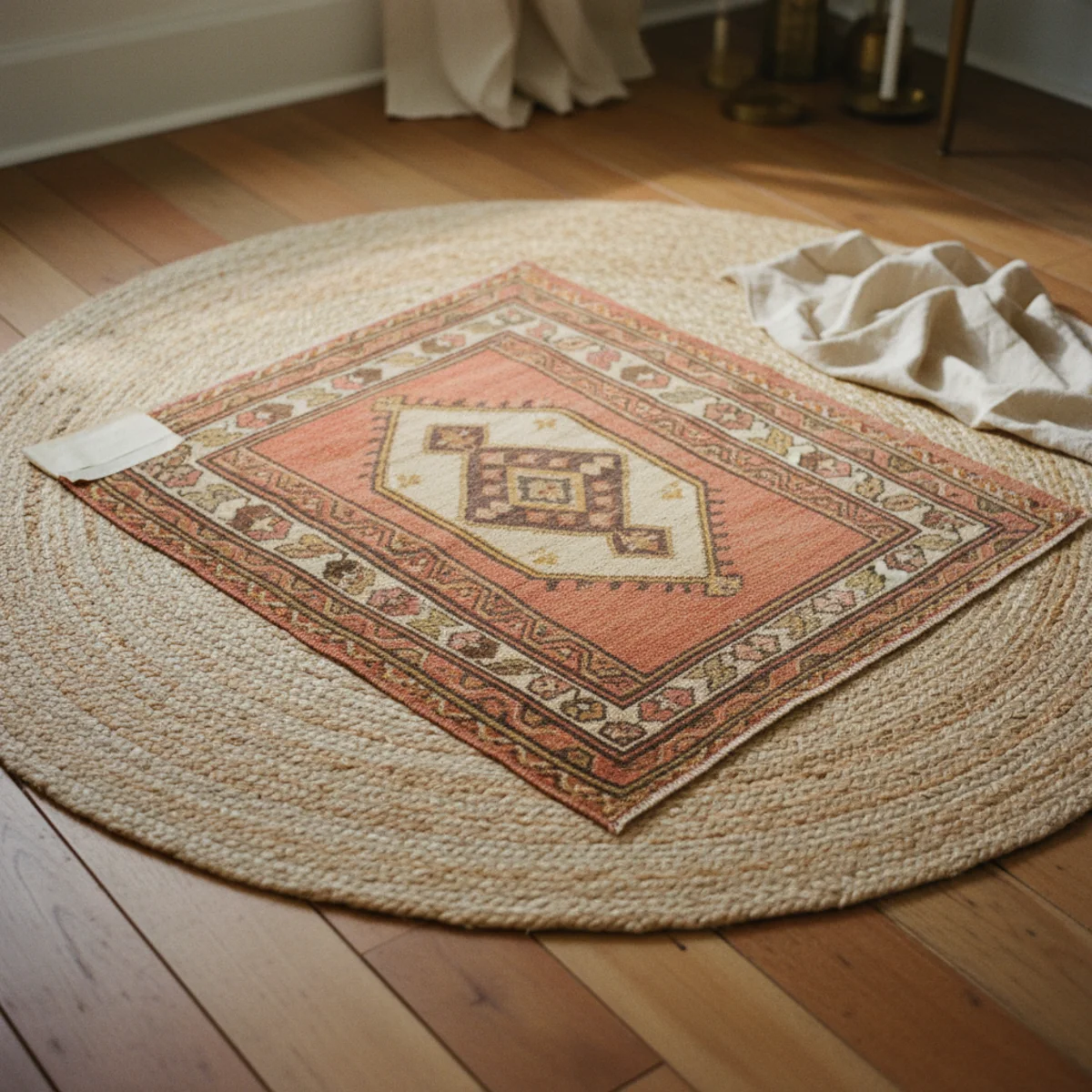
Two-rug layering strategy: BASE RUG — jute or sisal 8x10 or 9x12 (larger than the primary seating area) in natural warm tone. $100-300. LAYERED RUG — vintage Turkish kilim or Persian at 5x7 or 4x6 (smaller than the base rug), centered on the base rug with approximately 12-18 inches of base rug visible on all sides. $200-600 for quality vintage piece. VISUAL EFFECT — the base rug's natural fiber provides the warm neutral ground; the vintage layered rug provides pattern, color depth, and visual interest. The border of natural fiber around the vintage rug frames it as a designed element. TWO-LAYER COMPOSITION PRINCIPLES — the layered rug should be positioned to accommodate the primary furniture (sofa front legs on the layered rug, or sofa and chairs all on the layered rug for larger setups). The base rug extends under all furniture. COLOR RELATIONSHIP — base rug in natural warm tone, layered rug in warm palette (terracotta-adjacent, sage-adjacent, or warm neutral pattern). The two rugs should share warm tone temperature. ALTERNATIVE COMBINATIONS — flat-weave cotton dhurrie as base, vintage pile rug as layer; or vintage kilim as base, smaller flokati or sheepskin as accent layer.
AFFILIATE SLOTTECHNIQUEJute/sisal base (8x10 or 9x12, $100-300) under vintage Turkish kilim or Persian (5x7 or 4x6, $200-600); 12-18 inches base visible as frame on all sidesAdd affiliate URL when configuredWhy it works
Because layering creates the same visual depth in the floor plane that textile layering creates on sofas and beds — the base layer provides foundation, the top layer provides character, and the visible border between them creates the compositional interest that single flat surfaces lack. A single rug, however beautiful, reads as a flat plane; a layered combination reads as three-dimensional composition. The layering also allows gradual investment — start with a $100 jute base, add a quality vintage layer over time.
Pro tip — Tape the corners of the layered rug to the base rug with carpet tape ($5-10 for a roll) to prevent slipping and bunching at corners — the tape keeps the layered arrangement looking intentional rather than casually ruffled, especially in active family rooms with children and pets moving across the rugs.
Jute base with vintage kilim layered on top — two-rug depth for more visual richness than one rug at equivalent cost. See also: cozy-living-room-ideas
08Skip — Cheap Polypropylene
The most important area rug guidance: skip cheap polypropylene (PP) and polypropylene-blend rugs entirely, regardless of how good they look in photographs. Polypropylene is petroleum-based synthetic plastic that feels wrong underfoot, ages badly (crushing, static, fading), contributes to microplastic pollution, and produces the visual quality that photographs as warm but reads as synthetic in person.
Polypropylene identification and rejection: CHECK THE LABEL — 100% polypropylene, 100% polyester, or polypropylene-polyester blend in the material content indicates synthetic. PRICE INDICATOR — most rugs under $100 for a 5x8 are polypropylene regardless of marketing claims. 'Power-loomed' wool-look rugs under $200 for 5x8 are almost certainly polypropylene with a wool-like texture applied. RED FLAG BRANDS — most budget retail rug lines: Safavieh (lower tiers), Loloi (lower tiers), Nourison (lower tiers), nuLoom (many lines), most Amazon direct-ship rug brands. NOT ALL of these brands — their premium lines use natural materials — but their lowest-priced products are typically polypropylene. WHY POLYPROPYLENE FAILS — feels plasticky underfoot (especially noticeable barefoot), develops static in dry conditions, crushes under furniture weight and doesn't recover (permanent furniture impressions within weeks), fades unevenly across areas with differing light exposure, contributes microplastics to indoor environment when vacuumed. WHAT $200-300 SHOULD BUY INSTEAD — a quality jute or sisal rug (natural fiber at equivalent or lower price), a thrifted or estate-sale vintage wool piece, or a cotton dhurrie. All three outperform polypropylene in every relevant dimension at similar or lower prices.
AFFILIATE SLOTAVOIDSkip 100% polypropylene and polyester-blend rugs regardless of price or marketing; choose natural fiber (jute $80-200, sisal $100-300) or vintage wool (estate sales $100-400) insteadAdd affiliate URL when configuredWhy it works
Because polypropylene is plastic — and all of plastic's disadvantages (doesn't breathe, static electricity, non-biodegradable, contributes microplastics) apply in rug form. The visual approximation of wool or natural fiber that polypropylene achieves in product photography fails completely at close range and underfoot, where the plastic quality is immediately sensory. A $100 jute rug from IKEA outperforms a $200 polypropylene 'wool-look' rug in every dimension relevant to warm home use: natural material quality, sensory texture, aging character, material origin.
Pro tip — Read material content labels BEFORE purchase — online rug shopping, search the product description for the material content before adding to cart. 'Power-loomed' without specified fiber type is almost always polypropylene. Look for specific fiber content: '100% wool,' '100% jute,' '100% sisal,' '100% cotton.' If the fiber isn't specified, search 'material' in the product description. If not findable, assume synthetic.
Skip polypropylene — jute at $100 and vintage wool at $200 both outperform synthetic at any price for warm homes. See also: thrifted-decor-ideas
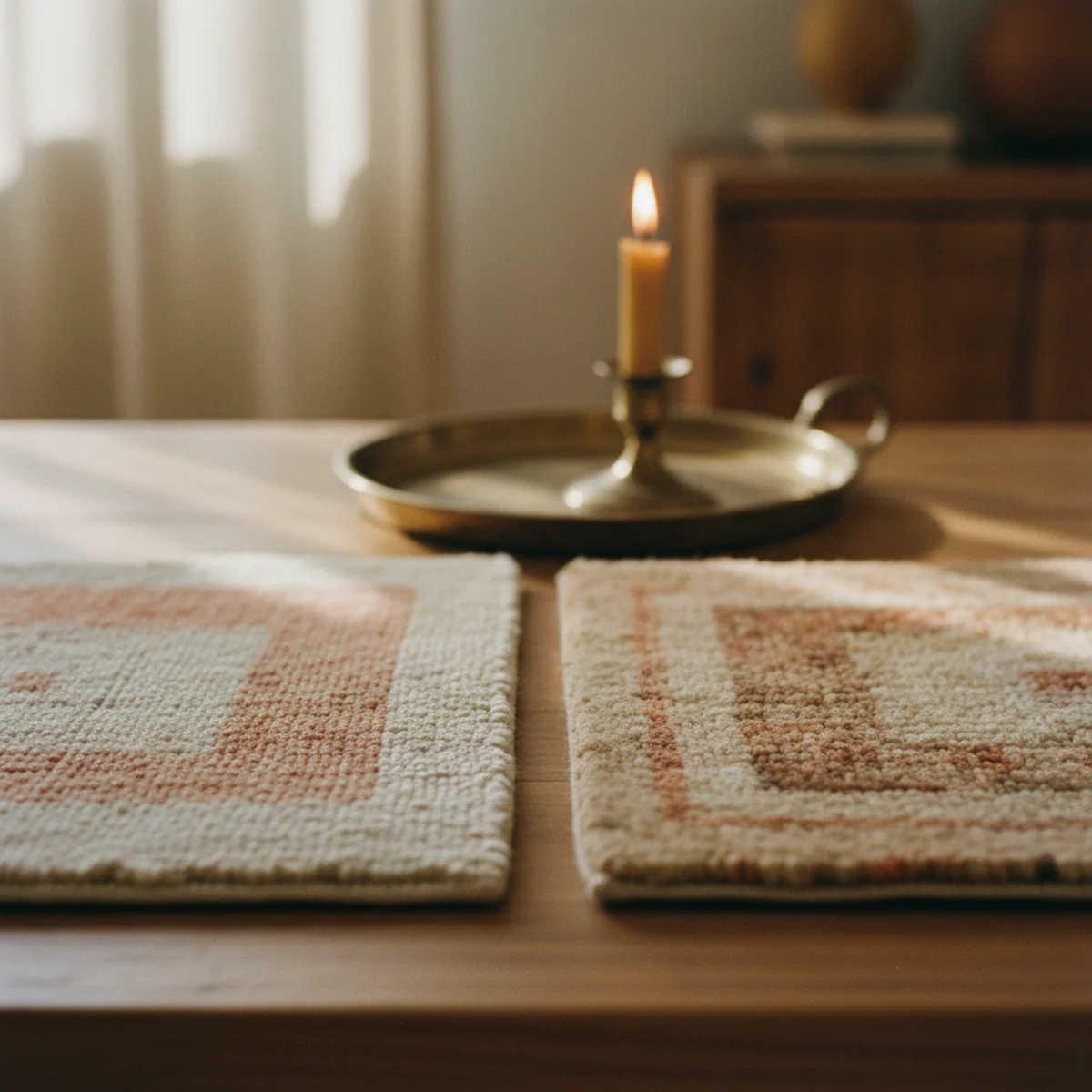
How to choose an area rug
Get the fiber and size right and the rest follows. Four questions sort it.
- 1Choose the fiber for the room
Wool for warmth and durability almost anywhere, cotton for washable high-spill zones, jute as a layering base, and vintage wool for the best value and character.
- 2Size it generously
At minimum the front legs of the seating sit on the rug; ideally all legs do. A too-small rug is the most common and most damaging mistake.
- 3Check vintage before new
Look at estate sales and marketplaces for vintage wool — it often beats new on price and quality. Check the backing and air out any must.
- 4Consider layering
For warmth and depth, layer a smaller vintage wool rug over a larger jute base, anchored by furniture so it stays put.
Quick tips
- Buy wool for warmth and durability; vintage wool for the best value and character.
- Size up — front legs on the rug at minimum, ideally all legs; too small is the big mistake.
- Check estate sales and marketplaces for vintage wool before paying new retail prices.
- Layer a vintage wool rug over jute for warmth and depth.
- Air out a musty vintage rug in the sun; check the backing for dry-rot before buying.
- Skip cheap polypropylene — it feels like plastic and a vintage wool beats it for the price.
The best rug by room
A large wool or vintage Persian rug big enough for the seating's legs, layered over jute if you like.
A soft wool rug at the bedside, or a large one under the bed; vintage wool is a great secondhand buy.
A washable cotton flatweave or a durable wool-sisal blend that handles traffic and drips.
A flat-weave wool or vintage runner that hides dirt; see our entryway decor guide.
The rug is the foundation of a room. Buy wool, buy big enough, and check vintage first — everything on top works better.
Frequently asked questions
What's the best material for an area rug?+
How do I find a quality vintage Persian rug?+
What size area rug should I get?+
Should I put a rug pad under an area rug?+
How do I clean an area rug?+
How do I layer two rugs?+
A rug is the biggest single thing you'll add to a room and the foundation everything else sits on, so it's worth getting right: buy wool, size it generously, and check vintage before new. We'd hunt a worn vintage wool rug before paying new retail; a faded Persian from an estate sale costs a fraction of a new one and looks like it's been loved for fifty years, because it has. Skip the cheap synthetic that feels like plastic. The right rug anchors the whole room and makes everything on top of it work better.