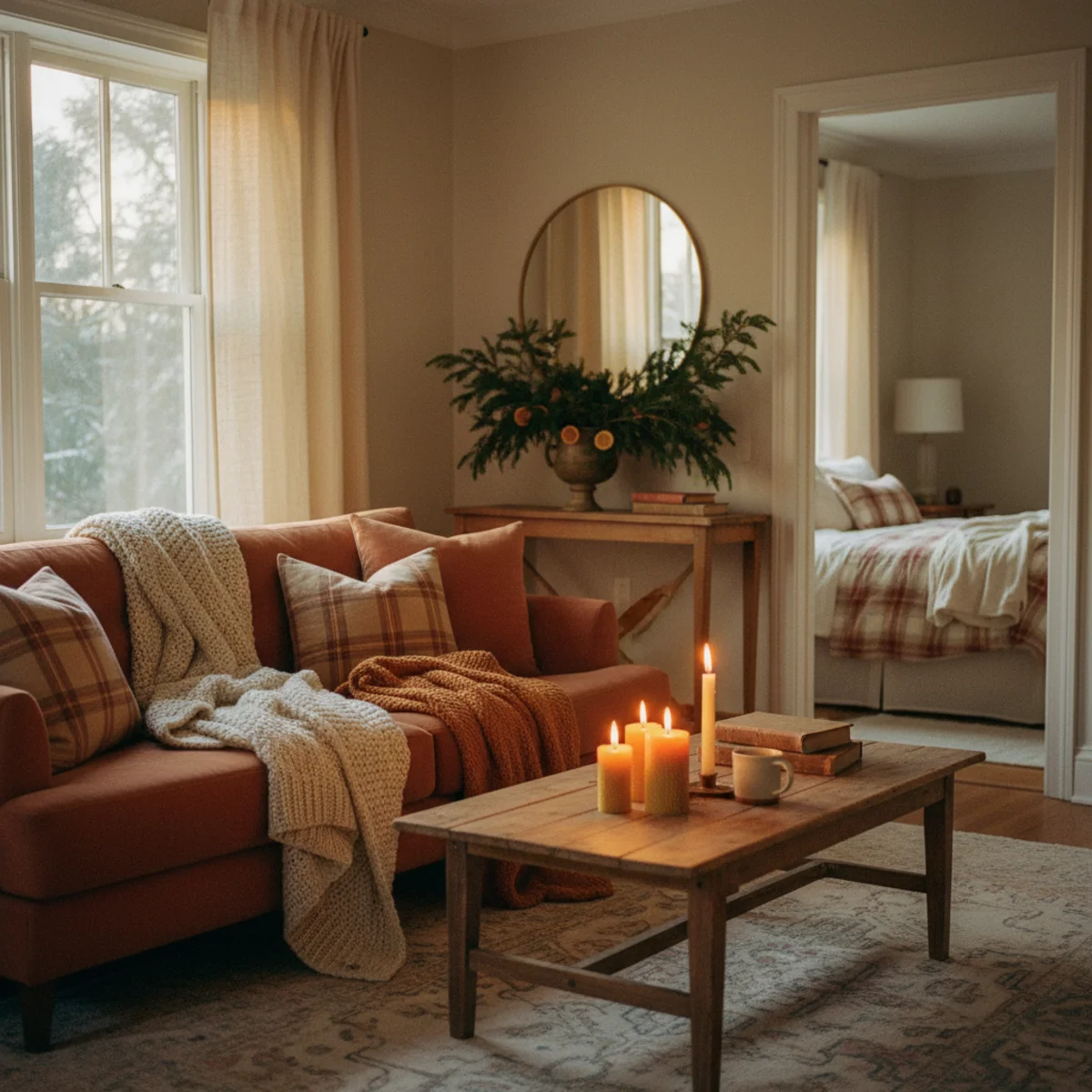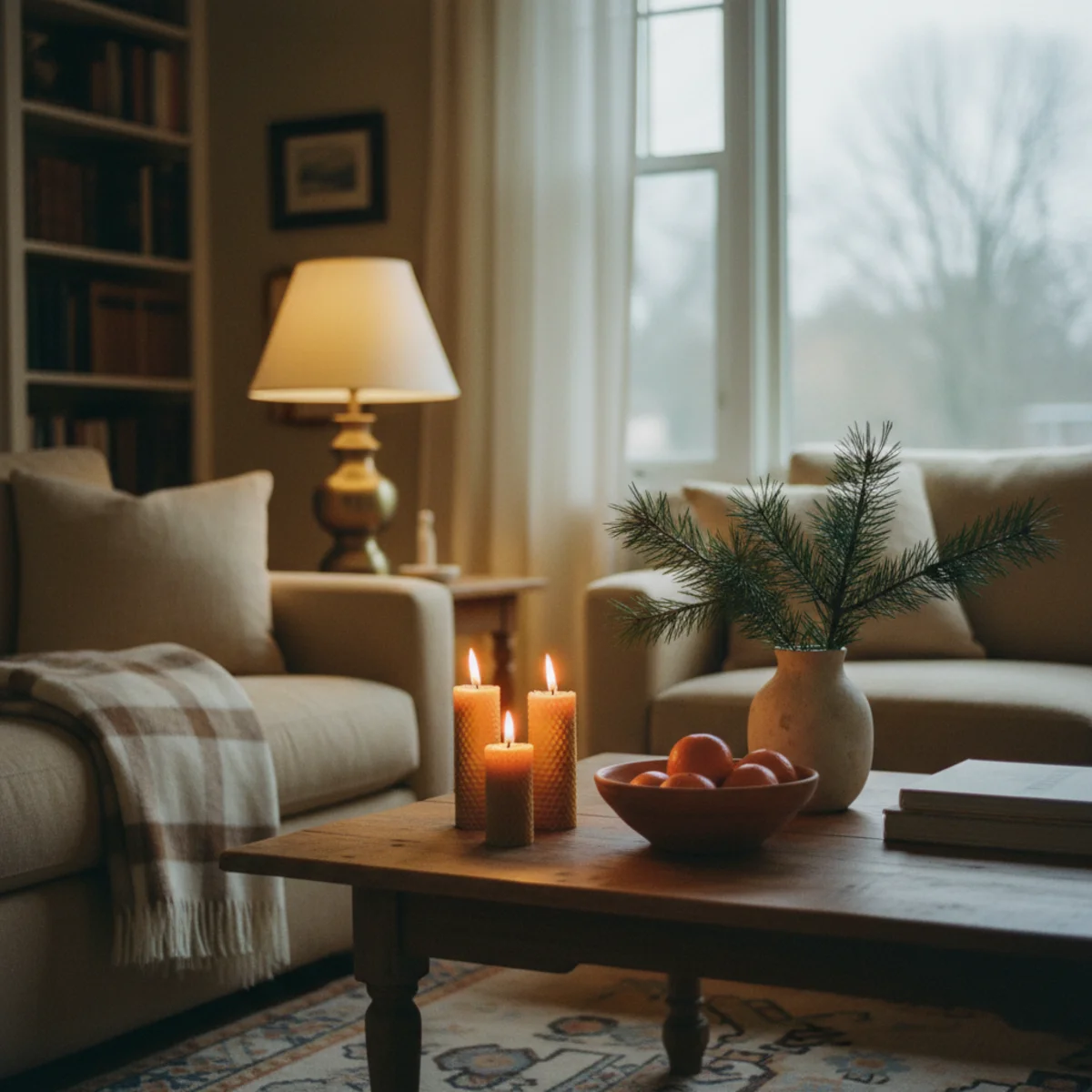
These nine actionable winter cozy moves are tested across actual same-day room makeovers — quick fixes designed for the Saturday morning when you finally notice that January feels dreary and want immediate improvement. Each move is small enough to complete in 20 to 60 minutes, costs $0 to $80 in materials (using mostly items you already own), and produces visible cozy improvement before bedtime. The goal is high-impact-per-minute, not long-term renovation.
Quick winter cozy moves work because they target the highest-leverage decor elements first — lighting, textiles, scent, evergreens, and candles. These are the elements that produce the biggest cozy improvement per dollar and per minute. Bigger seasonal decor projects (rug rotation, drape swap, repainting) belong in our broader winter decor guide; this guide is for the days when you want immediate transformation without a full project.
By the end of this guide, you'll know exactly which nine fast moves produce the biggest cozy improvement in any winter room — the lamp on a timer, the warm-bulb swap, the doubled throws, the candle clusters lit early, the real evergreen, and the four other quick wins that transform the room before dinner.
WHAT'S INSIDE
- The smart-plug-and-2700K-bulb combo that turns any lamp into automatic cozy
- Why doubling throws on every seating zone is the fastest cozy upgrade available
- The candle-lighting timing (4:30pm not 6:00pm) that compensates for short daylight
- The simmer pot for scent that costs $3 and works in 30 minutes
Winter coziness is mostly about light and texture turned up a notch. The house should feel warmer than the season outside.
— House Beautiful [citation needed — verify before publish]
What makes a room feel cozy in winter?
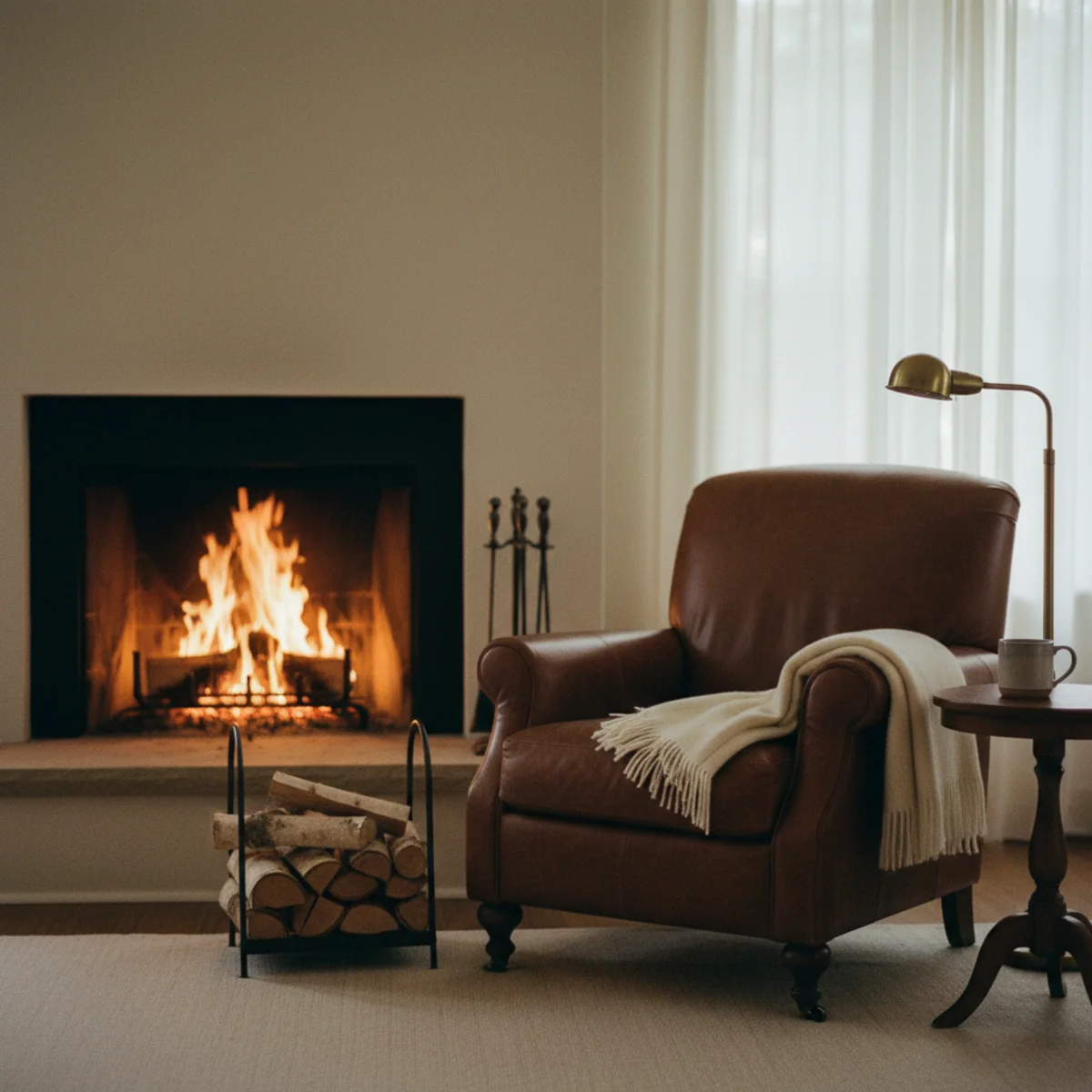
A room feels cozy in winter when its light is warm and comes on early, its textiles are heavier and layered, and there's a little candlelight and evergreen to soften the long dark. Winter coziness is a seasonal layer applied on top of a room's year-round warmth, not a redecoration — it's the lamps on a timer, the second throw, the simmer pot on the stove.
The single most effective move is timed warm light. A lamp set to switch on at late afternoon means you never meet the early winter dark in a cold-lit room, and that one change resets the mood of a whole evening. After that, doubled textiles, clustered candles, and a few real evergreen clippings carry the rest — none of it expensive, all of it reversible when spring comes.
More in Seasonal you may love
See allWhy the winter-cozy question peaks in 2026
As remote work kept people home through the darkest months, winter stopped being a season to endure and became one to actively make cozy — and the post-holiday slump, when the tree comes down and rooms go bare, drove demand for a deliberate winter layer. Pinterest's winter cozy home and hygge searches spike every January.
People keep asking because the instinct — buy more winter decor — misses the point. The honest answer is about light and texture turned up: timed warm lamps, heavier throws, candlelight, evergreen. It's cheap, it's mostly things you own, and it does more for a winter room than any seasonal haul. That gap between instinct and answer is why the question recurs every cold season.
9 ways to make a room cozy for winter
01Put a Lamp on a Timer
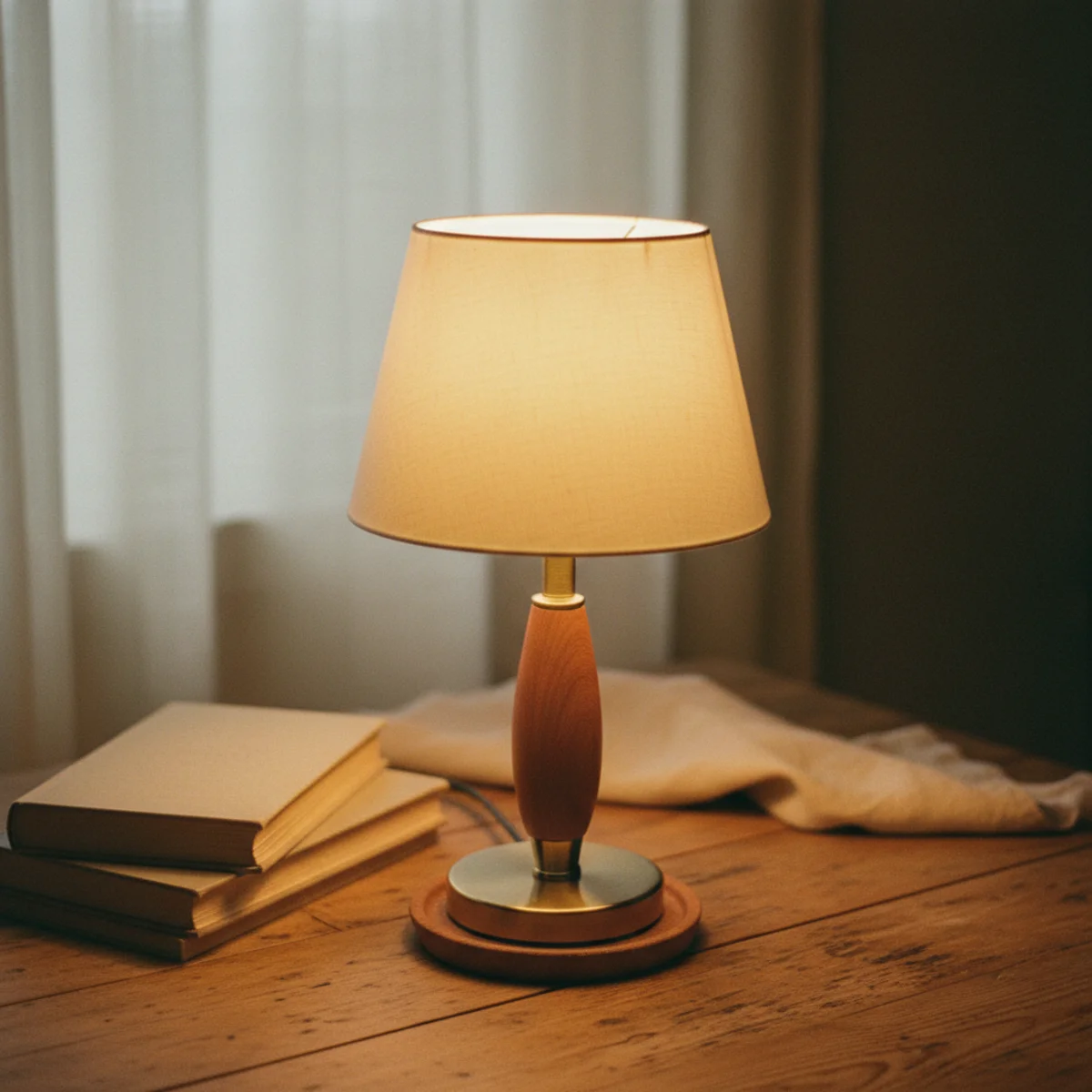
The fastest single cozy upgrade for any winter room is wiring one lamp to a smart plug scheduled to dusk. The lamp turns on automatically as winter daylight fades, transforming the room from gray-dim-anxious to warm-lit-cozy without anyone touching a switch. Cost: $15 for the smart plug; setup time: 10 minutes; daily benefit: substantial.
Required components: ONE LAMP you already own (table lamp or floor lamp, 24 to 64 inches tall), SMART PLUG ($15 from TP-Link Kasa, Amazon Smart Plug, or Wyze), SMARTPHONE for app setup. Setup: plug the lamp into the smart plug, plug the smart plug into a wall outlet, install the brand's app, schedule the plug to turn on at sunset (or 30 minutes before sunset for the gradual transition). Most apps use astronomical sunset that auto-adjusts daily. Total time: 10 minutes including app setup. Add a second smart plug to a second lamp for paired warm-light transitions across rooms. The compound effect across 100+ winter days is significant — every evening the lamp greets you with warm light instead of you walking into a dim room and fumbling for switches.
AFFILIATE SLOTQUICK$15 smart plug (TP-Link Kasa, Amazon Smart Plug, Wyze) + 1 existing lamp + 10 min setupAdd affiliate URL when configuredWhy it works
Because winter sunset happens during active hours (4:30pm in many regions) when you're typically not paying attention to the room — at work, doing afternoon tasks, picking up kids. Without automation, the room enters dim transition and stays dim until you happen to notice and turn on lights. With automation, the warm lamp is already on when you walk in or look around, which makes the room feel proactively cozy rather than reactively turned-on. The $15 investment delivers daily emotional benefit across the winter season.
Pro tip — Set the smart plug to turn on 15 to 30 minutes BEFORE sunset rather than at sunset — the lamp gradually takes over from fading daylight, which reads more natural than an abrupt switch and prevents the 'is it night yet?' confusion that exact-sunset timing creates. The 15-minute pre-sunset start is what makes the automation feel intentional rather than automatic.
Lamp glowing at 4:30pm before anyone is home — automation that compounds across 100+ winter days. See also: smart plug
02Switch to 2700K Warm Bulbs
If your lamps still have the cool 4000K or 5000K bulbs that came with them, swapping to 2700K is the single most-noticed bulb change. The same lamp emits warmer-toned light at 2700K, and the warm tone is what makes winter rooms read cozy rather than commercial. Cost: $5 to $12 per bulb; swap time: 2 minutes per bulb; visual impact: dramatic.
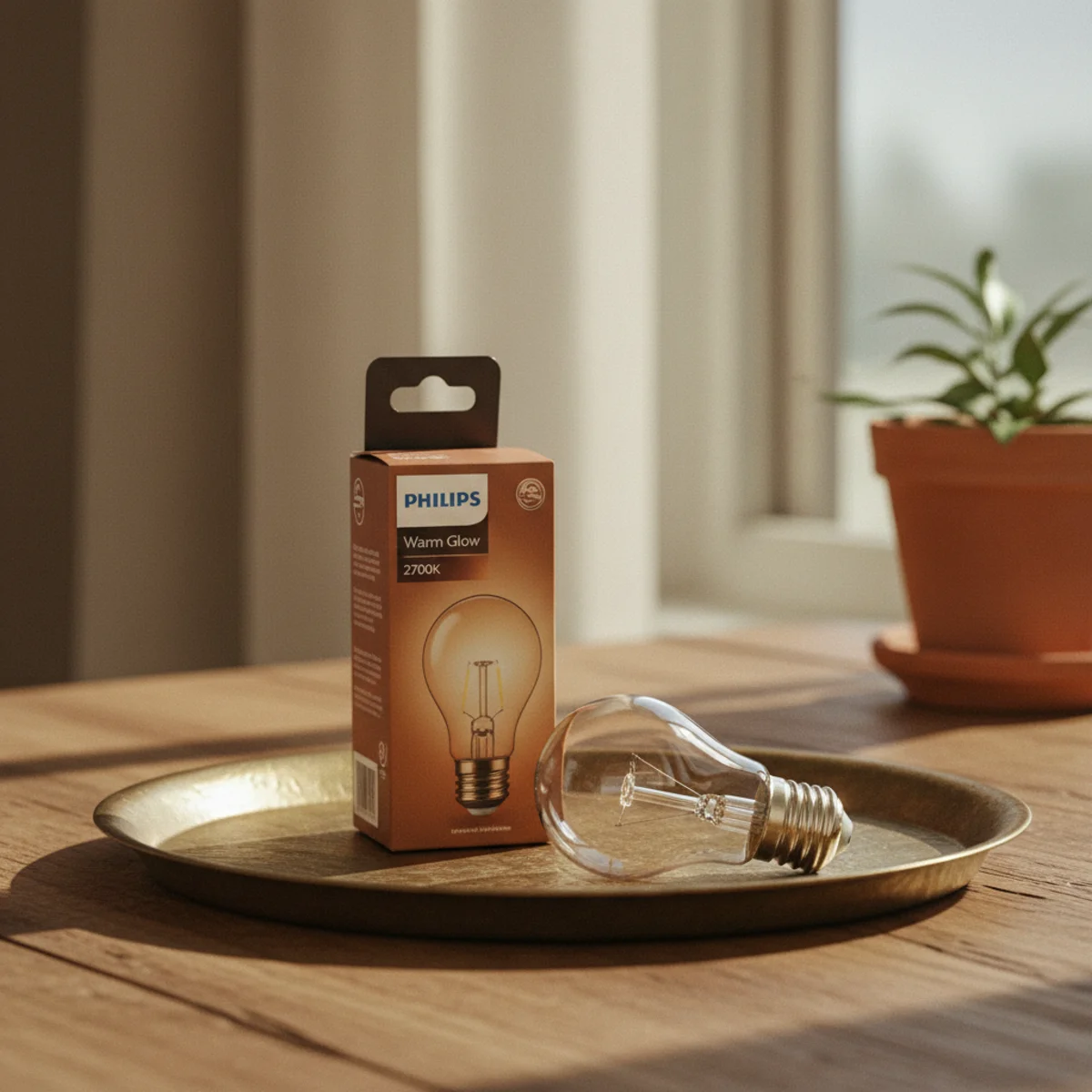
Bulb specs: 2700K LED, 400 to 800 lumens per bulb (varies by lamp size and intended brightness), dimmable if your lamp has a dimmer switch (most do). Best brands: PHILIPS WARM GLOW (mimics incandescent warming-when-dimmed, $8 to $15 each), CREE TW SERIES ($8 to $12), or GE Reveal HD+ ($5 to $10). Bulb shapes to match lamp: A19 for most table and floor lamps, T10 or T6 for narrow tubular shades, B11 or B13 for chandelier-style fixtures. Total cost for typical household: $30 to $80 for 5 to 10 bulb replacements. The swap takes minutes per lamp but transforms the lighting temperature throughout the house permanently — winter and beyond.
AFFILIATE SLOTQUICKPhilips Warm Glow, Cree TW, or GE Reveal HD+ at 2700K - 5-10 bulbs across householdAdd affiliate URL when configuredWhy it works
Because winter rooms are lit primarily by artificial light for 12+ hours per day (compared to 6 to 8 hours in summer), and the bulb temperature determines whether those long-lit hours read warm or commercial. A 4000K cool-white bulb in a beautiful lamp produces ugly light; a 2700K warm-white bulb in the same lamp produces beautiful light. The lamp itself matters less than the bulb temperature for daily atmospheric quality. The Kelvin number on the bulb package is the most-important specification for winter atmospheric lighting.
Pro tip — Test one bulb in one prominent lamp before committing to a whole-house swap — the 2700K shift is dramatic and you want to confirm you like it in your specific room before buying 10 bulbs. Most people find 2700K warmer-and-better than they expected; a few prefer 3000K (slightly less warm but still warm). Either is dramatically better than 4000K-plus.
Same lamp, 4000K versus 2700K — the bulb temperature swap that transforms winter room lighting. See also: Philips Warm Glow
03Double the Throws
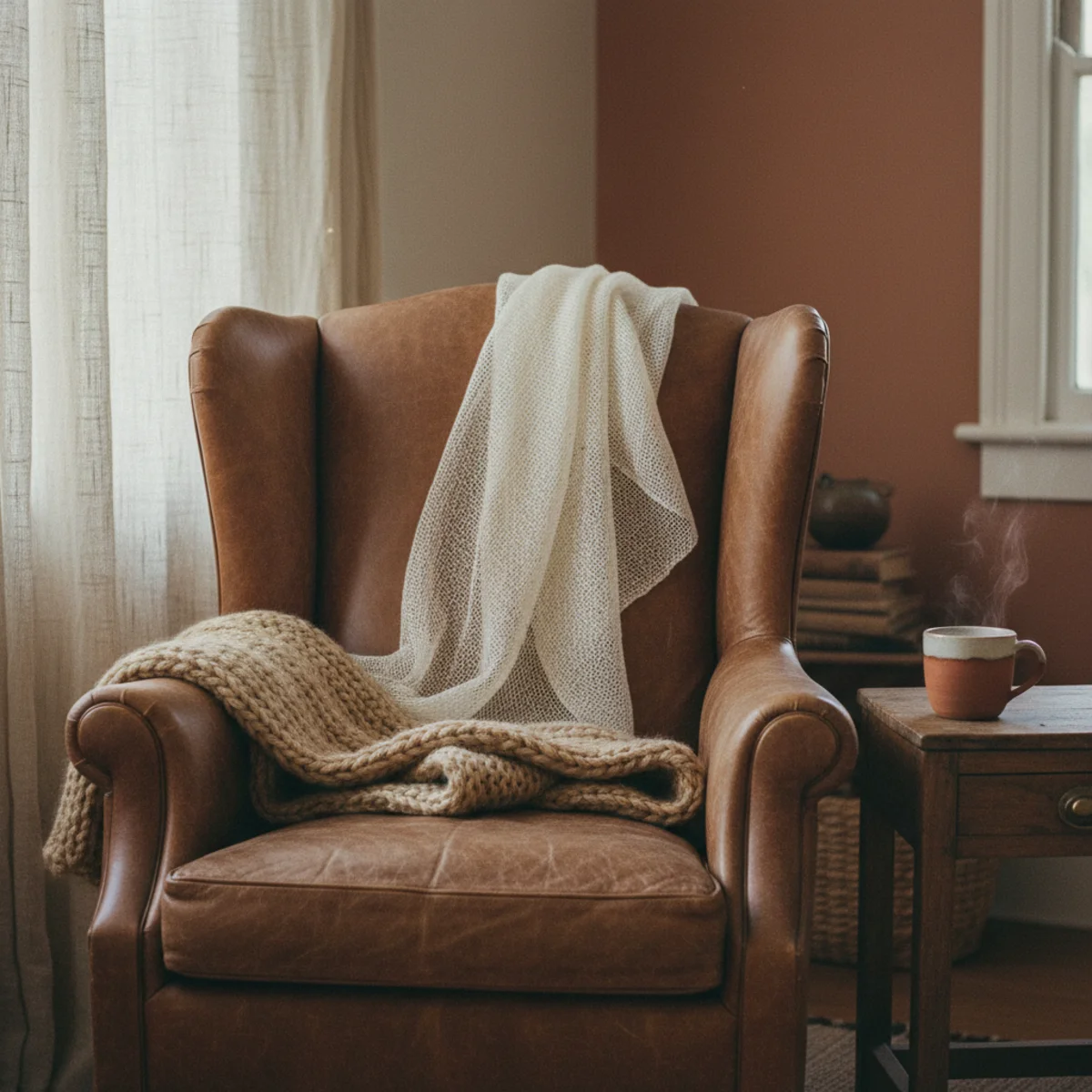
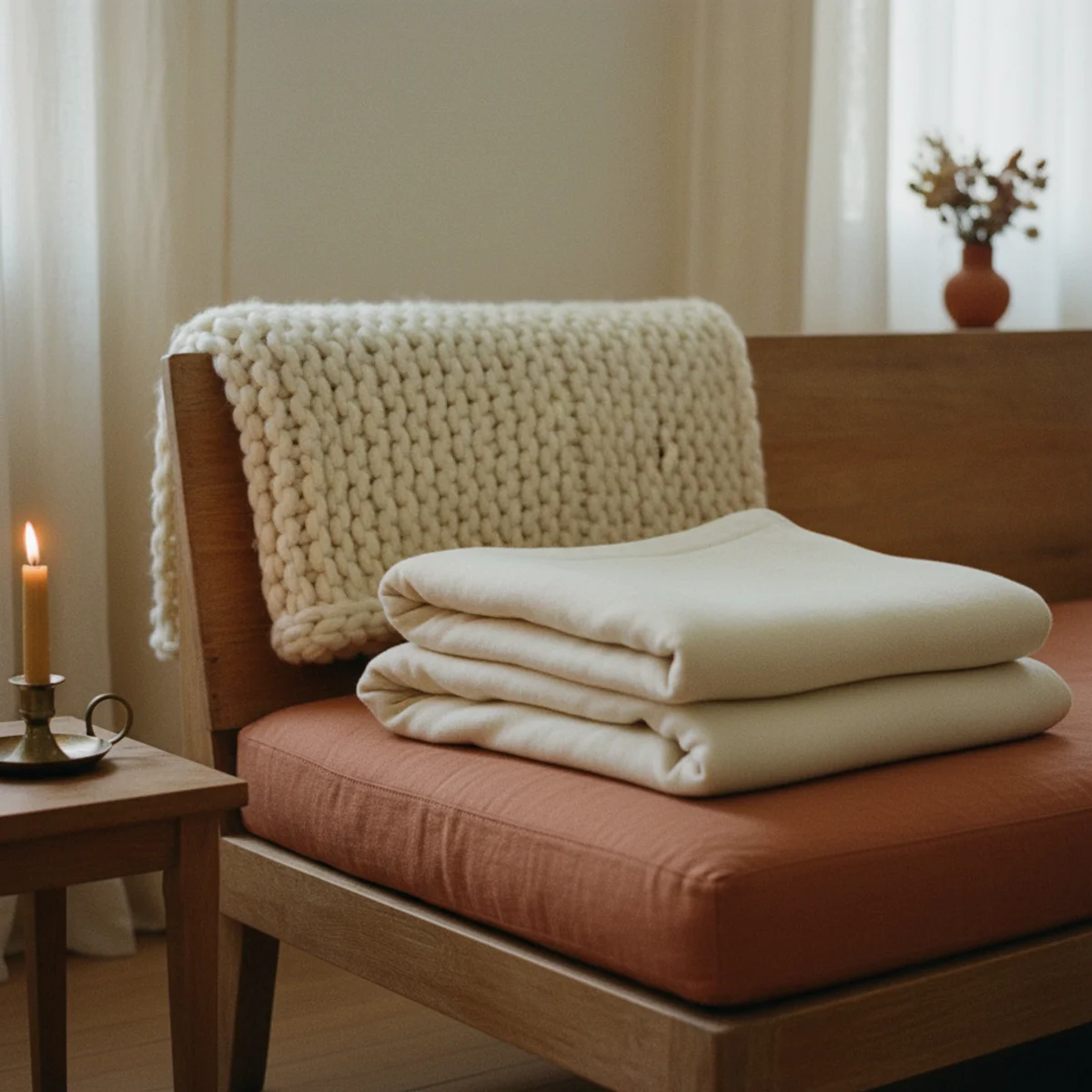
The most-visible quick cozy move in any winter room is adding a second throw blanket per seating zone. Two throws over the sofa back instead of one, an extra throw at the bedroom foot, one more at the reading chair. Costs vary (free if you already own extras; $40 to $80 each new), but the visual abundance reads as 'this is a winter house actively cozy' more than any other single move.
Quick-doubling targets: SOFA — add a second throw if you currently have one (or one if you have zero), 50x60 inches in cream, oat, terracotta, or sage. Drape diagonally over the back. ARMCHAIR — one wool throw if currently bare. BEDROOM — one extra throw at foot of bed over standard bedding. READING NOOK — one chunky knit throw. Sources for fast additions: PENDLETON outlet at $40 each, WEST ELM boucle at $79 each, IKEA INGABRITTA at $30 each, vintage Pendleton at $30 to $50 from Marketplace. Total cost to double the throws across a 3-bedroom house: $200 to $400; many households can do it for $0 by raiding closet for unused throws and re-deploying them visibly.
AFFILIATE SLOTQUICKAdd 1 throw per seating zone if zero, 2nd throw if already 1 - $0-80 each; contrasting texturesAdd affiliate URL when configuredWhy it works
Because visible abundance of warm textiles signals winter readiness emotionally as well as visually — and the emotional signal compounds across daily viewings of the same space. One throw per zone reads as 'someone might be cold occasionally'; two throws per zone reads as 'this household is actively prepared for winter coziness.' The doubled throws also enable simultaneous use (one person grabs one, another person grabs the second), which is functionally useful in cold months.
Pro tip — Choose throws in contrasting textures rather than colors — one smooth wool and one chunky knit, or one linen and one boucle. The textural variation makes the doubled-throw arrangement read intentional and curated rather than as random pile of similar throws. Same-texture doubled throws read as accidental; contrasting-texture doubled throws read as styled.
Smooth wool over the back, chunky knit over the arm — doubled with textural contrast. See also: throw-blanket-layering
04Cluster and Light Candles Early
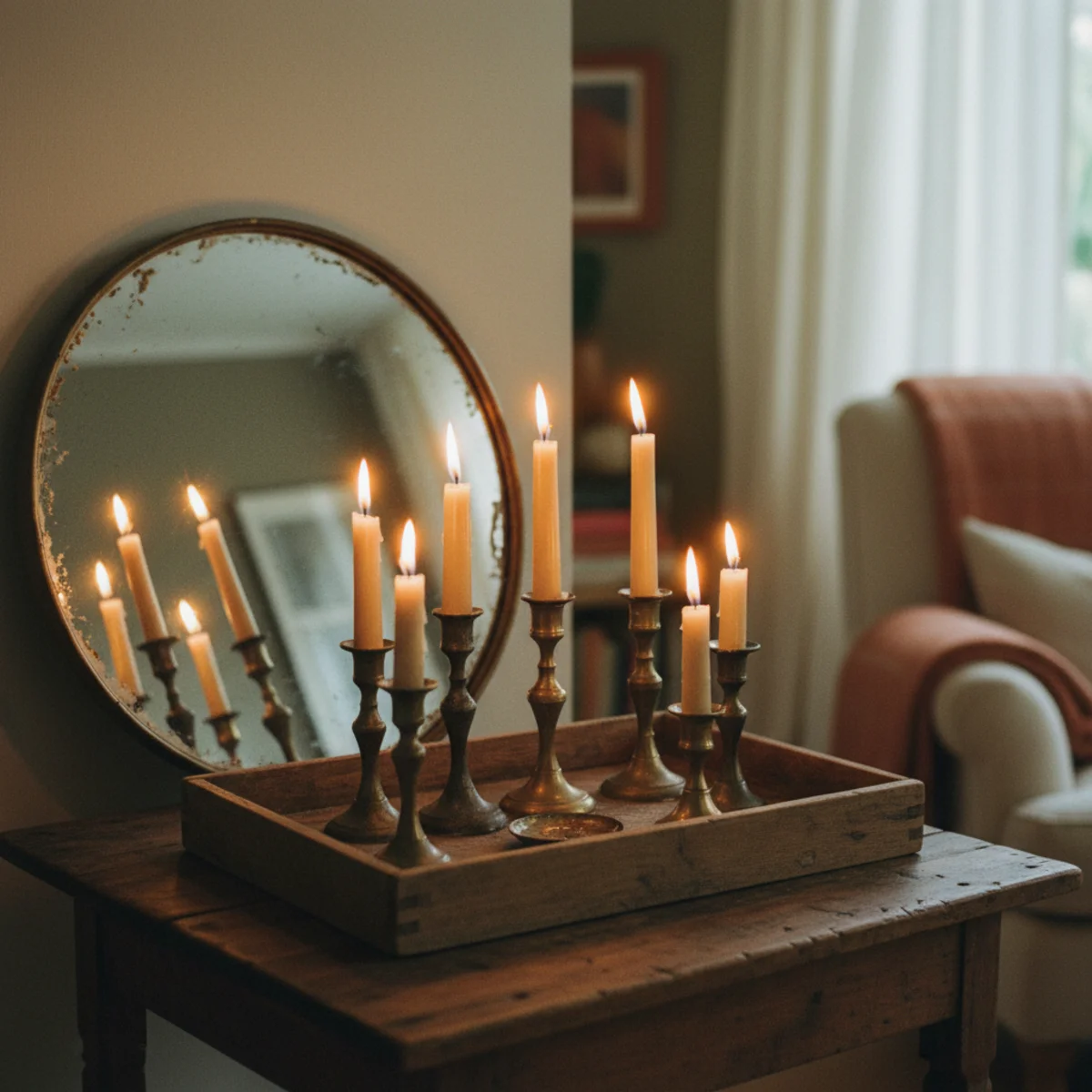
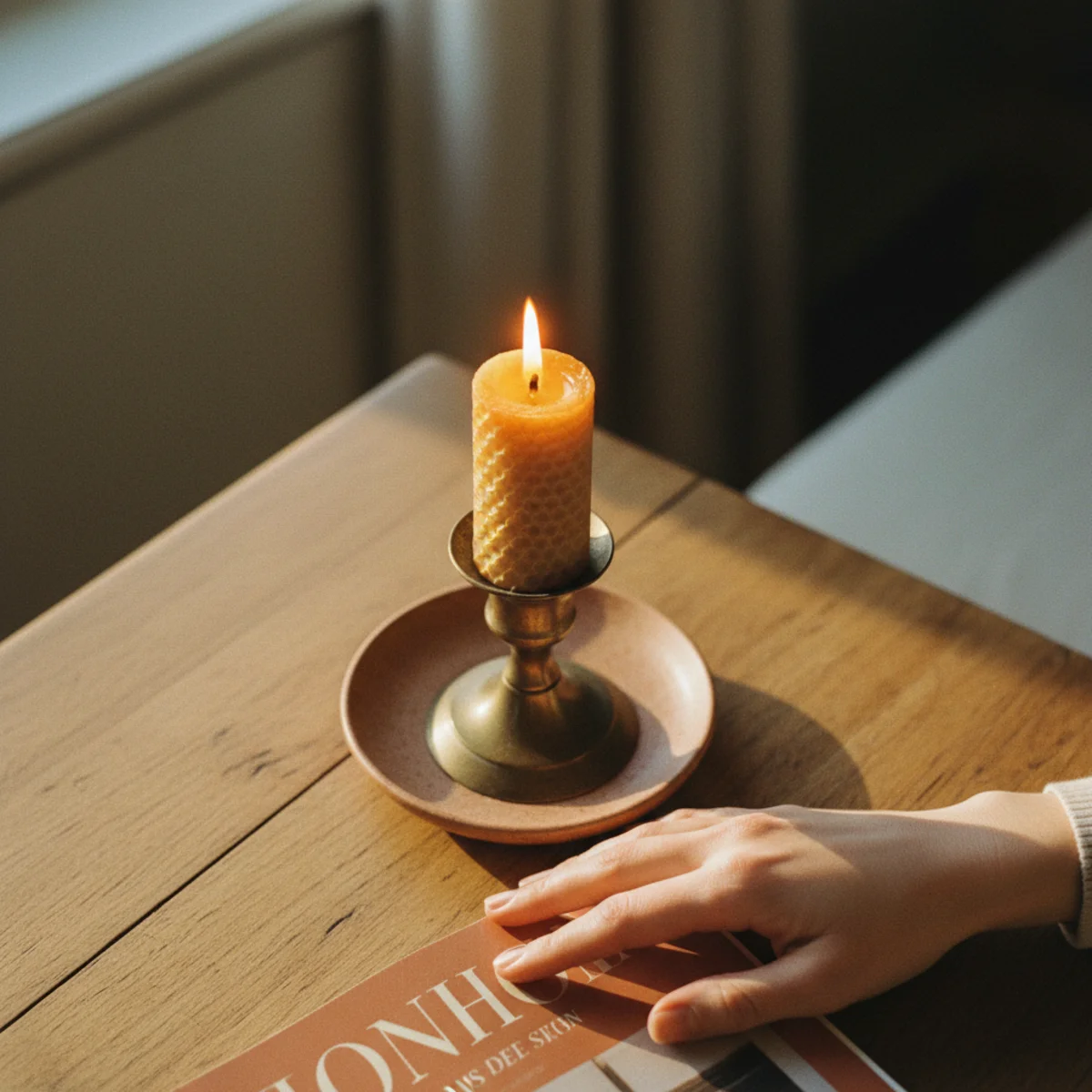
The simplest 5-minute cozy upgrade: gather candles you already own, cluster them on a tray or wooden surface, and light them by 4:30pm instead of waiting until dark. The flickering warm light arrives during the dim transition hour and immediately transforms the room from gloomy-dim to atmospheric-warm. Cost: $0 if using existing candles, $10 to $40 for a tray to display them on.
Quick candle setup: GATHER 4 to 8 existing candles from across the house — pillar candles from the bathroom, taper candles from the dining cabinet, votives stored in drawers. CONSOLIDATE onto one tray or wooden cutting board ($10 to $40 for a new tray, or use an existing one). POSITION on coffee table, console behind sofa, or dining table — wherever the room's primary viewing happens. LIGHT all candles by 4:30pm. The cluster effect (multiple candles together on a single surface) is dramatically more impactful than the same candles distributed singly. The grouped flicker creates a glowing focal point rather than scattered small lights. Total setup time: 5 to 10 minutes; daily transformation across winter months: substantial.
AFFILIATE SLOTQUICK4-8 existing candles clustered on tray or wooden board; light by 4:30pm; 5-10 min setupAdd affiliate URL when configuredWhy it works
Because clustered candles create one strong warm pool of light at a designated focal point, while scattered single candles create dim distributed light without focal impact. The brain reads the cluster as 'intentional warm zone' but reads scattered single candles as 'someone forgot to put away candles.' The clustering is what turns existing candles you already own into a dramatic decor element without buying anything new. Same candles, different arrangement, transformational difference.
Pro tip — Place the candle cluster on a wooden cutting board or stone slab ($10 to $30) rather than directly on the table or console — the base protects the surface from wax drips and adds a substantial-looking foundation to the candle grouping. A 12-inch round walnut cutting board under a 5-candle cluster reads dramatically more styled than the same candles on bare surface.
Six existing candles clustered on a walnut cutting board, lit by 4:30 — instant cozy from items you already own. See also: best-candles-cozy-home
05Bring in Real Evergreen
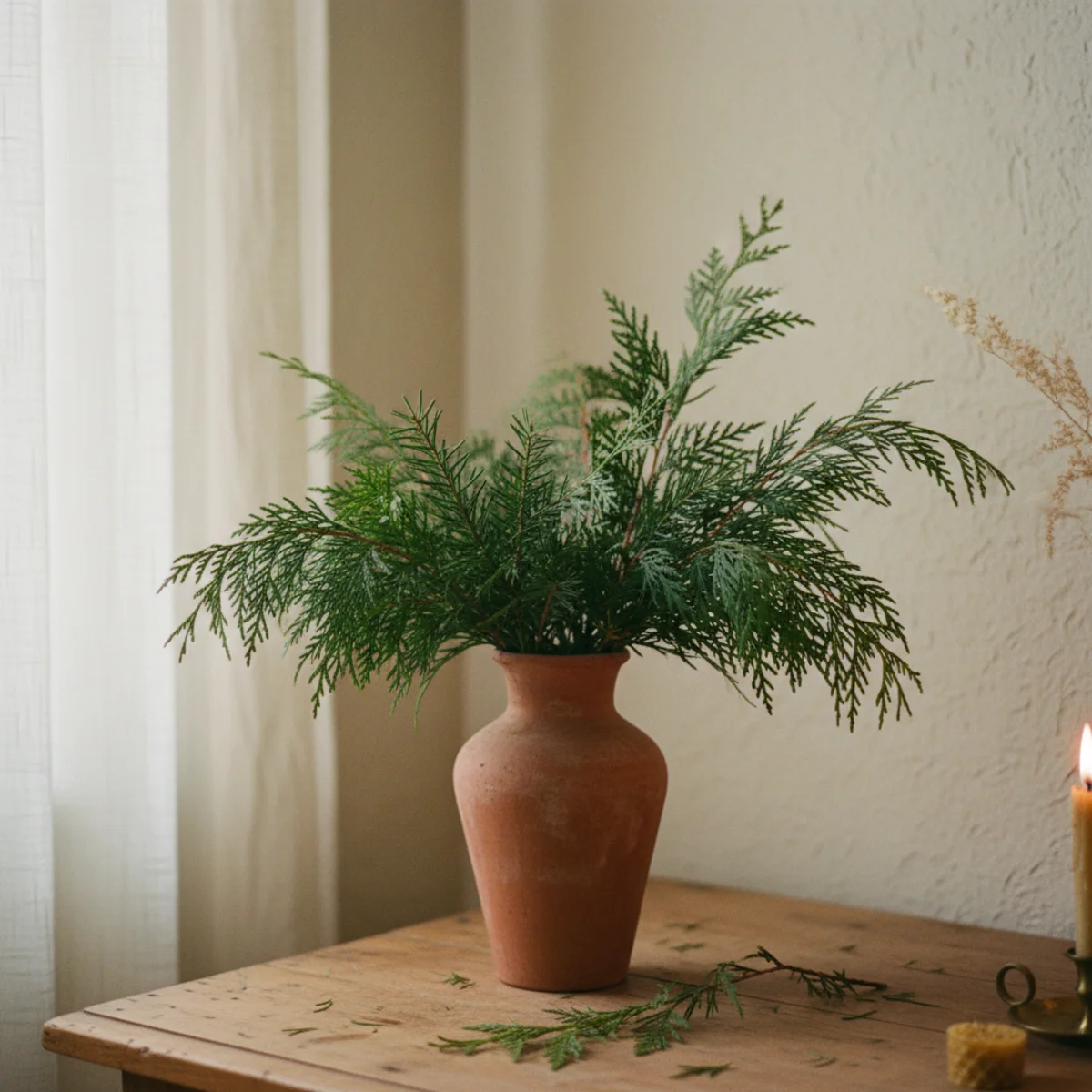
A 30-minute weekend errand to a tree lot, grocery store, or your own yard yields fresh-cut evergreen branches that transform any winter room. Pine, cedar, eucalyptus, or fir in a tall heavy vase reads as winter alive — the deep green amid the otherwise-restrained palette is the season's specific visual note. Cost: $5 to $30 for fresh-cut branches; setup time: 15 to 20 minutes including arranging.
Fast evergreen sources: GROCERY STORE FLORAL DEPARTMENT — pine bunches at $5 to $10, eucalyptus at $8 to $15 (winter availability varies). TREE LOTS AFTER CHRISTMAS — pine and fir scraps free or $5 per bunch. FARMERS MARKETS — cedar and pine bunches at $8 to $20 each. YOUR OWN YARD or NEIGHBORHOOD WALK (with permission) — fresh-cut pine from yard trees, cedar from hedges, magnolia branches from neighborhood, free. VASE — tall heavy ceramic or glass vase 24 to 36 inches ($30 to $100 retail, $10 to $40 thrifted, often already owned). ARRANGEMENT — fill vase 2/3 with water, place 6 to 10 branches in mixed varieties standing tall. Place on console, mantel, or dining table — the height of the arrangement is what creates visual impact. Refresh every 3 to 4 weeks across winter; total seasonal cost: $40 to $80 in evergreens.
AFFILIATE SLOTQUICKFresh-cut pine + cedar + eucalyptus in tall heavy vase; $5-30 in branches; 15-20 min setupAdd affiliate URL when configuredWhy it works
Because the deep green color is winter's specific organic note — it's the color of evergreens that stay alive when deciduous trees go bare, and it carries that 'still alive in winter' resilience symbolically. Adding fresh evergreen to a winter room reads as 'this house is alive amid the cold' in a way that no other quick decor move achieves. The vertical arrangement also adds height variation that most winter rooms (with shorter furniture and reduced summer plants) lack — solving multiple visual problems at once.
Pro tip — Add a sprig or two of eucalyptus (silver dollar variety with round leaves) to the pine and cedar — the silvery color provides contrast against the deep green and adds visual variation within the all-evergreen theme. The eucalyptus is widely available at grocery stores year-round and lasts 4 to 6 weeks fresh (then dries beautifully for another 6 to 8 weeks), making it the most versatile evergreen addition.
Pine, cedar, eucalyptus in a tall heavy vase — fresh-cut evergreen that reads winter alive. See also: magnolia branches
06Layer a Rug Over Cold Floors
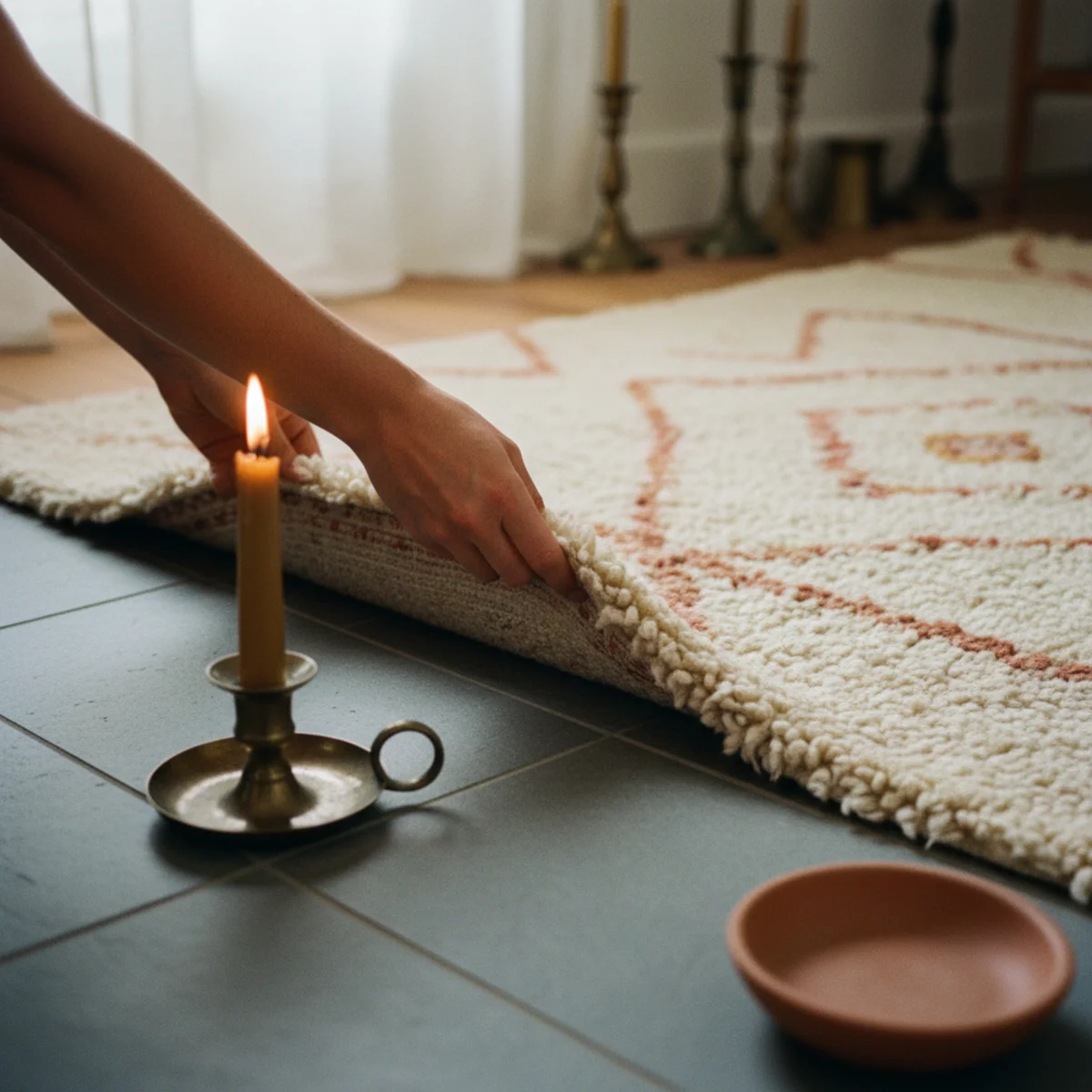
A 30-minute investment in adding a rug to a cold-floor zone produces immediate physical and visual warming. Kitchen between sink and island, bathroom in front of the toilet or sink, hallway, entry — any small cold-floor area benefits from a rug addition. Cost: $30 to $200 per small rug; immediate impact: significant.
Fast rug-adding targets and budgets: KITCHEN small runner ($60 to $150 in durable wool or indoor-outdoor polypropylene from Rugs USA, Ruggable, or Marketplace), BATHROOM bath mat ($30 to $100 in wool, cotton, or sheepskin), HALLWAY runner ($80 to $250 in wool flatweave or jute), ENTRY runner ($80 to $200 per entryway-decor rules), READING NOOK accent sheepskin or wool ($80 to $200). The key is matching the rug's weight and texture to the room's existing palette and use intensity — bathrooms need washable, kitchens need durable, hallways need heavy-traffic-rated. Use rug pads underneath all additions ($15 to $30). Order online for next-day delivery or check Marketplace for same-day pickup.
AFFILIATE SLOTQUICKAdd rugs to kitchen, bathroom, hallway, entry, reading nook; $30-200 each; pads underneathAdd affiliate URL when configuredWhy it works
Because the cold floor in front of the kitchen sink, the bathroom tile after a shower, the hallway concrete or hardwood — these localized cold spots affect daily comfort more than the broad room temperature. Adding a small rug at the precise spot of daily friction eliminates the moment of cold-foot discomfort that the brain registers as 'I'm cold' even when the room is warm. The $30 to $100 spent on a small bathroom rug yields more daily comfort improvement than $300 spent on a larger living-room rug because the bathroom-bare-foot moment is unavoidable.
Pro tip — Use Ruggable washable rugs for kitchens and bathrooms specifically — the machine-washable design means spills, splashes, and bathroom-floor moisture become minor cleanup rather than dry-cleaning expenses. The trade-off (slightly thinner profile than traditional rugs) is more than worth the maintenance ease in high-moisture zones.
Wool runner in kitchen, sheepskin in bathroom — small rug additions where daily cold matters most. See also: Ruggable
07Run a Simmer Pot for Scent
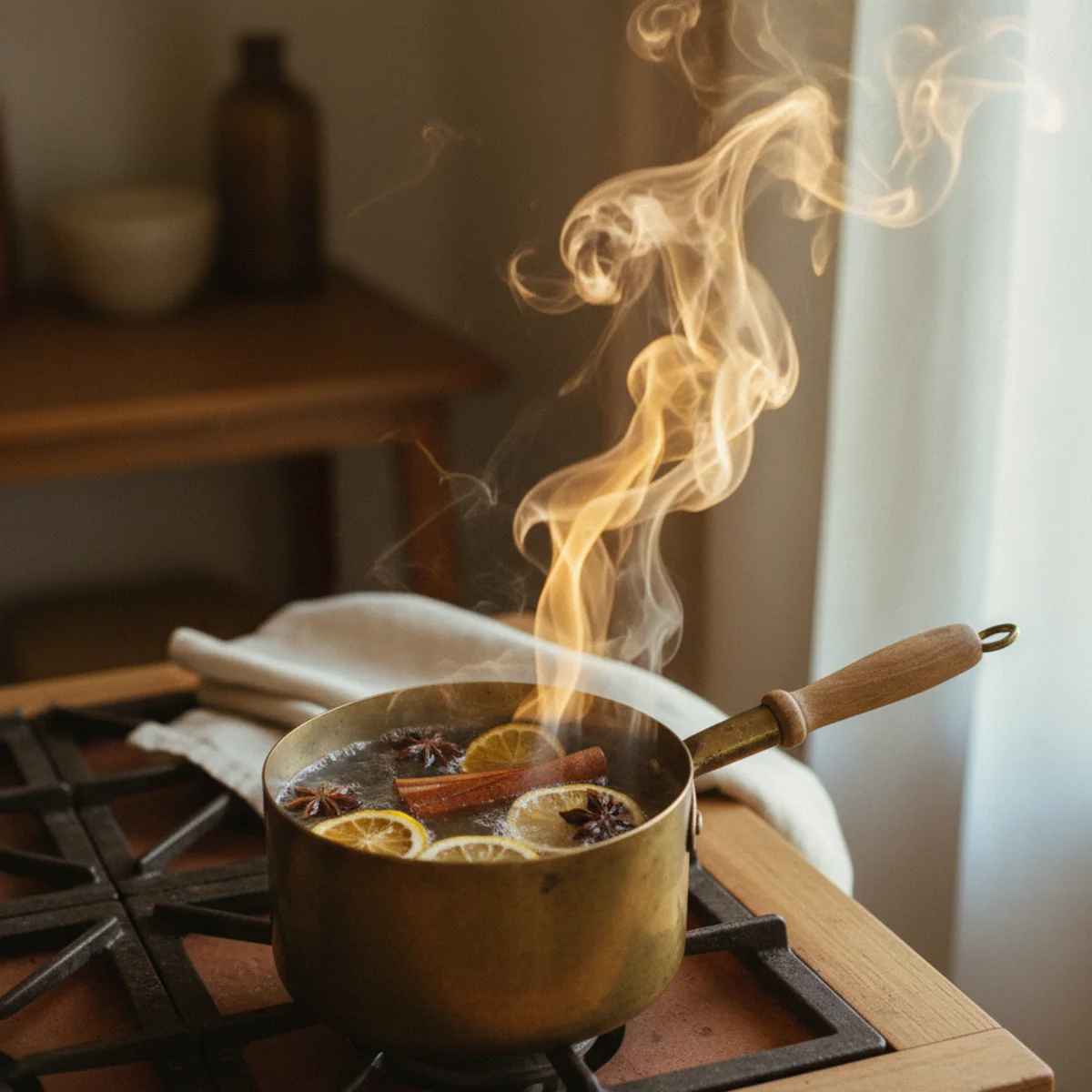
30 minutes from stovetop to whole-house scent: a simmer pot of water with citrus peels and spices fills the entire home with warm winter scent for the cost of $2 to $5 in ingredients. The natural scent layer is what most winter rooms lack — visual cozy without olfactory cozy reads incomplete. The simmer pot fixes the gap in half an hour.
Standard quick recipe: SMALL POT 1 to 2 quart on stovetop set to LOW SIMMER. Fill 2/3 with water. Add: peels from 1 to 2 oranges (eat the fruit, peel separately), peels from 1 lemon, 2 cinnamon sticks, 4 to 6 whole cloves, 2 to 3 star anise pods. Optional: 1 tablespoon vanilla extract, 1 small sliced apple, 1 sprig fresh rosemary. Simmer on low for 1 to 3 hours, refilling water as it evaporates. Cost per pot: $2 to $5 (mostly food waste already in kitchen). The whole house typically scented within 30 to 45 minutes. Run 1 to 3 times per week during winter for ongoing house-warm scent. ALTERNATIVE for unattended scent: slow cooker on low ($20 to $40 from Amazon if you don't own one) — runs safely for 6 to 8 hours, frees up stovetop.
AFFILIATE SLOTQUICK1-2 quart pot + water + orange/lemon peels + cinnamon + cloves + star anise; 30-45 min for whole-house scentAdd affiliate URL when configuredWhy it works
Because synthetic scents (plug-ins, mass-produced scented candles) contain chemicals that some people find irritating and that overwhelm the natural scent profile of food and home. The simmer pot uses ingredients the household already knows and tolerates — orange peels, cinnamon, vanilla — at low natural concentrations that scent the air without overwhelming. The natural origin also reads authentically winter-cozy rather than chemically sweet, and the cost is nearly free. The 30-minute setup is faster than driving to the store for scented products.
Pro tip — Make a 'simmer pot kit' bag in the freezer — citrus peels, cinnamon sticks, and spices accumulated over weeks ready to drop into water. The pre-made kit reduces simmer-pot setup from 10 minutes to 2 minutes (open bag, add to pot of water, light burner). The convenience makes weekly simmer pots actually happen across winter months.
Orange peels, cinnamon, cloves, star anise — whole-house winter scent in 30 minutes for $3. See also: scented candles
08Hang Heavier Curtains
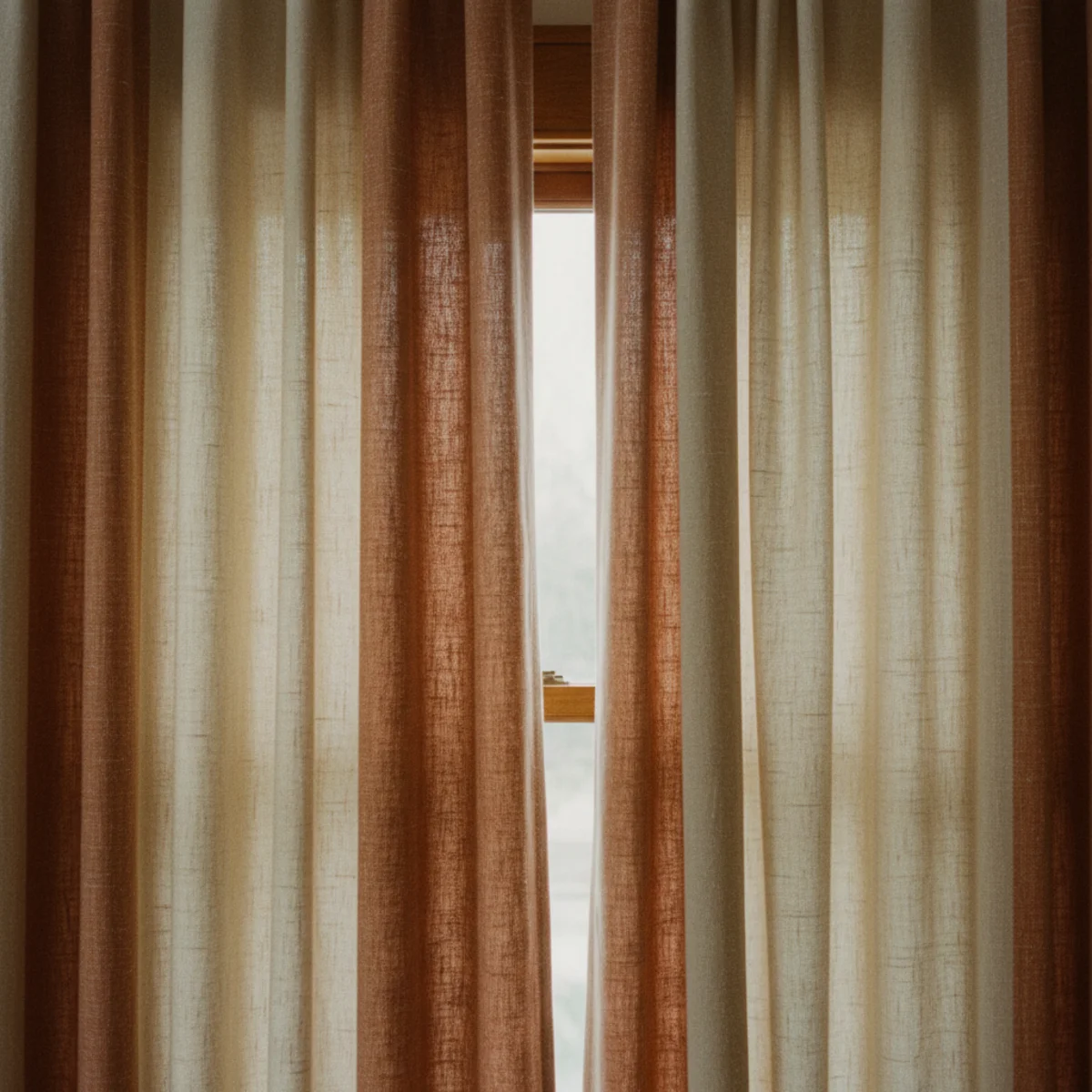
If your current curtains are unlined linen or bare-window, swapping in heavier panels for the winter months adds thermal insulation and visual weight that quick cozy needs. The swap can be as simple as hanging existing wool blankets as drapes for the season, or as proper as installing lined linen or wool panels. Cost: $0 (DIY with existing blankets) to $200 per panel (proper winter drapes).
Quick winter curtain options: TEMPORARY BLANKET CURTAINS — use existing wool blankets or quilts hung from existing curtain rods with ring clips ($8 from IKEA for a 10-pack); reverses easily and costs $0 if you have blankets to use. ADD A LAYER BEHIND EXISTING — heavier wool, velvet, or thermal-lined panels behind your existing curtains, on double-rod brackets ($10 to $20 from Home Depot); $100 to $200 per added panel. REPLACE WITH LINED LINEN — lined linen panels at $100 to $200 per panel from West Elm, Pottery Barn, or Pottery Barn Kids (their lined linens are surprisingly affordable). Draw heavier curtains 30 to 45 minutes before sunset for thermal benefit before the room cools. Total cost for one-room winter curtain upgrade: $0 to $400.
AFFILIATE SLOTQUICKTemporary blanket-curtains with ring clips, layer behind existing, or replace with lined linen; draw 30-45 min before sunsetAdd affiliate URL when configuredWhy it works
Because windows lose 10 to 25 percent of room heat overnight without proper drape insulation — and heavier curtains (especially when drawn before sunset) trap warm air in the room and reduce heating bills measurably. The functional benefit is real (warmer rooms, lower energy use) and the visual benefit compounds (heavier textile reading as winter-ready). The cozy improvement is both psychological (looks cozy) and physical (genuinely warmer room), which compound to feel significantly warmer than the same room with lighter curtains.
Pro tip — Use existing wool blankets as temporary winter curtains by hanging from existing rods with ring clips — the DIY-curtain approach lets you test heavier window dressings for free before committing to proper drapes. Many households find the temporary blanket-curtains so effective they make them permanent by buying matching panels in spring.
Heavier curtains drawn 30 minutes before sunset — thermal insulation plus winter visual weight. See also: thermal-lined panels
09Switch the Bed to Flannel
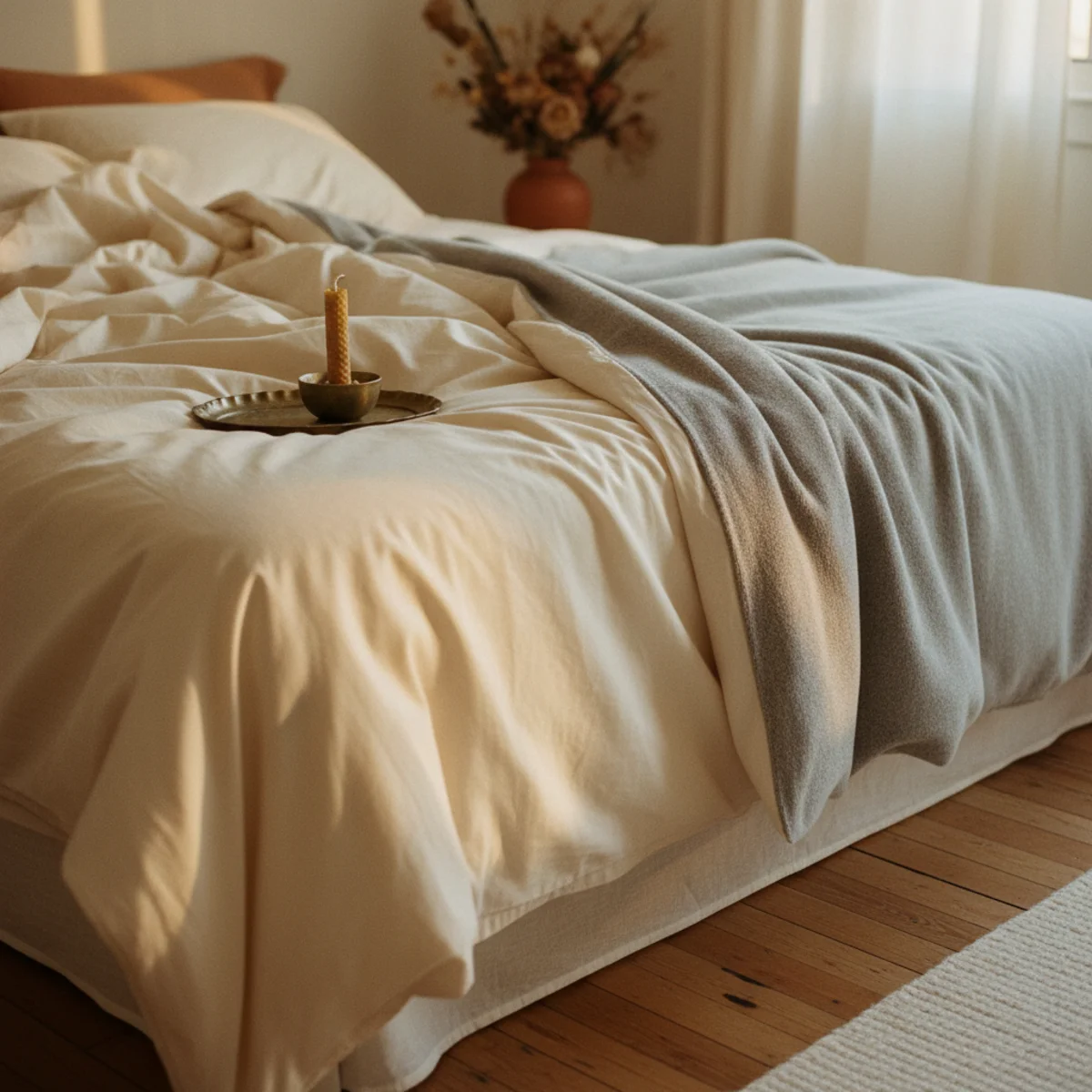
The fastest quick-cozy move in the bedroom: swap summer cotton or linen sheets for flannel. The fabric change happens in 10 minutes (strip and remake the bed), provides immediate physical warmth that night, and signals seasonal transition visually. Cost: $60 to $150 for the flannel sheet set; reusable across many winters; daily benefit is significant.
Best flannel sheet brands: L.L. BEAN ULTRASOFT FLANNEL at $130 per queen set (highest quality, lasts 10+ years), GARNET HILL CLASSIC FLANNEL at $140 to $180 per set, CUDDLEDOWN FLANNEL at $130 to $200 per set, BROOKLINEN FLANNEL at $179 per set, COSTCO FLANNEL at $40 to $60 per set (budget option, surprisingly decent quality). WASH TWICE before first use to soften — fresh flannel is slightly stiff out of packaging; two warm washes break in the fibers for the softness flannel is supposed to deliver. Choose warm earth tones (cream, oat, terracotta, sage) over summer florals or cool greys for winter palette consistency. Add a heavier wool blanket between sheet and duvet for additional warmth during coldest weeks.
AFFILIATE SLOTQUICKFlannel sheets from L.L. Bean, Garnet Hill, Cuddledown, Brooklinen, or Costco; wash twice before first useAdd affiliate URL when configuredWhy it works
Because flannel is physically warmer to the touch than cotton or linen — the brushed fibers trap warm air against the body and feel warm immediately rather than requiring body-heat to warm up first. Getting into a flannel-sheeted bed in winter is immediately warm; getting into the same bed with cotton or linen sheets requires 5 to 10 minutes of body-heat warming. The daily impact compounds across 100+ winter sleeping experiences into significantly more comfortable winter nights.
Pro tip — Buy the flannel sheets at the start of fall (September or October) rather than mid-winter — the early purchase means the sheets are washed and softened before the coldest weeks arrive, and the seasonal supply is best in fall. Buying flannel sheets in late January often means depleted stock and inflated prices.
Cream flannel sheets, wool throw at the foot — winter bed that feels warm to the touch immediately. See also: L.L. Bean Ultrasoft Flannel
How to make a room cozy for winter step by step
Turn the warmth up with what you own first. Cheapest moves first.
- 1Warm and time the light
Swap any cool bulbs for 2700K, set a lamp on a timer for late afternoon, and pull out the candles. Light is the whole game in winter.
- 2Double the textiles
Add a second throw, switch the bed to flannel, and lay a thick rug over any cold floor.
- 3Add scent and evergreen
Run a simmer pot of citrus and spice and bring in a few real cedar or pine clippings.
- 4Hold the heat
Hang or layer heavier curtains and let them puddle slightly to block drafts at the sill.
Quick tips
- Set a lamp on a timer for late afternoon — the single best winter mood fix there is.
- Use 2700K bulbs everywhere; cool light undoes every other cozy effort.
- Mist real evergreen clippings every few days so they don't drop needles.
- Run a simmer pot of citrus and spice instead of synthetic plug-ins.
- Layer a thick rug over cold tile or laminate and roll it up in spring.
- Switch the bed to flannel and add a wool blanket at the foot for the cold snaps.
Cozy winter moves by room
Timed warm lamps, doubled throws, a thick layered rug, and candles lit early; see our winter decor guide.
Flannel bedding, a wool blanket at the foot, a sheepskin by the bed, and heavier curtains drawn.
A simmer pot for scent, a bowl of citrus, and a small warm lamp for dark mornings.
2700K bulbs throughout and at least one lamp on a timer in each main room.
A room either meets the winter dark warmly or just gets dark. The difference is a lamp on a timer and a second throw.
Frequently asked questions
What's the fastest way to make a room cozy for winter?+
What bulb temperature should I use for cozy winter lighting?+
How do I make a winter bedroom cozier in 30 minutes?+
What's a simmer pot and how do I make one quickly?+
Where do I get fresh evergreen branches for winter decor?+
Should I add extra rugs to my house for winter?+
- SeasonalWinter Decor: 28 Cozy Ideas for a Warm Home in 2026
- Shopping GuidesThe Best Wool Throws for a Cozy Home, Tested and Compared (2026)
- Cozy CornersFireplace Nook Ideas: 20 Ways to Style a Cozy Hearth Corner (2026)
- StylingCandle Styling: 20 Ways to Style Candles for a Cozy Home (2026)
- Shopping GuidesThe Best Lamps for Warm Light, Tested and Compared (2026)
Making a room cozy for winter is about turning the warmth up, not buying a seasonal haul — earlier light, heavier textiles, more candlelight, a little evergreen for scent. We'd put a lamp on a timer before anything else; arriving to a warm-lit room on a gray afternoon is the whole feeling of a cozy winter in one cheap switch. Turn up what you already own, and the room meets the dark warmly instead of just going dark.