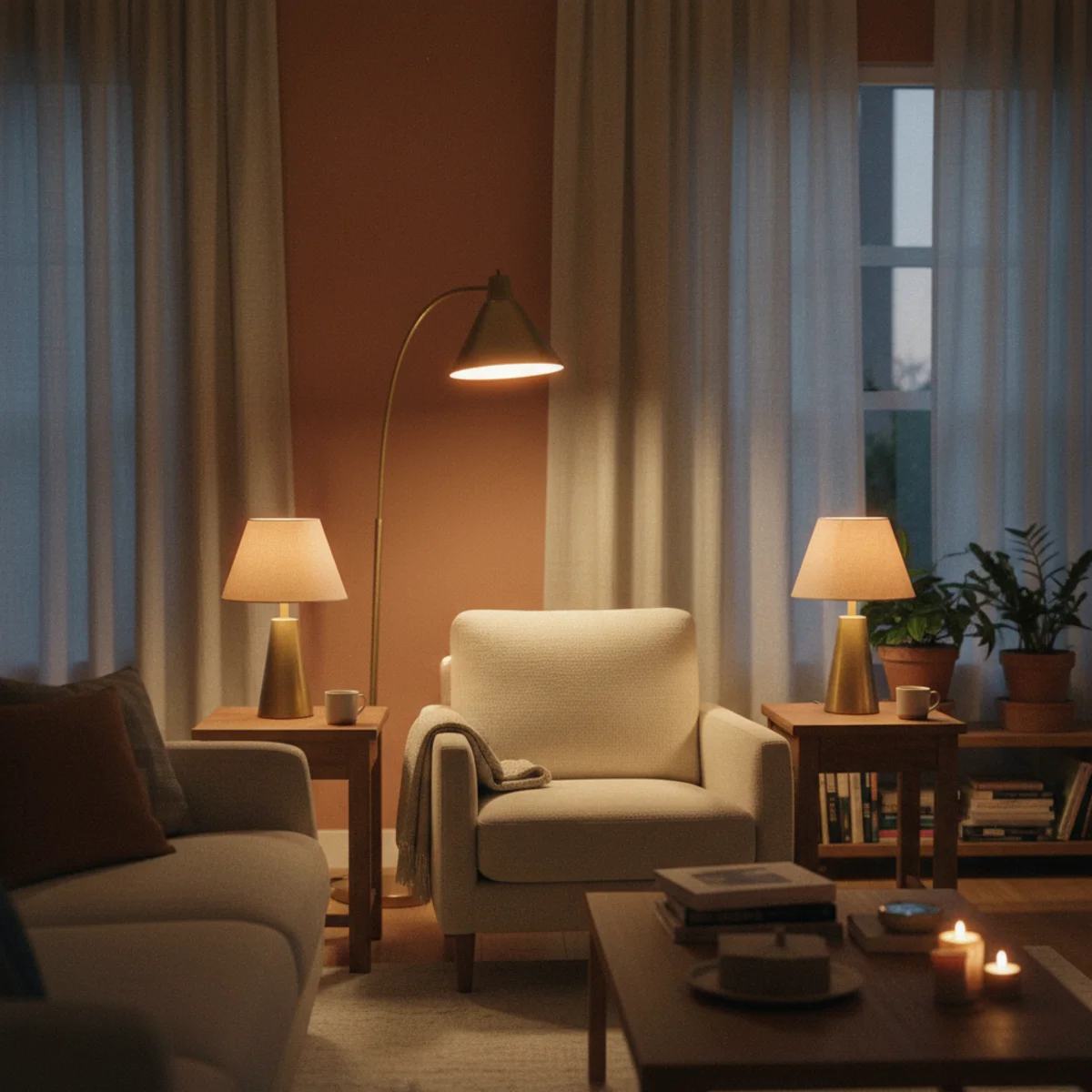
These eight lamp recommendations are organized around one principle: warm light at 2700K is the difference between a room that reads cozy and one that reads commercial. The lamps below are tested against actual price-to-warmth ratios — what you buy at IKEA, what you find thrifted, what you splurge on from Schoolhouse or Cedar & Moss. Every recommendation includes the exact bulb temperature, lumen output, and shade material that determines whether the lamp does its job after sunset.
These guides assume you're starting with overhead lighting (probably 4000K or higher) and want to phase it out in favor of layered warm lamps. The transition takes about six weeks if you do it piece by piece — one lamp per room, then a second, then the overhead finally switches off and stays off. Every lamp here has been used in a real cozy-living-room rebuild, not just photographed for a catalog.
By the end of this guide, you'll know exactly which bulb to buy ($4), which three lamp heights to layer per room, and the vintage brass base under $30 that outperforms most $300 lamps you can buy new.
WHAT'S INSIDE
- The one bulb spec (2700K, 800 lumens) that fixes 80% of cold-room problems
- Why a $20 IKEA lamp with the right bulb beats a $200 lamp with the wrong one
- The thrifted lamp base that consistently shows up at $5 to $30 and looks $300
- The fabric shade material that softens light the way silk and linen used to in old houses
The lamp is the jewelry, but the bulb is the light. Get a warm bulb and a glowing shade, and almost any lamp creates a cozy room.
— Apartment Therapy [citation needed — verify before publish]
What makes a good lamp for warm light?
A good lamp for warm light is really three choices working together: the lamp base (its form, material, and where it sits), the shade (which diffuses or focuses the light), and the bulb (whose color temperature decides whether the light reads warm or cold). All three matter, and most people only think about the first.
The bulb is the most important and most overlooked. A 2700K warm-white bulb is what makes a room cozy; a 4000K or 5000K cool bulb makes the same lamp read clinical. The shade comes second: a parchment, linen, or fabric shade glows softly, while a metal or dark shade focuses light down for tasks. The base is the jewelry — warm metals like brass and ceramic read cozier than chrome, and vintage bases offer the best character and value. Get a warm bulb and a glowing shade, and almost any base works.
More in Shopping Guides you may love
See allWhy warm lamps matter more in 2026
As the warm-home movement made lighting central, people learned that the cold overhead is the enemy of cozy and that several warm lamps are the fix — Pinterest's best lamps and warm lighting searches climb every year, toward vintage bases, warm bulbs, and the layered-lamp approach.
The honest driver is that lighting is the cheapest, highest-impact warmth lever there is, and lamps are how you control it. As warm minimalism and hygge prized low, warm, layered light, the lamp became a deliberate purchase rather than an afterthought — and the secondhand market for brass and ceramic bases grew alongside, since a thrifted base plus a fresh shade and a warm bulb beats most new lamps for a fraction of the price.
The best lamp types and choices, compared
01A 2700K Warm Bulb — The Most Important Choice
Before any lamp purchase, get the bulb right. Color temperature determines warmth more than any other variable — bulb material, lamp price, shade fabric all become secondary if the temperature is wrong. The single fix that transforms most rooms is replacing 3000K or 4000K bulbs (cool, blue-leaning) with 2700K bulbs (warm, candlelight-leaning) across every lamp in the house. Cost: $4 per bulb. Impact: enormous.
Buy 2700K LED bulbs at 800 lumens (60W incandescent equivalent) for living rooms and bedrooms; 400 to 600 lumens for accent lamps and bedside readers. Top picks: GE Reveal HD+ at $4, Philips Warm Glow Dimming (mimics incandescent dim-to-amber behavior) at $7, Cree TW Series at $6. Avoid bulbs labeled cool white, daylight, or 5000K+ for any room used after sunset. Check the box for both the K (color temp) and CRI (color rendering, want 90+). The bulb is a one-time swap; the warmth lasts ten years.
AFFILIATE SLOTBULB2700K LED, 800 lumens (or 400-600 for accent), CRI 90+Add affiliate URL when configuredWhy it works
Because 2700K matches the color temperature of incandescent and candle light — the spectrum the human eye evolved to associate with safety, evening, and rest. Cooler bulbs at 4000K-5000K trigger daytime alertness signals and visually cancel the warm undertones in paint, wood, and textiles. The bulb temperature is the master switch; without it, every other warm-decor decision has to fight the lighting to be felt.
Pro tip — Replace bulbs in batches of 5 to 10 at a time — you'll notice the cumulative warmth far more than swapping one bulb at a time. Buy a multipack of A19 2700K LEDs at Costco ($15 for 10 bulbs) and do the whole house in one evening. The room reads transformed by the next morning.
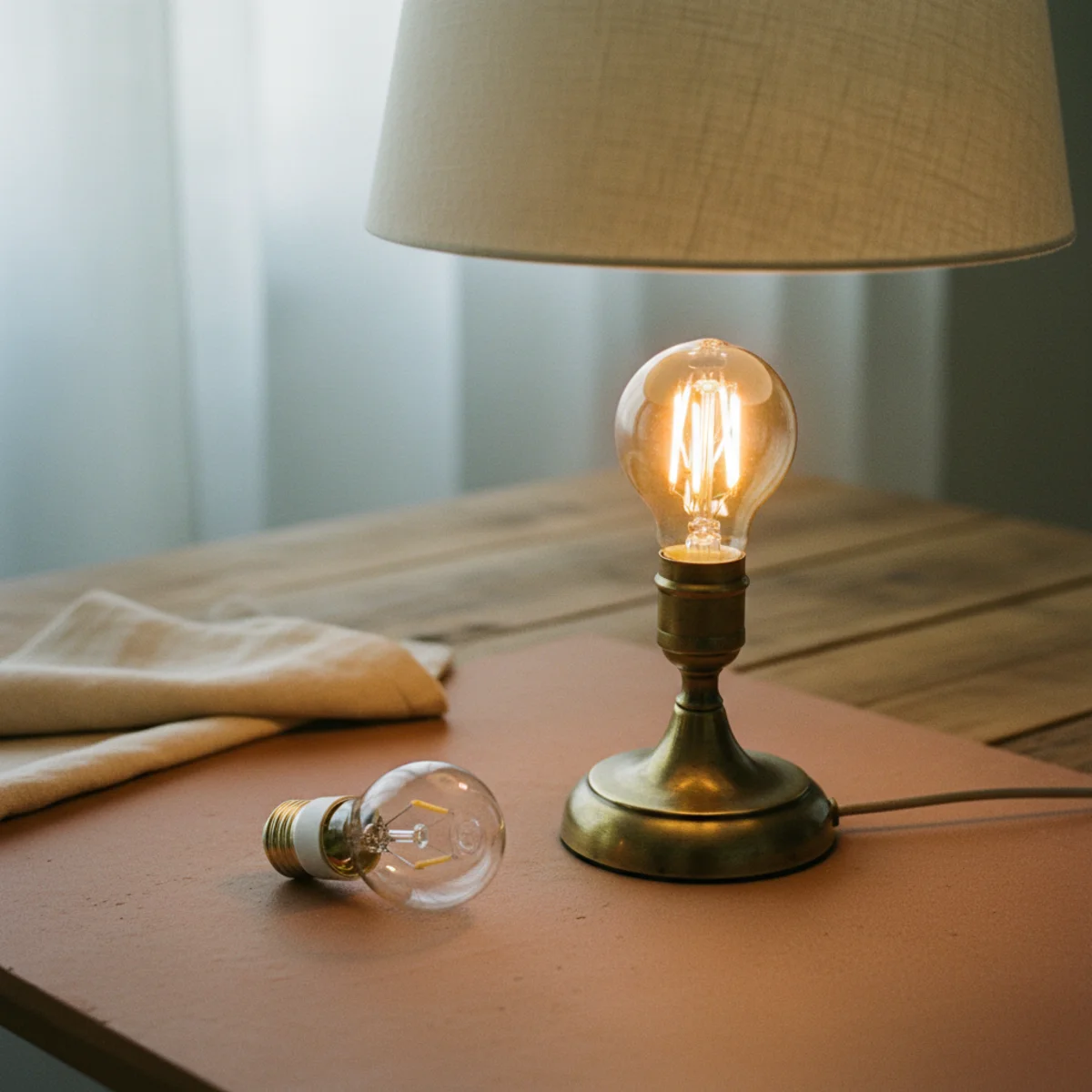
Same lamp, two bulbs — 2700K on the left, 4000K on the right. The bulb is the entire game. See also: GE Reveal HD+
02Table Lamps — The 24-to-28-Inch Workhorse
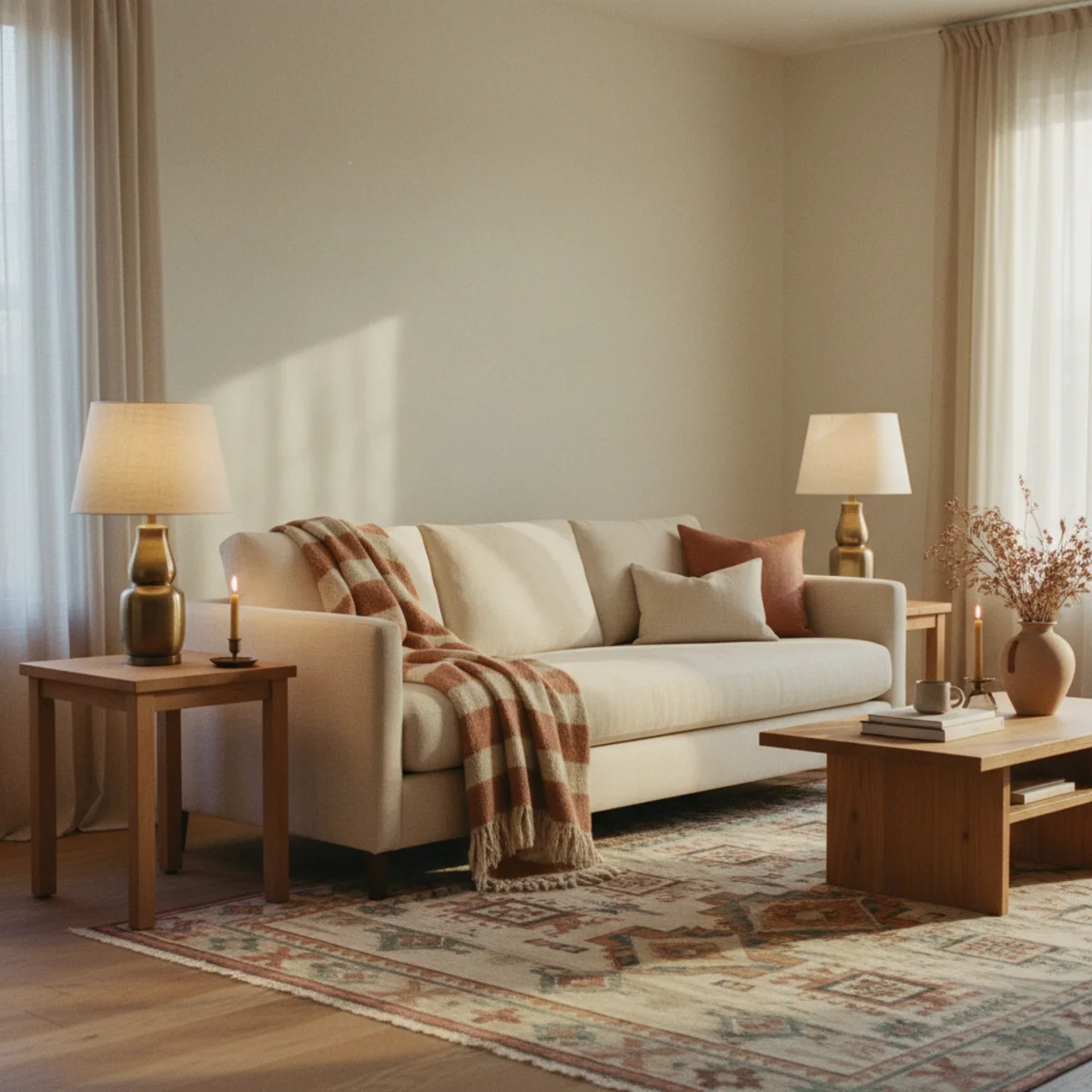
The table lamp is the single most-used lamp category in any cozy home. At 24 to 28 inches tall, placed on a console or side table, it sits at standing eye level and seated shoulder level — exactly where ambient warmth belongs. Two table lamps per main living room is the spec, never just one. The pair anchors the lighting layer and lets the overhead switch off for good.
Aim for 24 to 28 inches total height, with a ceramic, brass, or oak base 8 to 12 inches tall and a linen, paper, or silk drum shade 10 to 14 inches across. Budget pick: thrifted ceramic base at $5 to $20 with new shade at $25 from Lampshades.com. Mid: West Elm Mid-Century at $129, Pottery Barn Classic at $179. Premium: Schoolhouse Princeton at $400+, Cedar & Moss at $300+. Position one on each side of the sofa, or one on a console and one on an entry table. Always wired with the 2700K bulb described above.
AFFILIATE SLOTTABLE LAMP24-28 inch height, ceramic or brass base, linen or paper drum shadeAdd affiliate URL when configuredWhy it works
Because table lamps sit at the height where light most naturally fills a room — high enough to spread across walls and furniture, low enough to feel warm and human-scale. Floor lamps tower; accent lamps stay tucked. Table lamps are the middle layer, the workhorse, the one that does 60 percent of the actual lighting work in any cozy room. Two table lamps in a living room is more transformative than any other single lighting addition.
Pro tip — Match the shade across both table lamps in the same room, even if the bases differ — varied bases with matching shades read as a curated pair, while matching bases with different shades read as mismatched. The shade is the lamp's silhouette; matching silhouettes are what register as a deliberate pair.
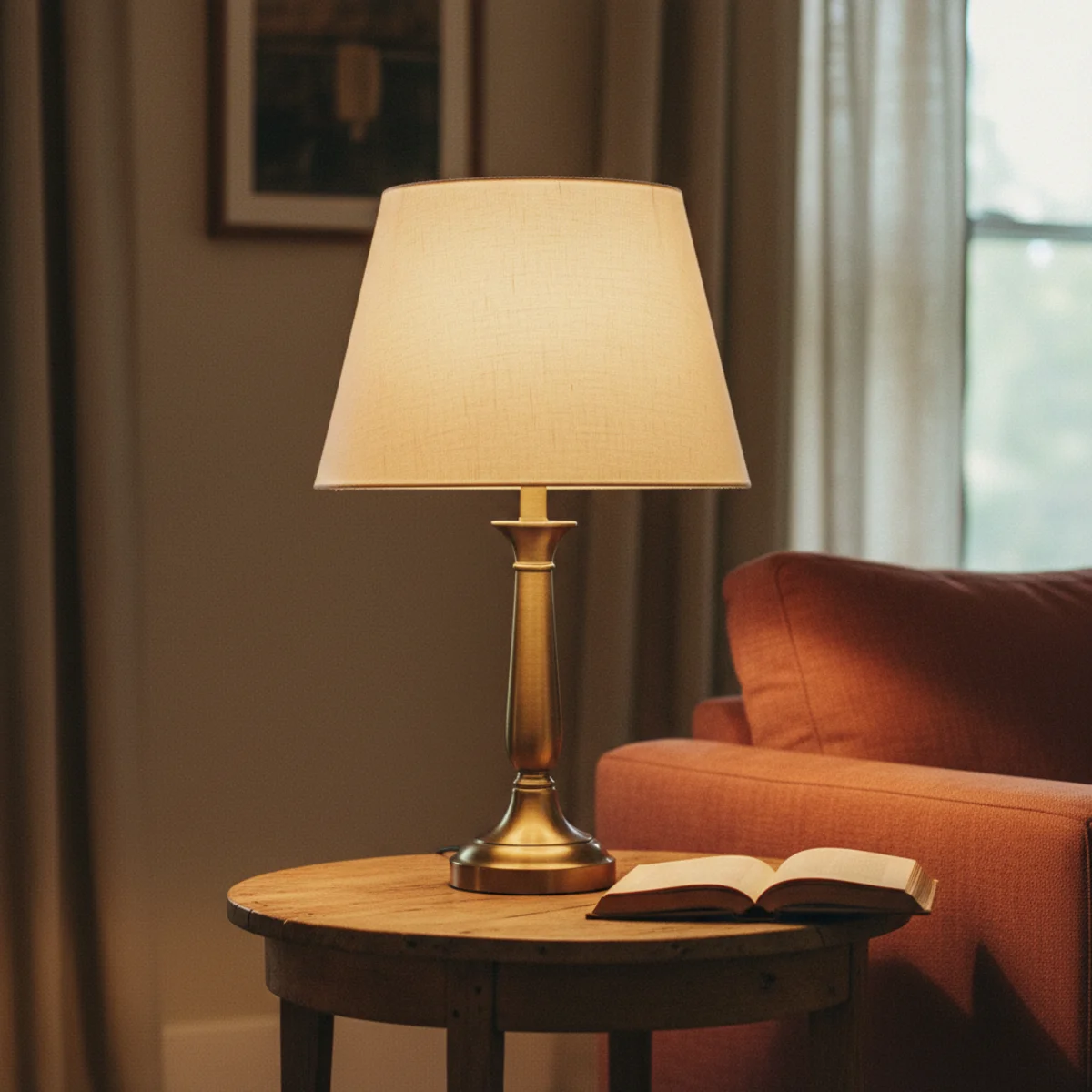
Two table lamps, matching shades, both glowing 2700K — the warmest workhorse layer in any room. See also: thrifted ceramic base
03Floor Lamps — The Tall Layer Above the Seated Eye
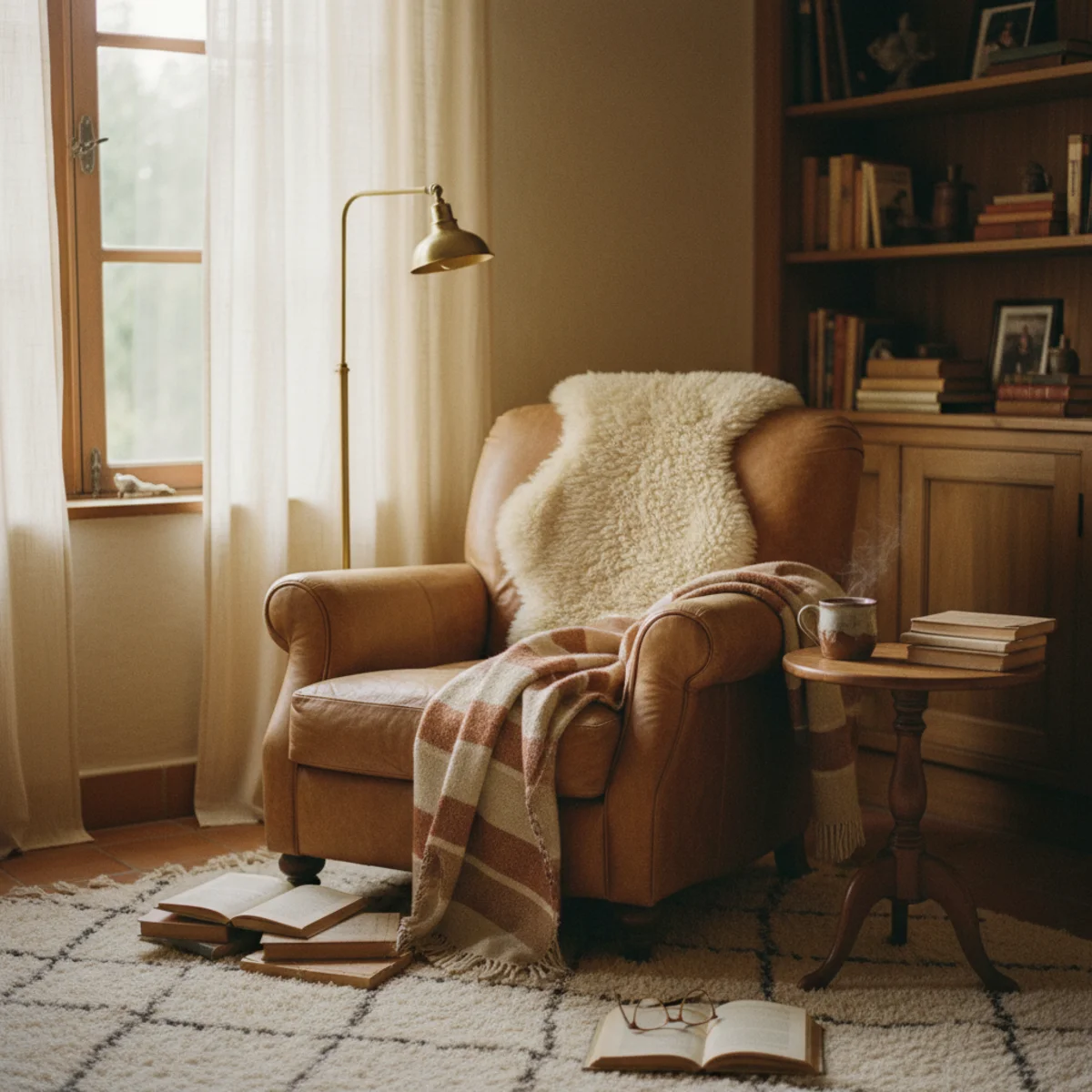
Floor lamps add the vertical light layer that no table lamp can — 58 to 64 inches tall, dropping light from above the seated reader's shoulder. They're the lamp behind the reading chair, beside the sofa, or in the dim corner that the table lamp can't reach. One good floor lamp per room is plenty; two competes. The floor lamp also fills the awkward vertical gap most cozy rooms have between table-lamp height and ceiling.
Look for floor lamps 58 to 64 inches tall, with the bottom of the shade sitting between 40 and 48 inches off the floor — this is the height that drops light onto a book over a seated reader's shoulder. Solid bases (brass, oak, oiled walnut, ceramic) read warm; avoid plastic. Budget: IKEA HOLMÖ paper-shade at $20 (swap bulb), IKEA SVALLET swing-arm at $40. Mid: West Elm Mid-Century at $249, Pottery Barn PB Classic Brass at $399. Premium: Schoolhouse Princeton at $700. Position 6 to 8 inches behind and beside the chair, never in front, never centered against a wall.
AFFILIATE SLOTFLOOR LAMP58-64 inch height, shade bottom 40-48 inches off floor, 2700K 800-1000 lumen bulbAdd affiliate URL when configuredWhy it works
Because 40 to 48 inches is the seated-shoulder-to-head height for adults — drop light from there and it falls onto the page or face without glaring into the eyes. Too low (a table lamp) lights the surface around the reader instead of the page; too high (a pendant) creates overhead glare and harsh shadows on the face. The specific height is what makes floor lamps the right reading and ambient light at the same time.
Pro tip — Look for a floor lamp with a foot-pedal or pull-chain switch rather than a base-button — you can turn it on without bending down from the chair you're already sitting in. The convenience determines whether you actually use the lamp every evening or end up reaching for the overhead.
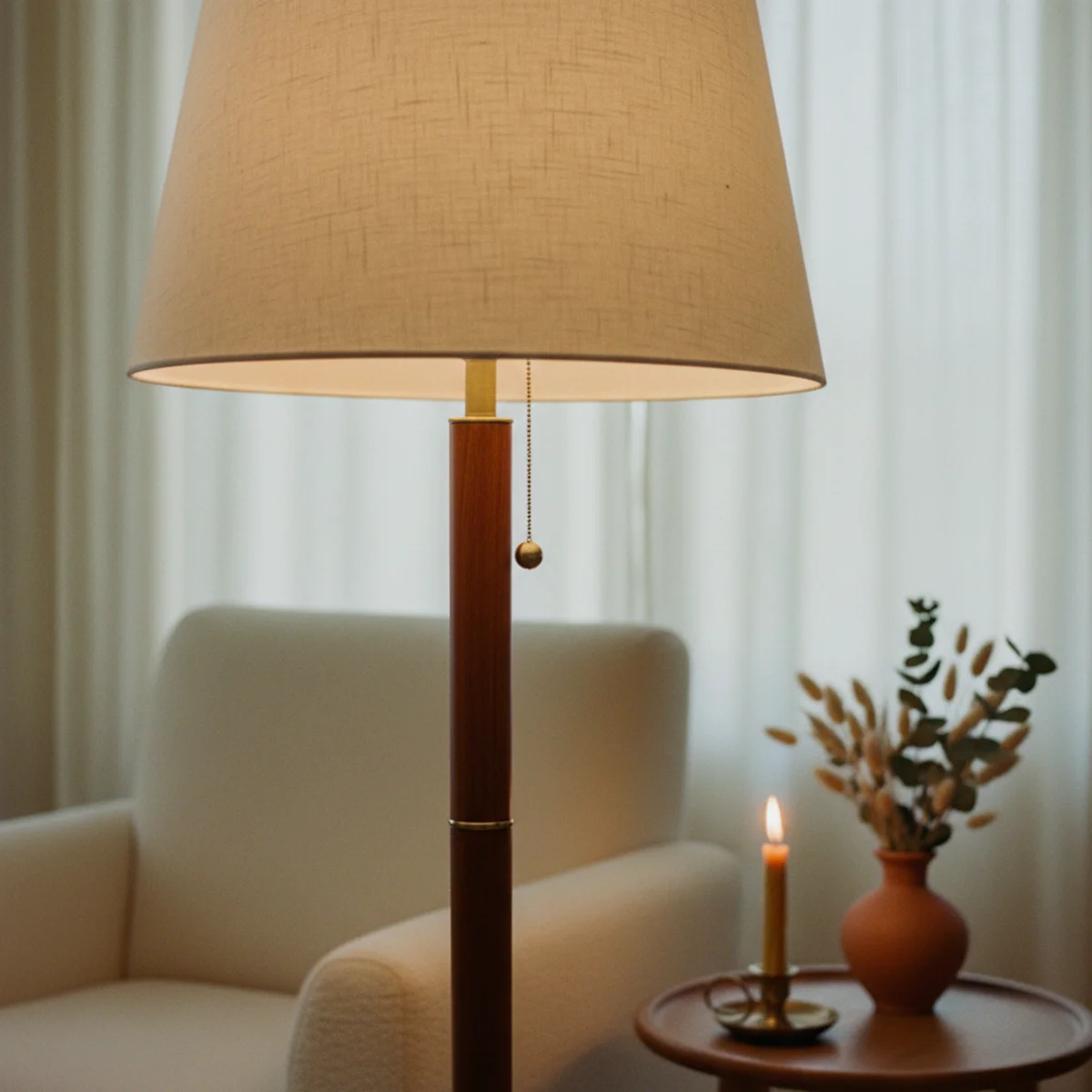
Shade-bottom 44 inches, positioned behind and beside the chair — the floor lamp height that gets reading right. See also: IKEA HOLMÖ
04Vintage Brass and Ceramic Bases — The Best Value in Lamps
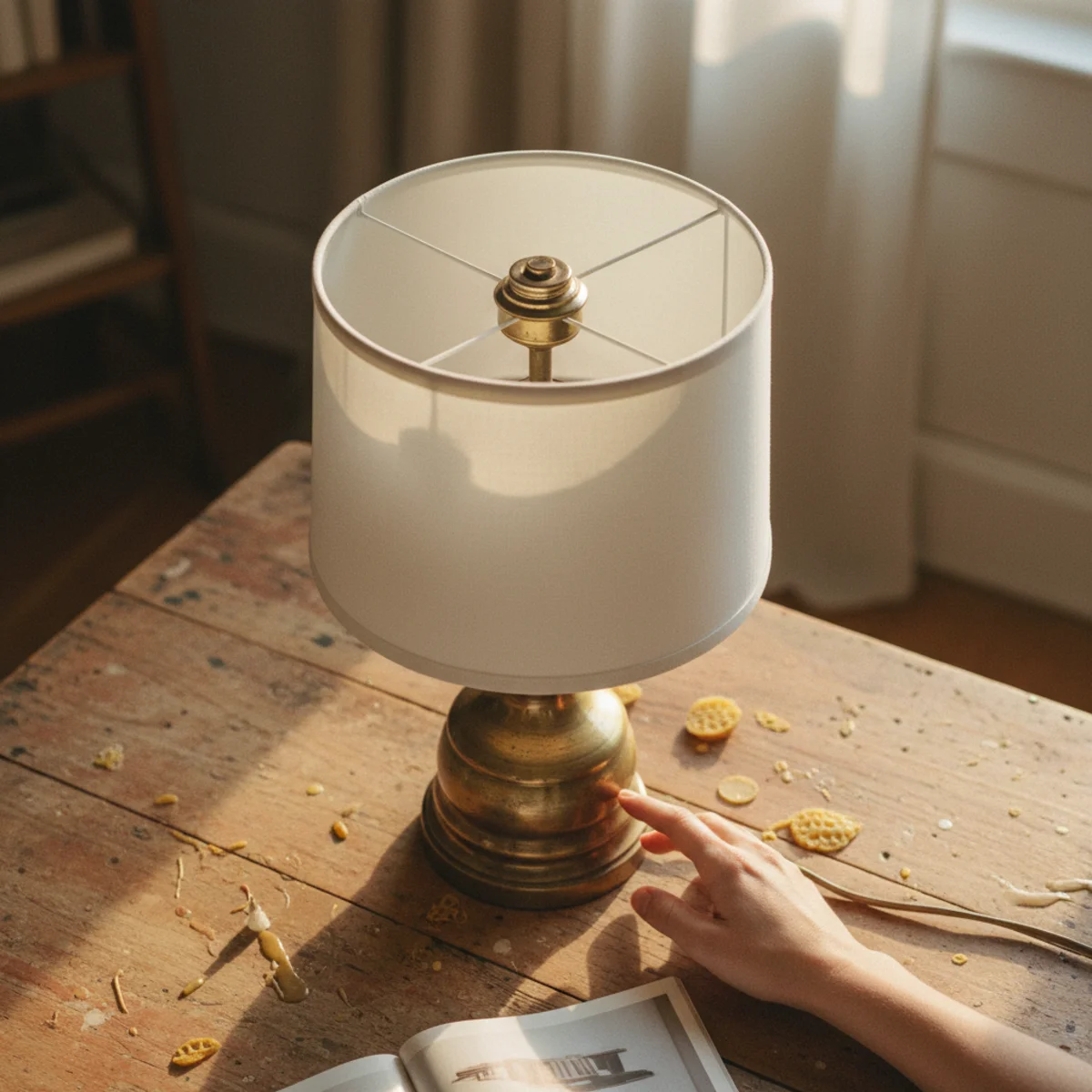
The single best-value lamp category in 2026 is vintage brass and ceramic from the 1960s through 1980s. Estate sales, Goodwill, Marketplace, and ReStore consistently sell heavy, well-made lamp bases for $5 to $30 that visually outperform $300 retail lamps. Most need only a new shade ($25 to $50) and a fresh 2700K bulb to become the best lamp in the room. Look past the dated lampshades that come with them — those go straight in the trash.
Hunt for solid brass, ceramic, oak, or oiled walnut bases at 18 to 24 inches tall (table-lamp size). Test the weight — heavier than expected is good; light feels cheap. Wiggle the harp; if loose, easy fix. Check the cord for cracks; if cracked, easy rewire at $8 in parts. Sources: estate sales (best ratio, $5 to $20), Goodwill ($10 to $25), Marketplace ($15 to $50 with bargaining), ReStore ($10 to $30). Replace the shade with a new linen or paper drum from Lampshades.com ($25 to $50). Total cost of a $300-equivalent lamp: $30 to $70.
AFFILIATE SLOTVINTAGE LAMPSolid brass or ceramic lamp base, $5-$30, plus new $25-$50 linen shadeAdd affiliate URL when configuredWhy it works
Because lamps made in the 1960s-1980s used real solid brass, real heavy ceramic, real oiled hardwood — materials that new $50 to $200 lamps now use plastic and thin-veneer versions of. The vintage base has weight and patina that new lamps simulate but rarely match. Once you've handled three or four heavy brass vintage bases, the lightness of new equivalents reads as cheap immediately.
Pro tip — If the lamp's wiring looks original (cloth-covered cord, brittle plastic), rewire it before using. A complete rewire kit costs $8 and takes 20 minutes — instructions on YouTube. The rewire also lets you add an inline foot-switch or a smart-plug-compatible cord, which is a quiet quality upgrade beyond the original.
$25 from an estate sale, $35 for a new shade — a $60 lamp that beats $300 retail every time. See also: Marketplace
05A Glowing Fabric Shade — The Softener
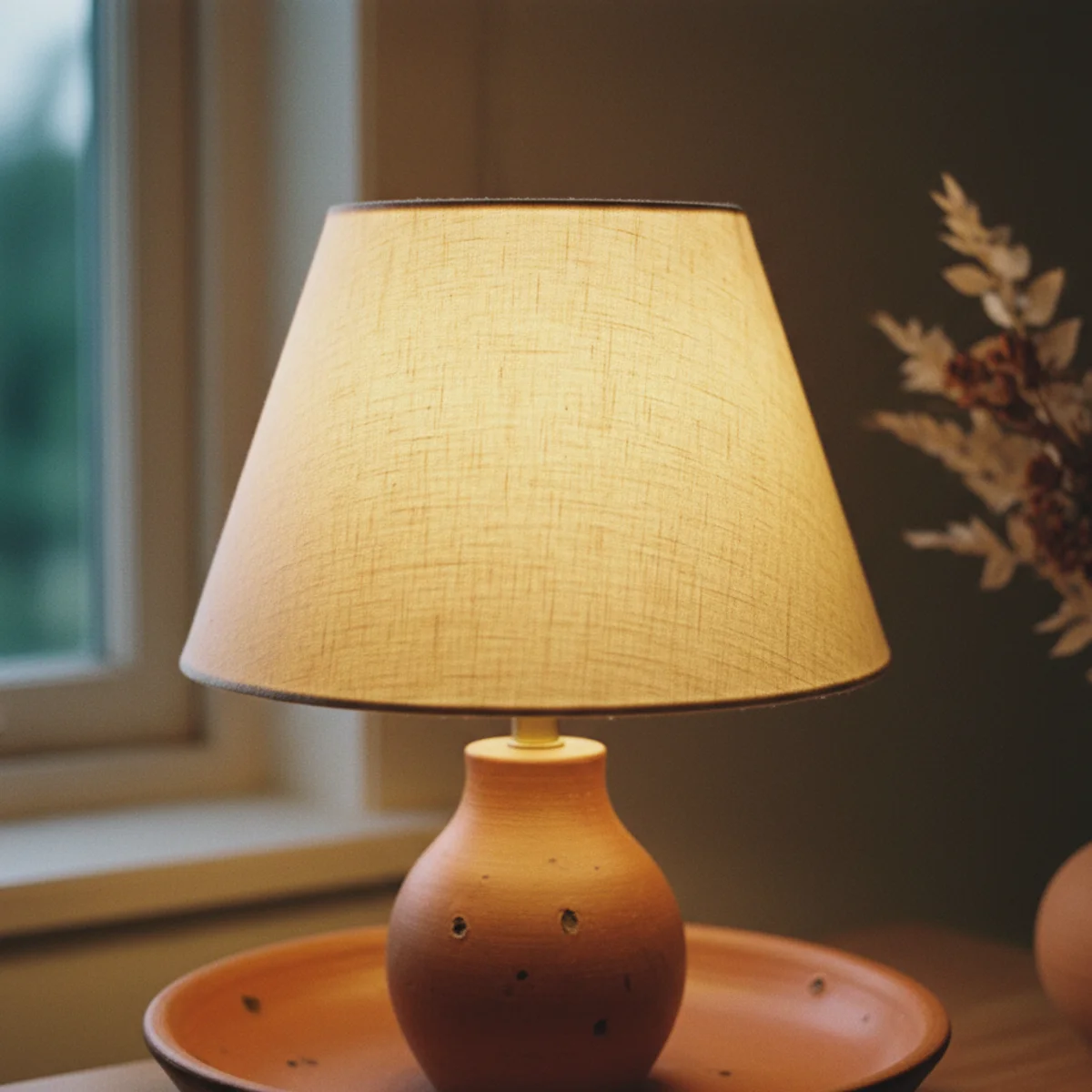
The shade does as much work as the bulb. A fabric shade in linen, paper, silk, or thin cotton diffuses the bulb across its surface, making the whole shade glow rather than spotlighting the bulb behind. Metal, glass, and translucent plastic shades do the opposite — they cast harder edges and let the bulb's hotspot show. Switching one harsh shade to a fabric drum is a $25 fix that transforms how a lamp reads at night.
Choose linen, paper, silk, or thin cotton shades in cream, oat, or warm white. Drum shapes (straight cylinders, 10 to 14 inches across) work for most lamp types. Avoid pleated shades unless very small and elegant — they read dated in 90 percent of contexts. Sources: Lampshades.com at $25 to $80 for custom-fit linen drums; Pottery Barn at $39 to $79; IKEA TARNABY at $15; CB2 at $69 to $129. Test by holding the shade against a bare lamp at night — if you can see the bulb's outline clearly, the shade is too thin or too dark. The fabric should glow evenly across its surface when the lamp is on.
AFFILIATE SLOTSHADELinen, paper, silk, or thin cotton drum shade, 10-14 inches across, cream or warm whiteAdd affiliate URL when configuredWhy it works
Because fabric scatters light through its weave rather than letting it pass through or reflect off — the entire shade becomes a glowing surface, which mimics how candlelight and lantern light feel. Metal shades hide the bulb but create harsh top and bottom light edges; glass shades show the bulb directly and create glare; plastic shades light up unevenly with bright and dark spots. Fabric is the only material that creates the soft, even, diffused glow that cozy rooms need.
Pro tip — Hold any shade you're considering against a bright window during the day — the daylight passing through reveals how the shade will read at night with a bulb inside. If the shade looks evenly bright across its surface, it'll glow beautifully; if it looks splotchy, it'll show the bulb when lit.
The shade itself glows — fabric is the only material that turns a bulb into atmospheric light. See also: Lampshades.com
06Swing-Arm and Task Lamps — The Focused Light
Swing-arm wall sconces, clip lamps, and desk task lamps add focused light where ambient lamps can't reach — beside the bed for reading without lighting the whole room, over the kitchen counter for prep work, at the desk for the laptop. These are the third lighting layer, after table and floor lamps. One or two per home is typical; specific rooms (bedroom, kitchen, office) benefit most.
Three formats: plug-in swing-arm wall sconce ($60 to $200 from Schoolhouse, Hudson Valley, IKEA) mounted 48 to 56 inches above the floor beside the bed or reading chair; clip-on book lamp ($15 to $40 from IKEA JANSJÖ or Anker LumeCube) for spot reading; desk task lamp ($30 to $200 from BenQ, IKEA TERTIAL, or Anglepoise) with adjustable arm for the laptop. All run 2700K bulbs, all aim light toward a specific surface rather than diffusing across the room. Avoid LED strips and harsh task lamps with cool bulbs — they fight the warm ambient layer.
AFFILIATE SLOTTASK LAMPSwing-arm wall sconce, clip lamp, or articulated desk lamp with 2700K bulbAdd affiliate URL when configuredWhy it works
Because task lamps deliver concentrated light to a small surface (a book, a counter, a desk) rather than spreading it across a room — which is exactly what's needed for specific activities but exactly wrong for ambient warmth. The two roles can't be combined; a task lamp doing ambient duty creates harsh focused light, an ambient lamp doing task duty creates dim functional light. Both layers belong in any complete cozy lighting setup.
Pro tip — Choose a swing-arm sconce with a directional pivot rather than a fixed-position one — the angle adjustability matters more than the price. A $60 IKEA SVALLET with full swing range often outperforms a $300 fixed sconce for actual reading and task use, even though the IKEA looks plainer.
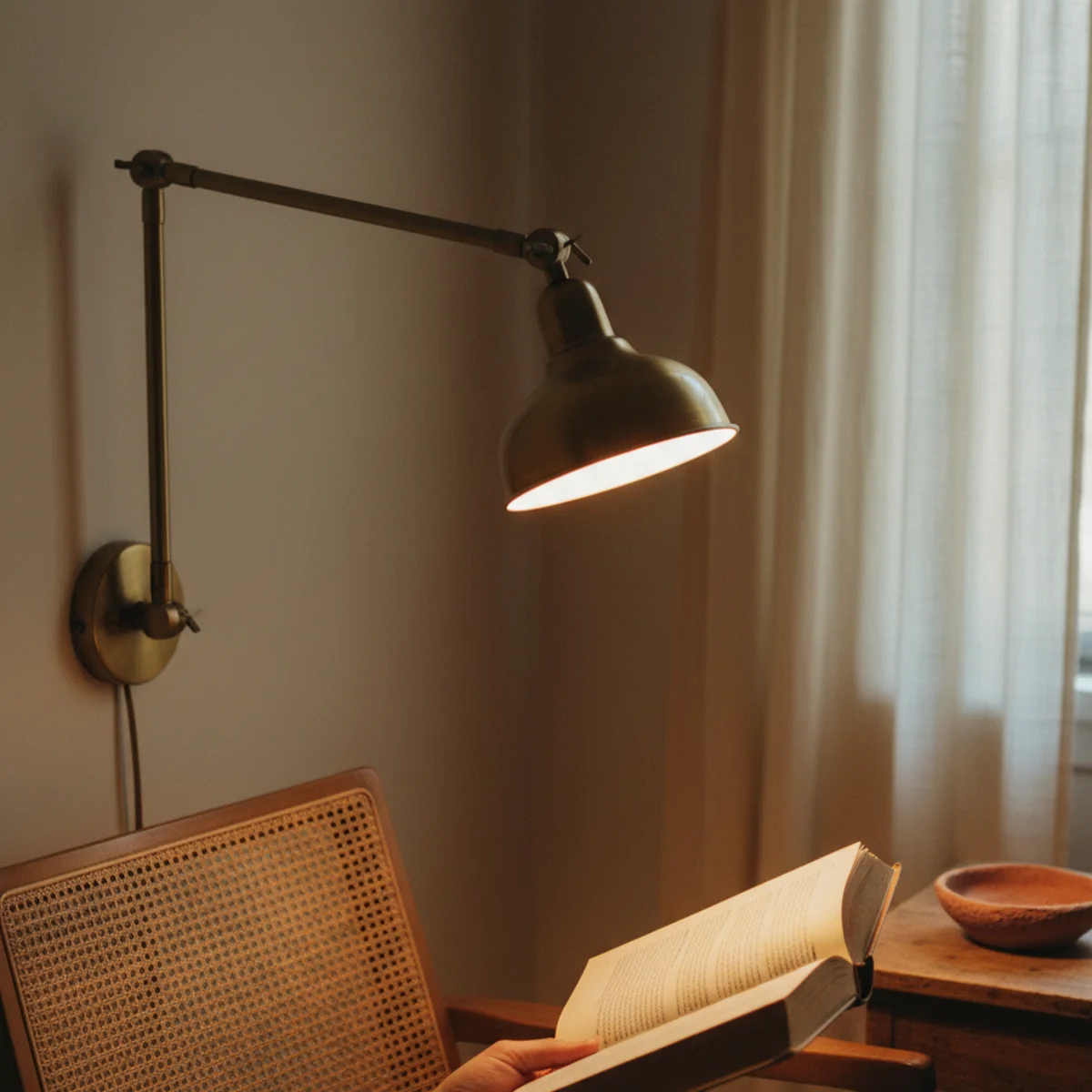
Swing-arm sconce beside the bed — focused warm light without lighting the whole room. See also: wall sconce
07Smart Plugs and Dimmers — The Control Layer
The cozy lighting layer is only as good as its control system. Hard switches force binary on-off decisions; smart plugs and dimmers let lamps fade up and down with the day, turn on automatically at sunset, and dim during evenings without anyone touching a switch. A $15 smart plug and a $20 in-line dimmer per lamp transforms how the lighting feels — and how often you actually use it instead of falling back to the overhead.
Two technologies: smart plugs ($15 each from TP-Link Kasa, Amazon Smart Plug, or Wyze) for on-off automation and schedules; in-line dimmers ($15 to $30 from Leviton or Lutron) for manual brightness control on plug-in lamps. Set smart plugs to turn lamps on at sunset and off at bedtime — the room transitions automatically. Use dimmers on dimmable 2700K LED bulbs to drop brightness in the evening (some bulbs like Philips Warm Glow also dim warmer in color, mimicking incandescent fade). Avoid app-only smart bulbs (Hue, Lifx) that require a phone for every adjustment — wall-pedal control is faster and more reliable.
AFFILIATE SLOTCONTROLTP-Link Kasa or Amazon Smart Plug at $15 + Leviton in-line dimmer at $20 per lampAdd affiliate URL when configuredWhy it works
Because cozy lighting fails primarily because people don't bother to turn on the right lamps every evening — they walk into a dark room, flip the overhead, and that's the night. Smart plugs remove the choice entirely; the lamps come on at sunset whether or not anyone notices. Over a year, the small automation makes the cozy-room transformation actually happen, instead of being a thing you set up once and rarely use.
Pro tip — Set a single smart plug schedule across multiple lamps using Kasa or Smart Life apps — all the living-room lamps come on at sunset together, creating the soft layered glow without anyone touching anything. The synchronized transition reads more atmospheric than turning lamps on individually.
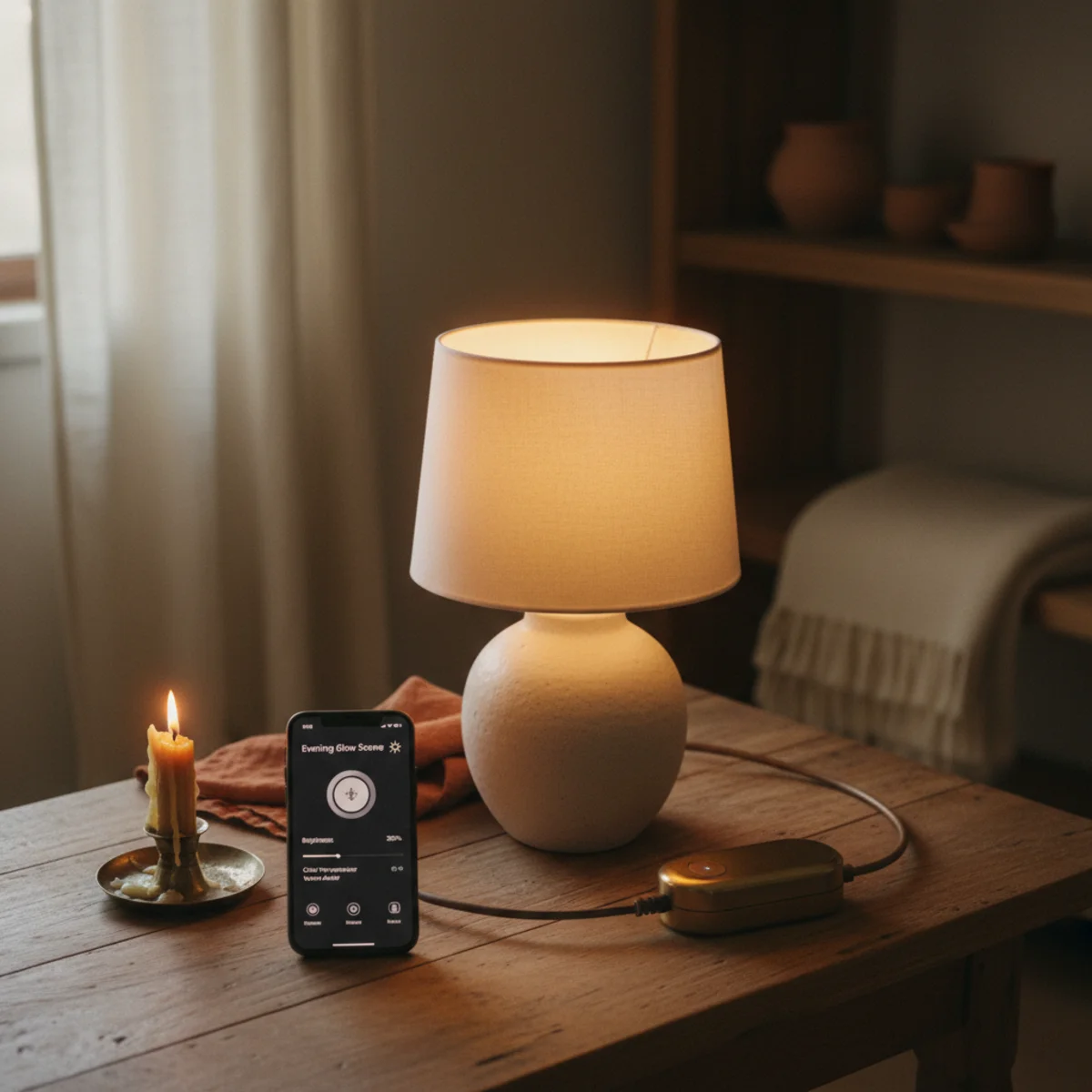
Sunset comes, the lamps come on — the smallest automation that makes cozy lighting actually happen. See also: Kasa
08Skip: Cold Overhead as the Main Light
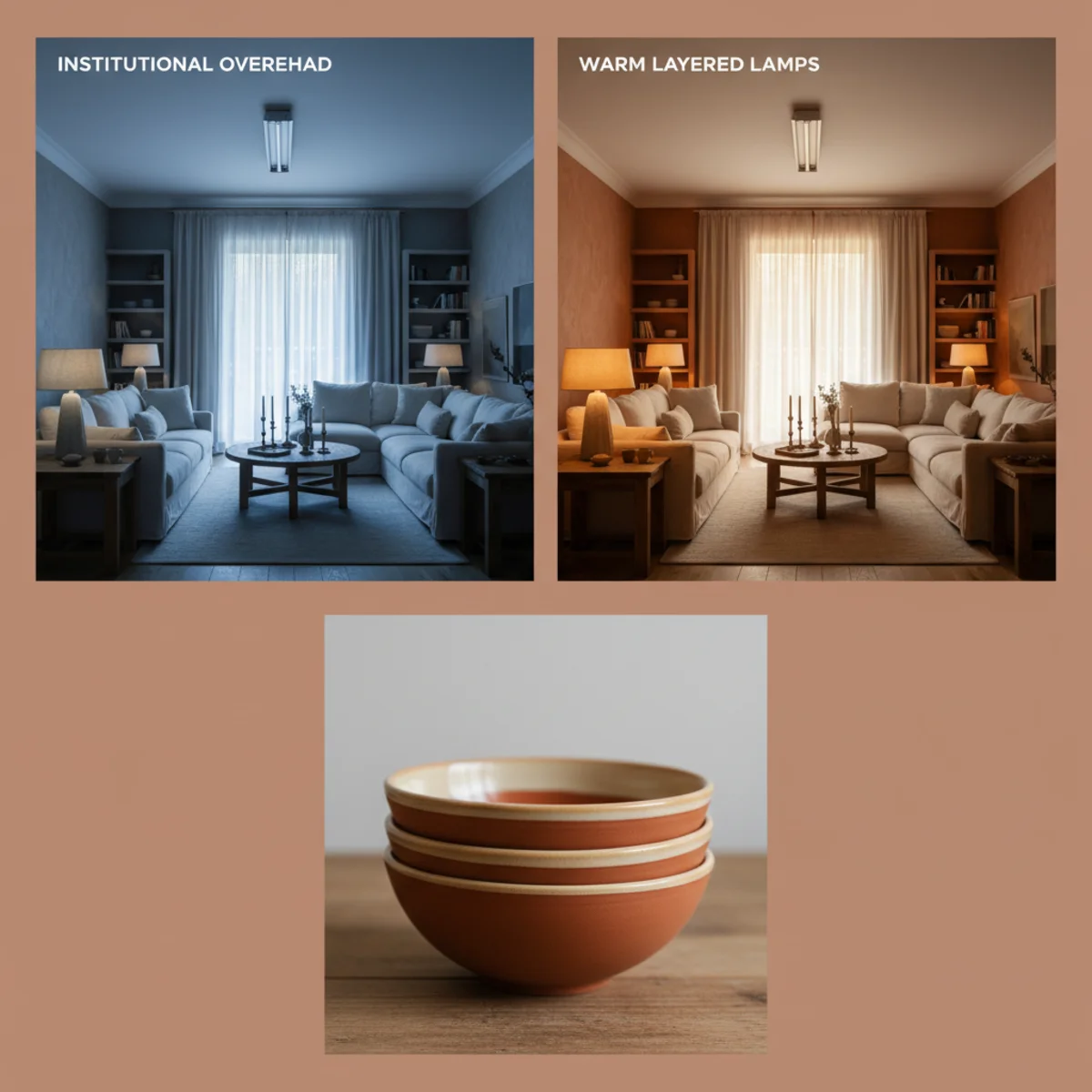
The single biggest lighting mistake in most homes is using the central overhead fixture as the primary light source after sunset. Overheads at standard 4000K-5000K bulbs flatten every warm undertone in the room — paint reads gray, wood reads dull, textiles read commercial. The fix isn't a fancier overhead; it's switching the overhead off permanently after dark and letting three layered lamps do the work. Most rooms need zero overhead light from sunset to bedtime.
Replace overhead use with three layered lamps per room: one floor lamp at 60 inches, one or two table lamps at 24 to 28 inches, one accent or task lamp at 12 to 18 inches. All at 2700K. The combined output is roughly equivalent to a single bright overhead but spread across the room from multiple angles — which is what makes it read warm. If you must use an overhead occasionally (cleaning, finding keys), wire it to a dimmer and run a 2700K bulb in it as a last resort. Better: install a small picture light or sconce for those rare bright moments instead.
AFFILIATE SLOTPRINCIPLEThree layered lamps per room; overhead off after sunsetAdd affiliate URL when configuredWhy it works
Because overhead light comes from one source above, casting harsh shadows downward on faces, furniture, and decor. Layered lamps come from multiple sources at varied heights, creating overlapping pools of soft light that mimic how rooms used to feel before electric ceiling fixtures became standard. The atmospheric difference is the difference between a hotel lobby and a candle-lit dinner — same room, different mood entirely.
Pro tip — Cover any unused overhead switch with a small piece of tape or a switch guard ($3 from Amazon) — the physical barrier prevents anyone in the household from absent-mindedly flipping the overhead on out of habit. After three weeks of guarded switches, the overhead-off habit becomes automatic.
Overhead off, three lamps glowing — the lighting setup that makes a room read warm after dark. See also: three layered lamps
How to choose lamps for a warm room
Think in three parts — base, shade, bulb — and layer several. Work in this order.
- 1Start with the bulb
Put a 2700K warm-white bulb in every lamp. This is the single most important choice and the most overlooked — it decides whether the light reads cozy or cold.
- 2Choose glowing shades
Use parchment, linen, or fabric shades that diffuse light into a soft glow, except where you want focused task light from a metal or dark shade.
- 3Pick warm-toned bases
Choose brass, ceramic, or warm-wood bases over chrome, and check vintage first — a thrifted base plus a fresh shade beats most new lamps for the price.
- 4Layer several at low height
Use multiple lamps — table and floor — at different low heights instead of one overhead, and add dimmers or smart plugs for control.
Quick tips
- Put a 2700K warm-white bulb in every lamp; it's the most important and most overlooked choice.
- Choose parchment or fabric shades that glow over metal or dark shades that focus down.
- Check vintage first — a thrifted brass base, rewired, with a fresh shade beats most new lamps.
- Layer several lamps at low height instead of relying on a cold overhead.
- Add a smart plug or dimmer so lamps switch on at dusk and dim at night.
- Pairs of table lamps read balanced and calming, especially in a bedroom.
The best lamp by use
A pair of warm table lamps on smart plugs; see our master bedroom guide.
A floor or swing-arm lamp that drops light over the shoulder onto the page.
Several warm-bulb table and floor lamps with glowing fabric shades, layered at low height.
A thrifted brass or ceramic base, rewired, with a fresh shade and a 2700K bulb.
The lamp is the jewelry, but the bulb is the light. A warm bulb and a glowing shade make almost any lamp cozy.
Frequently asked questions
What's the best bulb for warm cozy lighting?+
How many lamps should I have in a living room?+
Are vintage lamps better than new ones?+
What lampshade material works best for warm light?+
Should I use smart bulbs or smart plugs?+
Can I use my existing overhead light at all?+
Lamps are how you control the biggest lever for a cozy room — light — but the lamp is only a third of the equation. Get the bulb right (2700K, always), choose a glowing fabric shade, and pick a warm-toned base, checking vintage first. We'd put a warm bulb in every lamp and add a thrifted brass base before buying anything new; a nine-dollar estate-sale base with a fresh shade and a warm bulb beats most new lamps and lights a room like a held breath. The lamp is the jewelry. The bulb is the light.