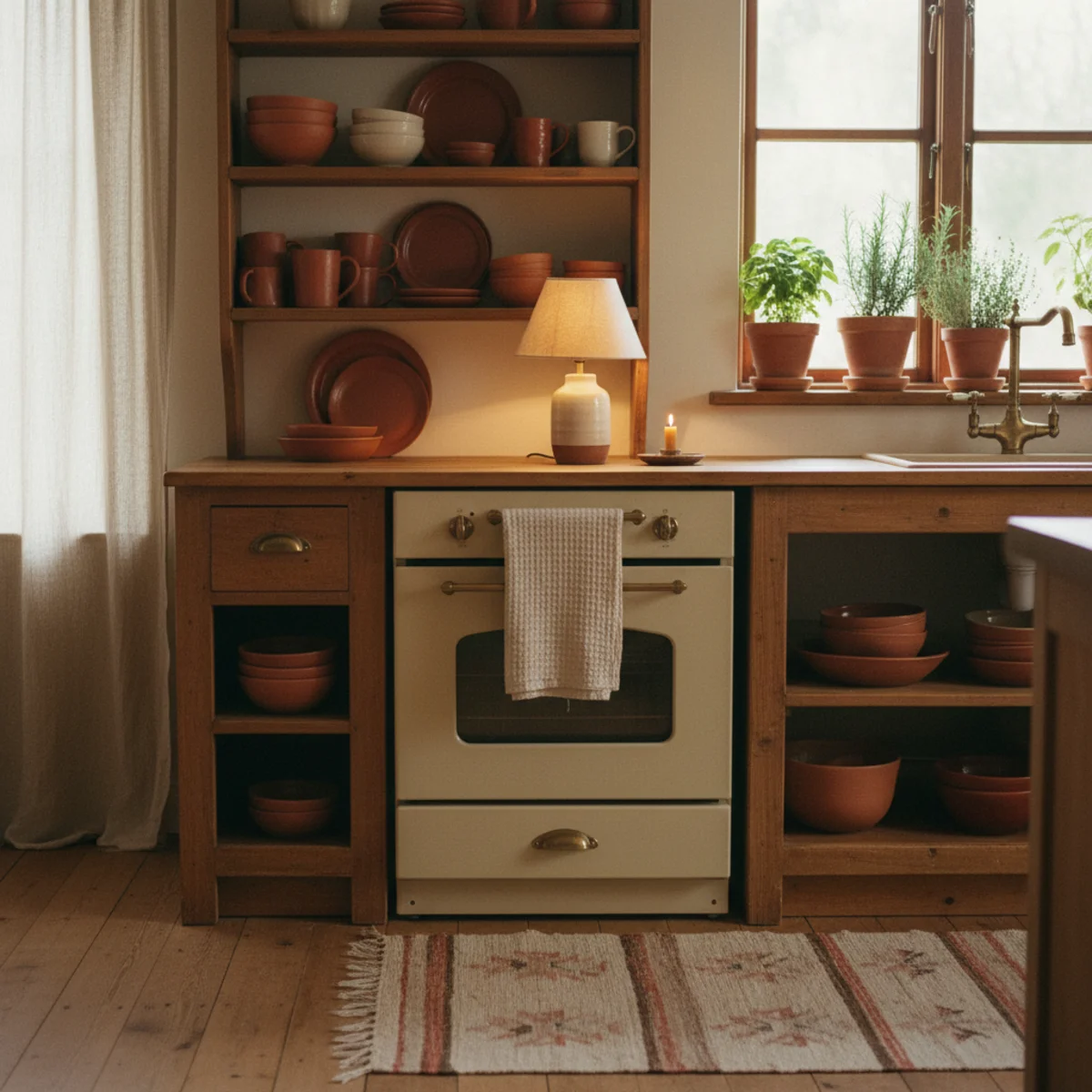
These twelve cozy-kitchen ideas are tested in actual rental and owned kitchens — galley kitchens under 60 square feet, U-shaped suburban kitchens at 120 square feet, open-plan combinations integrated with living rooms. Most are renter-friendly (no renovation), almost all cost under $80 each, and every move below names the exact material, dimension, and source that consistently delivers warmth without sacrificing function.
Kitchens fight cozy harder than any other room — the function (cooking, cleaning, food prep) requires bright task light and easy-clean hard surfaces, both of which read clinical by default. The fix isn't dimming the kitchen into uselessness; it's layering small warmth signals on top of the functional core. A warm lamp in the corner, a wool runner underfoot, open shelves displaying earthenware — none compromise function, all transform the room's emotional register.
By the end of this guide, you'll know exactly how to add open shelving without renovation, the one corner lamp that transforms how the kitchen reads after dinner, the wool runner that softens the morning floor, and the herbs on the windowsill that make any kitchen feel inhabited.
WHAT'S INSIDE
- The open shelving above the counter that any renter can install in 90 minutes
- Why a small lamp on the kitchen counter does more than any pendant upgrade
- The wool or jute runner that turns hard floors into warm feet daily
- The free decor source that no other room can match — produce in a wooden bowl
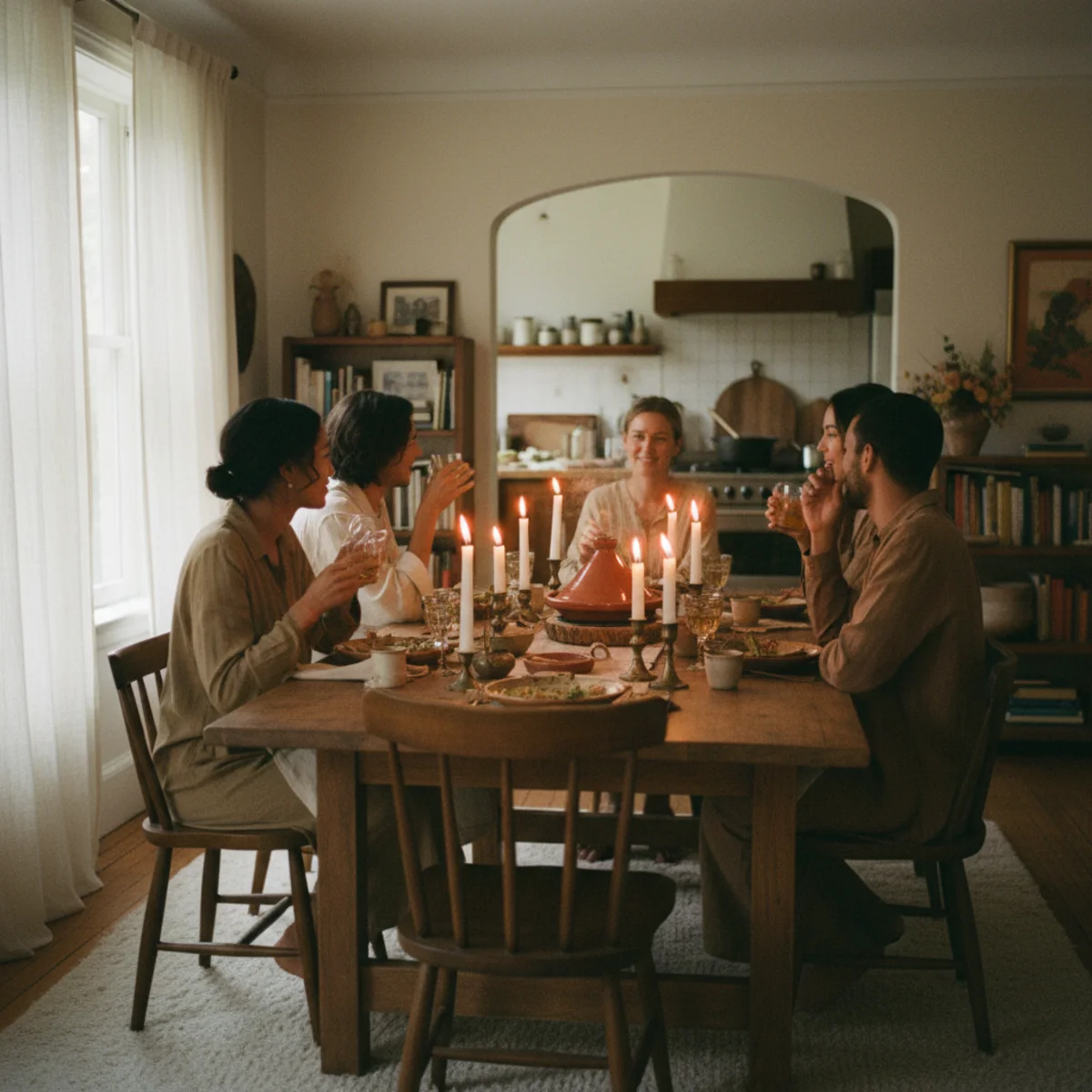
The kitchen is where everyone gathers, so it should feel like a room, not a lab. Wood, soft light, and the things you actually use make it warm.
— House Beautiful [citation needed — verify before publish]
What makes a kitchen cozy?
A cozy kitchen layers warmth into a functional space through natural materials, soft lighting, displayed useful objects, and small comforts — open shelving with earthenware, warm wood, a runner underfoot, herbs on the windowsill, and a lamp for soft light. It's the difference between a kitchen that feels like the gathered heart of the home and one that feels like a clinical work zone.
The defining move is treating the kitchen like a room rather than purely a workspace. Soft, warm light instead of harsh overheads; the everyday dishes and tools displayed on open shelving rather than hidden; wood, woven baskets, and a runner to add the textures kitchens usually lack. Even a small lamp on the counter transforms the feel. You keep all the function, but you add the warmth that makes people want to linger — which, in the room where everyone gathers, is the whole point.
More in By Room you may love
See allWhy cozy kitchens are everywhere in 2026
As kitchens became the true center of casual, gathered home life, people wanted them to feel warm rather than clinical — Pinterest's cozy kitchen and kitchen decor searches climb every year, toward open shelving, warm wood, and lived-in styling over sleek all-white.
The honest driver is that the kitchen is where everyone actually gathers, and the cold, all-white, hard-surfaced kitchen of the 2010s started to feel unwelcoming. As the warm-home aesthetic spread, it reached the kitchen last and hardest: open shelving with earthenware, warm wood, soft lighting, and displayed useful objects turned the work zone into a room people linger in. The 2026 cozy kitchen keeps the function but adds the warmth that the sleek version lost.
28 cozy kitchen ideas
01Add Open Shelving Above the Counter
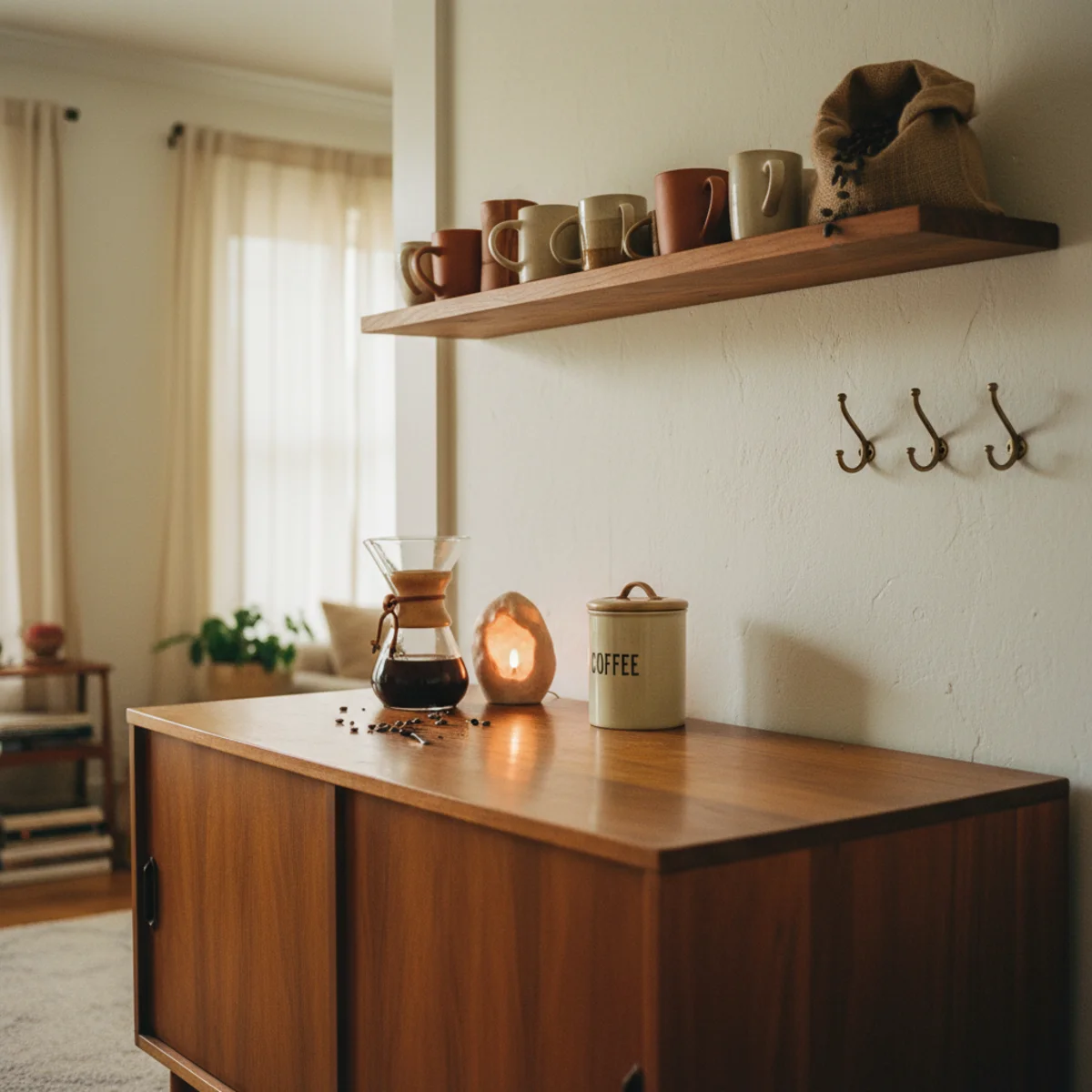
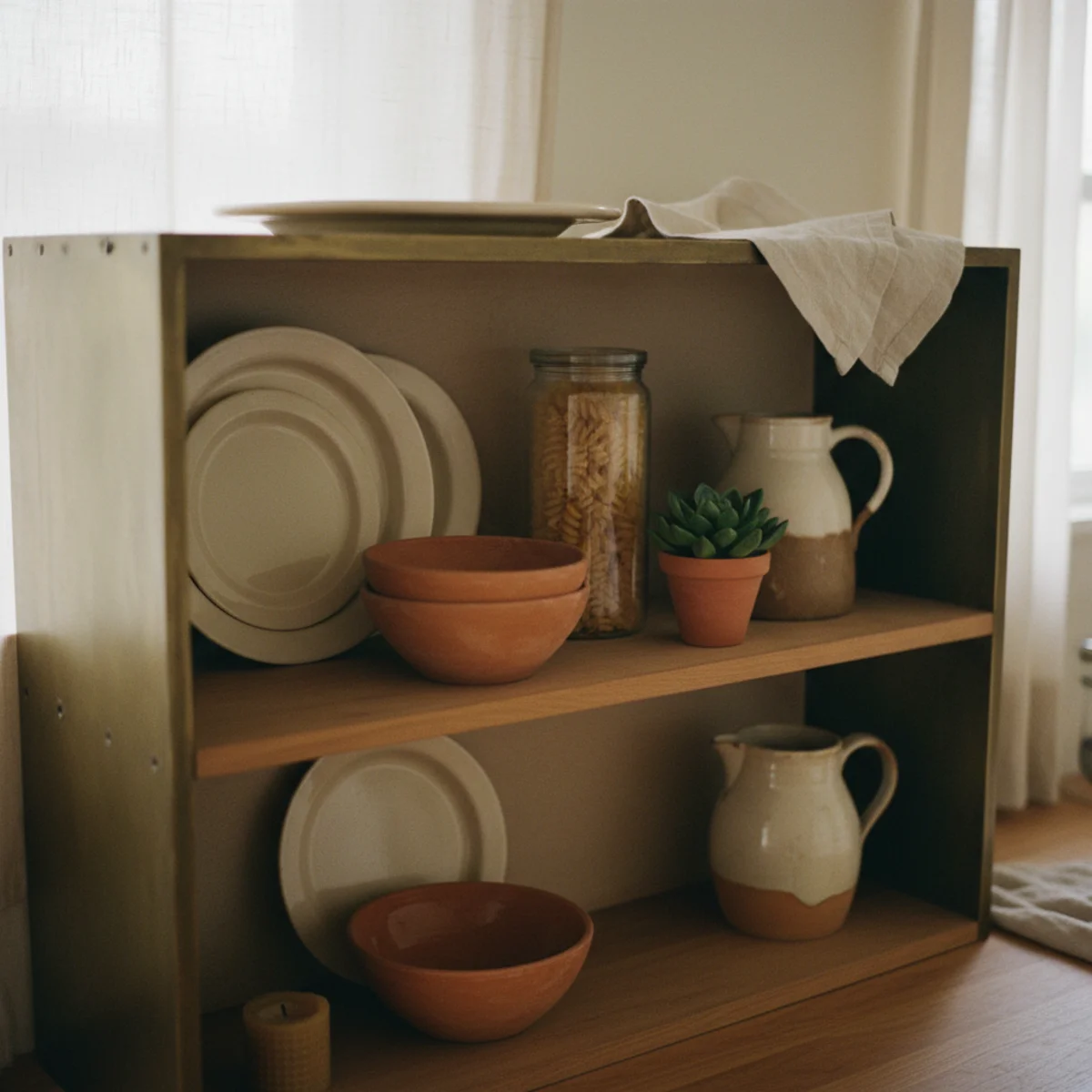
Closed upper cabinets dominate most kitchen walls — and they're the single biggest visual barrier to a cozy kitchen. The fix is replacing one or two upper cabinets with open shelving, or installing a single open shelf above a counter section that doesn't currently have cabinets. The open shelf displays mugs, ceramics, and small decor, breaking up the wall of closed cabinet doors and adding the warm-home styling layer kitchens rarely have.
Two approaches: REMOVE one or two upper cabinets entirely (rental-friendly if you keep the doors) and install a single 1x8 oak or walnut shelf at $30 to $50 per shelf using floating shelf brackets ($15) — 90 minutes per shelf. ADD a new shelf where no cabinet exists (above the coffee bar zone, beside the stove, above the sink) using the same materials. The shelf should be 24 to 48 inches wide, 8 to 12 inches deep, mounted 18 to 24 inches above the counter. Style with mugs hung underneath on hooks, 3 to 5 ceramic objects on top, one small framed piece leaning. Oil the wood for warm matte finish (per the diy-home-decor-ideas guide).
AFFILIATE SLOTSTORAGESingle 24-48 inch oak or walnut open shelf above counter, 8-12 inches deepAdd affiliate URL when configuredWhy it works
Because closed upper cabinets dominate the visual upper half of every kitchen — typically 3 to 5 feet of solid cabinet door across multiple walls, which reads as a continuous flat barrier. Open shelving breaks up that barrier and adds depth (you can see into the shelf, not just at the closed door), texture (mugs, ceramics, wood), and personality. The same kitchen with one closed cabinet replaced by open shelving reads as a different room.
Pro tip — If you rent and can't remove cabinets, install one open shelf on a wall section that currently has no cabinet at all — most kitchens have at least one 24-inch wall section between cabinets or above a coffee-bar zone that's blank. The single added shelf costs $40 in materials and 90 minutes, and the wall transformation reads dramatic without altering any existing built-in storage.
One oak open shelf above the counter — the move that breaks the closed-cabinet wall and adds warm-home styling. See also: DIY oak shelf
02Put a Small Lamp on the Counter
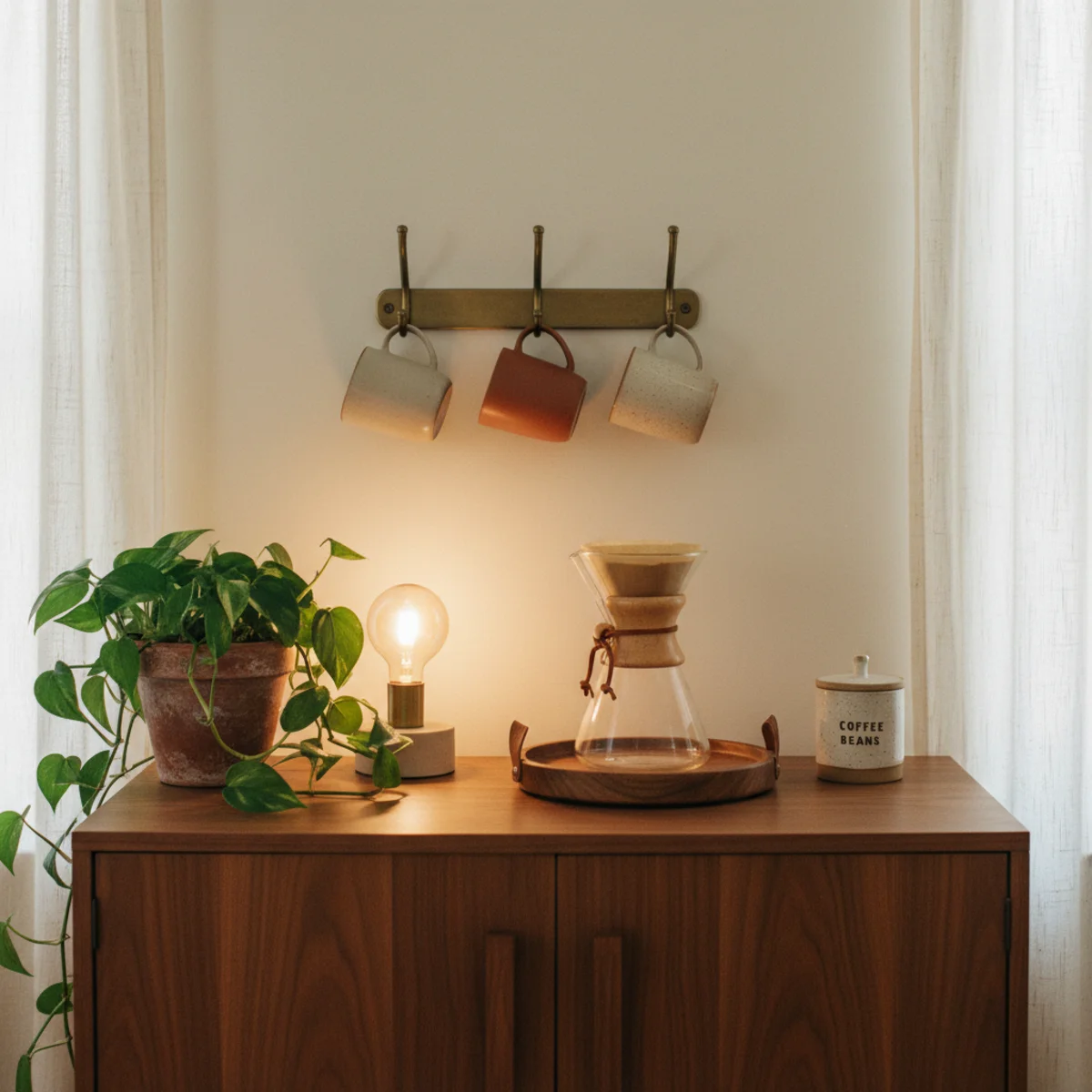
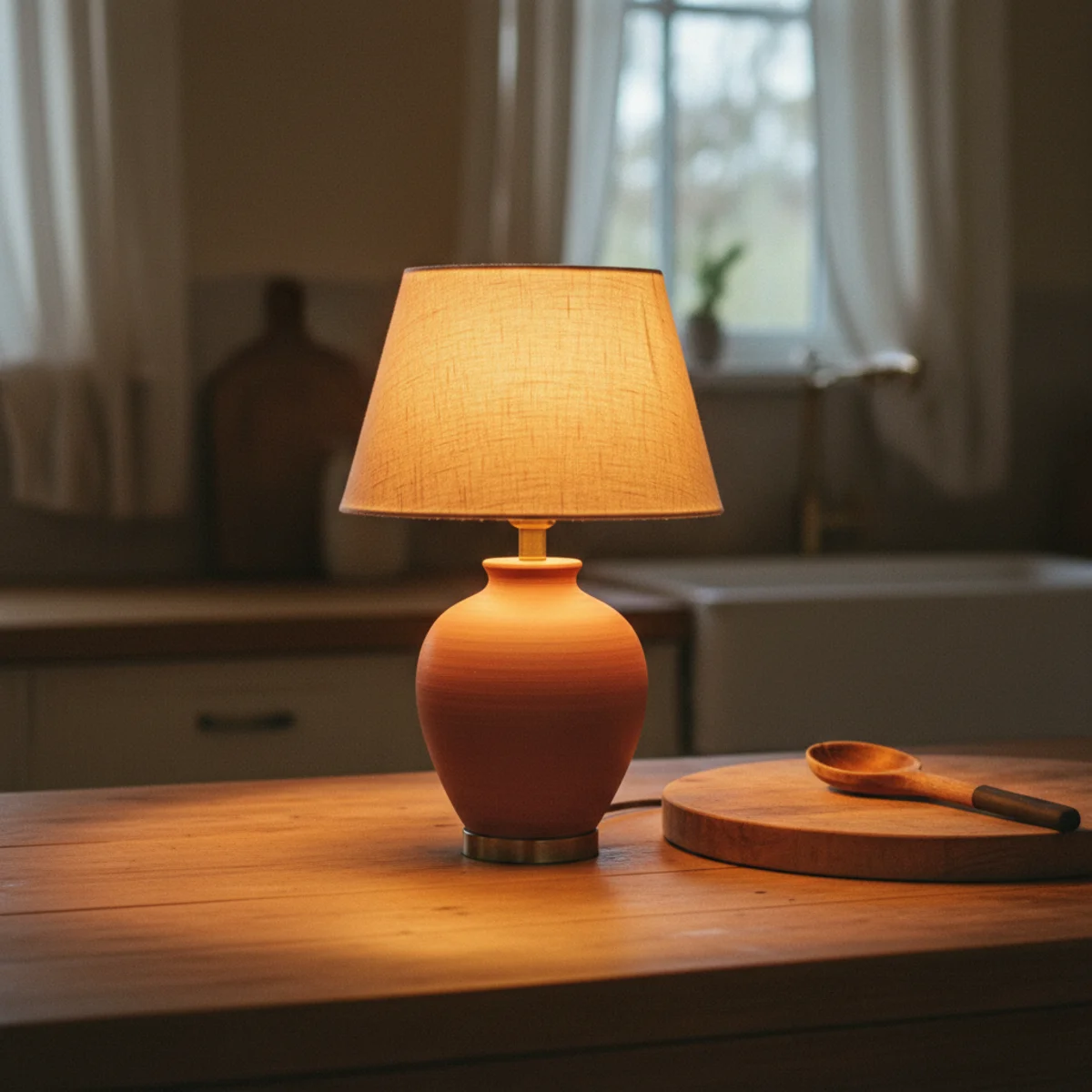
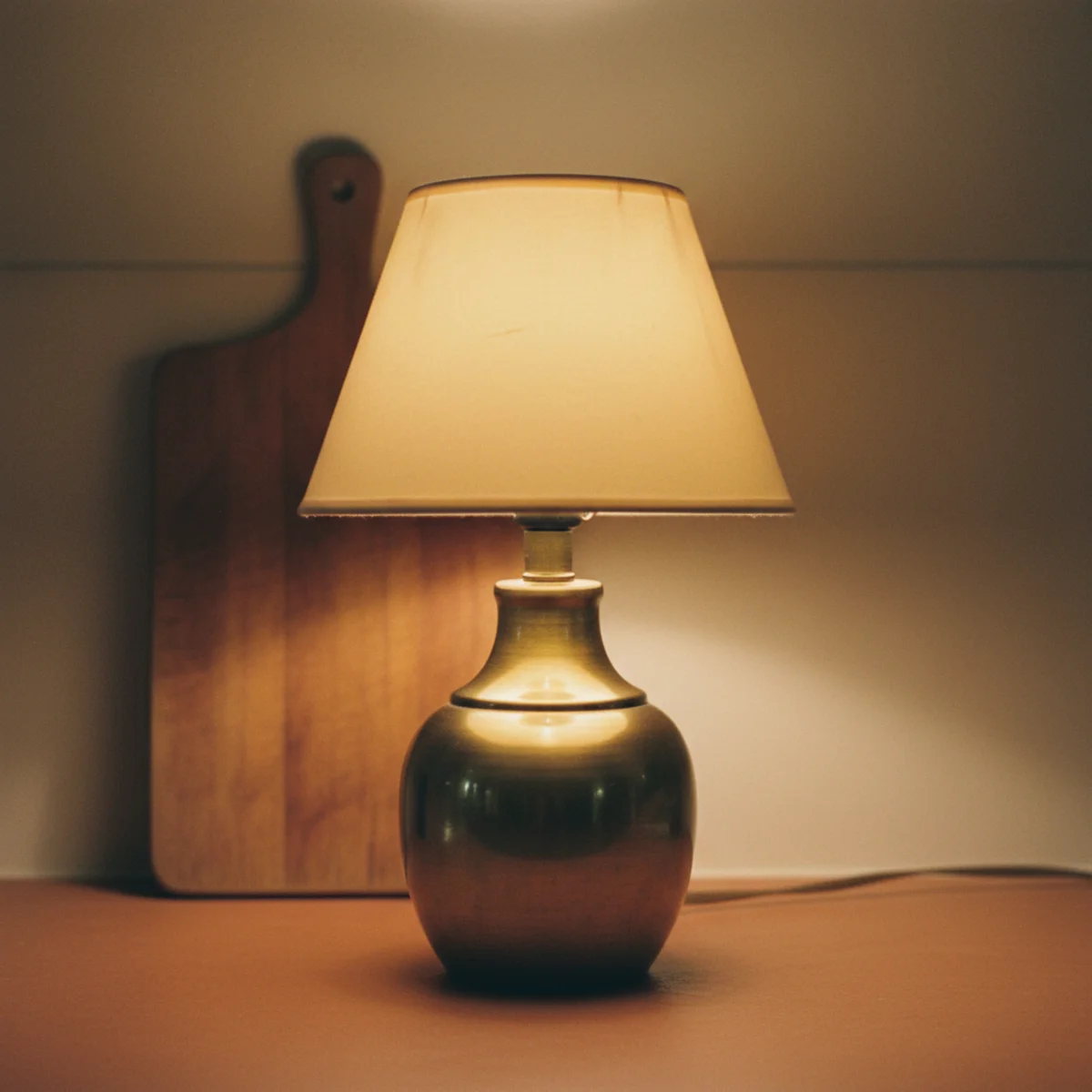
Kitchen lighting is universally functional and rarely cozy — bright overhead fixtures, harsh under-cabinet LEDs, no atmospheric layer. The single transformative move is adding a small table lamp on the counter, with a 2700K warm bulb, in the corner near the coffee bar or beside the windowsill. The lamp creates the atmospheric pre-dawn and post-dinner light that no overhead can provide, and the kitchen reads cozy at the times it needs to most.
Choose a small lamp 18 to 26 inches tall with a brass, ceramic, or oak base and a linen or paper shade. Bulb: 2700K LED at 400 to 600 lumens (warmer and dimmer than living-room lamps). Sources: thrifted brass lamp at $20 to $40, IKEA SVALLET clip lamp at $15, West Elm small ceramic at $79. Position in a counter corner near a power outlet — typically beside the coffee bar zone or near a windowsill. Wire to a smart plug timed to turn on at sunset and off at bedtime. The kitchen reads transformed for the cost of $30 to $80 plus $15 in smart plug.
AFFILIATE SLOTLIGHTINGSmall counter lamp 18-26 inches with 2700K bulb at 400-600 lumens, smart plug to sunsetAdd affiliate URL when configuredWhy it works
Because the small lamp adds the warm atmospheric layer that overheads structurally cannot provide — overheads cast light from above the head, while the counter lamp casts light from beside and slightly above, creating the soft glow that makes kitchens read cozy. The counter lamp also works at different times than the overhead: pre-dawn coffee, post-dinner cleanup, late-evening snack — all moments when the bright overhead is too much but darkness is too little. The small lamp fills that gap.
Pro tip — Position the lamp at the back of the counter so the light spills forward across the working surface — bulb hidden behind the shade, light catching the surrounding wall and countertop. The setup gives both atmospheric ambient and just-enough task light for casual food prep without flipping the overhead on.
One small lamp on the counter, warm bulb on smart plug — the atmospheric layer no overhead can provide. See also: 2700K LED
03Lay a Runner Underfoot
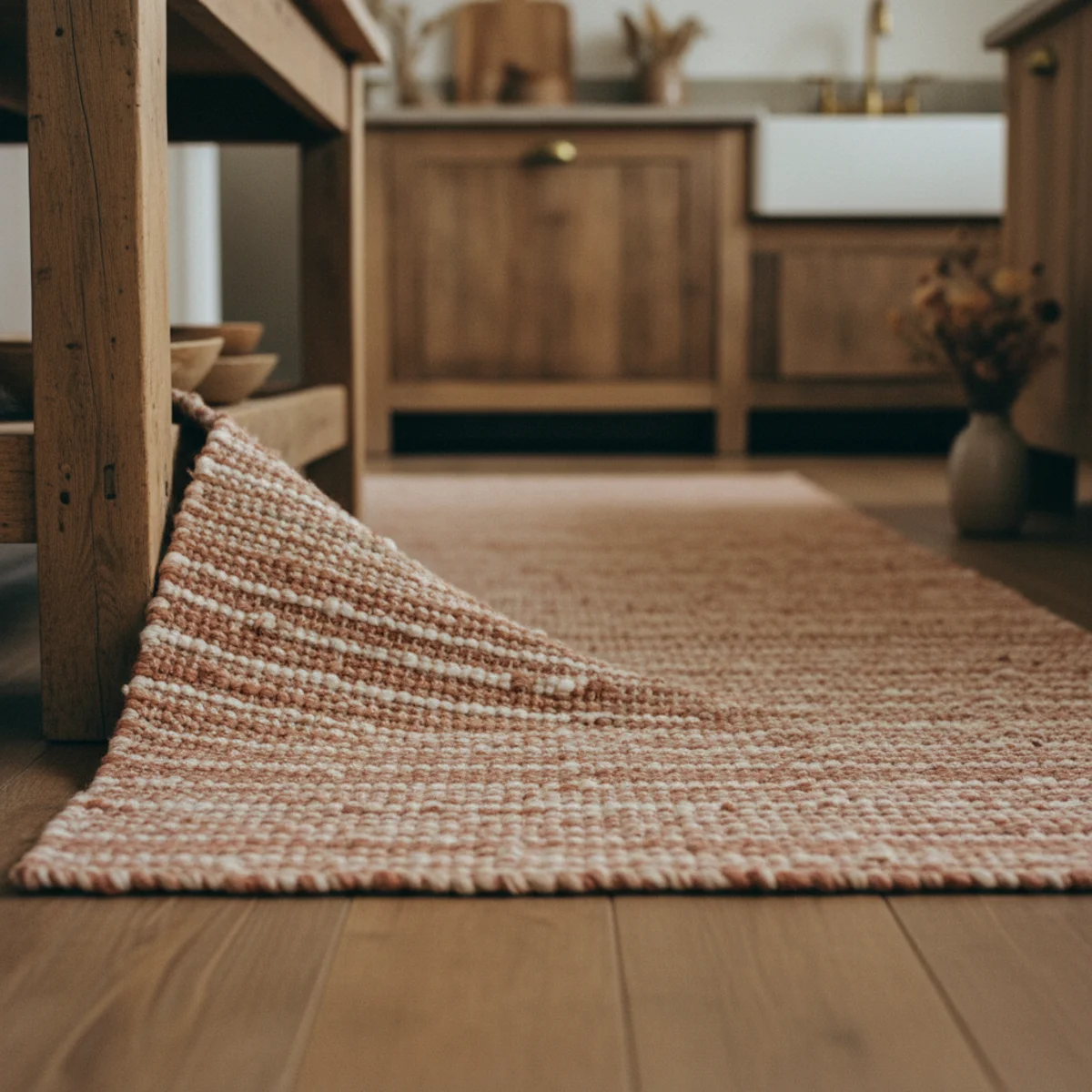
Hard kitchen floors (tile, vinyl, polished concrete, hardwood) are cold underfoot at the moments cooking happens most — first thing in the morning, last thing at night. A wool or jute runner laid through the working zone (in front of the sink or along the main counter) changes the floor's feel from cold-hard to soft-warm without compromising the function of the surface underneath. The runner also adds the textile layer that hard-surface kitchens entirely lack.
Choose a runner 2 to 2.5 feet wide and 6 to 8 feet long, in wool, cotton, or jute. Best fabrics for kitchens: vintage Persian wool ($80 to $250 secondhand — surprisingly durable for kitchen use), cotton rag rugs ($30 to $80, easily washable), jute or sisal ($40 to $100 for natural-fiber durability). Avoid: synthetic or plastic-backed rugs (don't breathe, can mildew), pile rugs longer than 1 inch (food drops get tangled). Position in front of the sink or along the working counter where you stand most. Wash or vacuum weekly; spot-clean as needed. Replace every 2 to 4 years depending on use.
AFFILIATE SLOTFLOORWool, cotton, or jute runner 2-2.5 feet wide x 6-8 feet long in working zoneAdd affiliate URL when configuredWhy it works
Because hard floors in kitchens fight every cozy aesthetic — the materials chosen for easy cleaning (tile, vinyl, polished surfaces) are exactly the materials that read clinical. A wool or jute runner adds the soft textile layer that hardwood floors in other rooms provide naturally. The change is felt under the feet (warmer, softer for standing while cooking) and seen visually (texture and color where there was only hard surface). The runner is the kitchen's textile layer compressed into one functional piece.
Pro tip — Layer two runners side-by-side for a wider effect in galley or U-shaped kitchens — one in front of the sink, one along the working counter, with a small gap between them. The combined width covers more cooking-position floor without buying a single wide expensive rug.
Vintage wool runner in front of the sink — soft floor for cooking that hard kitchen floors fight against. See also: vintage Persian wool
04Display Earthenware and Stoneware
Most kitchens hide their ceramics and dishware in closed cabinets — invisible except when used. Cozy kitchens display the everyday earthenware on open shelves, in glass cabinets, on counters, on hooks. The visible ceramics add the warm-handmade-object layer that closed cabinets entirely lack, and the irregularity of varied vintage and handmade pieces reads as inhabited rather than catalog-styled.
Display: stoneware mugs (varied, hung on hooks under shelves per the coffee-bar-ideas rules), earthenware bowls (3 to 5 nested in varied sizes on open shelves), small ceramic crocks for utensils ($15 to $40 from Etsy or vintage), large ceramic pitcher used as utensil holder ($20 to $80), serving boards leaned against the backsplash. Stick to warm earth tones (terracotta, oat, cream, deep brown) and matte glazes — bright glossy pieces read cheap. Mix vintage thrifted pieces ($5 to $25 each from Goodwill and ReStore) with new artisan-made pieces ($30 to $80 from craft fairs and Etsy) for the collected-over-time look.
AFFILIATE SLOTSTYLINGMix of stoneware mugs, earthenware bowls, ceramic crocks in warm earth tones on open shelvesAdd affiliate URL when configuredWhy it works
Because ceramics are warm-toned, hand-made (or hand-made-looking), and tactile in ways that the metal-and-glass surfaces of typical kitchens are not. Displaying them brings the warmth visually into the room daily, instead of hiding it behind closed doors. The visible irregularity of varied ceramic shapes and tones reads as a kitchen used by a specific person — not the standardized hotel-and-rental-kitchen aesthetic that closed cabinets enforce.
Pro tip — Use the bowl trick — fill the largest ceramic bowl on open shelves with onions, garlic, lemons, or apples instead of leaving it empty. The produce-in-bowl adds color and reads as a real working kitchen rather than a styled-photo kitchen. Replace the produce when it ages; the bowl stays.
Earthenware bowls, stoneware mugs, ceramic crock — visible warm objects that closed cabinets entirely hide. See also: coffee-bar-ideas rules
05Grow Herbs on the Windowsill
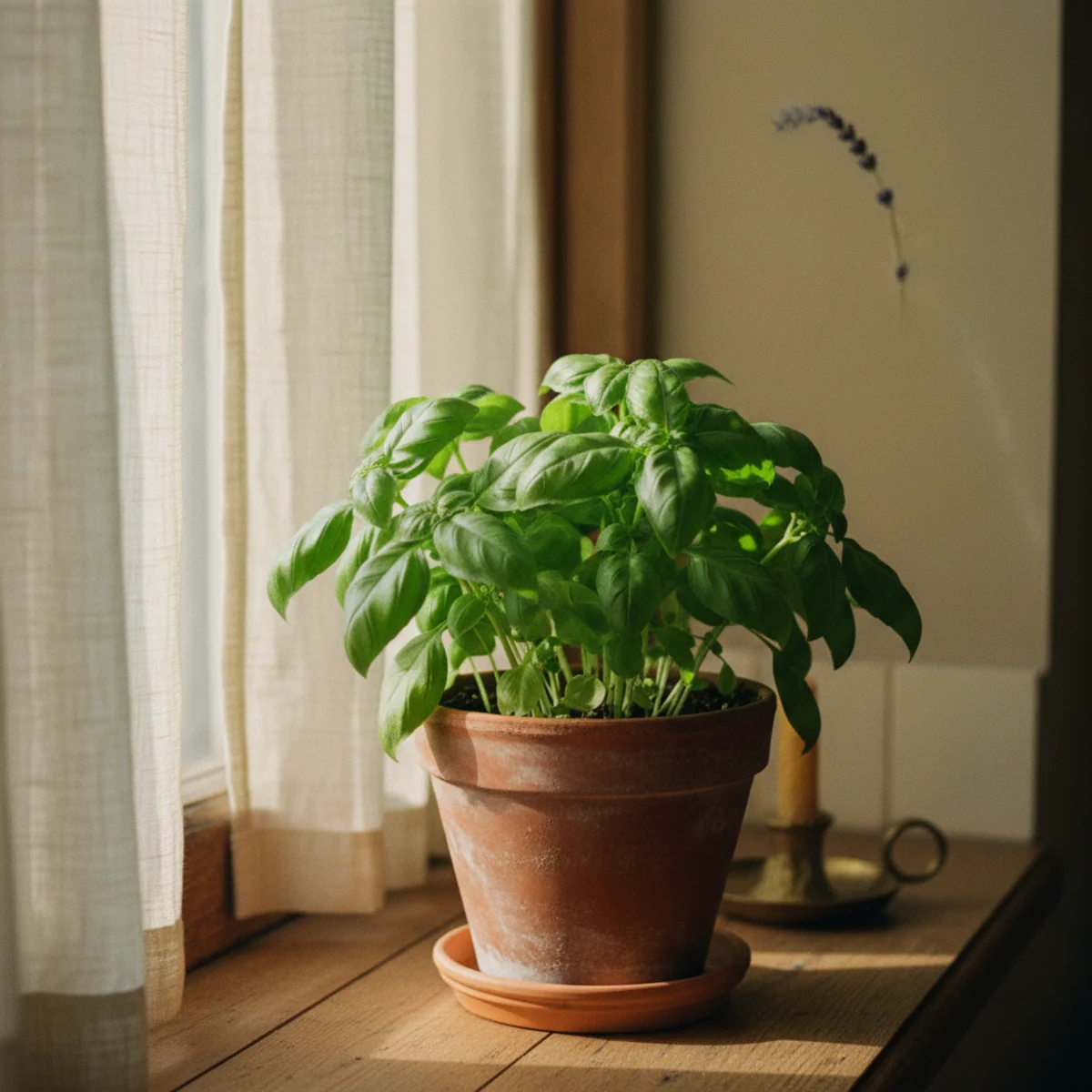
A small herb garden on the kitchen windowsill — basil, rosemary, thyme, mint — adds living color, functional cooking ingredient, and the simplest possible kitchen styling all at once. Three to five small potted herbs in matching terracotta pots cost $20 to $40 total and read as a working kitchen used by someone who actually cooks. The herbs also produce real cooking ingredient continuously, which is a small daily satisfaction beyond decor.
Best windowsill herbs: basil (sunny windows, harvested often), rosemary (sunny windows, hardy), thyme (medium light, hardy), mint (medium light, will spread aggressively if not pruned), parsley (medium light, longest-lived), oregano (sunny windows, hardy). Plant in small 3 to 5-inch terracotta pots ($2 to $8 each from nurseries or Amazon). Buy plants from a local nursery in spring or from grocery store herb sections at $4 to $8 each. Water 2 to 3 times weekly depending on dryness. Trim regularly to encourage growth and use in cooking. Replace dying plants seasonally; the cycle is part of the kitchen's living quality.
AFFILIATE SLOTPLANTS3-5 windowsill herbs in matching 3-5 inch terracotta pots, watered 2-3 times weeklyAdd affiliate URL when configuredWhy it works
Because they add three layers of warmth simultaneously — visible green color in an otherwise hard-surface room, organic shape and movement (plants grow visibly), and the implicit signal that this kitchen is used for actual cooking rather than display. Most kitchen styling adds visual warmth only; herbs add visual warmth plus functional cooking ingredient plus the daily ritual of watering and harvesting. The compound effect is significant.
Pro tip — Start with rosemary and thyme — both are nearly impossible to kill, both thrive in standard kitchen windows, and both add the most cooking value per plant. Basil and parsley are higher-impact visually but require more attentive watering; start with the hardy herbs while building confidence.
Three herbs in matching terracotta pots on the windowsill — living color, real cooking ingredient, $20 total. See also: terracotta pots
06Add Warm Wood Where You Can
Most kitchens are heavy on hard cool surfaces — granite, tile, stainless steel, painted cabinets. Adding warm wood selectively across cutting boards, utensils, small shelves, stool seats, and decorative bowls counteracts the visual coldness. Three to five wood touches across an average kitchen transform how the room reads thermally without renovating anything.
Wood touch points: a large solid-wood cutting board leaning against the backsplash ($30 to $80 from John Boos or Crate & Barrel), wood-handled cooking utensils in a ceramic crock ($25 to $60 for a small set), a small wooden bowl on the counter holding fruit ($15 to $40 thrifted), wood serving boards leaned against the wall ($20 to $50), wooden stool seats (per rule 12), wood salt cellars and pepper grinders ($20 to $60 from Etsy artisan makers). All in oak, walnut, teak, or oiled pine — never bright varnished or stained finishes. Oil monthly with butcher block oil ($12) to maintain warm matte finish.
AFFILIATE SLOTMATERIALS3-5 wood touches: cutting board, wood-handled utensils, wooden bowl, salt cellar, serving boardsAdd affiliate URL when configuredWhy it works
Because wood reads as warm and organic in ways that stone, metal, and ceramic do not — even high-end kitchen materials like marble and brass read cool compared to oak or walnut. The thermal anchor of wood touches counteracts the hard-surface coldness of typical kitchens without compromising any functional surface. The kitchen still reads as a working kitchen; it just reads as a warm working kitchen instead of a cold one.
Pro tip — Buy one large solid-wood cutting board (15 to 20 inches across) and leave it on the counter or leaning against the backsplash full-time instead of stowing it in a cabinet between uses — the visible wood transforms the kitchen aesthetic continuously. Oil monthly; the board becomes a styled object that also functions when needed.
Cutting board, wood utensils, wooden bowl — three warm wood touches that counteract hard-surface kitchen cold. See also: John Boos
07Hang Mugs and Tools on Hooks
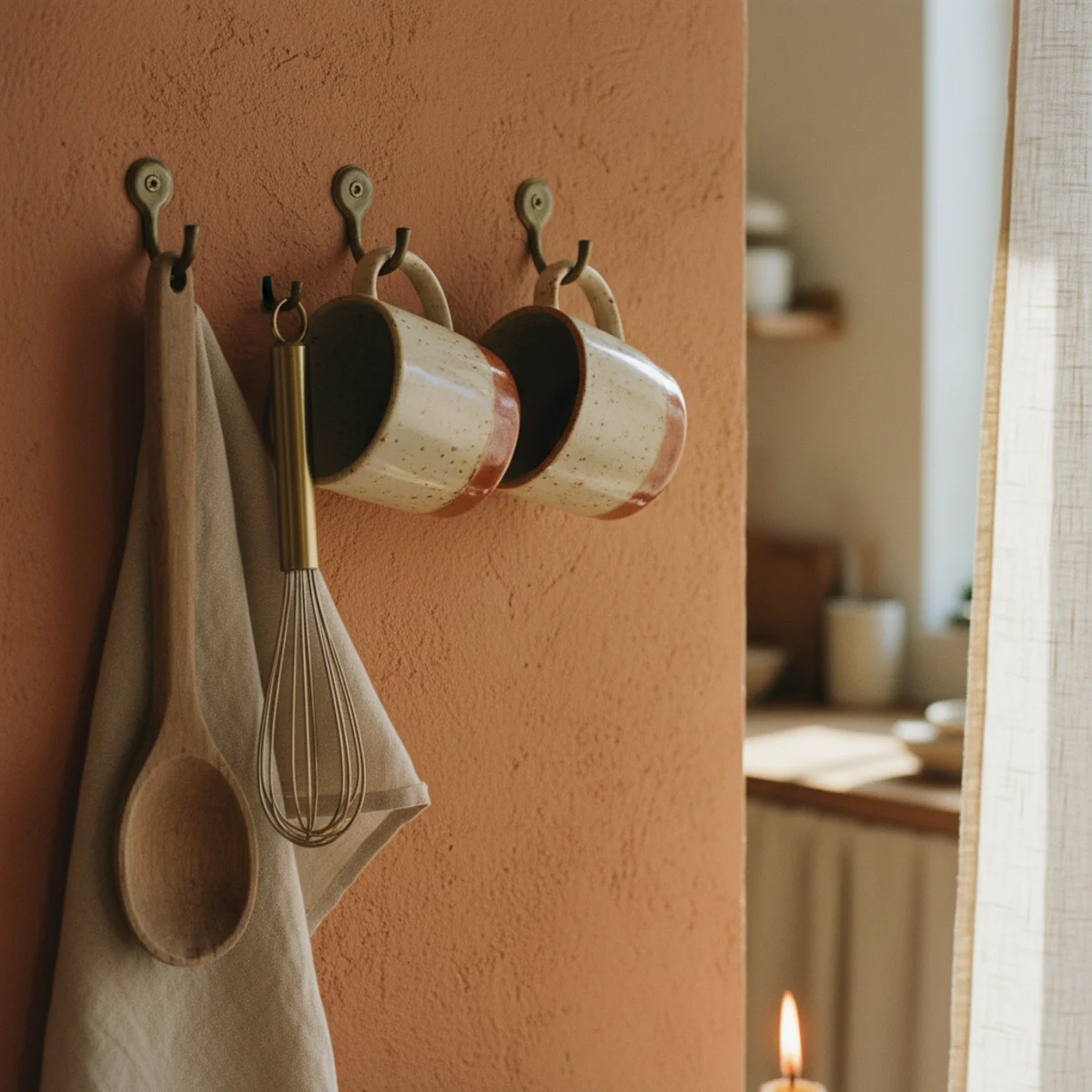
Visible mugs and tools (cooking utensils, wooden spoons, tongs) hung on hooks add styling layer to kitchens that closed-drawer organization hides entirely. A row of 4 to 6 hooks under an open shelf or directly on the wall holds mugs handle-out, while a separate set of hooks holds frequently-used utensils — both function as decor and convenience. Total cost: $10 to $30 in hooks.
Two hook applications: MUG HOOKS — install 4 to 6 J-hooks ($2 each) under an open shelf or directly into wall studs, 3 to 4 inches apart, near the coffee bar or above the counter. Hang mugs handle-out, lip-down. Mix mug styles — varied vintage and stoneware reads collected. UTENSIL HOOKS — install 3 to 5 hooks ($3 to $8 each) on the wall beside the stove. Hang wood-handled wooden spoons, brass tongs, spatulas, ladles. Use real working utensils — the function is part of the styling. Both hook arrangements should follow odd-number grouping rules (3, 5, never 4).
AFFILIATE SLOTSTORAGE4-6 mug hooks under shelf or on wall + 3-5 utensil hooks beside stoveAdd affiliate URL when configuredWhy it works
Because the same objects hidden in drawers and cabinets become invisible until used, while hung on hooks they become continuous decor that also functions. The visual layer of varied mugs hung handle-out, plus a small array of warm-toned cooking tools, adds the personality and warmth that flat cabinet doors strip out entirely. The function-as-decor approach also makes the kitchen more efficient — utensils within easy reach, mugs ready to grab — without any added complexity.
Pro tip — Use cup hooks rather than J-hooks for mugs — cup hooks screw flush into a shelf bottom or wall and hold the mug handle without snagging or spinning. Cup hooks at $0.50 each from a hardware store are functionally identical to $4 designer J-hooks for mug-hanging purposes; the J-hooks justify themselves only on visible-hardware applications like coat hooks.
Mugs handle-out on hooks, utensils within easy reach — function and decor as one continuous layer. See also: mug hooks
08Soften the Lighting Wherever Possible
Kitchen lighting almost always starts too cool and too bright — 4000K to 5000K bulbs in the overhead, harsh white under-cabinet LED strips, glaring task lights at the sink. The cozy fix is replacing every bulb with 2700K LEDs, installing a dimmer where possible, and adding the small counter lamp (rule 2) for the warmest atmospheric layer. Total cost: $20 to $40 in bulbs plus $25 for a dimmer.
Audit every kitchen light source: overhead fixture (often a flush-mount or pendant — replace bulb with 2700K LED, install a smart dimmer switch at $25 from Lutron Caséta or Leviton Decora), under-cabinet LED strips (replace with 2700K warm-white LEDs at $15 to $30 from Govee or Philips Hue dimmable warm), pendants over an island or peninsula (2700K bulbs), the small counter lamp (per rule 2). All bulbs at 2700K, all dimmers set to 50 to 70 percent for evening use. After-dinner kitchen reads warm and inviting; pre-bed snack run reads atmospheric.
AFFILIATE SLOTLIGHTINGAll bulbs at 2700K LED + smart dimmer on overhead + counter lamp on smart plugAdd affiliate URL when configuredWhy it works
Because most kitchens cannot escape function — task light is required for cooking, cleaning, and food prep — so the cozy comes from the *temperature* and *control* of that light, not from reducing it. Warm 2700K light at full brightness reads cozy; cool 4000K light at the same brightness reads clinical. The temperature is the lever; dimming amplifies the warmth in evening hours. Replacing bulbs is the single most-impactful kitchen-lighting move, costing $20 to $40 for the whole room.
Pro tip — Use a smart dimmer (Lutron Caséta) wired to the overhead so it dims automatically to 50 percent in the evening and brightens to 100 percent in the morning — the kitchen transitions to cozy and back to functional without anyone touching a switch. The schedule is the smallest possible kitchen-lighting automation and one of the highest-ROI smart-home upgrades available.
Every bulb at 2700K, overhead dimmed to 60% — the temperature and control that make kitchens read cozy. See also: 2700K LEDs
09Add a Linen Towel or Two
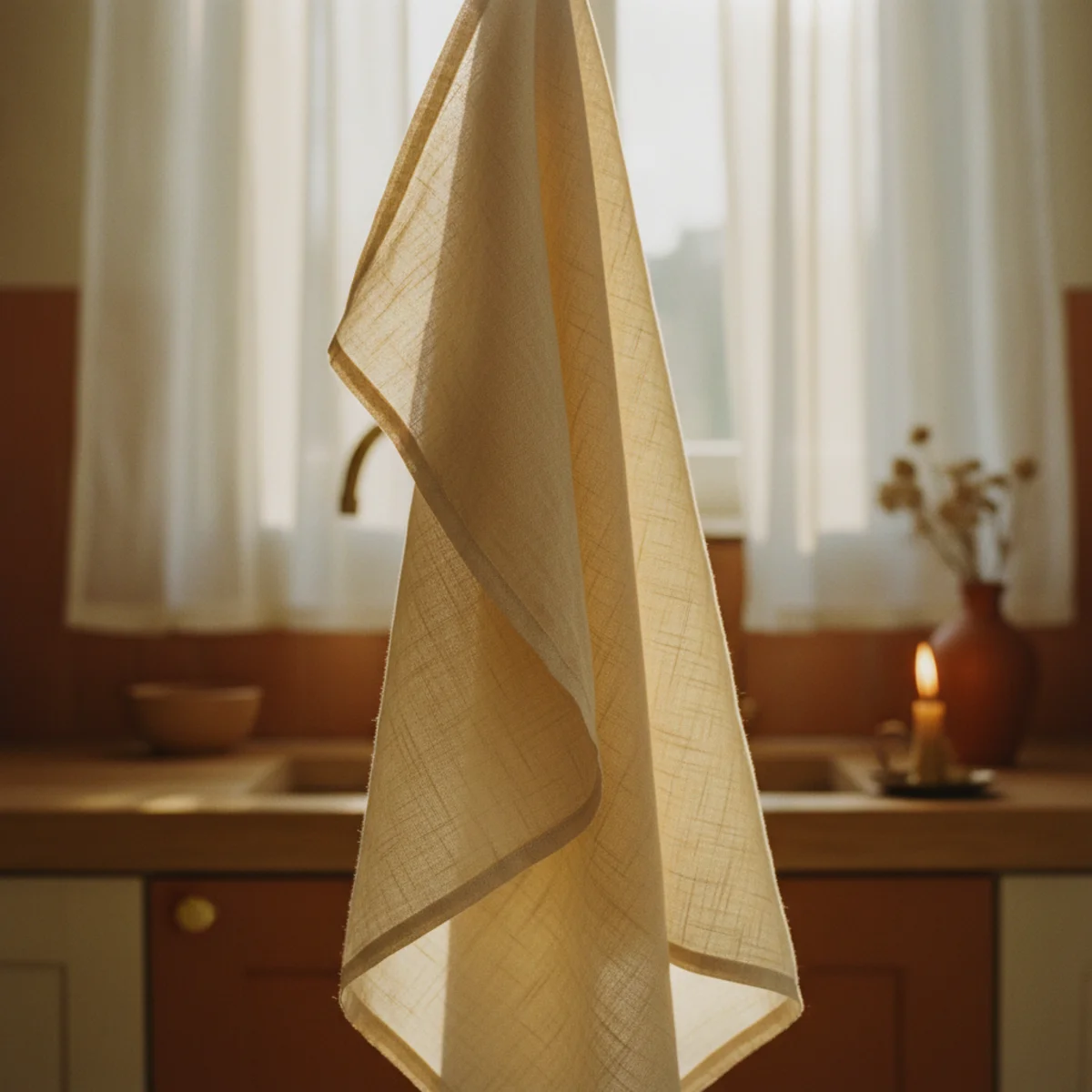
Cotton kitchen towels read commercial and functional; linen kitchen towels read warm and considered, and they also dry dishes faster and last longer with daily use. The small swap from cotton to linen ($20 to $30 per towel) is one of the cheapest cozy-kitchen upgrades available and adds a soft textile layer to a room otherwise dominated by hard surfaces.
Linen kitchen towels: 18x28 inches or 20x32 inches, in oat, cream, terracotta, or warm white stripes. Sources: Quince at $20 to $30 each, Magic Linen on Etsy at $20 to $30, Williams Sonoma at $30 to $50, Coyuchi at $40 to $60. Buy 4 to 6 towels for rotation. Hang two visible on the oven door handle or on a wall hook, store the rest folded in a drawer. The visible towels become part of the kitchen styling; the others rotate through the laundry. Wash on cold delicate cycle and air-dry; linen towels actually improve with washing and last 5 to 10 years with proper care.
AFFILIATE SLOTTEXTILES4-6 linen kitchen towels 18x28 in oat or cream, 2 visible on rings or hooksAdd affiliate URL when configuredWhy it works
Because linen has a soft natural texture and visible weave irregularity that cotton terry cannot replicate — and the texture reads warm even when the towel is hung functional. Linen also dries dishes faster (better water absorption) and dries itself faster after wet (less mildew). The cost difference is meaningful per towel ($20 to $30 vs $5 to $10 for cotton), but the visible kitchen-styling upgrade and durability over years justify it. One linen towel hung on the oven door changes how the kitchen reads daily.
Pro tip — Hang a linen towel from a brass or wooden ring on the wall beside the sink rather than just folded over the oven door — the small ring at $4 to $12 from House of Antique Hardware creates a deliberate styled towel position rather than the haphazard oven-handle drape most kitchens default to.
Linen towel on a brass ring beside the sink — small swap, immediate kitchen warmth. See also: brass or wooden ring
10Paint Cabinets a Warm Color
If you own your kitchen and your cabinets are dated white, oak, or cool gray, painting them a warm color transforms the room more dramatically than any other single project. The cabinets occupy 40 to 60 percent of the kitchen's visible surface — painting them in a warm sage, deep olive, soft black, or warm cream shifts the entire room's color story. Cost: $100 to $300 for a complete kitchen, mostly in materials and one or two weekends of work.
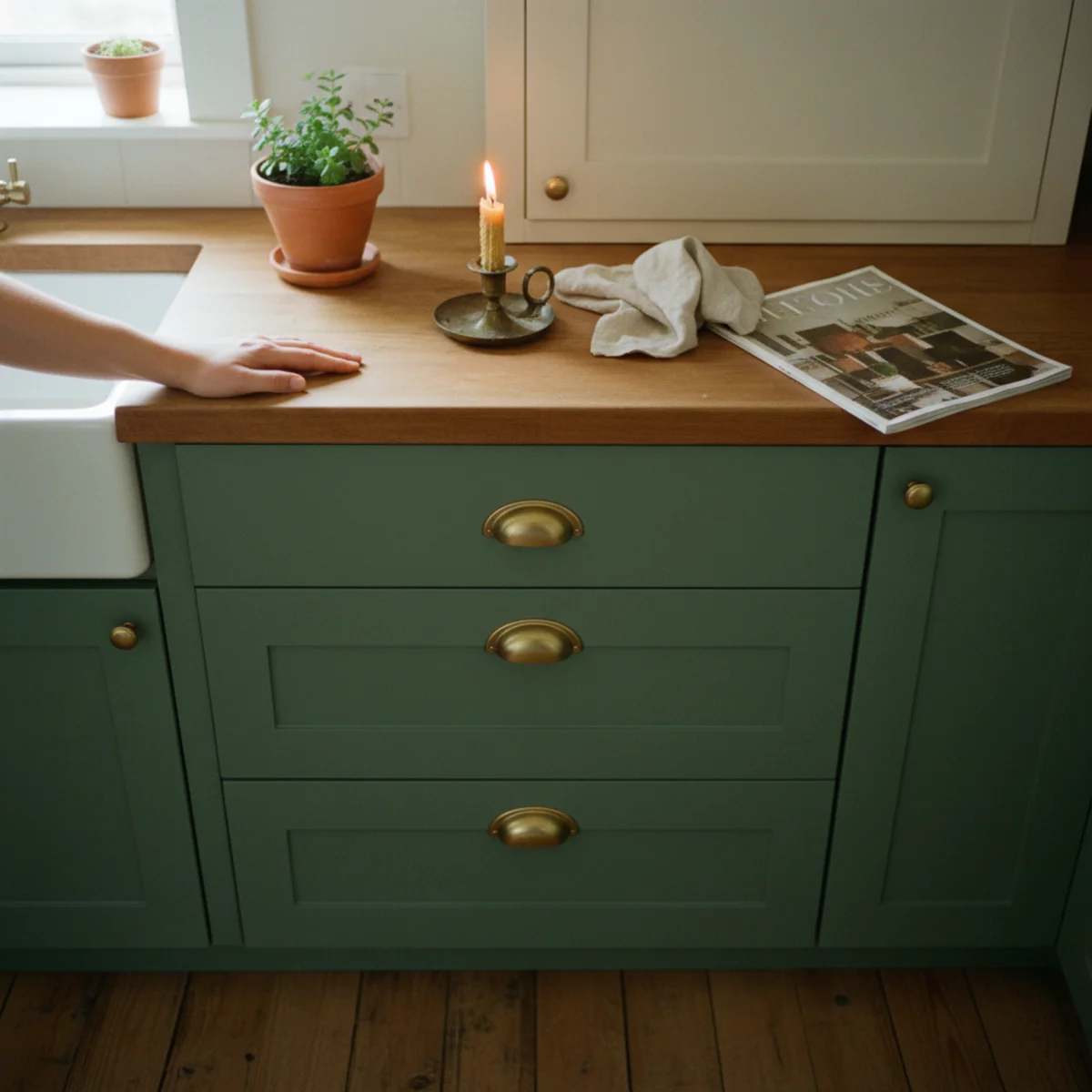
Best cabinet paint colors for cozy kitchens: Farrow & Ball Mizzle 266 (muted sage), F&B Bancha 298 (deep olive), Benjamin Moore Soft Chamois OC-13 (warm cream), F&B Setting Plaster 231 (plaster pink, surprisingly works), BM Kendall Charcoal HC-166 (warm dark). Paint type: Benjamin Moore Advance or Sherwin-Williams Emerald Urethane (durable cabinet-specific paints). Process: clean with TSP ($4), sand lightly with 220-grit, apply bonding primer ($15 from Zinsser or Stix — never skip this step), apply two coats of cabinet paint (4 hours between coats). Replace hardware with aged brass pulls ($4 to $20 per pull) for the complete transformation. Total cost: $100 to $300 in materials; 2 to 3 weekends of work.
AFFILIATE SLOTPAINTCabinets in F&B Mizzle, Bancha, BM Soft Chamois, or Kendall Charcoal with bonding primerAdd affiliate URL when configuredWhy it works
Because cabinets are the largest single visual surface in any kitchen, and their color dominates how the room reads. Changing the cabinet color is the equivalent of changing the wall color in a living room — it shifts the entire visual palette of the space. The same kitchen with cool-gray cabinets versus warm-sage cabinets reads as entirely different rooms, even though the layout, appliances, and fixtures are identical. The cost-to-impact ratio for cabinet painting is unmatched in kitchen renovation.
Pro tip — Don't paint the cabinet interiors — only the exterior fronts, doors, drawers, and visible edges. The interiors stay neutral and clean, which makes mistakes invisible and saves significant paint and time. The exterior-only approach also avoids the chip-and-show problem of interior paint exposed to daily dish movement.
Cabinets in Mizzle sage with aged brass pulls — the project that shifts the entire kitchen color story. See also: Farrow & Ball Mizzle
11Bring In a Bowl of Produce
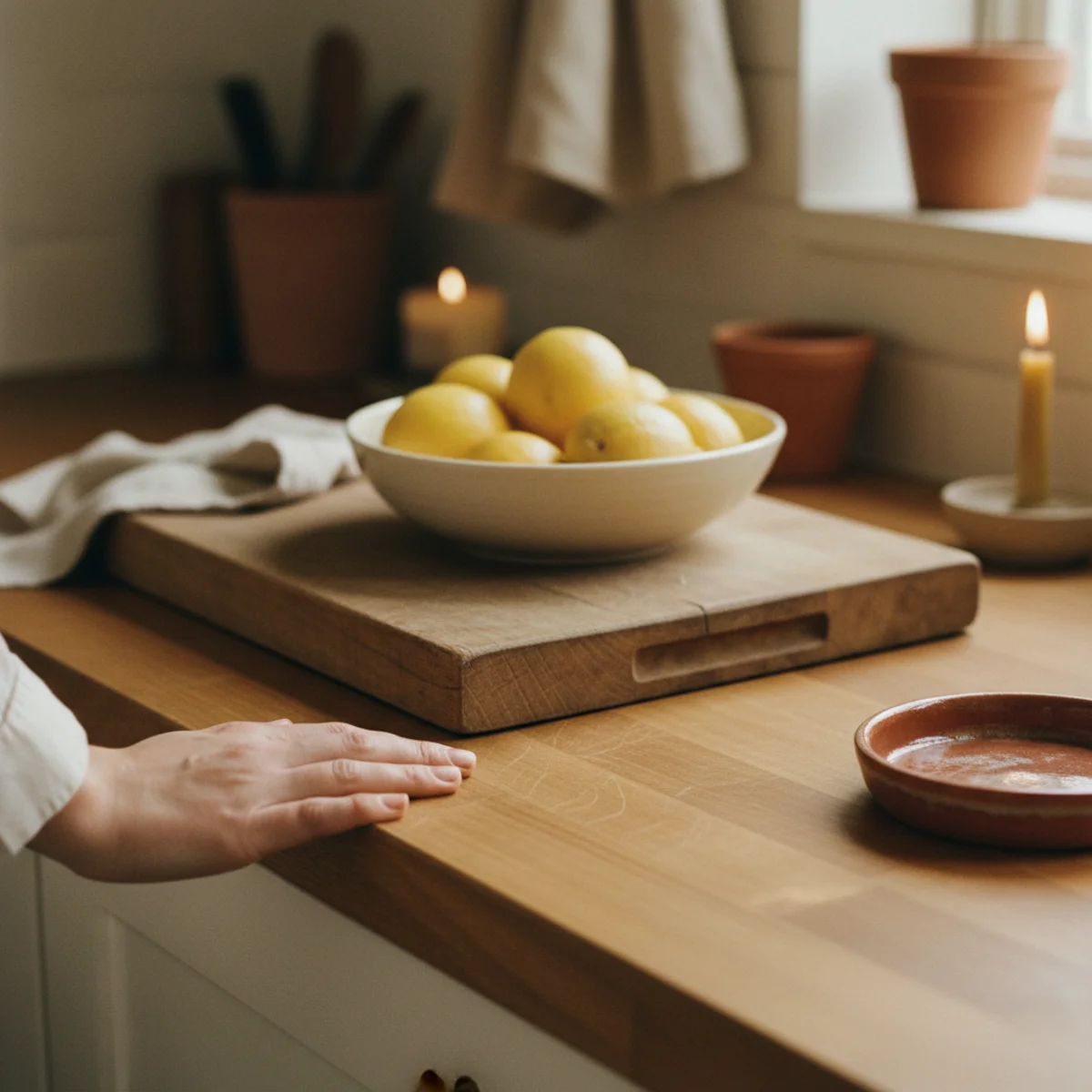
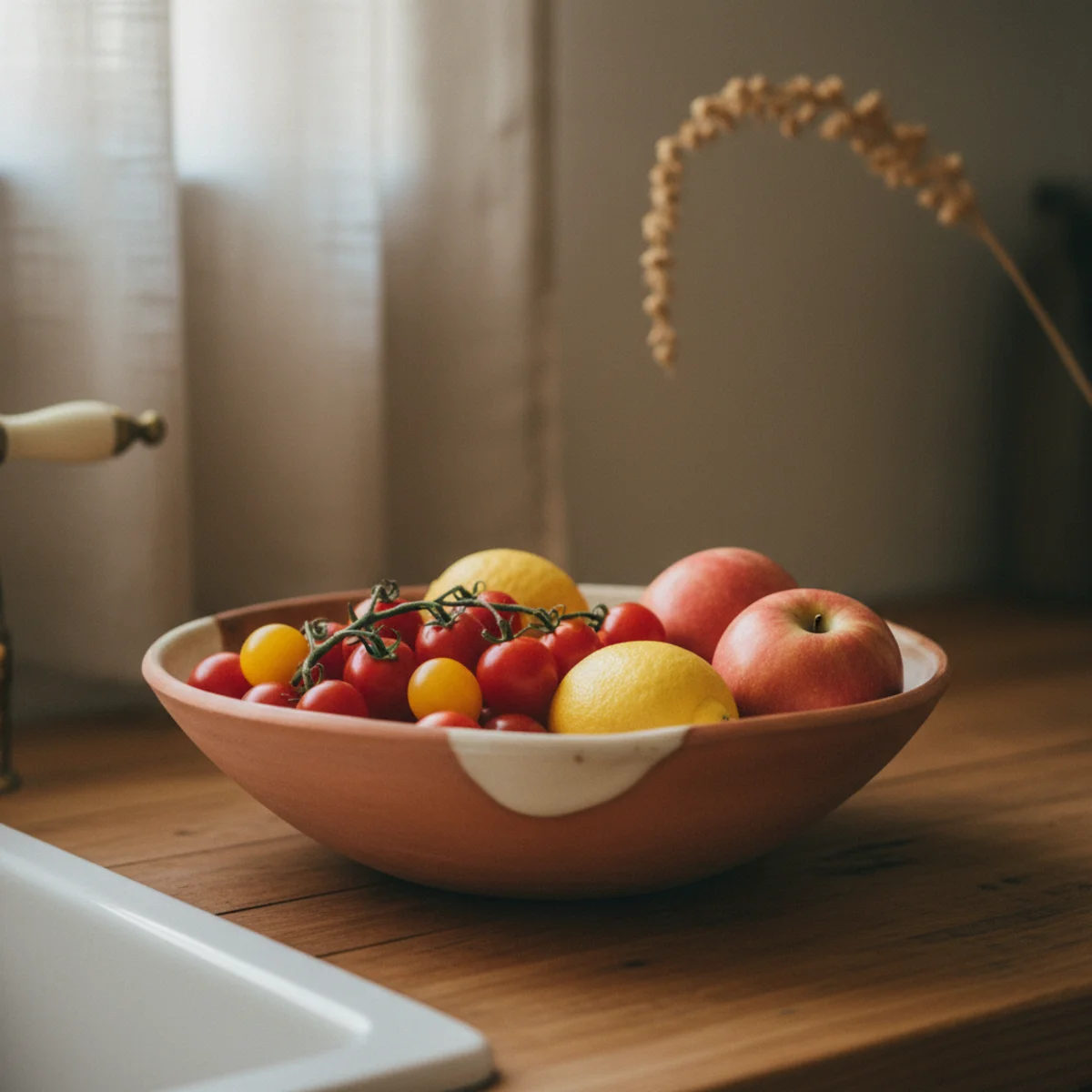
The simplest, cheapest, most-effective kitchen styling move: place a large wooden or ceramic bowl on the counter, filled with whatever produce is in season — apples in fall, citrus in winter, tomatoes and peaches in summer, onions and garlic year-round. The bowl reads as a working kitchen used by someone who actually cooks, and the produce rotates naturally with seasons. Cost: $0 for the produce you'd buy anyway, $15 to $50 for the bowl.
Choose a wooden or ceramic bowl 10 to 14 inches across, 4 to 6 inches deep. Wood (oiled oak, walnut, teak) reads warmest; ceramic (matte stoneware, terracotta) works too. Sources: thrifted wooden bowls at $5 to $20 from estate sales, IKEA at $15 to $30, hand-thrown stoneware from craft fairs at $40 to $80. Position on the counter in a corner or beside the sink. Fill with seasonal produce: apples and pears (fall), citrus and pomegranates (winter), tomatoes and stone fruit (summer), onions and garlic year-round. Refresh as produce ripens or ages; the rotation is part of the styling and the cooking ritual.
AFFILIATE SLOTSTYLINGWooden or ceramic bowl 10-14 inches across filled with seasonal room-temperature produceAdd affiliate URL when configuredWhy it works
Because real-use produce in a beautiful bowl is the perfect intersection of styling and function — it reads as inhabited working kitchen rather than catalog-styled showroom. The produce also adds seasonal color that decorative styling can't match: deep reds from tomatoes and pomegranates, warm oranges from citrus, soft yellows from lemons. The colors are real, the use is real, and the rotation across seasons keeps the kitchen visually fresh without requiring decor purchases.
Pro tip — Choose produce types that store at room temperature (apples, citrus, pears, tomatoes, onions, garlic, winter squash, stone fruit) rather than items that need refrigeration. The room-temperature produce can live in the bowl for days or weeks, while refrigerated items spoil quickly out of the fridge. Match produce selection to storage tolerance, not just visual appeal.
Walnut bowl, seasonal produce, real use — kitchen styling that costs nothing extra beyond produce you'd buy anyway. See also: thrifted wooden bowls
12Add a Small Seating Spot
Most kitchens have no seating — and the missing chair or stool is part of why they feel like utility rooms rather than rooms you spend time in. The fix is adding one or two stools at the counter (counter-height at 36 inches) or one small wooden chair in a corner. The seating signals that the kitchen is somewhere to linger, not just to cook and leave. Cost: $40 to $200 per stool or chair.
Best small-seating options: counter-height stools at 24 to 26 inches tall for standard kitchen counters or 30 inches for bar-height counters. Materials: solid wood (oak, walnut, oiled pine), woven seagrass or rattan seat, leather seat with wood frame. Sources: IKEA INGOLF at $50, Article Sven Stool at $159, vintage wooden stools at $20 to $80 from Marketplace, Industrial-style metal-and-wood stools at $80 to $200 from Home Depot. Add one cushion in linen or wool for comfort during longer sits ($15 to $40 from H&M Home or Etsy). Position so the stool faces into the kitchen working zone (someone can sit and chat while cooking happens) rather than facing away.
AFFILIATE SLOTFURNITURE1-2 counter-height stools (24-30 inches) in solid wood with optional cushionAdd affiliate URL when configuredWhy it works
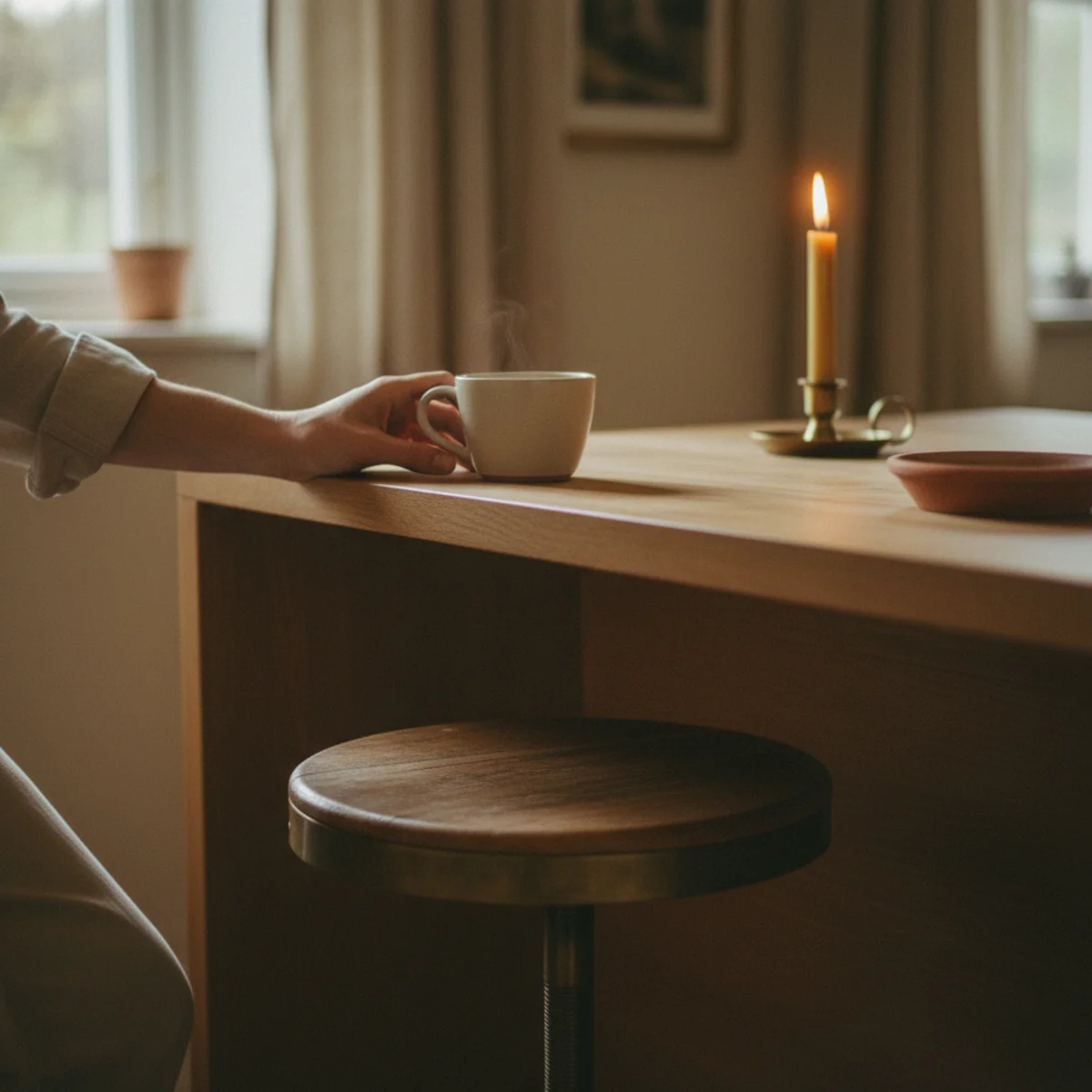
Because a kitchen without seating signals 'work room only' — get in, cook, leave. Adding one or two stools at the counter (or one wooden chair in a corner) signals 'gather here' — the morning coffee gets sipped sitting down, the visitor sits while cooking happens, the conversation lingers after the meal. The seating extends the kitchen's emotional function from utilitarian to gathering. The single stool is one of the highest-ROI cozy-kitchen additions.
Pro tip — Add the seating in the spot where someone would naturally gather while you cook — typically at the end of the counter opposite the stove, with the stool angled inward toward the working zone. The angle invites conversation without putting the visitor in the cook's working path.
One wooden stool at the counter end — the small seating that turns work room into gathering room. See also: Article Sven Stool
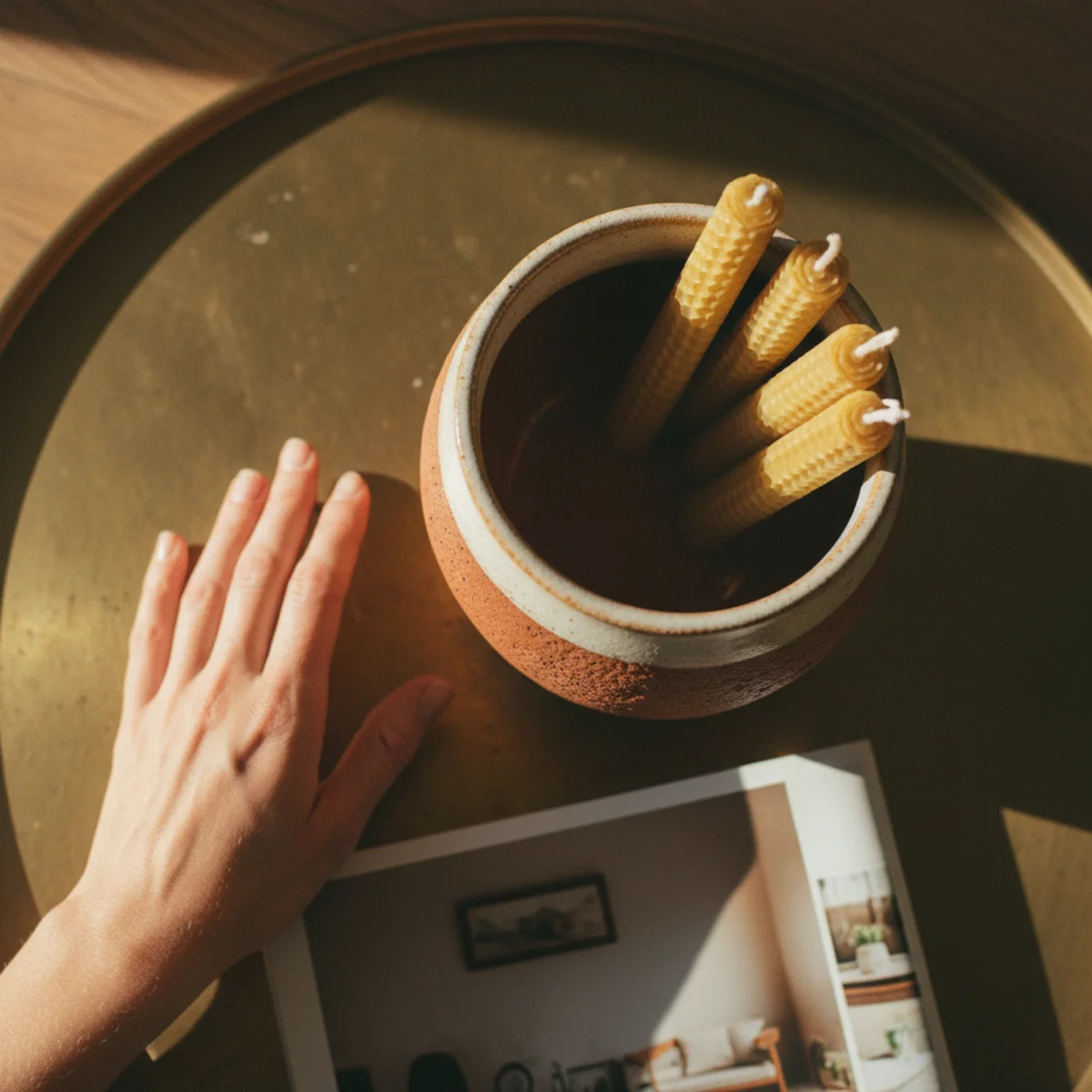
How to make a kitchen cozy step by step
Layer warmth into the function. Work in this order.
- 1Soften the light
Add a small warm lamp on the counter and warm under-cabinet lighting to replace harsh overhead glare. A lamp in a kitchen is the single biggest cozy move.
- 2Add wood and texture
Bring in wood boards and shelving, a runner underfoot, and woven baskets to add the textures kitchens usually lack.
- 3Display the useful and beautiful
Put everyday dishes, earthenware, and tools on open shelving or hooks, styled with restraint, so the working parts become the warmth.
- 4Add life and a place to linger
Grow herbs on the sill, set out a bowl of produce, and add a stool or chair so people can stay.
Quick tips
- Put a small warm lamp on the counter — the single biggest move from work zone to room.
- Replace harsh overhead glare with warm under-cabinet and over-table lighting.
- Lay a runner underfoot to soften the hard floor and add texture.
- Display earthenware, wooden boards, and tools rather than hiding everything.
- Grow herbs on the windowsill for living green that's also useful.
- Add a stool or chair so the kitchen becomes a room to linger in.
Cozy kitchens by type
A single open shelf, a counter lamp, hooks for mugs, and herbs on the sill — warmth without bulk.
A runner, a lamp, removable shelving, and displayed dishware — no-reno warmth that moves with you.
Open shelving with earthenware, warm wood, and brass; see our modern farmhouse guide.
Add a breakfast nook or banquette to make the kitchen the gathering heart; see our dining nook guide.
The kitchen is where everyone gathers, so make it a room, not a lab — wood, soft light, and the things you actually use.
Frequently asked questions
How do I make a kitchen feel cozy?+
What's the cheapest way to add warmth to a kitchen?+
Can I make my kitchen cozy if I rent and can't paint cabinets?+
What kind of lighting works for a cozy kitchen?+
What should I display on open kitchen shelves?+
Are open shelves better than upper cabinets for a cozy kitchen?+
The kitchen is where everyone gathers, so it deserves to feel like a room rather than a lab — and the warmth comes from layering soft light, wood, texture, and displayed useful objects into the function. We'd put a small warm lamp on the counter before anything else; a lamp in a kitchen feels almost transgressive and turns the whole room from work zone to gathering spot the moment it's on. Keep all the function, add the warmth, and the heart of the home finally feels like one.