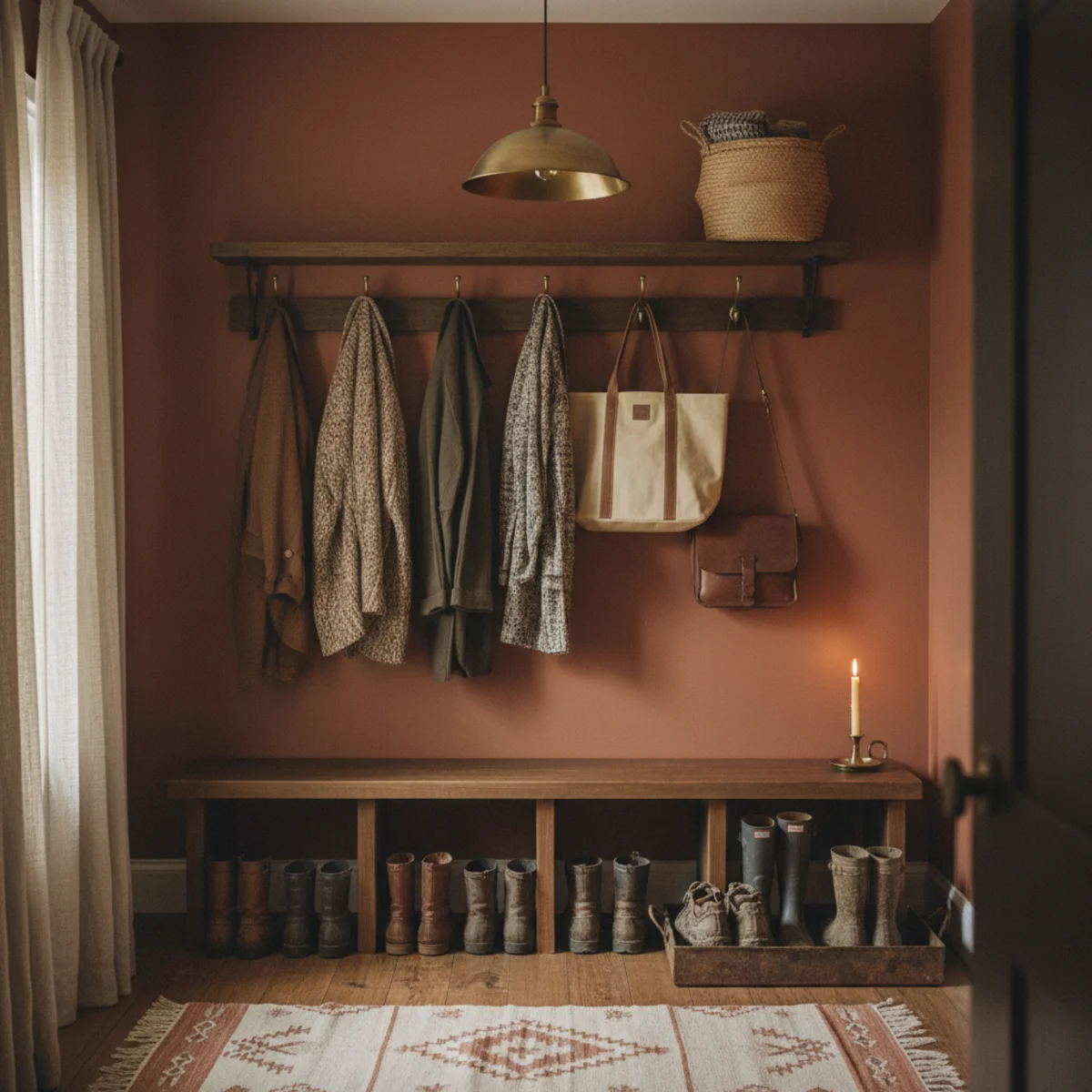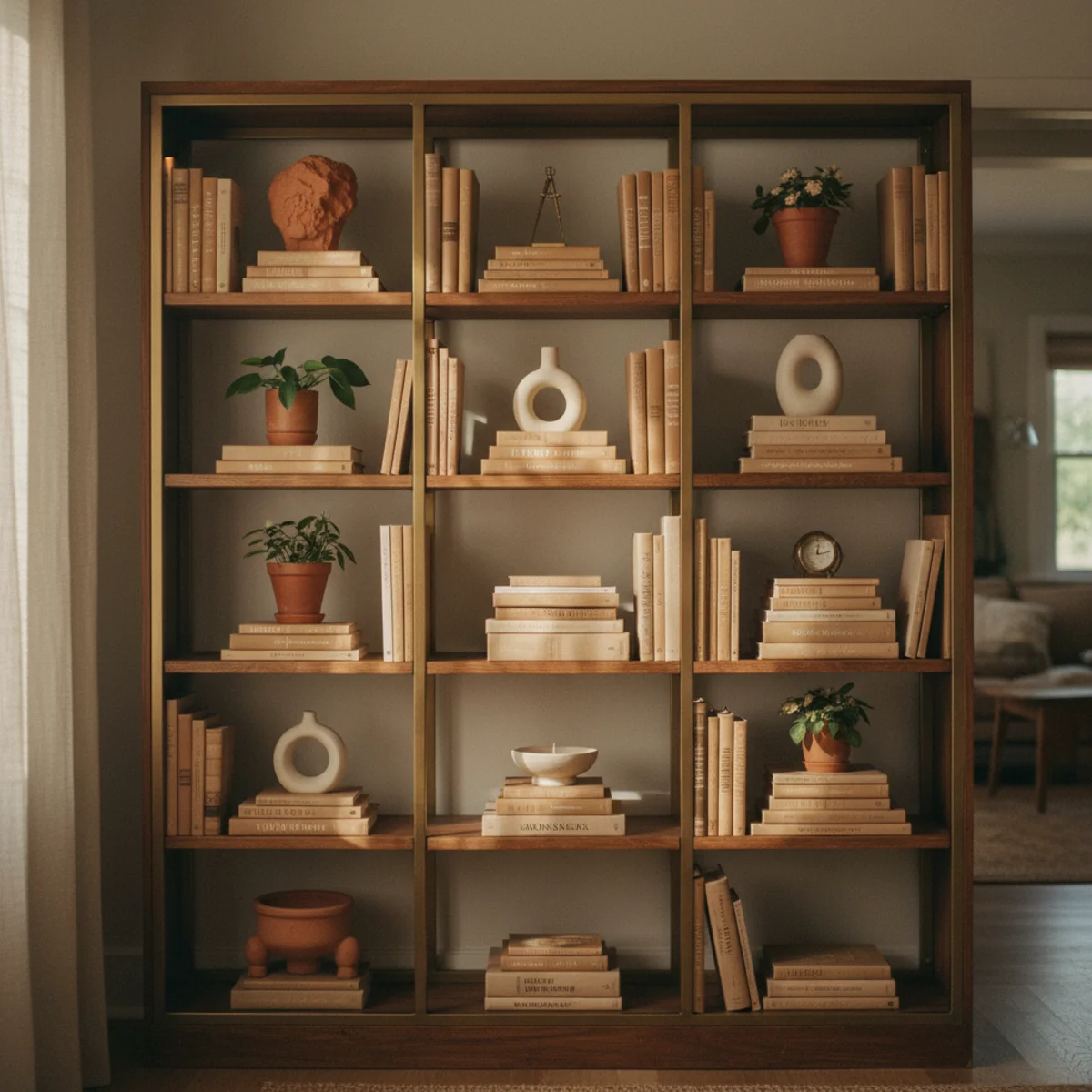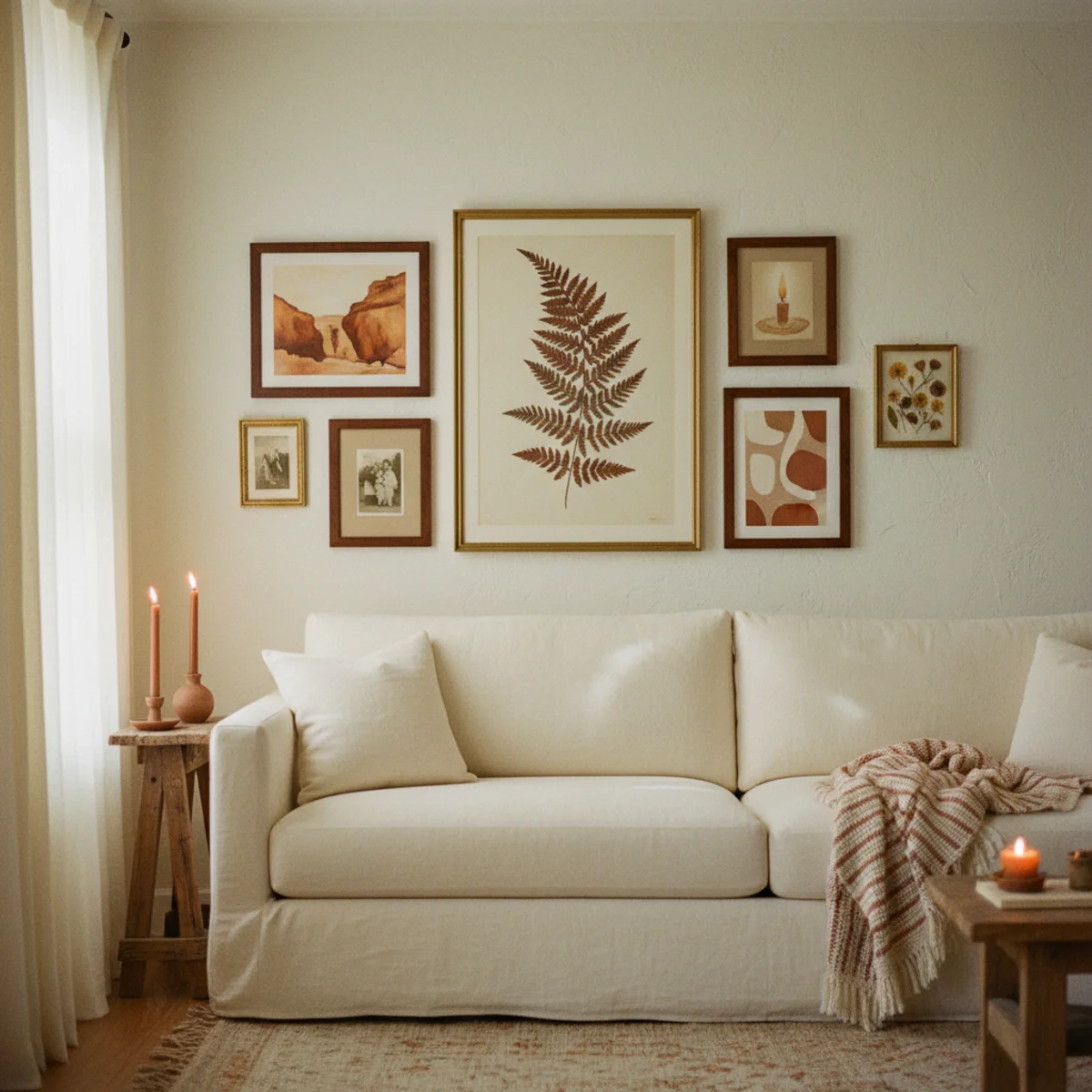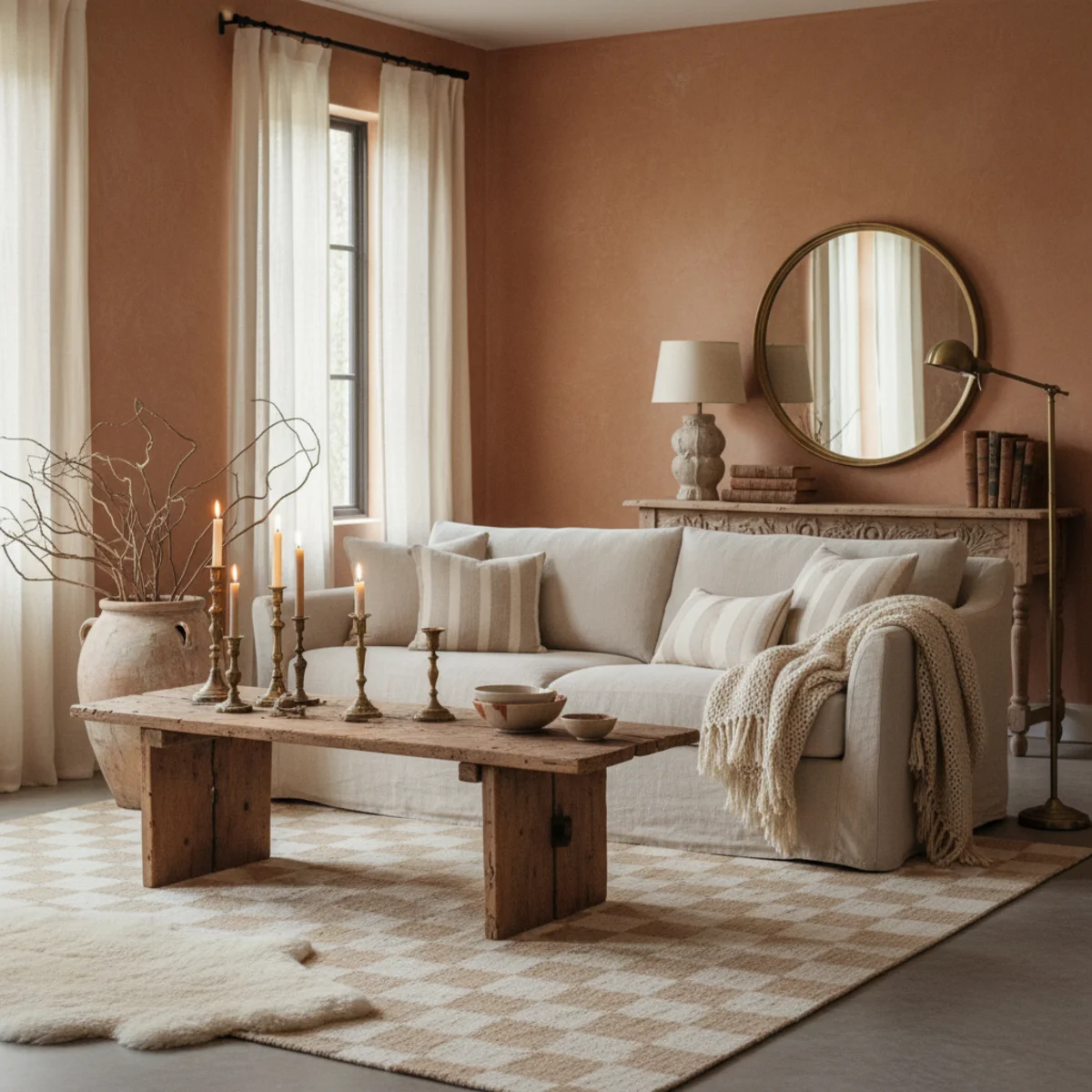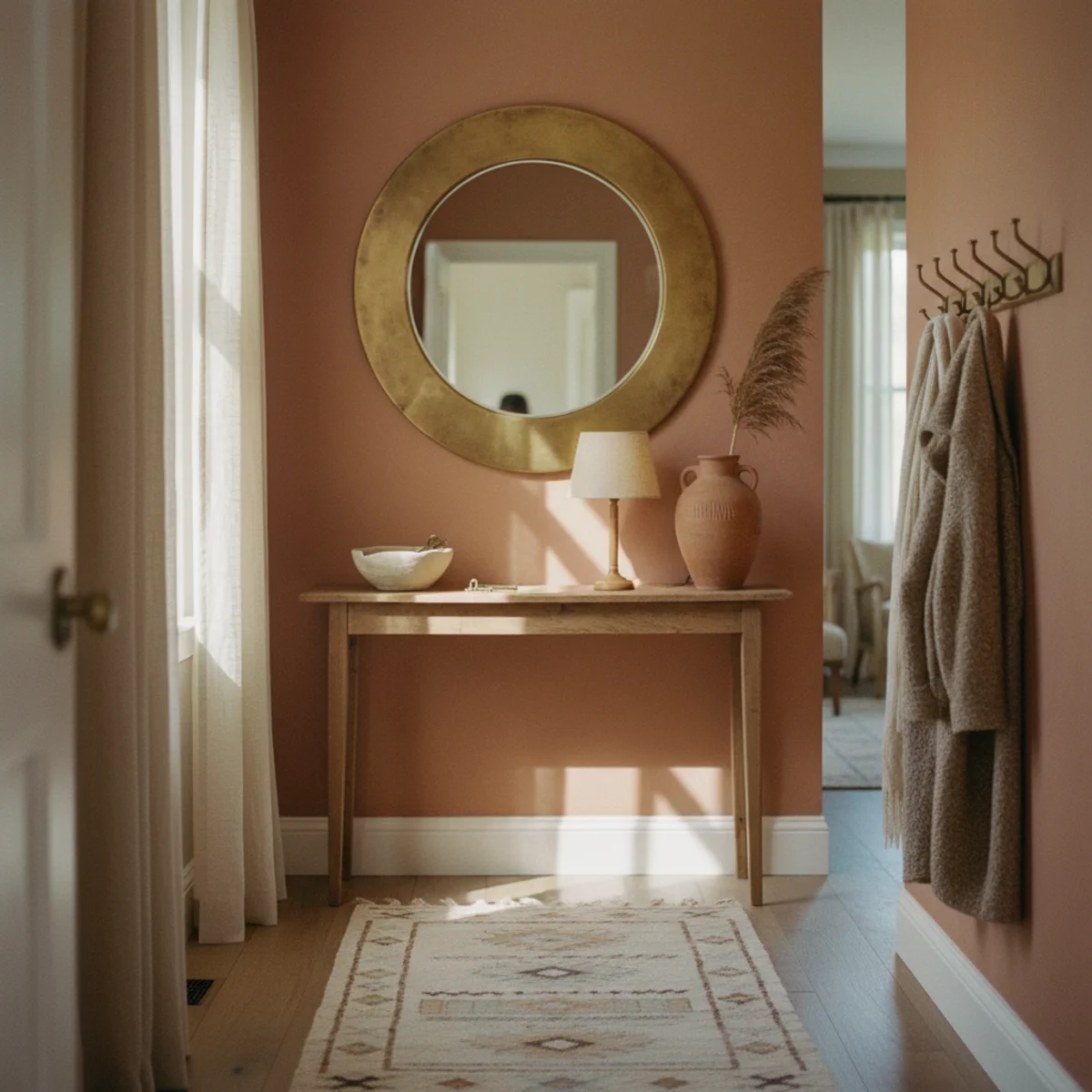
These twelve entryway decor ideas are tested in actual front entries — narrow tight entries under 12 square feet, wide foyers with closet doors, apartment building doors that open directly into living rooms. Every move below names exact dimensions, lamp specs, mirror sizes, and rug positions that consistently transform the most-rushed-through room into a destination. None requires renovation; most can be done with $80 to $200 and one Saturday.
Entryways fail because they get treated as transition space rather than as rooms. The fix is treating them as small but real rooms with a console, a mirror, a lamp, a rug, and a hook for keys — the exact same elements a small living room has, scaled down to the entry's footprint. Even a 4-by-4-foot entry can hold the full kit; the constraint sharpens the design.
By the end of this guide, you'll know exactly how to claim the entry with a console-mirror-bowl trio, the lamp that turns on automatically when you arrive home, the runner that defines the space without renovation, and the eight other moves that turn a transition zone into a real welcome.
WHAT'S INSIDE
- The console-mirror-bowl trio that anchors any entry under $200
- Why an oversized mirror beats two small frames every time in tight entries
- The lamp on a smart plug that makes arriving home feel warm before flipping any switch
- The runner position (covering the cold-floor zone) that defines the entry as a real room
The entry sets the tone for everything behind it. It's small, but it's the overture to the whole house.
— Apartment Therapy [citation needed — verify before publish]
What makes a good entryway?
A good entryway does two jobs at once: it works, and it welcomes. The working part is a place to drop keys, hang a coat, and check yourself before you leave. The welcoming part is warmth — light, texture, and a hint of personality that says <em>this is a home</em> the second the door opens.
The classic formula, repeated across decades of design writing, is the console-and-mirror pairing. A narrow table gives you a surface and storage; a mirror above bounces light, opens the space, and lets you catch your reflection on the way out. What separates a styled entry from a functional one is the third layer — a personal object, a thrifted brass tray, an antique mirror with a little age in the glass.
More in By Room you may love
See allWhy the entryway is having its moment in 2026
For years the entryway was the part of the house nobody photographed. That's changed: the entryway refresh is now a saved-pin staple, partly because it's the rare high-impact project that fits any budget and most rentals — no renovation, just a table, a mirror, and good light.
The aesthetic running through it is warm and collected — vintage consoles, aged brass, woven baskets, and earthy paint. Designers writing for House Beautiful point to the entry as the ideal place to make a confident, inexpensive statement, because it's a small surface area where boldness pays off without overwhelming the rest of the home.
24 entryway decor ideas that welcome you home
01The Console, Mirror, and Bowl Trio
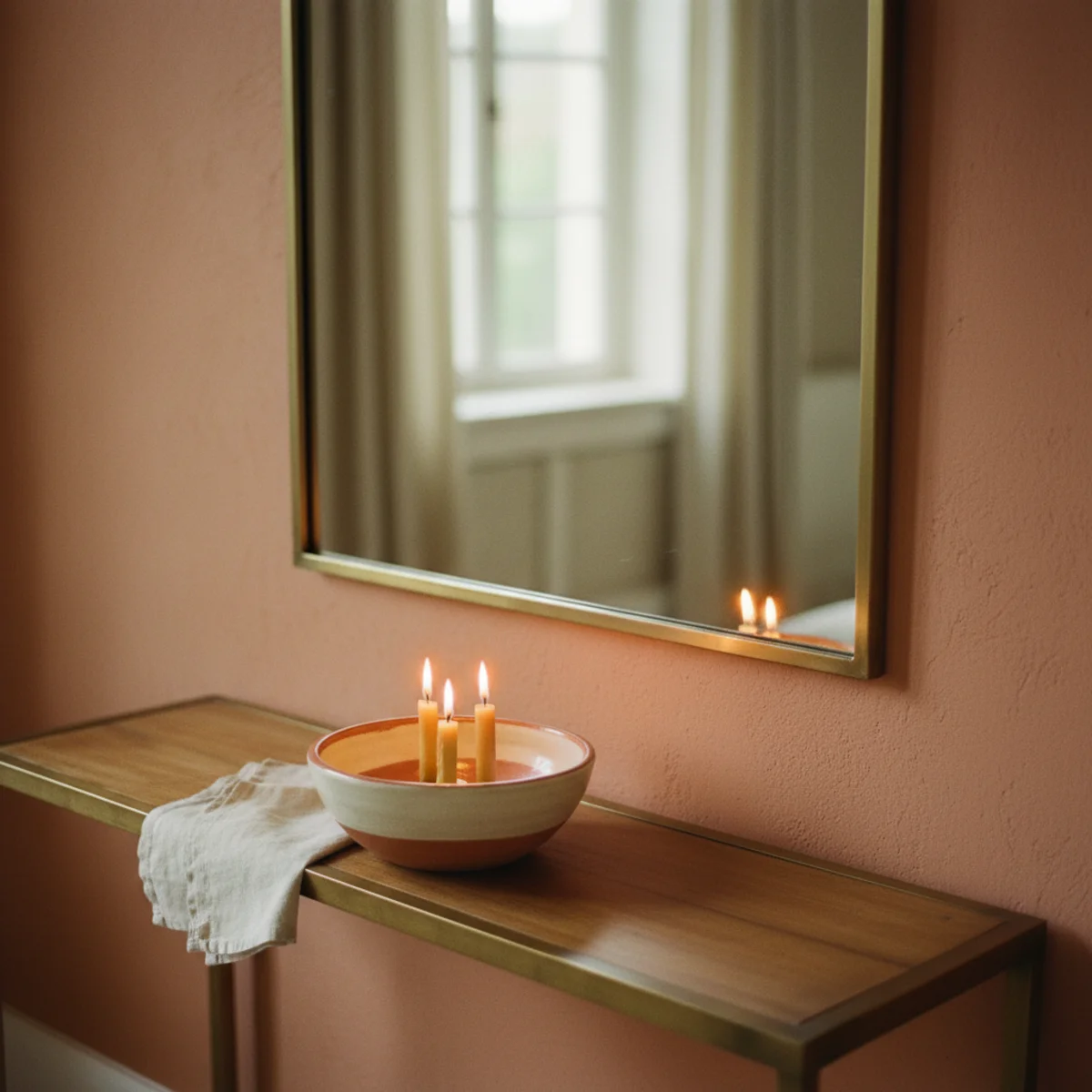
Every entryway needs three elements: a console for surface area, a mirror for last-look-before-leaving, and a bowl or tray for keys and small items. These three pieces together turn any entry from undefined transition zone into a functional room. The trio works in 4-by-4-foot entries as much as in larger foyers, and the total cost ranges from $80 (thrifted) to $400 (new).
Console: narrow 30 to 48 inches wide, 10 to 14 inches deep, 30 to 32 inches tall ($80 to $300 from Marketplace vintage or West Elm slim console). Mirror: round or rectangular, 24 to 36 inches in long dimension, hung 6 to 8 inches above the console with the mirror's center at 60 to 64 inches above the floor ($40 to $200 in warm wood or aged brass frame from thrift, IKEA, or West Elm). Bowl or tray: 6 to 10 inches across, on the console for keys, change, and small items ($5 to $30 in stoneware, brass, or wood). Position the trio against the longest unbroken wall in the entry. Add a small lamp on the console (per rule 3) for the complete setup.
AFFILIATE SLOTFOUNDATIONNarrow console + oversized mirror + bowl/tray = entry trio for $80-400 totalAdd affiliate URL when configuredWhy it works
Because each element does a job none of the others can: the console provides surface area for keys, mail, and styled objects; the mirror provides the last-look-before-leaving function plus visual depth that doubles the apparent entry size; the bowl contains the daily-clutter items that would otherwise scatter across the console. Removing any one element creates a small failure — bowl-less, keys spread; mirror-less, no last look; console-less, nowhere to land the bowl. Together they form the entry's functional core.
Pro tip — Position the bowl in the same spot on the console every day — make it the designated drop zone for keys, sunglasses, and small items that would otherwise scatter. The consistency turns the bowl into a household habit; everyone learns to drop items there, which protects the rest of the console from accumulating clutter.
Console, mirror, bowl — the trio that turns any entry into a real room. See also: thrift
02Hang an Oversized Mirror, Not Small Frames
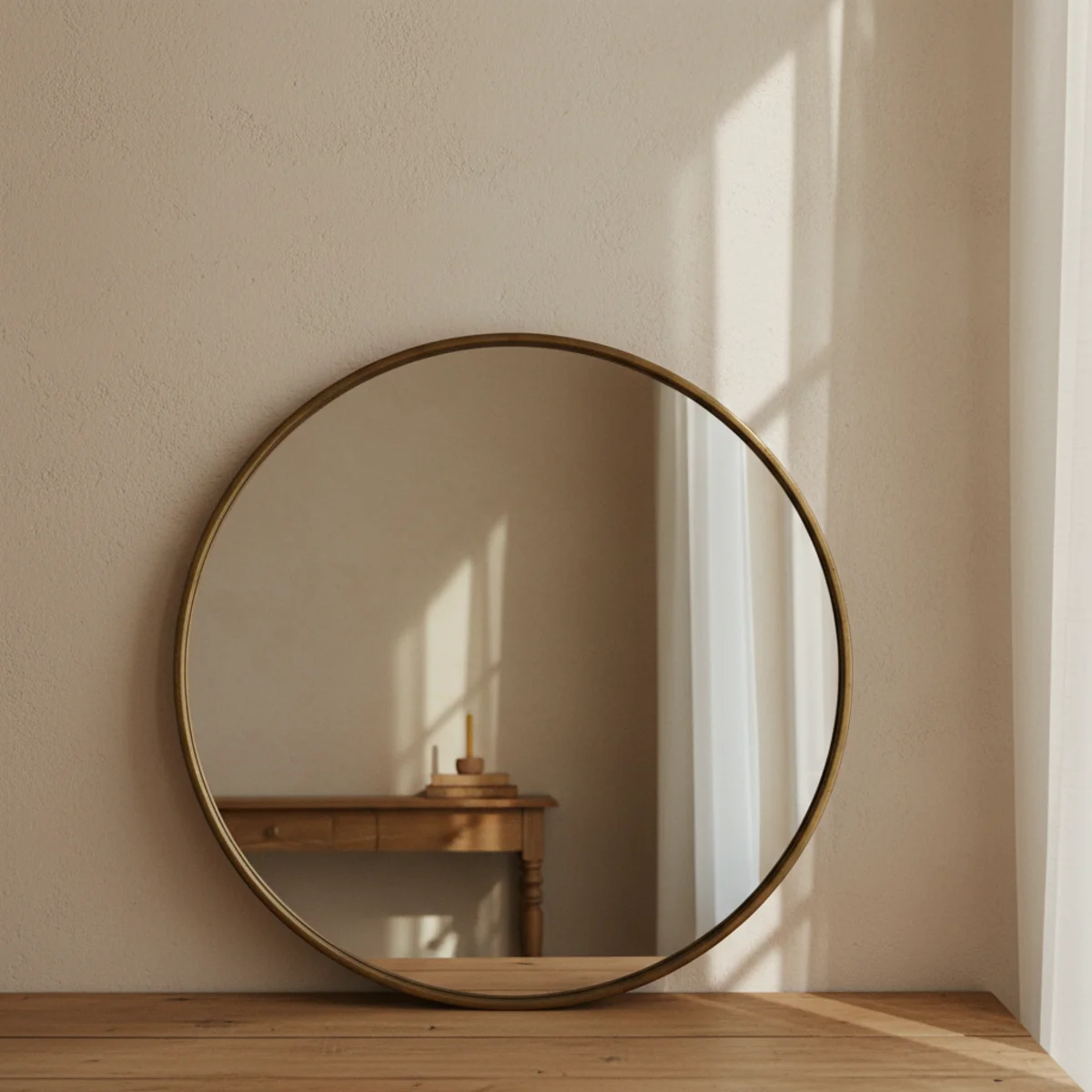
Entryways are usually small and dark; small framed art makes them feel smaller and darker. The fix is one oversized mirror — 30 to 48 inches in the long dimension, hung above the console — which bounces light from outside (when the door opens), reflects the room behind you (visually doubling apparent size), and creates a single strong focal point instead of distributing visual weight across multiple small pieces.
Choose a mirror 30 to 48 inches in long dimension — round, rectangular, oval, or arched. Frame in warm wood (oak, walnut), aged brass, or unframed beveled edges. Hang with the mirror's bottom edge 6 to 8 inches above the console top, center at 60 to 64 inches above the floor (slightly above standing eye level so it captures the whole upper body). Sources: IKEA STOCKHOLM round at $250, IKEA HOVET full-length at $180, vintage gilt or wood-framed at $80 to $300 from estate sales, Article or West Elm at $200 to $600. Position so the mirror reflects the front door or a nearby window — the bouncing of natural and exterior light is what makes entries feel larger.
AFFILIATE SLOTWALLSingle 30-48 inch mirror in warm wood, brass, or unframed positioned above consoleAdd affiliate URL when configuredWhy it works
Because the mirror does three jobs simultaneously — provides the last-look function, visually doubles the entry's apparent size by reflecting the opposite view, and bounces light from the door and surrounding rooms. Multiple small frames distribute visual weight without bouncing light, and they don't provide the functional last-look. In a tight entry where every visual decision counts, the single oversized mirror is the highest-impact wall choice available.
Pro tip — Hang the mirror to reflect a window or the entrance door when open — the reflection bounces natural light into the entry, especially when the front door opens and outdoor light briefly streams in. A 36-inch mirror positioned to reflect the door can effectively double the perceived brightness of a dim entry.
Thirty-six inch round mirror, hung to reflect the door — bouncing light, doubling the entry's apparent size. See also: vintage gilt
03Add a Warm Lamp on a Timer
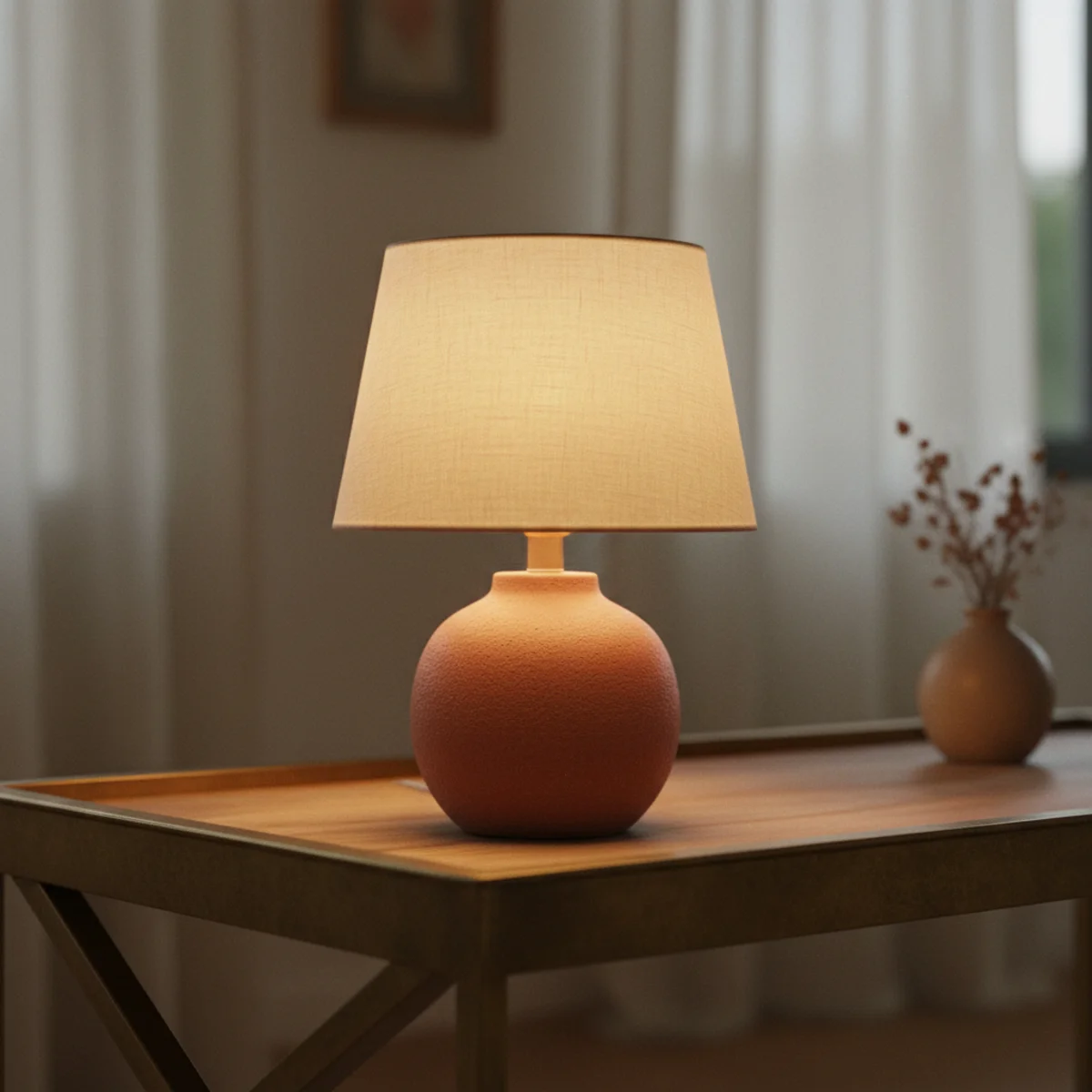
The simplest entryway upgrade that compounds across every arrival: a small table lamp on the console wired to a smart plug timed to dusk. The lamp turns on automatically every evening before you get home — you walk in to warm light instead of darkness or harsh overhead glare. The cost ($25 to $80 for the lamp plus $15 for the smart plug) is small; the daily ritual is large.
Choose a small lamp 18 to 26 inches tall with a brass, ceramic, or oak base and a linen or paper shade. Bulb: 2700K LED at 400 to 600 lumens (warmer and dimmer than living-room lamps). Sources: IKEA SVALLET clip-on at $15, thrifted brass lamp at $20 to $40, West Elm small ceramic at $79. Smart plug: TP-Link Kasa or Amazon Smart Plug at $15. Schedule the plug to turn on 30 minutes before sunset and off at midnight. Position the lamp on the console at one end, leaving the other end clear for the keys-bowl. The lamp shape becomes part of the styling; the warm light becomes part of the arrival ritual.
AFFILIATE SLOTLIGHTINGSmall lamp 18-26 inches with 2700K bulb on smart plug timed to 30 min before sunsetAdd affiliate URL when configuredWhy it works
Because the arrival home experience is the day's transition moment — walking into a dark entry signals 'still working' or 'still away,' while walking into a warm-lit entry signals 'home, safe, settled.' The lamp doesn't have to provide functional light; the visual signal of warm light is what matters. Compounded across 365 arrivals per year, the small lamp transforms the daily experience of returning home in a way that no other entry upgrade can.
Pro tip — Pair the entry lamp's smart plug with a second smart plug on a living-room lamp set to the same schedule — both lamps come on at dusk, and walking through the entry into the living room means walking through continuous warm light. The two-lamp transition is the smallest possible home-lighting automation and one of the most-noticed.
Small lamp on a smart plug, lit before you arrive — the arrival ritual that compounds across 365 evenings. See also: TP-Link Kasa
04Install a Row of Real Hooks for Coats and Bags
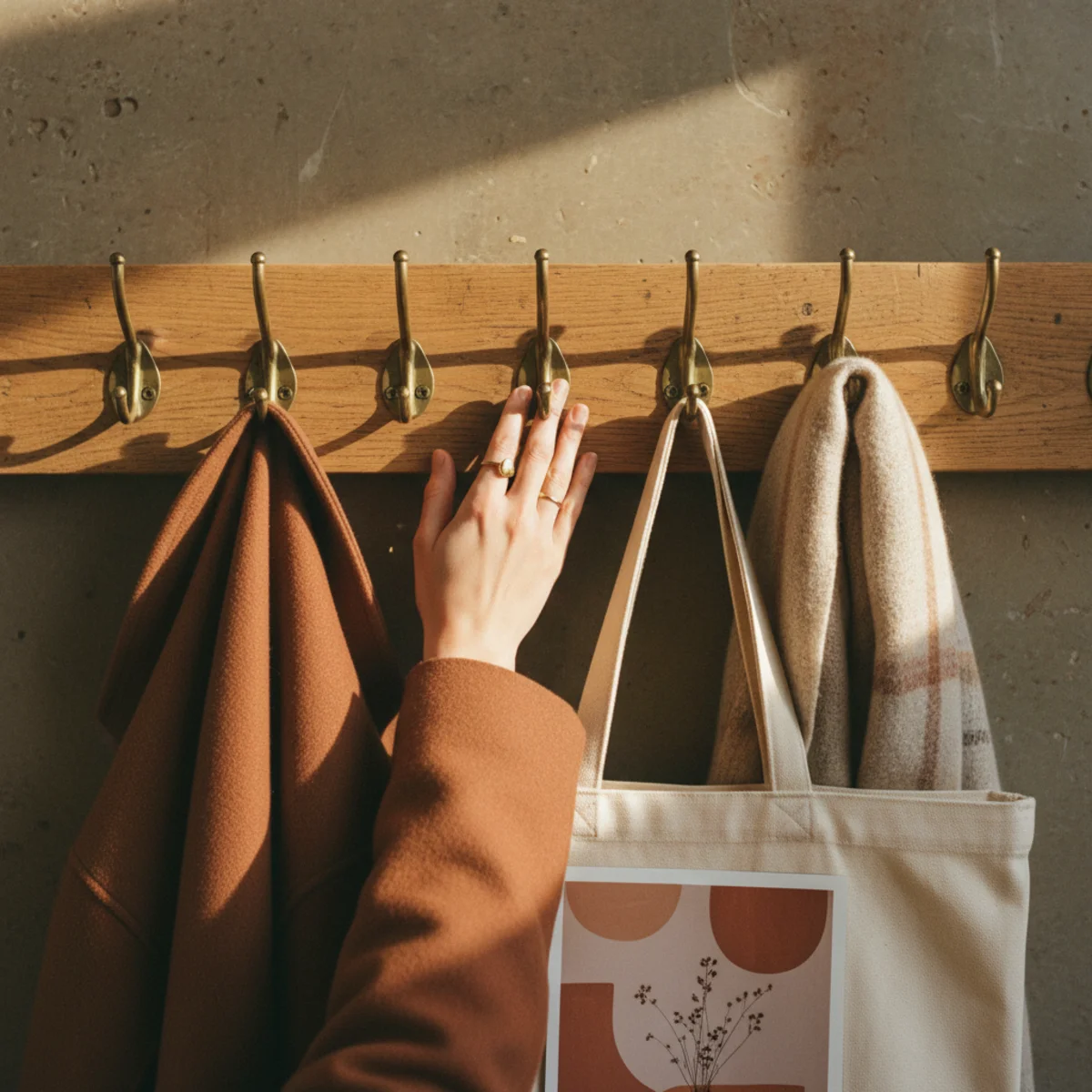
Entryways need real hooks — not a single coat hook beside the door, but a row of 4 to 6 sturdy hooks at the right height for adult coats and a separate row at lower height for kids' coats and bags. The hooks turn the entry from 'where you take your coat off' into 'where the coat actually lives,' which prevents the dining chair and sofa back from accumulating outerwear.
Install 4 to 6 hooks for adult coats at 60 to 66 inches above the floor (shoulder height for adult outerwear hanging). For households with kids, add a second row of 3 to 5 hooks at 36 to 42 inches above the floor. Use real hooks (not stick-on plastic): solid brass or oiled bronze at $4 to $20 per hook from House of Antique Hardware, Hardware Hut, or Etsy; oak or walnut wooden hooks at $5 to $25 from Etsy or specialty shops. Mount into wall studs (or use heavy-duty drywall anchors) — flimsy hooks bend or pull out with daily use. Position on a wall opposite the console-mirror trio if the entry is wide enough; mount above a small bench if the entry is narrow.
AFFILIATE SLOTFUNCTIONRow of 4-6 solid brass or wooden hooks at 60-66 inches; second row at 36-42 inches for kidsAdd affiliate URL when configuredWhy it works
Because the single most common entry failure is coats landing somewhere other than the entry — on the dining chair, the sofa back, the bedroom doorknob. The cause is almost always insufficient hook infrastructure: one coat hook for a household of three doesn't work. A row of 4 to 6 hooks at the right height makes hanging the coat the easiest option, which is what the brain chooses by default. Add the row and the dining-chair coat pile disappears.
Pro tip — Add one extra hook beyond your normal household size — guests need somewhere to hang their coat too. A household of three with 4 hooks reads sufficient for the regulars and welcoming to visitors. Four-hook setups for households of three or 5-hook setups for households of four hit the right ratio of personal use plus guest accommodation.
Five real brass hooks at adult shoulder height — the infrastructure that ends the dining-chair coat pile. See also: House of Antique Hardware
05Define the Space With a Runner
Entryways without a rug feel undefined — like the strip of floor where you take off your shoes is still part of the larger living room or hallway. A runner positioned to cover the high-traffic shoe-removal zone defines the entry as its own room visually. The runner also catches dirt and water, protecting the floor underneath, and adds the textile layer that hard-floored entries entirely lack.
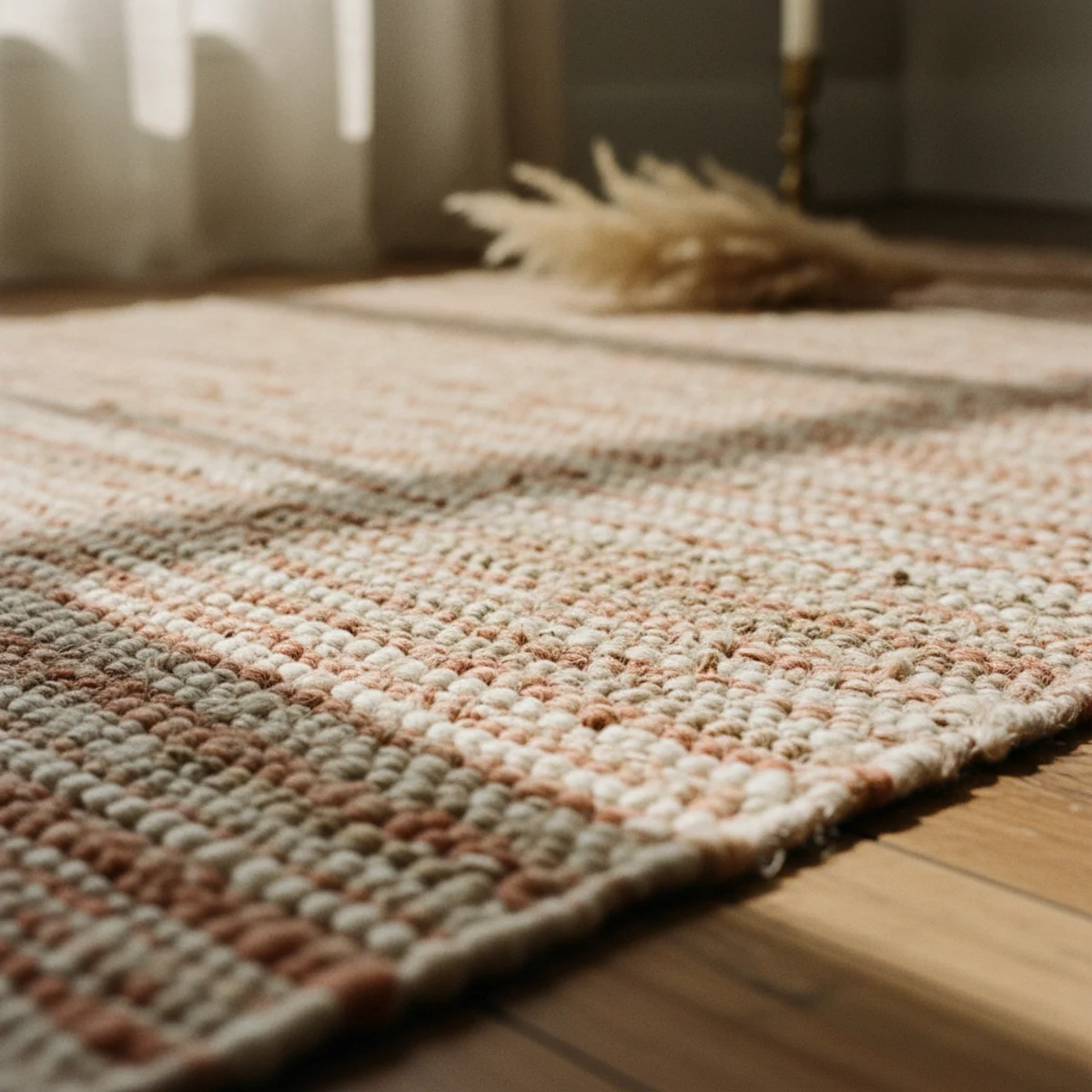
Choose a runner 2 to 3 feet wide and 4 to 7 feet long, in wool, jute, or cotton. Best types for entries: vintage Persian or kilim wool ($100 to $400 from Marketplace), durable indoor-outdoor wool ($60 to $150 from Annie Selke or Rugs USA), jute or sisal ($40 to $120 from Rugs USA — surprisingly durable for entries). Position so the runner covers the high-traffic zone — typically the strip from the front door to the start of the main living space (3 to 6 feet). The runner should be at least 2 feet wide to feel proportional; narrower than 2 feet reads as a hallway runner, not an entryway rug. Avoid synthetic or rubber-backed rugs (don't breathe, can damage hardwood floors). Use a non-slip rug pad ($15 to $30) underneath.
AFFILIATE SLOTFLOOR2-3 foot wide x 4-7 foot long runner in wool, jute, or cotton on non-slip padAdd affiliate URL when configuredWhy it works
Because the rug's edges create a visual boundary that the eye uses to define where the entry starts and stops. Without a rug, the entry's floor flows into the adjacent room's floor — visually they're one continuous space. With a rug, the entry has a defined floor footprint, which the brain reads as a separate room. The boundary is what turns transition space into destination space.
Pro tip — If your entry opens directly into a living room (no architectural separation), the runner becomes even more important — it's the only visual element defining the entry as distinct from the living room. Choose a runner with a different color or pattern than your living-room rug; the contrast signals two zones rather than one continuous space.
Vintage runner covering the shoe-removal zone — the boundary that turns transition space into a real entry. See also: vintage Persian
06Add Life With Stems or a Plant
Every entryway benefits from one living or organic element — a tall vase of branches, a single stem in a bud vase, a small potted plant, dried botanicals. The organic shape breaks the geometric rigidity of console, mirror, and rectangular hooks. The plant also reads as life amid the otherwise functional entry hardware, signaling that this is an inhabited home rather than a transit zone.
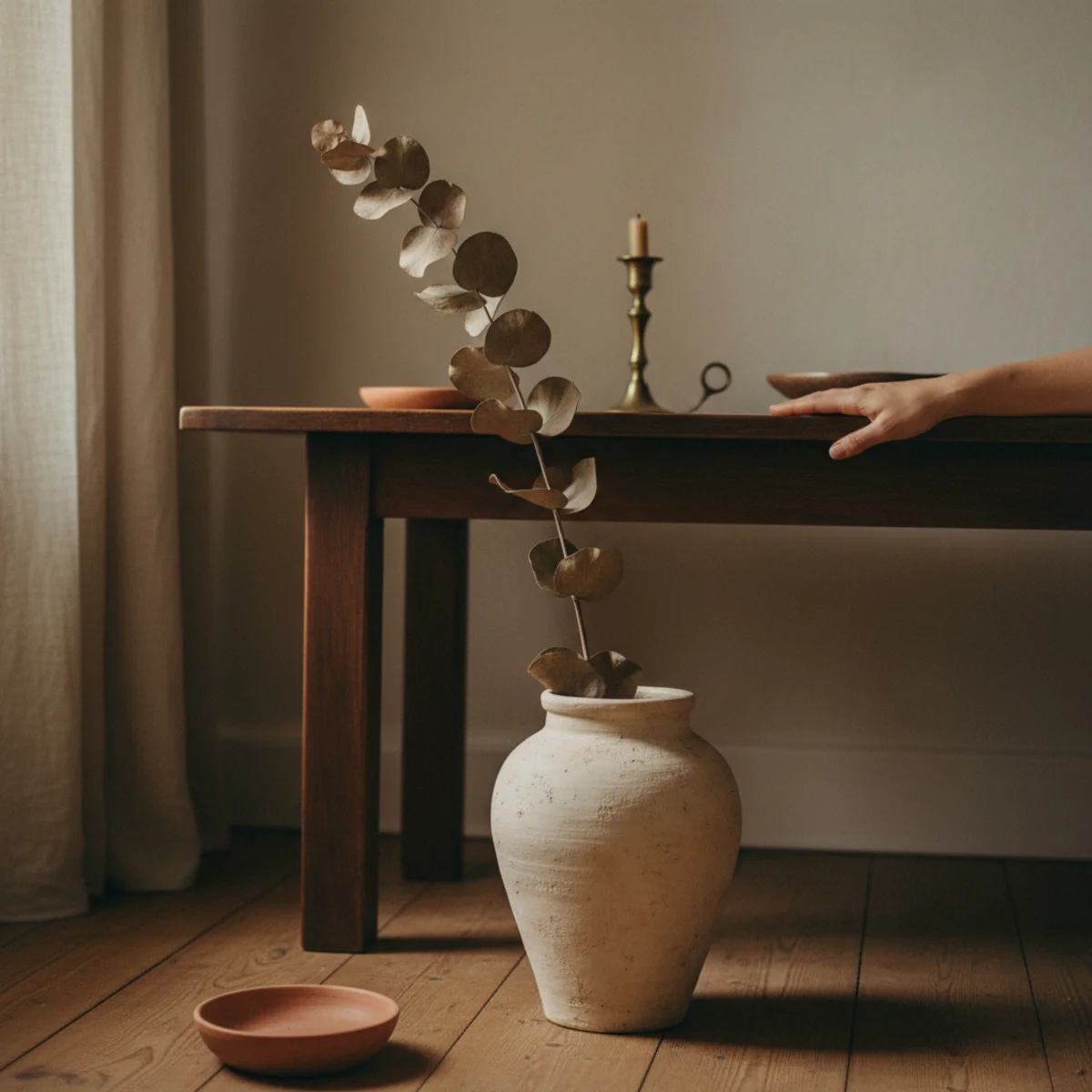
Best entryway plants: tall floor plant beside the console (snake plant at 2 to 3 feet, rubber plant at 3 to 5 feet — both forgiving of low light), tall vase of branches (eucalyptus, olive, or dried wheat at 24 to 36 inches in a heavy ceramic vase) on the console, single small succulent or pothos on the console at 4 to 8 inches in a small terracotta or stoneware pot. Avoid: fresh-cut flowers (require constant replacement), delicate plants needing high light (entries are often dim), large messy plants (drop leaves on the floor). One organic element per entry is enough; the contrast is what does the work.
AFFILIATE SLOTORGANICOne tall plant beside console, one tall branch arrangement, or one small succulent on consoleAdd affiliate URL when configuredWhy it works
Because organic shapes contrast with the geometric rigidity of the entry's functional elements (rectangular console, round-or-rectangular mirror, straight row of hooks). The slight irregularity of plant growth reads as life amid the static decor. The plant also adds a subtle color note (green leaves, dried tan branches) that the otherwise neutral entry palette doesn't provide. One small plant or one tall branch in a heavy vase is enough; the contrast is what does the work, not the volume of greenery.
Pro tip — Use a tall branch arrangement in a heavy ceramic vase rather than a plant if your entry has limited natural light — dried eucalyptus or olive branches last 1 to 2 years and require zero maintenance. The branches read as architectural and intentional, where a wilting plant in low light reads as neglected.
One tall branch arrangement, one small succulent — organic life amid the entry's functional rigidity. See also: snake plant
07Paint the Entry a Confident Color
Entryways are the room where bold paint choices work best — they're small enough to absorb saturated color without overwhelming, separate enough from adjacent rooms that they read as a defined moment, and brief enough in viewing time that even strong colors don't fatigue. A confident entry color (warm sage, deep navy, terracotta, plaster pink, warm charcoal) makes the entry feel like a deliberate room rather than leftover space.
Best entry paint colors: Farrow & Ball Setting Plaster 231 (warm plaster pink), F&B Bancha 298 (deep olive), Benjamin Moore Kendall Charcoal HC-166 (warm charcoal), F&B Hague Blue 30 (deep saturated navy), Backdrop Adobe Lawn (warm clay tone). Apply to all four walls plus ceiling for the full envelope effect. Match trim to walls (per the best-paint-for-warm-home rules) or use a slightly warmer cream trim if you prefer subtle contrast. The total project takes one Saturday, costs $65 to $95 in materials, and transforms how every visitor and household member experiences the entry.
AFFILIATE SLOTPAINTF&B Setting Plaster, Bancha, BM Kendall Charcoal, or Hague Blue on all four walls + ceilingAdd affiliate URL when configuredWhy it works
Because entries are small (10 to 30 square feet typically) and the eye experiences them briefly — usually less than a minute per visit. Saturated colors that would fatigue across a 200-square-foot living room read as confident moments in a 15-square-foot entry. The brevity of viewing also lets you commit to a stronger color than you'd risk in a room where you'll spend hours daily. The entry is the room where bold color choices have the least downside and the most visual impact.
Pro tip — Pick the entry color to complement (not match) the adjacent room's color — if your living room is warm cream, choose warm clay or sage for the entry to create a tonal shift between rooms. The transition between colors as you walk from entry to living room reads as deliberate architectural moment rather than accident.
Hague Blue on every surface, warm brass accents — the confident color choice that small entries reward. See also: F&B Setting Plaster
08Style a Catch-All Tray on the Console
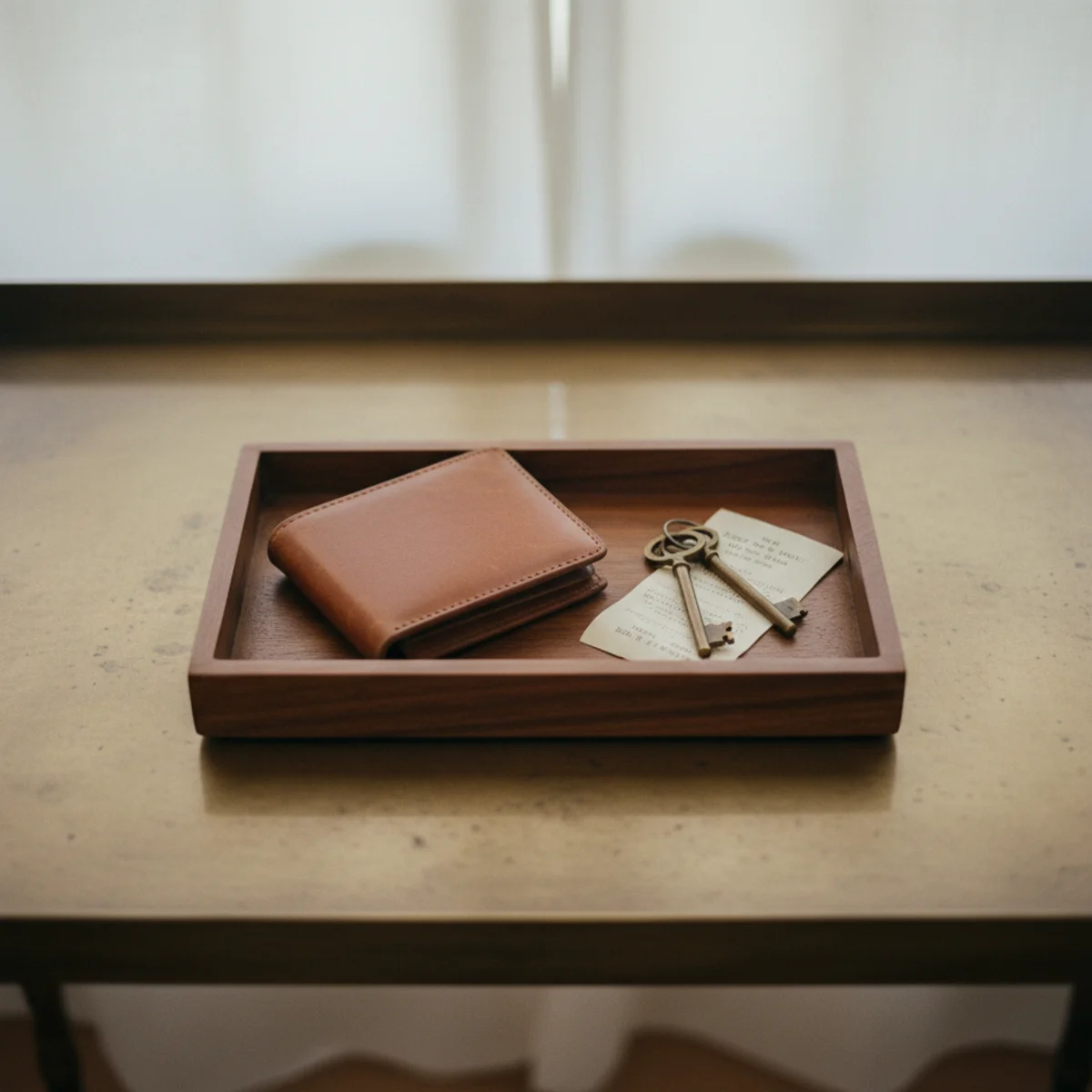
The console needs both a styled vignette and a designated daily-clutter zone — and the catch-all tray solves the conflict. A 6 to 10-inch wooden or brass tray on one end of the console contains keys, change, sunglasses, hand cream, mail — the everyday items that would otherwise scatter. The tray turns daily clutter from chaos into contained casualness, while leaving the rest of the console for the styled vignette.
Choose a tray 6 to 10 inches across, 1 to 3 inches deep, in wood (oiled walnut, oak), brass, or ceramic. Sources: thrifted at $3 to $20 from estate sales and ReStore, HomeGoods at $10 to $25, West Elm at $24 to $59. Position on one end of the console (typically the end closest to the front door for easy drop-and-grab). Inside the tray: keys (always), change, sunglasses, lip balm, hand cream, occasional small wallet items, daily essential cards. NOT inside: receipts (let them accumulate visually, file them separately), random papers, packaging. The tray contains the chaos within a defined boundary; the boundary is what makes daily clutter readable as casual styling rather than mess.
AFFILIATE SLOTSTORAGE6-10 inch wood, brass, or ceramic catch-all tray on one end of consoleAdd affiliate URL when configuredWhy it works
Because the tray creates a defined zone for daily clutter — everything within reads as 'okay this is daily life,' everything outside reads as styled vignette. Without the tray, every set of keys dropped on the console reads as another piece of chaos. With the tray, the same keys read as contained casualness in their designated spot. The boundary is what does the styling work — the items inside matter less than the fact that they're contained.
Pro tip — Empty the tray every Sunday — receipts, random cards, unused items, anything beyond the daily-essential six or seven items. The weekly purge prevents the tray from becoming the new chaos zone, which it will if items accumulate beyond the contained boundary. The boundary works only with the discipline of regular clearing.
Walnut catch-all tray containing daily essentials — chaos contained, the rest of the console styled. See also: thrifted at $3 to $20
09Add a Bench or Stool for Shoes
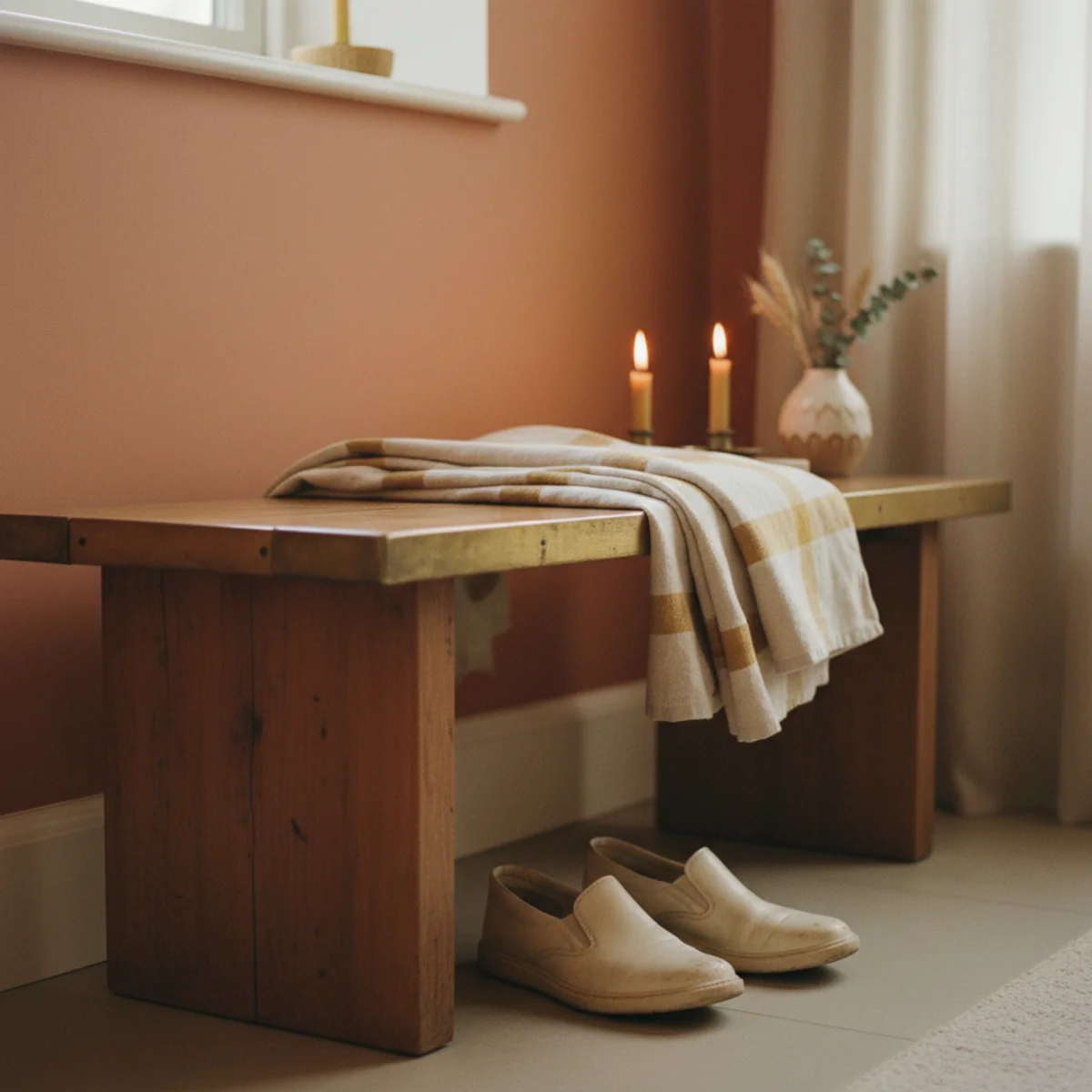
Putting on shoes while standing is uncomfortable, and the lack of a seat in most entries is why shoe-removal happens with one hand against the wall or sitting awkwardly on the stairs. The fix is a small bench or stool — 36 to 48 inches long for a bench, or two stools at 14 to 18 inches tall — positioned beside the console. The seat becomes the place where shoes get on and off, plus secondary use as guest-seat for visitors removing footwear.
Bench options: upholstered linen or boucle bench at 36 to 48 inches long, 14 to 18 inches deep, 16 to 18 inches tall ($150 to $400 from West Elm, Article, or thrifted vintage at $40 to $150). Wooden bench at the same dimensions ($80 to $300 retail, $30 to $120 thrifted). Stool options: pair of wooden stools or one small upholstered stool ($40 to $200 each). Position the bench or stool perpendicular to the console (against the wall opposite the console-mirror trio) or beneath the row of hooks for the complete shoe-and-coat zone. Add a wool or linen cushion if the seat is hard wood ($15 to $40 from H&M Home or Etsy).
AFFILIATE SLOTFURNITUREUpholstered or wooden bench 36-48 inches long, or pair of stools at 14-18 inches tallAdd affiliate URL when configuredWhy it works
Because entryways are usually designed (in builder homes and rentals) without seating — the floor space is treated as transition rather than as functional room. The result is the household compensates by sitting on stairs, leaning against walls, or skipping the bench step entirely (putting on shoes elsewhere). Adding even a small bench or stool fixes the functional gap and transforms the entry from rushed-through to actually-used. The bench also becomes the host's place to sit while removing kids' shoes or guests' boots.
Pro tip — Use the bench's hollow underneath as shoe storage if your bench has open legs — a wicker basket or shallow tray beneath holds 2 to 4 pairs of frequently-used shoes, which keeps them off the main floor while staying accessible. The combination of bench-on-top plus storage-underneath turns 4 square feet of floor into shoe-management infrastructure.
Linen bench plus basket underneath — shoes off, sitting comfortable, four square feet doing double work. See also: thrifted vintage
10Hang One Small Piece of Personal Art
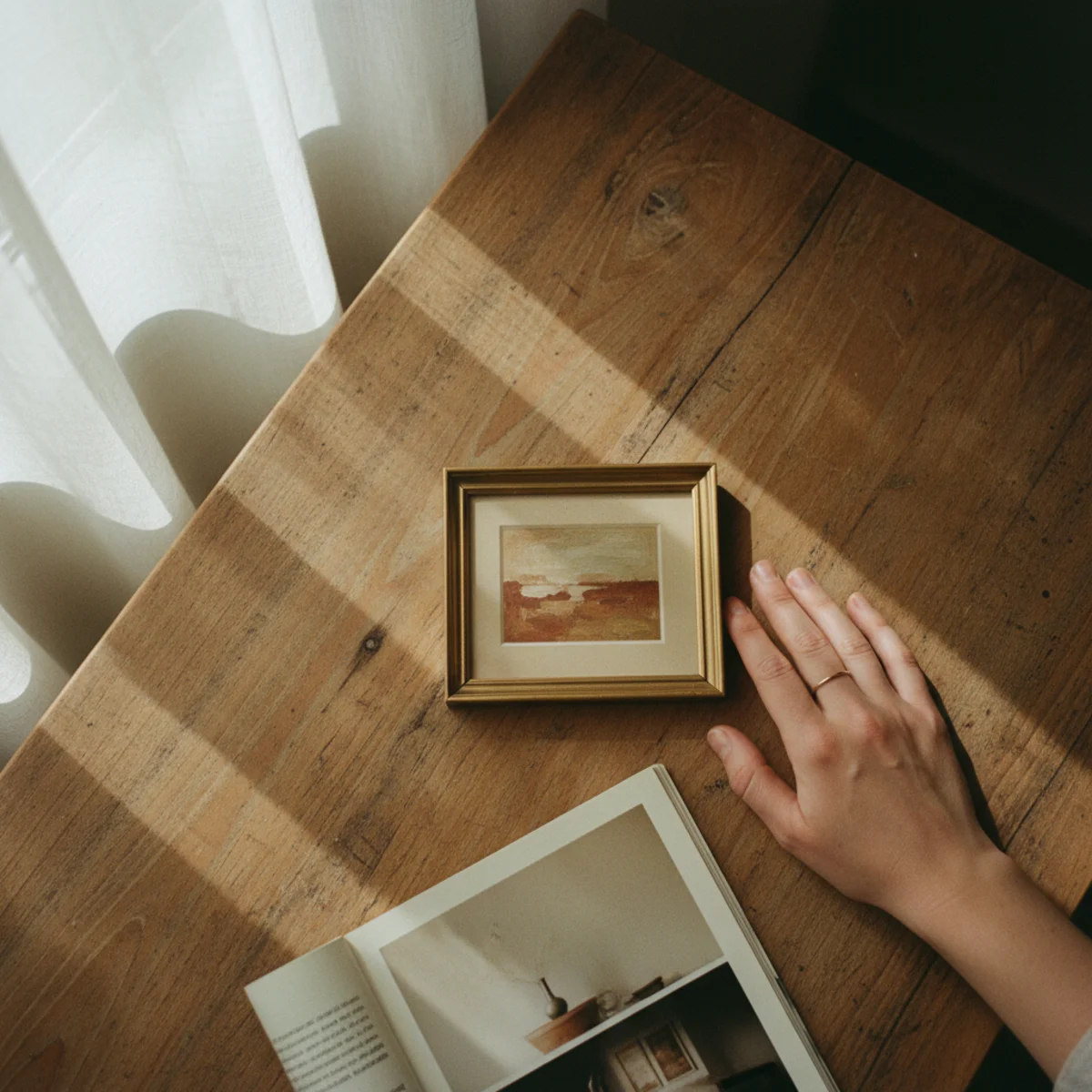
Beyond the oversized mirror, hang one small piece of personal art somewhere in the entry — a small framed photograph, a vintage map, an inherited piece, a child's drawing in a nice frame. The piece signals that this is a specific person's home, not a generic apartment. It's the smallest possible signal of identity and the one that makes the entry feel inhabited rather than installed.
Choose a small framed piece 8x10 to 16x20 inches, in a warm wood or aged brass frame matching the console and other entry hardware. Subject matter: family photograph (black-and-white reads more sophisticated than color), vintage postcard or map of a meaningful place, small landscape or botanical print, child's small artwork in a quality frame. Position above the bench or stool (rule 9), or on the wall adjacent to the mirror, or above the row of hooks. The piece is at eye level (52 to 58 inches center) and should read as deliberately placed, not just hung wherever there was wall space.
AFFILIATE SLOTARTSmall framed 8x10-16x20 piece in warm wood or brass frame, personal subject matterAdd affiliate URL when configuredWhy it works
Because the rest of the entry's elements (console, mirror, lamp, hooks, bench) are functional infrastructure — none of them communicates personality. The single piece of personal art is what signals 'a specific person lives here.' Without it, the most beautifully styled entry still reads as a hotel lobby or a model home. With it, the same entry reads as a particular person's particular doorway.
Pro tip — Frame a vintage postcard from a meaningful trip — postcards are typically $1 to $5 from antique shops, fit standard 4x6 or 5x7 frames at $15 to $30, and the small framed result reads as inherited family piece even when you bought it for $20 total. The small scale and warm aged paper of vintage postcards specifically suits entry-art proportions.
One framed family photograph beside the console — identity signal that hotel entries cannot match. See also: framed family photograph
11Use a Lidded Basket Under the Console
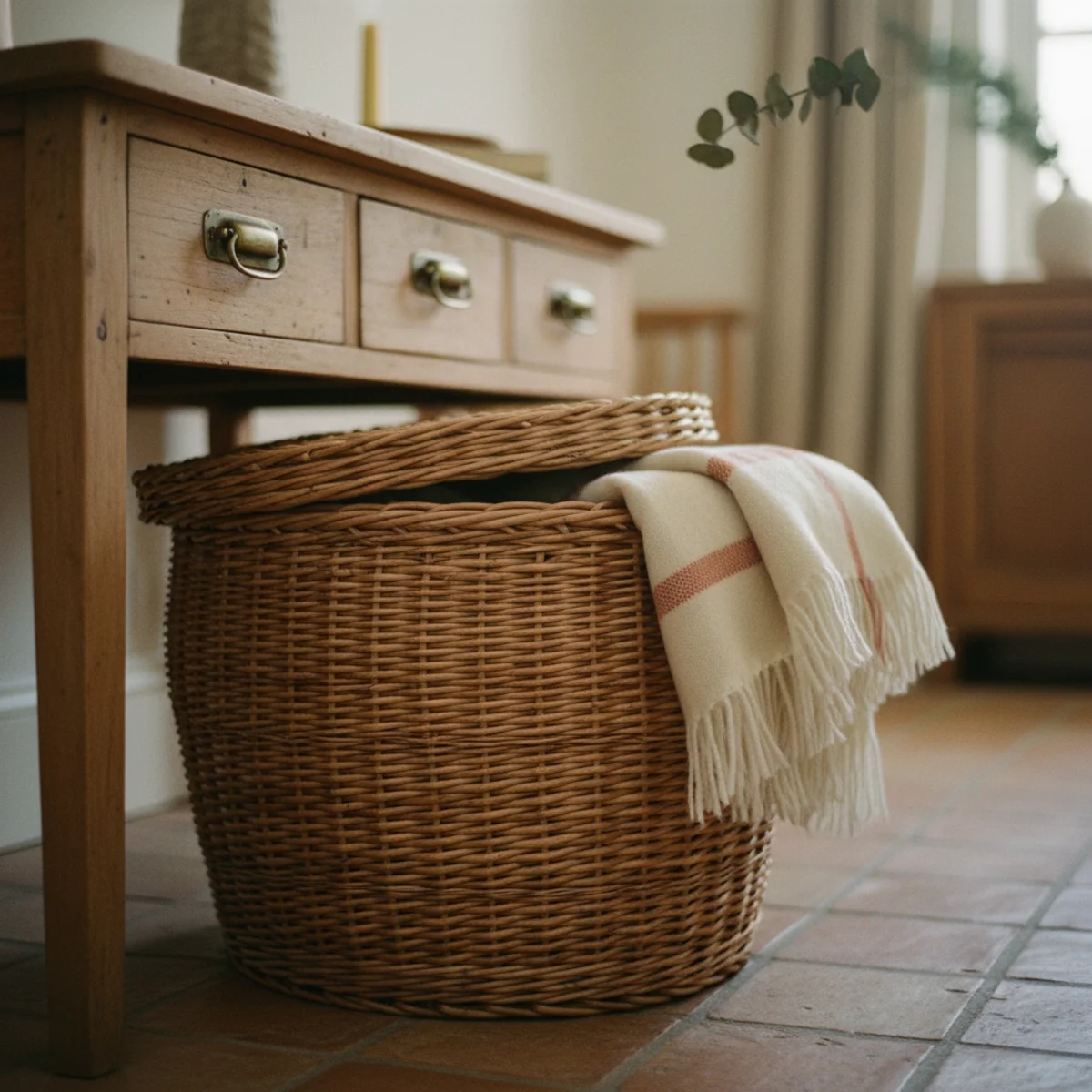
The space under most console tables is wasted vertical real estate. A lidded basket positioned underneath holds the bulkier accumulating items — extra shoes, dog leashes, mail in progress, library books, returns to be made — without them visible. The lid hides contents (visual cleanliness); the basket form keeps the space functional (storage). Total cost: $30 to $80 per basket.
Choose a lidded basket 14 to 18 inches square or 20 to 24 inches wide x 10 to 14 inches deep, with a height that fits underneath the console (typically 14 to 20 inches). Materials: seagrass, water hyacinth, rattan, woven cotton, or wicker. Sources: IKEA NIPPRIG at $30, Pottery Barn at $80, Target hyacinth at $40, vintage at $15 to $40 from estate sales. The lid is essential — without it, the basket contents read as visible clutter and defeat the purpose. Position underneath the console with the front face visible from the room. Style with one small item leaning beside it if there's room (a tall vase, an umbrella, a small framed piece).
AFFILIATE SLOTSTORAGELidded seagrass or wicker basket 14-24 inches wide x 10-14 deep x 14-20 tall under consoleAdd affiliate URL when configuredWhy it works
Because the space under most console tables is otherwise wasted — visible floor that contributes to the entry but holds nothing. The basket converts the wasted vertical space into hidden storage while preserving the styled look (the basket reads as part of the entry's visual styling, not as a storage solution). The lid is what makes the trick work; an open basket would read cluttered, but a lidded basket reads contained and intentional.
Pro tip — Use the basket for actively-rotating items — library books, returns, items to bring to the office tomorrow, the bag of clothes for donation — rather than long-term storage. The rotation keeps the basket from becoming a black hole of forgotten items, which it will become if used for permanent storage. Rotate contents weekly or whenever the basket fills.
Lidded basket under the console — hidden storage that uses wasted vertical space without breaking the styling. See also: IKEA NIPPRIG
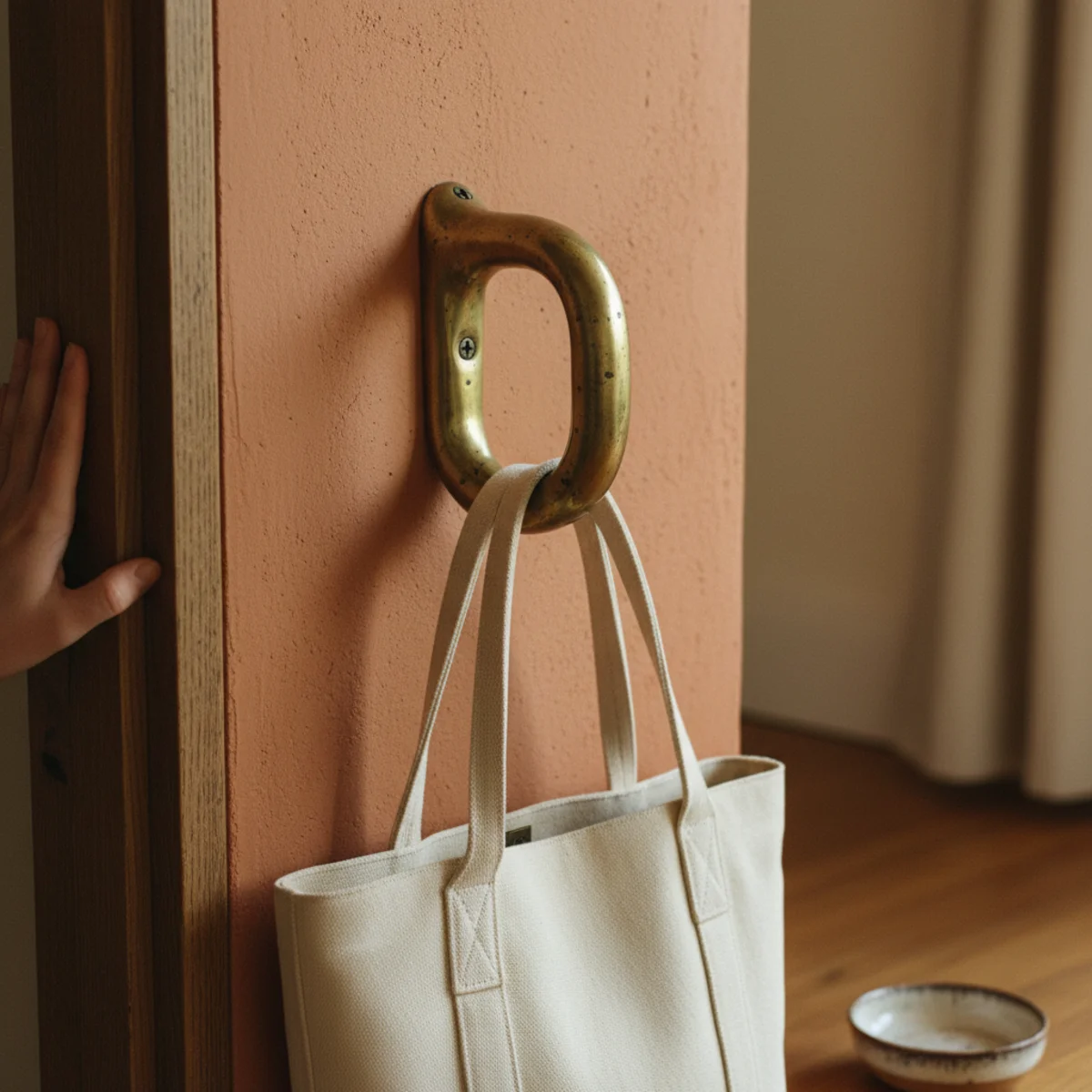
12Add a Catch Hook for Bags and Backpacks
The row of hooks handles coats; bags and backpacks need a different solution — they're heavier, less hangable on coat hooks, and accumulate at the worst times (school days, gym mornings). The fix is a single heavy-duty hook on a low position on the wall, or a small hook rail dedicated to bags. The catch hook prevents the bag from landing on the floor in the entry, which is the single biggest entry-clutter source.
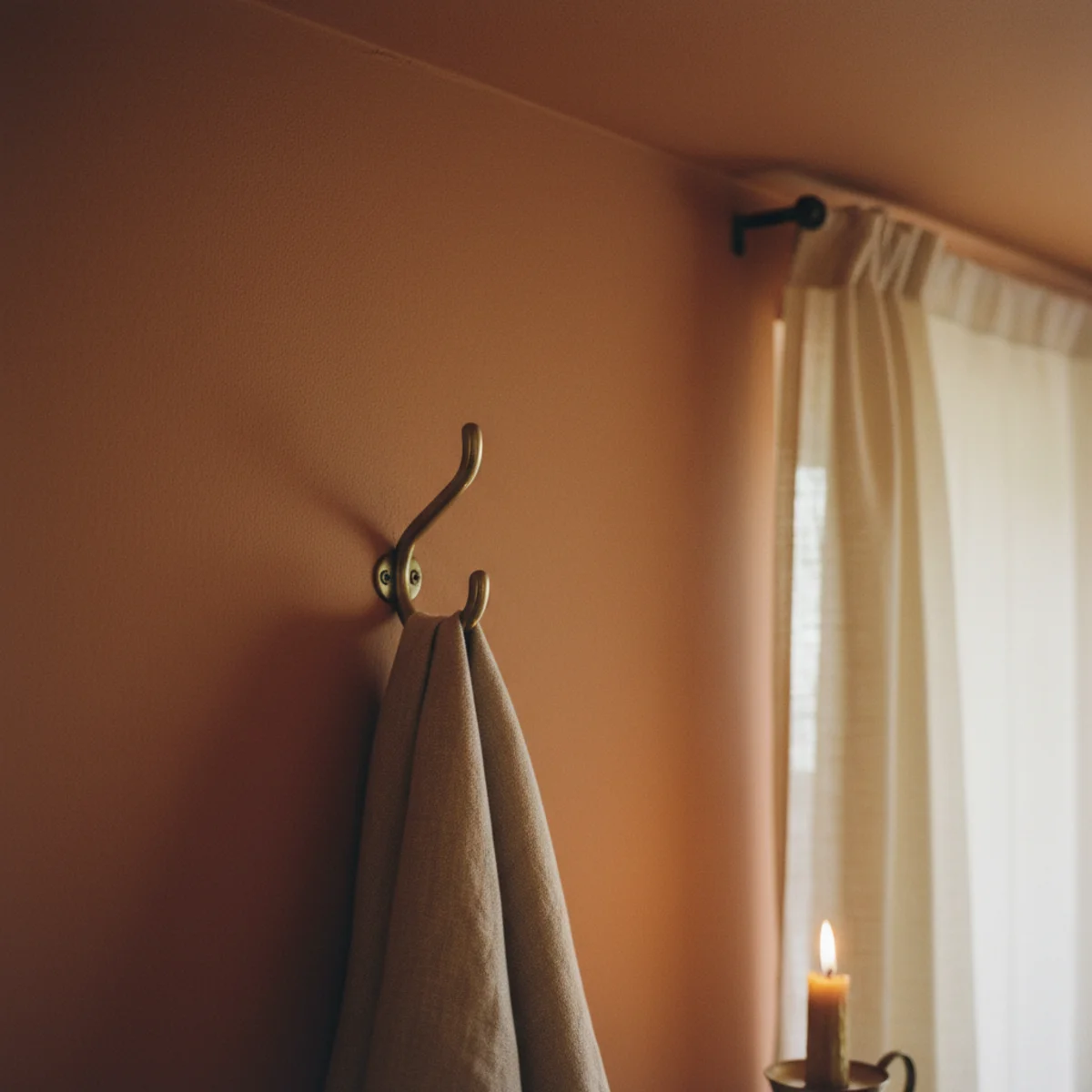
Install a single heavy-duty hook (or a small 2-hook rail) at 40 to 48 inches above the floor — low enough for easy drop-off, high enough that bag straps don't drag on the floor. Use a hook rated for 25+ pounds: solid brass or oiled bronze hook at $8 to $25 from House of Antique Hardware, or a basic heavy-duty wall hook at $5 to $15 from Home Depot. Mount into a wall stud, not just drywall (bag weight will pull anchors out over time). Position on the wall opposite the row of coat hooks (or adjacent to it if space is limited) — the bag zone separated from the coat zone reads more organized than mixed hooks holding both.
AFFILIATE SLOTFUNCTIONOne heavy-duty hook (or 2-hook rail) rated 25+ pounds at 40-48 inches above floorAdd affiliate URL when configuredWhy it works
Because bags and backpacks are heavier and harder to hang than coats — adult coats slide over coat hooks easily, but heavy bags need to be set down or hung from sturdy single-point hooks. The row of coat hooks works for what they're designed for (coats); bags belong on their own dedicated hardware. Without a bag-specific hook, the bag lands on the floor 9 times out of 10, which becomes the single biggest source of entry clutter in households with daily-bag-users (kids, professionals).
Pro tip — Add one bag hook per regular-bag-user in the household — solo person needs one hook, family of four typically needs three (kids share one hook for school bags, adults have separate hooks for work bag and gym bag). The right number prevents the dining-chair-back from becoming the de facto bag holder, which it will if bag-hook capacity is insufficient.
One heavy-duty bag hook at 44 inches — the small infrastructure that ends the floor-bag pile. See also: solid brass
How to build an entryway from scratch
Working with a blank wall by the door? Build it in this order.
- 1Measure the footprint
Note the wall width and the depth you can give up without blocking the door's swing or the walking path. This decides console versus slim shelf versus hooks-and-mirror only.
- 2Choose the surface
Pick a console no deeper than the space allows — in tight halls, a wall-mounted shelf or floating console keeps the floor open. Leave at least 30 inches of clear passage.
- 3Hang the mirror and light
Center the mirror above the console at eye level, then add the warm light source — lamp, sconce, or both. Light and reflection do most of the welcoming work.
- 4Add storage and softness
Finish with hooks for coats, a tray or bowl for small things, a runner underfoot, and one personal object. Now the entry both works and welcomes.
Quick tips
- Keep a lidded basket under the console for shoes so the floor stays clear and the clutter stays hidden.
- Put the key bowl exactly where your hand naturally lands when you walk in; convenience makes the habit stick.
- Swap the stems seasonally — branches in spring, grasses in fall — to keep the entry feeling current with no effort.
- If you rent, choose a leaning mirror and adhesive or freestanding hooks to skip the wall holes.
- Light the entry warmer than the rooms beyond it, so stepping inside always feels like a small upgrade in comfort.
- Mount anything weight-bearing into a stud — loaded hooks and heavy mirrors pull anchors out of drywall.
Entryways for different homes
Shallow, vertical solutions — a floating shelf, a leaning mirror, a row of hooks, a runner — with the floor kept clear.
A console used as a soft divider where the door flows into the living room, tying into small-space layout ideas.
A round pedestal table, a larger light fixture, and a statement mirror — but the warm-light-and-personal-object rule still applies.
More hooks, a sturdy bench, and washable textiles — function first, then the warmth layered on top.
An entryway has one job: to tell you that you're home before you've taken your coat off.
Frequently asked questions
What's the most important element of an entryway?+
How do I make a small entryway feel bigger?+
What lighting works best in an entryway?+
How many coat hooks should an entryway have?+
Should I paint an entryway a bold color?+
Do I need a bench in my entryway?+
This is the one room you can finish this weekend. Set a console by the door, hang a mirror above it, add a warm lamp on a timer and a bowl for your keys. Walk out and walk back in. We'd put the lamp on a timer before anything else — arriving to a softly lit entry on a dark evening does more for the welcome than any other single thing. Make the first room you meet each day a small, reliable hello.