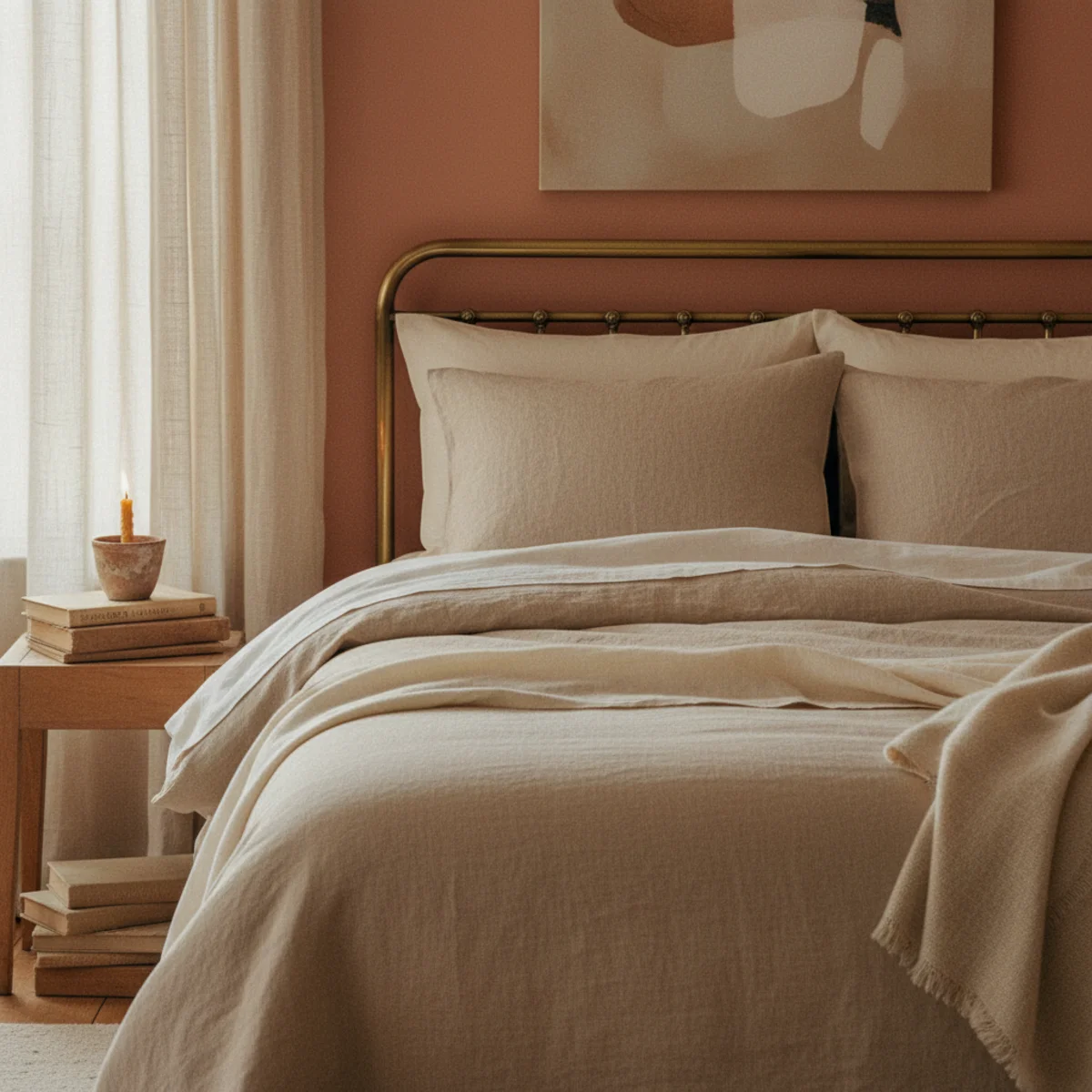
This guide is based on testing linen bedding across multiple brands, weights, finishes, and price points over years of actual sleeping use. Each category below names specific specifications that matter (European flax versus generic, gsm weight, stonewashed versus crisp, undyed natural versus dyed), exact price ranges at quality versus budget, the best brands at each tier, and the marketing tricks to avoid. The goal is helping you make one investment decision (bedding lasts 8 to 15 years with proper care) that you don't regret rather than buying multiple times into the wrong specifications.
Linen bedding categories matter because the differences are functional rather than cosmetic. European flax versus generic flax determines actual fiber strength and longevity. Mid-weight versus light-weight determines temperature regulation. Stonewashed versus crisp determines the lived-in aesthetic and immediate softness. Undyed versus dyed determines color longevity across washes. The eight categories below cover the real decision points; the prices and brands name where to actually buy.
By the end of this guide, you'll know which linen bedding to buy and why — the European flax quality marker, the mid-weight gsm specification, the stonewashed finish for instant softness, the undyed earthy tones for color longevity, the generous sizing for layered look, the mix-and-match set strategy, and what to skip (linen-cotton blends marketed as linen).
WHAT'S INSIDE
- Why European flax (specifically French and Belgian) outperforms generic flax sourcing significantly
- The 165–185 gsm mid-weight specification that fits most homes and most climates
- Stonewashed for instant softness — and the specific look it produces immediately
- Why undyed earth tones (cream, oat, terracotta, sage) hold color across decades where dyed bedding fades
Spend on the things that touch your skin every night. Linen is the rare upgrade you feel from the first hour to the last year.
— Real Simple [citation needed — verify before publish]
What makes good linen bedding?
Good linen bedding comes down to flax quality, weight, and finish. The best linen is made from European flax — French or Belgian — woven to a mid-weight (around 165–185 gsm) that's substantial enough to drape and soften without being heavy or sheer. Anything much lighter feels flimsy; anything heavier sleeps hot.
Finish is where the experience lives. Stonewashed or garment-washed linen arrives pre-softened and relaxed, with that lived-in rumple; crisp or unwashed linen starts stiffer and softens over weeks of use. Both end up soft — washed is just a head start. The thing to ignore is thread count, which is a cotton metric that means little for linen; weight in gsm and the flax source tell you far more about what you're buying.
More in Shopping Guides you may love
See allWhy linen bedding matters more in 2026
As the warm, natural bedroom took over, linen replaced crisp cotton percale as the bedding of choice — its irregular weave catches light and reads soft even when the bed is made, which suits the cozy, layered look exactly. Pinterest's linen bedding searches climb every year, especially in undyed, earthy tones.
The buy-fewer-better shift drives it too. Linen costs more upfront than cotton but lasts decades and improves with every wash, so people increasingly treat it as a once-a-decade investment rather than a seasonal replacement. The secondhand and deadstock markets have grown around it, making good linen reachable below the boutique prices that dominate the category.
What to compare when buying linen bedding
01European Flax — The Quality Marker
The single most-important linen bedding specification: look for European flax certification (Masters of Linen, European Flax) on the product. European flax is grown in France, Belgium, and the Netherlands under specific agricultural conditions that produce longer, stronger fibers than flax from other regions. The cost premium ($20-50 per duvet cover) is justified by 30-50% longer useful life.
European flax sources and brands: MASTERS OF LINEN CERTIFIED brands — Magic Linen ($80-200 per duvet cover, Lithuania-based using Belgian flax), Linoto ($300-600 per duvet cover, US-made from European flax), Rough Linen ($200-400, California-made from European flax), Cultiver ($300-500, Australian brand using French flax). EUROPEAN FLAX (FROM FRANCE/BELGIUM/NETHERLANDS) without specific certification but verifiable sourcing — Quince ($80-100 per duvet cover, European flax woven in Portugal), Coyuchi ($200-400, European flax with stonewashed finish), Brooklinen Linen ($200-400, European flax). GENERIC OR UNSPECIFIED FLAX — most lower-priced 'linen' under $80 per duvet cover, big-box retailer linen, fast fashion brands. The difference matters in two specific ways: fiber length (European flax produces longer fibers, which weave into stronger fabric) and growing conditions (longer growing season produces fibers with better strength and drape). Generic flax from China, India, or other regions is shorter and weaker; the resulting fabric pills faster, tears more easily, and ages worse.
AFFILIATE SLOTQUALITYMasters of Linen certified or verifiable French/Belgian flax: Magic Linen, Linoto, Quince, Coyuchi, Brooklinen at $80-600Add affiliate URL when configuredWhy it works
Because European flax (particularly French and Belgian) grows under specific conditions — cooler climate, longer growing season, well-draining soil, sufficient rainfall — that produce longer, stronger fibers than flax grown in warmer or drier regions. The longer fibers weave into fabric with fewer joins per inch, which means fewer points of weakness, less pilling, less tearing, and better aging across decades of use. The European flax industry has also maintained traditional production methods (water retting, dew retting) that preserve fiber quality where industrial processing in some other regions weakens fibers. The combination of growing conditions and processing tradition is what makes European flax specifically valuable.
Pro tip — Look for the Masters of Linen certification logo on product packaging or product pages — the certification independently verifies European flax origin (specifically French) and the entire production chain through to the finished textile. The certification is more reliable than vague 'European flax' claims that may use European raw fiber processed elsewhere.
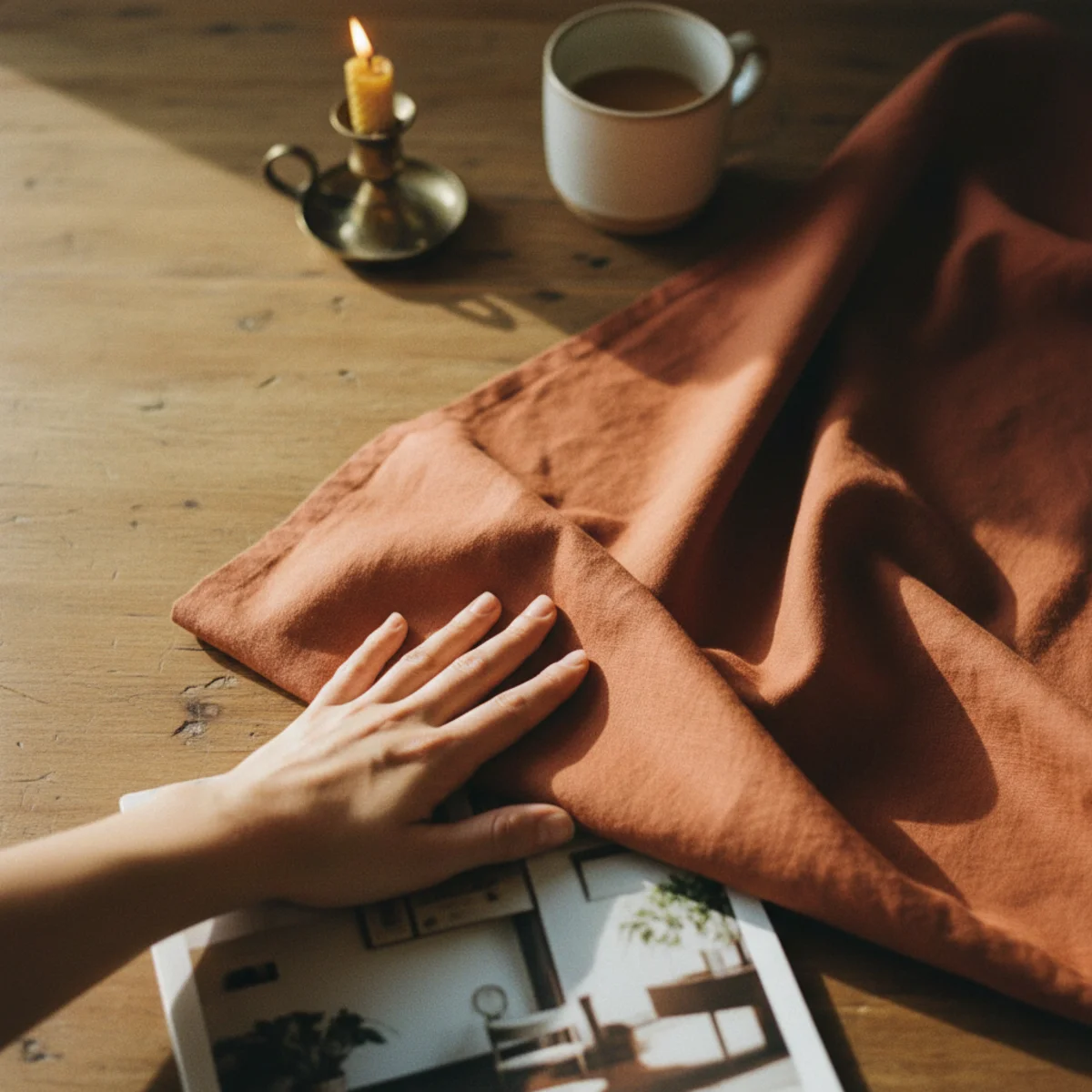
European flax linen close-up showing long fibers — the quality marker that determines longevity. See also: Quince
02Mid-Weight (165–185 gsm)
The right linen weight for most bedrooms is mid-weight: 165 to 185 grams per square meter (gsm). Lighter linen (under 150 gsm) feels too thin and translucent; heavier linen (over 200 gsm) feels too dense and warm for year-round use. The 165-185 gsm range balances drape, opacity, warmth, and durability across most climates and seasons.
Linen weight categories: LIGHT WEIGHT (130-160 gsm) — lightweight summer bedding, sheer through-pattern, drape too floppy for structured look. Best for hot climates only or summer-only bedding. PRICE: typically $60-120 per duvet cover, often Quince Light Linen or budget options. MID WEIGHT (165-185 gsm) — the all-around correct weight. Opaque enough for privacy, dense enough for substantial drape, breathable enough for warm climates, warm enough for cool nights. PRICE: $80-300 per duvet cover. Brands: Quince Premium Linen, Magic Linen Standard, Coyuchi, Brooklinen, Cultiver. HEAVY WEIGHT (190-230 gsm) — denser drape, warmer in cool weather, slightly stiffer feel. Best for cold climates or winter-specific bedding. PRICE: $200-500. Brands: Cultiver Heavy, Linoto, some Rough Linen pieces. EXTRA HEAVY (230+ gsm) — uncommon, used for upholstery or very cold-climate bedding. CHECK THE GSM SPECIFICATION before purchase; many brands don't publish gsm prominently, but customer service or live chat will provide it.
AFFILIATE SLOTWEIGHT165-185 gsm mid-weight for year-round use; ask customer service for specific gsm if not publishedAdd affiliate URL when configuredWhy it works
Because the mid-weight specification balances all the competing requirements that linen bedding faces. Lighter weights save cost but feel thin and underperform in cool seasons; heavier weights add warmth but feel stiff and too warm in summer. The 165-185 range provides the soft drape that linen is known for, enough opacity for privacy, enough density for substantial feel, and enough breathability for warm-climate use. For households that get cold in winter, layering a wool blanket between the linen sheets and duvet (per cozy-bedroom-inspo rules) is more flexible than buying heavier linen.
Pro tip — Ask the brand for the gsm specification before purchase if it's not published — most quality brands will provide it via customer service chat or email. Generic 'medium weight' descriptions are unreliable; the specific gsm number is what determines feel and performance. Brands that won't disclose gsm specifications often have something to hide (typically lower weight than competitors).
Mid-weight 175 gsm linen — substantial drape, full opacity, balanced for year-round use. See also: cozy-bedroom-inspo
03Stonewashed for Instant Softness
The defining linen finish choice: stonewashed (also called pre-washed, garment-washed, or softened) versus crisp (un-washed, sometimes called 'classic'). Stonewashed linen is softer immediately, has the slightly-wrinkled lived-in aesthetic from day one, and saves the 5-10 wash cycles needed to break in crisp linen. For most households, stonewashed is the right answer.
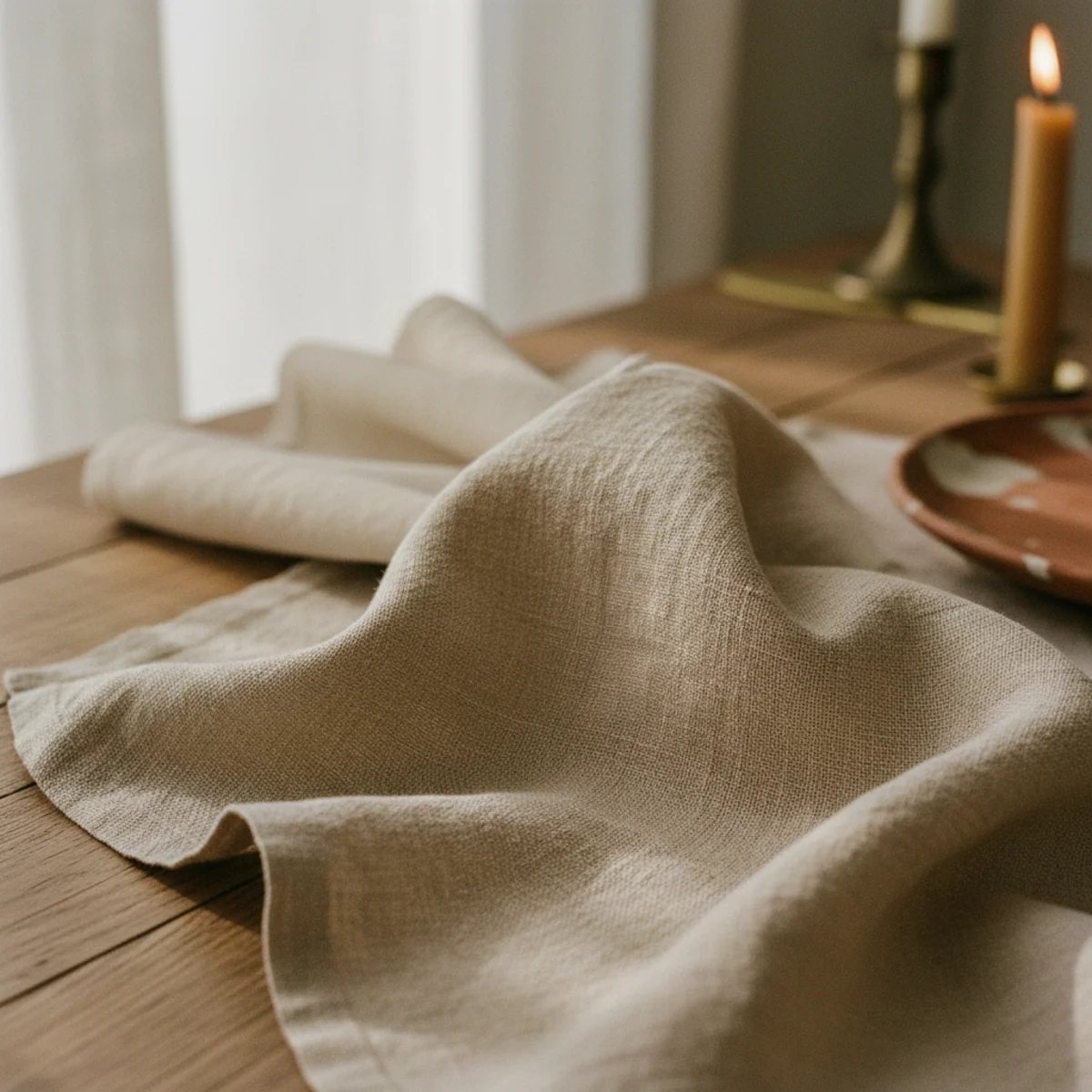
Stonewashed linen specifications: ALL MAJOR LINEN BEDDING BRANDS offer stonewashed as either the default or a specific finish option. Quince Premium Linen — stonewashed default ($80-200 per duvet cover). Magic Linen — stonewashed default ($80-200). Coyuchi — stonewashed default for most product lines ($200-400). Brooklinen Linen — stonewashed default ($200-400). Cultiver — stonewashed default ($300-500). The stonewashing process: bedding is washed with abrasive (usually pumice stones or industrial enzymes) to break down fiber crispness before sale. RESULT — soft hand-feel from first use, slightly wrinkled aesthetic out of the package, slight color desaturation that reads as 'naturally aged.' Continues to soften further with regular washing across years. CRISP LINEN alternative — un-washed, crisp hand-feel, requires 5-10 wash cycles to soften (typically 6-12 months of regular use), but eventually reaches the same softness as stonewashed. PRICE: usually identical to stonewashed within the same brand. Choose crisp only if you specifically want the formal-pressed aesthetic or enjoy breaking in textiles yourself.
AFFILIATE SLOTFINISHStonewashed/pre-washed/garment-washed finish for instant soft drape; crisp only for specific formal aestheticAdd affiliate URL when configuredWhy it works
Because stonewashed eliminates the break-in period that crisp linen requires — you get the soft slightly-wrinkled lived-in linen aesthetic immediately rather than after 5 to 10 wash cycles. The break-in period for crisp linen also represents the period when many households decide they don't like linen (the initial crispness is genuinely off-putting compared to broken-in linen). Stonewashed linen captures the actual reason households want linen in the first place: the softened, naturally-imperfect, lived-in aesthetic that makes bedrooms feel warm and inviting.
Pro tip — Wash stonewashed linen 2-3 more times before first use to develop additional softness beyond the factory stonewash — even pre-softened linen continues to improve significantly with the first few wash cycles. The minimal additional washing brings the linen to peak softness from the very first night of use.
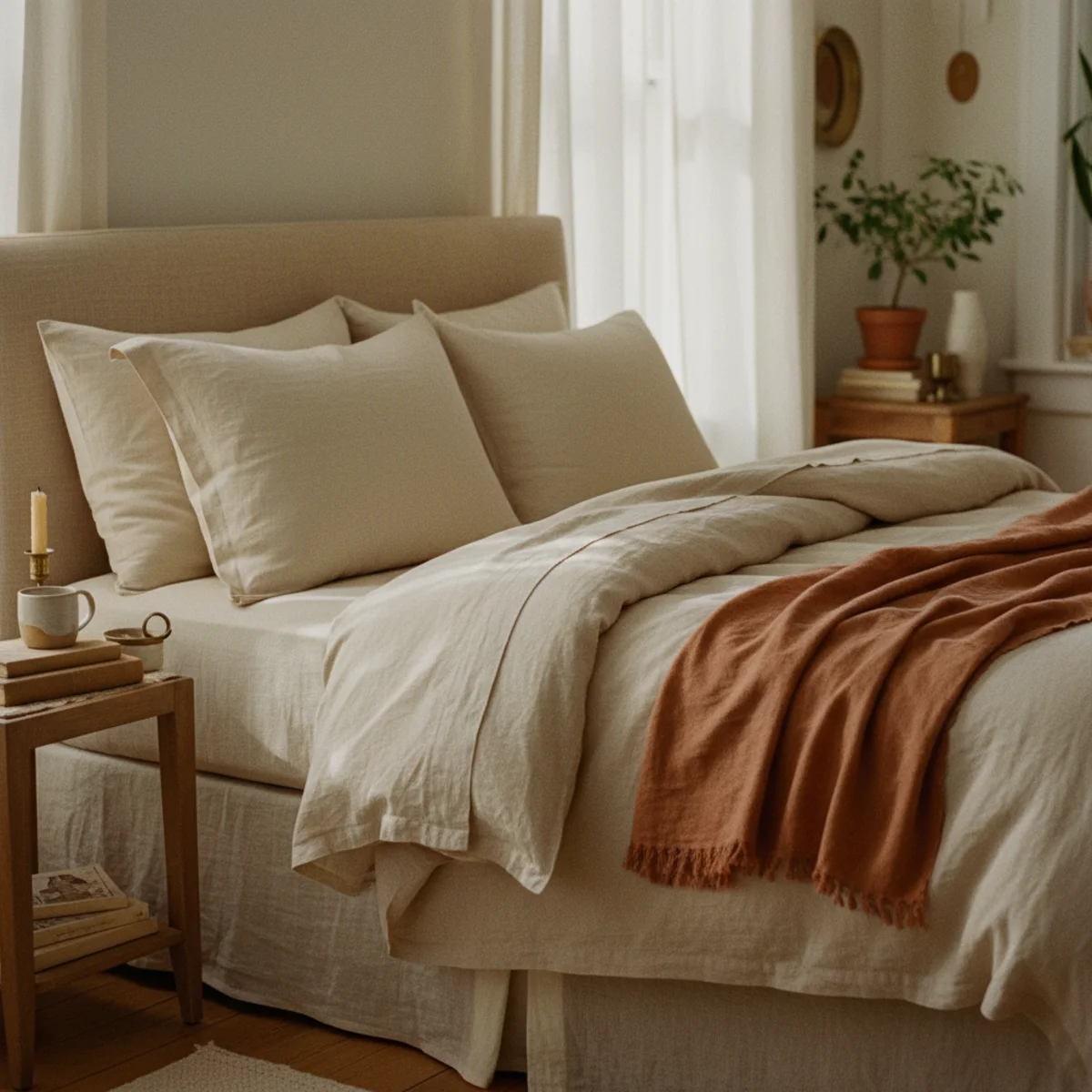
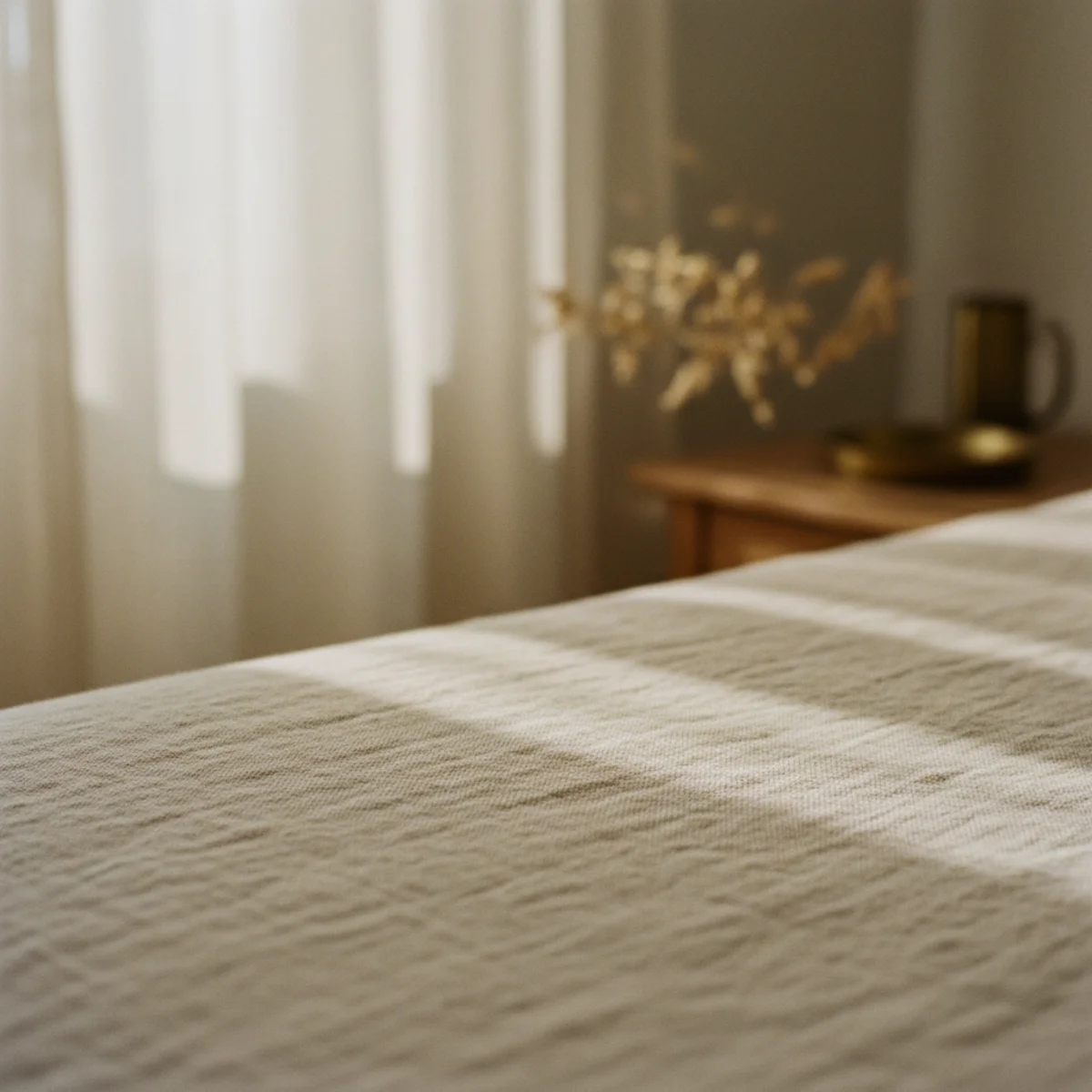
Stonewashed linen with soft slightly-wrinkled texture from day one — the lived-in aesthetic immediately. See also: Quince Premium Linen
04Crisp Linen for a Cooler Sleep
The exception to the stonewashed default: crisp un-washed linen sleeps slightly cooler than stonewashed because the un-broken-down fibers create slightly larger air channels. For households in hot climates, hot sleepers, or summer-only bedding, crisp linen's marginal cooling advantage may justify the break-in period.
Crisp linen specifications: ROUGH LINEN ('Pure Linen' line at $200-400 per duvet cover) — un-washed European flax with crisp hand-feel. LINOTO Heritage line ($300-600) — un-washed European flax. SOME RESTORATION HARDWARE LINEN ($300-700) — crisp finish available as option. Custom European tailors and ETSY ARTISAN MAKERS often offer crisp versions ($150-400). RECOGNIZE CRISP LINEN by: smooth tight surface, slight stiffness, lighter color (no stonewash desaturation), formal pressed appearance. BREAK-IN PROCESS — 5 to 10 wash cycles with regular drying produces soft broken-in feel. Some households enjoy this process; others find it frustrating. COOLING ADVANTAGE — crisp linen sleeps approximately 2-3°F cooler than stonewashed of equivalent weight because the tighter fiber structure creates more discrete air channels for evaporative cooling. The cooling advantage is modest but consistent across testing. Best applications: HOT-CLIMATE HOUSEHOLDS (Florida, Texas, Arizona, southern Europe), HOT SLEEPERS (independent of climate), SUMMER-ONLY BEDDING that gets stored cold months and used only in warm seasons.
AFFILIATE SLOTFINISHCrisp un-washed linen for hot climate, hot sleepers, summer-only bedding; from Rough Linen, Linoto, RH, Etsy artisansAdd affiliate URL when configuredWhy it works
Because the marginal cooling advantage matters for specific use cases: hot climates where every degree of cooling helps, hot sleepers who need the maximum thermal regulation linen can provide, summer-only bedding setups. The break-in period also doesn't matter if the bedding is stored cold months — by the time summer comes around again, the break-in has progressed across the previous summer's use. For these specific scenarios, crisp linen genuinely outperforms stonewashed. For everyone else (and most households), stonewashed remains the right choice.
Pro tip — Wash crisp linen with tennis balls or dryer balls during the break-in period to accelerate fiber softening — the agitation breaks down crispness faster than gentle washing. The break-in can compress from 8-10 wash cycles to 4-5 with the agitation method.
Crisp un-washed linen — slightly cooler sleep at the cost of 5-10 break-in wash cycles. See also: Rough Linen
05Undyed and Earthy Tones
The color decision matters more than most linen shoppers realize: undyed natural linen (cream, oat, natural beige) holds color across decades of washing where dyed linen fades visibly within 3-5 years. Earthy dyed tones (terracotta, sage, deep rust, warm taupe) hold up better than saturated colors but still fade more than undyed. Cool grey or blue dyed linen fades worst.
Linen color durability spectrum: UNDYED NATURAL FLAX — cream, oat, natural beige, raw flax tones. ZERO COLOR FADING because there's no dye to fade. Texture remains constant across decades. Best longevity choice. PRICE: usually 10-20% less than dyed equivalents within the same brand. EARTH-TONE DYED LINEN — terracotta, deep rust, warm taupe, sage, soft olive. Mild fading across 5-10 years but the muted starting color and earthy palette mean fading reads as natural patina rather than as visible degradation. Good longevity choice. PRICE: standard brand pricing. WARM ACCENT DYED LINEN — mustard, honey, blush, soft warm pink. Moderate fading visible across 3-5 years. Acceptable for households expecting to replace bedding before 5 years. SATURATED OR COOL DYED LINEN — bright red, royal blue, navy, deep grey, charcoal, black. Significant fading visible within 2-3 years, often becomes splotchy or uneven. Worst longevity choice; avoid for primary bedding. THE GENERAL RULE: choose undyed for maximum longevity, choose muted earth tones for warm aesthetic with acceptable longevity, avoid saturated or cool colors for primary bedding.
AFFILIATE SLOTCOLORUndyed natural (cream/oat/beige) for maximum longevity OR muted earth tones (terracotta/sage/rust); avoid saturated or cool colorsAdd affiliate URL when configuredWhy it works
Because dye uptake into linen fiber is inherently incomplete — linen is a cellulose fiber with crystalline structure that resists deep dye penetration. Surface dye and shallow-penetration dye washes out gradually with each laundry cycle. Undyed linen has no dye to wash out, so the natural fiber color (which is the actual fiber tone, not a coating) remains constant. Earth-tone dyes also use pigment chemistry that bonds more durably to cellulose than cool-tone or saturated dyes, which explains the durability hierarchy. The color choice is essentially a longevity decision dressed up as an aesthetic one.
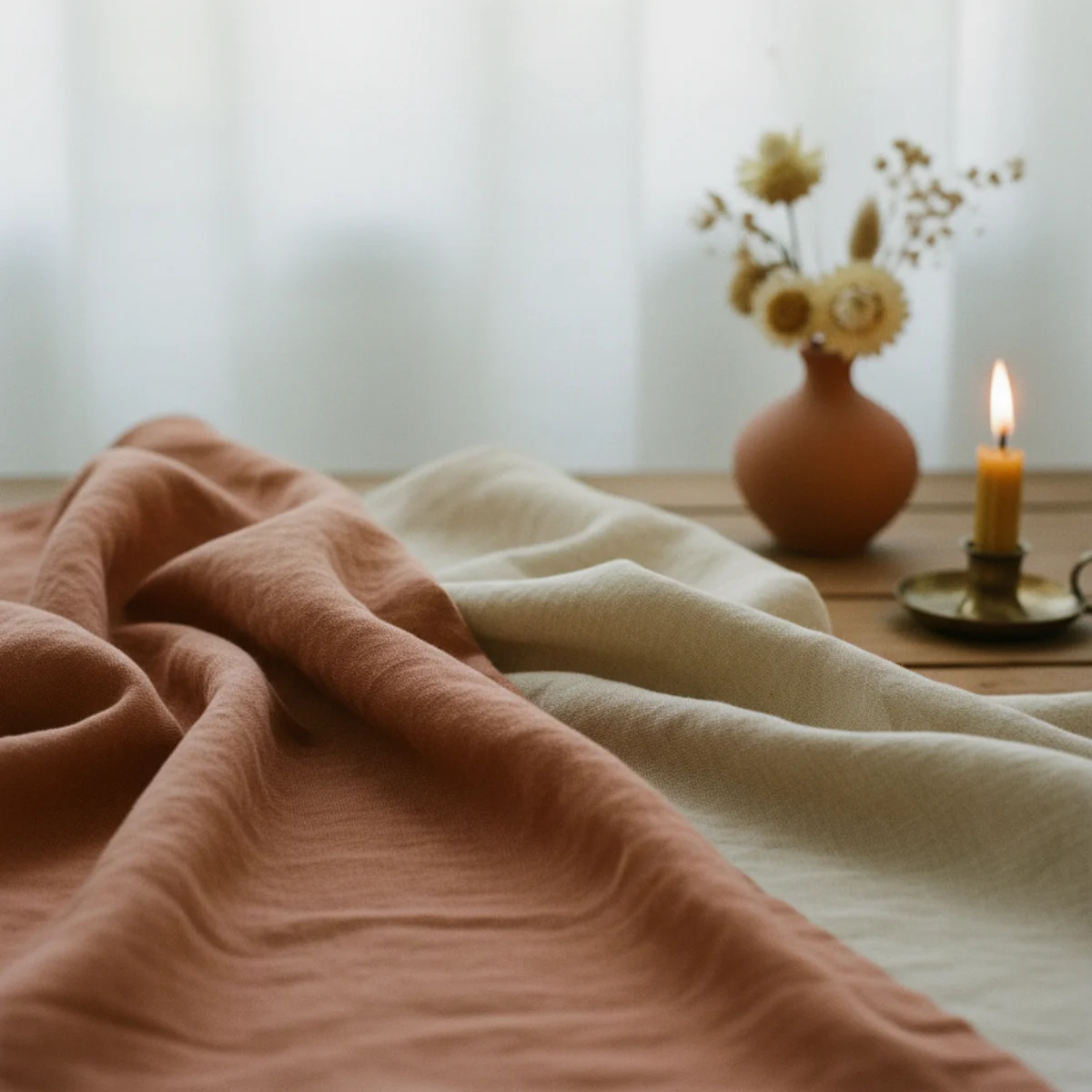
Pro tip — Layer different undyed and earth-tone linen pieces for visual variation without sacrificing longevity — cream sheets with oat duvet cover with terracotta pillowcases creates the warm-tonal variation that matches warm-home aesthetic while every piece holds its color across decades. The mix-and-match strategy (per item 7) supports color longevity by avoiding bright single-color sets.
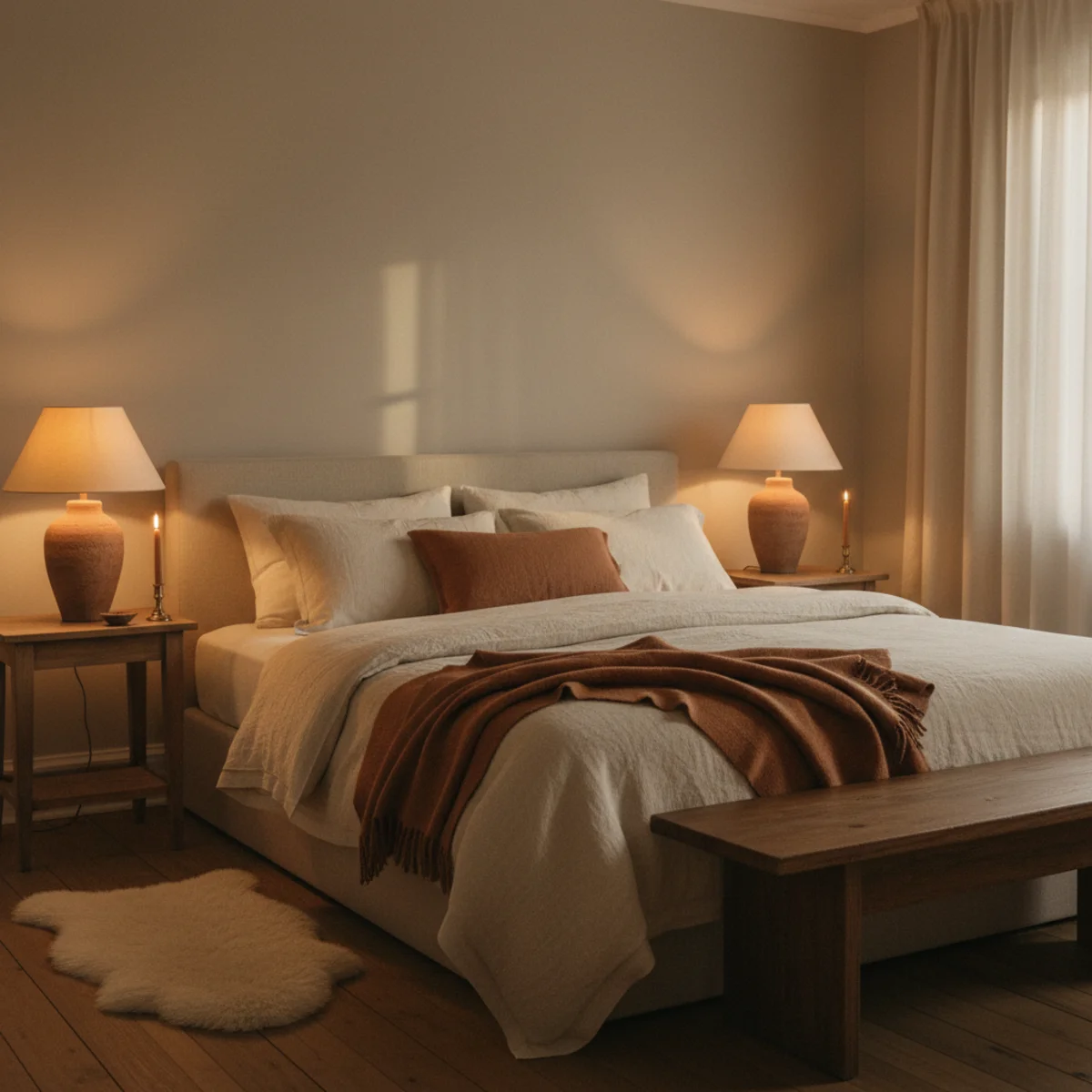
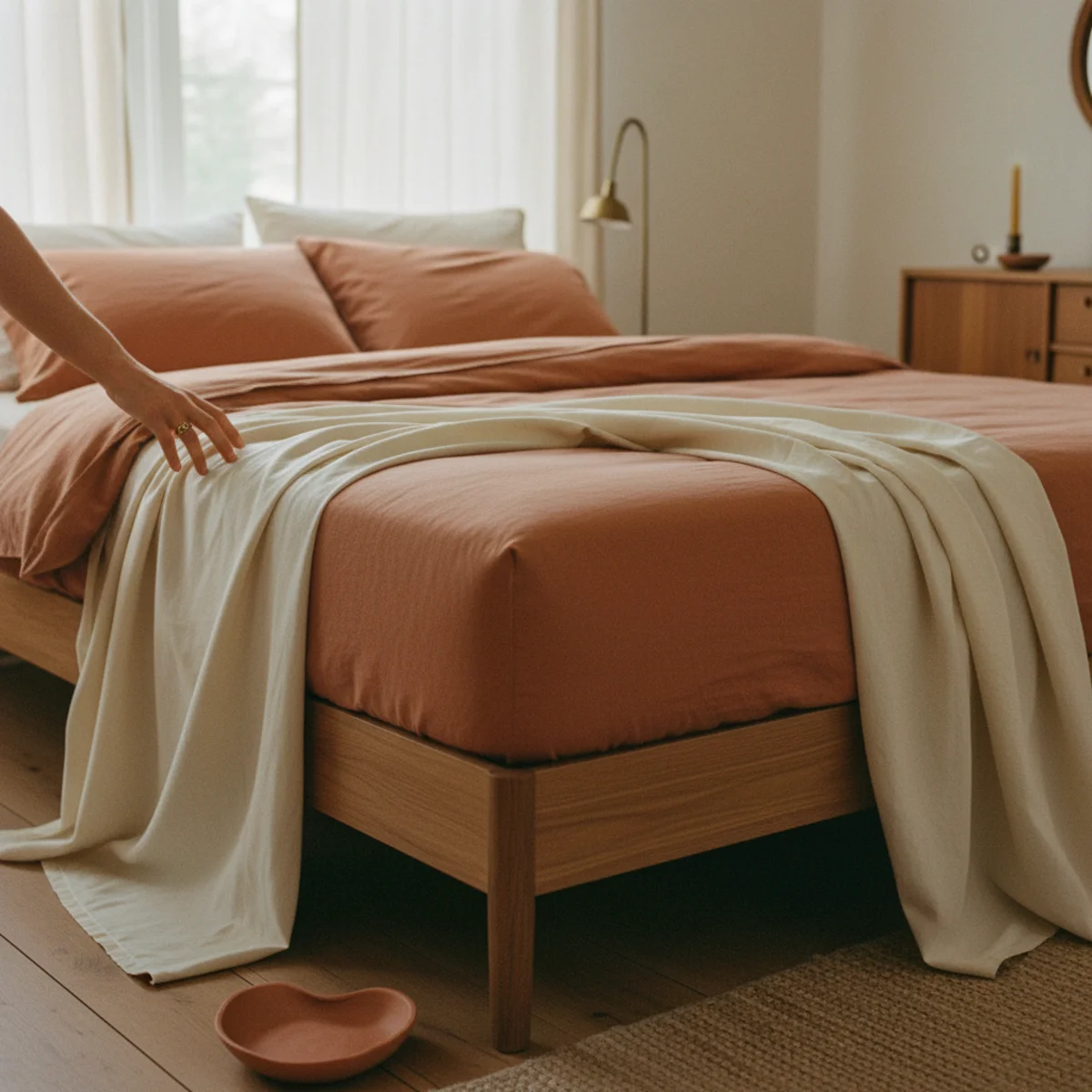
Cream sheets, oat duvet, terracotta pillowcases — layered undyed and earth tones with maximum color longevity. See also: warm-home aesthetic
06Generous Sizing
Linen bedding sizing differs across brands by 4 to 12 inches in each dimension. Generous sizing (duvet covers larger than standard, oversized flat sheets, longer pillowcases) creates the layered lived-in aesthetic that linen specifically benefits from; tight sizing reads as commercial or institutional. Choose generously sized linen bedding for the right warm-home look.
Linen bedding sizing specifications: DUVET COVERS — standard queen 90x92 inches; generous queen 94x96 to 98x98. The extra 4-6 inches in each dimension creates the slightly-oversized drape that linen aesthetic favors. King generous 108x96 to 110x98 versus standard 104x92. Best generous-sizing brands: Cultiver, Coyuchi, Magic Linen (especially the 'oversized' option). FLAT SHEETS — standard queen 90x102 inches; generous queen 94x108 to 98x112. The extra length specifically matters for foot-of-bed tuck or hanging. PILLOWCASES — standard 20x30 inches; generous 22x36 or 24x36 (sometimes called 'Euro' or 'extra long'). The slightly longer pillowcases allow proper pillow insertion and slight overhang that linen aesthetic favors. FITTED SHEETS — depth pocket matters; choose 15 to 18-inch depth pockets for modern mattresses (mattresses have increased in thickness significantly over recent decades, and standard 12-inch pockets are too shallow for many beds). MEASURE YOUR ACTUAL BED before ordering; bed dimensions vary even within 'Queen' or 'King' size category by manufacturer.
AFFILIATE SLOTSIZEGenerously sized: duvet 4-6 inches larger than standard, longer flat sheets, 22-24 inch pillowcases, 15-18 inch fitted depthAdd affiliate URL when configuredWhy it works
Because linen drape is one of the fiber's primary aesthetic qualities — the slightly heavy substantial drape over the bed edges, the slight overhang of pillowcases past the pillow edge, the loose tucking that flat sheets allow. Tight sizing eliminates the drape and makes linen bedding look stretched and institutional rather than relaxed and warm-collected. The generous sizing is what allows the lived-in informal aesthetic that warm bedrooms specifically benefit from. Tight-fitting linen at the same weight and quality reads significantly less expensive than generous-fitting linen, despite often being the same actual cost.
Pro tip — Order one size up for duvet covers if your bed sits between standard sizes — if you have a queen mattress with thick comforter or a heavily-stuffed insert, the queen duvet cover may feel tight; king duvet cover on queen bed allows extra drape and significantly improves the visual layered effect.
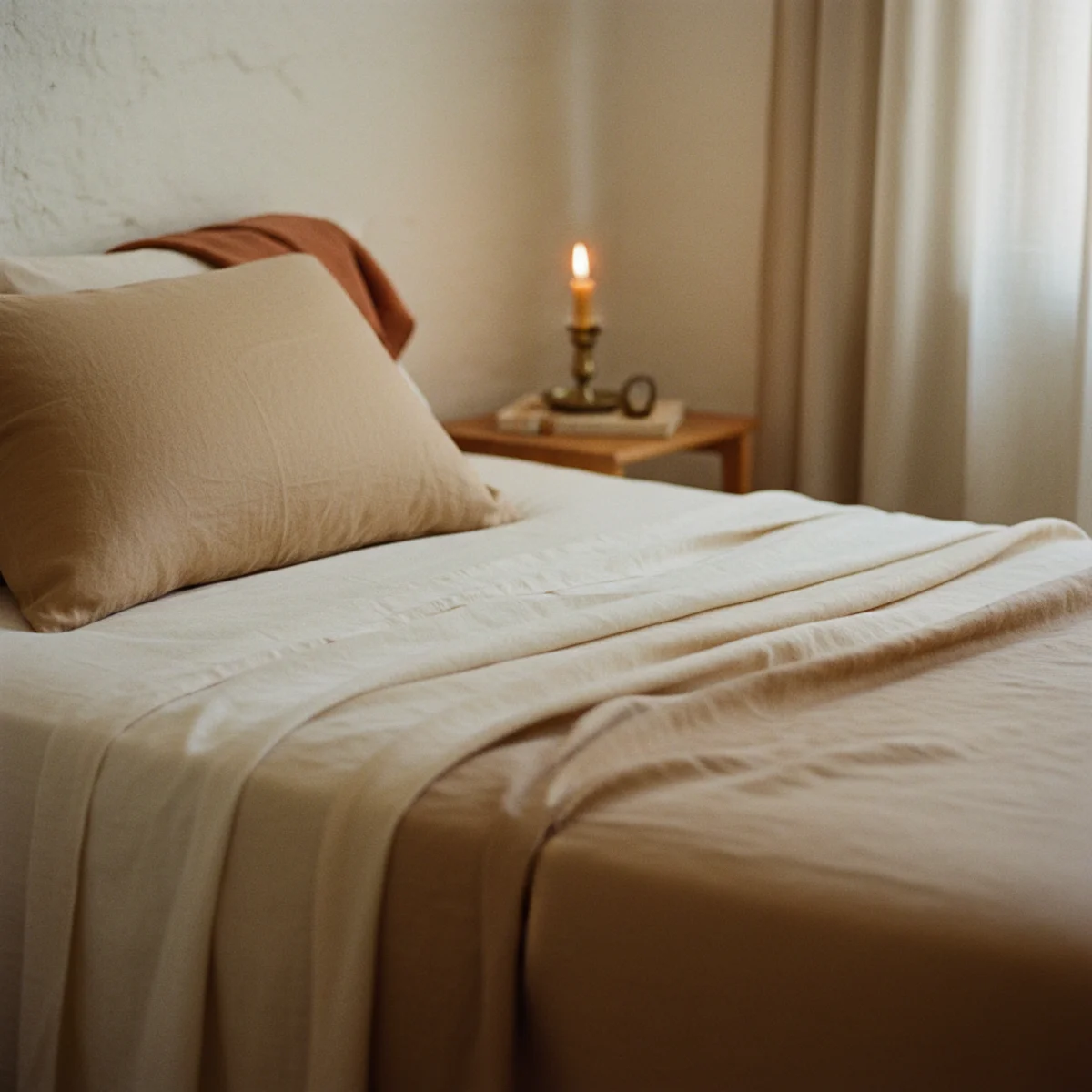
Generous-sized duvet cover with substantial drape over the bed edges — the layered lived-in aesthetic. See also: cozy-bedroom-inspo
07Mix-and-Match Over Full Sets
The mix-and-match strategy beats matched full bedding sets for both aesthetic and budget reasons. Different colors and slight variations across pieces (cream fitted sheet + oat flat sheet + terracotta duvet + sage pillowcases) read as accumulated warm-home where matched sets read as commercial. Plus mix-and-match lets you upgrade individual pieces over time rather than buying everything at once.
Mix-and-match strategy: BASE LINEN PIECES — fitted sheet and flat sheet in undyed cream or oat (the most-used pieces, justifying highest investment). $80-200 each piece. DUVET COVER in different earth tone — oat, terracotta, sage, soft warm taupe ($80-300). The duvet cover is the largest visible piece and dominates color impression. PILLOWCASES (2 standard or queen pillowcases) in coordinating but distinct tone — different from the duvet but in same warm palette family ($30-100 for pair). EUROPEAN PILLOWCASES (26x26) for layered bed look in another coordinated tone ($40-120 for pair). The 4-element mix produces 4 different warm earth tones across the layered bed, all coordinated but visually distinct. BUDGET APPROACH — start with sheets ($150-400 total for sheets + 2 pillowcases), add duvet cover later ($80-300), add Euro pillowcases last. Spread the investment across 6-18 months. BUDGET MATH — quality linen bedding for a queen bed totals $260-1,000 in mix-and-match form, similar to or less than buying a matched 'set' from the same brand at $400-800. The mix-and-match approach also lets you replace individual worn pieces over time rather than re-buying full sets.
AFFILIATE SLOTSTRATEGYMix-and-match across cream/oat sheets + earth-tone duvet + different earth-tone pillowcases + accent Euro pillowsAdd affiliate URL when configuredWhy it works
Because matched sets read as commercial 'buy the bedroom set' rather than as accumulated warm-home — and the visual signal is significant. Mixed but coordinated pieces signal 'this household built this bed thoughtfully across time' where matched sets signal 'this household bought the matching set at one moment.' Real warm-collected homes accumulate textiles across years through various sources; mix-and-match matches this authentic accumulation pattern. The matched-set look pulls toward commercial-bedroom-display aesthetic that fights warm-home goals.
Pro tip — Start with the fitted sheet and flat sheet in cream or oat (the most-versatile colors that work with any duvet cover and pillowcase choices) — this gives you maximum flexibility for future mix-and-match purchases. Buying terracotta sheets locks you into specific palette choices for the duvet and pillowcases; cream or oat sheets work with everything.
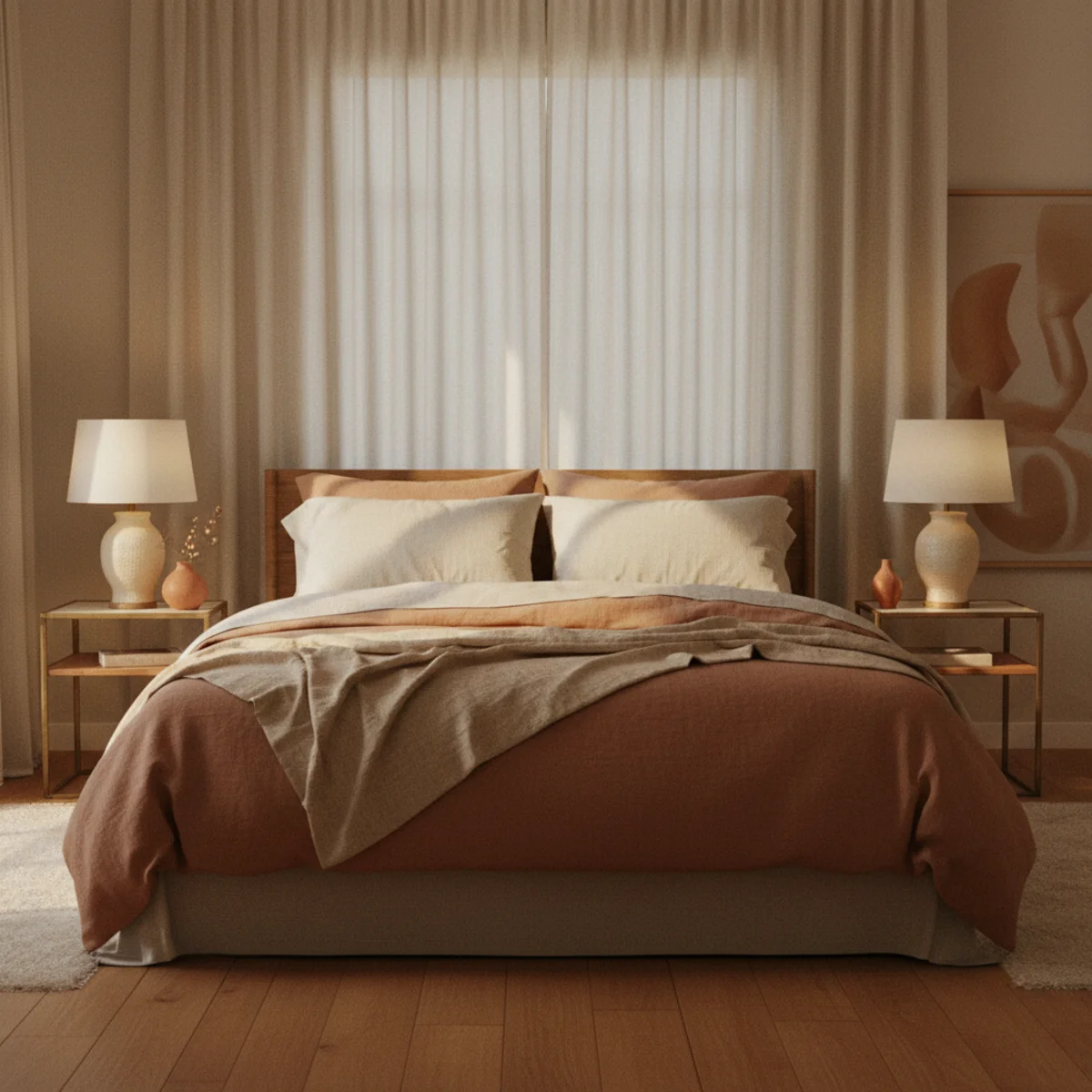
Cream sheets, oat flat sheet, terracotta duvet, sage pillowcases — mix-and-match warm earth tones. See also: throw-blanket-layering
08Skip — Linen-Cotton Blends Marketed as Linen
The most-important shopping warning: avoid linen-cotton blends marketed as 'linen' bedding. These products (typically 50-70% linen with 30-50% cotton) sell at lower price points than 100% linen but behave nothing like real linen across daily use. The cotton content eliminates linen's distinctive cooling properties, ages differently, and reads visually as something between linen and cotton without the benefits of either.
Linen-cotton blend identification: CHECK THE FABRIC CONTENT TAG — anything listing 'linen-cotton blend,' '55% linen 45% cotton,' or any percentage other than 100% linen should be evaluated as a different fiber category entirely. COMMON BLEND BRANDS that market as linen — many big-box retailer 'linen' lines, fast fashion linen bedding, some hospitality-grade linen lines, brands selling at significantly lower prices than 100% linen equivalents (a $40 'linen' duvet cover is almost certainly a blend). LEGITIMATE BLEND USES — some applications (children's bedding, beach throws, very casual everyday use) genuinely benefit from cotton's easier care; in these specific cases, linen-cotton blends can be the right choice. But for primary bedding where you want the linen experience, 100% linen is non-negotiable. WHY BLENDS DISAPPOINT — the cotton content makes the bedding sleep warmer than 100% linen (eliminating the primary functional reason to choose linen), removes the natural wrinkled aesthetic (the cotton fibers don't wrinkle the way linen does), reduces durability (cotton-linen blends pill more than 100% linen), and ages worse (color fades differently across the two fiber types, creating mottled appearance). The 'linen' marketing of these blends is the dishonest part; the products themselves are fine for their actual category but not for the linen experience.
AFFILIATE SLOTAVOIDSkip linen-cotton blends marketed as 'linen'; choose 100% linen at $80-300 OR 100% cotton at $40-100 insteadAdd affiliate URL when configuredWhy it works
Because the functional properties that make linen valuable (cooling, breathability, natural-wrinkle aesthetic, decades of useful life) all derive from 100% linen fiber composition. Any cotton content dilutes these properties proportionally. A 50/50 linen-cotton blend doesn't sleep as cool as linen, doesn't wrinkle the way linen does, doesn't last as long as linen, but costs nearly as much (often 70-80% of 100% linen price). The blend gives up most of linen's advantages without proportionally lower cost. For comparison: 100% cotton bedding at the same blend price point would be a better-value purchase than the blend, because 100% cotton has its own distinct properties and meets cotton-bedding expectations.
Pro tip — If price is the primary concern, choose 100% cotton bedding instead of linen-cotton blends — quality 100% cotton bedding at $40-100 per duvet cover (Brooklinen Luxe sateen, Cultiver percale, Garnet Hill cotton) outperforms linen-cotton blends at the same price for any actual cotton-bedding use case. Save toward 100% linen at $80-300 per duvet cover when ready to commit to linen specifically.
Skip linen-cotton blends marketed as linen — 100% linen at $80-300 or 100% cotton at $40-100 both outperform. See also: thrifted-decor-ideas
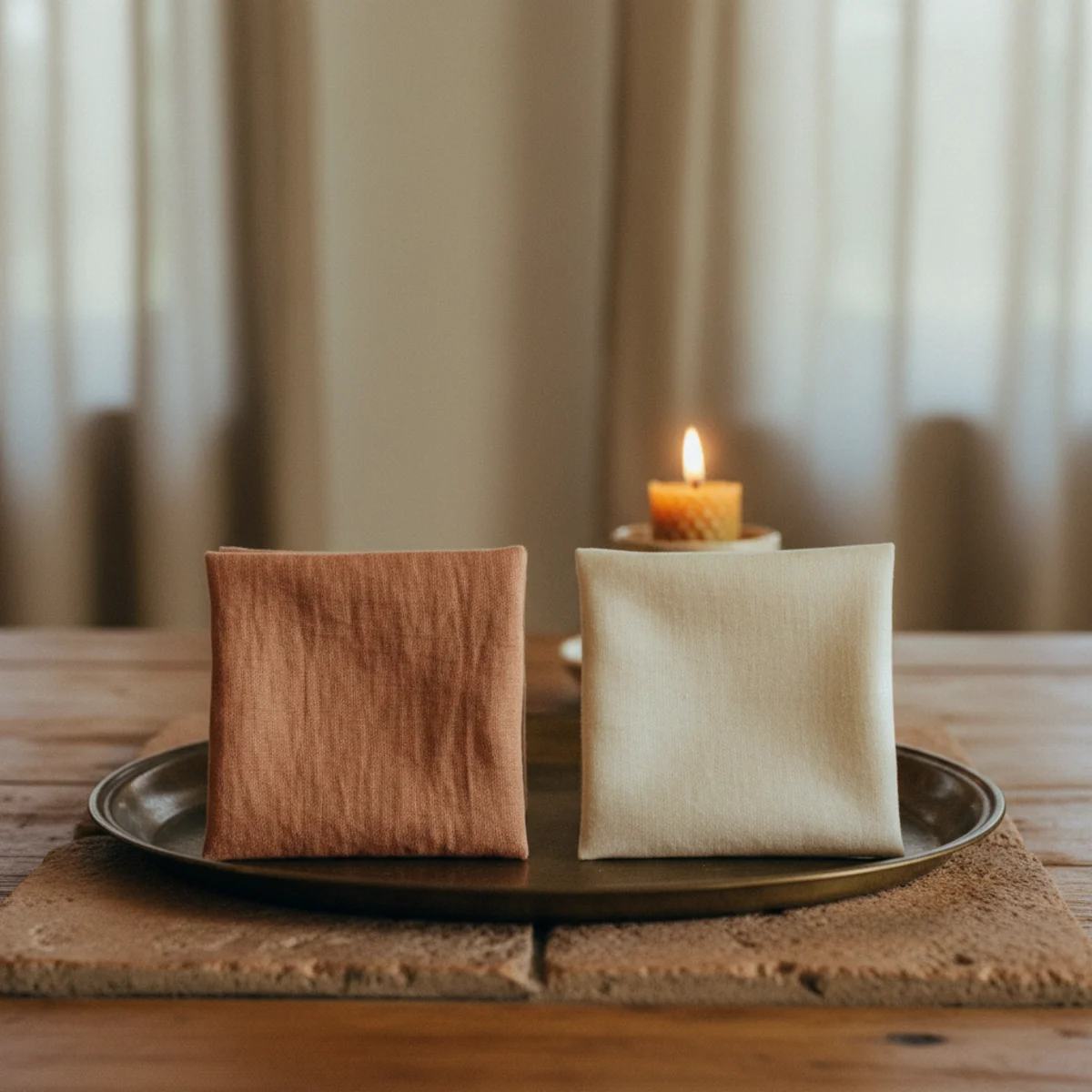
How to choose linen bedding
Match the finish and weight to how you sleep. Four questions sort it.
- 1Choose washed or crisp
Want softness from night one? Choose stonewashed. Prefer a cooler, crisper hand that softens over time? Choose unwashed or lightly finished.
- 2Check the flax and weight
Look for European (French or Belgian) flax and a mid-weight around 165–185 gsm. Ignore thread count — it's a cotton metric.
- 3Pick an earthy, undyed tone
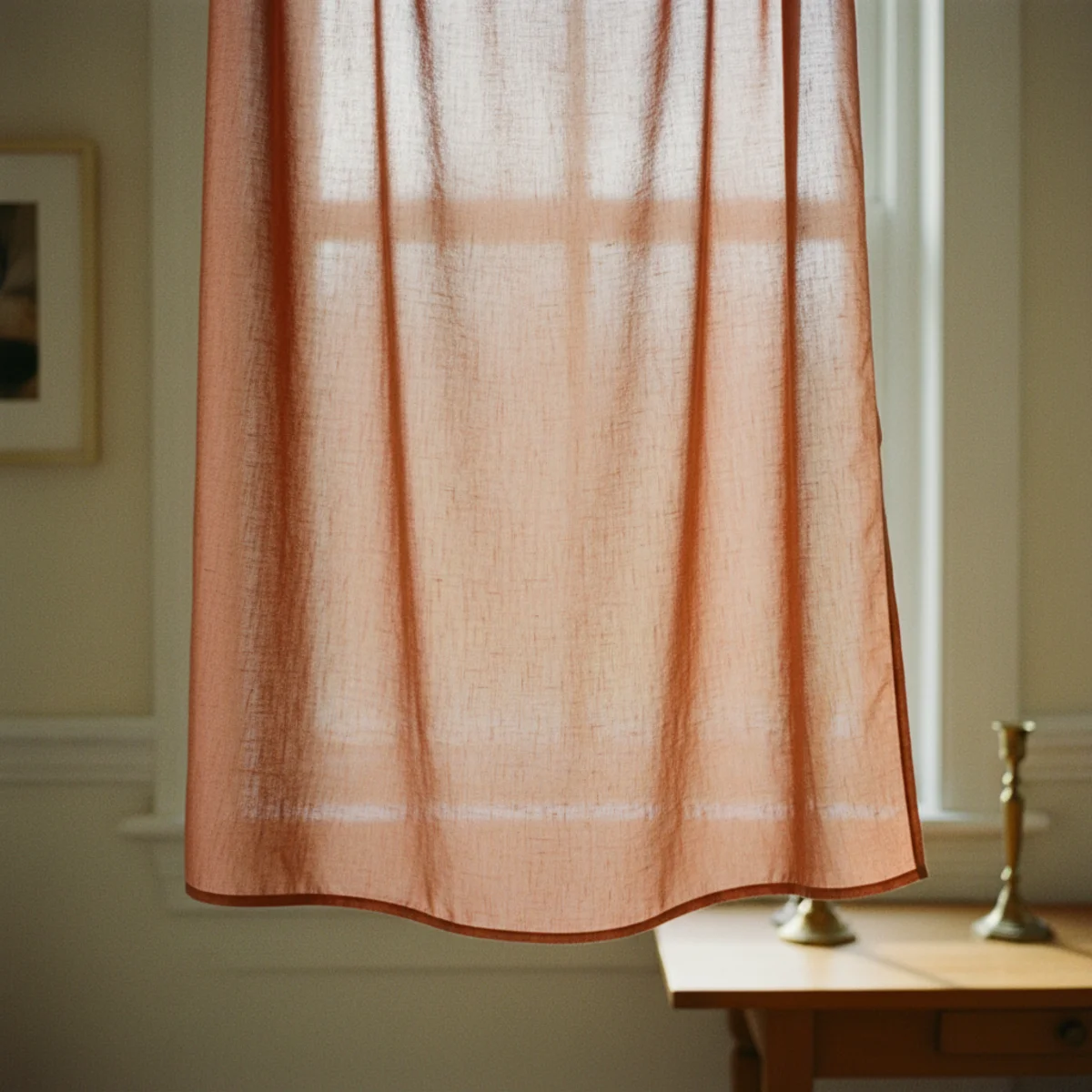
Oat, clay, sage, and natural read warmer and hide wrinkles better than bright white. Mix two close tones for depth.
- 4Confirm it's 100% linen
Read the content tag and avoid blends sold at linen prices, which lose the drape and longevity you're paying for.
Quick tips
- Wash linen on a gentle cycle in cool water and skip the dryer sheets — the line-dried hand is the appeal.
- Expect linen to feel slightly stiff for the first few washes; it relaxes into softness over a month.
- Buy European-flax, mid-weight (165–185 gsm), 100% linen — ignore thread count entirely.
- Choose undyed earthy tones; they hide wrinkles and wear better than bright white.
- Size up if between sizes, since linen shrinks slightly on the first wash.
- Check the deadstock and secondhand markets; good linen often appears well below boutique prices.
The best linen by sleeper
Stonewashed, garment-washed linen in a mid-weight — soft and relaxed from the first night.
Crisp, lightly finished linen, which sleeps cooler and softens gradually with use.
Undyed oat and clay tones, mixed rather than matched, sheets and duvet bought separately.
Deadstock or secondhand European-flax linen, or starting with just a duvet cover over existing sheets.
Linen feels almost crisp the first night and the softest thing you own by the hundredth. Buy for the hundredth.
Frequently asked questions
Which linen bedding brand should I buy first?+
What weight of linen is best?+
Is stonewashed or crisp linen better?+
Why does European flax matter?+
What color of linen bedding should I choose?+
Should I get a matched bedding set or mix pieces?+
Linen is the single best upgrade you can make to a bed, and the rules for buying it are simple: European flax, mid-weight, 100% linen, in an earthy tone — and ignore thread count entirely. We'd choose stonewashed for softness from the first night, or crisp if you sleep hot, and we'd check the deadstock market before paying boutique prices. Buy for how it'll feel on the hundredth night, not the first; the slow softening is exactly what you're paying for.