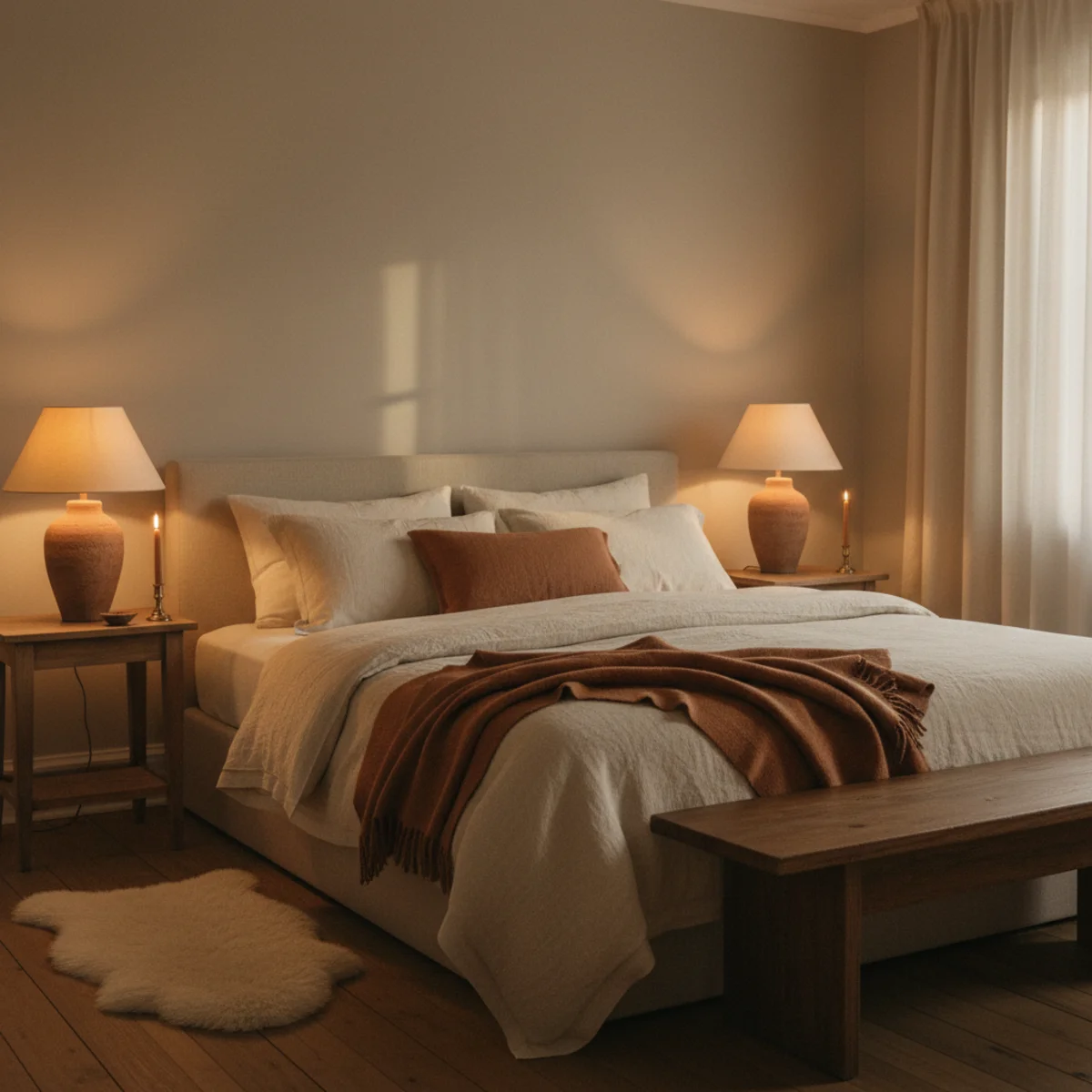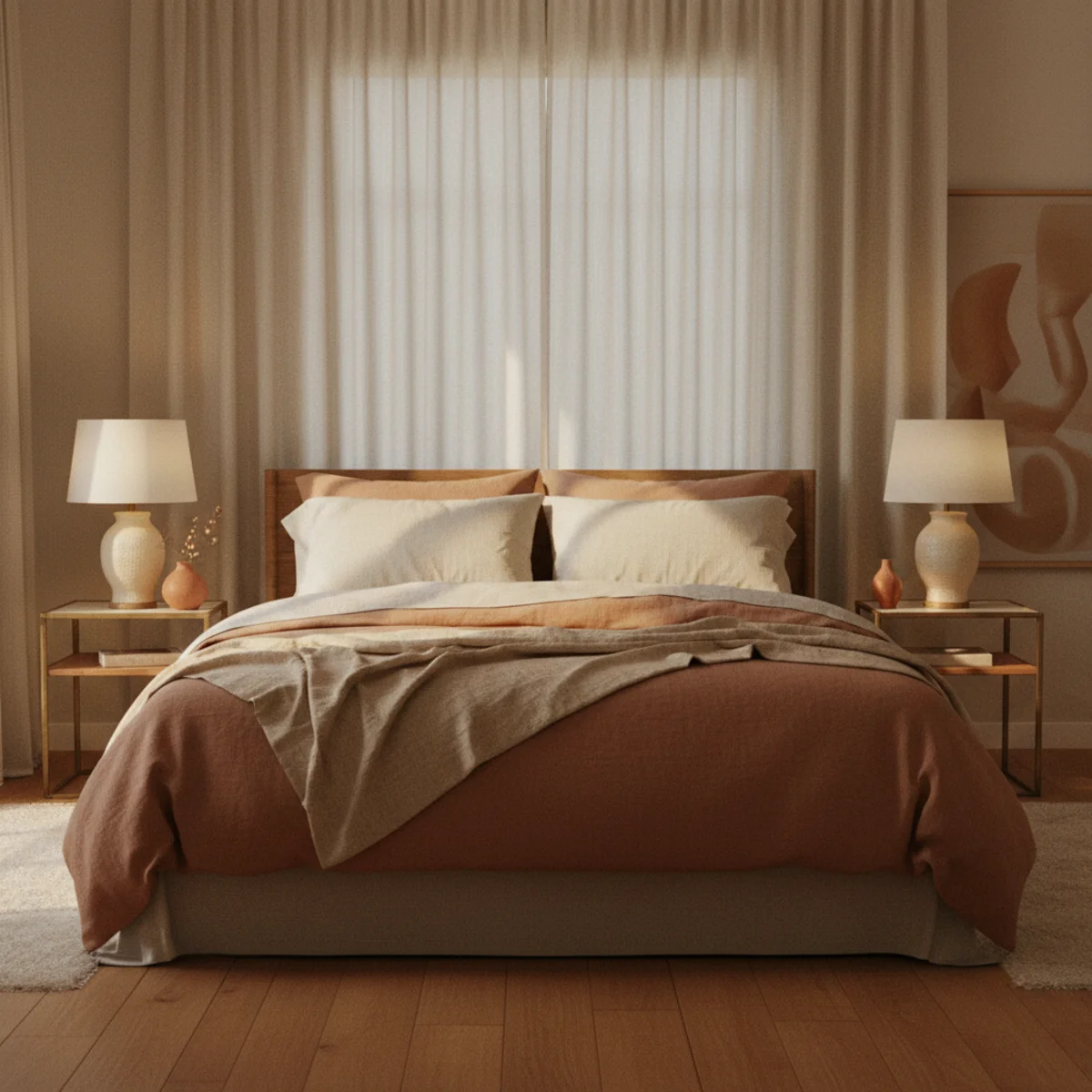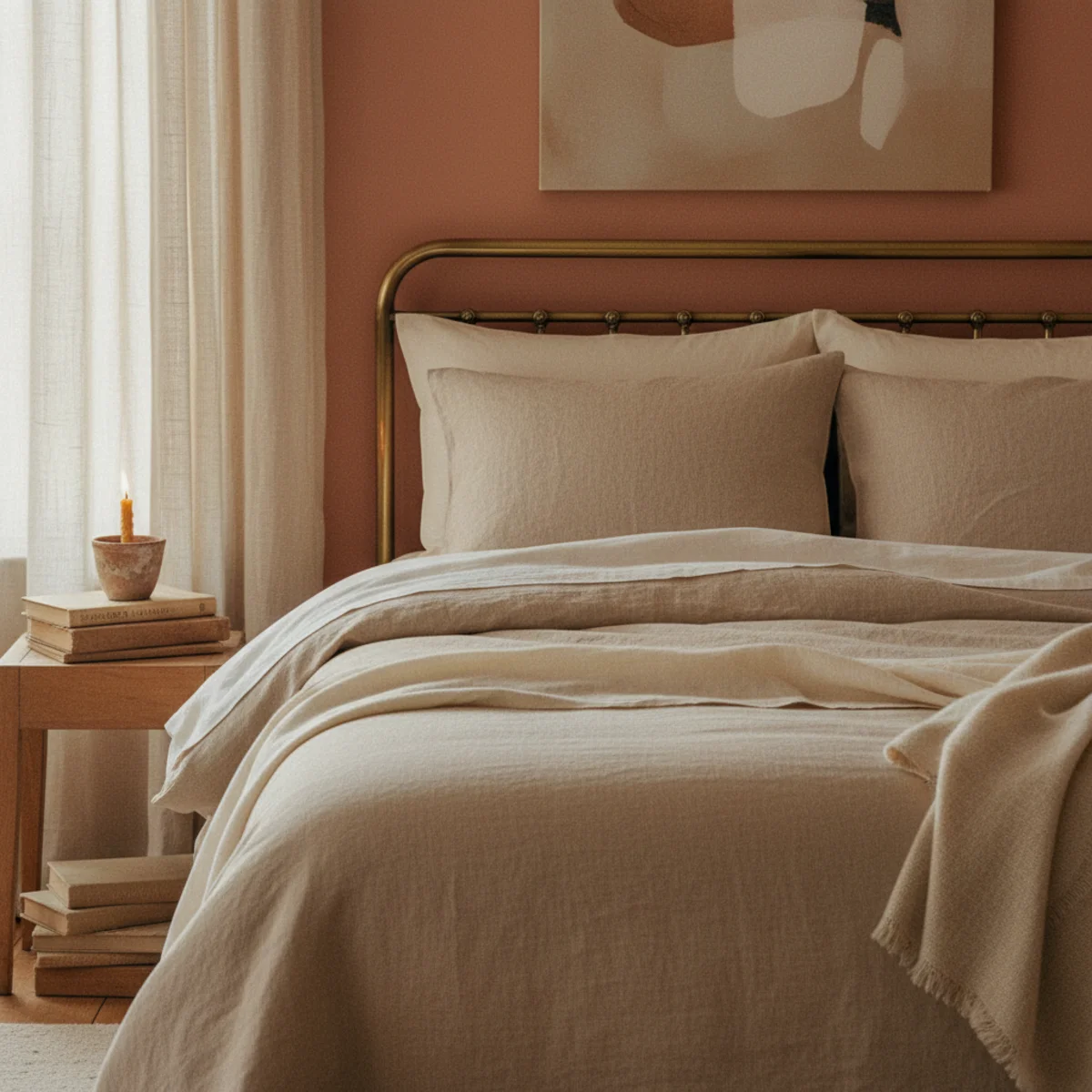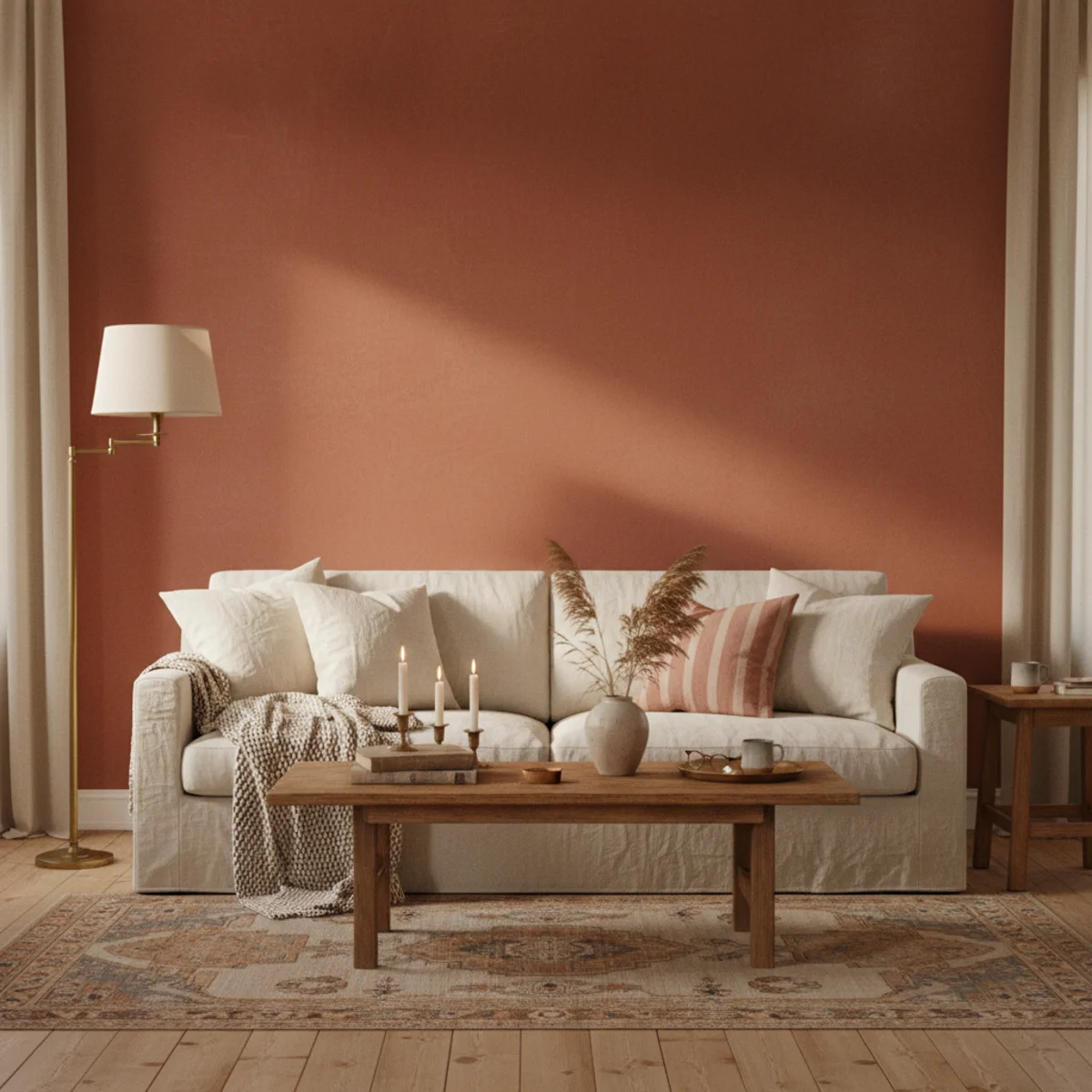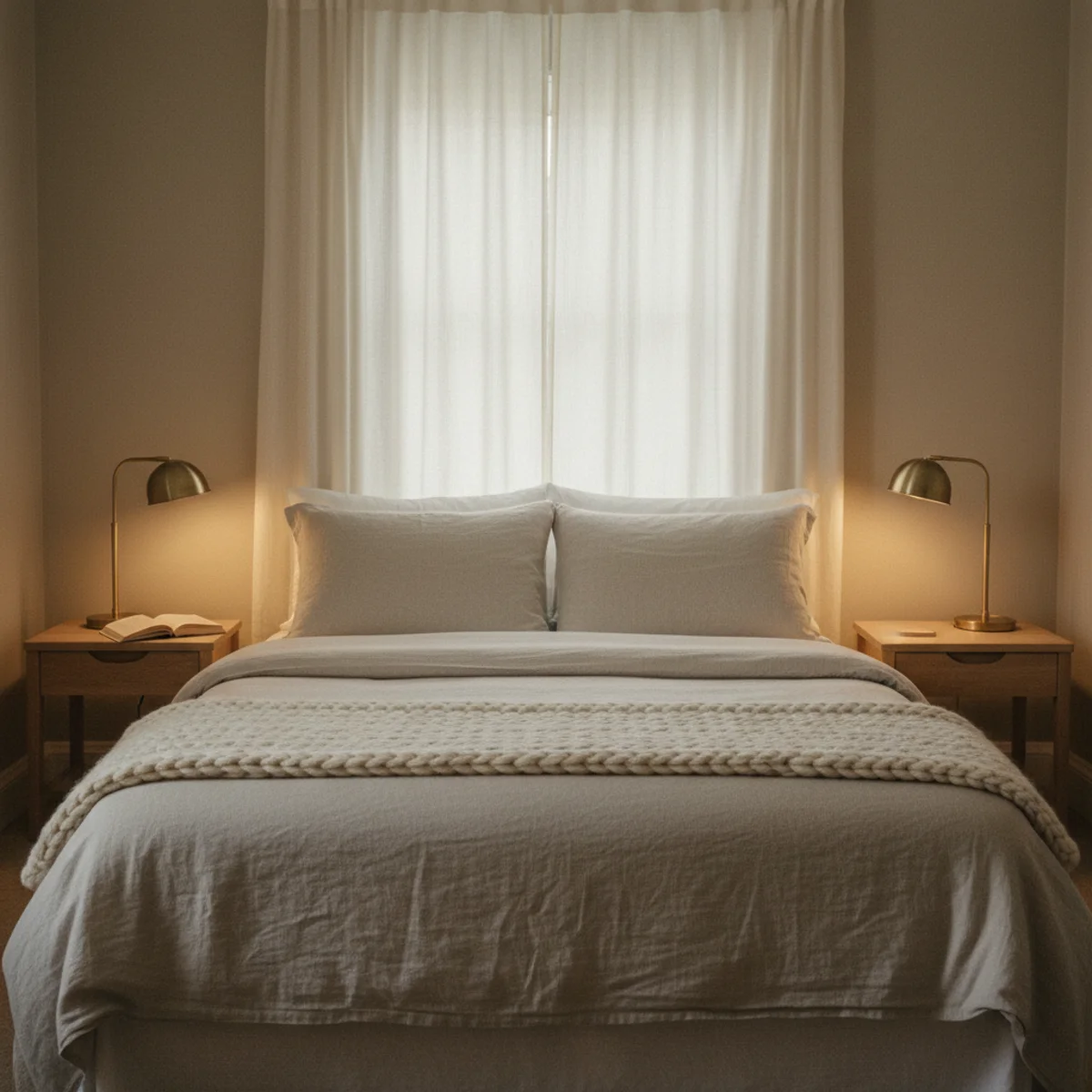
These twelve cozy bedroom inspiration ideas are tested across actual cozy bedrooms — small apartments with limited bedroom budgets, primary bedrooms in family homes, guest rooms doubling as personal retreats, rental units doing what they can within landlord constraints. Each principle below names specific palette choices, lighting setups, textile layering, and furniture decisions that produce genuine cozy rather than commercial-bedroom-look. The goal is rooms that support deep rest, slow mornings, and the parasympathetic calm that bedrooms should specifically enable.
Cozy bedrooms fail when households default to standard bedroom-set buying — matching dresser-bed-nightstand sets, harsh overhead lighting, white-and-grey commercial palettes, polyester bedding that looks fine in photos but feels cold and crinkly. The fix is the opposite direction: one secondhand hero piece anchoring simpler supporting pieces, multiple warm lamps replacing overhead light, layered linen and wool replacing synthetic bedding, low-contrast earth-tone palette replacing high-contrast or cool-tone alternatives.
By the end of this guide, you'll know exactly which twelve choices transform any bedroom into a genuinely cozy retreat — the low-contrast earthy palette, the warm-not-overhead lighting, the linen and wool bedding layers, the one secondhand hero piece, the matte accent wall, the soft bedside underfoot, and the six other moves that turn the bedroom into your favorite room.
WHAT'S INSIDE
- Why low-contrast earthy palettes outperform high-contrast or cool-tone bedroom designs
- The no-overhead-lighting rule — and the multi-lamp setup that replaces it
- The layered linen and wool bedding that beats every fancier alternative
- The single secondhand hero piece that anchors any bedroom regardless of budget
The bedroom rewards restraint more than any room in the house. Soft light and natural texture beat a shopping list every time.
— Kinfolk Home [citation needed — verify before publish]
What makes a bedroom feel cozy?
A cozy bedroom combines warm low light, layered natural textiles, and a muted, low-contrast color scheme — the same signals that read as rest to the body. The technical version is simple: 2700K light below eye level, at least three soft textures on and around the bed, and walls in a warm neutral rather than a cool one.
Limewash is a traditional wall finish made from limestone and water — unlike paint, it absorbs into plaster and creates a mottled, chalky texture that ages beautifully. It's one of the quiet secrets of the cozy-bedroom look: walls that move with the light all day rather than sitting flat. But you don't need limewash to get there. A warm matte paint, paired lamps, and washed linen carry most of the feeling.
More in Cozy Corners you may love
See allWhy cozy bedrooms are everywhere in 2026
As screens followed people into every waking hour, the bedroom became the room people most want to protect — a low-stimulation retreat rather than a second living room. Pinterest's cozy bedroom inspo searches climb every autumn, and the look has gone warm and natural.
The aesthetic leans on layered linen, wool throws, plaster-toned walls, and paired vintage lamps — and it's a clear reaction against the cold gray bedroom of the 2010s. People want a room that feels held rather than staged, and cozy bedroom styling is cheap, textile-led, and forgiving enough to deliver exactly that on any budget.
26 cozy bedroom ideas to borrow
01A Low-Contrast Earthy Palette
The defining quality of cozy bedrooms is a low-contrast earthy palette — warm whites blending into oat blending into terracotta blending into deep clay blending into wood tones. High-contrast bedrooms (white walls + black furniture + dark rug) read as commercial-modern and visually exhausting at low light; low-contrast palettes read as restful and gentle at every viewing condition.
Low-contrast earthy palette specs: WALL COLOR — warm white (F&B Pointing 2003, BM White Dove OC-17, BM Soft Chamois OC-13) OR warm muted tone (F&B Setting Plaster 231 for soft plaster pink, Mizzle 266 for sage, BM Indian Tree OC-152 for warm beige). BEDDING — cream, oat, natural linen, sage, or terracotta. ALL BEDDING TONES should fall within 2 to 3 shades of each other for low contrast. WOOD FURNITURE — warm oak, walnut, or oiled pine matching the bedding tones rather than contrasting. RUG — natural fiber (jute, sisal, wool) in cream, oat, or warm tan. THE DISCIPLINE — pick a single warm palette family (terracotta family, sage family, cream family) and apply consistently across every surface. The whole room should read as variations on one warm theme rather than as multiple competing colors.
AFFILIATE SLOTPALETTESingle warm palette family (terracotta, sage, or cream) across walls, bedding, wood furniture, rug; low contrastAdd affiliate URL when configuredWhy it works
Because bedrooms are viewed primarily during transitions in and out of sleep — and the visual system is at its most sensitive to contrast during these states. High-contrast palettes (sharp white walls, deep dark furniture) keep the visual cortex alert and engaged; low-contrast palettes (everything in similar warm tones) let the visual system relax. The relaxation supports the parasympathetic shift that bedrooms specifically need to enable. Living rooms can handle higher contrast because they're for waking activity; bedrooms benefit specifically from the low-contrast warmth.
Pro tip — Limit hard contrasts to 5 percent of visual weight max — one black-framed photograph above the bed, one small dark accent on the dresser, possibly black hardware. Everything else in the warm-low-contrast palette. The 5 percent rule preserves enough contrast for visual interest without breaking the restful palette dominance.
Warm white walls, oat bedding, walnut bed, jute rug — every element variations on one warm palette. See also: Setting Plaster
02Warm Light Never Overhead
The single most-important cozy bedroom lighting rule: never use overhead lighting during evening hours. Multiple warm lamps distributed across the room — 2 bedside lamps, 1 dresser lamp, optional floor lamp — at 2700K replace the overhead entirely. The multi-lamp setup creates atmospheric layered light that overhead fixtures destroy. Cost: $50 to $400 for the full lamp setup; impact: dramatic.
Cozy bedroom lighting setup: 2 BEDSIDE LAMPS at 24-28 inches tall, 2700K, dimmable, matching style (ceramic, brass, or wood bases; linen or paper drum shades). $25-200 per lamp. ONE DRESSER LAMP at 16-22 inches tall for grooming task light plus ambient. $25-150. OPTIONAL FLOOR LAMP at 58-64 inches tall beside a reading chair if you have one. $40-300. PICTURE LIGHT above hung art if you have it ($25-100). ALL ON DIMMERS or smart plugs scheduled to dusk. NEVER USE THE OVERHEAD during evening hours — the multiple small distributed warm lights produce the layered atmospheric effect that overhead lighting flattens. If the bedroom has overhead lighting, install a dimmer switch and use only at 10-15% brightness for emergency or task-only needs.
AFFILIATE SLOTLIGHTING2 bedside lamps + 1 dresser lamp + optional floor lamp, all 2700K + dimmable, never overhead during eveningAdd affiliate URL when configuredWhy it works
Because overhead lighting in bedrooms produces harsh downward-cast light that flattens the room and competes with the warm cocoon-effect bedrooms specifically need. Multiple lamps at different heights (bedside at low position, dresser at counter height, floor lamp at standing position) create multiple warm pools of light from multiple directions — the eye reads this as atmospheric and intimate, where single overhead reads as functional and exposing. The compound effect across daily evening time in the bedroom is significant for sleep quality and atmospheric pleasure.
Pro tip — Wire all bedroom lamps to a single smart-plug routine or Lutron Caséta switch that turns them all on/off together — the unified evening transition feels more deliberate and ritualistic than individual lamp switches. The $75-150 investment across 3-5 lamp smart plugs transforms how the room transitions from day to evening.
Two bedside lamps, dresser lamp, floor lamp — four warm sources, never overhead. See also: best-lamps-warm-light
03Layered Linen and Wool Bedding
Cozy bedrooms run on layered natural-fiber bedding — linen sheets and duvet covers in cream or oat, wool blankets between sheets and duvet, optional cotton or linen quilt at the foot. The layered approach handles every temperature scenario, ages beautifully with washing, and reads as the warm-collected aesthetic that synthetic bedding cannot match. Total bedding investment: $300 to $800 for the full layered setup.
Layered bedding spec: FITTED LINEN SHEET in cream or oat (Quince at $80-100, Coyuchi at $130-200, Brooklinen at $99-149). FLAT LINEN SHEET in matching tone. WOOL BLANKET between sheets and duvet — Pendleton wool blanket at $80-150, vintage wool at $30-80 from Marketplace. LINEN DUVET COVER in matching cream/oat tone ($150-400 from Quince, Coyuchi, or Brooklinen). DUVET INSERT — down or wool, weight appropriate to climate ($100-400 from Coyuchi, Garnet Hill, or Cuddledown). OPTIONAL COTTON OR LINEN QUILT folded at the foot of the bed ($80-300 from Coyuchi or vintage at $40-100). EXTRA THROW WOOL at the foot for temperature flexibility ($40-100). The full layered setup handles cold winter nights through warmer summer nights by adding/removing layers; the visible textile abundance signals cozy bedroom from first glance.
AFFILIATE SLOTBEDDINGLinen fitted + linen flat + wool blanket + linen duvet cover + down/wool insert + optional quilt + extra throwAdd affiliate URL when configuredWhy it works
Because synthetic bedding (polyester, microfiber blends) feels cold and crinkly against skin, retains odors, traps moisture, and reads visually as commercial. Natural fibers (linen, wool, cotton, silk) breathe with body temperature, soften with each wash, age into deeper character over years of use. The layered approach also handles practical comfort across seasons — you add layers in winter, remove for summer — where single heavyweight duvets force the same year-round temperature regardless of conditions. The compound effect across nightly sleeping is significant for both comfort and aesthetic.
Pro tip — Wash new linen bedding 2 to 3 times before first use to break in the fibers — fresh-from-package linen is slightly stiff and improves dramatically with multiple washes. After 3-5 washes, the linen reaches its full softness and develops the slightly-wrinkled lived-in aesthetic that linen specifically gets credit for.
Linen sheets, wool blanket, linen duvet, folded quilt at foot — layered natural fibers handling every temperature. See also: Quince
04One Secondhand Hero Piece
The single most-effective cozy bedroom move is investing in one secondhand hero piece — a vintage solid wood dresser, an antique bench, a hand-thrown ceramic lamp, a vintage Persian rug. The hero piece anchors the room with character that new pieces from retail bedroom sets cannot achieve. Budget: $200 to $800 for one quality vintage hero piece; impact: transformative.
Best secondhand hero piece options: VINTAGE SOLID WOOD DRESSER — walnut, oak, or teak mid-century, art deco, or earlier era at $200-800 from Marketplace, estate sales, or antique stores. VINTAGE BENCH or LOW DRESSER — narrow piece at foot of bed at $100-400 vintage from Marketplace. PERSIAN OR MOROCCAN RUG — vintage hand-knotted at $200-800 (8x10 or 9x12) from Marketplace, eBay, or rug shops. HAND-THROWN POTTERY LAMP — significant piece (16-22 inches tall) by independent maker at $150-500 from Etsy or local makers. VINTAGE LEATHER ARMCHAIR — worn leather club chair at $200-600 from Marketplace. ANTIQUE BRASS HEADBOARD — full or queen-size vintage brass at $150-500 from Marketplace or antique stores. Pick ONE and invest properly; supporting pieces can be simpler/cheaper without diluting the hero piece's impact. The single quality vintage anchor transforms how the entire room reads, even when surrounding pieces are basic.
AFFILIATE SLOTFURNITUREONE vintage solid wood dresser, bench, Persian rug, hand-thrown lamp, leather chair, or brass headboard $200-800Add affiliate URL when configuredWhy it works
Because the hero piece concentrates the room's character into one quality anchor that the eye reads as 'this is a real considered space.' The same money distributed across multiple average pieces (basic IKEA dresser + basic nightstand + basic chair) reads as 'this room was furnished from a bedroom set in one shopping trip.' The hero piece signals taste and intentionality; the spread money signals utility purchase. Real bedrooms accumulate character through these single hero pieces across years; chase the one quality piece you can afford this year rather than buying lots of average pieces.
Pro tip — Search Marketplace daily for the hero piece category you want (vintage walnut dressers, antique brass headboards, vintage Persian rugs) — the inventory turns over constantly and the best pieces sell within hours of listing. Set saved searches with notification alerts so you see new listings within an hour of posting; the speed differential is the difference between getting the great piece at $300 and seeing it sell to someone else.
Vintage walnut mid-century dresser at $400 — one hero piece anchoring the entire bedroom. See also: Marketplace
05A Limewashed or Matte Accent Wall
A limewashed accent wall or matte paint accent wall transforms how the bedroom reads visually — adding texture, depth, and warmth that flat painted walls cannot match. Best applications: the wall behind the headboard, the wall behind a vintage dresser, the wall opposite the window. Cost: $30 to $80 in limewash supplies for DIY; impact: significant tactile and visual.
Limewash accent wall options: DIY LIMEWASH from Romabio or Old Fashioned Milk Paint at $50-80 per gallon (covers 200-300 square feet, two-coat). Application: apply with large brush in cross-hatching strokes, let dry, apply second coat in different stroke direction. The result is mottled, textural, slightly variable appearance that reads as aged-natural rather than as fresh-painted. Colors: warm cream (cream limewash), terracotta, deep clay, soft sage, warm taupe. MATTE PAINT ALTERNATIVE if limewash isn't accessible — Farrow & Ball Mizzle 266, Setting Plaster 231, Bancha 298, or BM Soft Chamois OC-13 in matte finish creates similar warm-depth effect without the texture variation. PLASTER WALL alternative — venetian plaster or hand-applied plaster at $200-600 per wall, professional application; significant cost but luxurious result. Apply to one accent wall only — usually the wall behind the headboard for maximum impact. The accent wall reads as deliberate architectural feature rather than as random paint choice.
AFFILIATE SLOTWALLSLimewash accent wall behind headboard from Romabio or Old Fashioned Milk Paint, or matte F&B/BM in warm toneAdd affiliate URL when configuredWhy it works
Because the textural variation and depth of limewash adds visual interest to the wall that flat paint cannot achieve — the mottled appearance reads as natural aging, hand-craftsmanship, or pre-industrial wall finish (all of which contribute to warm-collected aesthetic). The matte finish also absorbs light gently rather than reflecting it, which suits bedrooms specifically (rooms designed for the soft warm light condition that creates restful environment). The accent wall behind the headboard frames the bed visually as the room's anchor while the surrounding walls in warm white provide the room's overall lightness.
Pro tip — Test limewash on a small wall area (2x2 feet) before committing to the full accent wall — the application technique has a small learning curve and the texture varies based on stroke direction and pressure. Practice on a hidden section first; the test area lets you find your application style before doing the visible wall.
Limewashed accent wall behind headboard — textural depth that flat paint cannot match. See also: Farrow & Ball Mizzle 266
06Soft Underfoot at the Bedside
The first physical sensation of every morning is bare feet on whatever's beside the bed — and cold hardwood, tile, or concrete is one of the worst possible morning experiences. The fix is a soft textile underfoot specifically at the bedside: small rug, sheepskin, or runner. Cost: $30 to $200 per bedside rug; daily benefit: significant for morning quality.
Bedside underfoot options: SMALL WOOL RUG 3x5 feet beside each side of bed ($80-300 per rug from Marketplace, Rugs USA, or Ruggable). REAL SHEEPSKIN draped beside the bed, single sheepskin per side ($80-200 per genuine shearling, $40-80 for IKEA RENS). RUG RUNNER along one side of the bed if both sides need coverage ($100-300 for 2.5x8 or 3x10 wool runner). VINTAGE PERSIAN RUG cut to bedside size — works if you have a larger Persian that can be partially exposed ($200-800 for the original rug). The bedside textile becomes the morning sensory transition from bed to standing. Position so the rug extends 18 to 24 inches past where feet first land — too small reads as styled but not functional; too large overlaps with bed footprint awkwardly.
AFFILIATE SLOTFLOORSmall 3x5 wool rug, real sheepskin, or runner at bedside; extend 18-24 inches past landing zoneAdd affiliate URL when configuredWhy it works
Because the first 5 to 10 seconds of every morning are sensory transitions from horizontal sleep to vertical standing — and the foot sensation during this transition affects the entire morning's emotional tone. Cold hard floor on bare feet registers as harsh transition; warm soft textile registers as gentle continuation of the cozy bed sensation. The compound effect across 300+ mornings per year is significant for daily wellbeing. The same investment ($80 for a small wool rug) yields more daily comfort improvement than $300 spent on living-room decor because the bedside-bare-foot moment is unavoidable.
Pro tip — Use Ruggable washable rugs for bedside specifically if you have pets or kids — the machine-washable design handles morning dirt-tracking and occasional spills that bedside rugs face. The trade-off (slightly thinner profile than traditional rugs) is more than worth the maintenance ease at the high-friction bedside position.
Wool rug with sheepskin layered at bedside — the soft morning sensory transition. See also: Ruggable
07Floor-Grazing Linen Curtains
Window dressings make or break bedroom aesthetic — and the right cozy bedroom curtains are unlined linen panels falling all the way to the floor (or 1/2 inch above), in cream, oat, or soft natural tones. The floor-grazing length adds elegance and softness; the unlined linen diffuses morning light gently. Cost: $80 to $300 per panel; impact: significant.
Linen curtain specs: UNLINED LINEN PANELS in cream, oat, or natural beige. Width: 1.5x to 2x the window width per panel for proper fullness (52-inch panel for a 36-inch window). Length: floor-grazing to half-inch puddle ($80-300 per panel from Quince, West Elm, Pottery Barn, or thrifted vintage). HANG HIGH AND WIDE — rod mounted 4 to 8 inches above the window frame and extending 8 to 12 inches beyond each side of the window (per apartment-living-room rules). This makes windows appear larger and ceilings higher. WARM BRASS OR OILED BRONZE ROD ($30-80 from Home Depot or specialty retailers). RING CLIPS rather than pocketed or pleated headers for cleaner casual aesthetic. THE FLOOR-GRAZING LENGTH is the defining detail — curtains that stop 6+ inches above the floor look incomplete; curtains that just touch the floor read as elegant and intentional.
AFFILIATE SLOTWINDOWSUnlined linen panels in cream/oat/natural, floor-grazing length, hung high and wide on brass or bronze rodAdd affiliate URL when configuredWhy it works
Because curtain length is one of the small details that distinguishes elevated bedroom design from basic functional dressing — short curtains read as 'sized for window opening,' floor-grazing curtains read as 'designed for the room.' The visual flow from rod to floor creates the elongation effect that makes ceilings feel higher and windows feel grander. The same linen panels with shorter length read as much less expensive than they actually are; the floor-grazing length elevates them visually beyond their actual cost.
Pro tip — Hem any curtains that are too long for your specific window height — hemming costs $20-30 per panel at a local seamstress, or DIY with iron-on hem tape and 10 minutes per panel. The custom length transforms how the curtains read; off-the-rack curtains rarely fit window heights exactly and the difference between perfectly fitted and slightly off matters significantly.
Unlined linen curtains grazing the floor on brass rod — the floor-grazing length elevates the entire room. See also: apartment-living-room
08A Reading Corner in the Bedroom
Cozy bedrooms benefit from a small reading corner separate from the bed — one armchair (worn leather, linen, or boucle), a small side table, a floor lamp at 2700K, optional ottoman. The corner provides somewhere to be in the room that isn't the bed, extending what the bedroom can be from sleeping-only to sleeping-plus-reading-retreat.
Reading corner specs: SMALL ARMCHAIR — 30 to 34 inches wide, deep-seated, in worn leather ($150-500 vintage from Marketplace, $400-1,200 retail), linen-upholstered ($300-1,500), or boucle ($200-1,000). Best vintage finds: worn leather club chairs at $200-500 from Marketplace, mid-century armchairs at $150-400, modern boucle pieces at $400-800. POSITION angled 30-45 degrees toward window or open corner — never flush against wall facing bed. SIDE TABLE — small wooden or vintage marble side table 14-18 inches across at $30-120. SMALL FLOOR LAMP at 58-64 inches tall, 2700K, dimmable, beside the chair ($25-300). OPTIONAL OTTOMAN matching or coordinated with chair at $80-300. The complete reading corner needs roughly 4x5 feet of floor space; most bedrooms 100+ square feet accommodate it.
AFFILIATE SLOTFURNITURESmall armchair angled 30-45 deg + side table + floor lamp at 2700K + optional ottoman in 4x5 feet of spaceAdd affiliate URL when configuredWhy it works
Because the reading corner gives the bedroom a function beyond sleeping — somewhere to read, to make a private phone call, to journal, to drink morning coffee while still in the bedroom but not in bed. Without the reading corner, the bed is the only place to be in the room, which limits what the bedroom can offer. The corner extends the room's use across more hours of the day, which compounds the perceived value of having a cozy bedroom in the first place. Many cozy bedrooms get used 8 to 12 hours per day (sleep + reading + retreat); strictly bed-only bedrooms get used 7 to 9 hours.
Pro tip — Position the chair so it has both daytime function (near window for natural reading light) and evening function (near a 2700K lamp for warm light) — the dual-function position means the same chair becomes useful across morning coffee, afternoon reading, and evening winding-down. The all-day usability compounds the corner's value.
Worn leather chair angled toward window, side table, floor lamp — reading corner separate from the bed. See also: reading-nook-ideas
09Sparse Styled Nightstands
Bedside table styling makes or breaks bedroom aesthetic — and the rule is sparse: 3 to 4 items per nightstand maximum, with 60+ percent of the surface visible. Lamp, small framed photo, ceramic dish for jewelry, one book, occasional glass of water. Cluttered nightstands signal disorganization and visual chaos; sparse styled nightstands signal calm intentional space.
Standard cozy nightstand setup: ONE TABLE LAMP — 24-28 inches tall, 2700K, with shade or exposed bulb (per master-bedroom-ideas). ONE SMALL FRAMED PHOTO or piece of art at 5-7 inches tall. ONE CERAMIC DISH or small wooden box for jewelry, glasses, ring before sleep (3-5 inches across). ONE CURRENT BOOK with bookmark visible. OPTIONAL: small glass carafe of water (per guest-bedroom-decor) or single small candle in a holder. KEEP SURFACE 60+ PERCENT EMPTY. The discipline: clear nightstands of phone chargers (move to a small drawer or under-bed clip), prescription bottles (move to closet or drawer), random accumulation (jewelry, hair ties, papers — move to closed storage). The visible surface should hold only intentional styled items; everything else lives in nightstand drawers or closed storage.
AFFILIATE SLOTSTYLINGLamp + small framed photo + ceramic dish + current book; 60%+ surface empty; chargers in drawerAdd affiliate URL when configuredWhy it works
Because bedside tables are viewed from extremely close distance during evening reading and morning waking — and at that distance, accumulated clutter reads as visual chaos that interferes with restful state. Sparse styled surfaces register as calm and considered, which supports the parasympathetic shift the bedroom should enable. The discipline is also functionally helpful: knowing exactly where the lamp switch is, where your book is, where your glass of water is, beats scrambling through accumulated items in the middle of the night.
Pro tip — Add a small drawer or under-bed clip-on storage for chargers and cables — these are the most-common nightstand clutter source. A $10 cable organizer under or behind the nightstand contains all the charging infrastructure invisibly, leaving the nightstand surface for the intentional styled items only.
Lamp, photo, ceramic dish, current book — 60% empty surface signaling calm intentional space. See also: guest-bedroom-decor
10A Throw Folded at the Foot
The classic cozy bedroom finishing move: one wool throw folded across the foot of the bed over the made bedding. The folded throw signals 'this bed is ready for the cozy nightly retreat' and provides an extra layer if temperature shifts during the night. Cost: $40 to $120 for one quality wool throw; impact: significant visual cue.
Foot-of-bed throw specs: 50x60 to 60x80 inches in cream, oat, terracotta, sage, or rust wool ($40-79 from West Elm, Pendleton outlet, IKEA INGABRITTA at $30, or vintage Pendleton at $20-50 from estate sales). Fold lengthwise once or twice to create a 12-15 inch tall folded mass across the foot. POSITION fully across the bed foot, hanging slightly off both sides for casual posture. ALTERNATIVES — chunky knit throw ($60-100 from West Elm or Etsy) for textural variation, cotton or linen quilt folded similarly ($80-200 from Coyuchi), vintage hand-quilted blanket from estate sales ($30-100). The folded throw reads as visible textile abundance signal — even before climbing into bed, the throw shows that this is a deeply layered cozy sleeping space. Functionally it's also useful: extra layer easily pulled up during cold nights without searching closet at 2am.
AFFILIATE SLOTSTYLINGOne wool throw 50x60 or 60x80 folded across foot of bed in contrasting earth tone to duvetAdd affiliate URL when configuredWhy it works
Because it adds visual textile weight to the bottom third of the bed, which the eye reads as 'this bed is layered for warmth' — even when surface bedding is light. The folded posture also reads as casually-prepared rather than formally-arranged, which suits cozy aesthetic. The throw is also functionally meaningful (used during temperature changes), which reinforces the cozy ethos of decor-that-works rather than decor-only-for-show.
Pro tip — Choose the throw color to contrast slightly with the duvet — if the duvet is cream, choose terracotta or sage throw; if the duvet is terracotta, choose cream or oat throw. The slight contrast registers as deliberate layering rather than as accidental color match.
Cream wool throw folded across foot of bed — visible textile abundance signal. See also: throw-blanket-layering
11Warm Brass Accents
Cozy bedroom hardware and accent details work best in warm brass or oiled bronze — never chrome, never stainless steel, never silver. The warm metal tones tie into the overall warm-earthy palette and signal warm-collected aesthetic. Apply to drawer pulls, picture frames, lamp finishes, hooks, mirror frames. Cost: $4 to $20 per piece; cumulative impact: significant.
Brass accent applications: DRAWER PULLS on dresser and nightstand — replace any chrome, stainless, or generic pulls with aged brass or oiled bronze at $4-20 each from House of Antique Hardware or vintage from estate sales. PICTURE FRAMES in aged brass for bedroom art at $20-80 per frame retail or $5-30 vintage. LAMP FINISHES — choose lamps with brass or warm-metal bases when buying. WALL HOOKS for robes, hats, daily items in aged brass at $4-15 per hook. MIRROR FRAMES — full-length mirror or vanity mirror in brass frame ($60-300). WARM METAL CURTAIN ROD per rule 7. The cumulative effect across multiple brass accent applications ties the room together with consistent warm-metal language. Avoid: chrome, stainless steel, silver, bright nickel, polished aluminum — all cool-metal language that fights warm-cozy aesthetic.
AFFILIATE SLOTHARDWAREAged brass or oiled bronze for all drawer pulls, picture frames, lamp finishes, hooks, mirror frames - never chromeAdd affiliate URL when configuredWhy it works
Because warm metals (brass, bronze, copper) carry pre-industrial associations and warm color temperature that support the cozy warm-collected aesthetic. Cool metals (chrome, stainless, silver) carry modern-industrial associations and cool color temperature that fight cozy. The metal choice is consistent across every hardware decision in the room, and inconsistencies (warm-brass drawer pulls but cool-chrome curtain rod) read as decisions made without coordination. The discipline of consistent warm metals is what allows the overall room to read as unified rather than mixed.
Pro tip — Buy aged brass pulls and hardware from House of Antique Hardware rather than from big-box retailers — the aged brass finish (with slight patina and warmth) outperforms the bright-polished new brass that retailers default to. The $4-15 price point at House of Antique Hardware is competitive with big-box pricing for significantly better finish quality.
Aged brass pulls, frames, lamp, hooks — unified warm-metal language across every hardware decision. See also: House of Antique Hardware
12A Single Calm Piece of Art
Cozy bedrooms work best with restrained wall art — a single significant piece, not a gallery wall, not multiple competing pieces. The single piece (large landscape photograph, vintage botanical, abstract painting in earth tones, single textured wall hanging) anchors the wall opposite the bed or behind the headboard and provides visual focus without competing with the room's overall calm.
Single-piece art options: LANDSCAPE PHOTOGRAPHY in calming tones — 24x36 to 36x48 inch print of mountains, forests, or muted scenes ($80-400 from local photographers, Etsy, or stock photo sites). VINTAGE BOTANICAL PRINT — 18x24 to 24x30 inch framed botanical at $40-200 from antique stores or Etsy. ABSTRACT PAINTING in earth tones — 24x36 to 36x48 inch in muted warm palette at $100-1,000 from local artists or Etsy. TEXTILE WALL HANGING — woven wool or large-scale embroidery 30x40 to 48x60 inches at $100-500. SINGLE FRAMED OIL PAINTING — vintage at $50-300 from estate sales or antique stores. POSITION above the headboard (center top of wall behind bed) or on the wall opposite the bed (so it's the first thing seen on waking). Hang at standard art height — bottom edge 6-8 inches above headboard or center of art at 57-60 inches above floor.
AFFILIATE SLOTARTSingle large piece (24x36 to 48x60) in calm earth-tone palette above headboard or wall opposite bedAdd affiliate URL when configuredWhy it works
Because bedrooms benefit from visual restraint that supports the calm parasympathetic state — and gallery walls (multiple pieces clustered together) create visual complexity that engages the eye and brain rather than letting them rest. The single significant piece provides the visual focal point bedrooms benefit from while the surrounding walls stay calm. Gallery walls work in living rooms and home offices (waking active spaces) but typically over-stimulate bedrooms. The single-piece discipline is one of the room-type-specific decisions that distinguishes cozy bedroom from cozy living room aesthetics.
Pro tip — Choose art that reads calm in your specific palette before considering specific subjects — a frantic abstract painting in warm earth tones works better in a cozy bedroom than a calm landscape in cool tones. The palette match matters more than the subject for restful bedroom aesthetics.
Single 30x40 landscape photo above headboard — restrained art that supports rather than competes with calm. See also: gallery-wall-ideas
How to make a bedroom cozy step by step
Cheapest and easiest first. Stop whenever the room feels right.
- 1Warm the light
Swap cool bulbs for 2700K, add two bedside lamps, put one on a timer. This single change does the most and costs the least.
- 2Layer the bed
Add washed linen, a textured sham, and a wool throw at the foot. Switch to flannel or heavier bedding as the season turns.
- 3Soften the floor and windows
Add a bedside rug or sheepskin and floor-grazing linen curtains hung high. Both warm the room's edges.
- 4Calm the color and surfaces
If the walls are cool or stark, repaint warm or limewash one wall. Clear the nightstands to a lamp, a tray, and a book.
Quick tips
- Set a bedside lamp on a timer for late afternoon in winter; arriving to a warm-lit room resets the evening.
- Wash linen gently and skip the dryer sheets — the line-dried hand is the cozy part.
- Keep one nightstand mostly clear; cozy reads in direct proportion to empty surfaces.
- Limewash one wall before repainting the whole room; the moving, mottled finish is what flat paint can't do.
- Charge phones across the room to keep the bed zone screen-free.
- Choose lamp shades that glow — parchment or linen — over bare bright bulbs.
Cozy bedrooms for different needs
Slim paired lamps, a low headboard, one bedside rug, and a tight warm palette to keep the scale calm.
Layered linen, a folded throw, a clear surface for a guest's things, and a warm reading lamp say welcome.
Linen sheets on sale, two thrifted lamps, and a tin of warm paint deliver most of the retreat feeling cheaply.
Lean on bedding, lamps, rugs, and leaning art; skip the limewash and the headboard build.
A cozy bedroom is mostly two cheap changes done well: the light, and the layers.
Frequently asked questions
What makes a bedroom feel cozy?+
What colors work best for a cozy bedroom?+
Should I have overhead lighting in my bedroom?+
What bedding makes a bedroom cozy?+
How do I make a small bedroom feel cozy?+
What is one piece of furniture worth investing in for a cozy bedroom?+
Tonight, switch off the overhead and turn on two warm lamps, then throw a wool blanket across the foot of the bed. That's most of the way to a cozy bedroom for the price of two bulbs. Build from there with linen, a warmer wall, and a soft rug underfoot. We'd limewash one wall before repainting the whole room — the way it shifts with the afternoon light is the kind of quiet warmth you can't buy in a flat-paint finish, and it costs about nine dollars and a weekend.