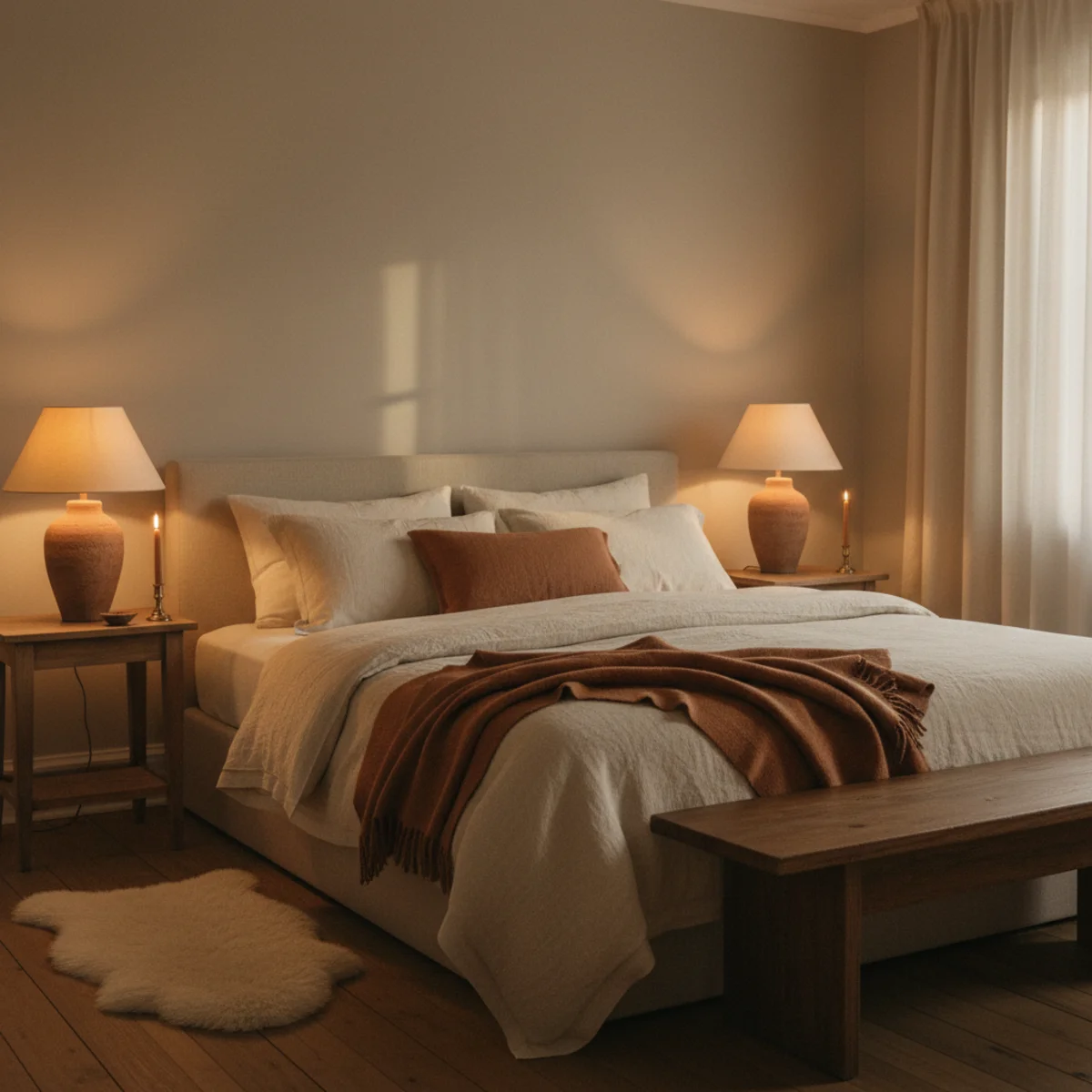
These twelve cozy bedroom ideas are tested in actual bedrooms — rooms between 100 and 200 square feet, often shared, often constrained by rental rules, often built on $300 to $700 budgets rather than thousands. None require renovation, custom millwork, or new furniture. Every move below names specific bulb wattages, fabric weights, and dollar ranges, and most can be done in a single weekend.
Cozy bedrooms compound across hundreds of nights. Even small changes (two lamps swapped for warm bulbs, a wool throw at the foot of the bed) get felt 365 times per year — and the difference between a sterile bedroom and a cozy one is mostly six or seven of these small choices stacked together. Start with the lamps. The lamps are always first.
By the end of this guide, you'll know exactly how to swap your bedroom lighting for $40 in bulbs, layer the bedding for warmth without buying new sheets, paint the walls warm in one Saturday, and the small habit (one across-the-room move) that quietly improves how you sleep.
WHAT'S INSIDE
- Two warm 2700K bulbs and the overhead off — the $20 bedroom fix that compounds nightly
- Why linen and wool layered together outperform any single bedding upgrade
- The bedside rug that makes the morning floor feel less like winter
- The phone-charger relocation that costs nothing and improves sleep within a week
Coziness is as much about atmosphere as it is about things — and the bedroom is where atmosphere matters most.
— Meik Wiking, The Little Book of Hygge [citation needed — verify before publish]
What makes a bedroom cozy?
A cozy bedroom combines warm, layered lighting, soft natural textiles, and a muted, low-contrast color scheme into a room that signals rest the moment you walk in. The technical version is simple: light below eye level at 2700K, at least three soft textures on and around the bed, and walls in a warm neutral rather than a cool one.
Hygge — the Danish idea of cozy contentment popularized by Meik Wiking — lives more naturally in the bedroom than any other room, because the atmosphere that makes a space feel cozy is also the atmosphere that helps you sleep. Warm dim light in the evening cues the body toward rest in a way no piece of furniture can.
More in By Room you may love
See allWhy cozy bedrooms are everywhere in 2026
As screens followed people into every waking hour, the bedroom became the room people most want to protect — a low-stimulation retreat rather than a second living room. The cozy bedroom is the design answer to that wish, and Pinterest's cozy bedroom and bedroom inspo searches climb every autumn.
The aesthetic leans warm and natural: layered linen, wool throws, plaster-toned walls, and paired vintage lamps. It's also a reaction against the cold gray bedroom of the 2010s. People want a room that feels held rather than staged, and cozy bedroom styling — cheap, textile-led, forgiving — delivers exactly that.
26 cozy bedroom ideas to try tonight
01Two Warm Lamps Instead of the Overhead
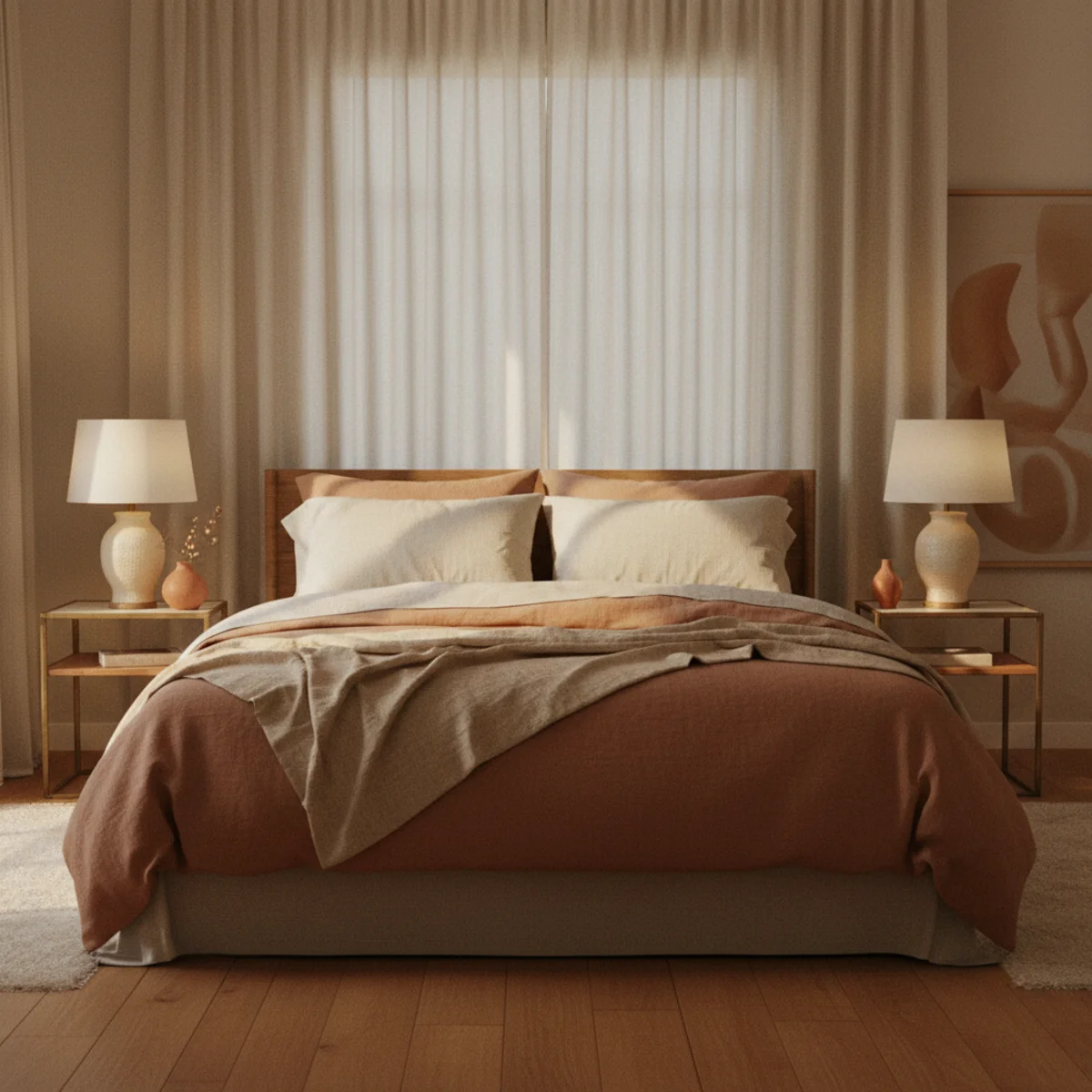
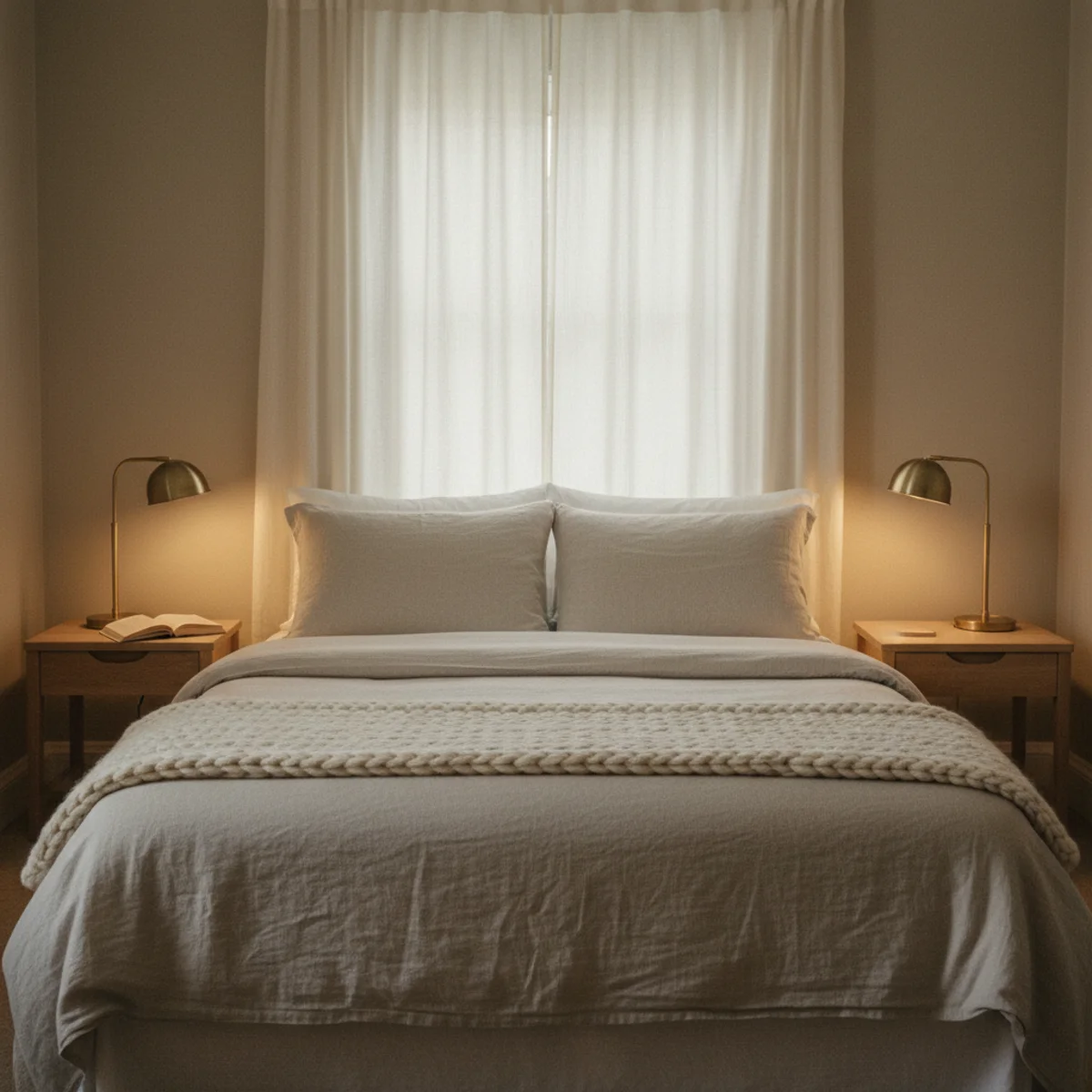
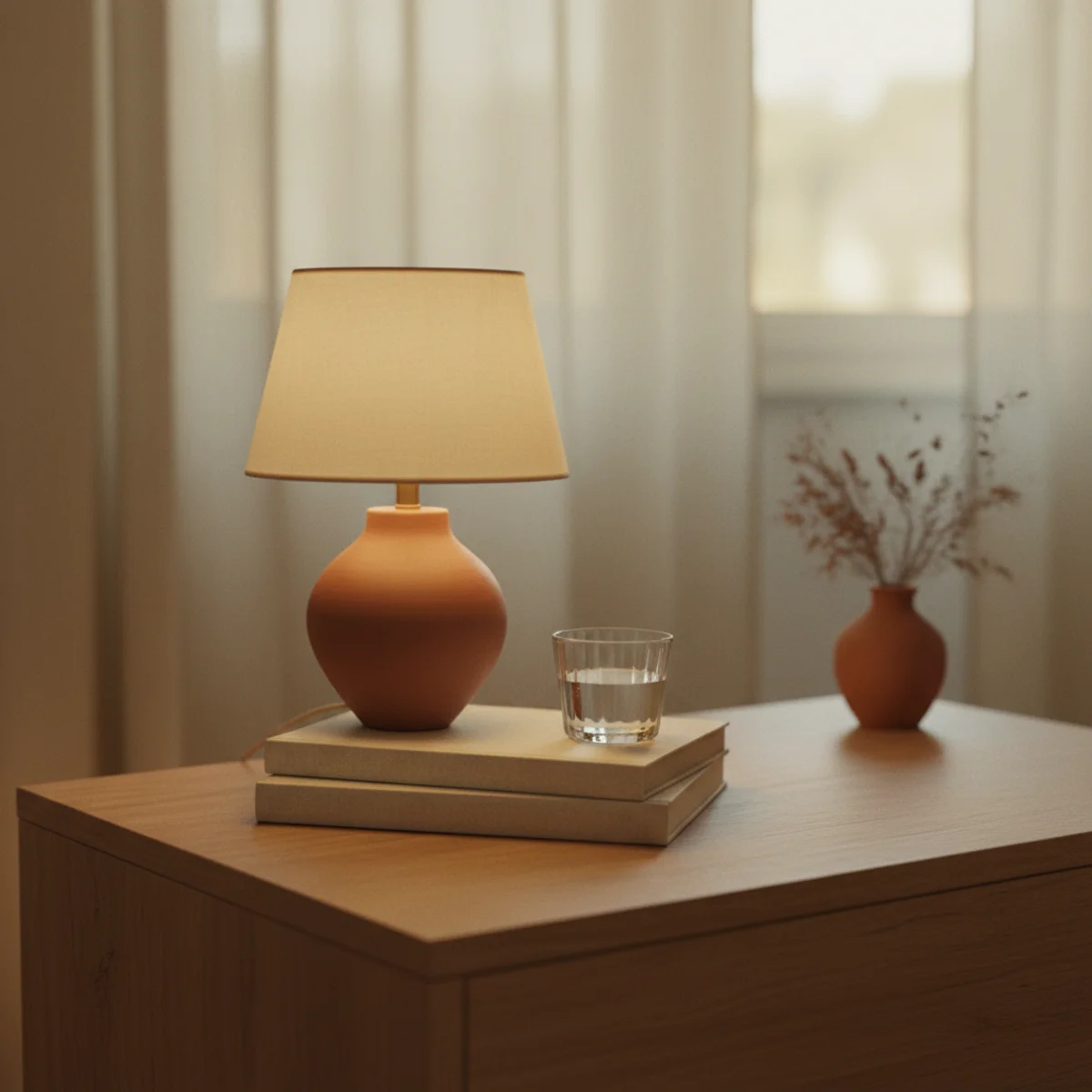
The single biggest cozy-bedroom upgrade is also the cheapest — turn the overhead light off for good after sunset and use two matched bedside lamps with 2700K warm bulbs instead. Total cost: $30 to $80 if you already own the lamps, $80 to $200 if you need to thrift bases and shades. The transformation is immediate; the overhead never comes back on at night once you've experienced the room with only the lamps.
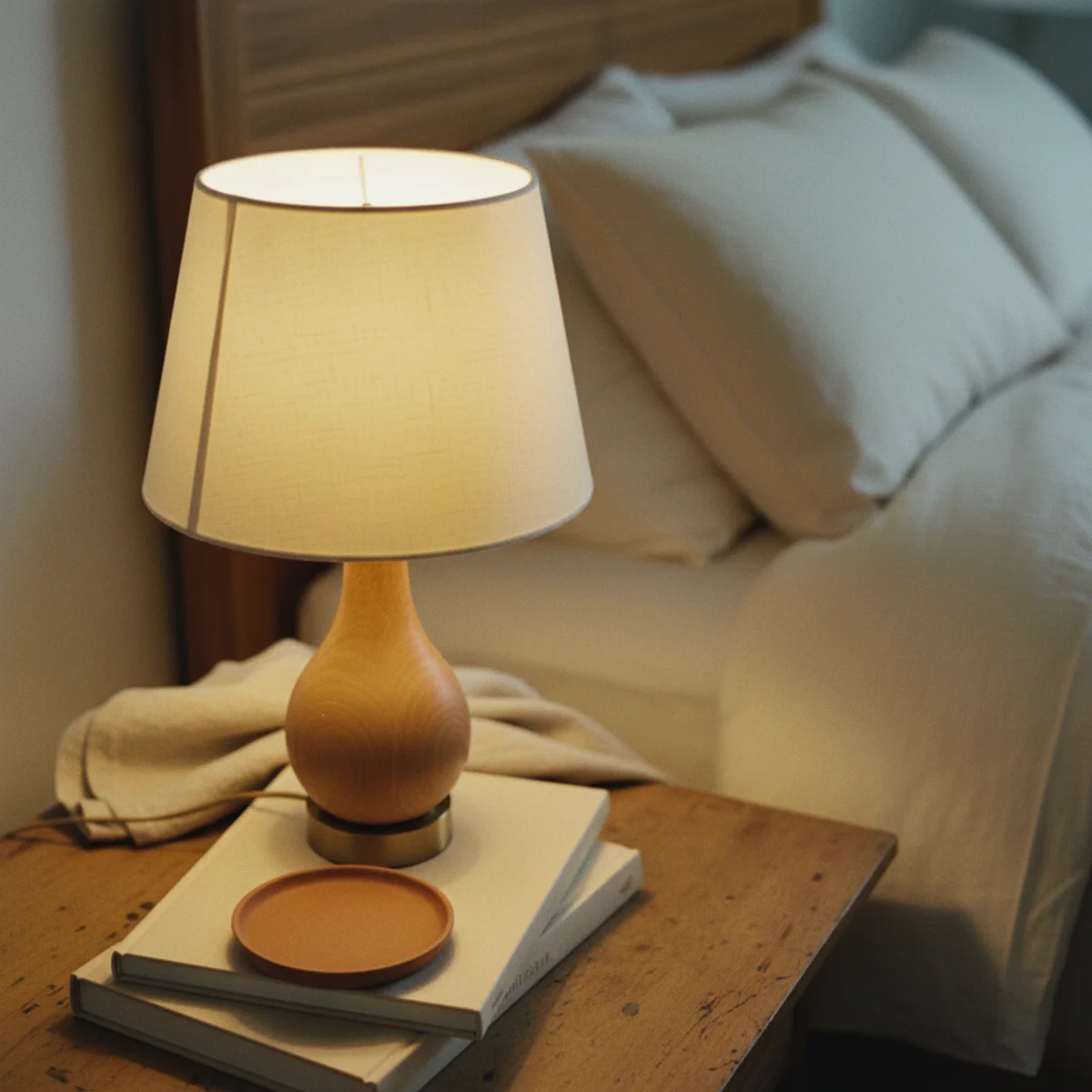
Two table lamps at 22 to 26 inches tall, one on each side of the bed, both with 2700K LED bulbs at 400 to 600 lumens (warmer and dimmer than living-room lamps). Bases in ceramic, brass, or oak; shades in linen or paper drum at 10 to 14 inches across. Position the shade-bottom at 50 to 56 inches above the floor when the lamp sits on a nightstand — bulb just above seated-in-bed eye level. The pair matters; one lamp creates uneven shadow. Wire both to smart plugs ($15 each) timed to sunset for the warm transition every evening without anyone touching a switch.
AFFILIATE SLOTLIGHTINGTwo matched bedside lamps, 22-26 inches tall, 2700K bulbs at 400-600 lumensAdd affiliate URL when configuredWhy it works
Because overhead light at 4000K hits the bedroom from above the head, casting harsh downward shadows on faces and reading material — exactly opposite to how cozy light should fall. Two warm bedside lamps at the right height drop light from beside and slightly above, the same way a candle on a nightstand would. The brain reads the difference as the difference between hotel-room functional and home-bedroom restful, even with no other changes.
Pro tip — Tape over the overhead switch with a small piece of painter's tape (or install a $3 switch guard from Amazon) for the first three weeks — the physical barrier prevents anyone in the household from absent-mindedly flipping the overhead on out of habit. After three weeks, the overhead-off behavior becomes automatic.
Two matched lamps, overhead off — the $30 bedroom upgrade that compounds across 365 nights a year. See also: 2700K LED bulbs
02Layer Linen and Wool on the Bed
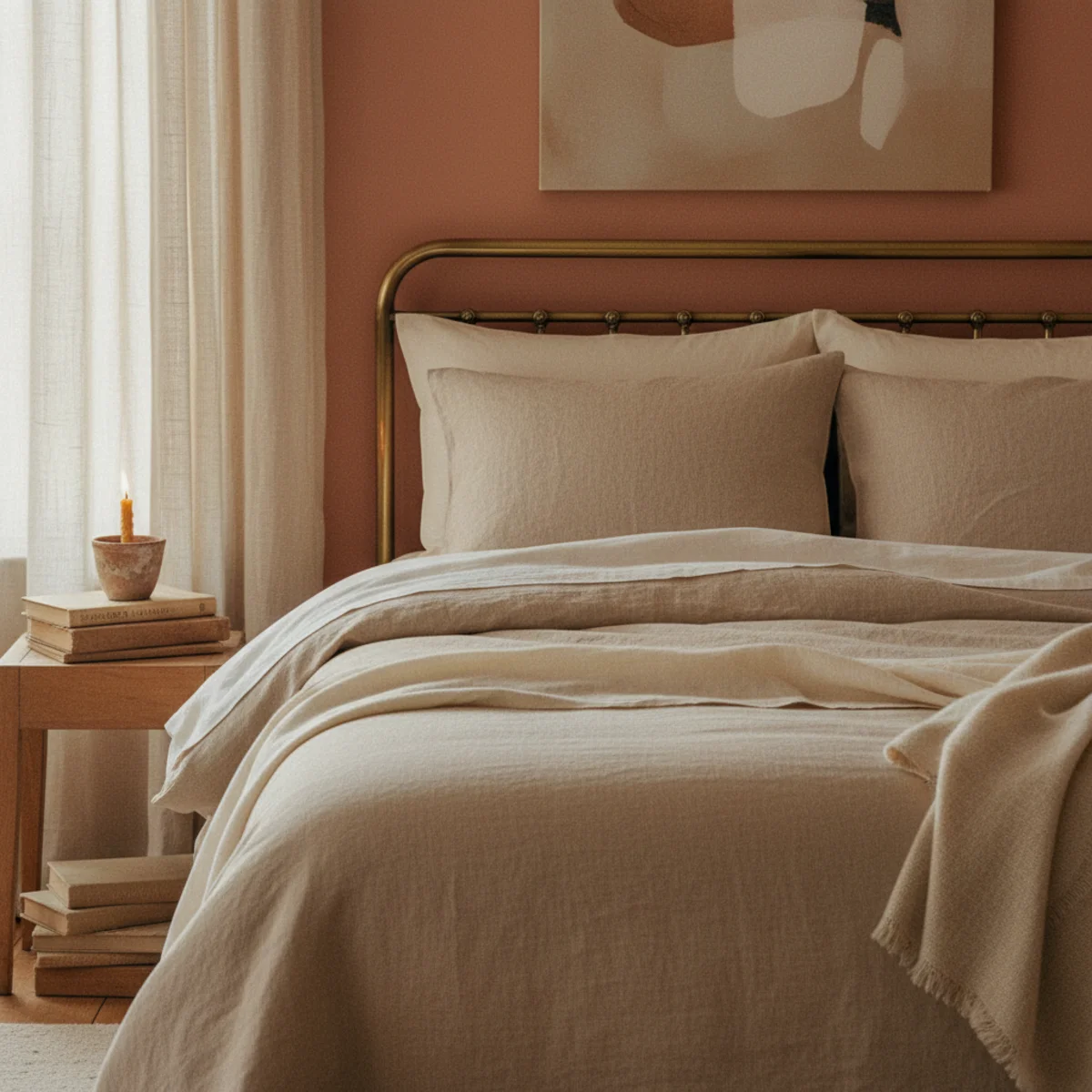
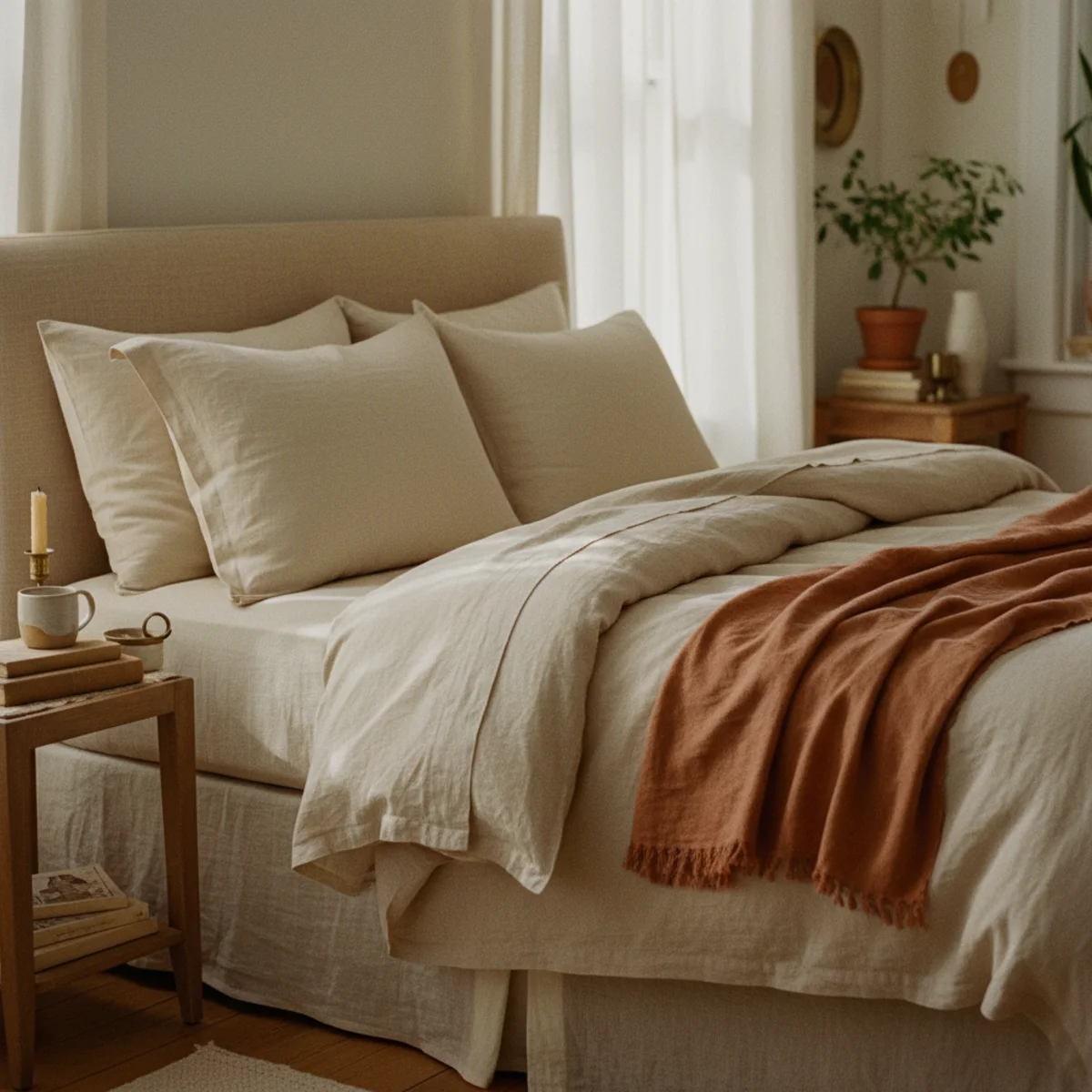
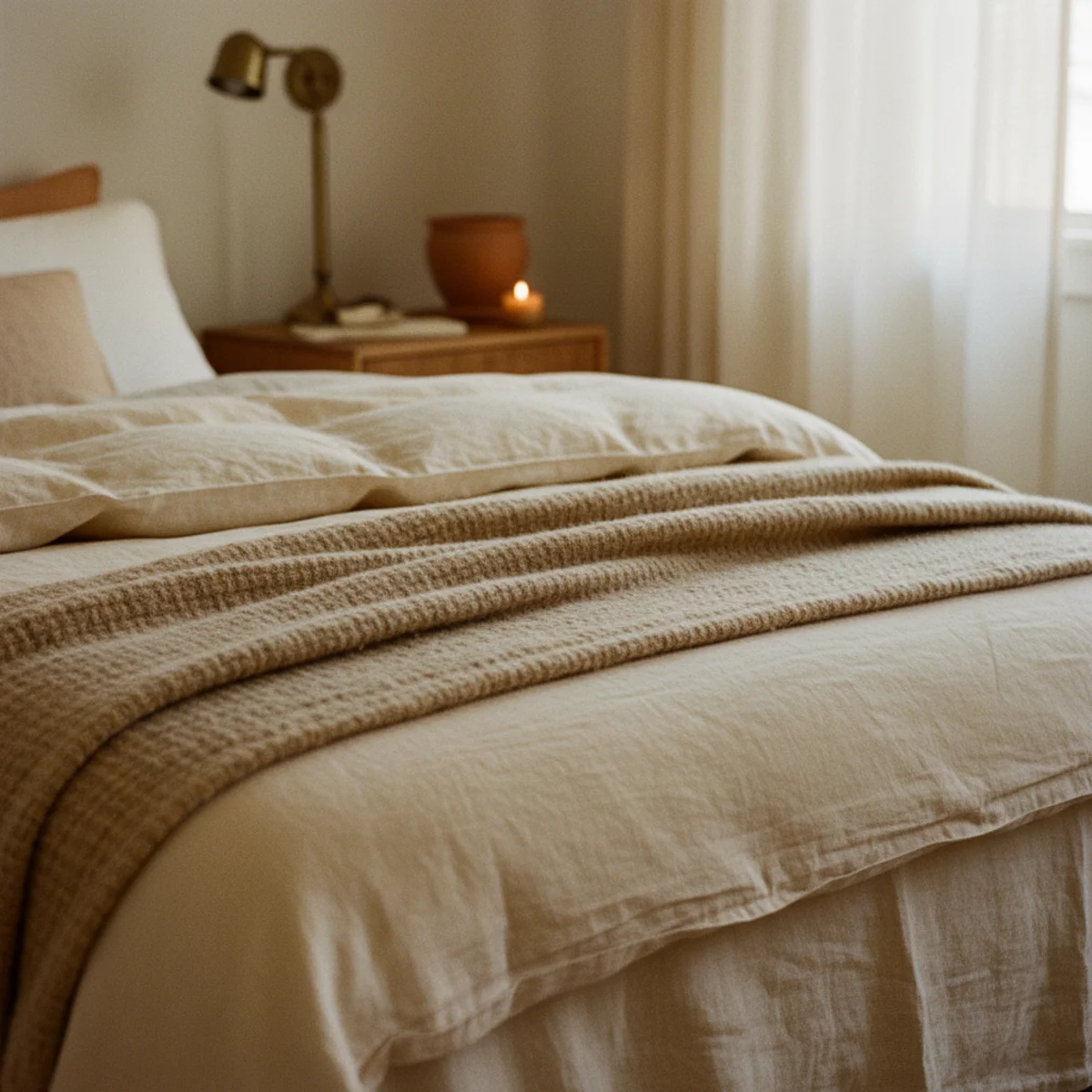
The cozy bedroom bed is layered — linen sheets next to skin, a wool blanket between sheets and duvet, the duvet on top, a wool throw at the foot. Four layers, three weights, two natural fibers. The combination handles every temperature year-round, reads as substantial visually, and lets you cool or warm the bed by pulling layers up or down without buying summer and winter sets.
Bottom up: fitted linen sheet (Quince at $50, Magic Linen at $40), top flat linen sheet (same brand, $40 to $60), wool or cotton thermal blanket ($60 to $120 from Pendleton or Lands' End), linen duvet cover with wool or down insert ($150 to $300 for cover from Quince or Cultiver, $80 to $200 for insert from IKEA or Buffy). Throw at the foot in wool or boucle ($40 to $79 secondhand Pendleton, West Elm boucle, Lands' End). All in undyed earth tones (oat, sand, cream, terracotta) — no patterns, no bright dyes. Total bedding investment: $400 to $800 for full layering; significantly less if some layers are thrifted or inherited.
AFFILIATE SLOTBEDDINGLinen sheets + wool blanket + linen duvet + wool throw at foot, all undyed earth tonesAdd affiliate URL when configuredWhy it works
Because the visible layers signal warmth even before you climb in — the thickness, the visual stacking, the way each layer drapes slightly differently all communicate insulation and care. The functional advantage matches: you can sleep with just sheet plus blanket in summer, add the duvet in fall, layer the throw in deepest winter, all without buying new bedding for each season. One layered set replaces three different seasonal options.
Pro tip — Fold the wool blanket between sheets and duvet rather than placing it on top of the duvet — the hidden layer adds warmth without bulking up the visible bed, and the slight weight against your skin reads more substantial than a thick duvet alone. Pull the duvet down and the blanket appears; pull both up and only the duvet shows.
Linen + wool + linen + wool throw — four layers, two fibers, every temperature handled year-round. See also: linen sheet
03Switch to Flannel for Winter Nights
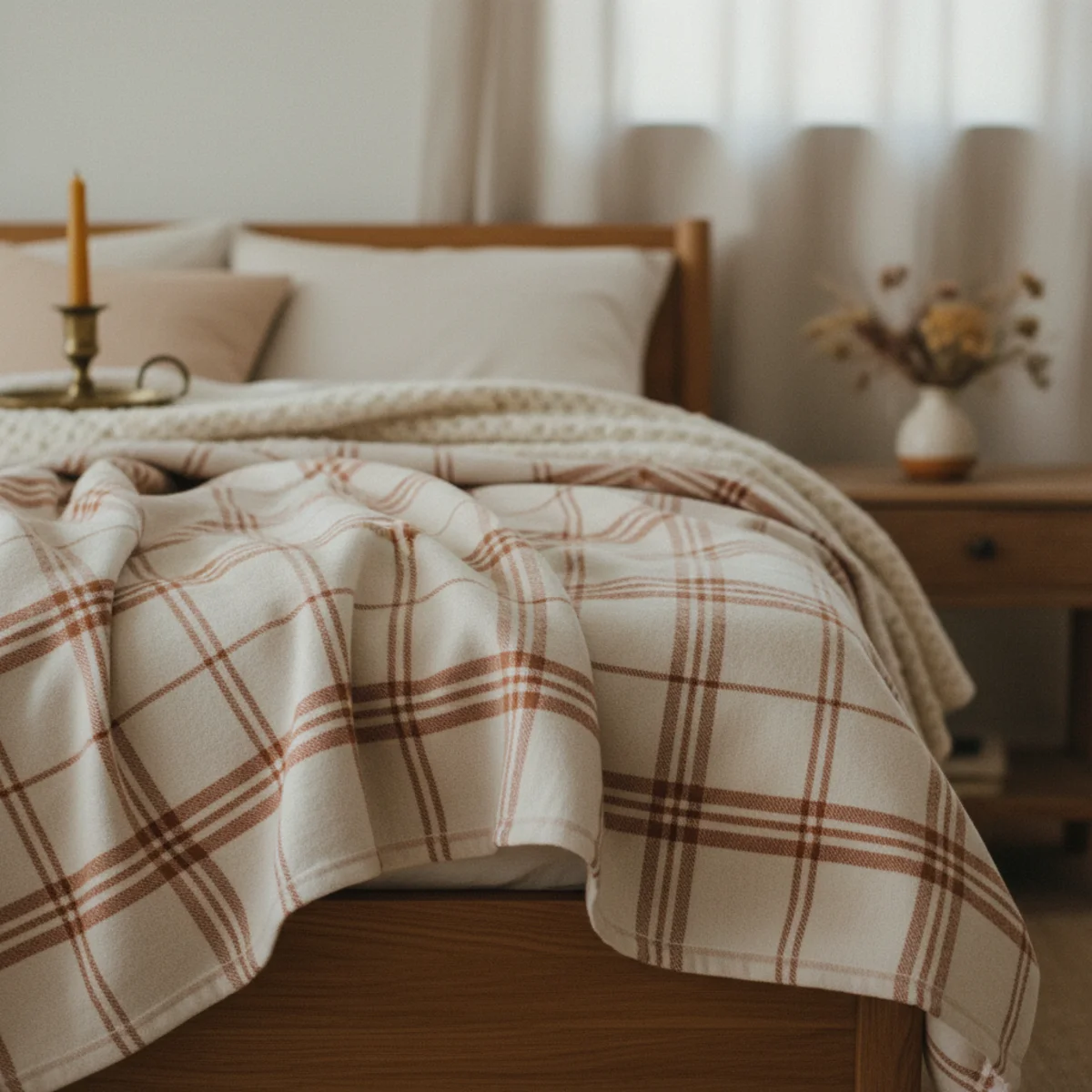
When deep winter arrives and even layered linen feels cool, swap the linen flat sheet for a flannel one. The fabric change is one small move that drops bedroom warmth from chilly-but-coping to actually warm without raising the thermostat. Cotton flannel at 170 to 200 GSM in undyed cream or oat tones works perfectly with the rest of the linen-and-wool palette; sticking to the same color family means no winter set looks out of place.
Best flannel sheets for warm-home palette: L.L. Bean Ultra Cotton Flannel ($89 for a set), Garnet Hill Signature Flannel ($90 to $130), Brooklinen Heathered Cashmere ($150). Look for 170 to 200 GSM (medium-heavy), brushed both sides, in undyed cream, oatmeal, or sand tones — avoid patterns and saturated colors. Swap the flannel flat sheet for the linen flat sheet in November or December; switch back in April. Keep the other layers (linen fitted sheet, wool blanket, linen duvet, wool throw) unchanged year-round. The single flat-sheet swap is the only seasonal change required.
AFFILIATE SLOTBEDDINGCotton flannel flat sheet at 170-200 GSM in undyed cream or oat, November through MarchAdd affiliate URL when configuredWhy it works
Because flannel against skin warms the body directly through brushed cotton's air-trapping nap, while thicker duvets create insulating layers above the body that retain heat your skin already lost. The thermal gain from flannel sheets is immediate (the bed feels warm when you climb in) where a thicker duvet takes 10 to 15 minutes to warm up from body heat. The flannel-and-wool-layered-bed combination is the warmest bedding setup short of an electric blanket.
Pro tip — Keep the swapped-out linen flat sheet stored carefully (folded in a closet, not crammed into a drawer) — pulling it out cleanly in April for the warm-weather switch matters more than how it sat for five months. Cold-wash and air-dry both sets at the start of each season; bedding gets the slow-care treatment, not the fast-laundry treatment.
Flannel flat sheet, November through March — the single seasonal swap that beats thicker duvets for winter warmth. See also: Garnet Hill Signature Flannel
04Paint the Walls a Warm Neutral
Painting bedroom walls in a warm neutral or earthy tone is the highest-impact $80 you can spend on a cozy bedroom. The wall color shapes how every other element reads — bedding, lamps, wood, art — and the right paint adds the cocooning quality bedrooms specifically need. Skip bright white, gray, and cool blues; choose Setting Plaster, Mizzle, Saybrook Sage, Soft Chamois, or Pointing per the best-paint-for-warm-home rules.
Best cozy-bedroom paints: Farrow & Ball Setting Plaster 231 (soft plaster pink), F&B Mizzle 266 (muted sage), Benjamin Moore Saybrook Sage HC-114 (warmer sage), BM Soft Chamois OC-13 (warm off-white), F&B Pointing 2003 (warmest off-white). All have LRV between 47 and 85 for the slightly dim cocoon quality. Paint walls + trim + ceiling all in the same color (or trim in eggshell vs walls in matte) — never bright white trim against warm walls. One gallon ($35 to $55) covers an average bedroom. Add brushes, rollers, tape, drop cloth at $30 to $40. Total: $65 to $95 per room.
AFFILIATE SLOTPAINTF&B Setting Plaster, Mizzle, BM Saybrook Sage, or warm off-white on walls + ceilingAdd affiliate URL when configuredWhy it works
Because bedrooms are viewed twice daily at the brain's most sensitive states — last thing before sleep, first thing after waking. The wall color shapes mood at both transitions. Warm earthy tones (plaster pink, muted sage, warm off-white) calm the brain going to bed and soften the brain coming awake. Cool grays, bright whites, and saturated colors do the opposite, fighting the bedroom's primary function. The paint compounds across thousands of nights.
Pro tip — Lie on the bed and look up at the ceiling for two full minutes before committing to white ceiling paint — that's the morning view you'll have every day. If the white ceiling reads harsh against your warm walls, paint the ceiling in the same color as the walls. The matched ceiling completes the cocoon effect and removes the harsh white plane from the morning view.
Setting Plaster on every surface — the wall color that softens both bedtime and morning. See also: best-paint-for-warm-home rules
05Add a Soft Rug at the Bedside
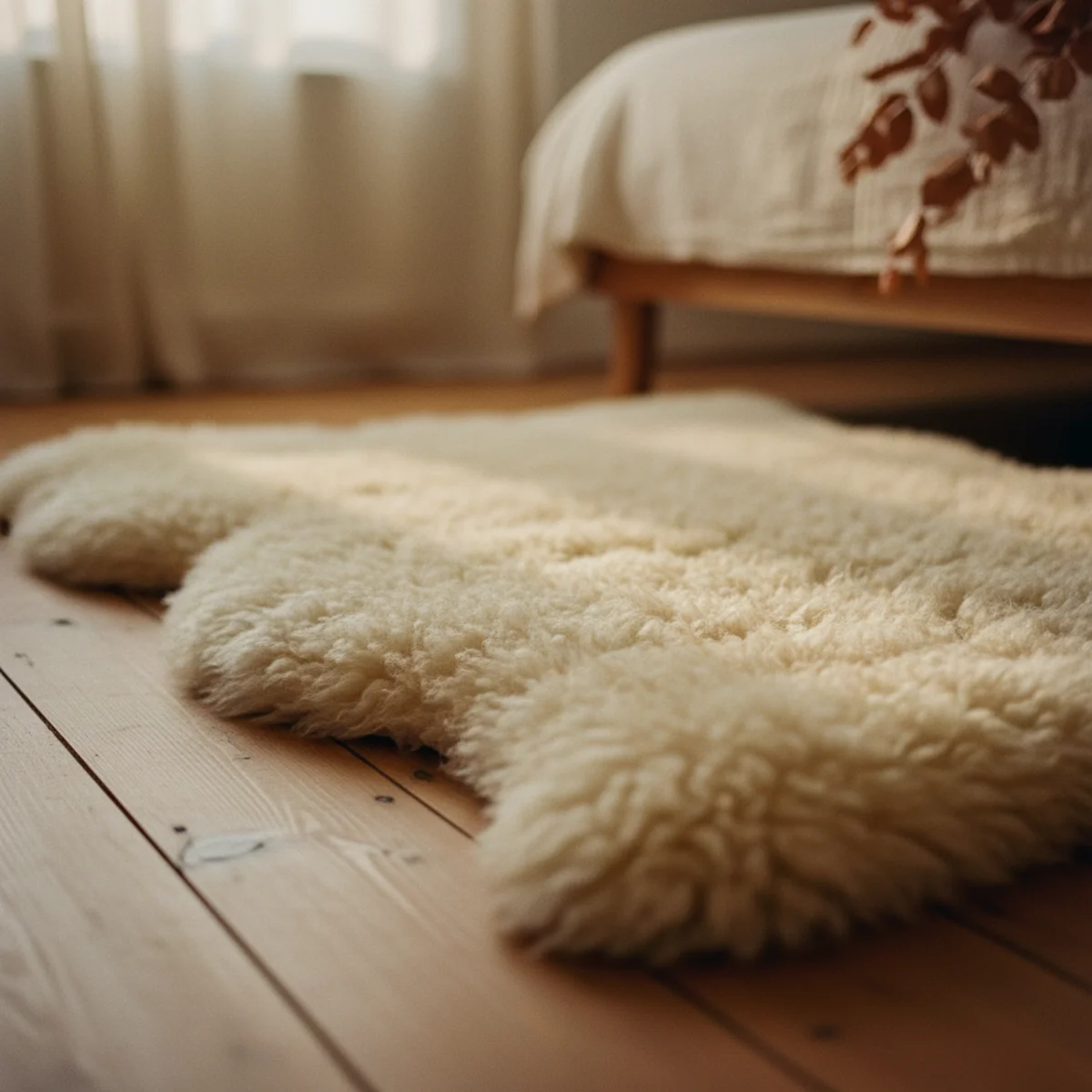
Bare floors beside a bed are cold underfoot at the moment when warmth matters most — the first step out of bed each morning. A soft rug or runner positioned where your feet land changes the day's first physical sensation from cold shock to gentle landing. Even a small bedside runner at $40 to $80 transforms morning experience without requiring a full-bed-size rug.
Two approaches: SMALL BEDSIDE RUNNERS — one 2x3 or 2.5x4-foot wool or cotton rug on each side of the bed where feet land in the morning. Cost: $40 to $120 each from Rugs USA, IKEA TVINGSTRUP, or thrifted wool at $20 to $50. LARGER FULL-BED RUG — one 8x10 or 9x12 rug positioned under the bed extending 18 to 24 inches beyond each side. Cost: $300 to $800 (vintage Persian $300-600, new wool $400-1200). The small runners are the budget-friendly option; the full-bed rug is the more designed approach. Either reads better than bare floor.
AFFILIATE SLOTFLOORSmall bedside runners (2x3 or 2.5x4) on each side OR full 8x10/9x12 rug under bedAdd affiliate URL when configuredWhy it works
Because the temperature and texture of the morning floor is the day's first physical sensation, and bare cold tile or wood reads as a small daily shock that signals 'awake' in the harsh sense. A soft rug reads as gentle transition — the body waking gradually rather than jolted. Repeated across 365 mornings per year, the difference is significant for both mood and the speed at which you actually want to get out of bed.
Pro tip — If you can't afford a 9x12 rug, layer two cheap 5x7 rugs side by side under the bed — the seam where they meet hides under the mattress, and the combined footprint matches a single large rug at half the cost. The trick works especially well with two identical jute or wool rugs at $80 to $150 each.
Small wool runner where feet land — the soft floor for 365 morning landings a year. See also: vintage Persian
06Hang Curtains High in Linen
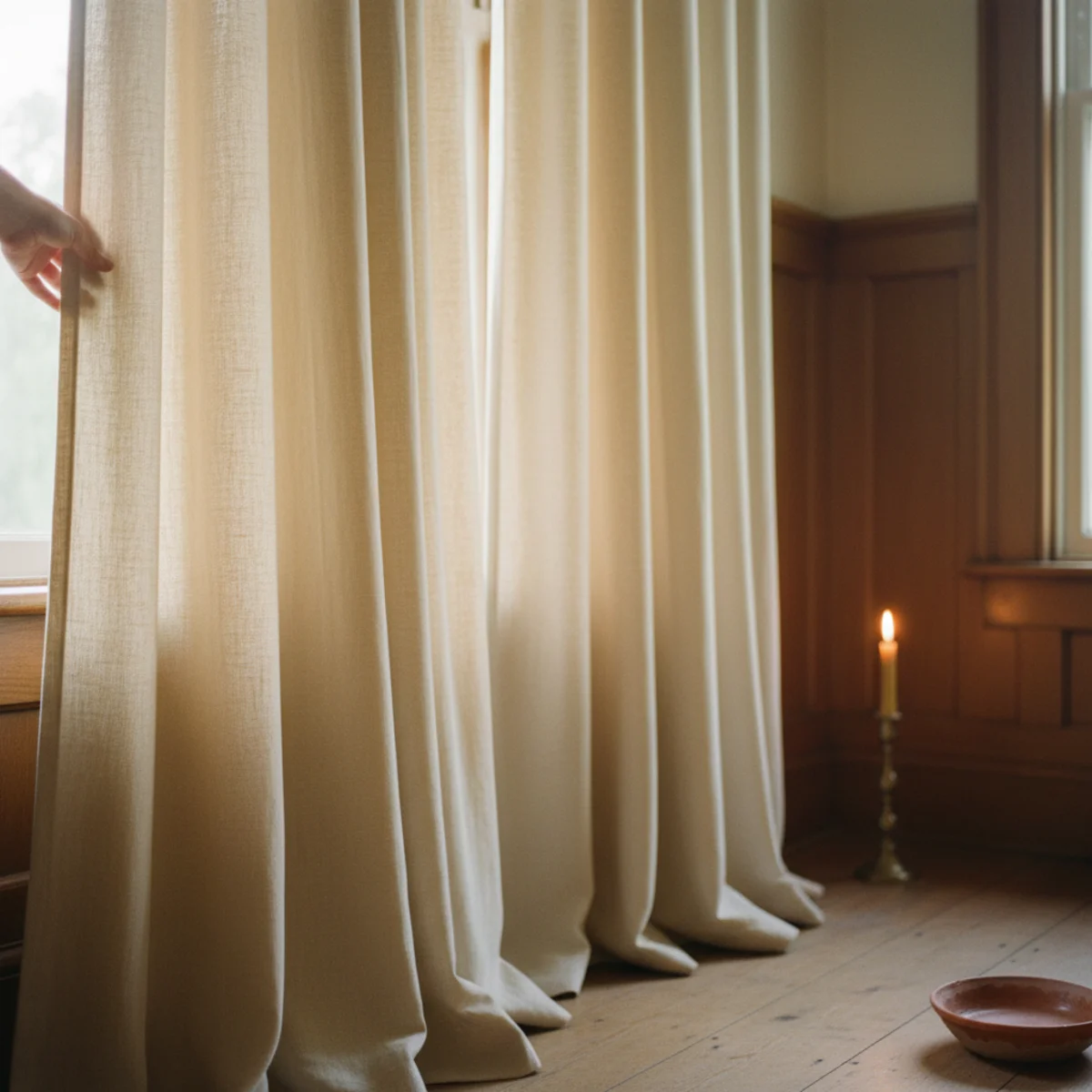
Bedroom curtains hung at the wrong height ruin even beautifully styled rooms. The fix: mount the rod 4 to 6 inches below the ceiling (not just above the window), use unlined linen panels long enough to puddle 1 to 2 inches on the floor, and let the rumpled texture do the styling. The high-hung rule visually doubles bedroom ceiling height and softens every other element.
Mount curtain rod 4 to 6 inches below the ceiling. Use simple iron or brass rods ($30 to $80 from West Elm or Pottery Barn). Hang two unlined linen panels per window in oat or natural cream ($40 to $150 per panel from IKEA AINA, Quince, or H&M Home). Panels should be 1.5 times wider than the window combined (so they look gathered when closed). Length: floor to ceiling minus rod position, plus 1 to 2 inches puddle. Use ring clips ($8 IKEA) for hanging — no sewing needed. Don't iron the linen; the wrinkles are the entire point. Add blackout liners ($25 to $50 per panel) only if the window faces a bright street or for early-rising sensitivity.
AFFILIATE SLOTWINDOWSCurtain rod 4-6 inches below ceiling + unlined linen panels with 1-2 inch puddleAdd affiliate URL when configuredWhy it works
Because rod position just above the window chops the wall into above-curtain and below-curtain sections, making the ceiling read lower. Rod 4 to 6 inches below the ceiling lets curtain panels descend continuously from near-ceiling to floor, signaling tall windows even when the actual window is small. The eye reads the continuous fabric and registers the room as more architectural — the trick costs nothing extra but transforms how the bedroom reads.
Pro tip — If your existing curtain rod is mounted just above the window frame, move it to ceiling height this weekend before buying any new fabric — the rod relocation alone transforms how the existing panels read, regardless of fabric quality. Relocate in 30 minutes; decide later whether new linen is worth additional investment.
Rod 4 inches below ceiling, panels puddling at the floor — the curtain rule that visually raises any bedroom. See also: no-sew linen curtains
07Cluster Candles on the Dresser or Mantel
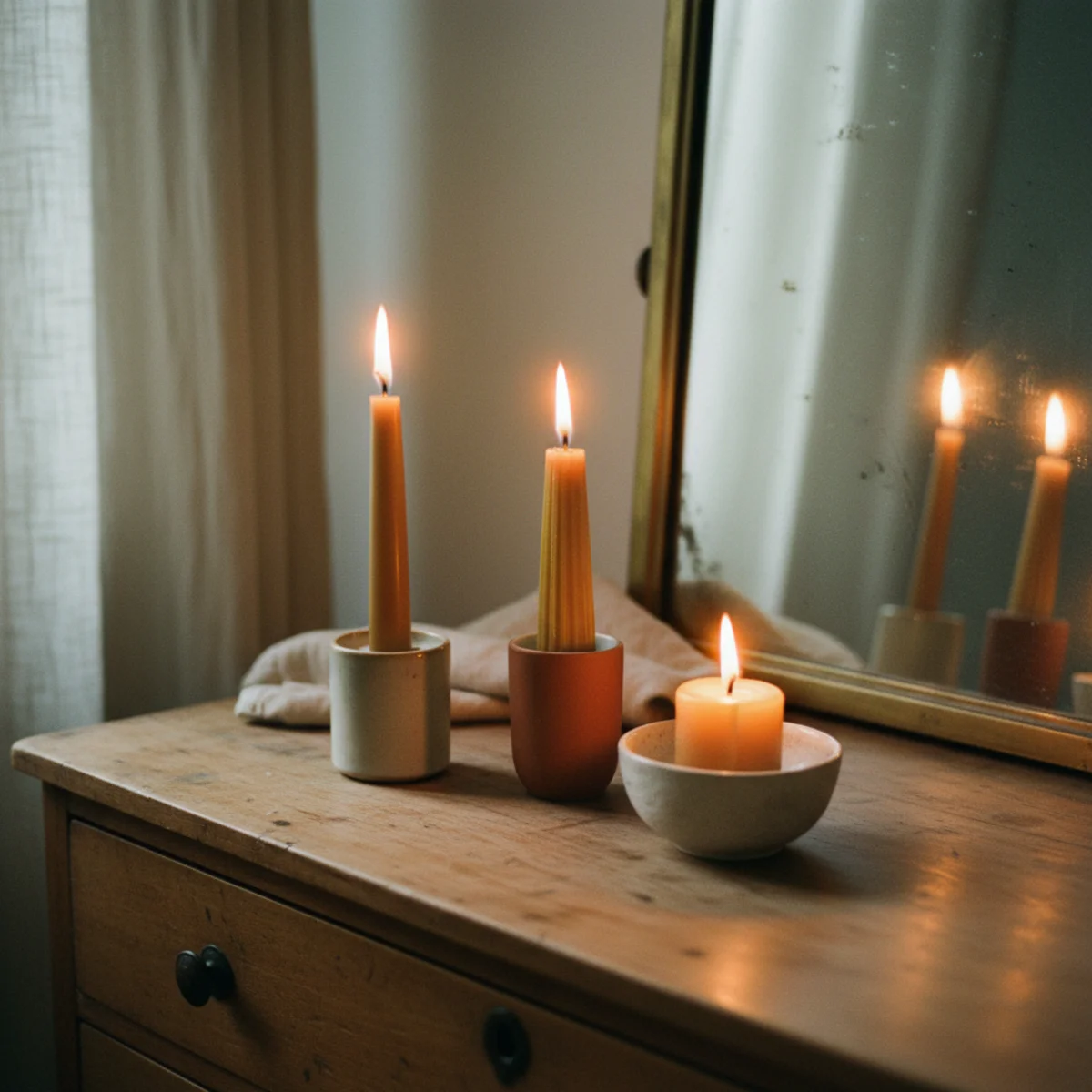
A small cluster of three to five candles on the dresser, mantel, or bedside provides the most atmospheric light any bedroom can have. Beeswax or natural-fragrance soy candles at 2 to 4 inches tall, in varied heights, lit before bed for 20 to 40 minutes — the bedroom reads transformed for the cost of $30 to $80 in candles. The ritual of lighting them also signals to the brain that the day is ending.
Three to five candles of varied heights (2 to 6 inches tall), in unscented beeswax (preferred for clean burn) or lightly-scented soy (lavender, sandalwood, vanilla are restful; avoid citrus or peppermint which read energizing). Sources: hand-poured beeswax from local makers at $8 to $25 each, DIY beeswax candles per the diy-home-decor-ideas guide at $5 each, Diptyque at $40 to $80 for higher-end, IKEA FENOMEN at $4 to $10 for budget. Position in odd-number cluster (3 or 5, never 4) on dresser top or mantel. Light 20 to 40 minutes before bed, blow out before sleeping (never sleep with candles lit). The ritual matters; the atmospheric light matters; the warmth of the small lights signals end-of-day.
AFFILIATE SLOTATMOSPHERE3-5 candles in varied heights clustered on dresser or mantel, unscented beeswax or restful scentAdd affiliate URL when configuredWhy it works
Because candle flames flicker — the irregular motion catches the eye and signals 'present moment' in a way steady lamp light cannot. The flickering also creates dancing shadows on bedroom walls that lamp light makes static. Most importantly, the ritual of lighting candles before bed is itself a transition signal — the brain learns over weeks that candle-lighting means sleep is approaching, which makes sleep onset faster and more reliable.
Pro tip — Use Diptyque-style glass-jar candles rather than tapers if you have pets or kids — the contained flame is far safer in a bedroom environment, and the glass jar contains drips and wax. Tapers belong on the dining table for occasional dinners, not in a bedroom where they'll be lit nightly.
Five candles, varied heights, lit before bed — the atmosphere ritual that signals end-of-day. See also: DIY beeswax candles
08Add a Small Reading Corner
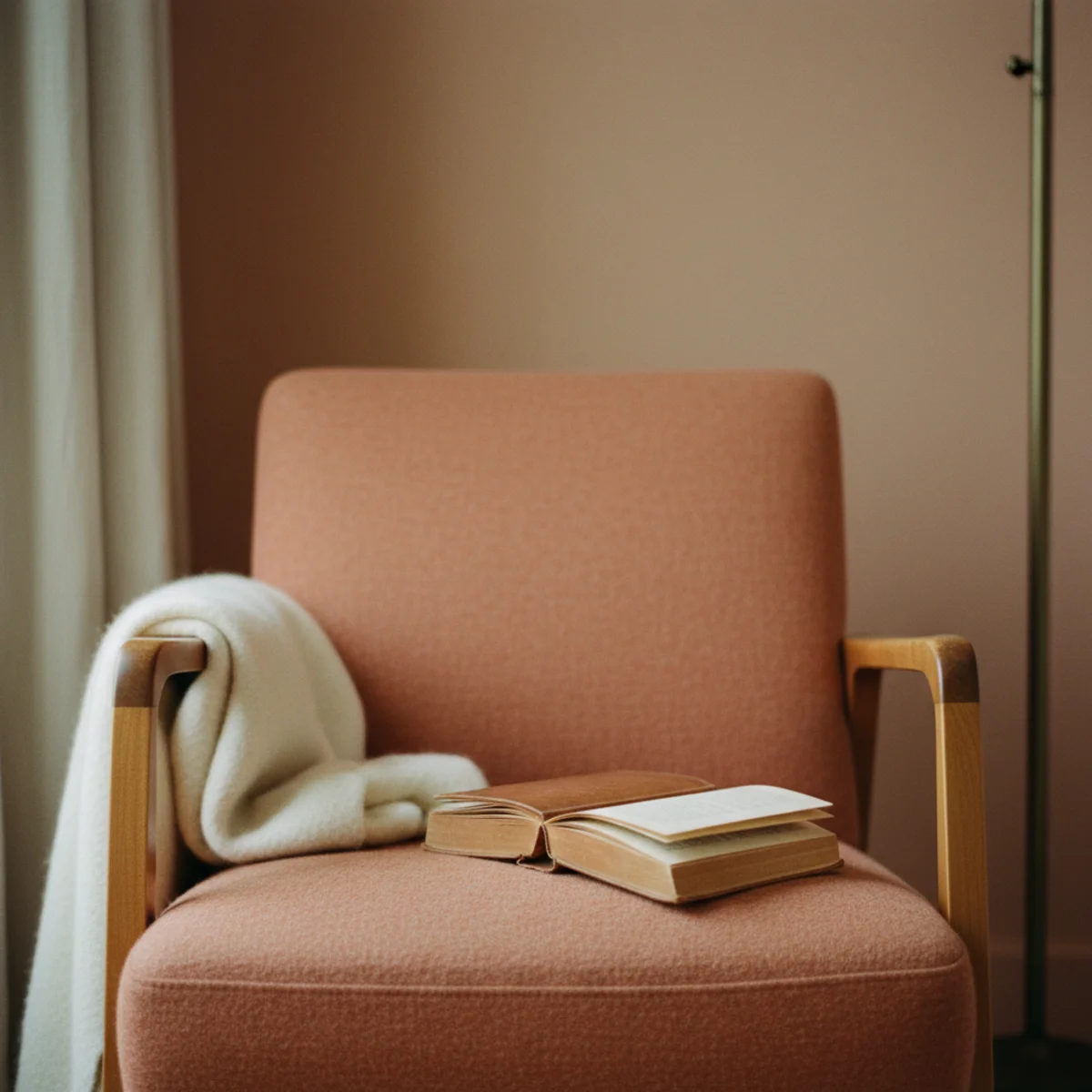
Every cozy bedroom benefits from a small reading corner — a chair, a side table, a lamp, somewhere that's not the bed. The reading corner separates evening reading from sleep, gives the bed back to sleeping, and creates a quiet destination within the room. Even small bedrooms can fit a 3-by-4-foot reading nook in an unused corner.
Minimum components: one armchair (worn leather, linen, or boucle, 17 to 19 inch seat height — see reading-nook-ideas), one small side table 22 to 28 inches tall, one floor lamp at 58 to 64 inches tall with 2700K bulb. Position the chair angled 30 to 45 degrees toward the window or lamp, not flush against a wall. Add a wool throw, one linen lumbar cushion, optional sheepskin. Small floor stack of books within arm's reach. Total budget: $250 to $500 if thrifted; $800 to $1,200 retail. The corner becomes the spot for the hour before sleep.
AFFILIATE SLOTZONEArmchair + side table + floor lamp at 2700K + small book stack in 3x4 foot cornerAdd affiliate URL when configuredWhy it works
Because reading in bed associates the bed with conscious wakefulness, which interferes with sleep onset. A separate reading corner preserves the bed as sleep-only space and gives evening reading its own zone. The two-zone separation (read here, sleep there) is one of the strongest sleep-hygiene moves available — and it costs nothing beyond the corner that was probably empty anyway.
Pro tip — Put the reading corner as far from the bed as the room allows — even 8 to 10 feet of separation reinforces the two-zone signal. If your bedroom is too small to separate significantly, position the chair angled away from the bed so at least the visual direction is different. The directionality matters as much as the distance.
Reading corner separated from the bed — the two-zone setup that lets the bed be a bed again. See also: reading-nook-ideas
09Keep the Nightstands Sparse
Nightstands accumulate clutter faster than any other bedroom surface — water glasses, books in progress, charging cables, hand cream, jewelry. The cozy-bedroom fix is treating the nightstand as a styled surface with one lamp, one current book, one small object — and a single tray or dish for the daily clutter (water glass, glasses, phone face-down). Daily-use items live in the tray; everything else hides in drawers or moves elsewhere.
On each nightstand: ONE lamp (per the two-warm-lamps rule), ONE small framed photograph or small ceramic, ONE current reading book. Add ONE small tray (4x6 to 6x8 inches in wood, brass, or ceramic at $10 to $30) holding daily-use items: water glass, reading glasses, watch, phone face-down. Anything beyond those three styled items plus the tray's contents goes into the nightstand drawer or another surface. Edit weekly — anything that drifted onto the nightstand surface gets returned to where it belongs. The discipline is the styling.
AFFILIATE SLOTSTYLINGNightstand: 1 lamp + 1 small framed photo + 1 current book + 1 small tray for daily itemsAdd affiliate URL when configuredWhy it works
Because the nightstand is the last thing you see before sleep and the first thing you see on waking, both at the brain's most sensitive states. A cluttered nightstand creates background visual anxiety — every visible object registers as a small unresolved task. A styled sparse nightstand reads as composed and cared for, which lets the brain settle into sleep and wake calmly. The cumulative effect across 365 mornings and nights is real.
Pro tip — Add a hand cream and a water glass to the styled tray rather than displaying them separately — items in the tray read as part of the styling rather than clutter, and the visual containment keeps everyday objects from breaking the bedroom's calm. The tray is the small daily-care zone, distinct from the styled vignette.
Lamp, photo, book, daily tray — the sparse nightstand that wakes calmly and sleeps better. See also: small tray
10Choose Warm Metals — Brass or Bronze
Bedroom metal touches (drawer pulls, lamp bases, curtain rods, picture frame hardware, door handles) read either warm or cold based on their metal finish. Chrome and brushed nickel read cool and clinical; aged brass, antique bronze, and hammered copper read warm and personal. Swapping every visible metal in the bedroom from cool to warm transforms the whole room thermally — without any large furniture changes.
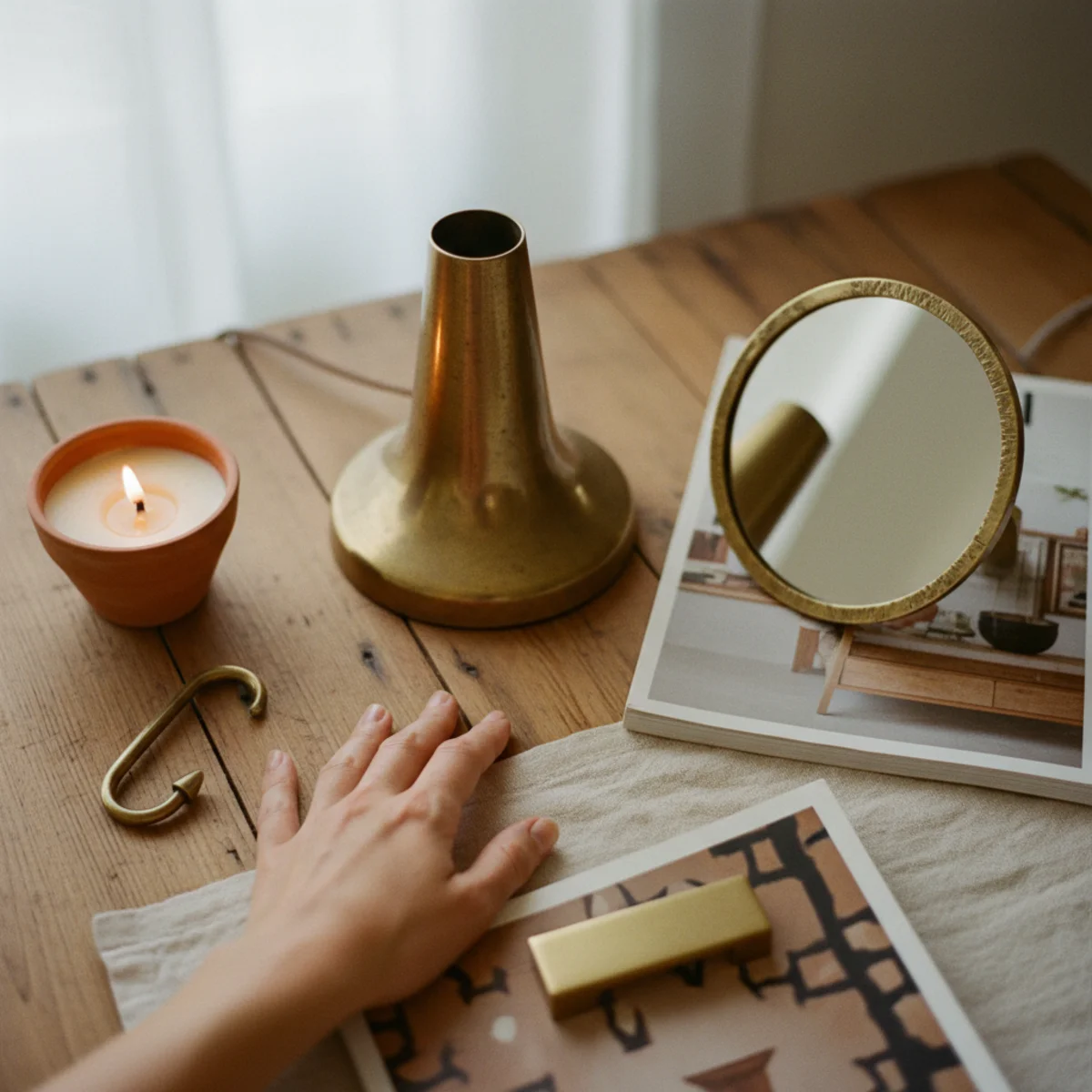
Audit visible metals: drawer pulls (6 to 16 per dresser — replace with aged brass at $4 to $20 each from House of Antique Hardware), lamp bases (brass or warm-toned ceramic), curtain rod brackets (brass or oiled iron at $30 to $80), door handle (brass or oiled bronze at $40 to $80), picture frame hardware. Replace gradually over weeks if budget is tight — one piece per week is fine. Mix several warm metals (aged brass + antique bronze + hammered copper) rather than committing to one for the most collected-over-time look.
AFFILIATE SLOTMETALSAged brass, antique bronze, or oiled bronze across all visible bedroom hardwareAdd affiliate URL when configuredWhy it works
Because bedrooms have more visible metal touches than most rooms — drawer pulls on every dresser drawer, curtain rod brackets at every window, lamp bases on every nightstand. Each cool-toned metal touch creates a small chill point that the eye registers. Switching all of them to warm brass or bronze removes a dozen small visual interruptions at once, letting the warm bedroom palette read uninterrupted across every detail.
Pro tip — Mix three types of warm metal — aged brass on drawer pulls, antique bronze on lamp bases, hammered copper on a small candle holder — to read as collected over time. Matching gold-tone hardware everywhere reads as one shopping trip; three warm metals in conversation read as years of small purchases.
Every visible metal in warm brass — small swap, dozens of warmth signals replace dozens of chill points. See also: House of Antique Hardware
11Add One Soft Headboard
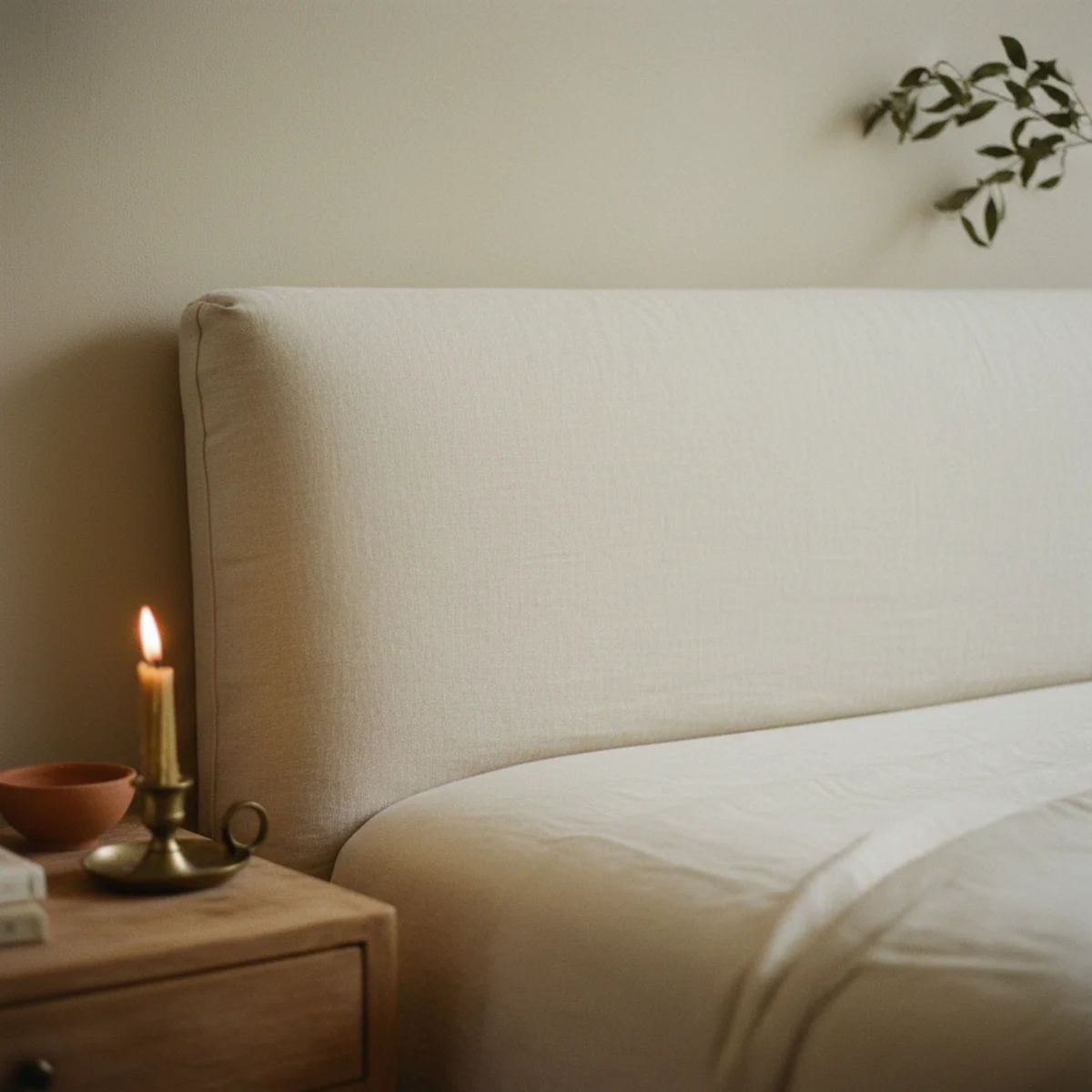
A bed without a headboard reads incomplete — like a sentence without a period. The headboard frames the bed, anchors the visual composition, and provides physical support for sitting up to read. Almost any headboard beats none: upholstered linen or boucle ($300 to $800 retail, $80 to $200 secondhand), solid wood ($200 to $1500), or DIY plywood wrapped in batting and linen at $65 to $100.
Best cozy-bedroom headboard options: UPHOLSTERED in linen, boucle, or vintage velvet ($300 to $800 retail, $80 to $200 secondhand from Marketplace). SOLID WOOD in oak, walnut, or teak ($200 to $1500 retail, $80 to $300 secondhand). DIY PLYWOOD wrapped in batting and linen ($65 to $100 in materials per diy-home-decor-ideas). Headboard should be 12 to 18 inches taller than the top of the mattress, matching the bed width or wider by 2 to 4 inches on each side. Mount to wall studs or attach to the bed frame. Cover any cool-toned existing headboard with a fitted linen slipcover ($60 to $120) to transform without replacement.
AFFILIATE SLOTFURNITUREUpholstered, wood, or DIY plywood headboard 12-18 inches above mattressAdd affiliate URL when configuredWhy it works
Because the bed is the largest single element in any bedroom, and an unframed bed creates a visual gap above the mattress that the eye keeps reaching for. A headboard fills the gap and turns the bed into a complete piece of furniture rather than a mattress on a frame. The framed bed also signals comfort and intention — the headboard reads as evidence that someone designed this room specifically for rest.
Pro tip — If buying a headboard is out of budget, build the DIY plywood-and-linen version per the diy-home-decor-ideas guide for $65 to $100 in materials — wrap a 1x4-foot piece of birch plywood with foam batting and linen fabric, staple to back, mount to wall. The DIY upholstered headboard looks indistinguishable from $400 retail for one Saturday's work.
DIY linen-upholstered headboard for $80 — the frame that turns a bed into complete furniture. See also: DIY plywood-and-linen
12Move the Phone Charger Across the Room
The smallest cozy-bedroom move with the largest sleep benefit: move your phone charger from the bedside to the opposite side of the room (or a different room entirely). The relocation costs nothing, takes 30 seconds, and improves sleep quality within a week — by removing the phone from arm's reach, you remove the mindless scrolling that delays sleep onset. The bedside becomes lamp, book, and small tray only.
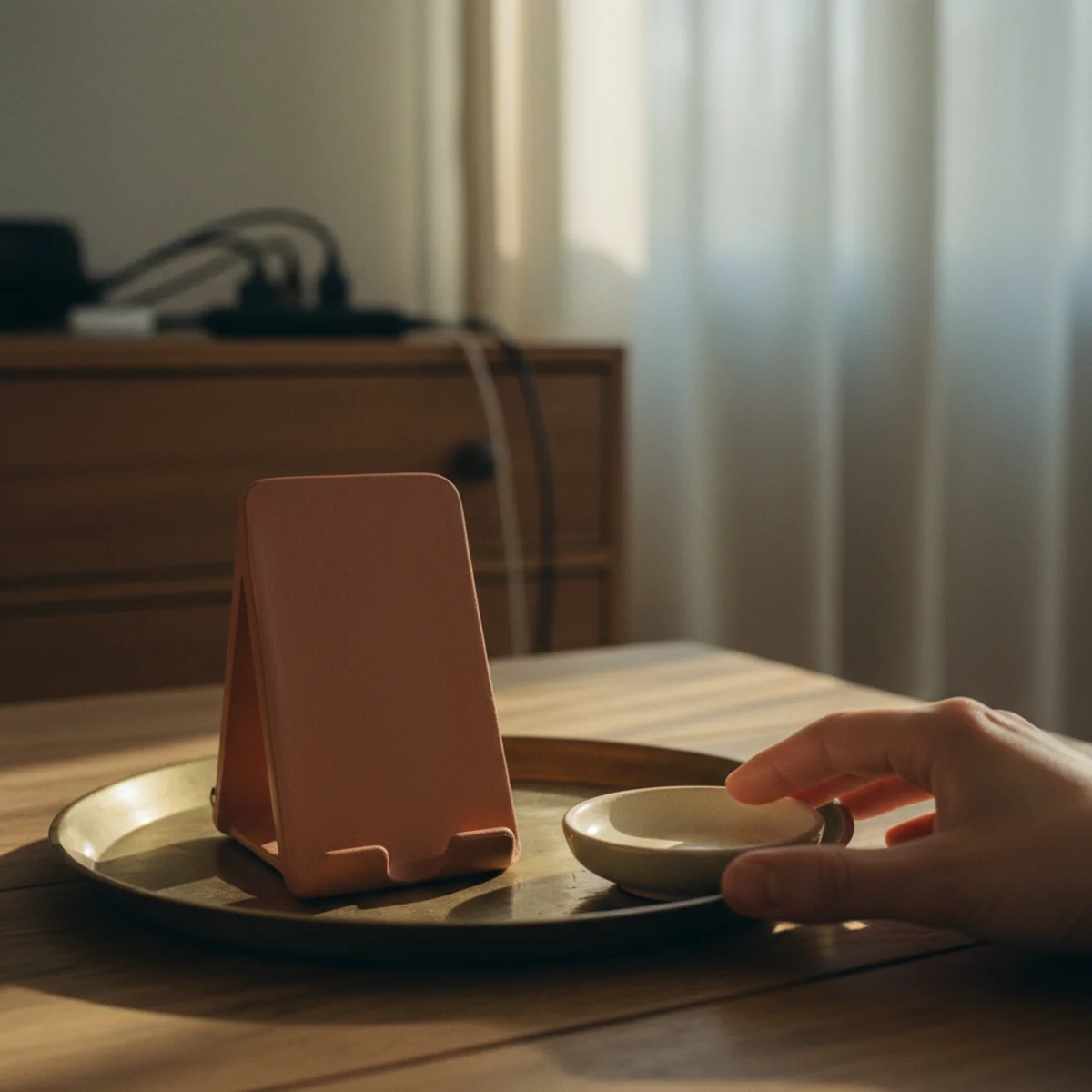
Move the phone charging cable from the nightstand to a dresser, console, or shelf across the room — ideally far enough that getting to the phone requires standing up. Plug into an outlet that's not near the bed. If absolutely required for emergency calls, use an old-fashioned analog alarm clock for the alarm function (battery-powered analog clocks at $15 to $40 from Etsy or West Elm work beautifully). Charge the phone overnight on the dresser; pick it up only after the morning ritual (coffee, washing up). The seven-step buffer between waking and phone removes the most common bedroom sleep disruptor.
AFFILIATE SLOTHABITPhone charger across the room or in different room; analog alarm clock at bedsideAdd affiliate URL when configuredWhy it works
Because the brain learns associations — and a phone within arm's reach trains the brain to expect potential notifications, scrolling, and stimulation in bed. Moving the phone to the dresser breaks the association and signals to the brain that bedside time is for sleep, not phone. The change is subtle but consistent across nights, and most people notice the improvement within a week. The intervention also tends to improve morning mood by removing the immediate-scroll wake-up pattern.
Pro tip — Use an old wind-up or battery-powered analog alarm clock ($15 to $40 from Etsy or thrifted from estate sales) instead of your phone's alarm — the analog clock face has zero notification potential, the soft tick can be reassuring, and the visual aesthetic reads more bedroom-appropriate than glowing LED digits. The Newgate Brick Lane analog at $80 is the design-favorite version of this idea.
Phone on the dresser, analog clock at the bedside — the free move that improves sleep within a week. See also: battery-powered analog clock
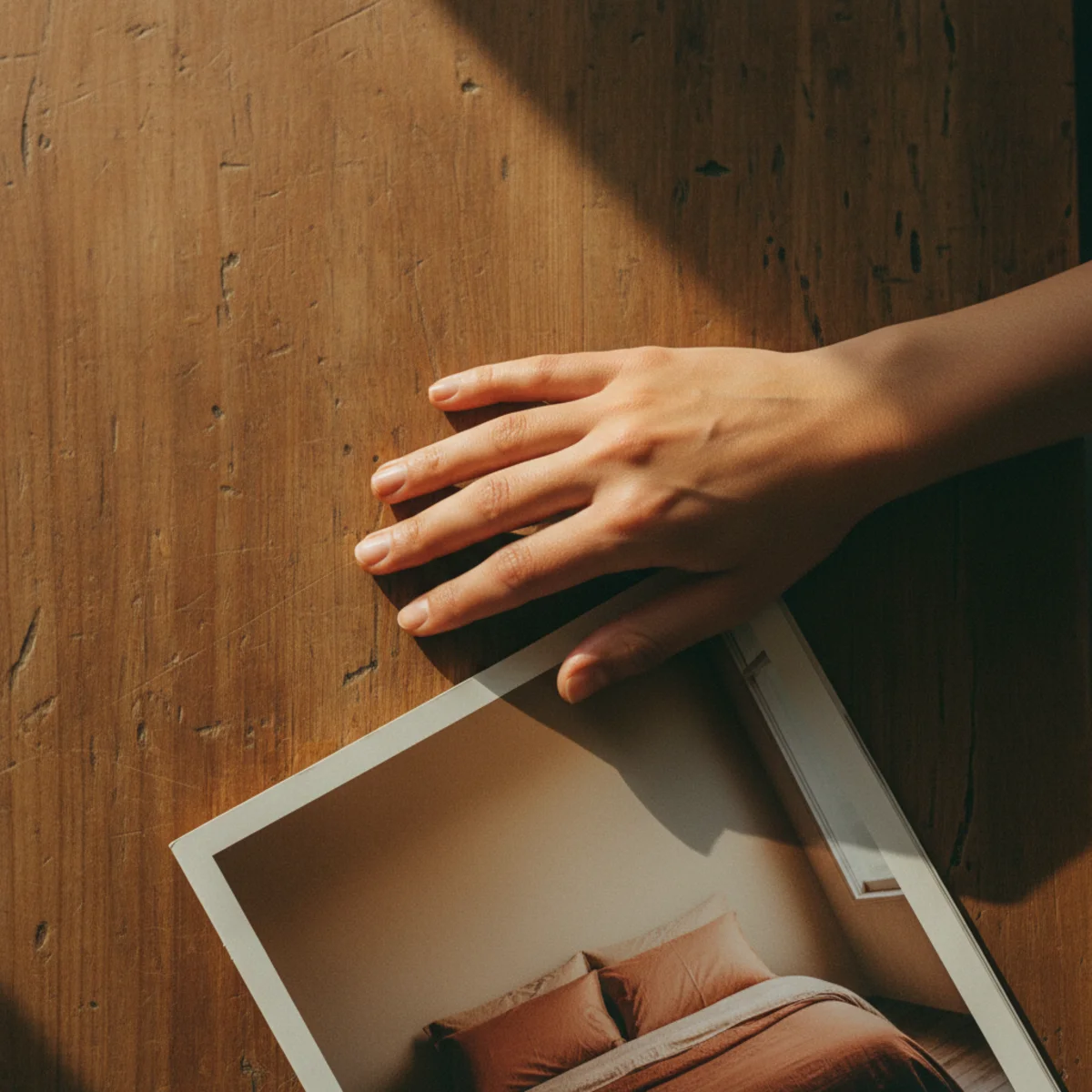
How to make a bedroom cozy step by step
Cheapest and easiest first. Stop whenever the room feels right.
- 1Warm the light
Swap cool bulbs for 2700K, add two bedside lamps, and put one on a timer. This single change does the most and costs the least.
- 2Layer the bed
Add washed linen, a textured sham, and a wool throw at the foot. Switch to flannel or heavier bedding as the season turns.
- 3Soften the floor and windows
Add a bedside rug or sheepskin and floor-grazing linen curtains hung high. Both warm the room's edges.
- 4Calm the color and surfaces
If the walls are cool or stark, repaint warm. Clear the nightstands to a lamp, a tray, and a book.
Quick tips
- Set a bedside lamp on a timer for late afternoon in winter; arriving to a warm-lit room resets the evening.
- Wash linen gently and skip the dryer sheets — the line-dried hand is the cozy part.
- Keep one nightstand mostly clear; cozy reads in direct proportion to empty surfaces.
- Rotate bedding weight by season: flannel and wool in winter, light linen in summer.
- Charge phones across the room to keep the bed zone screen-free.
- Choose lamp shades that glow — parchment or linen — over bare bright bulbs.
Cozy bedrooms for different needs
Slim paired lamps, a low headboard, one bedside rug, and a tight warm palette to keep the scale calm.
Layered linen, a folded throw, a clear surface for a guest's things, and a warm reading lamp say welcome.
Linen sheets on sale, two thrifted lamps, and a tin of warm paint deliver most of the retreat feeling cheaply.
Lean on bedding, lamps, rugs, and leaning art; skip the paint and the headboard build.
A cozy bedroom is mostly two cheap changes done well: the light, and the layers.
Frequently asked questions
What's the cheapest way to make a bedroom cozy?+
What color should bedroom walls be for coziness?+
How do I layer bedding for warmth?+
Should I have a TV in the bedroom?+
What kind of lamps should I use in a bedroom?+
How do I make a bedroom feel cozy on a small budget?+
- By Room30 Master Bedroom Ideas for a Calmer, Warmer Room in 2026
- Shopping GuidesThe Best Linen Bedding for a Cozy Bed, Tested and Compared (2026)
- Shopping GuidesThe Best Bedding for a Cozy Bed, Tested and Compared (2026)
- Cozy CornersCozy Bedroom Inspo: 26 Warm, Restful Ideas for 2026
- Color StoriesThe Best Warm Paint Colors for a Cozy Home in 2026
Tonight, switch off the overhead and turn on two warm lamps, then throw a wool blanket across the foot of the bed. That's most of the way to a cozy bedroom, for the price of two bulbs. Build from there with linen, a calmer wall color, and a soft rug underfoot. We'd put a bedside lamp on a timer before doing anything else — arriving to a warm-lit room on a dark evening is the coziest welcome a bedroom can offer, and it costs about twenty dollars.