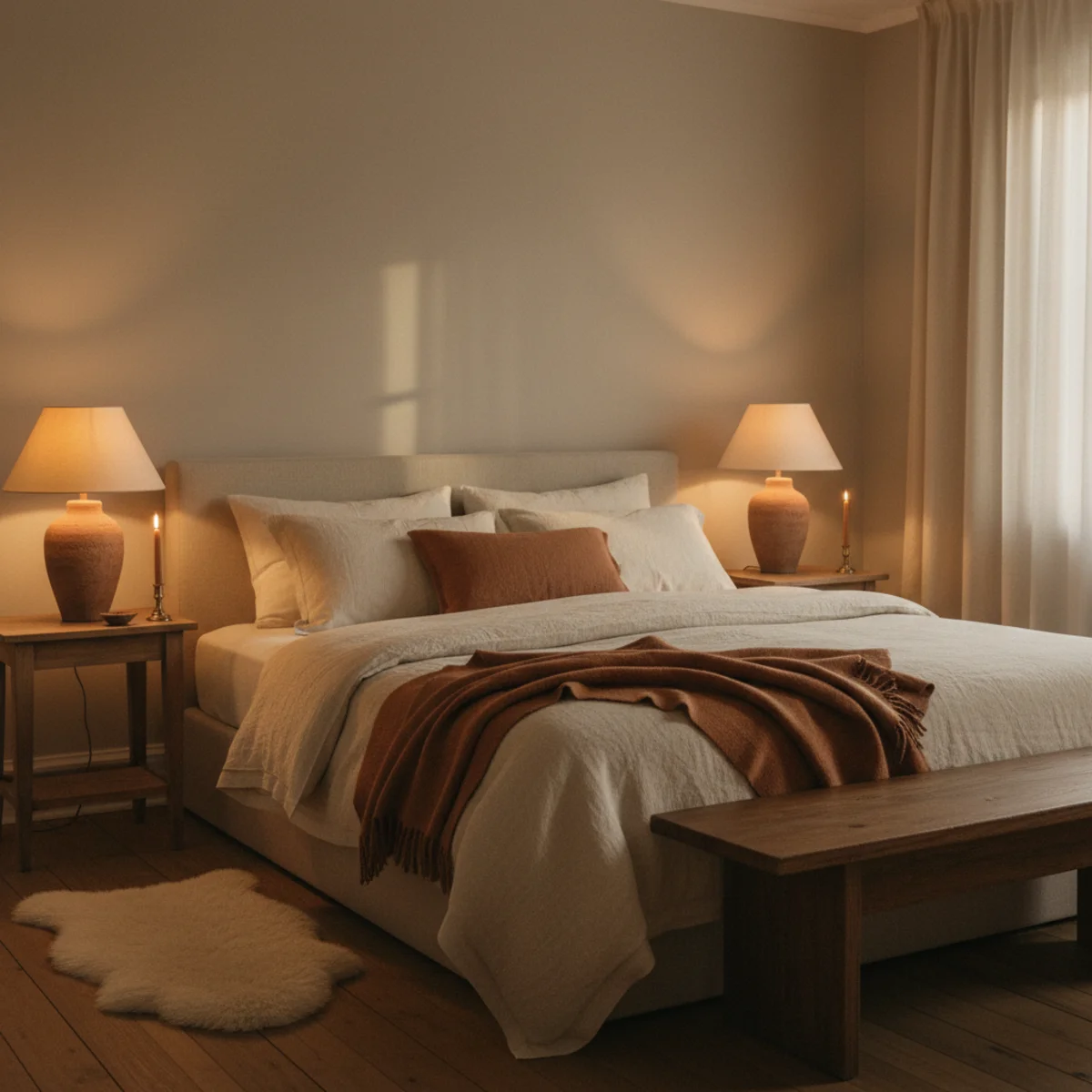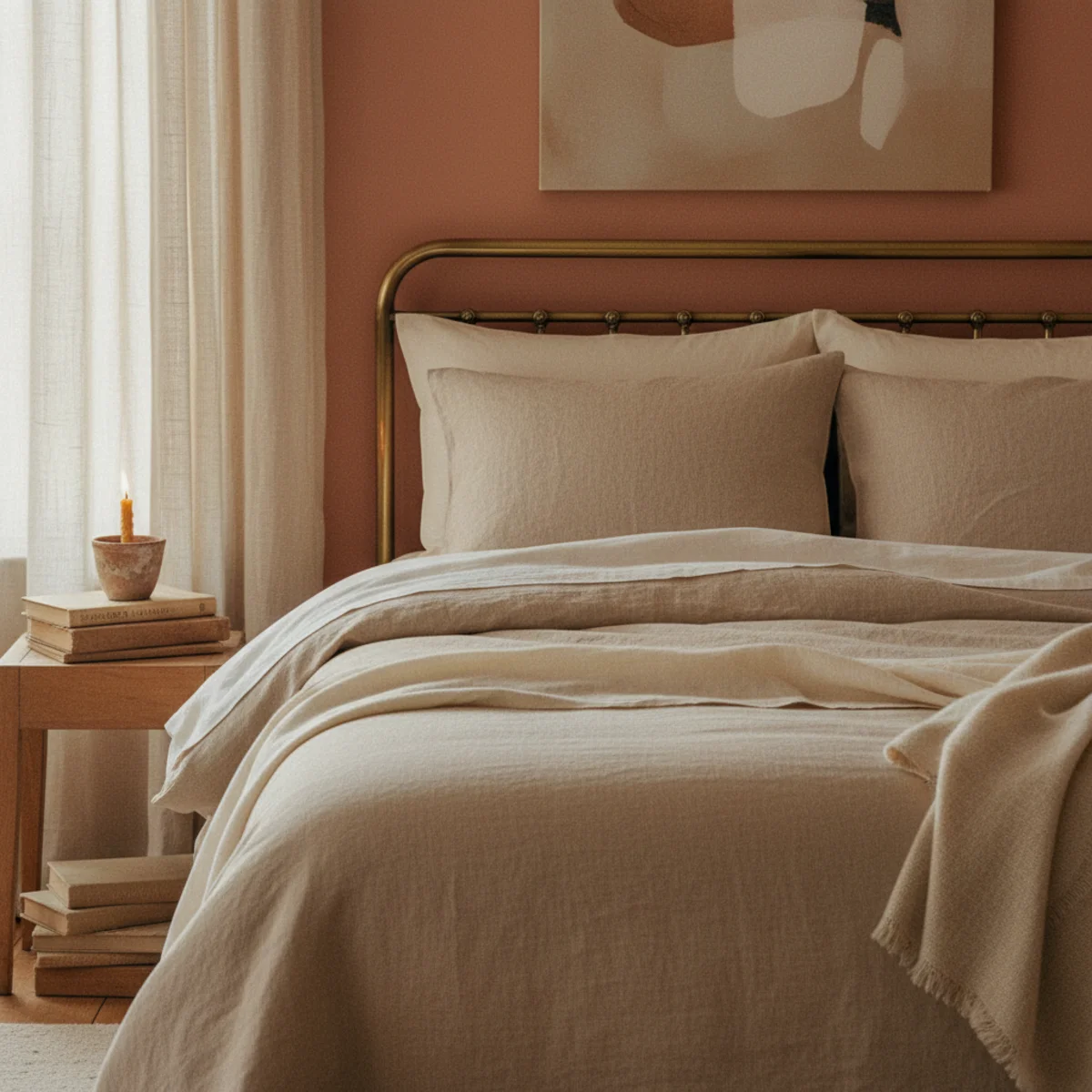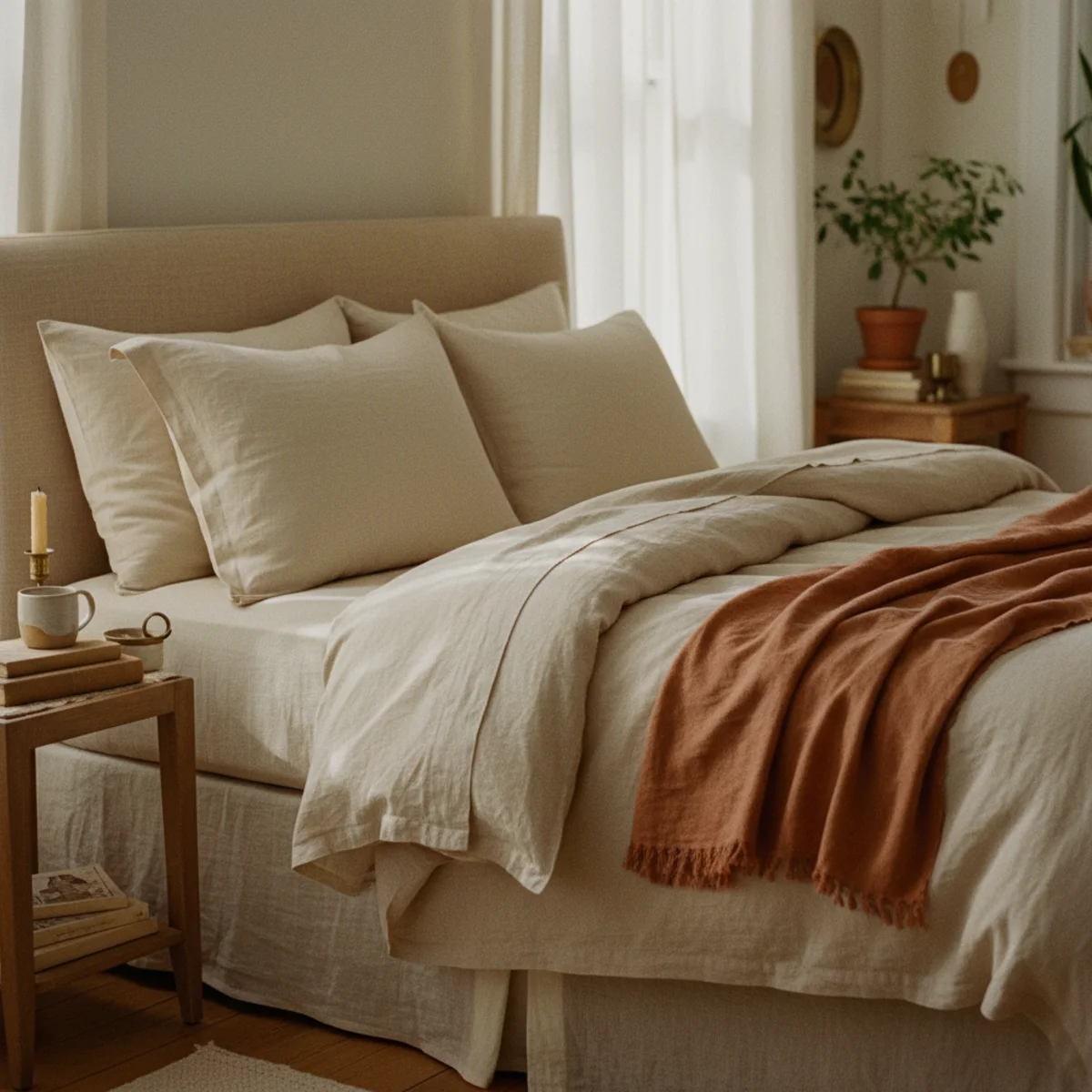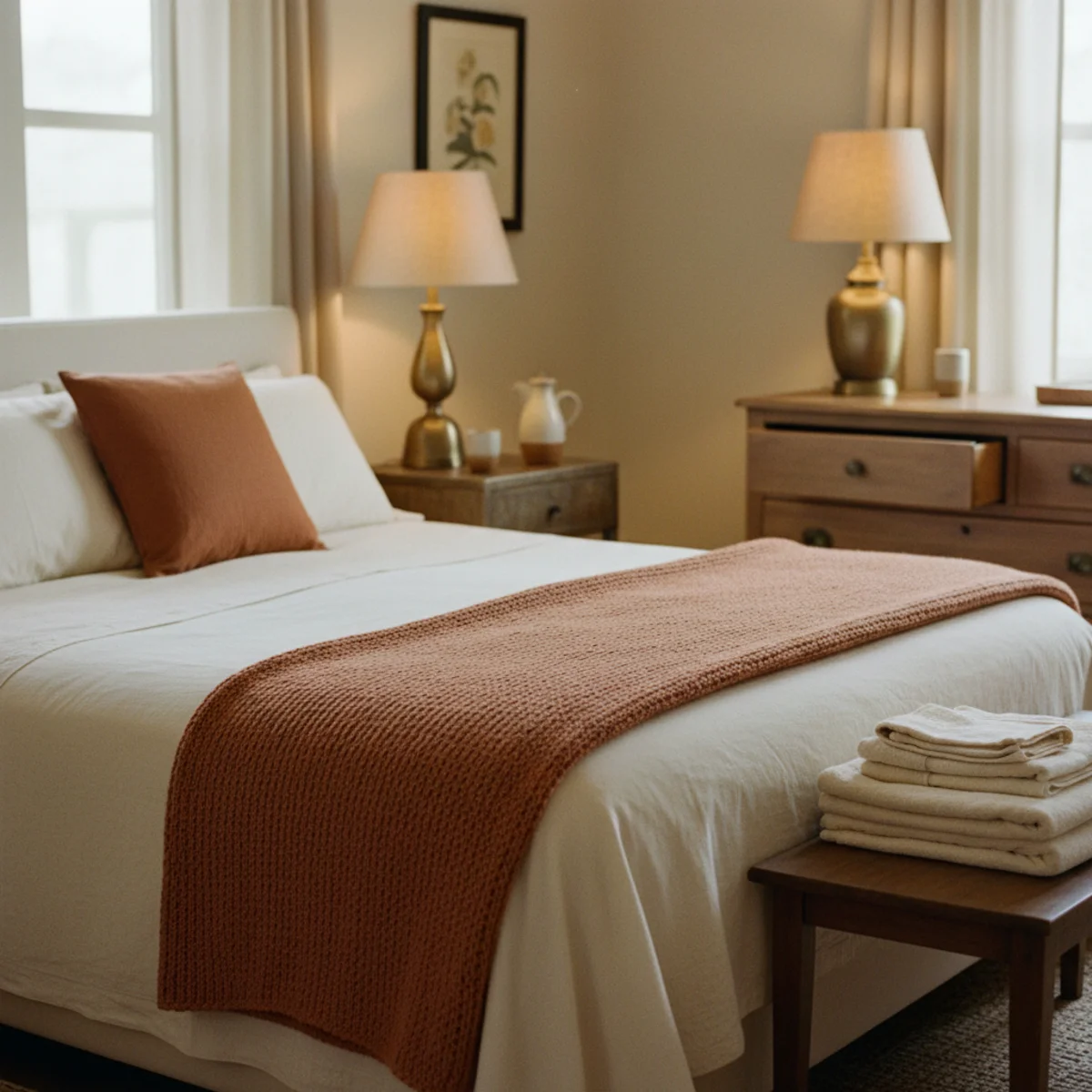
These twelve guest bedroom ideas are tested in actual hosting situations — siblings visiting for holidays, in-laws staying a week, friends crashing for a weekend. Every move below names the exact items, dimensions, and small details that make the difference between a room with a bed in it and a room your guests describe to others. The goal is hospitality through small infrastructure, not through extravagance.
Most guest bedrooms suffer from the same problem: they were furnished once with whatever fit, then forgotten until someone visits. The fix is treating the guest room as a small hospitality system rather than as occasional storage with a mattress. A carafe of water, an extra blanket, a charging station, two good books — none requires significant budget; all require thinking about what the guest will need at 11pm or 7am when they don't want to wake the household to ask.
By the end of this guide, you'll know exactly which extras transform a guest room from functional to memorable — the carafe and glass, the charging spot, the two warm lamps, the cleared drawer, the spot for luggage, and the seven other small touches that compound into real hospitality.
WHAT'S INSIDE
- The extra blanket folded at the foot of the bed — for temperature preferences you can't guess
- Why a small carafe and glass on the bedside table is the single most-noticed guest detail
- The cleared drawer and surface that lets guests actually unpack rather than live from a bag
- The charging spot with both USB and outlet that prevents the 6am bedside-cable hunt
A guest room says how you feel about your guests before you've said a word. The small comforts do the talking.
— Cup of Jo home feature [citation needed — verify before publish]
What makes a guest bedroom welcoming?
A welcoming guest bedroom combines a genuinely comfortable bed, warm layered light, and a handful of thoughtful touches — water, extra blankets, a clear surface for a guest's things, a place to charge a phone. It's less about decorating and more about anticipating what a visitor needs and quietly providing it.
The bed does most of the work. Layered, clean bedding with an extra blanket folded at the foot signals care and handles whatever temperature your guest sleeps at. After that, it's the small hotel-style touches that land: a carafe and glass, a reading lamp on each side, hooks or a luggage rack for a bag, and an empty drawer or surface so a guest can unpack rather than living out of a suitcase. Warmth here is hospitality, made physical.
More in By Room you may love
See allWhy thoughtful guest rooms matter in 2026
As people host more casually and more often, the guest bedroom shifted from a once-a-year formality to a room worth getting right. Pinterest's guest bedroom and guest room essentials searches climb steadily, and the focus has moved from matching decor to comfort and hotel-style thoughtfulness.
The honest appeal is that a well-set guest room is a small, repeatable act of hospitality. A visitor remembers the carafe of water and the extra blanket far longer than the throw-pillow arrangement. As hosting became more relaxed, the emphasis followed — making a guest feel cared for matters more than impressing them, and the small comforts are what do it.
24 guest bedroom decor ideas
01Layer the Bed With an Extra Blanket
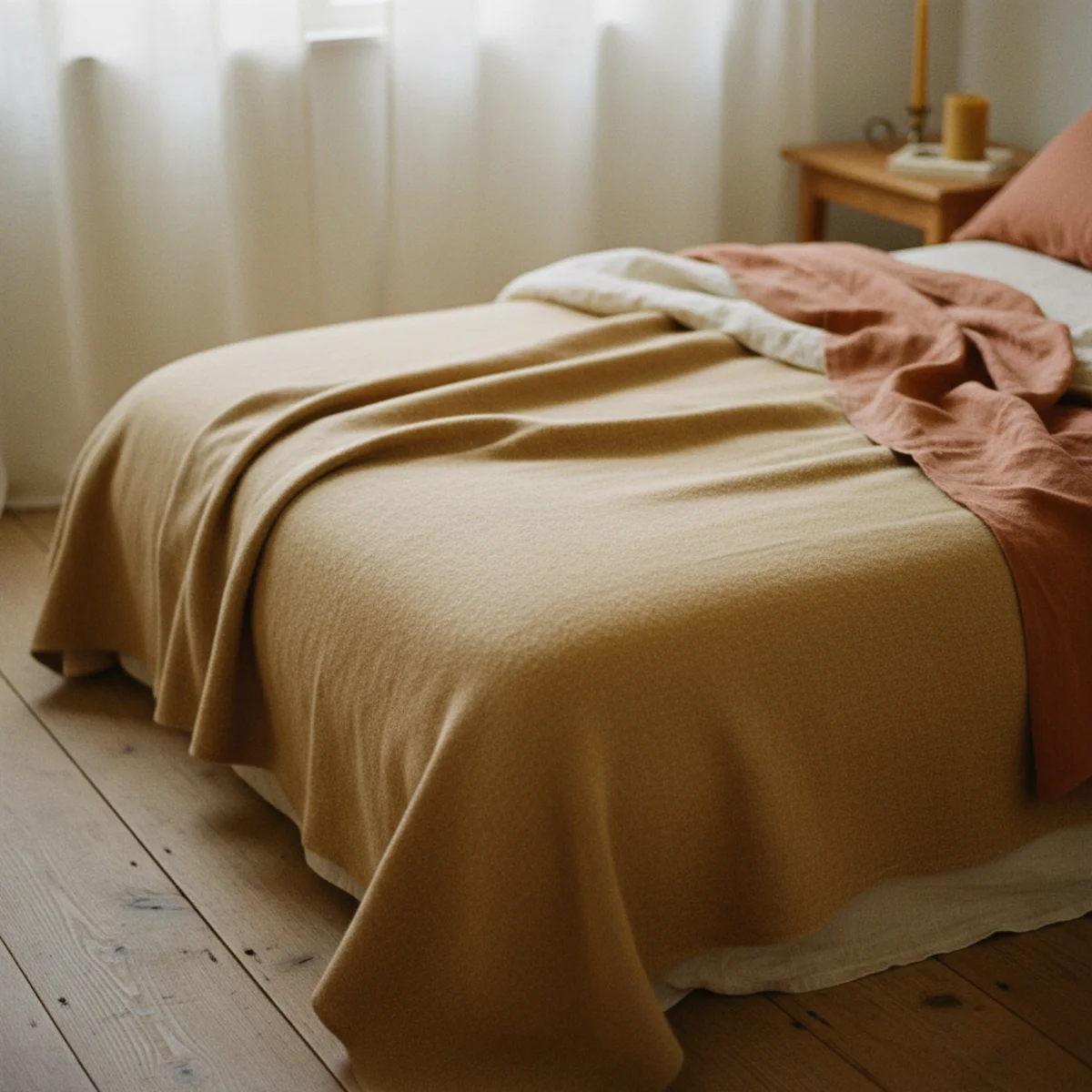
Your guest's temperature preference is something you can't know in advance — too warm, too cold, somewhere in between. The fix is layering the bed with one extra blanket folded at the foot, beyond the standard sheet-blanket-duvet stack. The extra layer reads as hospitable preparation rather than oversight, and the guest pulls it up or leaves it folded depending on the night's temperature without having to wake anyone to ask for more blankets.
Make the bed with: fitted linen sheet, top flat linen sheet, light cotton or wool blanket between sheets and duvet, linen duvet cover with appropriate-weight insert (lighter in summer, heavier in winter), plus one folded wool throw at the foot of the bed (50x60 inches, $40 to $79 from Pendleton secondhand, West Elm boucle, or Lands' End wool). The throw at the foot signals 'use this if you get cold' without requiring conversation. For winter visits, add a second wool blanket folded inside a closet shelf with a small note 'extra blanket here if you need one.' The layered approach handles every temperature scenario without forcing the guest to navigate it.
AFFILIATE SLOTBEDDINGStandard layered bedding + 1 wool throw at foot + 1 extra blanket labeled in closetAdd affiliate URL when configuredWhy it works
Because guests don't ask for things — they tolerate discomfort rather than wake the household or rearrange the careful preparations they assume their host has made. A cold guest at 3am will shiver under inadequate covers rather than search for more blankets. The visible extra blanket at the foot of the bed removes the asking step entirely; the guest just pulls it up. The small infrastructure handles a real comfort problem without requiring any 11pm conversation.
Pro tip — Add a small label or note tag on a closet shelf with extra-blanket location if your guest room runs cold — 'extra blankets here, second shelf' on a small wooden tag. The labeled location lets late-arriving cold guests find what they need without exploring all your closets or feeling like they're snooping.
Throw folded at the foot, extra blanket labeled in the closet — temperature preferences handled without asking. See also: wool throw at the foot
02Add a Carafe and Glass to the Bedside
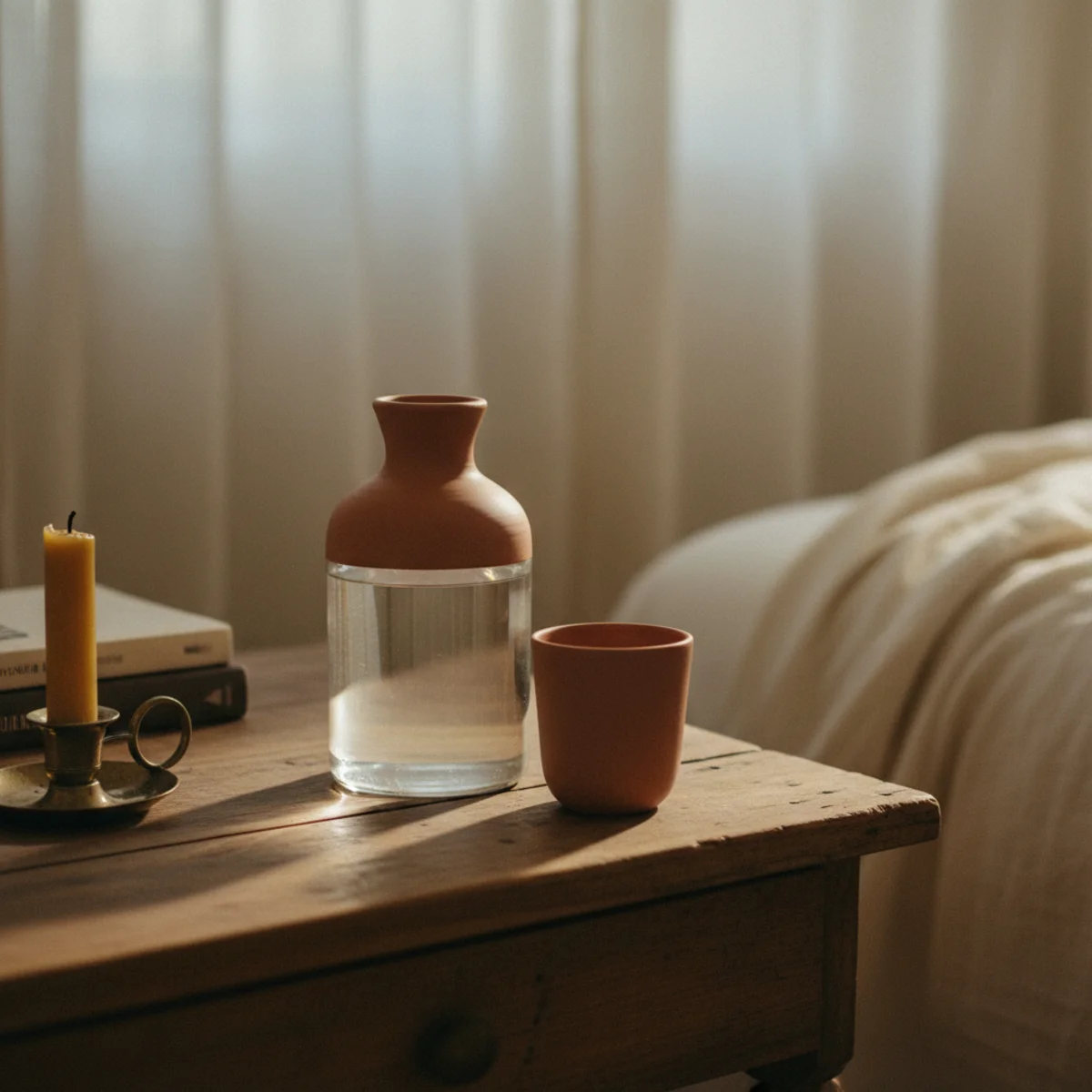
The single most-noticed guest-bedroom detail is a small glass carafe of water with a glass on the bedside table. It signals that you anticipated your guest's needs without them having to ask, and it solves the universal middle-of-the-night water problem without requiring the guest to navigate to your kitchen in the dark. A $20 carafe-and-glass set transforms how the room reads.
Choose a small glass carafe (16 to 24 oz capacity) with a glass that fits as a lid on top. Sources: IKEA TILLBRINGARE at $5, Crate & Barrel set at $20 to $40, vintage cut-glass at $10 to $30 from estate sales. Position on the bedside table opposite the lamp side, prefilled with filtered water before the guest arrives. Refill daily during longer visits, or stock by 8pm each evening of shorter visits. The visible carafe signals hospitality; the prefilled water provides the function; the glass-as-lid keeps the water clean and dust-free.
AFFILIATE SLOTHOSPITALITYSmall glass carafe (16-24 oz) with glass-as-lid prefilled with cool filtered water on bedsideAdd affiliate URL when configuredWhy it works
Because the carafe-and-glass is the kind of thoughtful detail that hotels charge for and most homes never provide — receiving it in a personal guest room signals that the host invested actual care, not just minimum hospitality. The water itself is practical (3am thirst, post-dinner wine recovery, morning before getting up), but the perception of being thoughtfully cared for compounds across the visit. Guests remember the carafe; they describe it to others. It's the single highest-ROI hospitality detail available.
Pro tip — Use cool filtered water (not warm tap water) and refill at bedtime — the cool water is more drinkable in middle-of-the-night moments, and the recent refill signals attentive ongoing care rather than one-time preparation. The 90 seconds of evening refill is the difference between thoughtful and perfunctory.
Carafe filled at 8pm — the single most-noticed thoughtful detail in any guest bedroom. See also: vintage cut-glass
03Provide Two Warm Bedside Lamps
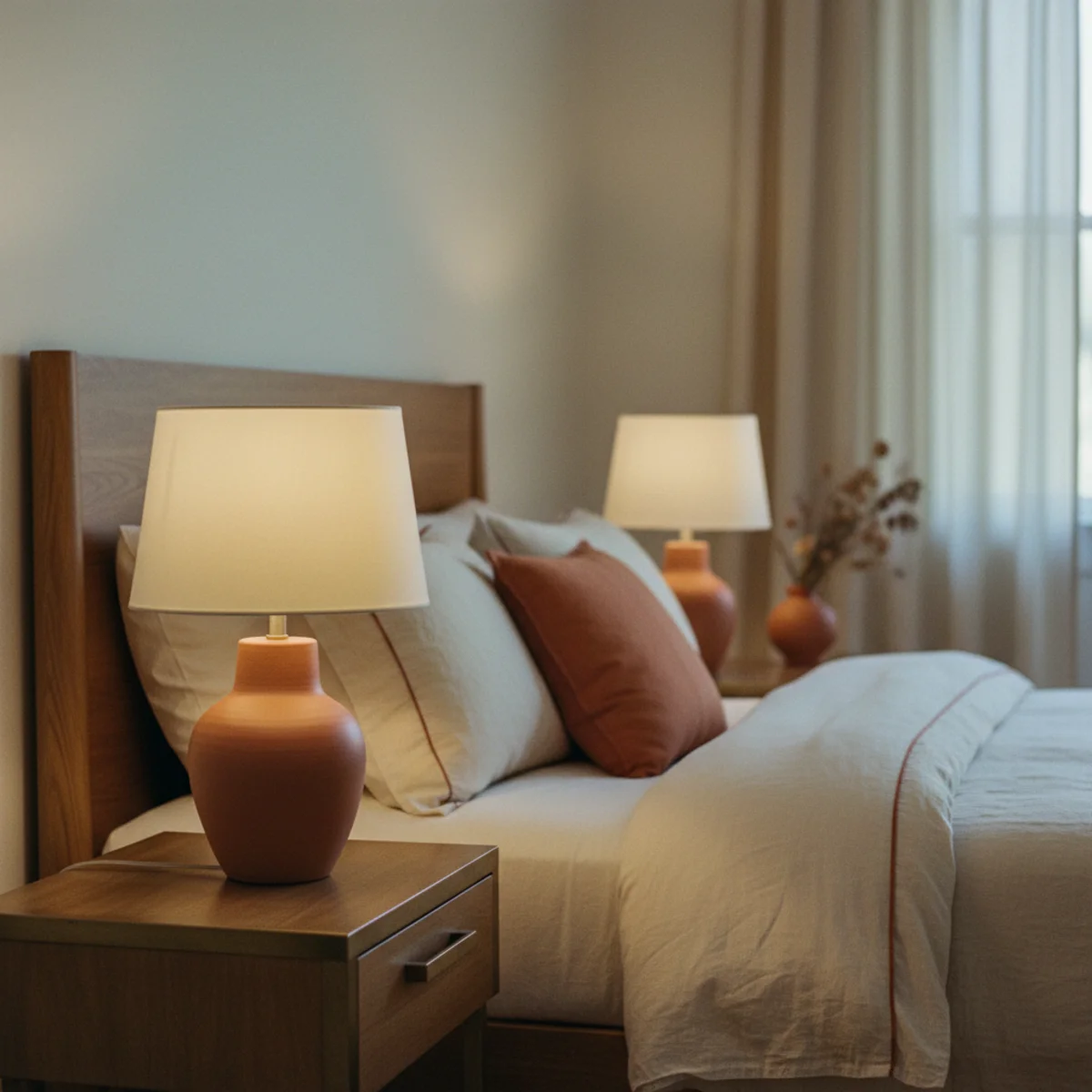
Most guest bedrooms have a single overhead light and maybe one bedside lamp — leaving the partner-side dark for couples and creating an asymmetric reading environment. The fix is two matched bedside lamps, both with 2700K bulbs, one on each side of the bed. The pair handles both halves of the bed equally and creates the symmetric warm cocoon that guest rooms specifically benefit from.
Two table lamps 22 to 26 inches tall, both with 2700K LED bulbs at 400 to 600 lumens. Bases in ceramic, brass, or oak; shades in linen or paper drum at 10 to 14 inches across. Position the shade-bottom at 50 to 56 inches above the floor when the lamp sits on a nightstand. Match the pair; mismatched lamps read as afterthought rather than deliberate. Sources: thrifted pair at $30 to $80 total, IKEA SVALLET at $30 each, West Elm at $79 to $200 per lamp. Both lamps wired to easy-reach switches; ideally both wired to smart plugs that turn off at midnight in case the guest falls asleep with one on.
AFFILIATE SLOTLIGHTINGMatched pair of 22-26 inch lamps with 2700K bulbs at 400-600 lumensAdd affiliate URL when configuredWhy it works
Because the guest can't politely ask for additional bedside lighting if there's only one lamp and they're sharing the bed with their partner — they'll just lie in the dark or use phone-flashlight, both terrible solutions. The matched pair anticipates the both-sides-need-light scenario without requiring the guest to navigate it. The symmetry also reads as more deliberately considered than a single-lamp asymmetric setup, which signals thought rather than minimum.
Pro tip — If you don't have matched lamps, buy two identical inexpensive ones rather than mixing existing pieces — the matched pair at $30 to $50 each at IKEA outperforms two mismatched fancier lamps for hospitality perception. The visual symmetry matters more than individual lamp quality in this context.
Two matched lamps, both 2700K, one each side — the symmetric warm cocoon that guest rooms specifically need. See also: 2700K LED bulbs
04Clear a Surface and a Drawer for Their Stuff
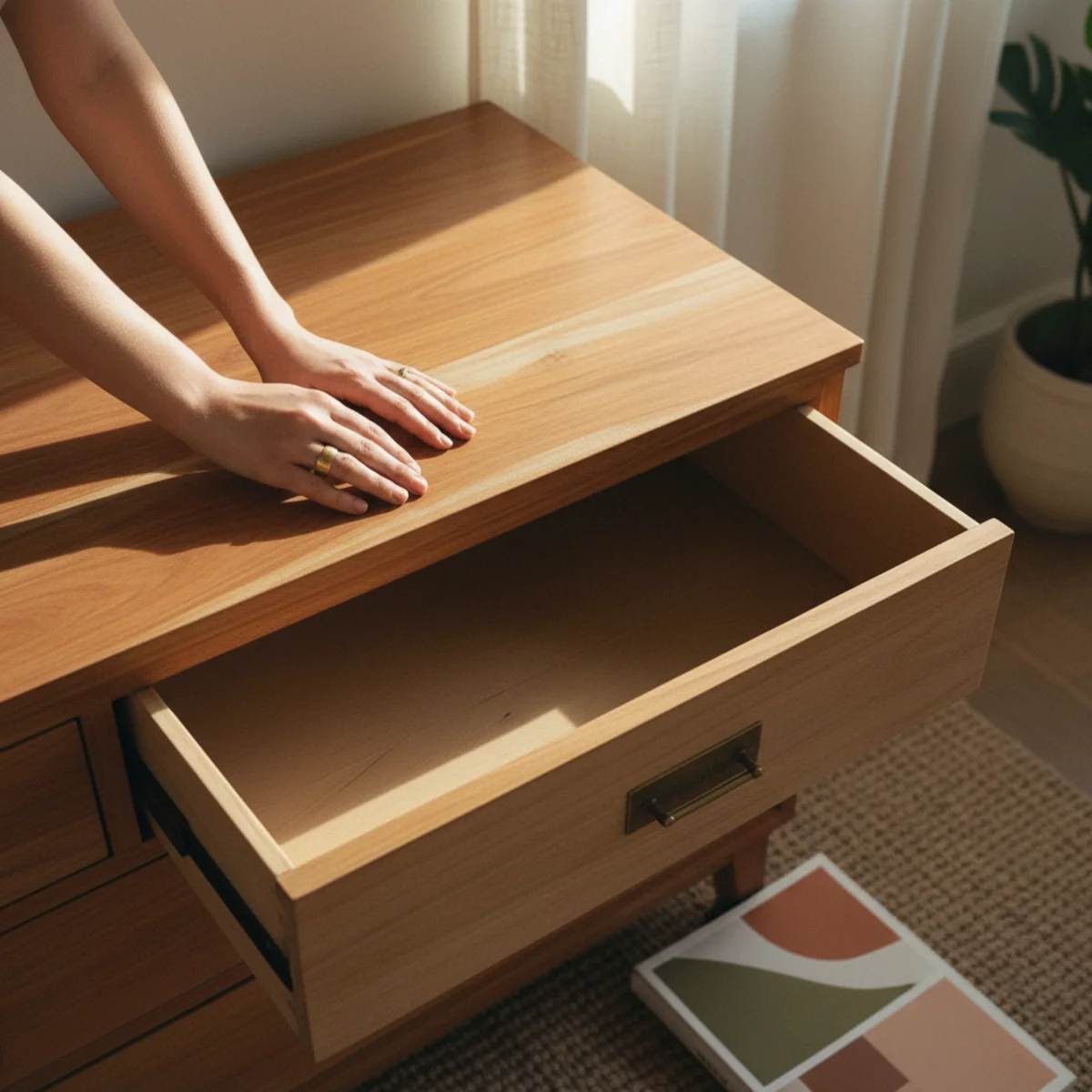
Guests pulling clothes out of a suitcase all week reads as poor hospitality — they didn't get a place to actually unpack. The fix is clearing one drawer and one surface (the dresser top, or a small console) for the guest's use. The cleared space signals that this is their room for the visit, not just a place to sleep amid your stored items.
Before the guest arrives: clear one full drawer in the dresser (empty it of your stored items or move them temporarily to closet boxes), clear one visible surface (dresser top, console top, or shelf) of your decor — leaving 2 to 3 styled items but plenty of room for the guest's keys, watch, glasses, current book, charger. Add a small empty tray on the cleared surface ($10 to $30) as the explicit drop zone. Include 6 to 8 wooden hangers in the closet ($1 each from Goodwill, or $15 for a set of 10 new). The cleared space invites the guest to actually unpack, which transforms how the visit feels — from camping in your room to staying in their room.
AFFILIATE SLOTHOSPITALITYOne cleared dresser drawer + one cleared surface + 6-8 wooden hangers + small noteAdd affiliate URL when configuredWhy it works
Because living from a suitcase for a week is exhausting and reinforces 'I am temporary here.' Giving the guest a drawer and a surface to put their things signals 'this is your space, not just an overnight rental.' The change isn't about the physical drawer — it's about the psychological permission to actually settle in. Guests who unpack stay more comfortably; guests who live out of a suitcase remain mentally in transit even when physically present.
Pro tip — Add a small handwritten note on the dresser indicating which drawer is theirs — 'this drawer is for you' on a small index card. The explicit signal removes any guesswork about which spaces are available; without the note, polite guests assume nothing is available and live from their suitcase regardless of what's actually cleared.
One cleared drawer with a small note — the explicit permission that lets guests actually unpack. See also: Goodwill
05Provide a Spot for Luggage
Without a luggage stand or designated spot, guests rest suitcases on the floor (dirty), the bed (during the day), or balanced precariously against a wall. The fix is a designated luggage zone — a folding luggage stand, a small bench, the floor of an empty closet, or a low-and-wide ottoman. The luggage spot keeps the suitcase off the bed during the day and prevents the room from being divided between sleeping space and luggage space.
Best luggage-stand options: folding wooden luggage stand at 18 to 22 inches tall ($30 to $80 from Amazon or Etsy — looks like a hotel luggage rack, folds flat for storage between visits), small wooden bench at 16 to 18 inches tall ($80 to $200 from Article or West Elm — doubles as seating), low storage ottoman ($100 to $300 — luggage on top, hidden storage inside), the floor of a partially-empty closet (zero cost if available). Position the luggage spot near the entry to the room, not blocking access to the bed or dresser. For longer visits, the stand stays out the full visit; for shorter visits, the guest may move it to the closet after unpacking.
AFFILIATE SLOTFURNITUREFolding wooden luggage stand at 18-22 inches OR small wooden bench OR low storage ottomanAdd affiliate URL when configuredWhy it works
Because without a designated spot, the guest's suitcase becomes a daily logistics problem — on the bed during the day (then has to be moved at bedtime), on the floor (gets dirty), against a wall (precarious and visually intrusive). The designated stand removes the daily question of where the suitcase goes, freeing the guest's mental bandwidth for actually being a guest. The infrastructure handles a real friction point that guests would never mention but always experience.
Pro tip — Use a folding luggage stand rather than a permanent bench if your guest room is small — the stand folds flat against a wall or inside the closet between visits, taking minimal space when not in use. The same surface that's a luggage stand during a visit becomes nothing when the room is unused — better space economics than a permanent bench.
Folding luggage stand near the entry — the small infrastructure that solves the daily suitcase question. See also: small wooden bench
06Add Hooks for Coats and Bags
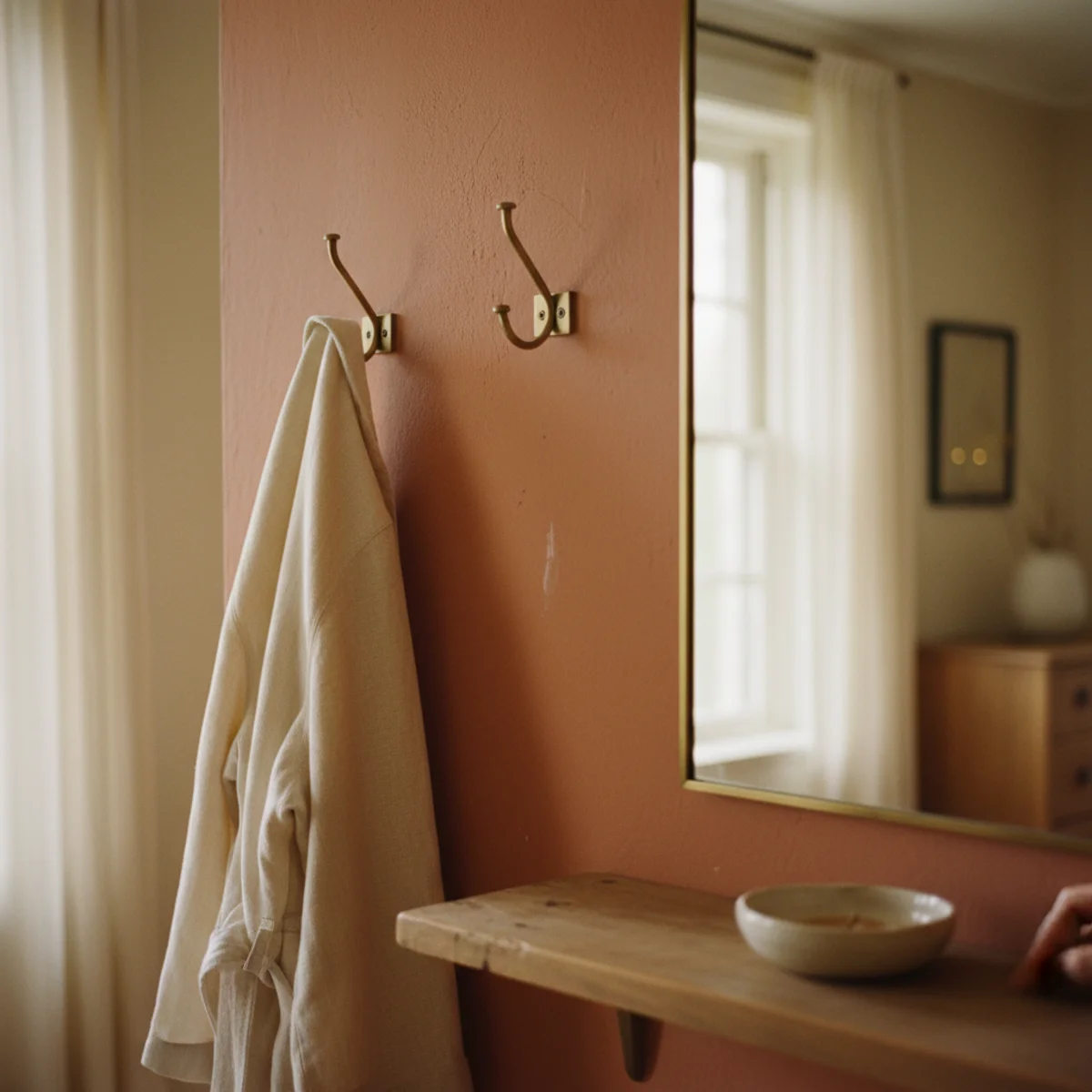
Most guest bedrooms have a closet rod and nothing else for hanging — and the closet rod isn't visible or convenient for daily-use items like jackets, day bags, and robes. The fix is 2 to 4 hooks on the wall or back of the door, at 60 to 66 inches above the floor. The hooks become the visible drop zone for coats and bags throughout the visit, separate from the closet's long-term clothes storage.
Install 2 to 4 hooks at 60 to 66 inches above the floor on a wall near the entry or on the back of the bedroom door. Best types: solid brass or oiled bronze hooks at $4 to $20 per hook from House of Antique Hardware, wooden hooks at $5 to $25 from Etsy, or over-the-door hooks ($15 to $30 from Amazon) if you can't put holes in the door. Mount into wall studs or use heavy-duty drywall anchors. The hooks become the spot for the guest's jacket, day bag, robe (you've provided one — see rule 9), and any small items they wear daily. Visible hooks reduce friction; closet-only storage creates friction.
AFFILIATE SLOTSTORAGE2-4 hooks at 60-66 inches above floor on wall or back of door for daily-use itemsAdd affiliate URL when configuredWhy it works
Because the closet is for long-term clothing storage, but guests have daily-use items (the jacket they wore today, the bag they took out, the robe between bathroom and bed) that need easy hanging access. Visible hooks at the right height create that drop zone without requiring the guest to navigate a closet for every quick action. The friction reduction matters: zero-friction storage gets used; high-friction storage gets ignored, with items piling on chairs or beds instead.
Pro tip — Mount the hooks slightly higher than they'd be in a coat closet (60 to 66 inches vs the standard 56 inches) so coats and bags hang freely without bunching on the floor. The slightly-too-high position handles longer coats and tall bags without requiring the guest to remember the hook height limit.
Two brass hooks at 62 inches — the visible daily-use storage that closet rods can't provide. See also: House of Antique Hardware
07Stock a Few Good Books on the Nightstand
Guests who can't sleep at 11pm or wake at 6am often want something to read but won't go raid your bookshelves. The fix is stocking the guest bedside with 3 to 5 books across genres — a novel, a short-story collection, a magazine or two, maybe a small photography or art book. The selection signals attention to your guest as a person, not just as someone occupying a bed.
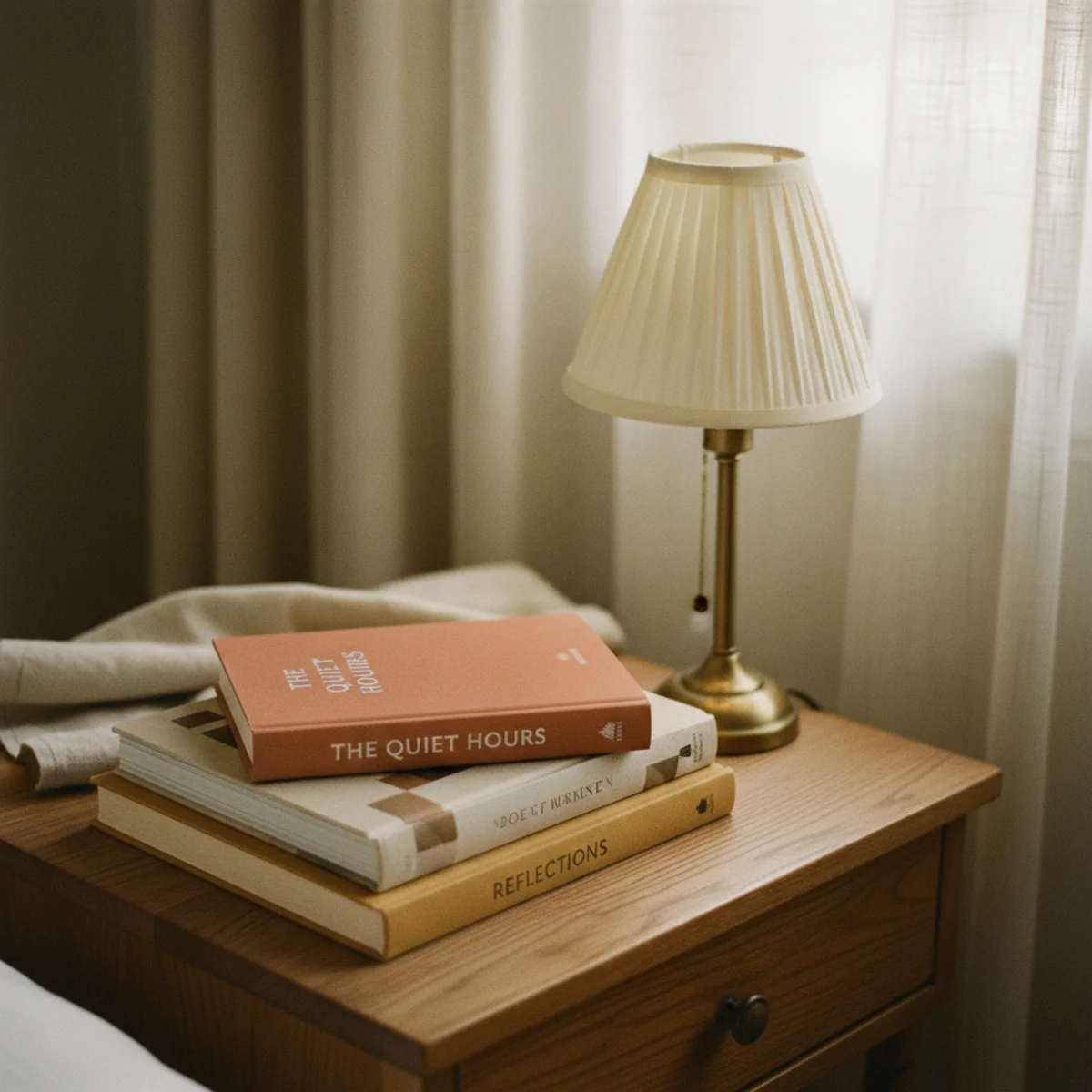
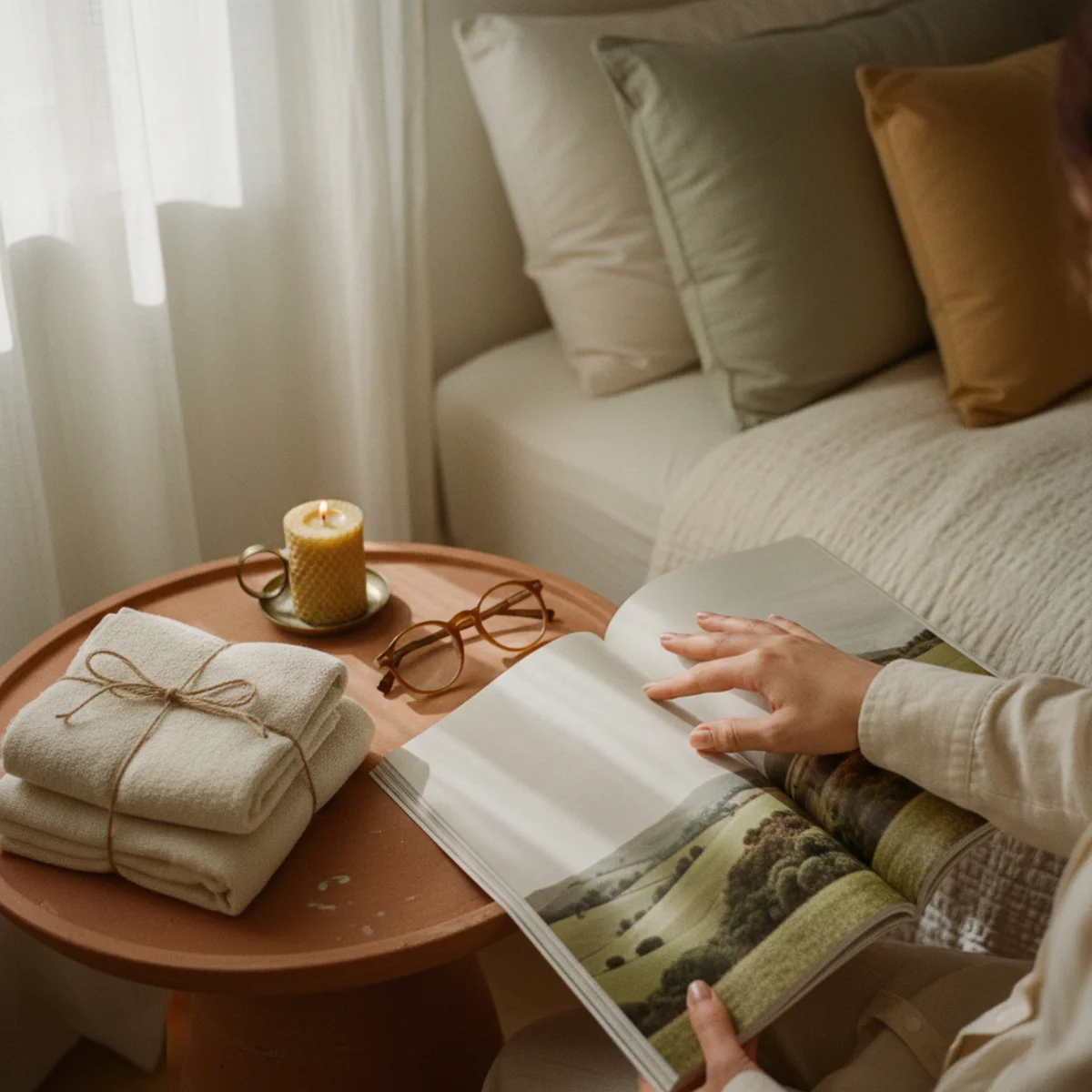
Stack 3 to 5 books on the bedside table or a small shelf nearby. Mix genres: one novel (literary fiction or accessible mystery), one short-story collection (gives the guest small portions for short reading sessions), one or two recent magazines (The New Yorker, National Geographic, or a magazine fitting your guest's interests), one small art or photography book for browsing rather than reading. Sources: your existing books, library book sales at $1 to $5 per book, thrift shops at $1 to $3, or new books selected to match guests. Rotate the selection occasionally so returning guests don't see the same books visit after visit.
AFFILIATE SLOTHOSPITALITY3-5 books on bedside or nearby shelf: novel + short-story collection + magazines + small art bookAdd affiliate URL when configuredWhy it works
Because the books indicate that you considered the guest beyond the basic needs (a place to sleep, water, bedding) and into the space of their actual interests as a person. Most guest rooms have zero books; some have a Bible left from a hotel chain or a stack of old magazines. A curated 3-to-5 book selection at the bedside reads as personalized care, especially when the selection vaguely fits the guest's interests. Most guests will read at least one book during a visit; even the books they don't read register as thoughtful preparation.
Pro tip — Add one book that's slightly outside the guest's normal genre — your serious-novel friend gets a coffee-table photography book, your business-book friend gets a literary collection. The mild surprise often gets opened first and reads as more attentive than offering the obvious genre choice.
Four books and a magazine on the bedside — the small curated selection that reads as personalized care. See also: thrift shops
08Set Out Fresh Towels
Most guests don't ask for towels — they assume the towels in the bathroom are theirs or that they should ask. The fix is leaving 2 to 3 fresh folded towels visibly in the guest room itself, on the dresser or at the foot of the bed. The visible towels remove the guesswork and signal that you've prepared specifically for them.
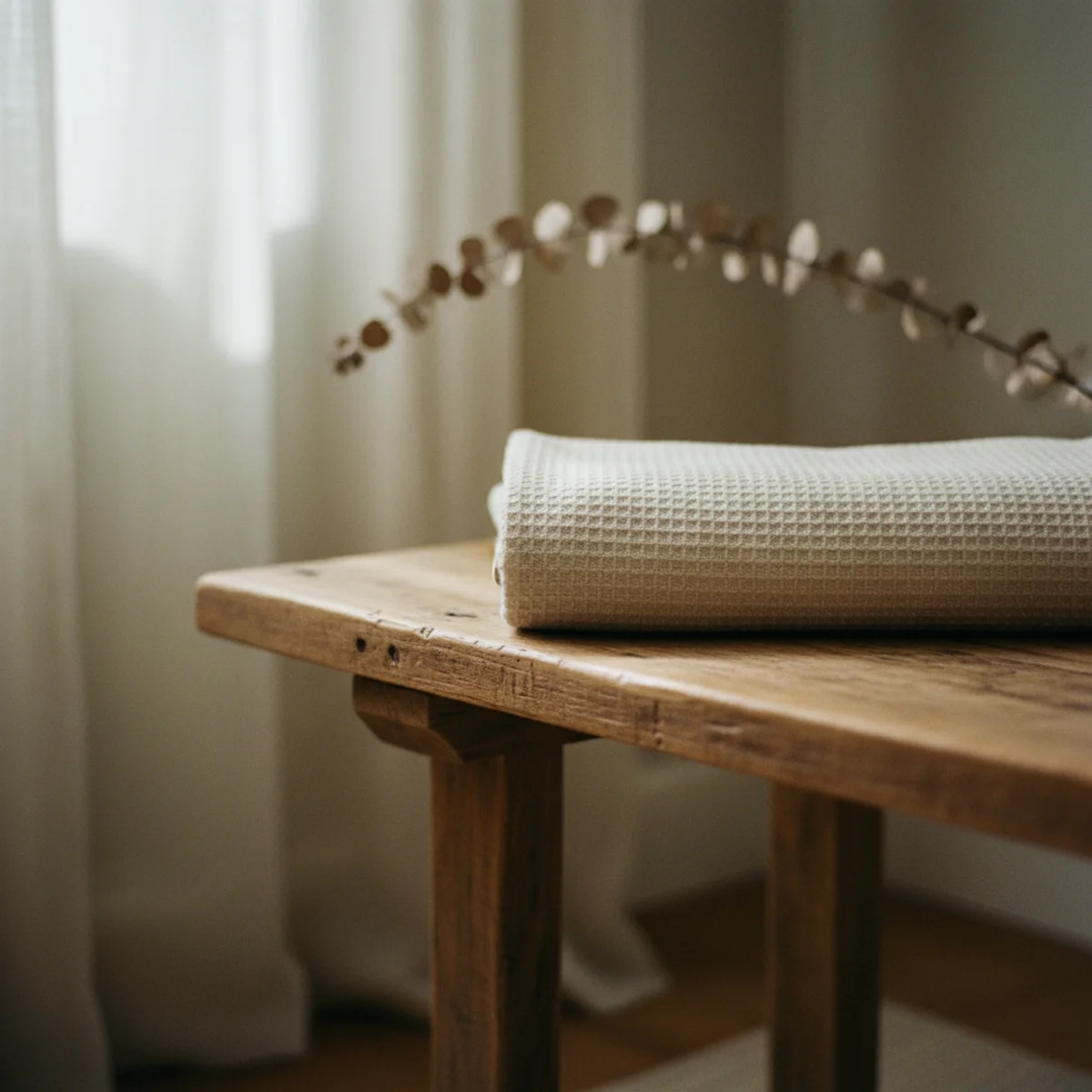
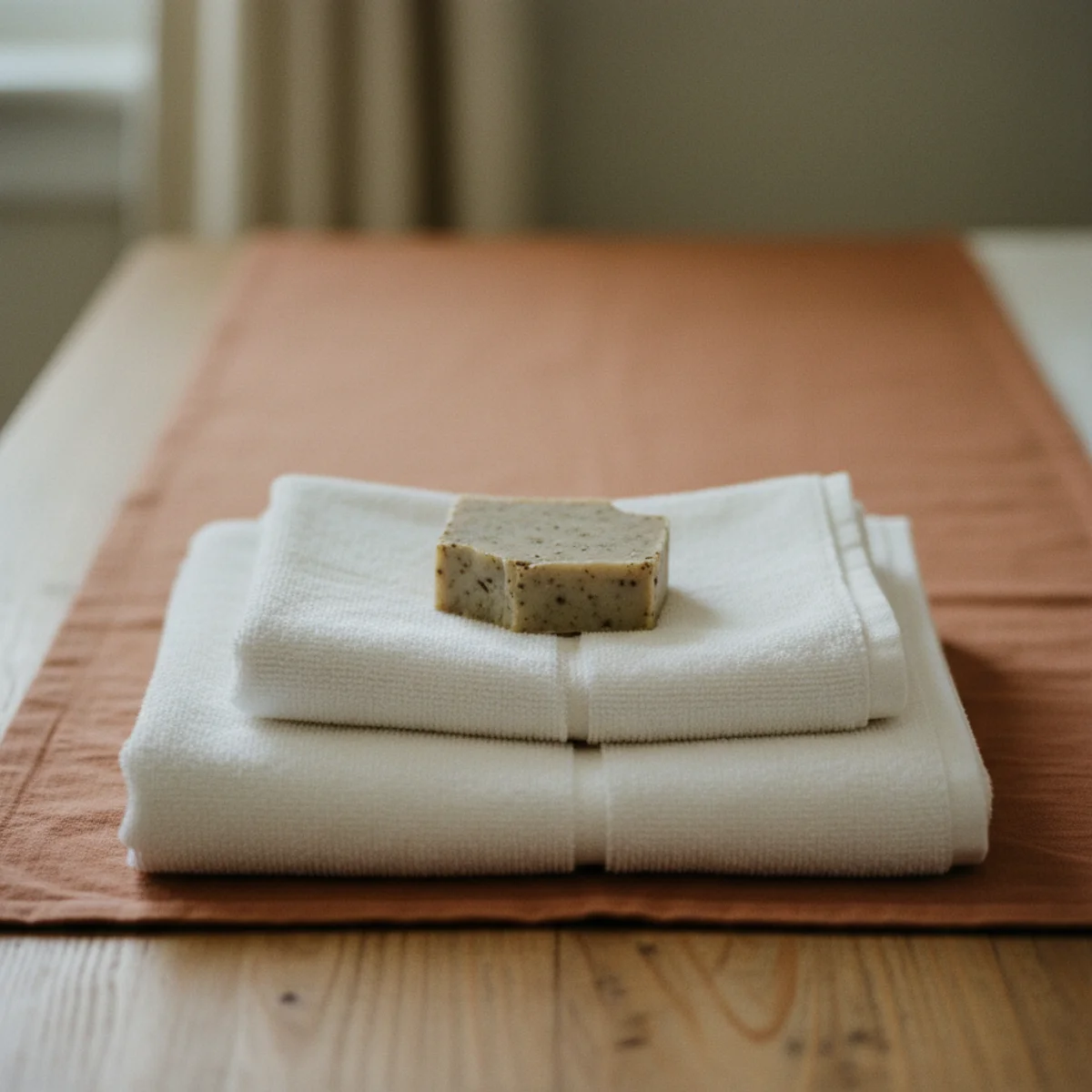
Stack 2 to 3 folded towels visibly in the guest room: 1 large bath towel, 1 hand towel, 1 washcloth — all freshly laundered and folded. Position on the dresser top, at the foot of the bed (over the throw), or on a small chair if available. Stick to one color across the towel set (cream, oat, white, or terracotta) for visual cohesion. Sources: Quince linen towels at $25 to $40 per set, Coyuchi at $40 to $60, Costco budget towels at $15 to $25 per set. Add a small bar of nice soap ($5 to $15) on top of the stack as a small additional touch. The visible stack reads as 'these are yours' without requiring conversation about bathroom logistics.
AFFILIATE SLOTHOSPITALITYStack of 2-3 fresh folded towels visible in guest room + small bar of nice soapAdd affiliate URL when configuredWhy it works
Because most guests won't go through your bathroom looking for towels they're sure are theirs — they'll use a hand towel as a shower towel, or skip the shower entirely, or awkwardly ask. The visible stack in their room eliminates all three failure modes. The towels are explicitly theirs, in the room where they'll first need them (before going to the bathroom), without any ambiguity or asking required. The small detail solves a real comfort problem that most guests would never voice.
Pro tip — Add a small fresh-cut sprig of eucalyptus or lavender on top of the towel stack — the small natural touch adds scent and signals additional care beyond the towels themselves. A single 4-inch sprig from your garden or a $3 grocery-store bouquet transforms the towel stack from functional to attentive.
Three towels stacked visibly with eucalyptus sprig on top — the visible signal that removes towel ambiguity. See also: Quince linen towels
09Add a Reading Chair If There's Room
Guests often want somewhere to be in their room that isn't the bed — to read, to make a phone call, to write in a journal, to escape household activity for an hour. A small chair in the corner (worn leather, linen-upholstered, or even a wooden chair with a cushion) provides the alternative seating. Even a tight guest room can usually fit one chair in 9 to 12 square feet.
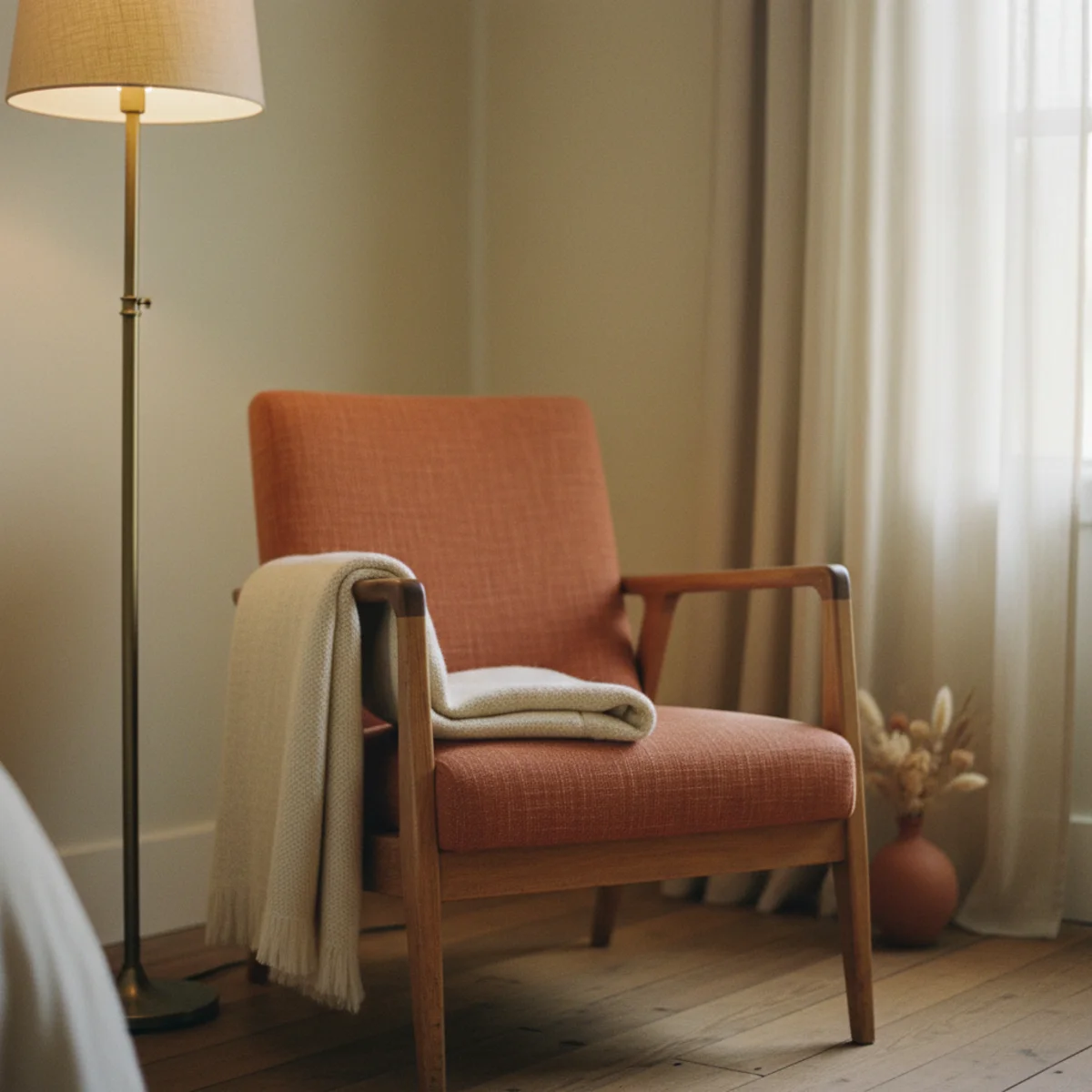
Best small-room chair options: worn leather armchair at 17 to 19 inch seat height ($80 to $250 secondhand from Marketplace, $400 to $800 retail), small upholstered chair in linen or boucle ($150 to $500), wooden chair with cushion at $30 to $80 (chair) + $15 to $40 (cushion). Position the chair angled 30 to 45 degrees toward a window, lamp, or open corner — never flush against a wall facing the bed. Add a small floor lamp at 58 to 64 inches tall ($25 to $200) or a small side table with a table lamp. Optional: small footrest or ottoman for full reading-corner comfort. The chair is the alternative to the bed; without it, the bed is the only place to be in the room.
AFFILIATE SLOTFURNITUREWorn leather armchair, upholstered chair, or wooden chair with cushion + small side table + lampAdd affiliate URL when configuredWhy it works
Because guests have hours during their visit that aren't sleeping hours but also aren't shared-space hours — early morning before the household wakes, after-dinner quiet time before bed, occasional retreats during long visits. Without a chair, those hours happen in bed (uncomfortable for extended sitting, signals laziness) or in shared spaces (no real retreat). The chair gives the guest a private daytime spot within their guest room, which extends what the room can be from sleeping-only to sleeping-plus-quiet-retreat.
Pro tip — Add a small side table next to the chair with a lamp, an empty surface for a coffee mug, and a small framed photo — the side table makes the chair into a real destination rather than just a seat. The triangle of chair-lamp-table is the smallest possible reading-corner setup and works in any 3-by-4-foot guest-room corner.
Worn leather chair, side table, floor lamp — the alternative to the bed that extends what the room can be. See also: reading-corner setup
10Use Warm Restful Colors
Guest bedrooms benefit from the same warm restful color palette as master bedrooms — muted earthy tones (plaster pink, soft sage, warm cream, muted clay) rather than bright whites or cool grays. The wall color shapes how guests sleep, how they wake, and how the room reads when they enter it for the first time. The right paint says 'this room was prepared for you'; the wrong paint says 'you're in our office.'
Best guest-bedroom paints: Farrow & Ball Setting Plaster 231 (soft plaster pink), F&B Mizzle 266 (muted sage), Benjamin Moore Saybrook Sage HC-114, BM Soft Chamois OC-13 (warm cream), F&B Pointing 2003 (warmest off-white). Apply to all four walls plus ceiling. LRV between 47 and 85 for the slightly dim cocoon quality. Pair with warm-cream trim and 2700K lighting. Avoid: bright whites, cool grays, blue-undertone paints, saturated bright colors. The guest-bedroom paint should err on the side of warmer-than-you-think — the room is viewed at the brain's most-sensitive sleep transitions, and warmer colors support both falling asleep and waking gently.
AFFILIATE SLOTPAINTF&B Setting Plaster, Mizzle, BM Saybrook Sage, or Soft Chamois on all walls + ceilingAdd affiliate URL when configuredWhy it works
Because guests are sleeping in an unfamiliar room, which is already slightly harder than sleeping at home — the paint should compensate, not add stress. Warm earthy tones calm the brain at sleep onset and soften the brain at waking, mitigating the slight unfamiliarity of being a guest. Bright or cool wall colors compound the unfamiliarity; warm muted ones soften it. The paint compounds across what might be 7 to 14 nights of compounded sleep transitions during a longer visit.
Pro tip — If your guest room currently functions as office or storage for half the year, paint it in a warm muted tone anyway — the calm color works for both use cases (focused office work and restful guest sleeping) better than cool office-typical colors work for either. The one-paint-fits-both-uses approach is more practical than maintaining a dedicated guest-only room.
Setting Plaster on every surface — the wall color that softens unfamiliar-bed sleep transitions. See also: Setting Plaster
11Provide a Charging Spot With Both USB and Outlet
Modern guests arrive with phones, watches, tablets, laptops, and sometimes e-readers — each needing charging access. The fix is a small charging zone on or near the bedside with a power strip (or USB-and-outlet combination), so the guest doesn't have to crawl behind furniture to find an open outlet. The thoughtful charging setup is one of the most-noticed signals of modern hospitality.
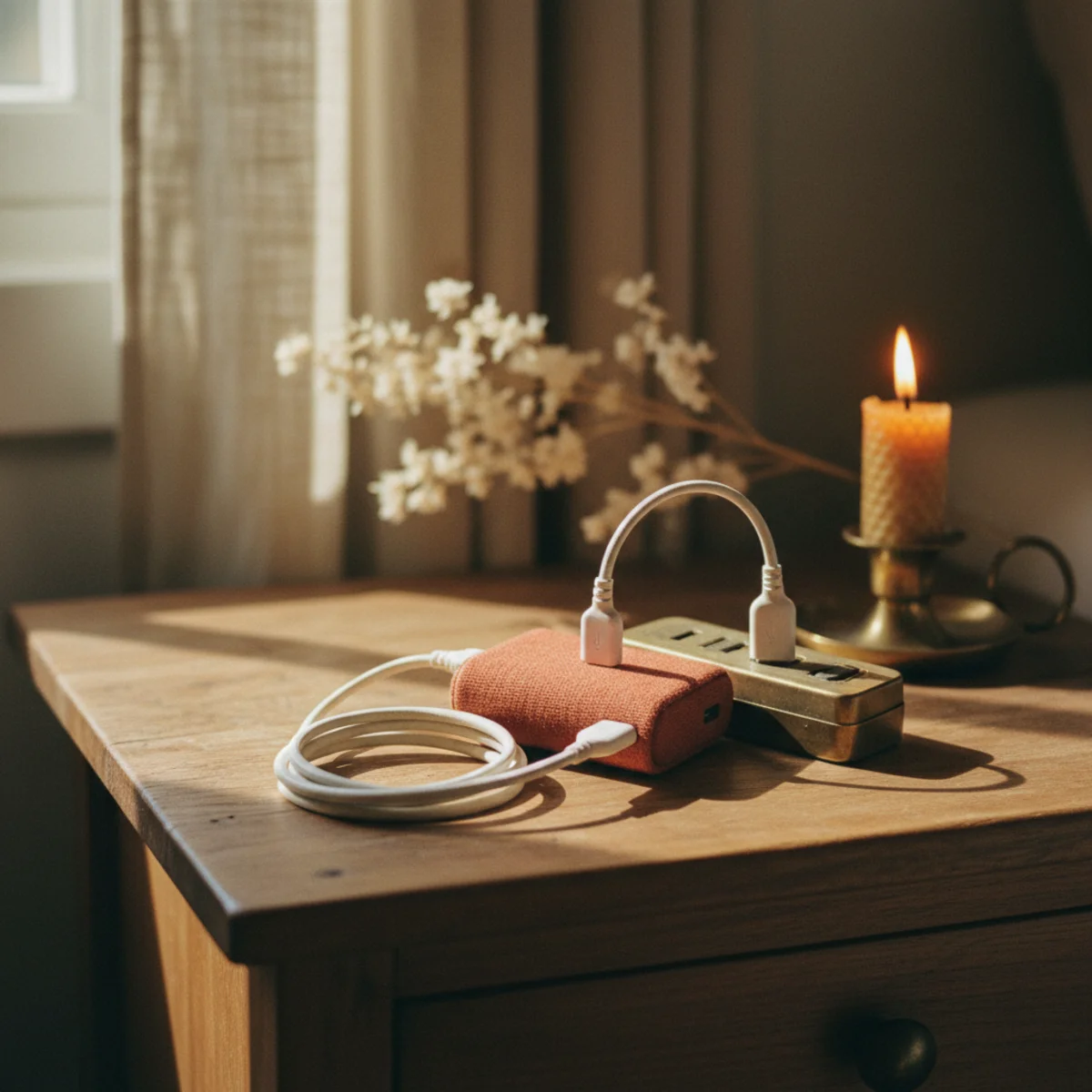
Setup options: (1) UNDER-BEDSIDE-TABLE POWER STRIP — a 4-outlet power strip with 2 USB-A and 2 USB-C ports ($25 to $50 from Amazon) tucked under or behind the bedside table, with one short extension cable visible on the bedside for easy access. (2) BEDSIDE CHARGING PAD — a wireless charging pad ($25 to $40) on the nightstand for phones; backup wired outlets behind. (3) DESK OR CONSOLE CHARGING — if you have a small console or desk in the room, install a power strip with USB at the back for daytime device charging. Include a small note 'charge here' on a small wooden tag or card to make the setup obvious; without the note, guests sometimes hesitate to use what they think might be set up for someone else.
AFFILIATE SLOTHOSPITALITY4-outlet power strip with USB-A and USB-C beside bedside table + small 'charge here' labelAdd affiliate URL when configuredWhy it works
Because the alternative — a guest searching for an open outlet, often behind furniture or under tables — is one of the universal first-night-in-a-guest-room frustrations. The visible easy-to-reach charging spot solves the problem before the guest experiences it. Charging is also one of the few situations where guests will actively need infrastructure within their first 30 minutes of arrival; getting it right reads as anticipating real needs rather than offering decorative details.
Pro tip — Add both USB-A and USB-C ports plus a standard wall outlet to the charging zone — the mix handles every device the guest might bring without requiring them to dig out adapters. USB-C handles newer phones and laptops; USB-A handles older devices and accessories; wall outlets handle laptop bricks and any device needing the original charger.
Power strip with USB-A and USB-C beside the bedside — the modern hospitality detail every guest will use. See also: smart plugs
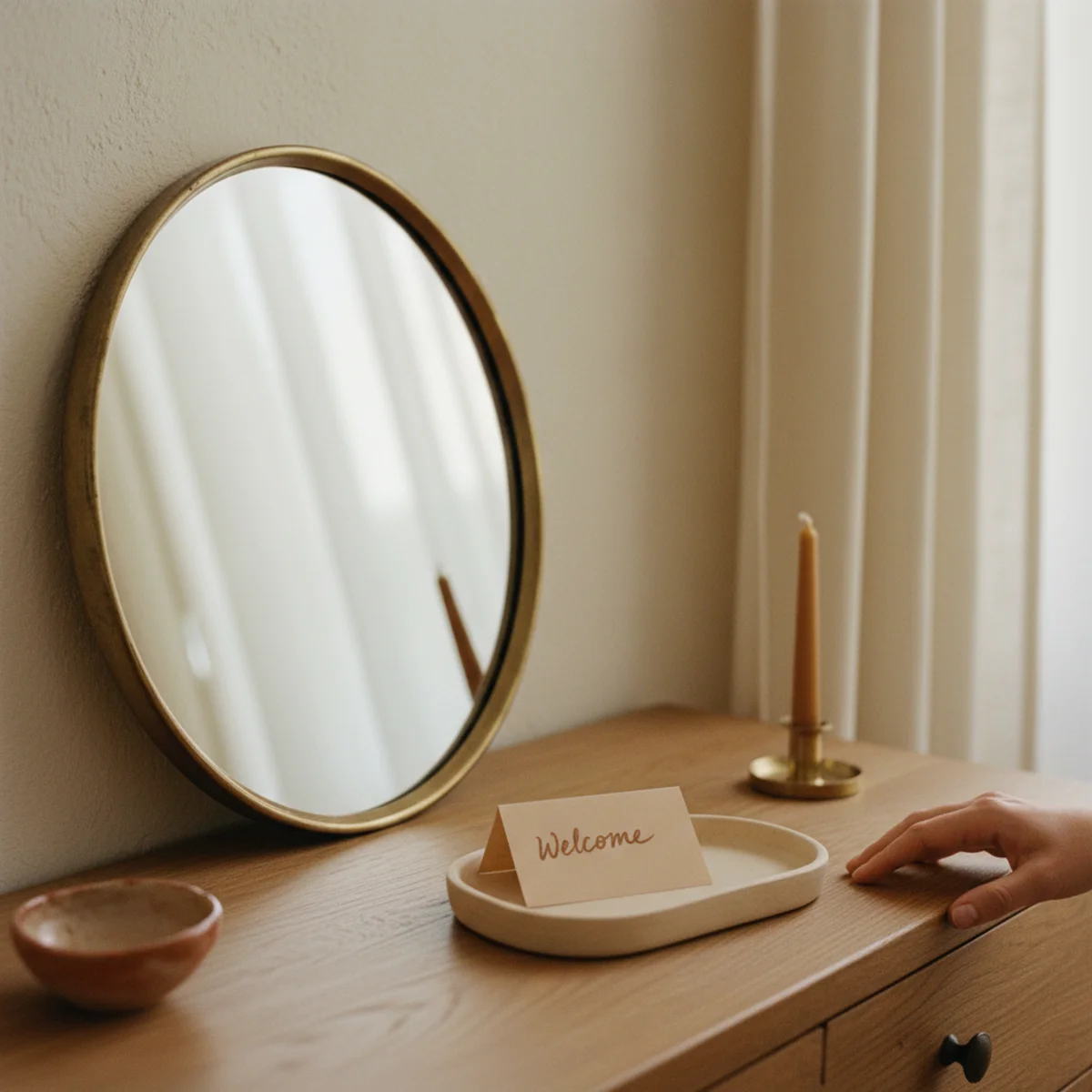
12Add a Mirror and Leave a Small Welcome Note
Two final touches that elevate the guest room from functional to memorable: a mirror on the wall (so the guest can check appearance before going downstairs) and a small handwritten welcome note on the dresser or bed. The mirror handles a practical need; the note handles the emotional one — 'we're glad you're here.' Both cost almost nothing; both compound the room's hospitality signal.
Mirror: a small to medium framed mirror 18 to 30 inches in long dimension, on the wall opposite the bed or beside the closet. Frame in warm wood or aged brass ($30 to $150). Position with the mirror's center at 60 to 64 inches above the floor for standing checks. Note: a handwritten card or letter on the dresser, the bed, or attached to the towel stack. Content suggestions: 'Welcome — we're so glad you're here. The carafe is filled, towels are on the dresser, Wi-Fi is [Network] [Password]. Make yourself at home.' Keep the note brief, handwritten, and personal — printed notes read less warm. Include practical info (Wi-Fi password, breakfast plans, household quirks) that the guest will need.
AFFILIATE SLOTDETAILSSmall framed mirror 18-30 inches + handwritten welcome note with Wi-Fi passwordAdd affiliate URL when configuredWhy it works
Because they bookend the guest's daily experience — the mirror handles before-leaving-the-room moments throughout the visit, the note handles the arrival emotional moment. Both are small touches, but together they signal that the host thought beyond the bed and the towels to the moments where the guest interacts with the room. The handwritten note specifically — the time investment is small, the perception is significant. Guests show photos of welcome notes to friends as evidence of thoughtful hosting.
Pro tip — Include the Wi-Fi password on the note even if you also say it verbally — guests forget verbally-shared passwords by the time they get to their room, and the written reference prevents the awkward 'what was the Wi-Fi password again?' question. The Wi-Fi-on-the-note is the single most-practical detail in the most-emotional element.
Mirror on the wall, handwritten note on the dresser — the final touches that bookend the guest experience. See also: handwritten note
How to set up a welcoming guest bedroom step by step
Think like a small hotel: comfort, then the touches a guest needs.
- 1Get the bed right
Make it with clean layered bedding and fold an extra blanket at the foot. The bed is where a guest judges the whole room.
- 2Add the warm light
Put a reading lamp with a warm bulb on each side, and leave one on for an arriving guest so the room isn't dark.
- 3Clear space for their things
Empty a surface, a drawer, and provide a luggage spot and hooks so a guest can actually settle in.
- 4Add the thoughtful touches
A carafe of water, fresh towels, a few books, a charging spot, and a framed wifi card. These are what guests remember.
Quick tips
- Fold a spare blanket visibly at the foot so guests know it's there for a cold night.
- Leave one warm bedside lamp on for an arriving guest so the room isn't dark.
- Clear a drawer and a surface so a guest can unpack rather than live from a suitcase.
- Frame a small card with the wifi password — the single most appreciated touch.
- Provide a luggage rack or bench so the bag stays off the bed.
- Set out fresh towels so a guest doesn't have to hunt for the linen closet.
Guest rooms for different setups
A proper bed with layered linen, two lamps, a reading chair, and the full set of thoughtful touches.
A daybed or sofa bed with hotel-style bedding stored nearby, plus a clear surface and a luggage spot.
Slim paired lamps, wall hooks instead of a rack, and a clear surface; comfort over extra furniture.
Keep a 'guest kit' — carafe, fresh towels, spare blanket, wifi card — ready to set out when someone's coming.
A guest room is finished when a tired visitor could arrive at midnight and find everything they need without asking.
Frequently asked questions
What should I put in a guest bedroom?+
What's the most important guest bedroom detail?+
How do I make a guest feel welcome?+
What size bed should a guest bedroom have?+
Should I leave a TV in the guest bedroom?+
How do I prepare a guest bedroom on short notice?+
- By RoomBedroom Cozy Ideas: 26 Warm, Restful Ways to Decorate in 2026
- Shopping GuidesThe Best Linen Bedding for a Cozy Bed, Tested and Compared (2026)
- Shopping GuidesThe Best Bedding for a Cozy Bed, Tested and Compared (2026)
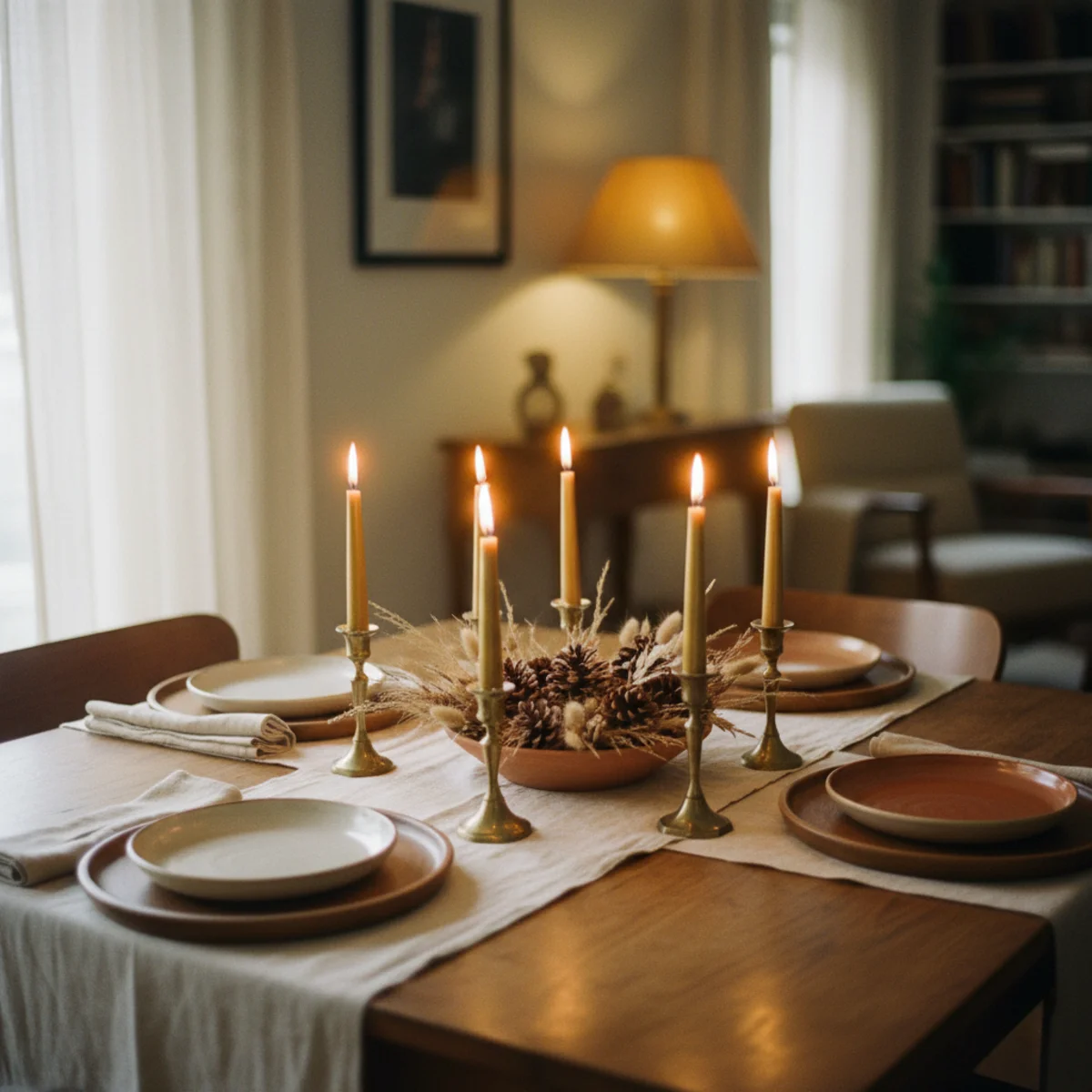
- EntertainingCozy Tablescape Ideas: 22 Warm Table Settings for Gathering (2026)
A guest bedroom is finished not when it's decorated but when a tired visitor could arrive at midnight and find everything they need. Get the bed right, light it warm, clear space for their things, and add the small touches — water, towels, an extra blanket, a wifi card. We'd frame the wifi password before fussing over throw pillows; it's the touch every guest mentions, it costs nothing, and it quietly says you thought about them. Hospitality is just anticipation, made physical.