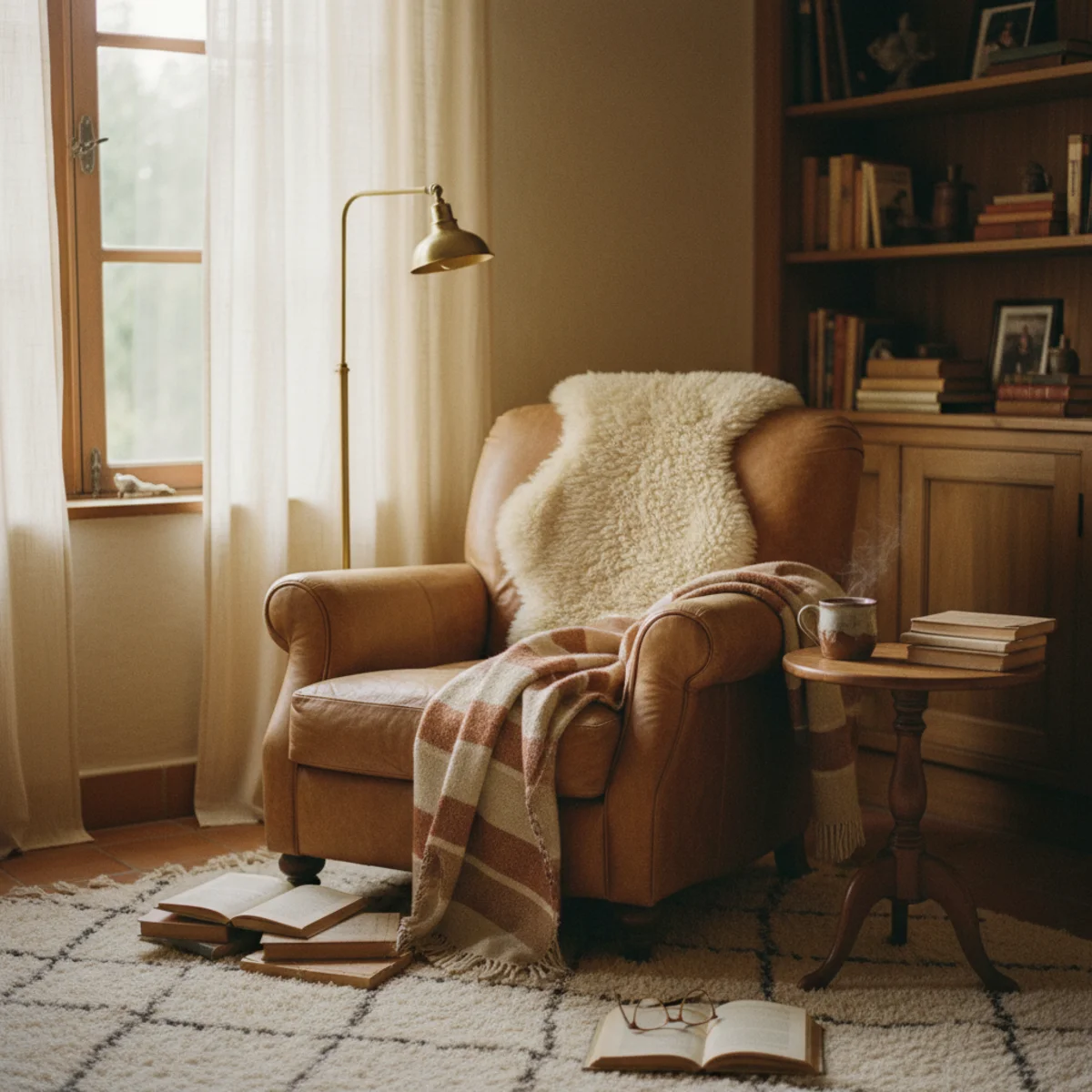
These twelve reading nook ideas are tested in actual small homes — studios under 500 square feet, bedroom corners, the unused space beside a window. None require a separate room. None cost more than $350 to build from start to finish, and most come in under $200 if you thrift the chair. Every idea below includes exact seat heights, lamp positions, and the common mistake that quietly ruins each corner.
These guides assume tight constraints: a 4-by-5-foot corner, one wall outlet within reach, and a window or lamp you can position light through. Everything else is a small layered choice — the chair angle, the table height, the throw weight.
By the end, you'll know exactly which three pieces to find, where to position each one, and the lamp height that turns any corner into a chair you'll actually sit in after dark.
WHAT'S INSIDE
- The exact chair seat height (17 to 19 inches) that determines comfort more than fabric quality
- Why most reading lamps are positioned wrong — and the 40 to 48-inch shade height that fixes it
- The $20 floor-lamp swap most stylists use that no one talks about
- Where to find a worn leather armchair for under $150 (and what to avoid in listing photos)
A reading chair needs a lamp over the shoulder, a surface for a cup, and nothing else. The rest is just comfort.
— Cup of Jo home feature [citation needed — verify before publish]
What makes a good reading nook?
A good reading nook has three non-negotiables: a comfortable chair, a light source that falls on the page rather than in your eyes, and a surface within arm's reach for a cup or a stack of books. Everything else — the throw, the rug, the plant — is comfort and atmosphere layered on top.
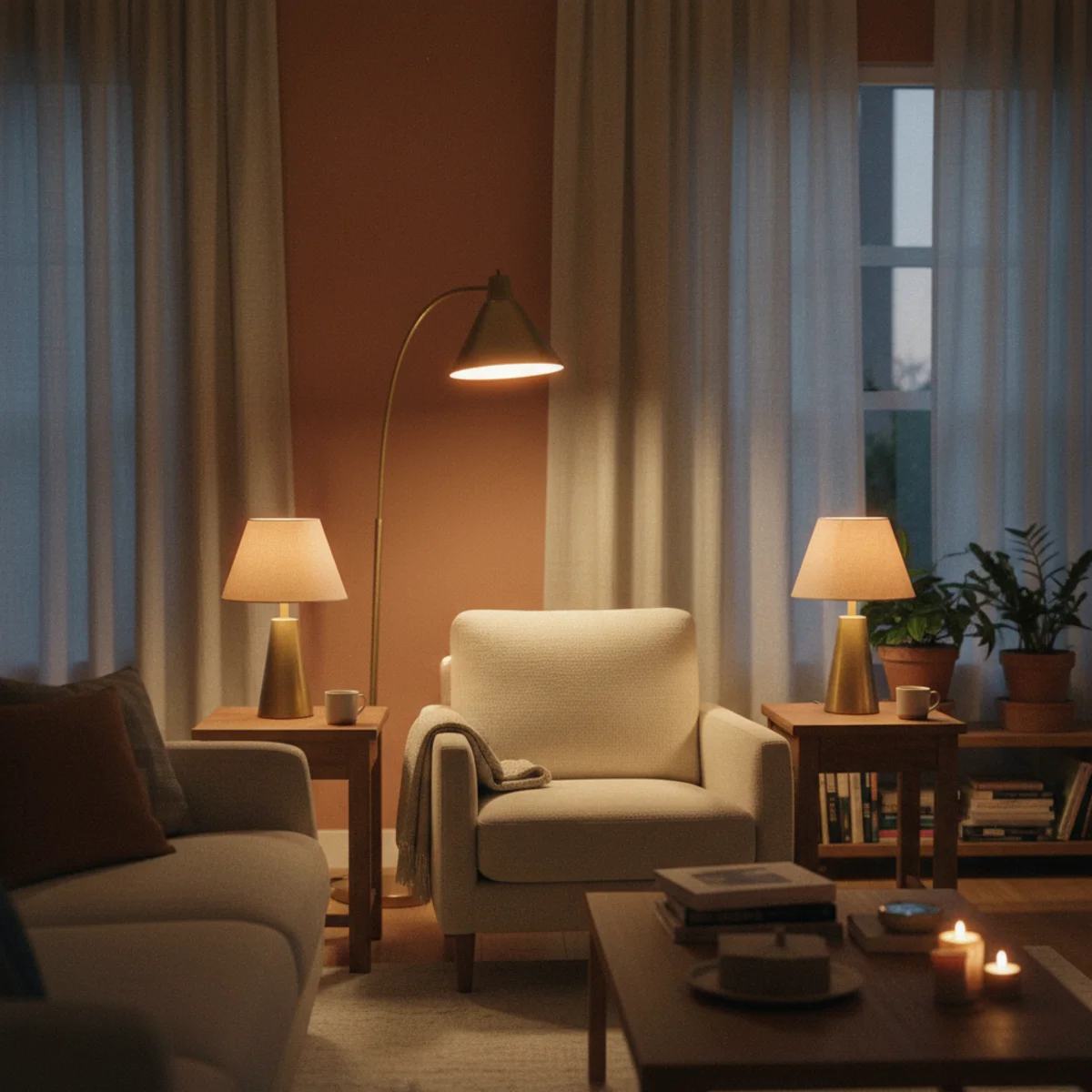
The lighting is where most nooks fail. The lamp should drop light over your shoulder onto the page, not glare from overhead or across the room. A floor lamp behind and beside the chair, or a wall sconce at shoulder height, is what turns a chair you never sit in into the spot you can't leave. Get the light right and a plain corner becomes a destination.
More in Styling you may love
See allWhy reading nooks are everywhere in 2026
As screens crept into every corner, the reading nook became a small act of resistance — a defined, single-person spot built around a book and a lamp rather than a device. Pinterest's reading nook and cozy corner searches climb every year, and the look has gone warm and lived-in: a worn leather chair, a wool throw, a vintage floor lamp.
It's also the ultimate small-footprint project. A nook fits in a corner, a wide windowsill, the end of a hallway, or beside a bookshelf, so it works in any home and on any budget. A secondhand chair and a thrifted lamp build the whole thing for under a hundred dollars, which is why it's the cozy-corner project people reach for first.
22 reading nook ideas to copy
01One Good Chair, Angled Toward the Light
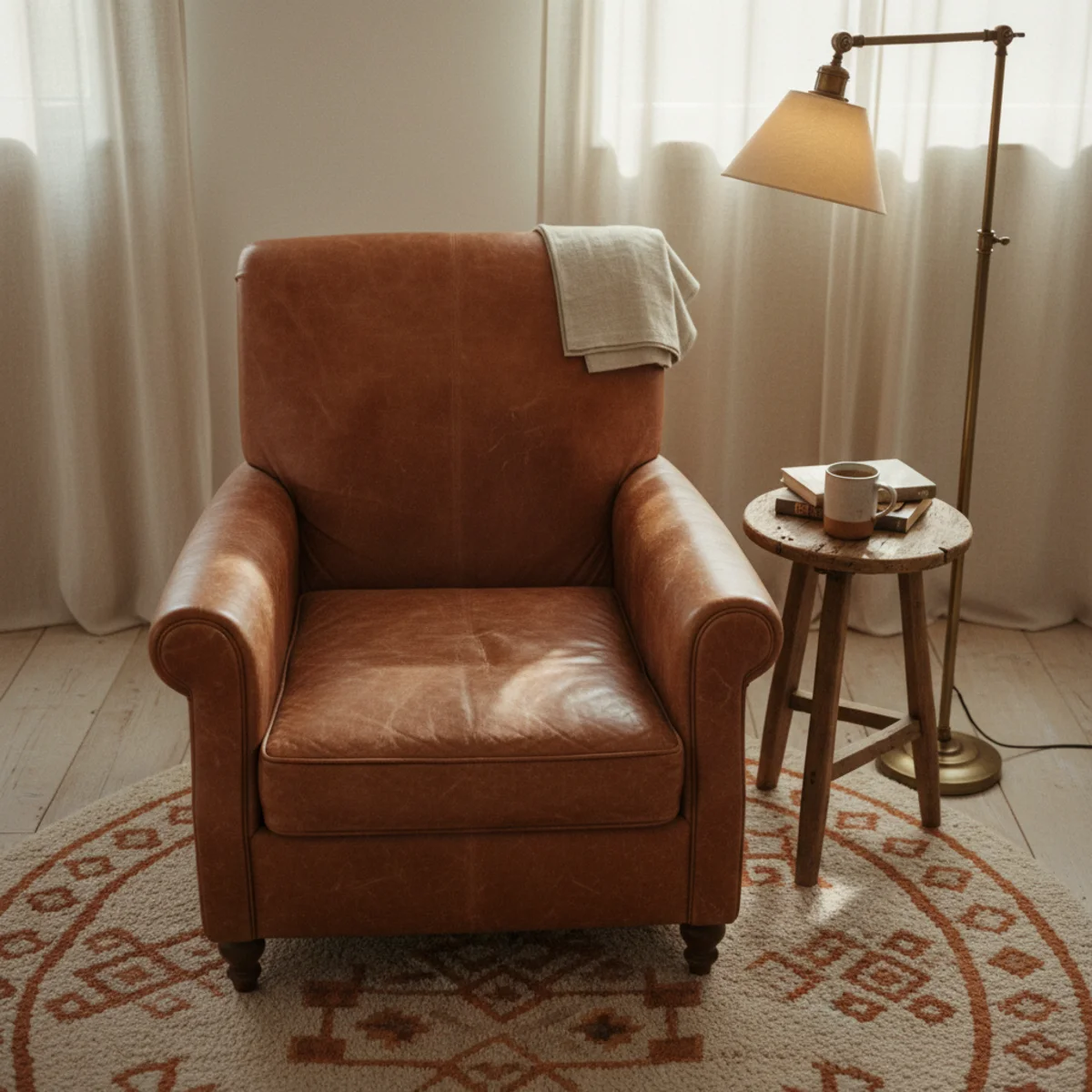
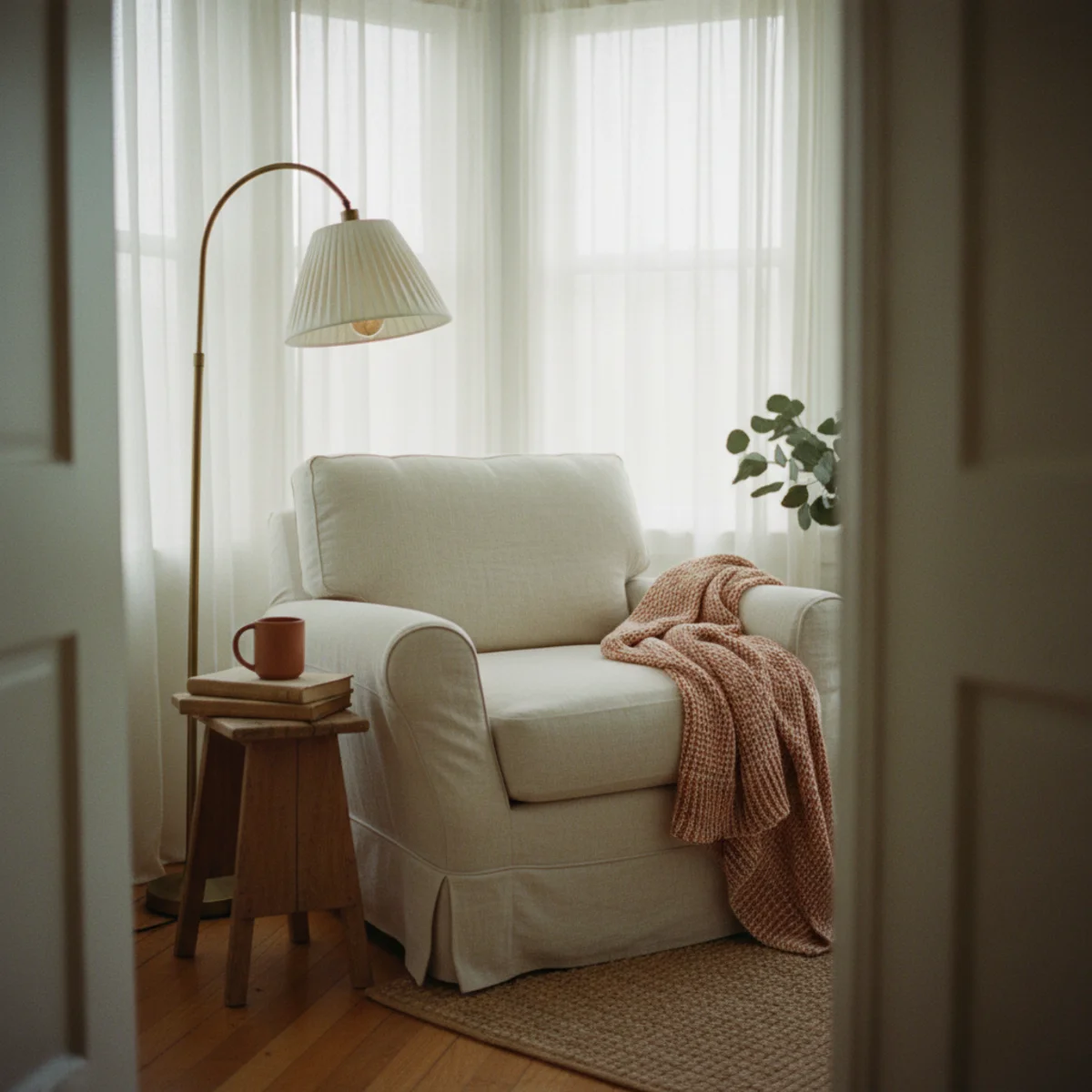
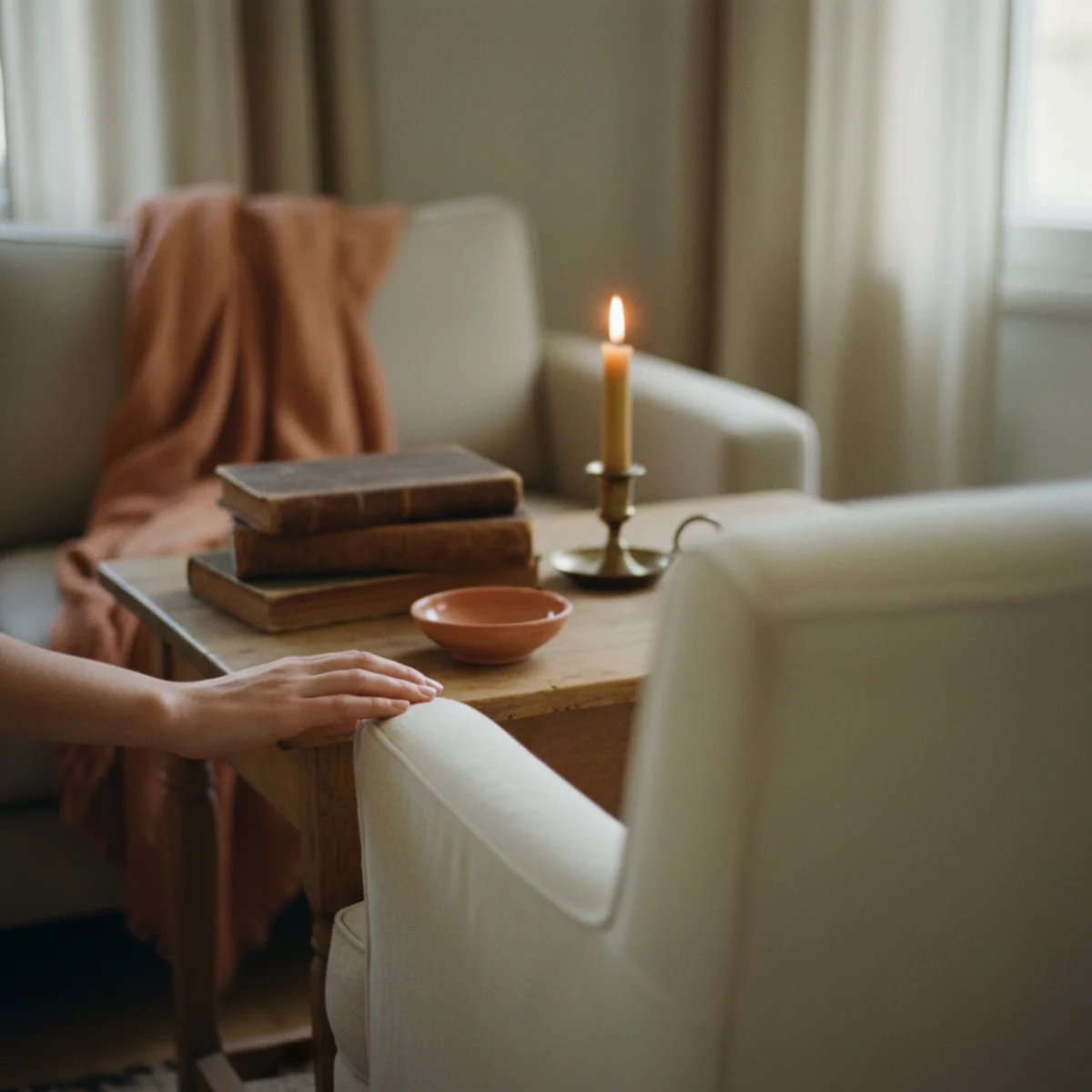
Most reading nooks fail not because they lack books, shelves, or pretty objects — they lack one properly placed chair. The corner has all the right intentions but no seat that actually works for an hour. A worn leather or boucle armchair, positioned so light falls over your shoulder from a window by day and a lamp by night, is the single piece that makes a corner read as a destination rather than a furniture cluster. It does not need to be expensive; it needs the right angle.
Seat height between 17 and 19 inches reads comfortable for most adults — lower and standing back up requires effort, higher leaves feet dangling. Look for solid wood frames and natural fabrics (linen, wool boucle, worn leather) that age well. Camel, oatmeal, rust, and dusty sage neutrals read well in every light. Budget pick: IKEA STRANDMON at $250. Mid: Article Sven Charme at $799. Best value: secondhand leather from Facebook Marketplace at $80 to $150. Position the chair 18 to 24 inches from any wall and angle it 30 to 45 degrees toward the window (or lamp) — flush against a corner kills the light.
AFFILIATE SLOTFURNITUREWorn leather or boucle armchair, 17-19 inch seat heightAdd affiliate URL when configuredWhy it works
Because light direction determines comfort more than cushion thickness or fabric quality. A chair facing away from a window forces you to read into glare; angled 45 degrees toward it, the same chair catches soft light over your shoulder — the way reading light is supposed to fall. Comfort follows the angle, not the price tag. The cheapest secondhand chair angled right beats a $1,000 chair pushed flat against a wall.
Pro tip — A worn secondhand leather armchair only improves with age — surface cracks and worn patches add warmth, not damage. Search estate sales and Marketplace before buying new; you'll spend half the price and inherit double the character.
Angled 30 to 45 degrees toward the light — the chair position that determines the entire corner. See also: Facebook Marketplace
02A Lamp at Over-the-Shoulder Reading Height
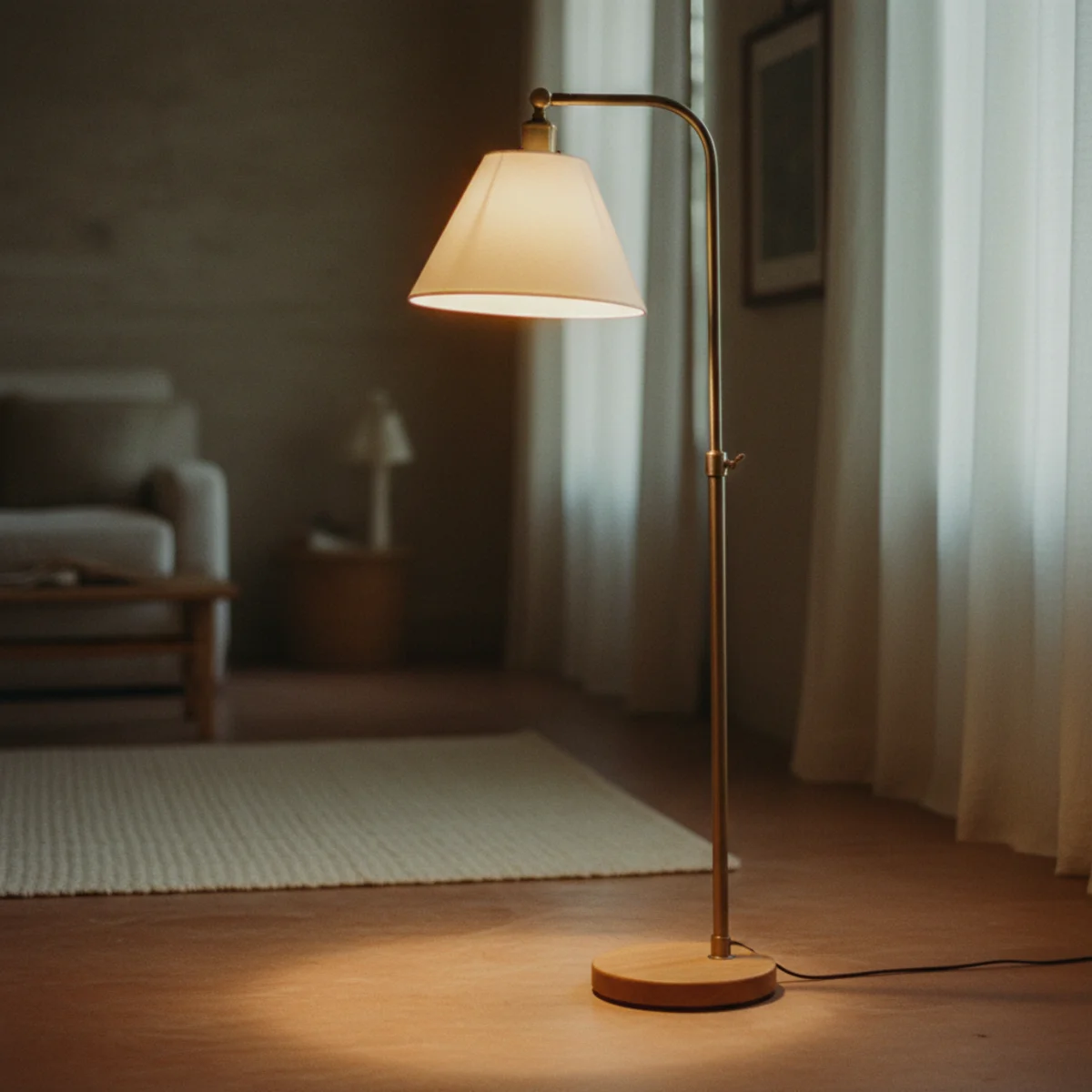
The single most-broken element in a typical reading nook is the lamp. It's either a table lamp on a side table (too low, lights the table not the page), an overhead pendant (too bright, glares across the room), or absent entirely. The right lamp drops warm light from behind and above the seated reader's shoulder — exactly where reading light belongs. A floor lamp at the right height fixes the entire nook by itself, and most cost under $80 thrifted.
Choose a floor lamp 58 to 64 inches tall, with the bottom of the shade sitting between 40 and 48 inches off the floor — this is the height that drops light onto the page rather than into your eyes. Solid base materials read warm (brass, oak, oiled walnut, ceramic); avoid chrome or plastic. IKEA HOLMÖ paper-shade at $20 (swap the bulb for 2700K) is the famous budget hack; Pottery Barn PB Classic Brass at $399 mid; Schoolhouse Princeton at $700 the heirloom version. Position 6 to 8 inches behind and beside the chair, never in front. Bulb: 2700K LED at 800 to 1000 lumens.
AFFILIATE SLOTLIGHTINGFloor lamp 58-64 inches tall, shade bottom 40-48 inches off the floor, 2700K bulbAdd affiliate URL when configuredWhy it works
Because floor lamps drop light from above the shoulder onto the page — exactly where reading light is meant to fall — while a low table lamp lights the room around the reader rather than the book itself. The 40-to-48-inch shade height also matches standard seated eye level, keeping the bulb hidden behind the shade so it never glares into your eyes when looking up from the page.
Pro tip — Look for a floor lamp with a leather strap or rope pull-chain rather than a base switch — turning a lamp on from the chair you're already sitting in is the small comfort that determines whether you actually sit down to read or end up scrolling instead.
Shade-bottom 44 inches off the floor — the height that drops light onto the page, not your eyes. See also: 2700K LED
03A Side Table Within Easy Arm's Reach
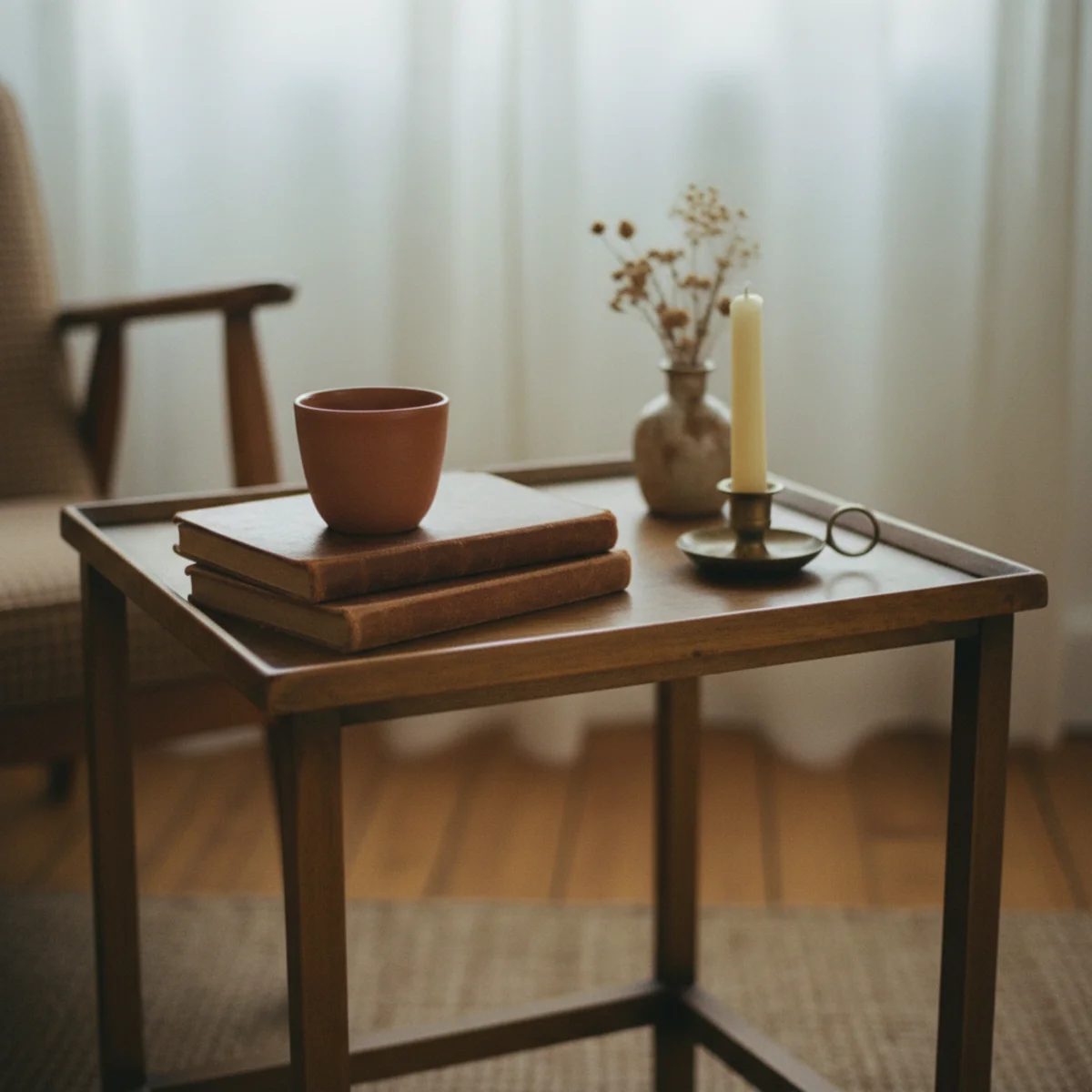
A reading chair without a place to set a mug becomes a reading chair you don't use. The side table is small but non-negotiable: somewhere to land a hot drink, a book in progress, reading glasses, the lamp's base. The right table is shorter than people expect (22 to 28 inches), small in footprint (12 to 16 inches across), and sits within the natural sweep of your dominant arm — not stretched across the chair. Wooden stools, vintage end tables, and stacked thrifted trunks all work.
Aim for a table 22 to 28 inches tall (matching or slightly below chair armrest height), with a top 12 to 16 inches across. Solid wood reads warmer than glass or metal. Small wooden stools (thrifted at $5 to $25) double perfectly as side tables; vintage one-drawer nightstands at $30 to $60 add storage. The table should sit 4 to 8 inches from the chair's armrest, never further (you'll reach across awkwardly) and never closer than 3 inches (you'll knock things off). Match height roughly to armrest level so mugs feel natural to set down without looking.
AFFILIATE SLOTFURNITURESide table or wooden stool, 22-28 inches tall, 12-16 inches acrossAdd affiliate URL when configuredWhy it works
Because reaching for a mug while reading happens dozens of times per session, and the wrong table height turns each reach into a small interruption. A table at armrest height lets you set down a mug without breaking concentration; a too-low or too-high table forces you to look. The unbroken reach is what makes reading sessions extend from twenty minutes to an hour.
Pro tip — Stack two thrifted wooden stools at different heights — one 14 inches for a mug, one 22 inches for the lamp base — to create a layered side surface for $30 total. The double-height arrangement reads more intentional than any single dedicated side table.
Armrest height, easy reach — the small table that determines whether you actually use the chair. See also: thrifted at $5 to $25
04Layer in Soft Wool and Linen Textiles
A bare reading chair stays bare. The textile layer — a wool throw across the back, one linen cushion behind the lumbar, maybe a sheepskin over the seat — is what turns a chair from utilitarian to lived-in. It also fills the small gaps in fit; almost no thrifted chair sits perfectly without a lumbar cushion or a throw pulled across the back. Three textiles, two textures (smooth plus nubby), 60 to 100 dollars total done well.
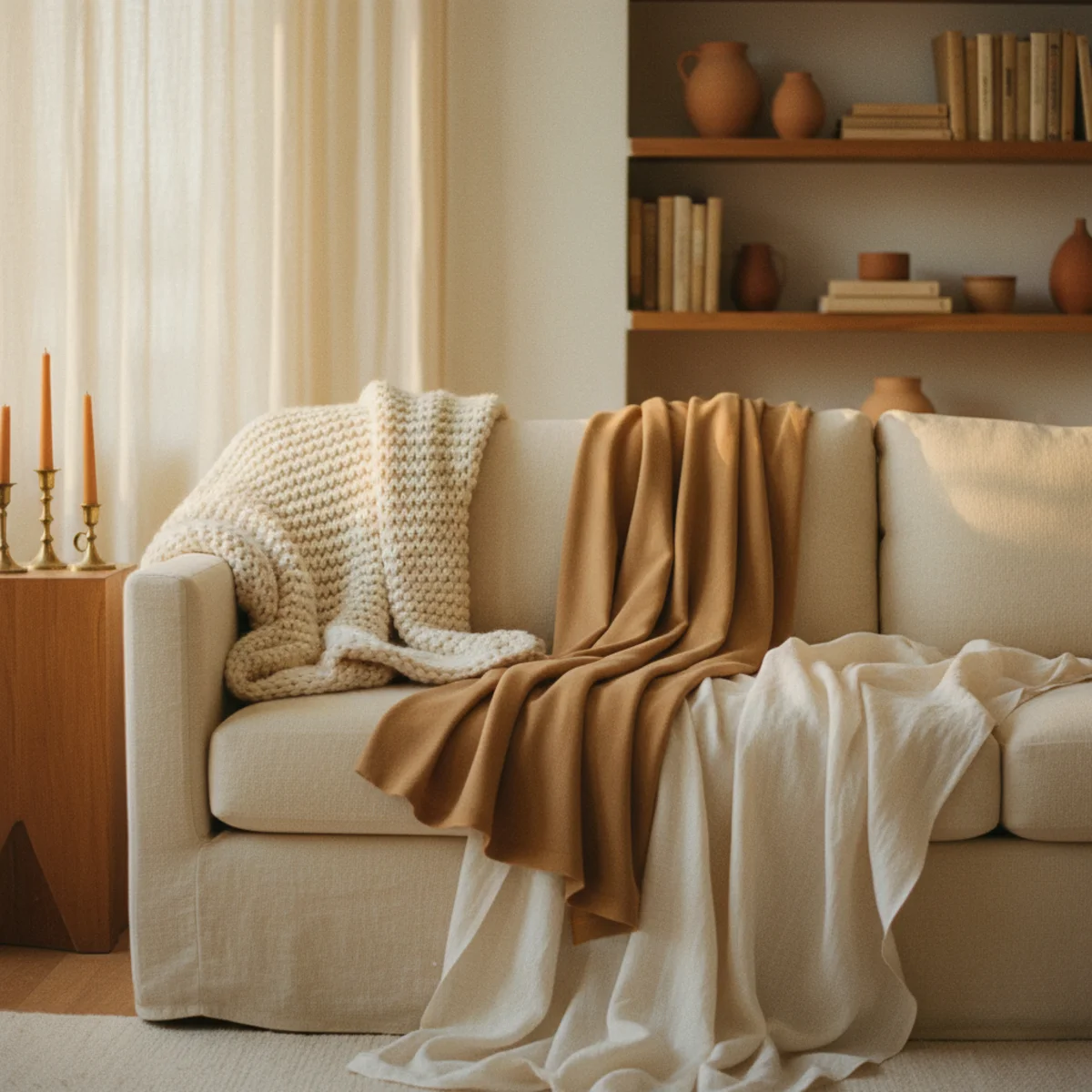
Use one throw and one or two cushions, never more. Wool throw in oatmeal, rust, or sage at 50x60 inches ($40 Pendleton secondhand, $79 West Elm boucle); one linen lumbar cushion 12x20 inches ($15 H&M Home, $35 Quince) tucked into the small of your back; one sheepskin or boucle accent (optional) at the seat or across the chair back for cooler evenings. Mix smooth flat-weave with nubby knit per the throw-blanket-layering rules. Skip synthetic fleece throws — they shine under warm light. Wash all natural-fiber textiles on cold delicate cycle and air-dry.
AFFILIATE SLOTTEXTILESOne wool throw + one linen lumbar cushion + optional sheepskin accentAdd affiliate URL when configuredWhy it works
Because the chair only fits perfectly for the original owner — every secondhand chair, and most new ones, need a textile layer to bridge the gap between body and frame. A wool throw on the back and a linen cushion at the lumbar customize the chair for your specific posture without alteration. The textiles also accumulate the warmth of multiple reading sessions, in a way bare upholstery does not.
Pro tip — Wash textiles once a year on a cold wool cycle with no spin, then lay flat to dry. A well-cared-for wool throw becomes softer with age; a poorly laundered one pills and shrinks. The five-minute weekly fluff (just shaking the throw out) keeps the chair photo-ready without effort.
One throw, one cushion, one optional sheepskin — the textile layer that fits any chair to any body. See also: throw-blanket-layering rules
05Claim a Window Corner If You Have One
If your home has even one good window — south, east, or southwest-facing, near a power outlet — that corner is where the reading nook belongs. Natural light during the day, lamp at night. The window-corner placement does double duty: it gives the chair a defined niche rather than floating in a larger room, and it lets you read in real sunlight on weekend mornings, which no lamp can replicate. The corner does not need to be large — 4-by-5 feet is enough.
Position the chair so the window sits behind and slightly to one side (not directly behind), with the light falling at roughly a 45-degree angle over your shoulder. Place a small side table on the window side and the floor lamp on the opposite side. Hang a curtain panel that can be drawn for glare control — linen or sheer cotton works ($25 to $50 from IKEA LENDA or Quince). Position the chair 12 to 18 inches off the window itself (closer feels exposed; further loses the natural-light benefit). South-facing is best for year-round warmth; east for morning readers.
AFFILIATE SLOTPLACEMENT4x5 foot corner near a south or east window, 12-18 inches off the wallAdd affiliate URL when configuredWhy it works
Because natural light is the warmest reading light, and the directional quality (slanted in from the side) is exactly how human eyes evolved to read — by sunlight angled through a window or a doorway. An interior nook with only artificial light works fine after dark but loses the slow weekend morning sessions when sunlight makes a book legible from across the room.
Pro tip — If your windows face east or south, you'll want a sheer linen curtain to soften midday glare. Hang it from a rod mounted 10 to 12 inches above the window frame — the curtain stays out of the way most of the time but can be pulled for the hour when the sun is too direct.
Window behind and to one side — the placement that gives a chair both sunlight and lamplight. See also: linen panel
06Add a Small Bookshelf or Floor Book Stack
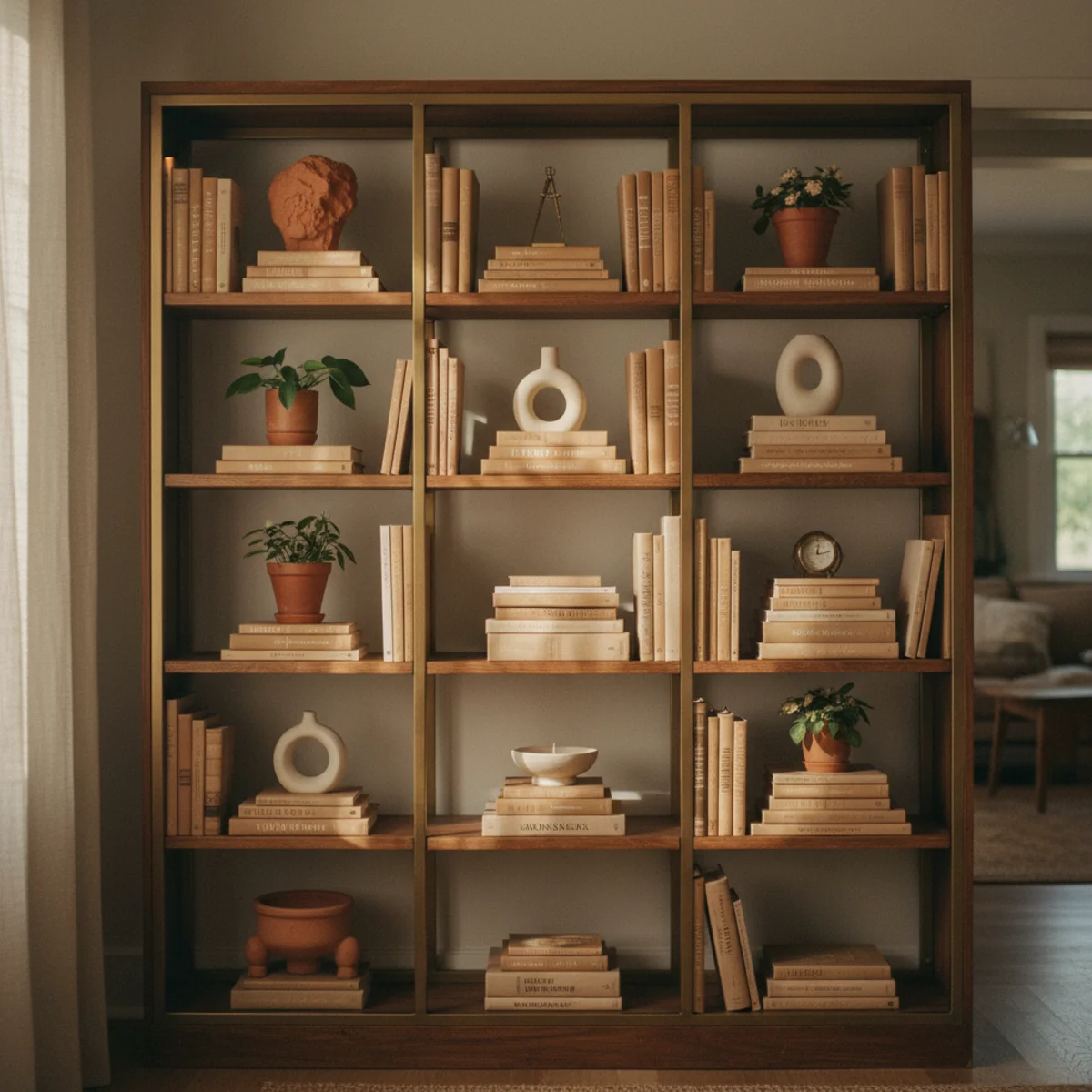
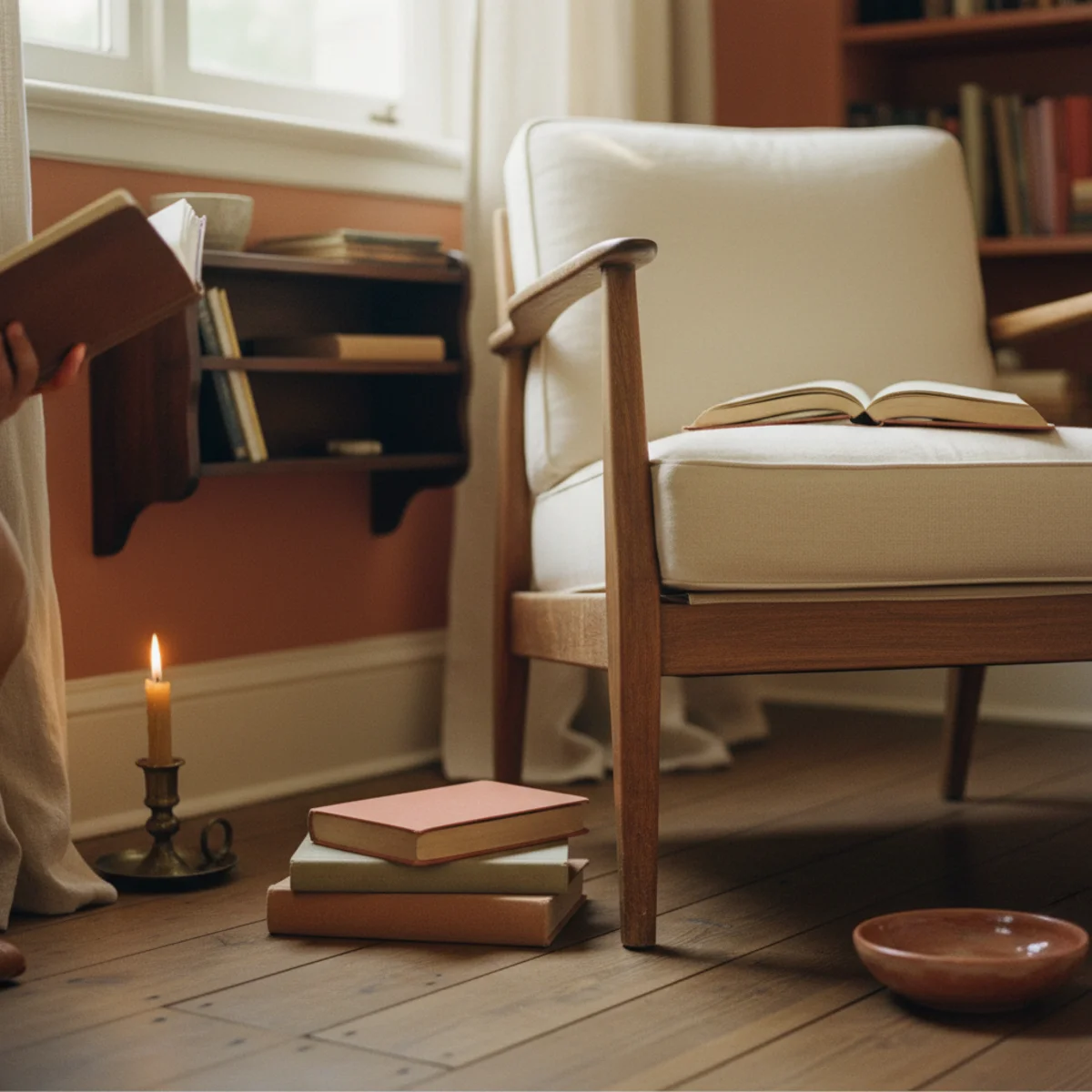
Books beside the chair separate a reading nook from a sitting chair. They don't have to be all your books — a curated 12 to 20 books, the ones you're actually reading or planning to read, kept within arm's reach. A small floor stack works in tight corners; a narrow bookshelf or floating shelf works against an adjacent wall. The presence of books at the nook is also a visual cue that the corner has a specific use, which is part of what makes you sit in it.
Two formats: a small floor stack (4 to 8 books in a vertical pile or stacked horizontally against the side table) or a low bookshelf 24 to 36 inches tall and 24 to 30 inches wide ($40 IKEA KALLAX 2x1, $80 thrifted oak, $200 West Elm). Position within arm's reach from the chair — about 12 to 24 inches away. Mix vertical and horizontal stacking; leave 30% of any shelf empty so the eye has rest. Strip dust jackets to expose cloth bindings. Add a small object on top: a candle, a ceramic, a small framed photograph. The result reads as a personal corner, not a furniture cluster.
AFFILIATE SLOTSTORAGELow bookshelf (24-36 inches tall) or curated 12-20 book floor stackAdd affiliate URL when configuredWhy it works
Because friction kills reading habits. A book you can pick up from beside the chair gets read; a book you have to cross the room for stays on the shelf. The 12-to-20-book limit forces curation — only what you're actively reading or planning to read this season. The rest stay on your main bookshelf, where they belong as decoration and reference.
Pro tip — Keep a small notebook and pencil on the bookshelf or stack — marking favorite passages or jotting half-thoughts is the unsung reading-nook pleasure. A vintage hardcover notebook from Goodwill at $2 and a single Blackwing pencil at $3 is the heirloom version of this idea.
Twelve books beside the chair, the rest on the main shelf — friction-free reading starts here. See also: low bookshelf
07Use a Wall Sconce to Save Floor Space
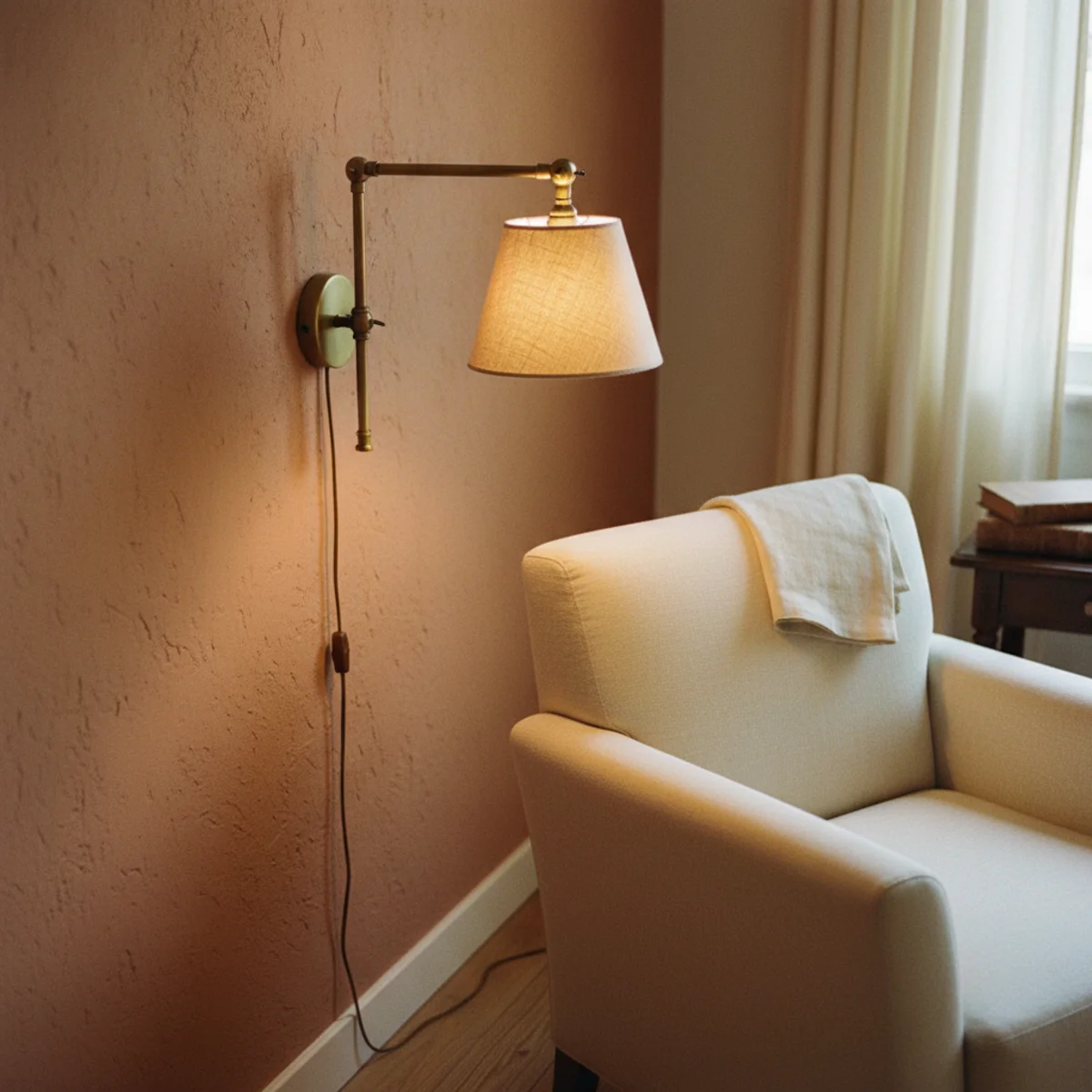
In smaller nooks where a floor lamp eats too much floor area, a wall-mounted sconce solves the problem. A swing-arm or pivot sconce mounted at 48 to 56 inches above the floor, slightly behind and beside the chair, drops light over the shoulder exactly like a floor lamp would — without occupying any floor footprint. Sconces are the move for studio apartments, bedroom nooks, and any reading corner under 4 by 4 feet. Hardwired or plug-in versions both work for renters.
Look for swing-arm or pivot sconces with a shade between 8 and 12 inches across, designed for incandescent or LED bulbs at 2700K. Plug-in versions ($60 to $200 from Schoolhouse, Hudson Valley, or Rejuvenation) avoid electrical work; hardwired versions look cleaner but require an electrician unless you're handy. Mount the sconce 48 to 56 inches off the floor, 4 to 8 inches off the wall, and positioned behind/beside the chair (not in front). Best brands: Cedar & Moss at $200, Pottery Barn at $250, Schoolhouse Princeton sconce at $400. Budget IKEA SVALLET swing-arm at $40 works with bulb upgrade.
AFFILIATE SLOTLIGHTINGPlug-in swing-arm wall sconce, 8-12 inch shade, 2700K bulbAdd affiliate URL when configuredWhy it works
Because floor lamps have a base 8 to 12 inches square, plus shade overhang of another 8 to 12 inches — a 16-by-16-inch floor footprint that small nooks can't spare. A sconce takes zero floor space, mounts at the exact reading height, and reads more deliberate visually. The trade-off is install effort (some sconces hardwire, others plug in), which is the only reason floor lamps are still default.
Pro tip — Plug-in sconces work for renters: the cord runs down the wall to the nearest outlet and can be hidden inside a flat cord cover ($8 from Amazon) painted to match your wall. The setup looks identical to a hardwired sconce from any normal viewing distance.
Sconce instead of floor lamp — same warm light, zero floor footprint. See also: plug-in version
08Drape a Sheepskin Over the Chair Back
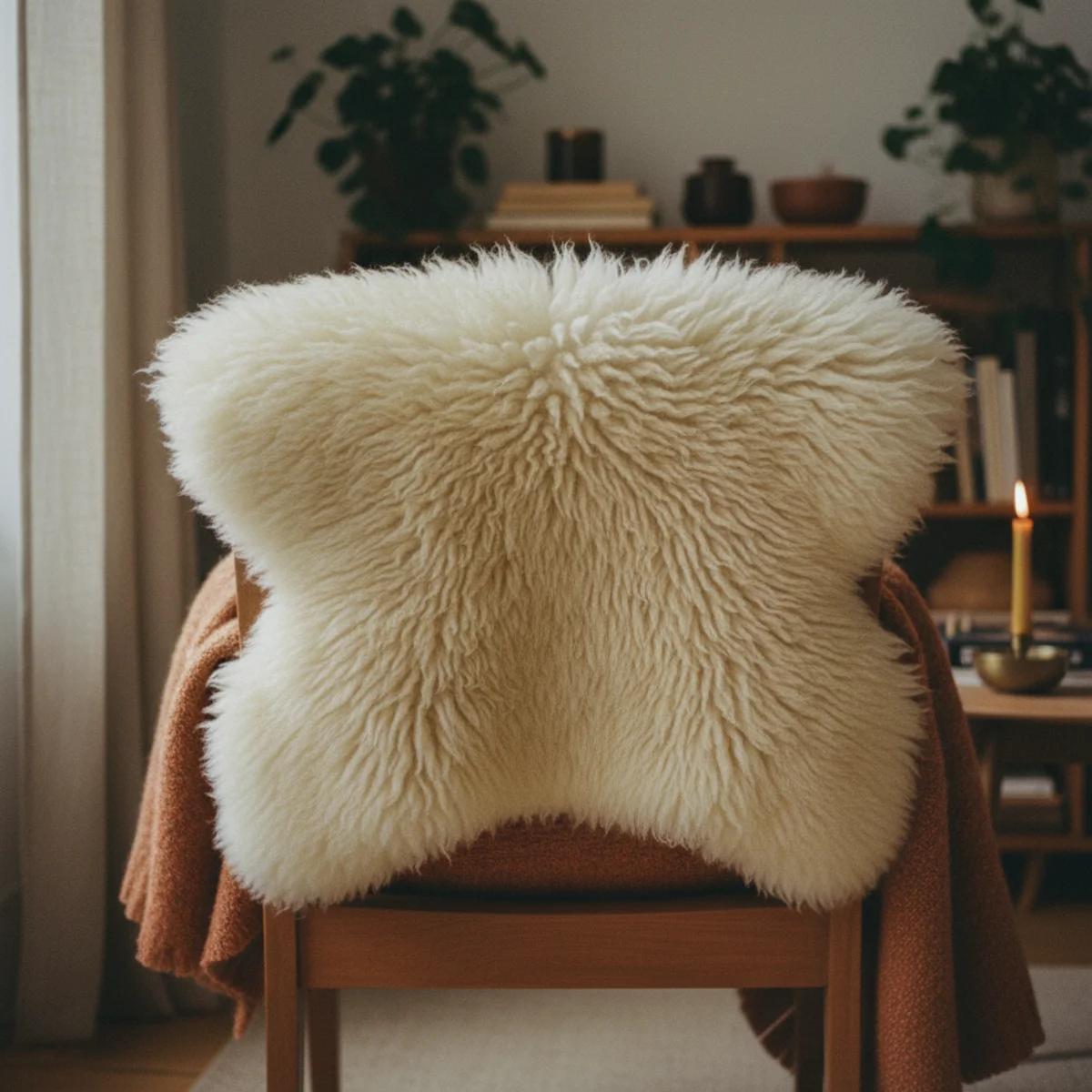
The simplest small addition that transforms a reading nook from styled to lived-in is a single sheepskin or wool boucle pelt draped over the chair back. The texture is soft, the shape is irregular, and the visual weight signals warmth at every angle. Real sheepskin or alpaca-blend reads honest; synthetic sherpa reads cheap. Costco sells real shearling pelts at $40 to $60; Pottery Barn at $150. Drape diagonally from one corner of the chair back to the opposite arm — never folded crisply.
Real sheepskin (Icelandic, New Zealand, or Australian) at 24 to 36 inches long, with the wool fully attached and the underside clean. Look for irregular natural shapes (rectangular trimmed pelts read manufactured). Drape diagonally with one corner falling toward the seat cushion and the opposite corner cascading over one arm. The pelt should cover about a third of the chair back. Costco shearling at $40-60; IKEA LUDDE pelt at $60; Pottery Barn at $150-250; vintage 1960s-70s pelts on Etsy at $40-80. Avoid bright-white pelts — natural cream and oatmeal tones age better.
AFFILIATE SLOTTEXTILESReal Icelandic or New Zealand sheepskin, 24-36 inches, natural cream or oatmealAdd affiliate URL when configuredWhy it works
Because the irregular shape and pile texture of real sheepskin reads as evidence of an animal, not a manufactured product, and that authenticity registers visually before the brain catches up. A single pelt on a chair back is one of the most concentrated signals of warmth available in any room — the surface mimics fur, evolutionary shorthand for warmth and shelter. No other textile reads quite like it.
Pro tip — Vacuum sheepskins gently once a month with the upholstery attachment on your vacuum (or a soft brush if no attachment). Spot-clean spills immediately with cold water and a microfiber cloth. Never machine-wash a real sheepskin — it will felt and ruin in one cycle.
One real sheepskin, draped diagonally — the most concentrated warmth signal in any chair. See also: Icelandic
09Tuck a Reading Nook Into a Bay Window
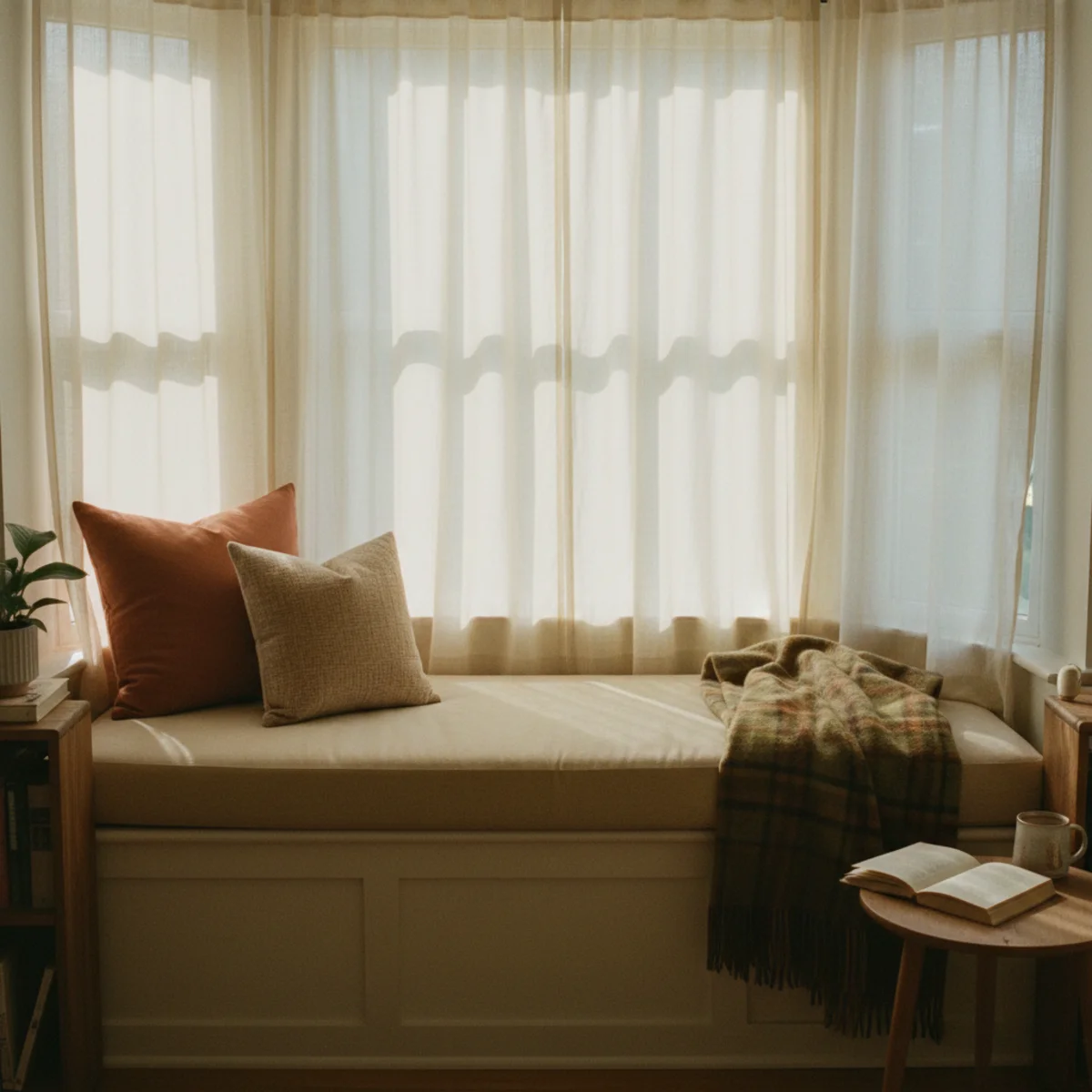
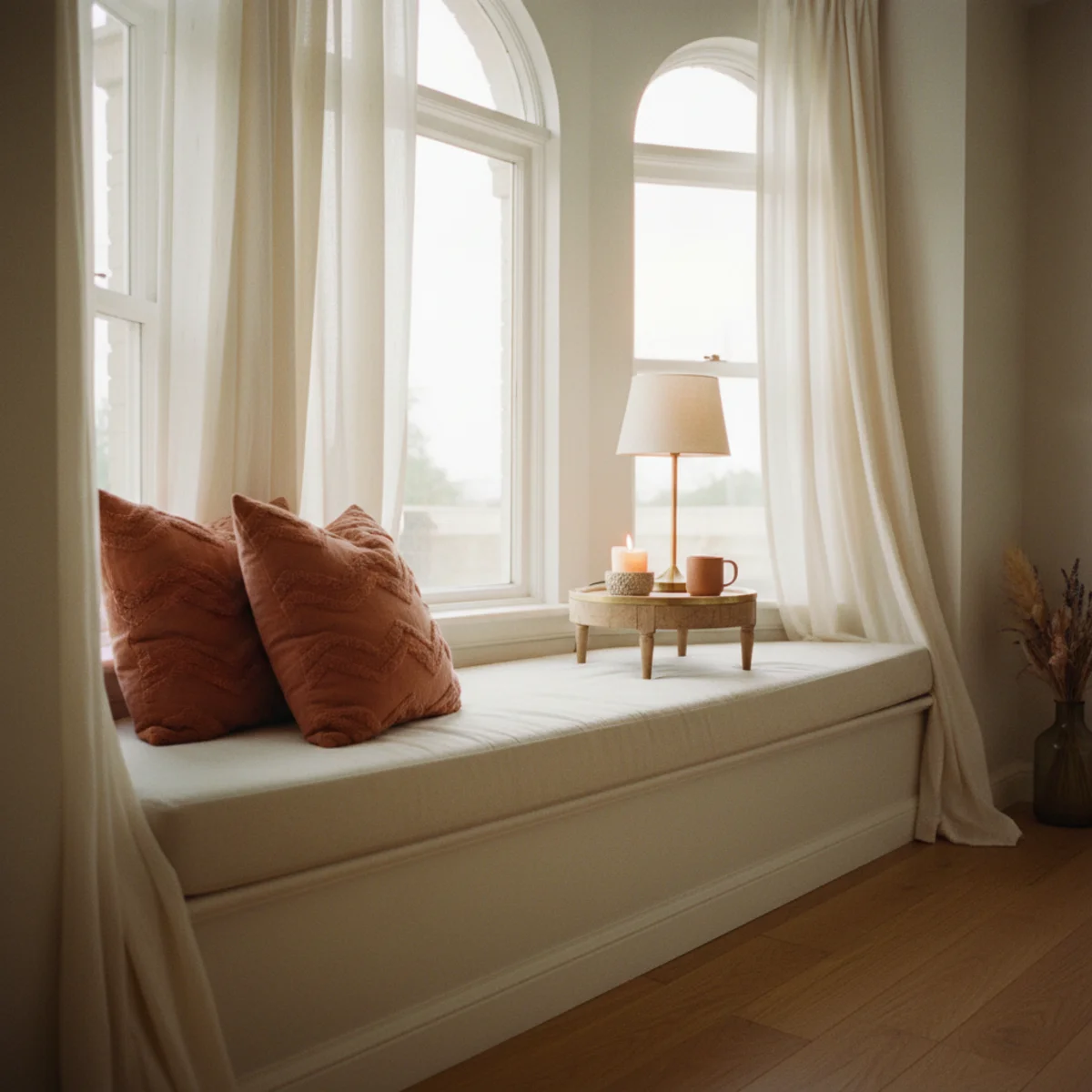
A bay window is the natural reading nook the home gives you for free. The recessed shelf inside the bay reads as a built-in window seat; the surrounding glass on three sides floods the space with light at every hour. If you have one, build the nook around it. If you don't, the deep-windowsill version (a 12 to 18-inch sill with a cushion on top) gets close. Bay windows turn what was just architectural feature into the most-used corner of any home.
For a true bay window: add a custom or thrifted bench cushion sized to the seat depth (typically 18 to 22 inches deep, 36 to 60 inches wide). Cover it in linen, boucle, or cotton ($150 to $300 for custom, $40 for IKEA cushions cut to fit). Add 3 to 5 throw cushions in mixed textures along the back. Position a small table on one end of the seat for a mug and books. For a deep windowsill nook: a 4-inch-thick foam cushion cut to fit ($30 from Amazon foam) plus a slip cover (sewn yourself or local upholsterer at $80) plus 2 to 3 small cushions. The window itself does the lighting; add a wall sconce for night reading.
AFFILIATE SLOTFURNITURECustom bay-window cushion 18-22 inches deep + 3-5 throw cushions mixed texturesAdd affiliate URL when configuredWhy it works
Because three sides of glass create directional light from multiple angles at every hour of the day — making it the rare reading spot where the lighting changes constantly but never glares. The architectural recess also defines the space without walls, so the chair (or cushion) reads as a built-in destination rather than furniture parked beside a window. The depth of the recess gives the body somewhere to settle.
Pro tip — If your bay window has a heating register beneath it, drape a wool throw across the entire seat — the warm air rising through the textile creates a heated reading bench in winter. Pulled tight and tucked, the throw also hides any visible vent grille.
The bay window is the reading nook the architecture already gave you — just add a cushion. See also: throw cushions
10Build a Floor-Cushion Nook in Tight Spaces
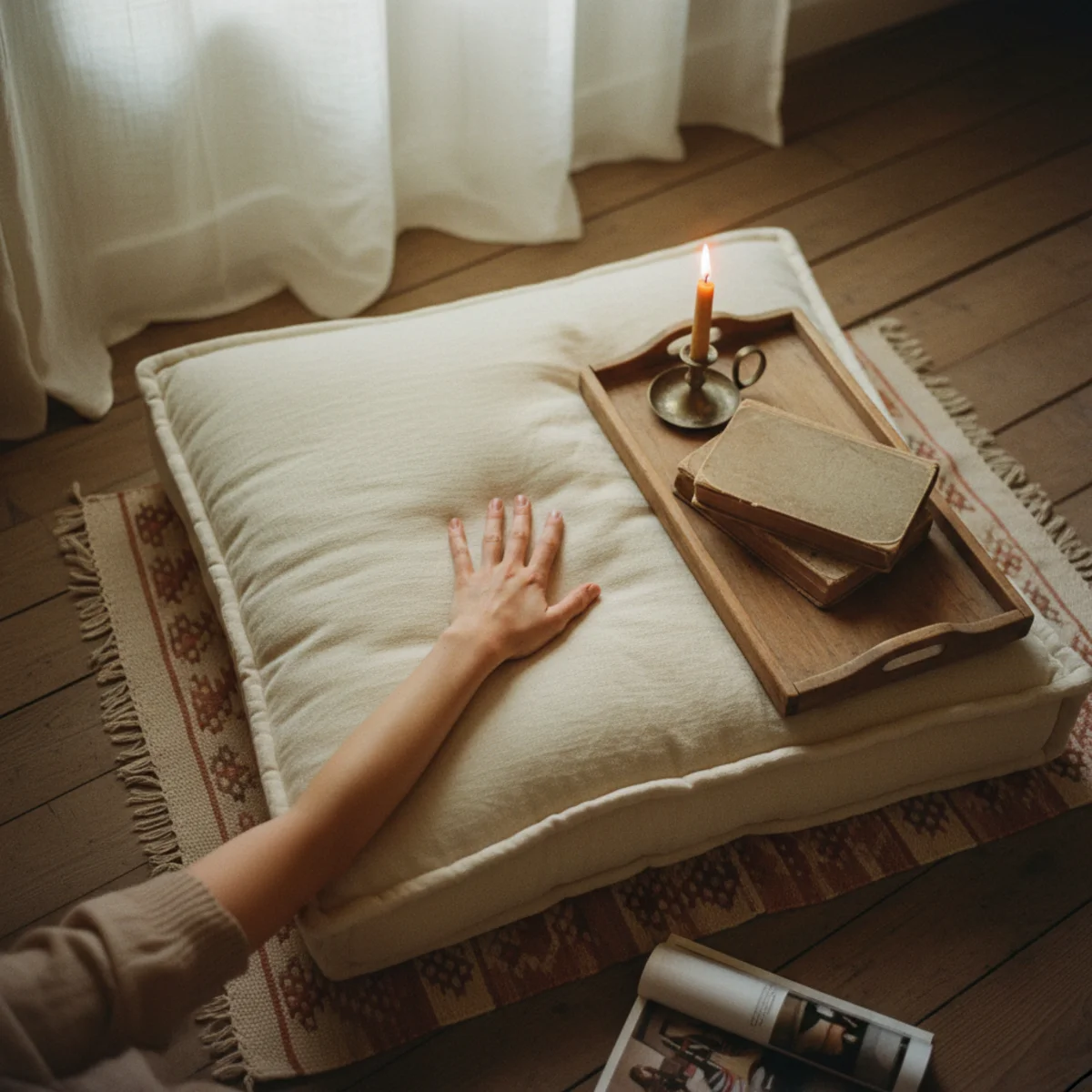
Not every reading nook needs a chair. In tight rooms, on tatami floors, or in kids' reading corners, a stack of heavy floor cushions against a wall makes a low, comfortable reading spot for under $100. Floor cushions also work in adult rooms with the right materials — boucle or linen-covered foam, in warm earth tones. The visual lightness (no chair frame, no legs) keeps a small space from feeling cramped, and the close-to-the-floor seating reads casual rather than formal.
Stack 2 to 3 large floor cushions (24 to 30 inches square, 4 to 6 inches thick) against a wall. Foam-filled with linen, boucle, or wool covers — never polyester. IKEA STARTTID cushions at $20 each, West Elm Foundry floor cushions at $79, custom linen-covered foam from a local upholsterer at $80. Add a heavy area rug beneath ($100-150 vintage wool); a low side table or stool for a mug; one small wall sconce or floor lamp for light. Position against a load-bearing wall (the back support matters). Add one wool throw for cooler weather. The whole nook fits in a 4-by-4-foot floor footprint.
AFFILIATE SLOTFURNITURE2-3 large floor cushions (24-30 inches square, 4-6 inches thick) in linen or boucleAdd affiliate URL when configuredWhy it works
Because lower seating reads as more casual and less formal than chair seating — perfect for slow weekend reading, kids' nooks, or any space where the formality of an armchair feels wrong. Floor cushions also stack and store when not in use, freeing the corner for other uses. The lower posture also slows breathing, which most readers find conducive to longer sessions.
Pro tip — Use the wall as the chair back — lean cushions against the wall and add one lumbar cushion at the small of the back for support. Sitting cross-legged against the wall for an hour requires the same back support you'd want in a chair; the lumbar cushion provides it.
Two floor cushions, one stool, one wool throw — the entire reading corner for under $150. See also: vintage wool
11Add One Personal Object Near the Chair
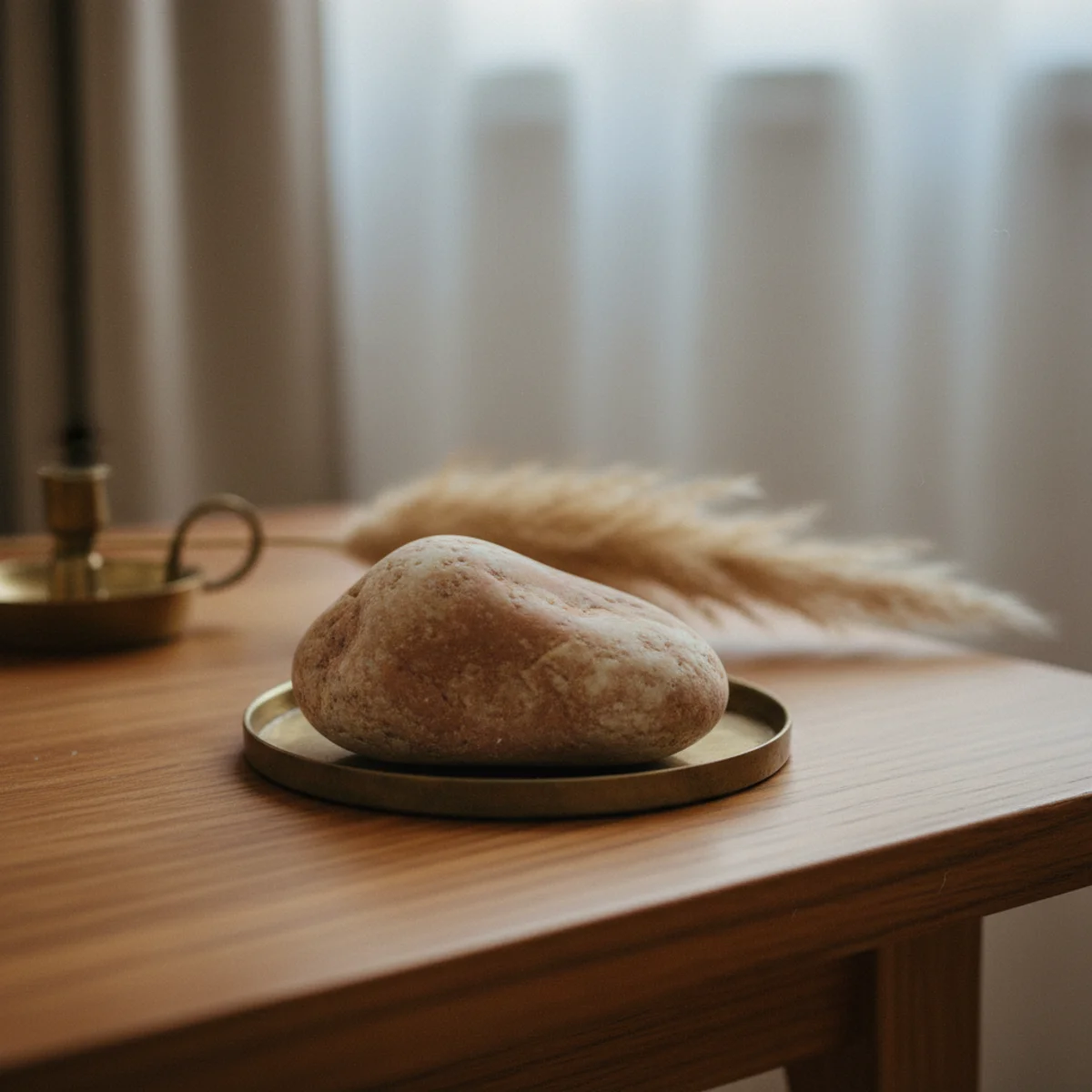
What separates a reading nook from a furniture corner is one personal object — a framed photograph, a small heirloom, a piece of art from a place you traveled, a child's drawing — placed within sight from the chair. The object turns the nook from generic styled space into a corner that belongs to you specifically. It's the smallest possible addition and the one that makes the space feel inhabited rather than decorated. Cost: usually zero; you already own the object.
The object should be visible from the chair but not in the line of reading sight (avoid placing it directly above the book line). Position on the side table, the small bookshelf, the windowsill, or hanging on the wall at 50 to 55 inches above the floor (just below the standard 57-inch art-hanging height since you're seated). Examples: a framed 4x6 photograph from a meaningful trip, a small ceramic made by a friend, a single book inherited from a parent, a small piece of art that hangs alone. Mass-produced inspirational prints don't work — the personal connection is the entire point.
AFFILIATE SLOTSTYLINGOne small framed photograph, ceramic, or piece of personal artAdd affiliate URL when configuredWhy it works
Because nooks need a small piece of identity to register as personal space rather than generic styled space. A single meaningful object — even one — signals that someone specific reads here, has memories here, sits in this chair regularly. Without that anchor, the most beautifully styled nook still reads as a magazine photograph. The personal object is what turns a corner into a place.
Pro tip — Rotate the personal object every few months — pull a different framed photograph, swap in a different inherited piece, change the small artwork. The rotation keeps the nook from becoming background noise and gives you something quietly different to notice each season.
One photograph, one heirloom, one piece of art — the smallest possible signal of identity. See also: 57-inch art-hanging height
12Angle the Whole Nook Inward, Not Outward
The biggest spatial mistake in reading nooks is positioning everything to face outward into the room — chair facing the doorway, lamp angled toward the rest of the space, art on the far wall. The fix: angle the whole nook inward toward itself, creating a small enclosed bubble that visually separates from the larger room. The chair faces a corner or a window; the lamp lights only the chair; the side table sits between chair and wall. The corner becomes a small room within a room.
Position the chair so it faces a corner (or a window in the corner) at a 30 to 60 degree angle. Place the side table on the closed side (toward the wall), with the lamp behind it. Hang any art on the wall closest to the chair, in the chair's sightline when reading. Block visual entry from the larger room with a small plant on the floor (a rubber plant or tall fern at 4 to 6 feet, $40 to $80 from a nursery) or a tall basket holding throws (16 to 22 inches diameter, $25 from IKEA NIPPRIG). The plant or basket acts as a soft visual barrier between nook and room.
AFFILIATE SLOTPLACEMENTChair angled 30-60 degrees inward + tall plant or basket as visual barrierAdd affiliate URL when configuredWhy it works
Because directional attention creates psychological enclosure. A chair facing into a corner or window signals "I'm in this space, not the larger room beyond," which lets the mind drop into a book more easily. A chair facing outward keeps you visually connected to every conversation, doorway, and movement in the rest of the house — which fundamentally undermines the focus reading requires.
Pro tip — Walk into your room from the main entry and look at the nook from that doorway. If you can see the back of the chair clearly, the nook is angled correctly inward. If you see the front of the chair head-on, it's facing the room — angle it 30 to 60 degrees inward and feel the entire mood shift.
Chair faces inward, plant softens the entry — the corner becomes a small room within a room. See also: rubber plant or tall fern

How to build a reading nook step by step
Find the light, add the three essentials, then layer comfort.
- 1Find the corner with afternoon light
Note where the sun lands in the afternoon and claim that corner. Free daylight is the best reading light there is.
- 2Place the chair and aim it
Set a comfortable chair angled toward the window for day and slightly into the corner for a private feel.
- 3Add light at shoulder height
Put a floor lamp behind and beside the chair, or a swing-arm sconce at shoulder height, so light falls on the page.
- 4Add the surface and the softness
A small table or stool for a cup, then a throw, a cushion, and a rug underfoot to make it a place you'll stay.
Quick tips
- Build the nook where afternoon light already lands; you can't add free daylight later.
- Aim the lamp over your shoulder onto the page — the single most common nook mistake is light too high.
- Keep a throw on the chair arm and the current book stack within reach so the nook is always ready.
- Define the zone with a small rug under just the chair, even in an open room.
- Use a plug-in swing-arm sconce to save floor space and skip hardwiring in a rental.
- Add one personal object so it reads as yours, not a styled vignette.
Reading nooks for different spaces
A cushioned bench with a back cushion against the glass — light on three sides, the classic nook.
An armchair, a floor lamp, and a small table angled toward the window for a second restful spot.
A single chair and a swing-arm sconce in a corner; a floor-cushion version if there's no room for a chair.
Tuck the chair next to the shelves so the whole library is within arm's reach.
A reading nook is a room you can build in a weekend, and the one the whole house ends up fighting over.
Frequently asked questions
What's the most important element of a reading nook?+
How big does a reading nook need to be?+
What kind of chair works best for a reading nook?+
How much does a complete reading nook cost?+
Where should I put a reading nook in my home?+
Do I need a chair to make a reading nook?+
Build your reading nook where the afternoon light already falls, add a chair, a lamp at shoulder height, and a surface for a cup, then layer in a throw and a rug. We'd obsess over the lamp before anything else — light over the shoulder onto the page is the difference between a corner you photograph and one you actually read in. A secondhand chair and a thrifted lamp build the whole thing for under a hundred dollars, and it'll be the most-used seat in the house.