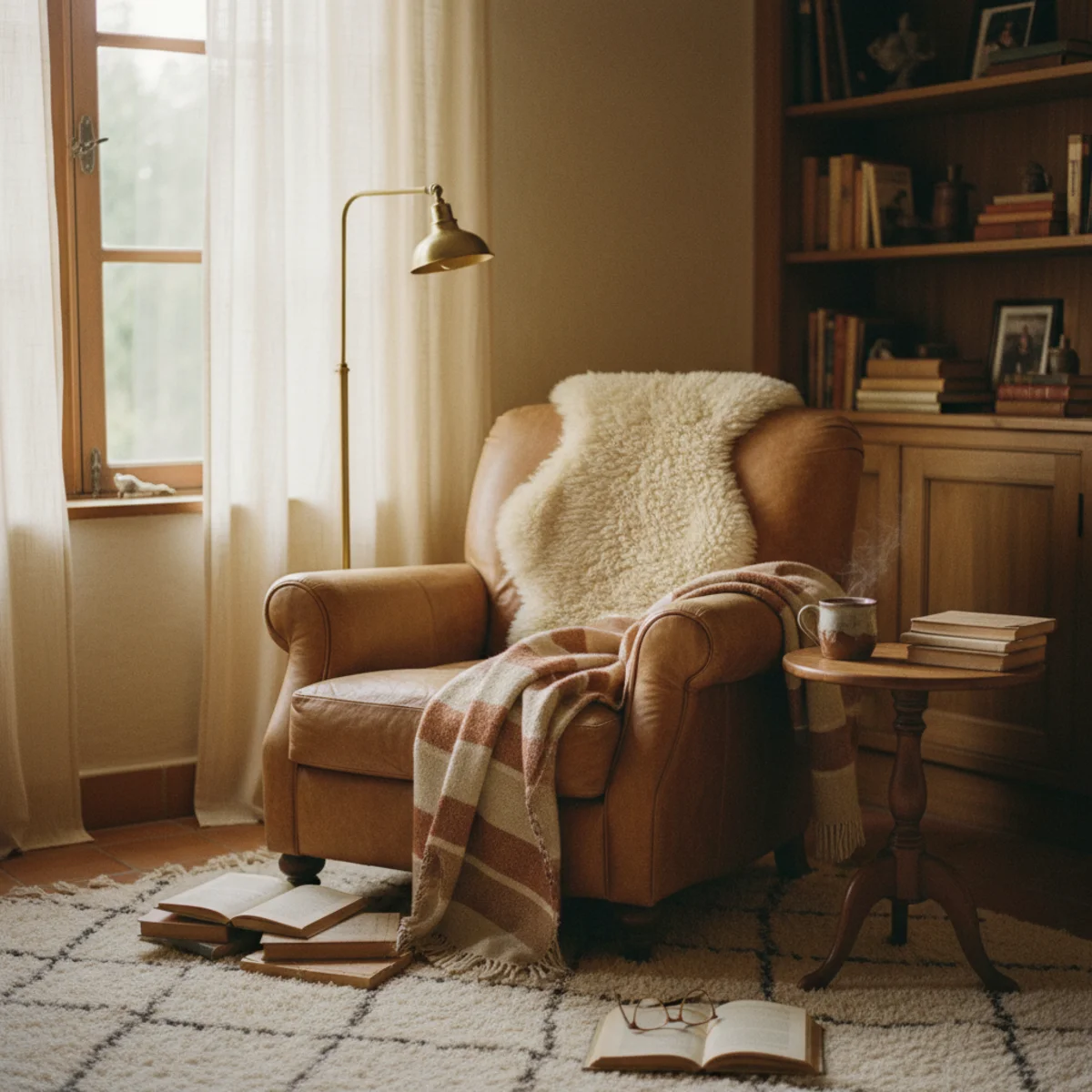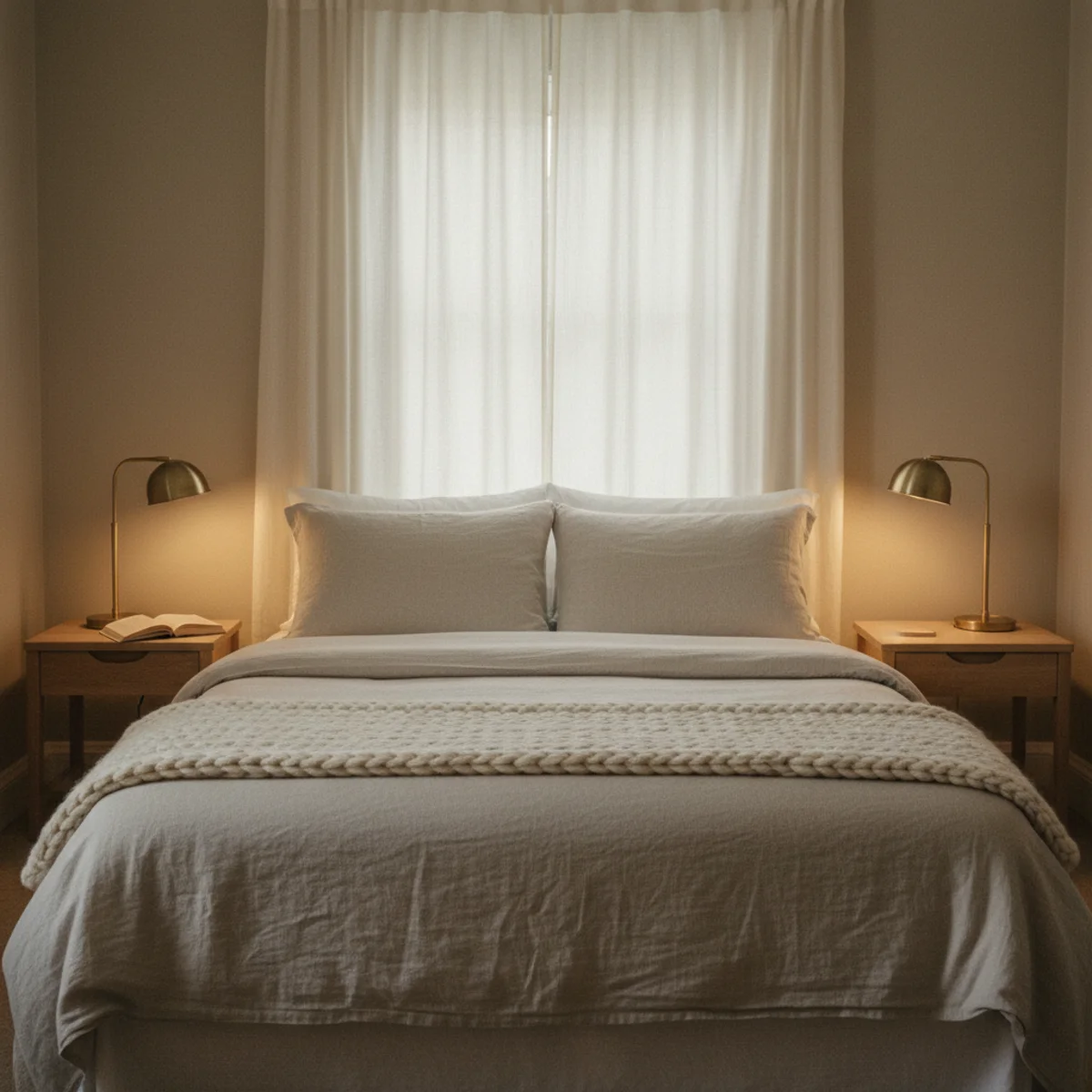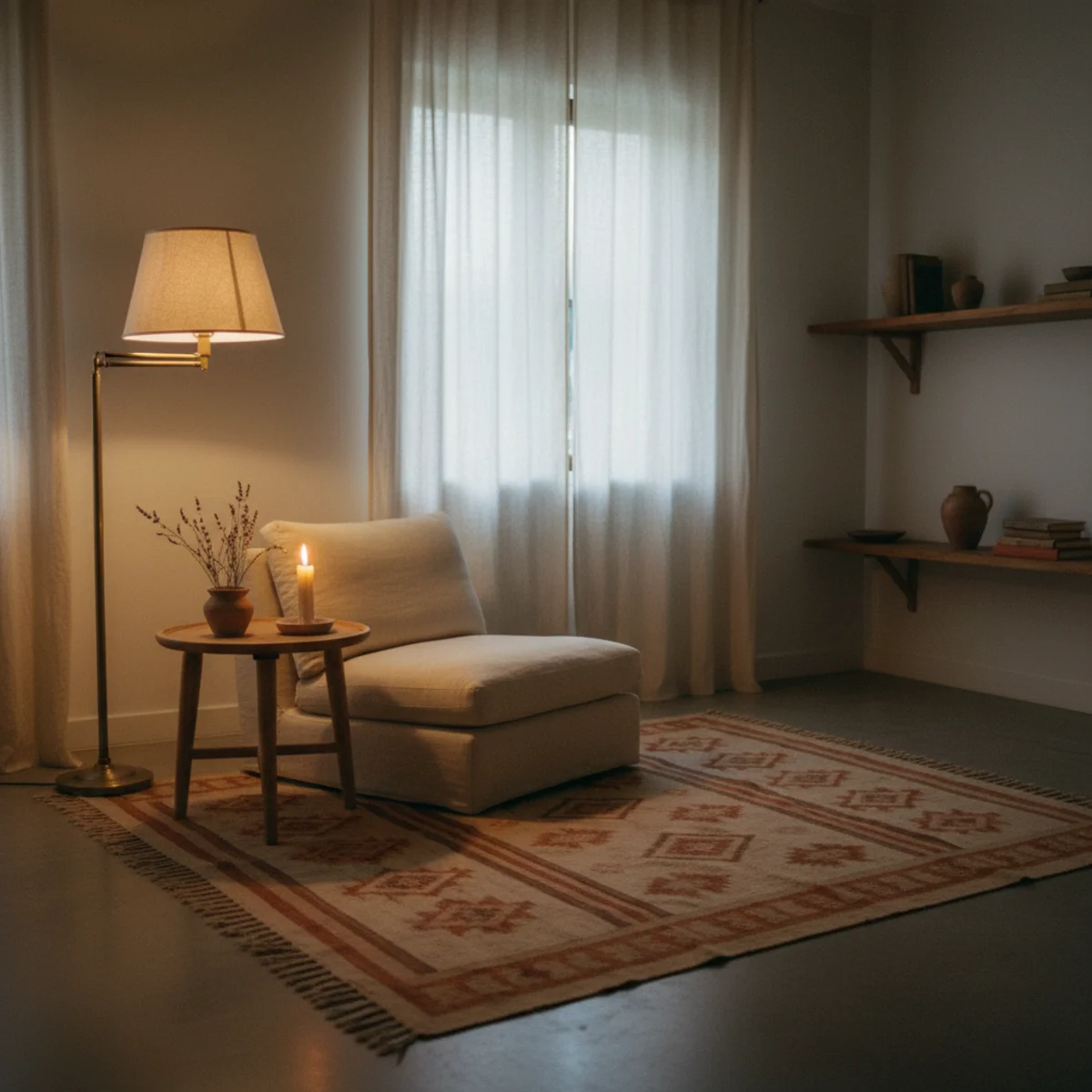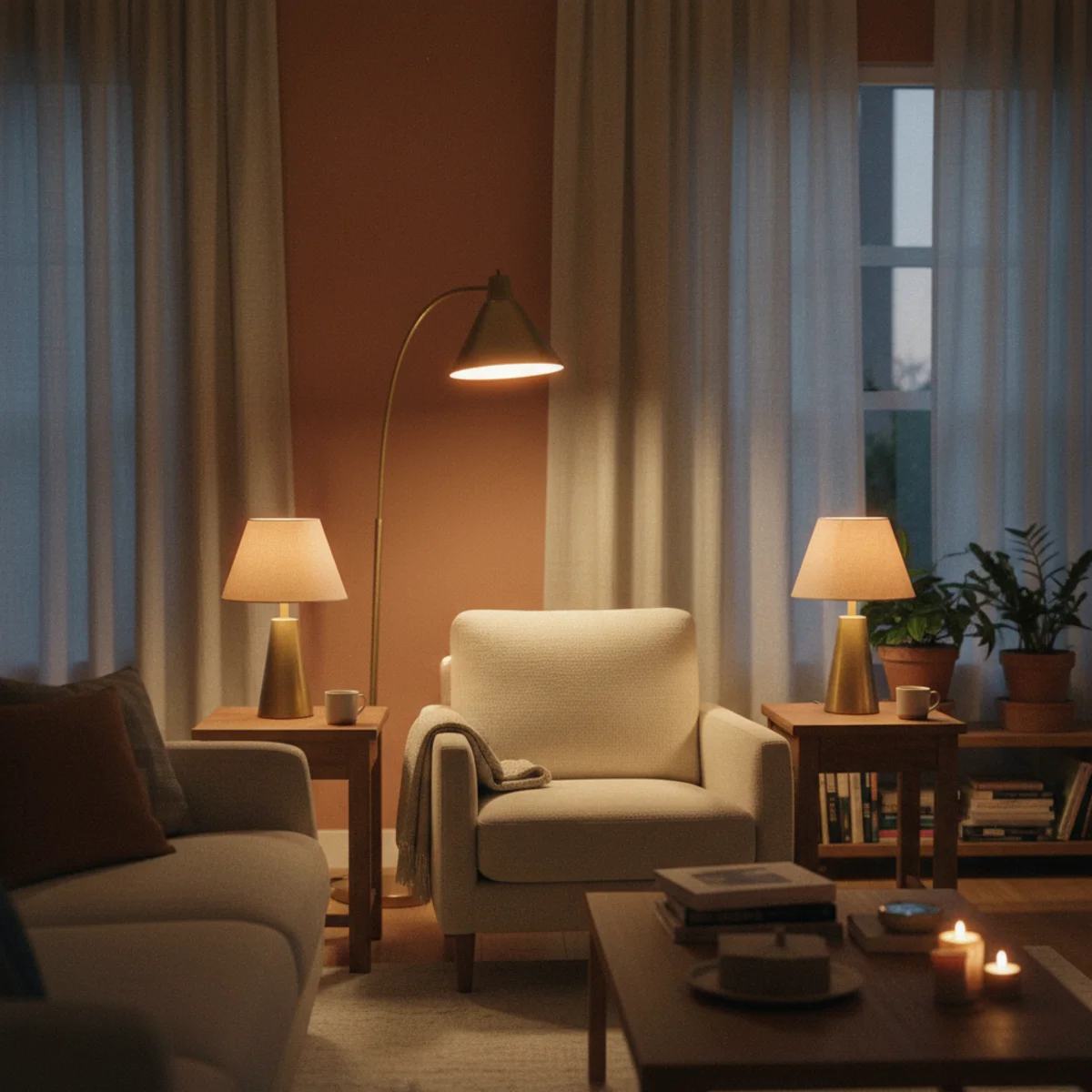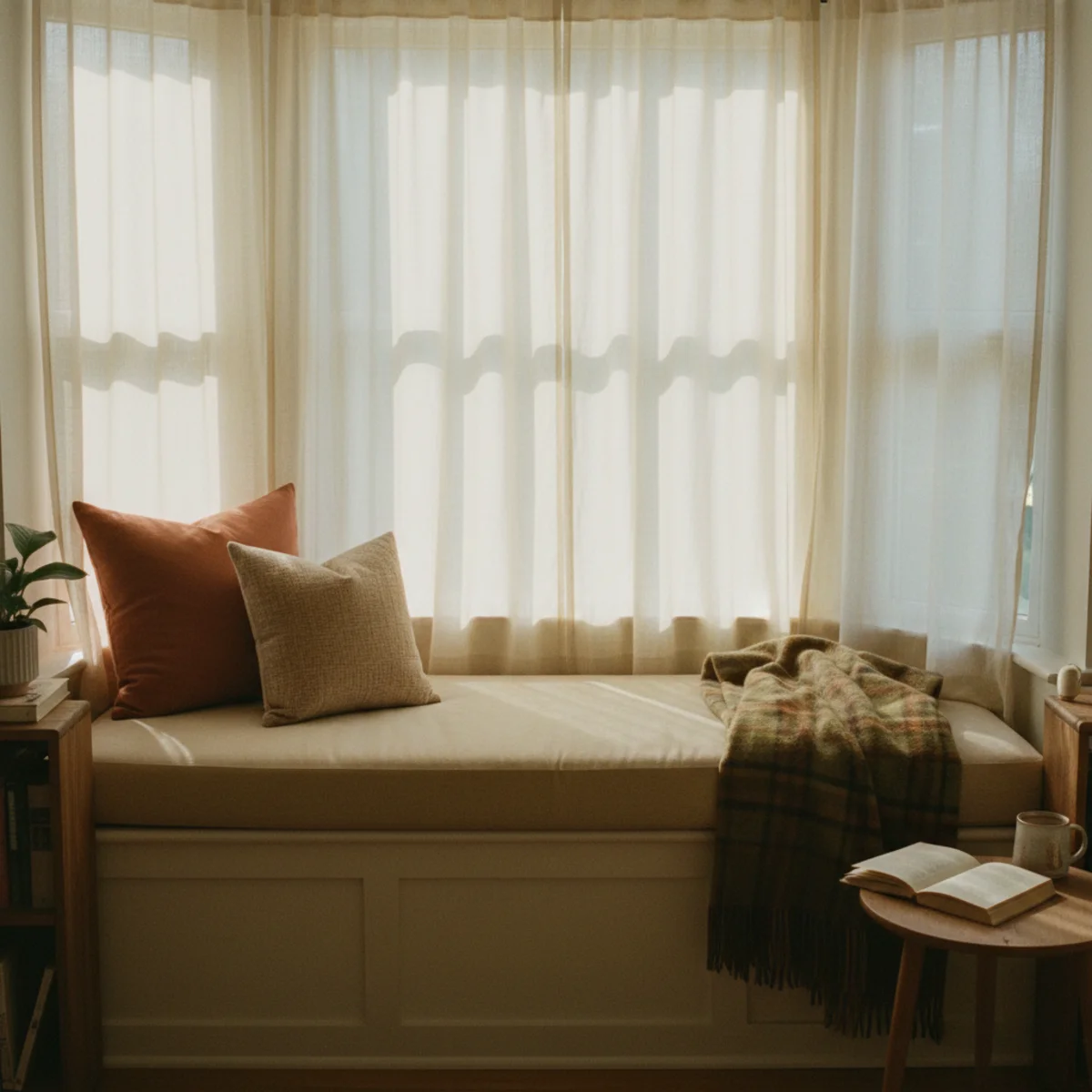
These twelve window seat principles are tested across actual window seat setups in real warm homes — bay window built-ins, deep windowsill conversions, freestanding bench arrangements, daybed-under-window setups, and humble deep windowsill setups. Each principle below names specific cushion specifications, pillow arrangements, throw positioning, storage solutions, lighting setups, and the smaller details (small side surface, soft rug underfoot, soft curtains, plants framing the view) that distinguish a genuinely used window nook from a styled one.
Most window seat failures come from under-cushioning (thin 2-inch foam that flattens immediately and becomes uncomfortable within 20 minutes) or over-decorating (so many pillows that there's nowhere to sit). The twelve principles below provide the actual discipline: deep supportive cushions that work for hours, pillow count that leaves sitting room, throw positioned for actual use, and the small practical additions that make the seat the first place household members choose for morning coffee, afternoon reading, or evening watching.
By the end of this guide, you'll know exactly which moves transform any window seat into the most-used spot in the house — the deep supportive cushion, the layered soft pillows, the within-reach throw, the built-in storage below, the faked-bench alternative, the deep-windowsill option, the small cup surface, the evening lighting, the soft curtains framing the view, the soft rug underfoot, the plants framing the view, and making the seat work for kids and pets.
WHAT'S INSIDE
- Why cushion depth (4-6 inches minimum) is the single most-important window seat decision
- The layered pillow strategy that leaves actual sitting room while providing support
- The within-reach throw that signals the seat is for use rather than display
- Evening lighting that transforms the window seat from daytime spot to night-time refuge
A window seat is the cheapest luxury in a house — it costs you a cushion and gives you the best light and view in the room.
— Cup of Jo home feature [citation needed — verify before publish]
What makes a good window seat?
A good window seat combines a comfortable, deep enough cushion, soft layering, and a spot to settle into beside natural light and a view. The bones can be a true built-in bench, a freestanding bench or daybed pushed against the window, or even a deep windowsill — what matters is that it's comfortable enough to actually sit in and positioned to catch the light.
The cushion is the make-or-break. A window seat with a thin, hard cushion looks lovely and never gets used; one with a deep, supportive cushion and a few soft pillows becomes the most-used perch in the house. Add a throw within reach, a small surface for a cup, and storage underneath if it's a bench, and a window becomes a room you climb into. Light and comfort do the work — the view is the bonus.
More in Cozy Corners you may love
See allWhy window seats are everywhere in 2026
The window seat became a saved-pin staple as people sought out small, light-filled spots to read, rest, and escape screens — Pinterest's window seat and reading-perch searches climb every year, toward cozy cushioned built-ins and faked daybed versions alike.
The honest appeal is that it makes the most of an asset every home already has: a window. A window seat turns the free light and view at a window into a destination, and it scales from a custom built-in to a bench-and-cushion fake. As the cozy-corner and slow-living movements grew, the window seat — the perch with the best natural light in the house — became one of the most-wanted small projects there is.
22 window seat ideas to copy
01Start With a Deep, Supportive Cushion
The foundational window seat decision is the cushion — and most window seats are under-cushioned with thin foam that flattens within a year. The right cushion is 4 to 6 inches deep, in high-density foam (2 lb density minimum) wrapped in batting, covered in washable fabric. A properly cushioned window seat is comfortable for 2 to 3 hours; an under-cushioned one is comfortable for 20 minutes.
Window seat cushion specifications: FOAM DEPTH — 4 to 6 inches minimum for comfortable extended sitting. Anything under 3 inches flattens quickly and produces discomfort within 20 to 30 minutes of continuous sitting. FOAM DENSITY — 2.0 lb per cubic foot minimum (ask specifically when ordering; most budget foam is 1.5 lb which flattens faster). Higher density (2.5 to 3.0 lb) lasts longer and maintains support better. FOAM TYPE — medium-firm is best for seating applications; soft foam compresses too readily and medium-firm provides both initial softness and sustained support. BATTING WRAP — wrap foam in 1-2 layers of polyester batting before covering. The batting softens the foam's firm edges and adds the slightly-pillowy surface feel that pure foam lacks. COVER FABRIC — machine-washable fabric is essential for a seat that gets daily use. Outdoor-grade Sunbrella fabric (indoor use) at $15-30 per yard is highly durable. Washed linen is beautiful but difficult to keep clean at a frequently-used window seat. Canvas duck or cotton-poly blend at $8-15 per yard is practical middle ground. SIZING — measure the window seat platform precisely, subtract 1/4 inch on each dimension for slight breathing room. SOURCING — ship foam cut-to-size from Foambymail.com or Foamorder.com at $30-80 per cushion. Buy batting and cover fabric at fabric stores or online. Professional reupholstery service at $80-200 per cushion if DIY sewing is not preferred.
AFFILIATE SLOTCUSHION4-6 inch foam at 2.0+ lb density wrapped in batting, covered in washable canvas or Sunbrella; from Foambymail.com at $30-80Add affiliate URL when configuredWhy it works
Because a window seat that's uncomfortable after 20 minutes gets used for looking at and photographing — the household places the right pillows and throws on it but nobody actually sits there. A window seat comfortable for 2 to 3 hours becomes the household's primary reading spot, morning coffee seat, and afternoon light-watching position. The cushion is the infrastructure decision that determines whether the architectural nook functions as intended. Under-cushioned window seats are extremely common in both new builds and renovations because builders use the minimum viable foam; replacing with proper foam transforms the seat's daily use pattern.
Pro tip — Order a custom-cut foam sample ($5-10 per small sample from foam vendors) in the density and firmness you're considering BEFORE ordering the full cushion — sit on the sample on a firm surface to test the feel. The sample test prevents ordering a full expensive cushion in the wrong density.
5-inch high-density foam cushion in washable canvas — the infrastructure that makes the window seat actually used. See also: reading-nook-ideas
02Layer Soft Pillows
The window seat pillow arrangement should leave at least 50% of the cushion surface clear for actual sitting. Two to four pillows propped against the window frame or wall provide back support without crowding the sitting area. Pillows in varied sizes (large lumbar, medium square, small accent) in the room's warm palette family create the layered look without eliminating the usable space.
Window seat pillow arrangement: COUNT — 2 to 4 pillows maximum for most window seat sizes. More than 4 requires removing pillows before sitting, which creates friction that reduces daily use. SIZES — one large lumbar pillow (12x24 or 14x36 inches) provides the best back support for reading or sitting upright. One or two medium square pillows (18x18 inches) for side support or additional propping. One small accent pillow (12x12 or 14x14 inches) for visual layering without significant bulk. ARRANGEMENT — place lumbar pillow against the window frame or wall (back support position), medium squares flanking it or to the sides, small accent in front. Slightly offset (not perfectly centered) positions read more casual. FABRIC CHOICES — linen covers ($15-40 each from Quince or Etsy), washed cotton ($10-25), chunky knit ($20-60), boucle ($25-80). Mix smooth and nubby textures (per textile layering rule). FILLING — down alternative inserts for washable use, sized 2 inches larger than the cover for full plump look (18x18 cover takes 20x20 insert). PALETTE — within the room's warm color family, slightly varied within the palette (cream lumbar, oat squares, soft terracotta accent) rather than perfectly matched.
AFFILIATE SLOTPILLOWS2-4 pillows maximum: one lumbar (12x24 or 14x36) + 1-2 medium squares (18x18) + optional small accent (12x12); 50% seat surface clearAdd affiliate URL when configuredWhy it works
Because window seats with more than 4 to 5 pillows require clearing before sitting — and that small friction prevents the seat from being spontaneously used. The household member who wants to sit for 10 minutes with morning coffee won't remove 7 pillows and replace them; they'll sit somewhere else. The pillow count that enables spontaneous use is 2 to 4; at that count, you can sit immediately without clearing. Every additional pillow past 4 reduces spontaneous-use frequency. The styling goal is a seat that looks inviting AND is immediately usable.
Pro tip — Use flat back pillows (not round-puffy inserts) for window seat application — flat-filled pillows with 95/5 feather-down fill or flat polyester fill sit against the wall better and provide back support better than round-puffy pillows that push you forward on the seat. The flatter pillow profile also takes less visual space while providing more actual back support.
Lumbar and two square pillows propped against frame — back support without eliminating sitting room. See also: throw-blanket-layering
03Add a Throw Within Reach
A throw draped within reach — over one end of the cushion, folded loosely on the seat beside the pillows, or hanging over the window seat's edge — signals that the seat is for actual use rather than display. The positioned throw makes curling up with it feel immediate rather than requiring fetching from another room. Cost: $40-150 for a quality throw; impact: significant use-frequency signal.
Window seat throw positioning: DRAPED OVER CUSHION END — fold the throw once lengthwise, drape it hanging off one end of the window seat with 50% on the seat and 50% hanging below. The hanging portion is visible and tactilely reachable from a seated position. FOLDED BESIDE PILLOWS — fold throw 3 times into approximately 12x24 inch folded form, place to one side of the pillow arrangement on the clear sitting area. Reachable immediately without moving pillows. OVER WINDOW SEAT EDGE — fold throw and hang over the front edge of the window seat, similar to draped-over-cushion-end but positioned at the front. THROW TYPE — chunky knit wool for autumn-winter window seat ($60-150), lightweight cotton waffle for spring-summer ($40-80), medium-weight merino for year-round ($80-150). COLOR — within the window seat's warm palette. POSITIONING PRINCIPLE — the throw should be within arm's reach from the primary seated position without requiring standing. The seated-arm-reach test: sit in the window seat, extend your arm, and confirm you can touch the throw without shifting position significantly.
AFFILIATE SLOTTEXTILEThrow draped over seat end or folded at seat side within seated arm's reach; chunky knit for winter, cotton waffle for summerAdd affiliate URL when configuredWhy it works
Because the micro-friction of fetching a throw from another room or a storage basket prevents the casual wrap-up that makes window seats feel intimate and cozy rather than merely comfortable. The same household that uses the window seat for hours daily with the throw present will use it for 20-minute visits without the throw nearby. The throw's accessibility is an invitation signal — 'you can wrap up right now, without any extra steps.' That invitation is what distinguishes genuinely used cozy corners from styled ones.
Pro tip — Rotate the throw seasonally — heavier chunky knit in autumn and winter when wrap-up warmth matters, lighter linen or cotton waffle in spring and summer. The seasonal swap also gives you an excuse to update the window seat's palette and texture across the year without other changes.
Chunky knit throw draped over seat end within arm's reach — immediate wrap-up invitation. See also: best-wool-throws
04Build In Storage Below
Built-in storage beneath a window seat (hinged lid platform revealing storage box, or drawers on the front face) transforms the nook from a seating element into a functional household zone. Best use for window seat storage: extra throws and blankets, out-of-season items, children's toys in a children's room, books in a reading nook context, seasonal decor rotation.
Window seat storage options: HINGED LID STORAGE — the most common approach for built-in window seats. The entire seat cushion platform lifts on piano hinge revealing a storage box below. BUILD — construct the seat platform from 3/4-inch plywood with piano hinge along back edge (at wall side), and a support chain or rod to hold lid open during access. Interior of box lined with thin foam or fabric for clean storage. DRAWER STORAGE — 2 to 3 drawers on the front face of the window seat platform, each 18 to 24 inches wide. More accessible than hinged lid for daily-use items. Requires drawer slide hardware ($10-30 per pair) and drawer front panels. CUBBY STORAGE — open face cubbies on the front face (no doors, open access). Best for books and frequently-used items; less suitable for things that shouldn't be visible. FREESTANDING STORAGE BENCHES — Otto storage benches from IKEA ($150-300) or similar storage ottomans with lids for non-built-in window seat setups. STORAGE CONTENTS — the storage should contain things that actually get used from this location: extra throws for the window seat itself, books for reading in the nook, children's toys if a child's room window seat, seasonal items that rotate through the space. AVOID storing items unrelated to the nook's use — window seat storage that becomes a general miscellaneous box loses its functional value.
AFFILIATE SLOTSTORAGEHinged-lid platform storage OR drawers on front face for extra throws, books, seasonal items; built-in or IKEA storage benchAdd affiliate URL when configuredWhy it works
Because storage built into the seat makes the nook genuinely useful to the household on multiple levels rather than purely aesthetic. A window seat with storage for throws and books integrates the seating and the storage that supports seating into one element — everything needed for the cozy reading session is right there in the nook. The integration also makes the nook more likely to be used spontaneously: all the accessories are already there, nothing needs to be retrieved.
Pro tip — Line the interior of hinged-lid window seat storage with cedar or add cedar sachets — window seat storage often holds extra textiles (throws, blankets, cushion covers) that benefit from cedar's moth-deterrent properties. Cedar planks for lining at $10-20 from hardware stores; cedar sachets at $5-15 for a set.
Hinged-lid storage open showing extra throws — functional integration making the nook self-contained. See also: reading-nook-ideas
05Fake It With a Bench or Daybed
No built-in window seat? A freestanding bench, storage ottoman, or narrow daybed positioned under a window creates most of the window seat effect at a fraction of the cost and zero construction. Best faux options: IKEA HEMNES storage bench ($199), a narrow upholstered bench ($200-600), or a small daybed positioned to fit the window width.
Faux window seat options: IKEA HEMNES DAYBED — narrow 80x200cm daybed that fits under most windows, converts to full bed for guest use ($499-600 with mattress). Position under window with a cushion added on top if using as window seat rather than sleeping surface. STORAGE BENCH — IKEA HEMNES storage bench ($199) at 130x50cm with hinged lid storage, positioned under a wide window. Add a custom or purchased bench cushion (4-6 inch thick) in matching fabric on top. UPHOLSTERED BENCH — narrow upholstered bench from CB2, West Elm, or similar at $300-700. No storage, but aesthetically clean under windows. WINDOW SEAT CUSHION ON EXISTING WINDOWSILL — if the windowsill is 18 inches or deeper, a custom-cut cushion placed on the sill itself creates a seat using existing architecture. FLOATING SHELF AS SEAT BASE — for deep bay windows, a floating shelf system at seat height (18-20 inches above floor) with appropriate depth (18-22 inches) can create a built-in appearance from standard materials. STYLING TRICK — add the same pillow arrangement (2-3 pillows) and throw (draped nearby) as a built-in window seat would have, and the freestanding piece reads as intentional window seat rather than as furniture-near-window.
AFFILIATE SLOTFURNITUREIKEA HEMNES storage bench + cushion ($199+$40), OR narrow upholstered bench ($300-700), OR IKEA HEMNES daybed ($499) under windowAdd affiliate URL when configuredWhy it works
Because the positioning-under-window creates the view-with-shelter experience that makes window seats specifically appealing — the person seated is framed by the window, has the view in front and the room behind, which creates the nestled-within-looking-out feeling that defines the window seat experience. A bench positioned elsewhere in the room lacks this framing; under the window it has it. The architecture matters much less than the position relative to the window.
Pro tip — Add a custom cushion to the IKEA HEMNES storage bench before styling as window seat — the standard lid surface is flat wood, and adding a 3-4 inch cushion custom-cut to the lid dimensions (available from Foambymail.com) transforms it from storage bench to comfortable window seat. The cushion costs $30-60 and makes the bench usable for hours.
HEMNES storage bench with cushion under window — faux window seat at fraction of built-in cost. See also: small-living-room-ideas
06Use a Deep Windowsill
A windowsill 14 inches or deeper can function as a small window seat with minimal addition — just a cushion cut to fit the sill dimensions (4-6 inches deep foam in fabric cover). Deep windowsills in older homes, bay windows, or window bump-outs are often underused as sitting surfaces. The sill-as-seat requires no construction and costs $30-80 for the cushion.
Deep windowsill seat specifications: MINIMUM SILL DEPTH — 12 to 14 inches for a marginal seat (legs dangle, fine for short durations), 16 to 22 inches for a comfortable seat (legs extend forward or fold in front). CUSHION SIZING — custom-cut foam to exact sill dimensions (width x depth) in 4-6 inch thickness. Order from Foambymail.com or Foamorder.com at $25-60. Cover in machine-washable fabric. WEIGHT LIMIT — most standard windowsills are not structurally designed for seated human weight. Test before using by pressing down firmly on the sill. Built-in stone or thick wood sills handle weight well. Thin drywall-and-trim sills may not. Add a supporting bracket or small side table as weight brace if uncertain. PILLOW ADDITION — one or two small pillows (12x12 or 14x14) for back support against the window frame sides. Use the same pillow positioning as full window seat — propped against the frame on either side. SAFETY — ensure the window is locked when using the sill as a seat. For high windowsills (above floor level significantly), add a small step stool beside for access. For children's rooms, specific window fall-protection measures (window guards per local code) are required before allowing children to sit at windowsill height.
AFFILIATE SLOTOPTION14+ inch deep windowsill + 4-6 inch custom foam cushion ($25-60) + 1-2 small pillows; structural test before useAdd affiliate URL when configuredWhy it works
Because the window-view-at-close-range is the most appealing aspect of window seat use — and a deep windowsill puts the viewer right at the window glass, as close to the view and natural light as possible. Standard window seats built a foot from the window create slight distance; the windowsill seat eliminates that distance. The connection to the outside (seasons changing, weather moving, garden visible, neighborhood life) is more immediate from the sill seat than from any other position. The closeness is the point.
Pro tip — Sand and refinish the deep windowsill surface before adding the cushion — older home windowsills often have multiple layers of paint, scratches, and wear that become visible when the windowsill is elevated to display position. A light sand (120-grit) and two coats of chalk paint or wood stain transforms the sill into a proper seat base.
Deep windowsill with custom cushion — closest-to-glass seat bringing the view as near as possible. See also: small-apartment-decorating-ideas
07Add a Small Surface for a Cup
The most-practical window seat addition: a small side table, folding tray, or wall-mounted shelf within arm's reach providing a surface for a coffee mug, water glass, or small book. Without this surface, the window seat requires two hands (one holding the drink) throughout the sitting session, limiting the comfortable reading and lounging positions. Cost: $15 to $80.
Small window seat surface options: SMALL SIDE TABLE — wooden end table 16-22 inches tall, 12-16 inches wide (small enough to fit in the window bay or beside the seat without crowding). Position at one end of the window seat within seated arm's reach. Vintage wooden side tables at $15-50 from estate sales, IKEA KNARREVIK at $10 (small bedside table that works perfectly), West Elm or CB2 small accent tables at $80-200. FOLD-DOWN WALL BRACKET — a small fold-down shelf bracket (10x12 inches when open) mounted at seat-height on the wall beside the window seat. Open for use, folds flat against wall when not in use. Hardware store brackets at $15-30. TRAY ON CUSHION — a small decorative tray (8x10 inches, low profile) placed on the seat beside the sitting position. The tray provides a slightly-more-stable surface than the cushion itself. $10-30 from vintage or Marketplace. BUILT-IN NARROW SHELF — a 6 to 8-inch deep floating shelf mounted at seat-arm height (24-28 inches from floor) at one or both ends of the window seat. Holds cup plus 1-2 books. $20-40 in materials. THE SINGLE MOST-OVERLOOKED ADDITION — households that install window seats rarely install the adjacent surface and then wonder why the seat doesn't get more casual-use. The cup surface is the difference between 'must sit formally' and 'can curl up.'
AFFILIATE SLOTFUNCTIONALSmall side table 16-22 inches tall at seat end, OR fold-down wall bracket, OR decorative tray on seat surface; within seated arm's reachAdd affiliate URL when configuredWhy it works
Because hands-free seating enables the most-comfortable and long-duration positions — reading with both hands on the book, lying on side and looking out the window, working on a laptop with both hands available. Every position that requires one hand to hold a drink is a constrained position; access to a surface that holds the drink unlocks the full range of comfortable positions that make window seats genuinely cozy. The surface also signals 'this seat supports extended staying' which is its own use-frequency invitation.
Pro tip — Use the IKEA KNARREVIK small side table ($10 in white or black) as the window seat surface — at 55cm tall and 28cm wide, it fits precisely beside most window seat ends without crowding the nook. The minimal design disappears into the space while providing the functional surface. Sand and oil with Danish oil for a warmer appearance if needed.
Small side table at seat end with mug and books — the hands-free surface unlocking comfortable long-duration positions. See also: cozy-coffee-corner
08Light It for Evening
A window seat without evening lighting is only a daytime spot — the natural light that makes it appealing by day disappears at dusk, leaving an under-lit dark corner. A small lamp (table lamp on the adjacent side table, clip-on lamp on the window frame, or sconce on the wall beside) at 2700K transforms the window seat into an evening refuge for reading, tea, or watching rain.
Window seat evening lighting options: SMALL TABLE LAMP on the adjacent side table — 14-18 inches tall, ceramic or wood base, linen drum shade at 2700K LED. Provides focused warm reading light at the right position. $40-100 retail, $15-40 thrifted vintage. CLIP-ON LAMP on window frame or nearby shelf — clamps to the frame or shelf edge, provides directional adjustable light. $15-40 from Amazon. WALL SCONCE mounted beside the window seat — fixed position warm glow beside the seat, hardwired or plug-in. $40-200 for a quality plug-in sconce (no electrical work required for plug-in versions). FLOOR LAMP positioned behind or beside the seat — 50-60 inches tall, positioned at the seat's back corner. $60-300. SMART PLUG scheduling — any lamp on a smart plug ($10-25) can be set to turn on automatically at sunset for automated dusk-to-evening transition. CANDLE ALTERNATIVE — a small unscented beeswax tealight in glass holder on the adjacent surface ($5-10 for box of 12 from artisan maker) provides intimate evening light for the window seat specifically during evenings when atmospheric light is preferred over reading light.
AFFILIATE SLOTLIGHTINGSmall table lamp (14-18 inches) on side table, OR clip-on lamp on window frame, OR plug-in sconce beside seat at 2700KAdd affiliate URL when configuredWhy it works
Because most household leisure hours happen in the evening — 6pm to 10pm is when households actually sit down for extended reading, quiet phone scrolling, tea, or simply sitting. Without evening lighting, the window seat is limited to daytime use (roughly 7am to 5pm in winter, longer in summer); with evening lighting, the seat's useful hours nearly double. The window seat that's a morning coffee spot AND an evening reading spot is used far more than a window seat available only during daylight hours.
Pro tip — Use a smart plug to schedule the window seat lamp to turn on at local sunset time automatically — this creates the warm pool of light at the window seat at exactly the moment it's most needed (transition from daylight to evening), and does so without requiring any action. The automated warmth waiting at the seat every evening becomes part of the household's evening rhythm.
Small ceramic lamp at 2700K as outside darkens — the evening lighting that extends window seat use past daylight. See also: best-lamps-warm-light
09Hang Soft Curtains Around It
Sheer or semi-sheer linen curtains hung to frame the window seat (panel on each side of the bay or window opening, extending from ceiling or near-ceiling to floor) create the sense of sheltered enclosure that makes window nooks feel especially cozy. The curtains can be drawn at night for privacy or to create a cocoon-like effect, then opened during the day for maximum light.
Window seat curtain specifications: FABRIC — sheer linen in cream or natural tone ($30-80 per panel from Quince, H&M Home, or IKEA LILL) for maximum light + some privacy. OR semi-sheer linen ($50-120 per panel) for moderate privacy during day. OR heavier linen or velvet for full evening cocoon effect ($80-200 per panel). HANGING HEIGHT — as high as possible (ceiling height or 4-8 inches below ceiling), extending to floor. The high-hang + floor-length creates the most architectural framing effect. CURTAIN ROD — simple wooden rod ($15-40) or minimal brass rod ($30-80). PLACEMENT — one panel on each side of the window opening or bay, hung so they frame the window seat without blocking the view when open. IF IN A BAY — hang rods on the inner sides of the bay, so curtains draw inward to create full enclosure when desired. DRAWING PRACTICE — curtains drawn to create cocoon (especially on rainy evenings or cold winter nights) transform the window seat from open nook to private shelter. Drawing the curtains is its own cozy ritual. LIGHT BEHAVIOR — sheer linen allows warm diffused daylight through (eliminating the harsh direct-sun problem in south-facing windows) while maintaining the view.
AFFILIATE SLOTATMOSPHERESheer or semi-sheer linen panels hung ceiling-to-floor framing the window seat; panels draw for evening cocoon, open during day for lightAdd affiliate URL when configuredWhy it works
Because the enclosed nook feeling — the sense of being sheltered within while looking out — is one of the most-specific cozy experiences that window seats provide. Open window seats (no curtains) provide the view and the light but not the shelter; curtained window seats provide all three. The curtains create the psychological experience of a small enclosed space within the larger room (similar to the cozy cave that makes reading tents popular with children) which specifically enhances the window seat's intimate character. Even when the curtains are open, their presence as framing elements gives the window seat more visual identity as a distinct zone.
Pro tip — Use ceiling-mounted curtain track (not standard wall-mounted rod) for bay window seat curtains — the ceiling track runs along the ceiling plane and allows curtains to extend in curved or angled arrangements that follow the bay's geometry. Standard straight rods don't accommodate bay angles well. Ceiling tracks at $20-60 per section from KVARTAL at IKEA.
Sheer linen panels ceiling-to-floor framing the window seat — the shelter that transforms nook into private refuge. See also: bedroom-cozy-ideas
10Add a Small Rug or Sheepskin
A small rug or sheepskin placed on the floor directly in front of the window seat (where feet land when seated) completes the sensory experience with warm underfoot texture. The rug also visually defines the window seat zone as a distinct area within the larger room. Cost: $30-200 for a small rug, $60-200 for a real sheepskin.
Window seat underfoot options: SMALL WOOL RUG — 2x3 or 3x3 feet, placed in front of the window seat. Vintage Persian or Turkish wool rugs at $80-300 (or $30-100 from Rugs USA budget section). REAL SHEEPSKIN — draped beside the window seat or flat on the floor in front. Single sheepskin at $60-200 for genuine shearling (IKEA RENS at $30-40 for synthetic alternative). SMALL JUTE OR NATURAL FIBER — 2x3 feet, $30-80, natural material that complements linen and cotton textile palette. SMALL HANDWOVEN RUG from Etsy artisans at $80-300 for authentic natural textile. POSITIONING — placed so feet land on the rug when seated in the window seat. Feet hanging from a high window seat should reach the rug with slight extension; feet on the floor from lower seats should step directly onto the rug. DEFINING THE ZONE — the rug's placement at the window seat base is also a visual territorial marker: 'this zone is the window nook zone.' The floor definition helps the seat read as a distinct space rather than as furniture positioned near a wall.
AFFILIATE SLOTFLOORSmall wool rug 2x3 or 3x3, real sheepskin, small jute, or handwoven rug positioned where feet land from seated window seat positionAdd affiliate URL when configuredWhy it works
Because the window seat experience is multisensory — sight (the view, the natural light), warmth (cushion, throw), and touch (cushion fabric, pillow covers, throw texture) — and the underfoot warmth completes the touch dimension. Cold floor under bare or sock-footed feet is one of the most-common reasons households don't use their window seats for extended sitting, especially in winter or on hard-surface floors. The warm rug removes this barrier. The visual zone-defining function also matters for smaller rooms where a defined floor area helps the window seat register as its own destination rather than as a piece of furniture.
Pro tip — Choose a rug slightly smaller than you think you need for window seat use — the rug should define the nook without extending significantly into the wider room. A 2x3 foot rug is often better than a 3x5 for a compact window seat, where the 3x5 extends the definition too far into the room.
Sheepskin at the seat's foot zone — warm underfoot completing the sensory experience. See also: bedroom-cozy-ideas
11Frame the View With Plants
One or two plants positioned to frame the window seat (on the floor beside the seat, on the adjacent surface, or on a small shelf within the bay) create the indoor-outdoor connection that makes window seat views specifically cozy. The plants in the foreground against the outdoor view blur the inside-outside boundary in the same way that cottage interiors do.
Window seat plant framing: FLOOR PLANTS BESIDE THE SEAT — one medium plant (12-18 inch pot) on the floor at each side of the window seat, framing the nook visually. Snake plant, ZZ plant, olive tree, large fiddle-leaf fig, or similar architectural plant at $40-150 depending on size. SMALL PLANTS ON THE ADJACENT SURFACE — 2-3 small plants (4-6 inch pots) on the side table or adjacent shelf. Small pothos, small succulents, small cactus, herbs. HANGING PLANT ABOVE THE WINDOW — a single trailing plant (pothos, heartleaf philodendron) in a hanging planter at window height, trailing down beside the seat. $15-30 for plant + $15-40 for hanging planter. WINDOWSILL PLANTS — small succulents or herbs on the windowsill itself, integrated with the cushion position. Works only with wide windowsills (14+ inches) where the plants don't crowd the seat. PLANT SELECTION PRINCIPLE — choose plants that tolerate your specific window's light level. South-facing windows can support succulents and cacti; north-facing windows need pothos, snake plants, or ZZ plants. AVOID — large bushy plants that block the view (the view is the point; plants frame it, not block it).
AFFILIATE SLOTPLANTS1-2 medium floor plants flanking seat, OR hanging trailing plant above window, OR small plants on adjacent surface; select for actual window light levelAdd affiliate URL when configuredWhy it works
Because plants in the foreground soften the window-as-glass-barrier into window-as-living-threshold — the view through a plant-framed window reads as naturally abundant where a bare glass window reads as sharp boundary. The plants also add the indoor-outdoor connection (a living growing thing at the transition point) that cottagecore and warm-home aesthetics both value. Practically, the plants also soften harsh direct sun in south-facing windows (leaves filter rather than block light), improve air quality, and add the maintenance ritual of watering that connects the household to something living at the nook.
Pro tip — Use trailing pothos specifically for window seat plant framing — pothos tolerates a wide range of light levels (can survive in low-light north windows that would kill most plants), trails beautifully from hanging planters, and grows quickly enough to provide visible progress. Starter pothos from a friend's cutting costs $0; propagation from a 4-inch grocery store plant at $6 yields a significant hanging plant within one growing season.
Snake plants flanking the seat and trailing pothos above — plants blurring the inside-outside boundary. See also: cottagecore-decor
12Make It a Kid or Pet Spot
Window seats are inherently appealing to children and pets — the elevated position, the natural light, the view. Leaning into this by adding a waterproof or washable cover on the cushion, a pet blanket or dog bed, and a small toy basket or book bin converts the window seat into a shared household space rather than a precious-adult-only zone.
Kid and pet window seat adaptations: WASHABLE CUSHION COVER — essential for households with children or pets. Use Sunbrella fabric (outdoor-grade, stain and water resistant) OR slipcover approach (removable cover that machine washes). Sunbrella fabric at $15-30 per yard from fabric stores. Slipcover from cover-it-up service at $40-100 per cushion. WATERPROOF INNER COVER — add a waterproof zippered inner cover beneath the fabric cover for pets who might drool or children who might spill. $15-30 from bedding retailers. PET-SPECIFIC ADDITIONS — a small machine-washable pet blanket or thin dog bed on one end of the window seat ($20-60 from Frisco, Molly Mutt, or similar). This designated pet end allows the pet's use without the pet claiming the entire cushion. CHILDREN'S ADDITIONS — small book bin or toy basket positioned at the window seat base ($15-40), small step stool for access if the seat is high ($15-25), window seat used as reading corner with book display rather than library format. SAFETY NOTE for children — if the window seat is at height (bay window seat raised above floor level), ensure window safety measures (window stops limiting opening, window guards per local code) are in place before allowing children to use the seat. Windows at window seat height are at fall risk for young children. HOUSEHOLD BENEFIT — the shared human-animal or human-child zone makes the window seat into a genuine household gathering spot rather than an adults-only aesthetic element.
AFFILIATE SLOTPRACTICALWashable Sunbrella cover + waterproof inner cover + pet blanket at one end + small step stool; window safety measures for children's roomsAdd affiliate URL when configuredWhy it works
Because household members follow children and pets — the family dog curled in the window seat draws adults to sit nearby, which makes the window seat the natural household gathering location near the window. Children who read in the window nook make the nook feel inhabited and alive. The shared use makes the window seat feel like a lived-in part of the household rather than a styled element that nobody wants to disturb. The practical washable-cover adaptations make this shared use sustainable without constant anxiety about the cushion.
Pro tip — Choose a specific end of the window seat as the 'pet end' and train pets to that position — place the pet blanket consistently at that end, redirect the pet to that position when they choose a different spot. Over 2-4 weeks, most pets settle into the designated end, which preserves the opposite end as the primary human sitting position.
Washable cover, pet end with blanket, book bin — practical adaptations making the nook genuinely shared. See also: cozy-living-room-ideas
How to create a window seat step by step
Built-in or faked, the comfort rules are the same. Work in this order.
- 1Choose or build the base
Use a true built-in bench, a freestanding bench or daybed pushed to the window, or a deep cushioned sill. Pick by what your window allows.
- 2Add a deep cushion
Top it with a deep, supportive cushion — three to four inches of foam minimum. This is what makes the seat actually used.
- 3Layer pillows and a throw
Add a few backrest pillows in mixed textures and a throw within reach, so it's comfortable to lean into and settle down in.
- 4Finish for use
Add a small surface for a cup, a sconce for evening, soft curtains, and storage below if it's a bench. Now it's a room you climb into.
Quick tips
- Use a deep cushion — three to four inches of foam minimum; thin ones go unused.
- Fake the whole thing with a bench or daybed if you can't build in.
- Keep a throw on the seat so it's always there on a cool morning.
- Add a small surface or shelf for a cup to make the perch a lingering spot.
- Light it with a plug-in sconce for evening use.
- Use washable cushion covers if it'll be a kid or pet spot.
Window seats for different windows
The classic built-in bench across the bay, deeply cushioned, with storage below.
A freestanding bench or daybed pushed to the glass, cushioned and pillowed.
A cushioned older-home sill with a pillow — the simplest window seat there is.
Add a sconce, a throw, and a shelf of books; see our reading nook ideas.
A window seat is the cheapest luxury in a house — a cushion buys you the best light and view in the room.
Frequently asked questions
How do I make a window seat cozy?+
What thickness should a window seat cushion be?+
I don't have a built-in window seat — what can I do?+
What kind of plants work near a window seat?+
How do I add lighting to a window seat?+
What's the best way to use a window seat with kids or pets?+
A window seat is the cozy corner with the best amenity built in — free light and a view — and you don't need carpentry to get one. Push a bench or daybed to the window, top it with a genuinely deep cushion, and layer pillows and a throw. We'd spend on the cushion depth before anything else; a thin cushion makes a window seat that photographs well and never gets used, while a deep one makes the perch the whole house fights over. A cushion is a small price for the best seat in the room.