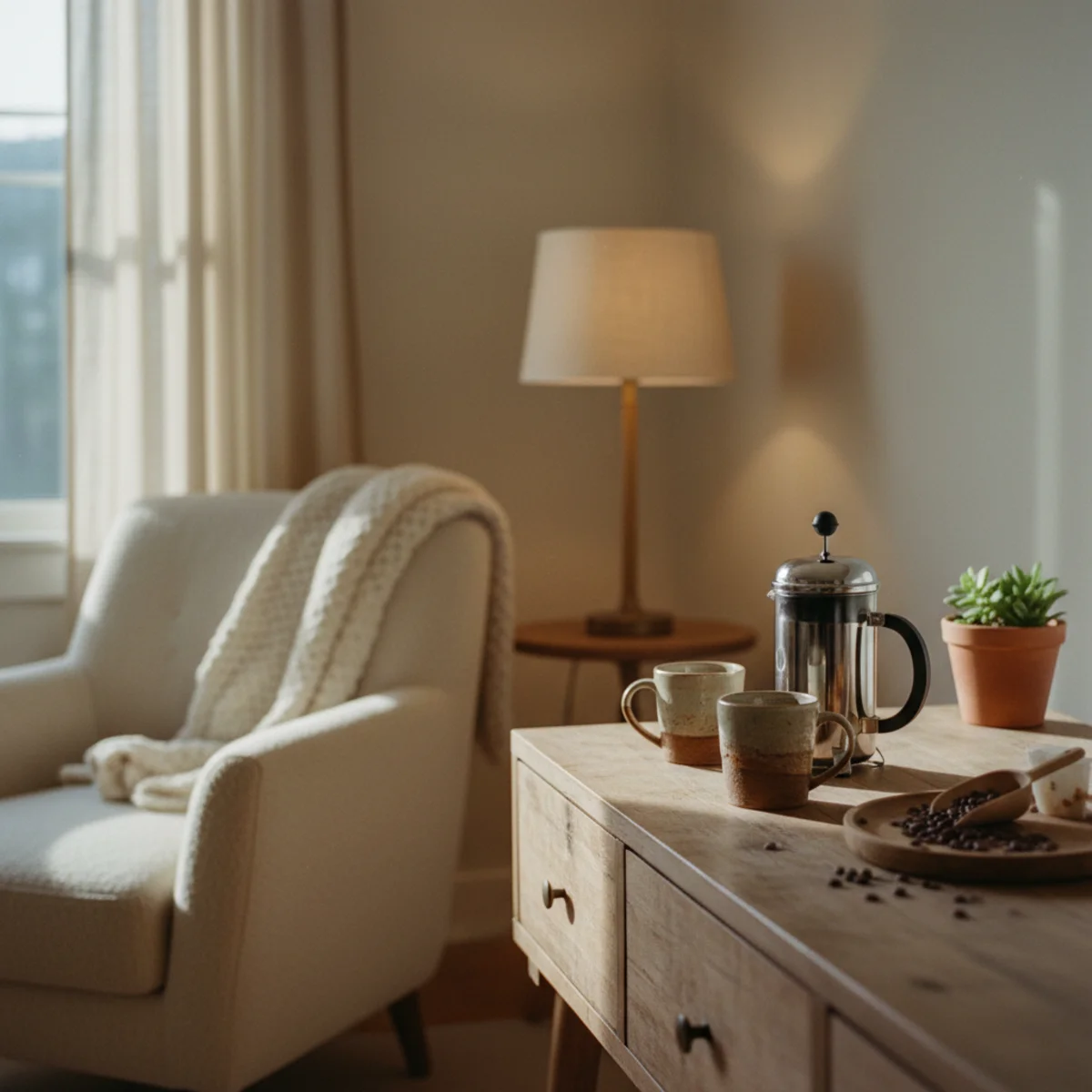
These ten cozy coffee corner principles are tested across actual morning coffee rituals in real warm homes — corners of kitchens, dedicated nooks, transformed credenzas in dining rooms, cart setups in studios and small apartments. Each move below names specific furniture decisions (the chair, the cart or credenza), specific styling rules (the throw drape, the hung mugs, the small plant), specific lighting and placement principles (the warm lamp at low height, the morning light positioning), and the small details that distinguish ritual zones from accidental accumulation. The goal is corners that actively support the morning coffee ritual rather than passively display coffee-related objects.
Most coffee corner failures come from prioritizing display over function — fancy espresso machines on display surfaces that nobody sits beside, beautiful mugs hung where they can't be reached during groggy mornings, dedicated 'coffee station' setups in zones the household doesn't naturally use during morning routine. The fix is the opposite: design the corner around the actual ritual (where you sit, what you reach, what you see) and let the styling support the ritual rather than override it. The cozy coffee corner is functional first and styled second.
By the end of this guide, you'll know exactly which moves transform any household corner into the active morning coffee ritual zone — the chair you'd actually sit in, the throw drape, the warm low lamp, the credenza or cart with working parts, the hung mugs, the small plant, the styling with working pieces, the leaned small print, the morning light positioning, and the soft rug underfoot.
WHAT'S INSIDE
- Why the chair you'd actually sit in matters more than any coffee equipment in the corner
- The warm lamp at low height that transforms early-morning coffee atmosphere
- The credenza or cart with the working coffee parts — function over display
- The morning light positioning rule that ties the corner to the actual ritual timing
The best small corners give you a reason to pause. A coffee nook with a seat turns a routine into a ritual.
— Cup of Jo home feature [citation needed — verify before publish]
What makes a cozy coffee corner?
A cozy coffee corner pairs a working coffee setup with a place to sit and a little warmth — a chair or stool, a soft light, somewhere to set the cup down. It's distinct from a pure coffee bar, which is about efficient brewing; the corner adds the pause, the lingering, the reason to make the cup slowly.
The essentials are a surface for the gear, a comfortable seat within reach, and warm light at a low height. Layer in a throw on the chair, a small plant, and a personal mug, and a corner of the kitchen or living room becomes the spot you head to first thing. The working parts still do double duty as styling — but the chair is what turns the station into a nook.
More in Cozy Corners you may love
See allWhy cozy coffee corners are everywhere in 2026
Home coffee culture kept growing, and the slow-morning movement turned the coffee corner from a utility zone into a small daily ritual space. Pinterest's cozy coffee corner and coffee nook searches are among the platform's biggest home terms, and the look has shifted toward warm wood, a comfortable seat, and a styled-but-used aesthetic.
It's also the rare high-impact, low-cost project. A thrifted credenza, a chair you already own, a lamp, and a throw turn a dead corner into the spot you look forward to every morning. The slow-living thread frames it well — a coffee corner is permission to start the day with a pause instead of a rush.
20 cozy coffee corner ideas
01Add a Chair You'd Actually Sit In
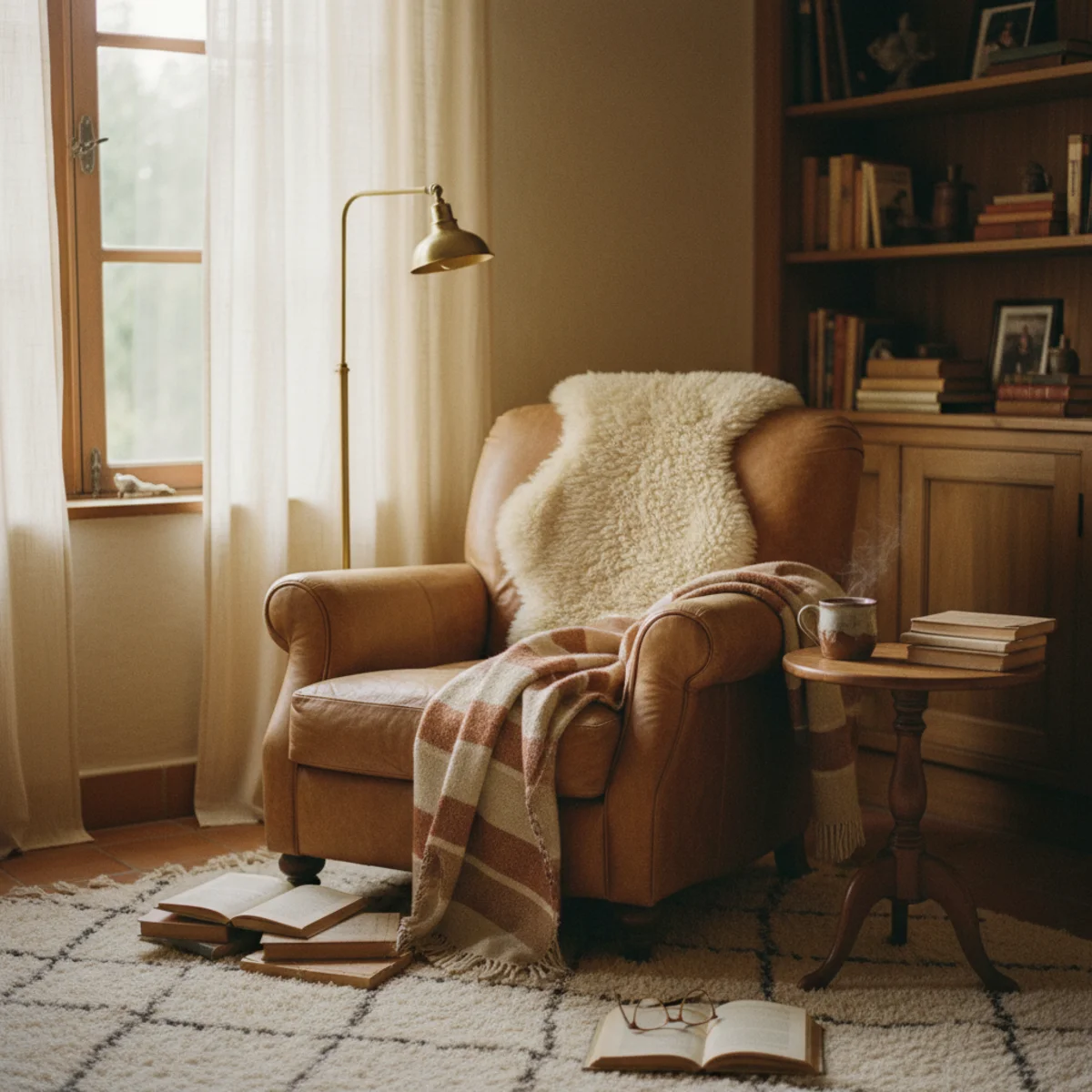
The single most-important coffee corner element is a comfortable chair — not a styled chair, not a display piece, but a chair you'd genuinely want to sit in for 20-30 minutes with morning coffee. The chair determines whether the corner becomes the actual morning ritual zone or remains a decorative coffee display that the household walks past during real mornings.
Comfortable chair specifications: SIZE — 30 to 38 inches wide, deep enough seat (18-22 inches deep) for relaxed sitting with feet up. Skip narrow accent chairs that look pretty but don't accommodate actual sitting. UPHOLSTERY — warm fabric (linen, washed cotton, boucle, worn leather) rather than cool synthetic. Best options: VINTAGE WORN LEATHER CLUB CHAIR ($200-600 from Marketplace, estate sales, antique stores), VINTAGE WICKER OR RATTAN CHAIR with cushion ($100-300 vintage), LINEN-UPHOLSTERED ACCENT CHAIR ($400-1,200 new from West Elm, Article, CB2), BOUCLE CHAIR ($300-1,000), CONTEMPORARY LOUNGE CHAIR (Eames-inspired, IKEA POÄNG at $129 budget option). POSITION the chair angled 15-30 degrees toward the coffee preparation surface (credenza, cart, kitchen counter) so you can reach for coffee or mug without standing. Or angled toward the window if morning light positioning rule applies (item 9). Include a small side table within arm's reach (16-22 inches tall, 14-18 inches across) for placing the coffee mug while reading or scrolling.
AFFILIATE SLOTFURNITUREComfortable chair 30-38 inches wide with 18-22 inch deep seat: vintage leather, wicker, linen-upholstered, or boucleAdd affiliate URL when configuredWhy it works
Because the corner becomes the actual morning ritual zone only if you genuinely want to sit there — and the chair is the primary determinant of whether you sit. Beautiful styled corners with uncomfortable chairs get walked past during real groggy mornings in favor of the sofa or kitchen counter. The corner has to win the morning-routine choice; the comfortable chair is the deciding factor. The same household with the same coffee equipment in the same corner produces dramatically different rituals based on whether the chair is comfortable enough to actually use.
Pro tip — Sit in the chair for 20 minutes BEFORE buying it (in the showroom or seller's home) to test actual comfort — short test-sits favor pretty chairs over comfortable ones, but the chair's actual job is supporting 20-30 minute morning sits. Many chairs that look beautiful become uncomfortable within 10 minutes; you need to know before committing.
Vintage worn leather club chair angled toward window — the chair that wins the morning routine choice. See also: reading-nook-ideas
02Drape a Throw Over the Seat
A throw draped over the back of the chair or across the arm signals 'this chair is for cozy use' even when nobody is sitting in it. The throw also provides functional warmth for chilly mornings when wrapping up adds to the ritual. Cost: $40-150 for a quality wool or chunky knit throw; impact: significant visual cue + functional comfort.
Throw drape specifications: THROW SIZE 50x60 to 60x80 inches in wool, cashmere, alpaca, or chunky knit cotton ($40-200, see best-wool-throws for full sourcing). COLOR within the warm palette family of the room — cream, oat, terracotta, sage, deep rust. DRAPE POSTURE — over the chair back (50% hanging behind, 50% over seat) OR over one arm (50% hanging beside chair, 50% on seat). Skip neat folded rectangles on the seat itself (per drape-don't-fold rule from textile layering). The slightly-tousled drape signals warm collected and active-use posture. ALTERNATIVES — chunky knit throw for maximum visual texture, soft cashmere or alpaca for sensory luxury, real Pendleton wool for heritage character. AVOID — acrylic throws (synthetic plastic feel), bright colors that fight warm palette, perfectly folded display throws. The throw should look like it was just used by someone wrapping up with coffee, or is about to be used. Functionally the throw matters during cold mornings (especially fall and winter) when the wrap-up adds genuine physical comfort to the ritual.
AFFILIATE SLOTTEXTILEThrow 50x60 to 60x80 in wool, cashmere, alpaca, or chunky knit draped over chair back or arm; never folded on seatAdd affiliate URL when configuredWhy it works
Because the throw signals 'this corner supports the cozy ritual' even before someone sits down — the visual cue invites household members to actually use the corner during mornings. Without the throw, the corner reads as styled display; with the throw draped casually, the corner reads as 'someone uses this regularly for wrapping up.' The throw also serves the functional ritual during cold mornings when wrapping up while drinking coffee is part of the experience. The single textile makes the corner feel inhabited rather than staged.
Pro tip — Rotate the throw seasonally — chunky knit wool in fall and winter for visible warm abundance, lightweight cotton waffle or washed linen throw in spring and summer for breathable cooler-weather use. The seasonal rotation maintains visual layering year-round while functionally adapting to temperature.
Cream chunky knit throw draped over chair back — visual cue and functional ritual support. See also: best-wool-throws
03Warm Lamp at Low Height
Coffee corner lighting works best with one warm 2700K lamp at low height — 18 to 26 inches above the chair seat, providing reading light without harsh overhead glare. The low warm lamp transforms early-morning coffee atmosphere from harsh utility lighting to atmospheric ritual zone. Cost: $40 to $250 for a quality table or floor lamp.
Coffee corner lamp specifications: TABLE LAMP placed on side table beside chair — 22-26 inches tall with linen or paper drum shade and warm-toned base (ceramic, wood, brass, or hand-thrown pottery). At 2700K LED bulb. ($60-250 retail, $20-80 thrifted vintage). FLOOR LAMP behind or beside chair — 50-60 inches tall, similar warm shade and warm base. ($60-300 retail). SMALL DESK LAMP if space is tight — 14-18 inches tall placed on the side table itself. ($30-120). DIMMABLE switch or smart plug for variable morning intensity (some mornings want dim, others want brighter). NEVER USE OVERHEAD lighting during the morning coffee ritual — the harsh down-cast light fights the cozy atmosphere. The warm low lamp instead creates intimate atmospheric pool of light around the chair specifically. ALTERNATIVE WARM LIGHT SOURCES — small unscented candle on side table (1 to 2 tealights in glass holders, $5-10 for box), or low-wattage smart bulb in adjacent fixture. The defining characteristic: warm 2700K, low position, dimmable.
AFFILIATE SLOTLIGHTINGTable lamp 22-26 inches OR floor lamp 50-60 inches OR small desk lamp 14-18 inches; warm 2700K, dimmable, ceramic/wood/brass/pottery baseAdd affiliate URL when configuredWhy it works
Because mornings often happen before sunrise (especially in winter) when the corner is genuinely dark without supplemental lighting — and the lamp choice determines whether the corner reads as atmospheric ritual zone or as harshly-lit utility. The 2700K warm light specifically matches the warmth of fresh coffee, the texture of throw blankets, the patina of vintage furniture — all the elements that the coffee corner is built around. Cool white light at 4000K+ fights the warm aesthetic; warm 2700K at low height supports it perfectly. The lamp transforms what time of day the corner can be used.
Pro tip — Use a smart plug ($10-25) on the corner lamp to schedule it to turn on automatically 15-30 minutes before your typical morning coffee time — the warm light waiting for you adds significantly to the ritual without requiring you to fumble with switches at 6am. The automation makes the corner ready when you arrive.
Ceramic table lamp at 24 inches with warm 2700K glow — atmospheric pool around the chair. See also: best-lamps-warm-light
04Claim a Credenza or Cart
The coffee corner's functional center is a small credenza or rolling cart that holds the working coffee parts — the maker (French press, pour-over, espresso machine, drip), the beans, the grinder, the mugs, the milk frother, the sugar or honey. The dedicated surface keeps the morning routine organized and separates coffee from general kitchen counter clutter. Cost: $80-500 for the credenza or cart; impact: functional foundation.
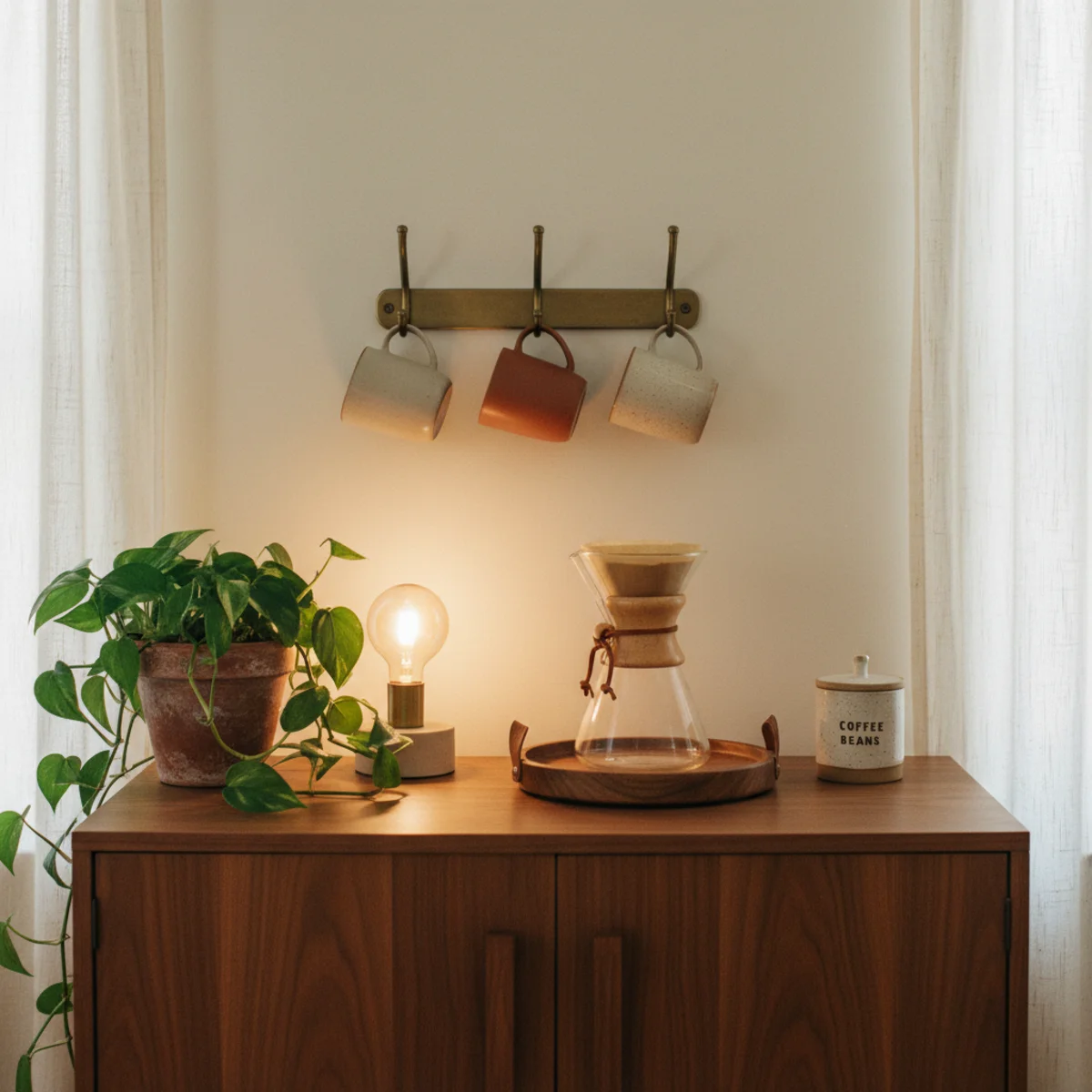
Credenza versus cart options: SMALL VINTAGE CREDENZA — solid wood mid-century or earlier era credenza 36-48 inches wide, 30-34 inches tall ($150-500 from Marketplace, estate sales, antique stores). Provides ample surface for equipment plus drawers/cabinets for bean storage and extra supplies. THREE-TIER ROLLING CART — IKEA RÅSKOG at $40-50, Crate & Barrel rolling carts at $120-300, vintage industrial carts at $80-300. Best for small apartments where dedicated furniture isn't practical. NARROW SHELF UNIT — 18-24 inches wide bookshelf or open shelving repurposed for coffee equipment ($60-200). REPURPOSED CABINET — small antique cabinet, vintage bar cabinet, or dresser at $100-400 with door-revealed coffee setup. POSITION the credenza or cart within arm's reach of the chair (3-6 feet) so coffee preparation flows naturally with sitting. SURFACE ARRANGEMENT — coffee maker as primary, bean canister + grinder beside it, mug rack or hooks nearby, small tray for spoons and frother, possibly a small plant or styled object. The working parts should dominate; styling supports rather than overrides.
AFFILIATE SLOTSURFACEVintage credenza 36-48 inches OR IKEA RÅSKOG cart OR narrow shelf unit; positioned 3-6 feet from chairAdd affiliate URL when configuredWhy it works
Because the dedicated surface concentrates the coffee ritual into one place rather than spreading it across general kitchen counter clutter. Spreading the ritual across the kitchen (coffee maker on one counter, beans in pantry, mugs in cabinet, milk frother in drawer) makes the morning routine fragmented and slow; concentrating everything on one surface makes the routine efficient and feels like dedicated practice. The credenza or cart also signals that coffee is a meaningful daily ritual in the household rather than an incidental activity that uses general kitchen space. The dedicated zone matters psychologically more than logistically.
Pro tip — Hunt thrift stores and estate sales for vintage credenzas specifically in 36-48 inch wide range — this size is common because vintage credenzas were designed for record players or smaller dining storage. Mid-century walnut or oak credenzas at this size often appear at $150-400, far below the new retail equivalent.
Mid-century walnut credenza with French press, beans, grinder, and mugs — dedicated coffee ritual surface. See also: Marketplace
05Hang Mugs on Hooks
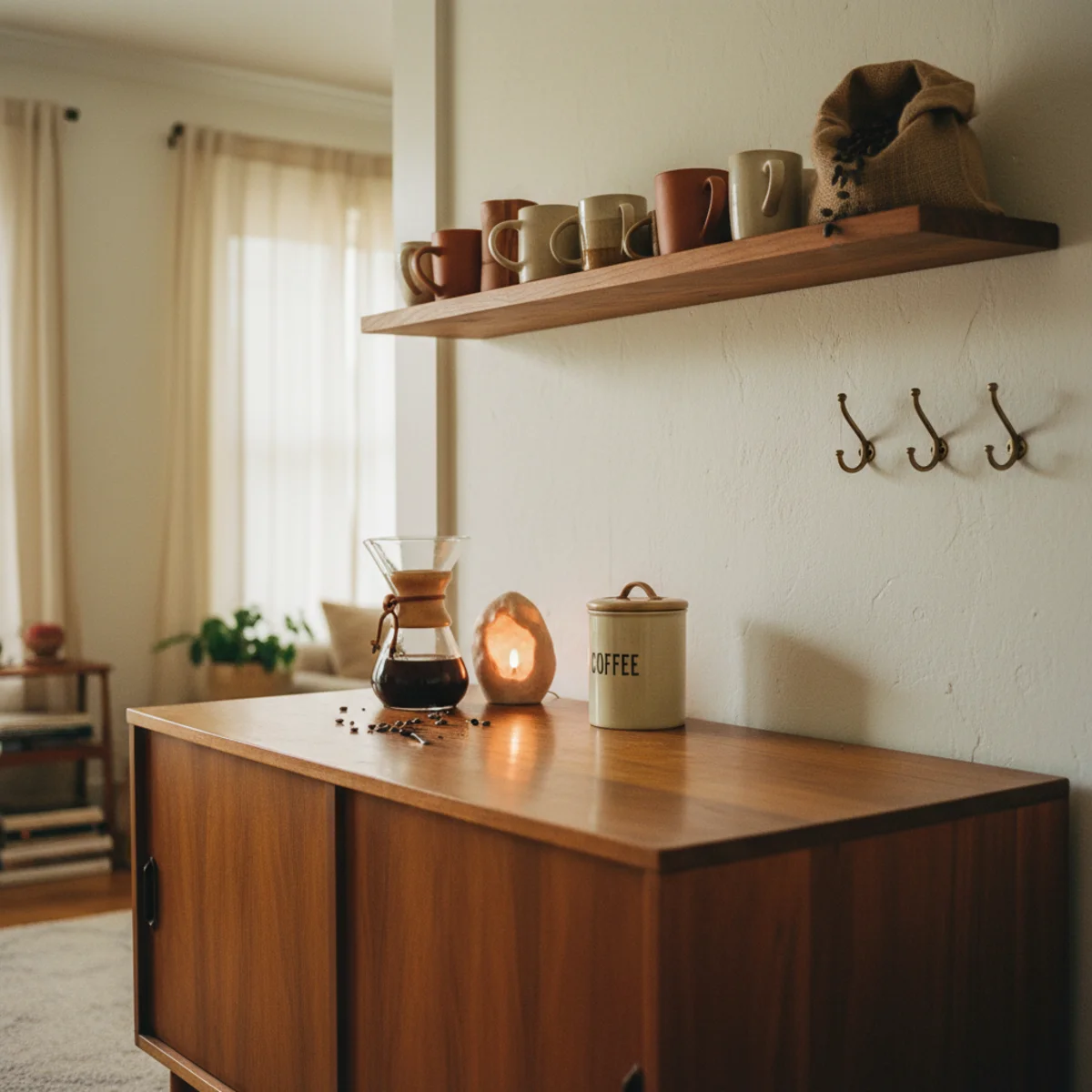
Hung mugs on hooks (instead of cabinet-stored) make the coffee ritual feel curated and accessible. Beautiful mugs are part of the daily experience; hidden mugs are storage that defeats the purpose. Use 3-7 hooks for the rotation, hung at the right height beside or above the credenza for easy reach during morning routine.
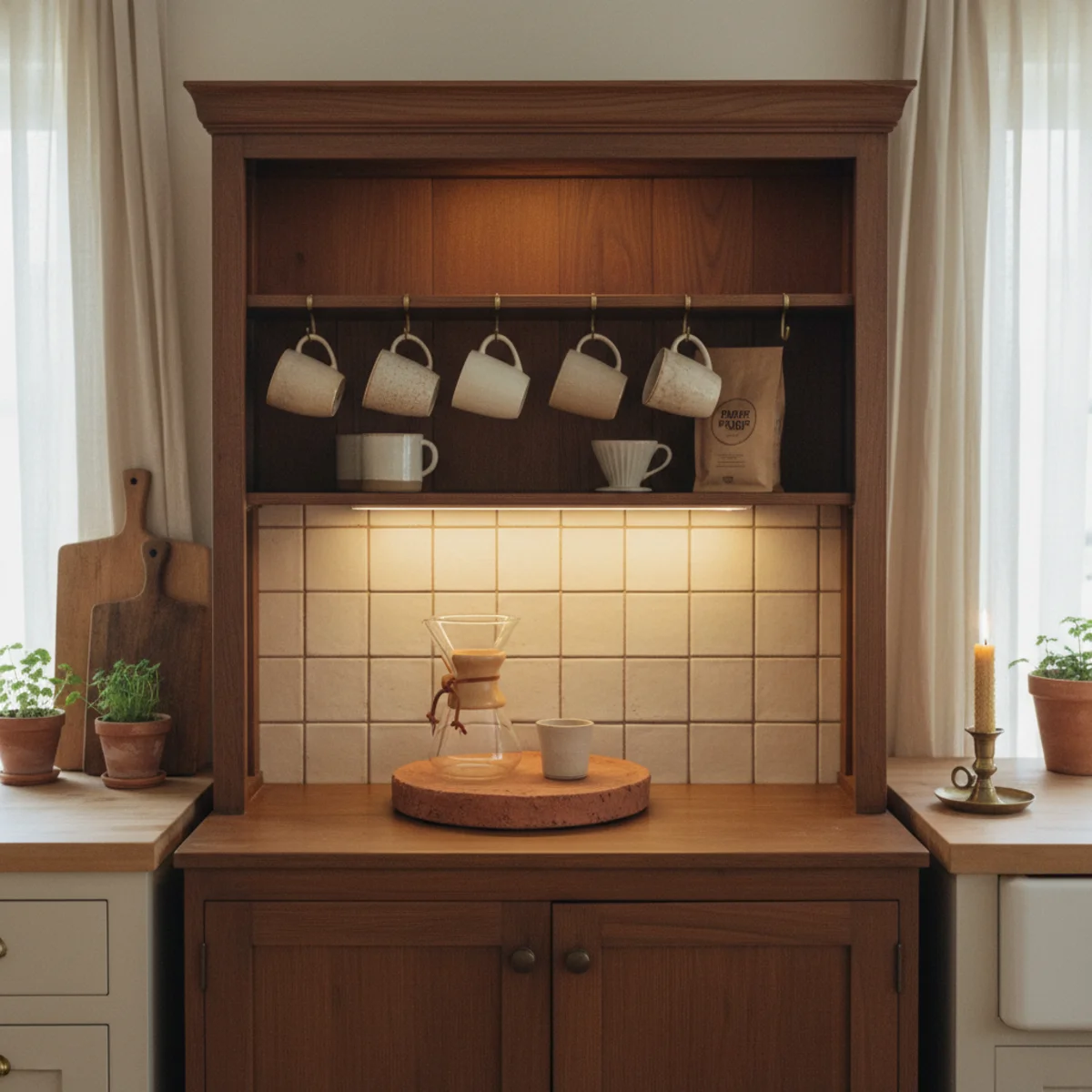
Mug hanging specifications: HOOK QUANTITY — 3 to 7 hooks (odd numbers preferred per styling principles). HOOK TYPE — small brass cup hooks ($1-3 per hook from hardware store, look for warm brass not chrome), antique brass or oiled bronze hooks ($4-15 per hook from specialty hardware), small wooden pegs or vintage hooks ($2-10 per hook from thrift stores or Etsy). MOUNTING — directly into the wall above or beside the credenza, OR attached to a small wooden board (12-24 inches long, mounted to wall) holding the hooks for easier mounting and visual cohesion. HEIGHT — 50-58 inches above floor (eye level when standing for adults), within arm's reach of the credenza surface. SPACING — 4-5 inches between hooks for mug clearance. MUG SELECTION — hand-thrown ceramic mugs from independent makers ($20-60 each from Etsy artisans or local pottery), vintage mugs from thrift stores or estate sales ($1-10 each), curated mug collection mixing 4-5 favorites rather than full matched set. The mugs become visible decor when hung; mismatched matched cabinet sets read as institutional, where hung curated mugs read as warm-collected daily practice.
AFFILIATE SLOTSTORAGE3-7 brass cup hooks at 50-58 inches above floor; hung hand-thrown ceramic and vintage mugs from independent makers and thriftingAdd affiliate URL when configuredWhy it works
Because hung mugs serve multiple functions simultaneously: visible part of the morning ritual styling (you see the mugs and look forward to using them), easier reach during groggy morning routine (no opening cabinet, finding mug, closing cabinet), and they signal that mugs are valued daily objects rather than utilitarian storage items. The same mugs hidden in a cabinet are utility; hung on hooks, they're a curated collection that contributes to the corner's warm aesthetic. The visibility also encourages mug rotation (using different favorites on different mornings) rather than always grabbing the same hidden mug.
Pro tip — Mix hand-thrown ceramic mugs with vintage thrifted mugs for the curated-collected aesthetic — 2-3 hand-thrown from Etsy artisans at $20-40 each + 2-3 vintage from estate sales at $2-8 each = 4-7 mugs total with strong character variation. The mix produces more interesting visual collection than either approach alone.
Five mugs hung on brass hooks — curated daily collection rather than hidden cabinet utility. See also: Etsy artisans
06Add a Small Plant
One small live plant in the coffee corner adds organic shape, natural color, and a small daily care responsibility that ties the corner to actual life rhythm. Best plants for coffee corner: small snake plant, small ZZ plant, small pothos, small spider plant, small succulent — all tolerant of variable light and minimal watering. Skip high-maintenance plants that add stress rather than warmth.
Coffee corner plant options: SMALL SNAKE PLANT (Sansevieria) — 8-14 inches tall, tolerates low light and drought, $15-40 from local nursery or grocery store. SMALL ZZ PLANT (Zamioculcas zamiifolia) — 10-16 inches tall, similar tolerance, $20-50. SMALL POTHOS — trailing vines in 4-6 inch pot, $10-25 from grocery store or nursery. SMALL SPIDER PLANT — 10-14 inches tall with arched leaves, $10-25. SMALL SUCCULENT or AIR PLANT for tiny corners — 4-8 inches tall, $5-20. POT — small terracotta pot ($5-15 from nursery or garden center), small ceramic planter from independent makers ($20-60 from Etsy), or small vintage planter from thrift stores ($5-20). POSITION on the credenza beside or behind the coffee maker, OR on the side table beside the chair, OR on small shelf above the credenza. SIZE — small (4-8 inch pot) rather than large; the plant supports the corner without dominating. WATERING — match to plant variety; most low-maintenance options need watering once weekly or less. SKIP — high-light demanding plants in low-light corners, plants requiring daily care, large plants that overwhelm the small corner.
AFFILIATE SLOTORGANICSmall snake plant, ZZ plant, pothos, spider plant, or succulent at 4-8 inch pot size in terracotta or ceramic planterAdd affiliate URL when configuredWhy it works
Because the plant adds organic shape and natural color to the otherwise-mostly-architectural corner — wood credenza, ceramic mugs, hard furniture surfaces, brass hooks. The single plant introduces curve, green, and life that the rest of the corner doesn't have. The plant also creates a small daily care moment (watering, dusting leaves, checking for new growth) that ties the corner to actual life rhythm rather than to static styled display. The morning ritual gains slightly when you notice the plant has produced new leaves overnight.
Pro tip — Choose plants that thrive in actual coffee-corner light conditions rather than ideal plants for general home decor — most coffee corners have moderate to low natural light, so favor low-light tolerant plants (snake, ZZ, pothos) over light-demanding ones (succulents in shaded corner will get leggy and unhealthy). The plant should thrive in the actual conditions, not stress in aspirational ones.
Small snake plant in terracotta pot beside French press — organic curve and green in mostly-architectural corner. See also: warm-minimalism
07Style With the Working Parts
The coffee corner's primary styling is the working coffee equipment itself — French press, espresso machine, pour-over setup, grinder, bean canister, milk frother. The functional pieces serve as primary decor when chosen thoughtfully and arranged with composition principles. Avoid: decorative-only coffee objects that don't serve the actual ritual.
Working parts as styling: COFFEE MAKER as primary statement piece — Chemex pour-over ($45-50 retail, beautiful borosilicate glass shape), French press in glass or ceramic ($30-100, simple substantial shape), small espresso machine in matte cream or stainless ($150-700, smaller models read better than large), V60 pour-over ($25-50, simple ceramic shape). The maker dominates the credenza surface visually. BEAN CANISTER — small ceramic vessel with airtight lid ($15-60 from Etsy artisans or kitchen retailers), vintage glass jar with airtight gasket ($5-20 thrifted), small wooden lidded box ($20-60). GRINDER — manual ceramic grinder ($30-100, beautiful object), or compact electric grinder in cream or warm-tone finish ($80-300). MILK FROTHER — small handheld frother in warm brass or matte finish ($15-40), or stovetop frothing pitcher in stainless or copper ($25-80). SMALL TRAY for spoons, sugar/honey, single small object ($15-50). The composition: maker centered or slightly off-center on credenza, bean canister + grinder grouped beside, mug rack or hooks above, milk frother + tray on small side surface. The functional pieces become the styling when chosen for visual character. SKIP: purely decorative coffee-themed objects (signs saying 'coffee', stylized cup figurines, coffee-themed wall hangings) that don't serve the ritual.
AFFILIATE SLOTPRIMARYCoffee maker (Chemex/French press/espresso) + bean canister + grinder + milk frother + small tray; chosen for visual characterAdd affiliate URL when configuredWhy it works
Because working parts that function daily carry inherent warmth — they're objects in actual use rather than purely decorative items. The Chemex you use every morning is more meaningful than a 'coffee' sign you hang above it; the manual grinder you operate daily is more characterful than coffee-themed decor. The functional pieces also tend to be better-designed (form follows function in coffee equipment) and more durable, making them better long-term decor than purely styled additions. The corner styled with working parts feels lived-in; the corner styled with decorative coffee items feels staged.
Pro tip — Invest in one beautiful piece of coffee equipment rather than multiple cheaper pieces — a single Chemex pour-over at $45 outperforms three cheaper coffee items at the same total cost. The single beautiful piece becomes the corner's visual anchor; multiple mediocre pieces compete for attention without elevating the whole.
Chemex, ceramic bean canister, manual grinder, brass tray — working parts as primary styling. See also: coffee-bar-ideas
08Lean a Small Print or Postcard
A small print or postcard leaned against the wall behind the credenza adds visual character without requiring permanent wall installation. The leaning posture matches warm-collected aesthetic; the small size (4x6 to 8x10 inches) fits the small corner without overwhelming it. Best subjects: vintage botanical, abstract in warm earth tones, vintage postcard, single photograph in muted palette.
Leaning print/postcard options: SMALL PRINT 4x6 to 8x10 inches in simple frame leaned against wall behind credenza. ART OPTIONS — vintage postcard or letter on simple paper backing ($3-15 from estate sales, antique stores, or vintage paper shops), small vintage botanical print ($10-40 vintage), abstract painting print in warm earth tones ($15-60 from Etsy artists), single photograph in muted palette (free DIY from your own photos), vintage book illustration removed from book and framed ($5-25 from used bookstores). FRAME OPTIONS — simple thin brass or warm wood frame ($10-30 from Target, Michaels, or thrift), antique gilded frame ($15-50 thrifted), simple white matte frame for modern look ($8-20). POSITION leaned against the wall behind the credenza with the print's bottom edge resting on the credenza surface. Slight backward tilt (3-5 degrees) toward the wall. CAN BE PARTIALLY OVERLAPPED by working parts on the credenza (per fireplace-mantel-decor overlap principle) — the bean canister or coffee maker can sit slightly in front of the lower portion of the print for layered depth. ROTATE seasonally or whenever you find a new piece — the leaning posture makes rotation easy without hanging hardware.
AFFILIATE SLOTCHARACTERSmall print 4x6 to 8x10 inches: vintage botanical, postcard, abstract earth-tone, or photograph in simple brass/wood/white frameAdd affiliate URL when configuredWhy it works
Because the leaning posture matches the casual warm-collected aesthetic the corner is built around — hung framed art reads as more formal and permanent, leaning prints read as 'recently placed, can change tomorrow.' The small size also matters: large hung art would compete with the working coffee parts for visual attention, where small leaning art supports rather than dominates. The print adds the personal character that working parts and plant alone don't provide — the print signals 'this household has aesthetic taste' through the specific choice of leaned image, where working parts alone signal only 'this household drinks coffee.'
Pro tip — Lean 2 prints together overlapping slightly rather than single prints — two prints (slightly different sizes, slightly overlapping) read more composed than single leaned print and provide more visual interest. The overlap technique also lets you pair related images (vintage postcard + small botanical, or two related photographs).
Small vintage botanical leaned behind credenza — personal character that working parts alone don't provide. See also: gallery-wall-ideas
09Put It Where the Morning Light Lands
The single most-important coffee corner placement decision: position it where morning light naturally lands. East or southeast-facing window proximity matters more than aesthetic considerations; morning light on the chair + warm coffee + warm throw creates the multisensory ritual that defines cozy coffee corner experience. If no east-facing window is available, use the warmest-light window the home has.
Morning light positioning principles: IDEAL PLACEMENT — corner has east-facing window 3-8 feet from the chair, so morning sun (6-9am) falls across the chair, side table, and credenza. The sunrise light is warm-toned naturally (around 3000K), warmer than midday light, supporting the warm-home aesthetic. SECOND BEST — southeast-facing window with morning light from 7-10am. THIRD BEST — south or southwest-facing window where late morning to midday light reaches the corner. AVOID — north-facing window only (cool indirect light all day), windowless interior corners (no natural light during the ritual). PRACTICAL ROOM CHOICES — kitchen breakfast nook on the east side of the house, dining room on the southeast side, master bedroom corner facing east, sunroom or addition with east-facing windows. TIME-LOCKED RITUAL — once positioned, the morning coffee ritual gets tied to specific lighting moment: getting up at the same time, sitting in the same chair, watching the same window's light progression. The repetition itself becomes the ritual. WINDOW DRESSINGS — sheer linen panels that filter without blocking light, OR no window dressings during morning hours if privacy permits.
AFFILIATE SLOTPLACEMENTEast or southeast-facing window 3-8 feet from chair; morning sun 6-9am or 7-10am across chair and credenzaAdd affiliate URL when configuredWhy it works
Because the multisensory experience of morning coffee includes the visual experience of changing light — and east-facing morning light provides the warm-toned gradual brightening that no electric lighting can replicate. The household sits in the same chair, watching the same window, drinking from the same mug, while the light progresses across the room — the repeated experience becomes a meaningful daily anchor that defines the household's morning rhythm. Without morning light access, the coffee ritual loses one of its primary sensory dimensions. The same coffee in the same chair without morning light is significantly less of a ritual.
Pro tip — Time your morning coffee preparation to start 15-20 minutes before sunrise during the seasons when sunrise is later (October-March) — by the time the coffee is ready and you're sitting in the chair, the sunrise light is just beginning to fill the corner. The timed coordination between coffee preparation and sunrise creates the most-defining version of the morning coffee ritual.
East-facing window with morning sunrise light across the chair — the multisensory ritual defined by light. See also: reading-nook-ideas
10Add a Soft Rug Underfoot
A small soft rug or sheepskin underfoot at the chair completes the cozy coffee corner — the bare feet on warm textile complete the multisensory ritual that warm coffee + warm throw + warm light begin. Cost: $30-200 for a small rug or sheepskin; daily impact: significant for the sensory ritual experience.
Underfoot textile options: SMALL WOOL RUG 3x5 feet beside or in front of the chair ($80-300 from Marketplace, Rugs USA, Ruggable, or vintage at $40-150). Position so feet land on the rug when sitting in the chair. REAL SHEEPSKIN draped beside or under chair, single sheepskin ($60-200 for genuine shearling, $40-80 for IKEA RENS). Sheepskin provides exceptional sensory warmth for bare feet during cold mornings. SMALL VINTAGE PERSIAN or MOROCCAN RUG 3x5 or 4x6 feet ($150-500 vintage hand-knotted from Marketplace, eBay, or rug shops). Adds character and warmth. JUTE or NATURAL FIBER RUG 3x5 feet ($60-200) for less heated underfoot experience but with warm aesthetic. SKIP — cold tile or concrete floor without underfoot textile, synthetic acrylic rugs that don't feel warm against feet, oversized rugs that overwhelm the small corner. POSITION the rug so feet land on it both when sitting in the chair (feet flat on rug) AND when standing to walk to credenza (feet step onto rug). The transition from sitting to standing should stay on warm textile.
AFFILIATE SLOTFLOORSmall wool rug 3x5, real sheepskin, small Persian/Moroccan rug 3x5 to 4x6, or jute 3x5 positioned at chair landing zoneAdd affiliate URL when configuredWhy it works
Because the morning coffee ritual is multisensory — sight (warm light, leaned print, plant), sound (coffee brewing, neighborhood waking), smell (fresh coffee), taste (warm mug), and touch (warm throw, warm mug, warm chair). The bare feet on warm textile completes the touch dimension that the throw and mug begin. Without underfoot warmth, the feet remain the cold body part during an otherwise warm ritual, breaking the sensory completeness. With underfoot textile, the entire body is in warm sensory environment during the ritual. The compound effect across daily ritual is significant for the morning's emotional tone.
Pro tip — Use a washable rug (Ruggable or similar machine-washable rug) for coffee corners specifically — morning ritual involves occasional coffee spills, walking from kitchen, occasional pet hair if you have pets. The machine-washable design handles morning dirt without requiring professional cleaning. The trade-off (slightly thinner profile than traditional rugs) is more than worth the maintenance ease at the high-friction coffee corner position.
Small Persian rug beneath chair — warm underfoot completing the multisensory morning ritual. See also: best-area-rugs
How to build a cozy coffee corner step by step
Function first, then the warmth that makes you linger.
- 1Pick the spot by the light and outlet
Choose a corner near a power source and, ideally, morning light, out of the main traffic path.
- 2Set up the working bar
Place the machine, grinder, and kettle in use-order on a credenza or cart, with mugs on hooks and beans in a jar.
- 3Add the seat and the light
Bring in a comfortable chair or stool within reach of the cup, and a small warm lamp at low height.
- 4Layer the warmth
Drape a throw on the chair, add a small plant and a personal print, and put a soft rug underfoot.
Quick tips
- Put the lamp on a timer set just before your alarm so the corner is glowing when you arrive.
- Keep a throw folded on the chair arm so it's ready on a cold morning.
- Decant beans into a jar to hide packaging and keep them fresher.
- Use a tray with a lip under the grinder to catch the scatter.
- Choose a flat-weave rug that shrugs off coffee drips.
- Leave one clear surface zone for the cup you're actually drinking.
Coffee corners for different spaces
A credenza against a free wall with a stool tucked beside it, near the morning window.
A cart by an armchair so the coffee corner doubles as a reading spot.
A single floating shelf, mugs on hooks beneath, and one comfortable chair pulled over.
A coffee bar cabinet that closes on the gear, with a chair nearby for the open mornings.
A coffee corner with a seat turns the first cup from a task into the best ten minutes of the morning.
Frequently asked questions
How do I set up a cozy coffee corner in a small space?+
What kind of chair should I get for a coffee corner?+
Where should I put my coffee corner in the home?+
Should I hang my mugs or store them in a cabinet?+
What equipment do I need for a coffee corner?+
Why does morning light matter so much for a coffee corner?+
Build the working bar first, then add the one thing most coffee setups miss — a comfortable seat within reach of the cup. Add a warm lamp on a timer, a throw over the chair, and put the whole thing where the morning light lands. We'd put the chair in before any styling; it's the difference between making coffee and starting the day with a pause. The cold coffee from lingering too long is a feature, not a flaw.