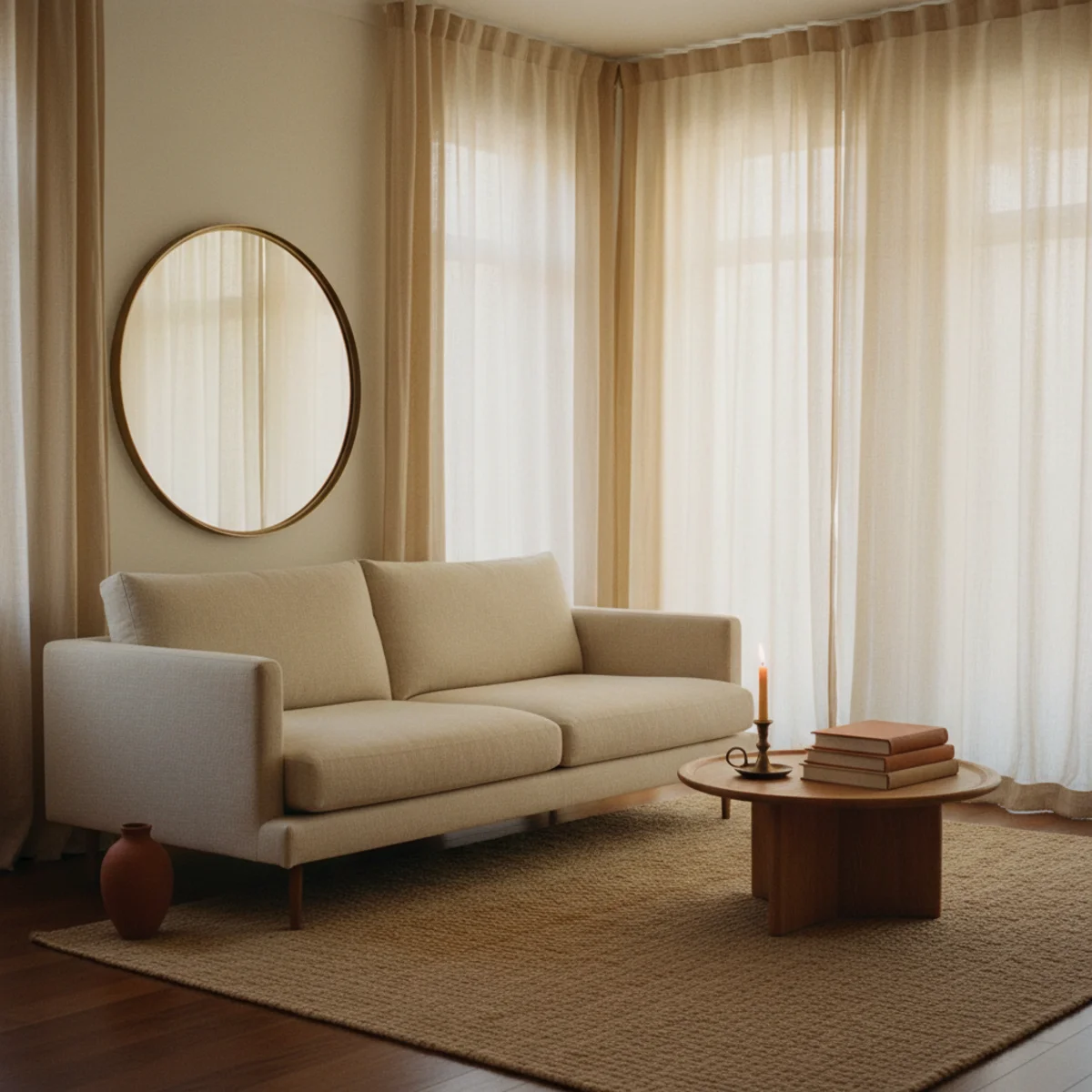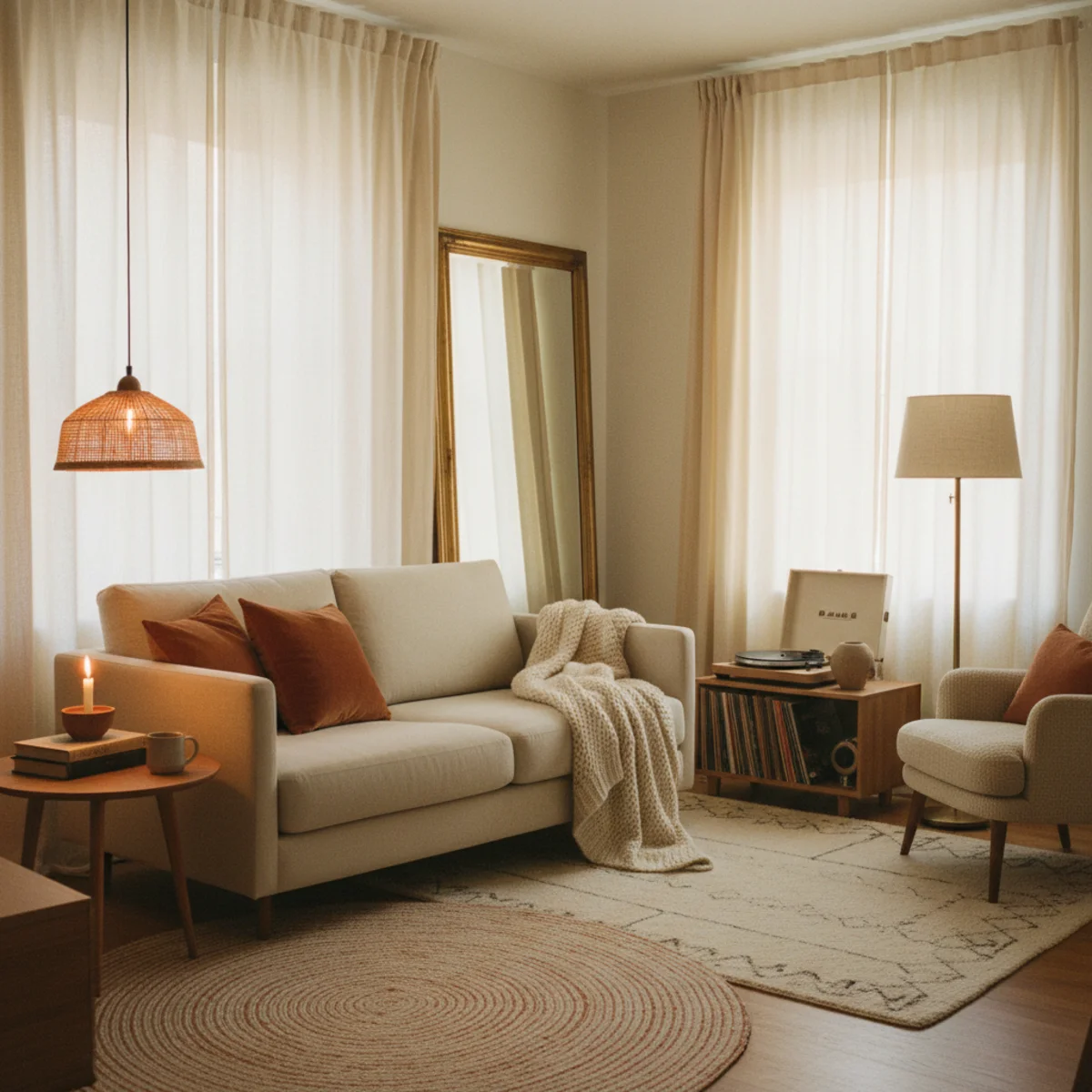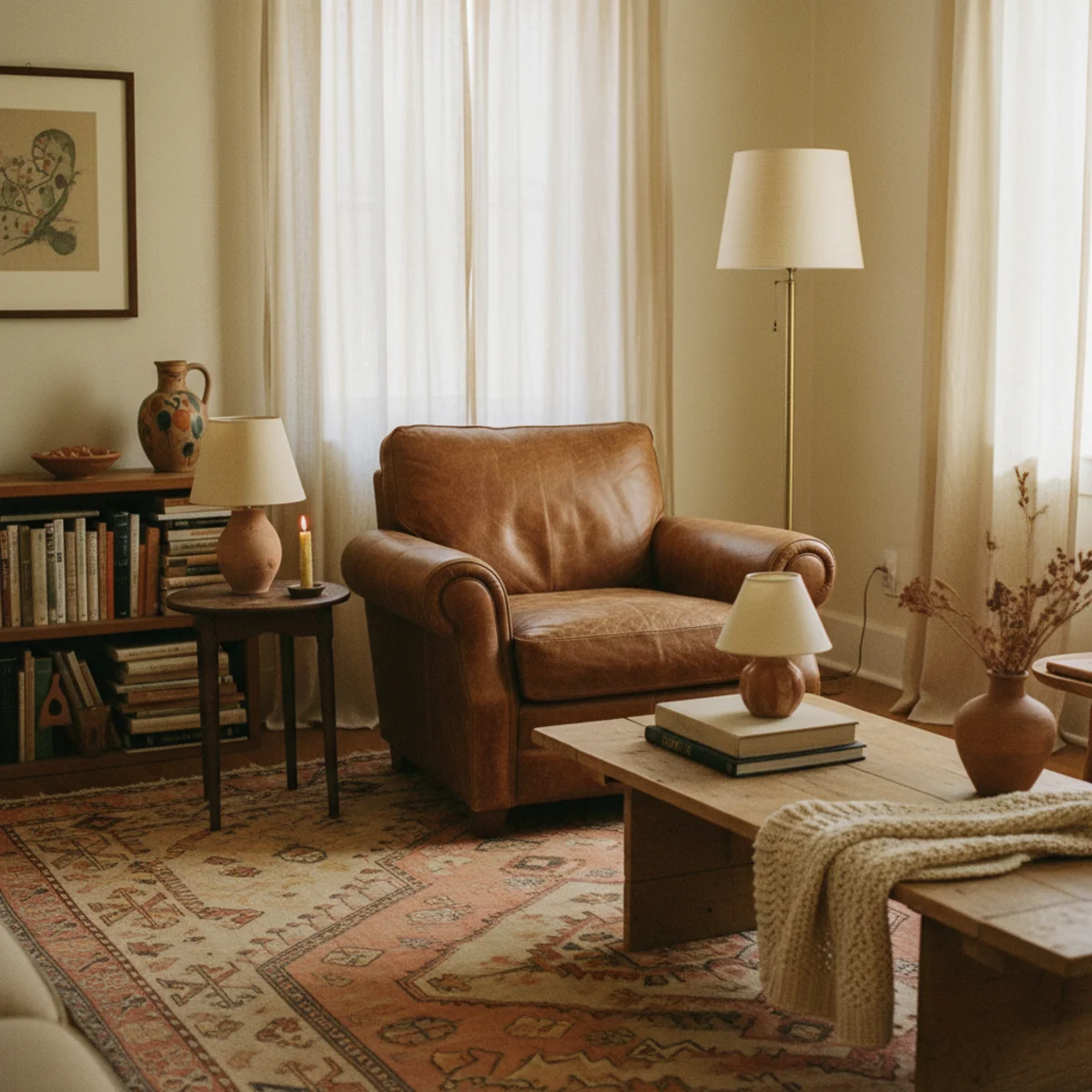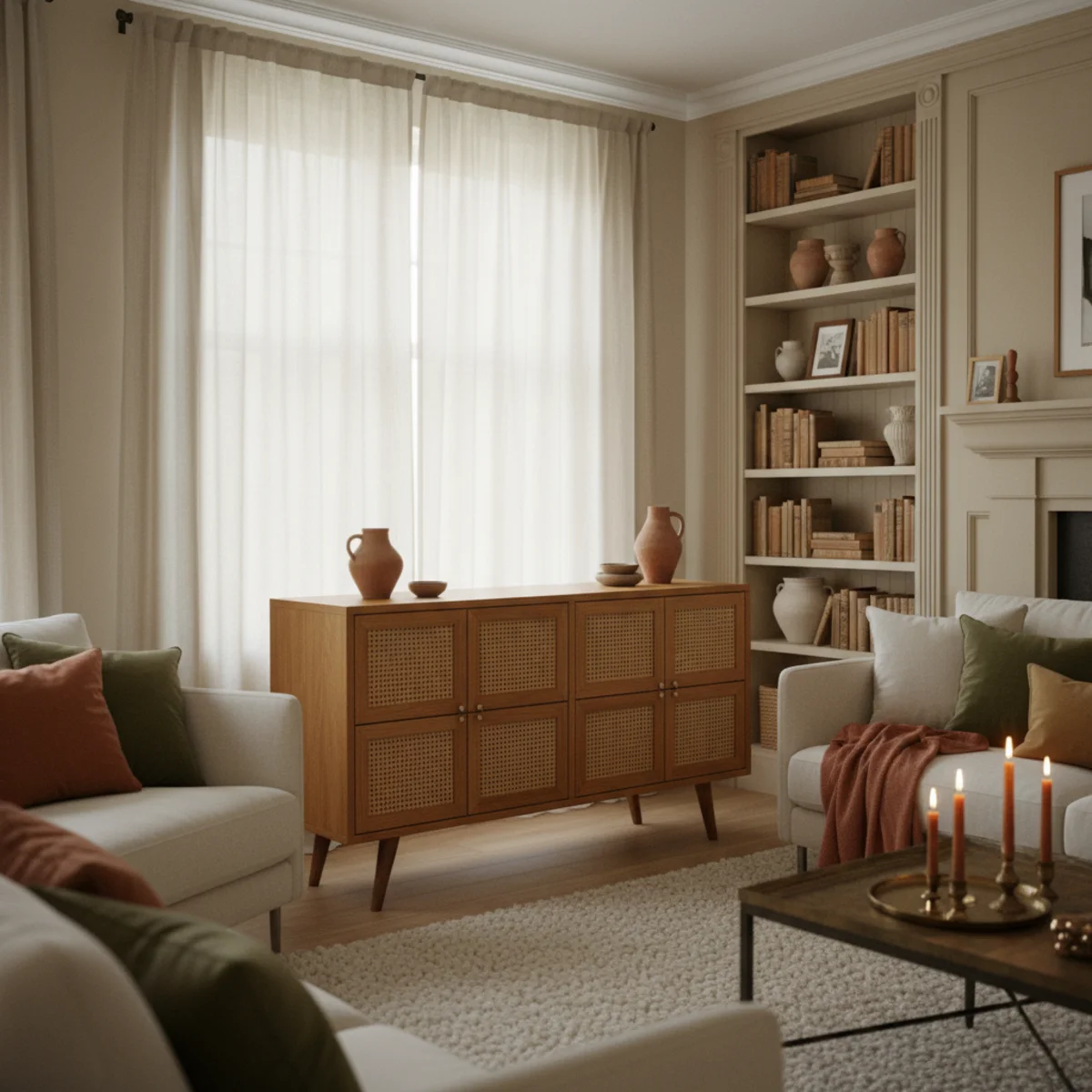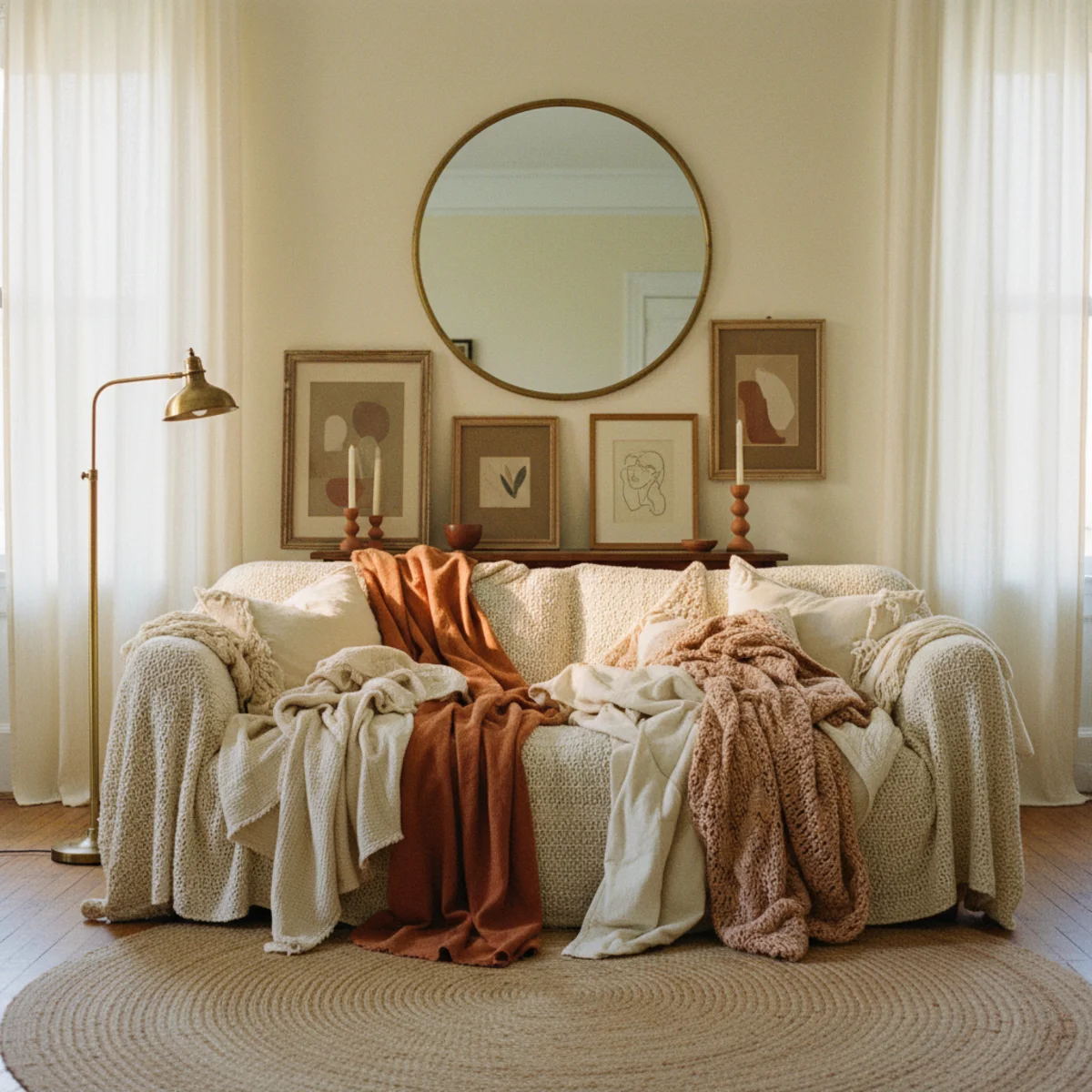
These twelve apartment living room ideas are tested in actual rentals — apartments where painting walls means deposit forfeiture, where holes in drywall require spackle and paint-match, where landlord-installed lighting is non-negotiable. Every move below is reversible (or nearly so), respects standard lease restrictions, and transforms the rental visually without requiring any permanent modifications. The biggest renter-friendly wins are the ones that look permanent but aren't.
Renter design works differently from owner design. The constraints (no paint, no holes, no removed fixtures) shape every decision, and the moves that work in owned homes often fail in rentals. The fix is a separate rental-design playbook: tension-rod curtains instead of mounted brackets, leaning art instead of hung, layered plug-in lamps instead of hardwired overhead replacements, peel-and-stick instead of real renovations. The thirteen moves below build that playbook for living rooms specifically.
By the end of this guide, you'll know exactly which rental-friendly moves transform the apartment living room — leaning art instead of hanging, plug-in lamp layers instead of overhead replacement, tension-rod curtains, peel-and-stick backsplash and accent walls, and how to swap hardware temporarily without losing your security deposit.
WHAT'S INSIDE
- The leaning-art approach that delivers gallery walls without putting holes in drywall
- Why layered plug-in lamps beat any landlord-installed overhead light
- Tension-rod curtains that hang high and wide without mounting any brackets
- The hardware-swap trick (keep the originals) that's the highest-leverage rental upgrade
A rental is a blank slate, not a prison. The things that make a room warm — light, texture, layout — are all things you can take with you.
— Apartment Therapy [citation needed — verify before publish]
What makes an apartment living room cozy?
A cozy apartment living room relies on the same fundamentals as any warm room — low warm light, layered natural textures, and inward-facing arrangement — but achieves them all without permanent changes. The constraint is the point: when you can't paint or build, you lean harder on lamps, rugs, throws, and movable furniture, which happen to be the highest-impact warmth levers anyway.
The trick is treating everything as portable. A leaning mirror does the job of a hung one and travels to the next apartment. Plug-in lamps replace the cold overhead. A large rug covers a scratched rental floor and rolls up on moving day. Tension-rod curtains soften hard light without a single screw. Build the room out of things you own rather than things you install, and the cozy comes free of the deposit.
More in Budget you may love
See allWhy renter-friendly decorating matters more in 2026
More people are renting longer, and the no-holes, no-paint constraint has become a permanent design condition rather than a temporary one. Pinterest's apartment and renter-friendly searches climb every year, and a whole vocabulary of removable solutions — peel-and-stick everything, leaning art, tension rods — has grown up to meet it.
The warm, secondhand-leaning aesthetic suits renting perfectly. Vintage furniture runs smaller and cheaper, movable layers carry from place to place, and the collected look is built from portable objects rather than installed finishes. A rental can be every bit as warm as an owned home; it just gets there through what you bring rather than what you build.
24 renter-friendly apartment living room ideas
01Lean the Art, Don't Hang It
The single biggest rental-friendly move is leaning all art instead of hanging it. Picture ledges (mounted with 2 small screws each), console tops, mantel tops, and floor-leaning all hold framed art without the dozen+ holes a typical gallery wall requires. The leaning posture also reads more casual and intentional, and you can swap pieces freely without spackle-and-paint-match between changes.
Three leaning approaches: (1) PICTURE LEDGE — mount one or two solid-wood picture ledges 36 to 48 inches long ($25 to $35 in DIY oak materials per diy-home-decor-ideas, or $80 to $150 retail from West Elm) using 2 small wall screws each. The ledges hold layered art with zero per-piece holes. (2) CONSOLE OR MANTEL LEANING — large framed pieces leaning against the wall behind a console or on a mantel, supported by the surface below. No holes required. (3) FLOOR LEANING — very large pieces (24x36+ inches) leaning directly against the wall, base on the floor. The combined leaning approach can support 15 to 25 framed pieces in an apartment with 2 to 4 small mounting holes total. Compare to hanging 15 pieces individually: 30+ holes, full gallery-wall planning per the gallery-wall-ideas rules.
AFFILIATE SLOTARTPicture ledges, console-leaning, and floor-leaning instead of multiple hung piecesAdd affiliate URL when configuredWhy it works
Because the visual effect of leaning art is nearly identical to hanging — slight angle, same framing, same wall presence. The casual posture even reads more intentional than rigid hanging in many warm-home contexts. The rental-friendly benefit is enormous: no spackle, no paint-touch-up, no security-deposit risk. Leaning also lets you swap art freely (different season, different mood) without commitment to any specific position. The trade-off is the slight visual difference, which is small enough that most viewers can't identify it.
Pro tip — If you have one piece of art you must hang (a heavy mirror or piece you don't want to risk leaning), use a single high-quality picture-hanging hook that requires only one nail at 30 degrees ($3 from Home Depot for the hook plus a tiny nail). The single small nail patches with one dot of spackle and a touch of paint at move-out — much smaller than typical gallery-wall hole patterns.
Two picture ledges, three console pieces leaning, one floor piece — gallery wall with only four mounting screws total. See also: diy-home-decor-ideas
02Layer Plug-In Lamps, Skip the Overhead
Landlord-installed overhead lights are almost always cold (4000K to 5000K), often ugly, and impossible to replace permanently. The fix is ignoring the overhead entirely and building the lighting from plug-in lamps at 2700K — table lamps, floor lamps, accent lamps positioned across the room. The overhead stays off; the plug-in layers do all the work; the apartment reads warm even though the landlord installation hasn't changed.
Three-lamp layered setup per apartment-living-room rules: one floor lamp at 58 to 64 inches tall ($20 to $400 from IKEA HOLMÖ to West Elm), two table lamps at 24 to 28 inches tall ($20 to $200 each thrifted or new), one accent light at 12 to 18 inches (small picture light, uplight, or candle). All at 2700K LED bulbs. Position one table lamp on each side of the sofa (the matched pair), the floor lamp in the dim corner the overhead can't reach, the accent light beside an object or piece of art. Wire all lamps to a single Lutron Caséta or smart plug schedule timed to sunset. The overhead light stays off permanently after dark.
AFFILIATE SLOTLIGHTING3 plug-in lamps at 2700K (floor + 2 table + accent), overhead off after darkAdd affiliate URL when configuredWhy it works
Because most landlord overheads are not replaceable without major electrical work (and lease violation) — the apartment is stuck with whatever fixture was installed. The plug-in approach sidesteps the constraint entirely: plug-in lamps don't require any electrical modification, work in any outlet, and can be removed and taken to the next apartment when the lease ends. The overhead becomes irrelevant; the warm layered lamp setup is what the room actually runs on.
Pro tip — Buy a swag chain ($5 from Amazon) to convert any ceiling junction box into a different fixture if your landlord's overhead is particularly ugly — the swag lets you hang a different pendant or fabric shade over the existing fixture without rewiring. Reverses at move-out by removing the swag and restoring the original.
Three plug-in lamps, all 2700K, overhead off — the rental-friendly lighting that ignores landlord fixtures entirely. See also: best-lamps-warm-light
03Use a Big Rug to Cover Bad Floors
Rental apartments often have floors landlords won't replace — scratched hardwood, faded carpet, generic tile, dated linoleum. A large rug positioned to cover the worst floor areas hides the problem entirely and adds the warm-textile layer that bad rental floors lack. The rug is the largest single rental-decor decision available, and the wrong rug compounds the floor problem while the right rug solves it.
Choose a rug 8x10 or 9x12 feet to cover the main seating zone in a typical living room. The rug should be large enough that the sofa and chair legs sit on it (at least the front legs). Best types for hiding bad floors: vintage Persian wool (warm, irregular pattern hides imperfections, $200 to $500 from Marketplace), large jute or sisal ($100 to $300, hides solid-color floor flaws), wool flatweave or kilim ($150 to $400, patterns hide stains). Use a non-slip rug pad ($25 to $50) underneath. The rug position should cover the floor sections most visible from main viewing angles (sofa, doorway).
AFFILIATE SLOTFLOOR8x10 or 9x12 rug to cover main seating zone and hide bad floorAdd affiliate URL when configuredWhy it works
Because in owned homes, floor problems can be addressed permanently (refinishing, replacement); in rentals, the bad floor is the floor for the duration of the lease. The rug becomes the only available fix. Its size determines effectiveness — a small rug exposes the surrounding bad floor and emphasizes the problem; a large rug covers enough that the surrounding bad floor reads as marginal trim. The 8x10 or 9x12 size is the threshold for hiding rather than highlighting.
Pro tip — Layer two cheaper 5x7 rugs side by side under the seating zone if you can't afford a single large rug — the seam where they meet hides under the coffee table or seating arrangement, and the combined footprint matches a single large rug at half the cost. The trick works especially well with two identical jute rugs at $100 each.
9x12 Persian rug covering the bad rental floor — the largest single rental-decor decision available. See also: vintage Persian
04Use Tension-Rod Linen Curtains
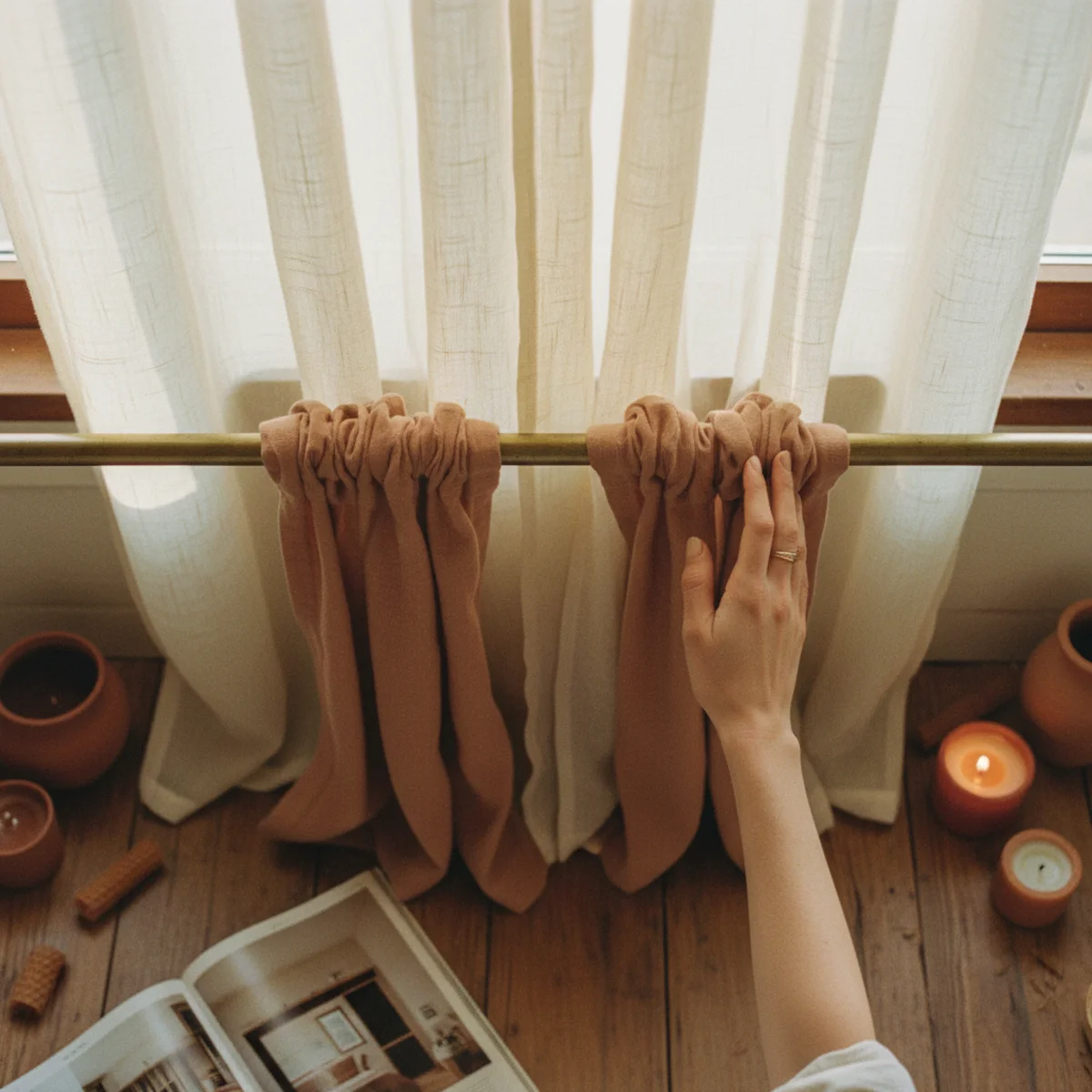
Standard curtain rods require mounting brackets with 2 to 6 screws into drywall — every rental window that gets curtains needs spackle and paint-touch-up at move-out. The fix is tension rods: spring-loaded poles that wedge inside the window frame without any hardware. The trade-off is slightly less load capacity (tension rods can't support very heavy curtains), but for typical unlined linen panels they work perfectly.
Best tension rods: heavy-duty extension rods that fit window widths from 28 to 84 inches ($15 to $40 from Amazon or Home Depot). Position the rod inside the window frame at the very top, or just outside the frame at 4 to 6 inches above the frame on the wall (if the frame is wide enough to grip). Hang two unlined linen panels per window in oat or natural cream ($40 to $150 per panel from IKEA AINA, Quince, or H&M Home). Use ring clips ($8 from IKEA) for hanging. The setup transfers cleanly to the next apartment when the lease ends — pop the rod out, fold the panels, take everything with you. Zero mounting holes.
AFFILIATE SLOTWINDOWSHeavy-duty tension rods inside window frame + unlined linen panels with ring clipsAdd affiliate URL when configuredWhy it works
Because the spring-loaded pressure holds the rod against the window frame without any permanent attachment — the rod can be removed in 30 seconds without any spackle, paint, or repair. The same setup hangs in any window with similar dimensions in any future apartment. The rental-friendliness is total: no holes, no damage, no security-deposit risk, full portability. The trade-off (slightly less load capacity than mounted rods) is irrelevant for light linen panels.
Pro tip — Choose tension rods rated for at least 30 pounds even though linen panels weigh under 5 pounds — the over-rated capacity means the rod stays securely in place even with energetic pulling or accidental yanking. Lower-rated rods can release under stress and fall, taking the panels with them.
Tension rod inside the window frame, linen panels with ring clips — zero mounting holes, full curtain effect. See also: ring clips
05Lean a Mirror to Bounce Light
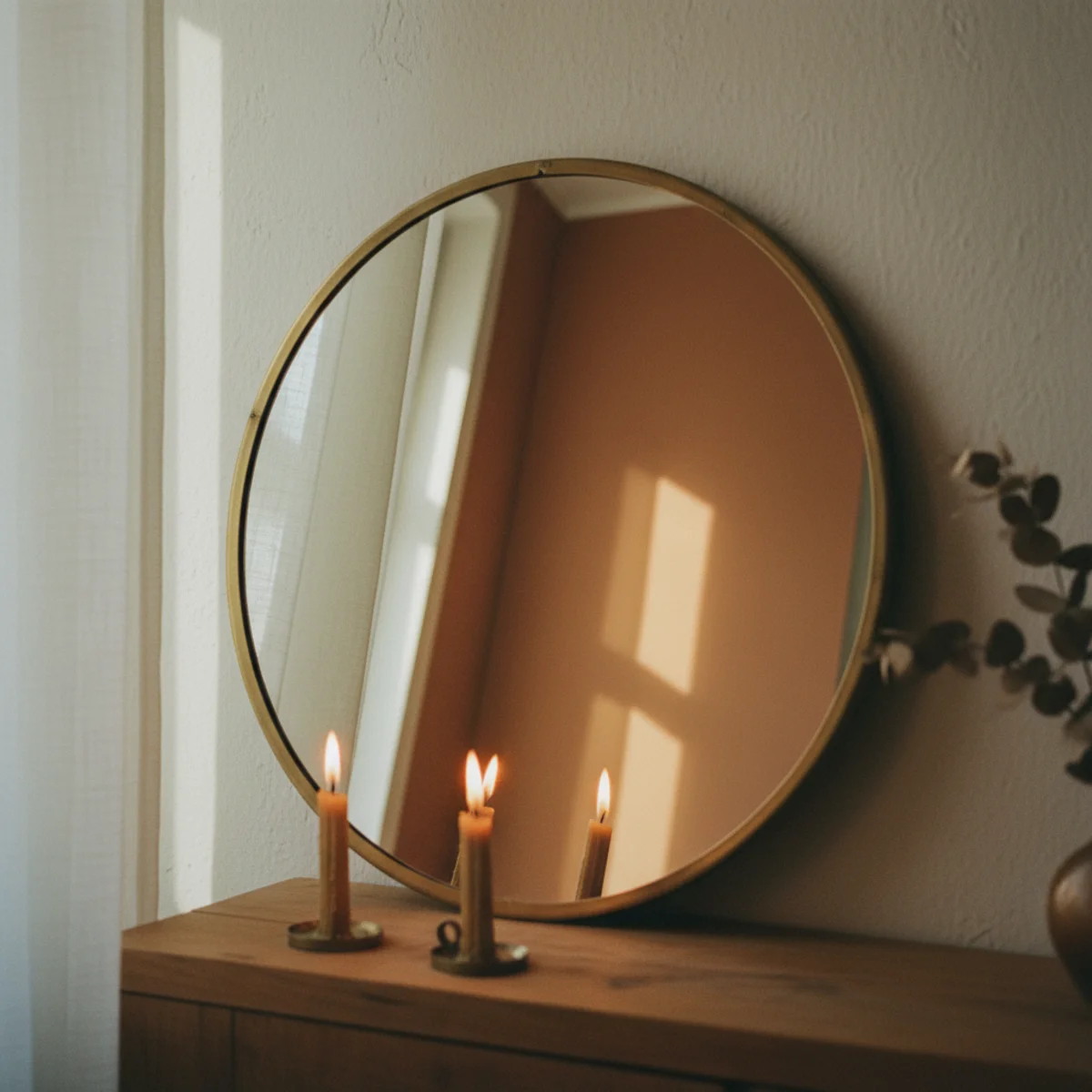
Wall-mounted mirrors require heavy mounting hardware and large holes — risky in rentals. The fix is leaning a large mirror against the wall instead. The lean position bounces light just as effectively as a mounted mirror, requires zero mounting hardware, and reads more casual and intentional. A large 48 to 72-inch leaning mirror is one of the highest-impact rental-friendly decisions.
Choose a leaning mirror 48 to 72 inches tall (a 'floor mirror' designed to lean), 18 to 30 inches wide. Materials: warm wood frame (oak, walnut), aged brass frame, or unframed with beveled edges. Sources: IKEA STAVE leaning mirror at $150, IKEA HOVET at $180, West Elm or Crate & Barrel at $300 to $600, vintage at $80 to $250 from Marketplace. Position leaning against a wall opposite the primary window for maximum light bounce. The angle of lean (slight back-tilt) should be the mirror's natural resting angle — about 5 to 8 degrees off vertical. Add an anti-tip wall anchor (one small screw, easy to spackle at move-out) for safety if you have kids or pets.
AFFILIATE SLOTWALLLarge 48-72 inch leaning floor mirror positioned opposite the primary windowAdd affiliate URL when configuredWhy it works
Because the light-bounce and visual-doubling effects are determined by the mirror's surface area and angle, not by whether it's mounted or leaning. A 60-inch leaning mirror reflects exactly as much light as a 60-inch mounted mirror in the same position. The only difference is the slight downward angle of the lean (about 5 to 8 degrees), which reflects more of the floor and less of the ceiling — usually preferable for living-room mirror reflections. The rental-friendly benefit is total: zero mounting holes.
Pro tip — Position the leaning mirror so it reflects a window — the bounce dramatically increases the room's brightness, especially in afternoon and evening when natural light weakens. A 60-inch leaning mirror reflecting a window can add the equivalent of one additional lamp's worth of effective light to the apartment living room.
60-inch leaning mirror opposite the window — bouncing light without putting any holes in the wall. See also: vintage at $80
06Float the Sofa Off the Wall
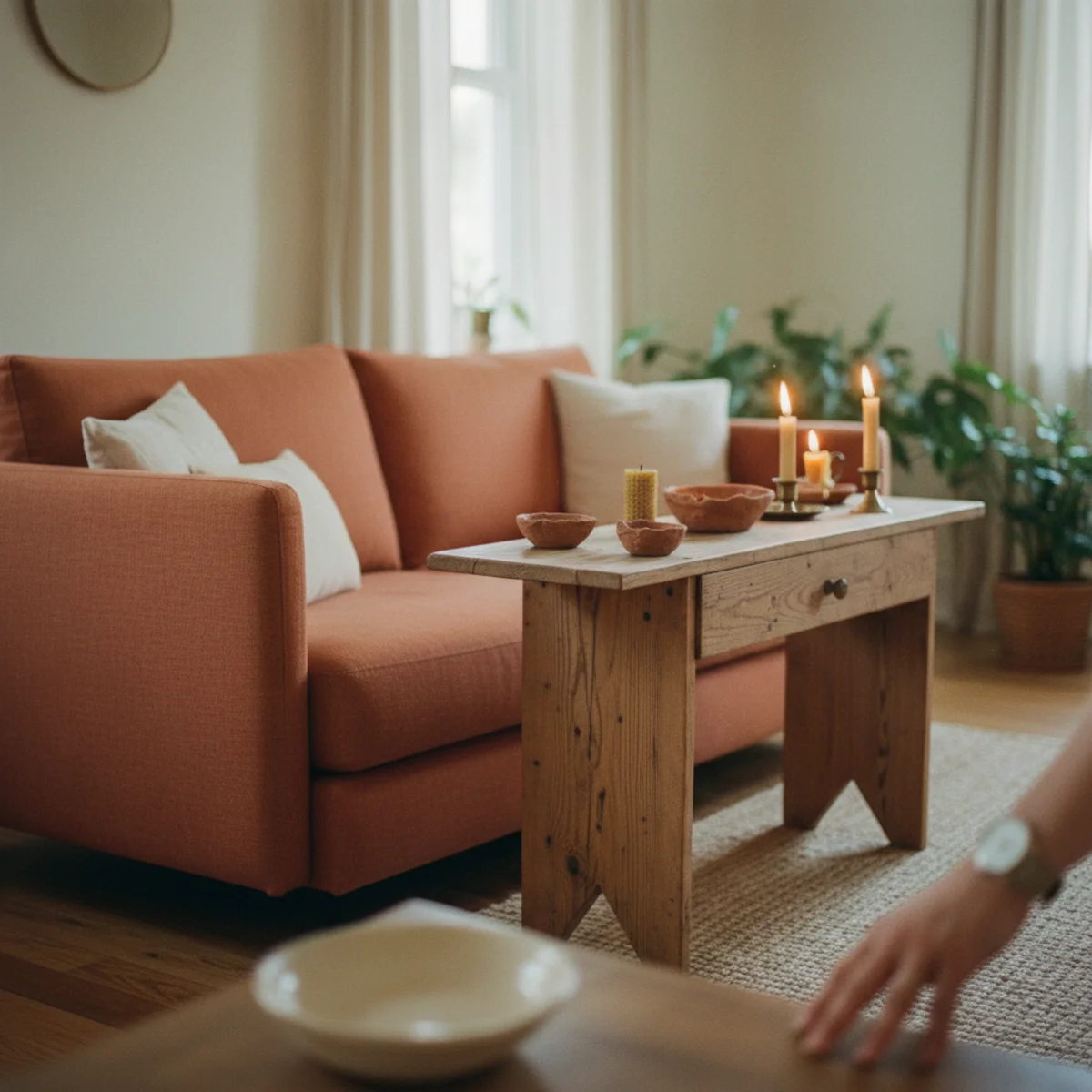
Even in rental apartments, floating the sofa 4 to 8 inches off the wall makes the room read 20 to 30 percent more spacious — the visible-floor effect from the small-living-room-ideas guide. The trick costs nothing (you're just moving existing furniture), and the gap behind the sofa can hold a narrow console for additional surface area. The single repositioning is the highest-impact zero-cost rental-living-room move.
Pull the sofa 4 to 8 inches off the wall — far enough that you can clearly see the gap from any normal viewing angle. Add a narrow console behind the sofa (10 to 14 inches deep — no deeper, the sofa should remain the primary visual zone) to use the gap productively for surface area. The console can hold two table lamps (one at each end), a small plant in the center, books or sculptural objects. Position the console parallel to the sofa back, leaving 2 to 4 inches between sofa and console. The floating-plus-console arrangement converts wasted vertical wall space into useful styling and lamp-placement zone.
AFFILIATE SLOTARRANGEMENTSofa floated 4-8 inches off wall + narrow console (10-14 inches deep) behind itAdd affiliate URL when configuredWhy it works
Because most renters instinctively push the sofa against the wall to maximize floor space — but the move actually makes the apartment feel smaller because the sofa and wall read as one continuous mass. Floating 4 to 8 inches off creates a visible gap that the brain reads as 'more wall visible, more space.' The same furniture in the same room reads as different volumes based on whether it's pushed against walls or floating. The trick is free; the impact is significant.
Pro tip — Use the gap behind the sofa for cord management to lamps on the console behind — cables run from the wall outlet behind the sofa, up the back of the console, to the lamps on top. The cords stay invisible from the main viewing angle while the lamps work normally on the console behind the sofa.
Sofa floated 6 inches off the wall, narrow console behind — free repositioning that reads 30% more spacious. See also: small-living-room-ideas
07Layer Throws and Cushions Aggressively
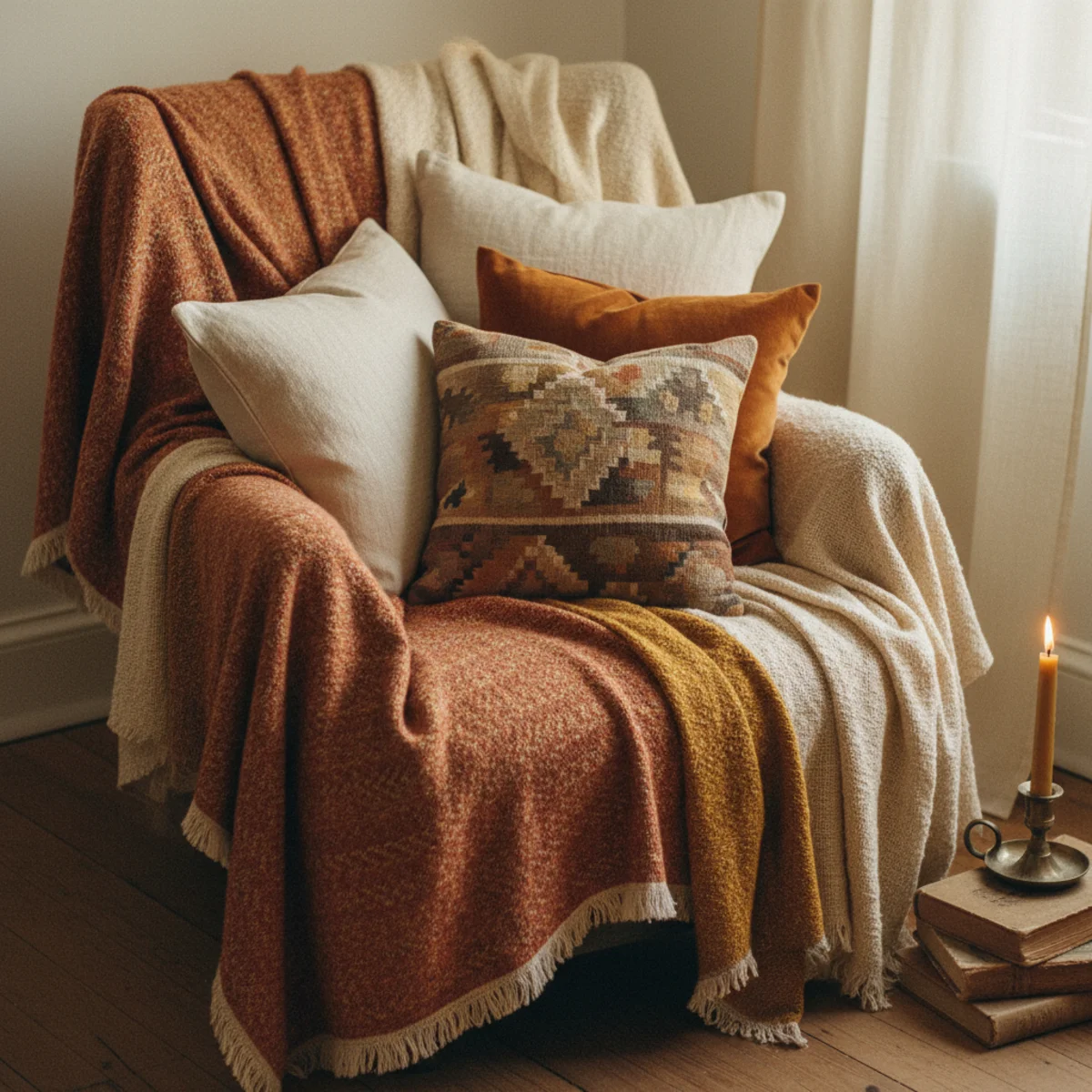
Apartment living-room sofas are often standard rental-friendly upholstery — beige, gray, or tan, sometimes worn from previous tenants. The fix is aggressive layering: 4 to 6 throw cushions in mixed textures, 1 or 2 wool throws draped over the back and arm, optional small sheepskin or boucle accent. The layering disguises the underlying sofa while adding the warm-textile depth the rental sofa entirely lacks.
Cushion arrangement: 4 to 6 throw cushions in mixed textures (linen, boucle, knit wool, mohair), in warm earth tones (cream, oat, terracotta, sage, rust). Mix sizes (18-inch + 20-inch + 14x20 lumbar) and shapes per the throw-blanket-layering rules. Sources: H&M Home covers at $15, Quince at $50, West Elm at $40 to $80 per cover. Throws: 1 wool throw draped diagonally over the back ($40 to $79 Pendleton secondhand or West Elm boucle), 1 optional sheepskin or boucle accent at the corner of the sofa ($40 to $150 real shearling). The cumulative effect disguises any sofa underneath and creates the warm textile layer that rental sofas miss.
AFFILIATE SLOTTEXTILES4-6 throw cushions in mixed textures + 1-2 wool throws + optional sheepskin accentAdd affiliate URL when configuredWhy it works
Because layered textiles cover the underlying sofa upholstery from view — 4 to 6 cushions plus throws cover roughly 60 to 80 percent of the visible sofa surface. The remaining 20 to 40 percent is what the eye sees of the actual sofa fabric, which is too small a percentage for the rental upholstery to dominate the visual impression. The brain reads the textile layering rather than the sofa underneath. The same trick works on any sofa quality; layered cushions and throws transform any rental seating into warm-home aesthetic.
Pro tip — Use cushion covers (removable, washable) rather than full cushions — cover sets at $15 to $50 each let you change the styling per season or mood, and they travel between apartments when the lease ends. Permanent cushions tie you to specific colors and patterns; removable covers don't.
Beige rental sofa disguised by four cushions, one throw, one sheepskin — the layering that transforms any rental seating. See also: throw-blanket-layering rules
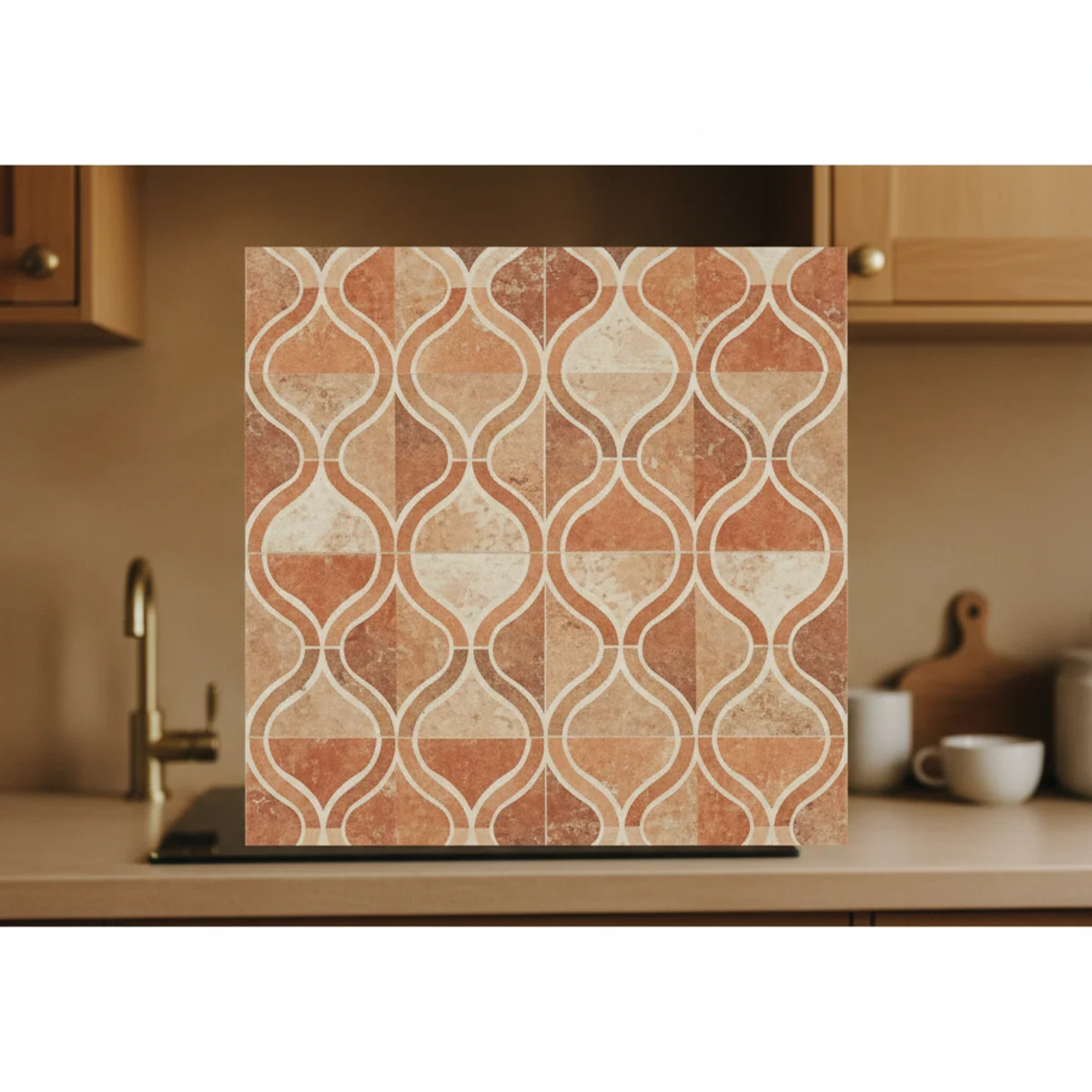
08Peel-and-Stick a Backsplash or Accent
Renters can't paint walls or install permanent backsplashes — but peel-and-stick alternatives have become genuinely good in the past three years. Peel-and-stick tile, wallpaper, and wood panels apply directly to existing surfaces, look indistinguishable from real materials at normal viewing distances, and remove cleanly at move-out without damaging walls or leaving residue.
Best peel-and-stick applications: BACKSPLASH for the coffee bar zone or behind a console (Smart Tiles at $12 per 10 sq ft sheet, in zellige, subway, or stone-look patterns), ACCENT WALL with peel-and-stick wallpaper (Tempaper at $60 to $150 per roll, in linen, plaster, or wood-look patterns), PEEL-AND-STICK WOOD PLANKS (Stikwood at $80 to $250 per pack, real wood veneer with adhesive backing). Each option transforms a wall section without paint, glue, or contractor work. Test a small area first (24x24 inches) to verify the application surface is suitable. Remove cleanly at move-out by lifting one edge and peeling slowly — the residue-free formulations leave the wall unchanged.
AFFILIATE SLOTWALLPeel-and-stick tile backsplash, wallpaper accent wall, or wood-plank veneer for non-permanent transformationAdd affiliate URL when configuredWhy it works
Because the temporary adhesive formulations have improved to the point that they hold reliably for years but remove cleanly without paint damage. The applied surface looks identical to real materials at normal viewing distances — peel-and-stick wallpaper reads as real wallpaper from 6 feet away. The rental-friendly benefit is that you get the design effect of a permanent renovation without any of the lease violation risk. The trade-off is the slightly less crisp close-up appearance, which only matters if visitors inspect walls at touching distance.
Pro tip — Test the peel-and-stick on the inside of a closet door first — if it adheres well there for two weeks and removes cleanly, it'll work on your main wall. The closet test takes 14 days and prevents the worst-case scenario of bad adhesion or residue on visible wall sections.
Peel-and-stick zellige tile backsplash — permanent-looking renovation for renters that removes cleanly at move-out. See also: Smart Tiles
09Use Furniture as Storage
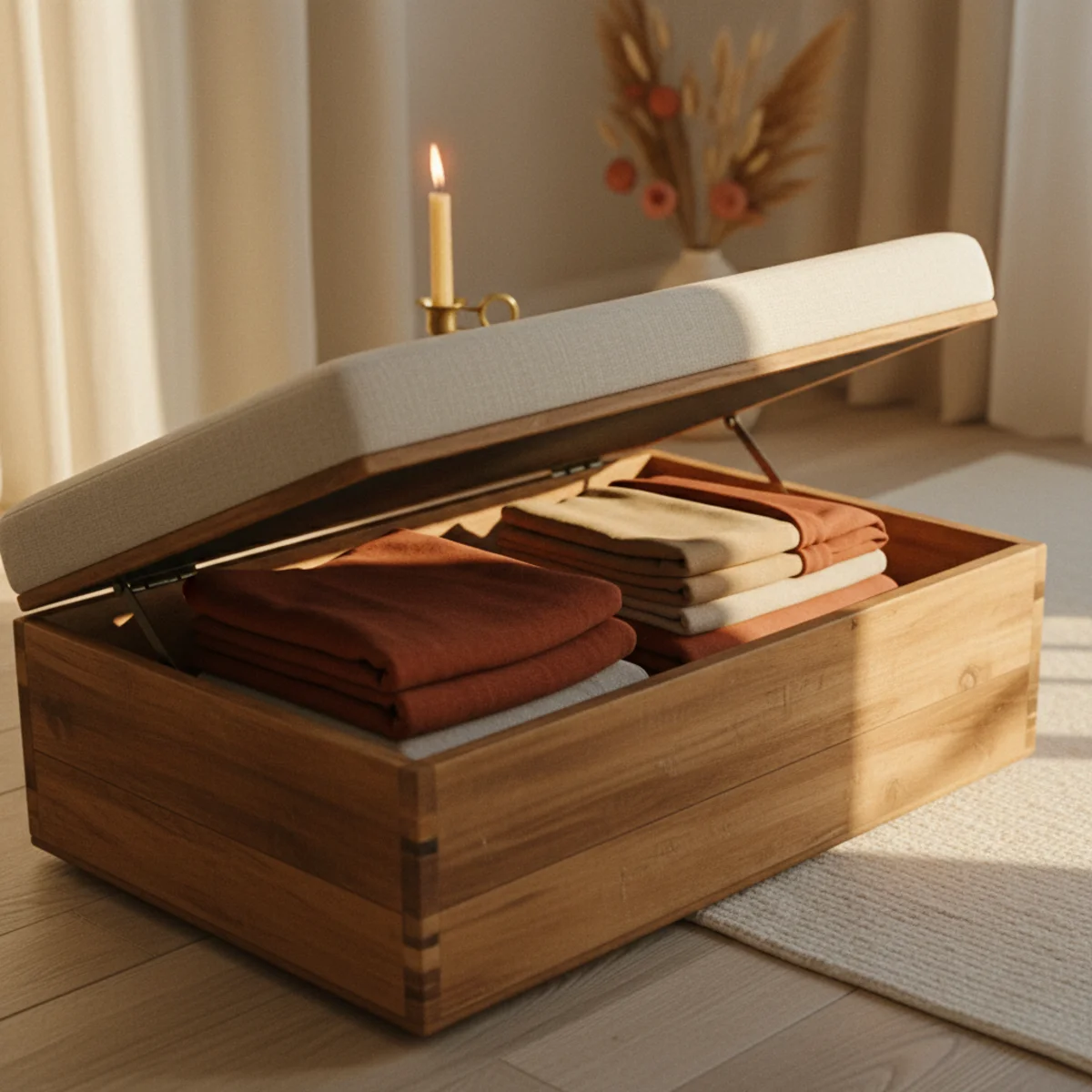
Apartment living rooms often lack built-in storage — and renters can't add cabinets or built-ins permanently. The fix is choosing furniture that doubles as storage: storage ottomans, lift-top coffee tables, consoles with drawers, sideboards with closed cabinets. Each piece serves its primary function (seating, surface, support) plus hidden storage that contains the daily clutter that would otherwise scatter.
Apartment-living storage furniture: STORAGE OTTOMAN as coffee table (per small-apartment-decorating-ideas) holds wool throws, board games, current magazines. LIFT-TOP COFFEE TABLE ($300 to $700) hides remotes and current reading; lifts to laptop or dining height for use. CONSOLE WITH DRAWERS ($200 to $600) — surface area on top, drawer storage hidden. SIDEBOARD OR CREDENZA ($300 to $900 retail, $80 to $300 secondhand) — large flat top for styling, multiple closed drawers and cabinet doors below. TV STAND WITH CABINETS — replaces a basic media stand with one that hides cables and electronics. Pick 2 to 3 storage-furniture pieces per apartment living room. Compare to permanent built-in storage (impossible in rentals); the furniture-storage approach delivers the same functional result without permanence.
AFFILIATE SLOTSTORAGEStorage ottoman + lift-top coffee table + console with drawers + sideboard for hidden storageAdd affiliate URL when configuredWhy it works
Because rentals are typically delivered with minimal storage — closets are small, kitchen pantries are limited, no built-in shelving exists in living rooms. The owner-home solution (adding built-ins or expanding closets) isn't available in rentals; the renter has to bring storage with them. Furniture pieces that double as storage are the only available answer, and the discipline of choosing storage-capable furniture across the apartment compounds significantly across multiple pieces.
Pro tip — Use the storage compartments of furniture for items that genuinely don't need daily access — wool throws (pulled out occasionally), board games, current magazines and current reading. Don't use furniture storage for daily items (keys, charging cables, remotes) because the open-close motion every day becomes friction; daily items belong in trays and visible designated zones.
Lift-top table plus sideboard with closed cabinets — the rental-friendly built-in alternative that travels with you. See also: small-apartment-decorating-ideas
10Add Plants for Free Life
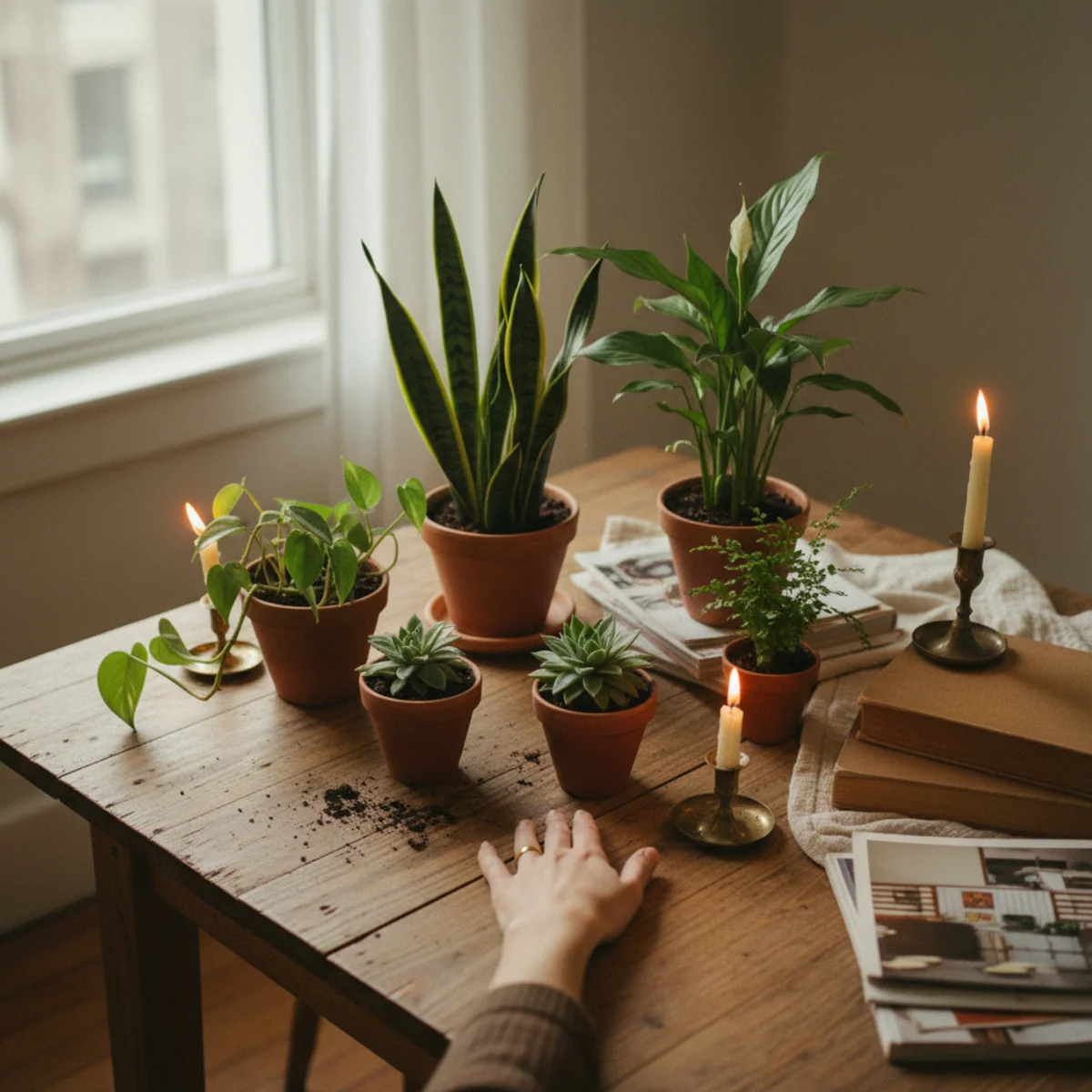
Apartments typically have one fixed amount of natural light and zero flexibility — but plants thrive within almost any rental light range if you choose the right species. 3 to 5 plants distributed across the living room add the organic shape, natural color, and life amid the otherwise static rental decor that no other decor category can match. Cost: $40 to $100 for the plant collection.
Best apartment-living plants by light condition: SUNNY (south-facing) — fiddle leaf fig 4 to 6 feet ($40 to $100), small olive tree ($30 to $80), succulents on shelves. MEDIUM/EAST OR WEST — snake plant 2 to 4 feet (near-indestructible, $20 to $40), monstera ($30 to $80), pothos trailing on shelves ($15 to $30). LOW LIGHT (north or interior) — ZZ plant ($20 to $40), cast iron plant ($25 to $50), pothos in low light. Place in warm-toned ceramic, terracotta, or rattan planters at $5 to $40 each. 3 to 5 plants per apartment living room — one large floor plant beside the sofa, one medium plant on a console, two to three small plants on shelves or windowsill.
AFFILIATE SLOTPLANTS3-5 plants across light conditions: snake plant, pothos, ZZ plant, fiddle leaf, monsteraAdd affiliate URL when configuredWhy it works
Because apartments lack the architectural features that owned homes have (built-ins, custom shelving, real fireplaces, mature views) — plants are the easiest way to add living interest without modifying the space permanently. The 3 to 5 plants distributed across the room create the kind of visual interest that built-in architectural features would in an owned home. The plants also travel between apartments; they're rental-friendly in the most complete sense.
Pro tip — Start with 2 near-indestructible plants (snake plant and ZZ plant) and build confidence before adding more demanding species. Most renters who 'kill plants' actually killed difficult plants first; starting with hardy species lets you develop watering and light-management skills before risking the more sensitive plants.
Four plants across the apartment — the living architecture that rental homes specifically need. See also: warm-toned ceramic
11Swap the Hardware — Keep the Originals
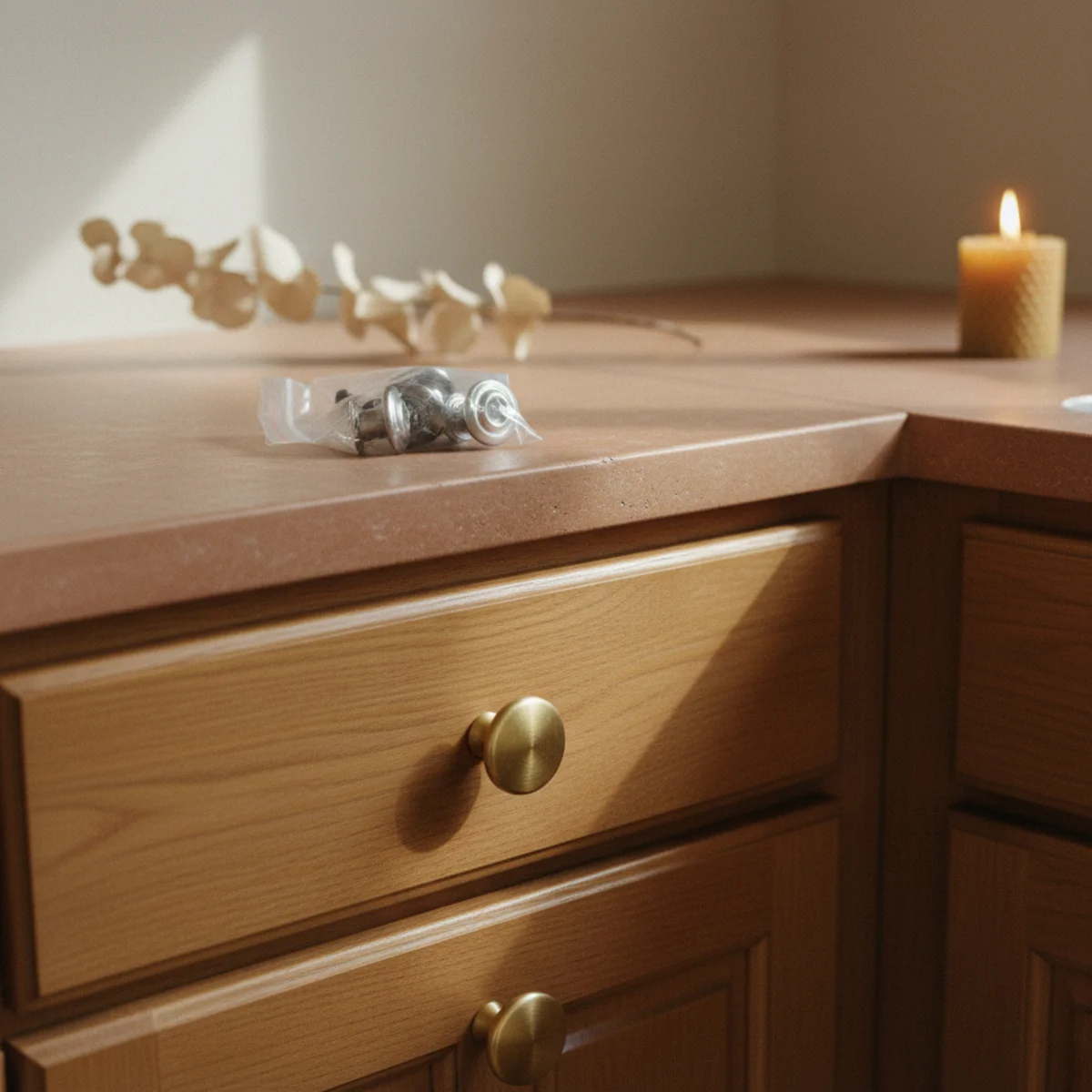
Cabinet pulls, drawer knobs, and door handles in rental apartments are usually outdated or generic — but rental rules typically forbid permanent modification. The renter-friendly fix: swap the hardware for aged brass or bronze (per the warm-metals rules), keep the originals in a labeled bag, and re-install the originals at move-out. The transformation is dramatic; the rental-friendly approach is reversible.
Audit visible hardware in the living room: media console pulls, sideboard handles, console drawer knobs, even radiator covers if accessible. Replace with aged brass, antique bronze, or hammered copper at $4 to $20 per pull from House of Antique Hardware or Hardware Hut. Save the original pulls in a labeled bag taped to the inside of the cabinet or in a designated 'rental hardware' drawer. At move-out, reverse the swap: unscrew the warm hardware, re-install the originals, take your warm hardware with you to the next apartment. The swap typically takes 30 minutes per piece of furniture; the reversal takes the same. Zero lease-violation risk.
AFFILIATE SLOTHARDWAREReplace visible pulls/knobs with aged brass; save originals in labeled bag for move-outAdd affiliate URL when configuredWhy it works
Because hardware is one of the few visible elements in a rental apartment that you can change without leaving any permanent trace — the holes pre-exist (the original screws used them), so the new hardware fits without new holes. The visual impact is enormous (hardware is touched and seen constantly throughout the day), but the rental-friendly approach is total (the originals can be re-installed before move-out, restoring the apartment to its original state).
Pro tip — Label the bag of original hardware with masking tape and a Sharpie — 'kitchen cabinet pulls,' 'media console knobs,' 'sideboard handles' — so the re-installation at move-out doesn't become a mystery sorting exercise. The 30 seconds of labeling at swap-time saves an hour at move-out.
Brass pulls in, generic pulls in a labeled bag — the rental-friendly upgrade that reverses at move-out. See also: warm-metals rules
12Define Zones With Rugs and Lighting
Apartment living rooms often combine living, dining, and sometimes working in one open space — and the rental constraint is the inability to build walls. The fix is the same zone-definition approach from the small-apartment-decorating-ideas guide: rugs to define floor footprints, lighting changes to define mood per zone, furniture-back orientation to create visual walls without physical ones.
Define 3 to 4 zones in an apartment living room: LIVING (sofa + chairs + coffee table on one rug), DINING (table + chairs on a separate rug, with pendant or chandelier overhead), READING OR WORKING (single chair + side table + floor lamp in a defined corner, optional small rug), MEDIA (TV console area with its own ambient lighting). Each zone has its own rug defining the floor footprint, its own lamp arrangement defining the lighting mood, and its own furniture orientation. The combined zone-definition reads as multiple defined rooms in one continuous space, which is what the apartment needs to feel like a real home rather than one large undifferentiated room.
AFFILIATE SLOTZONESDefine 3-4 zones with rugs, lighting, and furniture orientation in open-plan apartmentsAdd affiliate URL when configuredWhy it works
Because the brain processes one undifferentiated open space as one zone — even a 350-square-foot open-plan living-dining-kitchen feels smaller than the same square footage divided into defined zones. The same square footage divided into 3 to 4 defined zones reads as multiple rooms with multiple functions, which feels significantly more spacious and capable. The defined zones also support different activities (work focuses in working zone, rest happens in seating zone), which the brain associates with their physical positions.
Pro tip — Use a different rug pattern or color in each zone — same warm palette but visibly different rugs — to make the zone boundaries explicit. The visual signal of different rugs reads as different rooms even without any physical separation, and the contrast is what reinforces the zone definition.
Living, dining, reading — three defined zones in one open space using rugs and lighting alone. See also: small-apartment-decorating-ideas guide
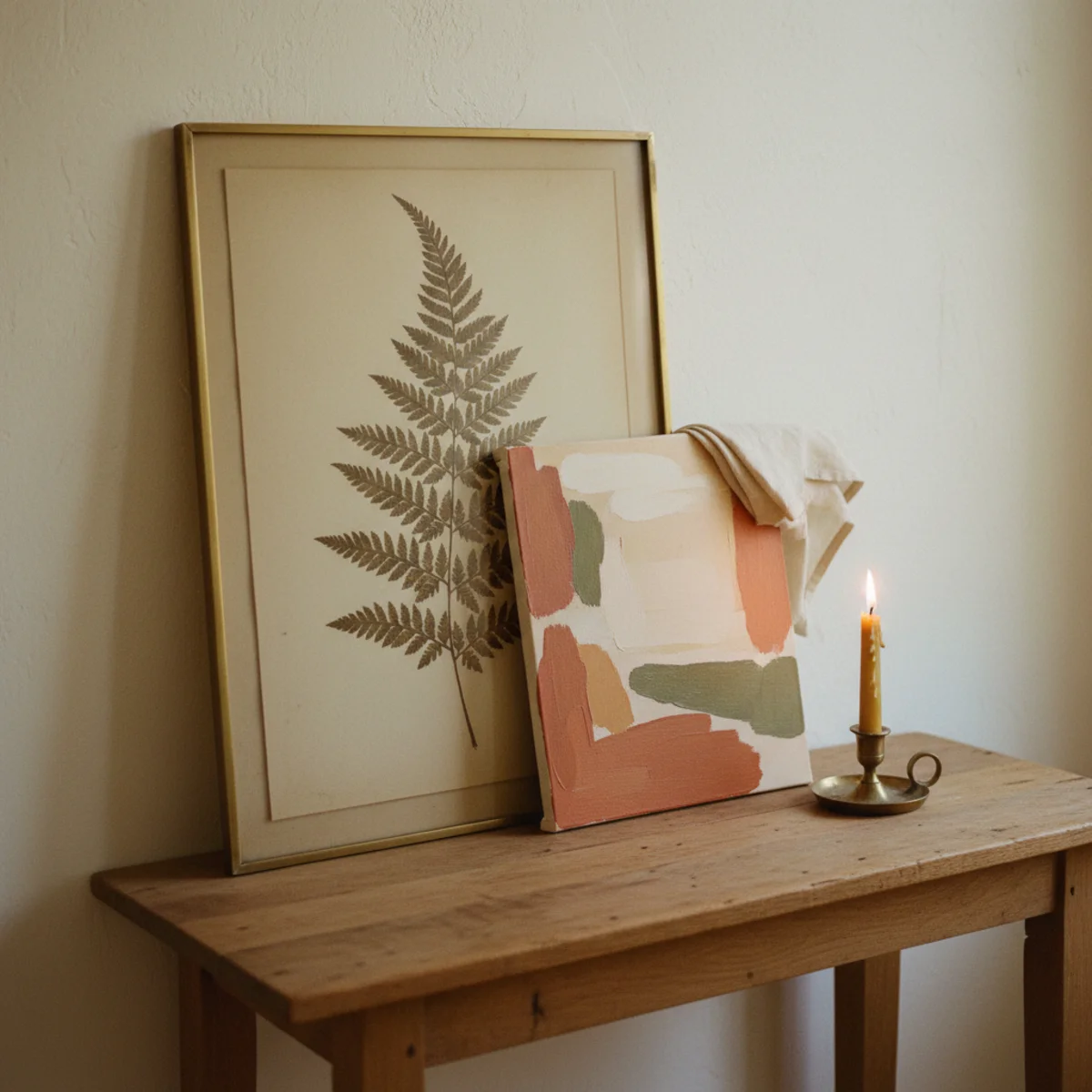
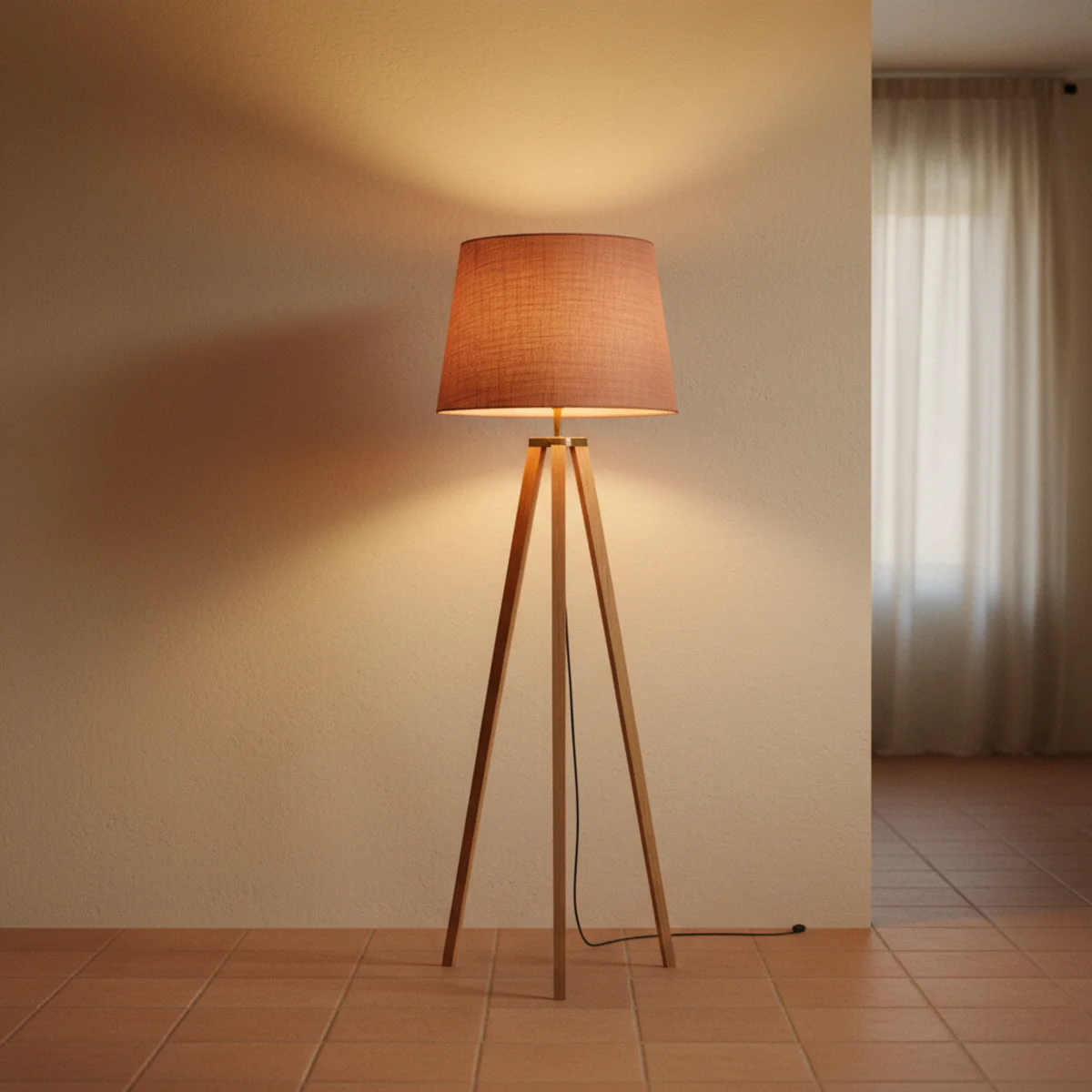
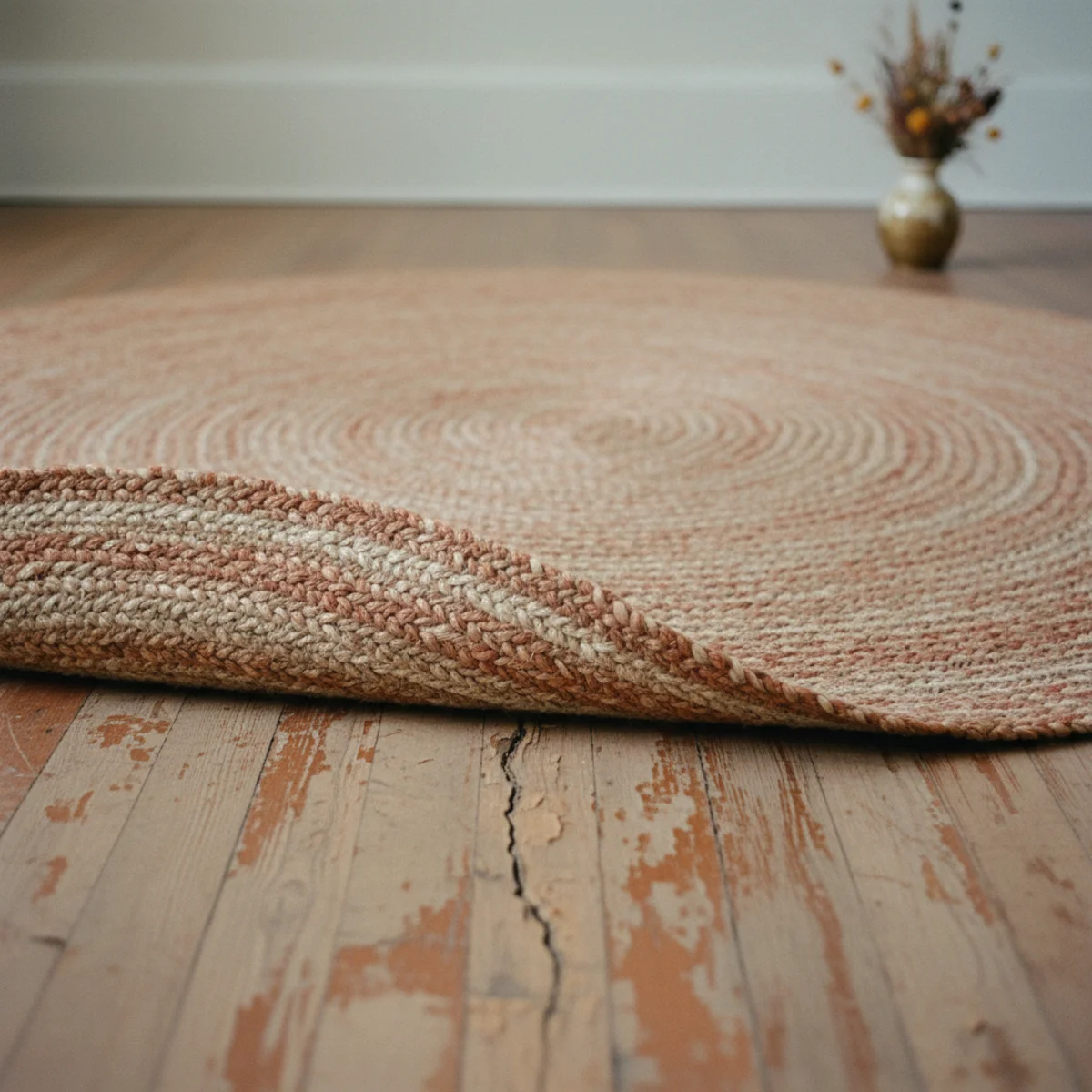
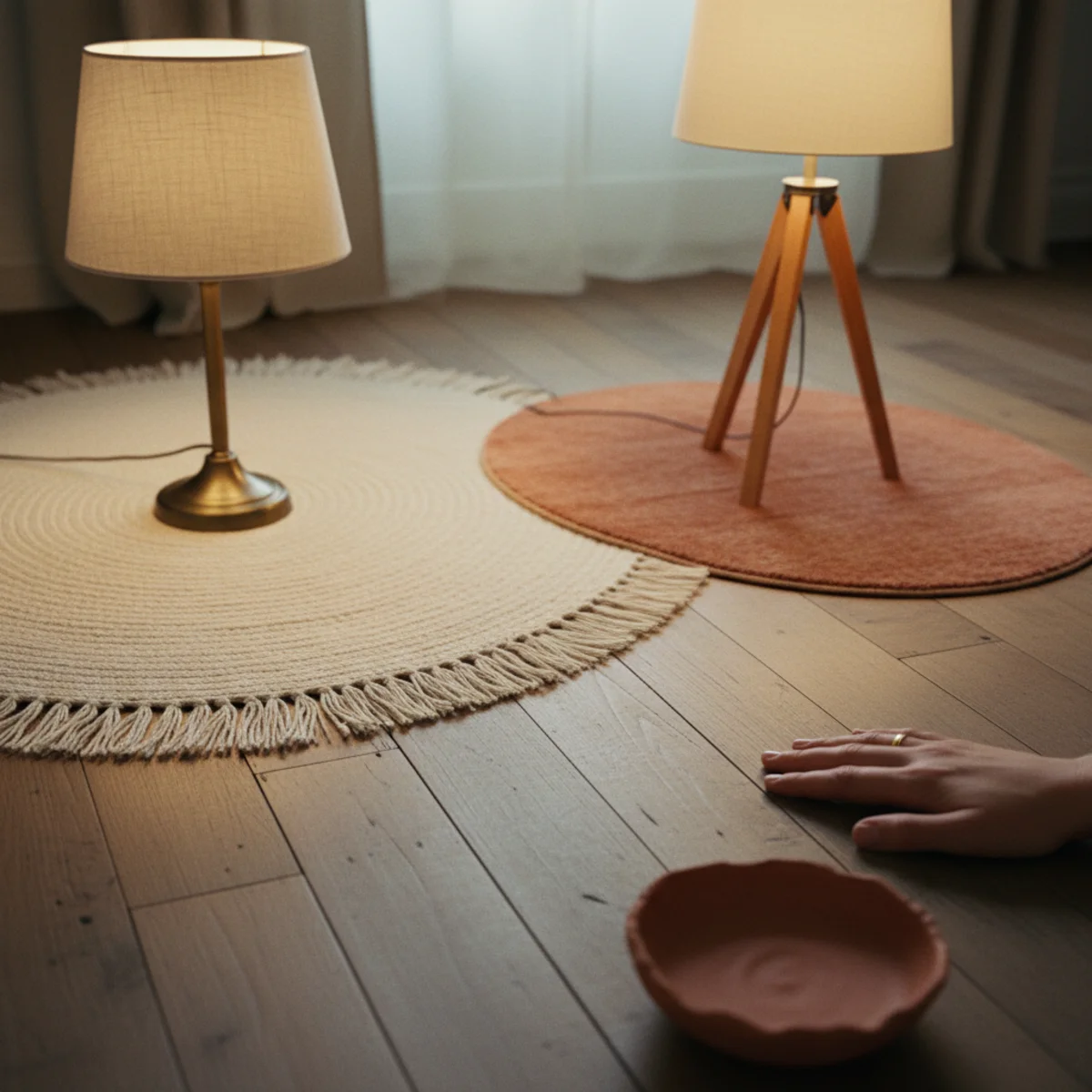
How to warm up a rental living room step by step
Work from the most portable, highest-impact changes down. No drill required.
- 1Fix the light with plug-in lamps
Ignore the cold overhead. Add two or three 2700K lamps at different heights and put one on a timer. This is the biggest change and it's fully portable.
- 2Lay a large rug
Cover the rental floor with a big wool rug to warm the room and hide whatever's underneath. Anchor the sofa's front legs on it.
- 3Float and layer the seating
Pull the sofa off the wall, add a throw and cushions, and angle the seating inward toward a center.
- 4Add reversible character
Lean a mirror and some art, hang tension-rod curtains, add plants, and swap the hardware — all of it no-hole and packable.
Quick tips
- Spend on portable pieces — a good rug, real lamps, a wool throw — and skip anything you'd install.
- Lean mirrors and art instead of hanging; it's reversible and often looks better anyway.
- Use tension rods for curtains to skip brackets and screws entirely.
- Bag and label original hardware before swapping knobs so move-out is painless.
- Test peel-and-stick products on a hidden patch first to confirm clean removal.
- Float the sofa off the wall — the single biggest free upgrade in any rental.
Apartment living rooms by type
Use a rug and a floor lamp to define the living zone, and a low bookshelf as a soft divider.
Lean on scale — a low leggy sofa, one big mirror, tension-rod curtains hung high — to make the space feel larger.
Cover bad floors with a rug, swap the hardware, lean art over tired walls, and let warm lamps carry the room.
Build entirely from secondhand — a thrifted rug, estate-sale lamps, a marketplace sofa — using our thrifted decor guide.
You can make a rental warm without a single drill bit. Lean the art, plug in the lamps, throw the wool.
Frequently asked questions
How can I decorate an apartment living room without putting holes in the wall?+
What's the best lighting for an apartment living room?+
How do I cover bad rental floors?+
Can I really change cabinet hardware in a rental?+
What kind of curtains work without mounting brackets?+
How do I make an apartment living room feel like a real home?+
Treat your rental as a blank slate, not a compromise, and build it from portable layers: warm plug-in lamps, a big rug, a floated sofa, leaning art, and tension-rod curtains. We'd spend on the rug and the lamps before anything else — they do the most for warmth and they move to the next apartment with you. Skip anything bolted to a wall you don't own. The deposit stays safe, and the cozy comes with you wherever the lease ends.