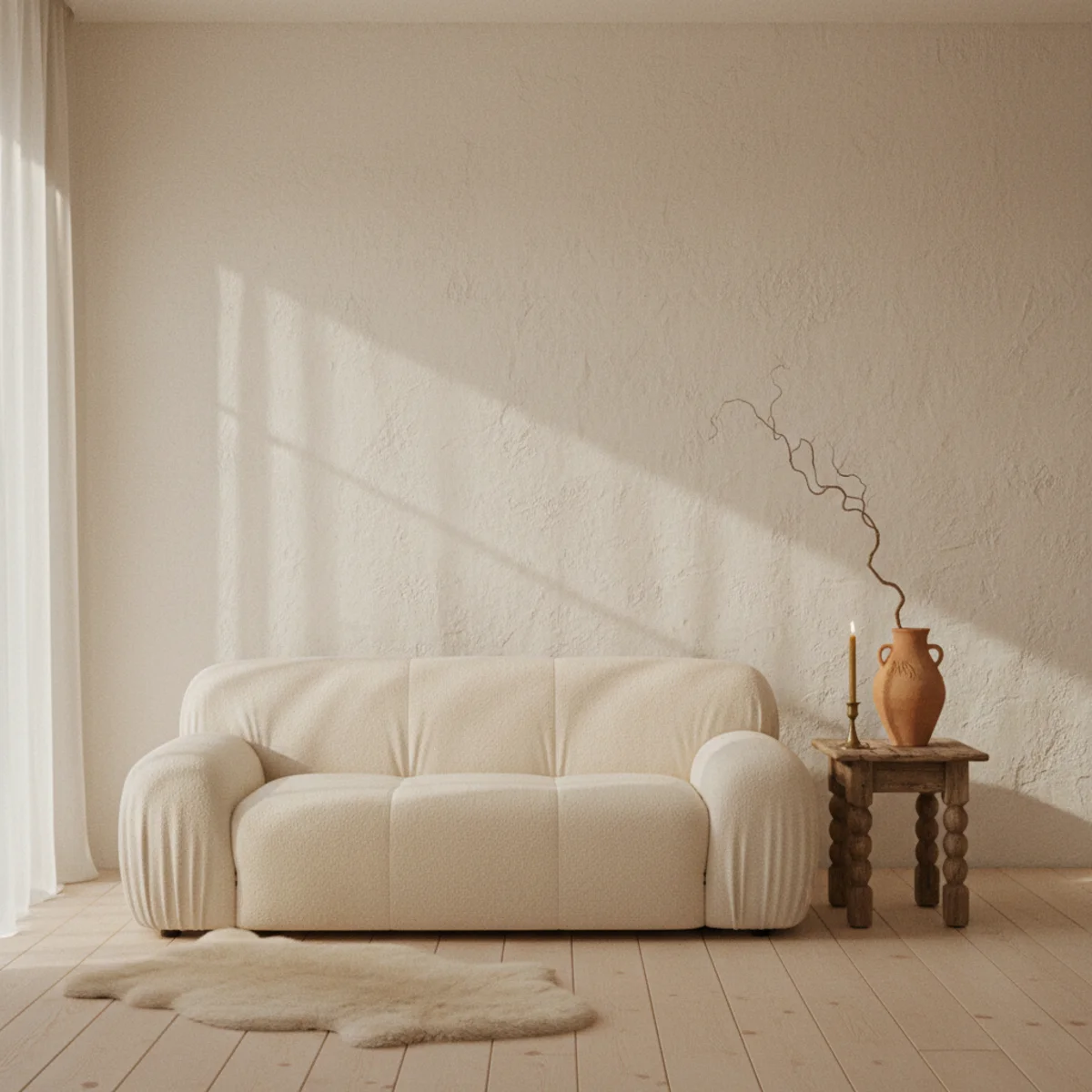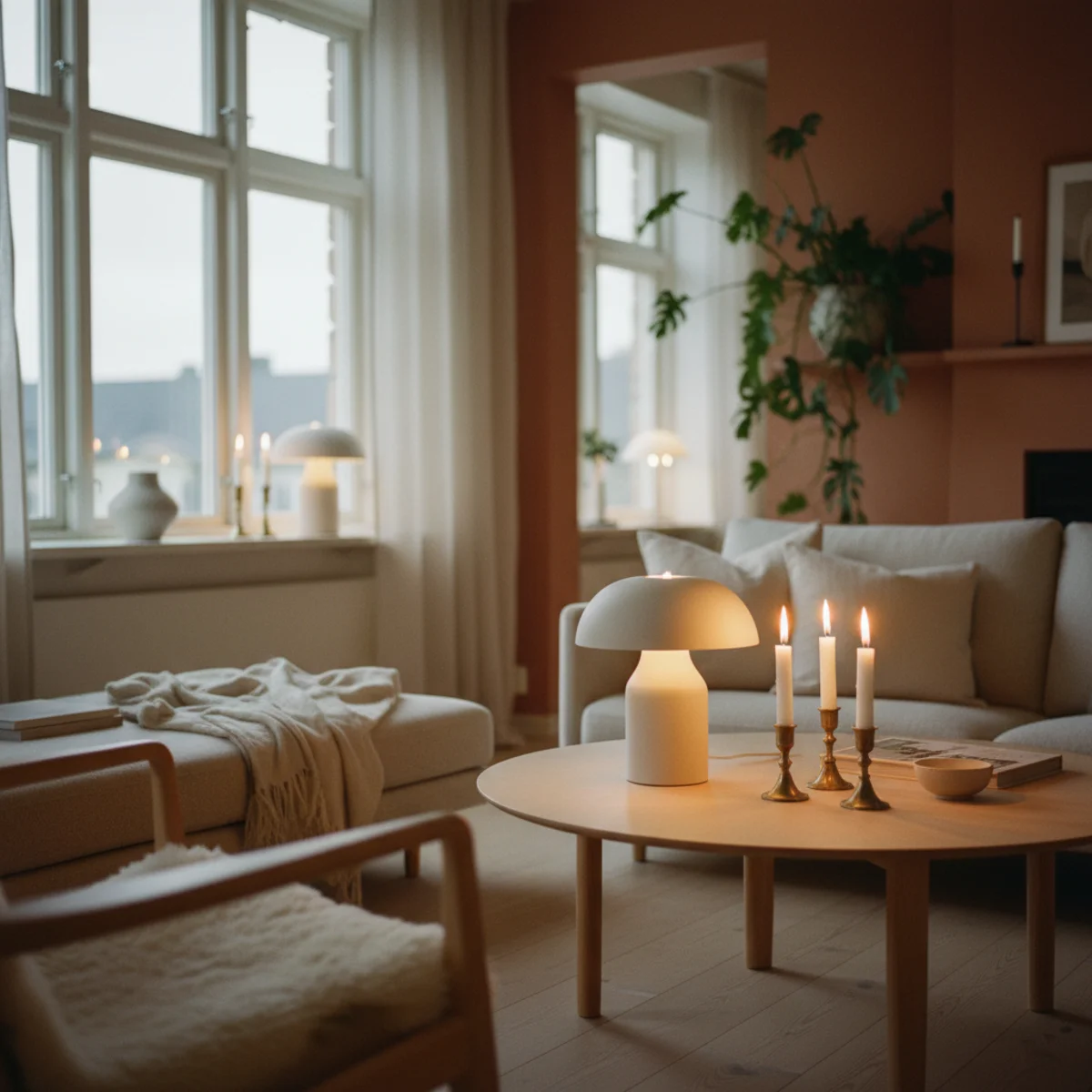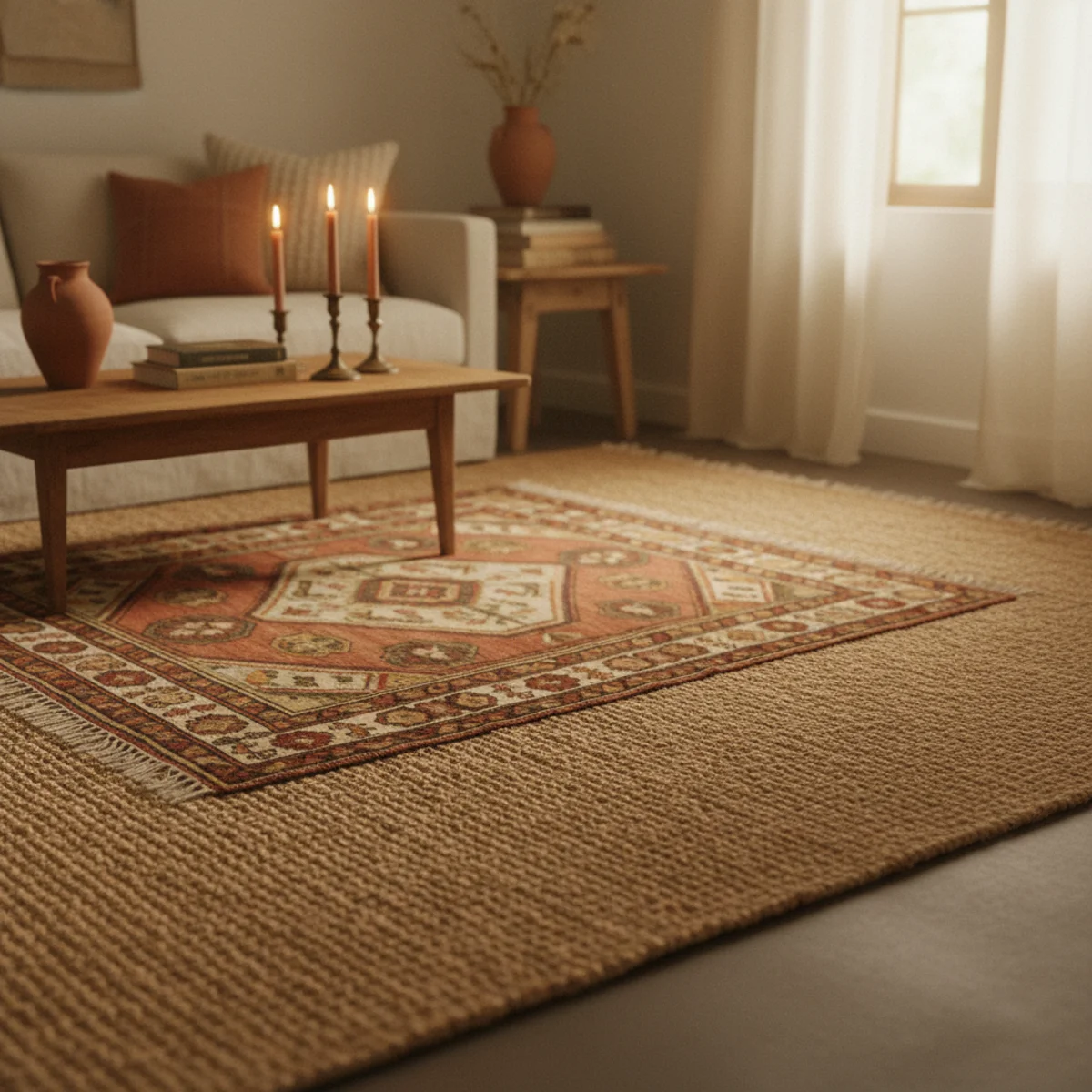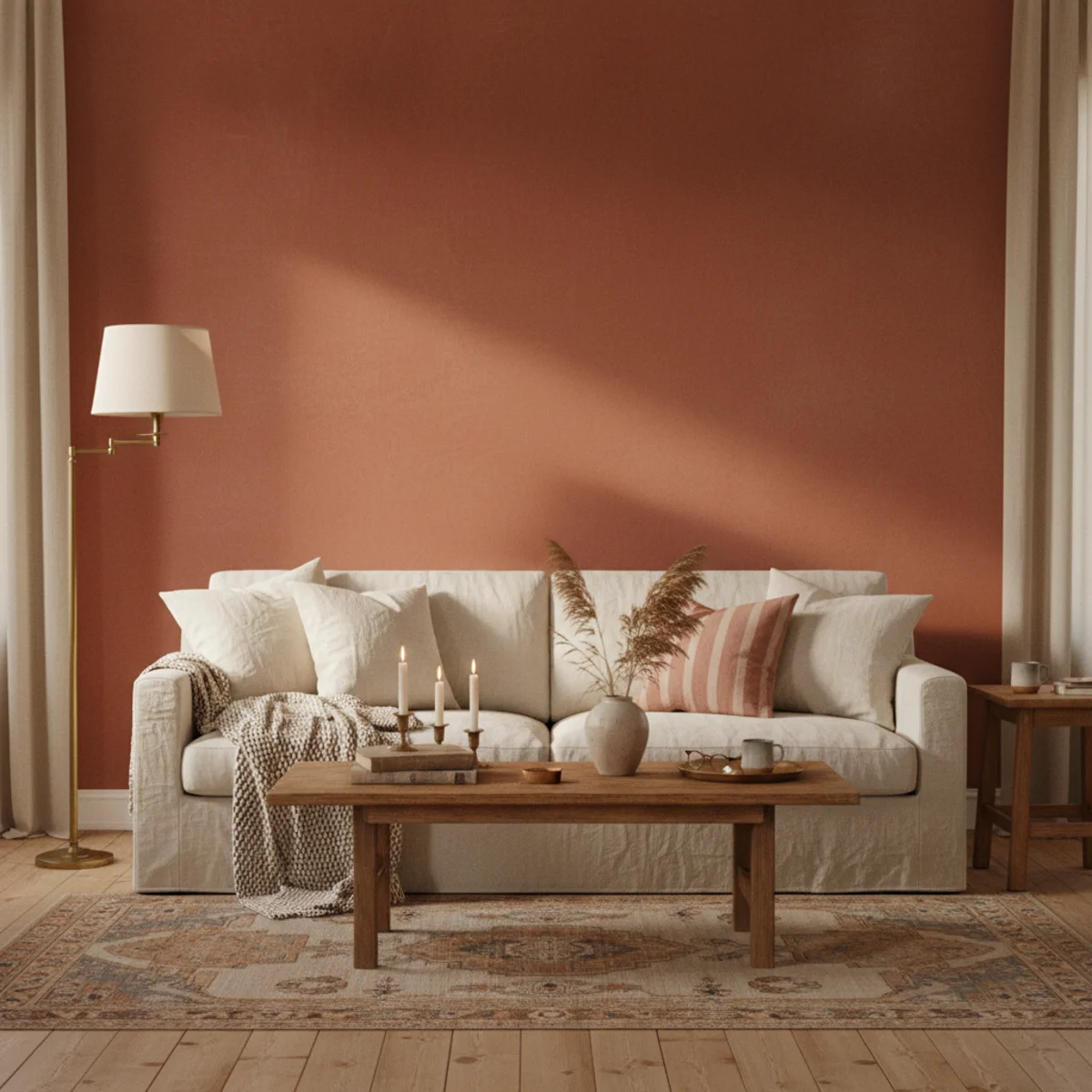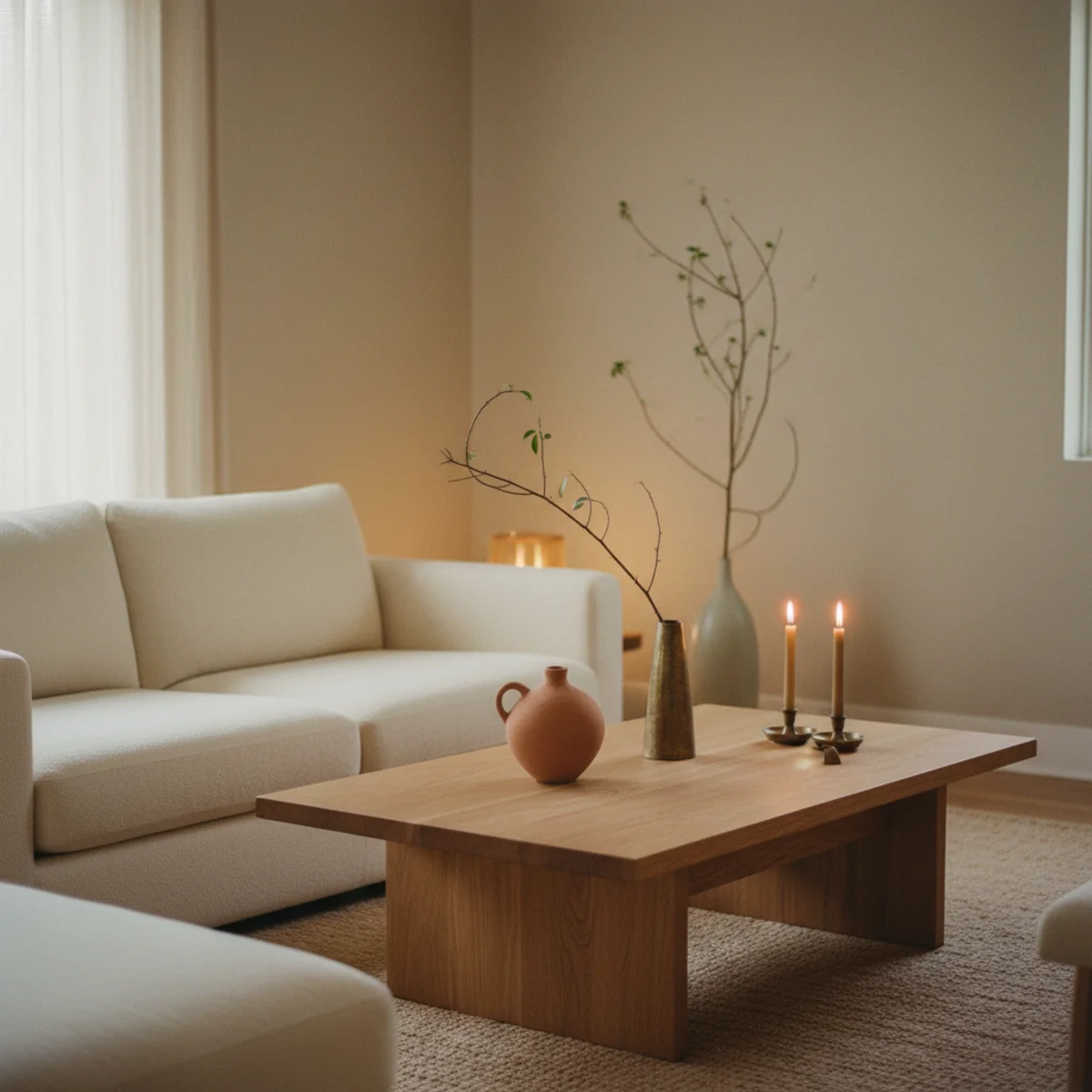
These twelve Japandi style principles are tested across actual Japanese-and-Scandinavian-inspired homes, examining the genuine cultural sources (Japanese wabi-sabi, Danish hygge, traditional craft from both regions) rather than the commercial Japandi aesthetic that hardware stores and big-box retailers manufactured. Each move below names specific furniture choices, palette commitments, empty-space discipline, ceramic and textile selections, lighting approaches, and editing principles that produce genuine Japandi rather than imitation.
Commercial Japandi failed when retailers compressed the two source traditions into a marketable hybrid without examining what actually made each tradition warm and humane. Real Japandi requires both the Japanese embrace of wabi-sabi (imperfection, asymmetry, deliberate emptiness) AND the Scandinavian commitment to functional craft (well-made furniture that lasts generations, textile layering for hygge, considered lighting). The hybrid is harder than either source alone because it demands disciplines from both.
By the end of this guide, you'll know exactly which moves produce genuine Japandi style — the low well-made wood furniture, the calm warm-neutral palette, the deliberate empty space discipline, the handmade ceramics, the natural-fiber textiles, and the seven other principles that distinguish real Japandi from commercial knockoffs.
WHAT'S INSIDE
- Why low well-made wood furniture is the structural foundation of every real Japandi space
- The calm warm-neutral palette that's both Japanese and Scandinavian without being beige
- The deliberate empty space rule that commercial Japandi consistently violates
- How handmade ceramics and natural-fiber textiles ground the otherwise-restrained aesthetic
Japandi is where Japanese wabi-sabi meets Scandinavian hygge — imperfect, natural beauty and cozy restraint, in one calm room.
— Kinfolk Home [citation needed — verify before publish]
What is Japandi style?
Japandi is a design style that fuses Japanese and Scandinavian aesthetics, combining the Japanese principles of wabi-sabi (finding beauty in imperfection and natural simplicity) and minimalism with the Scandinavian values of functional craftsmanship and hygge coziness. The two traditions overlap so naturally — both prize natural materials, clean lines, restraint, and warmth — that the fusion feels natural rather than forced.
In practice, Japandi means low, well-made wood furniture, a calm neutral palette warmed with natural tones, handmade ceramics and natural-fiber textiles, an uncluttered space with deliberate emptiness, and a few imperfect, handcrafted objects rather than many polished ones. It's warm minimalism refined to its essence: spare enough to feel calm and uncluttered, but warmed by wood, craft, and texture so it never reads cold. The deliberate empty space is as important as the objects.
More in Styling you may love
See allWhy Japandi is everywhere in 2026
Japandi rode the warm-minimalism wave to become one of the most-searched design styles — Pinterest's Japandi searches climb every year, as people sought a calm, uncluttered, but genuinely warm aesthetic that neither cold minimalism nor busy maximalism delivered.
The honest appeal is that Japandi resolves the central tension of modern decorating: how to have a calm, spare, uncluttered home that's also warm and inviting. By fusing Japanese restraint with Scandinavian coziness, it offers minimalism with soul — natural materials, handcraft, and warmth within a deliberately spare, calming space. As people grew tired of both cold all-white rooms and overstuffed maximalism, Japandi's warm, quiet middle ground became exactly what they wanted.
12 ways to get the Japandi look
01Choose Low Well-Made Wood Furniture
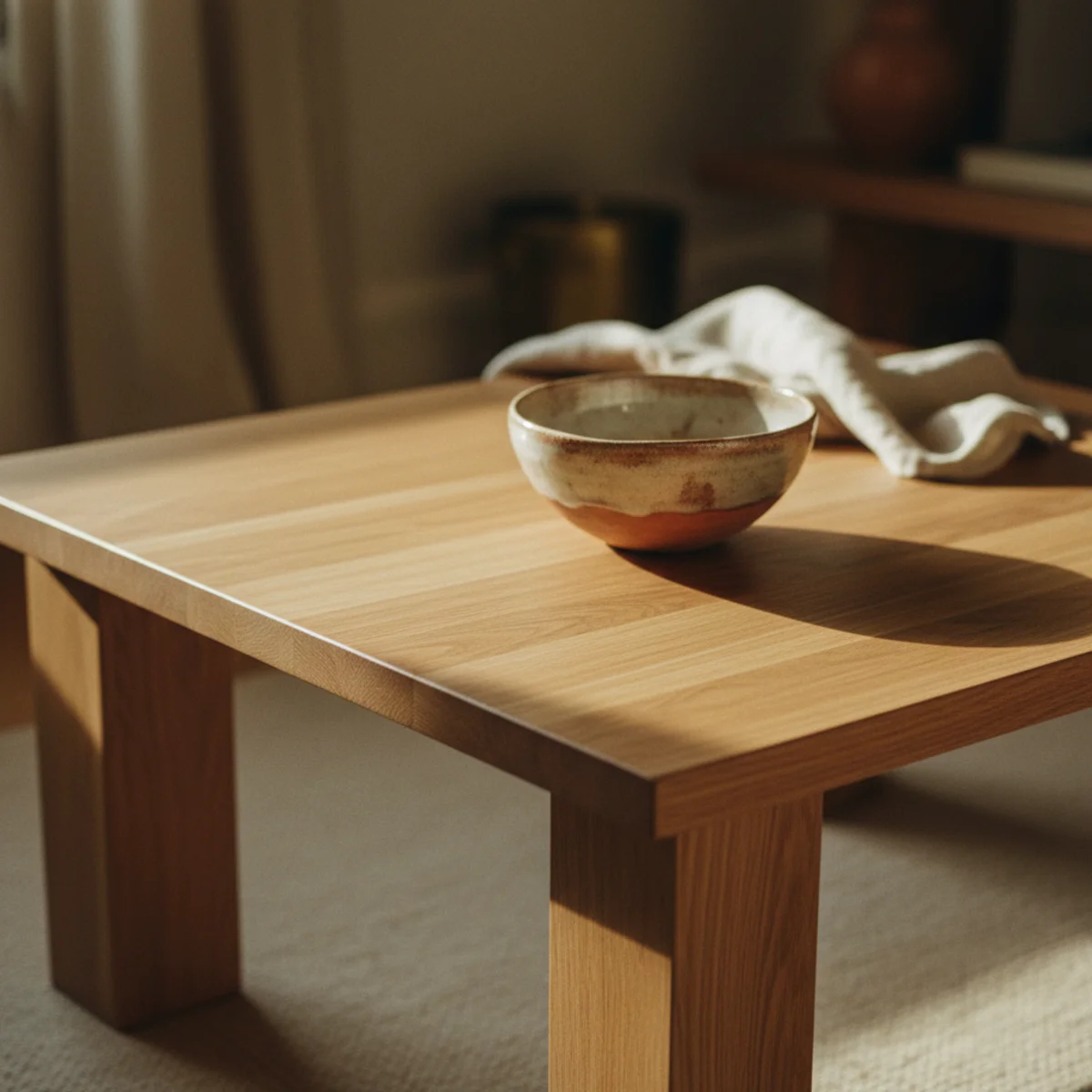
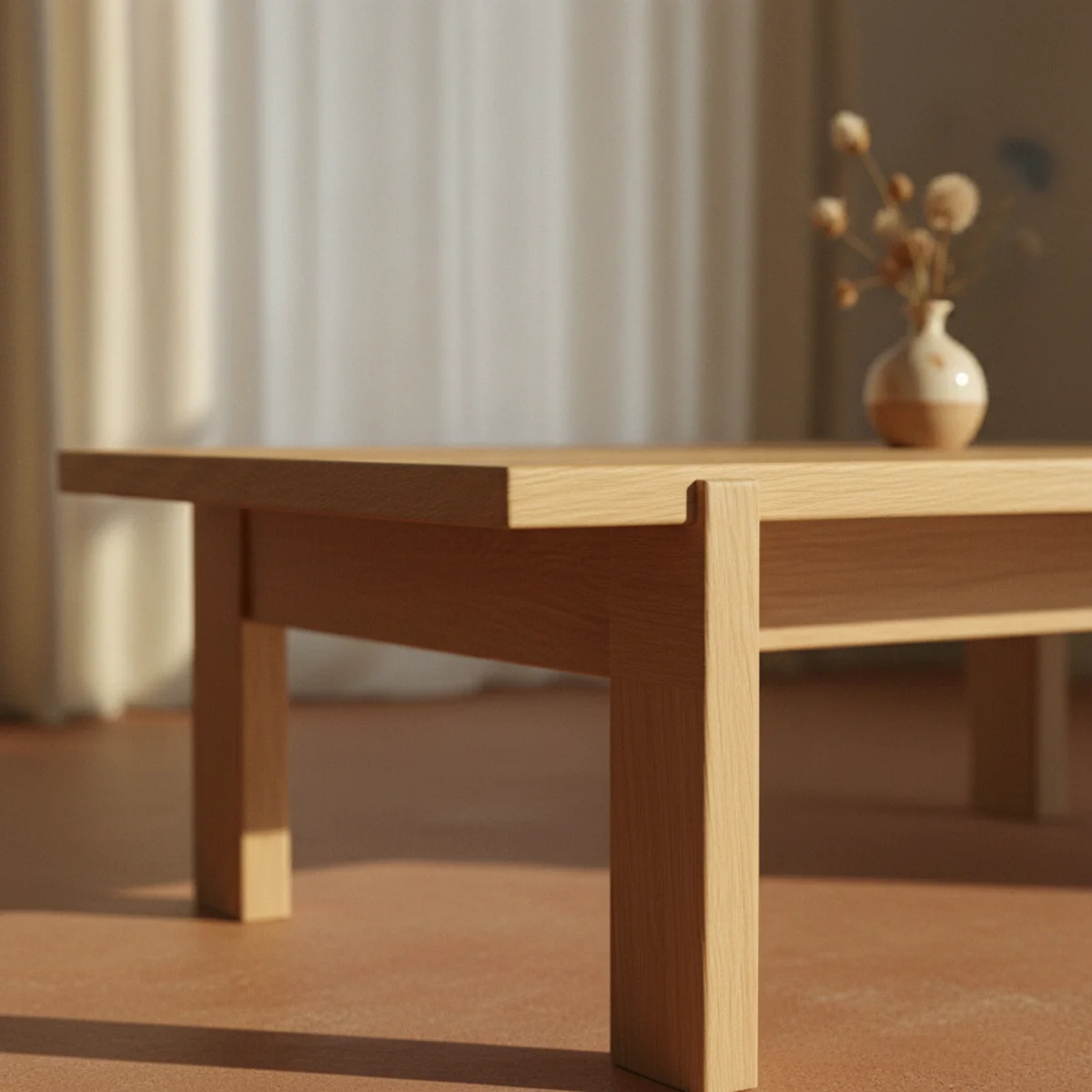
The structural foundation of genuine Japandi is low-profile, well-made wood furniture — coffee tables under 18 inches tall, sofas with seat heights 15 to 17 inches (rather than the 18 to 22 inches typical of Western furniture), platform beds 6 to 10 inches off the floor. The low profile is the Japanese tradition (close-to-floor living) refined through Scandinavian craft (excellent joinery, finished hardwood, enduring construction).
Japandi furniture specs: COFFEE TABLE — low platform 12 to 18 inches tall in solid oak, walnut, teak, or oiled pine. Sources: vintage Danish modern at $150-600 (Børge Mogensen, Hans Wegner), Article Madera at $399, or thrifted mid-century at $80-300 from Marketplace. SOFA or SECTIONAL — lower seat height (15-17 inches) versus typical 18-22, slipcovered linen in cream/oat/natural at $999-2,500 (Article Sven, Burrard slipcover, IKEA EKTORP at $549). PLATFORM BED — 6 to 10 inches off floor in solid oak or walnut at $300-1,500 (IKEA MALM is too generic; look for Tarn at IKEA, or Article Nera at $799, or vintage Mogensen at $400-800). DINING TABLE — solid wood 28 to 30 inches tall, oak or walnut, simple lines without ornamental details at $400-2,000. AVOID: high-profile Western furniture, ornate carved details, glass-and-chrome modern pieces, anything reading as fussy or decorative.
AFFILIATE SLOTFURNITURELow solid-wood furniture: 12-18 inch coffee tables, 15-17 inch sofa seat height, 6-10 inch platform beds; oak, walnut, teakAdd affiliate URL when configuredWhy it works
Because the low-profile aesthetic is one of the defining qualities Japandi inherits from Japanese tradition (where futon, low tables, floor-based living have been central for centuries) — and well-made craftsmanship is what Scandinavian tradition contributes. The two together produce furniture that's both close-to-floor (Japanese influence) and built to last generations (Scandinavian influence). Commercial Japandi often gets one of these right (low + cheap, or well-made + standard Western height) but rarely both. The combination is what distinguishes genuine Japandi from imitation.
Pro tip — Buy fewer pieces but invest in quality — one $600 vintage Danish modern coffee table outperforms three $200 generic low tables in Japandi aesthetic terms. The Japanese 'shibui' principle of simple elegant beauty rewards quality over quantity, as does the Scandinavian craftsmanship tradition. Save toward the right piece rather than settling for multiple wrong ones.
Low Danish-modern coffee table, low sofa, platform bed — well-made wood at Japanese-inspired heights. See also: Hans Wegner
02Keep a Calm Warm-Neutral Palette
Japandi palette is warm neutrals only — cream, oat, soft beige, warm taupe, terracotta accent, soft sage, deep clay, with natural wood tones and small amounts of muted black. The discipline is restrictive: no saturated colors, no cool blues or greys, no high-contrast schemes. The restricted palette is what allows the architectural simplicity and well-made furniture to read clearly without being competed-with by color.
Japandi palette specs: PRIMARY (70-80% of visible color) — warm whites (F&B Pointing 2003, BM White Dove OC-17), warm cream (BM Soft Chamois OC-13), light oak or ash wood tones. SECONDARY (15-25%) — soft warm taupe, oat, muted terracotta, soft sage, deep clay in textiles and ceramics. ACCENT (less than 5%) — muted black for contrast (single black-framed piece, dark wood frame, oiled bronze hardware), occasional aged brass details, single deep accent (terracotta cushion, sage throw). AVOID: cool greys, bright whites, navy, saturated greens, brown leather (too cool-warm hybrid), pure reds, yellows, blues. The single most-important discipline: commit to ONE warm palette family (terracotta-warm or sage-warm or cream-only) and apply consistently across walls, textiles, art, ceramics.
AFFILIATE SLOTPALETTEWarm whites + soft taupe/oat/sage/terracotta + natural wood + minimal muted black; one warm palette family, applied consistentlyAdd affiliate URL when configuredWhy it works
Because Japandi inherits visual restraint from both source traditions — Japanese wabi-sabi emphasizes muted natural tones rather than saturated colors, and Scandinavian aesthetic prioritizes a few well-chosen neutrals over multiple competing hues. The restricted palette also creates the visual calm that Japandi rooms specifically need — calm enables the appreciation of texture (wood grain, ceramic glaze, textile slub) that saturated colors would obscure. Color competes with texture; restricted palette lets texture be the visual interest.
Pro tip — Test paint samples on multiple walls for 3 days under both daylight and warm 2700K lamplight before committing — warm earth tones can read very differently across lighting conditions, and Japandi palette discipline depends on the chosen color reading correctly in your specific space.
Warm whites, oat linen, light oak, terracotta accent, single black frame — calm warm-neutral palette discipline. See also: best-paint-for-warm-home
03Embrace Deliberate Empty Space
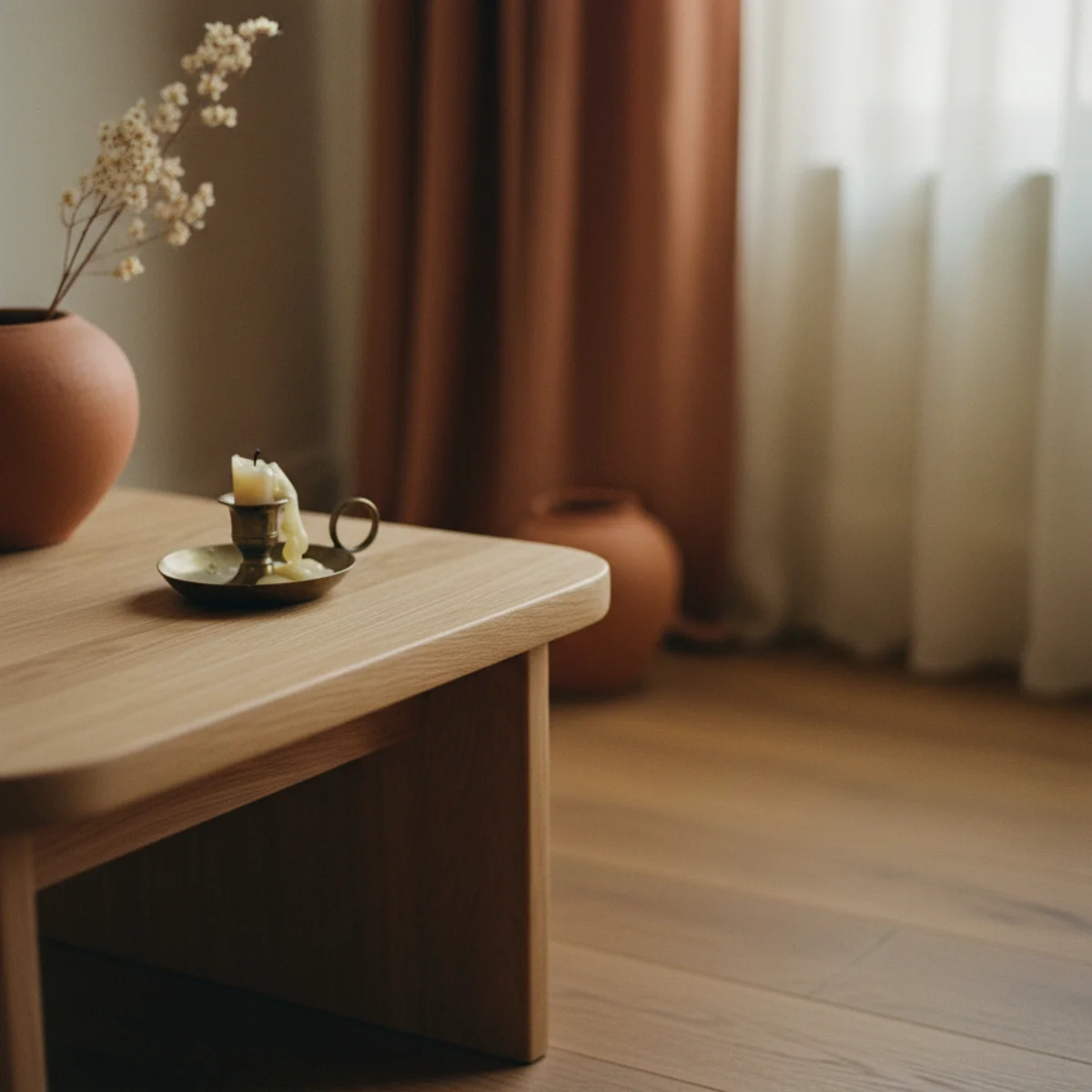
Genuine Japandi requires deliberate empty space — surfaces that stay 60 to 70% empty, walls that hold one piece of art rather than gallery walls, rooms with significantly less furniture than equivalent Western rooms. The empty space is the Japanese ma (negative space as positive design element) refined through Scandinavian editing discipline. Commercial Japandi consistently violates this principle.
Empty space principles for Japandi rooms: WALL DENSITY — one piece of art per wall maximum (or zero on most walls). Single substantial piece (24-36 inches in long dimension) per 8-12 foot wall section. SURFACE DENSITY — coffee tables hold 3 items max (one ceramic vessel, small stack of books, single small object). Consoles 5 items max. Side tables 1-2 items. SHELVES 30-40% empty per shelf, with intentional vertical gaps. ROOM DENSITY — significantly less furniture than Western rooms of similar size: a 200 sqft living room might have one sofa, one chair, one coffee table, and one console — total of 4 furniture pieces, where a Western equivalent would typically have 6-8. WALKWAYS AND OPEN ZONES — at least 30-40% of floor space visibly empty (not crowded with furniture). The empty space is the design; objects are placed within it as composition, not as filling.
AFFILIATE SLOTDISCIPLINE60-70% surfaces empty, 30-40% floor empty, 1 art per wall, 3 items per coffee table, fewer furniture pieces than Western equivalentAdd affiliate URL when configuredWhy it works
Because the Japanese aesthetic tradition treats empty space as actively meaningful rather than as 'space to fill' — ma is the term, meaning the active negative space that gives objects their meaning. The Scandinavian tradition similarly values restraint and visual breathing room. Commercial Japandi violates the principle by filling Japandi-style rooms with too many objects, calling it 'minimalist' but missing the actual emptiness. Real Japandi can feel almost empty by Western standards — and that's the point.
Pro tip — Use the 'remove one thing' test weekly — choose one object per room each week to either move to storage or donate. The discipline of always-removing combats the natural drift toward always-adding that fills Japandi rooms with accumulation over time.
Significant empty space across floor and walls — ma as positive design element. See also: warm-minimalism
04Add Handmade Ceramics
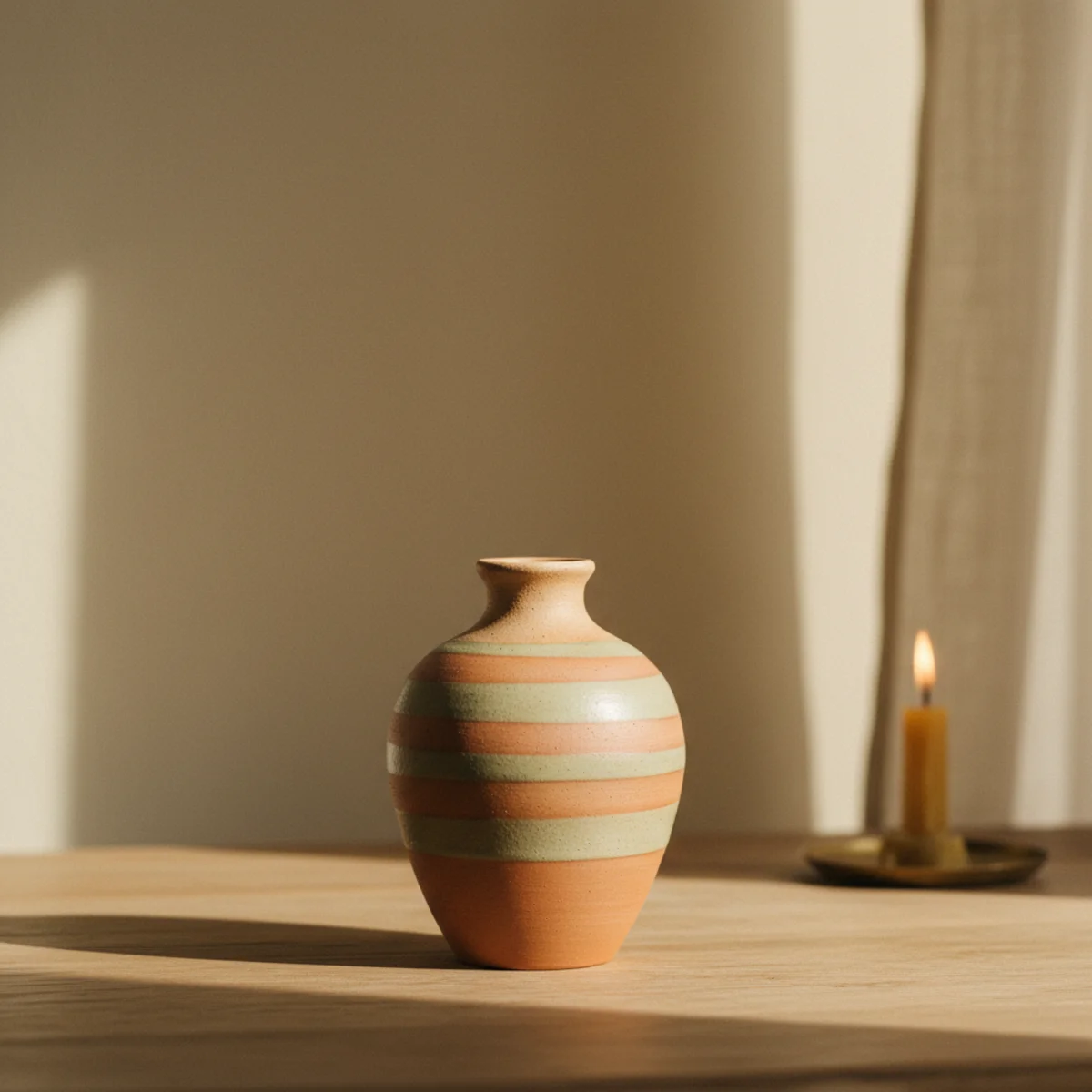
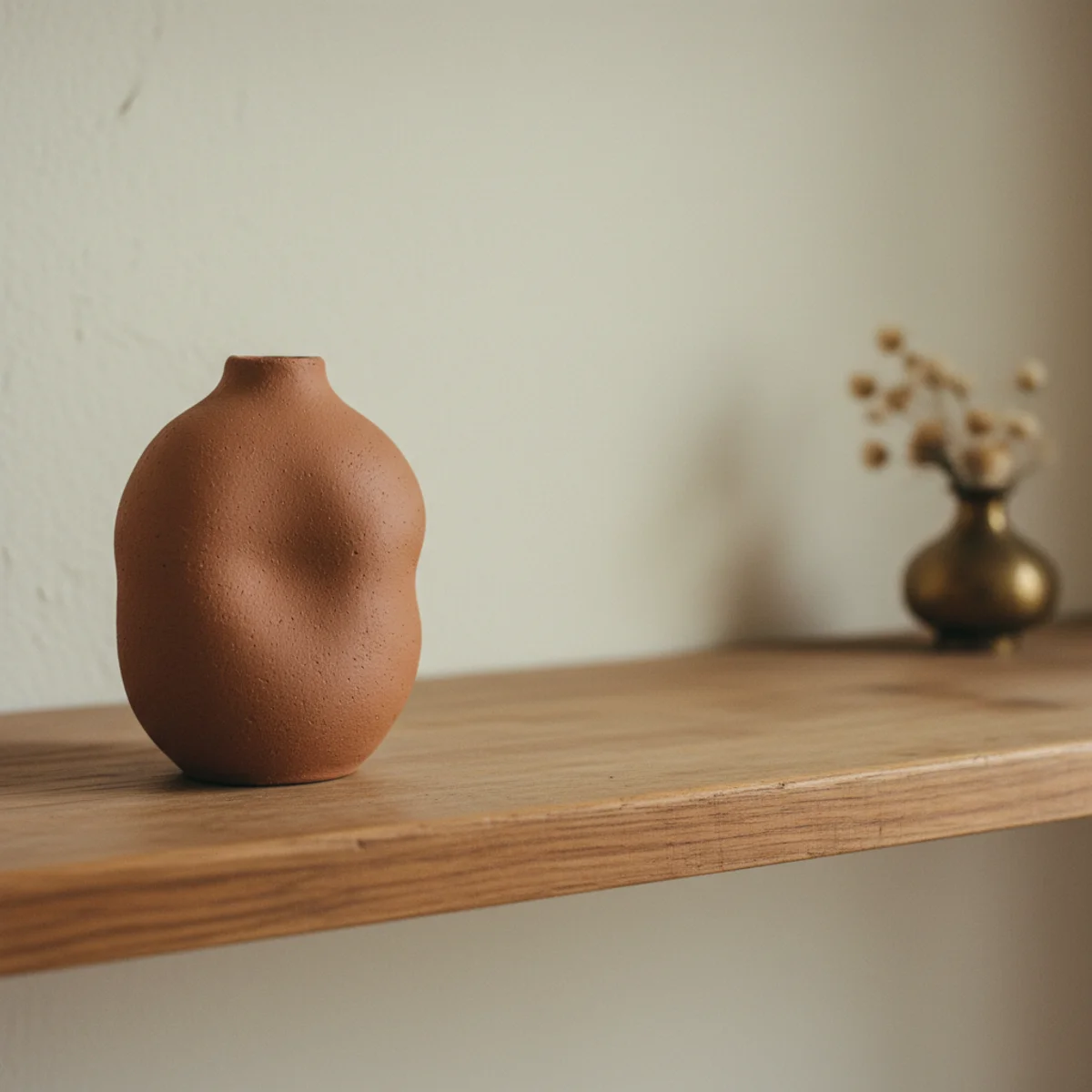
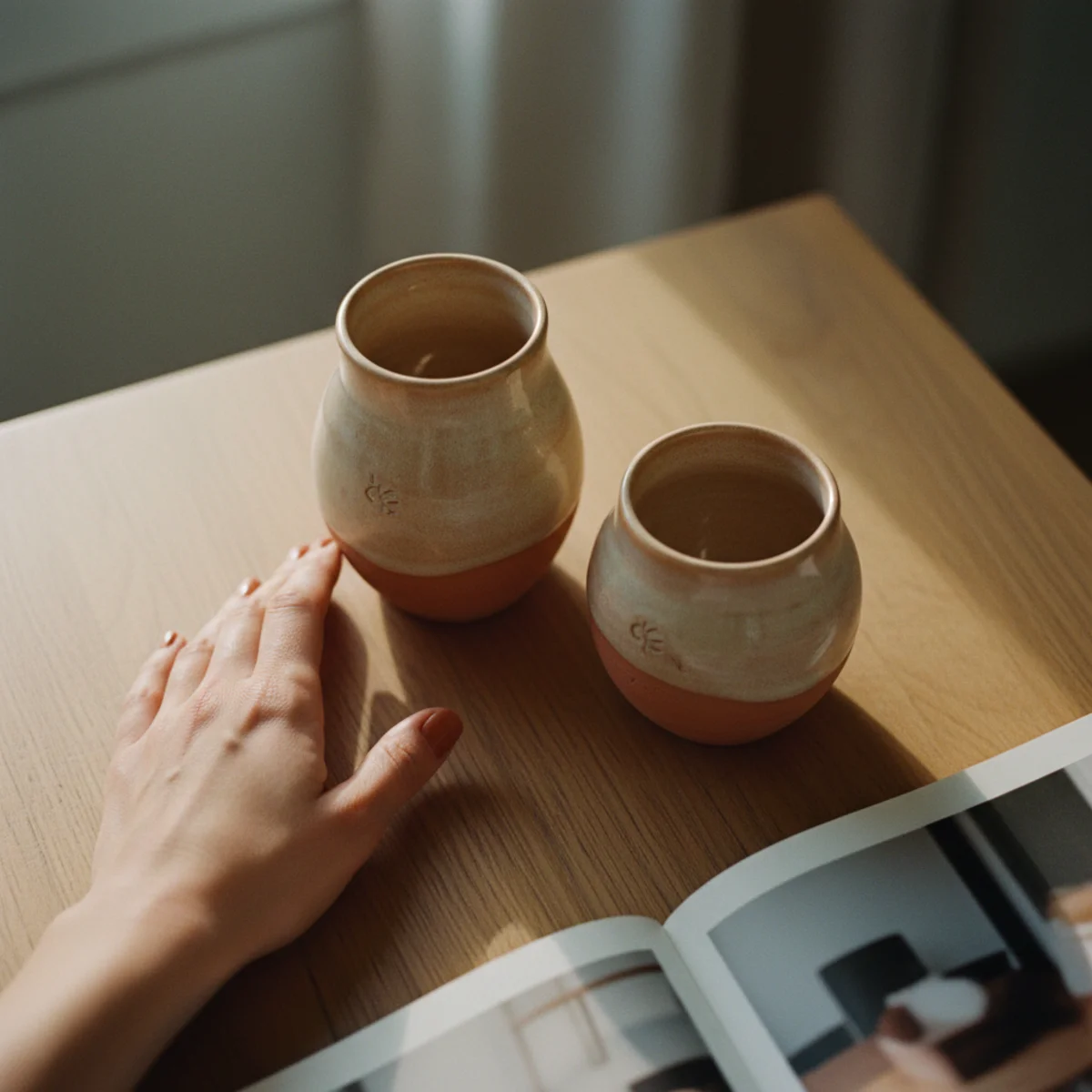
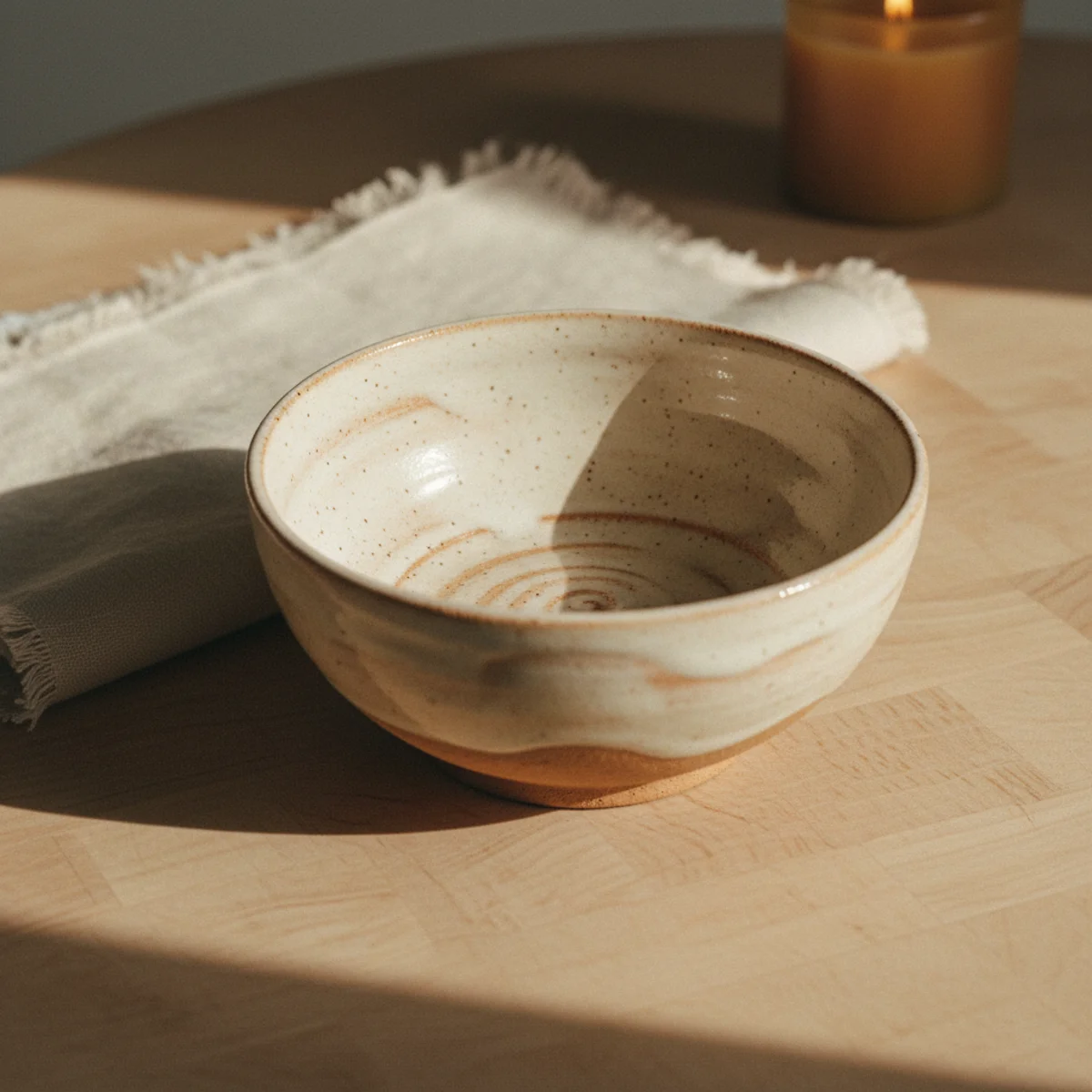
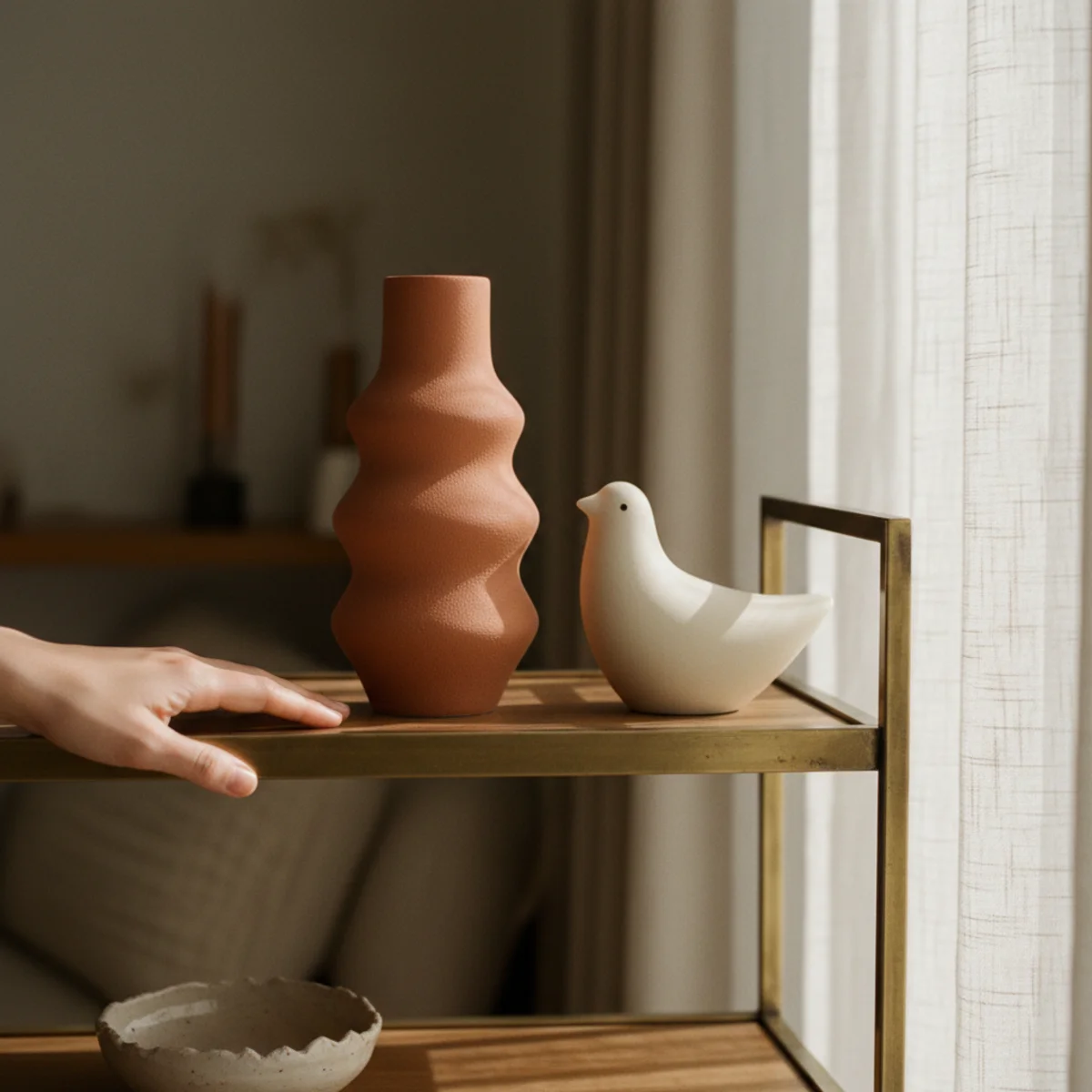
Japandi grounds the restrained palette through handmade ceramics — vessels, vases, bowls, plates, tea cups by independent makers showing visible craft marks (throwing rings, slight asymmetries, irregular glaze). Mass-produced ceramics fight Japandi aesthetic; hand-thrown pieces support it because both Japanese and Scandinavian traditions value craftsmanship highly.
Handmade ceramic sources: ETSY ARTISAN MAKERS — wide variety at $20-150 per piece (search 'handmade stoneware,' 'wabi-sabi ceramic,' 'hand-thrown vessel'). LOCAL POTTERY STUDIOS — direct purchase at $30-200 per piece, often with maker conversation included. JAPANESE-IMPORT CERAMICS — Heath Ceramics for modern interpretation, Japanese tea ceremony pieces ($40-300 each). SCANDINAVIAN CERAMICS — Iittala, Marimekko, Kahler ($30-200 each). VINTAGE STUDIO POTTERY from estate sales at $5-50 per piece — often by independent makers from earlier decades. LOOK FOR: visible throwing rings, slight asymmetry, irregular glaze drips at the bottom edge, hand-stamped maker marks, slight color variation across batches. SKIP: factory-made matched sets, perfectly identical pieces, glossy uniform finishes, mass-produced ceramics from big-box retailers. The handmade signal is everything — visible craft marks signal the entire Japandi aesthetic.
AFFILIATE SLOTCRAFTHandmade ceramics from Etsy artisans, local studios, Japanese imports, Scandinavian makers, vintage studio pottery; visible craft marksAdd affiliate URL when configuredWhy it works
Because both source traditions (Japanese pottery, Scandinavian studio pottery) treat ceramics as art objects rather than as functional commodities. Japandi inherits this — a hand-thrown ceramic vessel anchors a coffee table or shelf the way industrial-produced ceramics cannot. The visible craft marks (throwing rings, slight asymmetry, irregular glaze) are the wabi-sabi qualities that mass production specifically eliminates. The handmade ceramic IS Japandi aesthetic distilled into a single object.
Pro tip — Build the ceramic collection slowly over years through small purchases (one $30-50 piece per quarter) — the slow accumulation lets you develop a curated collection of related-but-distinct pieces that beats any one-time set purchase. The collected approach is also more genuinely Japandi (both source traditions emphasize patient accumulation of quality craft over time).
Hand-thrown vessels with visible throwing rings and irregular glaze — wabi-sabi craft marks. See also: Etsy
05Use Natural-Fiber Textiles
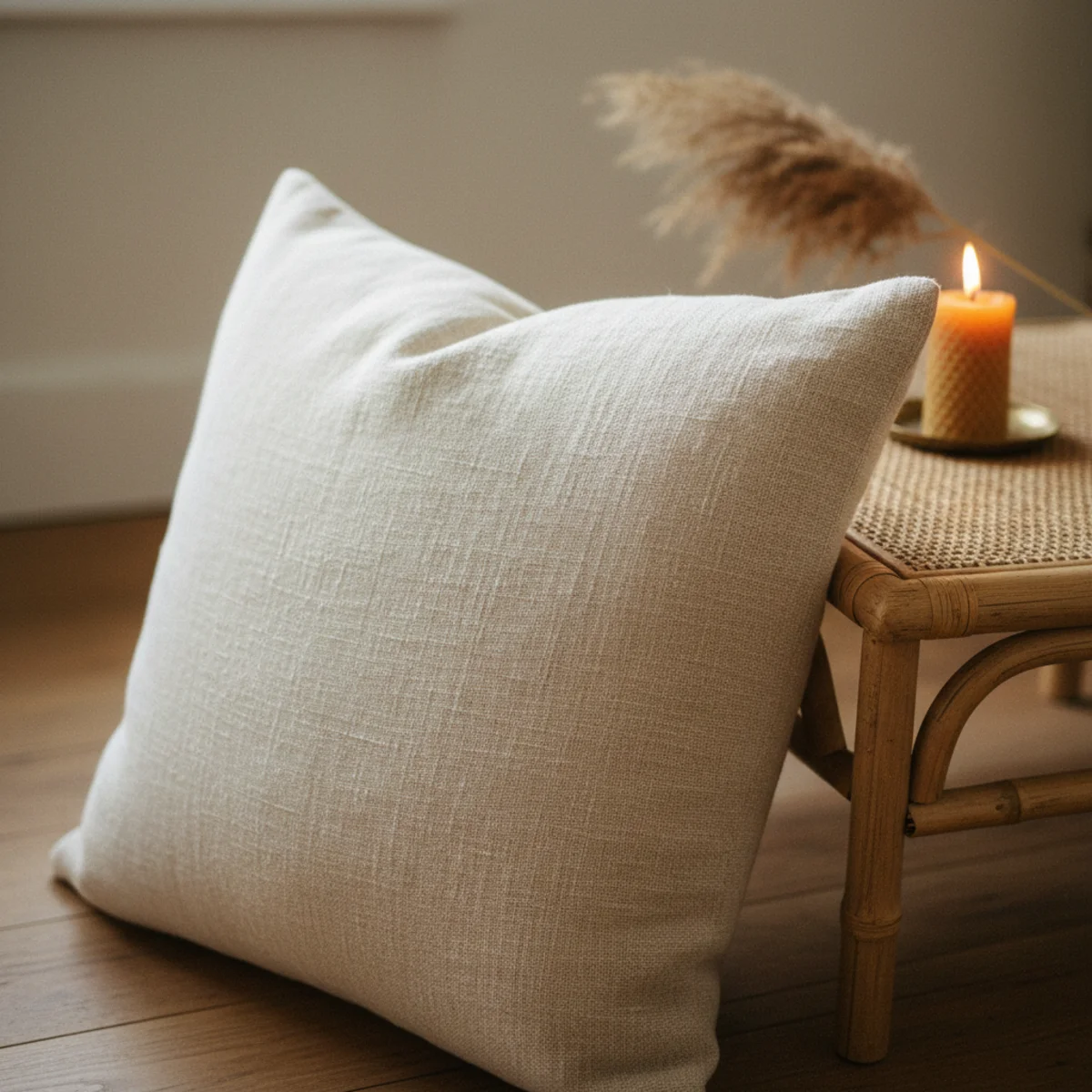
Japandi textiles commit fully to natural fibers — linen, wool, cotton, hemp, sometimes silk — in slubby textured weaves rather than smooth synthetic-feeling fabrics. Synthetic textiles (polyester, microfiber, acrylic blends) fight Japandi at the material foundation; natural fibers support it through their inherent imperfection, breathing quality, and aging character.
Japandi textile applications: LINEN — sofa upholstery (slipcovered), cushion covers, curtains, table linens in cream/oat/natural ($80-300 per linen panel; $15-50 per cushion cover from Quince, Coyuchi, or Brooklinen). WOOL — throws in chunky knit or wool blankets in muted earth tones ($40-150 per throw). COTTON — washed cotton bedding, lightweight cotton throw blankets ($60-150 per quilt). HEMP — natural-fiber rugs, occasional ottoman upholstery ($100-400 per piece). SILK — small accent only (a single silk throw cushion at $40-100, never as primary upholstery). RAW/UNFINISHED VERSIONS — washed linen with visible slubs, raw cotton with slight texture, unfinished wool with natural irregularity all read more Japandi than crisp finished versions. AVOID: polyester blends, microfiber, acrylic, smooth synthetic fabrics that mimic linen but lack the natural imperfection. The material foundation is where Japandi succeeds or fails; getting textiles right ripples through every other styling decision.
AFFILIATE SLOTTEXTILESLinen + wool + cotton + hemp + occasional silk; all natural fibers, slubby textures preferred; avoid all syntheticsAdd affiliate URL when configuredWhy it works
Because natural fibers carry inherent visual imperfection (slubs in linen, slight pile variation in wool, weave irregularity in hemp) that match wabi-sabi aesthetic — beauty in imperfection. Synthetic textiles are designed for uniform appearance and durability, which is the opposite of what Japandi values. The breathing quality of natural fibers also matters physically (they handle temperature changes naturally), but the visual character matters more for the aesthetic. The textures get noticed across daily use; synthetic textures register as commercial regardless of how they're styled.
Pro tip — Wash linen 2-3 times before first use to develop the soft slightly-wrinkled aesthetic that linen specifically gets credit for — fresh-from-package linen is slightly stiff and uniform; after 3-5 washes it reaches its full character. Most household linen failures come from using fresh-from-package without breaking it in.
Washed linen sofa, chunky wool throw, hemp rug, cotton cushions — natural-fiber material foundation. See also: Quince
06Bring In One Sculptural Branch or Plant
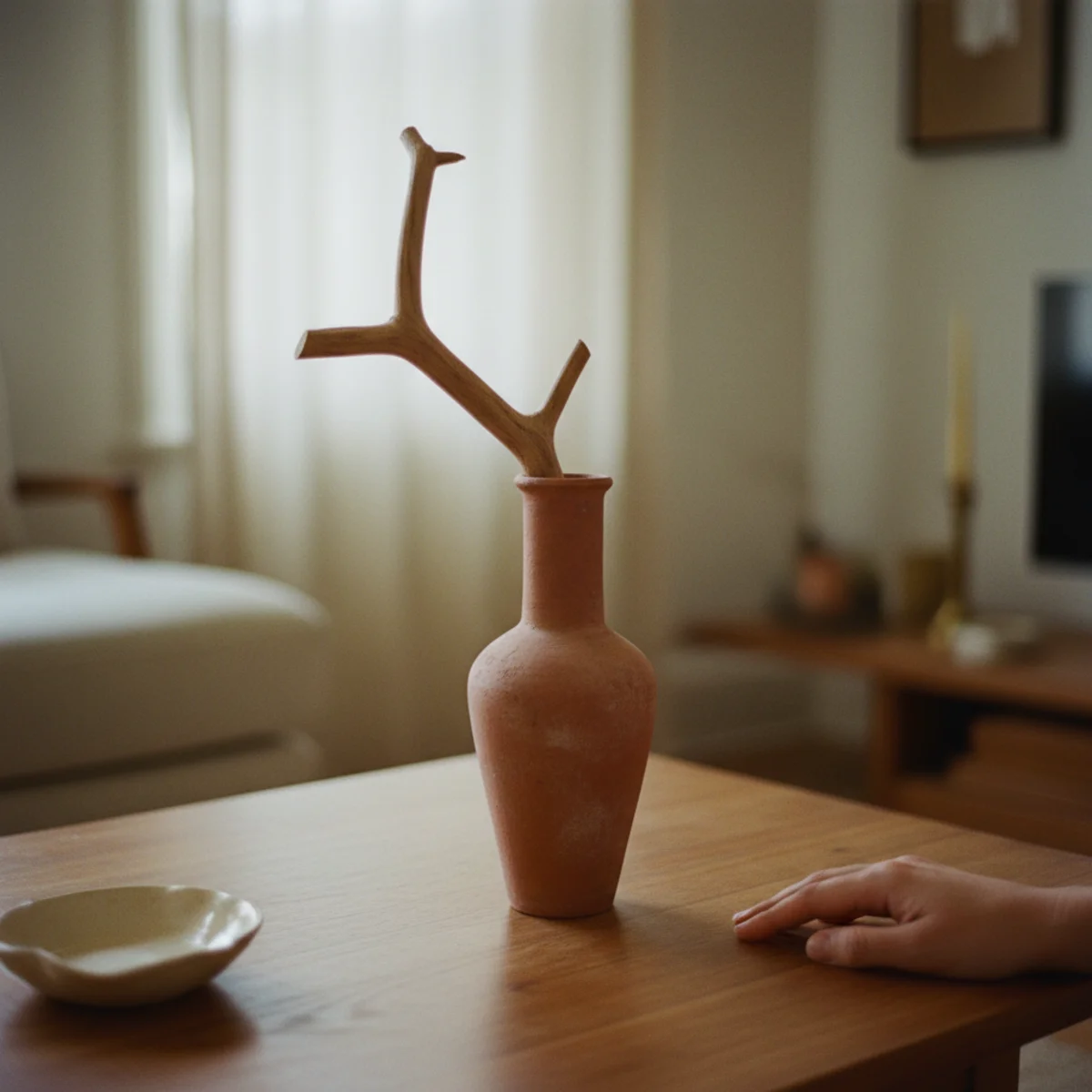
Japandi rooms include one sculptural plant element — a tall branch in a heavy vase, a single sculptural plant (snake plant, ZZ, monstera), a small bonsai, or a vase of fresh-cut foliage. The single intentional plant is the wabi-sabi nod to nature; multiple plants compete with the empty-space discipline and break the restraint Japandi requires.
Japandi plant options: TALL BRANCHES in heavy vase — eucalyptus, magnolia, olive branches, dried wheat, single tall woody stem in heavy ceramic or glass vase at 24-36 inches tall ($5-30 fresh-cut or $15-50 dried, $30-100 for the vase). SCULPTURAL PLANT — single snake plant in terracotta pot ($25-60), small monstera ($40-100), small ficus ($30-80), small olive tree ($40-150). BONSAI TREE — small bonsai in handmade ceramic pot ($50-300 for a quality piece). FRESH FORAGE — single stem of seasonal foliage from yard or local source in a hand-thrown vessel (free if foraged, $5-15 if purchased). The discipline: ONE plant element per primary space (living room gets one, dining room gets one, bedroom gets one — not multiple in the same room). The single plant becomes a focal point through restraint where multiple plants become background.
AFFILIATE SLOTPLANTSONE sculptural element per room: tall branch in heavy vase, sculptural plant (snake/ZZ/monstera), bonsai, or single foraged stemAdd affiliate URL when configuredWhy it works
Because Japandi inherits from both source traditions an emphasis on quality over quantity — Japanese flower arrangement (ikebana) uses very few stems (sometimes just one) for maximum impact; Scandinavian plant culture similarly favors specific intentional plants over abundant collections. The single plant in a beautiful vase commands more attention than five plants scattered throughout the room. The discipline supports the broader empty-space principle by limiting how many natural elements compete for visual attention.
Pro tip — Choose a sculptural plant or branch with strong visual silhouette — snake plants, bonsai, branching forms, olive trees all have clear shapes that read as composed silhouettes. Avoid plants with busy leaf patterns or multiple competing stems; the silhouette is the design element that matters.
Single olive branch in handmade ceramic vase — one plant element per room, ikebana-style restraint. See also: ikebana
07Favor Craft Over Quantity
The defining Japandi commitment is craft over quantity — fewer pieces, but each piece chosen and made well. One hand-thrown vase by a known maker beats five mass-produced vases. One vintage Hans Wegner chair beats four cheaper armchairs. One handmade textile blanket beats three machine-made ones. The philosophy inverts the commercial decor cycle entirely.
Craft-over-quantity applications: FURNITURE — buy fewer pieces but invest in quality vintage or handmade (Hans Wegner, Børge Mogensen, Tadao Ando, contemporary studio makers at $200-3,000 per piece). TEXTILES — handmade quilts, hand-woven wool throws, hand-loomed linen at $100-500 per piece versus mass-produced equivalents at $40-150. CERAMICS — handmade vessels from named makers at $30-300 each versus factory-produced at $10-80. LIGHTING — handmade ceramic or wooden lamps from independent makers at $200-800 versus mass-produced at $50-200. RUGS — hand-knotted vintage Persian, hand-woven Moroccan, hand-loomed Japanese at $200-2,000 versus machine-made at $100-500. The discipline: save toward right piece rather than settling for mass-produced placeholders. The craft choice signals values; the quantity restriction enables the empty-space discipline.
AFFILIATE SLOTPHILOSOPHYFewer pieces, better made; vintage designer furniture, handmade ceramics, hand-woven textiles, named makers over factoriesAdd affiliate URL when configuredWhy it works
Because both source traditions explicitly value craft — Japanese mingei movement celebrated everyday craft objects as art; Scandinavian design pedagogy emphasizes craftsmanship as ethical commitment. Commercial Japandi inverts this by mass-producing surface aesthetic without the underlying craft. The single most-important Japandi buying rule: ask 'who made this?' — if the answer is 'factory in unspecified location,' it's not Japandi regardless of how it looks. If the answer is 'this independent maker' or 'this vintage designer,' it might qualify. The provenance is part of the aesthetic.
Pro tip — Build a 'one piece per year' acquisition discipline — save toward and acquire one genuine craft piece annually (vintage furniture, handmade ceramic, hand-woven textile). The annual ritual creates Japandi collection meaningfully over decade-plus timeline rather than through one shopping trip.
One Hans Wegner chair, one handmade vase, one hand-woven throw — craft over quantity discipline. See also: Hans Wegner
08Light It Warm and Low
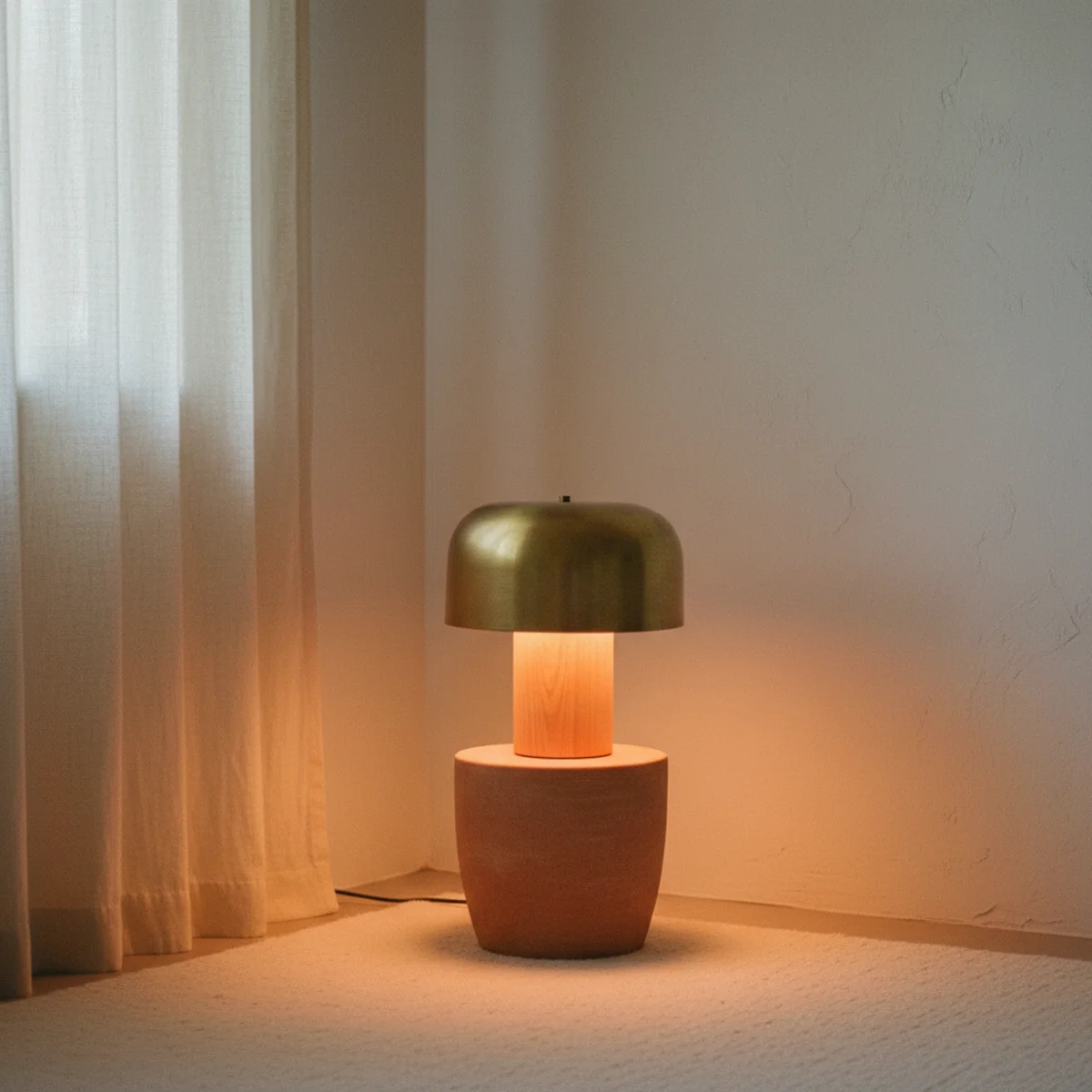
Japandi lighting commits to warm and low — multiple small 2700K sources at different heights, never overhead during evening, with strong emphasis on natural light during day and warm lamp light during evening. Paper-shade pendants, ceramic table lamps, low floor lamps, and abundant candles produce the soft warm distributed light that Japandi rooms specifically require.
Japandi lighting setup: 4 TO 6 DISTINCT LIGHT SOURCES per room, all at 2700K LED. PAPER OR CERAMIC PENDANT for primary overhead (only used during day, dimmed evening) — Japanese paper lanterns at $40-200, ceramic Scandinavian pendants at $150-500. TABLE LAMPS — 2 to 3 across surfaces, in ceramic or wood bases with linen or paper shades, 22-28 inches tall ($60-300 each). LOW FLOOR LAMP — 50-60 inches tall (lower than typical Western floor lamps), beside reading chair ($60-300). WALL SCONCES — minimal use, 1 or 2 if specific atmospheric need ($80-300 each). CANDLES — beeswax tapers in ceramic or brass holders, abundant during evening hours (per hygge living room rules). MAXIMIZE NATURAL DAYLIGHT through minimal window dressings (sheer linen panels in cream, washi paper screens for privacy without blocking light). NEVER USE COOL OVERHEAD lighting during evening — the multiple warm sources at distributed heights create atmospheric layered effect Japandi specifically requires.
AFFILIATE SLOTLIGHTING4-6 sources at 2700K: paper/ceramic pendant for day + 2-3 table lamps + low floor lamp + minimal sconces + abundant candlesAdd affiliate URL when configuredWhy it works
Because both source traditions developed in northern regions with limited winter daylight — and lighting design adapted to maximize warm light from multiple distributed sources. Japanese paper lanterns and Scandinavian table lamps both reflect this lineage. The 2700K specification, the multiple sources, the layered heights all combine to recreate the warm-distributed-light traditional in both cultures. Cool overhead lighting (typical of modern Western commercial buildings) fights Japandi aesthetic at the visual foundation; correcting lighting alone produces significant Japandi improvement.
Pro tip — Add washi paper screens or sheer linen panels to filter direct sunlight during peak daytime hours — the filtered natural light reads more Japandi than direct unfiltered sun, and the gentle diffusion matches Japanese shoji aesthetic. Washi paper screens at $80-300 from Japanese import retailers; sheer linen at $30-150 per panel.
Paper pendant, ceramic lamps, low floor lamp, beeswax candles — warm distributed light, never harsh overhead. See also: best-lamps-warm-light
09Keep Lines Clean and Simple
Japandi furniture, decor, and architectural detail all favor clean simple lines — no ornamental carving, no decorative trim, no fussy details. Both source traditions value simplicity in form, allowing the materials (wood grain, ceramic glaze, textile weave) to do the visual work without compositional competition. The discipline applies across every decor decision.
Clean-line principles for Japandi: FURNITURE — no carved ornamentation, no decorative trim, simple geometric shapes (rectangles, squares, simple curves). DOORS AND ARCHITECTURE — minimal trim, simple casings, no crown molding or wainscoting if avoidable. HARDWARE — simple cylindrical or rectangular pulls in oiled bronze or aged brass, no ornate Victorian-style or decorative metalwork. ART FRAMES — simple wood or thin metal frames, no ornamental gilding, no decorative matting. WINDOW DRESSINGS — simple ring-clipped curtains in natural linen, no pleated or ornamental headers. FLOORING — wide plank wood or simple natural-fiber rugs, no patterned tile or ornate parquet. CEILING — flat with minimal trim if possible, or simple beam structure if architectural. The discipline: every visible detail should be either simple geometric form OR organic natural variation (wood grain, ceramic glaze), never ornamental human decoration.
AFFILIATE SLOTFORMSimple geometric furniture + minimal trim + simple hardware + simple frames + simple curtains; let materials speakAdd affiliate URL when configuredWhy it works
Because Japandi aesthetic relies on the natural materials and craftsmanship doing the visual work — and ornamental details compete with this by adding human-decorative complexity that the materials don't need. The wood grain in solid oak is more beautiful than carved decoration over the same wood; the ceramic glaze irregularity is more beautiful than painted decoration over the same vessel. Clean lines let the materials speak; ornamental lines override them with humanly-imposed complexity.
Pro tip — Audit your existing decor for ornamental details and consider replacing or modifying — ornate picture frames swapped for simple wood frames, decorative hardware replaced with simple cylindrical pulls, fussy curtain headers replaced with ring clips. The audit produces 10-20 small simplifications that compound into significant Japandi aesthetic improvement.
Simple geometric forms, minimal trim, simple hardware — lines that let materials do the visual work. See also: warm minimalism
10Add Soft Black as Contrast
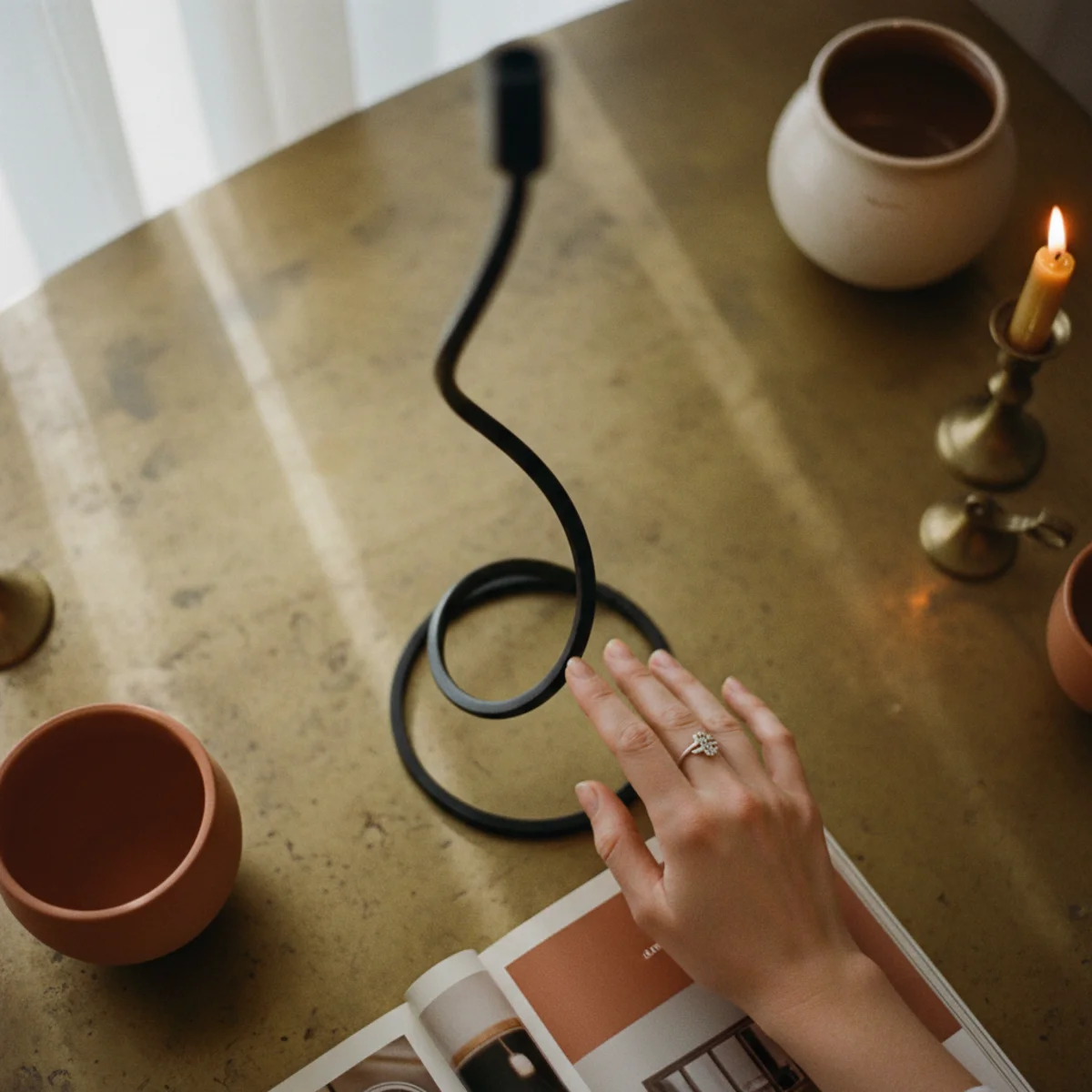
Japandi uses small amounts of soft black (5% maximum of visual weight) for compositional contrast against the warm-neutral palette — single black-framed photograph, dark wood frame, oiled bronze hardware, single black ceramic vessel, one ebonized wood object. The soft black is what allows the warm neutrals to read against something rather than dissolving into uniform beige.
Japandi black accent applications: ONE OR TWO BLACK-FRAMED PIECES of art (24-36 inches, modern black wood frame at $40-150). SOFT BLACK CERAMICS — single black ceramic vase or vessel ($30-150 from independent makers, look for matte rather than glossy). DARK WOOD ACCENTS — single piece of ebonized or dark walnut furniture (small table, frame, accent), at most 1-2 pieces in the room. OILED BRONZE HARDWARE — drawer pulls, door knobs, light fixtures in dark warm bronze at $5-30 per piece. SINGLE BLACK TEXTILE — black throw cushion or small accent (at most one per room). KEEP UNDER 5% OF VISUAL WEIGHT — any more pulls the room toward modern-industrial and away from warm-Japandi. The black should function as visual punctuation, not as design element. Matte rather than glossy black reads softer and more Japandi-appropriate.
AFFILIATE SLOTCONTRAST5% maximum visual weight: 1-2 black-framed pieces + soft black ceramic + dark wood accent + oiled bronze hardware; matte not glossyAdd affiliate URL when configuredWhy it works
Because warm-neutral palettes can become visually monotonous without some compositional contrast — and small amounts of soft black provide that contrast without breaking the warm tone family. The contrast also lets the eye orient (the black frames focal points, anchors compositions) where pure warm-neutral spaces can feel undifferentiated. The 5% limit is what keeps Japandi warm rather than industrial; more than 5% pulls toward modernist-industrial aesthetic that fights Japandi warmth.
Pro tip — Choose matte rather than glossy or polished black for any Japandi black accent — matte black reads softer and warmer against natural materials, where glossy black reflects light and reads cooler and more modern-industrial. The finish difference matters significantly; matte black supports Japandi while glossy black fights it.
One black frame, one matte ceramic, oiled bronze pulls — sparse black contrast that warm-neutral palettes need. See also: warm-minimalism
11Layer Wood Tones
Japandi rewards multiple wood tones across the room — light oak floor, walnut coffee table, oiled pine shelf, teak side table, oak picture frame. The wood-tone variation (rather than matching everything to one species) creates visual interest within the natural-material palette and references both source traditions' deep relationship with wood as primary material.
Wood tone layering principles: USE 3 TO 5 DIFFERENT WOOD TONES across the room — light oak for floors, medium walnut for furniture, deep oiled pine for accent shelves, warm teak for side tables, mixed wood for frames and accents. AVOID 'WOOD MATCH' — matching every wood element to one species reads as commercial-set rather than as collected-naturally. INSTEAD MIX while maintaining consistent warm tone temperature (no cool grey-stained wood with warm honey-toned wood; all warm OR all cool, not mixed). FINISHES — Danish oil ($12 per quart) for warm matte finish across all wood; avoid high-gloss varnish or polyurethane. EXPOSE GRAIN — natural finishes that show wood grain rather than painted or heavily stained wood that obscures grain. The wood variation provides visual depth while the consistent warm tones and matte finishes provide cohesion. Both source traditions used multiple wood species in the same rooms historically; the layering is genuine to both Japandi sources.
AFFILIATE SLOTMATERIALS3-5 different wood tones (light oak floor + walnut coffee table + oiled pine + teak side table + mixed frames); consistent warm matte finishAdd affiliate URL when configuredWhy it works
Because wood is the primary material in both Japanese and Scandinavian design traditions, and variations in wood species, age, and color create the natural visual interest that Japandi rooms benefit from. Matched-wood rooms (everything oak, or everything walnut) read as commercial-set; mixed-wood rooms read as accumulated-naturally-over-time. The discipline isn't 'random wood mix' — all the wood should share warm tone temperature and similar matte finish — but rather 'varied wood within consistent tonal family.' The variation is what's interesting; the consistency is what makes it work.
Pro tip — Apply Danish oil to all wood elements every 6 to 12 months — the refresh maintains the warm matte finish across years of use and lets the wood develop the patina that genuinely-Japandi pieces have. Danish oil costs $12 per quart and one quart maintains a typical living room's worth of wood for years; the routine is essentially free in materials and 30 minutes per application.
Light oak floor, walnut coffee table, oiled pine, teak side table — wood-tone variation within warm consistency. See also: Danish oil
12Edit Hard
The final Japandi discipline is hard editing — ruthless removal of objects that don't earn their place. Both source traditions value this discipline; commercial Japandi violates it by adding objects to fill space. Quarterly editing rounds (every 3 months, walk through each room and remove 3 to 5 items) maintain the empty-space discipline against natural drift toward accumulation.
Hard editing rules: QUARTERLY ROUND — every 3 months, walk through each Japandi room and remove 3 to 5 specific items. Decide for each: KEEP (item earns its place through beauty or daily use), DONATE (item no longer fits but might serve someone else), STORE (item has seasonal or sentimental value but doesn't belong on display now), DISCARD (item is broken, dated, or genuinely doesn't belong). NO-NEW-OBJECTS PERIODS — declare 30 to 90-day periods of no decor acquisition; the constraint forces creative styling with existing items rather than easy accumulation. ROTATE STORED ITEMS — items in storage can rotate onto display seasonally or with mood; the rotation makes the displayed items feel fresh without requiring net additions. APPRECIATE EMPTY — when you remove something, leave the empty space alone for at least a week before considering whether to fill it. Most empty spaces, given time, reveal themselves as preferable to whatever was filling them.
AFFILIATE SLOTDISCIPLINEQuarterly editing rounds: remove 3-5 items per room; 30-90 day no-new-objects periods; rotate stored items seasonallyAdd affiliate URL when configuredWhy it works
Because the empty-space discipline that Japandi requires is constantly under attack from natural drift toward accumulation — gifts, occasional purchases, seasonal items, sentimental objects all accumulate slowly across years. Without active editing, even initially-Japandi rooms drift toward visual density that breaks the aesthetic. The quarterly editing rounds counteract this drift, maintaining the empty-space discipline as ongoing practice rather than as one-time setup. Editing IS Japandi as much as styling is.
Pro tip — Photograph each Japandi room quarterly before editing — the photos document the drift over time and make it easier to see what has accumulated since the last round. Comparing this quarter's photo to last quarter's reveals which items snuck in and helps decisions about what to remove.
Surfaces and walls after quarterly editing — only essential and earned items remain. See also: warm-minimalism
How to get the Japandi look step by step
Spare, natural, warm. Build it on craft and calm. Work in this order.
- 1Set the wood-and-neutral base
Anchor the room with low, well-made wood furniture and a calm warm-neutral palette, mixing light and darker wood tones for depth.
- 2Edit to deliberate emptiness
Remove until only the intentional and well-made remain, leaving deliberate empty space. The negative space is central to Japandi.
- 3Add handcraft and texture
Bring in handmade ceramics, natural-fiber textiles, and one sculptural branch or plant — wabi-sabi imperfection and Scandinavian warmth.
- 4Warm the light and ground with black
Add warm low light and paper or natural shades, and a few soft-black accents to ground the palette.
Quick tips
- Anchor with low, well-made wood furniture in mixed light and dark tones.
- Leave deliberate empty space; the negative space is as important as the objects.
- Add handmade, imperfect ceramics — wabi-sabi beauty over polished perfection.
- Layer texture, not color, to stay warm but calm.
- Light it warm and low to bring the hygge coziness into the spare space.
- Ground the warm neutrals with soft black accents, used sparingly.
Japandi by emphasis
Lower furniture, darker wood, soft black, and a single sculptural branch — spare and grounded.
Lighter wood, more layered texture, and warmer hygge lighting; see our scandinavian living room guide.
A low bed, calm neutrals, handmade ceramics, and warm low light for a serene retreat.
Secondhand wood furniture, one handmade ceramic, and hard editing; craft over quantity suits a budget well.
Japandi is minimalism that forgot to be cold — wabi-sabi imperfection meeting hygge warmth in one calm, spare room.
Frequently asked questions
What is Japandi style?+
What colors work for Japandi?+
How is Japandi different from minimalism or Scandinavian style?+
What kind of furniture works for Japandi?+
How much furniture should a Japandi room have?+
Where do I buy Japandi ceramics and decor?+
Japandi is the name for a look many people are drawn to without knowing it: the fusion of Japanese restraint and Scandinavian warmth, where wabi-sabi imperfection meets hygge coziness in one calm, spare room. Anchor it on low wood furniture and a warm-neutral palette, edit to deliberate empty space, and warm it with handmade ceramics, texture, and low light. We'd add one perfect imperfect ceramic and resist filling the empty space; that restraint and that single handmade object are the whole soul of it. It's minimalism that forgot to be cold.