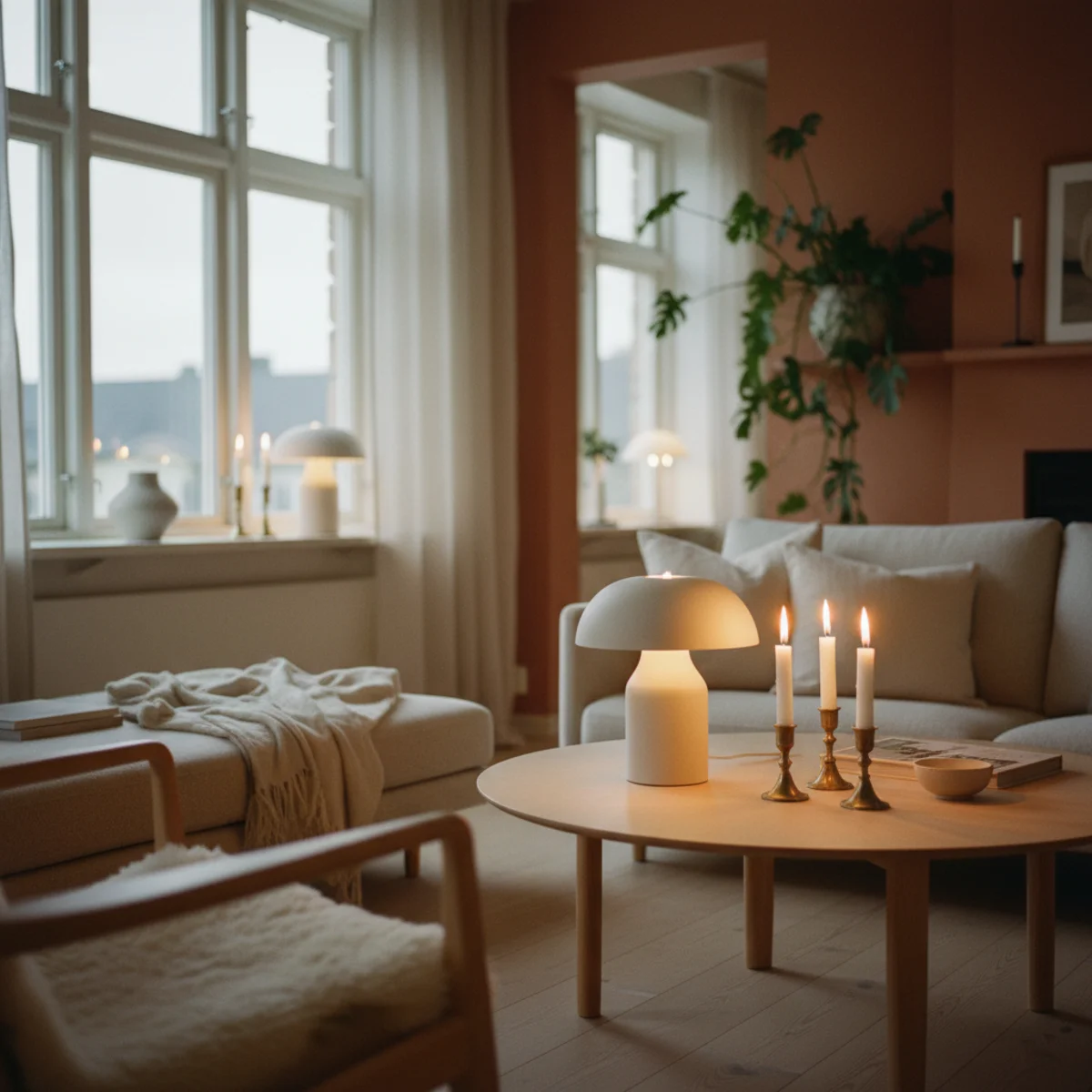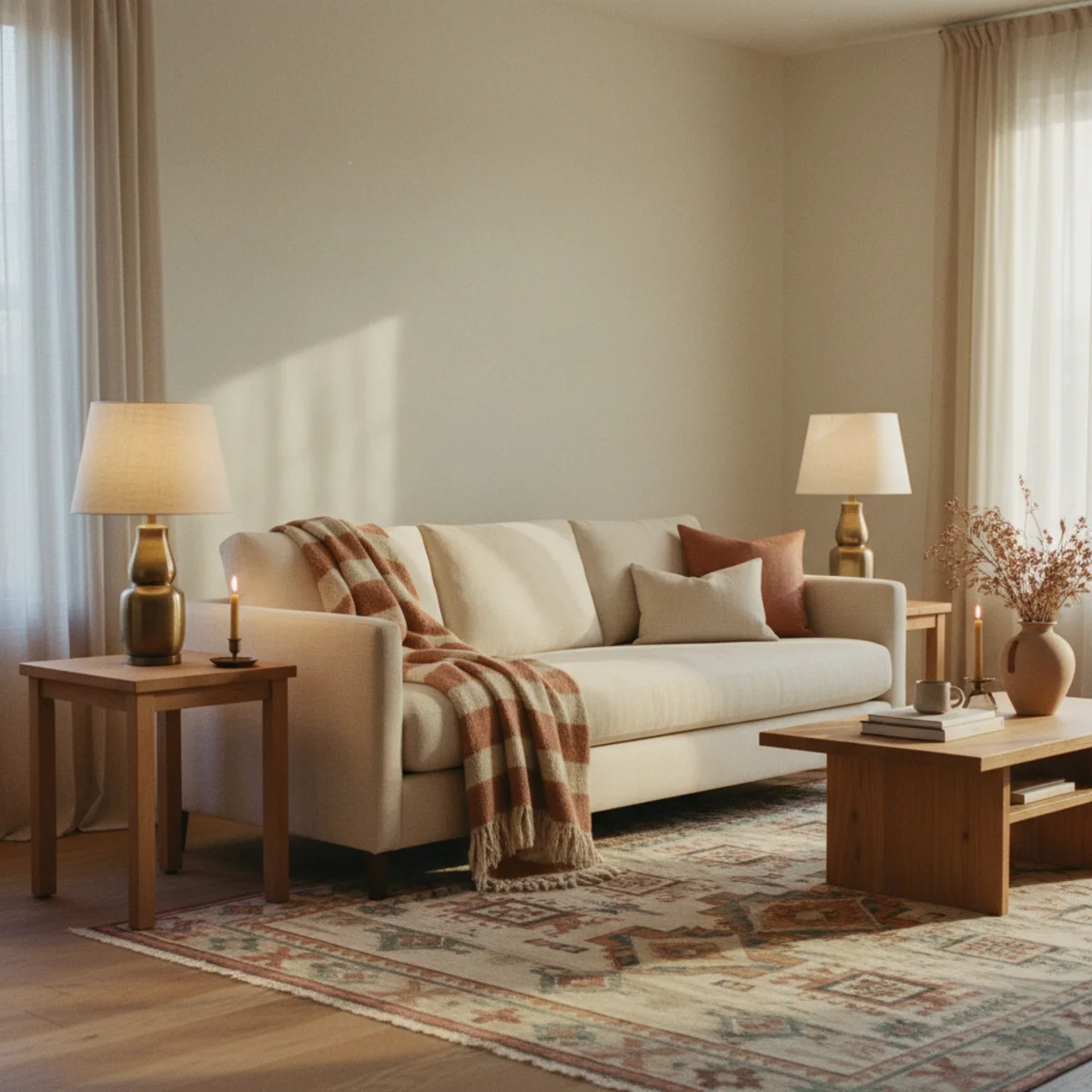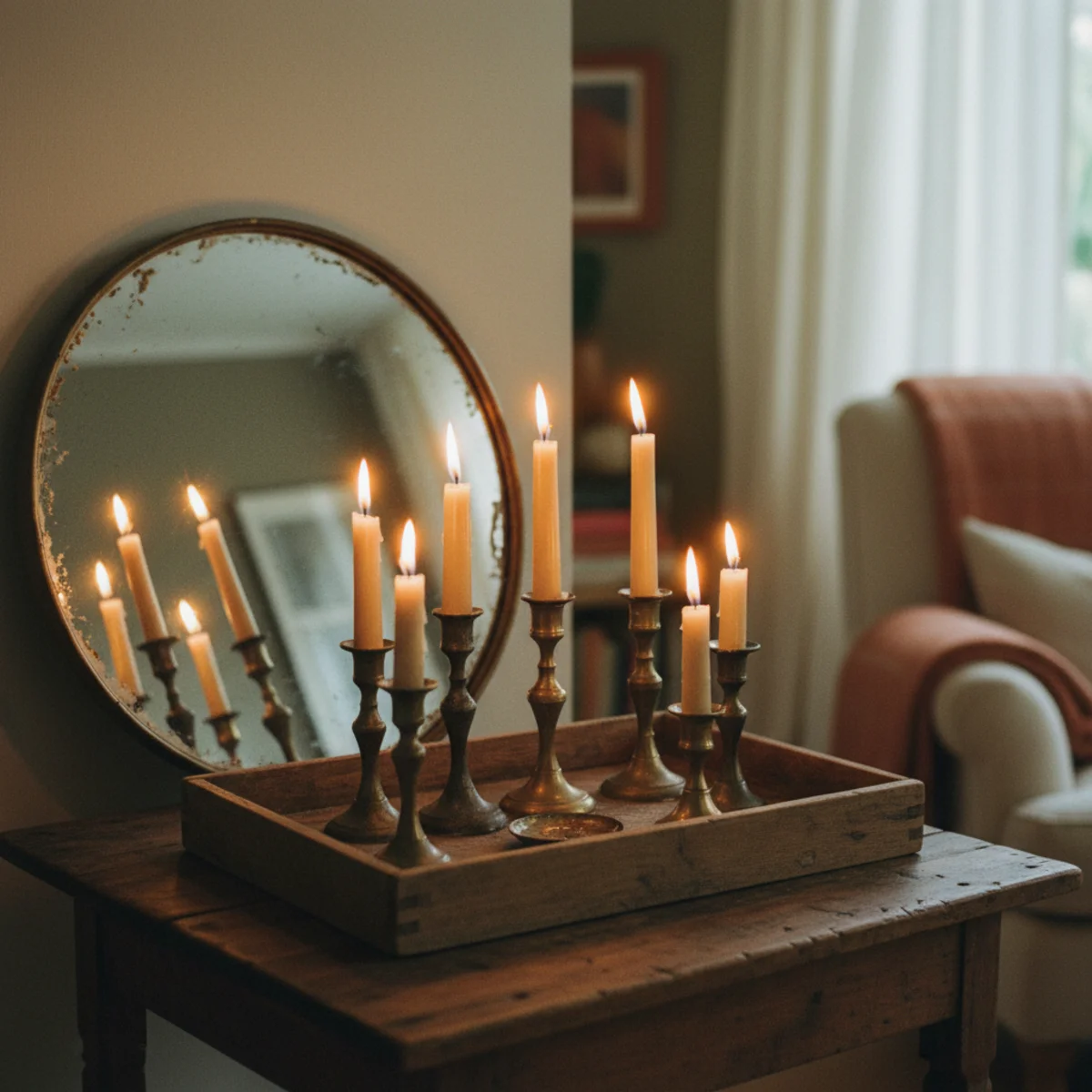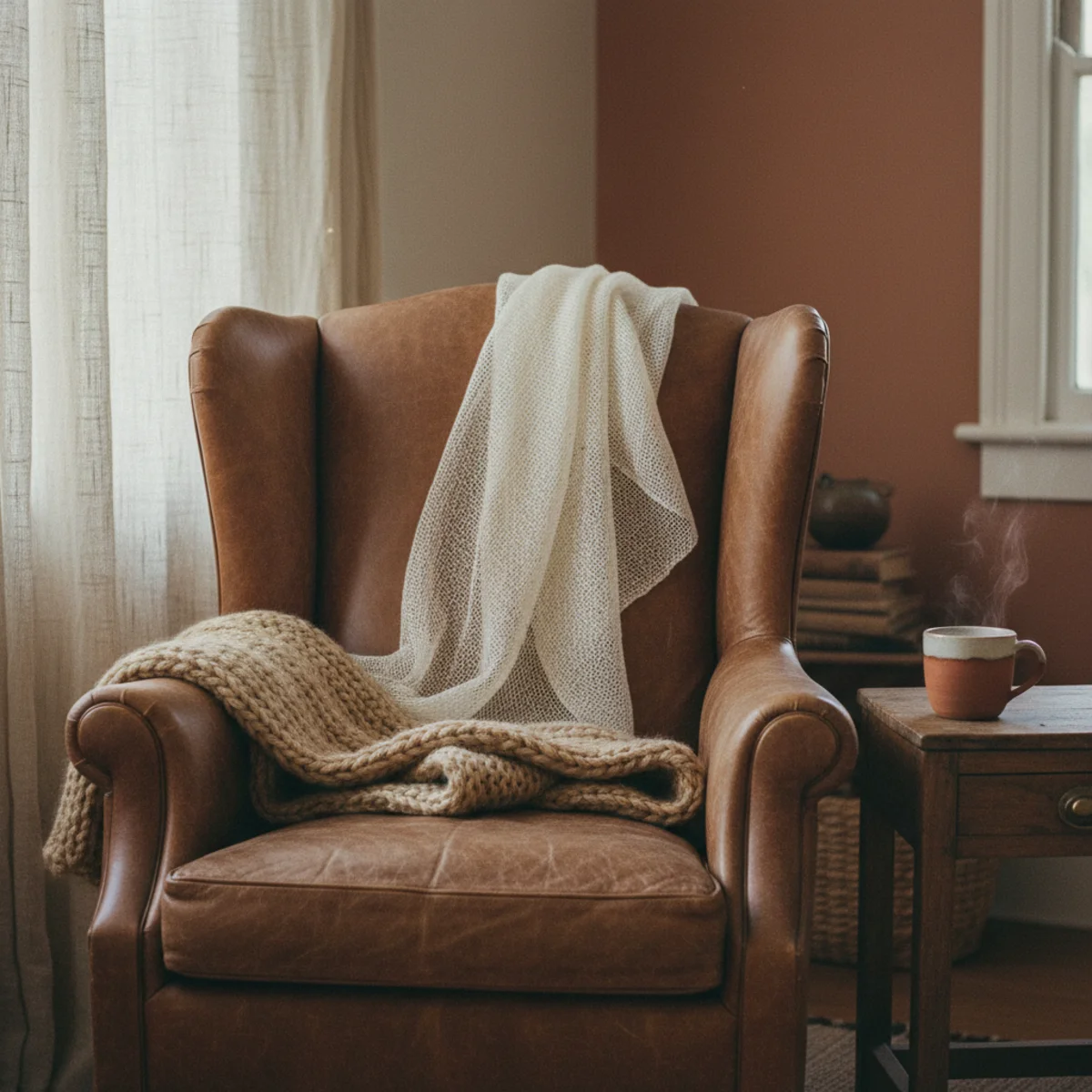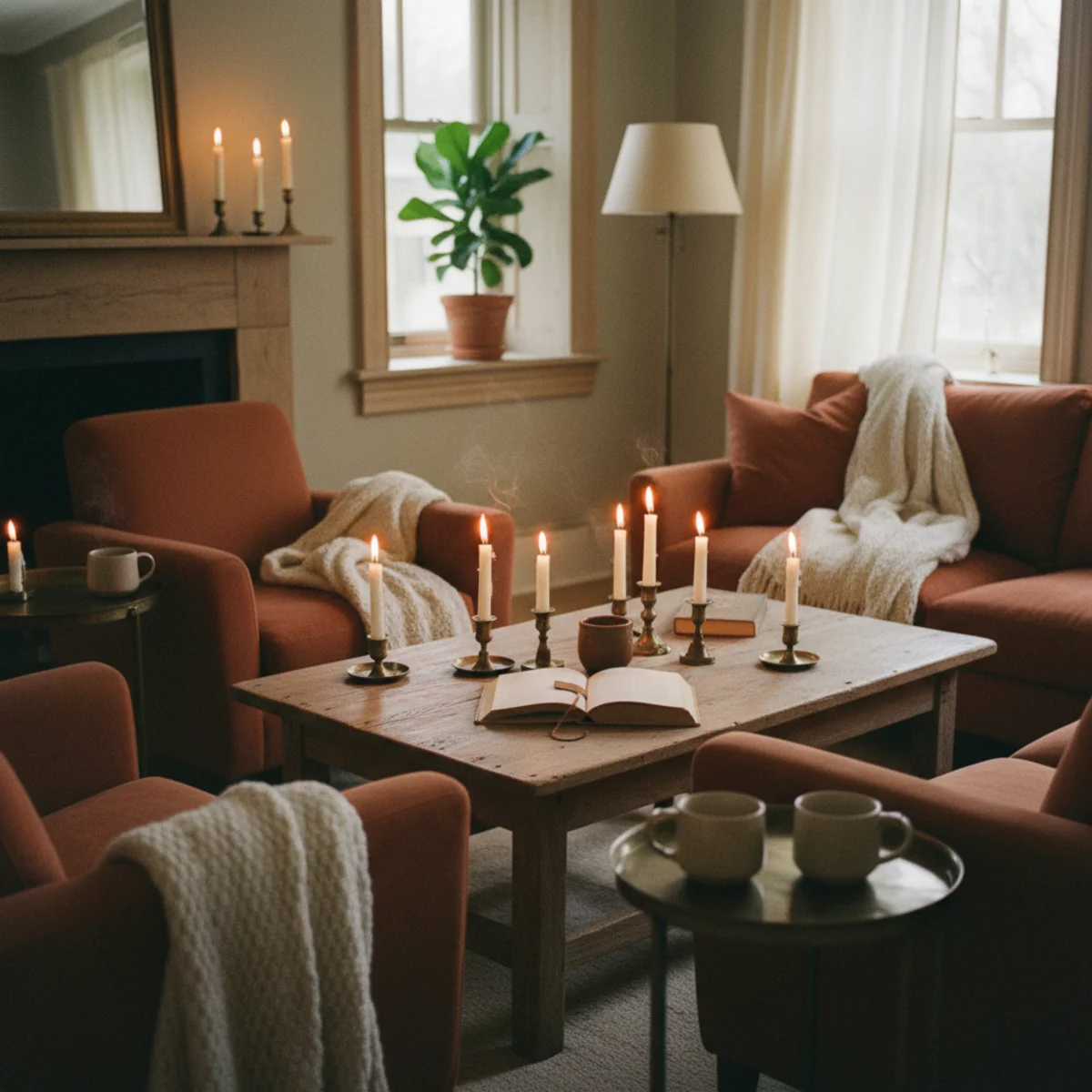
These twelve hygge living room ideas are tested across actual Danish, Norwegian, and Swedish homes (where hygge originates as a daily practice, not a marketing concept) and adapted for warm cozy homes outside Nordic regions. Each move below targets one specific hygge enabler — abundant candlelight, layered touchable texture, a designated comfort seat, natural materials, hot-drink infrastructure, refuge from outside. The combination creates rooms that genuinely feel like sanctuary rather than just looking like sanctuary in photos.
Hygge fails when households treat it as a Pinterest aesthetic rather than as a daily practice. Real hygge requires both the right decor (candles, textiles, soft lighting) AND the actual usage of those decor elements (lighting the candles every evening, draping the throws, sitting in the comfort seat with hot drinks). The decor without the practice produces commercial-Scandi rooms; the practice without the decor produces uncomfortable rooms that aren't really hygge either. The twelve principles below name both the decor and the practice.
By the end of this guide, you'll know exactly which hygge moves transform any living room — the candle abundance (lit every evening, not just for guests), the layered touchable textures, the designated comfort seat, the hot-drink infrastructure, the refuge-from-outside aesthetic, and the seven other principles that turn rooms into genuine hygge sanctuaries.
WHAT'S INSIDE
- The candle quantity (8 to 12 lit every evening) that creates genuine hygge — not just for guests
- Why layered touchable texture is the defining hygge material principle
- The single deeply comfortable seat that becomes the room's hygge anchor
- The hot-drink station infrastructure that makes hygge an actual daily practice
Hygge is about atmosphere and being present. Candlelight, the absence of harsh light, and the company of a few — that's the whole recipe.
— Meik Wiking, The Little Book of Hygge [citation needed — verify before publish]
What is a hygge living room?
Hygge — pronounced roughly HOO-ga — is a Danish concept of cozy contentment and wellbeing, and a hygge living room is one designed to produce that feeling: warm, soft, low-lit, and built for slowing down. Meik Wiking, who popularized the term, points to candlelight as its single most important ingredient; Danes burn more candles per person than anyone in Europe, largely to create hygge.
The principles are atmospheric rather than decorative. A hygge living room has low warm light from many small sources rather than one bright overhead, soft and tactile textures you want to touch, natural materials, and a sense of refuge from the outside world. It's about how the room makes you feel — present, warm, unhurried — more than how it photographs. Comfort genuinely comes before style.
More in Styling you may love
See allWhy hygge is everywhere in 2026
Hygge crossed from Danish concept to global decorating movement and never really left, because it answered a widespread craving for slowness and comfort in an overstimulated world. Pinterest's hygge and cozy living room searches climb every autumn, and the principles underpin much of the warm-home aesthetic.
The honest reason it endures is that it's about feeling, not trend. As people grew tired of cold, performative, photographed-for-others rooms, hygge offered rooms designed purely for how they make you feel to be in them. The candlelight, the soft textures, the warm low light — all of it serves contentment rather than appearance, which is exactly why it keeps coming back every dark season.
12 ways to create a hygge living room
01Light Lots of Candles
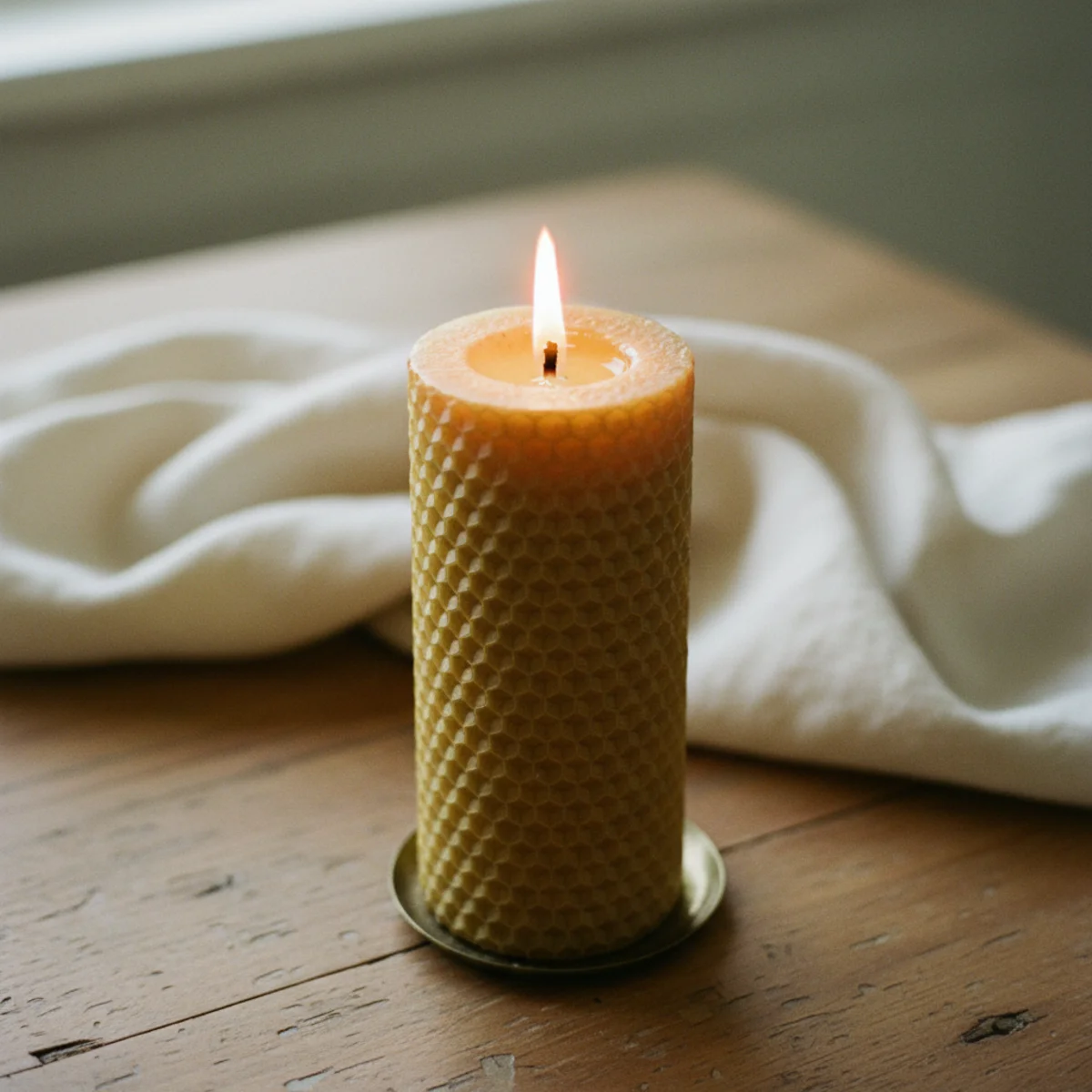
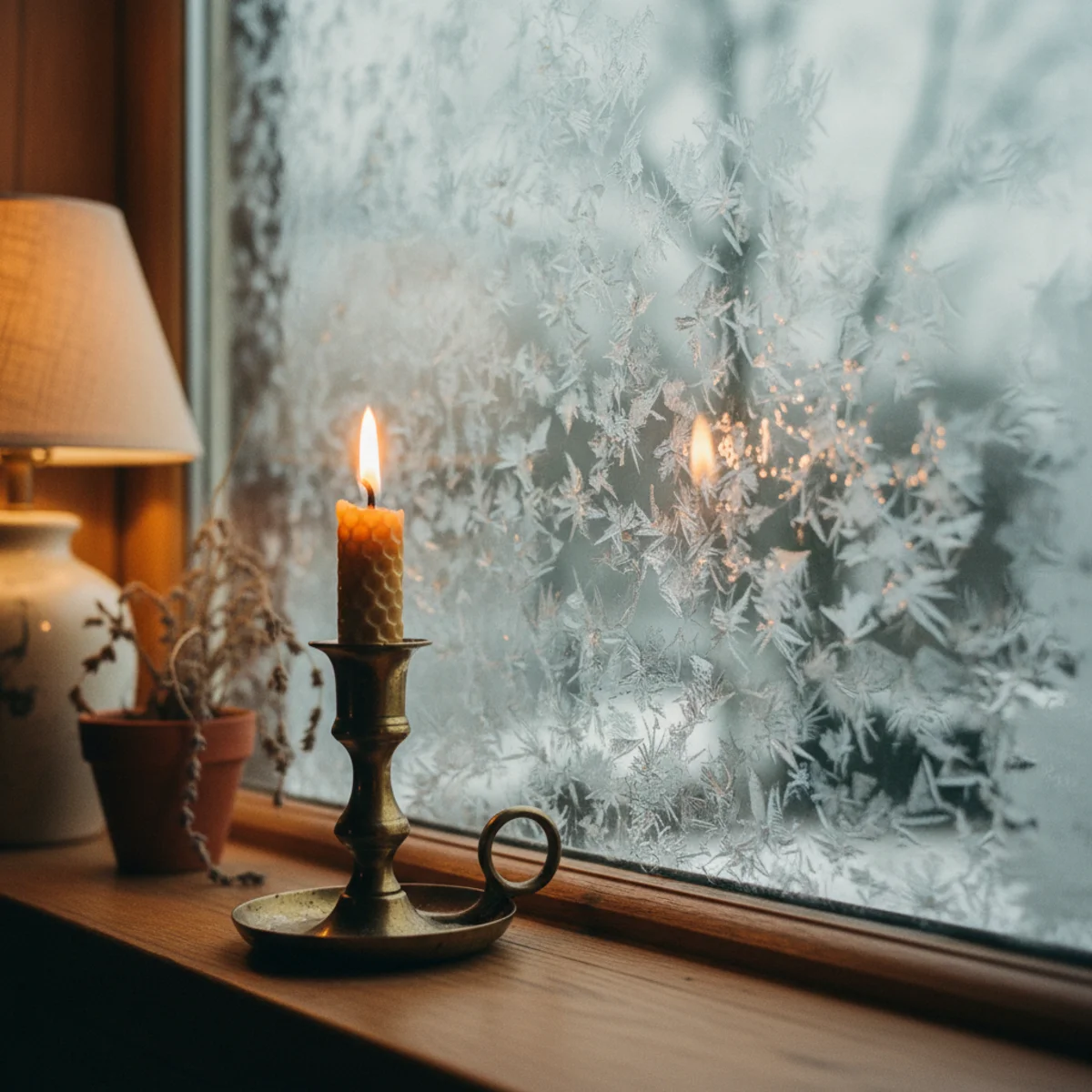
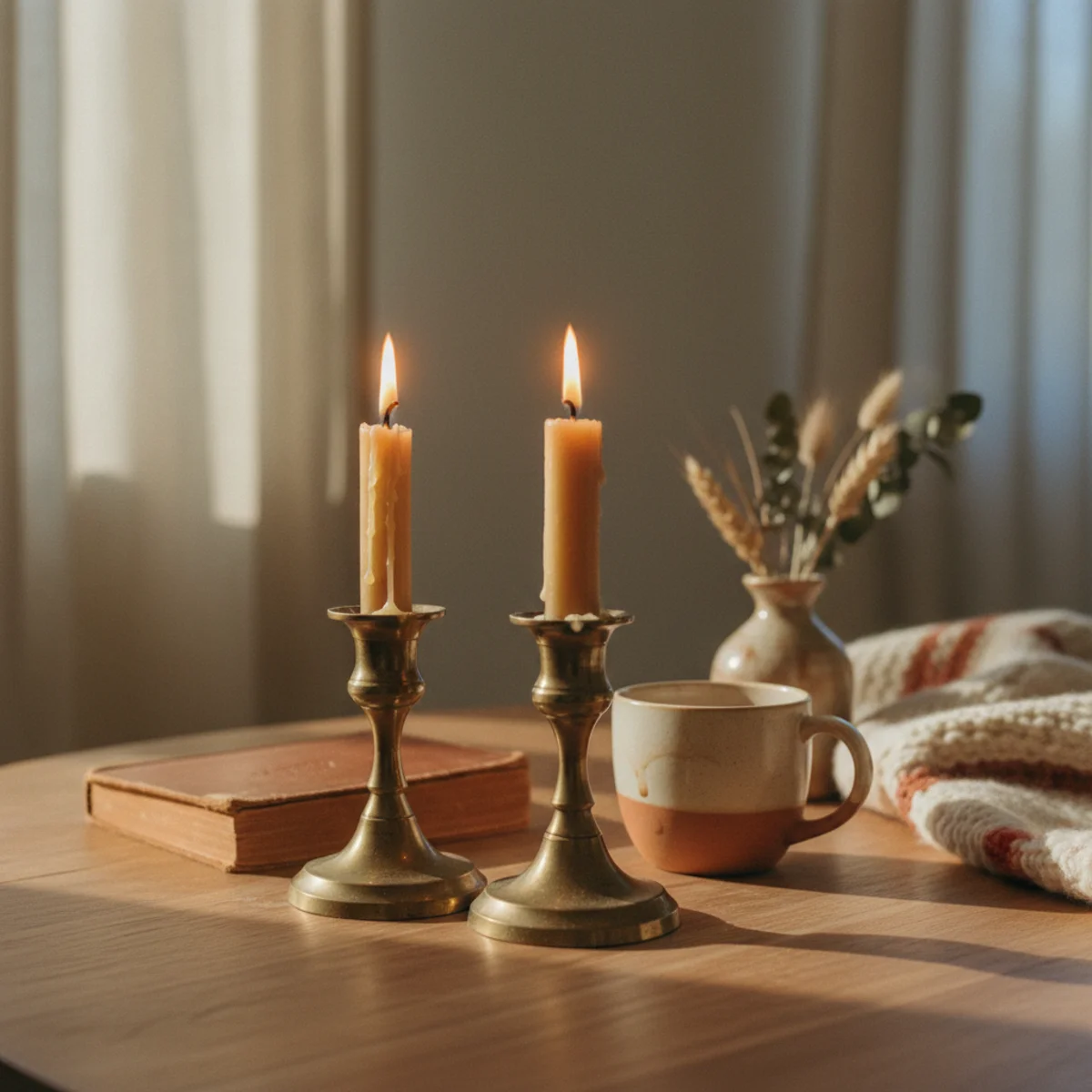
Hygge requires candle abundance — 8 to 12 candles lit every evening across the room, distributed in clusters and groupings. The Danish-leading per-capita candle consumption tells the story: hygge is partially defined by the visual and tactile experience of being surrounded by warm flickering light. This isn't decoration for guests; it's the daily practice that creates the warm atmosphere.
Required hygge candle setup: 8 TO 12 CANDLES BURNING EVERY EVENING in the living room. Mix: 3 to 4 taper candles in vintage brass or hand-thrown ceramic holders ($1 to $2 per taper, lasting 6 to 8 hours), 3 to 5 pillar candles in groupings ($5 to $15 per pillar, lasting 30 to 50 hours), 3 to 5 votives in glass jars ($1 to $3 per votive). Strategic positions: cluster of 3 to 4 on coffee table, cluster of 2 to 3 on console behind sofa, single candle plus votive on side tables, 2 to 3 candles on mantel or designated shelf. UNSCENTED OR LIGHTLY SCENTED — strongly scented candles overwhelm and fight food smells. Light all candles by 4:30pm during winter, 7pm during summer. The DAILY PRACTICE is what distinguishes hygge from Scandi aesthetic; lit candles every evening, not just when company comes.
AFFILIATE SLOTPRACTICE8-12 candles lit every evening: 3-4 tapers + 3-5 pillars + 3-5 votives across clustered positionsAdd affiliate URL when configuredWhy it works
Because hygge is a practice as much as an aesthetic — the daily ritual of lighting candles at the same time each evening transforms the room atmospherically and emotionally. Households that 'save' candles for special occasions never experience real hygge; the everyday-ness is the defining feature. The flickering warm light is also physiologically calming in ways electric light cannot replicate, supporting the parasympathetic nervous system shift that hygge enables. The 4:30pm or evening lighting becomes a household ritual that signals 'work is done, hygge time begins.'
Pro tip — Set a daily alarm or smart-plug-paired routine for candle lighting at the same time each evening — the cue prompts the daily practice during the weeks when it's not yet habitual. After 2 to 3 weeks the alarm becomes unnecessary; the routine establishes itself. Without the daily prompt, the practice drifts into 'sometimes' rather than 'always,' which dilutes the hygge effect.
Twelve candles lit every evening across the room — the daily practice that creates genuine hygge. See also: best-candles-cozy-home
02Use Many Small Warm Lights
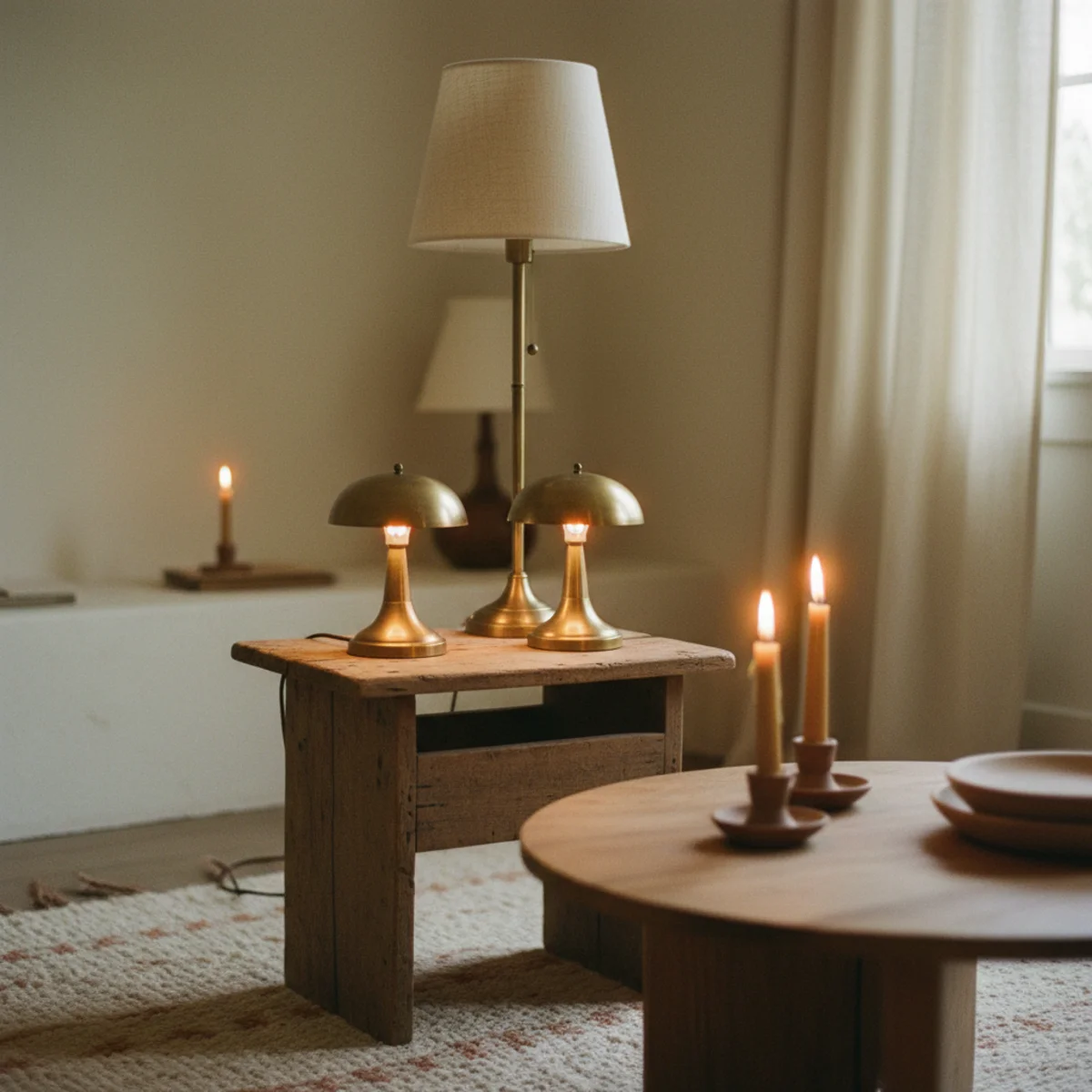
Beyond candles, hygge living rooms have many small warm electric lights — never relying on overhead light. Multiple table lamps, floor lamps, wall sconces, and pendants distributed across the room, all at 2700K, all dimmable. The 'many small lights' principle is the electric-light parallel to the candle-abundance principle: distributed warm pools of light from multiple sources rather than concentrated bright light from one source.
Hygge electric lighting setup: 5 TO 8 DISTINCT LIGHT SOURCES per living room, all at 2700K LED. (1) TWO TABLE LAMPS — flanking the sofa or beside primary seating, 24 to 32 inches tall, ceramic or brass bases ($25 to $200 each thrifted or new). (2) ONE FLOOR LAMP — 58 to 64 inches tall beside an armchair or in a corner ($60 to $400). (3) WALL SCONCES — 1 or 2 above seating, dining area, or doorway ($50 to $250 each). (4) PENDANT — 1 over a designated seating zone or coffee table ($80 to $500). (5) PICTURE LIGHT or BOOKSHELF LIGHTS — small specific-use lights on a designated feature ($30 to $150 each). ALL ON DIMMERS or SMART PLUGS. NEVER USE OVERHEAD CEILING LIGHTING during evening hours — the multiple small distributed warm lights produce the layered atmospheric effect that overhead lighting destroys.
AFFILIATE SLOTLIGHTING5-8 distinct light sources at 2700K: 2 table lamps + floor lamp + sconces + pendant + accent lights, all dimmable, never overheadAdd affiliate URL when configuredWhy it works
Because hygge depends on warm pools of light from multiple sources at different heights — the eye reads multiple light pools as atmospheric (intimate, layered, like candlelight or firelight), where a single bright overhead source reads as functional (lit for tasks, not atmospheric). The Nordic origin makes practical sense too: long dark winters meant homes were lit by multiple small candle, oil, and gas sources distributed across rooms, never by one bright source. Modern hygge electric lighting recreates this distributed warm-light tradition.
Pro tip — Put every lamp in the living room on smart plugs scheduled to dusk — the unified evening turn-on creates the atmospheric shift across the entire room simultaneously, which feels more deliberate and ritualistic than individual lamp switches. The $15 per smart plug investment across 5 to 8 lamps ($75 to $120 total) transforms how the room transitions from day to evening.
Five warm light sources at 2700K distributed across the room — atmospheric layered light, never overhead. See also: best-lamps-warm-light
03Layer Soft Touchable Texture
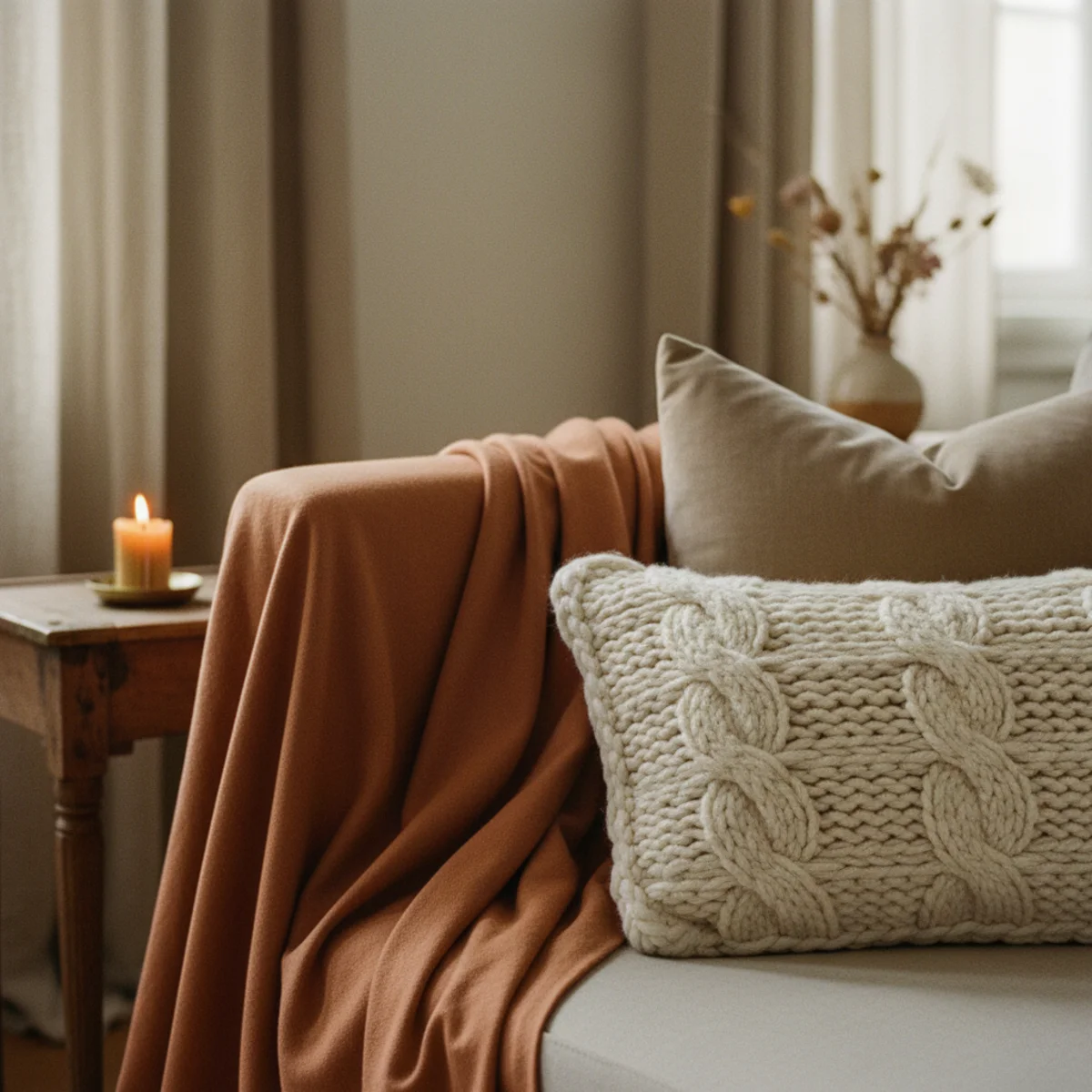
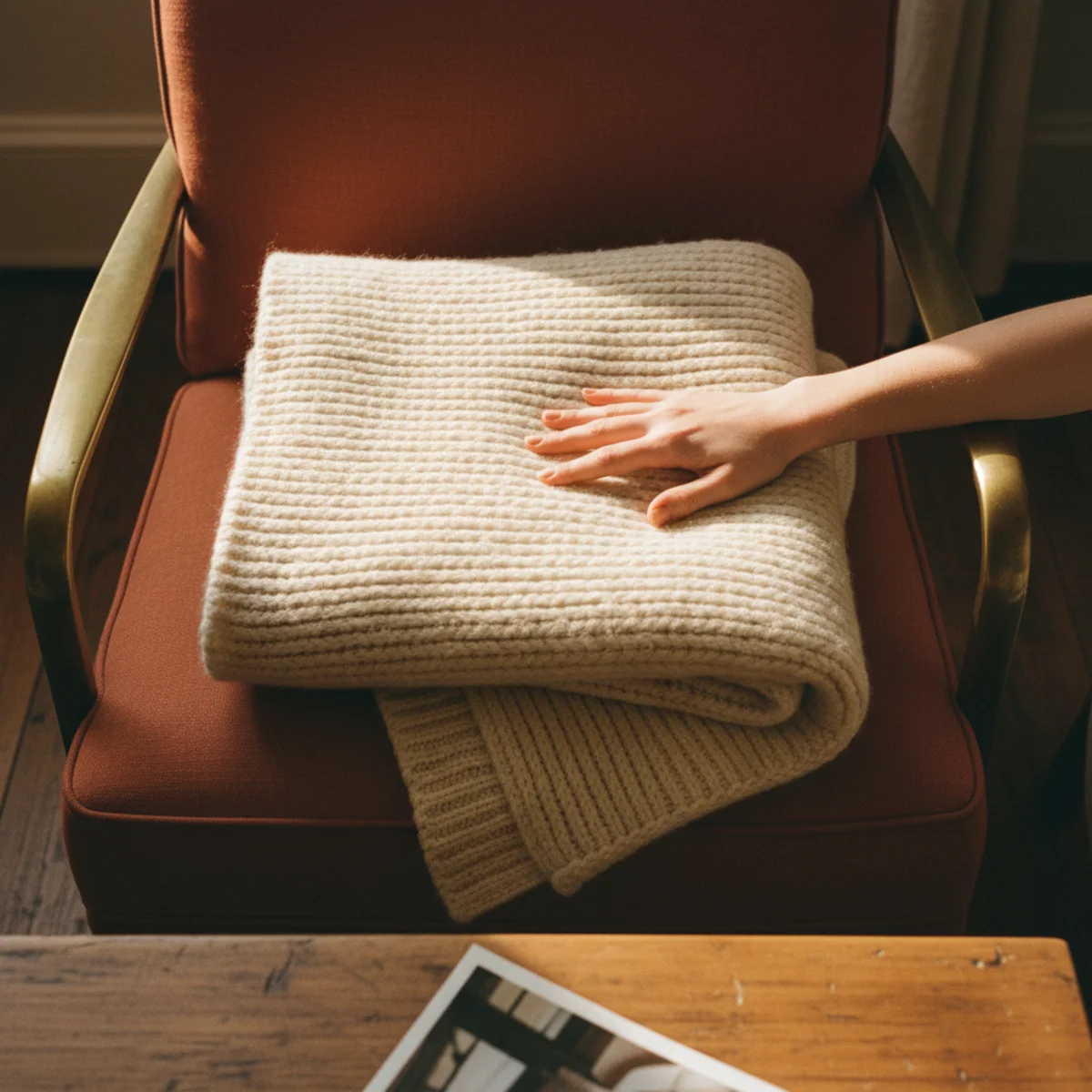
Hygge demands touchable textiles — soft layered surfaces that invite contact and signal genuine comfort. Wool throws, sheepskin draped over chairs, knit blankets, linen cushions, woven baskets. The 'touchable' qualifier matters: textiles you actually want to touch and use, not display-only decorative pieces. The tactile invitation is what makes hygge embodied rather than just visual.
Required hygge textile layering: REAL SHEEPSKIN draped over the most-used chair (genuine shearling at $80 to $200, IKEA RENS at $40, vintage at $30 to $80). 3 TO 4 WOOL THROWS distributed across sofa, armchair, secondary seating, each in cream, oat, terracotta, or sage ($40 to $79 each). 5 TO 7 CUSHIONS in mixed textures (linen, boucle, knit wool, mohair, slight slub) at $15 to $50 each. 1 CHUNKY KNIT THROW for textural variation ($40 to $100). LAYERED RUGS — large wool or jute base + smaller sheepskin or wool flatweave on top in the seating zone. WOVEN BASKETS — 2 to 4 across the room in seagrass or rattan ($25 to $60 each). The combined textile layering creates the touchable warm surfaces that hygge requires; the tactile invitation is what distinguishes hygge from look-don't-touch Scandi.
AFFILIATE SLOTTEXTILESSheepskin + 3-4 wool throws + 5-7 mixed-texture cushions + chunky knit + layered rugs + woven basketsAdd affiliate URL when configuredWhy it works
Because hygge is embodied — it involves actually wrapping in throws, sinking into cushions, pulling sheepskins over yourself during cold evenings. Textiles that are too precious to touch (silk, delicate antiques, dry-clean-only pieces) fight hygge by signaling 'don't actually use this.' Touchable textiles (washable wool, sturdy linen, machine-washable cotton blends) signal the opposite — 'use freely, comfort comes first.' The materials should be chosen partly for how comfortable they feel against skin and how easily they wash after real use.
Pro tip — Drape the sheepskin DIAGONALLY across the chair or sofa, not flat — the diagonal posture reads as 'recently used' rather than 'carefully arranged for photos.' The slightly-disheveled posture matches genuine hygge; the perfectly-flat posture reads as styled-for-Instagram.
Sheepskin draped diagonally, wool throws, mixed cushions, chunky knit — touchable texture that invites genuine use. See also: throw-blanket-layering
04Keep a Throw Within Arm's Reach
The single most-specific hygge practical move: keep a throw within arm's reach of every seat. The morning chair has a throw nearby. The sofa has throws on both ends. The reading nook has its own throw. Throws should be visible and reachable so the household member can grab one without standing up. The infrastructure removes friction from the hygge action of wrapping up.
Throw placement by seating zone: SOFA — one throw at each end (the corner-spot users grab the nearest one), 50x60 inches in cream/oat/terracotta wool ($40 to $79 each). ARMCHAIR or LOUNGE CHAIR — one throw draped over the back, falling within arm's reach when seated. READING NOOK — one chunky knit throw and one wool throw stacked on a small side table or ottoman beside the chair. BEDROOM CHAIR or BENCH — one throw on/near it. The reach test: from a seated position in any chair, you should be able to reach a throw without standing. Sources: West Elm, Pottery Barn, IKEA INGABRITTA at $30 to $50, Pendleton outlet, vintage at $20 to $40 from estate sales. The total household investment ($150 to $400) provides the infrastructure for hygge to happen daily without requiring anyone to fetch a throw from elsewhere.
AFFILIATE SLOTPRACTICEOne throw within arm's reach of every seat - sofa both ends + armchair back + reading nook beside + bedroom chairAdd affiliate URL when configuredWhy it works
Because friction prevents hygge. If grabbing a throw requires getting up, walking to a closet, retrieving one, and returning, the action becomes a project — and people skip projects when they're already settled. If the throw is right there, the wrap-up happens spontaneously. The 6-second reach versus 60-second fetch difference compounds across many evening moments into either 'hygge happens daily' or 'hygge happens rarely.' The infrastructure decision (visible throws everywhere) determines which of these is true.
Pro tip — Drape throws over chair backs and sofa arms rather than folding them on shelves or in baskets — the visible draped position invites grabbing while the folded-and-stored position requires unfolding before use. The 5-second unfold step is enough friction to discourage spontaneous wrap-up; the always-ready drape removes that friction entirely.
Throws within arm's reach of every seat — infrastructure that removes friction from spontaneous wrap-up. See also: Pottery Barn
05Create a Refuge From Outside
Hygge depends on contrast between cozy indoor warmth and outdoor cold (or rain, or darkness, or general 'outside-ness'). The living room should feel like genuine refuge from whatever's happening outside — protected, contained, separate. The fix: heavy curtains drawn during evening, layered textiles, abundant warm light, even small architectural moves like a sectional that creates a defined seating zone within a larger room.
Refuge-creation moves: HEAVY CURTAINS DRAWN before sunset during winter — blocks outdoor cold, frames the room as defined interior space (per winter-decor rules). DEFINED SEATING ZONE within larger open-plan rooms — sectional sofa, area rug, gallery wall behind, all defining 'this is the hygge space' separate from kitchen or dining. SMALL WALLS OR DIVIDERS — open shelving, large plants, or movable screens to soften open-plan exposure. CLOSED DOORS where possible — closing doors between rooms creates contained intimate spaces rather than continuous flow. AMBIENT SOUND that supports refuge — a quiet record on the turntable, soft music from a speaker, a fire crackling on the hearth or via electric fireplace sound (Apple TV has good fireplace screensavers with crackling audio). The combined moves transform the room from 'space attached to the rest of the house' to 'sanctuary specifically separated from outside.'
AFFILIATE SLOTREFUGEHeavy curtains drawn before sunset + defined seating zone with rug + ambient sound (record, fire, soft music)Add affiliate URL when configuredWhy it works
Because hygge psychologically depends on the contrast between protected-inside and unprotected-outside — the sense that the cozy room is genuine shelter from genuine elements. Rooms without this contrast (open to outdoor views during winter, undefined within larger spaces, exposed to street noise) experience reduced hygge regardless of how good the textiles and candles are. The refuge feeling supports the parasympathetic shift that makes hygge restorative rather than just visually pleasant. Creating the refuge is half functional (insulation, sound dampening) and half perceptual (defined boundaries, framed interior space).
Pro tip — Draw curtains and lower lights 30 to 60 minutes before bedtime to extend the refuge effect into the bedtime routine — the contrast between dim refuge living room and the bright bathroom becomes part of the wind-down ritual. Without this gradient, the abrupt transition from cozy room to bright bathroom disrupts the parasympathetic state hygge built up.
Curtains drawn, defined zone, closed doors — refuge from outside that lets hygge parasympathetic shift happen. See also: winter-decor
06Add Natural Materials
Hygge requires natural materials throughout — wood (oak, walnut, oiled pine), wool, linen, leather, ceramic, brass, stone, jute. The natural origins of these materials connect the indoor refuge to nature and ground the room in pre-industrial warmth. Synthetic materials (plastic, vinyl, polyester, laminate) fight hygge regardless of how comfortable they might be functionally; natural materials support hygge from material foundation up.
Required natural materials across the hygge living room: WOOD — floors (oak, ash, oiled pine), furniture (oak, walnut, teak), accents (cutting boards, wood-handled tools, wooden bowls). WOOL — throws, rugs, cushions, blankets. LINEN — sofa upholstery, cushion covers, curtains, table linens. LEATHER — one armchair, ottoman, small pouf, leather-bound books. CERAMIC — hand-thrown vessels, planters, lamp bases, drinkware. BRASS or BRONZE — candleholders, drawer pulls, lamp finishes (warm metals only — never chrome). STONE — small marble or granite tray, stone candleholders, stone coasters. JUTE or SEAGRASS — baskets, larger rugs, woven trays. PAPER — books with cloth bindings, paper lampshades, hand-bound journals. The combined natural materials create the foundation that makes everything else read as authentic hygge.
AFFILIATE SLOTMATERIALSWood + wool + linen + leather + ceramic + brass + stone + jute throughout; replace synthetic with natural over timeAdd affiliate URL when configuredWhy it works
Because hygge is rooted in pre-industrial Nordic tradition — homes lit by candles, heated by wood stoves, furnished by hand-made objects from local materials. The aesthetic memory of this origin requires natural materials to be coherent. Synthetic materials (laminate furniture, polyester throws, plastic decor) signal the opposite — industrial mass production, the antithesis of hygge's pre-industrial warmth. The materials don't have to be expensive or antique, just genuinely natural. Solid oak from IKEA reads as hygge; expensive walnut veneer over particleboard reads as not-quite-hygge.
Pro tip — Audit your living room for synthetic materials and replace one per quarter with a natural alternative — synthetic throw replaced with wool, plastic basket replaced with seagrass, vinyl ottoman replaced with leather pouf. The quarterly swap costs $40 to $150 each time but transforms the material foundation across a year of small targeted changes.
Oak, wool, linen, leather, ceramic, brass, jute — natural materials grounding the hygge refuge. See also: cream-decor-warm-white
07Make a Spot for Hot Drinks
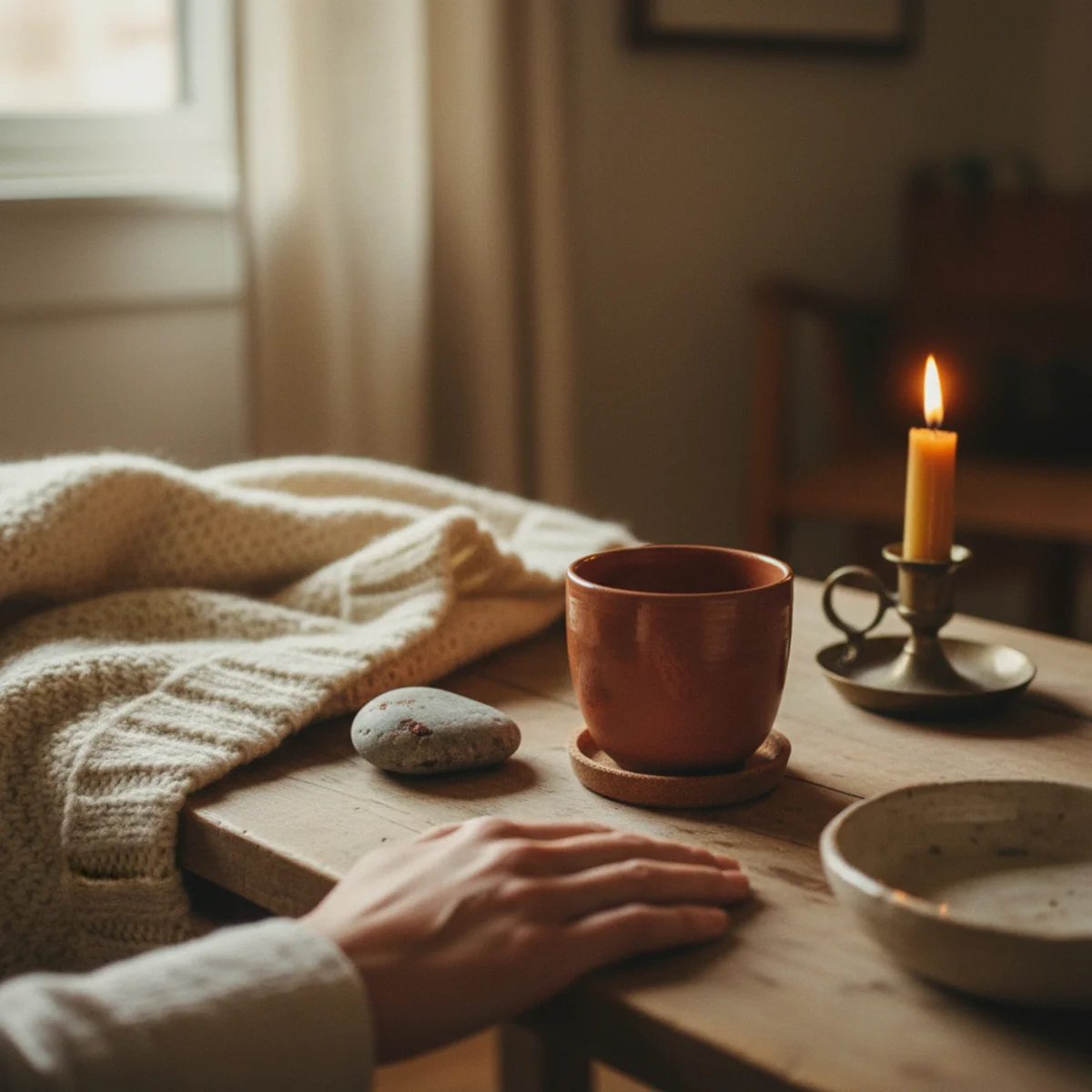
Hygge involves hot drinks — coffee in the morning, tea in the afternoon, hot chocolate or mulled wine in the evening. The fix: a dedicated infrastructure for the hot-drink practice. A coffee bar nearby, a tea kettle visible in the kitchen, a tray on the coffee table for evening drinks, beautiful drinkware (handmade mugs, ceramic cups) within easy reach. The infrastructure makes hot drinks part of the daily hygge ritual.
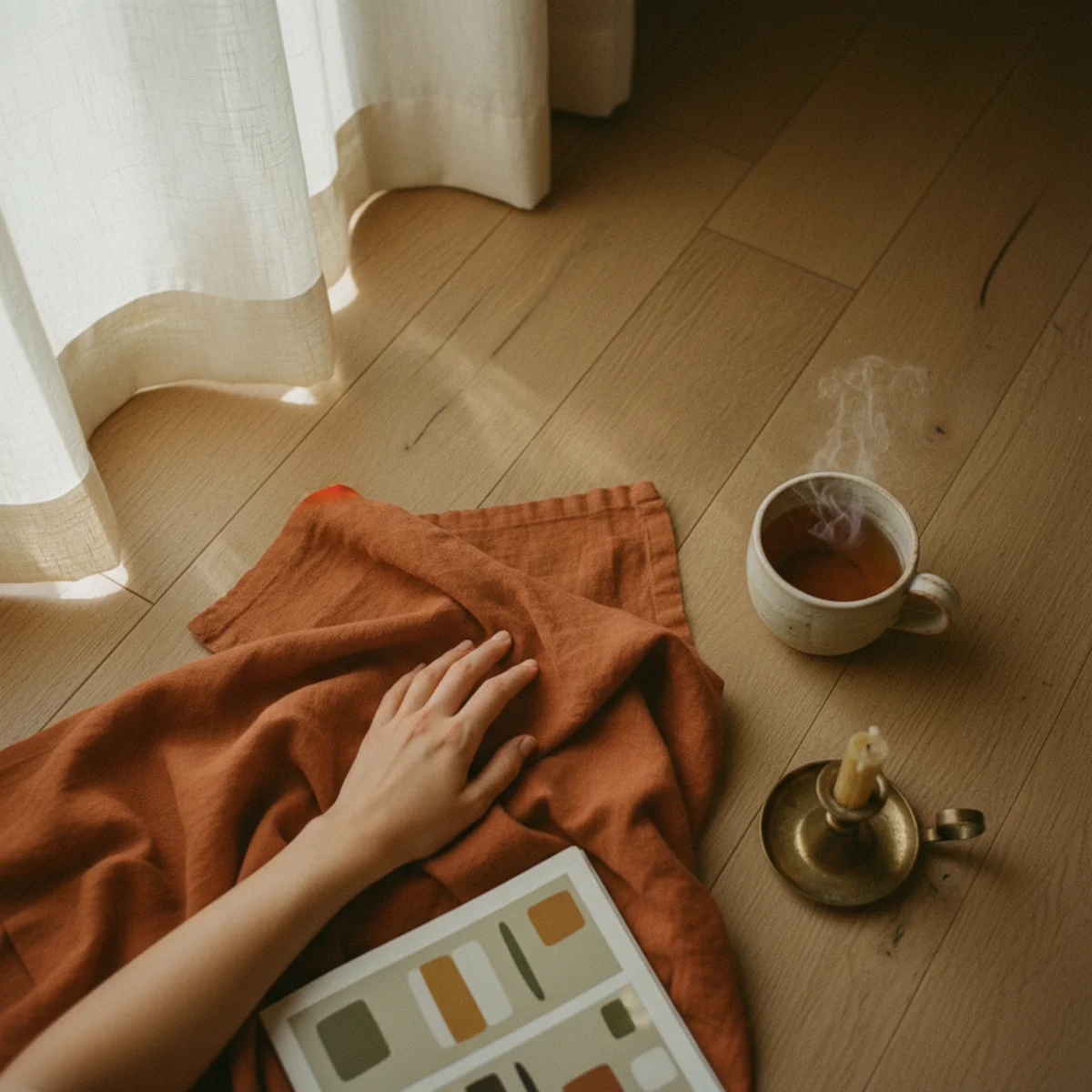
Hot-drink infrastructure components: COFFEE BAR or station in kitchen (per coffee-bar-ideas guide) with electric kettle ($30 to $150), French press or pour-over ($25 to $80), good coffee at $15 to $30 per pound, local roaster preferred. TEA STATION — varied tea selection (herbal, black, green, white) in glass jars or vintage tins on a designated shelf, kettle nearby. COFFEE TABLE TRAY — wooden, brass, or marble tray ($30 to $120) holding 2 to 4 ceramic mugs for evening tea or hot drink rituals, a small jar of honey or sugar, and a few teaspoons. BEAUTIFUL DRINKWARE — handmade ceramic mugs ($20 to $60 each from Etsy artisans), vintage cups ($5 to $30 each thrifted), stoneware drinkware. The combined infrastructure makes the hot-drink ritual frictionless and beautiful, which means it actually happens daily rather than occasionally. The ritual is what creates the hygge moment as much as the drink itself.
AFFILIATE SLOTINFRASTRUCTURECoffee/tea station + electric kettle + designated tray on coffee table + handmade ceramic mugsAdd affiliate URL when configuredWhy it works
Because warm beverages held in beautiful drinkware are one of the universal hygge sensory experiences — the warm cup in the hands, the steam visible, the small ritual of preparation and consumption. The drink itself is part of it; equally important is the slowing-down that the ritual requires. You can't rush a hot drink the way you can rush a cold one. The 5 to 15 minutes spent slowly sipping a cup of tea or coffee is the actual hygge moment, not just an accompaniment to it.
Pro tip — Use heavier ceramic mugs rather than thin porcelain — the heavier weight in the hand registers as more substantial and grounding, which supports the hygge slowing-down effect. Handmade ceramic mugs from Etsy artisans at $20 to $40 each typically have the right weight; mass-produced thin porcelain feels rushed by comparison.
Wooden tray with handmade ceramic mugs and honey on the coffee table — the hot-drink ritual infrastructure. See also: coffee-bar-ideas
08Build One Deeply Comfortable Seat
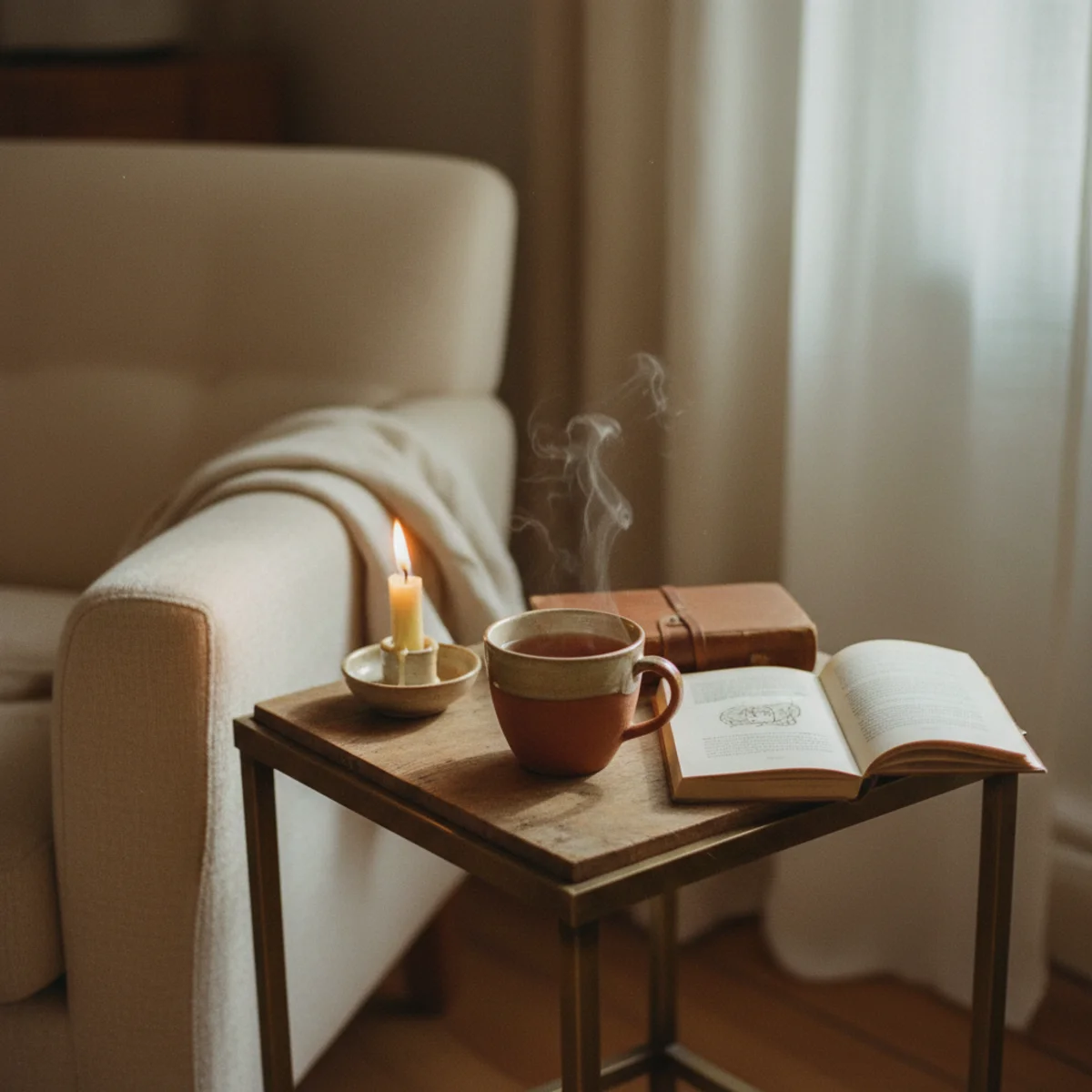
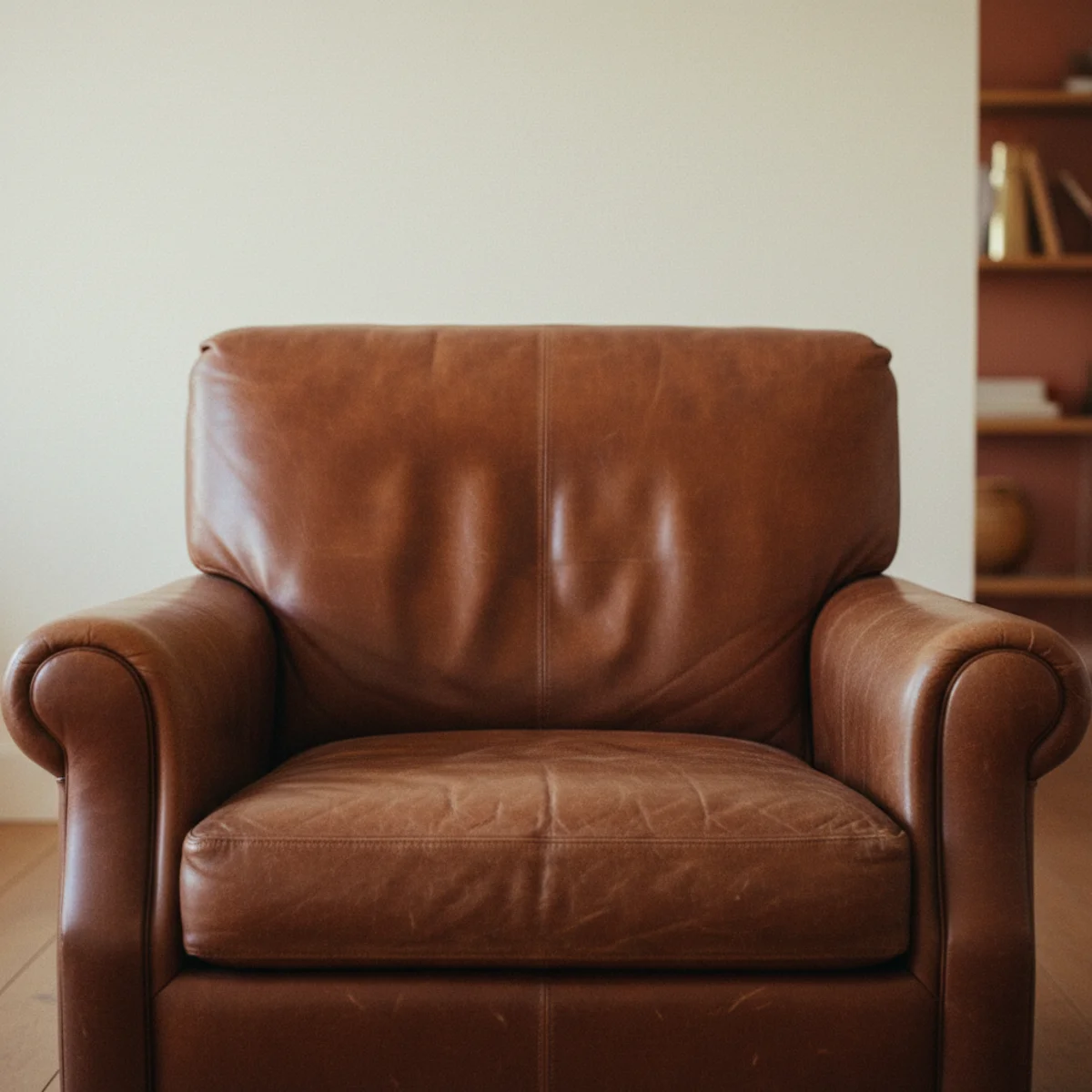
Hygge living rooms have one designated comfort seat — the chair or sofa corner that's specifically built for spending hours in. Deep-seat, soft cushions, a footrest or ottoman, throws within reach, side table with lamp and drink space. The single deeply-comfortable seat becomes the room's hygge anchor and the place household members gravitate to.
The hygge anchor seat specs: DEEP-SEAT CHAIR (22+ inches seat depth) with soft conforming cushions, OR designated corner of sectional sofa with same comfort properties. FOOTREST OR OTTOMAN positioned within easy reach so feet can rest elevated during long sitting. SIDE TABLE within arm's reach holding: small table lamp at 2700K with dimmer, surface for hot drink or book, optional small cluster of candles. THROW WITHIN ARM'S REACH (per rule 4). BLANKET-WEIGHT CUSHIONS for back support. NATURAL LIGHT during day (positioned near window when possible, oriented to optimize that light). Best sources for the comfort chair: vintage Howard Sofa or Sofa.com armchair at $1,500 to $3,000, Article Sven slipcover armchair at $999, Pottery Barn Charleston at $1,800, IKEA POÄNG at $169 (the budget option that actually delivers). The single chair earns budget; the hygge anchor is one of the few decor decisions where investment pays back daily.
AFFILIATE SLOTFURNITUREOne deep-seat chair + ottoman + side table with lamp + throw within reach - the room's hygge anchorAdd affiliate URL when configuredWhy it works
Because hygge requires a destination — the specific spot where the household member goes to settle in for the hygge moment. Without a designated comfort seat, hygge becomes diffuse and reactive (sitting wherever happens to be empty, getting comfortable enough to settle, eventually getting up because something is uncomfortable). With the anchor seat, hygge becomes intentional and consistent (going to THE chair, settling in fully, staying for the duration). The single chair concentrates the household's hygge practice in one optimal location.
Pro tip — Position the anchor seat so it has both daytime function (near window for reading light) and evening function (near a 2700K lamp for warm light) — the dual-function position means the same chair becomes the gravity-well across morning coffee, afternoon reading, and evening drinks. The all-day use compounds the hygge anchor effect.
Deep-seat chair, ottoman, side table with lamp, throw — the single anchor seat that concentrates daily hygge. See also: Article Sven
09Keep It Unfussy and Lived-In
Hygge fails when rooms try too hard — perfectly arranged cushions, magazines fanned at 45 degrees, throws folded with corners exactly aligned. Real hygge looks slightly disheveled because it's actually used. Cushions slightly mussed from sitting, throws slightly bunched from being pulled up, books on the table from yesterday's reading. The lived-in quality is the signal that real hygge happens here, not just photo-hygge.
Unfussy principles: DON'T re-arrange cushions after every use — the slight disorder reads as 'used recently' rather than 'styled for guests.' DON'T fold throws perfectly — drape them loosely or leave them as they were after the last wrap-up. KEEP READING MATERIALS visible — current books on side tables, magazines on the coffee table, a stack near the anchor seat. DON'T HIDE EVIDENCE of daily life — half-finished tea on the side table, current knitting project in a basket, kid art on a small frame. ALLOW MILD CLUTTER in designated zones — a basket beside the chair holding the throw, the current book, glasses, and small daily items. The discipline is opposite of staging — show evidence that the room is inhabited rather than performing as model home.
AFFILIATE SLOTDISCIPLINESlight disorder shows real use; don't re-arrange after every use; keep evidence of daily life visibleAdd affiliate URL when configuredWhy it works
Because perfectly arranged rooms read as 'someone might come visit' — they're prepared for outside observation rather than for the household's own daily use. Hygge is the opposite of preparing for outside observation; it's the household relaxing in their own genuine space without performing. The slight disorder is the visual evidence of that relaxation. Rooms where every cushion is perfectly placed read as 'just before the guests arrive,' which is exactly the opposite of hygge.
Pro tip — Take a photo of your room when it's most beautifully arranged — and then deliberately mess it up before settling in for actual hygge. The hygge use of the room is supposed to undo the perfect arrangement; the messed-up version IS the room functioning correctly. Save the photo for reference; don't try to maintain it during actual use.
Mussed cushions, half-folded throw, current book, half-finished tea — the lived-in disorder that signals genuine hygge. See also: model home
10Add Warm Earthy Color
Hygge palette tends toward warm earth tones — terracotta, deep rust, ochre, muted sage, deep olive, cream, oat. The colors echo the Nordic landscape (autumn forests, winter earth, fall foliage) and contrast warmly with the gray-blue tones of Nordic winter outdoors. The palette commitment is what gives hygge rooms their distinctive warm-collected feel across various textile and decor choices.
Hygge palette options: TERRACOTTA-WARMTH PALETTE — terracotta + deep rust + ochre + cream + warm brass + natural oak. EARTH-FOREST PALETTE — muted sage + deep olive + cream + warm brass + natural oak. AUTUMN-LEAF PALETTE — deep rust + ochre + amber + cream + warm brass + walnut wood. WARM-MINIMAL PALETTE — cream + oat + soft terracotta accent + warm brass + light oak (the minimalist hygge option). The discipline is choosing ONE palette and applying it consistently across textiles, art, accent objects, and any color decisions. Wall paint can be warm white (per modern-farmhouse-decor) or a deeper hygge tone (F&B Setting Plaster, Mizzle, Bancha 298 for olive, or even Kendall Charcoal for evening hygge). The combined warm palette is what unifies the room visually and creates the cozy-collected aesthetic.
AFFILIATE SLOTPALETTETerracotta + rust + ochre OR sage + olive + cream OR autumn leaves; commit to ONE warm earthy paletteAdd affiliate URL when configuredWhy it works
Because warm earth tones echo the natural light of the Nordic seasons (warm autumn forests, the warm earth visible during winter, the warm hearth fire that traditionally lit Nordic homes). The colors carry pre-industrial associations — fire, food, earth, harvest — that ground the room in pre-modern warmth. Cool palette options (greys, blues, cool whites) work for modern Scandinavian commercial design but fight hygge specifically because they evoke the cold-outdoor side of Nordic life rather than the warm-indoor refuge from it.
Pro tip — Test paint colors on multiple walls before committing — warm earth tones can read very different under different room lighting conditions. F&B Setting Plaster 231 looks pink-warm in some lights and almost beige in others; Mizzle 266 reads sage-green in cool light and warmer in evening lamp light. Test for 3 days across morning/afternoon/evening before painting full rooms.
Terracotta, rust, ochre, cream — committed warm earthy palette echoing Nordic autumn. See also: best-paint-for-warm-home
11Bring In a Bit of Greenery
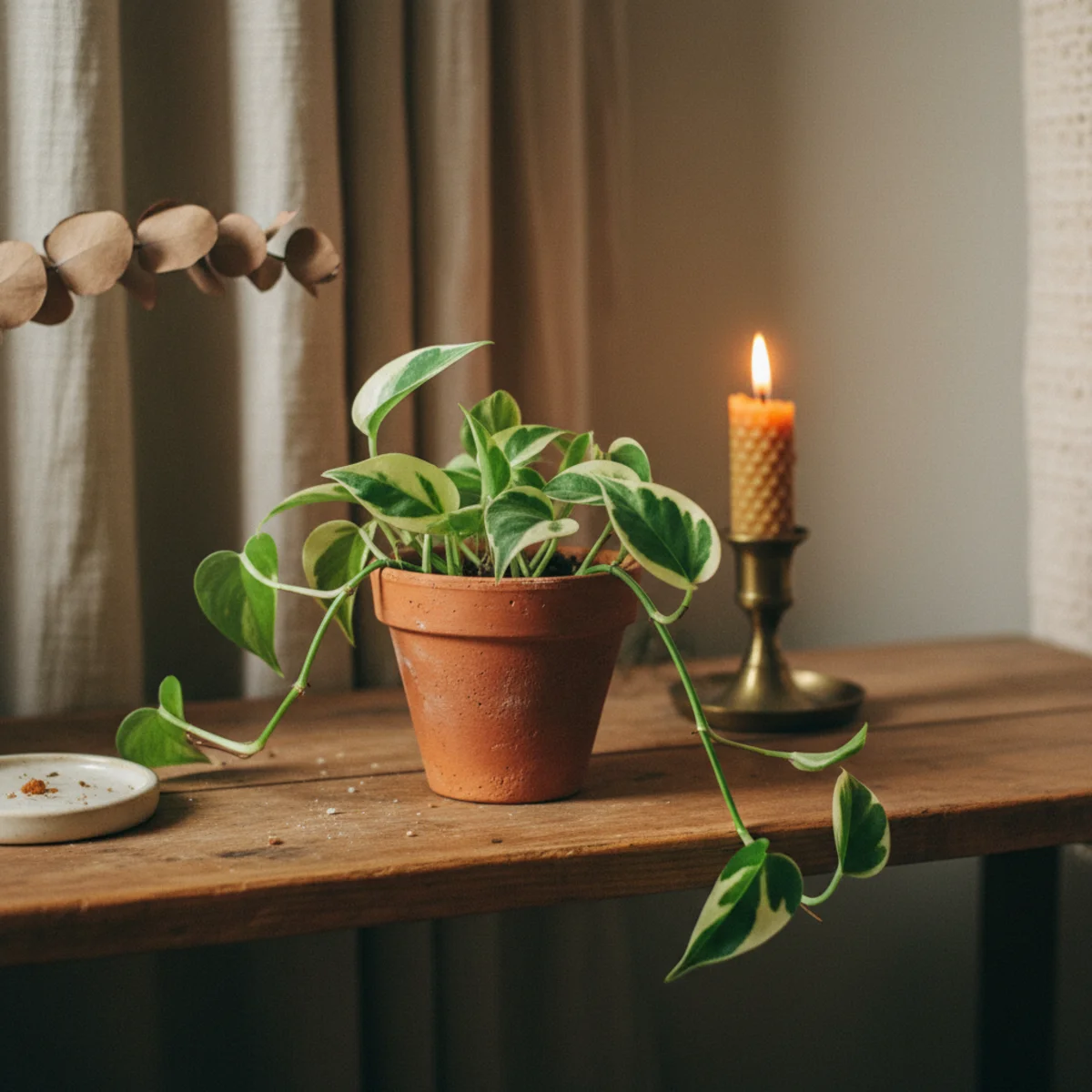
Hygge rooms benefit from plants — but specific kinds that fit the Nordic-warm aesthetic rather than tropical or trendy plants. Pilea peperomioides (the iconic Nordic plant), olive trees, herbs on windowsills, dried branches in winter. The plants connect the indoor refuge to nature seasonally and provide the organic shape and natural color that the otherwise-restrained palette benefits from.
Best plants for hygge living rooms: PILEA PEPEROMIOIDES — the iconic Scandinavian 'passing-it-on plant' culturally shared via cuttings ($15 to $40 retail or free from friend), SNAKE PLANT — hardy and sculptural ($20 to $40), ZZ PLANT — low-light tolerant ($25 to $50), SMALL OLIVE TREE — 4 to 6 feet ($40 to $150), MONSTERA — single-piece statement ($30 to $80 medium), DRIED BRANCHES in winter — eucalyptus, pine, magnolia branches in tall heavy vases. WINDOWSILL HERBS — basil, mint, rosemary, thyme in small terracotta pots ($4 to $10 each). 4 to 6 plants total across the living room with one large floor plant as accent. Avoid: tropical bright-green plants (fight Nordic aesthetic), plastic plants (fight all natural-material principles), super-trendy plants like fiddle leaf figs unless they fit your specific palette.
AFFILIATE SLOTPLANTSPilea peperomioides + snake plant + ZZ + olive tree + windowsill herbs + dried branches in winterAdd affiliate URL when configuredWhy it works
Because plants connect the indoor refuge to nature, which is one of the Nordic cultural values (friluftsliv — open-air living, connection to nature) that hygge extends indoors during long winters. The plants are also visually important — their organic shapes contrast with the restrained palette and clean lines, adding the curve and natural variability the otherwise-geometric hygge aesthetic benefits from. The pilea peperomioides specifically has deep Nordic cultural meaning (culturally circulated via cuttings between friends across decades), which reinforces the warm-communal hygge ethos.
Pro tip — Source a pilea cutting from a friend rather than buying retail — the plant culturally circulates through gifting and cutting-sharing, and a friend's cutting is the most authentic Nordic way to acquire one. Most pilea owners are happy to share since the plant produces offshoots continually. The free gifted plant carries the cultural meaning that a retail-purchased one cannot.
Pilea, snake plant, olive tree, herbs — the specific Nordic plant collection that hygge calls for. See also: scandinavian-living-room
12Light a Fire If You Have One
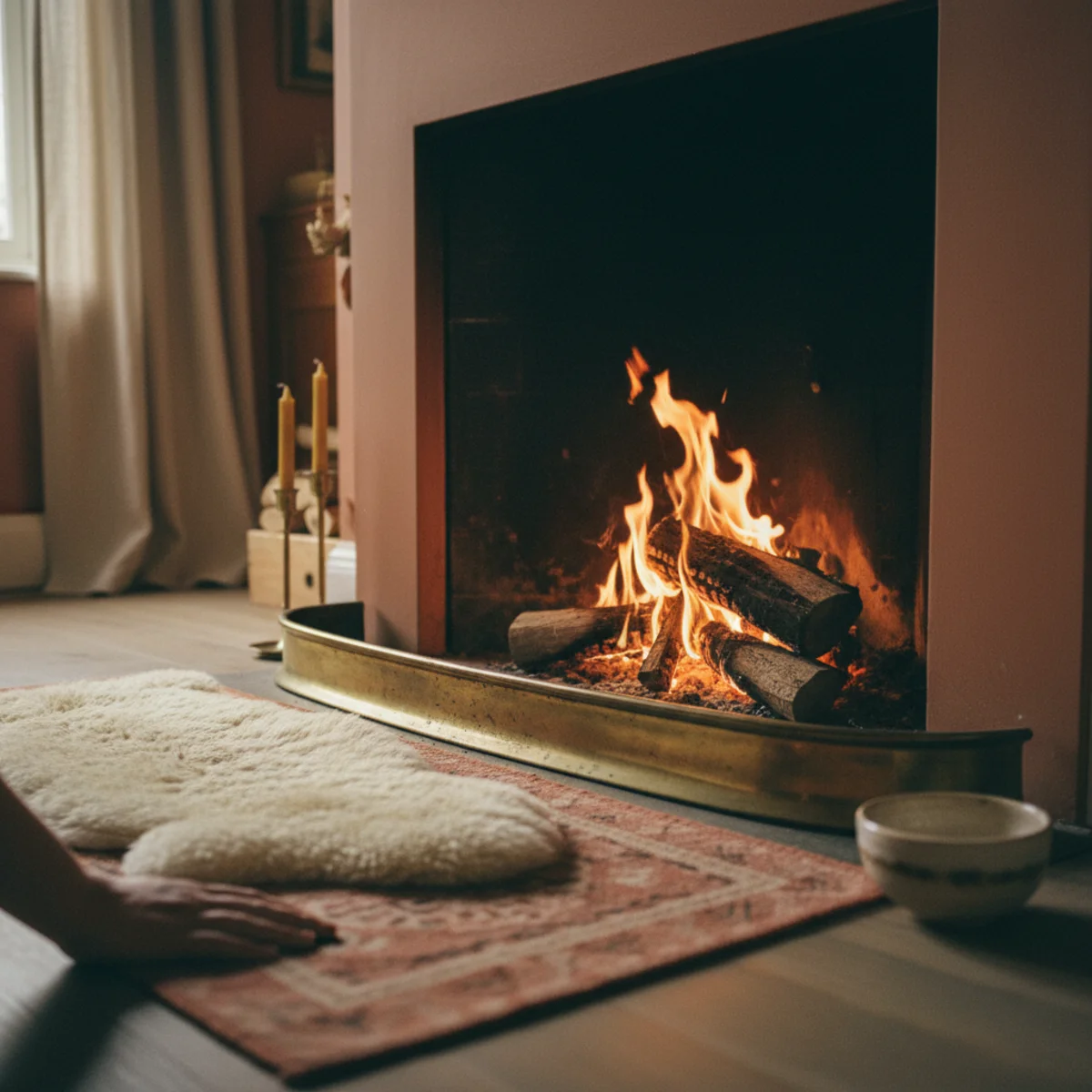
If the room has a fireplace, lighting it during evening hours is one of the most-defining hygge moves available. Real fire provides flickering warm light, gentle crackle sound, actual warmth, and the deep evolutionary signal of safety and gathering. Even electric or alcohol-burning faux fireplaces provide significant fraction of this effect if real fire isn't available.
Fire options ranked by hygge effect: REAL WOOD-BURNING FIREPLACE — most-perfect hygge enabler if you have one; light by 5pm during winter evenings, gather seating around it. GAS FIREPLACE — significant hygge effect, easier than wood, lights with a switch but no real-fire crackle. ELECTRIC FIREPLACE — modern realistic versions ($300 to $1,500) provide visible flame effect and ambient heat, no actual fire but reasonable approximation. ETHANOL OR ALCOHOL-BURNING FIREPLACE — real flame without venting requirements ($100 to $1,000 for tabletop versions); good for apartments without traditional fireplaces. FIREPLACE SOUND on Apple TV or laptop — surprisingly effective for the audio component; play during evenings even without visual fire. If you have a wood-burning fireplace, get the wood, the matches, the kindling supplies, and the screen ready before winter starts — friction-free preparation means the fire actually gets lit during evening hours rather than skipped.
AFFILIATE SLOTFIREReal wood-burning > gas > electric > ethanol > fireplace audio - any version provides significant hygge effectAdd affiliate URL when configuredWhy it works
Because fire taps into deep evolutionary associations — humans have gathered around fire for warmth, light, and safety for hundreds of thousands of years, and the visual and acoustic experience of fire activates parasympathetic calm at a level no electric substitute can match. The Nordic cultural connection is even stronger — Nordic homes were heated and lit by fire for most of their history, and the cultural memory of fire as the center of the home is recent enough to still register. Adding fire (even faux fire with crackling audio) makes the hygge moment significantly more powerful than electric-only alternatives.
Pro tip — Buy good seasoned wood from a local source rather than convenience-store firewood — green or wet wood smokes excessively and doesn't burn as warm or as long. Local hardwood (oak, ash, maple) at $200 to $400 per cord is genuinely better than $5 per bundle at the gas station. The wood quality difference is significant for the fire experience.
Real wood fire crackling during evening — the deepest single hygge enabler available. See also: fireplace nook ideas
How to create a hygge living room step by step
Build for feeling, not for photographs. Atmosphere first.
- 1Kill the harsh light
Turn off the bright overhead and switch on several small warm 2700K lamps at low height. This is the single biggest hygge move.
- 2Add candlelight
Cluster candles around the room and light them — for no occasion. Candlelight is hygge's most important ingredient.
- 3Layer soft texture
Add wool throws, a sheepskin, and chunky cushions, with a blanket within reach of every seat.
- 4Make it a refuge
Draw the heavy curtains, build one deeply comfortable seat, set out a spot for a hot drink, and let the room look lived-in.
Quick tips
- Light candles on ordinary days, not just for guests — it's the fastest way into hygge.
- Use several small warm lights rather than one bright overhead.
- Keep a throw within reach of every seat someone might use.
- Draw heavy curtains at dusk to make the room feel like a refuge.
- Build one deeply comfortable seat that's clearly the best spot in the room.
- Let the room look lived-in — a book left open, a rumpled throw — rather than staged.
Hygge for different rooms
Clustered candles, several warm lamps, layered throws, drawn curtains, and one sink-in seat.
Warm bedside lamps, candlelight on the dresser, layered soft bedding, and a screen-free refuge feeling.
A comfortable chair, a warm shoulder-height lamp, a throw, and a spot for a hot drink; see our reading nook ideas.
A few candles, one or two warm lamps, and a single soft throw create hygge in even a tiny room.
Hygge isn't a look you buy. It's candlelight on an ordinary Tuesday and a blanket within reach.
Frequently asked questions
What is hygge?+
How is hygge different from Scandinavian style?+
How many candles do hygge rooms need?+
Do I need a real fireplace for hygge?+
What colors work for hygge living rooms?+
How do I make hygge a daily practice, not just decor?+
A hygge living room is built for feeling, not for photographs — warm low light, soft texture, candlelight, and a sense of refuge from the world outside. We'd kill the harsh overhead and light a cluster of candles before buying a single thing; it's the fastest, cheapest way into the feeling, and it costs nothing. Light them on an ordinary Tuesday, keep a blanket within reach, and let the room be lived-in. Hygge was never something you buy. It's something you switch the lights down for.