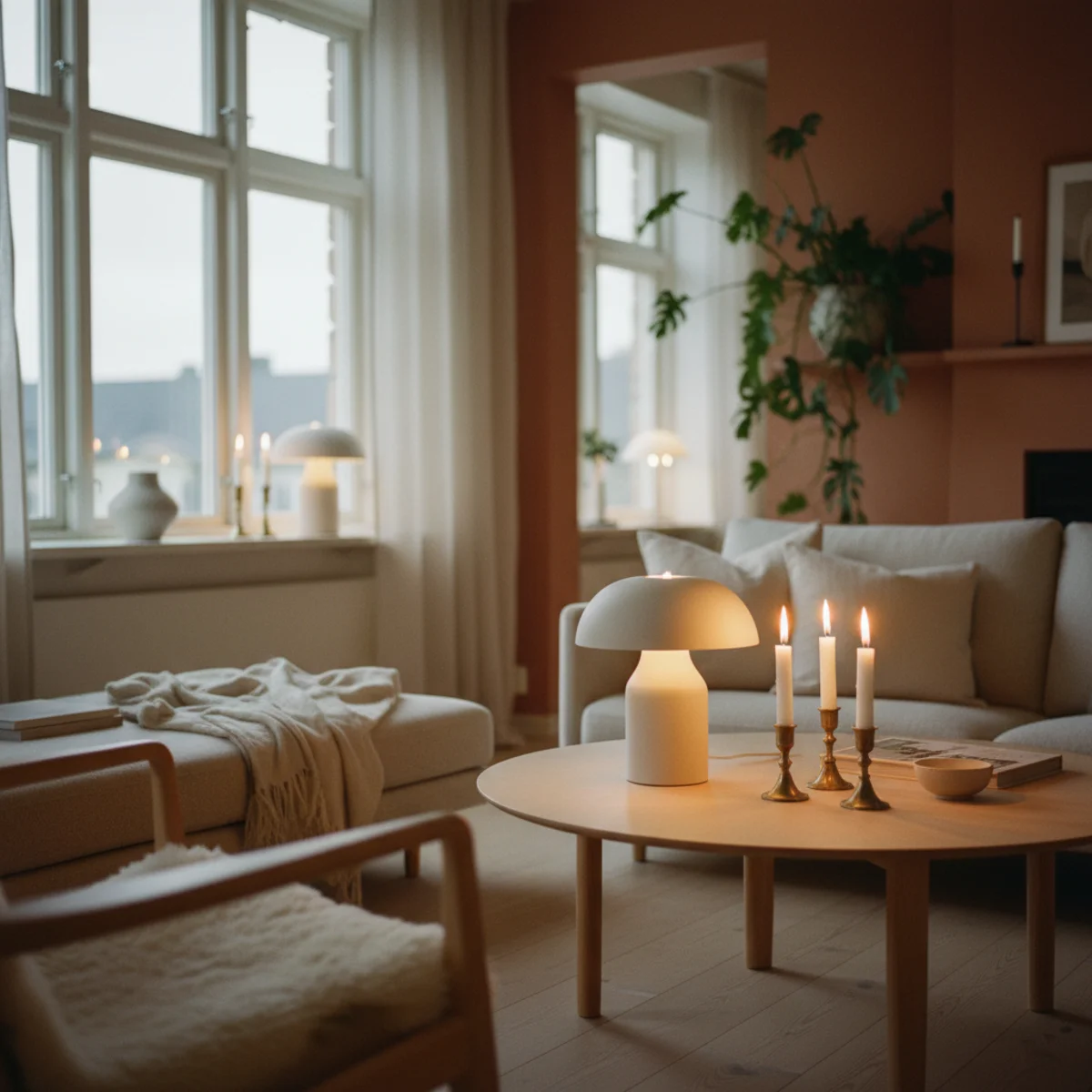
These twelve Scandinavian living room ideas are tested in actual cozy homes and the references from real Danish, Swedish, and Norwegian interiors that the commercial 'Scandi' aesthetic flattened. Each move below restores one element of the genuine Scandinavian style — light wood, restrained warm palettes, generous textile layering, sculptural lighting, abundant candlelight, edited surfaces. The result is warmth amid the light backgrounds, which is what original Scandinavian was always about and what commercial-cold-Scandi missed.
Scandinavian style failed when commercial producers stripped out the textile layers, the candles, the natural wood warmth, and left only the light walls and minimal furniture — creating cold-showroom rooms that read as harsh rather than as cozy. The fix is the textiles, the wood, the candles, the abundant warm lighting, the personal collected character. Original Scandinavian had all of these; the commercial version eliminated them. Restoring them brings the style back to its genuine warm-Nordic origins.
By the end of this guide, you'll know exactly how to build a genuine Scandinavian living room — the light wood choice, the warm restrained palette, the generous textile layering (sheepskin, wool, linen), the sculptural lamp, the hygge candlelight, and the seven other moves that make Scandinavian rooms warm rather than cold.
WHAT'S INSIDE
- Why light wood (oak, ash, birch) is the foundation of every real Scandinavian room
- The texture layering (sheepskin, wool, linen) that creates hygge — and that commercial Scandinavian skips
- The single sculptural lamp that anchors any Scandinavian space
- Why candlelight is non-negotiable in Scandinavian design (and the bulb specs that match it)
Scandinavian design was never meant to be cold. It's warmth achieved through wood, light, and the careful editing of everything else.
— Kinfolk Home [citation needed — verify before publish]
What is a Scandinavian living room?
The Scandinavian living room is built on a few durable principles: light wood (especially pale oak, ash, and birch), a restrained, mostly neutral palette, functional and well-made furniture, abundant natural light, and soft textural layering against the clean lines. It's minimalism, but minimalism with warmth — the spare backdrop exists so the wood, texture, and light can be felt.
The thing people miss is that Scandi isn't cold white. The chilly, all-white version is a flattened imitation; the real thing is warmed by honest materials and softened by texture — a sheepskin, a wool throw, a chunky knit. It also embraces hygge, the Danish coziness, so candlelight and warm low light are part of it. Functional simplicity is the rule, but warmth, not starkness, is the goal.
More in By Room you may love
See allWhy the Scandi look endures in 2026
Scandinavian design has been a global reference point for decades, and it underpins much of the current warm-minimalist movement — Pinterest's Scandinavian and Scandi cozy searches climb every year, increasingly paired with 'warm' and 'cozy' to distinguish it from the cold version.
The honest reason it endures is that it solved the warmth-versus-simplicity problem long before warm minimalism had a name. Scandinavians spent generations making spare rooms feel cozy through long dark winters, and the result — light wood, soft texture, functional beauty, warm low light — is exactly what people now want. The 2026 version simply leans harder into the warmth that was always there.
12 ways to get the warm Scandi look
01Start With Light Wood
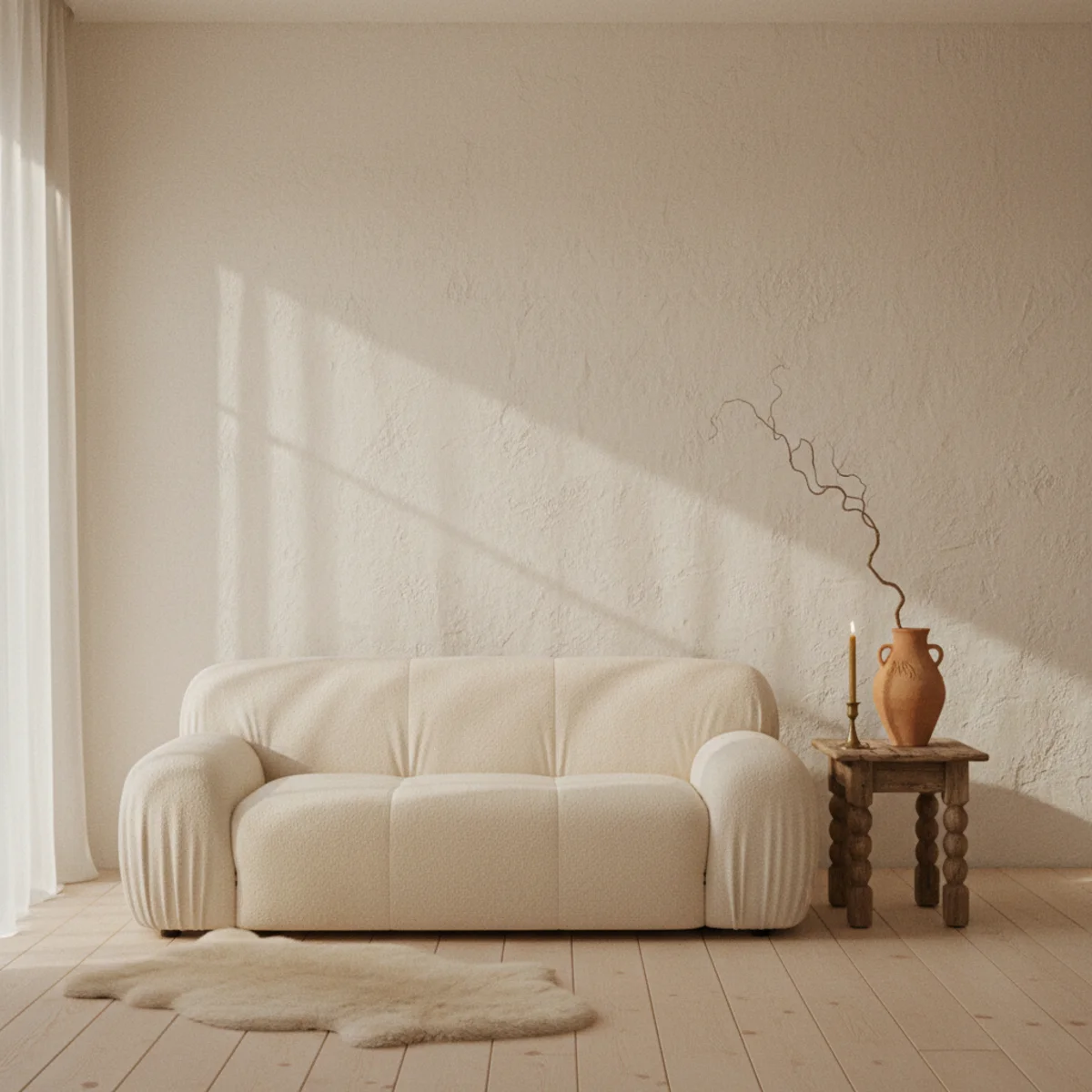
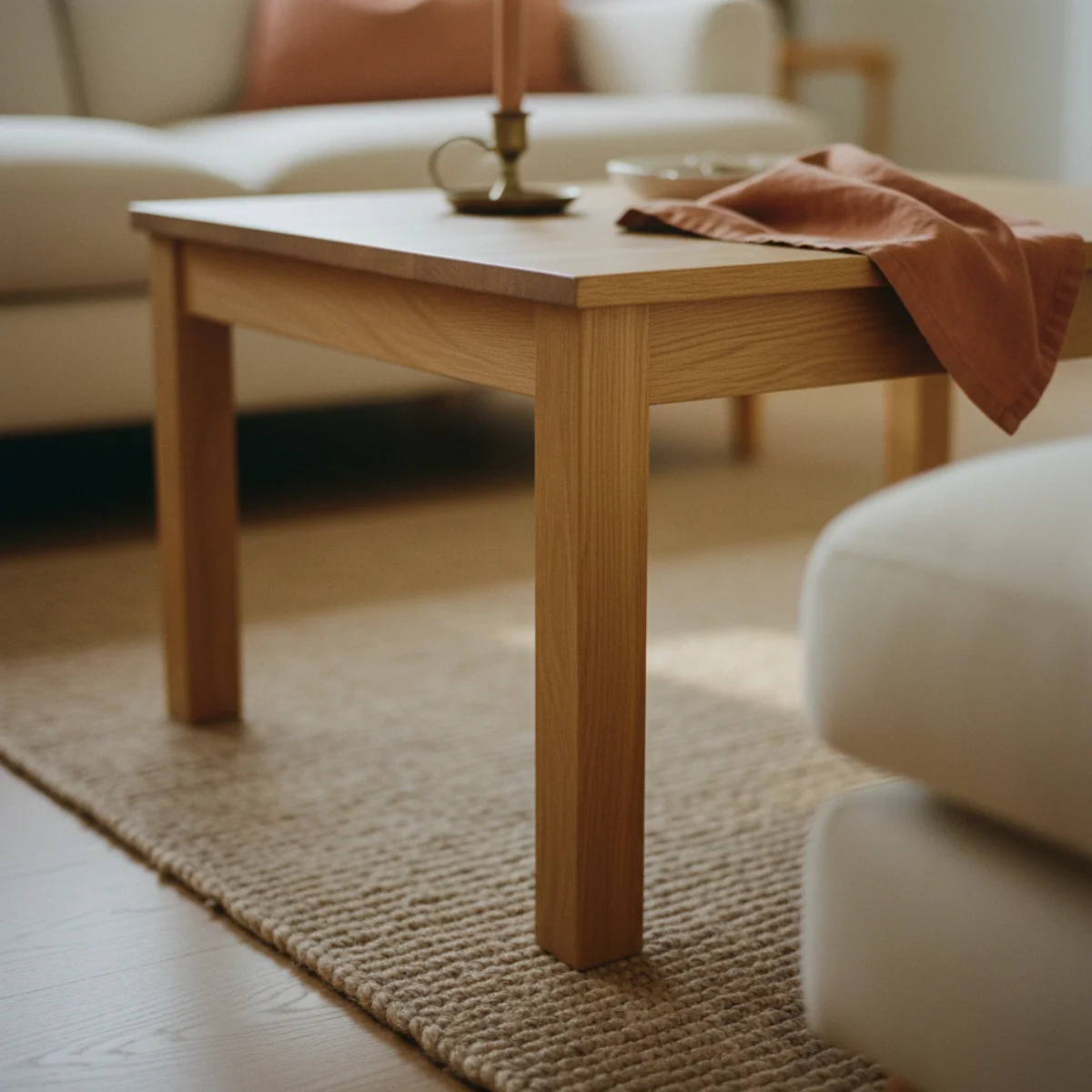
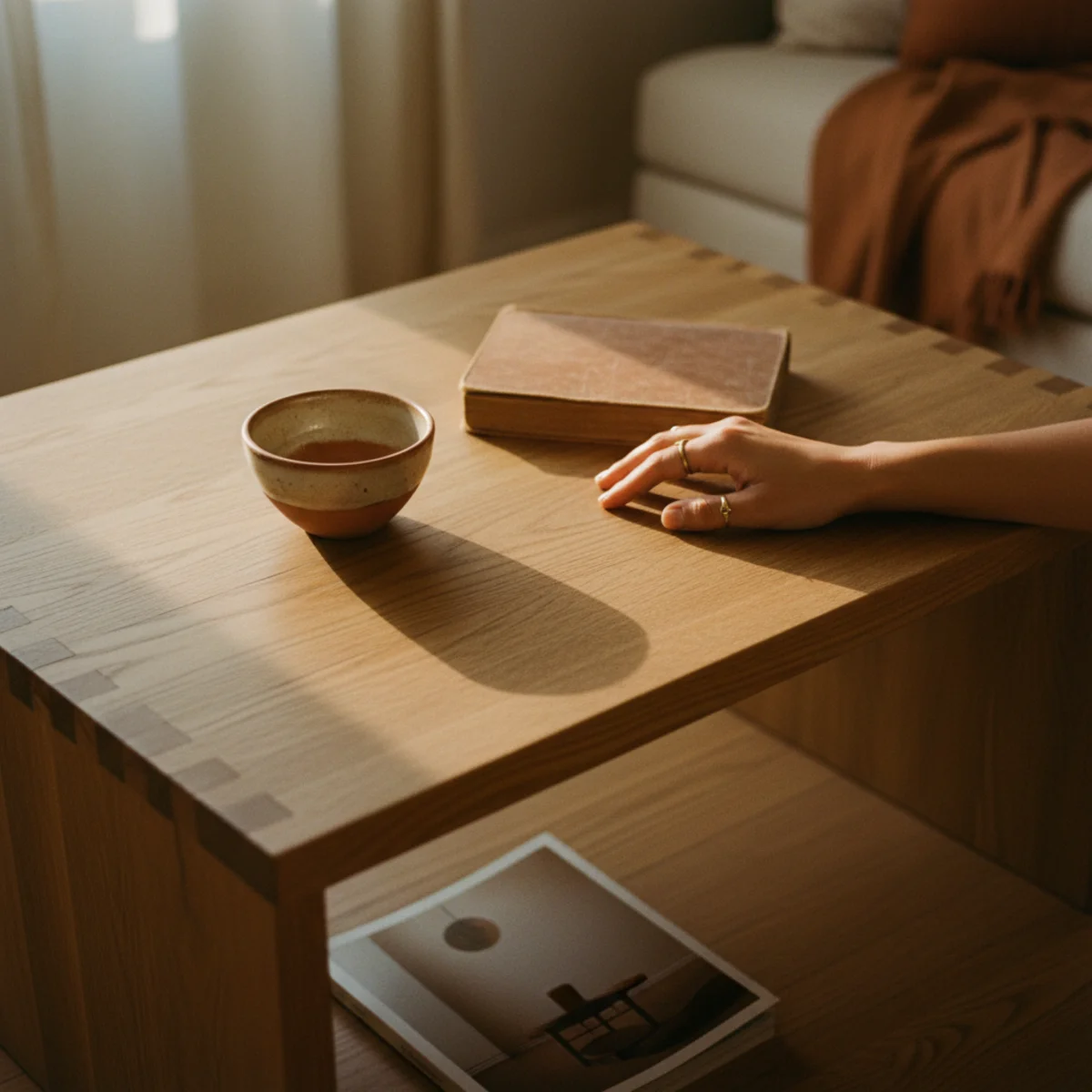
Every Scandinavian living room starts with light wood — oak, ash, birch, or oiled pine for the floors and key furniture pieces. The warm light wood is the foundation that makes the rest of the Scandinavian palette work. Dark wood pulls toward modern-industrial; cool grey wood pulls toward commercial-Scandi; light warm wood (oak especially) is the genuine Nordic foundation.
Wood choices for genuine Scandinavian: FLOORS — oak (warmest), ash (lighter), or oiled pine (most Nordic) — finished with Danish oil ($12 per quart, warm matte) or hard-wax oil ($60 to $100, more durable). Avoid: dark-stained wood, cool grey-stained wood, glossy varnished wood. FURNITURE — oak, ash, or beech in unstained natural finish. Best examples: Hans Wegner chairs in oak ($400 to $2,000 vintage, $800 to $3,000 reproductions), Børge Mogensen credenzas, Alvar Aalto bentwood, Mid-Century Danish pieces. ACCENT WOOD — exposed wooden ceiling beams (if architectural), wooden cutting boards, wood-handled tools displayed. The light wood across multiple elements in the room (floors plus furniture plus accents) is what creates the genuine Scandinavian warmth.
AFFILIATE SLOTMATERIALSOak, ash, or oiled pine floors + light wood furniture in unstained natural finishAdd affiliate URL when configuredWhy it works
Because Scandinavian design emerged in northern Europe where winters are dark and rooms benefit from light-reflecting surfaces. Light oak floors and ash furniture reflect what natural light exists during short winter days, multiplying the room's brightness. Dark wood absorbs that light and makes rooms feel darker in winter. The light wood is functional (reflecting scarce winter light) as well as aesthetic (reading as Nordic-warm rather than English-dark or American-mid-century). The functional origin is what makes it the genuine foundation of the style.
Pro tip — If your floors are already dark wood and refinishing isn't in scope, add a large light-toned wool rug to cover most of the floor — the rug visually substitutes for light flooring in Scandinavian rooms, providing the bright-floor effect without refinishing. Best replacements: Beni Ourain Moroccan rug ($300 to $800), large cream sheepskin layered with a wool flatweave, or thick wool berber.
Light oak floors, ash chairs, oiled pine accents — the warm wood foundation real Scandinavian rooms need. See also: Danish oil
02Keep a Restrained Warm Palette
Scandinavian palette is intentionally restrained — but restrained-warm, not restrained-cold. The right Scandinavian palette is warm whites (never pure white or cool grey), light oak wood tones, soft creams, muted earth accents (terracotta, sage, ochre), and small amounts of black for contrast. The discipline of the palette is what creates the calm Scandinavian feel; the warmth of the colors is what prevents the room from reading as cold-showroom.
The Scandinavian palette: PRIMARY (60-70% of visible color) — warm white walls (F&B Pointing 2003, BM White Dove OC-17, BM Soft Chamois OC-13). NEVER pure white (Sherwin-Williams Pure White) or cool grey-undertone whites. SECONDARY (20-30%) — light oak or ash wood tones across floors and furniture. ACCENT (5-10%) — muted earth tones in textiles (terracotta cushion, sage throw, ochre rug detail), and small amounts of black for contrast (single black-framed piece, vintage iron object, oiled bronze hardware). Avoid: bright primary colors, cool greys, pure black walls, anything saturated. The discipline of the warm-restrained palette is what allows the textile layering (rule 3) to add visual interest without breaking the calm aesthetic.
AFFILIATE SLOTPALETTEWarm white walls (Pointing, White Dove, Soft Chamois) + light oak/ash + muted earth accents + sparing blackAdd affiliate URL when configuredWhy it works
Because Scandinavian aesthetic depends on calm visual space — too many colors break the calm, too few make the room feel sterile. The warm-restrained palette finds the balance: enough color variation through textiles and wood and earth accents to feel inhabited, but not so much variation that the room feels busy. The 'warm' qualifier is what distinguishes genuine Scandinavian from commercial cold-Scandi: warm undertones in whites and woods make the same restrained palette feel cozy rather than clinical.
Pro tip — Test paint samples on warm-white walls in actual room lighting — what reads 'soft cream' in the paint store can read 'green' or 'pink' or 'yellow' in your specific room based on existing light. Buy small paint sample pots ($8 each from Farrow & Ball or Benjamin Moore) and paint 2-foot test patches on multiple walls, observe across morning and evening light for 3 days before committing.
White Dove walls, oak floors, oat linen, terracotta cushion accent — restrained-warm palette discipline. See also: F&B Pointing 2003
03Layer Soft Texture Generously
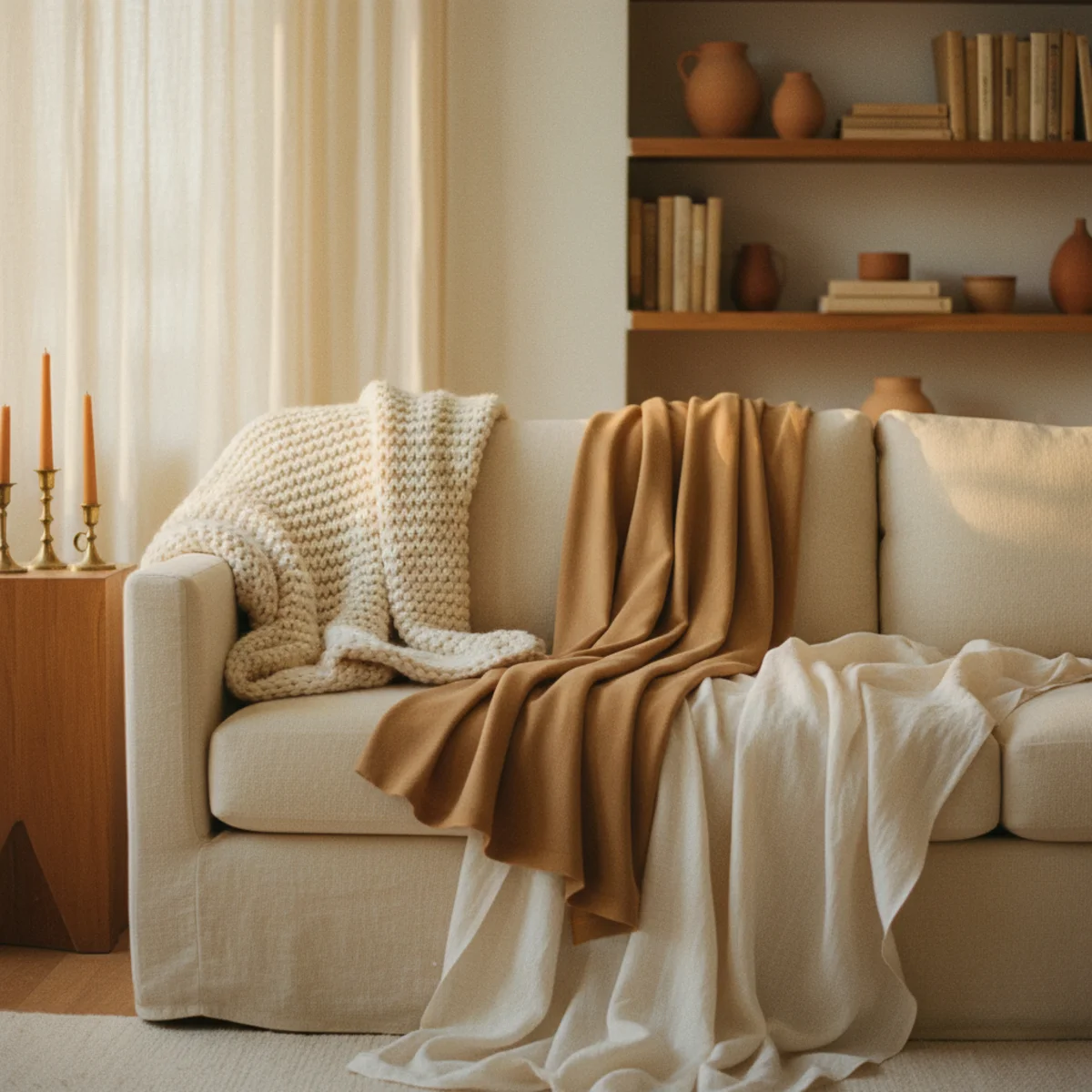
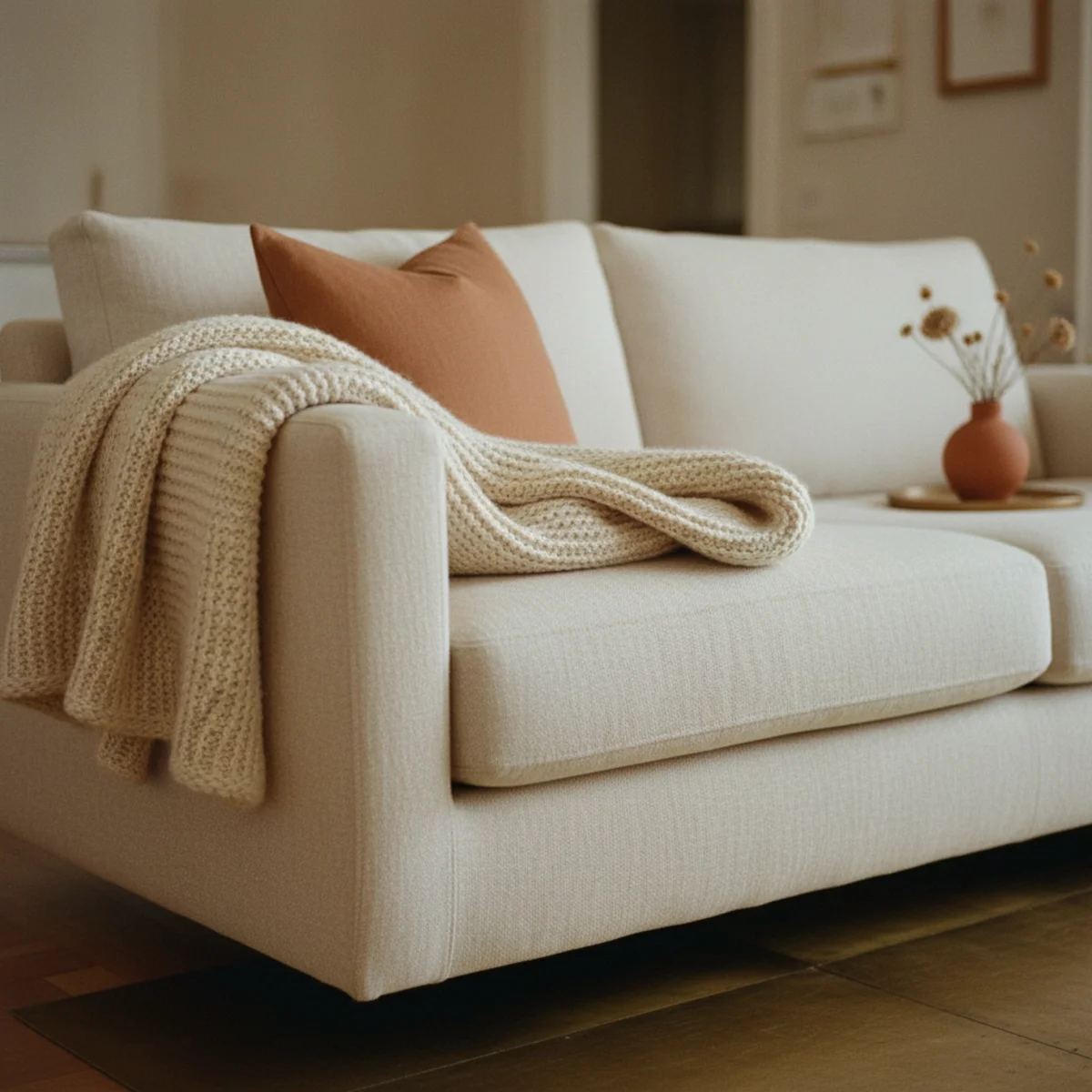
The element commercial Scandinavian most-strongly skipped is the textile layering — and it's what makes the difference between cold-showroom Scandi and warm-hygge Scandinavian. A real Scandinavian living room has sheepskin draped over chairs, wool throws on the sofa, linen cushions in multiple textures, woven baskets, knit throws, layered rugs. The textile abundance is what creates hygge.
Required textile layering: SHEEPSKIN — one large real-shearling sheepskin draped over the most-used armchair or sofa back ($80 to $200 for genuine shearling from IKEA RENS or local artisan sources). WOOL THROWS — 2 to 3 wool throws across sofa, armchair, second seating area in cream, oat, or terracotta ($40 to $79 each from Pendleton secondhand or West Elm). LINEN CUSHIONS — 4 to 6 cushions in mixed linen textures (slubbed, smooth, boucle), all in warm earth tones ($15 to $50 per cover). KNIT THROWS — one chunky knit throw in cream or oat ($40 to $100, Etsy artisans or West Elm). WOOL RUGS LAYERED — large sisal or jute rug as base, smaller wool flatweave or vintage Moroccan layered on top in the seating zone ($200 to $700 for the combination). The combined textile layering creates the warm soft surfaces that hygge requires.
AFFILIATE SLOTTEXTILES1 sheepskin + 2-3 wool throws + 4-6 linen cushions + 1 chunky knit throw + layered wool rugsAdd affiliate URL when configuredWhy it works
Because Scandinavian winters are long, cold, and dark — and the textile layering is the cultural response to literally needing to be warm and comfortable indoors for 5+ months per year. Hygge is the Danish word for this cozy textile-rich indoor warmth; it's central to the genuine Scandinavian aesthetic. Commercial Scandi stripped out the textiles and kept only the light walls and minimal furniture, which produced rooms that look 'Scandinavian' but feel cold. Restoring the textiles restores the hygge that makes the style genuinely warm.
Pro tip — Layer the sheepskin DIAGONALLY across the chair or sofa, not flat — the diagonal drape reads as casually used (it might have just been pushed back when someone got up) rather than as carefully arranged. The casual posture matches genuine hygge; the perfectly-flat sheepskin reads as styled-for-photos.
Sheepskin draped diagonally, wool throws, linen cushions, chunky knit — the textile layering that creates hygge. See also: throw-blanket-layering
04Choose Functional Well-Made Furniture
Scandinavian furniture philosophy is functional design done well — chairs that are actually comfortable, sofas that are sized for real bodies, tables that work for real meals. The discipline isn't minimalism for its own sake; it's choosing fewer pieces but choosing them well. One excellent Hans Wegner chair beats four cheap chairs; one solid oak dining table beats a particleboard veneered one.
Scandinavian furniture principles: BUY FEWER BUT BETTER — one excellent sofa over multiple mediocre ones, one heirloom-quality dining table over an upgrade-in-five-years one. CHOOSE COMFORT — deep-seat sofas with soft cushions, dining chairs comfortable for 2-hour meals, armchairs that conform to bodies. PRIORITIZE FUNCTION — pieces should work for daily real use, not just look. INVEST IN SIGNATURE PIECES — one or two iconic Scandinavian designs (Hans Wegner chair, Børge Mogensen credenza, Arne Jacobsen lamp) at retail or vintage prices, anchoring the rest with simpler pieces. BUDGET LEVEL — high-end Scandinavian: $3,000 to $10,000 for living room. Mid-budget: $1,500 to $4,000 mixing IKEA hacks with one or two signature pieces. Low budget: $500 to $1,500 thrifted Marketplace vintage Scandinavian and IKEA hacks. Quality at any budget level beats quantity.
AFFILIATE SLOTFURNITUREFewer but better pieces; invest in 1-2 signature Scandinavian designs anchoring simpler supporting piecesAdd affiliate URL when configuredWhy it works
Because Scandinavian design philosophy emerged from craft traditions that valued enduring use over disposable fashion — pieces designed to last generations and improve with age rather than to be replaced in fashion cycles. The aesthetic outcome (clean lines, honest materials) is downstream of the quality philosophy. Buying cheap mass-produced 'Scandinavian style' furniture inverts the philosophy entirely; you get the surface aesthetic without the underlying quality, which is exactly what commercial Scandi did wrong.
Pro tip — Save toward one signature piece per year — even one Hans Wegner Wishbone chair ($1,800 retail, $800 to $1,200 vintage) anchors an entire Scandinavian living room. The single excellent piece elevates surrounding cheaper pieces and creates the collected-over-decades feel that genuine Scandinavian rooms have.
One Hans Wegner Wishbone chair anchoring simpler supporting pieces — quality over quantity. See also: vintage
05Maximize Natural Light
Scandinavian design developed in regions with limited winter daylight — and every move maximizes what natural light exists. The fix: unlined linen curtains that diffuse rather than block, mirrors positioned to bounce light, light wood and warm-white walls reflecting it, plants on windowsills using high-light spots productively. The room should feel filled with whatever light is available, especially in winter.
Natural light maximization: UNLINED LINEN CURTAINS in cream or oat tones, hung high and wide per the apartment-living-room rules ($50 to $150 per panel). Avoid heavy lined drapes (block light), dark curtains (absorb light), or no curtains (no diffusion of harsh direct sunlight). LARGE MIRROR (36 to 60 inches) positioned opposite the primary window — bounces light dramatically across the room ($150 to $400). LIGHT WOOD AND WARM WHITE WALLS — both reflect light rather than absorb it (per rules 1 and 2). PLANTS ON WINDOWSILLS — herbs in kitchen sills, succulents or small pothos in living room sills (use the high-light zones productively without blocking light). KEEP WINDOW SILLS CLEAR otherwise — heavy decor blocks light entry. The combined moves maximize available daylight, especially valuable during dark winter months.
AFFILIATE SLOTLIGHTUnlined linen curtains hung high + large mirror opposite window + clear windowsills + reflective light wood and warm white wallsAdd affiliate URL when configuredWhy it works
Because Scandinavian regions have 4 to 6 hours of daylight in midwinter, and that scarce light has to fill rooms for many waking hours. Design choices that block, absorb, or fail to bounce light are functional failures in this context. The aesthetic principles (light walls, light wood, mirrors, sparse window dressings) all serve this functional purpose: making available light feel like more. Modern Scandinavian homes outside Nordic regions inherit these principles and benefit from them even when daylight is more abundant.
Pro tip — Position the mirror behind a primary lamp or candle cluster so the mirror reflects both natural daylight (during day) and warm artificial light (during evening). The dual-time-of-day effect makes the same mirror useful for 18+ hours per day instead of just during daylight, multiplying its functional value.
Linen curtains, 48-inch mirror opposite the window, clear sills — every move maximizing scarce winter light. See also: apartment-living-room rules
06Add One Sculptural Lamp
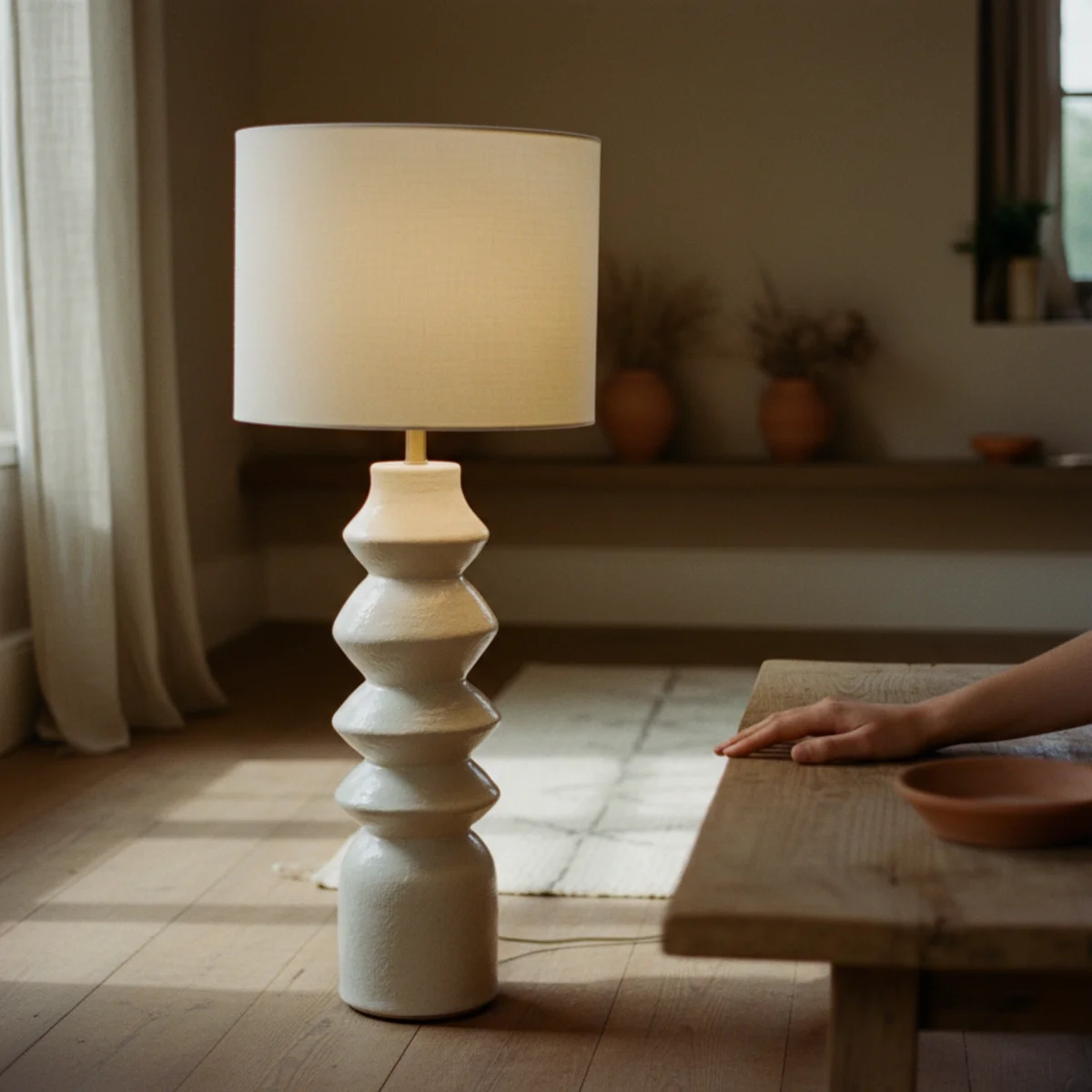
The single most-important Scandinavian lighting decision is choosing one sculptural lamp as the room's iconic light source. PH lamps (Poul Henningsen), Arne Jacobsen AJ, Verner Panton, Alvar Aalto — the genuine Scandinavian sculptural lamps are also among the most-iconic lighting designs of the 20th century. One of these anchors the lighting and signals real Scandinavian design.
Sculptural lamp options: PH 3/2 OR PH 5 PENDANT (Poul Henningsen for Louis Poulsen at $1,500 to $3,000 retail, $400 to $1,200 vintage), AJ FLOOR LAMP (Arne Jacobsen for Louis Poulsen at $1,200 to $2,000), VERNER PANTON FLOWERPOT or VP GLOBE ($300 to $1,500), ALVAR AALTO A330S 'GOLDEN BELL' ($500 to $1,200). Vintage versions of all these are widely available from Marketplace, online vintage Scandinavian retailers, and design auctions at 30 to 60 percent of retail. Position the sculptural lamp where it can be seen and admired — on a key surface, beside a primary seating zone, or as the dining room pendant. The lamp is both functional lighting and sculptural decor; it earns its budget in both registers.
AFFILIATE SLOTLIGHTINGOne sculptural Scandinavian lamp: PH 3/2, AJ floor, Verner Panton, or Alvar Aalto - vintage 30-60% off retailAdd affiliate URL when configuredWhy it works
Because Scandinavian design heritage is heavily concentrated in 20th-century lighting masterpieces — and including one anchors the room in the genuine design tradition rather than in commercial-Scandi imitation. The lamp is one of the few elements where 'iconic' actually matters in this aesthetic; a generic lamp in an otherwise-Scandinavian room reads as 'attempting Scandi without committing to its lighting traditions.' One real PH or AJ lamp signals genuine engagement with the style.
Pro tip — Buy the sculptural lamp vintage rather than retail — vintage PH 3/2 pendants at $400 to $700 (versus $1,500 retail) and AJ floor lamps at $600 to $900 (versus $1,200+ retail) deliver the iconic Scandinavian look at 30 to 50 percent of retail. The pieces are functionally identical and the vintage patina often reads warmer than crisp-new retail.
Vintage AJ floor lamp — the sculptural anchor that signals genuine Scandinavian engagement. See also: AJ Floor Lamp
07Embrace Hygge Candlelight
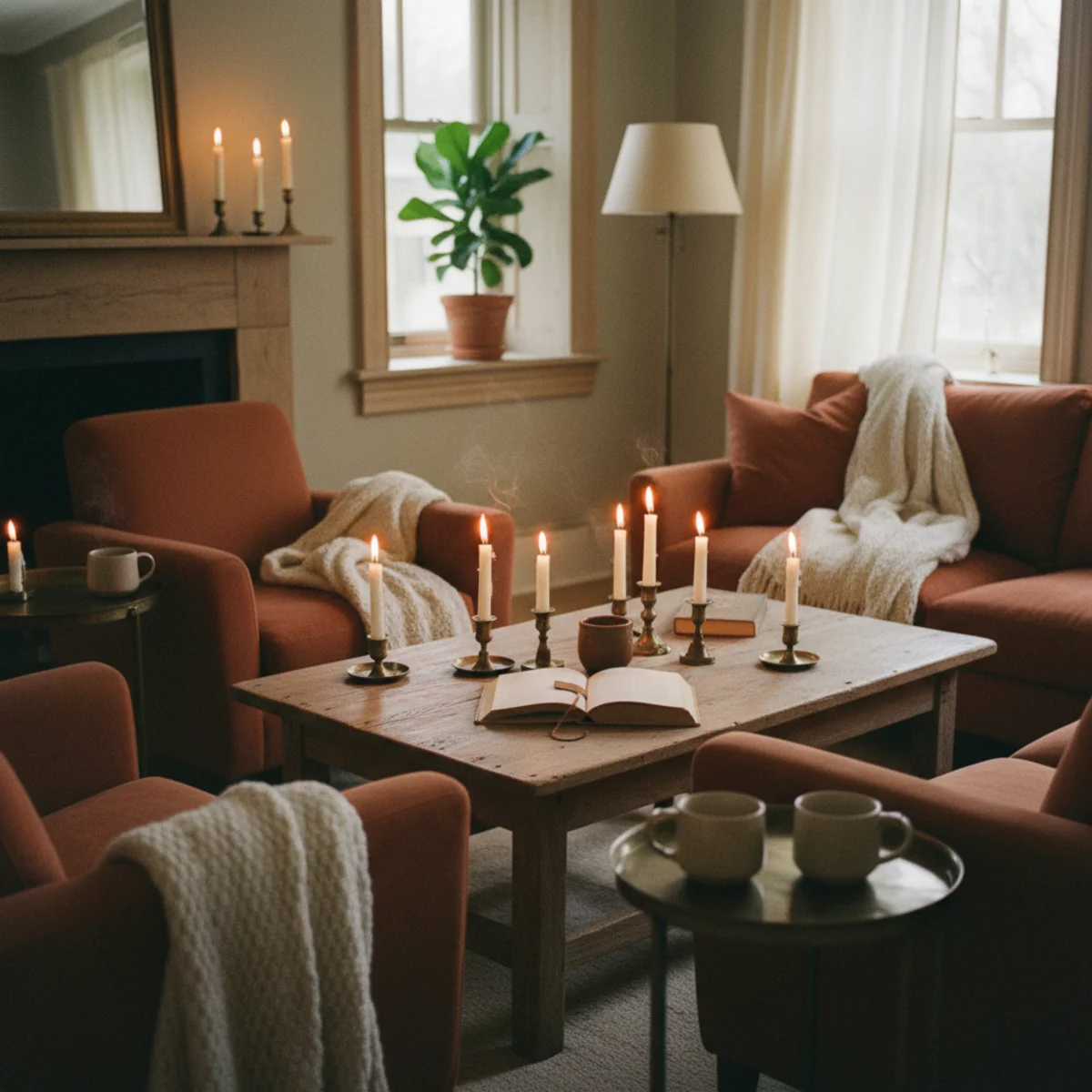
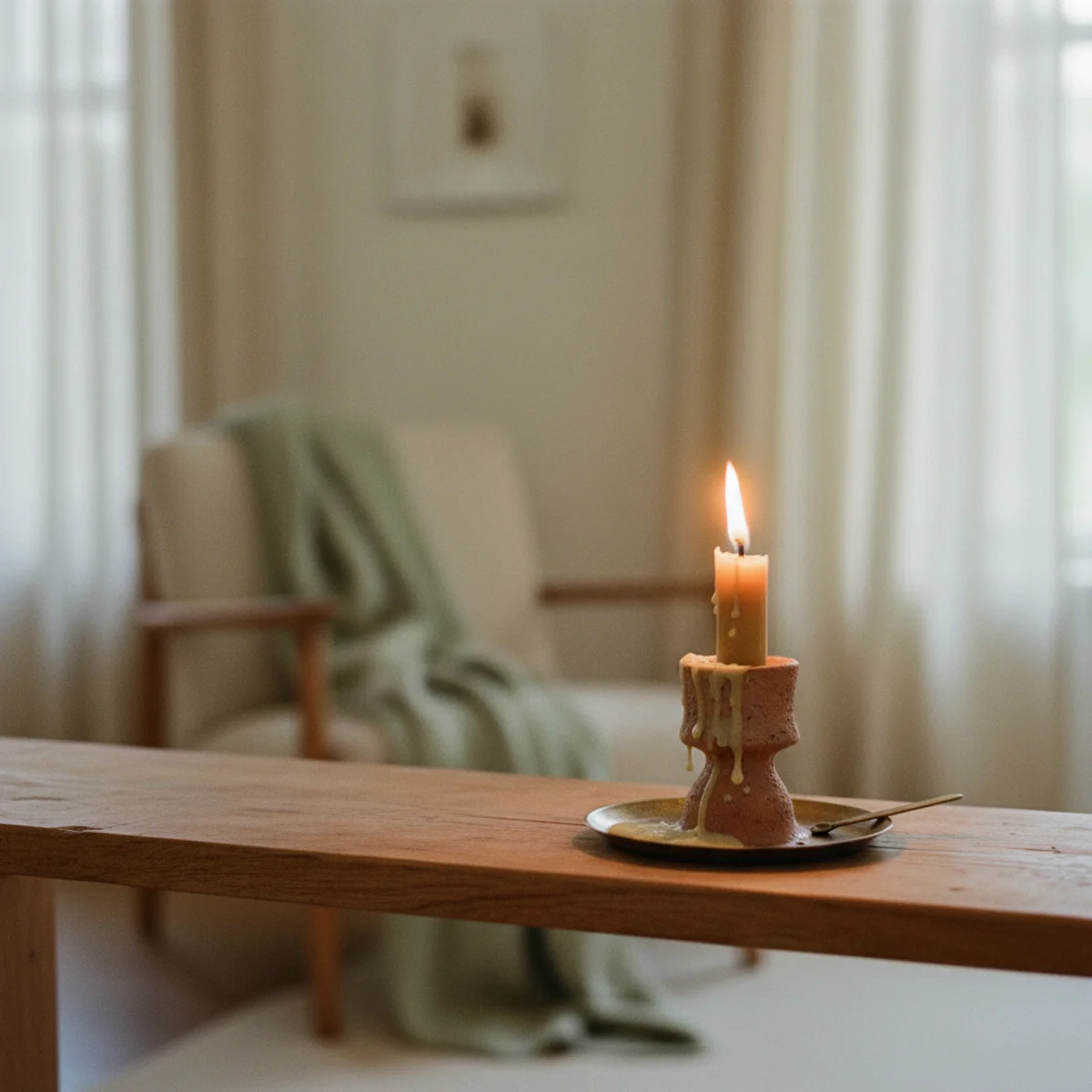
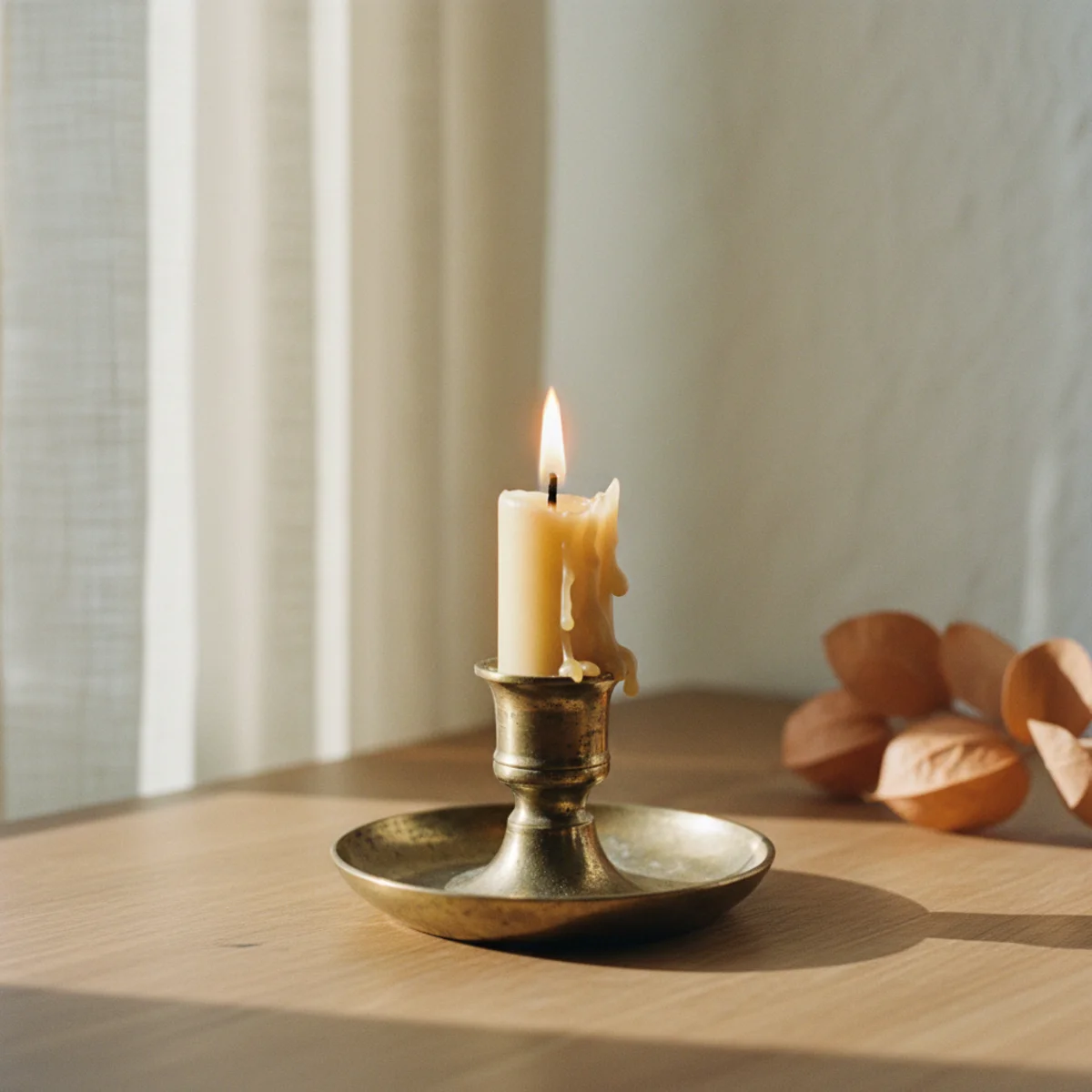
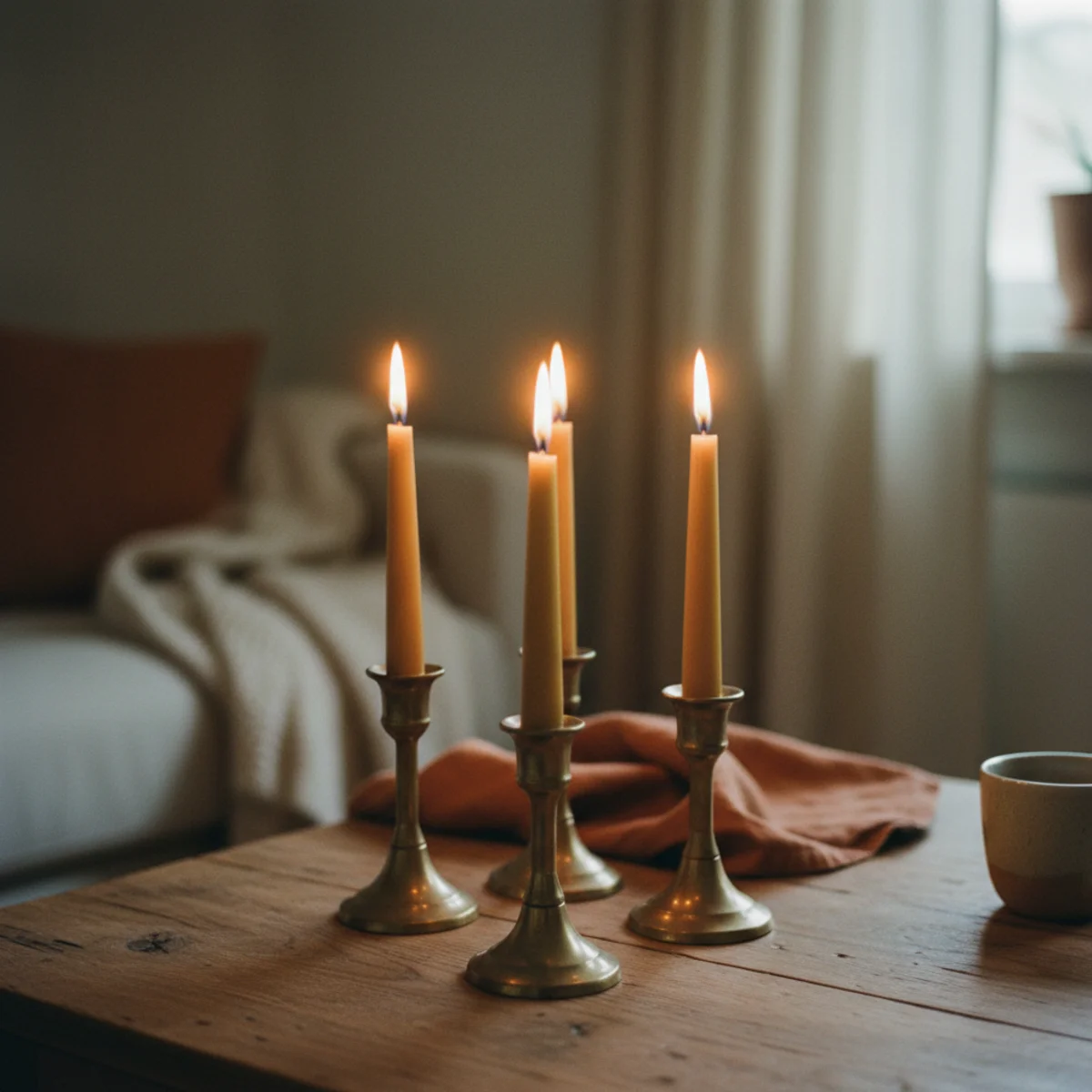
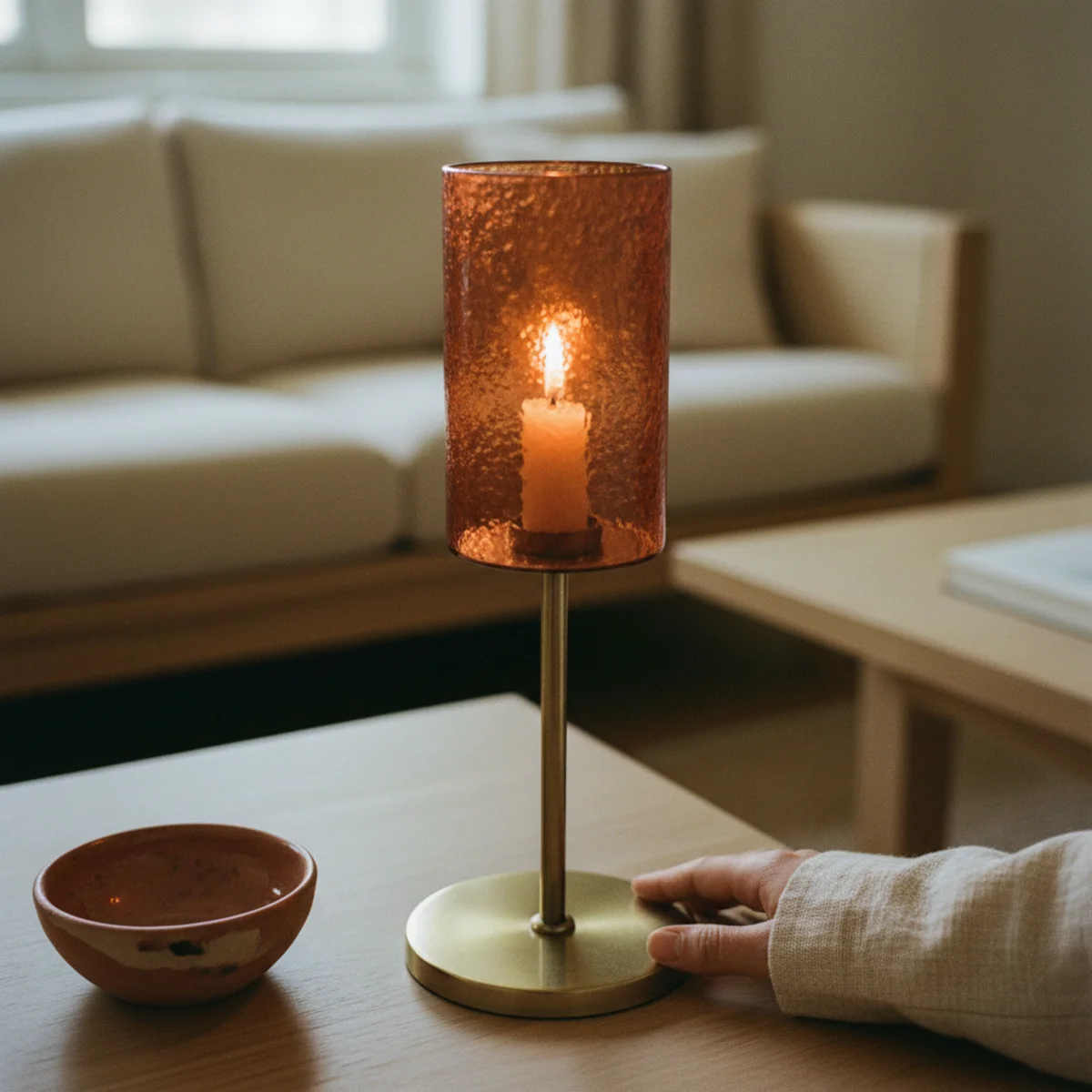
Genuine Scandinavian rooms have abundant candlelight — pillar candles, taper candles in brass holders, votives in glass jars, often 6 to 12 candles burning during evening hours. The Danish word 'hygge' is partially about this candle-lit warmth, and Scandinavian households consistently lead in per-capita candle consumption. Commercial Scandi-style skipped the candles, which is why those rooms feel cold compared to genuine Scandinavian.
Hygge candle setup: 6 TO 12 CANDLES across the room during evening hours. Mix of: TAPER CANDLES in vintage brass or hand-thrown ceramic holders (Skultuna brass at $40 to $120, vintage thrifted at $10 to $30 per holder, $1 to $2 per taper candle, lasting 6 to 8 hours each), PILLAR CANDLES in groupings of 3 to 5 on trays ($5 to $15 per pillar, lasting 30 to 50 hours), VOTIVES in small jars or candleholders ($1 to $3 each). Best brands for quality: Aery Living, Skandinavisk, Diptyque (smaller candles), or unbranded undyed beeswax. Light candles 30 to 45 minutes before any evening guests arrive or before dinner. Position candles across multiple surfaces — coffee table, console behind sofa, dining table, mantel — so warm pools of light distribute across the room.
AFFILIATE SLOTLIGHT6-12 candles across room during evening: tapers in brass + pillars on trays + votives - all unscentedAdd affiliate URL when configuredWhy it works
Because Scandinavian regions have long dark winters, and candlelight is the cultural response to needing warm-light ambiance for many evening hours. The flickering warmth of candlelight is physiologically calming in ways electric light cannot replicate — the slight irregularity of the flicker matches the brain's evolutionary expectation of fire-light evenings. Hygge as a concept partially codifies this candle-lit warmth as a Scandinavian value. Rooms that skip the candles miss what makes hygge function.
Pro tip — Buy unscented candles — scented candles compete with food smells (during dinner), other ambient scents (room sprays, fresh flowers), and create unappetizing combinations. Save scented candles for bathrooms or use them only when no other olfactory experience is happening. Most genuine hygge candles are unscented or lightly scented.
Eight unscented candles distributed across surfaces — the hygge candlelight that commercial Scandi skipped. See also: Aery Living
08Bring In Greenery
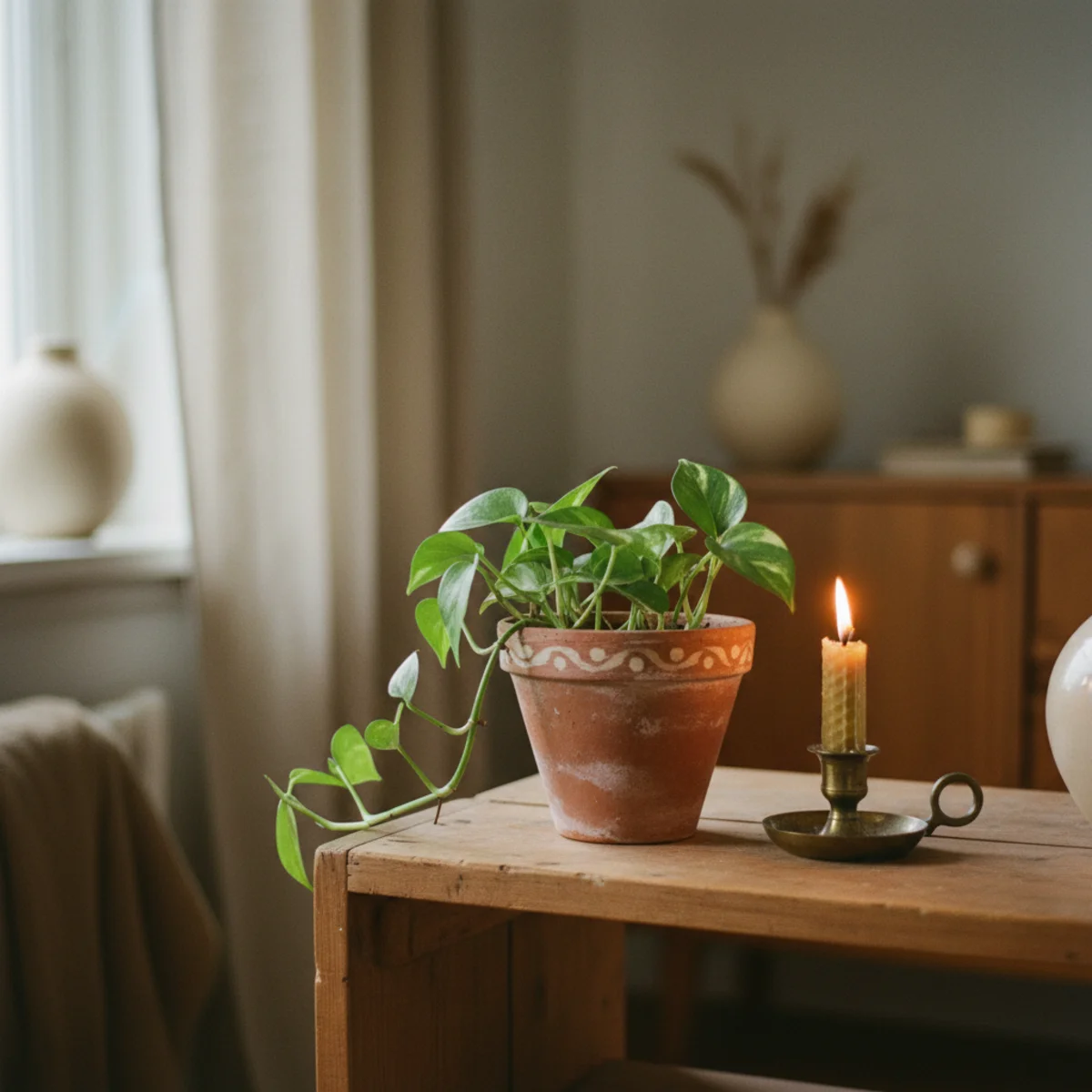
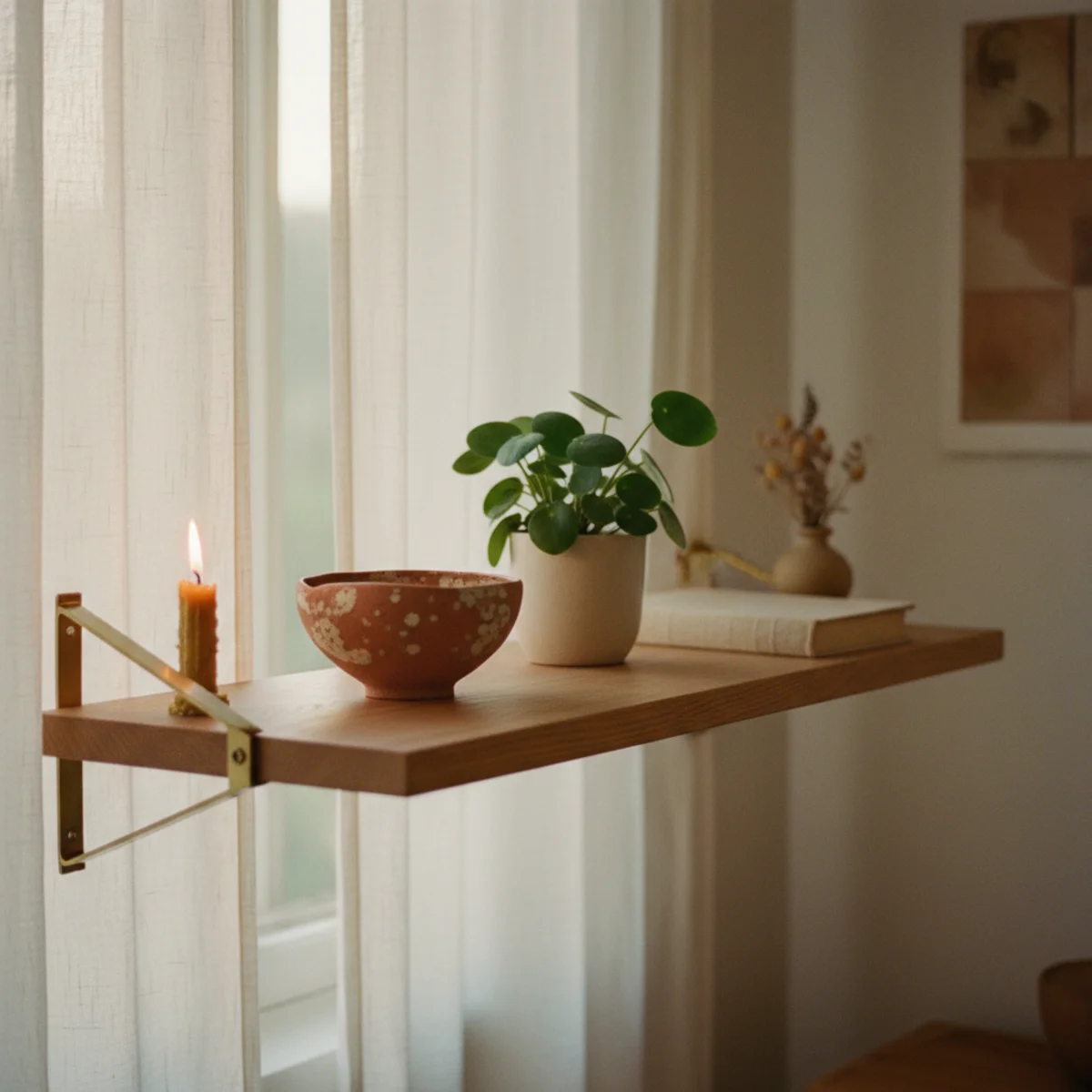
Scandinavian rooms benefit from plants — but specific plants, not the trendy fiddle leaf figs everywhere. The right Scandinavian plants are hardy, sculptural, and easy to keep alive in Nordic-light conditions: snake plants, ZZ plants, pilea peperomioides (the 'Chinese money plant' that has special significance in Scandinavian decor), small olive trees, and herbs on windowsills.
Best Scandinavian plants: PILEA PEPEROMIOIDES — the iconic Scandinavian plant ('passing-it-on plant' culturally — friends share cuttings, often grown from Norwegian original plants spread across decades). $15 to $40 for small starter, eventually grows to medium plant. SNAKE PLANT — hardy, sculptural, near-indestructible ($20 to $40). ZZ PLANT — glossy leaves, low light tolerant ($25 to $50). SMALL OLIVE TREE — Mediterranean origin but works in Scandinavian aesthetic with light wood (4 to 6 feet, $40 to $150). MONSTERA — single-piece statement, popular in Scandi-design photography ($30 to $80 medium). WINDOWSILL HERBS — basil, mint, rosemary, thyme in small terracotta pots ($4 to $10 each, useful for cooking). The plants should be 4 to 6 distinct pieces across the room, mostly small-to-medium, with one large floor plant as accent.
AFFILIATE SLOTPLANTSPilea peperomioides + snake plant + ZZ + olive tree + windowsill herbs - 4-6 plants totalAdd affiliate URL when configuredWhy it works
Because plants connect indoor Scandinavian space to nature — and nature is central to the Scandinavian cultural relationship with home. The 'friluftsliv' philosophy (open-air living, connection to nature) extends indoors through plant presence even during long winters when outdoor time is limited. The plants are also visually important — their organic shapes contrast with the restrained palette and clean lines, adding the curve and variability the otherwise-geometric Scandinavian aesthetic benefits from.
Pro tip — Source a pilea peperomioides cutting from a friend rather than buying retail — the plant culturally circulates through gifting and cutting-sharing, and a friend's cutting is the most-genuinely-Scandinavian way to introduce one to your home. Most pilea owners are happy to share cuttings since the plant produces offshoots continually.
Pilea, snake plant, olive tree, herbs — the specific Scandinavian plant collection. See also: snake plant
09Keep Surfaces Edited
Scandinavian style requires edit discipline — surfaces hold 3 to 5 styled items, not 15. The restraint is what creates the calm visual quality. Edit ruthlessly: only items that fit the warm-restrained palette stay on surfaces, everything else goes into closed storage. The 70/30 rule applies (70% empty, 30% styled) more strictly here than in any other warm-home style.
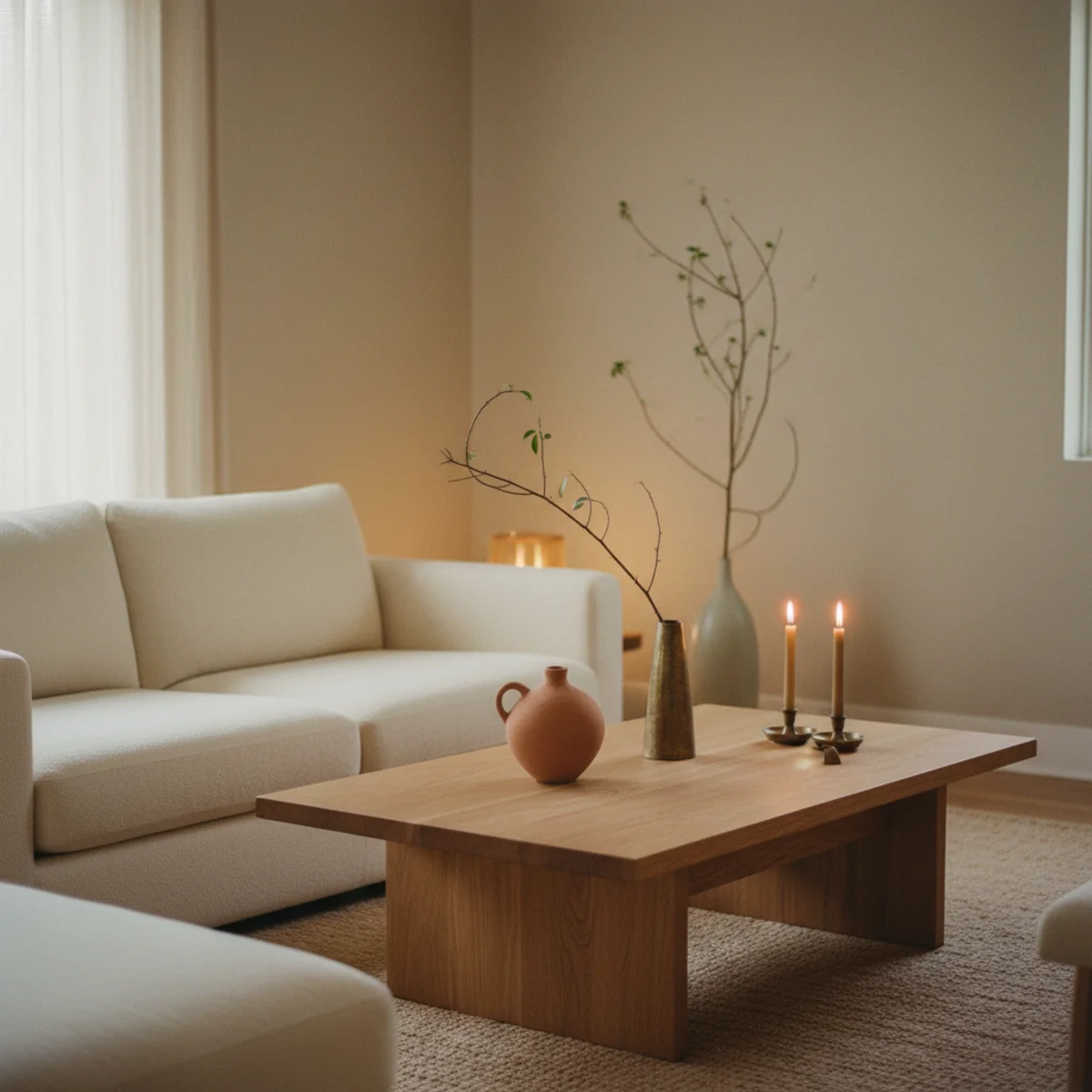
Edit principles for Scandinavian surfaces: COFFEE TABLE — 3 to 5 items (small stack of books, ceramic vessel, tray with candle, maybe one decorative object), 70% surface empty. CONSOLE OR SIDEBOARD — 5 to 7 items in mixed heights, 60% surface empty. SHELVES — 30 to 40% empty per shelf, follow shelf-styling-ideas rules. MANTEL — 3 to 5 items, 60% surface empty. DINING TABLE — minimal everyday styling (single small centerpiece, candleholders), full clearing for meals. EDIT RUTHLESSLY — anything that doesn't fit the warm-restrained palette or doesn't serve a function gets moved to closed storage. The Scandinavian aesthetic depends on the visual breathing room; cluttered surfaces break the calm immediately.
AFFILIATE SLOTDISCIPLINE3-5 items per coffee table, 5-7 per console, 30-40% empty per shelf - ruthless editing requiredAdd affiliate URL when configuredWhy it works
Because Scandinavian rooms typically have light walls and edited spaces — every item on a surface gets significant visual attention because the surrounding space is calm. In a busy room (lots of pattern, color, accumulated objects), individual items disappear into the visual noise; in a calm Scandinavian room, individual items command attention. This concentration is what makes the few-but-better discipline so important: each item visible matters because nothing competes with it.
Pro tip — Designate one closed-storage zone (cabinet, basket, drawer) per surface for the items you remove during the edit — sentimental or seasonal items live there rotating onto the surface a few at a time rather than all crowded on display permanently. The hidden storage is what makes the edit sustainable; without it, items eventually return to surfaces and the calm degrades.
Four items on the coffee table, 70% surface empty — the edit discipline that defines real Scandinavian. See also: shelf-styling-ideas rules
10Add a Chunky Wool Rug
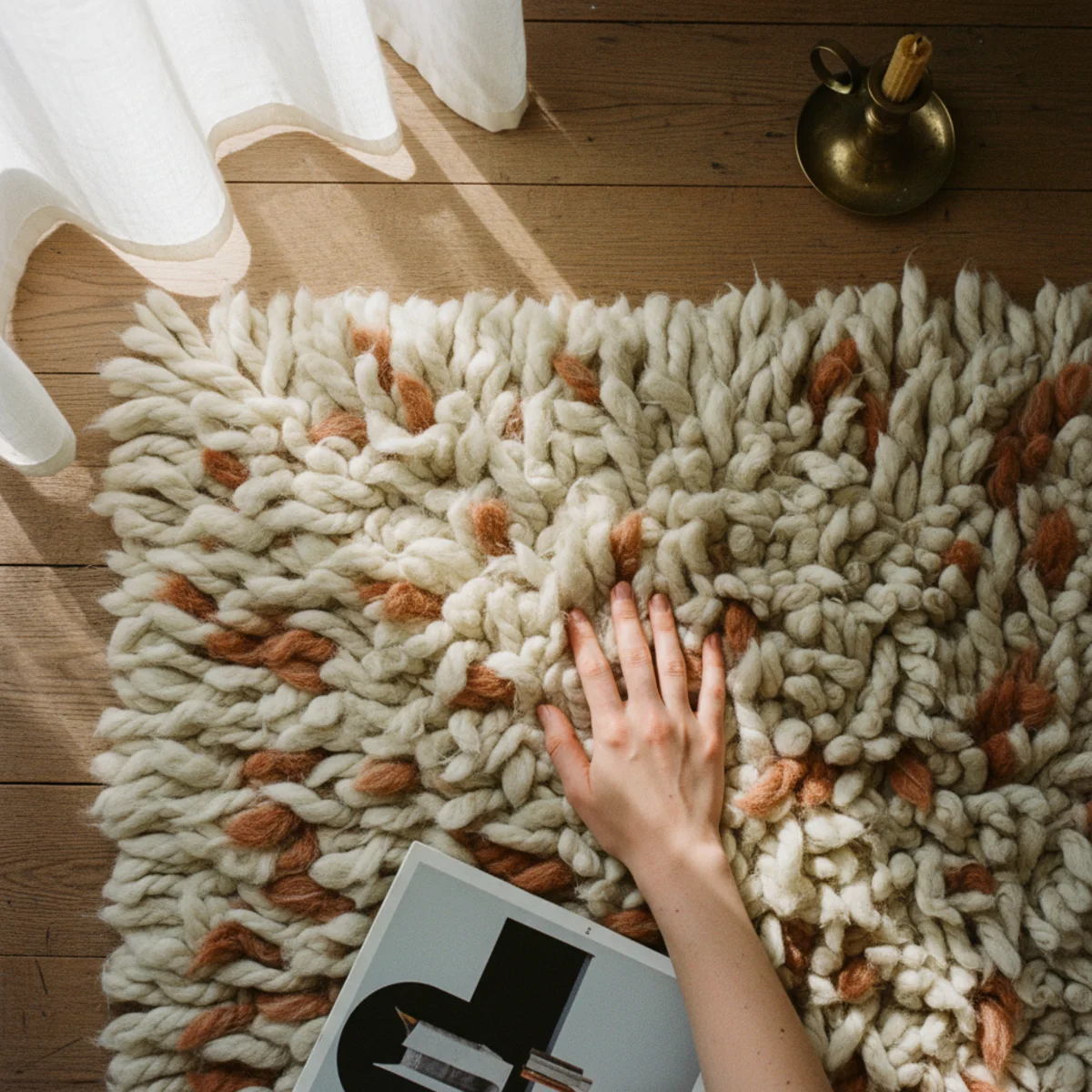
Genuine Scandinavian rooms have chunky wool rugs — Berber, Moroccan, or Scandinavian woven — adding the textile floor layer that hard wood floors otherwise lack. The chunky texture (visible weave, slight pile) is what creates the visual softness that smooth flat-pile rugs cannot match. Best types: Beni Ourain Moroccan, Swedish flossa rya, or thick wool berber.
Chunky wool rug options for Scandinavian: BENI OURAIN MOROCCAN — cream wool with subtle dark diamond patterns, thick pile, 8x10 or 9x12 for living rooms ($300 to $900 from Marketplace or import, $600 to $1,800 retail from Layered Lounge or specialty shops). SWEDISH FLOSSA RYA — high-pile shag-style traditional Scandinavian rug, vintage at $200 to $600. THICK WOOL BERBER — natural cream or oat tones with subtle pattern, $200 to $600. NATURAL FIBER LAYER (jute or sisal) underneath the wool — adds the foundational texture layer that wool rugs sit on top of. Position so the front legs of sofa and chairs sit on the rug, defining the seating zone clearly. Use rug pad underneath ($25 to $50). The chunky texture is what creates the visual softness; smooth flat-weave rugs (kilims) work but lack the soft-pile element specific to Scandinavian hygge.
AFFILIATE SLOTFLOORBeni Ourain, Swedish flossa, or thick wool berber over neutral jute/sisal base layerAdd affiliate URL when configuredWhy it works
Because Scandinavian floors are hard light wood — the rug provides the soft surface that hard floors lack. Without the rug, walking and sitting happen on hard surfaces, which fights the cozy hygge aesthetic. The chunky texture specifically (versus smooth flat-pile) provides visual softness as well as tactile softness — the eye reads the irregular surface as warm and inviting, where smooth rugs read as more formal. The combined visual-plus-tactile softness is what makes the rug central to Scandinavian comfort.
Pro tip — Layer the chunky wool rug over a larger neutral jute or sisal base rug — the two-layer rug approach is signature Scandinavian and creates significant visual depth. The base layer (larger jute or sisal) defines the room zone; the smaller chunky wool layer on top defines the seating sub-zone within it.
Beni Ourain wool over jute base — chunky texture that hard wood floors specifically need. See also: Beni Ourain
11Use Black Sparingly for Contrast
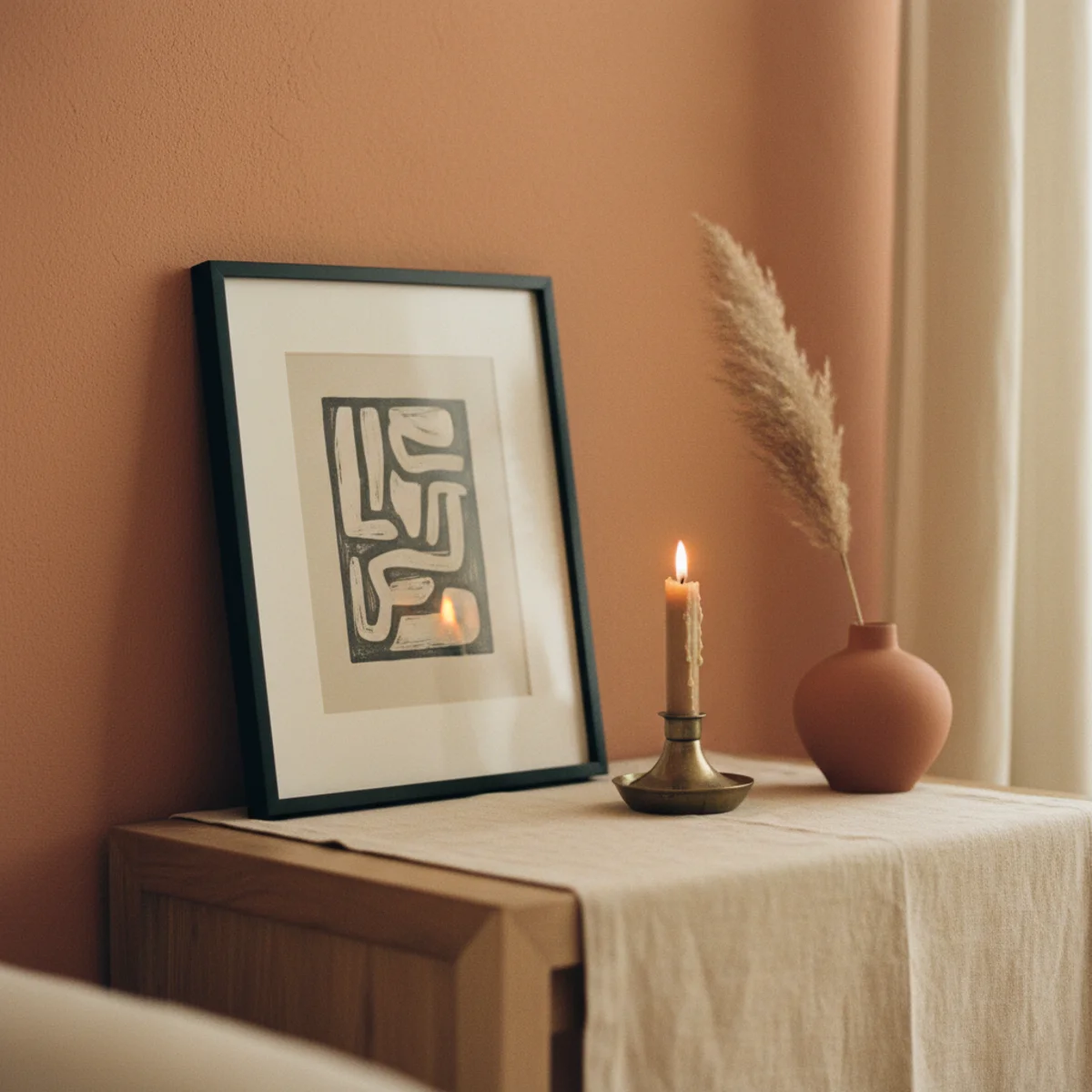
Scandinavian rooms benefit from very small amounts of black for contrast against the warm-white-and-wood palette — single black-framed pieces of art, one or two black accent objects, dark iron candleholders. The same 5 to 10 percent black rule from modern farmhouse applies here, but the black is even more sparing (close to 5 percent rather than 10) because Scandinavian backgrounds are lighter and harder to balance with black weight.
Where to use small black accents in Scandinavian: ONE OR TWO BLACK-FRAMED ART PIECES (small to medium scale, never large — the black frame against light walls is dramatic enough at small scale). SMALL BLACK CERAMIC OR IRON OBJECTS — single piece on a shelf or console, never a collection. BLACK SCONCES OR PENDANT (single fixture, in matte black) — one is enough. OILED BRONZE OR DARK HARDWARE — drawer pulls and door knobs in dark warm metal. KEEP BLACK BELOW 5% OF VISUAL WEIGHT — any more pulls the room toward modern-industrial and away from warm-Scandinavian. The black should function as visual punctuation, not as a major design element.
AFFILIATE SLOTCONTRAST1-2 black-framed pieces + small black ceramic or iron accent + dark hardware - keep under 5% visual weightAdd affiliate URL when configuredWhy it works
Because Scandinavian backgrounds are intentionally light (warm white walls, light oak wood, cream textiles), and visual weight balances accordingly — light backgrounds + light foreground = airy calm; light backgrounds + lots of black = jarring contrast that breaks the calm. The visual mathematics requires very small amounts of black to provide contrast without dominating. A single black-framed photograph against warm white walls reads dramatic and intentional; multiple large black pieces against the same walls read as fighting the aesthetic.
Pro tip — Choose matte black rather than glossy black for any Scandinavian black accents — matte black reads more subtle and warm against the light backgrounds, while glossy black reflects light and competes with the calm aesthetic. Matte finishes are what Scandinavian black is supposed to look like.
One black frame, one matte ceramic, oiled bronze pulls — minimal black providing necessary contrast. See also: oiled bronze
12Choose Quality Over Quantity
The defining principle of genuine Scandinavian style is quality over quantity — fewer pieces, better pieces, longer-lasting pieces. The principle inverts the commercial decor cycle (buy frequently, replace often) for a craft tradition (buy rarely, keep forever, repair when needed). The combined effect across a room is that every visible piece has been considered, chosen, and committed to.
Quality-over-quantity practical applications: BUY HEIRLOOM-LEVEL pieces for key items (sofa, dining table, dining chairs, primary lighting) — these get used daily for decades. SAVE TOWARD signature pieces rather than buying mediocre placeholders ($1,500 chair next year beats $400 chair this year that you'll want to replace). REPAIR rather than replace — re-cane chairs, refinish wood, re-upholster sofas. THRIFT FOR QUALITY VINTAGE — solid wood, hand-thrown ceramics, vintage Scandinavian design pieces — at 30 to 60 percent of retail. EDIT RUTHLESSLY — fewer pieces visible at any time, with rotating storage for items not in current use. The combined approach builds a room slowly over years, with each addition contributing to quality rather than to quantity. Total furniture count in a quality-focused Scandinavian living room: 8 to 12 pieces. Total visible decor: 15 to 25 styled items. Less than that feels sparse; more breaks the edit discipline.
AFFILIATE SLOTPHILOSOPHYBuy fewer, save toward heirloom pieces, repair rather than replace, thrift quality vintage, edit ruthlesslyAdd affiliate URL when configuredWhy it works
Because Scandinavian aesthetic depends entirely on each piece earning its visible place — the edit discipline means there's no hiding behind volume of stuff. Every chair, every lamp, every piece of art has to be good enough to hold its position in the room across years of viewing. The commercial alternative (lots of mediocre pieces from fast-fashion retail) fails because the cumulative volume can't redeem any individual piece's mediocrity. The quality approach succeeds because each piece is genuinely worth looking at indefinitely.
Pro tip — Make a 'someday' list of signature Scandinavian pieces you'll save toward — Hans Wegner Wishbone chair, PH 3/2 pendant, Børge Mogensen credenza, AJ floor lamp. Acquire one per year as budget allows, anchoring the room more strongly with each addition. The 5-year quality build-out beats any one-year quantity acquisition.
Hans Wegner chair, Børge Mogensen credenza, PH pendant — fewer pieces, all chosen well. See also: Hans Wegner Wishbone chair
How to get the warm Scandinavian look step by step
Spare backdrop, warm materials, generous texture. Work in this order.
- 1Set the light-wood base
Anchor the room with pale oak, ash, or birch — floors and key furniture — in an oiled, matte finish. This is the warm core.
- 2Keep the palette restrained and warm
Use warm neutrals with one muted accent, and edit surfaces hard so the materials and light lead.
- 3Layer soft texture generously
Add sheepskins, wool throws, chunky knits, and a textured rug. This is what keeps Scandi warm rather than cold.
- 4Light it warm and sculptural
Maximize daylight, add one sculptural lamp, and bring in hygge candlelight for the evenings.
Quick tips
- Choose light wood in an oiled, matte finish — gloss reads cold and un-Scandi.
- Layer soft texture generously; it's what keeps the spare look from going cold.
- Add a sheepskin over a chair — the single most Scandi-warming move there is.
- Maximize daylight with sheer or no curtains.
- Use black accents sparingly for crispness; too much tips it cold.
- Buy fewer, better, well-crafted pieces and edit surfaces hard.
Scandi looks by approach
Light wood and a restrained palette, heavily layered with sheepskin, wool, and candlelight.
Cleaner and sparer, leaning on light, wood, and one or two sculptural objects — but still warmed by texture.
Scandi simplicity meets Japanese restraint; see our japandi style guide for the blend.
Light wood, a light sofa, and generous texture make a small room feel airy and warm at once.
Scandi was never meant to be cold. It's warmth through wood, light, and one well-placed sheepskin.
Frequently asked questions
What's the difference between Scandinavian and commercial 'Scandi' style?+
What colors define real Scandinavian style?+
What kind of wood works for Scandinavian style?+
Why do Scandinavian rooms need so many candles?+
Do I need genuine Scandinavian designer furniture to do the style?+
What plants work for Scandinavian style?+
The Scandinavian living room is the original warm minimalism — spare, functional, and genuinely cozy when it's done right. Build it on light matte wood, keep the palette restrained, and then layer soft texture generously, because texture is the whole difference between warm Scandi and the cold imitation. We'd throw a sheepskin over a chair before anything else; it's the single move that turns a pale, spare room from a waiting room into somewhere you want to stay. Scandi was never cold. People just forgot the texture.