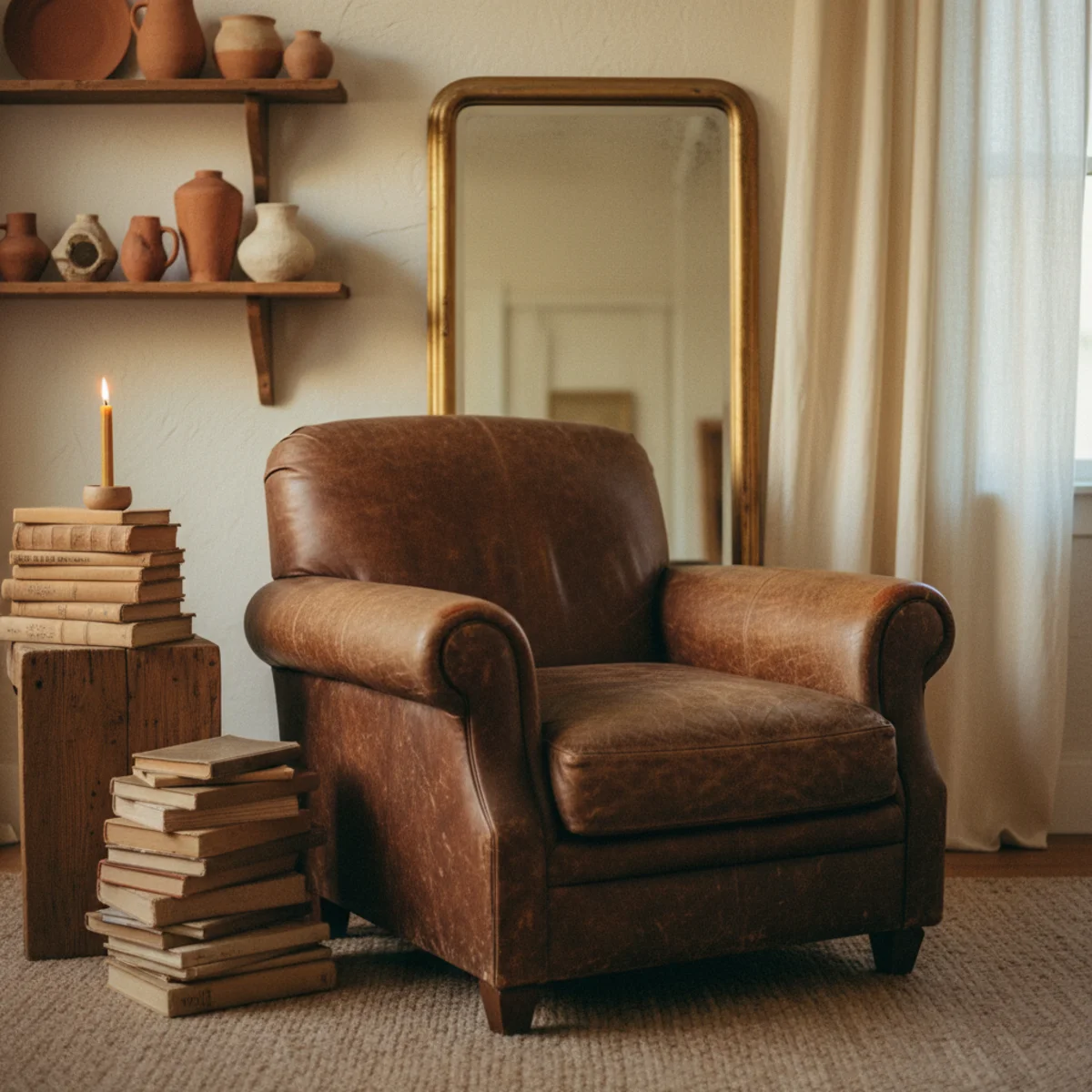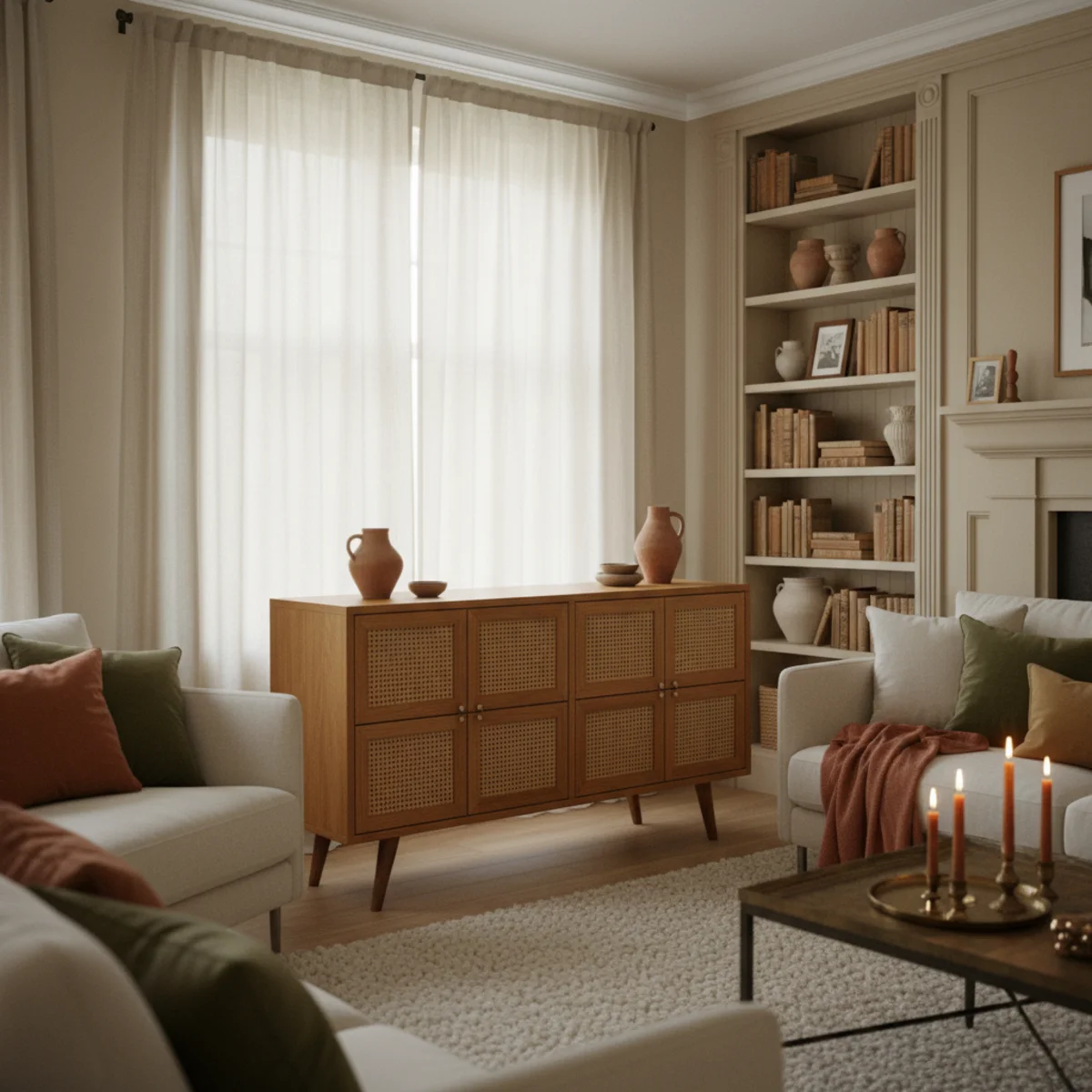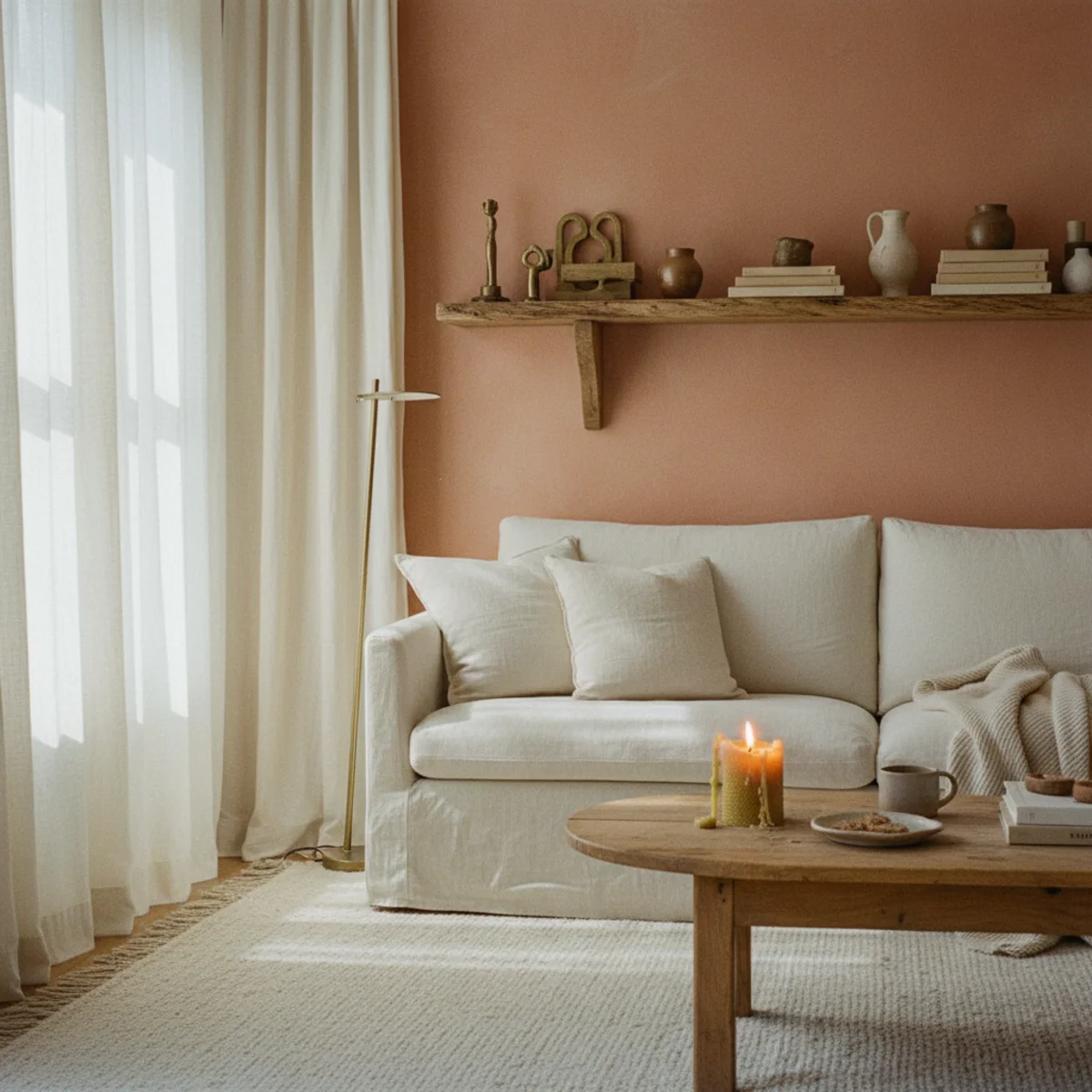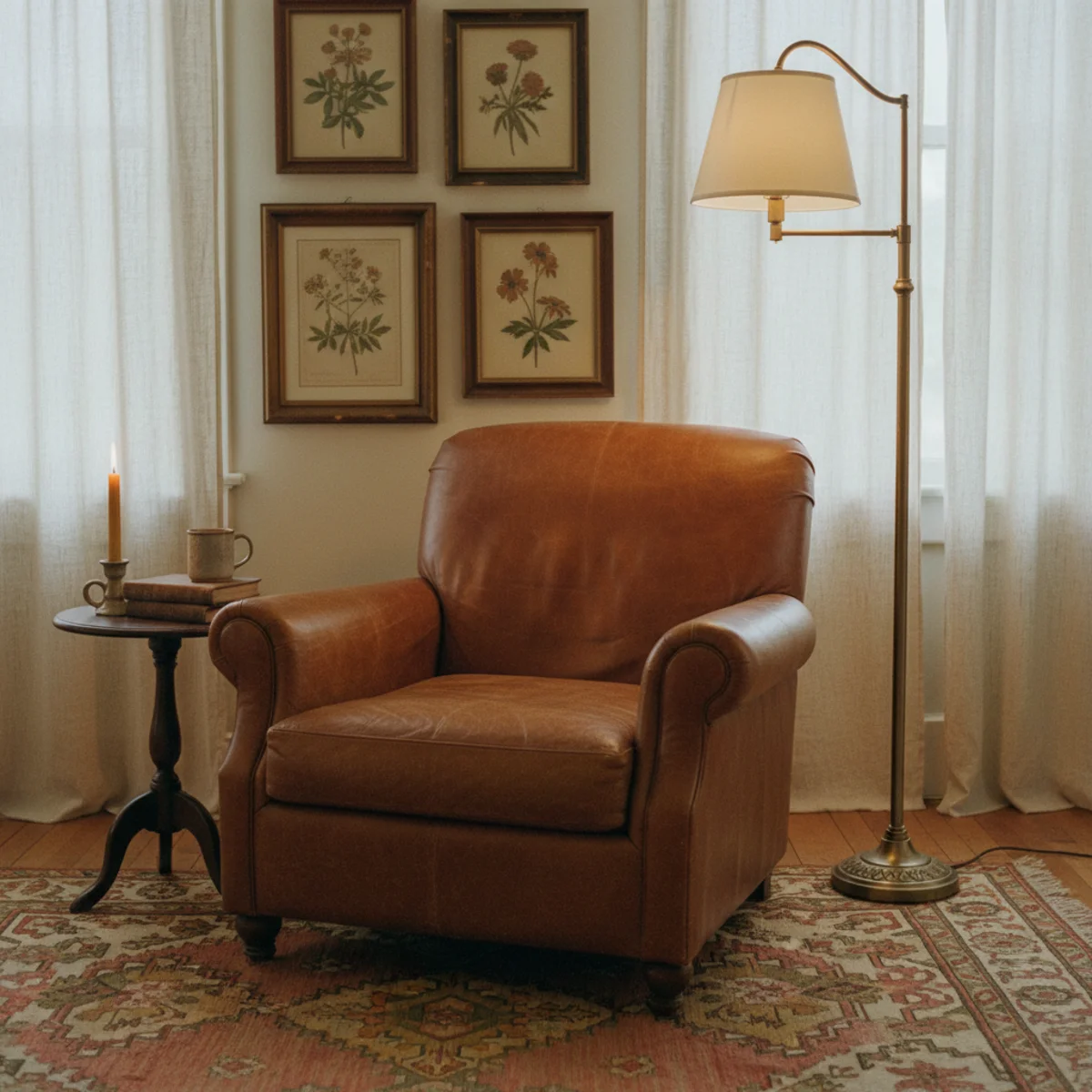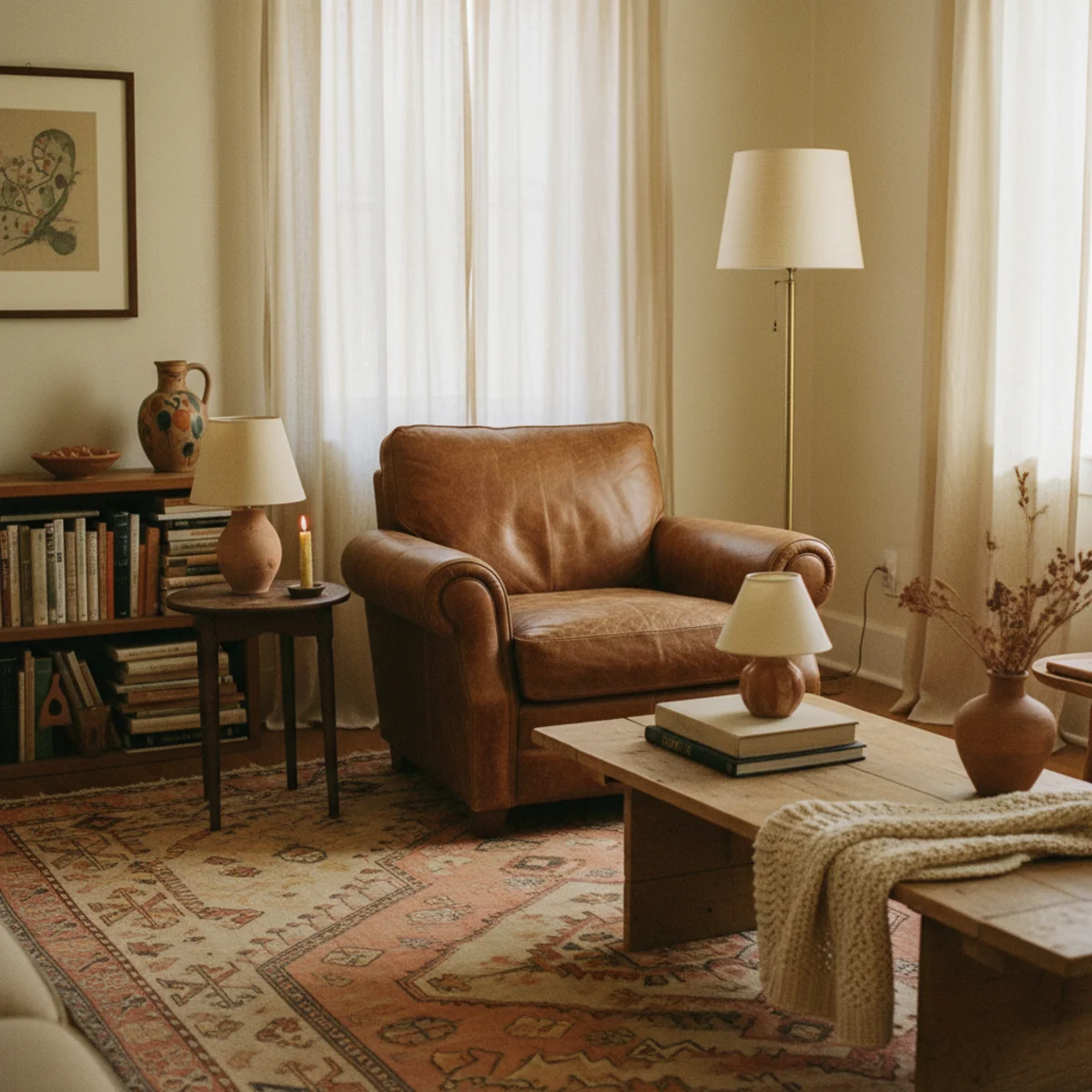
These fourteen budget decorating principles are tested across actual constrained-budget builds — apartments under $2,000 of total decor investment, first homes furnished mostly from secondhand sources, college and post-college spaces where everything had to stretch. Every move below names specific brands, sources, and dollar ranges. The total cost of a complete warm-home transformation using only these moves typically runs $400 to $1,200 — about 10 percent of the equivalent retail-only build.
Budget decorating works by inverting the usual priorities: spend on the things that matter most (light, paint, one good rug) and save aggressively on everything else (furniture, art, accessories). The wins compound across rooms — and the slower pace of secondhand hunting builds a home that reads as collected over years rather than purchased in one afternoon.
By the end of this guide, you'll know exactly where to spend your limited budget for maximum visual return, where to save aggressively without sacrificing warmth, and the fourteen specific moves that build a beautifully warm home for under $1,500.
WHAT'S INSIDE
- The single category to spend on first (light) and why everything else multiplies its return
- Why secondhand rugs at $100 beat new rugs at $400 every time
- The free decor source most budget shoppers ignore — your own neighborhood
- The $40 hero piece and $200 of $20-each supporting pieces strategy
The most expensive-looking rooms are usually the ones decorated with the most patience and the least money. Warmth isn't bought; it's chosen.
— Apartment Therapy [citation needed — verify before publish]
What does decorating on a budget actually mean?
Decorating on a budget means getting the most warmth and character per dollar by prioritizing the high-impact, low-cost levers — light, paint, secondhand finds, and texture — over expensive furniture and finishes. It's not about a cheap-looking room; the best budget rooms read richer than expensive ones, because warmth comes from decisions rather than price tags.
The strategy is knowing where to spend and where to save. Spend the little money you have on the things that touch you daily and do the most work — a good rug, warm lighting, quality paint — and save everywhere else through secondhand, DIY, and editing. A thrifted brass lamp out-warms a new chrome one; a coat of clay paint transforms a room for thirty dollars; a wool throw over a tired sofa hides it entirely. Patience and a good eye do what budget can't.
More in Budget you may love
See allWhy budget decorating matters more in 2026
Tighter budgets met a decorating culture that finally values the collected and secondhand over the brand-new, and budget decorating shed its make-do reputation — Pinterest's decorating on a budget and budget home searches climb steadily, toward thrifted, warm, high-impact-per-dollar approaches.
The honest shift is that cheap no longer means cheap-looking. As the warm-home aesthetic prized patina, texture, and collected character — all of which secondhand and DIY deliver better than retail — the budget room and the desirable room converged. A thoughtfully decorated budget home now reads warmer and more personal than an expensive one assembled from a single catalog, which is exactly why budget decorating became aspirational rather than apologetic.
28 ways to decorate on a budget
01Spend on Light First
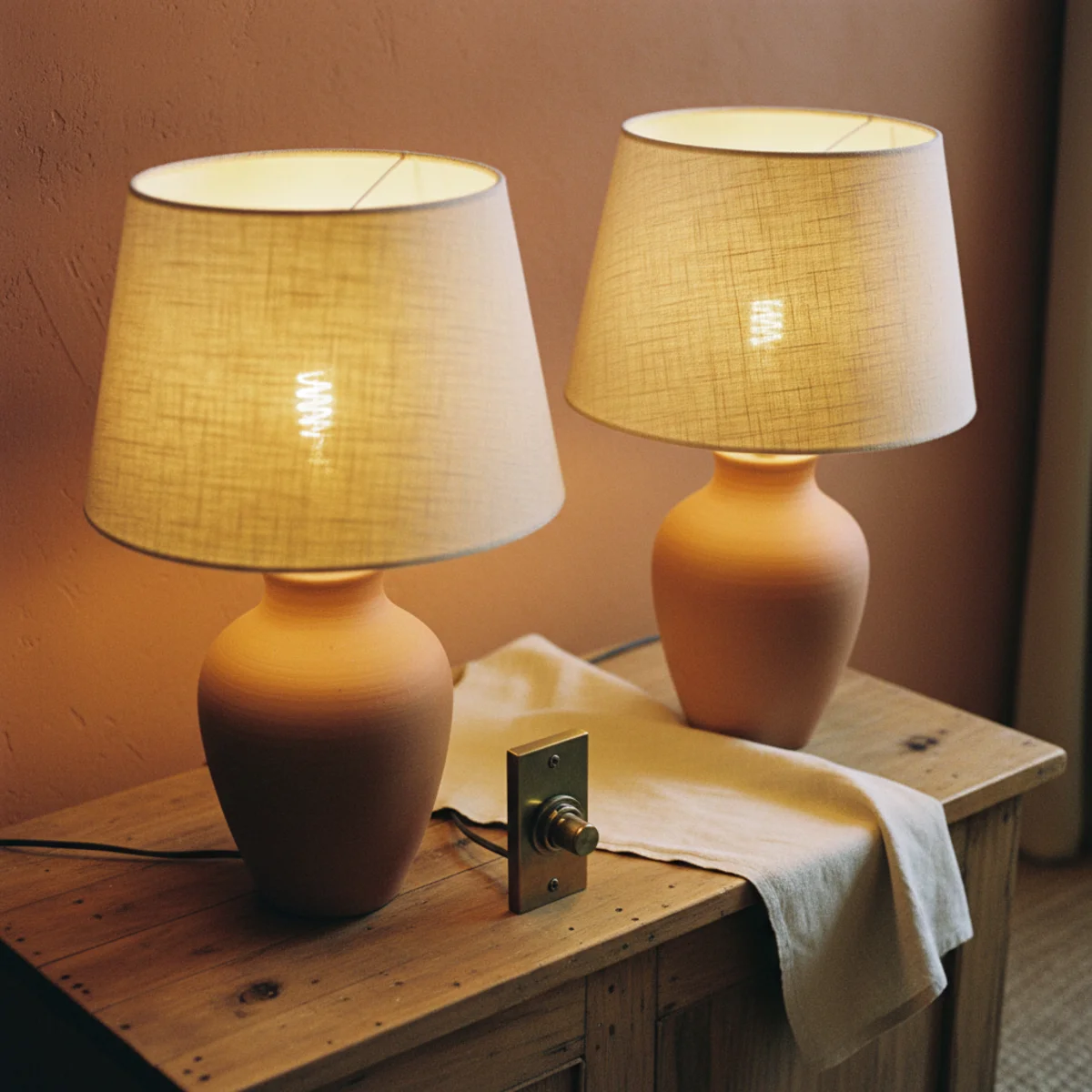
If your budget is constrained, the single highest-ROI category for warm-home transformation is lighting — both the bulbs (2700K LEDs at $4 per bulb) and one or two table lamps per room. Light makes paint read warm, makes textiles read soft, makes wood read living. Every other decor decision multiplies in impact when the lighting is right; every other decision fails when the lighting is wrong. Budget allocation: 30 to 40 percent of your total budget on light.
Minimum lighting budget for a complete warm home: $60 to $100 for 2700K LED bulbs across the whole home (12 to 20 bulbs at $4 each from Costco multipack); $80 to $200 for 4 to 6 table lamps (thrifted bases at $5 to $25 each + new linen shades at $25 to $40 each); $40 to $80 for one floor lamp (IKEA HOLMÖ at $20 + new shade + 2700K bulb); $30 for smart plugs and dimmers to control everything. Total: $210 to $410 for complete lighting transformation. The cheapest lamps with the right bulbs outperform expensive lamps with the wrong bulbs in 100 percent of comparisons.
AFFILIATE SLOTPRIORITY30-40% of total budget on light: 2700K bulbs + 4-6 table lamps + 1 floor lamp + smart plugsAdd affiliate URL when configuredWhy it works
Because lighting is multiplicative rather than additive — the right light makes everything else in the room read warmer, while the wrong light makes everything else read colder. A $1,000 sofa under cold 4000K overhead light looks cheaper than a $200 thrifted sofa under warm 2700K layered lighting. The lighting decision shapes how every other dollar of decor reads, which is why budget allocation has to start there. Save on the sofa; spend on the lamps.
Pro tip — Buy a 10-pack of 2700K LED bulbs from Costco at $15 to $20 total and replace every bulb in your home in one evening — the cumulative warmth transformation across the whole house is immediate, and the per-room cost is under $4. Most budget decorating wins start here and build outward.
$25 thrifted lamp + $30 new shade + $4 warm bulb — the budget allocation that makes everything else multiply. See also: 2700K LEDs
02Paint a Room Warm Before Buying Furniture
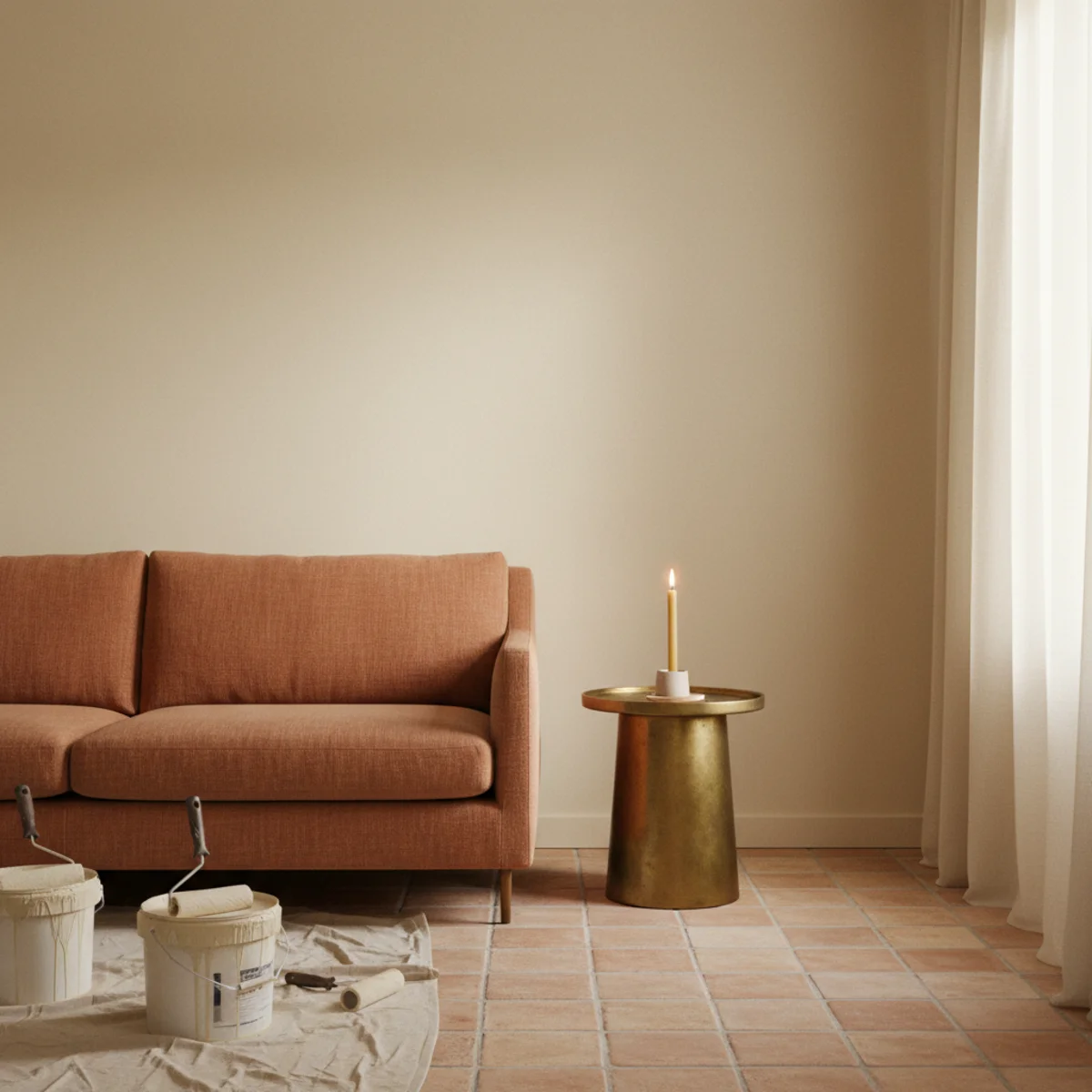
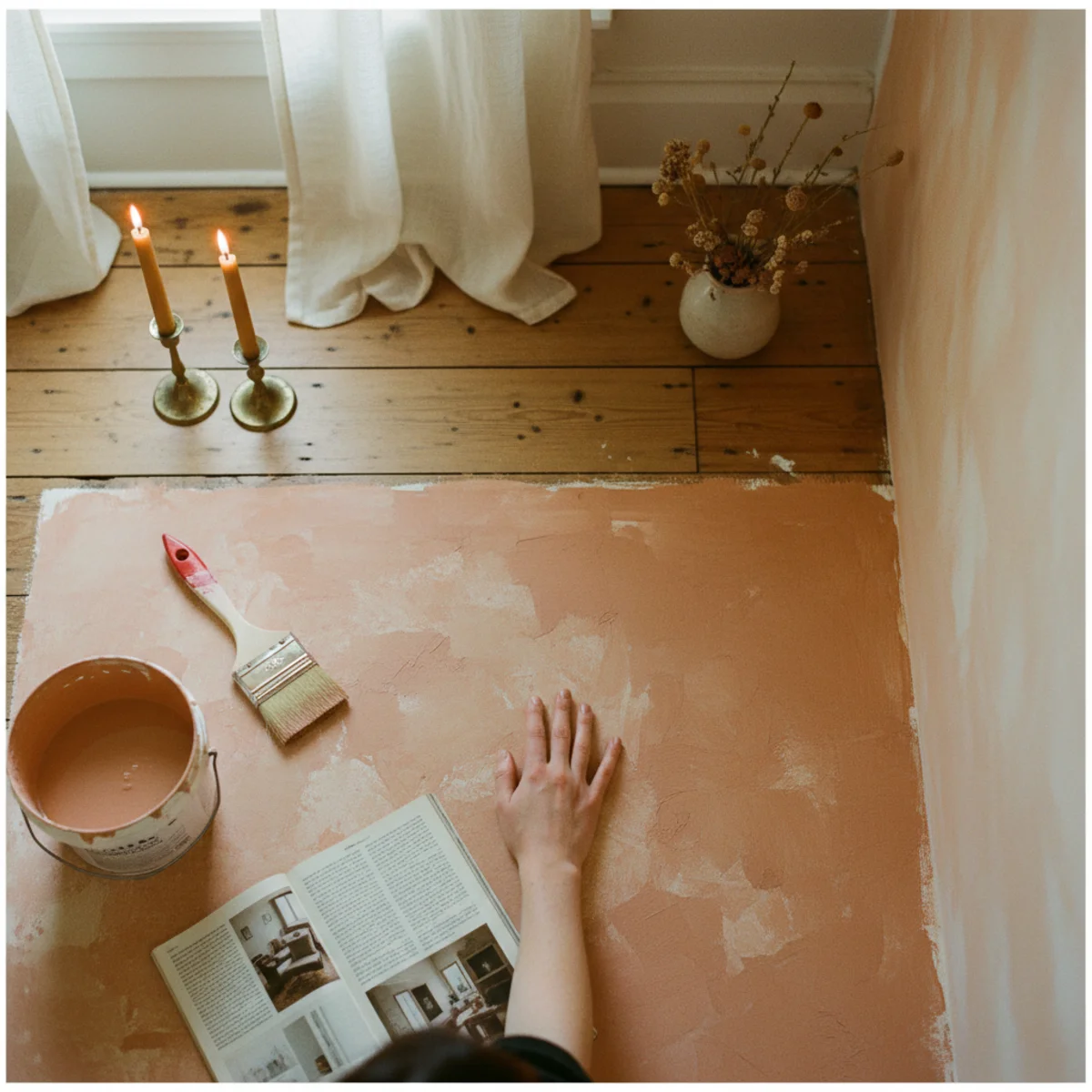
Paint is the cheapest dramatic transformation available — $40 to $80 in materials, one Saturday of work, and the entire room shifts from cold to warm. Before buying any new furniture, paint your existing room in a warm off-white or earthy tone. The transformed walls will reveal which existing furniture works in the new palette and which needs to be replaced — saving you from buying wrong pieces against the old wall color.
Pick a warm off-white or earthy tone from the best-paint-for-warm-home guide: Benjamin Moore White Dove OC-17, Farrow & Ball Pointing 2003, or Sherwin-Williams Alabaster SW7008 for warm-white living spaces; Setting Plaster, Mizzle, or Saybrook Sage for bedrooms. Buy 1 gallon ($35 to $55 from Home Depot, Lowe's, or Sherwin-Williams) — covers about 350 square feet (one average-size room). Buy a 9-inch roller, 2.5-inch angled brush, painter's tape, and drop cloth ($30 to $40 for the full kit). Total cost: $65 to $95 per room. Paint walls + trim + ceiling in the same warm tone (matched-trim approach from the cream-decor-warm-white guide).
AFFILIATE SLOTPRIORITYPaint walls/trim/ceiling in warm tone for $65-95 per room before buying furnitureAdd affiliate URL when configuredWhy it works
Because the wall color shapes how every piece of furniture reads against it — a sofa that looked perfect in the showroom may read cold against your current cool gray walls, then read perfect against the new warm cream. Painting first reveals which existing pieces work in the new palette, which saves you from making wrong-piece purchases against the old wall color. The order matters because paint affects every other decision; reversing the order means painting after committing to furniture that may need to be replaced.
Pro tip — Live with your newly painted room for two to three weeks before purchasing any new furniture — the room's character emerges slowly as you accumulate hours in it, and pieces that seemed essential in week one often feel unnecessary by week three. The patience saves significant budget.
$70 in paint and supplies — the cheapest dramatic transformation in any budget decorating plan. See also: matched-trim approach
03Buy the Rug Secondhand
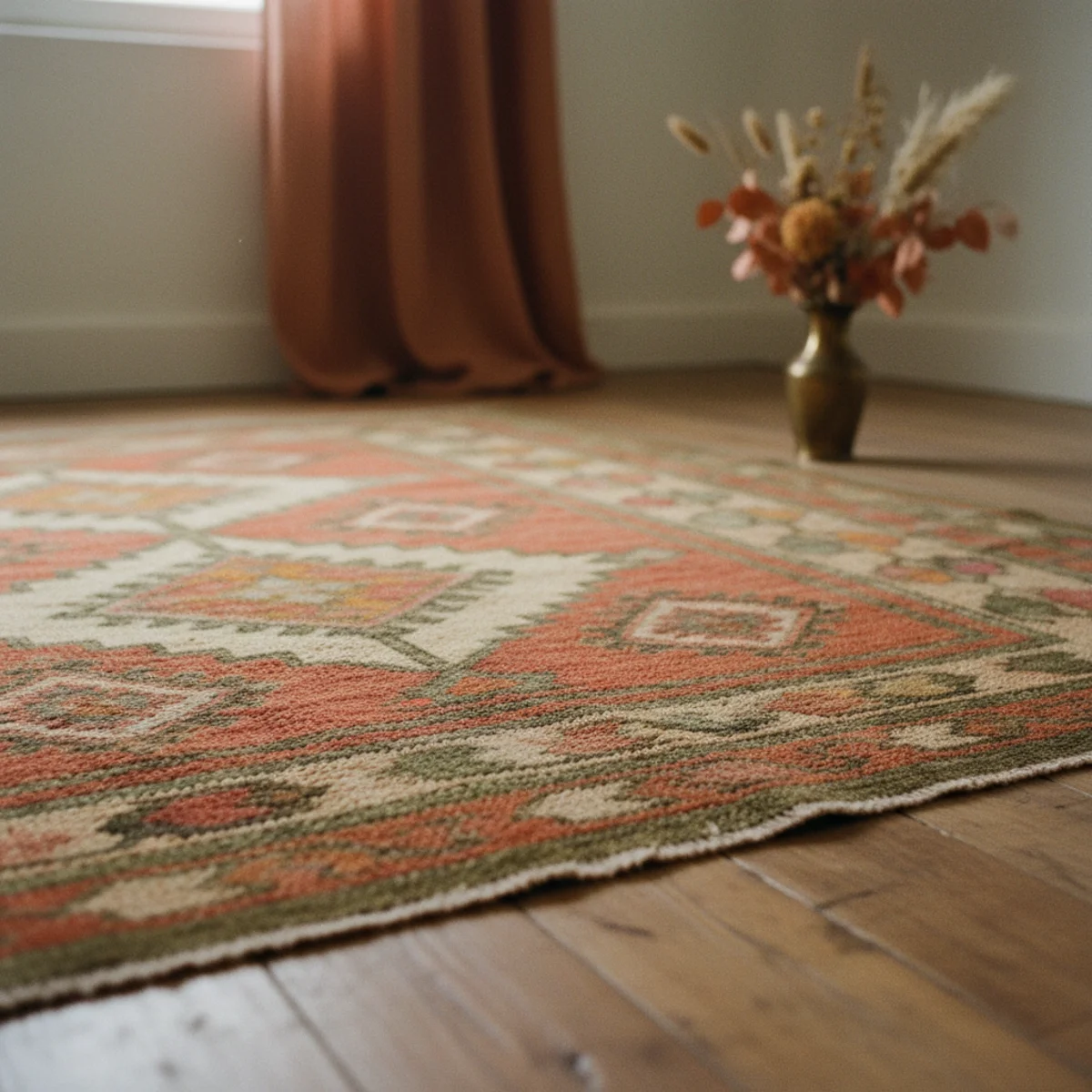
A vintage Persian or kilim rug at $150 to $400 from Marketplace or estate sales outperforms new $800 rugs from West Elm or Pottery Barn for warm-home aesthetic — the irregular wear, faded natural dyes, and traditional patterns all read more sophisticated than new rug equivalents. Buying the rug secondhand is the single highest-leverage budget move available, often saving $400 to $1,200 versus retail for the same visual effect.
Sources for secondhand rugs: Facebook Marketplace ($100 to $400 with bargaining), estate sales ($150 to $500), Goodwill and Salvation Army (occasionally $30 to $100 for older rugs), eBay vintage Persian listings ($200 to $800), Rug Source and other reputable online vintage dealers ($300 to $1,200). Look for wool construction (synthetic blends fade fast), natural plant dyes (read warmer than synthetic), traditional patterns (Persian, Kilim, Berber, Moroccan), and acceptable wear (mild fading and edge wear add character; large stains or holes don't). Negotiate aggressively — most secondhand rug listings sell 20 to 40 percent below asking after one offer. Have the rug professionally cleaned ($60 to $150 from local Persian-rug cleaner) before bringing it into your home.
AFFILIATE SLOTFURNITUREVintage Persian or kilim from Marketplace, estate sales, or vintage dealers at $150-400Add affiliate URL when configuredWhy it works
Because vintage rugs have actual age and patina — slightly faded dyes from sun exposure, slight wear from decades of use, traditional patterns that retail rugs only imitate. The patina and age cannot be manufactured; new rugs at the same price simulate the look but never quite achieve it. Vintage rugs also have history, which reads as inhabited home rather than retail showroom. The savings are large and the visual upgrade is significant.
Pro tip — Inspect any secondhand rug for moths and pet stains before bringing it home — moth damage shows as small holes in random spots, pet stains as discolored patches with potential odor. Both are fixable (moths killed by 24 hours in a freezer; stains by professional cleaning) but should affect the price you offer. The post-purchase cleaning ($60-150) is non-optional regardless.
$220 at an estate sale, patina that new $1,000 rugs can't fake — the highest-leverage budget move. See also: Facebook Marketplace
04Hide a Tired Sofa With a Throw and Cushions
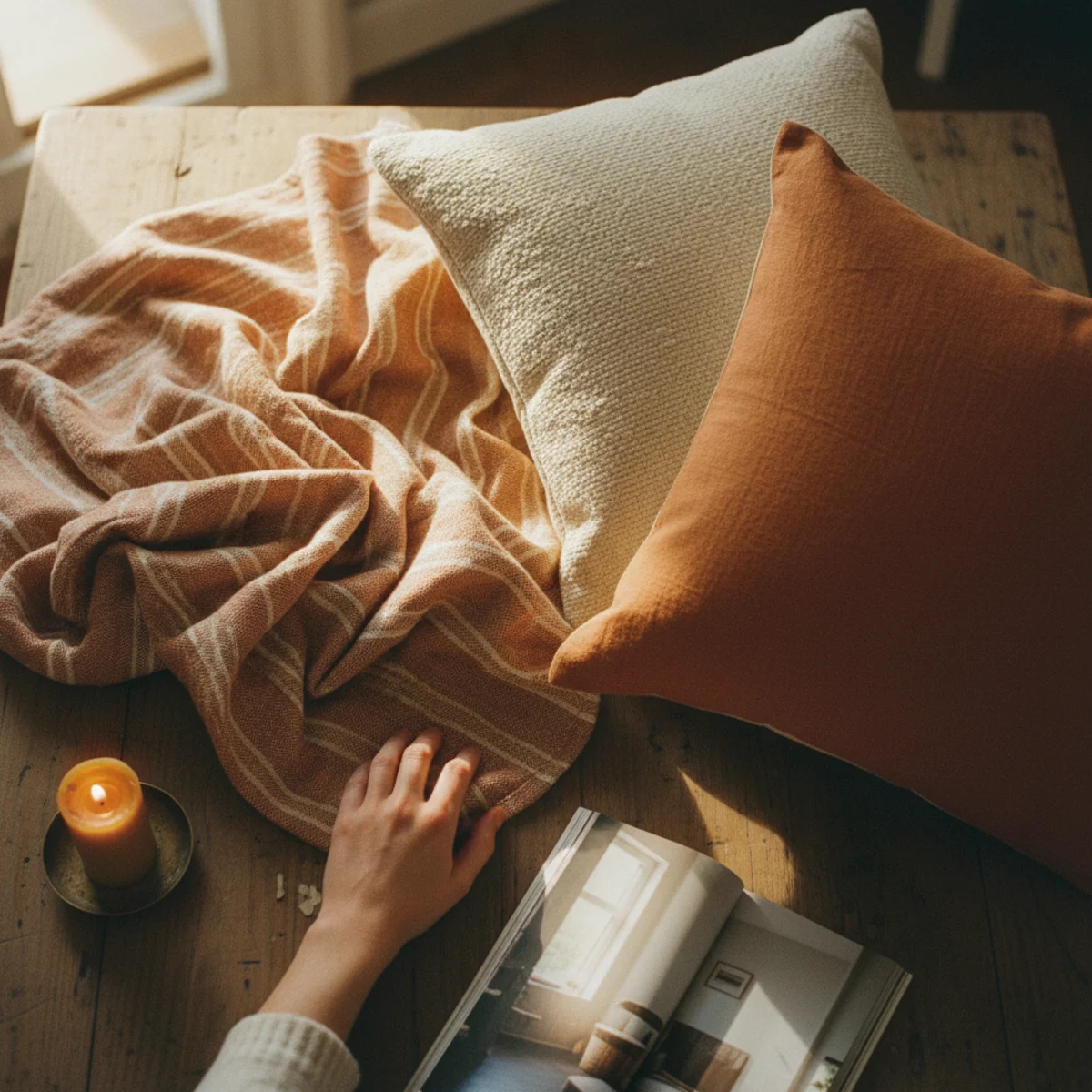
If your current sofa is fine structurally but visually tired (faded fabric, dated style, wrong color for the new palette), don't replace it — disguise it. A large fitted slipcover ($80 to $200), a wool throw blanket ($40 to $79), and 3 to 4 new cushion covers ($15 to $40 each) can transform any sofa for $200 to $400, far less than replacement. The fix lasts years and works even on old sofas that would otherwise require replacement.
Three-tier sofa rescue: (1) Slipcover in linen, cotton duck, or canvas at $80 to $200 (Bemz for IKEA sofas, Surefit for standard shapes, or custom local upholsterer at $150). (2) Wool throw across the back at $40 to $79 (Pendleton secondhand, West Elm boucle, Lands' End wool). (3) Three to four new cushion covers in linen at $15 to $40 each (H&M Home, Quince, sewn DIY for $12 each per the diy-home-decor-ideas guide). The combination disguises the underlying sofa entirely — the slipcover handles fabric, the throw handles back, the cushions handle front. Total cost: $200 to $400 versus $800 to $2,500 for replacement.
AFFILIATE SLOTFURNITURESlipcover + wool throw + 3-4 new cushion covers for $200-400 totalAdd affiliate URL when configuredWhy it works
Because structurally-fine sofas with tired fabric are extremely common (especially in inherited and gifted pieces), and the underlying frame is usually built better than equivalent new $800 sofas. The disguise upgrade preserves the better construction while completely transforming the visual register. Replacement throws away durable furniture and replaces it with cheaper construction at higher cost — exactly the budget mistake to avoid.
Pro tip — Check whether your sofa cushions can be flipped or rotated before committing to slipcovers — many tired sofas have one heavily-worn side and one nearly-pristine side that's been hidden under throws for years. Flipping the cushions or even the seat structure can solve 70 percent of the tired-fabric problem for free, leaving only the throw and cushions as remaining investment.
Slipcover + throw + cushion covers — $300 total to transform a tired sofa instead of $1,200 to replace it. See also: sewn DIY
05Shop Secondhand for Everything Solid
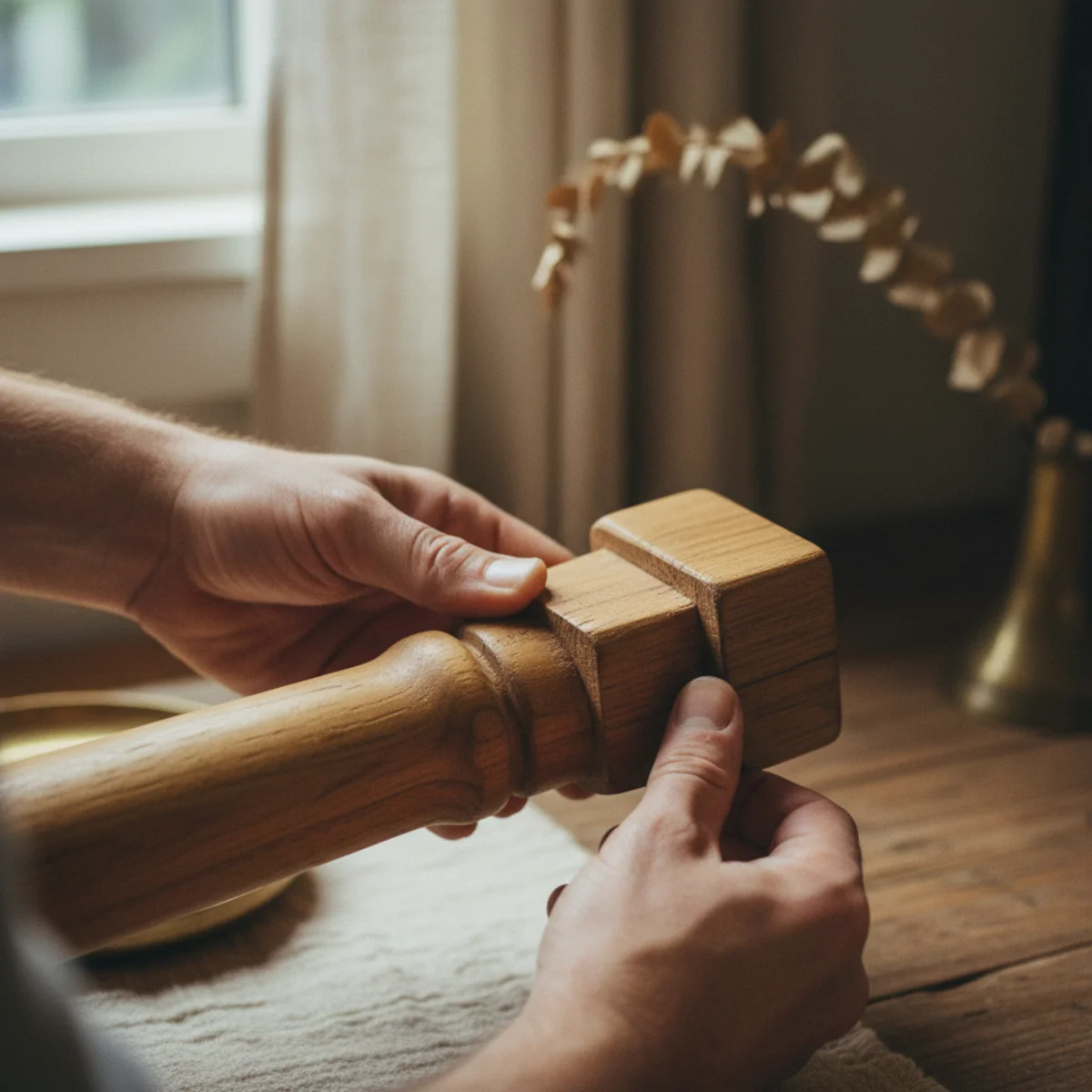
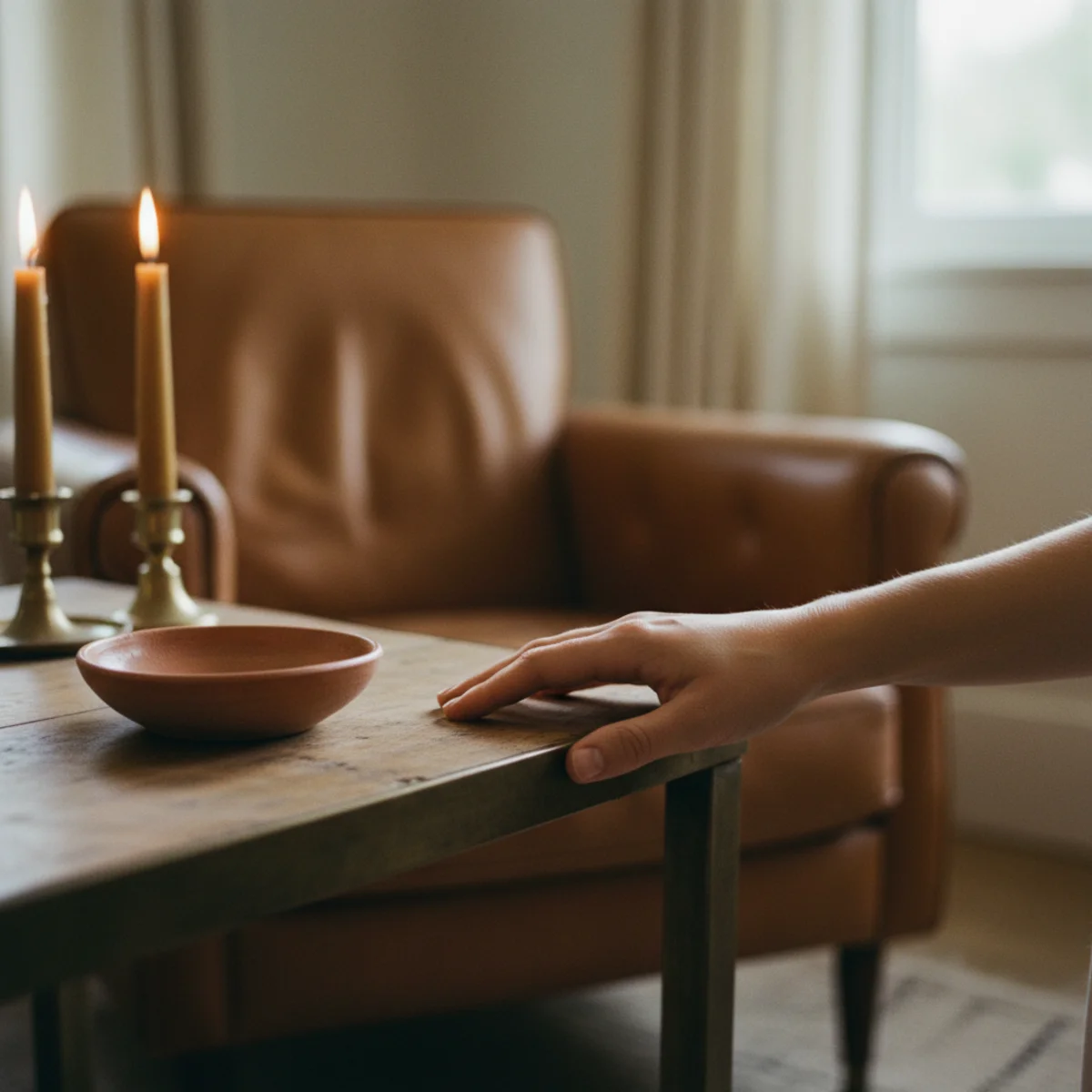
Anything solid wood — dressers, side tables, dining tables, bookshelves, chairs — should be bought secondhand. Vintage and mid-century solid wood at $40 to $200 from Marketplace, Goodwill, ReStore, and estate sales consistently outperforms new $300 to $800 retail equivalents for both construction quality and aesthetic warmth. The secondhand-solid-wood discipline saves the most money across an entire home decor budget.
Furniture types to always buy secondhand: dressers ($40 to $150), side tables ($15 to $60), dining tables ($80 to $300), bookshelves ($30 to $200), wooden chairs ($15 to $80 each), benches ($30 to $120), wooden stools ($5 to $30). Look for solid hardwood construction (test by weight — heavy is good), dovetail joinery on drawers (visible at the joint), real wood throughout (not veneer on particleboard). Sources: Marketplace and Craigslist for largest selection, estate sales for highest quality at lowest prices, ReStore for budget-budget, Goodwill for occasional finds. Negotiate 15 to 30 percent off asking price; expect the seller to accept lower-than-asking on most pieces. Refinish with Danish oil ($12) and aged brass hardware ($4 to $20 per pull) for $30 to $50 upgrade per piece.
AFFILIATE SLOTFURNITURESolid wood dressers, tables, shelves, chairs from Marketplace at $40-300 instead of newAdd affiliate URL when configuredWhy it works
Because solid wood construction lasts decades and the original cost difference between solid wood and particleboard furniture has only widened over time — secondhand solid wood pieces from the 1960s through 1990s often outclass new $500 to $1,000 furniture at one-fifth the price. The construction quality is the entire point; the patina and slight wear is the bonus. New particleboard furniture at the same price will break before the secondhand piece has been in your home five years.
Pro tip — Carry a small flashlight when shopping secondhand furniture — shine it underneath, behind, and into the joinery to verify construction quality. Solid wood reads consistently across all surfaces; particleboard reveals itself in cut edges or unfinished interiors. The flashlight check takes 30 seconds and prevents buying a piece that looks solid but isn't.
$80 vintage oak dresser + $15 brass pulls + $12 Danish oil = $107 piece that outclasses $500 retail. See also: Danish oil
06Lean Art Instead of Buying It
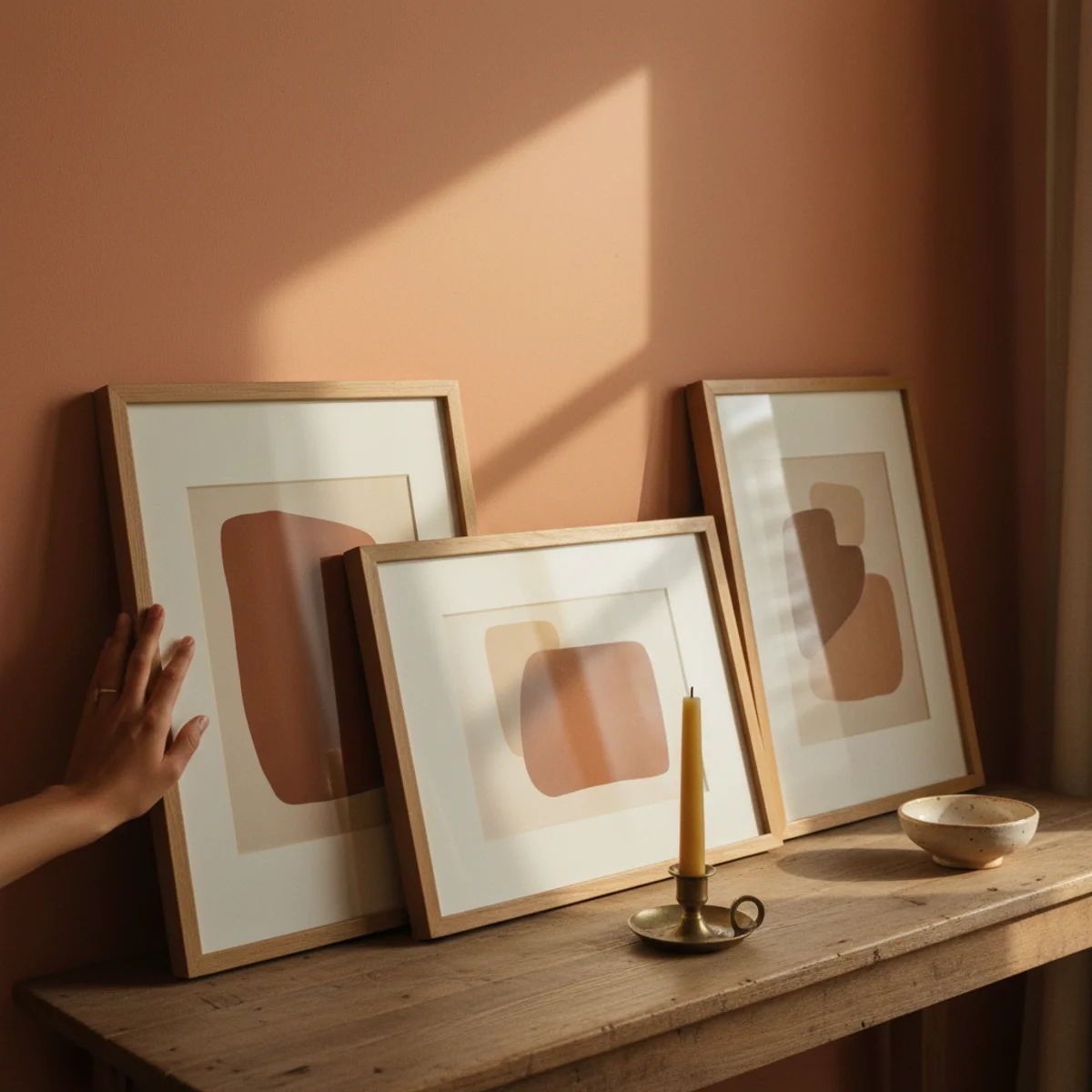
Wall art is the budget category with the most retail markup — and the easiest one to bypass entirely. Instead of buying art, lean what you already have: framed photographs, inherited pieces, kid's drawings in nice frames, vintage finds from thrift shops. The leaning posture also reads more casual and lets you swap pieces freely. Most budget-decorated rooms have zero new art purchases and look fully styled.
Sources for nearly-free art: your own photographs printed at Mpix at $10 to $20 for an 11x14 print, family photographs from old albums reframed in matching warm-wood frames, children's drawings or paintings framed simply, thrifted oil paintings and watercolors at $5 to $25 (Goodwill, estate sales, ReStore), vintage maps or botanical prints at $5 to $15 from antique shops or eBay, free downloadable vintage art from Rawpixel and the public-domain archives at Met Museum and NYPL printed at home or Mpix. Frame everything in matching warm-wood frames at $20 to $40 from IKEA HOVSTA for unified gallery walls. Lean rather than hang for maximum flexibility.
AFFILIATE SLOTARTLean thrifted, inherited, or self-printed art in matching warm-wood frames at $20-40 eachAdd affiliate URL when configuredWhy it works
Because the visual job art does — adding color, texture, personal meaning to walls — can be done by nearly any framed piece, not just expensive purchased art. Leaning art also reads more casual and intentional than hung art, which removes the visual pressure of choosing 'gallery-quality' pieces. The total budget impact is significant: a fully styled gallery wall using leaned thrifted and printed pieces costs $80 to $200; the equivalent purchased-art gallery would cost $800 to $3,000.
Pro tip — Print your own iPhone photographs in black-and-white at Mpix at $10 to $20 per 8x10 print — black-and-white photography of meaningful places (your neighborhood, a recent trip, a small detail of nature) reads as sophisticated art when framed in warm-wood frames. The combined cost (frame + print) is under $40 per piece for art that would retail at $150+ from a stock-photo website.
Thrifted prints, framed family photos, all leaning, all warm oak frames — full styled walls for under $150. See also: framing
07Edit Before You Buy
The single most underrated budget move is editing what you already own before purchasing anything new. Most homes have decades of accumulated objects that need to be removed before the warm-home aesthetic can emerge — and the removal itself transforms rooms dramatically without spending a dollar. Edit aggressively before any shopping decision; you'll buy less and use what you keep more.
Walk through each room with three questions: (1) Does this object earn its space (serves daily use, holds personal meaning, anchors a deliberate vignette)? (2) Does this object fit the warm-home palette (cream, oat, terracotta, walnut, sage, aged brass — no bright primaries or chrome)? (3) Would I buy this object today if I were starting fresh? Objects that fail all three questions leave the room. Boxes them up for 30 days; if not missed, donate or sell on Marketplace. Most homes have 30 to 50 percent more objects than they need; removing the excess often eliminates the need for new purchases entirely. Editing is free; new purchases are expensive.
AFFILIATE SLOTPROCESSEdit existing objects through three-question test before any new decor purchaseAdd affiliate URL when configuredWhy it works
Because over-objects in a room mask which functional or aesthetic gaps actually exist. With a heavily-edited room, the gaps reveal themselves clearly — you need a side table here, a lamp there, a throw pillow somewhere. Without editing, you keep adding to existing chaos, never solving the underlying gaps, never making the room read as warm. The edit reveals what's actually needed; without it, every purchase is a guess.
Pro tip — Photograph each room before editing, then photograph again after. The before-and-after comparison reveals how dramatically the room transforms from removal alone — usually more dramatically than the same room would transform from $500 in additions. The photographic evidence makes editing easier next time, because you'll trust the process.
Same room, 40 percent fewer objects — the editing pass that saves more budget than any shopping strategy. See also: warm-home aesthetic
08Swap Hardware and Knobs for Instant Upgrade
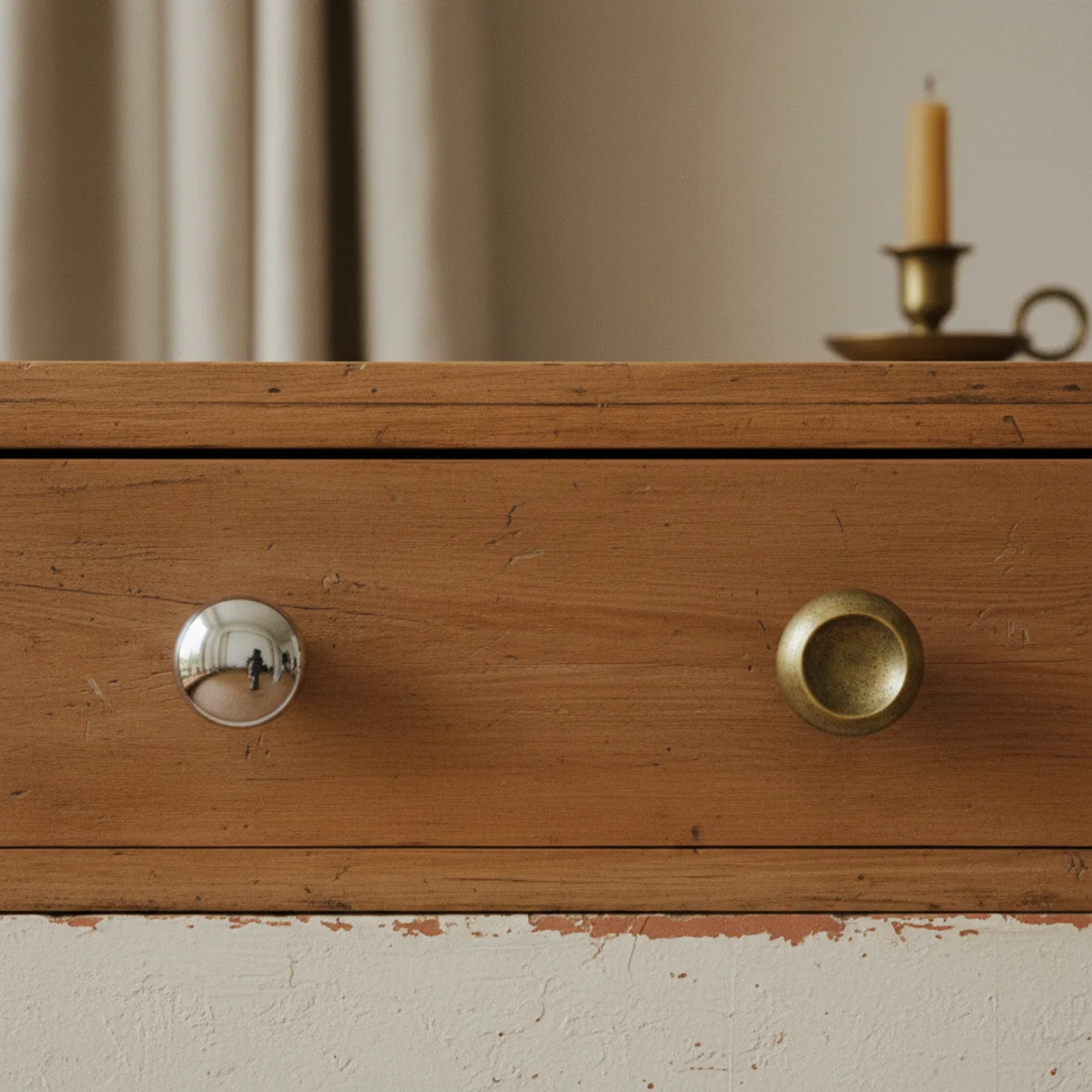
Outdated cabinet pulls, drawer knobs, and door handles fight any warm-home aesthetic — and they're the cheapest visible upgrade in the entire budget. Replacing all the hardware in a kitchen or bedroom with aged brass or bronze costs $50 to $200 total and transforms how the space reads. The swap is one of the highest visual-impact, lowest-skill budget moves available.
Audit visible hardware: cabinet pulls (typically 6 to 20 per kitchen, 8 to 16 per dresser), drawer knobs, door handles, curtain rod brackets. Replace cool-toned chrome and brushed nickel with aged brass, antique bronze, or oiled bronze. Sources: House of Antique Hardware ($8 to $40 per pull), Hardware Hut ($4 to $25), Anthropologie ($12 to $30), thrifted vintage pulls at $1 to $5 each from estate sales and ReStore. Most pulls install with two screws — total time to replace 16 pulls in a kitchen: 30 to 45 minutes. The visual transformation reads as a complete kitchen renovation for $80 to $200 total.
AFFILIATE SLOTUPGRADEReplace all visible hardware with aged brass or bronze for $50-200 per roomAdd affiliate URL when configuredWhy it works
Because hardware is the single most touched and most visually scanned element in any room — every cabinet door, every drawer, every door has hardware that the eye reads dozens of times daily. Cool-toned hardware creates dozens of small visual chill points; warm-toned hardware creates dozens of small warmth signals at the same locations. The replacement is small per piece but compounds across every contact point in the room.
Pro tip — Test one new pull in place before committing to the whole set — the wrong scale, finish, or shape becomes obvious only when installed alongside existing cabinets. Most hardware retailers ship single samples at full price; install one, see if it works, then order the complete set knowing it's right.
$120 in brass pulls across 16 cabinets — kitchen reads transformed for the cost of a single dinner out. See also: House of Antique Hardware
09Forage Free Decor From Your Neighborhood
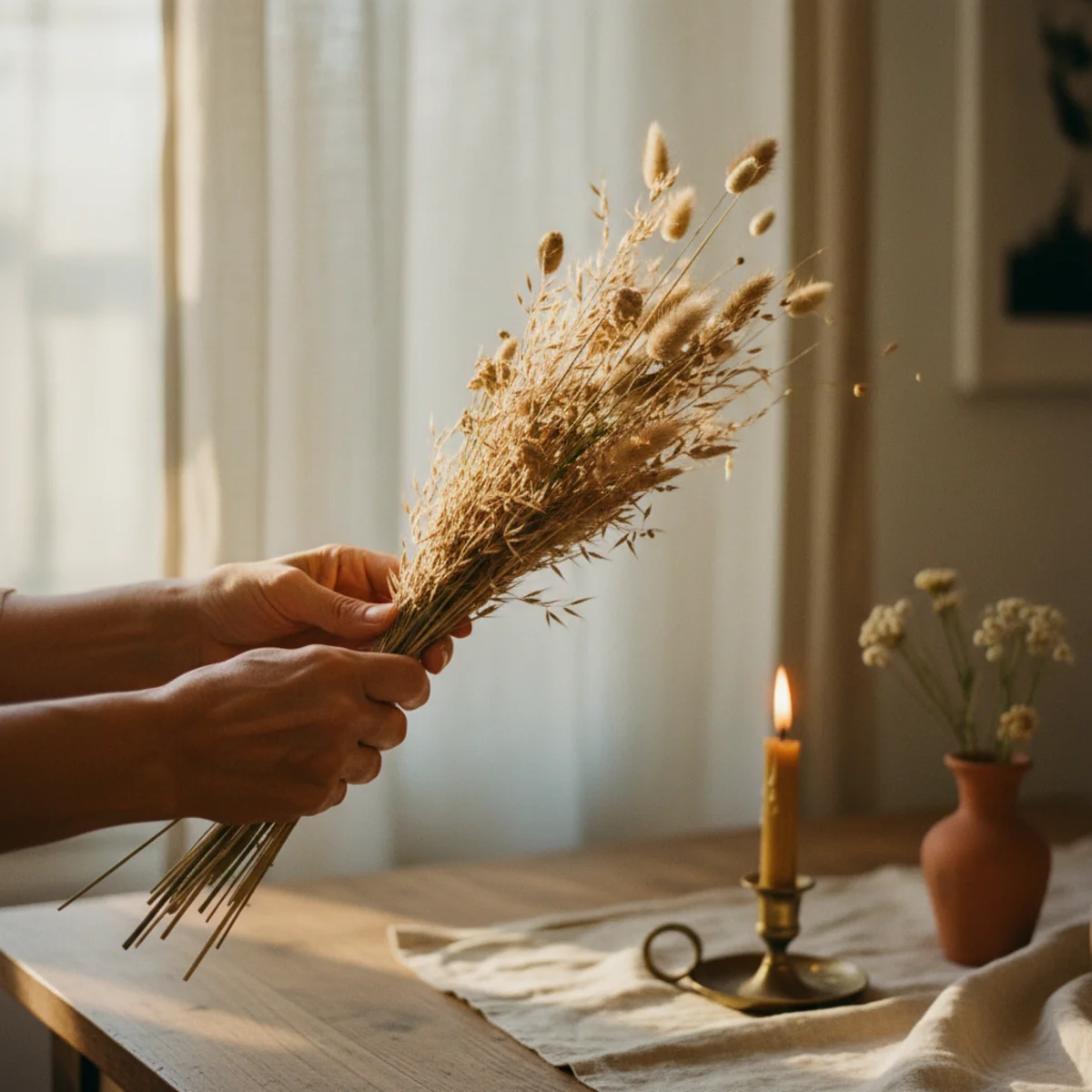
The cheapest decor source is free — branches collected on neighborhood walks, pinecones gathered in fall, river rocks from a hike, dried botanicals from your own garden. Foraged decor brings nature's color and texture into the home at zero cost and reads more authentic than store-bought equivalents. Most warm-home aesthetics use foraged elements; the trick is making it look intentional, not collected.
Best foraging targets: tall dried branches (eucalyptus from grocery store at $5 to $10, fresh branches from neighborhood trees in spring and dried over a few weeks, twisted willow from pruning), pinecones (fall, free in parks and yards), large smooth river rocks (used as bookends, paperweights, decoration), interesting driftwood from local beaches or river edges, dried wildflowers and grasses (cut in summer/fall, dried hanging upside-down for 2 to 3 weeks). Display in heavy bud vases, ceramic vessels, or directly on shelves and consoles. Keep foraged decor in odd numbers and warm-home tonal palette (browns, tans, dried greens). Avoid: anything still alive (will die and look sad), anything bright or saturated (won't fit palette), anything you took from protected land (illegal in most US national and state parks).
AFFILIATE SLOTFREEForage dried branches, pinecones, river rocks, driftwood from neighborhood (avoid protected land)Add affiliate URL when configuredWhy it works
Because foraged elements have the irregularity and authenticity that retail decor simulates but never quite achieves — a real river rock has worn edges no manufactured rock matches; a real dried branch has organic curvature no resin-cast branch can replicate. The cost difference is enormous (free vs $30 to $100), and the aesthetic difference favors the foraged piece every time. The only catch is patience — gathering and drying takes weeks; instant retail takes minutes.
Pro tip — Cut fresh branches in spring when they're budding, then hang upside-down in a closet for 3 weeks to dry. The dried branches retain the curve and natural shape of growth while losing all the moisture that would otherwise cause rot. The DIY version of $40 retail dried branches takes 5 minutes of cutting and 3 weeks of waiting.
Free branches from a spring walk, dried in the closet for 3 weeks — foraged decor that looks like $40 retail. See also: warm-home tonal palette
10Make One or Two Cheap DIYs
Not every budget room needs DIY projects, but one or two well-chosen DIYs deliver disproportionate budget impact — the floating oak shelf ($35 to replace $200 retail), no-sew linen curtains ($50 per panel to replace $150 retail), DIY plaster vase ($10 to replace $80 retail). One or two DIYs per room saves $200 to $400 compared to retail equivalents, with the same visual result.
Best ROI DIYs from the diy-home-decor-ideas guide: floating oak shelf ($35 in materials, 90 minutes), no-sew linen curtains ($50 per panel, 30 minutes per panel), hand-poured beeswax candles ($5 per candle, 30 minutes for batch of 6), DIY plaster or air-dry clay vase ($10 to $20 per vase, 60 to 90 minutes), reframed vintage art ($25 per piece, 15 to 30 minutes per piece). One DIY per room means one piece in each room has the irregular hand-made character that mass-produced pieces lack, plus the budget savings compound across the home. Don't try to DIY everything; just the high-leverage projects.
AFFILIATE SLOTDIY1-2 high-leverage DIYs per room: oak shelf, no-sew curtains, beeswax candles, plaster vaseAdd affiliate URL when configuredWhy it works
Because DIY time has opportunity cost — every weekend spent on a 6-hour project is a weekend not spent on something else. The high-ROI DIYs (oak shelf at $165 savings, curtains at $100 savings per panel) make the time investment worthwhile; lower-ROI DIYs (building a $40 stool to save $30) don't. Pick one or two strategic DIYs per room and let retail or thrift handle the rest. The discipline is in choosing which to DIY, not in DIY-ing more.
Pro tip — Start with the oak floating shelf — 90 minutes of work, $35 in materials, $165 savings vs retail, and the shelf becomes the foundation for the styling vignettes that drive every other room's aesthetic. The single DIY pays for itself in the first project and becomes the backbone of the whole budget strategy.
Oak shelf, linen curtains, beeswax candles — three DIYs that save $400 across one budget living room. See also: diy-home-decor-ideas guide
11Layer Texture Instead of Spending on Color
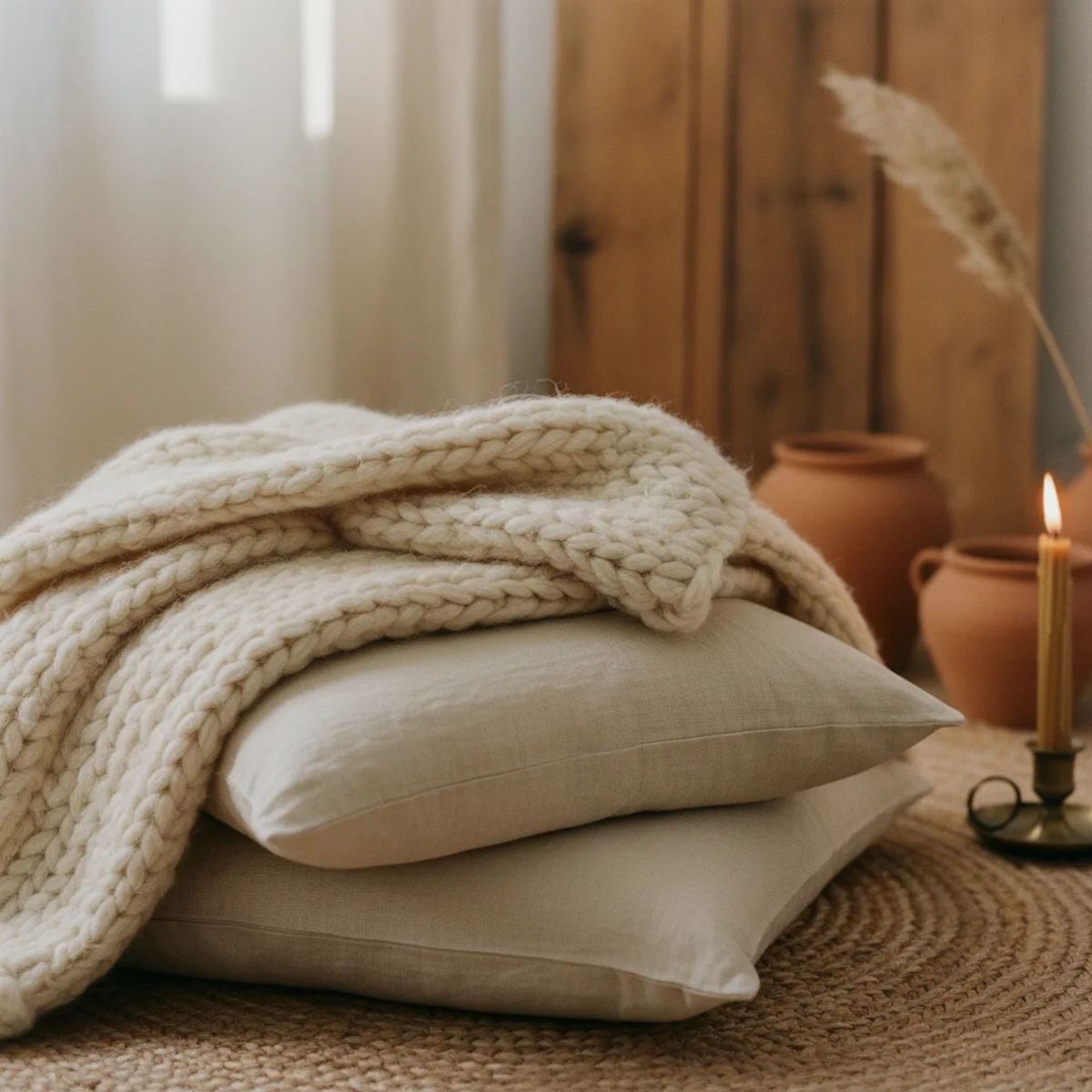
Saturated colors and patterned fabrics are expensive — they require specific dyes and printing processes, and the retail markup reflects it. Layering textures in the same warm-neutral tonal family delivers the same visual interest at a fraction of the cost. Plain linen, plain wool, plain boucle, plain jute — all in cream-to-oat tones — read more sophisticated than patterned alternatives and cost 50 to 70 percent less.
Build a texture palette in your warm-home neutrals: linen ($30 to $80 per yard from Fabric.com, JoAnn, or budget bedding sets at Quince), wool (from Pendleton secondhand at $40, IKEA throw at $30), boucle (West Elm cushion covers at $30 to $60), jute or sisal (rugs at Rugs USA at $80 to $200 for 5x7, larger sizes proportionally), seagrass or rattan (baskets at IKEA NIPPRIG at $25 to $50, accent furniture at $50 to $200). Combine four to six different textures in the same room, all in the cream-to-oat-to-clay-to-walnut tonal range, no patterns. The combined visual interest reads layered and warm; the budget reads modest.
AFFILIATE SLOTSTRATEGYLayer 4-6 textures (linen, wool, boucle, jute) in same warm-neutral palette instead of patternsAdd affiliate URL when configuredWhy it works
Because texture creates visual interest at the surface level (how light catches the weave) without requiring expensive dyes, prints, or pattern repeats. The brain reads texture variation as warmth and depth, even when all the textures share the same neutral color. Saturated colors and patterns cost more to produce and retail at higher prices; warm neutrals in varied textures deliver the same visual impact at significantly lower cost. The budget savings compound across every textile in the home.
Pro tip — Buy plain linen sheets and curtains rather than patterned ones — same construction quality, same hand, same drape, but consistently 30 to 50 percent cheaper than printed versions. The plain textiles also fit any future warm-home palette change without becoming obsolete; patterned textiles age out of fashion faster.
Five textures, all in the same warm palette, all plain — depth without the cost of patterns and saturated dyes. See also: warm-home neutrals
12Buy One Hero Piece, Save on the Supporting Cast
Budget rooms work best when one piece anchors visually — a vintage Persian rug, one good leather chair, one statement light fixture — with everything else thrifted or DIY at much lower price points. The hero piece signals quality across the whole room; the supporting cast doesn't need to compete. Spending 30 to 40 percent of the room budget on one hero piece and 60 to 70 percent on everything else delivers better results than spreading the same budget evenly.
Pick one hero piece per room at $400 to $1,000: a vintage Persian rug, one well-made armchair (worn leather from Marketplace, new boucle from West Elm), a quality dining table, a beautiful credenza, a single statement light fixture. The hero is the piece that gets noticed and remembered. Everything else in the room comes from secondhand sources at $20 to $200 each: thrifted side tables, ReStore lamps, DIY shelves, free foraged decor. The hero anchors the room's visual quality; the supporting cast fills functional needs without competing. Total room budget: $800 to $1,500, of which $300 to $500 goes to the hero and the rest distributes across 5 to 10 supporting pieces.
AFFILIATE SLOTSTRATEGY30-40% of room budget on one hero piece ($400-1000), 60-70% spread across thrifted supporting castAdd affiliate URL when configuredWhy it works
Because the human eye remembers the highest-quality piece in a room and lets that piece anchor the impression of the whole space — a beautiful rug with thrifted furniture reads as 'tasteful budget'; mediocre everything reads as 'budget compromise.' The hero piece sets the visual ceiling for the room, and supporting pieces are forgiven their lower quality because they're not the focal point. Spreading the same budget evenly results in no hero and no distinct character.
Pro tip — Pick the hero piece type based on what's hardest to thrift well in your area — if your local Marketplace is rich with vintage rugs but poor for quality furniture, hero the chair and thrift the rug. If thrifted furniture is abundant but rugs are mediocre, hero the rug and thrift the furniture. Hero what's locally scarce; thrift what's locally abundant.
Vintage Persian rug as the hero, thrifted everything else — the strategy that beats even-distribution budgets. See also: vintage Persian rug
13Decant and De-Clutter for Free
Branded packaging — bagged coffee beans, cereal boxes, cleaning product bottles, plastic toiletries — fights every warm-home aesthetic. The budget fix is decanting daily-use items into matching glass or ceramic containers, and de-cluttering everything you can hide. The aesthetic upgrade is dramatic and the cost is zero (use existing containers) to minimal ($5 to $30 for new ones).
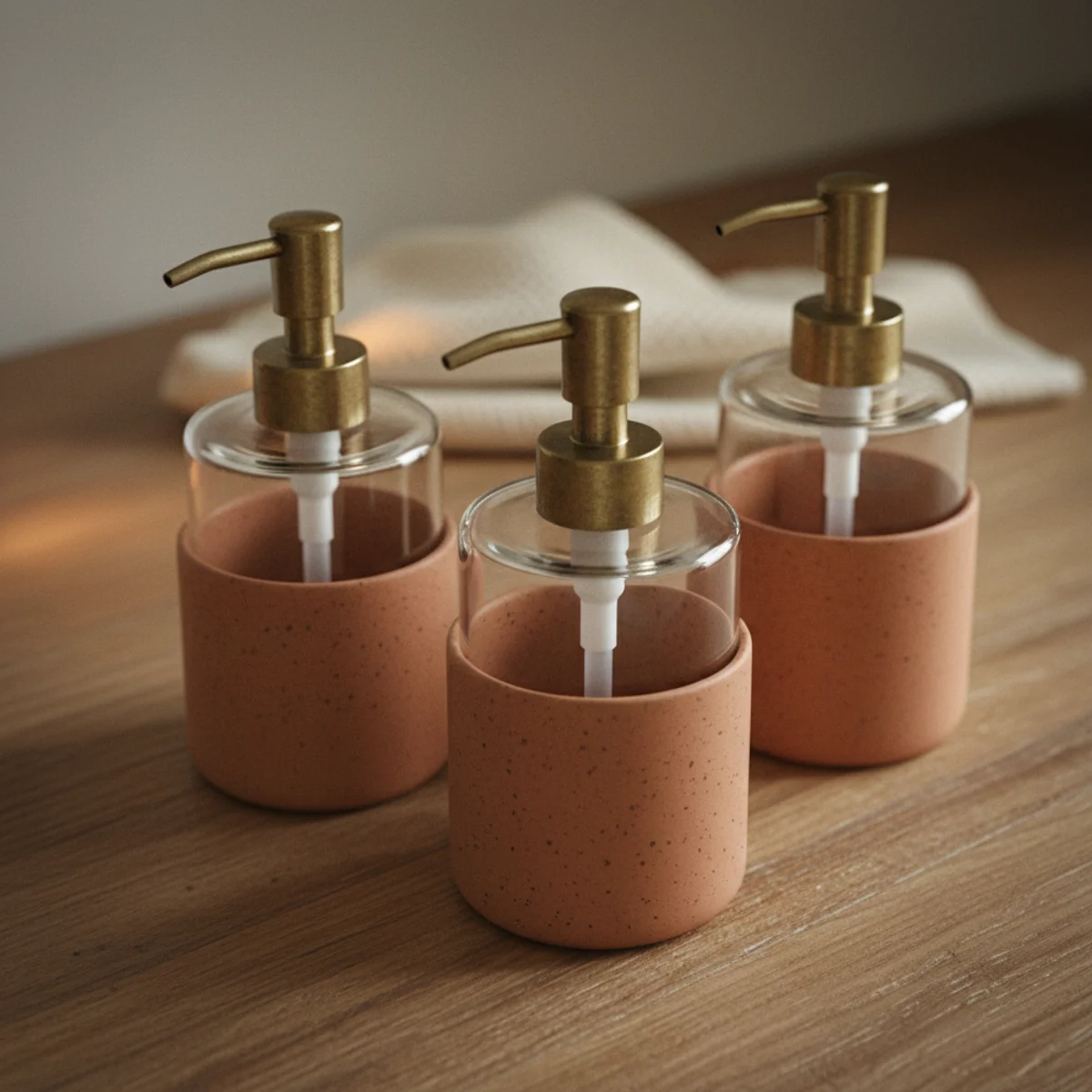
Decanting candidates: coffee beans into glass jars on the coffee bar, sugar and flour into matching ceramic canisters in the kitchen, cleaning products into amber glass bottles in the laundry, toiletries into ceramic or glass dispensers in the bathroom, dish soap into a small ceramic pitcher beside the sink. Sources for cheap containers: existing jars (clean, peel labels off, repurpose), thrift shops at $1 to $5 per jar or canister, Target dollar bins, Amazon basic glass jars at $8 to $15 for 4-packs. De-clutter parallel to decanting: hide visible cleaning supplies in cabinets, store extra toiletries in drawers, remove labeled product packaging from sight entirely. The room reads warmer instantly because the chromatic chaos of brand logos is removed.
AFFILIATE SLOTFREEDecant branded packaging into matching glass/ceramic containers + hide remaining clutterAdd affiliate URL when configuredWhy it works
Because branded packaging creates dozens of small visual interruptions — different brand colors, different logos, different shapes all competing within what should be a tonal warm-home palette. Removing the branding and decanting into matching containers strips out the visual noise without removing any function. The aesthetic impact is significant; the cost is zero to $30 for an entire kitchen, bathroom, or laundry transformation.
Pro tip — Start by decanting just three high-visibility items — coffee beans, hand soap, dish soap — and live with the result for a week before continuing. Most homes discover the decant aesthetic compounds quickly, but starting with three items reveals whether the upgrade is worth continuing to other categories or whether you've already captured most of the impact.
Three matching glass jars instead of three branded bags — zero spending, full visual upgrade. See also: matched canister set
14Use Plants for Cheap Life
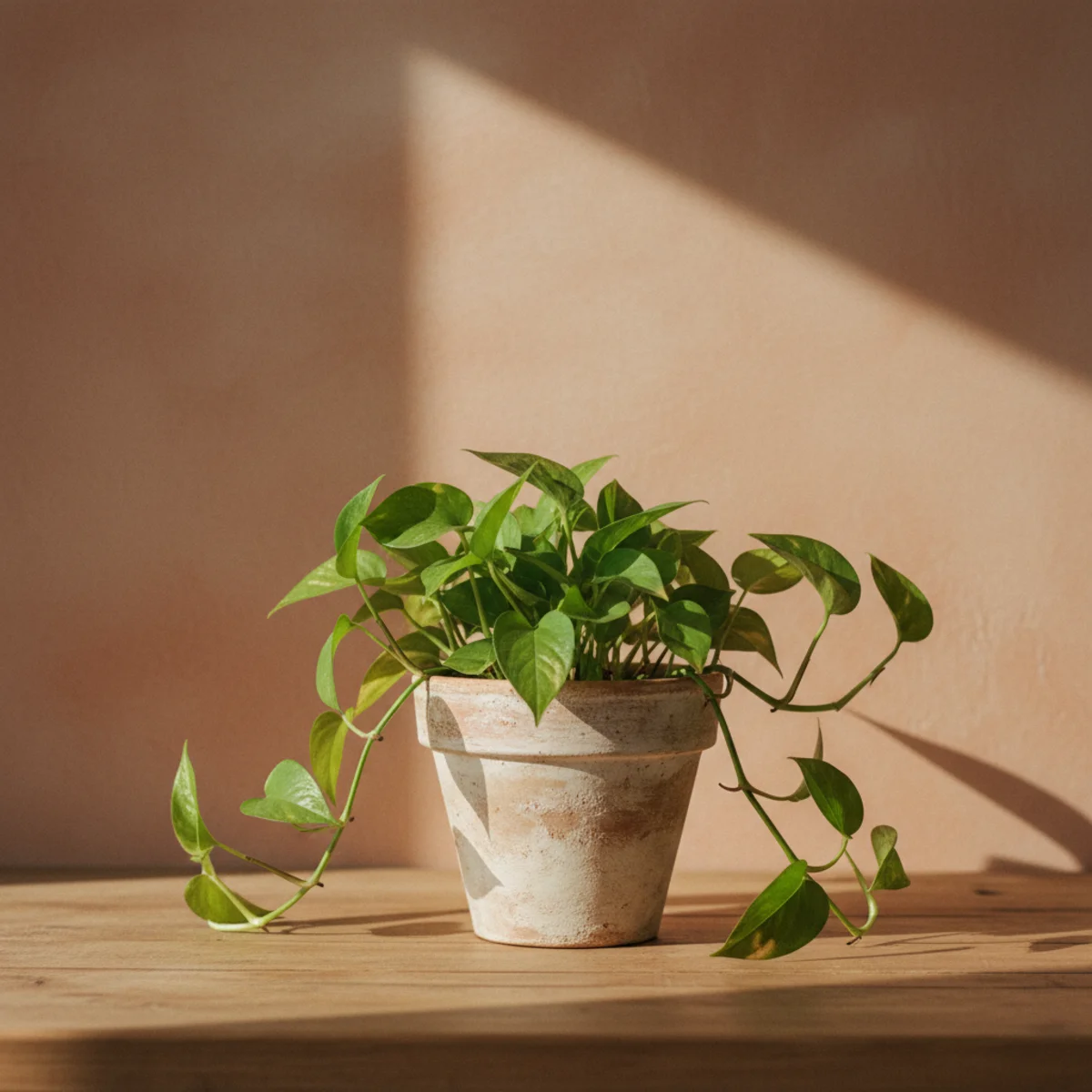
Plants add living color, organic shape, and breath to any room — at $5 to $40 per plant, they're one of the cheapest decor categories available. A few well-chosen plants in warm-toned planters transform any room's energy from static decor to inhabited space. The trick is choosing plants that survive your light conditions and watering habits, not just plants that look pretty in the nursery.
Best plants by light condition: SUNNY SOUTH-FACING WINDOWS — succulents ($5 to $15), olive trees ($30 to $80), fiddle leaf figs (sensitive, $40 to $100), citrus trees ($30 to $60). MEDIUM/EAST-FACING — pothos ($10 to $25, very forgiving), snake plants ($15 to $40, near-indestructible), monstera ($30 to $80), peace lily ($15 to $30). LOW LIGHT — ZZ plant ($20 to $40, near-indestructible), pothos in low light still works, cast iron plant ($25 to $50). Place plants in warm-toned ceramic, terracotta, or rattan planters (avoid plastic). One to three plants per room — more becomes maintenance burden; fewer doesn't deliver the impact. Water on a schedule that fits your life; over-watering kills more plants than under-watering.
AFFILIATE SLOTLIVING1-3 plants per room: snake plant, pothos, ZZ plant, fiddle leaf, or olive tree in warm plantersAdd affiliate URL when configuredWhy it works
Because plants add a living, growing presence that no static decor can provide — the slow visible change of leaves, the subtle motion of stems, the seasonal flowering of certain types all signal life amid otherwise unchanging rooms. Plants also add color (green) without requiring expensive dyed textiles or saturated paint, and they read as warmth-by-association (the brain associates greenery with healthy environments). The cost per plant is low; the impact per plant is high.
Pro tip — Choose one near-indestructible plant per room (snake plant, ZZ plant, or pothos) and one slightly more demanding plant once the first thrives — building plant confidence gradually prevents the discouragement of killing expensive plants in the first weeks. The two-plant minimum gives the room visible life; the cumulative cost is under $50 per room.
Snake plant, pothos, olive tree — three forgiving plants in warm planters for under $80 total. See also: warm-toned ceramic
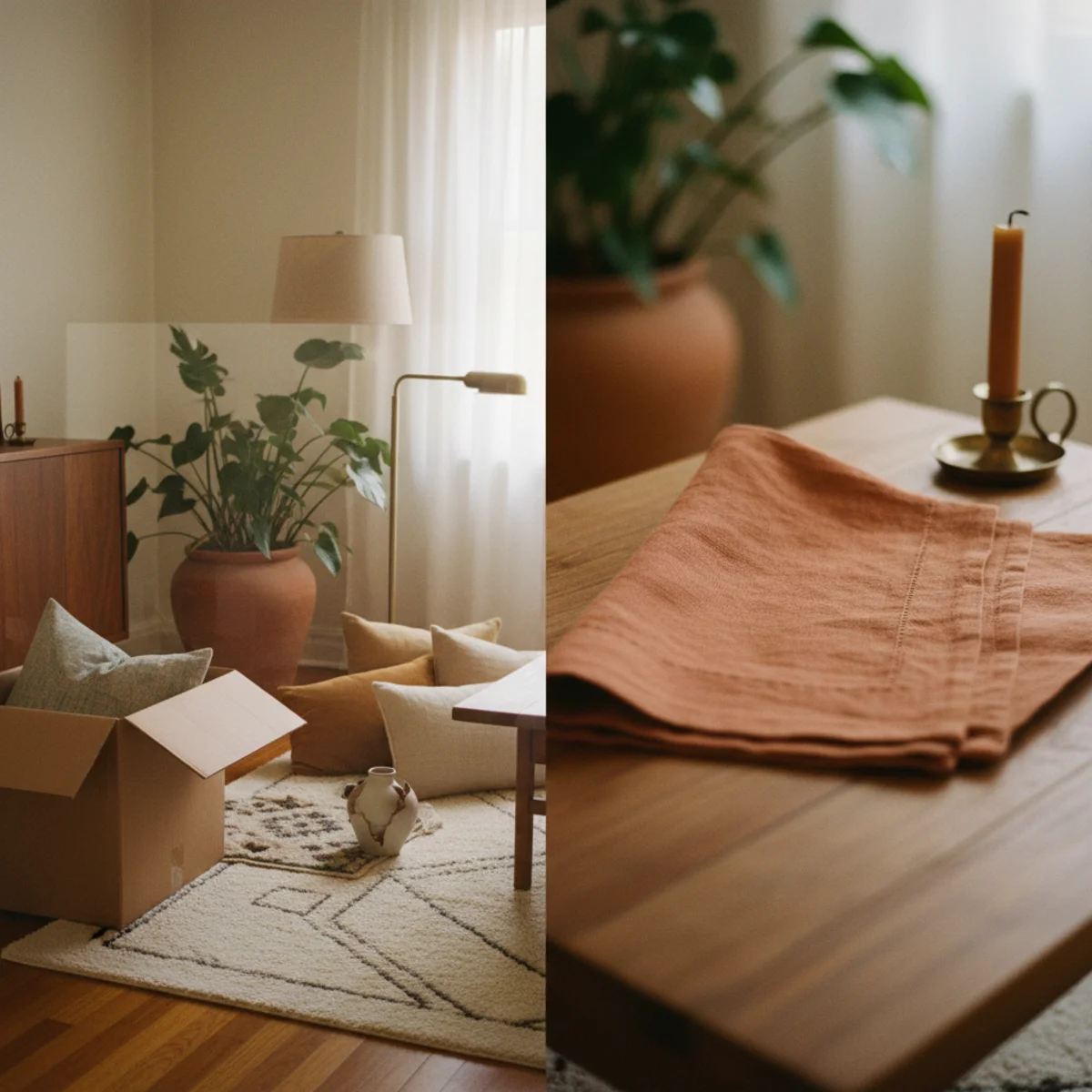
How to decorate on a budget step by step
Spend where it counts, save everywhere else, and edit first. Work in this order.
- 1Edit what you have
Before spending a dollar, remove clutter and restyle what you own. Editing is free and often does more than buying.
- 2Fix the light
Add a few warm 2700K lamps, thrifted if possible. Warm light is the cheapest, highest-impact warmth lever there is.
- 3Paint and anchor
Paint a room or one wall warm, and add a good secondhand rug. These two moves transform a room for very little.
- 4Layer secondhand and texture
Add thrifted furniture and lighting, a wool throw, and a few cheap DIYs, spending your limited money on one hero piece.
Quick tips
- Spend on light, paint, and one good rug; save everywhere else.
- Shop secondhand for everything solid — quality beats new budget pieces.
- Hide a tired sofa with a wool throw and cushions rather than replacing it.
- Edit and restyle what you own before buying anything — it's free.
- Forage branches and greenery instead of buying stems.
- Buy one hero piece and let it lift a room of thrifted and budget basics.
Budget decorating by situation
Thrifted everything solid, a coat of paint if allowed, warm lamps, and one hero piece; see our apartment living room guide.
Portable, no-hole warmth — lamps, a rug, throws, leaning art — spending nothing on what you can't take.
Paint, light, and editing room by room before any furniture purchases.
Removable, cheap, portable — lamps, a rug, a throw, removable art, and forgiving plants.
Warmth isn't bought; it's chosen. The best budget rooms read richer than expensive ones because the decisions, not the price tags, do the work.
Frequently asked questions
Where should I spend my limited decor budget first?+
What's the highest-leverage budget decor move?+
What should I always buy secondhand for budget decor?+
How do I make budget decor not look cheap?+
What budget DIYs are worth the time?+
How much does a complete warm-home transformation cost on a budget?+
Decorating on a budget isn't about doing less — it's about knowing where a dollar buys the most warmth. Spend the little you have on light, paint, and one good secondhand rug, and save everywhere else through thrifting, DIY, and editing. We'd warm the light and edit the clutter before spending anything; both are nearly free and do more than expensive furniture ever could. The warmest rooms are decorated with patience and a good eye, not a big budget. Warmth is chosen, not bought.