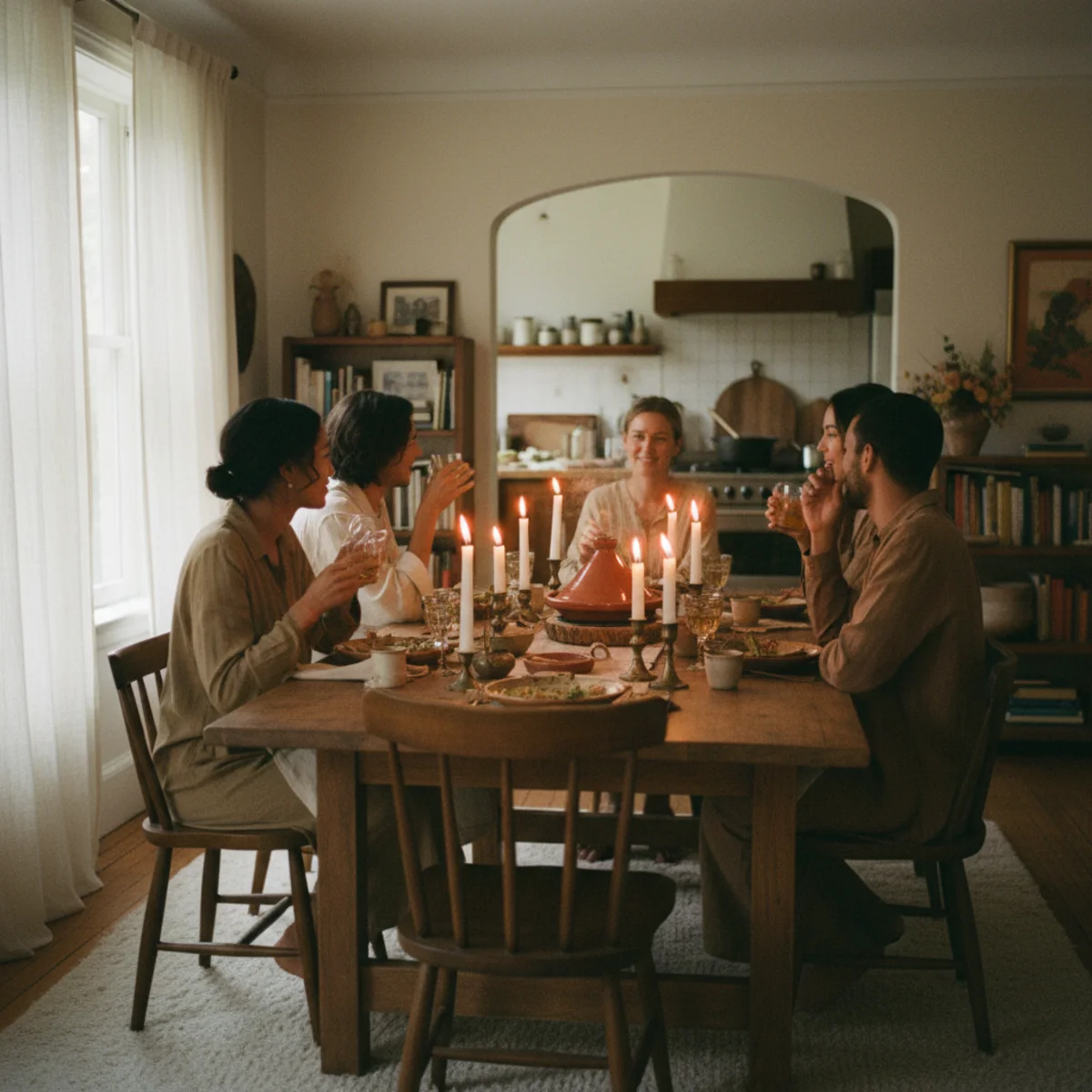
These twelve cozy dinner party principles are tested across real dinner parties across seasons and household sizes — intimate dinners for 4, larger gatherings of 8 to 12, casual weeknight hosting, formal occasion hosting. Each principle below names specific timing (candles lit 20 minutes before guests arrive, not when they arrive), specific service decisions (family-style beats individual plating for warmth), specific hosting behavior (sitting down with guests versus orbiting the kitchen), and specific practical moves that remove host anxiety and let warmth happen. The goal is dinner parties that guests remember as genuinely warm rather than as impressively executed.
Most dinner party failures come from over-optimizing for impression — elaborate dishes that require last-minute execution, formal table settings that guests treat carefully rather than comfortably, hosts who spend the evening managing the kitchen rather than sitting at the table. The cozy alternative inverts these priorities: simple make-ahead food that allows full host presence at the table, warm relaxed settings that guests can use freely, sitting-down-with-guests as the non-negotiable host behavior that distinguishes memorable warm dinners from competent formal ones.
By the end of this guide, you'll know exactly which moves create genuinely cozy dinner parties — the pre-arrival candle lighting, the make-ahead menu discipline, the relaxed warm table, the dimmed overhead lighting, the family-style service, the welcoming drink-and-bite, the simple menu, the grazing board, the warm lived-in tableware, the pre-made playlist, the sitting-down rule, and the easy dessert that closes the evening.
WHAT'S INSIDE
- Why lighting candles before guests arrive (not when they arrive) matters for the first impression
- The make-ahead menu discipline that's the single most-important host decision
- Family-style serving versus individual plating — which produces more warmth and why
- The sitting-down-with-your-guests rule that separates memorable warm dinners from well-executed formal ones
The best hosts make the work invisible. A make-ahead menu and candlelight do more for a dinner than any complicated dish.
— Domino entertaining feature [citation needed — verify before publish]
What makes a dinner party cozy?
A cozy dinner party combines warm low light, a relaxed and welcoming table, a menu that frees the host to actually be present, and an unhurried atmosphere that invites lingering. It's distinct from formal entertaining — the goal isn't to impress with technique or perfection, but to make guests feel warm, fed, and in no rush to leave.
The two biggest levers are light and the make-ahead menu. Candlelight at face height and dimmed overheads turn a meal into an evening, and a menu built around dishes you prepped the day before means you're sitting at the table with your guests rather than stranded at the stove. Mismatched chairs, a wrinkled linen runner, and a relaxed pace do the rest. Cozy hosting is hospitality over performance — the warmth matters more than the wow.
More in Entertaining you may love
See allWhy cozy hosting is everywhere in 2026
Entertaining shifted decisively from formal to casual and home-centered, and the cozy dinner party — relaxed, warm, make-ahead — replaced the stiff, perfectionist dinner as the way people gather. Pinterest's dinner party and cozy hosting searches climb steadily, toward candlelight, relaxed tables, and stress-free menus.
The honest driver is that people host more often when it's less stressful, and guests have far more fun at a relaxed table than a formal one. As the warm-home aesthetic spread, hosting followed — candlelight, mismatched dishes, and a present, unhurried host create a night people remember, where flawless plating and a frazzled host never did. Cozy hosting is simply the version that works for how people actually live and gather now.
22 cozy dinner party ideas
01Light the Candles Before Guests Arrive
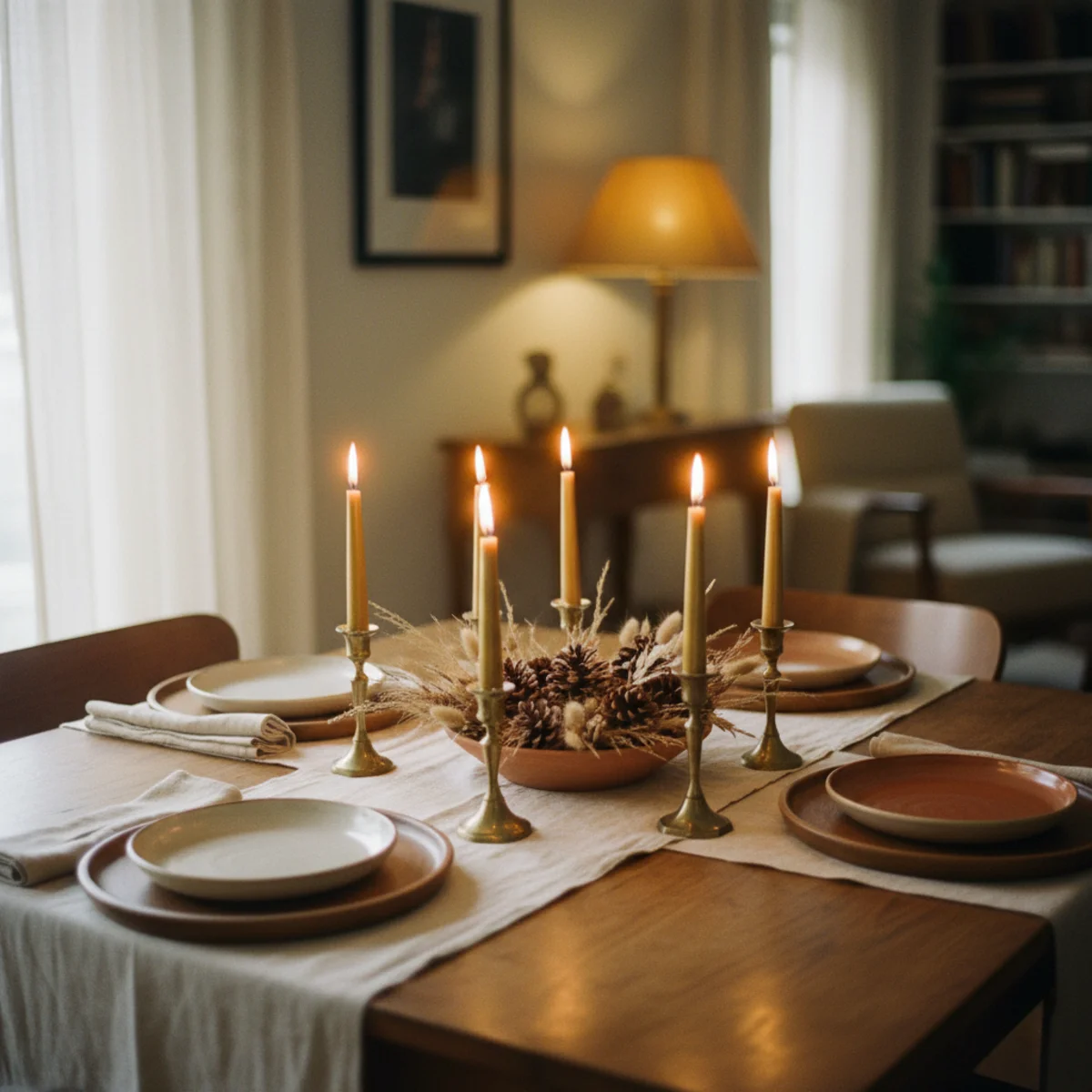
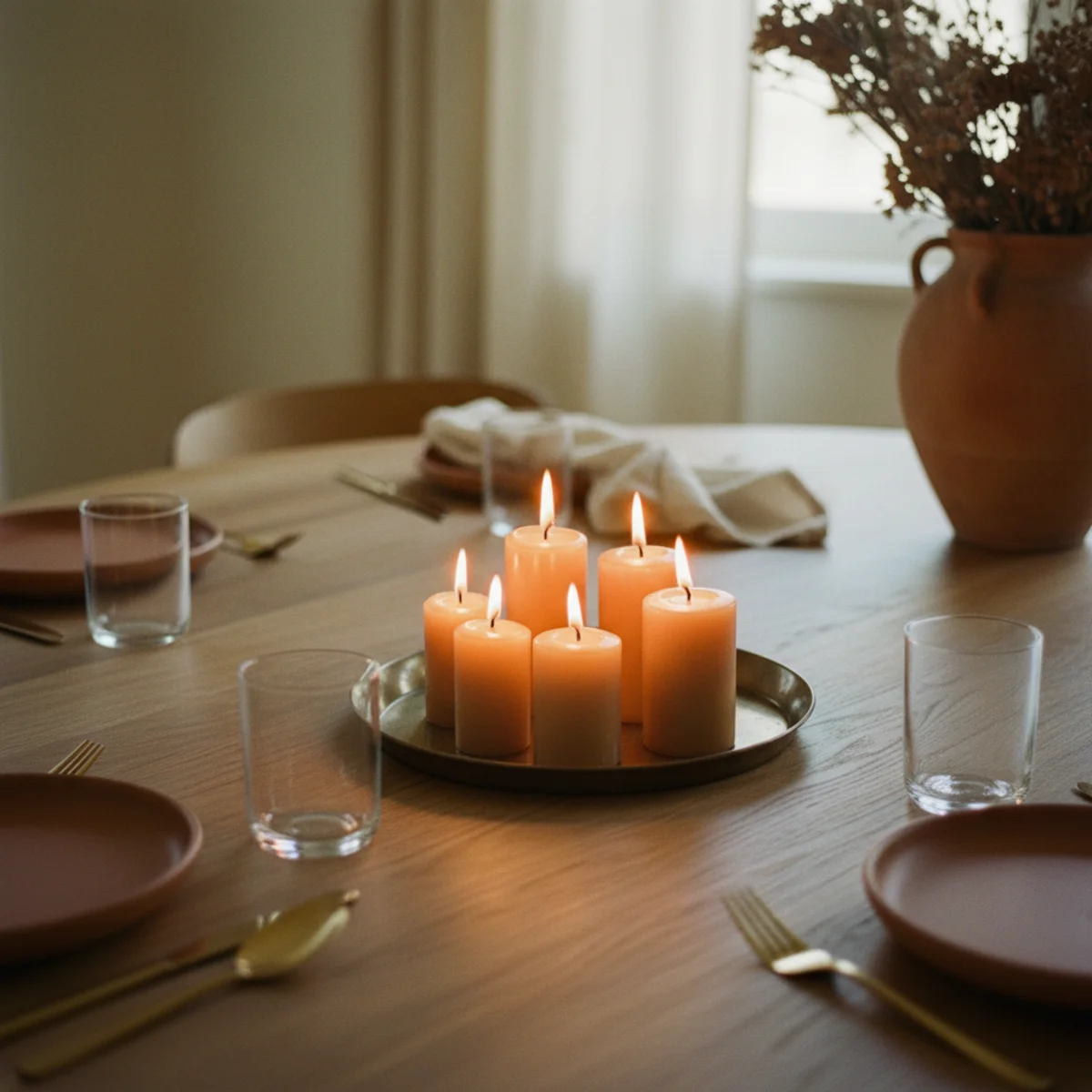
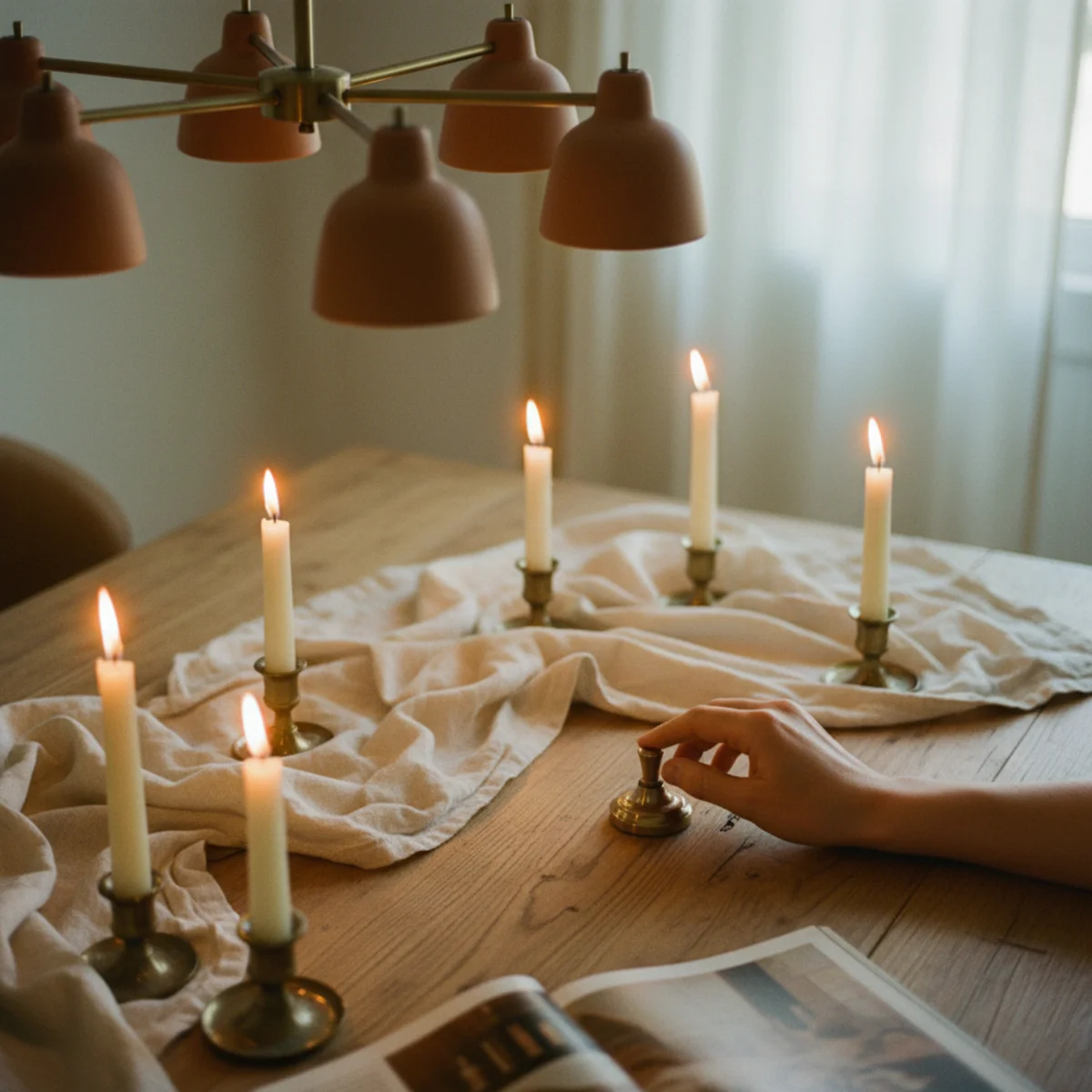
The most-important cozy dinner party timing rule: light all candles 20 to 30 minutes before the first guest is expected. Not when guests arrive, not when they're seated — before they walk in the door. The room should be fully candlelit and warm when the door opens. The first impression is atmospheric and immediate; guests walking into a candlelit room feel welcomed before a word is spoken.
Pre-arrival candle lighting protocol: TIMING — light all candles 20-30 minutes before first expected arrival. For 7:00pm dinner with guests arriving at 6:45pm, light candles at 6:15-6:20pm. CANDLES TO LIGHT — dining table taper candles (full taper line or pillar cluster), living room candles if guests will gather there pre-dinner, kitchen counter candles or tealights if kitchen is visible from entry. ROOM LIGHTING — simultaneously dim overhead lighting to 10-20% (or off) at the same time as lighting candles. The candle lighting and overhead dimming happen together. MUSIC — start the playlist (see item 10) at the same time as lighting candles. The room should be fully set atmospherically — lit candles, dimmed overhead, warm music — before guests arrive. ADDITIONAL WARM LIGHT — turn on any table lamps throughout the home to their warmest setting. The compound effect: guests walk into a warm-glowing, softly-lit, gently-musical space rather than bright overhead-lit kitchen-smell space. SAFETY REMINDER — never leave lit candles unattended during the pre-arrival period; someone should be home while candles burn. The host lighting candles 20 minutes pre-arrival is present in the home during that time.
AFFILIATE SLOTATMOSPHERELight all candles 20-30 minutes pre-arrival; dim overhead simultaneously; start playlist; turn on table lamps throughoutAdd affiliate URL when configuredWhy it works
Because the first-impression moment (door opening, first visual of the interior) establishes the entire dinner's emotional tone. A candlelit warm-glowing room communicates 'this has been prepared specifically for you' in a way that bright-lit rooms being actively prepared cannot. The preparation-that-preceded-you signals care; the in-progress preparation signals that you're interrupting. The 20-minute pre-lighting also lets candles reach full atmospheric glow (freshly-lit candles have smaller flame, less warmth than fully-established flames) before the first guests see them. The timing is everything; the candles themselves are secondary to when they're lit.
Pro tip — Set a phone alarm for 25 minutes before your expected first arrival to trigger the candle-lighting protocol — the alarm prevents the common last-minute-preparation spiral where hosts are still in the kitchen at arrival time. The alarm-triggered protocol ensures the atmospheric setup happens regardless of how intense the pre-party cooking gets.
Fully candlelit room 20 minutes before first arrival — atmospheric warmth waiting rather than being assembled. See also: candle-styling
02Build a Make-Ahead Menu
The single most-important cozy dinner party decision: build a menu where every dish can be fully prepared before guests arrive. No last-minute sautéing, no oven-timing stress, no checking internal temperatures while guests wait. The make-ahead commitment is what allows full host presence at the table — the defining difference between a warm dinner party and a well-catered event.
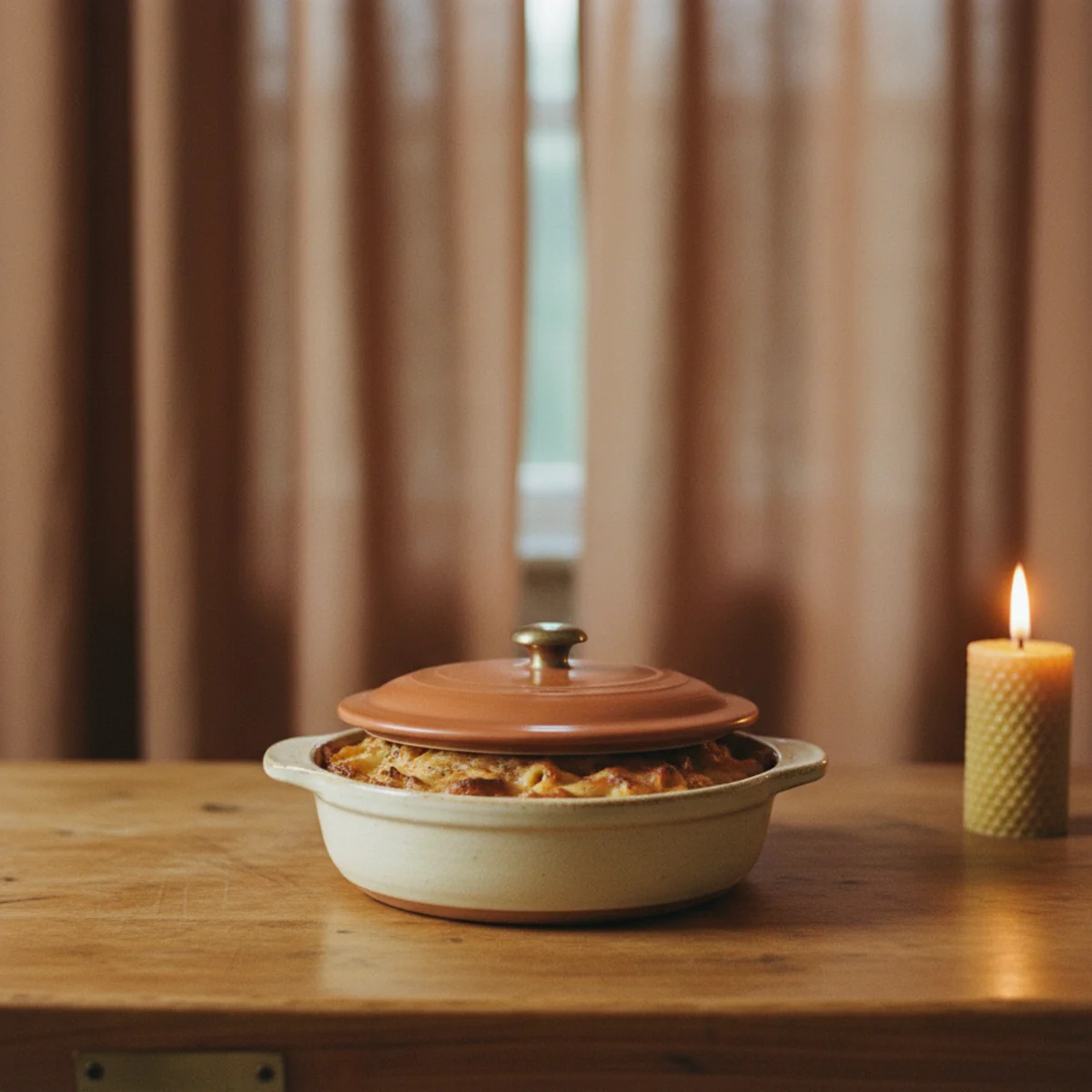
Make-ahead menu strategy: STRUCTURE — choose one cold starter (cheese board, crudités with dip, oysters if appropriate), one main that improves with time (braise, roast, slow-cooked stew, baked pasta, slow-roasted anything), one or two sides that hold warmth (roasted vegetables, grain salad, mashed anything), and one make-ahead dessert (tart, cake, ice cream, anything not requiring last-minute plating). SPECIFIC DISH EXAMPLES: STARTERS — cheese and charcuterie board (assembled entirely pre-arrival), roasted garlic with crusty bread, crudités with tahini or hummus. MAINS — braised short ribs (better reheated the next day, or made 2-3 days ahead and refrigerated), whole roast chicken (rests 30 minutes naturally, serving temperature is ideal), slow-cooked lamb shoulder (6-8 hours in oven, done before guests arrive), baked pasta (assembled and baked completely, holds in oven at 200°F for up to 1 hour). SIDES — roasted root vegetables (room temperature is fine for warm cozy aesthetic), farro or barley grain salad (better at room temp than hot), crusty bread (from bakery day-of). DESSERT — lemon tart (fully assembled and refrigerated pre-arrival), chocolate pot de crème (individual cups made 1-2 days ahead), store-bought ice cream with homemade warm sauce. RULE — if a dish requires active attention during the dinner hour, it's off the menu for this gathering.
AFFILIATE SLOTFOODBraise/roast/baked-pasta main + assembled cheese board starter + grain salad sides + pre-made tart or pot de crème dessertAdd affiliate URL when configuredWhy it works
Because hosting anxiety (the checking, the timing, the kitchen-managing) communicates to guests — they can sense the host's attention divided between table and kitchen, and adjust their behavior accordingly (conversation becomes more guarded, the evening feels more like a performance being attended than a dinner being shared). The host who is fully present at the table from the moment of the first drink until dessert creates genuinely different evening experience than the host who manages the kitchen throughout. The make-ahead commitment makes full presence possible; the full presence makes the dinner warm.
Pro tip — Write the full make-ahead timeline the day before the dinner — starting from dinner service time, work backward noting every preparation step and when it needs to happen. The written timeline prevents the improvised-morning chaos that turns make-ahead menus into last-minute scrambles. Most make-ahead dishes have 2 to 4 days of advance preparation possible; the written timeline reveals exactly how early each component can be started.
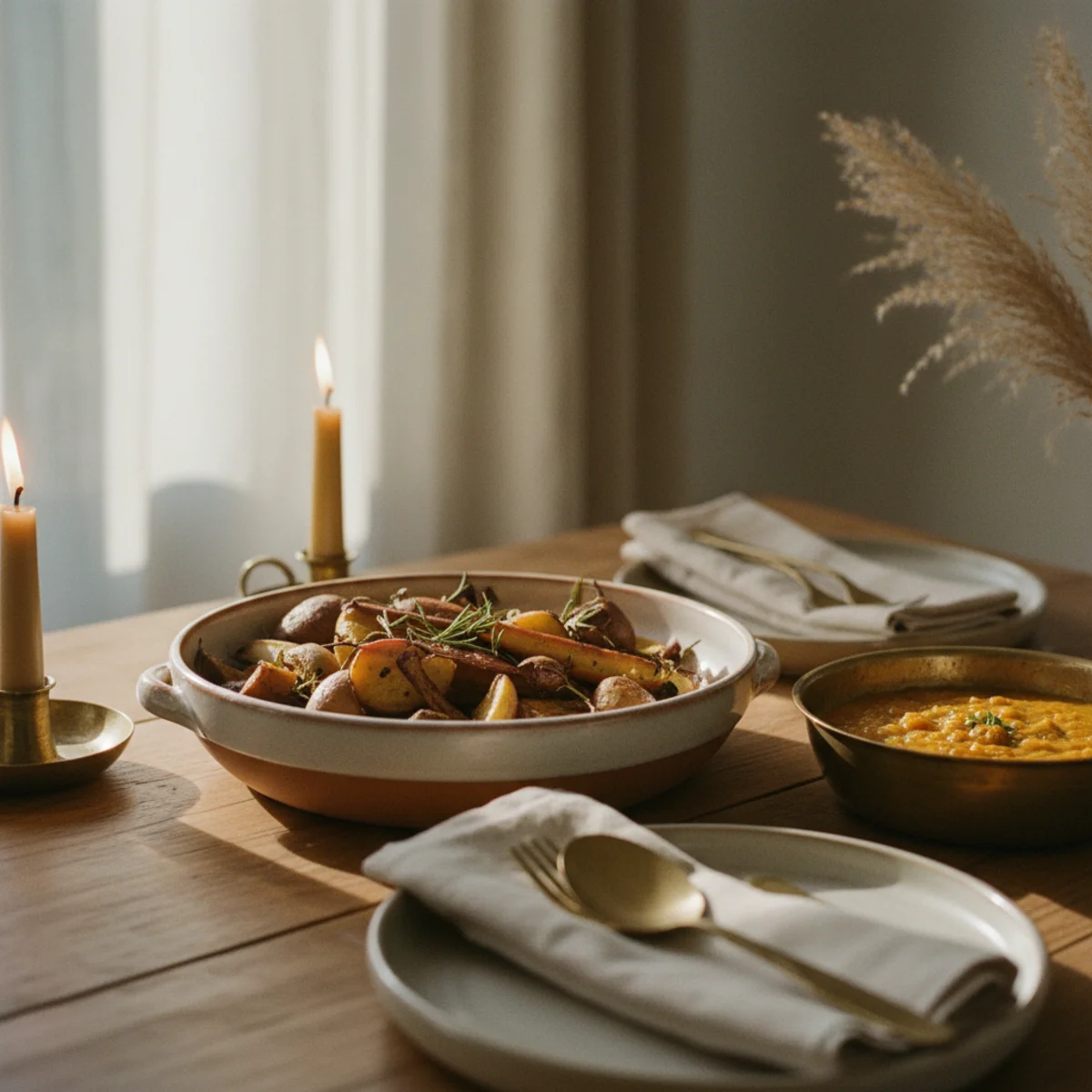
Braised short ribs, assembled cheese board, roasted sides, pre-made dessert — full make-ahead menu enabling host presence. See also: cozy-tablescape-ideas
03Set a Relaxed, Warm Table
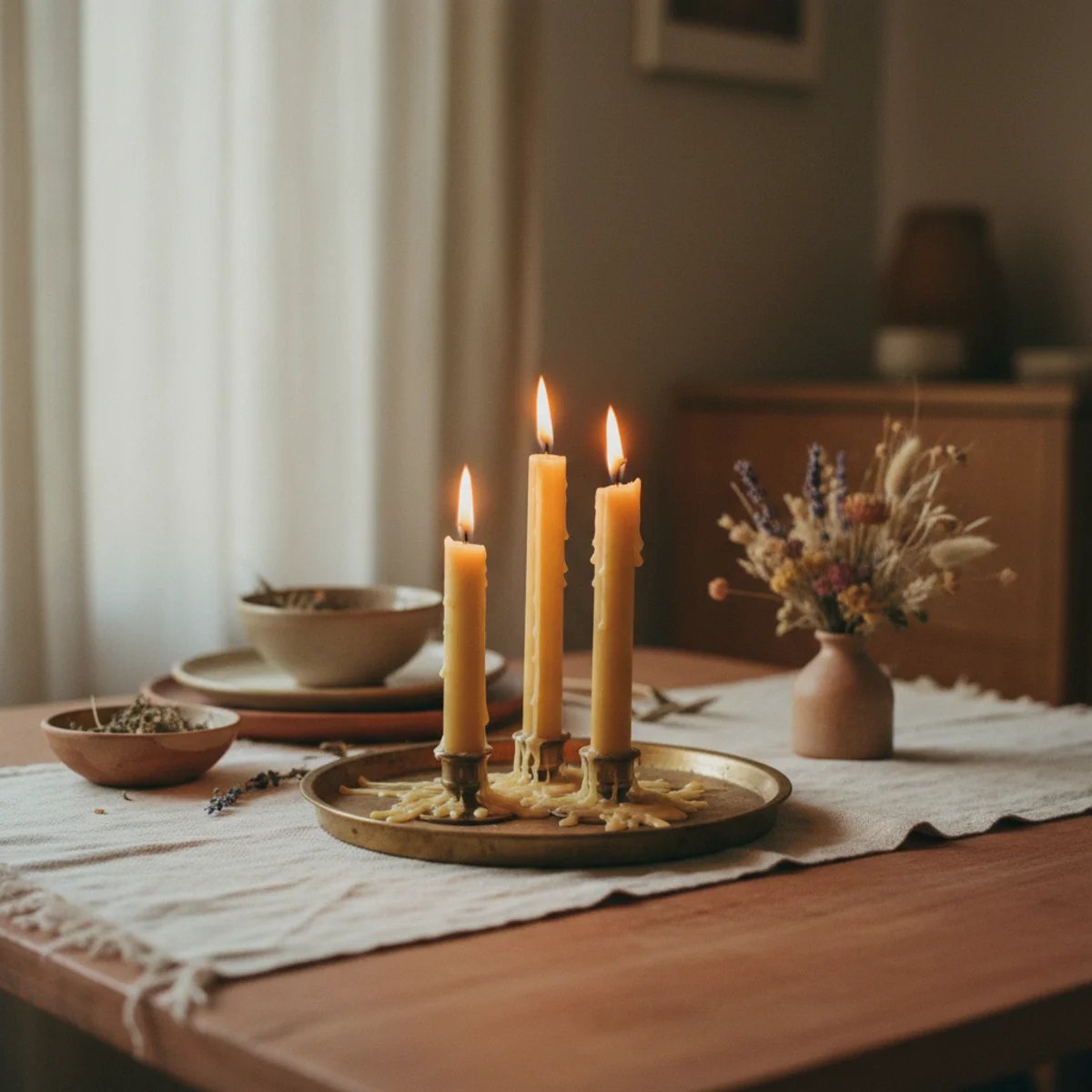
The dinner table should be styled for warm relaxation rather than formal precision — washed linen runner or tablecloth with slight wrinkles, mixed-but-related dishware rather than matched sets, cloth napkins loosely folded rather than precisely arranged, taper candles in mixed vintage brass holders, low foraged centerpiece. The warm relaxed table signals 'eat and enjoy' rather than 'don't touch the settings.'
Relaxed warm table setup: FOUNDATION — washed linen runner (oat, cream, or terracotta, $40-100) OR full tablecloth with slight wrinkles (not pressed perfectly flat). DISHWARE — cream or warm-toned stoneware dinner plates ($150-400 for 6-8 place settings from East Fork, Heath, or thrifted white ironstone) mixed with accent salad or bread plates from different sources. NAPKINS — washed linen cloth napkins ($30-80 for set of 6) folded loosely in half or in thirds rather than precisely folded with rings. CANDLES — taper line of 4-7 beeswax tapers in mixed vintage brass holders down the center (per cozy-tablescape-ideas taper-line rule). CENTERPIECE — low foraged element (fresh-cut flowers from yard, dried botanicals, seasonal produce in low bowl) below 14-inch height for conversation preservation. GLASSWARE — mixed but coordinated (vintage pressed glass for water, wine glasses that go together without being matched set). PLACE SETTINGS — keep generous space between settings (18-20 inches per person versus the typical 16 inches) so guests don't feel crowded. EXTRAS — small bread plates even if no formal bread course, a small carafe of water on the table, butter at room temperature with small knife beside bread if serving bread. The table should look inviting rather than intimidating.
AFFILIATE SLOTTABLEWashed linen runner + mixed stoneware + loosely-folded cloth napkins + taper candle line + low foraged centerpiece + mixed glasswareAdd affiliate URL when configuredWhy it works
Because formal precise settings (perfectly aligned silverware, pressed napkins with rings, matching everything, decorative-only centerpiece taller than conversation height) communicate performance anxiety to guests — they respond by being careful, sitting up straighter, using 'good behavior.' The relaxed warm table communicates permission to be comfortable — guests respond by relaxing, leaning in, speaking more freely. The table's aesthetic signals the evening's emotional tone before anyone speaks.
Pro tip — Set the table completely (including water glasses filled, wine glasses at each place, candles lit) before the first guest arrives — arriving guests who see a completely-set warm table feel more welcomed than guests who watch the table being finished while they stand in the kitchen. The complete table is another form of 'this was prepared for you.'
Washed linen, mixed stoneware, loose napkins, taper candles — the warm table that communicates permission to relax. See also: cozy-tablescape-ideas
04Dim the Overhead Lights
Overhead lights should be at 10 to 20% maximum during a cozy dinner party — candlelight and warm table lamps provide primary lighting. The dim-overhead-bright-candles contrast creates the atmospheric intimacy that distinguishes memorable dinners from standard dinner parties. If you have no dimmer switch, use the overhead light only briefly for food service, then turn off completely for dining.
Dinner party lighting protocol: OVERHEAD DINING CHANDELIER OR PENDANT — dimmed to 10-20% during the entire dinner period, or turned off if candles and table lamps are sufficient. OVERHEAD KITCHEN LIGHTING — dimmed to 20-30% if kitchen is visible from dining space (or turned off if layout allows). ADJACENT ROOM LAMPS — living room table lamps at 50-70% warmth for guests in pre-dinner gathering space. TABLE CANDLES — fully lit and providing primary dining-table illumination. ADDITIONAL WARM SOURCES — console lamp, sconce, or side table lamp in dining room at 50-70% for ambient supplement. DIMMER SWITCHES — Lutron Caséta wireless dimmers at $25-50 per switch provide precise control. SMART BULB ALTERNATIVE — Philips Hue or LIFX smart bulbs allow app-controlled dimming without electrical work at $15-30 per bulb. EFFECT — the candlelit dining table becomes an intimate bright pool against the dimmer surrounding room. The effect is significantly more dramatic than either overhead-only lighting or candle-only lighting; the contrast requires both. PRACTICAL NOTE — ensure enough ambient light for safe navigation (especially during food service when guests or hosts are carrying plates). The 10-20% overhead isn't total darkness; it's sufficient background for safe movement while letting candles dominate visually.
AFFILIATE SLOTLIGHTINGOverhead at 10-20%, adjacent lamps at 50-70%, table candles at full; dimmer switches or smart bulbs for controlAdd affiliate URL when configuredWhy it works
Because the atmospheric intimacy of candlelit dining depends on contrast — candles in a bright overhead-lit room read as decorative addition, where candles in a dim-overhead room read as primary atmospheric source. The brain reads 'we are gathered around the warm light, the background world is dim' — which triggers the deeply social gathering-around-fire response that humans associate with safety and intimacy. The same table with the same food in the same room reads dramatically differently at 20% overhead versus 100% overhead. The lighting is the most-transformative dinner party element with the lowest effort requirement: just reach for the dimmer switch.
Pro tip — Test your dimmer setting before guests arrive — the 10-20% brightness that looks right when you're working in the kitchen alone may look too dim or too bright when 6 to 8 people are seated at the table. Do a full dress-rehearsal with the lighting exactly as planned a few hours before guests arrive, photograph from the primary viewing angle, and adjust accordingly.
Overhead at 15%, candles at full — the contrast that makes candlelit dining genuinely atmospheric. See also: best-lamps-warm-light
05Serve Family-Style
Serving food family-style (large platters and bowls on the table that guests serve themselves) produces more warmth than individually-plated portions. Family-style serves multiple functions simultaneously: removes the host's last-minute plating burden, creates visual abundance on the table, encourages guests to reach across and interact, and signals 'comfortable shared meal' rather than 'restaurant service.'
Family-style serving specifications: SERVING VESSELS — large ceramic platters or bowls for the main and sides. Ideally from your own collection (vintage oval platters, ceramic serving bowls, wooden boards for bread and carved meats) rather than matching serving sets. MAIN DISH — whole roasted chicken on platter with pan juices, braised short ribs in serving bowl with herbs, slow-roasted lamb shoulder on board, baked pasta in the baking dish placed directly on table. SIDES — roasted vegetables in ceramic bowl, grain salad in large bowl, mashed anything in ceramic bowl with serving spoon. BREAD — rustic loaf on a wooden board with butter in small ceramic dish. TABLE PLACEMENT — distribute serving vessels across the table so guests don't have to pass every dish from one end; ideally two or three vessels within reach of every guest. SERVING TOOLS — large spoons, wide spatulas, serving forks for meat; all in wood or warm metal rather than stainless steel. HOST ROLE DURING SERVICE — the host sits at the table and passes vessels to begin service, rather than standing and plating in the kitchen. The family-style approach lets the host be seated during the entire dinner.
AFFILIATE SLOTSERVICELarge ceramic platters and bowls for all courses distributed across table; host seated throughout service; wood serving toolsAdd affiliate URL when configuredWhy it works
Because the physical act of passing serving dishes, reaching across, offering seconds, and sharing from the same vessel creates interaction and permission that individually-plated portions cannot. Individual plating keeps the dinner's physical interaction at a minimum (each person's food arrives separately, there's nothing to share); family-style creates continuous physical-social interaction as dishes circulate. Family-style also signals abundance and generosity — the large platter on the table communicates 'there is plenty, take what you want, have more' where individual portions communicate 'this is your share.' The abundance signal is one of the most-welcoming things a host can communicate.
Pro tip — Arrange the serving vessels on the table before calling guests to dinner rather than carrying them in sequentially — guests arriving at a fully-laid table with all serving dishes present feel more welcomed than guests waiting while courses arrive one by one. The complete table also lets you return to your seat immediately after calling guests in.
Large ceramic platter, serving bowls, wooden board — family-style abundance communicating generous welcome. See also: dining-nook-ideas
06Greet With a Drink and a Bite
When the first guest arrives, something to drink and something small to eat should be immediately ready — already poured or already on a visible surface requiring no preparation. The immediate drink-and-bite signals that this arrival was expected and prepared for; the 5-minute wait while the host pours a drink and finds the snacks signals improvisation. Cost: minimal; impact: significant first impression.
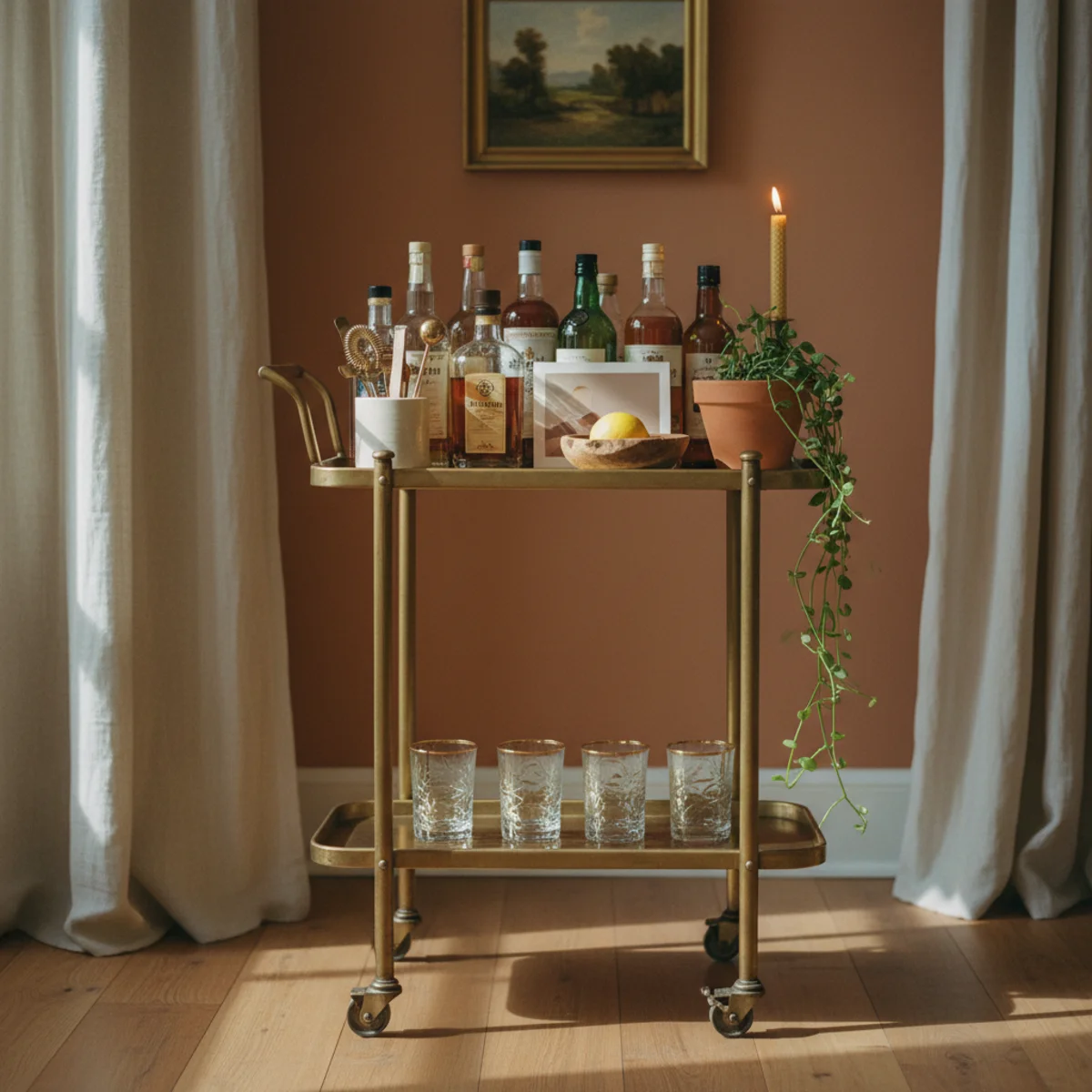
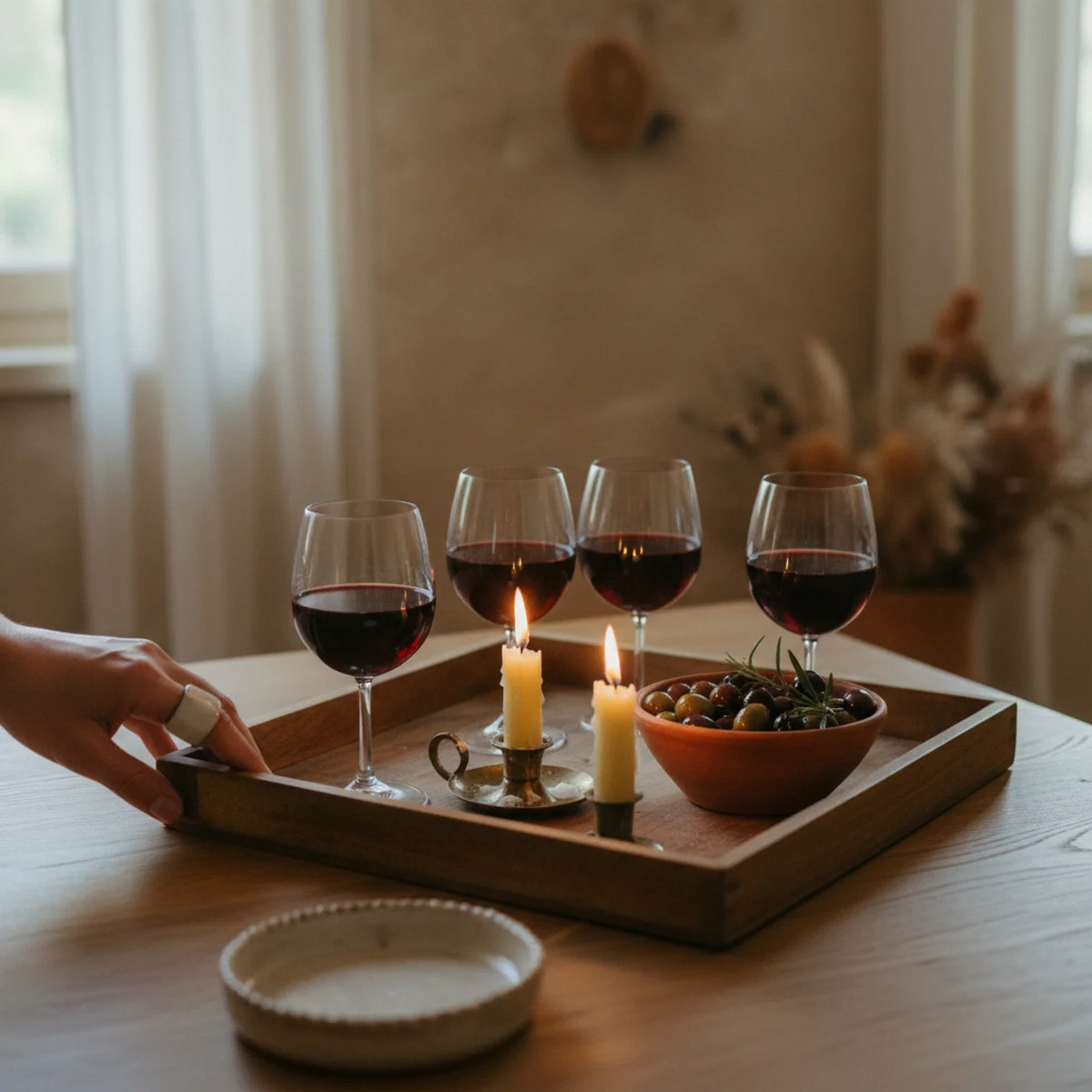
Pre-arrival drink-and-bite setup: DRINKS — one drink option poured in advance and on the table or counter where guests gather (first glass of white wine already poured, cocktail mixed in a small pitcher with glasses beside, sparkling water in a carafe with glasses, or whiskey out with glasses nearby for self-service). WINE POURED IN ADVANCE — pour the first round of white wine 5-10 minutes before expected arrivals so guests can pick up a glass immediately rather than waiting. COCKTAIL PRE-BATCH — mix cocktails in advance in a small glass pitcher (negroni, aperol spritz, old fashioned with pre-dilution) so guests pour their own glass as they arrive. BITE OPTIONS — small cheese board or charcuterie board completely assembled and on the table where guests gather (per item 8 for full assembly instructions), OR simple olives in a bowl, OR small bowl of nuts, OR small plate of good crackers with soft cheese. ALL ASSEMBLED BEFORE FIRST ARRIVAL — nothing on the bite-and-drink setup should require assembly after guests arrive. POSITION — where guests naturally gravitate when they first enter (kitchen island if kitchen is the gathering space, console table near door, coffee table in living room).
AFFILIATE SLOTWELCOMEFirst drink poured or self-serve pitcher ready before arrival; assembled cheese board or simple snack on gathering surfaceAdd affiliate URL when configuredWhy it works
Because the first 2 to 3 minutes after arrival are the highest-anxiety moments for any dinner guest — they don't know exactly how the evening will unfold, where to stand, what to do with themselves. The immediate glass in hand and food on the table resolves this anxiety instantly by giving the guest both something to do (hold the glass, eat the snack) and a clear signal that they were expected. The 5-minute wait while the host rummages for wine opener and finds the cheese extends the arrival anxiety unnecessarily. The prepared immediate welcome is a hosting discipline that costs almost nothing in effort and returns significant warmth.
Pro tip — Open wine 30 to 60 minutes before guests arrive to let red wines breathe and to have the first pour of white already chilled. The pre-opened bottles also mean first glasses are poured without the fumbling of opening under social scrutiny. Keep a second bottle of white in the refrigerator as backup; a third on the counter as visual abundance signal.
First glasses poured, cheese board assembled, olives ready — immediate welcome requiring no preparation. See also: cheese-board-ideas
07Keep the Menu Simple
The cozy dinner party menu discipline: simpler than you think you need to impress, but better quality than you'd serve casually. Three to four courses maximum (starter, main, side, dessert), each dish chosen for warm slow-cooked comfort rather than technical complexity. Quality of ingredients matters more than complexity of preparation.
Simple menu principles: COURSE COUNT — three courses maximum for intimate dinners (4-6 people), four courses maximum for larger gatherings (8-12 people). No amuse-bouche, no palate cleansers, no multi-component plated desserts. QUALITY-OVER-COMPLEXITY APPROACH — one exceptional cheese rather than a complicated cheese sauce, whole roasted chicken or braised lamb rather than chicken marsala or complex sauces, simple seasonal vegetable sides rather than composed vegetable dishes. SEASONAL ALIGNMENT — menus built around peak-season produce are inherently simpler and better: September dinner (tomato salad as starter, roasted chicken with late-season vegetables), November dinner (butternut squash soup, braised short ribs, apple tart), February dinner (cheese board, pasta with slow-cooked ragu, chocolate pot de crème). SOURCING INVESTMENT — spend the menu budget on one exceptional ingredient rather than many average ones: the best cheese board you can assemble, heritage chicken from a good butcher, exceptional olive oil for dipping, excellent wine. WHAT TO SKIP — elaborate sauces requiring last-minute attention, dishes with multiple timing-sensitive components, anything the host hasn't made successfully before (dinner parties are not the time for new recipes). SHOPPING COMPLETED THE DAY BEFORE — all ingredients purchased by Friday for Saturday dinner, preventing the last-minute grocery stress that starts dinner party anxiety cycles.
AFFILIATE SLOTFOOD3-4 courses max; quality over complexity; seasonal alignment; all ingredients purchased day before; no new-to-host recipesAdd affiliate URL when configuredWhy it works
Because menu complexity directly correlates with host anxiety — every additional dish, every last-minute sauce, every timing-sensitive component adds to the host's cognitive load during the dinner hour. Host anxiety is visible to guests; visible anxiety makes guests feel they're creating burden simply by being present. Simple menus remove the anxiety source and allow the host to be fully present as a person rather than as a manager. Guests remember 'I felt completely at ease and we talked for 4 hours' rather than 'the food was technically impressive.'
Pro tip — Cook the intended menu in advance once before serving it to guests — the practice run reveals timing issues, portion sizes, any recipe adjustments needed, and removes the anxiety of making the dish for the first time in front of an audience. The practice run is especially important for braised and slow-cooked mains where timing and texture should be confirmed before the dinner.
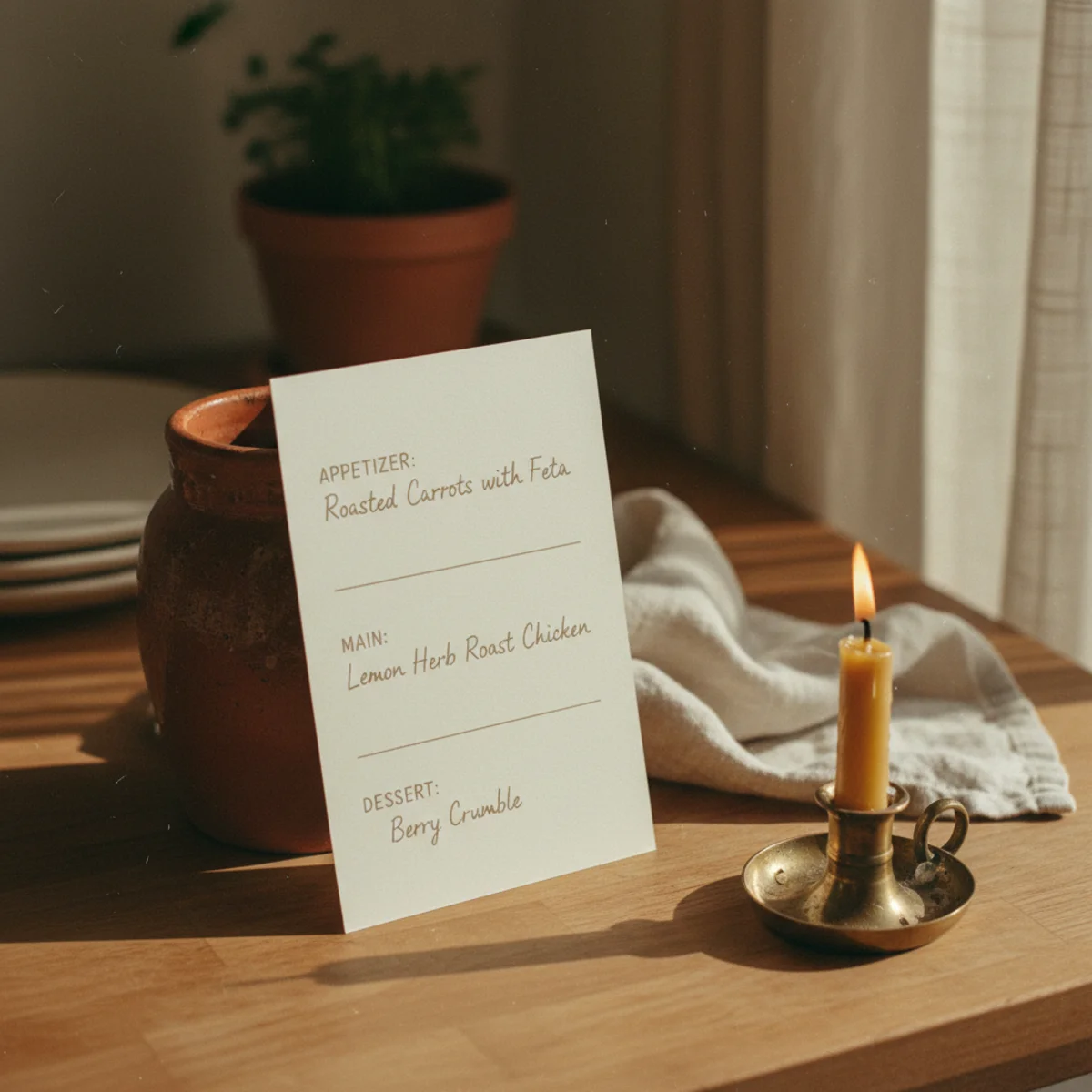
Cheese board, whole roasted chicken, seasonal vegetables, lemon tart — simple quality producing warmth. See also: cozy-tablescape-ideas
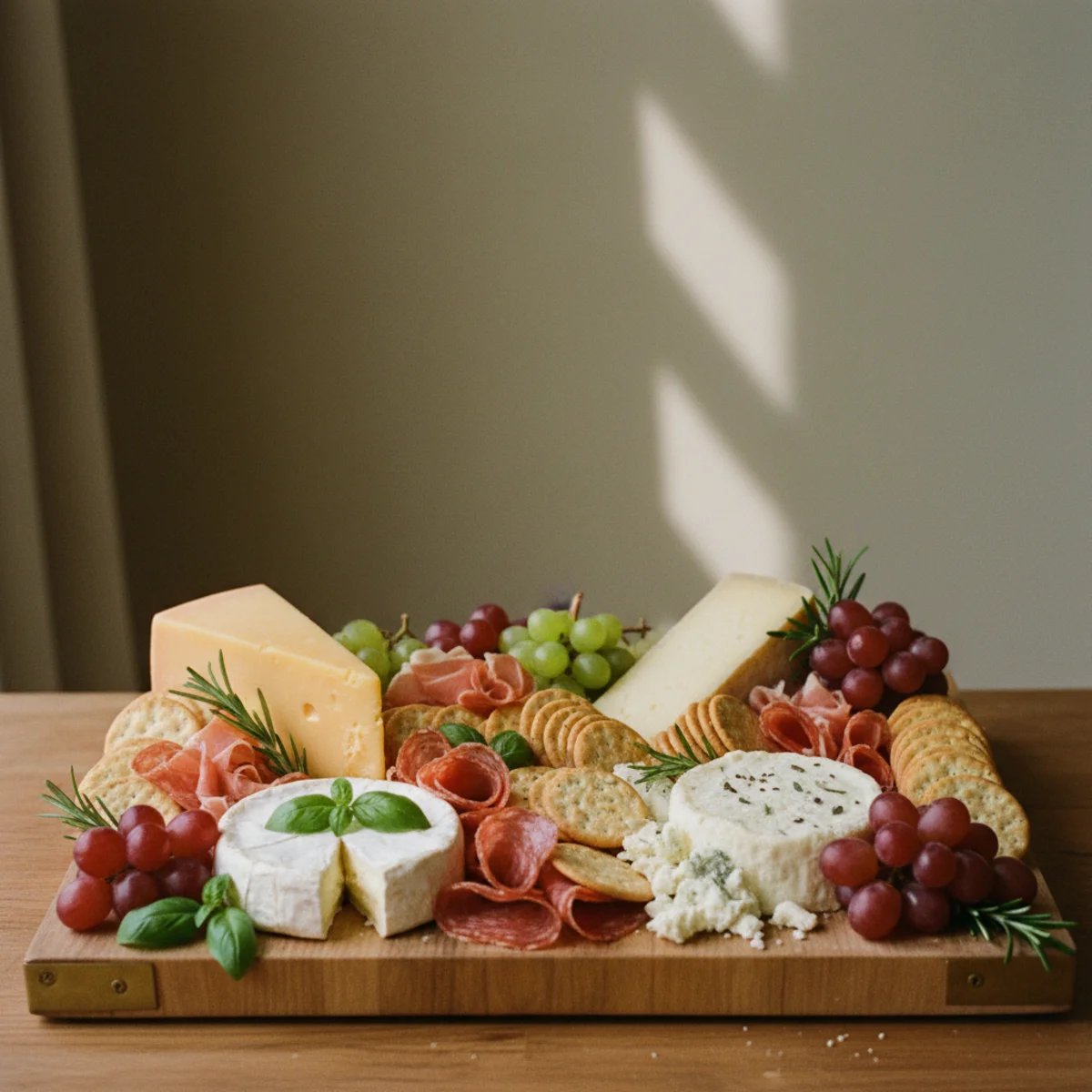
08Add a Cheese or Grazing Board
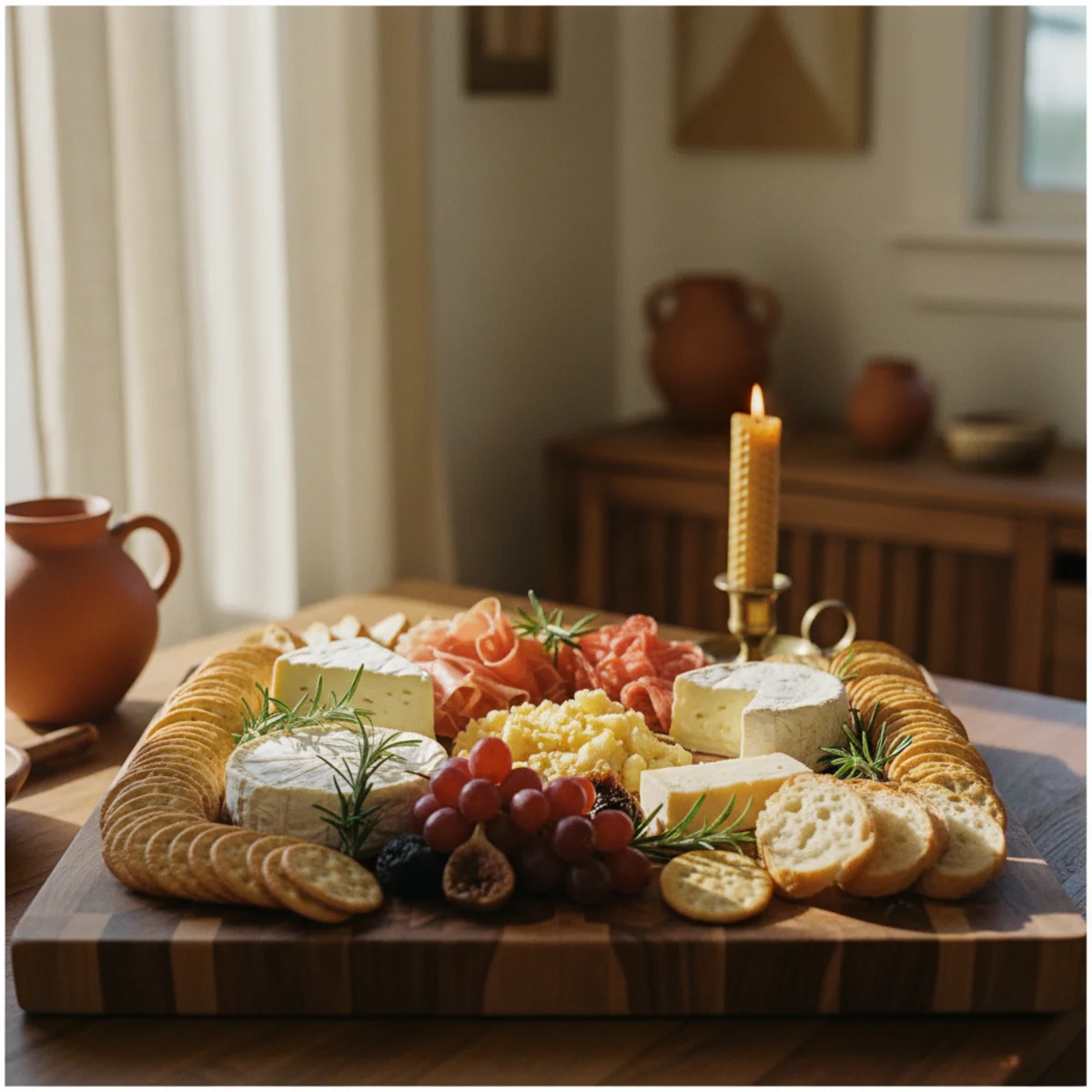
A cheese and charcuterie board (or broader grazing board) serves multiple functions: immediate welcome bite when guests arrive, conversation facilitator during the pre-dinner gathering window, and visual abundance signal that sets the generous tone for the entire evening. Cost: $40 to $100 for a quality cheese board for 6 to 8 guests; assembly time: 20 to 30 minutes.
Cheese board assembly: CHEESES (3-5 types) — one hard aged cheese (aged cheddar, manchego, aged gouda at $6-12 per 8 oz), one soft creamy cheese (brie, camembert, chèvre at $6-10 per piece), one semi-soft or blue cheese for interest (gruyère, aged gouda, mild blue at $8-14 per 8 oz). CHARCUTERIE (2-3 types) — prosciutto or coppa ($8-12 per 4 oz), soppressata or salami ($6-10 per piece), optional pâté or terrine. ACCOMPANIMENTS — honeycomb ($8-15 per piece), fig jam ($6-10 per jar), whole-grain mustard ($4-8), small bowl of olives ($4-8), nuts (marcona almonds, walnuts, $5-10). CRACKERS AND BREAD — 2 types of cracker in different textures (one plain, one seeded or herbed at $4-8 each), sourdough or baguette slices. FRESH AND DRIED FRUIT — fresh grapes, sliced apple or pear, dried apricots or figs ($5-10 total). BOARD — large wooden board, slate slab, or oversized round board ($20-80 or use what you have). ASSEMBLY PRINCIPLE — start with the three to five cheese pieces placed first (anchors), then fill around them with charcuterie, then fill gaps with crackers, then scatter fruits, nuts, and small accompaniment bowls throughout. VISUAL GOAL — abundant but not overflow, every guest can reach something interesting without crossing other guests.
AFFILIATE SLOTFOOD3-5 cheese types + 2-3 charcuterie + honeycomb + jam + crackers + fruit assembled on large board 45-60 min before arrivalAdd affiliate URL when configuredWhy it works
Because the pre-dinner gathering window (the 30 to 60 minutes between first arrival and sitting down to dinner) is the hardest hosting period to manage — guests are arriving at different times, not everyone knows each other, the conversation hasn't settled. The grazing board solves this entirely: it gives everyone something to do, removes the awkward empty-hand problem, creates conversation around specific foods (the blue cheese, the honeycomb, the interesting charcuterie), and establishes the generous abundant tone that the rest of the evening builds from. The single assembled board does more social facilitation than any other pre-dinner element.
Pro tip — Remove cheeses from the refrigerator 45 to 60 minutes before guests arrive — room-temperature cheese has dramatically better flavor and texture than cold cheese. The flavor difference is significant; many guests comment on cheese quality without realizing they're experiencing temperature impact rather than cheese variety.
Three cheeses, charcuterie, honeycomb, fig jam, fruit, crackers — abundant grazing board facilitating pre-dinner gathering. See also: cheese-board-ideas
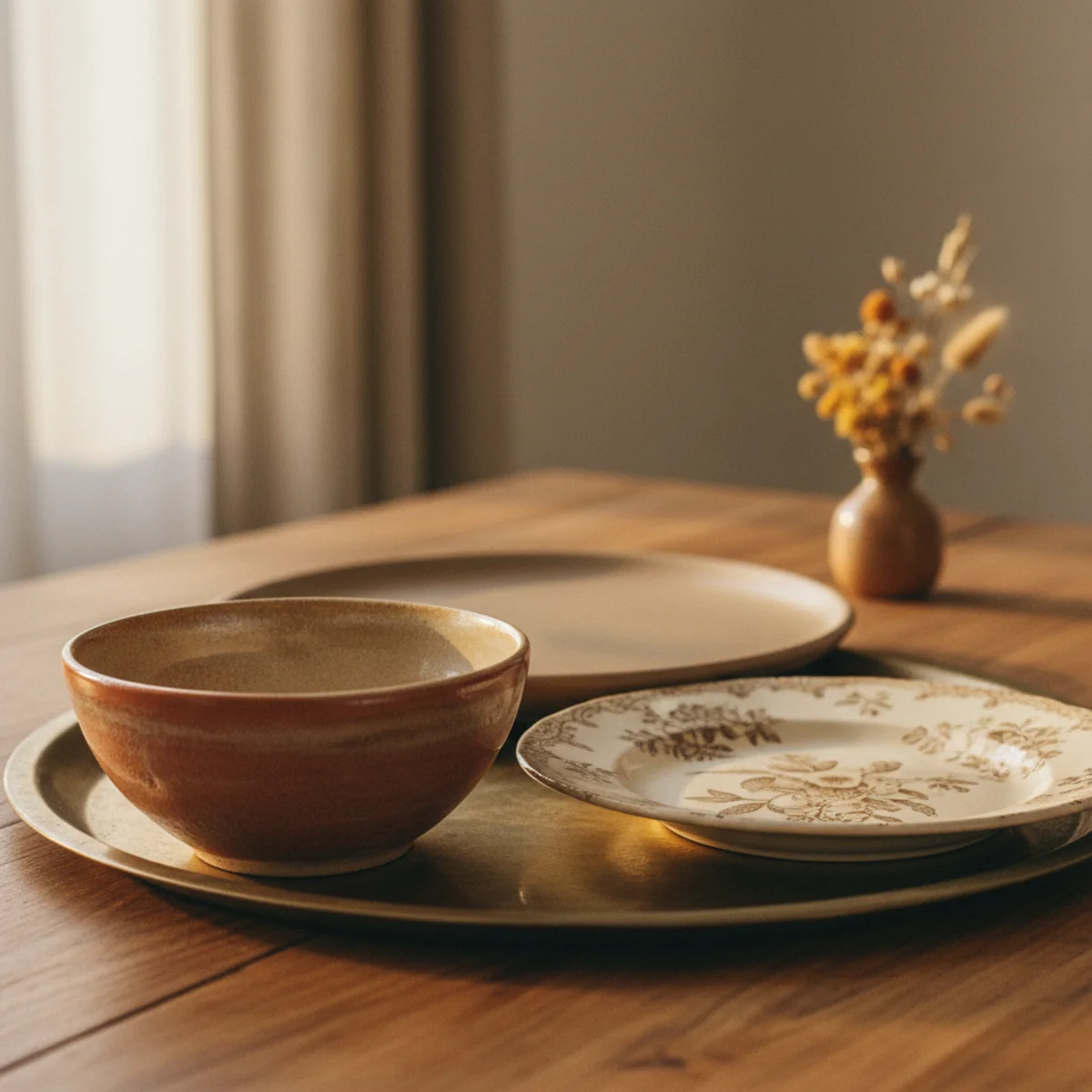
09Use Warm, Lived-In Tableware
The table's dishes, glasses, and serving pieces should feel warm and lived-in rather than formal and precious. Cream stoneware, vintage pressed glass, mixed silver flatware, aged brass candlesticks — pieces that guests can handle freely without worrying about damage. The contrast with formal china (which guests treat carefully) is the difference between a comfortable shared meal and an anxiety-adjacent formal occasion.
Warm lived-in tableware specifications: DINNER PLATES — cream or warm-toned stoneware (not fine china), slight texture on surface, no perfectly-matched sets required. East Fork, Heath Ceramics, Farmhouse Pottery, or thrifted white ironstone at $150-400 for 8-place settings. GLASSES — vintage pressed glass for water ($2-15 per piece thrifted), mismatched wine glasses that go together but aren't matched ($4-20 per glass, mixed vintage), or simple Bordeaux-style glasses from World Market at $8-15 for 4-pack. FLATWARE — vintage silver-plate from estate sales at $30-100 for full setting (weighted and warm in hand), OR modern matte-finish stainless from CB2 or similar at $80-200 for 8 settings. SERVING PIECES — wooden boards ($20-80), ceramic platters and bowls ($20-150 each from artisan makers or thrifted vintage), vintage brass trays for serving. NAPKINS — washed linen napkins with visible slub texture (not perfectly pressed), $30-80 for set of 6. THE PRINCIPLE — every piece of tableware should look like it's been used and loved before, not like it's been stored for special occasions. The 'first-use' quality of formal china subtly communicates preciousness; 'well-used' quality communicates comfortable abundance. Guests respond accordingly.
AFFILIATE SLOTTABLECream stoneware + vintage pressed glass + mixed silver flatware + ceramic serving pieces + washed linen napkins; all warm and lived-inAdd affiliate URL when configuredWhy it works
Because the materials the guests touch, drink from, and eat off communicate the evening's emotional register physically. Fine china with metallic trim communicates 'handle carefully, this is formal'; warm stoneware communicates 'you're welcome to enjoy this freely.' The physical message compounds across every touch throughout the meal — silverware in hand, glass to lip, plate being passed. The cumulative tactile message of warm-lived-in tableware communicates comfort where formal-precious tableware communicates performance.
Pro tip — Build the casual dinner party tableware collection slowly through estate sales and thrift stores rather than purchasing matched sets — the mixed-but-related pieces that accumulate from multiple estate sale visits read more warm and collected than any matched set, and cost 70 to 80% less. Budget $5-15 per piece across 6 to 10 estate sale visits over 12 to 18 months.
Cream stoneware, vintage pressed glass, mixed silver, washed linen — tableware that says 'use freely, this is for you.' See also: thrifted-decor-ideas
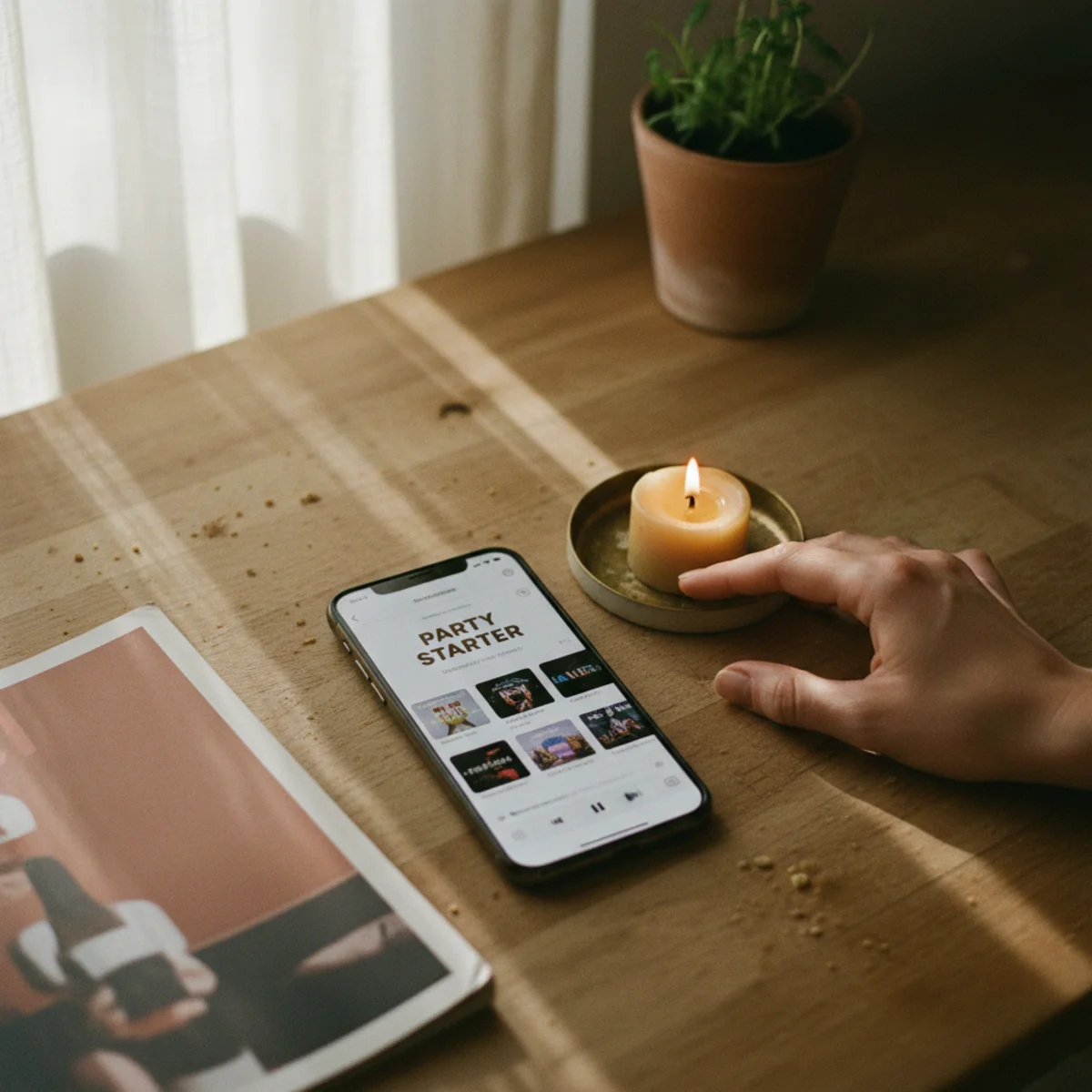
10Make a Playlist in Advance
A dinner party playlist made in advance and started before guests arrive removes one of the most-awkward hosting moments — the silence-or-searching-for-music scramble when guests arrive. The playlist should be long enough to run without repeating (3 to 5 hours), warm and familiar without demanding attention, and started 20 minutes before the first guest arrives alongside the candle lighting.
Dinner party playlist principles: LENGTH — 3 to 5 hours for an evening that starts at 6:30pm and ends around 11pm. The playlist runs start-to-finish without intervention. TEMPO AND ENERGY — medium-slow tempo for the pre-dinner gathering and dinner periods (60-90 BPM), slightly livelier for post-dinner lingering period (90-110 BPM). The energy arc should follow the evening's natural arc. GENRE — jazz (Bill Evans, Miles Davis, Chet Baker), bossa nova (João Gilberto, Astrud Gilberto, Stan Getz), folk-pop (Joni Mitchell, Nick Drake, Simon & Garfunkel), ambient indie (Bon Iver, Fleet Foxes, Sufjan Stevens), or a mix of all four. VOLUME — audible but not conversation-demanding. Guests should be able to speak at normal conversational volume without competing with the music. Roughly 20-30% of maximum speaker volume for most home systems. DO NOT — use shuffle mode (risks breaking the arc with wrong-tempo songs), use streaming radio with ads (ads destroy atmosphere), ask guests for music requests during the dinner (interrupts the evening). MAKE IN ADVANCE — finalize the playlist 1 to 2 days before the dinner, not the afternoon of. The advance finalization removes the last-minute music panic. Spotify, Apple Music, or YouTube Music saved playlist is fine; a backup playlist should also exist in case of streaming issues.
AFFILIATE SLOTATMOSPHERE3-5 hour playlist of jazz, bossa nova, folk-pop, ambient indie; started 20 min pre-arrival; audible but not conversation-demandingAdd affiliate URL when configuredWhy it works
Because music silence (or worse, visible music-searching by the host) creates awkward social vacuum, and wrong-tempo music (too fast, too demanding of attention, genre-wrong for the group) creates low-grade ambient stress. The right pre-made playlist creates acoustic warmth that fills the room without demanding attention — guests register the music as part of the atmospheric whole rather than as a separate element competing for attention. The playlist is the acoustic equivalent of candlelight: present, warm, noticed but not demanding, supporting everything else happening in the room.
Pro tip — Make and save dinner party playlists in advance on a dedicated 'dinner party' playlist folder — after building 2 to 3 quality playlists across multiple gatherings, you'll have a reliable ready-to-go rotation that eliminates all pre-party music preparation time. The same 3 to 4-hour playlist can be reused across different guest groups.
Candlelit dining room with soft jazz playlist running — acoustic warmth supporting the visual atmospheric whole. See also: hygge-living-room
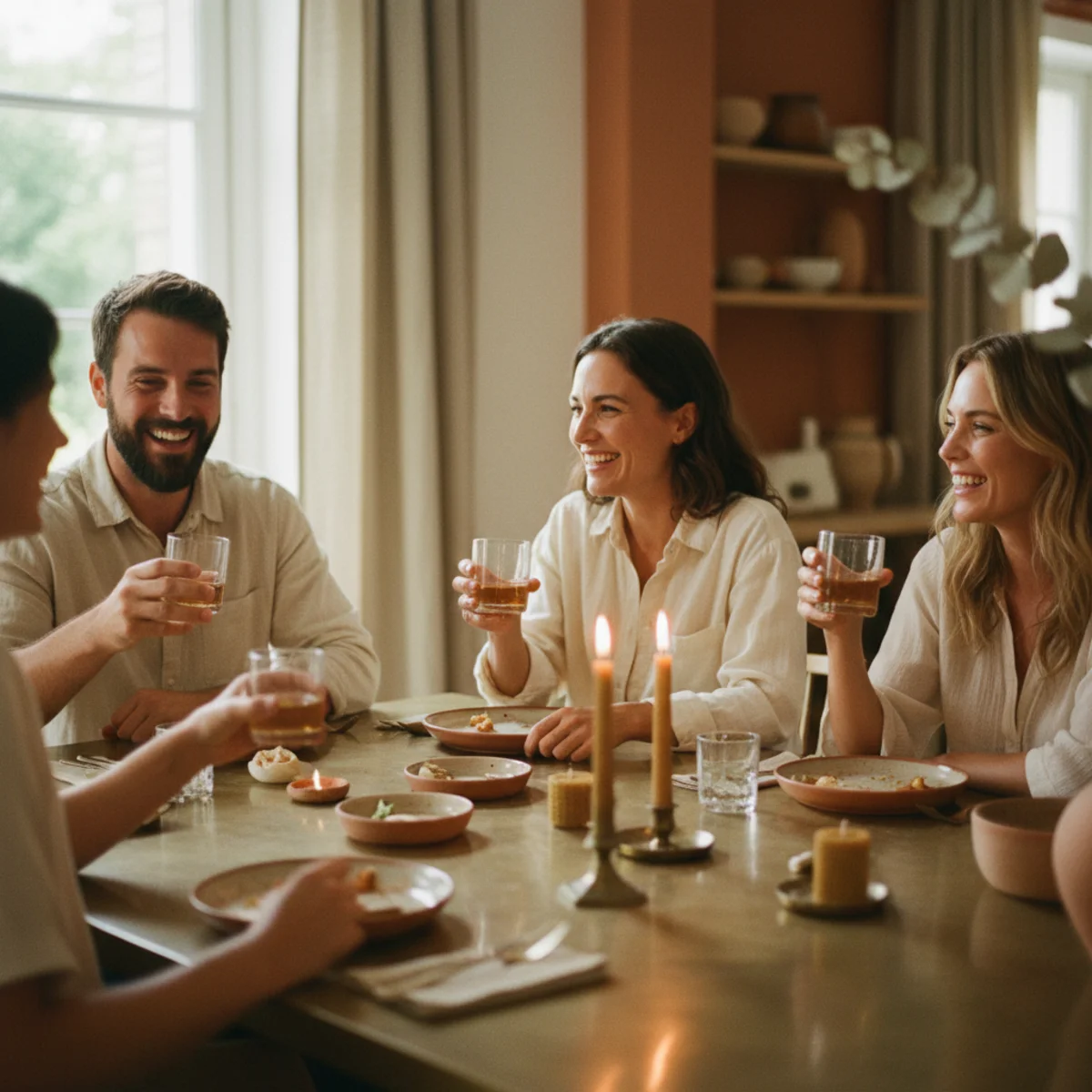
11Sit Down With Your Guests
The single most-important cozy dinner party behavior rule: sit down with your guests and stay seated. Not orbiting the kitchen between courses, not getting up for 10 minutes to plate, not excusing yourself repeatedly throughout the meal. The host who is fully present at the table creates fundamentally different evening experience than the host who manages food service throughout. The make-ahead menu (item 2) makes this possible.
Sit-down discipline: WHAT IT MEANS — the host is seated at the table from the time of the first course through the end of the meal. Getting up to serve family-style dishes to the table (30-second stand) is fine; leaving for 5-10 minute kitchen intervals is not. WHAT MAKES IT POSSIBLE — make-ahead menu (everything prepared before guests arrive), family-style service (no individual plating), all serving dishes on the table before calling guests to dinner, water carafe on the table for self-service, wine bottles accessible at the table for self-service. WHAT TO DELEGATE — ask one comfortable guest to take the first empty dishes to the kitchen; ask another to refill wine while you're engaged in conversation. The small delegations feel inclusive rather than servile when framed as participation. THE DIFFERENCE IT MAKES — guests' behavior at the table mirrors the host's behavior. Host who stands creates guests who feel watched; host who sits creates guests who settle in. The most-memorable dinner parties are ones where guests forgot they were being hosted because the host seemed to be genuinely part of the conversation rather than managing it. PRACTICAL PREPARATION — the only way to sit down is to have nothing requiring standing. The preparation list should end 30 minutes before the first guest arrives; anything not done by then either gets simplified or gets cut.
AFFILIATE SLOTBEHAVIORHost seated from first course through meal end; make-ahead menu + family-style service makes this structurally possibleAdd affiliate URL when configuredWhy it works
Because the host's physical position communicates the evening's relational dynamic: standing communicates hierarchy and service (host is serving, guests are receiving); sitting communicates equality and participation (everyone is dining together). The most-memorable dinner parties are ones where the host was genuinely present in the conversation — laughing, sharing stories, forgetting the time — rather than professionally managing food service. The guests remember the person across the table, not the food that came from the kitchen. The sitting-down discipline is the hosting choice that most directly produces this experience.
Pro tip — Set a personal rule before every dinner party: 'I will be seated before the first course and will not leave the table except once to clear mains and once to bring dessert.' The explicit rule prevents the gradual kitchen-creep that starts with 'I'll just check on something' and ends with 30 minutes of standing host while guests wait at the table.
Host seated, guests engaged, conversation flowing — the fully present host producing genuine warmth. See also: hygge-living-room
12Let Dessert Be Easy
Dessert should require no last-minute preparation — either fully assembled and refrigerated (lemon tart, chocolate pot de crème, panna cotta), or high-quality store-bought (excellent ice cream with homemade warm sauce, good bakery tart, quality chocolates). The host should bring dessert to the table and sit back down within 60 seconds. No flambéing, no whipping cream at the last moment, no assembling.
Easy dessert options: REFRIGERATOR DESSERTS (made 1-2 days ahead) — lemon tart ($3-8 in ingredients, serves 8), chocolate pot de crème in individual ramekins ($5-10 in ingredients, serves 8), panna cotta in individual cups ($4-8 in ingredients), fresh berry tart ($8-15 in ingredients). STORE-BOUGHT ELEVATED OPTIONS — high-quality vanilla ice cream ($8-15 per container) with homemade caramel sauce (15-minute recipe made ahead, rewarmed in 2 minutes at serving), excellent bakery tart or cake ($20-40 from quality bakery), imported quality chocolates and truffles on a small plate ($15-30). SIMPLE CHEESE COURSE AS DESSERT — small selection of sweeter cheeses (gorgonzola dolce, aged gouda, brie with honey) with dried fruit and dark chocolate ($15-25). SERVING — bring dessert to the table and serve from the table. Individual portions if pre-plated in ramekins or cups, or serve the tart at the table. Coffee and tea in simple setup (French press or percolator, tea kettle, cream and sugar in small vessels) brought to table at the same time. POST-DESSERT LINGERING — clear dessert plates but leave wine, coffee, and chocolates if using; most guests stay 30-60 minutes after dessert and the conversation during this period is often the evening's most relaxed and memorable. Don't rush the clearing.
AFFILIATE SLOTFOODFully assembled refrigerator dessert (tart, pot de crème, panna cotta) OR elevated store-bought OR quality chocolates; brought to table and served within 60 secondsAdd affiliate URL when configuredWhy it works
Because the dessert moment is the emotional close of the dinner — the transition from eating to lingering, from meal-focused to conversation-focused. A dessert that requires last-minute attention pulls the host away from the table at the exact moment the evening is reaching its warmest, most-relaxed state. Easy dessert lets the host stay at the table through the close and into the lingering post-dinner period when the best conversations often happen. The guests remember the 3-hour conversation that flowed through dinner and into post-dessert; the dessert itself is rarely what they remember.
Pro tip — Keep quality chocolates and imported biscuits as backup dessert in the pantry at all times — the unplanned impromptu dinner party that spontaneously extends from drinks into dinner needs a dessert solution at zero preparation. A tin of good Belgian chocolates and a packet of quality biscotti constitutes excellent impromptu dessert that guests receive as thoughtful rather than last-minute.
Lemon tart, pot de crème ramekins, French press — easy dessert brought to table and served within 60 seconds. See also: cozy-tablescape-ideas
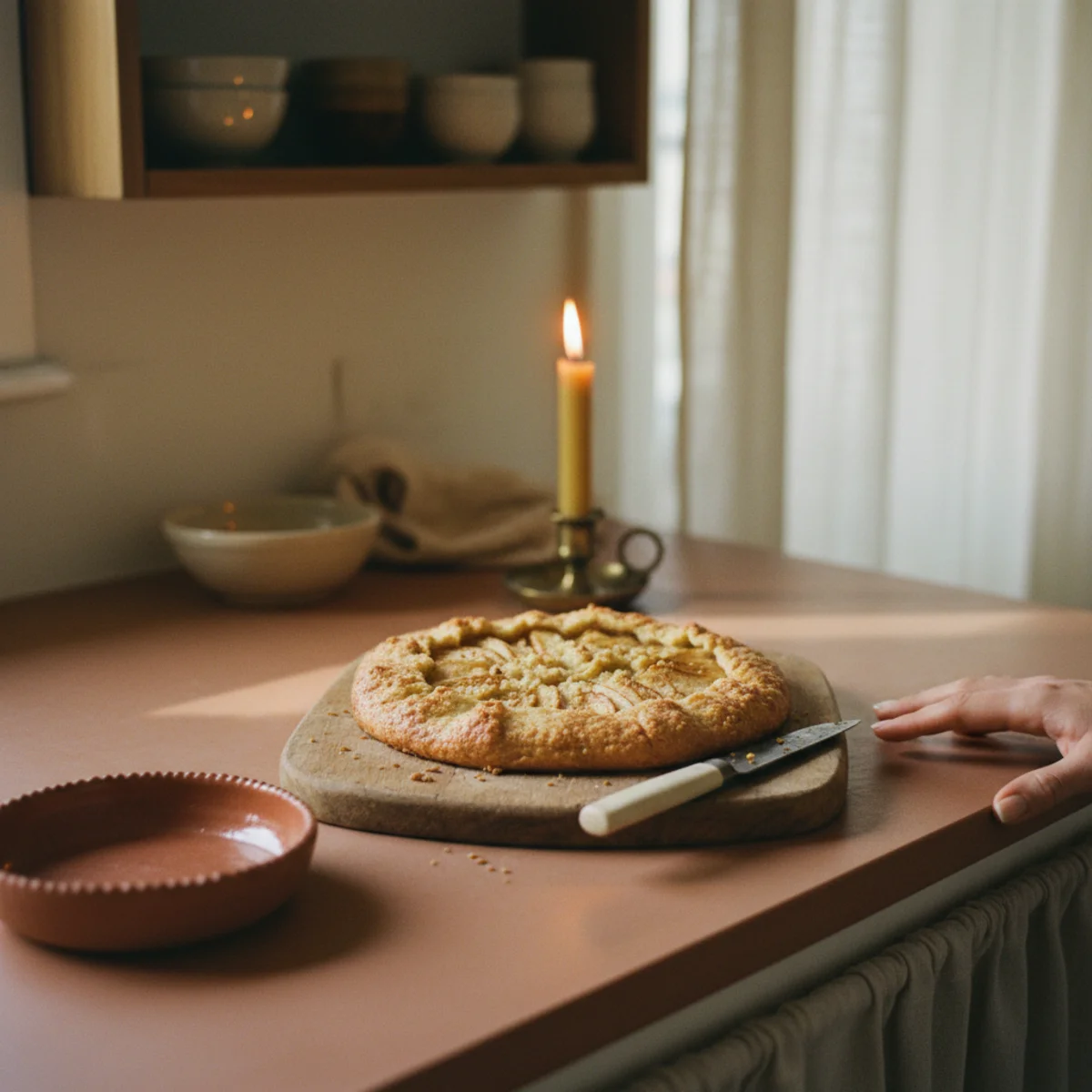
How to host a cozy dinner party step by step
Plan so the work is done before guests arrive. Be present, not perfect.
- 1Plan a make-ahead menu
Build the meal around dishes you can prep the day before — a braise, a bake, easy sides — so the day-of work is just reheating and assembling.
- 2Set the table and light ahead
Set a relaxed candlelit table and dim the overheads before anyone arrives, so the warm atmosphere greets them at the door.
- 3Greet generously
Have a drink, a bite, and warm music ready the moment guests walk in, plus a grazing board to keep everyone relaxed and fed.
- 4Sit down and stay
Serve family-style, then sit with your guests and stay there. A present, unhurried host is what makes the night cozy.
Quick tips
- Build the menu around make-ahead dishes so you're at the table, not the stove.
- Light the candles and dim the overheads before guests arrive.
- Greet with a drink and a bite the moment people walk in.
- Set out a grazing board to keep guests relaxed and fed while you finish.
- Serve family-style on big platters rather than plating individually.
- Make a low, warm playlist in advance to fill the silences.
Cozy dinner parties by occasion
One make-ahead braise, a grazing board, candlelight, and family-style serving — minimal fuss.
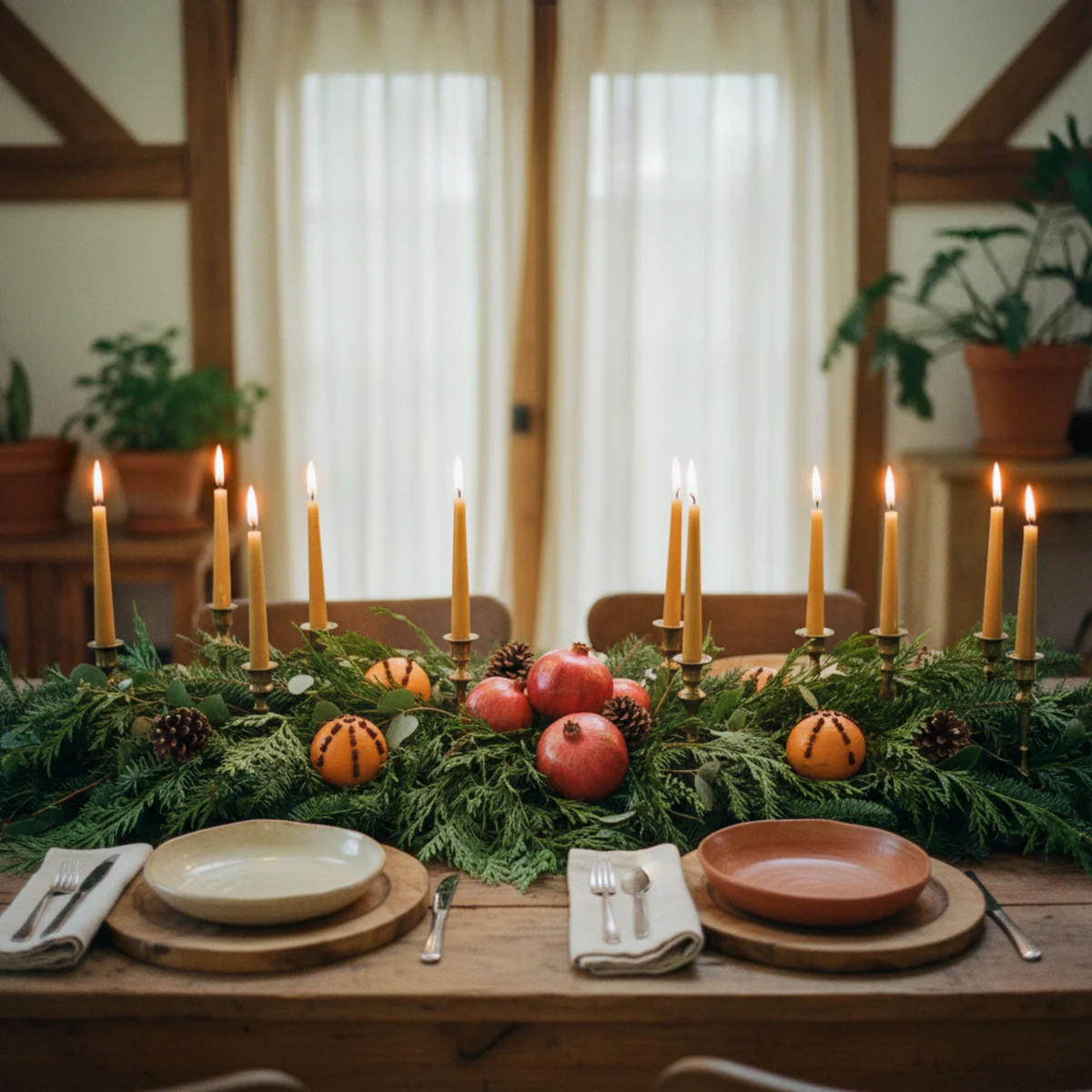
A greenery-and-candlelight table, a make-ahead main, and an easy dessert; see our tablescape and Christmas guides.
A simple impressive dish, a relaxed table, and the host fully present at an intimate scale.
Family-style platters, a generous grazing board, and a buffet approach to keep the host out of the kitchen.
The goal of a cozy dinner party is a night no one wants to leave — and that comes from a present host, not a perfect plate.
Frequently asked questions
How do I host a cozy dinner party?+
What food should I make for a cozy dinner party?+
How do I make my dining room feel cozy for a dinner party?+
What's the most important thing a dinner party host can do?+
How far in advance should I prepare for a dinner party?+
How much wine should I have for a dinner party?+
- EntertainingCozy Tablescape Ideas: 22 Warm Table Settings for Gathering (2026)
- EntertainingCheese Board Ideas: How to Build a Beautiful Grazing Board (2026)
- EntertainingBar Cart Styling: 20 Ways to Style a Cozy Home Bar Cart (2026)
- EntertainingHoliday Table Decor: How to Set a Warm, Gathered Table (2026)
A cozy dinner party is built on a make-ahead menu, warm candlelight, and a host who actually sits down — not impressive plating or matching china. We'd plan one dish you can make the day before and light the candles before the doorbell rings; that combination frees you to be present, which is the single biggest ingredient in a night people don't want to leave. Make the work invisible, and you get to enjoy your own party as much as your guests do.