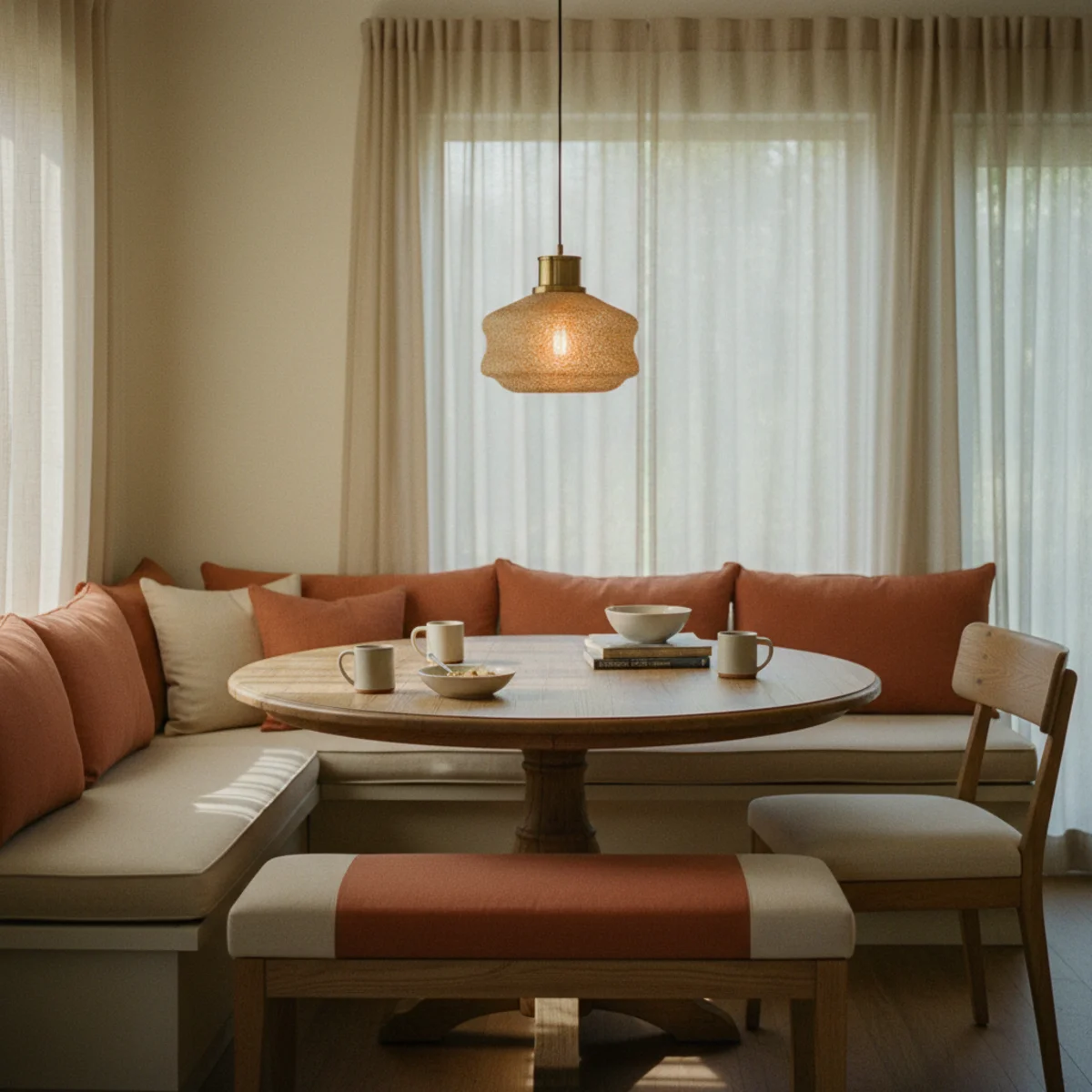
These twelve dining nook ideas are tested across actual corner banquettes, breakfast alcoves, kitchen window nooks, and small dedicated dining zones in apartments and houses. Every move below names the exact table dimensions, pendant heights, seating proportions, and lighting setups that make small dining spaces feel intentional rather than improvised. The principles work whether you're building a banquette from scratch or styling a 4-by-6-foot kitchen corner.
The biggest mistake in dining nooks is treating them as scaled-down dining rooms. Dining nooks have different priorities than dining rooms: intimacy over formality, banquette seating over chairs, round or oval tables over rectangular, lower pendant lighting, and connection to the kitchen rather than separation from it. The twelve principles below all push toward this specific intimate dining aesthetic rather than the formal dining-room one.
By the end of this guide, you'll know exactly how to build a banquette, choose the right round or oval table, hang the pendant at the perfect height (30 to 34 inches above the table), and the seven other moves that make a dining nook feel like the warmest spot in the house.
WHAT'S INSIDE
- The built-in or freestanding banquette that makes nooks feel intentional
- Why round or oval tables outperform rectangular ones in nooks every time
- The pendant height (30 to 34 inches above the table) that anchors the space
- The window-light connection that makes morning meals feel special
The nook always wins over the formal dining room. People gravitate to the cozy corner, not the long empty table.
— Domino [citation needed — verify before publish]
What makes a good dining nook?
A good dining nook combines space-smart seating, a table shaped for the corner, and warm low light into a compact, cozy eating spot — usually tucked into a kitchen corner, a bay window, or a small dining area. It earns its keep by being genuinely comfortable and well-lit, which is why people choose it over a larger formal table.
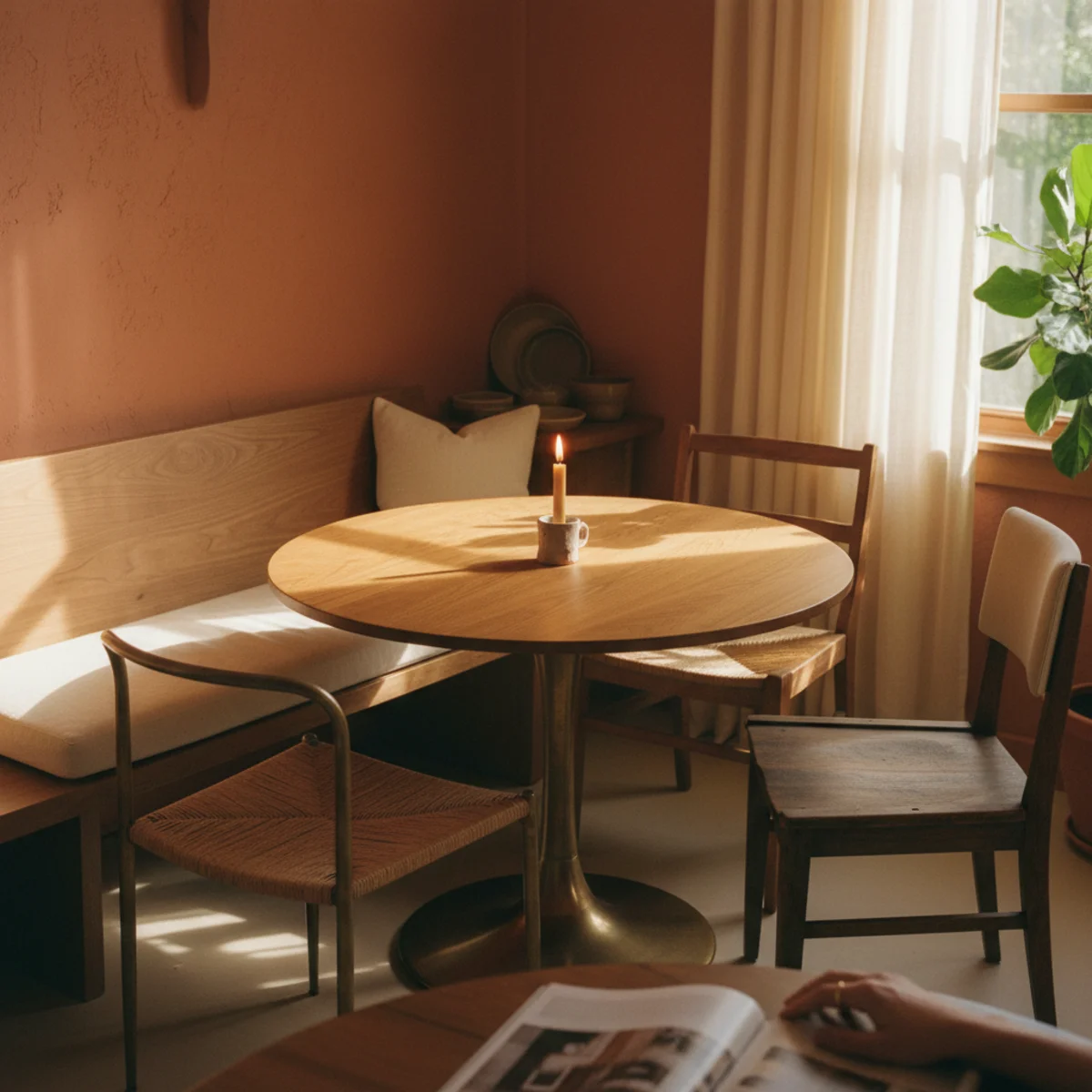
The seating is the defining choice. A banquette or built-in bench seats more people in less space than chairs and reads cozy and tucked-in, while a couple of chairs on the open side keep it flexible. A round or oval table fits a corner better than a rectangle and eases circulation. Hang a pendant low over the center, add a cushion or two, and the nook becomes the warm, gathered spot a big table rarely manages.
More in By Room you may love
See allWhy dining nooks are everywhere in 2026
As homes got smaller and formal dining rooms fell out of favor, the dining nook rose as the practical, cozy alternative — Pinterest's breakfast nook and banquette searches climb every year. The look leans warm and built-in, with cushioned benches, round tables, and low pendants over the cold formality of a separate dining room.
The honest reason is that nooks get used and formal dining rooms often don't. People gravitate to the tucked-in, well-lit corner for coffee, work, and casual meals, leaving the big table for holidays. As casual, kitchen-centered living took over, the nook became the everyday eating spot — cozier, more efficient, and far more loved than the room it replaced.
22 dining nook ideas to copy
01Add a Built-In Banquette
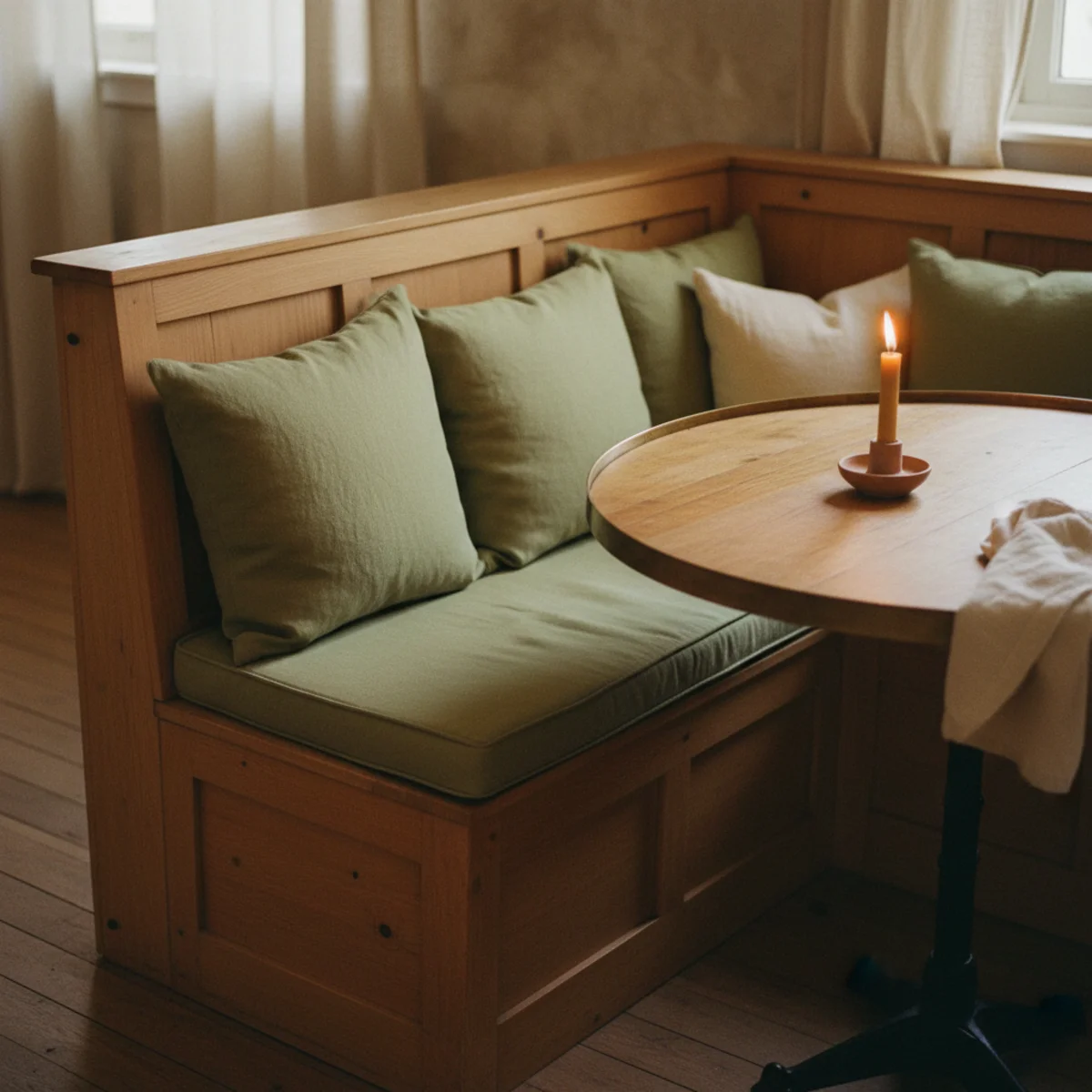
The single most-transformative dining-nook element is a built-in banquette — bench seating along one or two walls of the nook. The banquette accommodates more people in less floor space than chairs (you can squeeze 3 to 4 people on a 60-inch banquette where 3 chairs would need 9 feet of floor), and the built-in nature signals 'intentional dining space' rather than 'corner with a table.' Build-it-yourself versions cost $200 to $600; full custom $800 to $2,500.
Banquette specs: seat height 17 to 18 inches above the floor (slightly lower than dining chairs at 18 to 19 inches), seat depth 18 to 22 inches, backrest 12 to 18 inches above the seat. L-shaped banquettes along two walls maximize seating per floor footprint; straight banquettes along one wall work in narrow nooks. Add storage under the seat (lift-up tops with hinges, or drawer fronts) for dining-room overflow — extra dishes, table linens, kid art supplies. Cover the banquette top with a custom-cut cushion ($100 to $300 from a local upholsterer) in linen, leather, or boucle. Add 3 to 5 throw cushions in mixed warm-tone textures for back support and visual interest.
AFFILIATE SLOTFURNITUREL-shaped or straight banquette at 17-18 inch seat height with storage underneath + custom cushion + throw cushionsAdd affiliate URL when configuredWhy it works
Because the built-in banquette signals architectural intention — it tells everyone entering the room 'this is a real dining space designed specifically for this use.' Loose chairs at a table look casual and improvised; a banquette looks crafted and considered. The functional advantage matches: banquettes seat more people in less floor space, and the under-seat storage handles dining overflow. The combination of architectural signal plus practical benefit makes the banquette the single highest-impact dining-nook decision.
Pro tip — If a true built-in banquette is out of scope, use an IKEA HEMNES storage bench ($150) topped with a custom cushion as a freestanding banquette — the storage benefit is preserved, the visual cue reads close to a built-in at 80 percent of the effect for 20 percent of the cost. Add the cushion and 3 to 5 throw cushions for the full banquette feel.
L-shaped banquette with cushion and throws — the architectural signal that makes any nook feel intentional. See also: IKEA HEMNES
02Choose a Round or Oval Table
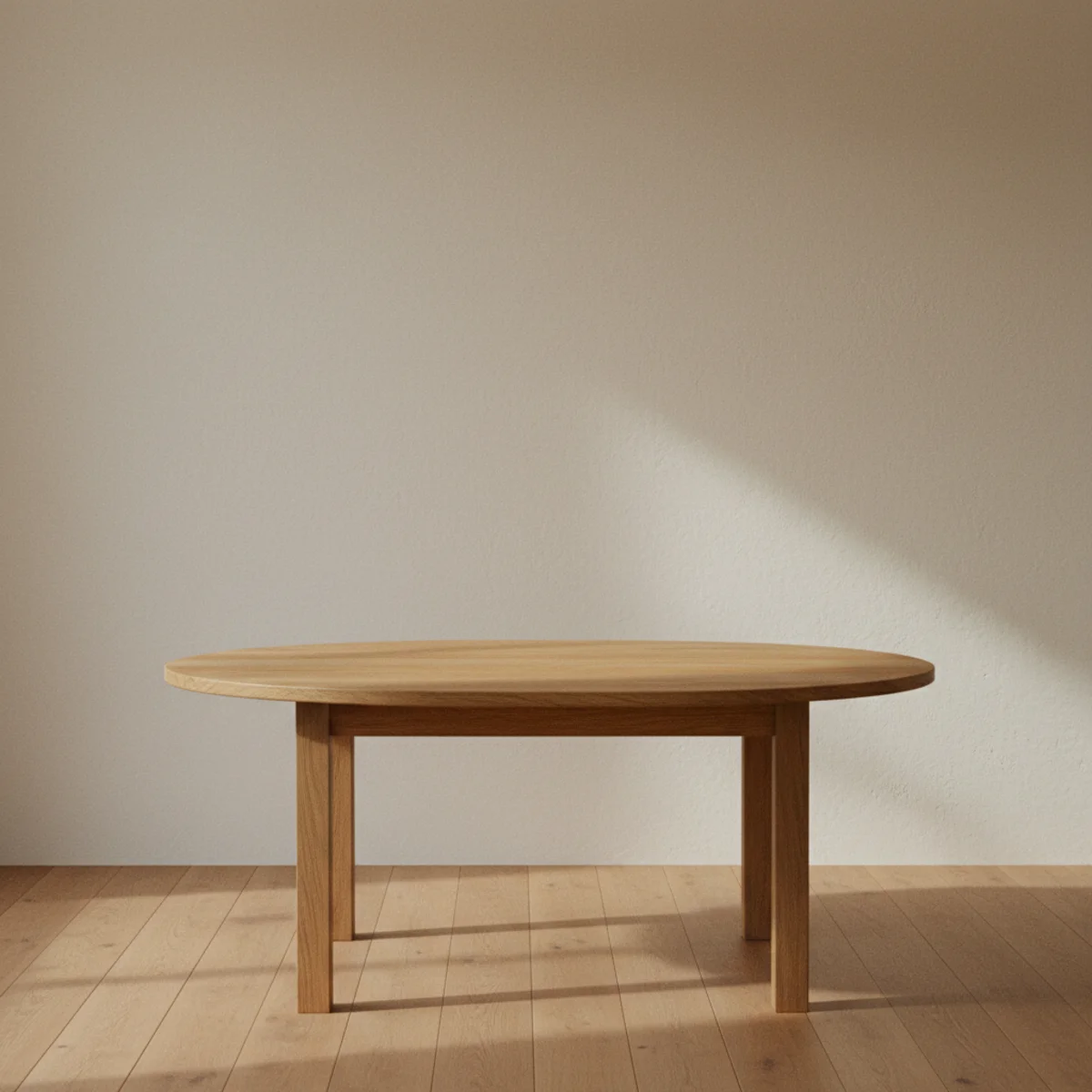
Dining nooks work better with round or oval tables than with rectangular ones — the curved edges fit corners and curves of the room more naturally, allow more seating around the edges, and read as more intimate. A 42 to 48-inch round table seats 4 comfortably; a 48-by-72-inch oval table seats 6 in the same footprint a rectangular 60-by-36 table would.
Size recommendations: 36 to 42-inch round seats 3 to 4 ($200 to $600 from Marketplace vintage, $400 to $1,500 retail), 48 to 54-inch round seats 4 to 6 ($300 to $900 vintage, $600 to $2,000 retail), 48-by-72-inch oval seats 6 to 8 ($500 to $1,500 vintage, $1,000 to $3,000 retail). Pedestal bases work especially well in nooks — no table legs to navigate when seating, more legroom under the table than four-leg designs. Materials: solid wood (oak, walnut, oiled pine) for warm aesthetic; avoid laminate or veneer. Position the table with the longer dimension (for oval) parallel to the banquette so people can scoot in and out without obstruction.
AFFILIATE SLOTFURNITURERound or oval table on pedestal base in solid wood; 36-54 inch round or 48x72 ovalAdd affiliate URL when configuredWhy it works
Because round and oval shapes fit irregular corner spaces more efficiently — there's no awkward corner-of-table situation when the table itself doesn't have corners. The curved edges also allow more flexible seating: 4 people fit naturally around a 42-inch round table, but the same 4 people at a 36-by-60-inch rectangular table either have someone at the end (head-of-table awkwardness in nooks) or in the middle of long sides (closer to neighbor than across-the-table). The geometry favors curves in small dining spaces.
Pro tip — Choose a pedestal base over four-leg construction for any nook table — the single central support means no table legs to navigate when sliding in and out of banquette seats, and the legroom is dramatically better. Vintage tulip-style pedestal tables (Saarinen-style) at $150 to $400 from Marketplace are particularly suited for nooks.
Vintage 48-inch round oak table on pedestal base — the geometry that fits nook corners and seats more people. See also: Marketplace vintage
03Hang a Pendant Low and Centered
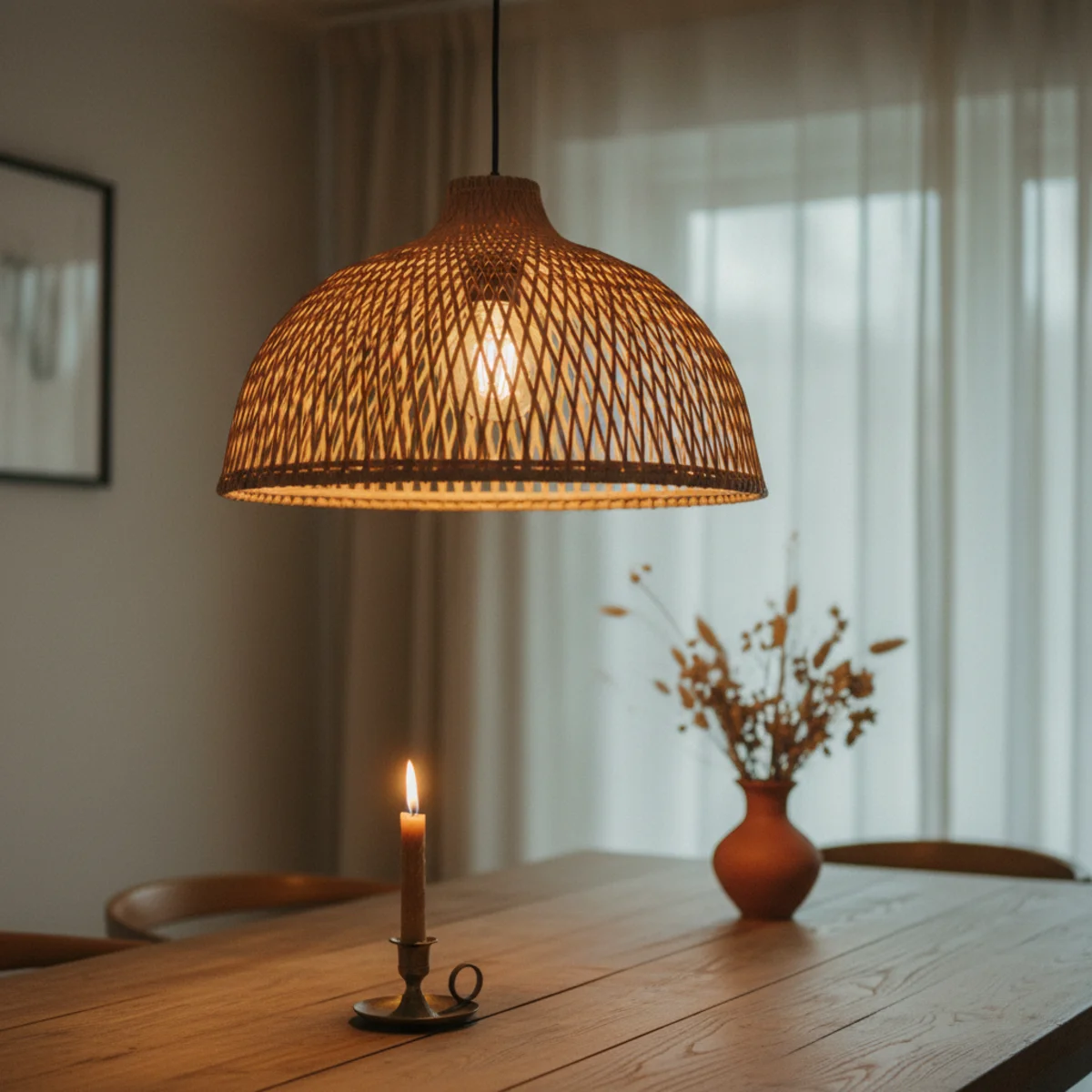
The single visual move that anchors any dining nook is the pendant light hung low over the table — 30 to 34 inches above the table surface, centered directly over the table center. The low pendant creates the intimate cocoon effect that nooks specifically benefit from, illuminating the table without spilling glaring light across the rest of the room.
Pendant height: 30 to 34 inches above the table surface (for standard 30-inch tables, the pendant bottom sits at 60 to 64 inches above the floor). Center the pendant directly over the center of the table. Pendant types that work well in nooks: warm metal (aged brass, oiled bronze) with linen, paper, or fabric shades; vintage glass globes; handmade ceramic; rattan or seagrass woven pendants. Sizes: 14 to 20-inch diameter for tables 36 to 48 inches across, 18 to 28-inch diameter for tables 48 inches and up. Wire the pendant to a dimmer switch ($25 from Lutron) so brightness adjusts between meal moods (full brightness for cooking-prep daytime, dimmed for evening meals).
AFFILIATE SLOTLIGHTINGPendant 30-34 inches above table, centered over table center, on dimmer switchAdd affiliate URL when configuredWhy it works
Because nook dining is intentionally intimate — people sit closer to each other than at large dining tables, conversations are more personal, meals are more relaxed. The low pendant reinforces this intimacy by creating a defined warm pool of light over the table while the rest of the room recedes into dimmer ambient. High pendants over nook tables flood the whole room with light, which dilutes the intimacy and makes the nook feel like part of the larger room rather than its own moment. The low position is the specific design choice that makes nooks special.
Pro tip — Add a small chain or rod extension if your existing pendant chain is too short to reach the 30 to 34-inch-above-table position — extensions cost $5 to $15 from any hardware store. The proper pendant position is more important than the pendant fixture itself; a perfect pendant hung at the wrong height fails, a basic pendant hung correctly succeeds.
Pendant 32 inches above the table, centered, dimmed — the low warm pool of light that defines nook intimacy. See also: Lutron
04Mix a Bench With Chairs
If a full banquette doesn't fit your nook or budget, the alternative is mixing one bench (along the wall side) with two chairs (on the open side). The mixed seating reads as more intimate than four matching chairs and lets the bench accommodate variable numbers of people (1 to 3 depending on size), while the chairs provide more formal seating for the other side. Total cost: $150 to $400 for a bench plus $80 to $300 each for two chairs.
Bench specs: 48 to 60 inches long, 14 to 18 inches deep, 17 to 19 inches tall in solid wood. Add a cushion ($30 to $80) for comfort. Sources: IKEA HEMNES at $130, vintage at $40 to $150 from Marketplace, custom at $300 to $1,000. Chairs: 2 chairs with seat height 18 to 19 inches matching the bench-plus-cushion height. Best pairings: matching wood chairs (for cohesion), upholstered chairs in linen or boucle (for softness contrast against the bench), or vintage chairs ($40 to $150 each from Marketplace). The mixed seating works because the bench-and-chair contrast creates visual interest where four matching chairs would read as repetitive. The bench also handles more flexible seating (kids + adult, three adults squeezing) than fixed-count chairs.
AFFILIATE SLOTFURNITUREWood bench 48-60 inches long with 2 contrasting chairs on the opposite side of the tableAdd affiliate URL when configuredWhy it works
Because the mix accommodates real-life dining: typically two people daily, four people at family meals, six people when guests come. A full set of four matching chairs reads as static and formal; the bench plus two chairs reads as flexible and intimate. The bench also handles kids and shared seating naturally (kids can squeeze in beside each other, adults can scoot over for a guest), where chairs enforce one-person-per-seat rigidity. The flexibility is part of why nooks feel more relaxed than formal dining rooms.
Pro tip — Choose chairs slightly more formal than the bench — upholstered linen or boucle chairs with the wooden bench, or mid-century-style wooden chairs with a more rustic bench. The contrast in formality between bench and chairs adds visual interest and signals the mixed-seating concept as deliberate rather than improvised.
Wood bench plus two linen chairs — the mixed seating that handles real-life dining numbers flexibly. See also: IKEA HEMNES
05Add Cushions and a Throw to the Banquette
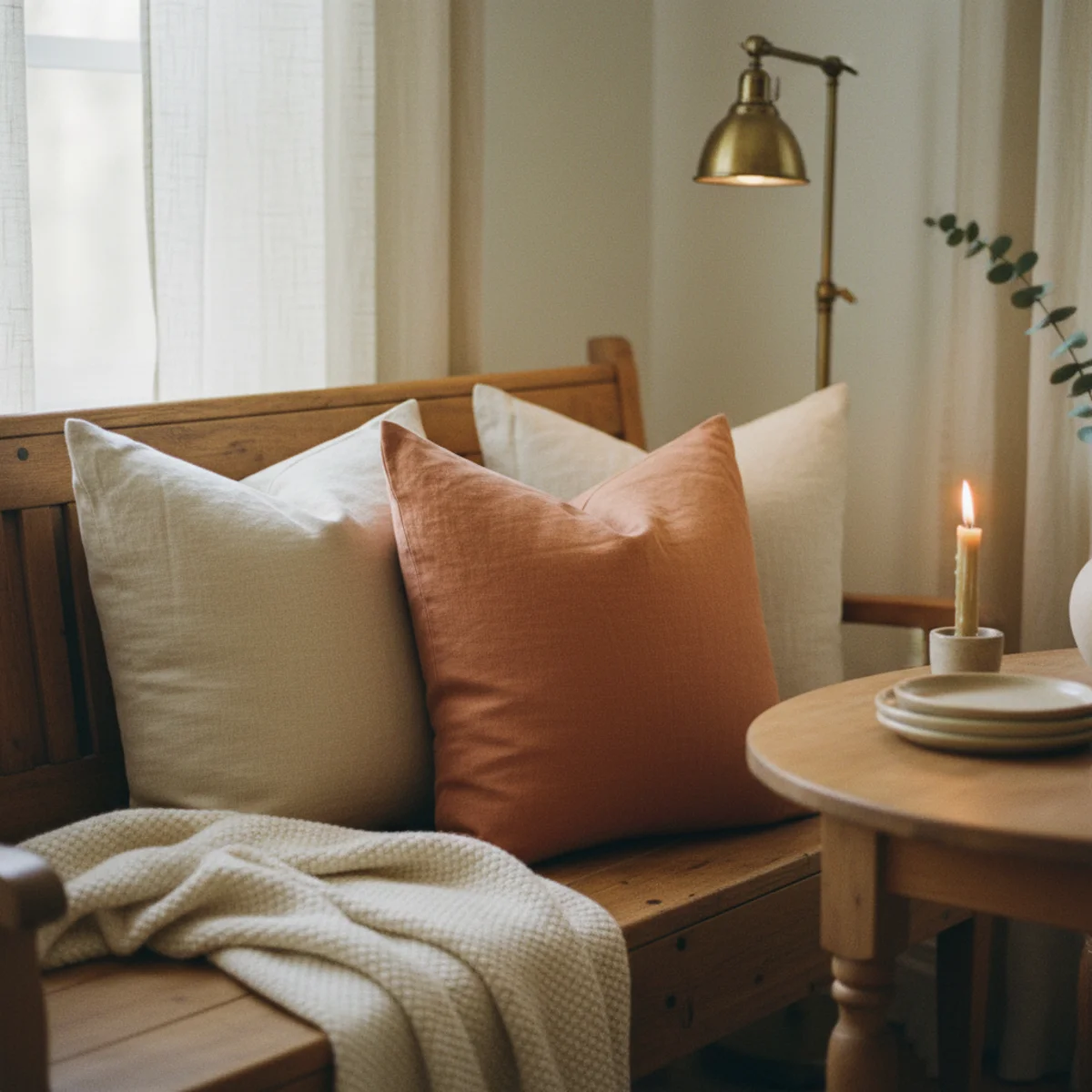
A bare banquette reads commercial; the same banquette with 4 to 6 throw cushions in mixed textures and one wool throw draped over one end reads as intimate dining nook. The cushions provide back support and visual layering; the throw signals 'this is somewhere to linger after the meal' rather than 'this is a bench you sit on briefly to eat.' Cost: $100 to $300 for the full layered set.
Throw cushions: 4 to 6 cushions in mixed textures (linen, boucle, knit wool, mohair) in warm earth tones (cream, oat, terracotta, sage, rust). Mix sizes: 2 cushions at 18-20 inches square for primary back support, 2 cushions at 14x20 inches lumbar for the corners, 1 to 2 cushions at 16 inches for additional layering. Sources: covers at $15 to $50 each (H&M Home, Quince, West Elm); inserts at $10 to $20 each. Total: $100 to $250 for the full cushion set. Throw: one wool throw 50x60 inches in oat, cream, or terracotta ($40 to $79 from Pendleton secondhand, West Elm boucle) draped diagonally over one end of the banquette. The combination transforms hard wood-with-cushion into layered dining-nook softness.
AFFILIATE SLOTTEXTILES4-6 mixed-texture cushions + 1 wool throw 50x60 inches draped over one banquette endAdd affiliate URL when configuredWhy it works
Because the banquette without cushions and throw reads as utilitarian seating — function over comfort. The same banquette layered with mixed cushions and a throw signals 'this is a comfortable place to linger,' which extends the dining nook's function from 'eat and leave' to 'eat and stay for coffee, conversation, or homework.' The lingering function is what makes dining nooks feel special; without it, they're just small dining tables in corners. The cushion-and-throw layer is what enables the lingering.
Pro tip — Mix at least three different cushion textures — one linen, one boucle, one knit or mohair — so the layered seating reads as collected rather than purchased as a set. Matching cushion sets look store-bought; mixed textures with consistent palette look thoughtfully assembled over time.
Five mixed-texture cushions, wool throw at one end — the layered softness that enables nook lingering. See also: Pendleton secondhand
06Use the Window Light
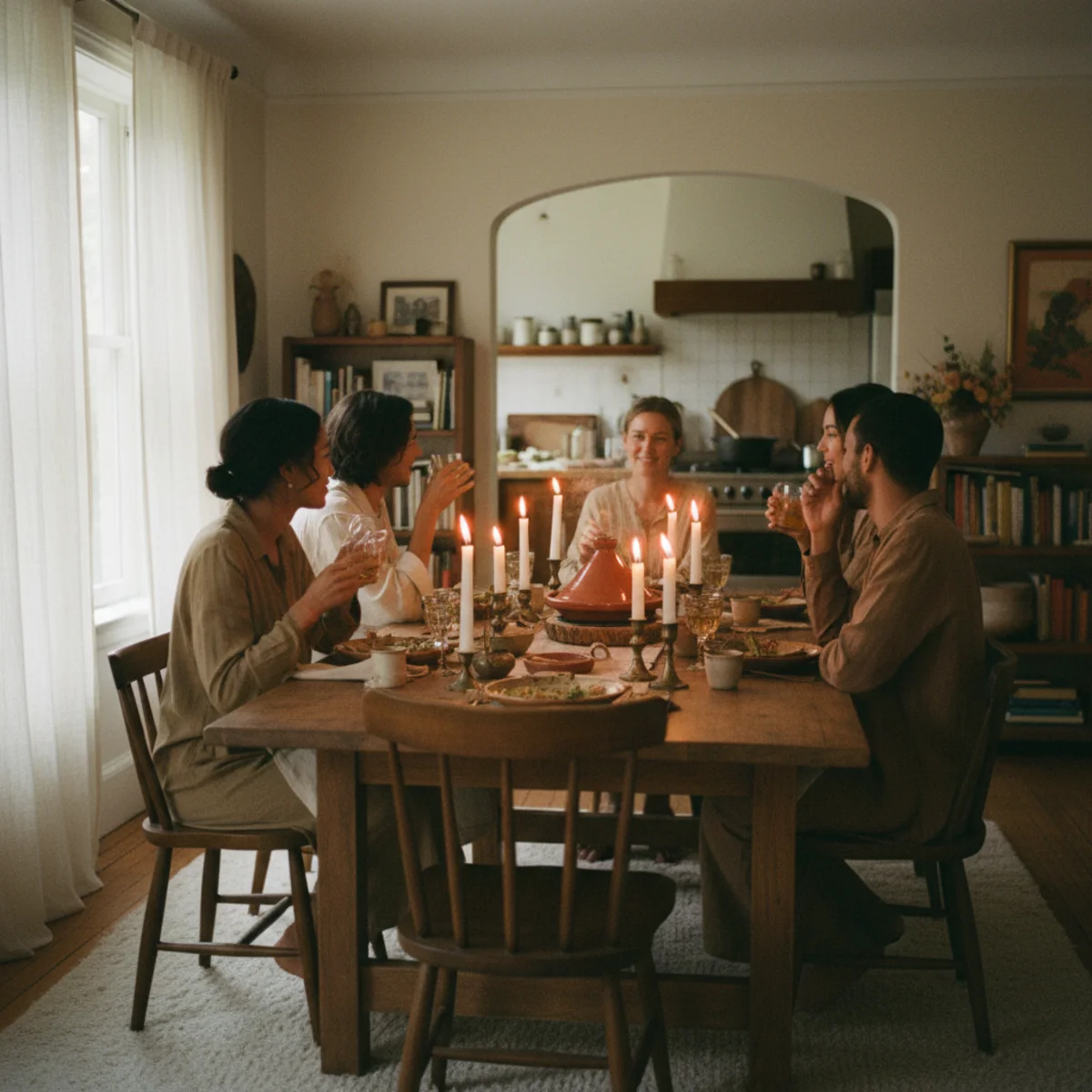
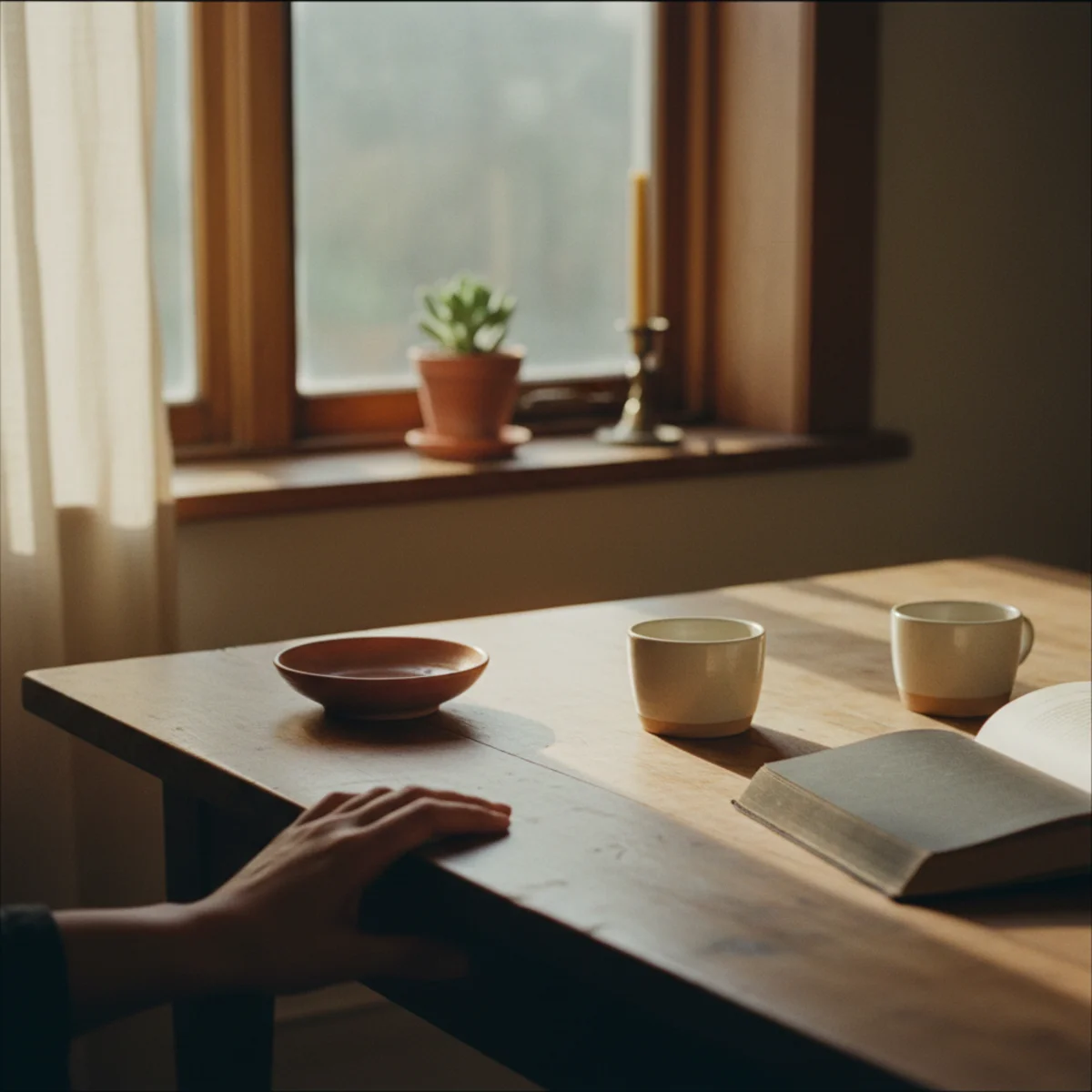
Dining nooks are often positioned beside windows — and the morning light through that window is the nook's defining advantage over formal dining rooms. The fix is leaning into the window connection: tension-rod or wall-mounted linen curtains for soft morning light, a window-facing seat as the preferred position, plants on the windowsill, and a small mirror nearby to bounce the light. The nook becomes the morning-light room of the house.
Window optimization for dining nooks: (1) UNLINED LINEN CURTAINS at the window — soft diffused morning light rather than direct glare. Hang on tension rods or wall-mounted brackets with the rod 4 to 6 inches above the window frame. (2) WINDOW-FACING SEAT — position the banquette or one chair so it faces or is beside the window, giving the prime spot for morning meals to whoever sits there. (3) WINDOWSILL HERBS OR PLANTS — small potted herbs or succulents on the sill (per cozy-kitchen-ideas) add living color and use the high-light position productively. (4) LIGHT-BOUNCING MIRROR — a small framed mirror (18 to 24 inches) on the wall opposite the window catches and bounces morning light deeper into the nook.
AFFILIATE SLOTLIGHTUnlined linen curtains + window-facing seat + windowsill plants + small bouncing mirrorAdd affiliate URL when configuredWhy it works
Because the dining nook's most-special use is morning meals — coffee, breakfast, the quiet first hour of the day. The right morning light through unlined linen curtains creates the diffused warm glow that makes coffee-and-toast at the nook feel like a luxury rather than a routine. Without optimized window light, the nook is just a small dining table; with it, the nook becomes the room people gravitate to in the morning. The window connection is the nook's specific advantage that formal dining rooms (often without windows) can't replicate.
Pro tip — Position the banquette so the head-of-banquette spot (the corner of an L-shape or the long-side of a straight banquette) faces the window — this becomes the prime morning-coffee position. The household member who arrives first gets the prime spot; the seating order becomes informal but consistent across daily breakfast.
Linen curtains, windowsill herbs, banquette facing the window — the morning-light advantage formal dining rooms can't match. See also: cozy-kitchen-ideas
07Add a Small Pendant Cluster Instead of One Big Light
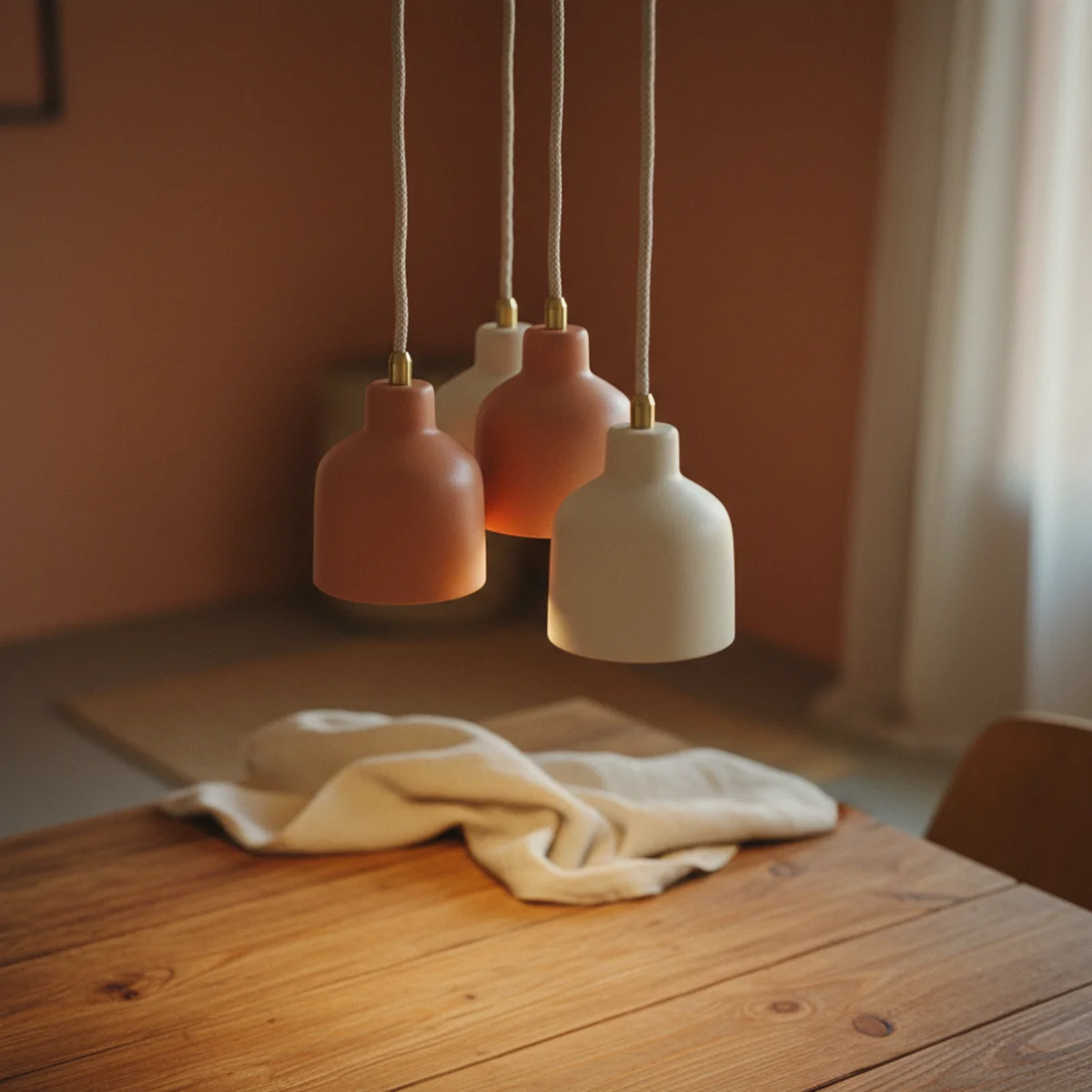
For larger nooks or oval tables, a cluster of 2 to 3 small pendants outperforms one large pendant — the multiple small lights distribute warm pools of illumination across the table length, create more visual interest, and read as more designed than a single fixture. The cluster works especially well over 48-by-72-inch oval tables or longer rectangular ones in larger nooks.
Cluster specs: 2 to 3 small pendants 8 to 14 inches in diameter, spaced 24 to 36 inches apart along the table length, all hung at the same 30 to 34-inch-above-table height. Match the pendants exactly (3 identical brass globes, 3 matching ceramic pendants, etc.) — mixed pendants in a cluster read as confusing rather than collected. Sources: small pendant lights at $40 to $200 each from West Elm, IKEA RANARP at $25 each, or vintage glass globe pendants at $40 to $100 each from Marketplace. Wire all pendants to a single dimmer switch so they brighten and dim together. The cluster works above tables 48 inches or longer; for tables under 48 inches, one single pendant is the better choice.
AFFILIATE SLOTLIGHTINGCluster of 2-3 matching small pendants 8-14 inches diameter, spaced 24-36 inches apart, all at same heightAdd affiliate URL when configuredWhy it works
Because a single pendant 18 to 28 inches across creates one large pool of light that fades dramatically at the table ends — diners at the far end sit in dim shadow. The cluster creates 3 overlapping smaller pools that maintain consistent light across the table length. The visual rhythm of 3 matching pendants also reads as more designed and intentional than a single oversized one. For nook tables longer than 48 inches, the cluster is the better lighting solution mathematically and aesthetically.
Pro tip — Hang the cluster slightly higher than a single pendant (32 to 36 inches above the table rather than 30 to 34) — the higher position prevents the multiple fixtures from feeling visually cluttered while still providing the warm pool effect. The slight height adjustment is what makes the cluster read elegant rather than busy.
Three matching small pendants in a cluster — the visual rhythm that beats one large pendant over longer tables. See also: IKEA RANARP
08Style the Table Simply
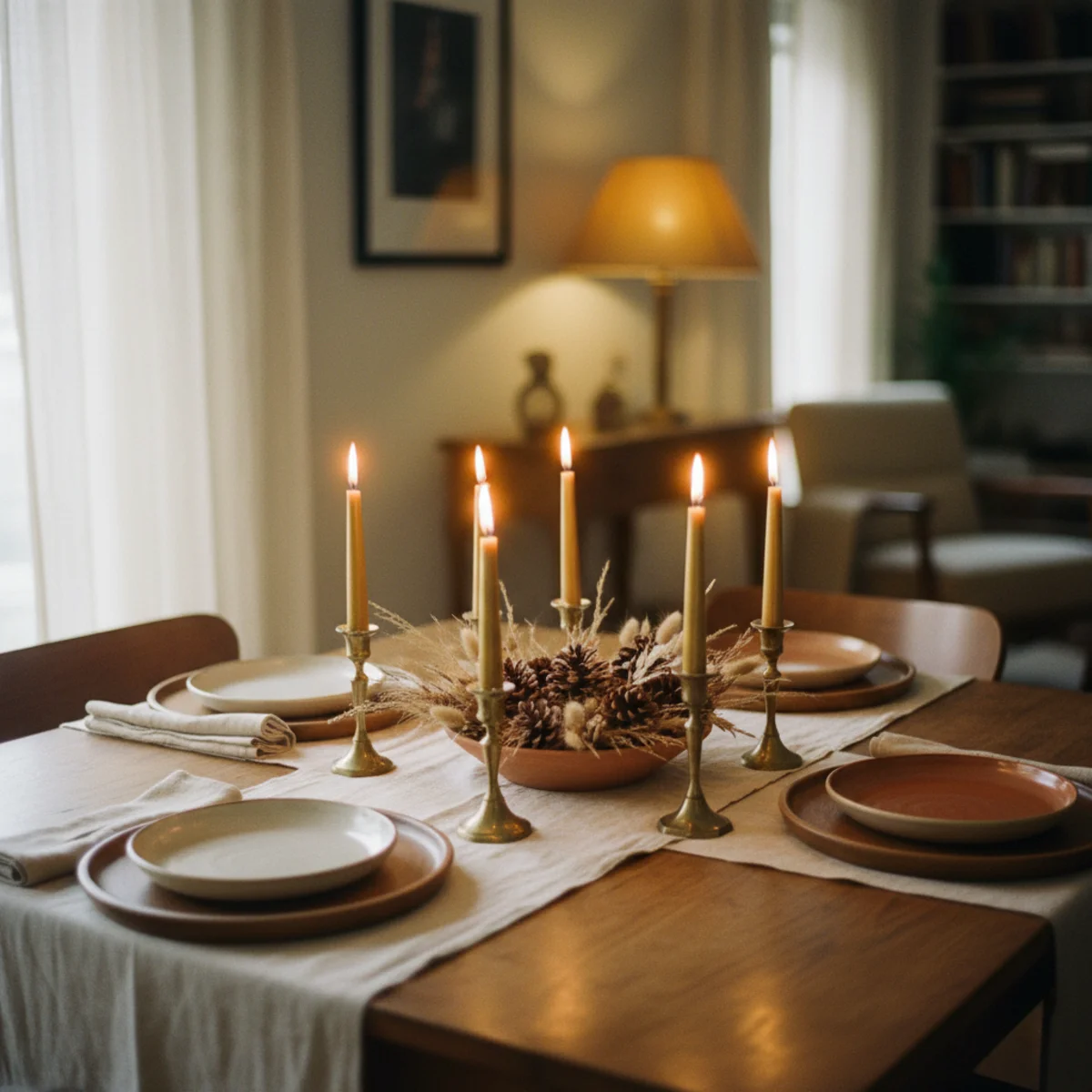
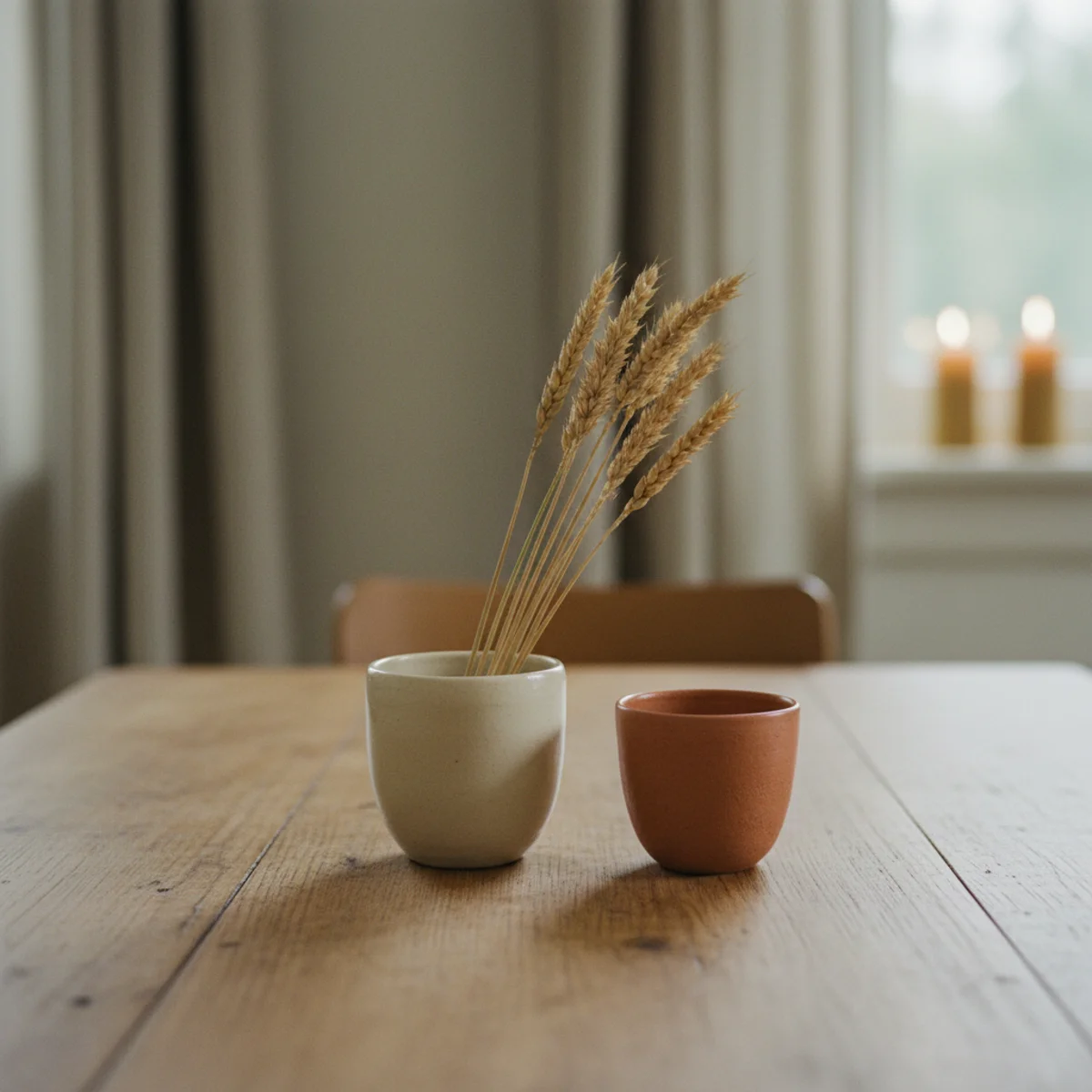
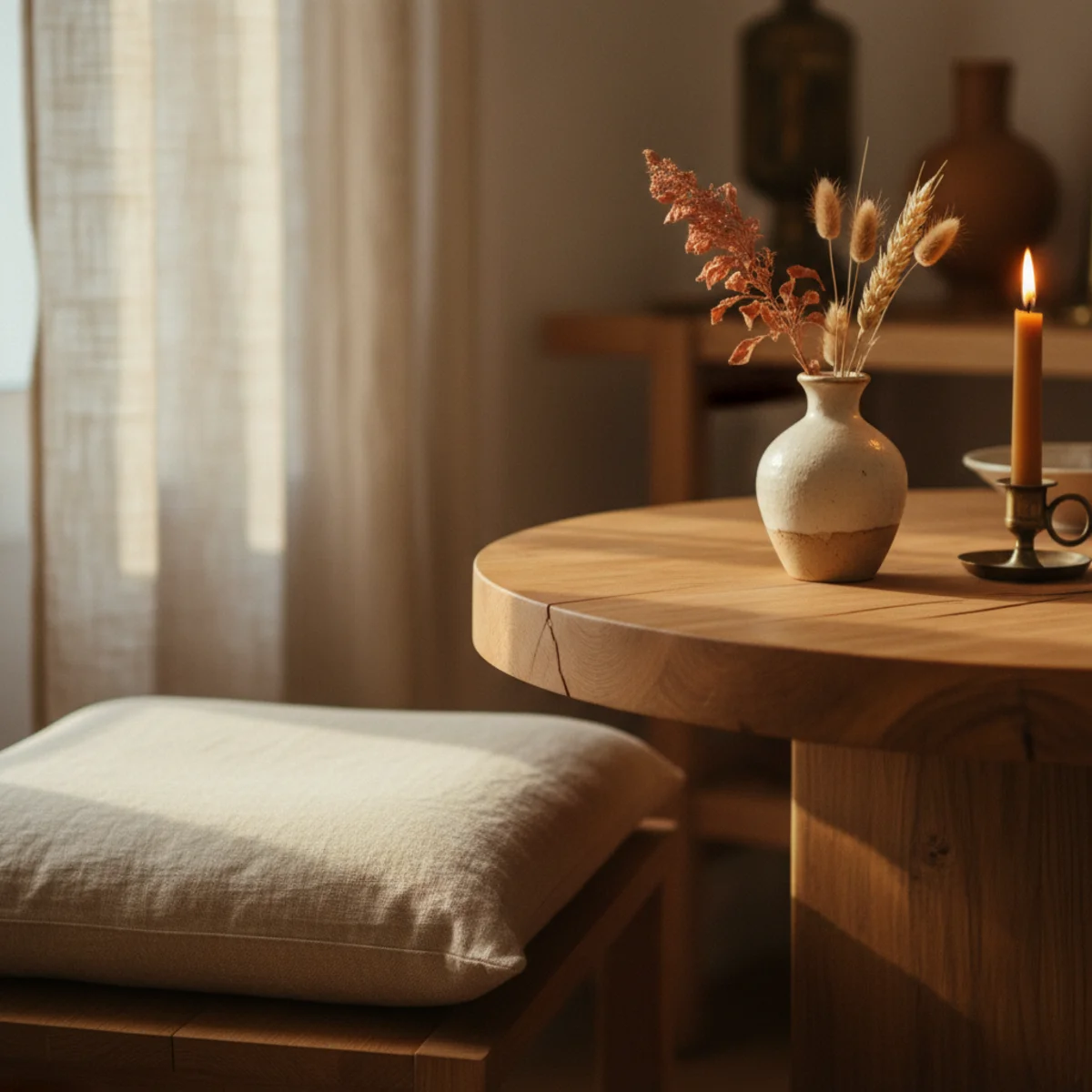
Dining nook tables benefit from minimal everyday styling — a small centerpiece, candleholders, salt and pepper, maybe a cloth napkin holder. Over-styling fights the nook's intimate function (people need room to eat); under-styling reads as empty. The sweet spot is 3 to 5 styled items occupying the center of the table, leaving the perimeter clear for plates and meals.
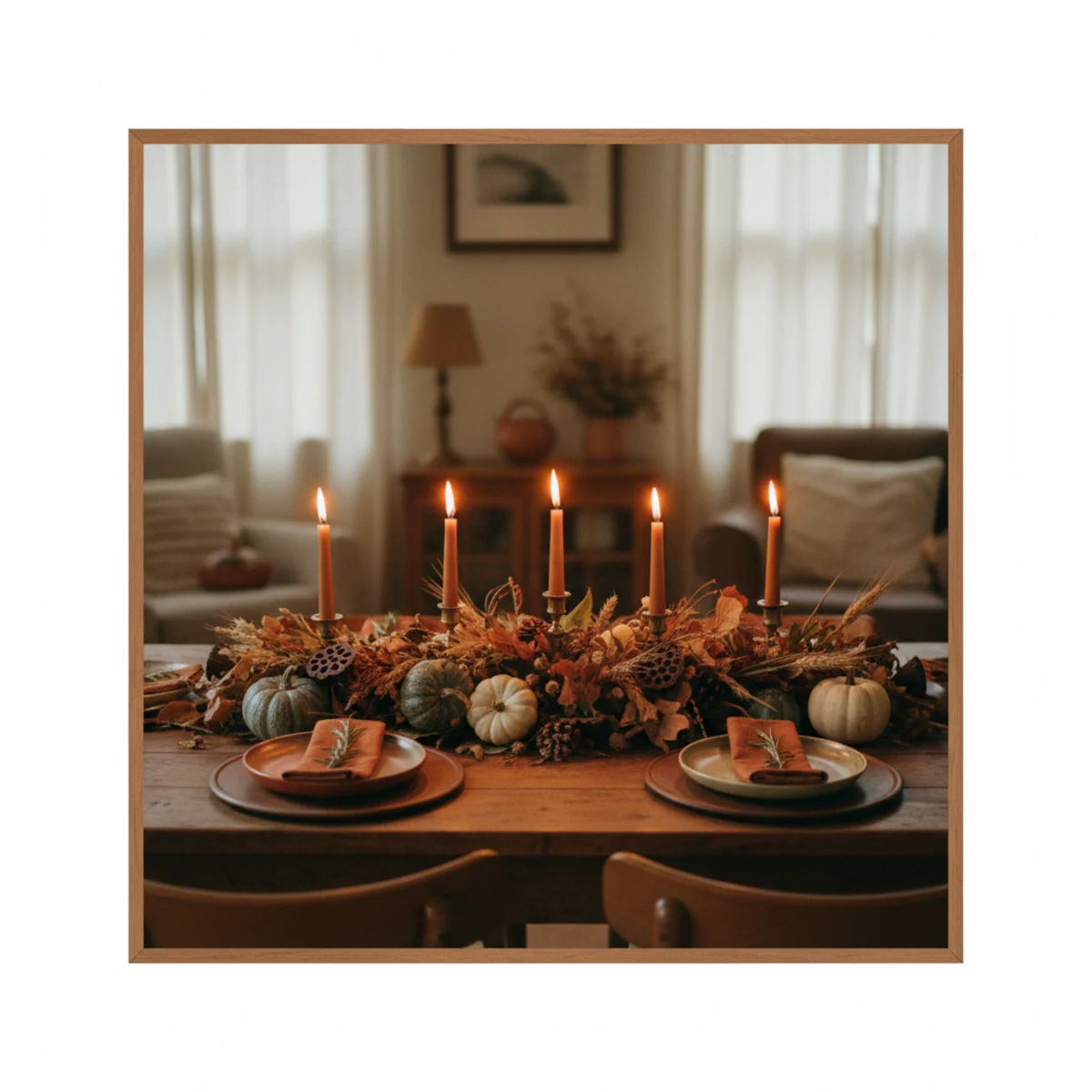
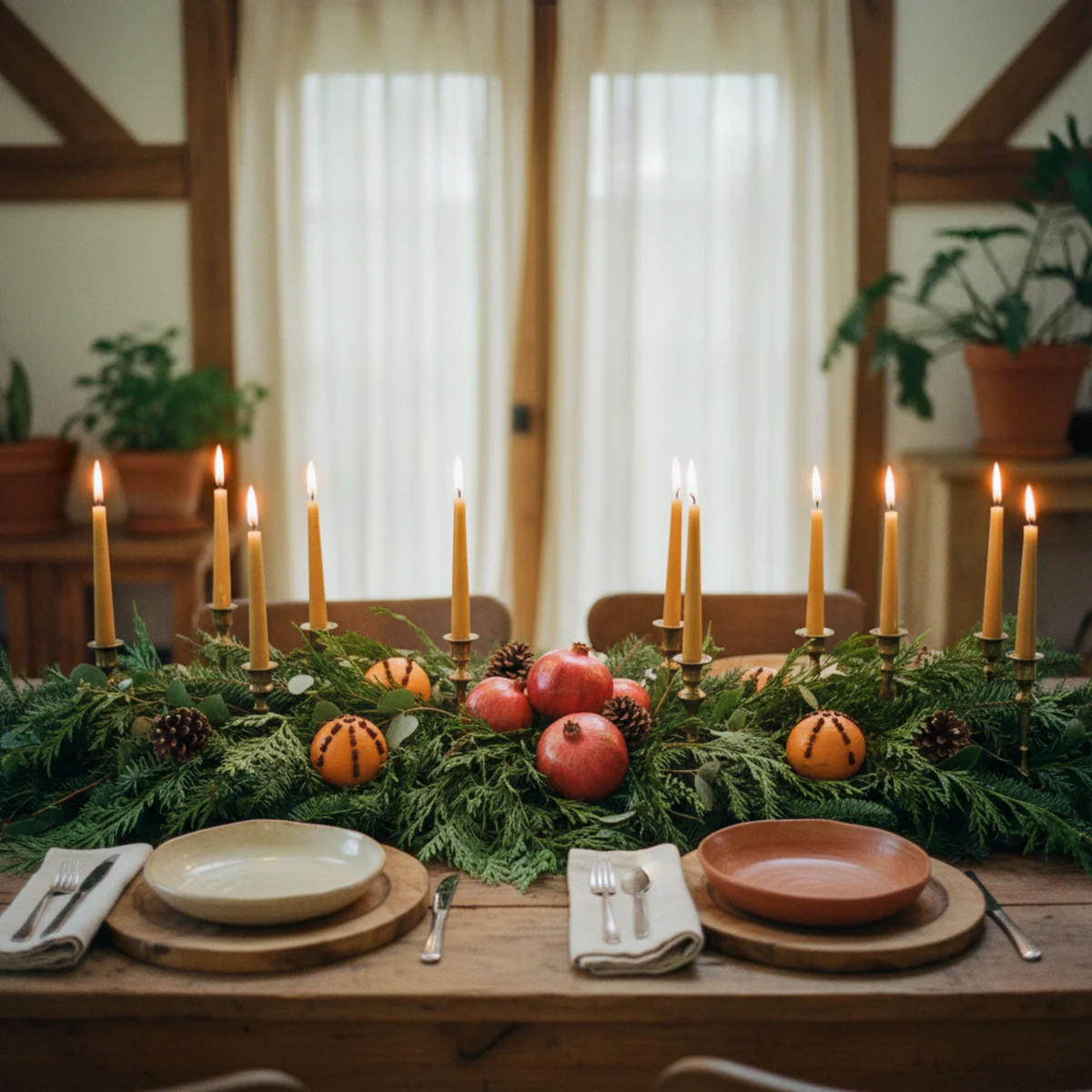
Standard table styling: ONE small centerpiece (a small ceramic vase with 1 to 3 stems of greenery, a small bowl of fruit, a small wooden bowl of dried botanicals, 5 to 8 inches across), ONE or TWO small candleholders (3 to 6 inches tall with taper or pillar candles), ONE salt-and-pepper set (matching ceramic or wood, 2 to 4 inches each), ONE small cloth napkin holder or stack of cloth napkins (4 to 6 napkins folded). Position all styled items in the table center within a 12 to 18-inch zone, leaving the perimeter clear for place settings. Rotate the centerpiece seasonally (fresh flowers in spring, fruit in summer, dried in fall, evergreen in winter) — the seasonal rotation keeps the styling from becoming visual background.
AFFILIATE SLOTSTYLING3-5 styled items in table center: centerpiece + candleholders + salt-pepper + napkin holderAdd affiliate URL when configuredWhy it works
Because nook tables get used for daily meals, not just special occasions — and elaborate styling has to be cleared every time someone wants to eat. Simple styling at the table center stays in place during meals (people eat around it rather than moving it for every meal), while elaborate centerpieces require constant relocation, which means they either get neglected or end up moved to a sideboard and never returned. The discipline of simple styling is what makes the nook actually usable for daily life.
Pro tip — Use unscented candles at the nook table — meal-time candle scent competes with food smells and creates unappetizing combinations. Save scented candles for living rooms and bedrooms; nook candles are about warm light and visual ritual, not aromatherapy.
Small centerpiece, two candles, salt and pepper — the simple styling that stays during meals. See also: small wooden bowl
09Choose Warm Wood and Linen
Dining nook materials should commit to the warm-home palette: solid wood tables and benches (no laminate or veneer), linen cushions and napkins (no synthetic), aged brass or oiled bronze hardware (no chrome or nickel), woven seagrass or rattan in any chair caning. The material consistency across the small space is what makes the nook read intentional rather than improvised.
Material targets across the nook: TABLE in solid oak, walnut, teak, or oiled pine. BANQUETTE or BENCH in matching warm wood. CHAIRS in solid wood, woven cane, or linen-upholstered. CUSHIONS in linen, boucle, or wool — never synthetic blends. NAPKINS in unbleached linen or natural cotton. HARDWARE in aged brass or oiled bronze (drawer pulls if banquette has storage, table edge details). LIGHTING in warm metal pendants. PLANTS in terracotta or stoneware (no plastic pots). The discipline: every material decision in the nook reinforces the warm-home palette consistently. The small footprint of the nook means small material mistakes show prominently; the consistency is more visible than in larger spaces.
AFFILIATE SLOTMATERIALSSolid wood table + banquette + linen cushions + brass hardware + terracotta plants + warm metal pendantAdd affiliate URL when configuredWhy it works
Because nooks are small enough that the eye sees most materials at once — table, banquette, chairs, cushions, hardware are all visible from any seat. Inconsistent materials (laminate table, synthetic cushion, chrome pendant) create competing visual signals that the eye can't reconcile. Consistent warm materials (oak, linen, brass, terracotta) all reinforce each other and read as one cohesive warm space. The consistency is the design.
Pro tip — If your existing table has the wrong material (laminate or veneer), cover the top with a cut-to-size piece of solid oak or walnut ($80 to $200 from a local woodworker, plus $40 in finishing) attached with adhesive or screws from below. The hack converts a laminate IKEA table into a warm-wood-topped table at one-tenth the cost of a new solid wood table.
Oak table, oak banquette, linen cushions, brass pendant — every material reinforcing the warm-home palette. See also: warm-home palette
10Tuck a Rug Underneath
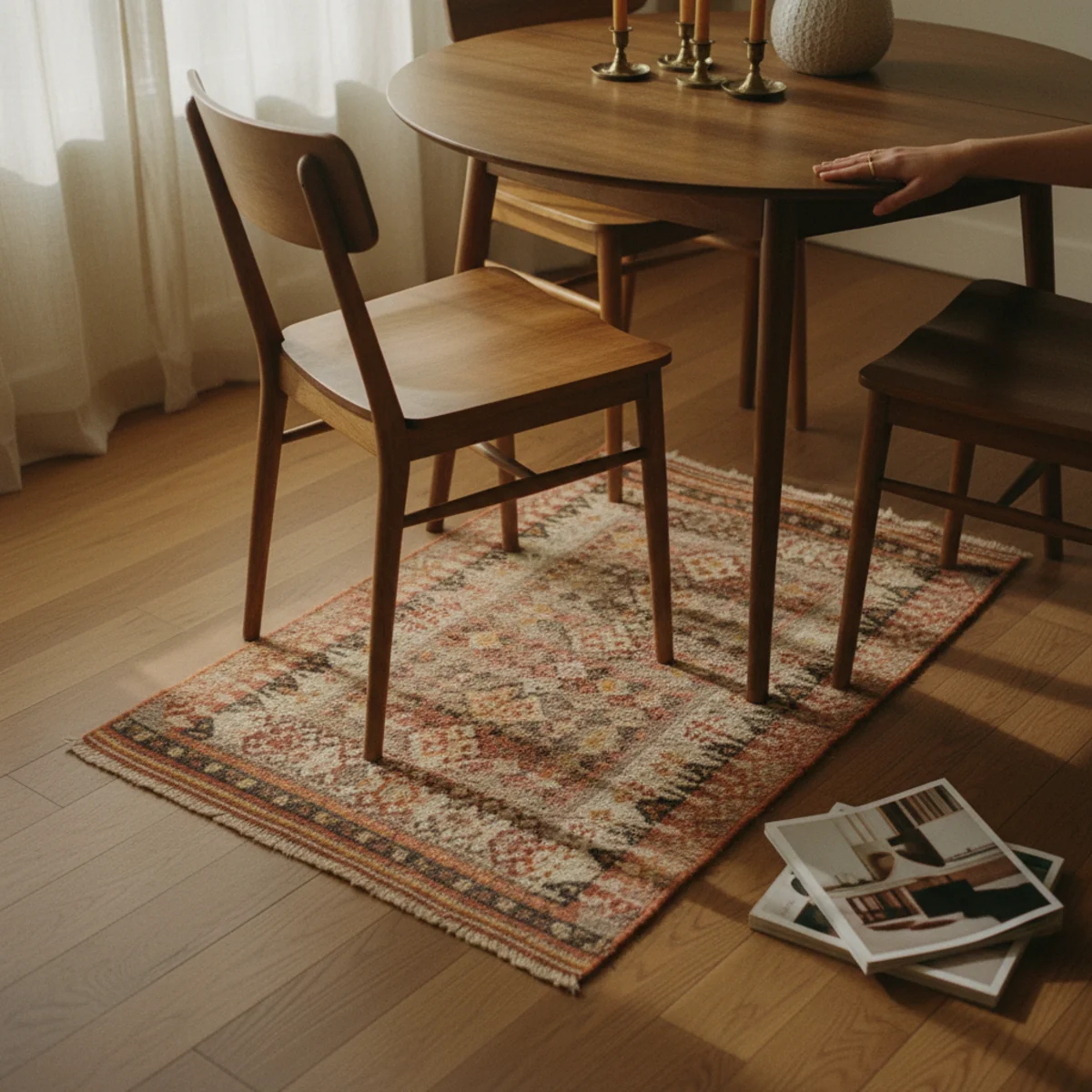
A small rug under the dining table defines the nook as its own zone within the larger room — same trick as the entry runner, applied to dining. The rug should be large enough that all chair or banquette legs sit on it (typically 6x9 or 8x10 for nook tables), in a durable wool, flatweave, or low-pile material that handles food spills and chair-leg wear.
Rug specs: 6x9 feet for round tables 36 to 48 inches, 8x10 feet for round tables 48 to 60 inches or oval tables. The rug should extend at least 24 to 36 inches beyond the table edge on all sides so chairs (or banquette feet) sit fully on the rug when pulled out. Materials: wool flatweave (Marrakech, kilim) at $200 to $600, vintage Persian wool at $200 to $500 (only if you're comfortable with eventual food stains and wear — they add character but mark the rug), durable indoor-outdoor polypropylene ($100 to $300 if young kids or messy eaters). Avoid: high-pile wool (food gets ground in), expensive Oriental rugs (you'll be too protective for daily use), synthetic shag.
AFFILIATE SLOTFLOORWool flatweave or durable rug 6x9 or 8x10 extending 24-36 inches beyond table edgesAdd affiliate URL when configuredWhy it works
Because the rug defines the dining nook as its own zone within the larger kitchen, breakfast room, or open-plan space. Without a rug, the nook visually bleeds into the surrounding floor and reads as part of the kitchen or living room rather than as its own dining space. The rug also adds the warm-textile layer to a room otherwise dominated by hard surfaces (table, chairs, floor), making the nook feel cozier and more like its own room.
Pro tip — Use a Ruggable washable rug if you have young kids or messy eaters — the machine-washable design means food spills become minor cleanup rather than dry-cleaning crises, and the warm-home aesthetic preserves. The trade-off (slightly thinner profile than traditional rugs) is more than worth the maintenance ease in a dining context.
Wool flatweave rug extending beyond chair perimeters — the boundary that defines the nook as its own zone. See also: Ruggable
11Add a Wall Sconce or Two
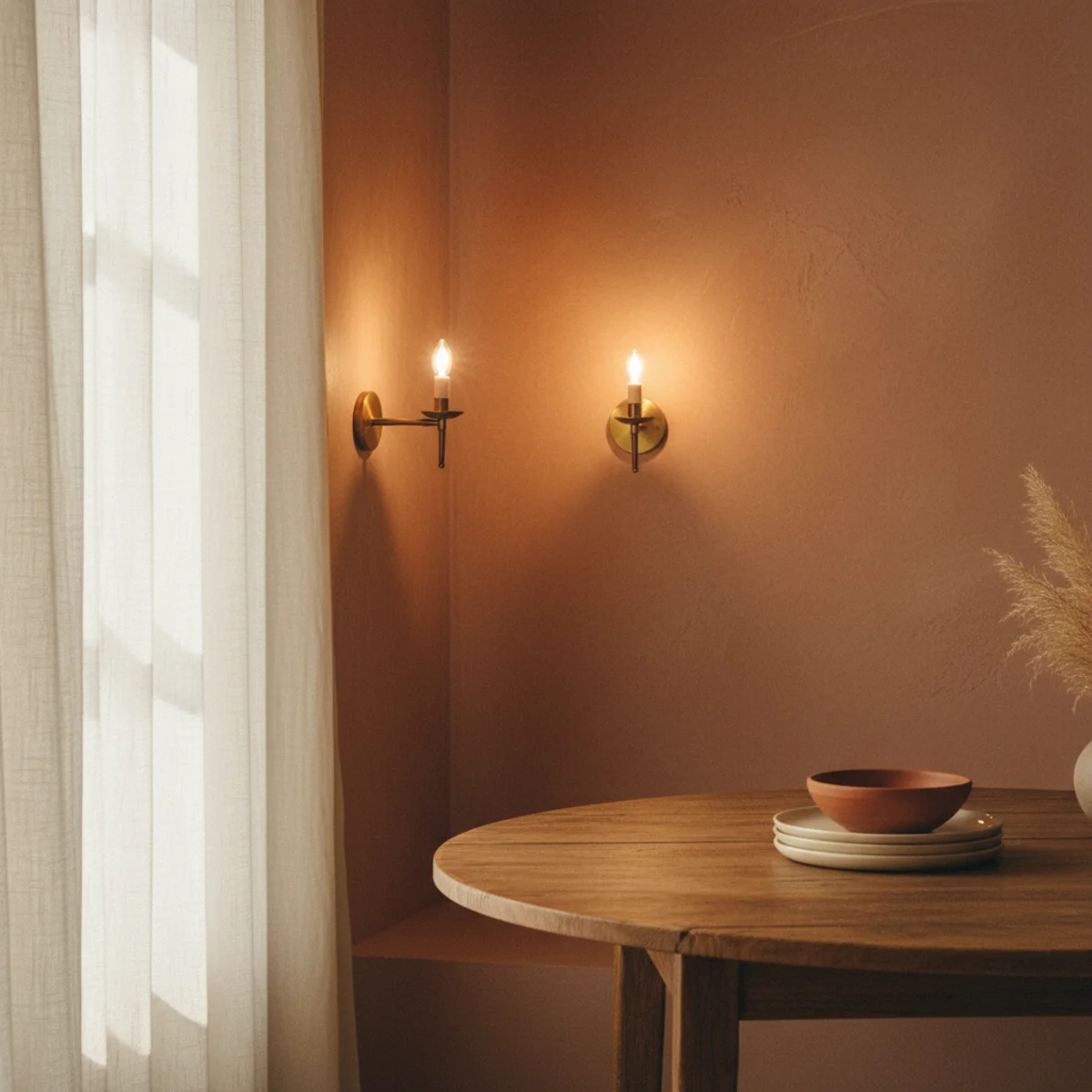
Beyond the pendant over the table, dining nooks benefit from one or two wall sconces flanking the banquette or on the open wall. The sconces add ambient warm light that the pendant alone can't provide, especially during evening meals when the room beyond the table needs gentle illumination. Wall sconces at $50 to $250 each transform the nook from one-light setup to layered lighting.
Sconce specs: 1 or 2 wall sconces mounted at 60 to 66 inches above the floor (above seated head height when sitting at the banquette). Position above or beside the banquette, or on the wall opposite the banquette. Sources: vintage brass wall sconces at $40 to $150 each from Marketplace or estate sales, Schoolhouse Electric at $250 to $500, IKEA HEKTAR at $30 to $50 each. Wire each sconce to a 2700K LED bulb at 200 to 400 lumens (dimmer than living-room sconces because they're supplementary to the pendant). Wire to a separate switch or dimmer from the pendant so you can control each light source independently — sconces alone for a dim evening, sconces plus pendant for full meals.
AFFILIATE SLOTLIGHTING1-2 wall sconces at 60-66 inches above floor with 2700K bulbs at 200-400 lumens on separate dimmerAdd affiliate URL when configuredWhy it works
Because the pendant illuminates only the table; the wall sconces illuminate the surrounding space (banquette back, art on the wall, the broader nook area). Without sconces, the area beyond the table sits in dim shadow during evening meals, which feels claustrophobic rather than intimate. The sconces add the soft ambient layer that turns intimate-cocoon into warm-and-spacious. Two-light setup is the minimum for proper nook lighting; the pendant plus sconces combination works in nearly every nook.
Pro tip — Position one wall sconce directly behind the banquette so it illuminates the backs of cushions and any art on the wall above — the indirect lighting from this position is the softest and most flattering for evening dining. The other sconce can flank the opposite side or sit on a perpendicular wall for balanced light distribution.
Vintage brass sconce above the banquette — the soft ambient layer that supplements the pendant over the table. See also: Schoolhouse Electric
12Lean Art or a Small Shelf Nearby
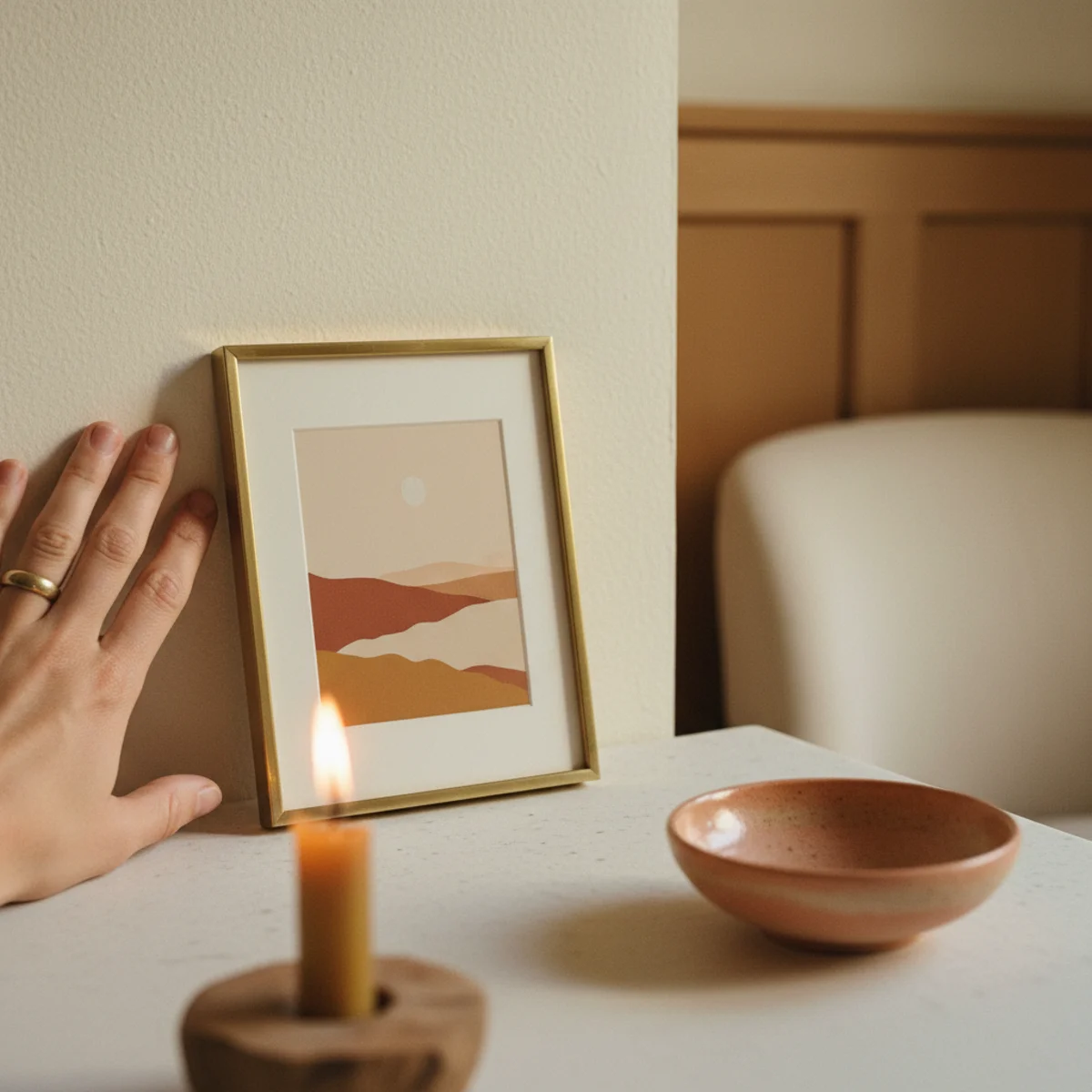
The walls around a dining nook benefit from one or two pieces of art or a small shelf — leaning art on a small mantel or ledge, a single framed piece above the banquette, or a small open shelf displaying ceramics. The wall decoration anchors the nook visually and signals that this is a real room, not just leftover space.
Wall decoration options: (1) ONE LARGE PIECE OF ART above the banquette — 24 to 36 inches in long dimension, hung with bottom edge 6 to 12 inches above the cushion tops (lower than standard art-hanging height because viewing happens from seated). Subject: calming landscapes, abstracts, vintage botanicals, single-color photography. Frame: warm wood or aged brass. (2) PICTURE LEDGE — small 24 to 36-inch ledge holding 2 to 3 small framed pieces leaning ($25 to $35 in materials per diy-home-decor-ideas, or $80 to $150 retail). (3) SMALL OPEN SHELF — single floating shelf displaying ceramics, a small plant, a candle or two. (4) GALLERY WALL — smaller than typical (3 to 5 small pieces) given the limited wall space, following gallery-wall-ideas rules. Any of these works; pick based on wall size and existing collection.
AFFILIATE SLOTWALLOne large piece, picture ledge with leaning pieces, small open shelf, or 3-5 piece gallery wall above banquetteAdd affiliate URL when configuredWhy it works
Because empty walls around the dining nook leave the small space feeling unfinished — the bench, table, and pendant define the dining function but the walls need to participate in the warm aesthetic. One piece of art or a small shelf brings the warm-home decor approach into the nook walls, completing the room visually. Without wall decoration, the nook reads as 'small dining table in plain corner' rather than 'designed warm dining nook.'
Pro tip — Hang the art or position the shelf at seated eye level (51 to 55 inches above the floor) rather than standing eye level — diners view the wall from seated position during meals, and lower-hung art reads more comfortable for the seated viewing angle. The lower position is one of those small height adjustments that distinguishes deliberate nook design from generic room styling.
Picture ledge with leaning art above the banquette — wall decoration that completes the nook's warm-home aesthetic. See also: gallery-wall-ideas
How to create a dining nook step by step
Use the corner's light and shape. Work in this order.
- 1Pick the corner by the light
Choose a corner or bay that gets morning or daytime light — that's what makes a nook the spot everyone gravitates to.
- 2Plan the seating
Add a banquette or bench along the wall side for space-smart seating, with chairs on the open side for flexibility.
- 3Choose a corner-friendly table
Set a round or oval table, ideally on a pedestal base, to fit the corner and ease circulation.
- 4Light it low and warm
Hang a pendant 30 to 34 inches above the table center, and add a sconce for evening. Finish with cushions, a rug, and a simple centerpiece.
Quick tips
- Build the nook where daytime light lands; the light is why people gravitate to it.
- Choose a round or oval table on a pedestal base to fit the corner and maximize legroom.
- Hang the pendant 30 to 34 inches above the table and center it on the table, not the room.
- Add under-bench storage to use the corner's dead space.
- Use washable cushion covers and a flat-weave rug to handle food traffic.
- Mix a bench with chairs to keep the nook flexible and easy to get in and out of.
Dining nooks for different spaces
An L-shaped banquette with a round table and a low pendant, built into a dead corner.
A cushioned window seat with a small table pulled up — the classic light-filled breakfast nook.
A bistro table and two chairs against a wall, with a sconce and a small rug to define it.
A banquette that backs onto the kitchen island, defining the eating zone within the larger space.
The nook always wins. Build the cozy corner and watch the formal table fill up with mail instead of people.
Frequently asked questions
What size table works for a dining nook?+
How high should I hang a dining nook pendant?+
Should I build a banquette or use chairs in a dining nook?+
What kind of lighting do dining nooks need?+
How do I make a dining nook feel cozier?+
What goes on a dining nook table for everyday styling?+
A dining nook turns a dead corner into the most-used seat in the house, and it doesn't need a custom build. Pick the corner with the best light, add a bench and a round table, and hang a pendant low over the center. We'd build a simple banquette into the corner before buying a bigger dining table — people gravitate to the cozy, well-lit nook every time, and the formal table tends to end up holding the mail. Build where people actually want to sit.