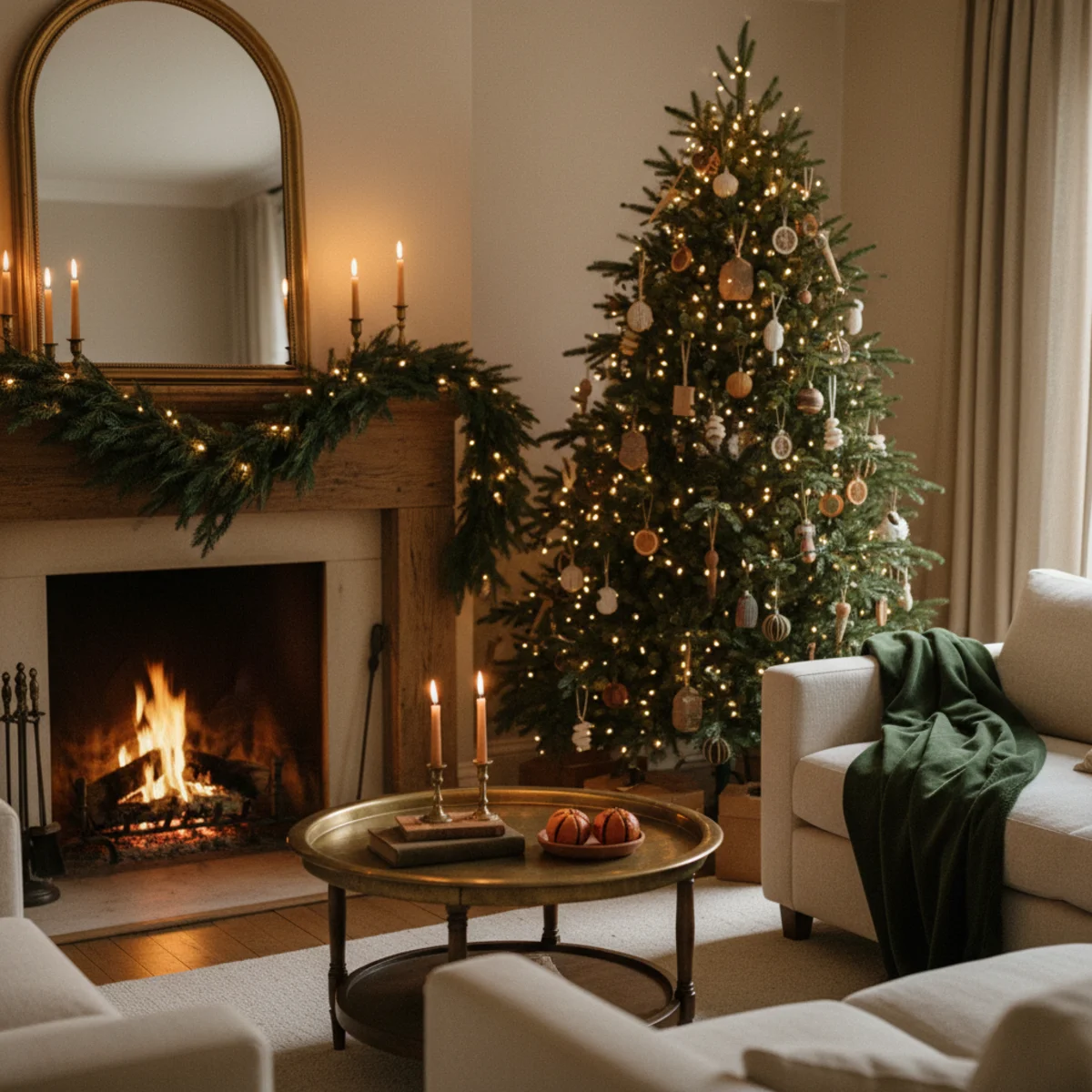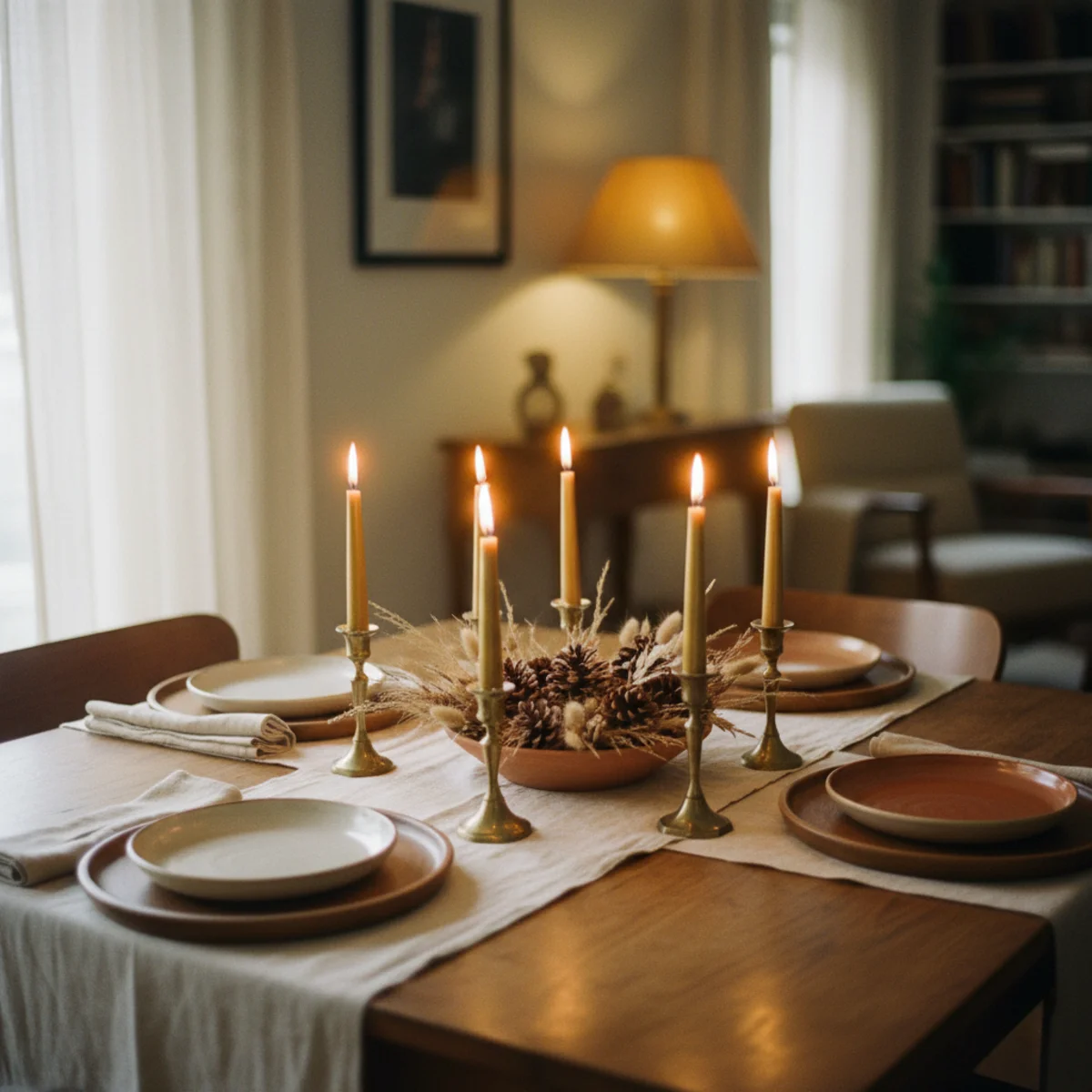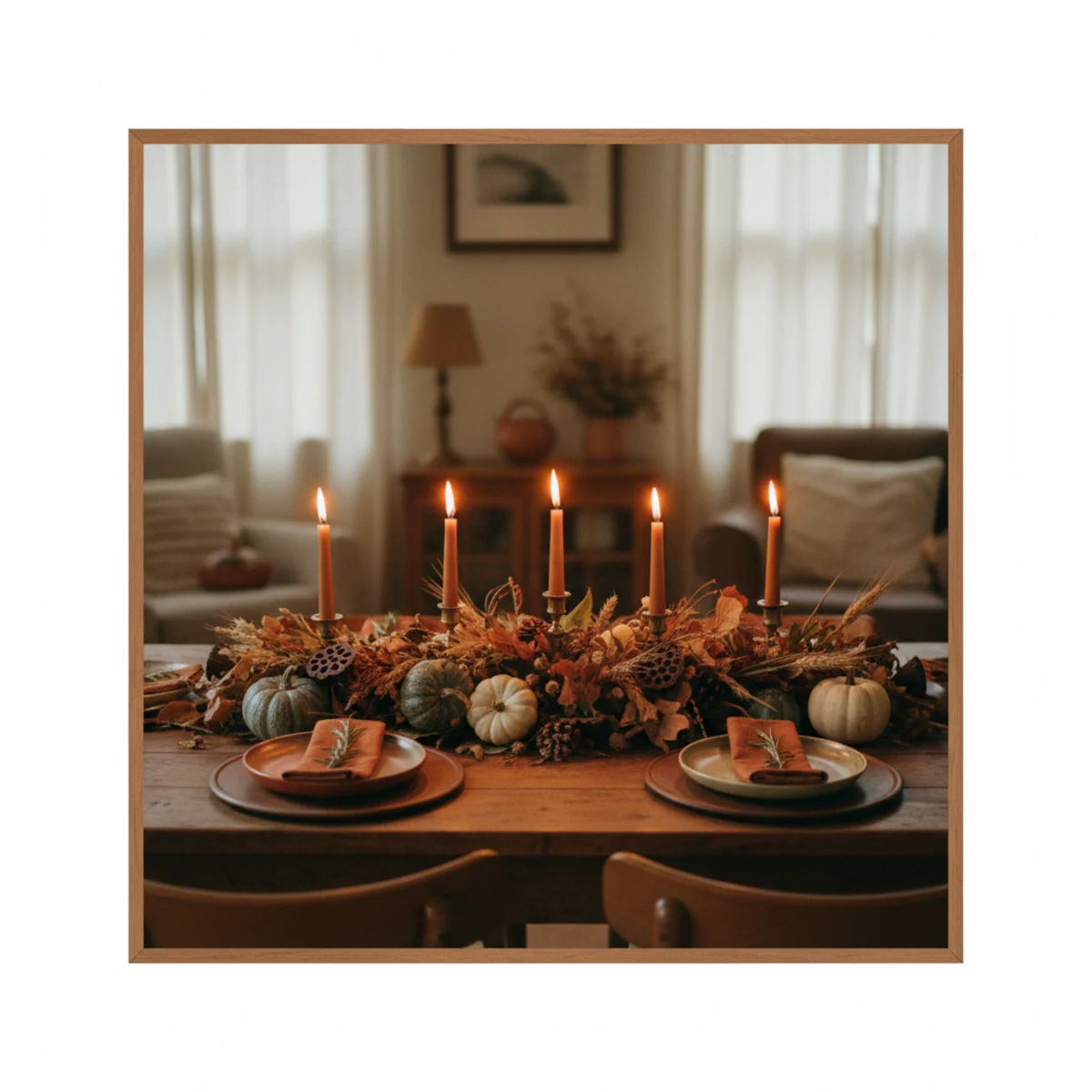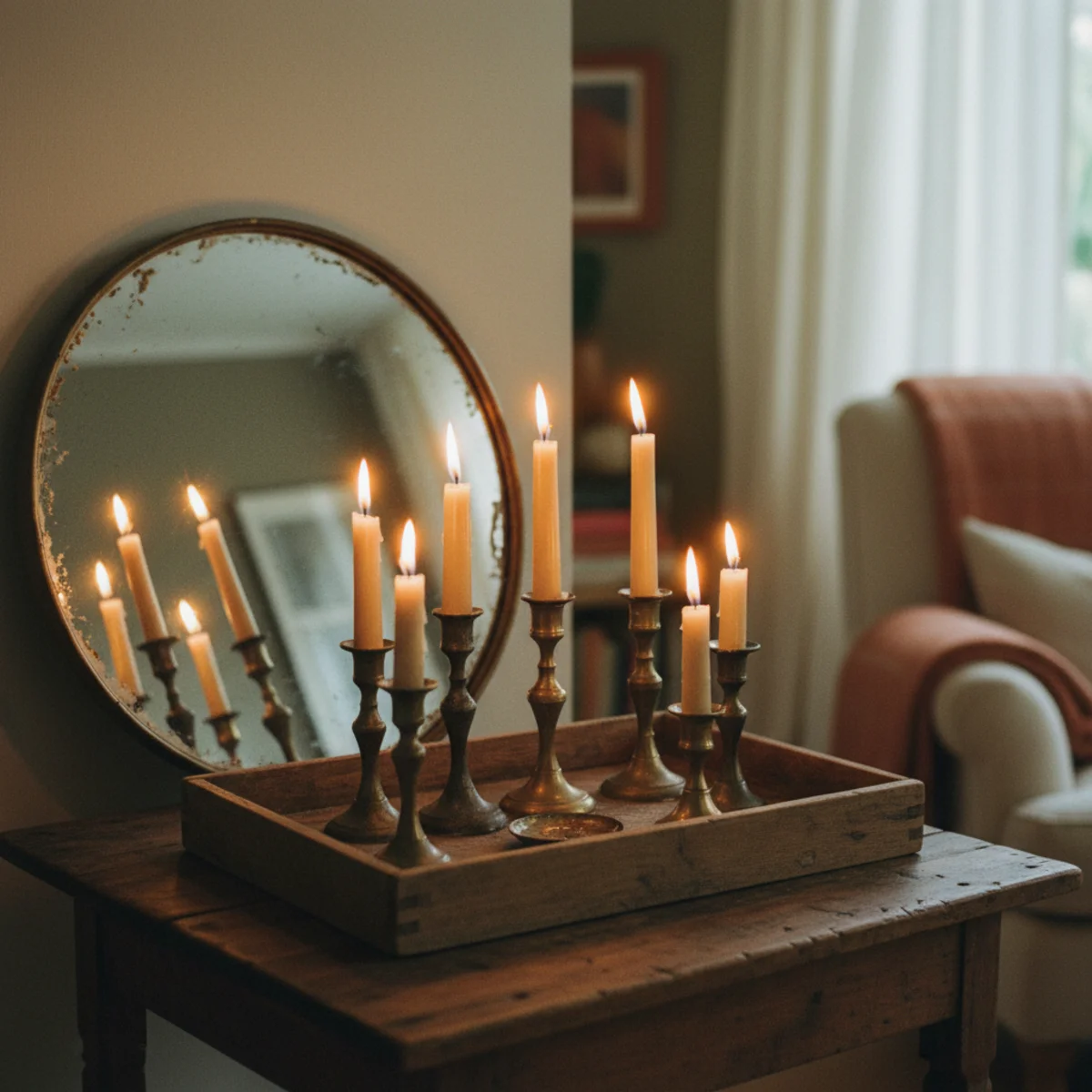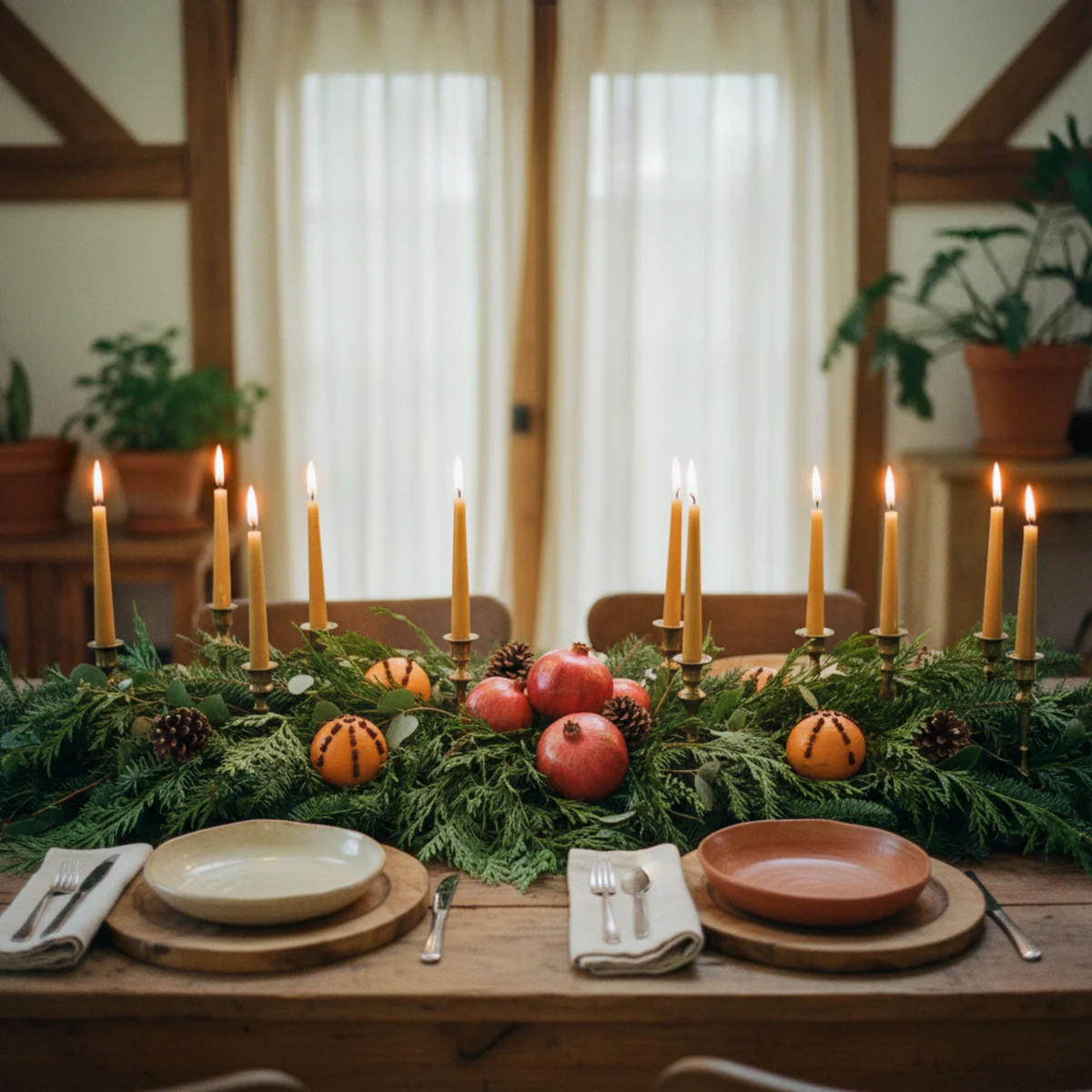
These twelve holiday table decor principles apply to any winter holiday gathering — Thanksgiving, Christmas, Hanukkah, New Year's, or simply the year's most-significant family dinner. Each principle names specific materials (fresh pine garland, beeswax tapers, loose linen napkins), exact arrangement decisions (centerpiece below 14-inch sightline, family-style service platters), and the seasonal-specific touches (clove-studded oranges, pomegranates, evergreen sprigs) that read as genuinely winter-seasonal rather than commercially holiday.
Most holiday table failures come from the same errors as ordinary formal tables but amplified — too-tall centerpieces blocking conversation across a table already overcrowded with people, too many competing pattern and color elements (commercial holiday china, gold chargers, metallic placemats, red napkins, novelty centerpieces), or the opposite extreme: an attempt at restraint that reads as insufficient for the occasion. The twelve principles below provide the middle: warm, abundant, genuinely seasonal, and scaled to support the meal's most important function — the conversation of the people seated around it.
By the end of this guide, you'll know how to create a genuinely warm holiday table — the evergreen garland running the center, the beeswax candle cluster, the low centerpiece keeping sightlines open, the mismatched natural plates, the clove-studded oranges, the loose linen napkins, the seasonal fruit, the brass and wood material language, the herb sprigs and pinecones, the dim room lighting that makes candles atmospheric, the handwritten place cards, and the abundant-but-un-fussy principle that ties it all together.
WHAT'S INSIDE
- Why fresh evergreen garland running down the table center outperforms any commercial centerpiece
- The beeswax candle cluster — more atmospheric than any other holiday lighting source
- The low-centerpiece discipline that keeps conversation possible at a crowded holiday table
- The abundant-but-un-fussy principle — the single organizing principle of warm holiday tables
The best holiday tables are warm and gathered, not formal and stiff. Greenery, candlelight, and a centerpiece you can see over do more than any matching set.
— Domino entertaining feature [citation needed — verify before publish]
What makes a holiday table warm?
A warm holiday table layers natural greenery, abundant candlelight, relaxed natural place settings, and a low centerpiece you can see over into a festive but un-fussy table built for gathering. It's distinct from the formal holiday table — the goal isn't matching china and a towering arrangement, but a warm, abundant table where guests can see each other and linger.
The defining moves carry over from any cozy tablescape, dressed for the season. A loose evergreen runner instead of a formal centerpiece; beeswax tapers and clustered candles at face height; mismatched-but-related plates over a matched set; natural touches like clove-studded oranges, pomegranates, and herb sprigs. Keep the centerpiece low so it brings the table together rather than walling guests off, and let candlelight carry the room. Abundant and natural, not glittery and formal, is what makes it warm.
More in Entertaining you may love
See allWhy warm holiday tables are everywhere in 2026
As holiday entertaining went casual and the warm-home aesthetic took over the season, the natural, gathered holiday table replaced the formal matched-china one — Pinterest's holiday table and Christmas tablescape searches spike every season, toward greenery, candlelight, and natural settings over glitter and formality.
The honest appeal is that warm holiday tables make guests linger where formal ones make them careful. As the cozy-Christmas and natural-decor movements spread, the holiday table followed: an evergreen runner, beeswax candlelight, and relaxed natural settings create a gathered, abundant table that people don't want to leave, while a stiff formal one keeps everyone minding their manners. The 2026 holiday table is warm, natural, and built for the lingering that makes a holiday meal memorable.
12 holiday table decor ideas
01Run an Evergreen Garland Down the Center
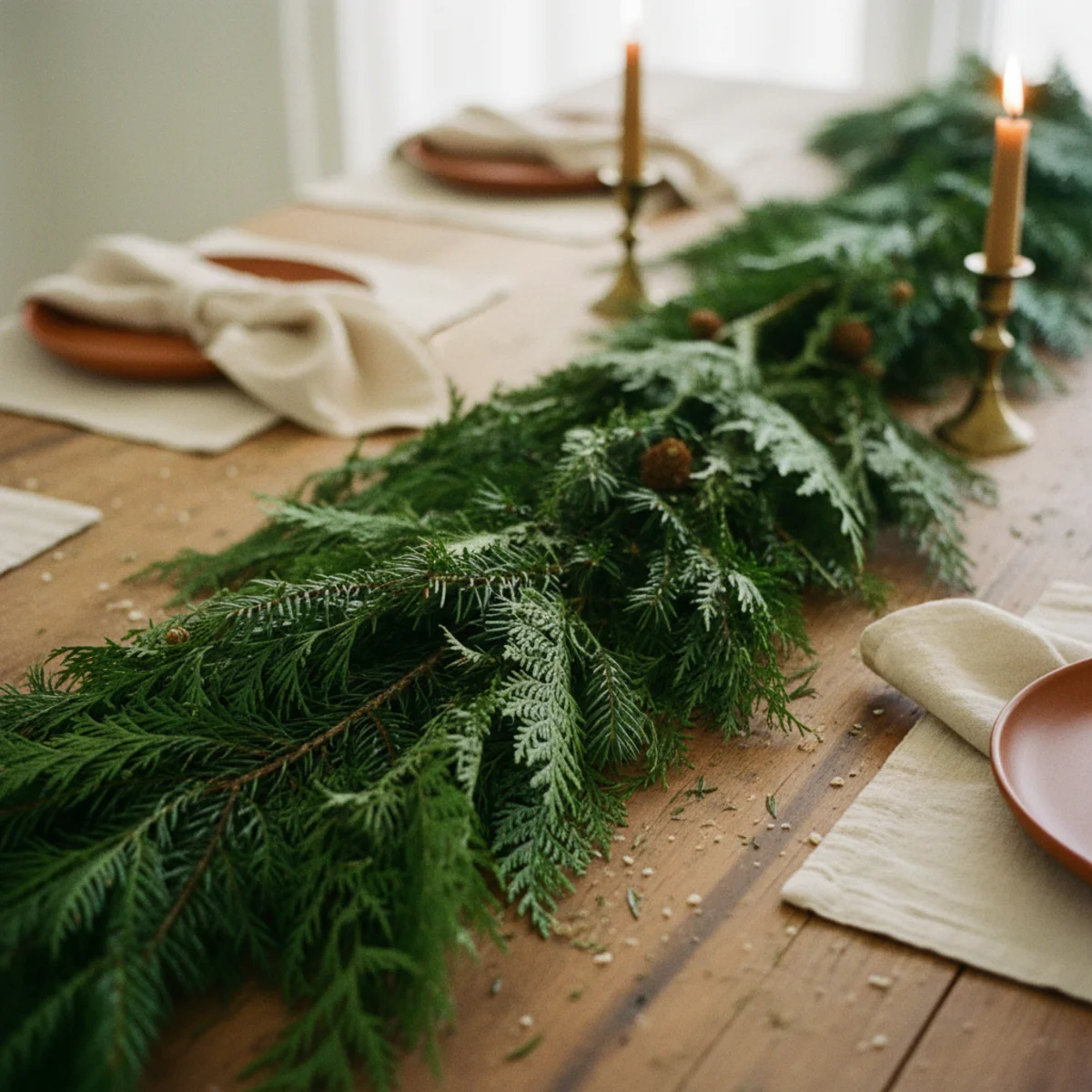
The foundational holiday table element: a strand of fresh pine, cedar, eucalyptus, or mixed evergreen garland running the length of the table down the center. The garland provides the green organic base that every other holiday table element builds against. Fresh garland costs $8-25 per strand; the visual impact is foundational. Everything else on the holiday table reads against this organic center.
Holiday table garland specifics: GARLAND TYPE — fresh pine garland ($8-15 per 6-foot strand from tree lots, garden centers, or florists), fresh cedar garland ($10-20 per 6-foot strand), fresh eucalyptus ($15-30 per 6-foot strand from Trader Joe's or specialty florists), or mixed evergreen from local florist ($20-40 per strand). MIXED FRESH APPROACH — a DIY garland assembled from fresh-cut branches (pine, cedar, fir, eucalyptus, holly with berries) is the most authentic. Cut branches 8-12 inches long, wire together overlapping in one direction along a central cord. GARLAND LENGTH — table length plus 6-8 inches of overhang on each end (a 72-inch dining table takes an 84-inch garland). LAYING TECHNIQUE — lay flat down the table center, with slight undulation (not perfectly straight). Let ends trail slightly over the table edge. SUPPLEMENTAL ELEMENTS TUCKED INTO GARLAND — small pinecones wired in, dried orange slices threaded on wire, holly berries, small brass ornament balls, dried pomegranate sections. FRESHNESS — mist fresh garland with water spray bottle every day; it lasts 1-2 weeks indoors with misting. SCENT — fresh pine and cedar have the specific seasonal scent that read as holiday immediately.
AFFILIATE SLOTCENTERPIECEFresh pine, cedar, or eucalyptus garland table length + 6-8 inches, laid down center with slight undulation; supplement with pinecones, holly, dried citrusAdd affiliate URL when configuredWhy it works
Because fresh pine, cedar, or eucalyptus carries the actual scent of the season — the terpenes released from fresh cut conifers are among the most-immediately recognized holiday-season signals in human olfactory memory. No commercial centerpiece can replicate this. The organic shape of fresh-cut garland also adds natural movement and irregularity that commercial alternatives specifically eliminate for uniform product quality. The garland's authentic source (tree lot, garden, forest-adjacent) signals real-season connection; commercial centerpiece signals retail season.
Pro tip — Buy fresh garland 2-3 days before the holiday gathering and store outdoors (or in an unheated garage) until the table is set — fresh garland kept indoors at room temperature loses freshness within 3-5 days, while garland stored in cold temperatures stays fresh for 1-2 weeks. The pre-purchase + outdoor-storage approach gives you time to set the table without racing against garland freshness.
Fresh evergreen garland down the table center — the organic foundation that everything else builds against. See also: cozy-tablescape-ideas
02Cluster Beeswax Candles
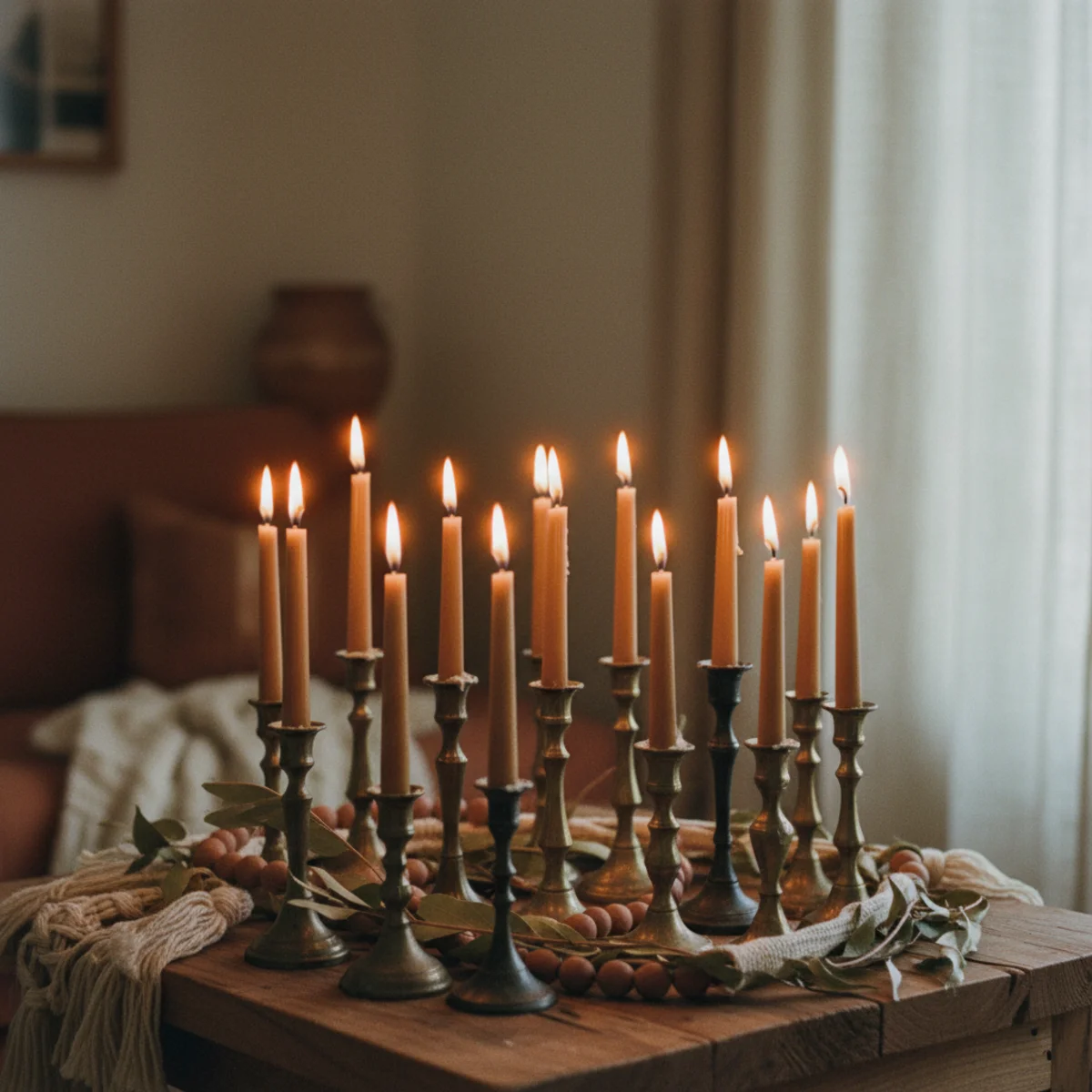
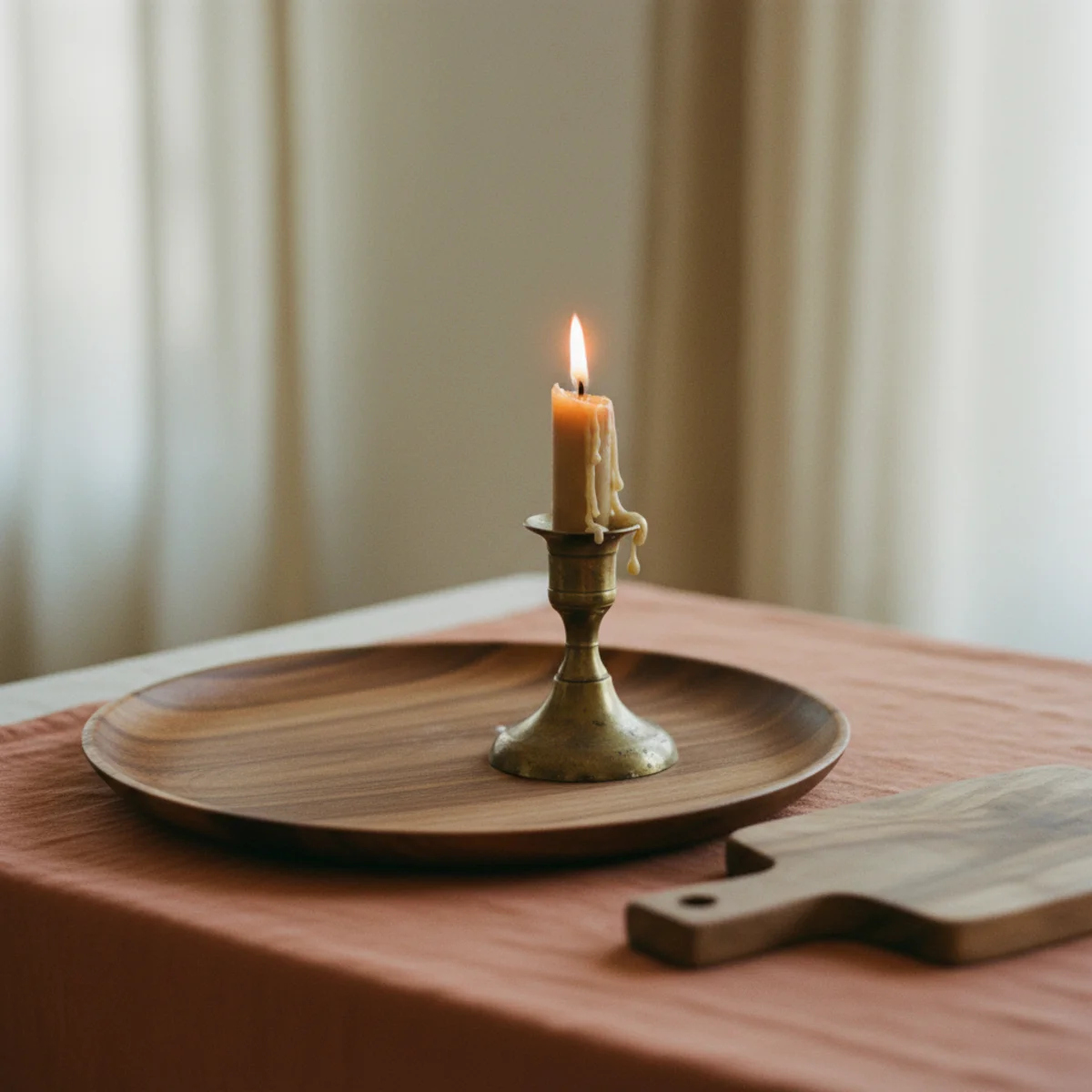
The holiday table's candles should be more than the everyday taper line — cluster 7 to 12 beeswax tapers in varied vintage brass holders plus 3 to 5 pillar candles of varied heights distributed along the garland. The increased candle count for the holiday table produces the atmospheric glow that the occasion demands. Cost: $40-80 for the holiday candle set. Light 30 minutes before guests sit down.
Holiday candle cluster specifications: TAPER ARRANGEMENT — 7 to 12 beeswax tapers in a cluster of varied brass holders centered or distributed along the garland. More tapers than a typical dinner's 4-6. PILLAR ADDITIONS — 3 to 5 pillar candles of varied heights (4-inch, 6-inch, 8-inch pillars in natural beeswax) placed at intervals along the garland between taper clusters. HOLDER VARIETY — mix vintage brass candlesticks with simple ceramic holders with a vintage cut-glass holder or two. The variety reads collected; the matching brass color family keeps it cohesive. BEESWAX SPECIFICALLY — pure beeswax produces warm honey-gold flame, releases mild honey scent, and burns significantly longer than paraffin (important for a 3-4 hour holiday dinner). Stock 2 boxes of beeswax tapers and all 5 pillars for the table. HEIGHT VARIATION — the mix of taper heights (in holders of 3 to 12 inches) and pillar heights (4 to 8 inches) creates the three-height-plane composition within the candle arrangement itself. LIGHTING PROTOCOL — light all candles 25-30 minutes before guests are seated so the full cluster is glowing at arrival. This is a larger and more deliberate pre-lighting ritual than the weeknight candle-lighting.
AFFILIATE SLOTCANDLES7-12 beeswax tapers + 3-5 beeswax pillars in varied brass holders along garland; light 25-30 minutes before seatingAdd affiliate URL when configuredWhy it works
Because the holiday table is the year's most-important gathering and should receive proportionally more atmospheric attention than weeknight dinners. The additional candles increase the warm light dramatically (12 lit tapers produce significantly more warm ambient light than 4-6) and create the specific multi-source warm glow that the holiday dinner atmosphere requires. The occasion deserves the full candle investment; the weeknight dinner does not.
Pro tip — Assemble the full candle cluster on the empty table and photograph it before adding any other elements — confirming the candle arrangement works before surrounding it with garland, plates, and glasses is easier than trying to adjust candle positions after the table is fully set. The arrangement photo also serves as a reference for future years.
Twelve tapers plus five pillars in mixed brass holders along the garland — the full warm-glow holiday candle presence. See also: candle-styling
03Keep the Centerpiece Low
The holiday table centerpiece discipline is even more critical than for ordinary dinners — holiday tables are crowded with more guests than weeknight dinners, all needing to converse across a table already loaded with more garland, candles, and service pieces than usual. Every centerpiece element should remain below 14 inches above the table surface. The only exception: narrow taper candles in 8-12 inch holders.
Holiday table centerpiece height discipline: HEIGHT LIMIT — same 14-inch rule as ordinary tablescapes (per cozy-tablescape-ideas principles) but more demanding to maintain with holiday garland, candle clusters, and seasonal elements adding to visual density. ELEMENTS TO KEEP LOW — pomegranates (4-6 inches): excellent. Small pumpkins or gourds: 3-6 inches. Pinecones: 2-4 inches. Clove-studded oranges: 3-4 inches. Candles in low holders: 4-8 inches. All work. ELEMENTS TO AVOID — tall flower arrangements exceeding 14 inches, candlestick clusters in very tall holders (above 14 inches total height including candle flame), stacked ornament towers, tall sculptural centerpieces. EXCEPTION — taper candles are acceptable above 14 inches because their narrow flame diameter doesn't block sightlines meaningfully. A 10-inch taper in a 6-inch holder (16 inches total) is acceptable; a 12-inch wide floral arrangement at 16 inches is not. PRACTICAL TEST — sit at the table during setup and look across to the opposite seat. If you cannot see the face of the person who would be seated there without shifting, the centerpiece is too tall. For holiday tables with 8-12 guests across a longer table, test from multiple positions.
AFFILIATE SLOTDISCIPLINEAll elements below 14 inches; taper candles the only acceptable exception above 14; test from seated position on all sidesAdd affiliate URL when configuredWhy it works
Because holiday dinners are the occasions when cross-table conversation matters most — the family gathering or holiday dinner specifically exists for the conversation of people who may not see each other often. Any obstruction to this conversation is a more-significant interference at holiday tables than at ordinary dinners. The occasion specifically warrants more visual abundance AND more conversation priority simultaneously, which requires keeping all visual abundance low enough not to obstruct.
Pro tip — Use a combination of garland width and candle clusters for visual abundance rather than height — a wide 8-10 inch garland with clustered candles, pomegranates, and seasonal elements spread across the full table length provides abundant visual richness at low-profile height. Horizontal spread beats vertical height for holiday tables.
Full holiday abundance all below 14 inches — the cross-table sightline preserved even at the year's most-abundant table. See also: cozy-dinner-party-ideas
04Use Mismatched Natural Plates
Holiday tables specifically benefit from the mismatched-but-coordinated plate approach (per cozy-tablescape-ideas warm-tableware principles) — cream or warm-toned stoneware base with varied accent plates from different sources. Holiday gathering size (8-14 guests) makes matched-set formal china both expensive and aesthetically stiff; mixed collected plates read as warm and abundant.
Holiday mismatched plate strategy: BASE DINNER PLATES — 10-12 matching cream stoneware or warm-toned ceramic dinner plates as the foundation. East Fork, Heath, Farmhouse Pottery, or thrifted white ironstone at $150-500 for the set. ACCENT SALAD PLATES — 6-10 accent plates from different sources: some vintage hand-painted plates from estate sales ($3-10 each), some thrifted ironstone salad plates ($2-8 each), some artisan ceramic plates from local pottery ($20-50 each) — all in cream, warm white, or earth-tone palette. CHARGER PLATES — wooden round chargers ($20-50 each) or rattan chargers ($15-35 each) under dinner plates for the holiday layered-place-setting effect. EXTRA SERVICE PIECES for family-style — large ceramic platters ($25-150 each), wooden boards for bread or carved meats, vintage ceramic serving bowls. THE HOLIDAY ABUNDANCE PRINCIPLE — holiday tables benefit from slightly more visual richness in the place settings than everyday dinners. The charger under the dinner plate, the extra accent plate for bread or first course, the wine glass plus water glass at each setting — all these additions are appropriate for the occasion.
AFFILIATE SLOTDISHWARECream stoneware base plates + varied accent salad plates from estate sales + wooden/rattan chargers + large ceramic platters for family-style serviceAdd affiliate URL when configuredWhy it works
Because the holiday gathering is the year's most-social occasion — it typically includes multiple households, mixed generations, and people who haven't seen each other since the previous holiday. The warm-collected mismatched plates signal 'familiar household gathered' where formal matched china signals 'special-occasion performance.' Holiday tables should feel like the best version of an ordinary family gathering, not like a catered event. Mixed plates from accumulated household history communicate this more effectively than any formal china set.
Pro tip — Add 2-4 extra plates per table setting to account for holiday serving needs — holiday meals often involve multiple courses or self-service from platters, and having a consistent spare plate per guest for bread, first course, or debris management prevents the plates-running-out problem that plagues holiday dinners planned for exact guest count.
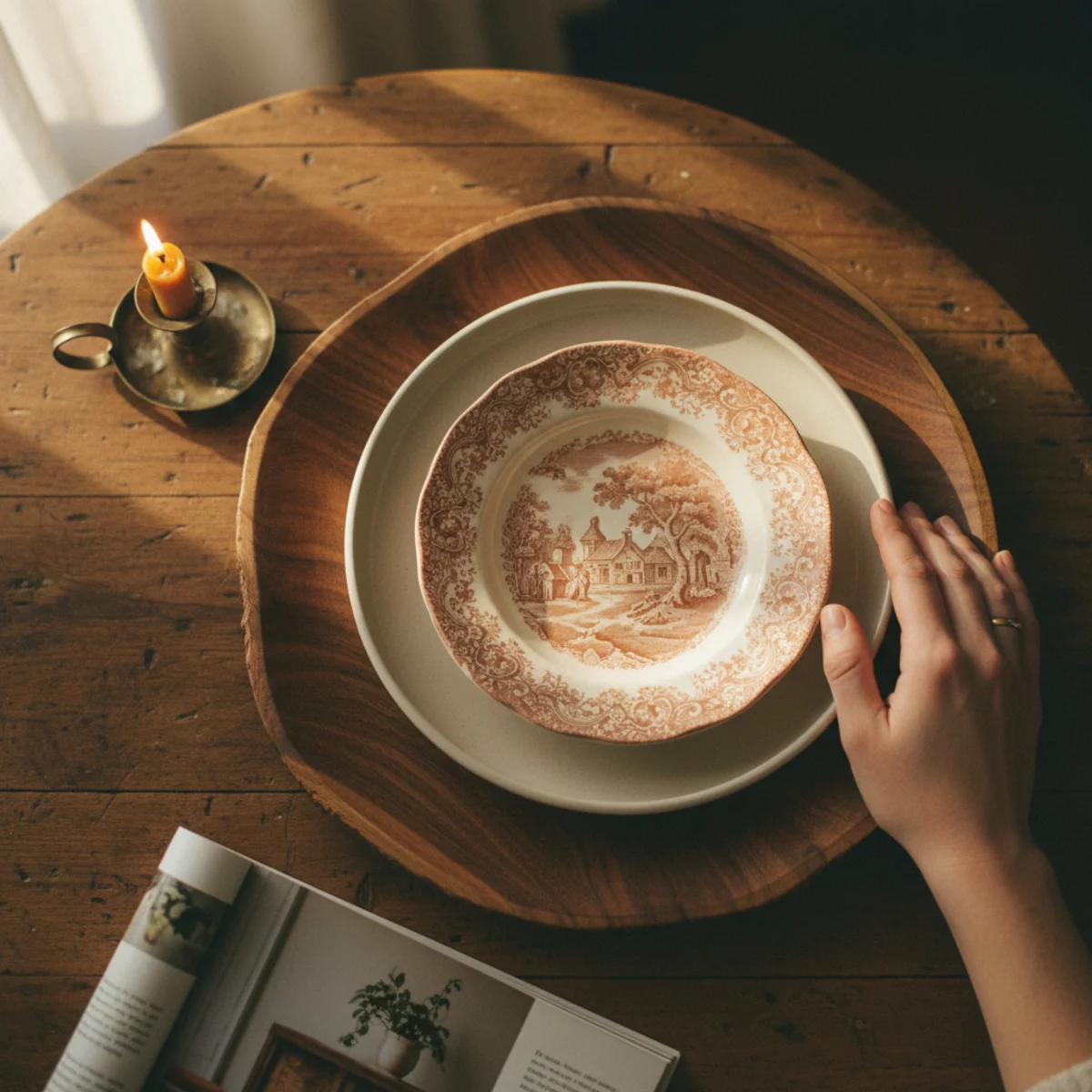
Wooden charger, cream stoneware, vintage accent plate — holiday place setting that reads warm-collected rather than formal catered. See also: cozy-tablescape-ideas
05Add Clove-Studded Oranges
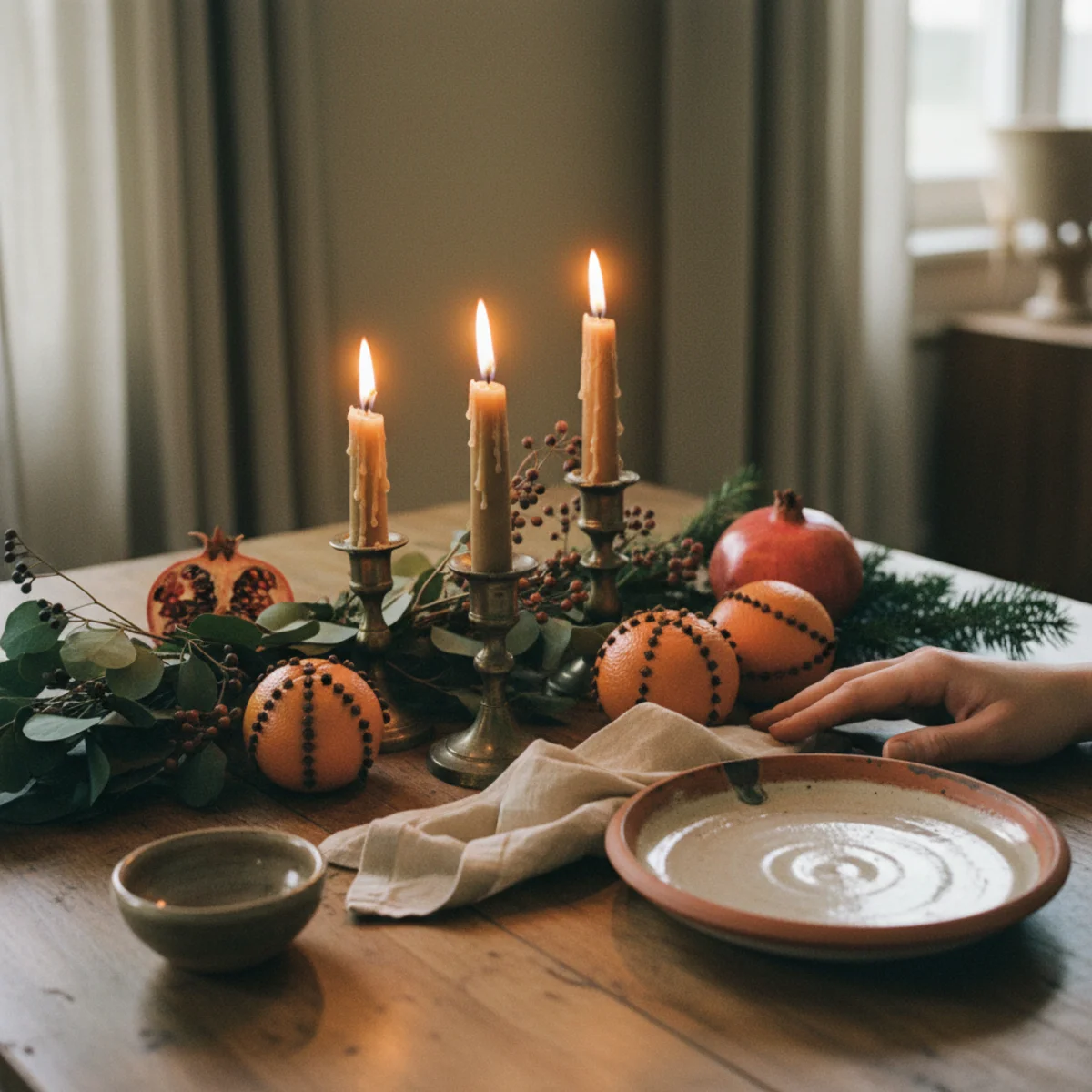
Clove-studded oranges (pomander balls) nestled throughout the garland are the holiday table's signature seasonal scent object — the citrus-and-clove fragrance is specifically winter holiday, the warm orange color contrasts the green garland, and the studding project involves household members in decoration preparation. Cost: $5-15 for materials to make 6-10 pomanders.
Clove-studded orange pomander process: MATERIALS — firm navel oranges or small mandarin oranges ($3-6 for a bag), whole cloves ($3-8 for a jar from grocery spice section), toothpick or skewer for pre-piercing the orange skin. PROCESS — pierce orange skin with toothpick in desired pattern (random coverage, spiral pattern, grid, or decorative design). Press whole cloves into pierced holes with firm pressure until clove base sits flush with orange skin. A fully-studded orange takes 20-40 minutes and 50-75 cloves. A partial pattern takes 10-15 minutes. SEMI-STUDDED OPTION — cover only 60-70% of the orange for visual interest and less time investment. CURING — newly-made pomanders are fragrant immediately; they become more fragrant over 2-3 days as the clove oil penetrates the orange peel. PLACEMENT — nestle 5-10 pomanders throughout the table garland at intervals. The warm orange color punctuates the green garland; the clove-and-citrus fragrance fills the table zone. LONGEVITY — pomanders last 3-5 days at room temperature before orange skin starts to shrink. Make 1-2 days before the gathering. ALTERNATIVE — dried orange slices (thin slices dried at 200°F for 4-6 hours) threaded on wire through the garland as a non-fragrant citrus element.
AFFILIATE SLOTSEASONAL5-10 clove-studded oranges ($5-15 total) nestled throughout garland; make 2-3 days before gathering; citrus-and-clove scent filling the table zoneAdd affiliate URL when configuredWhy it works
Because the clove-studded orange is among the oldest holiday season decorations in European tradition — the combination of orange (formerly rare and precious, associated with winter gift-giving) and cloves (expensive imported spice also associated with winter preserving) created a scent combination specifically associated with the winter holiday season for centuries. The making of pomanders is also a participatory household activity; children and adults study-together create them. Objects made with household members carry meaning that purchased decorations lack.
Pro tip — Make pomanders as a family or household activity 2-3 evenings before the holiday gathering — the pomander-making is the kind of pleasant repetitive task that enables unhurried conversation. The 20-40 minutes per orange can involve multiple people simultaneously (one person piercing, one pressing cloves) with a good film or music playing. The activity IS part of the holiday preparation.
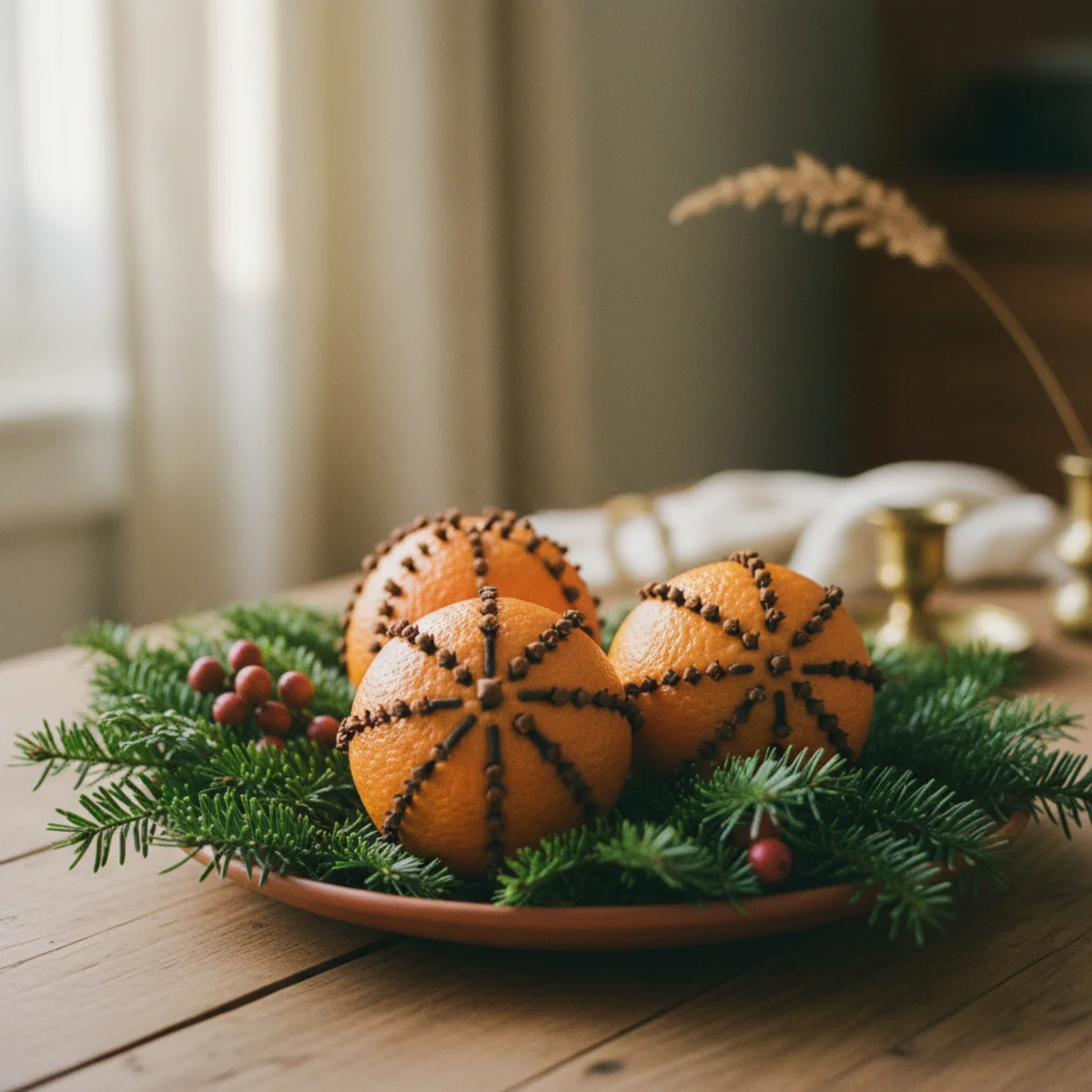
Clove-studded oranges in the garland — the centuries-old winter scent combination made by hand for the table. See also: autumn-mantel-ideas
06Layer Linen Napkins
Holiday table napkins should be washed linen, loosely folded (not pressed flat or in origami napkin folds), in cream, oat, or a seasonal warm tone that complements the garland and plates. The holiday table is the occasion most worth the washed-linen napkin investment. Cost: $30-80 for a set of 6-8 quality washed linen napkins.
Holiday linen napkin specifications: FABRIC — 100% linen (see best-linen-bedding for linen quality guidance; same principles apply to napkins). WASHED for soft texture. SIZE — standard napkin 18x18 to 20x20 inches. HOLIDAY TONES — cream, oat, warm taupe, soft sage, or deep warm rust for holiday-seasonal palette. FOLD — half fold (folded once into rectangle) OR third fold (folded into thirds into slightly narrower rectangle) placed flat beside the plate or loosely on the plate center. Specifically avoid: origami folds, napkin rings that create formal architectural shape, precisely folded geometric shapes. The slightly-casual fold reads as warm and inviting where precise folds read as restaurant. PLACEMENT — flat beside the plate on the table (traditional Western) OR loosely on the plate (casual and warm) OR loosely folded through the wine glass stem (casual hotel style that reads more relaxed than napkin rings). QUANTITY — one napkin per guest; 2 extras in the kitchen for spills. SOURCES — Quince washed linen napkins at $30-60 for set of 6, Magic Linen at $30-60 for set of 6, Etsy artisan linen makers at $40-80 for set of 6, or build collection gradually from estate sales ($2-5 per napkin for vintage linen napkins, often embroidered or monogrammed).
AFFILIATE SLOTNAPKINSWashed linen napkins ($30-60 for 6 from Quince or Magic Linen) in cream, oat, or warm seasonal tone; half-fold or third-fold, not origamiAdd affiliate URL when configuredWhy it works
Because the holiday table is used and touched by guests throughout a 2-4 hour meal, and the napkin is the most-frequently handled textile at the table. The difference between washed linen (soft, slightly wrinkled, natural fiber against skin) and paper or polyester alternatives is felt throughout the entire meal at each use. Holiday tables should provide the highest quality version of every handled element; the napkin is the highest-impact affordable upgrade available.
Pro tip — Wash holiday linen napkins the morning of the gathering and hang or lay flat to dry — slightly damp-dry linen napkins laid on the table smooth themselves within 30 minutes and have the perfect fresh-washed character for the holiday setting. The time-pressed ironing step that keeps many households from using linen napkins is entirely unnecessary if you allow the napkins to dry flat into position.
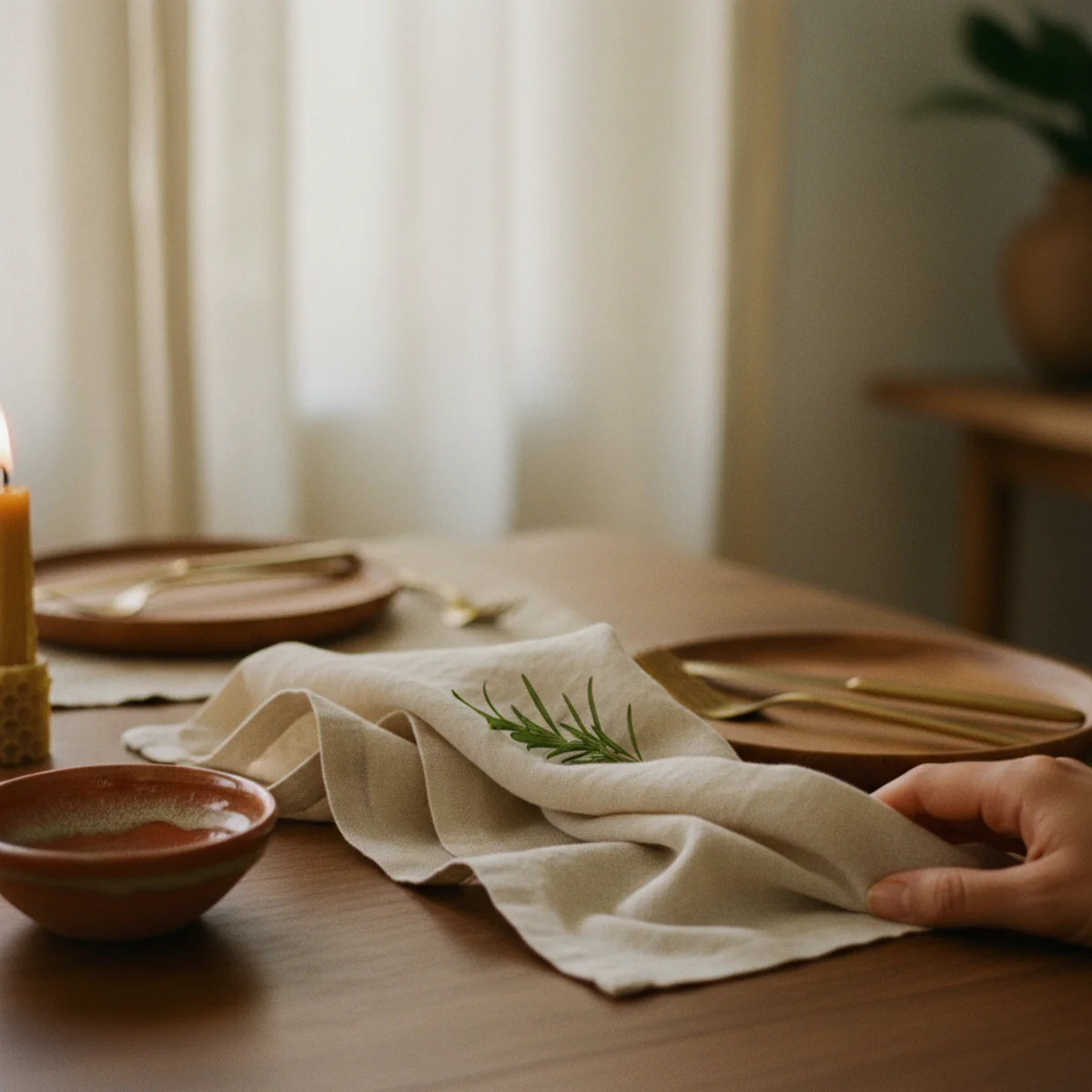
Washed cream linen half-folded beside the plate — the holiday napkin investment felt at every use throughout the meal. See also: cozy-tablescape-ideas
07Add Pomegranates or Seasonal Fruit
Pomegranates — whole and halved revealing their ruby seed chambers — tucked throughout the table garland or gathered in a low wooden bowl between candle clusters are the most-specific winter holiday fruit decoration. The deep red-crimson color against green garland is the holiday table's most-striking color moment. Cost: $5-15 for a bowl of pomegranates. Supplement with persimmons, figs, or cranberry branches.
Holiday seasonal fruit specifics: POMEGRANATES — 6-10 whole pomegranates plus 2-3 halved (to show seeds). Whole pomegranates at $1-3 each from grocery stores. Halved pomegranates: cut just before arranging so seeds don't dry out. Nestle whole pomegranates throughout the garland; place halved pomegranates at strategic points where ruby seeds will catch candlelight. SUPPLEMENTAL FRUITS — persimmons (orange-gold, available November-January) at $1-3 each, fresh figs if available ($5-10 per pint), small Asian pears for warm gold accents ($3-6 per bag), dried cranberry branches (add red winter color at $15-30 per bunch from specialty florists). FRUIT BOWL ALTERNATIVE — a low wide wooden or ceramic bowl with 8-12 pomegranates, persimmons, and small pears in the garland center zone. The bowl stays within the low-centerpiece height requirement while providing visual abundance. COLOR READING — pomegranate deep crimson against evergreen garland creates the holiday table's richest color contrast. The specific combination (green + deep crimson + warm candlelight + wood and brass) is the visual signature of the most-beautiful winter holiday tables.
AFFILIATE SLOTSEASONAL6-10 whole + 2-3 halved pomegranates throughout garland; supplement with persimmons, figs, or cranberry branches; low bowl if using large quantityAdd affiliate URL when configuredWhy it works
Because pomegranates combine multiple holiday-table values simultaneously: deep crimson color (the season's richest color complement to evergreen), functional seasonal produce (they're actually in peak season during the winter holidays), interesting halved interior (the visible seed chambers create a beautiful cut surface), and historical/cultural depth (pomegranates have appeared in winter holiday traditions across European, Middle Eastern, and Asian cultures for centuries). No commercial holiday decoration achieves all of these simultaneously.
Pro tip — Score pomegranates rather than fully cutting them in half — use a sharp knife to score a circle around the crown and score four vertical sections from crown to base, then pull apart along the scored sections. This technique prevents seed spray and opens the pomegranate into a naturally-shaped open form that looks more organic on the table than a clean-cut half.
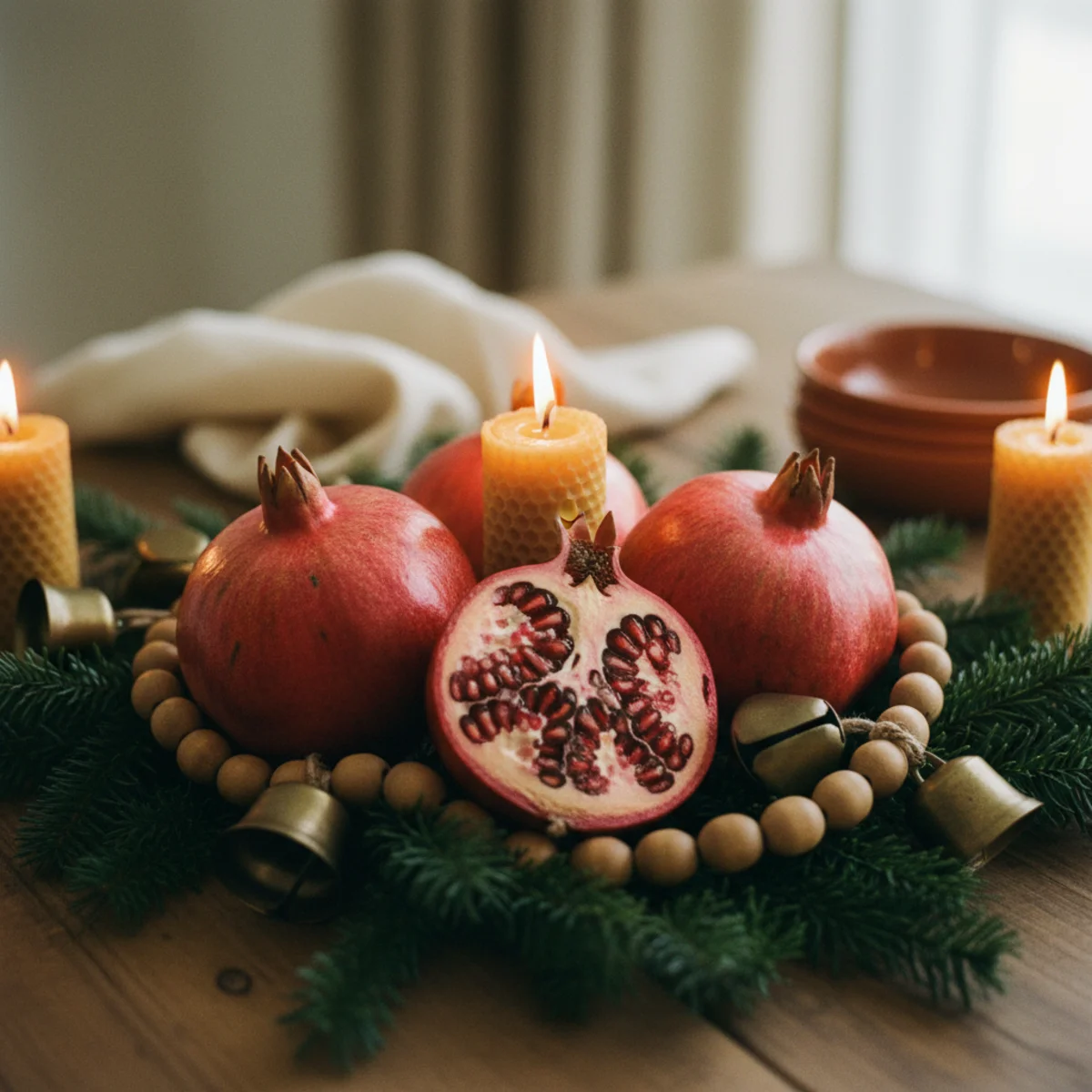
Whole and halved pomegranates in the garland — deep crimson against green with ruby seeds catching the candlelight. See also: autumn-mantel-ideas
08Use Brass and Wood
The holiday table's material language should be consistently warm: aged brass hardware and candlesticks, wooden chargers, wooden serving boards, vintage brass platters for serving, wood-handled serving utensils. The warm-metals-and-wood principle (per cozy-tablescape-ideas) applies with particular force to holiday tables where cool metals (chrome, stainless) or white-commercial serving pieces fight the warm organic garland and candlelight.
Brass and wood holiday table specifics: CANDLEHOLDERS — full complement of vintage brass candlesticks (per item 2), no chrome or stainless. CHARGER PLATES — wooden round chargers ($20-50 each) or brass charger plates ($25-60 each) at each setting. SERVING PIECES — large walnut or oak serving boards for bread and carved meats ($40-150 each), ceramic platters in warm cream or earth tones, vintage brass trays for passing small service items. SERVING UTENSILS — wood-handled serving fork and spoon ($15-40 per set from vintage or specialty kitchen), vintage silver-plate serving spoon and fork ($20-60 per set from estate sales). SMALL DETAILS — small salt and pepper vessels in wood, ceramic, or brass (not stainless or white commercial), butter in small ceramic crock with wood-handled butter knife, olive oil in vintage glass or ceramic pourer for bread service. THE VISUAL UNITY — the consistent warm-metals-and-wood material language across every object at the table (plate, charger, candle holder, serving piece, condiment vessel) creates visual coherence that reads as deliberately considered rather than assembled from whatever was available.
AFFILIATE SLOTMATERIALSBrass candlesticks + wooden chargers + walnut serving boards + wood-handled serving utensils + ceramic condiment vessels; no chrome or stainlessAdd affiliate URL when configuredWhy it works
Because holiday tables are typically more visually crowded than ordinary dinners — more people, more service pieces, more garland, more candles, more seasonal elements. In this crowded visual field, material inconsistency (one chrome serving spoon among warm brass, one white commercial charger among wooden ones) is more disruptive than in sparse settings. The holiday table's visual complexity requires more material discipline, not less.
Pro tip — Remove any stainless steel or chrome elements from the holiday table before setting begins — set a rule that if it's cool-toned metal, it doesn't appear on the holiday table. This includes the stainless salt shaker, the chrome candle snuffer, and the stainless serving fork from the everyday drawer. Replace with warm equivalents or leave the function unfilled for the occasion.
Wooden charger, brass candlestick, walnut board, wood handles — warm material consistency across every table element. See also: cozy-tablescape-ideas
09Add Herb Sprigs and Pinecones
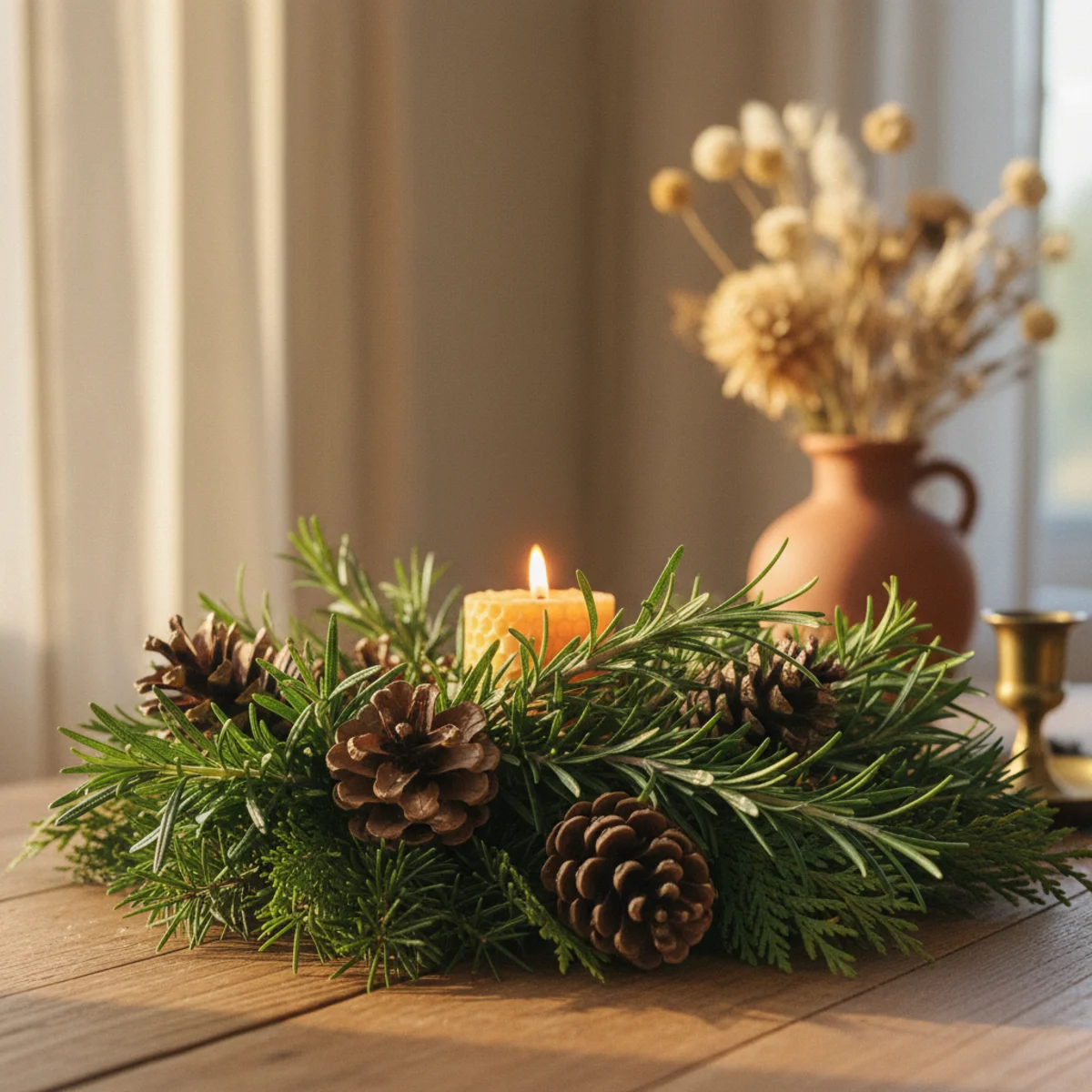
Herb sprigs (rosemary, thyme, bay laurel) and pinecones tucked throughout the garland add fragrance depth, texture variation, and the household-garden connection that elevates the table from purchased-decoration toward gathered-from-household. Both cost almost nothing: pinecones from any walk, herb sprigs from a kitchen herb plant.
Herb sprig and pinecone placement: ROSEMARY SPRIGS — cut 4-6 inch fresh rosemary sprigs and tuck into the garland throughout its length. Rosemary's pine-adjacent fragrance complements the evergreen garland rather than competing. Source from kitchen rosemary plant ($0), grocery store ($2-4 per bunch), or garden. THYME SPRIGS — similar small tuck-in placement throughout garland. Subtle fragrance, small leaf texture contrast against larger pine needles. BAY LAUREL — large bay leaves tucked at intervals provide broader leaf shape contrast. Source from grocery bay leaves ($2-5 per package) if not growing your own. PINECONES — 8-15 varied pinecones of different species and sizes scattered throughout and around the garland. Small spruce cones ($0 from any spruce or pine walk), medium pine cones ($0 or $8-15 per bag from craft store), larger lodgepole or ponderosa cones for anchoring positions. PLACEMENT PRINCIPLE — tuck herbs into garland's open spaces, nestle pinecones at the base of candles within the garland and along garland edges. The herbs and pinecones fill visual gaps in the garland while adding olfactory depth. DRIED HERB ALTERNATIVE — dried lavender bunches ($10-15 per bunch) or dried thyme bunches for a different but complementary dried-botanical texture within the garland.
AFFILIATE SLOTNATURALRosemary, thyme, and bay laurel sprigs tucked throughout garland + 8-15 varied pinecones at candle bases and garland edges; cost near $0Add affiliate URL when configuredWhy it works
Because they add what mass-produced garland specifically lacks: variety, texture contrast, multiple fragrance layers, and the household-connected character of objects gathered or grown at home. Pinecones are almost literally free in most temperate regions; cutting herb sprigs from a kitchen plant takes 2 minutes. The additions that cost nothing add the most character — because character comes from personal sources rather than purchases.
Pro tip — Gather pinecones in late autumn (October-November) during neighborhood or park walks specifically for the holiday table — a bag full of mixed pinecones from various species gathered across several walks produces more visual variety than any commercial pinecone bag at $8-15. Store in a paper bag in a cool dry location until needed.
Rosemary sprigs and pinecones in the garland — gathered materials adding fragrance and character money can't buy. See also: autumn-mantel-ideas
10Light the Room Low Around It
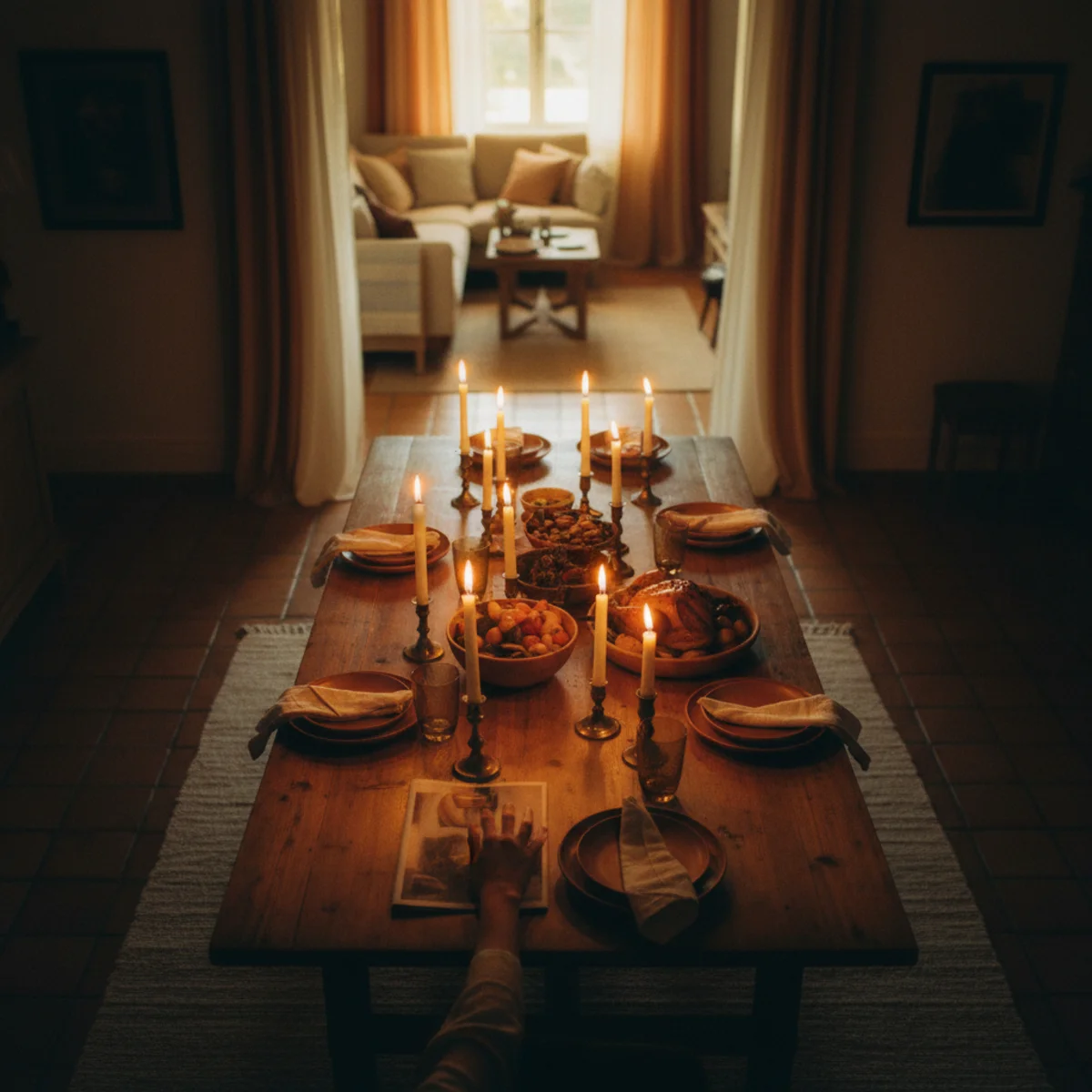
The holiday table requires the dimmed-room-bright-candles protocol (per cozy-tablescape-ideas) at maximum intensity: overhead at 5-10%, all ambient lamps at 50-70%, and the holiday table's 12+ beeswax candles providing primary illumination. The room should be essentially dark beyond the table's candle glow during the meal.
Holiday table lighting protocol: OVERHEAD — completely off or 5-10% maximum. The overhead dining fixture is only for pre- and post-meal navigation lighting during holiday dinners. AMBIENT ROOM LAMPS — living room table lamps and any dining-adjacent lamps at 50-70% warm 2700K, providing the impression of a warm glowing home beyond the dark-ish room surrounding the table. KITCHEN (if visible from dining room) — dimmed to 30-40% for mood consistency. HOLIDAY TABLE CANDLES — the primary light source: 12+ beeswax tapers plus 3-5 pillars provide warm candlelit primary illumination across the full table. More candles than a weeknight dinner specifically compensates for the dimmer ambient lighting. THE FIREPLACE — if you have a working fireplace near the dining room, have it lit during the holiday dinner. The combination of fireplace and table candles creates the warmest possible dining atmosphere. TIMING — all ambient lighting adjustments should be complete before guests sit down. The meal starts in full holiday atmosphere.
AFFILIATE SLOTLIGHTINGOverhead completely off or 5-10%; ambient lamps at 50-70%; 12+ candles as primary table illumination; fireplace lit if availableAdd affiliate URL when configuredWhy it works
Because holiday dinners are the year's most-emotionally significant meals — the gathering of family and close friends across the longest nights. The atmospheric quality of the candlelit dim-room specifically triggers the deep evolutionary warmth-against-winter response that humans associate with community and safety during cold months. Cool bright overhead lighting at a holiday dinner misses this entirely; the warm candlelit dim-room provides it at maximum intensity.
Pro tip — Have everyone check their phone notification sound settings before sitting down to dinner — vibrate or off for the holiday meal table. The phone-away discipline (even just for 60-90 minutes of the main meal) makes the dim candlelit atmosphere significantly more effective by removing the competing screen brightness and attention interruption.
Twelve candles providing primary light in a near-dark room — the maximum-intensity holiday candlelit atmosphere. See also: cozy-tablescape-ideas
11Add Place Cards by Hand
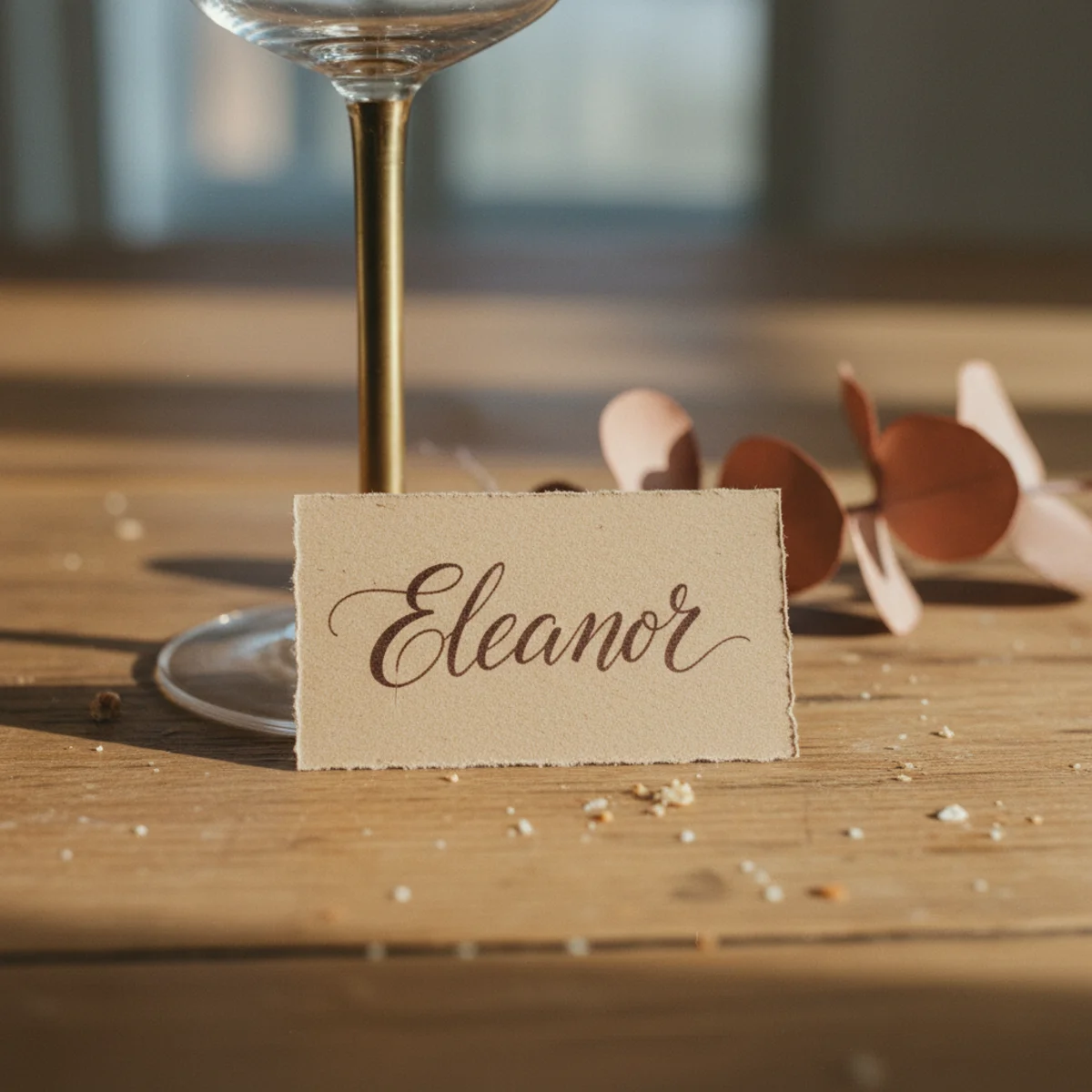
Handwritten place cards at a holiday table signal that the host has thought about where each person will sit — a small act of hospitality that guests register. Holiday tables with 8+ guests benefit from seating planning (guests are mixed for conversation rather than clustering by family unit). Handwritten on natural-fiber paper or small wooden tags, laid at each setting the morning of the gathering.
Holiday place card specifics: MATERIAL — small kraft paper cards ($5-10 for pack of 50), small thick watercolor paper cards ($8-15 for pack of 20), small wooden tags with string ($8-15 for pack of 25 from craft stores or Etsy). WRITING — handwritten in dark ink (black, dark brown, oxblood red) with quality pen (Lamy Safari or Pilot Metropolitan with medium nib at $30-40 for the pen, $5 for ink cartridges). The handwriting doesn't need to be calligraphy — clear natural handwriting is more personal than practiced calligraphy that doesn't look like your own hand. SIZE — 3x2 inches standard or 4x2.5 inches for slightly more presence. PLACEMENT — lean against the wine glass stem at each setting, OR on the napkin, OR in a small natural-material holder (a single sprig of rosemary or a small pinecone). THE SEATING STRATEGY — for holiday dinners with mixed household-units, seat couples apart rather than together, alternate ages and perspectives where possible, place the people most likely to have conversation together within speaking range. The seating plan is a gift to the guests regardless of whether they recognize it consciously.
AFFILIATE SLOTDETAILSHandwritten on kraft paper, watercolor cards, or wooden tags; laid at each setting morning of gathering; 8+ guests onlyAdd affiliate URL when configuredWhy it works
Because they signal forethought and attention — someone considered where I would sit and wrote my name in their own hand for this occasion. The small act of hospitality registers as care even when guests don't consciously analyze it. The handwritten card also provides a small personal artifact from the gathering (guests often take them home); the printed or machine-generated card provides no such warmth. The occasion warrants the 30 minutes of writing.
Pro tip — Write the place cards a day in advance rather than the morning of the gathering when time pressure is highest — the relaxed writing produces better penmanship, and the day-in-advance timing allows any name cards you're unhappy with to be rewritten. Keep a couple of blank cards at the table in case a last-minute guest addition occurs.
Handwritten kraft paper place card against wine glass — someone thought about where you would sit and wrote your name. See also: cozy-dinner-party-ideas
12Keep It Abundant but Un-Fussy
The organizing principle of the warm holiday table: abundant but un-fussy. The garland should look gathered from a forest (not arranged to florist precision). The candles should be lit 30 minutes early and showing natural wax drips (not maintained to waxy perfection). The pomegranates should be nestled casually (not symmetrically placed). The napkins should be loosely folded (not in origami). Abundance serves the occasion; un-fussy serves the warmth.
Abundant-but-un-fussy discipline: THE ABUNDANCE STANDARD — the holiday table should have more than everyday tables. More candles (12+ versus 4-6), more garland (full table length versus occasional), more seasonal elements (pomegranates, pinecones, clove oranges versus one simple centerpiece), more flowers or botanicals, fuller napkins. The occasion is the year's most-significant gathering; the visual richness should reflect this. THE UN-FUSSY STANDARD — every element should read as naturally placed rather than as precisely positioned. The garland has a slight waver (not pulled straight). The candles aren't evenly spaced (clustered, varied). The pomegranates are nestled at different angles (not each facing the same direction). The napkins have a slight fold variation. THE PARADOX — achieving the abundant-but-un-fussy read requires deliberate work. The un-fussy posture is the result of intentional casual placement after careful planning, not of inattention. EDIT BEFORE REMOVING — if the table looks too busy or over-fussy, remove 2-3 elements before trying to rearrange what's there. Often the table is one pomander ball or one too-tall flower too full. The subtraction approach maintains abundance while reducing fussiness.
AFFILIATE SLOTPRINCIPLEMore candles/garland/seasonal elements than ordinary (abundant); all placed with casual naturally-settled posture (un-fussy); subtract elements if too busyAdd affiliate URL when configuredWhy it works
Because the two errors holiday tables commonly make are opposite: under-decoration (the holiday table that reads like a slightly-nicer weeknight dinner when the occasion deserves more) and over-fussiness (the holiday table that reads as labored performance where the host's effort shows more than the guests' warmth). The abundant-but-un-fussy principle specifically addresses both simultaneously: more candles and greenery than ordinary (abundance), all placed with the casual posture of gathered-not-staged (un-fussy). The combination produces the most-welcoming register for the year's most-important meal.
Pro tip — Walk away from the finished table for 10-15 minutes before guests arrive and return to it with fresh eyes — the first glance after the break reveals whether it reads abundant-but-un-fussy or over-arranged. The fresh-eye assessment is more reliable than continuous arrangement assessment that gradually loses perspective on the overall composition.
Full holiday abundance with naturally-casual placement — the abundant-but-un-fussy read that the year's most important table deserves. See also: cozy-dinner-party-ideas
How to set a holiday table step by step
Greenery, candlelight, natural settings, abundant but un-fussy. Work in this order.
- 1Lay the greenery runner
Run a loose garland of cedar, pine, or eucalyptus down the center of the table as the natural centerpiece, kept low enough to see over.
- 2Add abundant candlelight
Place beeswax tapers and clustered candles at varied heights along the runner — enough that the overhead never goes on.
- 3Set relaxed natural places
Add wooden chargers, mismatched cream or stoneware plates, and loosely folded linen napkins with a herb sprig tucked in.
- 4Tuck in seasonal touches and lower the light
Scatter clove-studded oranges, pomegranates, and pinecones along the runner, then dim or kill the overhead and let the candlelight carry the room.
Quick tips
- Lay the evergreen runner loose and a little wild rather than tightly arranged.
- Use so many candles that the overhead never needs to go on.
- Keep the centerpiece low enough to see and talk across.
- Mix natural plates that relate by tone rather than buying a matched set.
- Scatter clove-studded oranges and pomegranates for scent and warm color.
- Dim or kill the overhead once everyone's seated and let the candlelight lead.
Holiday tables by occasion
A cedar or pine runner, beeswax tapers, mismatched cream plates, and clove-studded oranges; see our cozy Christmas guide.
A eucalyptus and dried-wheat runner, brass candles, and seasonal fruit and gourds in warm tones.
A single low runner of greenery and a few tapers — abundant warmth at an intimate scale.
A grazing board to start and a relaxed candlelit table; see our cheese board and dinner party guides.
The holiday table people remember is the warm, gathered one — greenery, candlelight, and a centerpiece you can see across.
Frequently asked questions
How do I decorate a holiday table?+
What do I need for a beautiful Christmas table?+
What should go in the center of a holiday table?+
How do I make a holiday table feel warm and not fussy?+
What flowers work for holiday tables?+
When should I set the holiday table?+
The holiday table people remember isn't the formal one — it's the warm, gathered one with a loose evergreen runner, abundant candlelight, and a centerpiece low enough to talk over. Lead with greenery and candles, mix the plates you have, and dim the overhead once everyone sits down. We'd run a cedar garland down a linen runner and light a dozen beeswax tapers before fussing over anything else; abundant and natural beats formal and matched, smells like the season, and keeps guests at the table long past the meal. Build it to gather, not to impress.