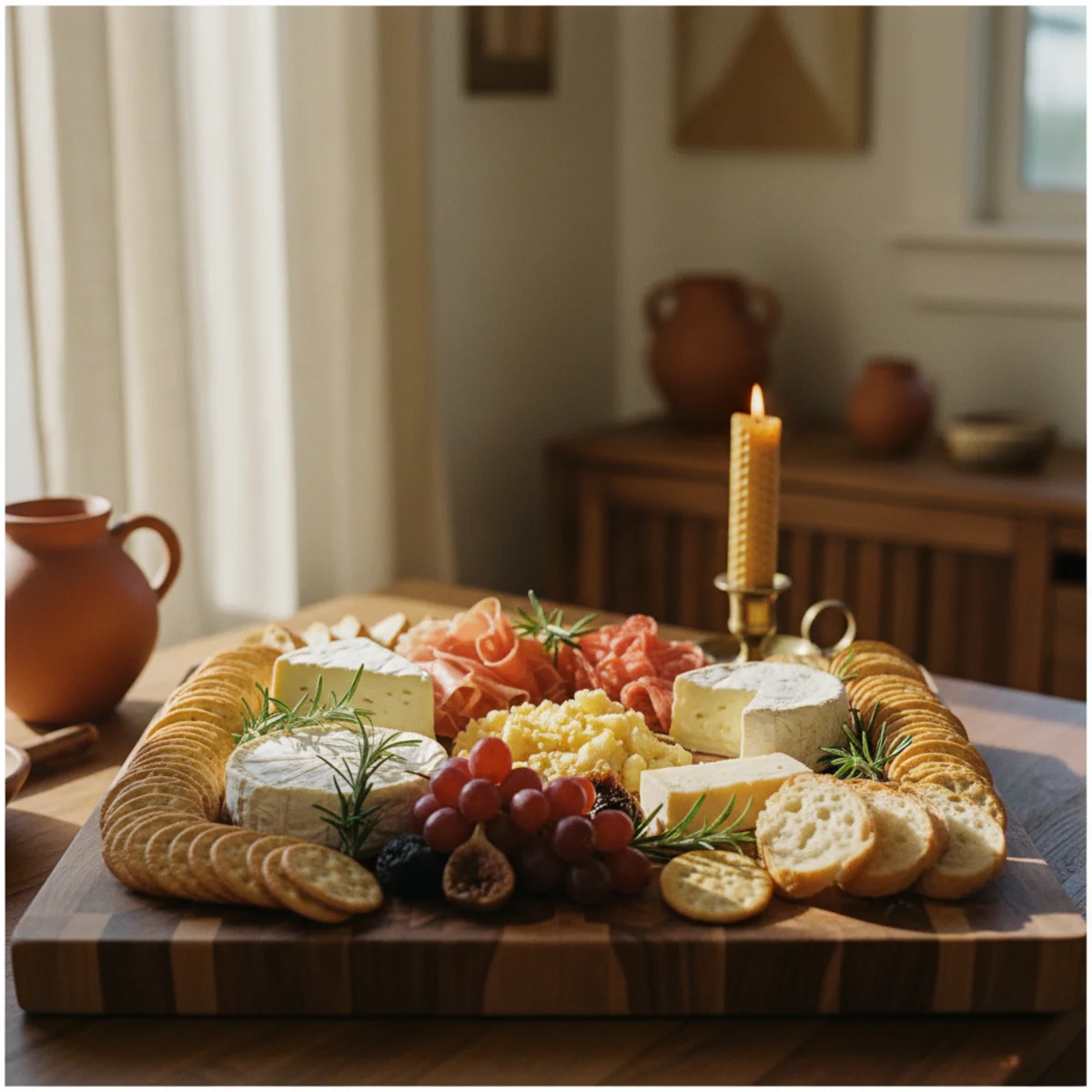
These twelve cheese board principles apply to home gatherings of 4-12 people — dinner party starters, wine evenings, casual hosting where the cheese board is the primary appetizer, and holiday gatherings where the board serves alongside other dishes. Each principle names specific cheese types and sourcing, specific component selections, and the assembly sequence (cheese first, then all others around) that produces the abundant-looking board that appears difficult and takes 20 minutes.
Most cheese board failures are simple: wrong cheese count (too few, so the board looks sparse; too many, so nothing gets finished), no textural variety (all soft cheeses with no firm), missing the sweet component (honey or jam that makes the whole board work together), or cold cheese served before it reaches room temperature (the most-common cheese board mistake and the most impactful on flavor).
By the end of this guide, you'll know exactly how to build a warm, abundant cheese board — choosing three to five cheeses for variety, adding cured meat, including something sweet, adding something briny, piling on fresh fruit, scattering dried fruit and nuts, adding a vehicle for delivery, using a wooden board, placing cheeses first, filling every gap, adding fresh herb garnish, and letting the cheese reach room temperature before serving.
WHAT'S INSIDE
- Why three to five cheeses specifically produces the right visual abundance and flavor range
- The honey or jam component — the sweet element that makes the whole board harmonize
- Placing cheeses first and filling gaps — the assembly sequence that produces the abundant look
- Room temperature cheese — the single most-impactful quality detail most boards get wrong
A great cheese board is about abundance and contrast — soft and hard, sweet and salty, then pile it high. Sparse is the only real mistake.
— Bon Appétit [citation needed — verify before publish]
What makes a good cheese board?
A good cheese board balances variety, contrast, and abundance: a range of cheeses by texture and strength, accompaniments that contrast in sweet, salty, and crunchy, and enough of everything to look generous rather than sparse. The reliable formula is three to five cheeses spanning soft to hard and mild to strong, plus cured meat, something sweet, something briny, fresh and dried fruit, nuts, and a vehicle like crackers or bread.
The defining qualities are contrast and abundance. A board reads beautiful when it offers soft against hard, sweet against salty, and smooth against crunchy, all piled high enough that no board shows through. The arrangement is simpler than it looks — place the cheeses first, add the meats, then fill every gap with fruit, nuts, and accompaniments until it overflows. Sparse and matchy is the only real way to get it wrong.
More in Entertaining you may love
See allWhy grazing boards are everywhere in 2026
The cheese or grazing board became the default centerpiece of casual entertaining — abundant, beautiful, make-ahead, and requiring no cooking. Pinterest's cheese board and grazing board searches climb steadily, and the look has gone toward generous, overflowing, rustic abundance.
The honest appeal is high impact for low effort. A grazing board looks impressive and feeds a crowd while requiring no actual cooking — you assemble rather than prepare — which suits the relaxed, present-host style of cozy entertaining perfectly. It also keeps guests fed and relaxed while the host finishes the rest of the meal, which is exactly why it's become the go-to opener for the casual dinner party.
12 cheese board ideas and components
01Choose Three to Five Cheeses
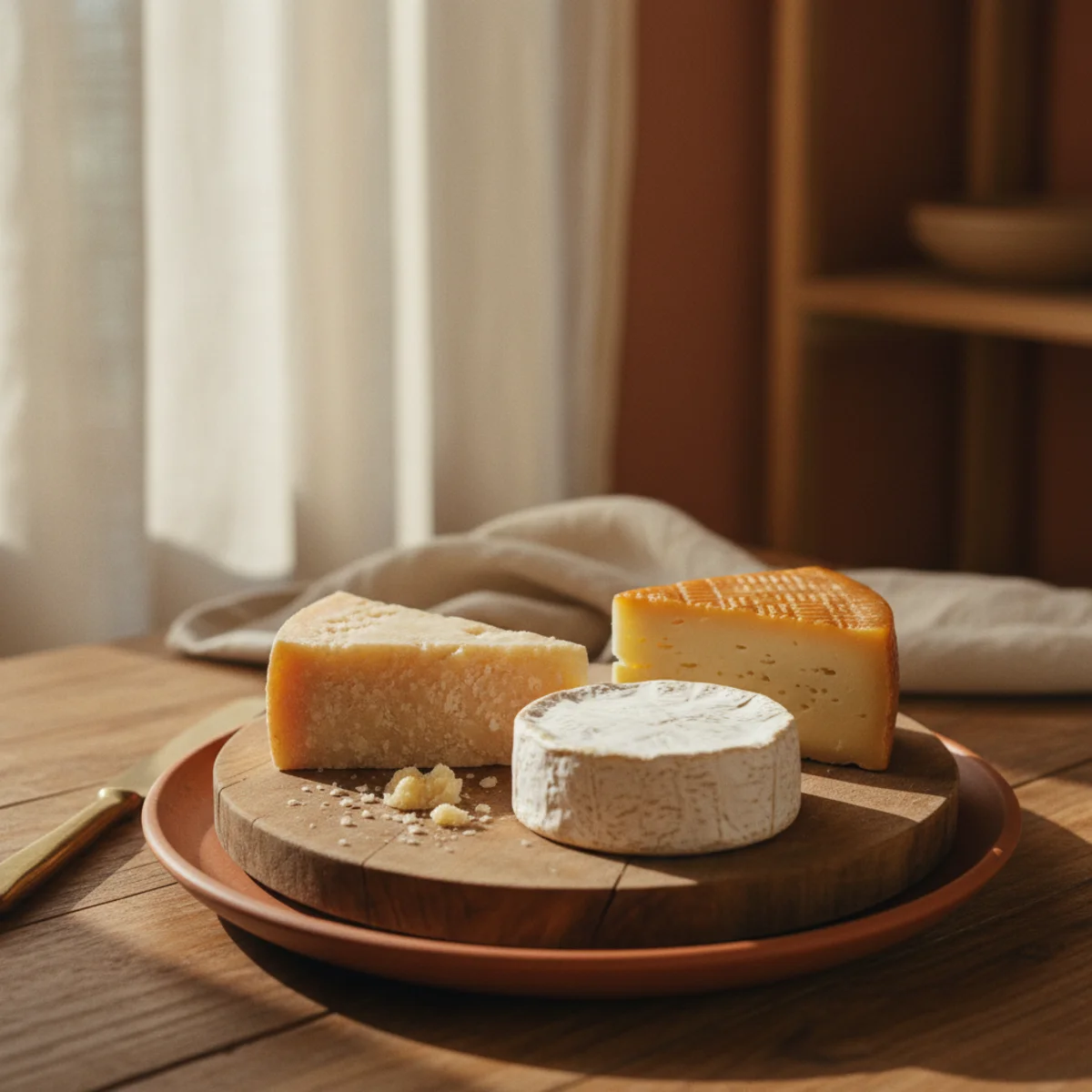
Three to five cheeses is the right range — three provides minimum textural and flavor variety, five provides maximum diversity without waste. The key is variety across three axes: texture (soft/creamy, semi-firm, firm/aged), milk type (cow, sheep, goat), and flavor intensity (mild, medium, bold). Choose at least one from each texture category.
Cheese selection framework: SOFT/CREAMY (one) — Brie or Camembert (cow, mild, melts at room temperature), burrata (cow, very mild, impressive), fresh chèvre (goat, tangy, soft), whipped ricotta. SEMI-FIRM (one or two) — Manchego (sheep, nutty, firm but yielding), Gruyère (cow, complex, slightly crystalline), aged cheddar (cow, sharp), Comté (cow, slightly sweet, complex), Fontina (cow, melty). FIRM/AGED (one) — Aged Parmigiano Reggiano broken into chunks (intense, crystalline), aged Pecorino Romano (sharp sheep), aged Gouda (butterscotch, crystalline). SOURCING — a specialty cheese counter (Whole Foods, Trader Joe's, local cheese shop) provides better selection and fresher cheese than pre-packaged grocery options. Ask the cheesemonger for a taste before purchasing. QUANTITY — 1.5 to 2 oz of cheese per person per cheese on a board served as appetizer. For 8 people with 4 cheeses: approximately 3 oz per cheese (24 oz total). For a main-event board (dinner party where board is a meal course): 3-4 oz per cheese.
AFFILIATE SLOTSELECTIONOne soft (Brie/chèvre), one semi-firm (Manchego/Gruyère/aged cheddar), one aged (Parmigiano/aged Gouda); 1.5-2 oz per person per cheeseAdd affiliate URL when configuredWhy it works
Because textural and flavor contrast is what keeps guests engaged across the grazing period. A board of all soft cheeses becomes one-note quickly; guests graze once and stop. A board with soft, semi-firm, and aged provides different experiences with each component, encouraging more exploration and extending the grazing session. The textural contrast also allows the board's other components to pair differently with each cheese (honey works better with aged; mustard with semi-firm; jam with soft), which multiplies the combination possibilities.
Pro tip — Choose one cheese that's unfamiliar to most guests — the board should include 2-3 approachable favorites (a mild brie, a good cheddar) plus one more interesting selection (a sheep's milk manchego, a blue cheese for adventurous guests). The interesting cheese becomes a conversation starter and rewards guests who explore beyond the familiar.
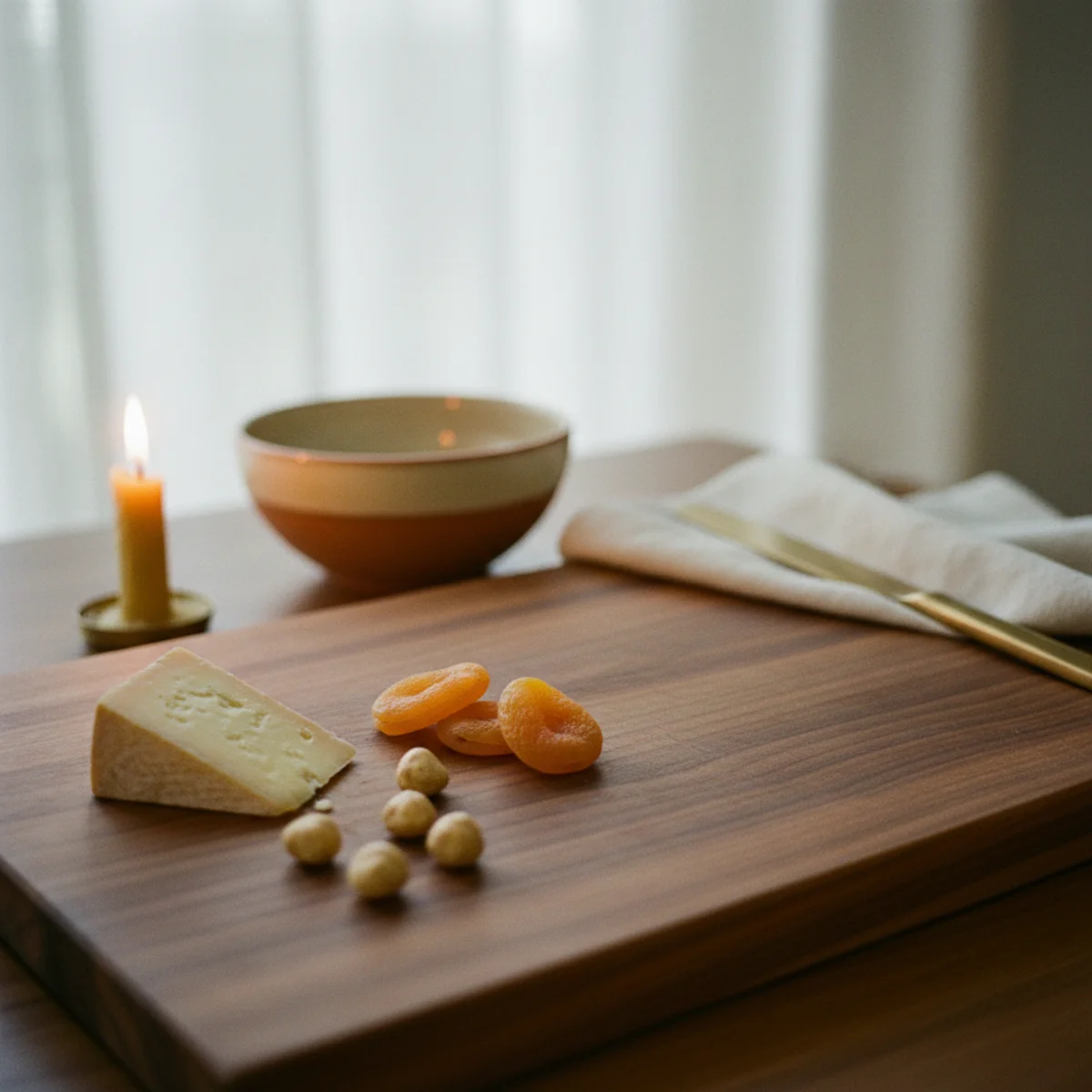
Soft brie, semi-firm manchego, aged Parmigiano — the three-texture foundation that makes every bite a different experience. See also: cozy-dinner-party-ideas
02Add Cured Meat
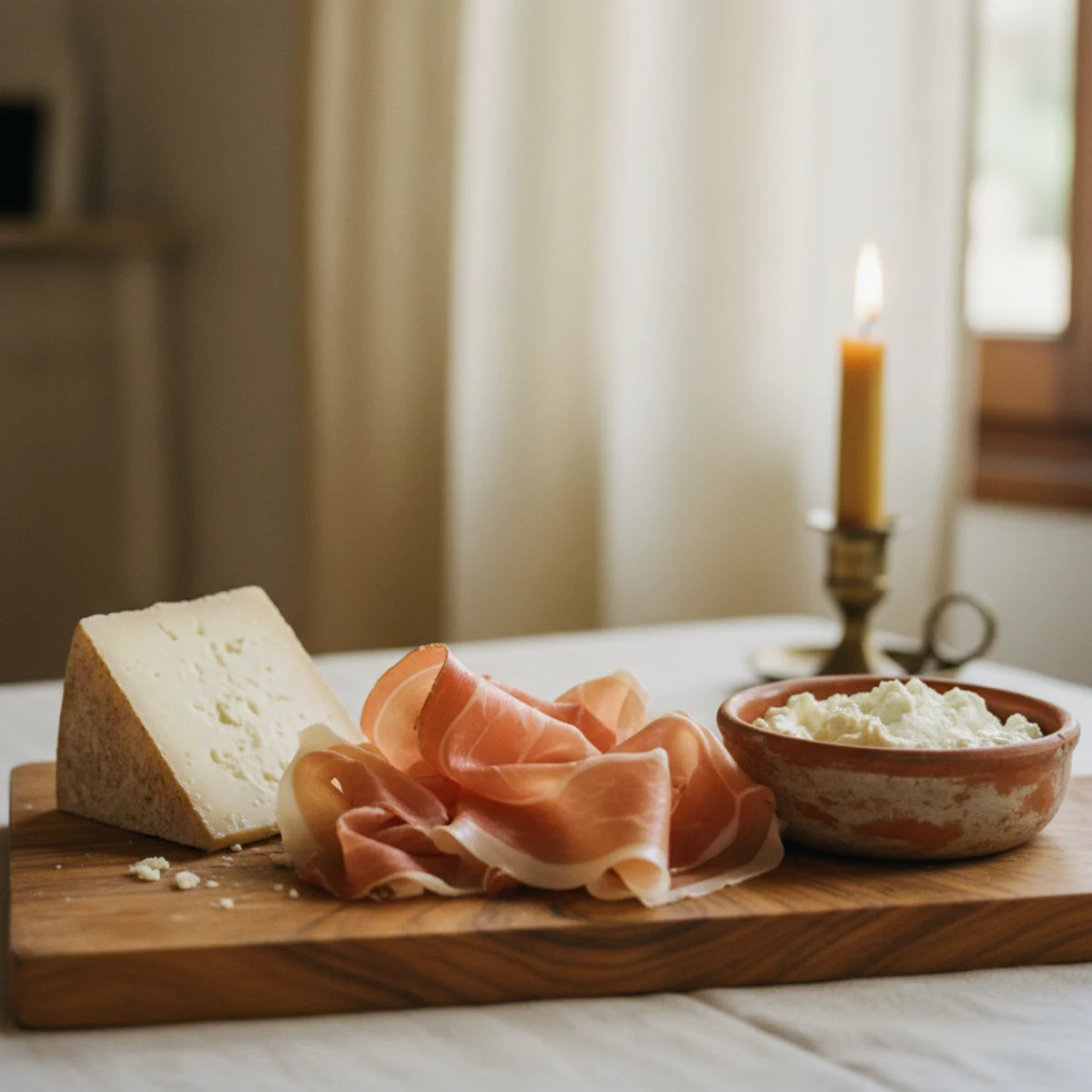
One or two cured meats — folded prosciutto, thinly-sliced salami, or rolled coppa — add protein and the specific savory-fat element that balances the dairy richness of the cheese. The meats are draped and folded rather than laid flat, creating the dimensional visual abundance that flat-stacked meats miss.
Cured meat selection and presentation: TYPES — prosciutto di Parma ($15-25 per 3 oz at deli counter, thin slices), Genoa salami ($8-15 per 3-4 oz, thin round slices), coppa or capicola ($10-20 per 3 oz), bresaola (beef, leaner, $15-25 per 3 oz). For a 6-8 person board: 4-6 oz total of one or two meat types. SOURCING — deli counter over pre-packaged. Pre-packaged meats are often thicker and less fresh than deli-sliced. PRESENTATION — prosciutto: loosely ruffle or wave each thin slice before placing (like rumpled fabric). Salami: fold individual rounds in half then in half again to create quarters that stand at dimension. Coppa: drape loosely in small rolls. The dimensional folding is what creates the abundant appearance; flat-stacked slices look like packaged cold cuts. PLACEMENT ON BOARD — meats in their own sections, with some slices slightly separated from the main cluster to invite picking up individual pieces. MEAT-FREE ALTERNATIVE — for vegetarian-friendly boards, replace the cured meat section with additional vegetables (olive tapenade, artichoke hearts, roasted red peppers) or additional nuts and dried fruits.
AFFILIATE SLOTCOMPONENTProsciutto di Parma (ruffled) and/or thin salami (quartered fans); 4-6 oz per 6-8 people; deli counter over pre-packagedAdd affiliate URL when configuredWhy it works
Because dimension creates visual complexity — the rumpled prosciutto slice with its translucent pink layers reads as abundant and artisanal; the same slice flat on the board reads as a piece of cold cut. The fold also makes each slice individually separable for guests rather than requiring them to peel from a flat stack, which improves the practical picking experience.
Pro tip — Ask the deli counter for prosciutto 'on the thicker side of thin' — extremely thin-sliced prosciutto tears during ruffling and looks lacey rather than draped. Slightly thicker slices hold the ruffle better and are also more satisfying to eat. Specify when ordering.
Ruffled prosciutto and folded salami — dimension creating the artisanal abundance that flat-stacked cold cuts don't. See also: cozy-dinner-party-ideas
03Include Something Sweet
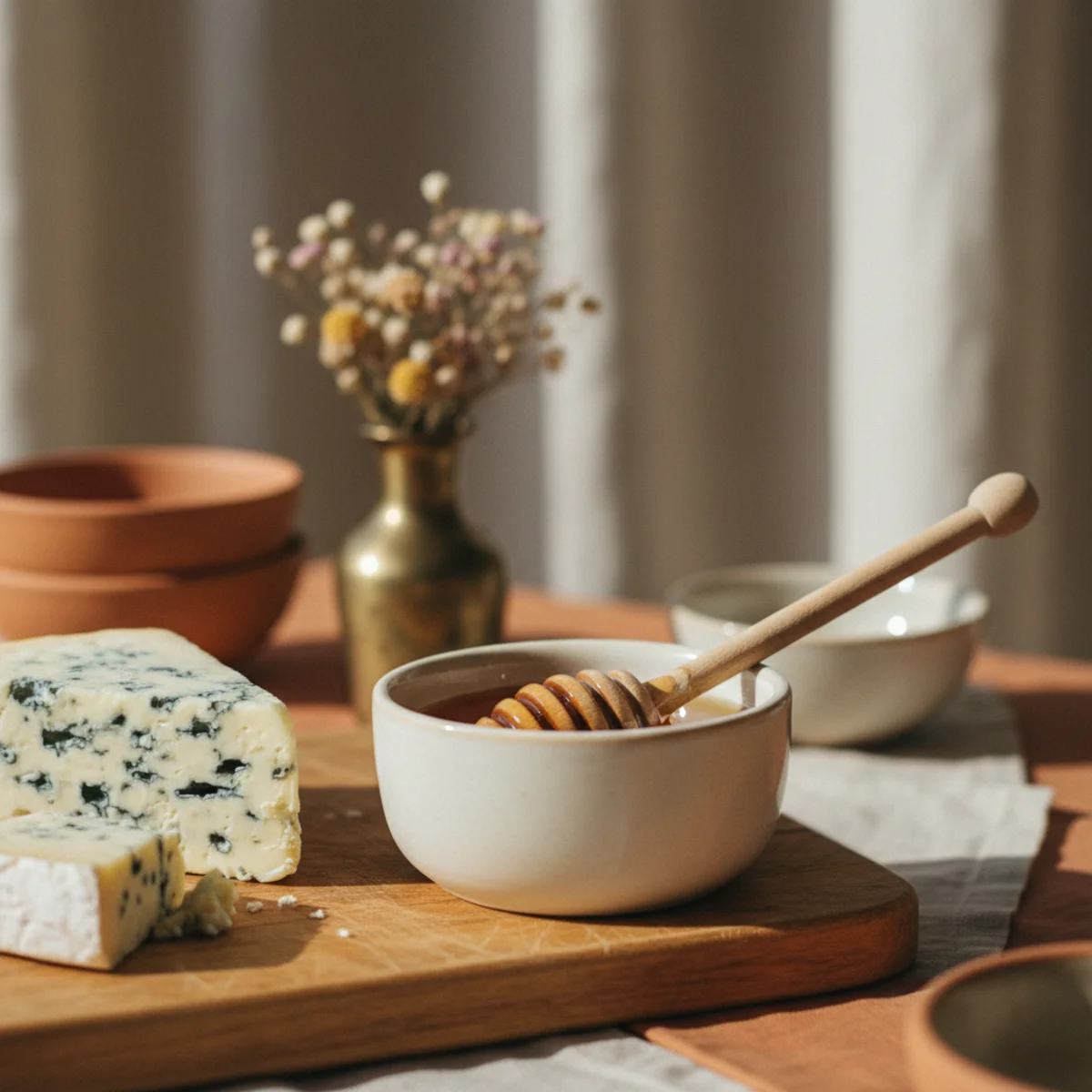
The sweet component — honey, fig jam, quince paste, or cherry compote — is the element that unifies the board's flavors and that makes aged cheese specifically sing. Honey alongside a piece of aged Parmigiano or sharp cheddar is one of the most fundamental food pairings. Without a sweet element, the board is good; with honey, it's complete.
Sweet component options: HONEY — the most versatile sweet accompaniment. A small ceramic honey pot or small jar of good honey in the center or at one end of the board. Raw wildflower honey ($8-15 per 12oz jar) or honeycomb section ($12-20 per small piece). Honeycomb specifically reads visually beautiful on a board and provides textural interest. FIG JAM — good with soft cheeses (brie, chèvre). $5-10 per jar. QUINCE PASTE (MEMBRILLO) — the classic Spanish accompaniment for Manchego. Dense, sliceable, jewel-red. $6-12 per portion. Slice into small cubes or thin slabs. CHERRY COMPOTE OR JAM — good with brie and goat cheese. QUANTITY — 2-4 tablespoons of each sweet accompaniment, served in small ceramic ramekins or directly on the board surface. PRESENTATION — a small open jar of honey with a honey dipper, a small ceramic ramekin of jam. The vessel is part of the visual composition.
AFFILIATE SLOTCOMPONENTRaw wildflower honey in small ceramic pot or honeycomb section ($12-20); OR quince paste/membrillo for manchego; OR fig jam; in small ramekin or directly on boardAdd affiliate URL when configuredWhy it works
Because aged hard cheeses develop crystalline salt pockets and intense concentrated protein flavors that are powerfully savory — and sweet contrasts this intensity in a way that balances the flavor rather than fighting it. The combination of sharp aged cheddar or crystalline Parmigiano with wildflower honey creates the classic sweet-savory-fat flavor harmony that European cheese boards have relied on for centuries. Without the sweet element, the aged cheese section tastes intense; with honey, it tastes complex.
Pro tip — Serve the honey with a small wooden honey dipper ($3-8) that lays across the honey jar or rests on a small ceramic dish beside it — guests prefer the honey dipper over a spoon for drizzling honey onto cheese because it allows controlled thin-stream drizzling without the spoon's oversized honey drops.
Honey pot with dipper and honeycomb — the sweet element that makes aged cheese sing and the board harmonize. See also: cozy-tablescape-ideas
04Add Something Briny
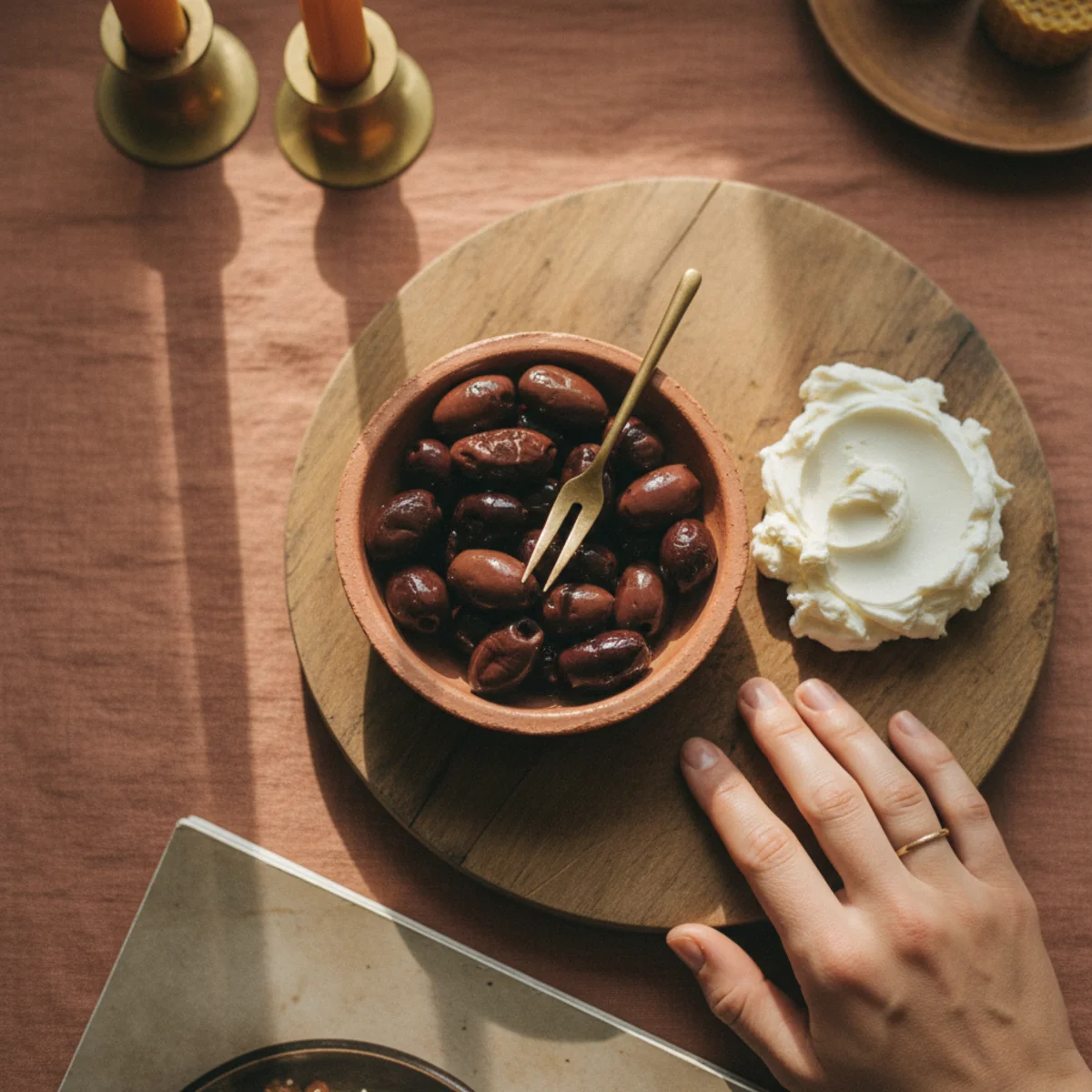
A briny element — cornichons, whole-grain mustard, castelvetrano olives, marinated artichoke hearts, or pickled red peppers — provides acid contrast to the dairy fat richness. The briny component acts as a palate cleanser between bites and keeps the grazing experience from becoming heavy.
Briny component options: CORNICHONS — small French pickles ($5-8 per jar) in a small ceramic or glass dish. Classic French cheese board component. CASTELVETRANO OLIVES — bright green, mild, buttery olive that pairs with almost every cheese. $6-10 per serving. WHOLE-GRAIN MUSTARD — a small dish of whole-grain Dijon ($5-8) works as both briny condiment and spread for the bread vehicle. MARINATED ARTICHOKE HEARTS — jarred artichoke hearts in olive oil ($6-10 per jar, a few pieces on the board). PICKLED RED PEPPERS OR PEPPADEWS — sweet-briny pickled peppers at $4-8 per jar. SERVING — all briny components in small ceramic ramekins, small glass bowls, or directly on the board. Not the jar. The presentation vessel is part of the composition. QUANTITY — 6-8 cornichons, 8-10 olives, or 1-2 tablespoons mustard per 6-8 guests. DOUBLE-BRINY OPTION — both olives and cornichons for a more varied briny category. The visual color of green olives and dark pickles against pale cheese is aesthetically strong.
AFFILIATE SLOTCOMPONENTCornichons ($5-8) and/or castelvetrano olives ($6-10) and/or whole-grain mustard ($5-8) in small ceramic ramekins; 6-8 per component per 6-8 guestsAdd affiliate URL when configuredWhy it works
Because cheese is fat-rich and the palate's experience of fat richness accumulates across a grazing session — after 4-5 bites of cheese, the richness starts to feel heavy. Acid (from briny components) resets the palate by cutting through the fat residue, restoring the taster's ability to fully experience the next cheese. Without briny elements, the grazing session becomes progressively less pleasurable; with them, each bite feels as fresh as the first.
Pro tip — Serve cornichons and olives already out of their jars in small ceramic or glass vessels — guests won't reach into a jar at a party. The transfer to a small open vessel with a small fork or toothpick alongside makes the briny elements immediately accessible for grazing.
Cornichons and green olives in small ceramic vessels — the briny palate reset that keeps every bite as fresh as the first. See also: cozy-dinner-party-ideas
05Pile On Fresh Fruit
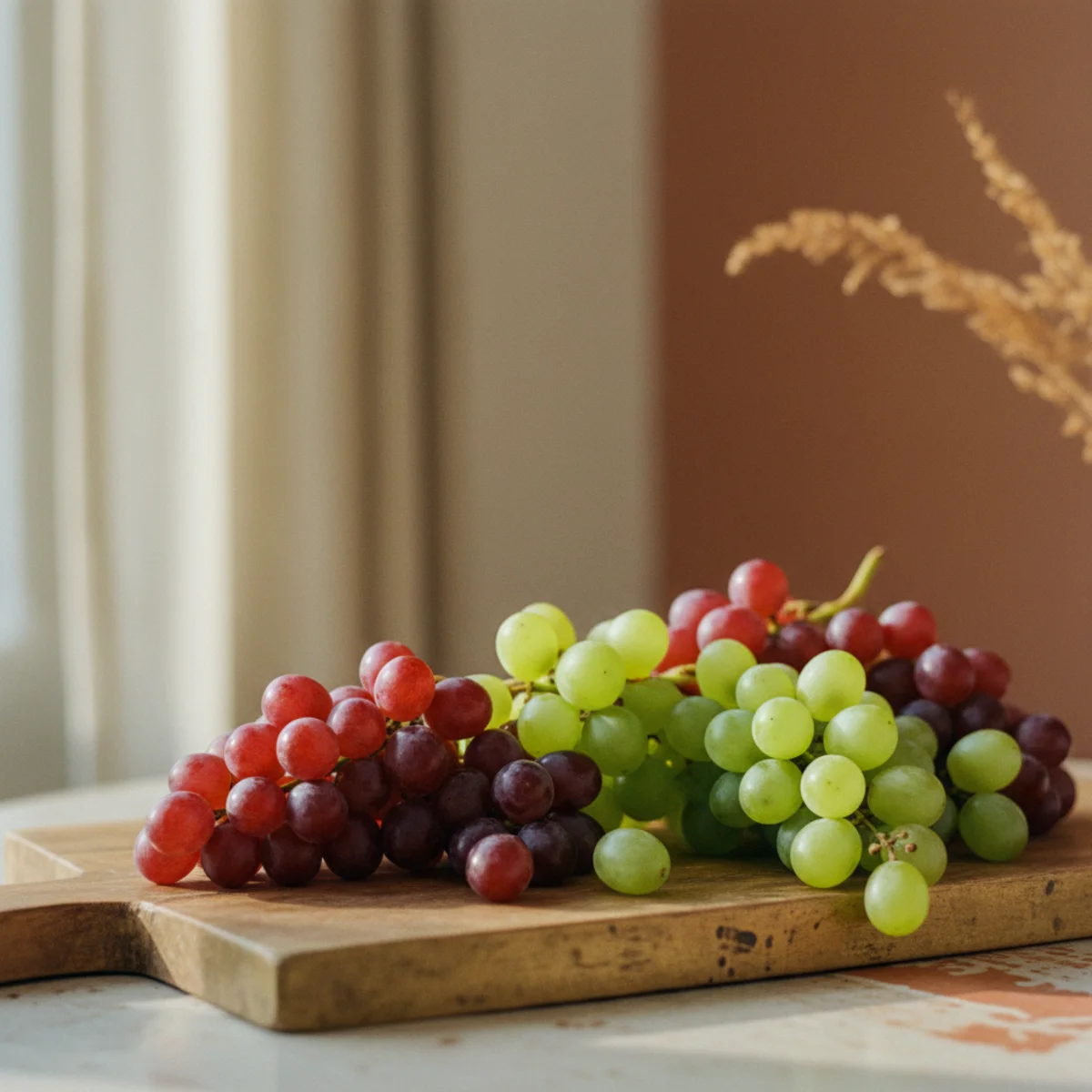
Fresh seasonal fruit — grapes (the most versatile, in season year-round), sliced pears or apples in autumn-winter, figs in late summer-autumn, strawberries in spring — adds color, freshness, and natural sweetness that dried fruit and honey cannot provide. The fruit is piled generously in clusters rather than arranged as single pieces.
Fresh fruit selection by season: YEAR-ROUND — red and green grapes (both colors together for visual variety), the most universally appropriate cheese board fruit. $3-6 per bunch. AUTUMN-WINTER — sliced pears (thin crescent slices, not cubed), Honeycrisp or Fuji apple slices, persimmon slices, pomegranate seeds scattered as color accent. LATE SUMMER — fresh figs (halved, the most visually beautiful cheese board fruit), plums, peaches. SPRING-SUMMER — strawberries (sliced or whole), cherries (whole with stems), raspberries. QUANTITY — 1 cup of grapes per 6-8 guests, or 1-2 sliced pears, or 4-6 fresh figs. PRESENTATION — grapes in one or two clusters placed on the board. Pear slices in a loose overlapping fan. Figs halved with cut side up to reveal interior. PREVENTING BROWNING — apple and pear slices: brush lightly with lemon juice immediately after cutting. Prepare within 30-45 minutes of serving. VISUAL PRINCIPLE — fresh fruit provides the board's brightest natural color accents. Deep red grapes, green fig interior, orange persimmon contrast strongly with the pale cheese and tan bread.
AFFILIATE SLOTCOMPONENTGrapes (both colors, year-round) in clusters; OR seasonal: figs/pears in autumn, strawberries in spring; 1 cup grapes or 1-2 sliced pears per 6-8 guestsAdd affiliate URL when configuredWhy it works
Because fresh fruit provides moisture and bright flavor that dried fruit cannot — the juice of a fresh grape or ripe fig cuts through dairy fat differently from the concentrated sweetness of a dried apricot. Fresh fruit also provides the board's most-vivid color accents (the deep red of grapes, the green of figs) that make the visual composition most appealing. Dried fruit is valuable as a background element; fresh fruit is the board's visual and flavor centerpiece.
Pro tip — Place the grape clusters after all other components are positioned — grapes are flexible enough to fill in gaps around other elements and can be draped over other components for the visual nestled-together effect. Add grapes last and use them as both gap-fillers and color accents throughout the board.
Red and green grape clusters with halved figs — the board's most vivid color and the freshness that dried fruit can't provide. See also: cozy-tablescape-ideas
06Scatter Dried Fruit and Nuts
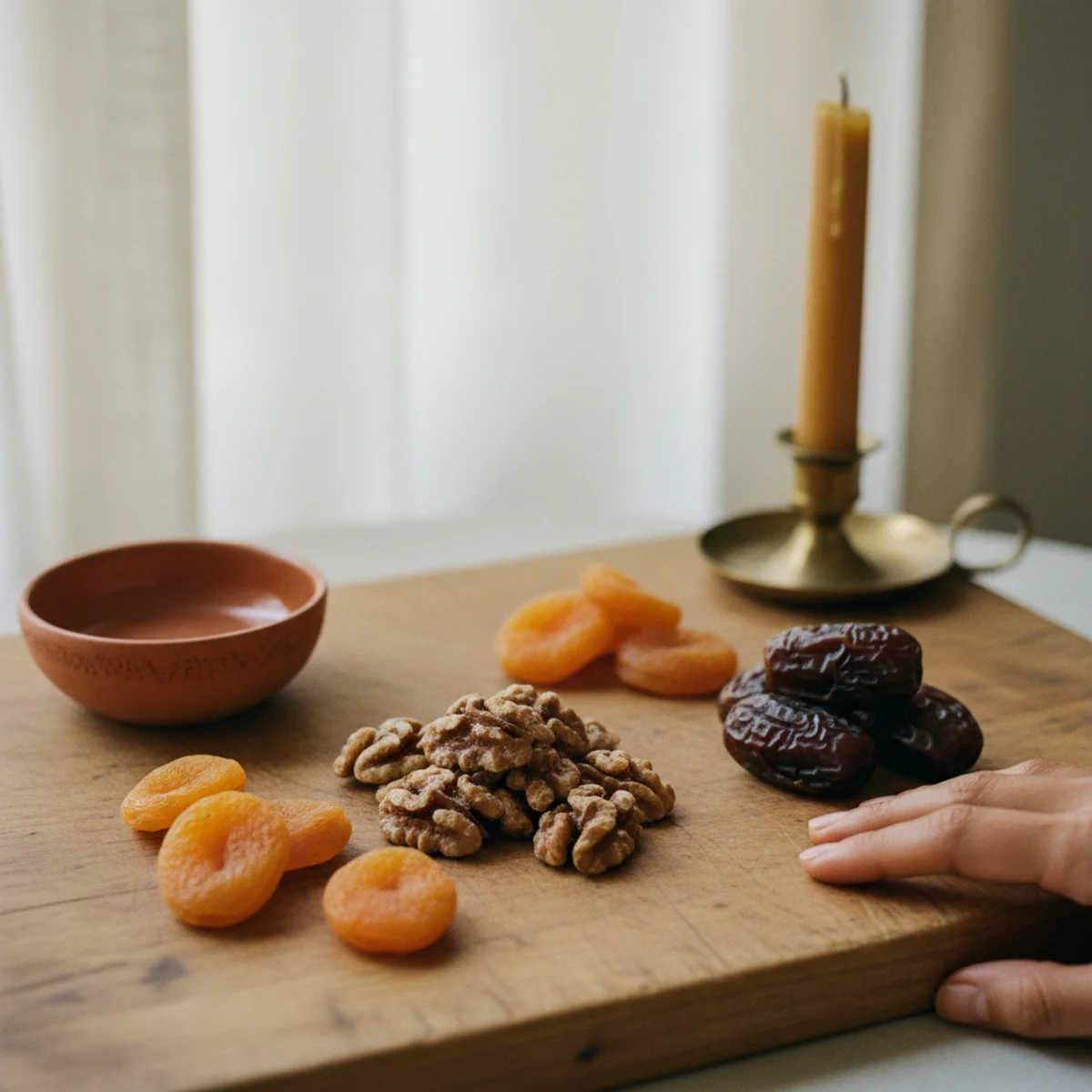
Dried fruit (Medjool dates, dried apricots, dried cranberries, dried figs) and nuts (Marcona almonds, walnuts, candied pecans) fill the board's visual gaps and provide the textural variety that fresh components alone miss. They're the background layer that makes the board look abundant without requiring individual placement — scattered rather than precisely positioned.
Dried fruit and nut specifics: DRIED FRUIT — Medjool dates (halved, soft-sweet, excellent with blue cheese and aged cheddar, $5-10 per package), dried apricots ($3-6 per small package), dried cranberries ($3-5 per package, good visual color against pale cheeses), dried figs ($4-8 per package). NUTS — Marcona almonds (Spanish fried almonds, the classic cheese board nut at $6-12 per small package), walnut halves ($4-8 per small package, complement aged cheese especially well), honey-roasted cashews ($5-10), candied pecans ($6-12). MIX — choose 1-2 dried fruits and 1-2 nut types for variety without overwhelming. QUANTITY — 1/4 cup of each type per 6-8 guests. SCATTERING TECHNIQUE — literally scatter the nuts and dried fruit across the board between cheese wedges and other components. Not arranged in neat piles (except perhaps a small cluster of dates). The random scatter reads as abundant and generous where neat piles read as measured and formal. PRACTICAL FUNCTION — nuts and dried fruit prevent guests from feeling that the board is 'used up' when the cheese and meat are partly consumed; they extend the grazing pleasingly.
AFFILIATE SLOTCOMPONENTMarcona almonds + walnut halves + Medjool dates + dried apricots or cranberries; 1/4 cup each per 6-8 guests; scattered across board not in neat pilesAdd affiliate URL when configuredWhy it works
Because random distribution across the full board surface reads as overflow abundance — more than could be contained in tidy piles. A neat pile of almonds in one corner looks like a portioned serving; almonds scattered throughout the board look like they're simply everywhere. The same quantity reads as significantly more generous when scattered. The scatter also makes each portion of the board more interesting — any area the guest looks at has something to graze.
Pro tip — Add the nuts and dried fruit last, after all other components are placed — use them specifically to fill the visible gaps between cheese wedges, meat sections, and fruit clusters. The gap-filling function of scattered nuts and dried fruit is as important as their flavor contribution; they're the visual mortar of the board composition.
Almonds, dates, dried cranberries scattered throughout — the background abundance that makes the whole board look generous. See also: cozy-dinner-party-ideas
07Add a Vehicle
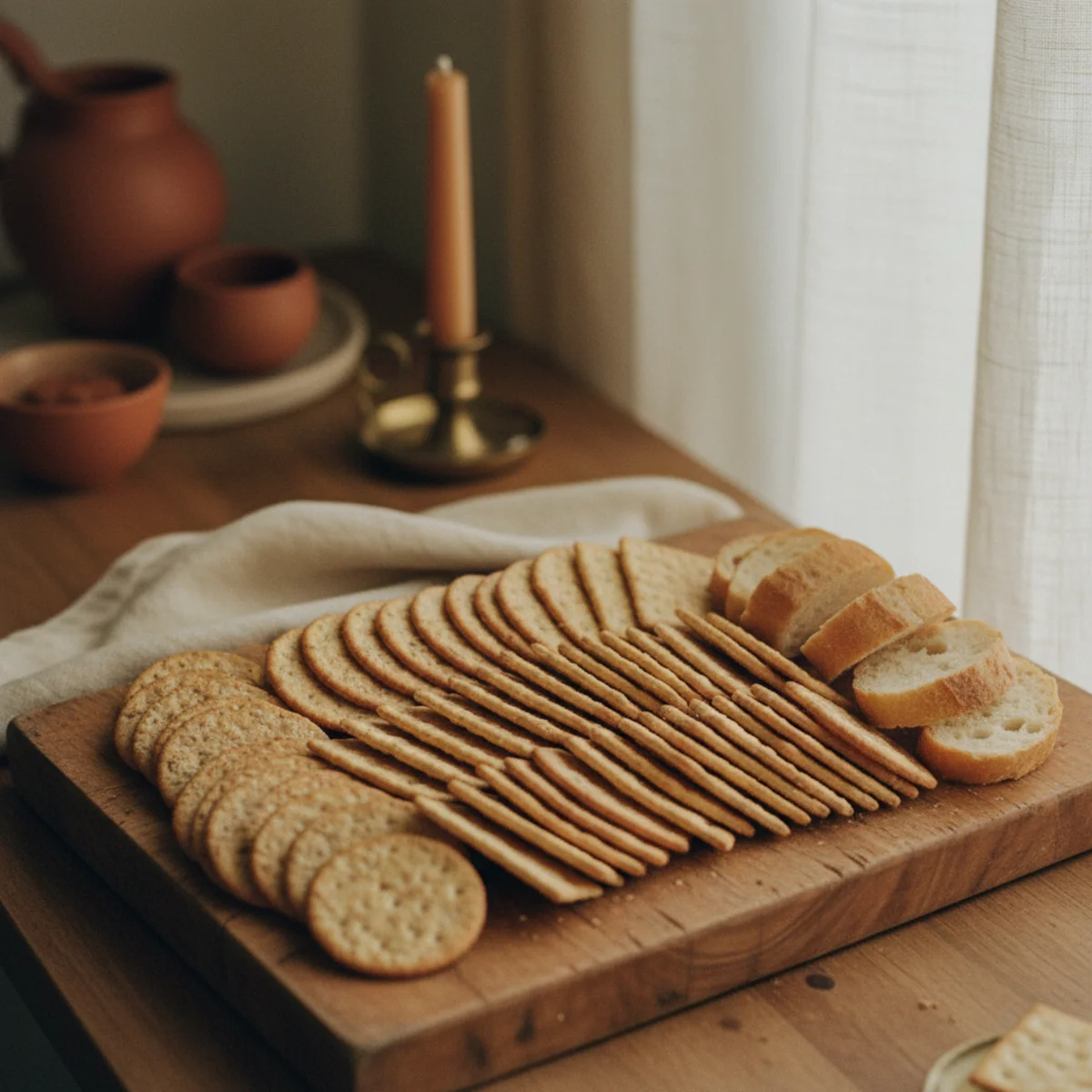
The vehicle — what delivers the cheese to mouth — should be varied: a seeded cracker alongside a plain cracker alongside a slice of baguette or sourdough. The vehicle variety allows guests to match the cracker character to the cheese character (plain for subtle cheeses, seeded for bold, sourdough for creamy). A single cracker type limits this pairing discovery.
Cheese board vehicle selection: PLAIN CRACKERS — Carr's Table Water Crackers ($5-8 per box) or similar neutral thin cracker. The baseline vehicle that pairs with everything. SEEDED OR HERBED CRACKERS — crackers with sesame, poppy, or rosemary ($5-8 per box). More character, best with aged and firm cheeses. SLICED BAGUETTE or SOURDOUGH — a half baguette sliced thin ($3-5) or a few slices of good sourdough from a bakery. The bread vehicle is the most satisfying delivery system for soft cheeses (brie spread onto baguette slice). GRAIN CRACKERS — crispy grain crackers (Mary's Gone Crackers, $5-8) for gluten-conscious guests. SWEET COMPONENTS — a few slices of fruit-and-nut bread or fig & walnut bread ($3-6 per small loaf) for pairing with aged cheeses. QUANTITY — 4-6 crackers of each type per person. PRESENTATION — crackers laid in overlapping fans or upright-standing clusters to create height variation on the board. Baguette slices in a small basket adjacent to the board rather than on the board itself (preserving board space for food components).
AFFILIATE SLOTCOMPONENTPlain water crackers + seeded crackers + sliced baguette; 4-6 of each type per person; crackers upright in clusters to save surface areaAdd affiliate URL when configuredWhy it works
Because the vehicle's texture and flavor affects the cheese's perceived flavor — a subtle chèvre tasted on a neutral water cracker tastes different from the same chèvre on a bold seeded cracker. Providing vehicle variety allows guests to discover these pairing effects themselves, turning grazing into a small exploration rather than a simple eating. The discovery process extends engagement with the board and produces more conversation around the food.
Pro tip — Stand crackers upright in small clusters rather than lying them flat — upright crackers take significantly less board surface area than flat-lying crackers, freeing surface area for food components while creating the dimensional board appearance that adds to the visual abundance.
Plain, seeded, and baguette vehicles — variety that turns grazing into cheese-and-vehicle pairing discovery. See also: cozy-tablescape-ideas
08Use a Wooden Board
The serving surface should be warm-toned wood — walnut, maple, olive wood, or acacia. A wooden board reads as warm and appropriate for cheese in a way that slate, marble, and white ceramic specifically don't for warm home aesthetic. The wood grain and warm color read as the board was designed for this purpose; cool-toned surfaces read as design exercises.
Wooden cheese board options: WALNUT BOARDS — deepest, richest warm tone; beautiful grain. $40-150 depending on size from Williams Sonoma, Williams Sonoma Home, or Etsy woodworkers. MAPLE BOARDS — lighter warm wood tone, classic American hardwood. $25-100 from kitchen retailers or woodworkers. OLIVE WOOD BOARDS — distinctive wavy grain, warm gold and brown tones, traditional Mediterranean cheese board material. $30-120. ACACIA BOARDS — warm medium-brown, affordable, widely available. $20-60 from Amazon, Williams Sonoma, or HomeGoods. SIZE — for 4-6 guests: 12x16 to 14x20 inch board. For 8-12 guests: 16x22 to 18x26 inch board, OR two smaller boards. SHAPE — rectangular for organized composition, round for casual presentation, irregular live-edge for the most artisanal look. CARE — hand wash only (no dishwasher); dry immediately; oil with mineral oil monthly to prevent drying and cracking. VINTAGE CUTTING BOARDS — a well-worn vintage cutting board from an estate sale ($10-30) makes a beautiful cheese board; the wear and knife marks add warm character.
AFFILIATE SLOTSURFACEWalnut ($40-150), maple ($25-100), olive wood ($30-120), or acacia ($20-60) board; 12x16-14x20 for 4-6 guests; 16x22-18x26 for 8-12; mineral oil monthlyAdd affiliate URL when configuredWhy it works
Because wood is the same warm natural material family as the cheese's origin — dairy products from animals pastured on grass, paired with aged wood grain from trees. The material relationship reads as natural and congruent. Additionally, wood's warm tones and natural variation (no two wood boards identical) produce the artisanal warmth that manufactured cool-toned surfaces specifically lack. The warm wood board also serves as the neutral warm backdrop that makes the board's colors (white cheese, red fruit, green herb) read most clearly.
Pro tip — Season a new wooden board with food-grade mineral oil ($5-8 per 8oz bottle) before first use and monthly thereafter — the oil penetrates the wood grain, prevents moisture absorption that causes warping, and produces the deep warm lustrous appearance that unseasoned boards lack. Apply generously, let absorb 30 minutes, wipe excess.
Walnut board with warm grain — the natural material that makes cheese, fruit, and honey read most clearly. See also: cozy-dinner-party-ideas
09Place Cheeses First
The assembly sequence that produces the most-abundant-looking board: place the cheeses first in their approximate final positions (spaced apart across the board to avoid clustering), then add all other components in the gaps between. This sequence prevents the common error of filling a corner of the board with crackers and condiments and then having nowhere to arrange the cheese.
Cheese placement strategy: CHEESE POSITIONING — place 3-5 cheeses spread across the board with 3-4 inches of space between each piece. Do not cluster all cheeses in the center. Try different placement angles: one wheel intact, one wedge angled at 45 degrees, one block or wedge with a slice cut off and laid beside it (inviting guests to cut their own). CHEESE PREPARATION — large wheels (brie): score and slightly open (cut a wedge and pull it slightly away) to invite serving. Firm blocks: slice off 3-4 pieces and fan them slightly away from the block. Aged hard cheese: break rather than slice — use a fork or cheese knife to break off irregular chunks (reads more artisanal than sliced). VISUAL BALANCE — distribute the cheese across the full board rather than concentrating at center or in one section. One cheese per corner zone, with larger boards using more distributed placement. LABEL THE CHEESES — small folded paper tents or small chalk cards ($5-10 for a set) beside each cheese identifying the name and milk type. Guests appreciate knowing what they're tasting and the labels facilitate conversation.
AFFILIATE SLOTASSEMBLYCheeses placed first across full board; 3-4 inches apart; one wedge with slices fanned, one broken chunk hard cheese; label each cheese; then fill gaps with all other componentsAdd affiliate URL when configuredWhy it works
Because cheese is the board's primary ingredient and its placement determines the overall composition. Placing cheese first ensures it occupies the most visually prominent positions rather than being squeezed into remaining spaces after condiments and crackers have been placed. The gaps between the cheese positions then become the natural zones for filling with fruit, nuts, and briny elements — the fill-the-gaps sequence produces organic-looking abundance rather than artificially forced arrangement.
Pro tip — Take a photo of the cheese-only placement before adding other components — this reference shows whether the cheese is well-distributed across the board. If two cheeses are clustered, separate them before proceeding. The photo takes 10 seconds and prevents the most-common cheese board composition error: all the best ingredients in one area.
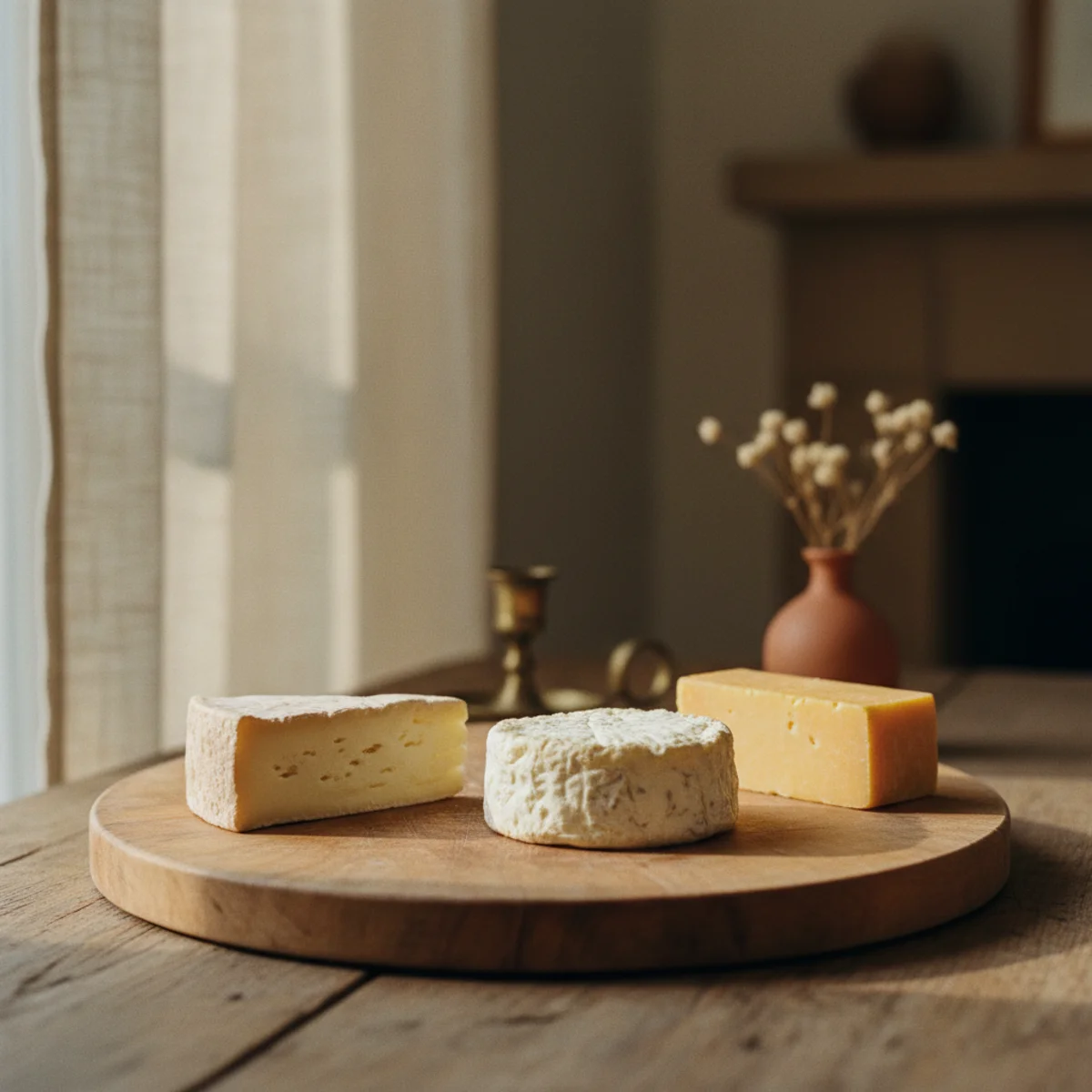
Three cheeses distributed across the board before filling — the placement that ensures cheese occupies every visual zone. See also: cozy-dinner-party-ideas
10Fill Every Gap
After placing cheese and the primary components (cured meat, sweet element, briny element, fruit), fill every visible gap between components with nuts, dried fruit, extra grapes, additional crackers, or fresh herb sprigs. The filling creates the generously-abundant visual quality that makes cheese boards look professionally assembled. Visible board surface between components reads as sparse; filled gaps read as overflowing.
Gap-filling strategy: WHAT FILLS GAPS — Marcona almonds and walnuts (the most gap-filling appropriate due to small size), loose dried fruit pieces, grape clusters (flexible enough to fill any gap shape), fresh herb sprigs, additional small crackers. TECHNIQUE — after placing all primary components, look at the board from 18-24 inches away (guest viewing distance). Any areas where bare board surface is visible between components need filling. Pick up a handful of almonds and scatter them into the visible gaps. Add a small grape cluster wherever there's a gap near the fruit zone. Tuck fresh herb sprigs into gaps between cheeses and other components. DIMENSIONAL FILLING — tall components (crackers standing upright, a stack of baguette slices) in some gaps add height variation that makes the board more visually interesting than purely flat-surface-level filling. THE FULL BOARD STANDARD — from any angle at 18-24 inches, the board should appear as continuous texture with no bare board visible except at edges. If any board surface is visible, fill it.
AFFILIATE SLOTASSEMBLYFill all visible bare board surface with Marcona almonds, additional fruit, dried fruit, crackers, herb sprigs until no board surface visible from 18-24 inch viewing distanceAdd affiliate URL when configuredWhy it works
Because the visual impression of abundance is primarily the impression that the board is overflowing with food — too full to hold everything. This abundance impression comes from filled gaps; bare surface between components undermines it regardless of how many total components are present. Professional cheese boards always fill completely because the skilled assembler understands that the final layer of gap-filling is the step that transforms a good cheese board into an impressive one.
Pro tip — Keep a small extra reserve of Marcona almonds (about 1/4 cup) off-board during assembly and available for final gap-filling — the final gap-fill survey after all components are placed often reveals a few remaining bare spots that a handful of almonds solves in 30 seconds. Having the reserve available prevents the frustration of needing to refill from the original package.
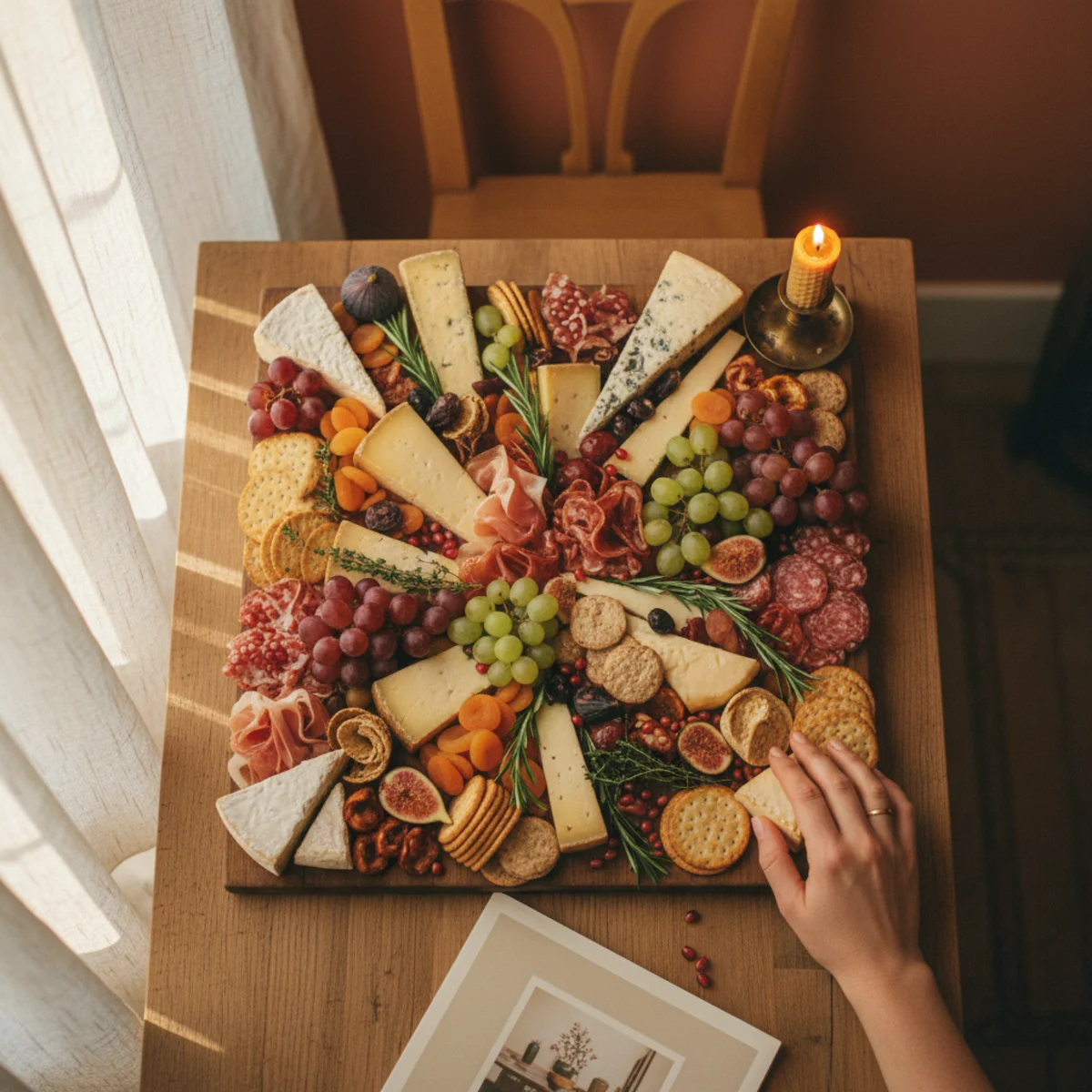
No bare board surface visible — the gap-filled abundance that reads as 'professionally assembled.' See also: holiday-table-decor
11Add Fresh Herbs for Garnish
A few sprigs of fresh herbs — rosemary, thyme, sage, or fresh basil — tucked into the cheese board add the green organic garnish that signals the board was finished with attention to detail. The herbs are purely decorative on a cheese board (few guests eat rosemary sprigs) but their visual presence adds the living-world connection that lifts the board from food arrangement to composed presentation.
Fresh herb garnish specifics: BEST HERBS FOR CHEESE BOARDS — FRESH ROSEMARY (the most-common cheese board herb; small sprigs tucked near aged cheeses and near the honey), FRESH THYME (tiny leaves on thin stems that tuck between any components), FRESH SAGE (large soft leaves that lay flat between cheeses), FRESH BASIL (best in summer, particularly near fresh fruit), MICROGREENS (small pinches that add visual green density without the herbal flavor dominance). QUANTITY — 3-6 small sprigs distributed across the board. Not concentrated in one spot. PLACEMENT — tuck sprigs partially under cheese edges, between components, or lay across crackers and fruit. The partially-tucked placement looks more naturally nestled than flat sprigs lying on the board surface. SOURCING — cut from a kitchen herb plant (free and freshest), purchase a $1-3 fresh herb bunch from the grocery, or use dried rosemary branches in a pinch (less fresh-looking but available year-round).
AFFILIATE SLOTGARNISH3-6 fresh rosemary, thyme, or sage sprigs tucked between components; partially-tucked placement; free from kitchen herb plant or $1-3 fresh bunchAdd affiliate URL when configuredWhy it works
Because fresh green herbs are the board's only living-plant element — everything else on the board is processed or cut. The fresh herb's organic color, natural irregular form, and its slight fragrance (rosemary particularly) adds the living-world quality that signals the board was assembled with genuine care and attention. The same board without herbs reads as food arranged on a board; with herbs it reads as a composed presentation. The herbs cost $1-3 and take 2 minutes to tuck in.
Pro tip — Use rosemary specifically if serving in autumn and winter — fresh rosemary is one of the most-available year-round herbs, and its evergreen character references the winter seasonal palette. A few rosemary sprigs on an autumn-winter cheese board additionally reinforce the holiday-adjacent warmth of the gathering.
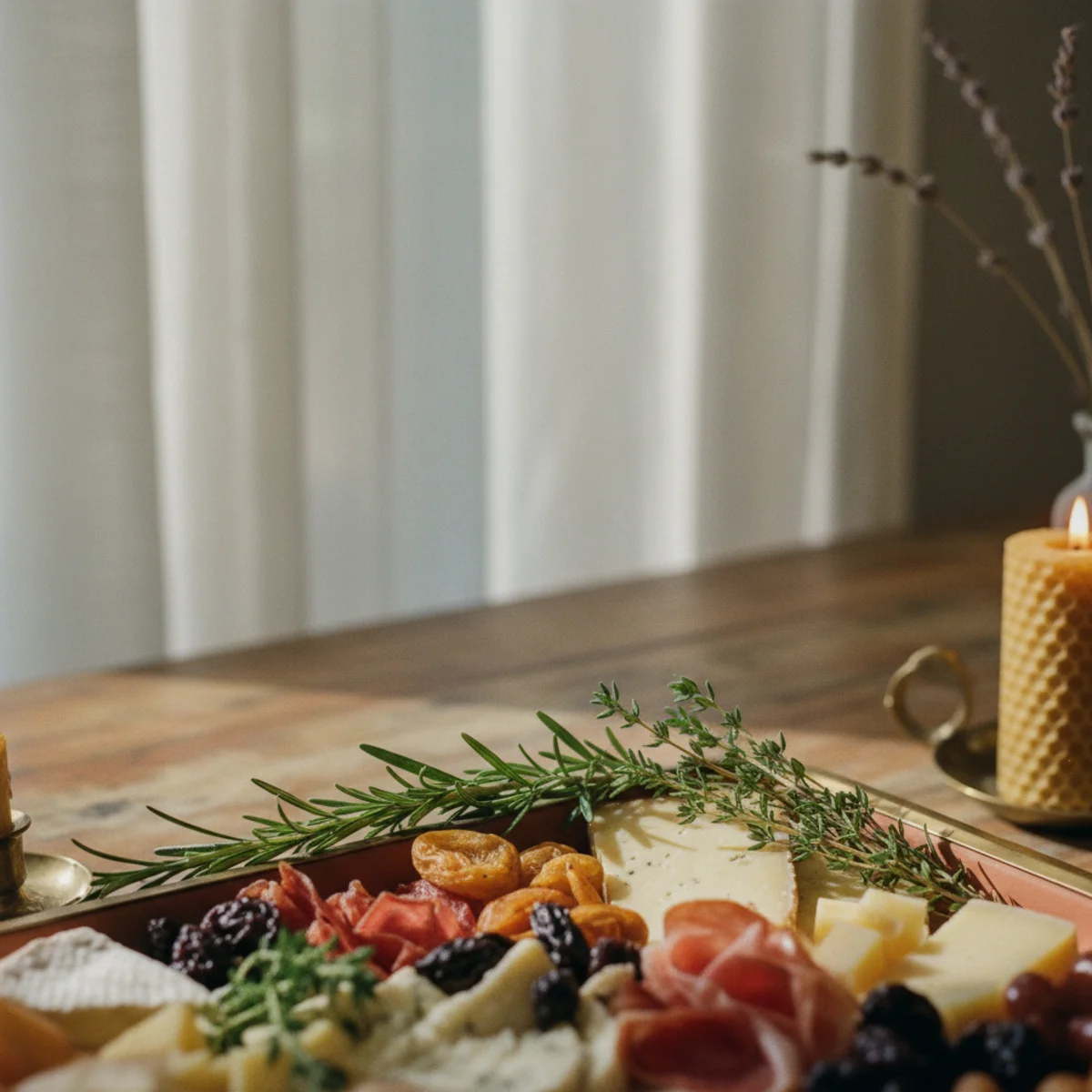
Rosemary and thyme sprigs tucked through the board — the living-world organic presence that says the board was assembled with care. See also: cozy-dinner-party-ideas
12Let Cheese Come to Room Temperature
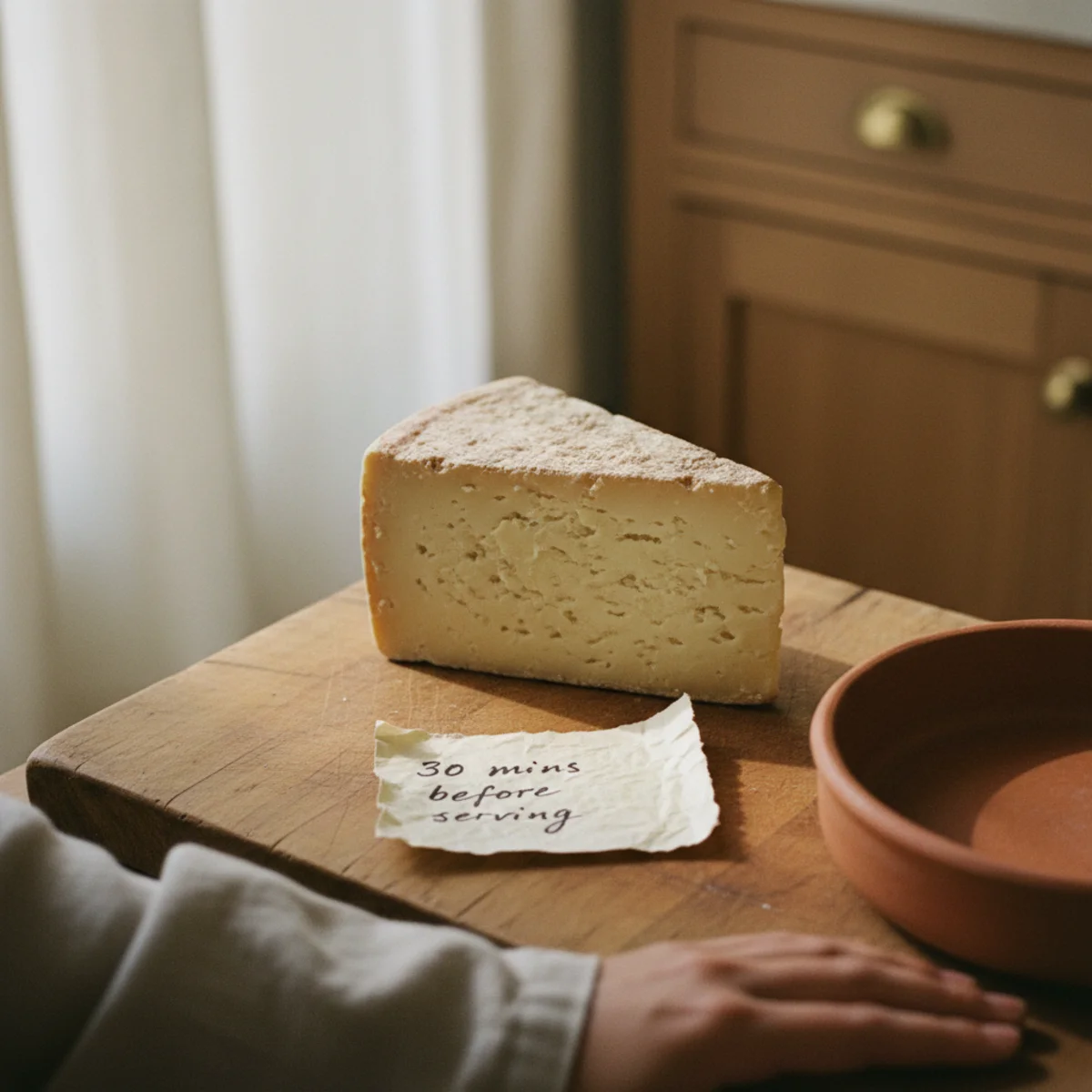
Take cheese out of the refrigerator 45-60 minutes before serving and let it come to room temperature. This is the single most-impactful cheese board quality improvement and the one most consistently skipped. Cold cheese has flat flavor and firm texture; room-temperature cheese has full flavor, appropriate texture (soft cheese should be soft, semi-firm should yield slightly), and the specific aromatic quality that cold suppresses.
Room temperature cheese specifics: TIMING — 45 minutes to 1 hour before the board is served. For very cold refrigerators or in cold environments, 60-75 minutes. WRAPPING — leave cheese in its original wrapping (or in paper if unwrapped) during the first 30-45 minutes of warming; unwrap and place on the board for the last 15-30 minutes only. The wrapping slows the warm-up slightly, preventing the outer edges from becoming warmer than the center. VISUAL SIGNAL — a perfectly room-temperature brie or camembert should feel yielding when gently pressed on the top; the center should be soft enough to ooze slightly when cut. Firm cheeses should feel slightly warm (not cold) to the touch. TEMPERATURE OF THE ROOM — in very warm rooms (above 75°F), 30-45 minutes may be sufficient. In cool rooms (below 65°F), 60-75 minutes. SUMMER CAUTION — in warm summer environments, cheese at room temperature for more than 2 hours can reach unsafe temperatures. Time the pull from the refrigerator accordingly. FLAVOR SCIENCE — most flavor compounds in cheese are volatile aromatics that are suppressed below 50°F. At room temperature (65-70°F), these aromatics are fully expressed, producing the complex flavor that makes quality cheese worth its price.
AFFILIATE SLOTCRITICALRemove from refrigerator 45-60 minutes before serving; keep in wrapping until 15-30 minutes before serving; label the pull time; brie should feel yielding when gently pressedAdd affiliate URL when configuredWhy it works
Because cheese's flavor comes primarily from volatile aromatic compounds that are chemically suppressed at refrigerator temperatures. The same molecular compounds that produce the complex flavors in aged Parmigiano or ripe brie are simply not active below 50°F — the cheese tastes flat and muted because the flavors are literally turned off by cold. At room temperature, the aromatics are fully active and the texture of soft cheeses reaches its intended yield. Cold cheese is not bad cheese; it's muted cheese — the same ingredients with the flavors suppressed.
Pro tip — Label the time the cheese comes out of the refrigerator on a piece of tape stuck to the wrapping — 'OUT AT 5:30 PM / SERVE AT 6:30 PM' — so that if you get distracted with other hosting preparations, you don't lose track of the timing. The label takes 5 seconds and prevents the most-common cheese board quality oversight.
45 minutes at room temperature — the single most-impactful cheese board quality improvement most hosts skip. See also: cozy-dinner-party-ideas
How to build a cheese board step by step
Anchor with cheese, then fill toward overflowing. Work in this order.
- 1Place the cheeses first
Set three to five cheeses, spanning soft to hard and mild to strong, spaced around a large wooden board as the anchors.
- 2Add the meats and bowls
Fold cured meat into the gaps and add small bowls of honey, jam, olives, or cornichons for the sweet and briny notes.
- 3Pile on fruit, nuts, and a vehicle
Add clusters of fresh fruit, scatter dried fruit and nuts, and fan crackers or pile bread alongside.
- 4Fill every gap and garnish
Keep tucking fruit and nuts into the spaces until no board shows through, then add a few herb sprigs. Let the cheese reach room temperature before serving.
Quick tips
- Choose cheeses that contrast in texture and strength — soft, hard, blue, and a wildcard.
- Build for abundance: pile everything high and fill every gap until no board shows.
- Let cheese come to room temperature 30 to 60 minutes before serving.
- Balance sweet, salty, and briny — honey, cured meat, and olives all on one board.
- Use a board bigger than you think; abundance needs room.
- Fold cured meat into loose ribbons rather than laying it flat for height and volume.
Grazing boards by occasion
A generous board to keep guests fed and relaxed while you finish the meal; see our dinner party guide.
Three cheeses, one meat, fruit, nuts, and honey on a smaller board — abundance at a modest scale.
Add festive touches — pomegranate, rosemary, spiced nuts — for a seasonal grazing board.
Skip the meat and lean on more cheeses, marinated vegetables, hummus, and abundant fruit and nuts.
A great cheese board is mostly abundance — pile it high, fill every gap, and let the overflow do the work.
Frequently asked questions
How do I make a good cheese board?+
What cheeses should I put on a cheese board?+
How much cheese do I need for a cheese board?+
What should go on a cheese board besides cheese?+
What's the best wood for a cheese board?+
A beautiful cheese board is mostly about the right components and abundance, not skill — three to five contrasting cheeses, cured meat, something sweet and something briny, fruit, nuts, and a vehicle, all piled high until the board overflows. We'd worry about abundance and room-temperature cheese before anything else; a sparse board reads stingy and cold cheese tastes muted, while a generous board of softened cheese looks and tastes like far more effort than it took. Pile it high, fill every gap, and let the overflow do the work.