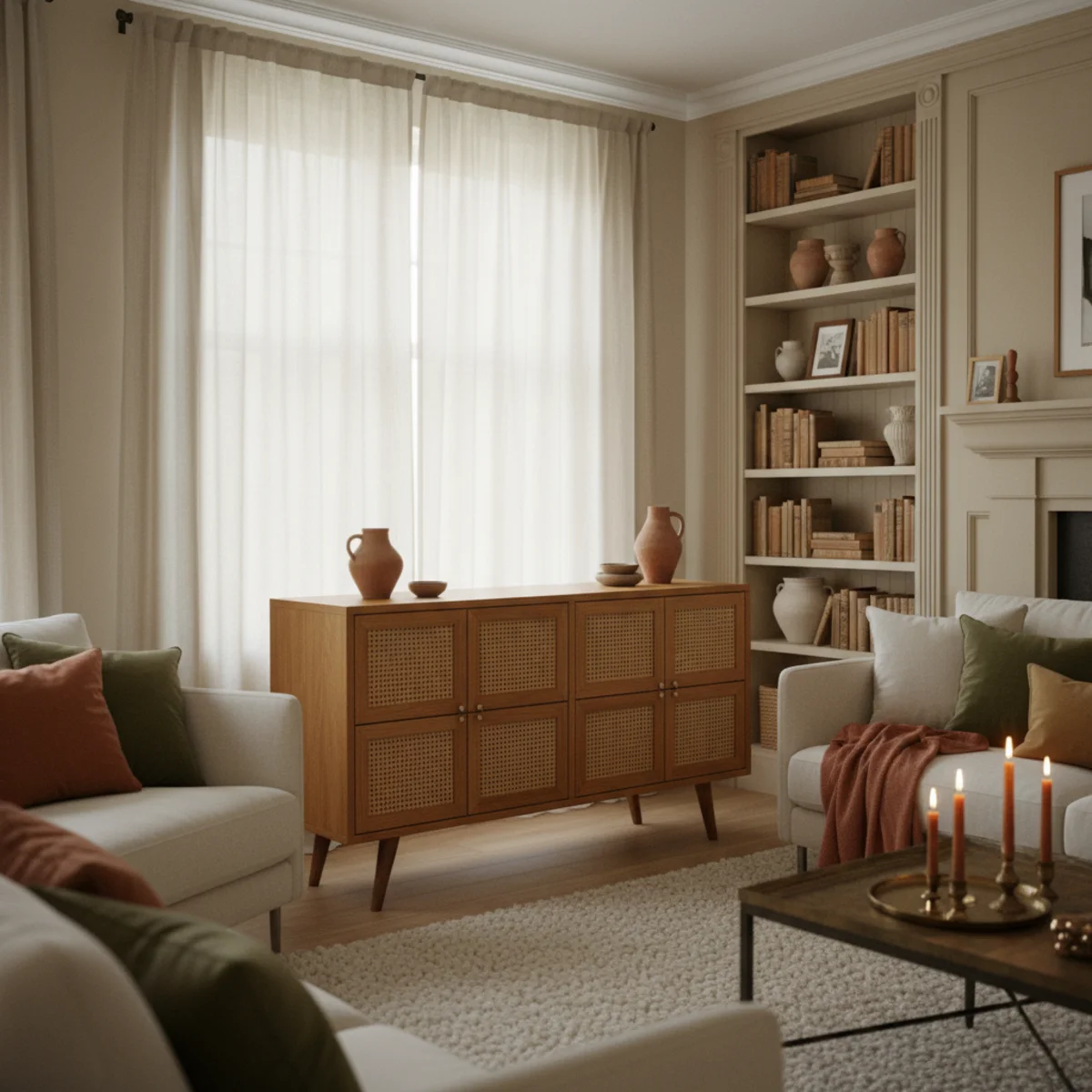
These twelve IKEA hacks are tested across actual budget builds — apartments where IKEA is the only realistic furniture budget, first homes furnished mostly from BILLY bookcases and MALM dressers, rentals where solid wood furniture is out of scope. Every hack below names the specific IKEA model, the exact materials and tools needed, the dollar cost, and the weekend-time investment. The combined effect of two or three hacks across a room transforms standard IKEA furniture into pieces indistinguishable from $800-plus retail at a fraction of the price.
IKEA furniture reads as IKEA because of specific elements — laminate surfaces, plastic legs, generic hardware, perfect-but-soulless lines. The hacks below all attack one or more of these specific elements: replacing legs with solid wood, swapping plastic knobs for aged brass, painting laminate to look like aged plaster, adding wood tops over particleboard, layering trim or molding for architectural detail. Each hack is small; the combined effect is dramatic.
By the end of this guide, you'll know exactly which IKEA hacks have the highest ROI for warm-home aesthetic — the leg swap, the knob swap, the wood top, the cane and rattan panels, and the seven other transformations that turn flat-pack into heirloom-looking.
WHAT'S INSIDE
- The IKEA-to-Pretty leg swap (Prettypegs replacements) that transforms any MALM or BESTÅ piece
- Why aged brass knobs at $4 to $20 each beat the included plastic ones every time
- The solid wood top added to BESTÅ or KALLAX that converts laminate into apparent solid wood
- The cane or rattan panel insert that elevates BESTÅ doors to apparent custom millwork
Flat-pack is a blank canvas. The legs, the knobs, and a coat of paint are what turn 'everyone has this' into 'where did you get that?'
— Apartment Therapy [citation needed — verify before publish]
What is an IKEA hack?
An IKEA hack is a modification of affordable flat-pack furniture — swapping parts, adding materials, painting, or combining pieces — to make it look more custom, more expensive, and warmer than its out-of-the-box self. The base piece provides cheap, solid bones; the hack provides the character that mass-produced furniture lacks.
The most effective hacks target the parts that read as 'flat-pack': the legs, the knobs and pulls, the laminate surfaces, and the overall finish. Swapping factory legs for turned wood ones, changing plastic knobs for brass or ceramic, adding a real wood top, or painting a laminate piece a warm color transforms how it reads for a fraction of custom prices. The skill is in choosing upgrades that hide the mass-produced origins and add warmth — wood, warm metal, and paint do the most.
More in Budget you may love
See allWhy IKEA hacks are everywhere in 2026
Tight budgets met a desire for warm, custom-looking homes, and the IKEA hack became a cornerstone of affordable decorating — Pinterest's IKEA hack searches climb every year, toward warming and customizing flat-pack rather than just assembling it.
The honest appeal is value plus character. Flat-pack furniture is cheap and structurally sound but generic, and a few small upgrades — legs, knobs, paint, a wood top — turn it into something that looks custom and warm for a fraction of designer prices. As the warm-home aesthetic prized character and natural materials that mass-produced furniture lacks, hacking flat-pack to add wood, brass, and warm color became the budget route to the look.
22 IKEA hacks for a warmer home
01Swap the Legs for Solid Wood
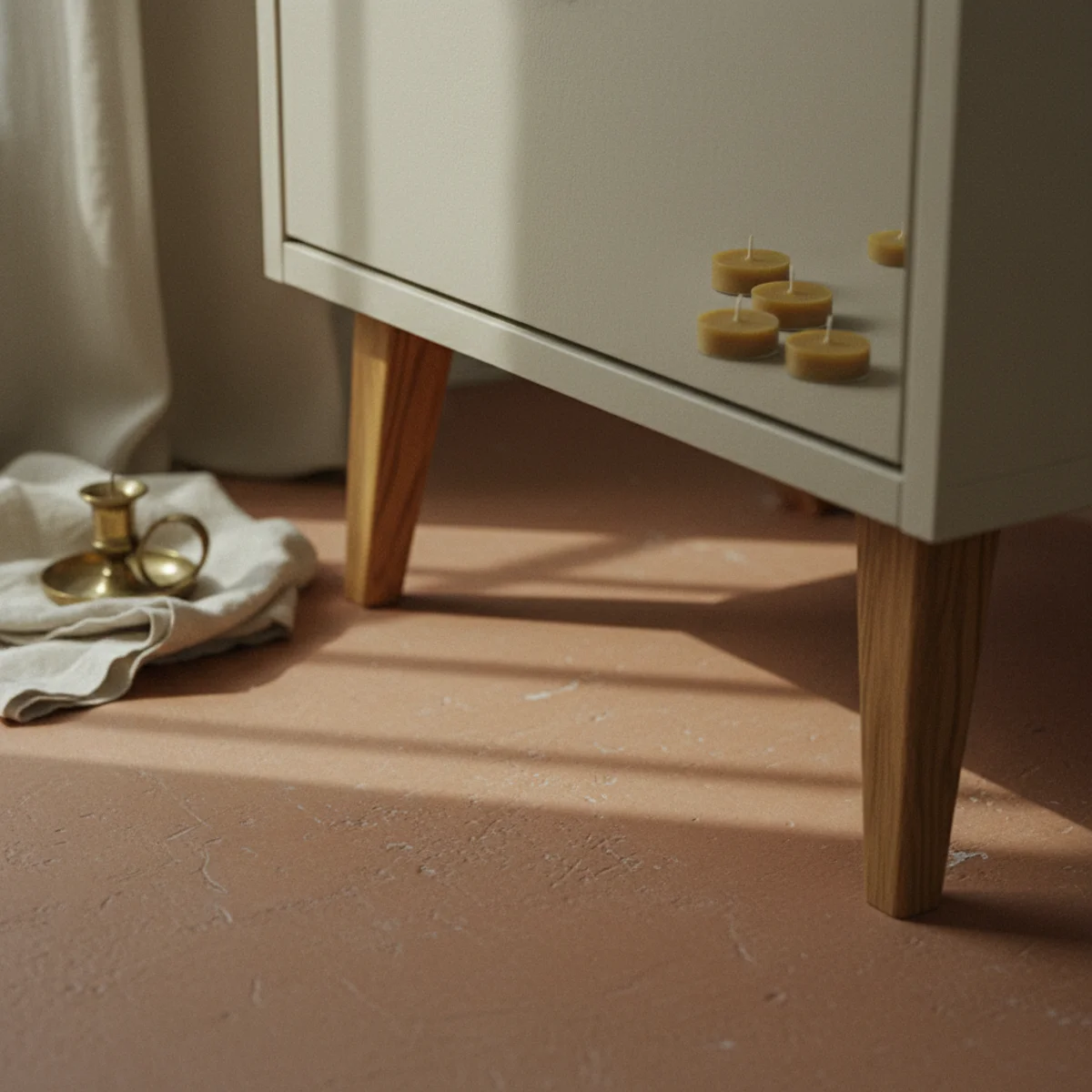
The fastest, cheapest IKEA upgrade is swapping the included plastic or basic-wood legs for solid hardwood replacements. Companies like Prettypegs, Bocci, or local woodworkers make legs designed to fit specific IKEA pieces (MALM, BESTÅ, GRÖNADAL) with the original mounting hardware. The swap takes 15 to 30 minutes per piece and transforms how the furniture reads from flat-pack to warm-home.
Best IKEA pieces for leg swaps: MALM dressers (most popular for the hack, multiple Prettypegs models fit), BESTÅ media units and cabinets, EKBY bracket sets, HEMNES bench. Sources: Prettypegs at $50 to $150 per set of 4 (custom-fits specific IKEA models), Bocci at $80 to $200 per set, local woodworkers at $60 to $150 per set for custom designs. Best wood choices: solid oak (most versatile), walnut (warmer tone), teak (most sophisticated), oiled birch (Scandinavian aesthetic). Match the leg height to the original IKEA legs to maintain furniture proportions, or go 1 to 2 inches taller for an even leggier look. Total cost: $50 to $200 per piece; total time: 15 to 30 minutes per piece.
AFFILIATE SLOTHACKSolid oak, walnut, or teak legs from Prettypegs, Bocci, or local woodworker at $50-200 per setAdd affiliate URL when configuredWhy it works
Because the legs are the most-visible base element of any IKEA piece, and the original plastic-or-veneer legs telegraph 'IKEA' immediately. Solid hardwood legs in oak, walnut, or teak look like the legs custom-built furniture has — the wood grain, the weight, the joinery. The same piece of furniture with $80 of solid wood legs replacing $5 of plastic legs reads as a $600 piece rather than a $200 IKEA piece, because the legs are doing the visual signaling. The hack is the single highest-ROI IKEA upgrade.
Pro tip — Pair the new legs with one other hack from this guide (knob swap, wood top, painted body) for compound effect — a MALM dresser with solid oak legs plus aged brass knobs plus an oak top reads as a $1,500 retail piece rather than as a $200 IKEA dresser. The hacks compound multiplicatively, not additively.
MALM dresser with solid oak Prettypegs legs — the single highest-ROI IKEA hack. See also: Prettypegs
02Change the Knobs and Pulls
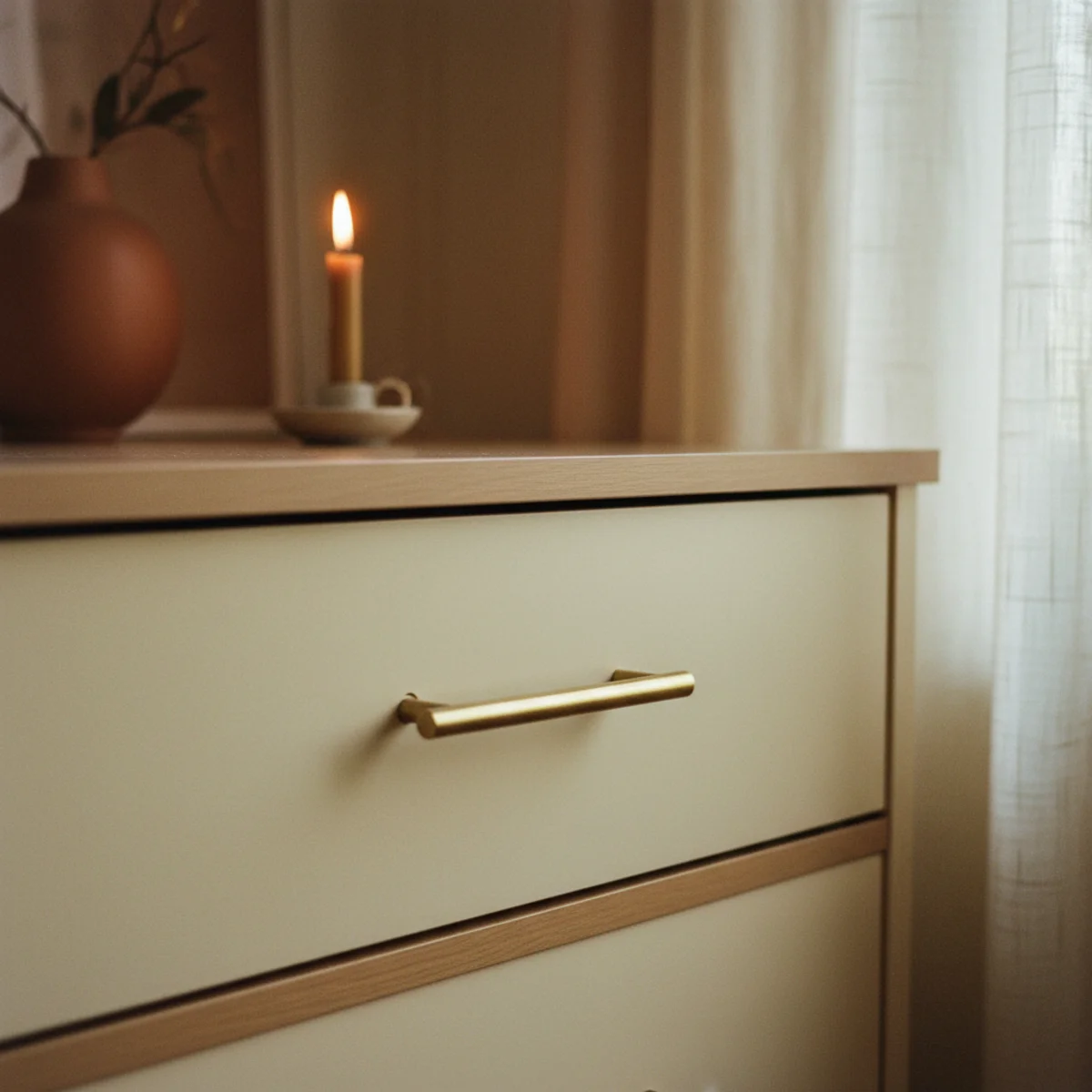
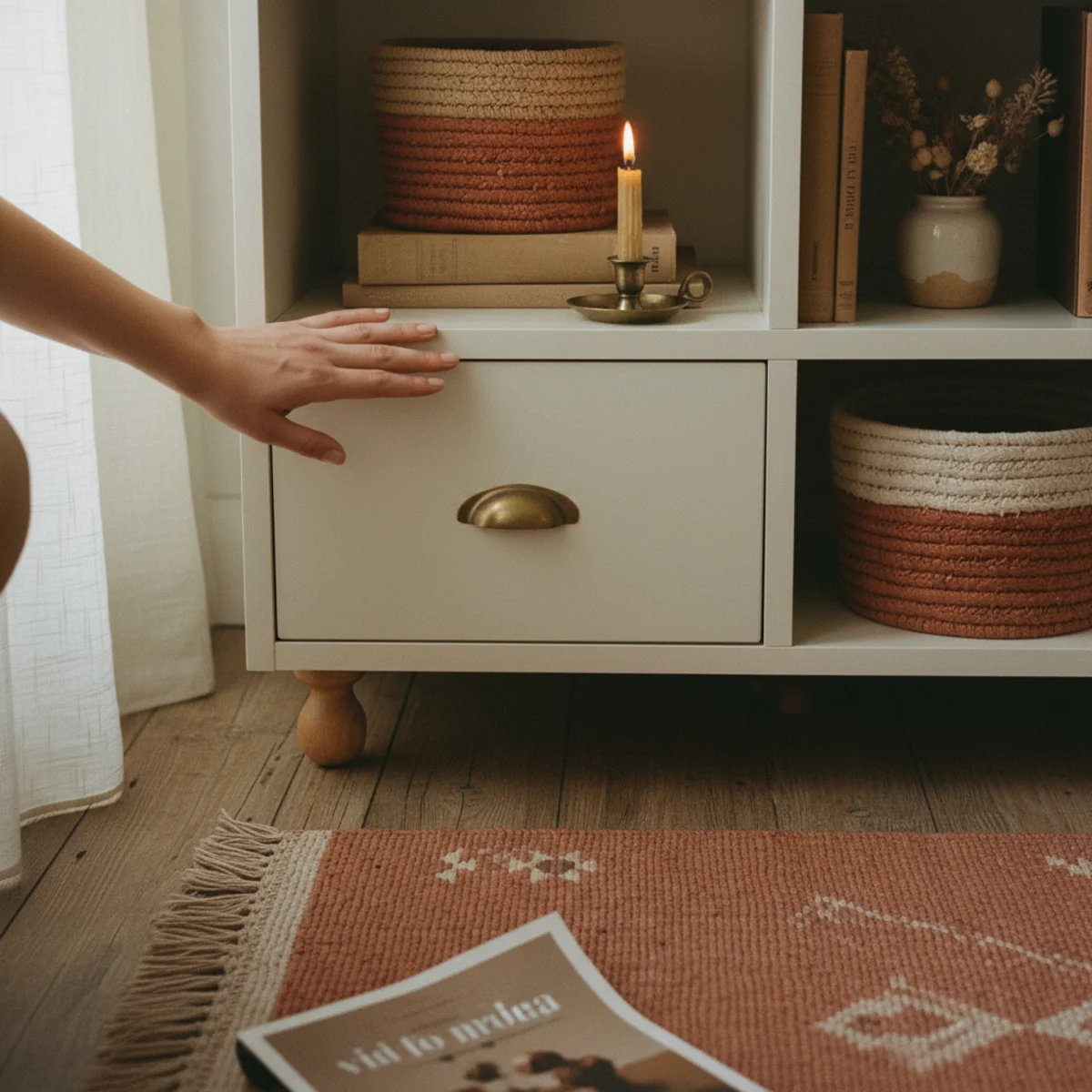
Every IKEA piece comes with basic plastic or generic-metal knobs and pulls — and changing them is the second-fastest IKEA upgrade. Aged brass, oiled bronze, or warm-toned ceramic knobs at $4 to $20 each transform how the furniture reads. The swap takes 5 to 15 minutes per piece and is one of the most-noticed details on any IKEA hack.
Replace all visible knobs and pulls with warm-toned hardware: aged brass at $4 to $20 each from House of Antique Hardware, Hardware Hut, or Anthropologie; oiled bronze at $5 to $15 each; vintage knobs and pulls at $1 to $5 each from estate sales and ReStore. Best IKEA pieces for the swap: MALM (4 to 6 pulls per dresser), HEMNES (3 to 4 pulls per piece), BESTÅ (door knobs and drawer pulls), GRÖNADAL (small drawer knob). Total cost per piece: $24 to $120 for hardware replacement. Total time: 5 to 15 minutes per piece (unscrew old, screw in new). Pair with leg swap for compound transformation.
AFFILIATE SLOTHACKAged brass or oiled bronze knobs/pulls at $4-20 each across all visible hardwareAdd affiliate URL when configuredWhy it works
Because knobs and pulls are the touch points — the elements your hand reaches for daily, and the elements visitors notice immediately at close range. Plastic or generic-metal pulls signal 'inexpensive flat-pack' even when the rest of the furniture is well-styled; warm aged brass or oiled bronze pulls signal 'quality piece' regardless of the underlying construction. The hardware is doing more visual work per square inch than any other furniture element.
Pro tip — Buy a single test piece of hardware before committing to a full set — the scale, finish, and shape can read different in person than online photos suggest. One test knob at full price prevents the much-worse mistake of buying a $80 set and discovering the finish doesn't work in your specific lighting.
Aged brass pulls replacing IKEA plastic — the touch points transformed for $80 of hardware. See also: House of Antique Hardware
03Add a Real Wood Top
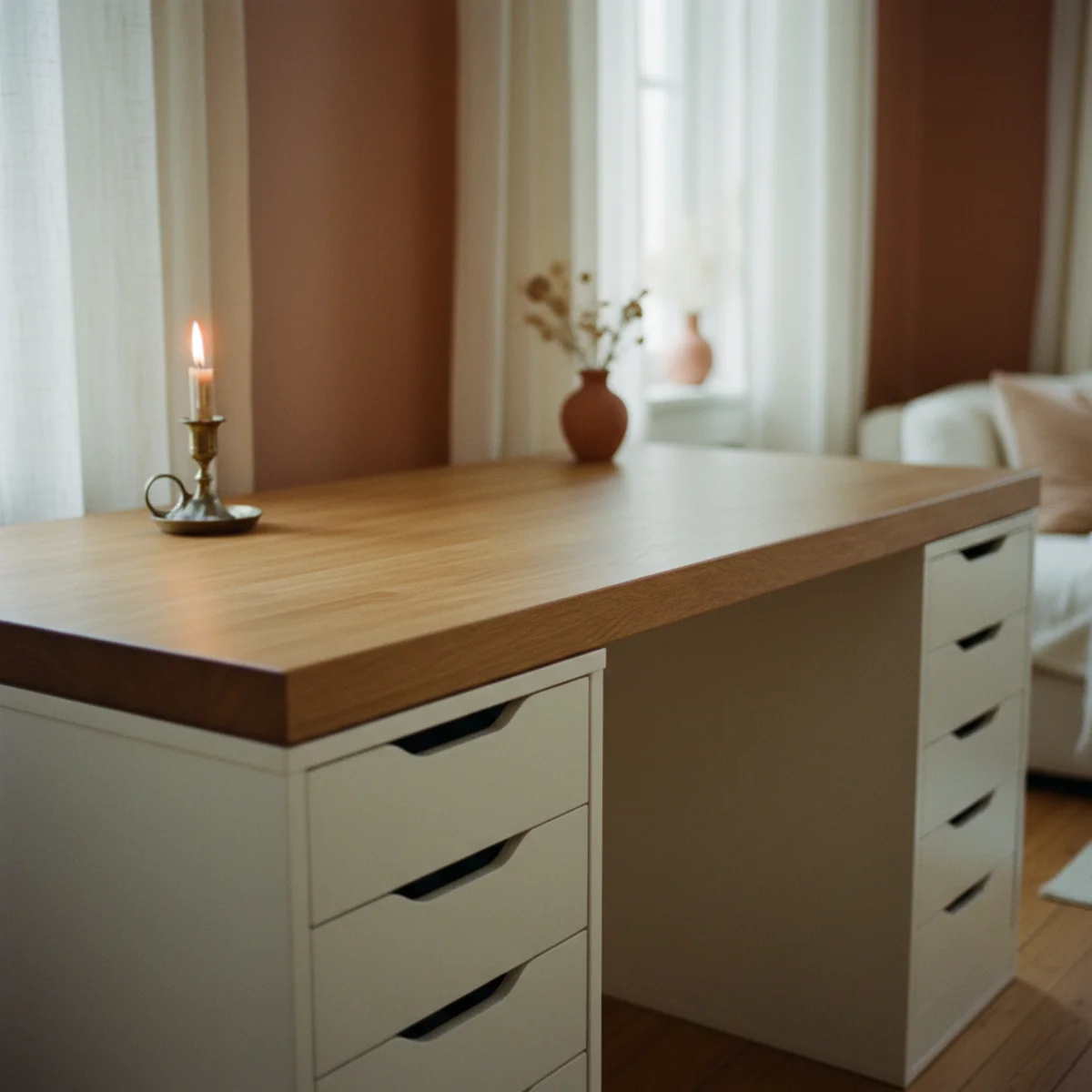
IKEA cabinet pieces (BESTÅ, KALLAX, HEMNES) come with laminate or veneer tops that read inexpensive. Adding a custom-cut solid wood top transforms the piece's primary visible surface — the new wood top reads as the genuine material the rest of the piece pretends to be. The hack costs $80 to $250 in solid wood plus $40 in finishing, and converts laminate furniture into apparent solid wood at a glance.
Materials: a piece of solid hardwood cut to fit the IKEA furniture top exactly. Standard sizes: BESTÅ 24x32 inches or 32x32 inches, KALLAX 32x32 inches or longer, HEMNES dresser 64x18 inches. Wood choice: solid oak ($80 to $150 for typical top size from local lumberyard or Home Depot), walnut ($120 to $250), oiled pine ($40 to $100 for budget option). Have the wood cut to size by the lumberyard or local woodworker; the cut should be precise (within 1/16 inch) for clean fit. Attach with construction adhesive (Liquid Nails at $5) applied along the IKEA top with the wood pressed down for 24-hour cure, or with screws from below if the IKEA cabinet has accessible top frame. Finish the wood with Danish oil ($12) for the warm matte look — never gloss varnish.
AFFILIATE SLOTHACKSolid oak, walnut, or oiled pine top cut to fit + Liquid Nails + Danish oil finishAdd affiliate URL when configuredWhy it works
Because the top is the largest single visible surface on most cabinet furniture, and what your eye registers first when viewing the piece from above (which is most of the time, since you look down at dressers and consoles). The laminate IKEA top reads as IKEA immediately; the solid wood top reads as the warm-home material that custom furniture has. The transformation is dramatic because the eye does most of the visual processing of the piece based on the top surface specifically.
Pro tip — Round the wood top's edges slightly with sandpaper ($3 for medium-grit sheet) before oiling — the slightly-softened edges read more sophisticated than sharp factory-cut corners, and the small detail distinguishes a deliberate wood top from a cut-and-attached add-on. The rounding takes 10 minutes per edge; the visual upgrade is significant.
Custom walnut top on BESTÅ cabinet — laminate underneath, warm solid wood where the eye actually looks. See also: Danish oil
04Paint the Laminate
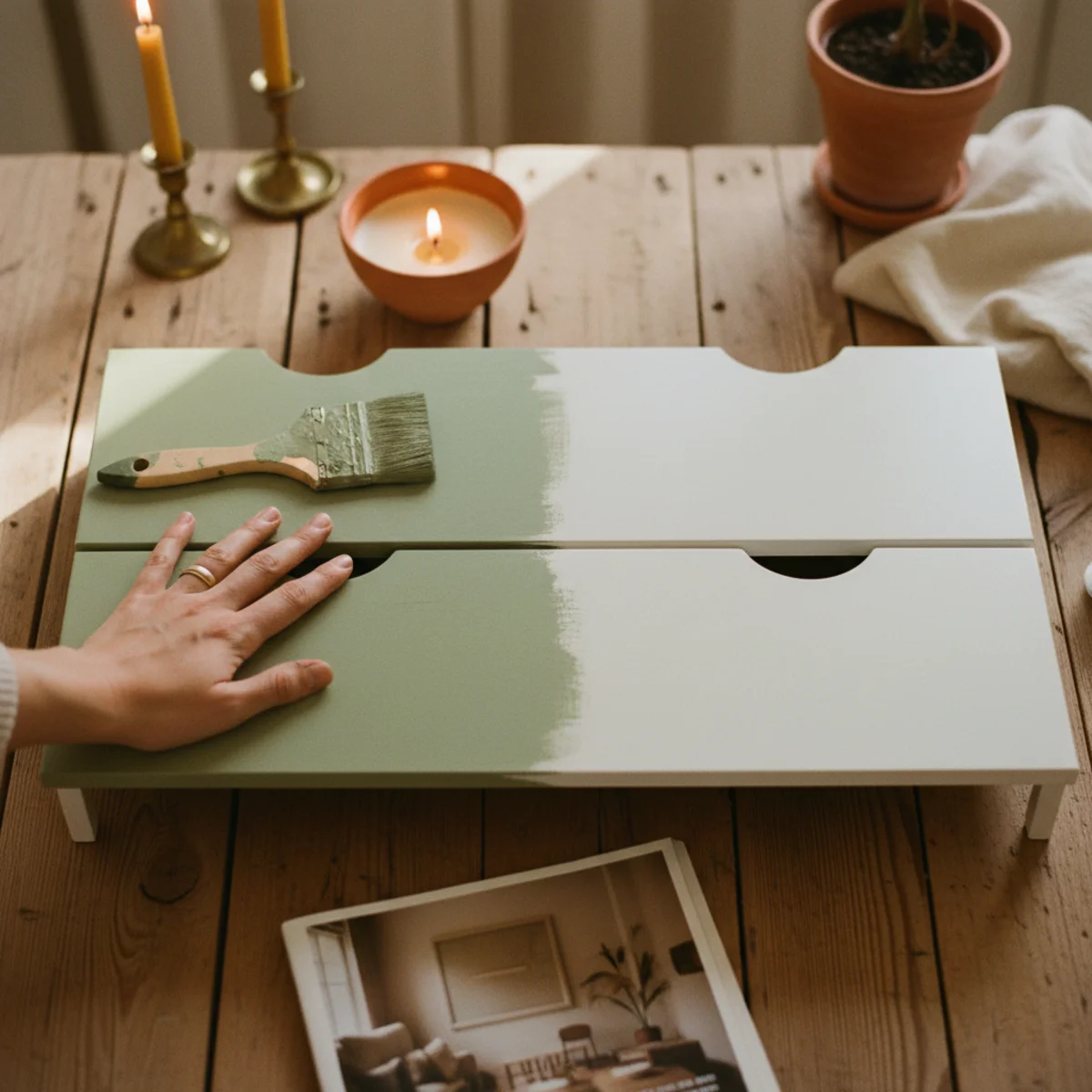
IKEA laminate furniture can be painted with the right preparation — and the painted finish reads warmer and more sophisticated than the original laminate. The trick is using a bonding primer to make the paint stick (laminate is non-porous and rejects regular paint), then applying cabinet-grade paint in warm earthy tones. Cost: $40 to $80 in materials; time: one weekend per piece.
Paint process: (1) CLEAN the laminate with TSP cleaner ($4) and let dry. (2) SAND lightly with 220-grit sandpaper to give the bonding primer a microscopic surface to grip. (3) APPLY bonding primer (Zinsser Stix or BIN Shellac at $15 to $25 per quart) in one or two thin coats, letting each cure 4 hours. Never skip this step — paint over laminate without bonding primer chips off within weeks. (4) APPLY two coats of cabinet-grade paint (Benjamin Moore Advance or Sherwin-Williams Emerald Urethane at $50 to $70 per quart) in warm tones — F&B Mizzle 266 (muted sage), BM Soft Chamois OC-13 (warm cream), F&B Setting Plaster 231 (plaster pink), BM Kendall Charcoal HC-166 (warm dark). 4 hours between coats. (5) LET CURE 7 days before heavy use. Total cost: $40 to $80; total time: weekend.
AFFILIATE SLOTHACKTSP clean + 220-grit sand + bonding primer + cabinet-grade paint in warm tones (Mizzle, Setting Plaster, Kendall Charcoal)Add affiliate URL when configuredWhy it works
Because paint covers 100 percent of the IKEA piece's visible surfaces — the laminate body, the doors, the drawer fronts. The leg swap and wood top transform specific elements; the paint transformation handles the entire piece in one project. The choice of warm earthy color (rather than IKEA's typical white or wood-tone laminate) shifts the entire piece into the warm-home palette, which the wood-only laminate could never match.
Pro tip — Paint the inside of the cabinet doors a contrasting color (a deeper or accent tone) — the small surprise when opening the doors reads as deliberate craftsmanship, the kind of detail custom furniture has but IKEA pieces never do. The inside-doors paint requires the same prep as the outside but uses less paint; total additional cost: $20 in supplies.
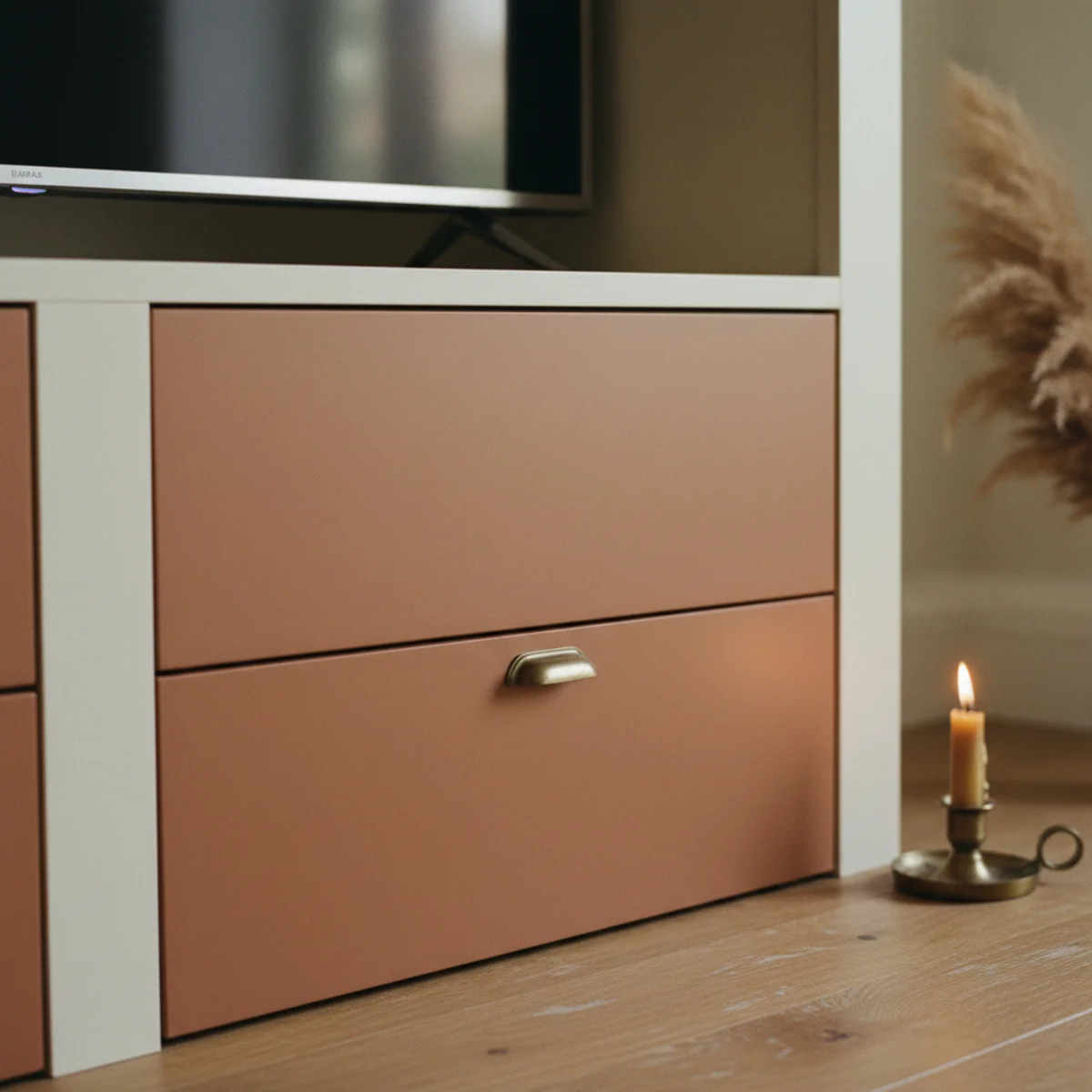
BESTÅ cabinet painted Mizzle sage with brass pulls — the full-piece transformation that paint enables. See also: Benjamin Moore Advance
05Add Cane or Rattan Panels
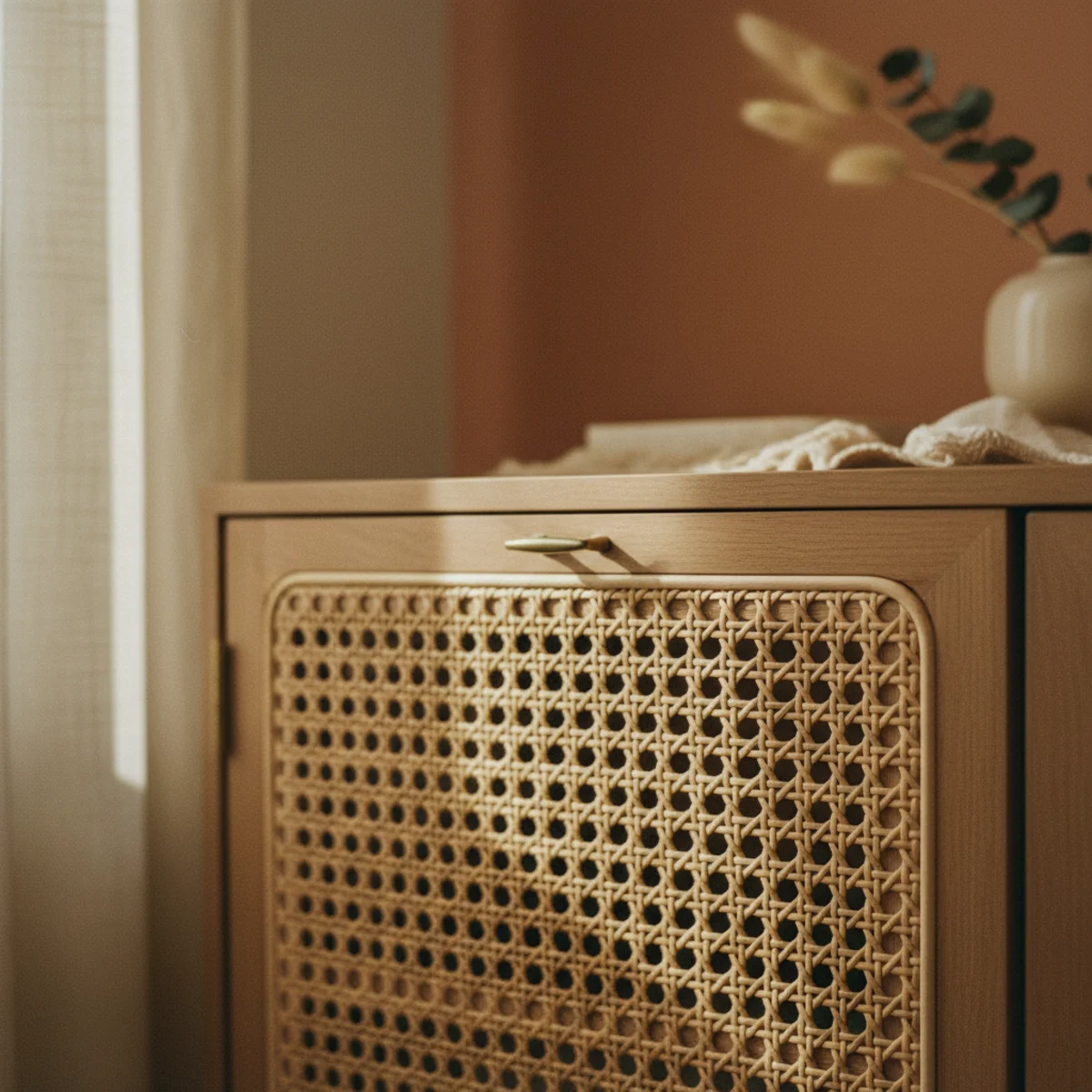
Cane or rattan panels inserted into BESTÅ, HEMNES, or other cabinet doors transform flat laminate surfaces into apparent custom millwork. The natural-fiber panels add organic texture and warm-home character that flat doors entirely lack. Cost: $40 to $120 per door in materials; time: 90 minutes to 3 hours per door depending on cutting precision.
Materials: cane webbing or rattan panels at $20 to $40 per square foot from Frank's Cane and Rush Supply, AC Moore, or Etsy artisan suppliers. Cut the cabinet door's center panel out (using a router or jigsaw) leaving 2 to 3 inches of frame around the perimeter. Apply the cane or rattan webbing to the open frame with wood glue and small brad nails ($5 in supplies). Trim around the edges with small wooden strips ($15 to $30 in materials) for clean finished edges. Stain or oil the wood frame to match warm-home palette. The transformation works best on BESTÅ door fronts, HEMNES dresser fronts (modify the drawer front), and PAX wardrobe doors. Total cost per door: $40 to $120; total time per door: 90 minutes to 3 hours.
AFFILIATE SLOTHACKCane webbing or rattan panels inserted into routed BESTÅ, HEMNES, or PAX door frontsAdd affiliate URL when configuredWhy it works
Because cane and rattan are signature materials of high-end custom millwork — they signal craftsmanship and warm-home character that IKEA's flat-laminate doors never communicate. Adding cane panels to BESTÅ doors makes the cabinet read as something from a custom furniture maker rather than from a flat-pack retailer. The natural-fiber texture also adds the warm-home tactile layer that IKEA furniture entirely lacks, even after leg swaps and paint.
Pro tip — Start with a single test door before committing to a full piece — the cutting and panel-installation has a small learning curve, and your first attempt won't be as clean as your fifth. Practice on a door you can replace if needed (BESTÅ doors are individually purchasable as parts); commit to the full cabinet after the first successful test door.
Cane panel in BESTÅ door — the natural-fiber texture that signals custom millwork. See also: wood glue
06Combine Pieces Into a Built-In
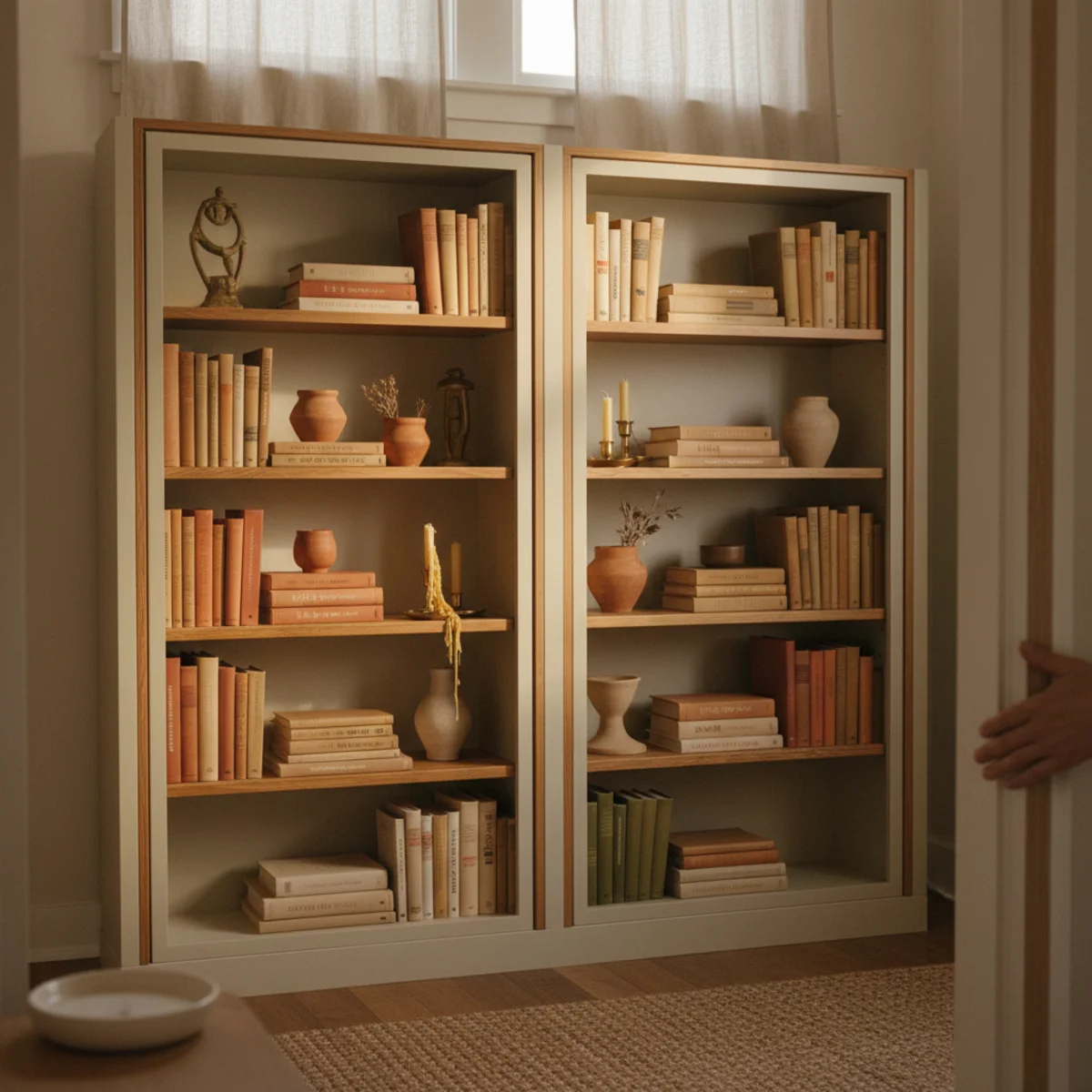
Multiple IKEA pieces installed together with trim and paint can mimic full custom built-in millwork at a fraction of the cost. Three BESTÅ units side-by-side with shared trim, painted as one continuous piece, reads as custom built-in cabinetry. The hack costs $600 to $1,500 (versus $5,000+ for custom built-ins) and delivers 80 percent of the visual effect.
Approach: arrange 2 to 4 IKEA cabinet pieces (BESTÅ, PAX, or HEMNES) side-by-side or stacked, with no gaps between them. Add a single continuous wood top across all pieces ($150 to $400 in solid wood cut to length). Add baseboard-style trim around the base of all pieces (creates the visual unity of a built-in). Add crown molding or fascia at the top connecting the pieces to the ceiling (or stopping short for an open shelf above). Paint all visible surfaces (cabinets, trim, top if not wood) in the same warm color. Add matching warm-brass hardware across all pieces. The result reads as custom built-in cabinetry from across the room; only close inspection reveals the IKEA bones.
AFFILIATE SLOTHACKMultiple IKEA pieces installed side-by-side or stacked + continuous wood top + trim + unified paintAdd affiliate URL when configuredWhy it works
Because the visual signals of built-in cabinetry (continuous painted surfaces, integrated trim, unified hardware) all happen at the assembly level, not at the individual-piece level. IKEA pieces are perfectly functional cabinet boxes; what they lack is the integrated trim and continuous painted surface that built-ins have. Adding those elements externally — through trim, paint, and continuous wood tops — captures the built-in effect without requiring custom carpentry. The hack is one of the most-impressive in apartment-decorating contexts.
Pro tip — Plan the IKEA combination to match an existing wall section exactly — 8 feet of wall fits 3 BESTÅ cabinets at 32 inches each (96 inches total) perfectly. The matching dimensions reinforce the built-in illusion; gaps or mismatched sizes give the IKEA origin away. Measure the wall before buying.
Three BESTÅ cabinets unified with trim and paint — apparent built-in cabinetry for one-fifth the cost of custom. See also: warm color
07Add Trim or Molding
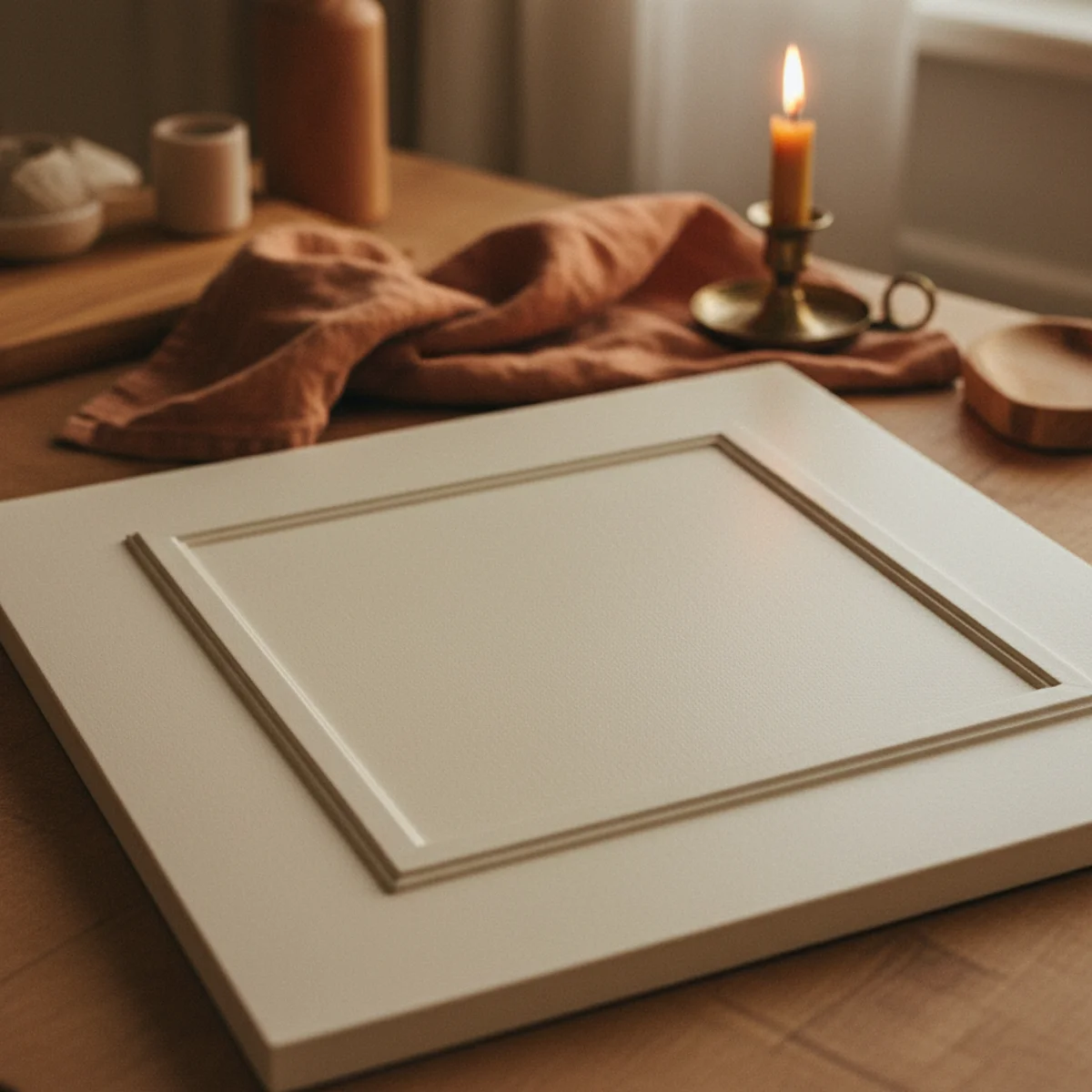
Adding trim or molding to IKEA pieces — cove molding around door panels, baseboard trim around the base, crown at the top — adds the architectural detail that custom furniture has and IKEA furniture lacks. The trim conceals seams, adds dimensional shadow lines, and signals craftsmanship. Cost: $30 to $80 per piece; time: 2 to 4 hours per piece.
Trim types: COVE OR BEAD MOLDING applied around door panels and drawer fronts (creates the appearance of inset paneling) at $5 to $15 per linear foot. BASEBOARD-STYLE TRIM around the base of the piece (creates the appearance of integrated millwork) at $4 to $10 per linear foot. CROWN OR FASCIA at the top of the piece. Pre-primed pine trim works perfectly — it's affordable and accepts paint well. Cut to length with a miter box for 45-degree corner joints. Attach with construction adhesive (Liquid Nails) and small finishing nails. Fill nail holes with wood putty, sand, and paint everything (trim plus piece) in the same color for unified custom look. The added trim transforms flat IKEA surfaces into the dimensional millwork that custom cabinetry has.
AFFILIATE SLOTHACKCove molding around panels + baseboard trim at base + crown at top, all painted same color as pieceAdd affiliate URL when configuredWhy it works
Because trim creates shadow lines and dimensional variation on otherwise-flat surfaces — and those shadow lines are what the eye reads as 'real architecture' versus 'flat-pack box.' Custom cabinetry has trim because it costs nothing extra during construction; IKEA omits trim because shipping flat-pack requires flat surfaces. Adding trim externally reverses the cost-cutting decision and gives the IKEA piece the visual hallmarks of custom construction. The hack is one of the most-noticed because the shadow-line difference is significant.
Pro tip — Test a single corner of trim before committing to a full piece — the miter cuts for 45-degree corners have a small learning curve, and your first attempt won't be perfectly clean. Get the corners right on a test piece, then proceed to the full piece confidently.
Cove molding around the door panels, baseboard trim at the base — shadow lines that signal custom construction. See also: miter box
08Style a Bookshelf Warmly
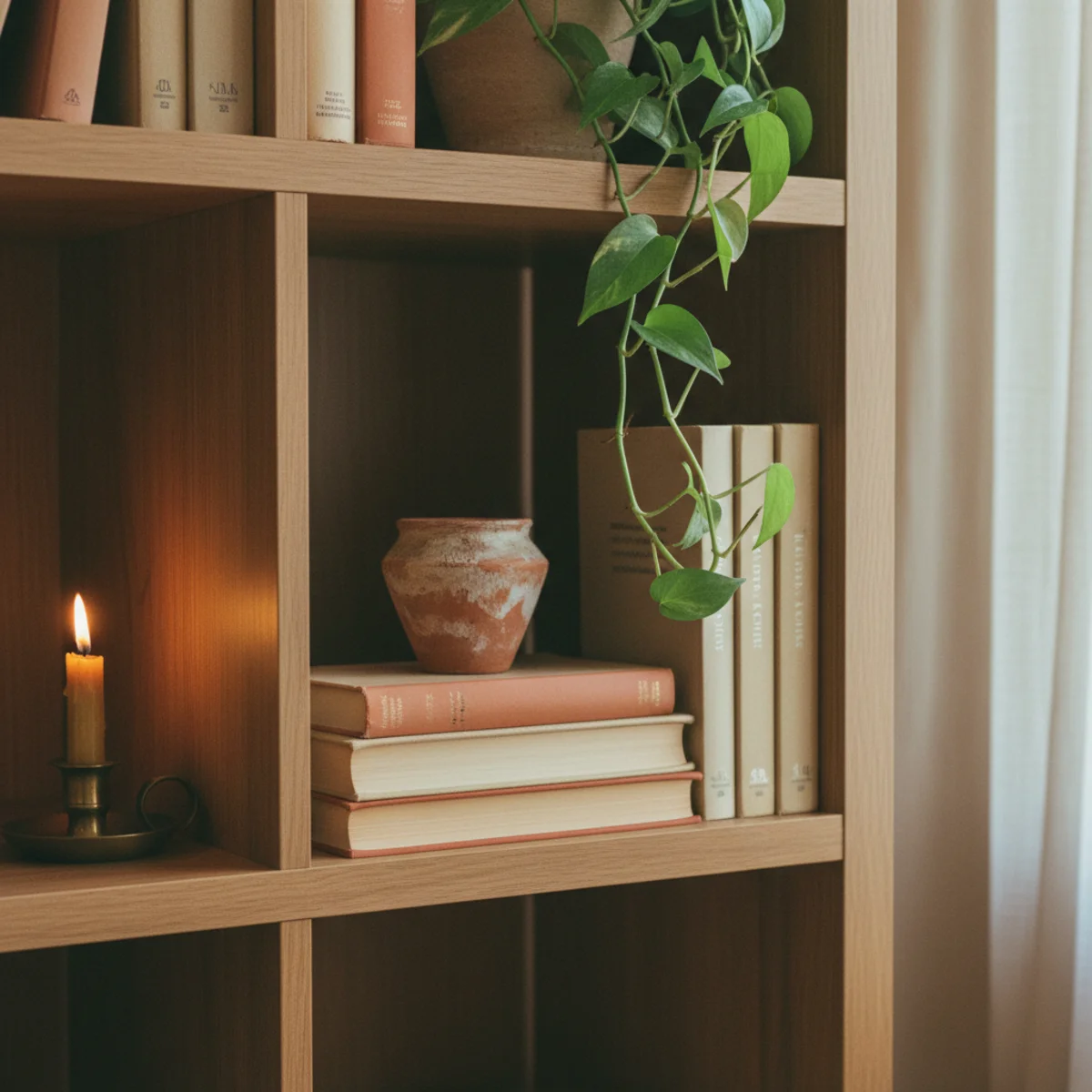
IKEA BILLY and KALLAX bookshelves are the most-common IKEA pieces in any home — and the most-commonly badly styled. The fix isn't hacking the shelf itself; it's styling the contents to follow the warm-home rules. Hardcover books with cloth bindings, mixed depth, odd-number groupings, organic objects, third-empty discipline — all the shelf-styling-ideas principles applied to the IKEA frame transform how the bookshelf reads.
Apply shelf-styling-ideas rules to IKEA bookshelves: (1) STRIP DUST JACKETS from hardcover books to expose cloth bindings (cleaner palette). (2) ARRANGE in mixed orientations — half horizontal stacks, half vertical groupings. (3) INCORPORATE ODD-NUMBER objects (3 or 5 ceramics per shelf, never 4). (4) LEAVE 30 TO 40 PERCENT of each shelf empty (the third-empty rule). (5) DEPTH-LAYER objects (tall back, short front). (6) REPEAT materials across shelves (warm wood, ceramic, brass, books). The shelf itself is fine; the content arrangement is what transforms the visual register from 'IKEA bookshelf storing books' to 'styled warm-home library.' Total cost: $0 if you already own the books and objects; $50 to $150 for additional warm-home objects if collection is sparse.
AFFILIATE SLOTSTYLINGApply shelf-styling-ideas rules: stripped dust jackets, mixed orientation, odd-number objects, third-empty, depth layeringAdd affiliate URL when configuredWhy it works
Because the IKEA bookshelf itself is just a frame — the content fills 70 to 90 percent of the visible area. Badly arranged content (alphabetical books, identical paperback spines, no objects) reads as utility storage regardless of the shelf brand. Well-arranged content (depth-layered, odd-number objects, third-empty discipline) reads as styled warm-home library regardless of the shelf brand. The styling is the visual, not the shelf itself.
Pro tip — Strip dust jackets from hardcover books — the cloth bindings underneath read more sophisticated than printed dust jackets and fit the warm-home palette better. The trick costs nothing and transforms how an IKEA bookshelf reads more than any physical hack.
BILLY bookshelf with stripped jackets, ceramic objects, third empty — the styling that converts IKEA into warm-home library. See also: shelf-styling-ideas
09Upgrade a RIBBA Frame With Linen
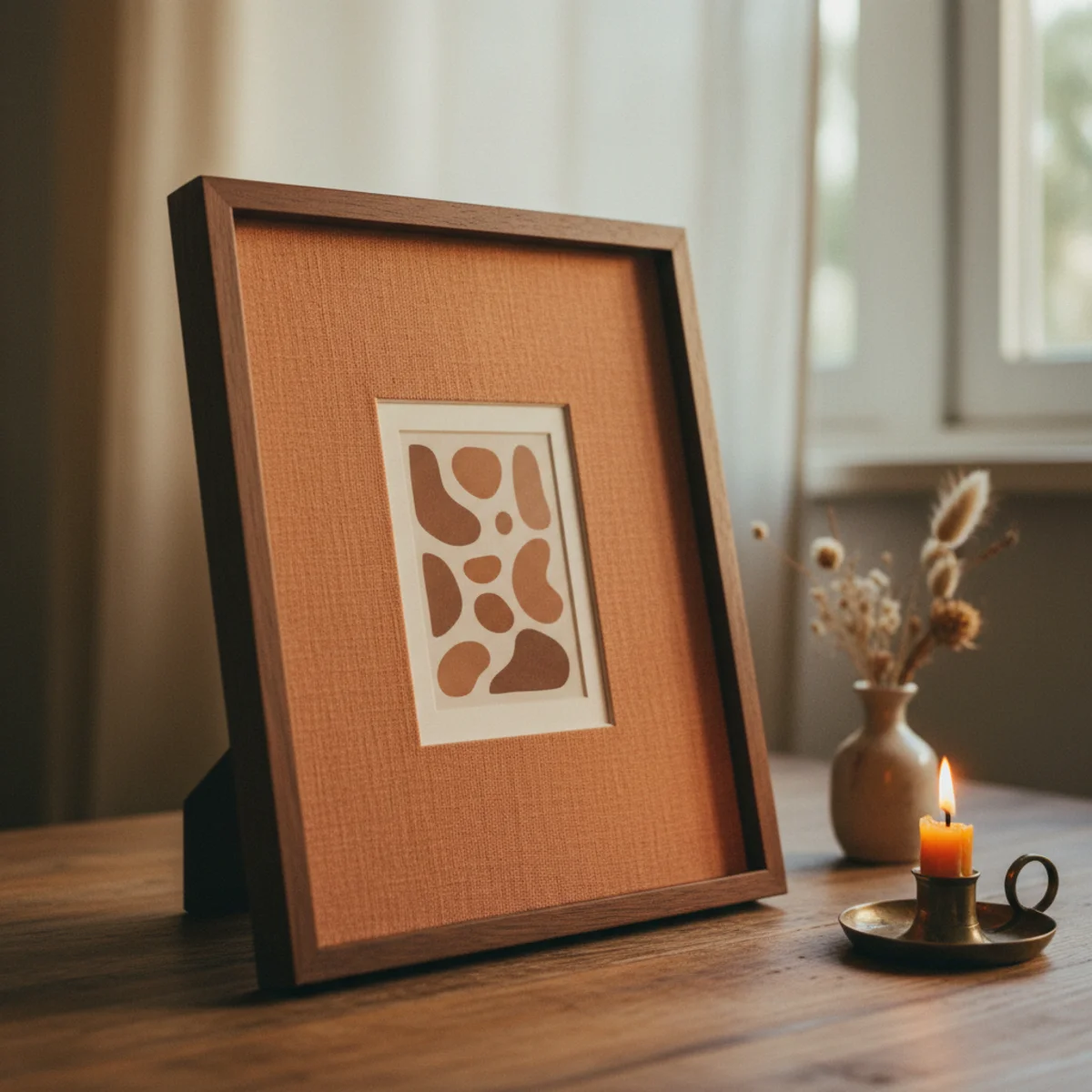
IKEA RIBBA picture frames are everywhere — and the white plastic-and-glass aesthetic reads commercial. The upgrade: wrap the frame's edges with linen or velvet ribbon, replace the white interior mat with cream or warm-gray archival mat, and the frame transforms from RIBBA to apparent vintage at $5 in materials.
Materials: linen or velvet ribbon at $3 to $6 per yard (Etsy, Joann, or craft stores) in warm earth tones (oat, sand, terracotta), archival mat in cream or warm gray ($3 to $8 each from Michael's or Aaron Brothers). Process: (1) REPLACE the white mat in the RIBBA with the warm archival mat (just lift out the existing mat, cut the new one to size if needed, insert). (2) WRAP the visible outside edges of the frame with linen ribbon, attached with small dabs of fabric glue every 4 to 6 inches. The ribbon adds tactile texture and warm-tone color to the otherwise-flat plastic frame edge. Total cost per frame: $5 to $15; total time per frame: 15 to 25 minutes. The hack works on all RIBBA sizes (4x6 through 24x36).
AFFILIATE SLOTHACKLinen or velvet ribbon wrap on frame edges + warm cream or gray archival mat replacing the white defaultAdd affiliate URL when configuredWhy it works
Because the RIBBA's plastic-and-white aesthetic is the strongest 'IKEA' signal in any picture frame, and replacing both elements (the plastic edge and the white mat) with warm-home materials shifts the visual register. The linen-wrapped edge reads as textured custom framing; the cream archival mat reads as art-gallery rather than mass-market. The same photograph in an upgraded RIBBA versus an original RIBBA reads as different quality of framing entirely.
Pro tip — Strip the IKEA brand sticker off the back of the RIBBA frame after the linen-wrap — the small sticker is the last 'IKEA' signal on the piece, and removing it completes the visual transformation. Use a hair dryer to warm the sticker before peeling for residue-free removal.
RIBBA frame with linen wrap and cream mat — $10 transformation from commercial to custom-looking. See also: fabric glue
10Add Feet to a KALLAX Cabinet
IKEA KALLAX cubes sit flat on the floor by default — and the flush-floor positioning reads commercial. The upgrade: add tapered wood feet at the base to lift the KALLAX 4 to 6 inches off the floor, exposing visible floor underneath. The visible-floor effect transforms how the piece reads in the room (per the small-living-room visible-floor principle), and the warm wood feet add the warm-home detail KALLAX lacks.
Feet options: TAPERED WOOD FEET pre-made for KALLAX-style furniture at $30 to $60 per set of 4 (Prettypegs, Etsy custom makers). HAIRPIN LEGS in warm-toned metal at $30 to $50 per set of 4. CUSTOM TURNED WOOD FEET from a local woodworker at $40 to $100 per set. Position: drill pilot holes into the bottom of the KALLAX cabinet (1/4 inch from each corner), screw feet in firmly. Height: 4 to 6 inches above the floor (low enough that KALLAX doesn't tower, high enough for the visible-floor effect). The added feet also enable the wood-top hack (rule 3) more compellingly — the elevated cabinet plus solid wood top reads dramatically different from flush-floor laminate cube.
AFFILIATE SLOTHACKTapered wood feet, hairpin legs, or custom turned feet at 4-6 inches added to KALLAX baseAdd affiliate URL when configuredWhy it works
Because the flush-floor KALLAX reads as cabinet-on-the-floor, while the same piece on 4 to 6-inch wood feet reads as raised credenza or console. The visible floor underneath creates the visual continuity that the small-living-room rules describe — the eye reads continuous floor across the room rather than chopped sections divided by the cabinet. The same KALLAX in the same room reads as different volumes based on whether it's flush-floor or raised.
Pro tip — Combine the feet with a solid wood top (rule 3) and aged brass knobs (rule 2) for compound transformation — a KALLAX with all three hacks reads as a $700 retail credenza rather than as a $130 IKEA cube cabinet. The combined cost is $200 to $400; the visual upgrade is dramatic.
KALLAX lifted on tapered wood feet — visible floor underneath, the piece transformed from cube to credenza. See also: small-living-room visible-floor
11Use It as a Custom Base
Some IKEA pieces work best not as the final furniture but as the structural base for a more custom piece — IVAR shelving units become apparent open-stud built-ins, RAST nightstands become apparent vintage when painted and re-knobbed, LACK shelves become picture ledges. Treating IKEA as the structural starting point rather than the finished product opens hack possibilities that more-ambitious transformations enable.
Best base-piece IKEA hacks: IVAR PINE SHELVING ($40 to $130) — sand smooth, stain with warm Danish oil, mount to wall — becomes apparent open-stud built-in shelving. RAST PINE NIGHTSTAND ($40) — sand, paint in warm tone, swap drawer pulls — becomes apparent vintage nightstand. LACK FLOATING SHELVES ($15 to $25 each) — paint warm tones, mount as picture ledges or styling shelves. KALLAX ($60 to $130) — combine with feet (rule 10) and wood top (rule 3) into raised credenza. PAX WARDROBES ($300 to $800) — paint and trim into built-in wardrobe. The pattern: treat the IKEA piece as the box, then add the warmth-and-character elements externally. Total cost for any base-piece hack: $50 to $200 in materials beyond the IKEA piece itself.
AFFILIATE SLOTHACKTreat IVAR, RAST, LACK, KALLAX, or PAX as structural base + add warmth/character elements externallyAdd affiliate URL when configuredWhy it works
Because IKEA's structural pieces (raw pine shelving, unfinished nightstands, basic wardrobe boxes) are designed to be modified or finished — they're closer to lumberyard lumber than to finished furniture. Treating them as bases unlocks the transformations that the more-finished IKEA pieces (with their factory laminate and pre-installed hardware) can't easily achieve. The IVAR and RAST hacks specifically transform $40 IKEA pieces into apparent $400 warm-home furniture.
Pro tip — Sand and oil IVAR shelving with Danish oil ($12) instead of painting it — the unfinished raw pine of IVAR responds beautifully to Danish oil, taking on the warm matte finish that custom oak shelves would have at far higher cost. The single Danish oil application transforms IVAR's appearance more than any paint job could.
IVAR shelving with Danish oil — raw pine base transformed into apparent custom open-stud shelving. See also: Danish oil
12Warm It With Styling Around the Piece
The final IKEA hack is no hack at all — it's styling the room around the IKEA piece with so much warm-home character that the IKEA piece becomes one element among many rather than the dominant note. Plants beside it, framed art above, baskets in front, throws and ceramics on top — the styling drowns the IKEA signal in surrounding warmth.
Warm-styling moves around any IKEA piece: PLANTS — one large floor plant beside the IKEA piece adds organic shape and natural color that IKEA furniture lacks. FRAMED ART — leaned or hung above the IKEA piece pulls attention upward and gives the wall composition. WOVEN BASKETS — 1 to 3 baskets in front of or on the IKEA piece add warm natural-fiber texture. CERAMIC OBJECTS — small ceramics on top of the IKEA piece (per shelf-styling-ideas rules) add hand-made character. WOOL THROWS — draped over or folded near the piece add textile warmth. LIGHTING — a warm 2700K lamp atop or beside the IKEA piece bathes it in warm-home light that flatters any furniture. The cumulative effect: the IKEA piece becomes background to the warm-styled composition, not the centerpiece.
AFFILIATE SLOTSTYLINGPlants + framed art + baskets + ceramics + throws + warm lamp surrounding any IKEA pieceAdd affiliate URL when configuredWhy it works
Because the room's overall warm-home aesthetic comes from the cumulative styling, not from any single piece — and surrounding the IKEA piece with warm character drowns its IKEA signal in the surrounding warmth. A perfectly-styled warm room with one IKEA piece reads as warm room with one IKEA piece; a perfectly-styled warm room with the same IKEA piece hacked also reads as warm room with one IKEA piece (slightly more hacked). The styling around the piece often delivers the larger visual benefit than the piece-specific hacks.
Pro tip — Position a tall plant directly beside any unhacked IKEA piece for the highest-leverage warm-styling move — the plant's organic shape contrasts with the IKEA piece's straight lines and adds the warmth that no IKEA furniture has. A single $40 snake plant in a $20 terracotta pot beside an IKEA MALM dresser does more visual work than $200 in MALM-specific hacks.
Plant, art, baskets, ceramics, warm lamp — surrounding warmth that drowns the IKEA signal in character. See also: shelf-styling-ideas rules
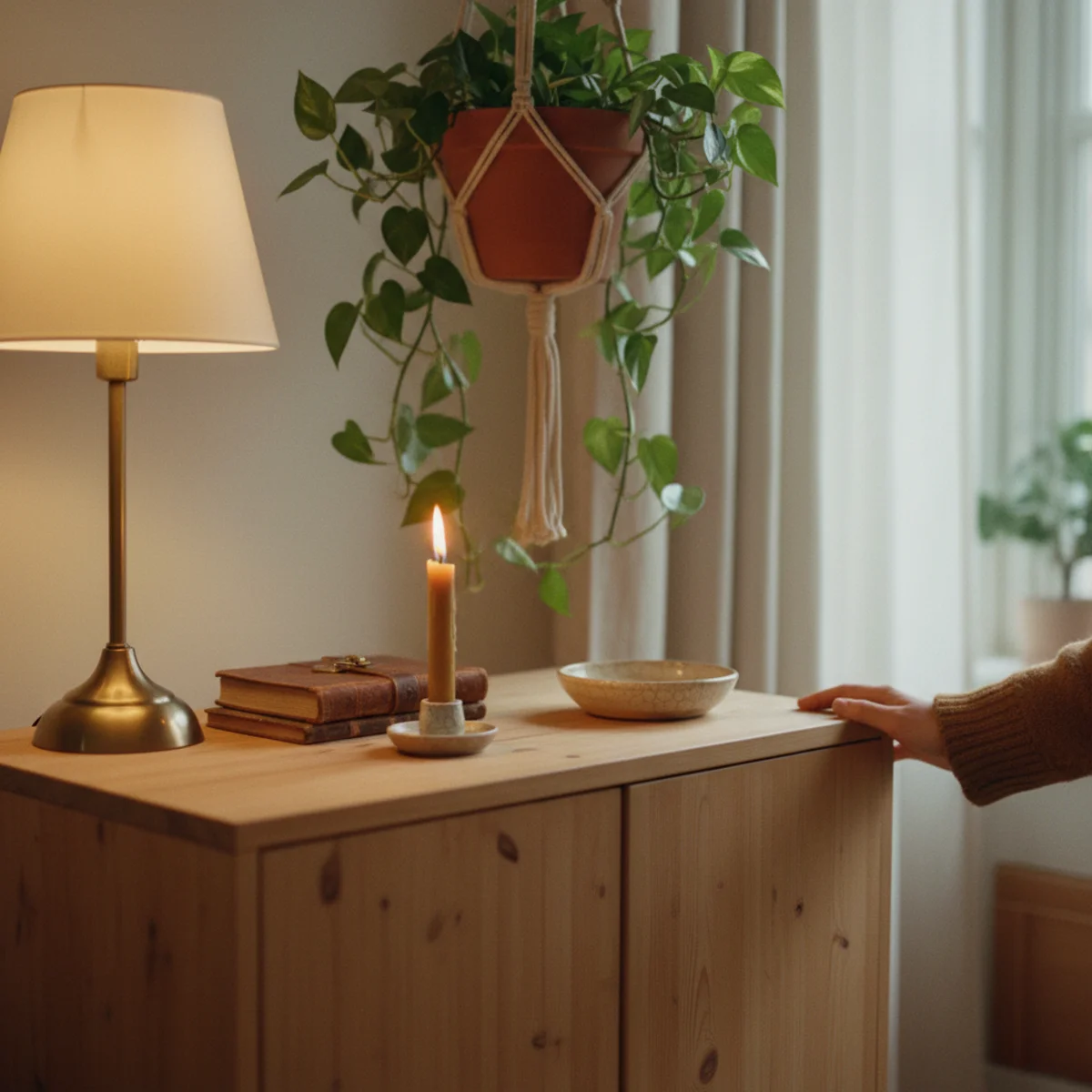
How to hack a flat-pack piece step by step
Target the parts that read as flat-pack, and add warmth. Work in this order.
- 1Choose the base piece
Pick a flat-pack piece with solid bones and a simple shape — the simpler and more solid, the better it hacks.
- 2Swap the legs and hardware
Replace factory legs with turned wood ones and basic knobs with brass or ceramic. These two swaps do the most to hide the flat-pack origins.
- 3Add wood, paint, or texture
Top a laminate piece with a wood plank, paint it a warm color (with a bonding primer), or add cane panels or trim for character.
- 4Warm the surroundings
Style it with wood, plants, baskets, and warm light, so the whole vignette reads custom rather than mass-produced.
Quick tips
- Swap the factory legs for turned wood ones — the single biggest flat-pack transformation.
- Change basic knobs for brass, ceramic, or leather; hardware is cheap jewelry.
- Top a laminate piece with a real wood plank to hide the finish and add warmth.
- Use a bonding primer before painting laminate so the paint actually sticks.
- Add cane panels or trim for natural texture and custom detail.
- Warm the surroundings with wood, plants, and warm light to complete the custom look.
IKEA hacks by piece
Swapped wood legs, brass knobs, and a warm paint job — the classic high-impact hack.
Trim, paint, and good styling turn a basic unit into considered shelving; see our shelf styling guide.
A flat-pack cabinet hacked into a coffee station; see our DIY coffee bar guide.
A linen slipcover or reupholstery to warm a basic chair, sofa, or headboard.
Flat-pack is a blank canvas. New legs, brass knobs, and a coat of paint turn 'everyone has this' into 'where did you get that?'
Frequently asked questions
What's the best IKEA hack to start with?+
How do I paint IKEA laminate furniture?+
Can I add a real wood top to IKEA cabinets?+
Which IKEA pieces are best for hacking?+
How much does it cost to hack IKEA furniture?+
Do IKEA hacks really transform the furniture?+
Flat-pack furniture is a great bones-and-budget canvas, and the hack is what turns 'everyone has this' into 'where did you get that?' Target the parts that read as mass-produced — swap the legs for wood, change the knobs for brass, add a wood top or a coat of warm paint. We'd start with the legs and the knobs; those two swaps cost little, take a screwdriver, and do most of the work of hiding the flat-pack origins. Forty dollars of changes, and a piece everyone owns becomes one nobody recognizes.