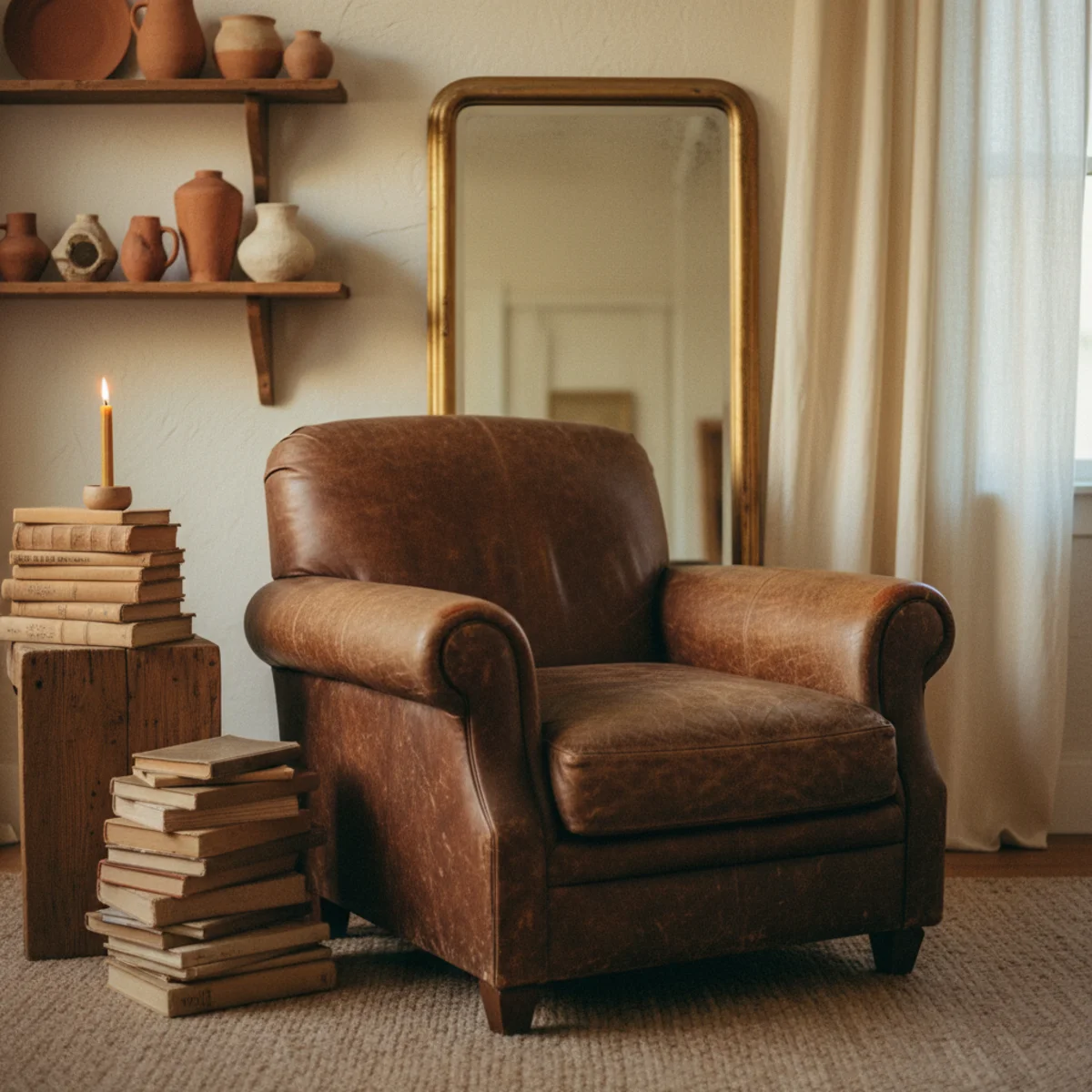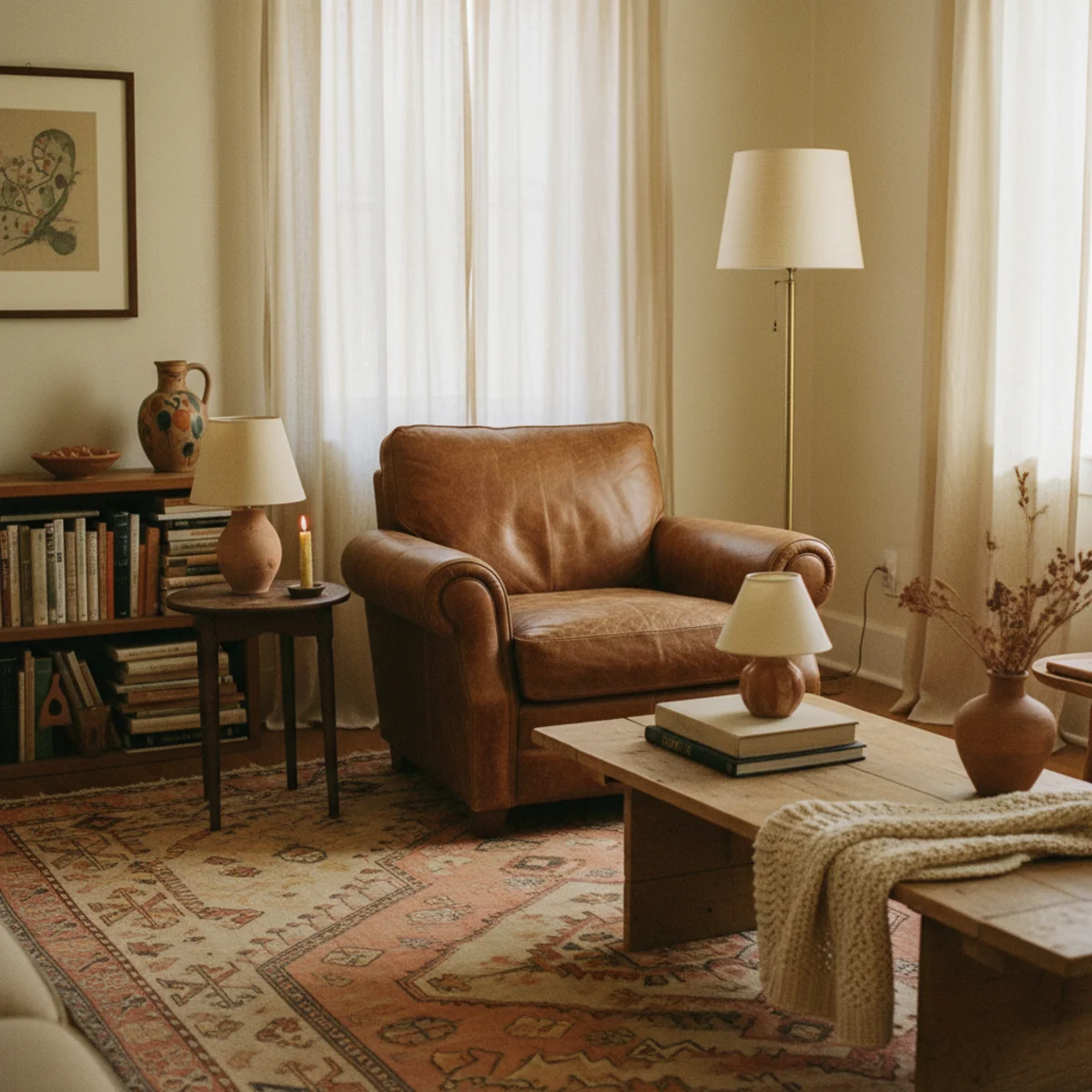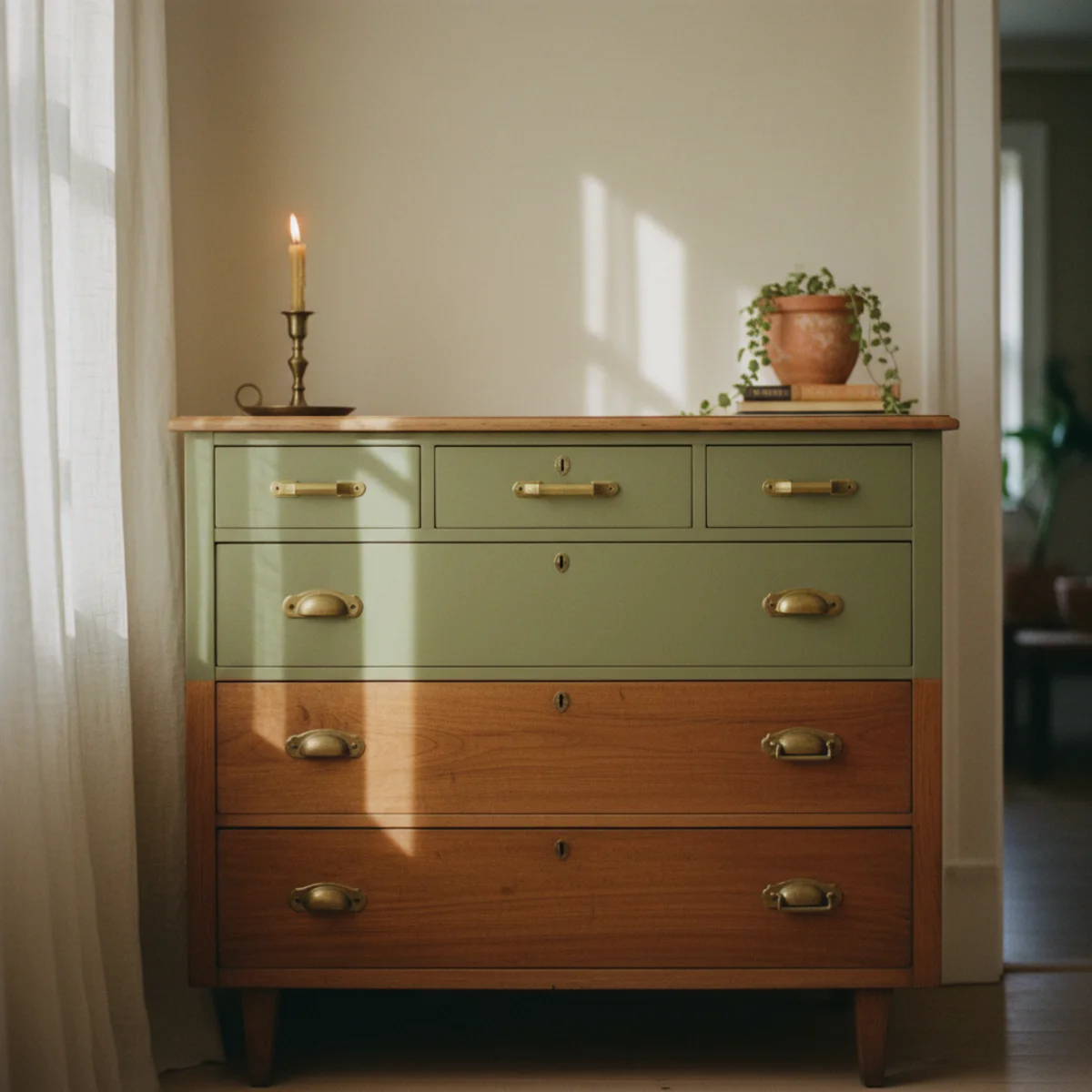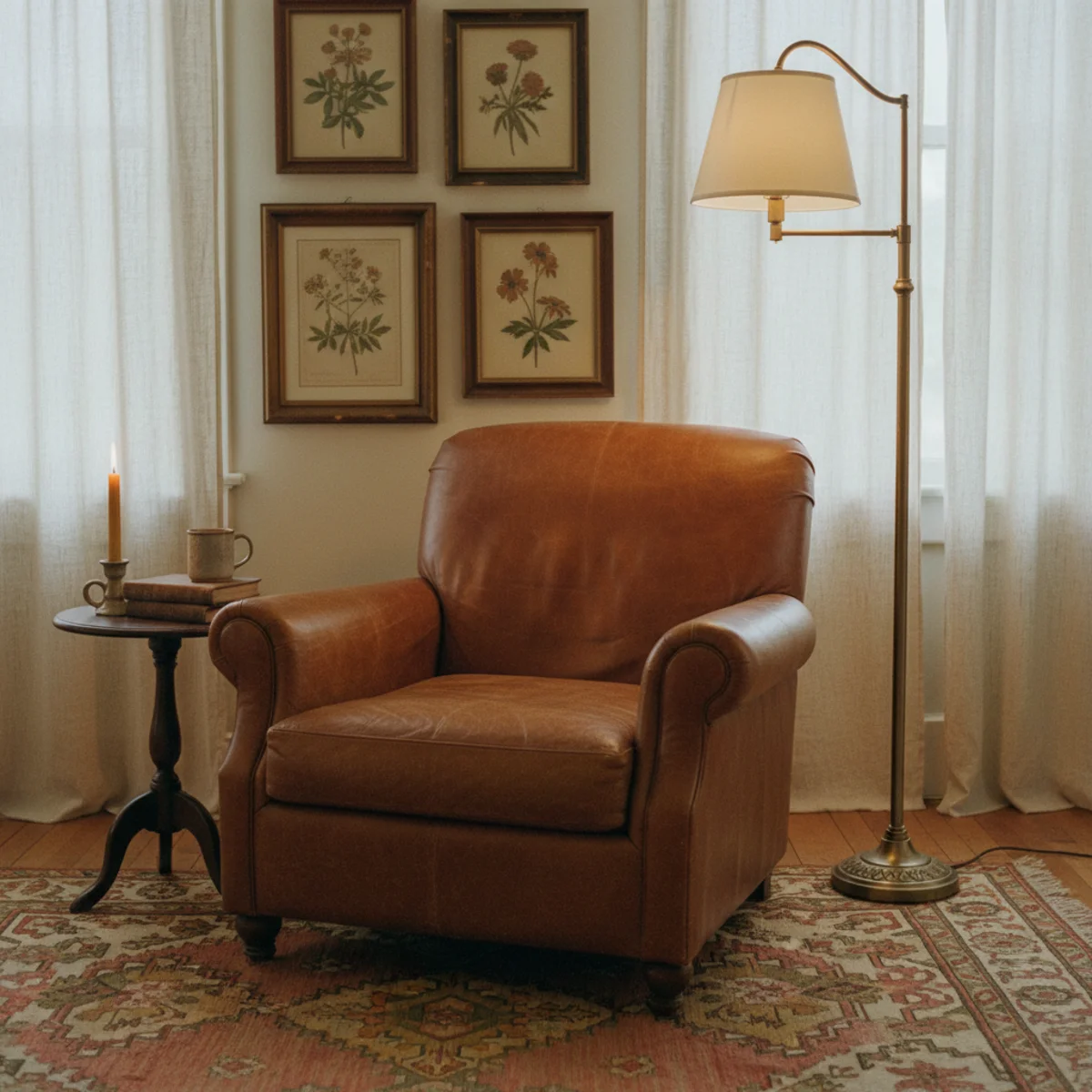
These eight vintage decor sources are tested across actual budget builds and weekend hunts — from $20 estate-sale lamps to $300 architectural-salvage finds. Each source has different price ranges, different inventory types, different hunting strategies, and different best-and-worst practices. The mix matters: relying on only one source means missing the pieces the other seven would have provided. Real vintage homes typically pull from all eight at different rates.
The biggest mistake in vintage hunting is treating every source the same way. Estate sales reward early arrival; Marketplace rewards negotiation; eBay rewards patience; auction houses reward research. Each source has its own pace and discipline, and learning all eight is the difference between accidental thrifting and systematic vintage collection. The strategies below are specific, not generic.
By the end of this guide, you'll know exactly where to find each category of vintage decor (lamps, rugs, furniture, art, ceramics) at the best price, the specific timing and negotiation moves that work for each source, and the order in which to use the eight sources for maximum hunting efficiency.
WHAT'S INSIDE
- The estate-sale arrival time (90 minutes early) that determines whether you find pieces or scraps
- Why Marketplace beats Craigslist for furniture but eBay beats Marketplace for small decor
- The 1stDibs sale section — the same dealers, 60-80% off, with patience
- When to skip the bargain and pay a local auction house instead
The best decor is hunted, not ordered. Estate sales and marketplaces are where rooms get their character, one find at a time.
— Domino [citation needed — verify before publish]
What counts as affordable vintage decor?
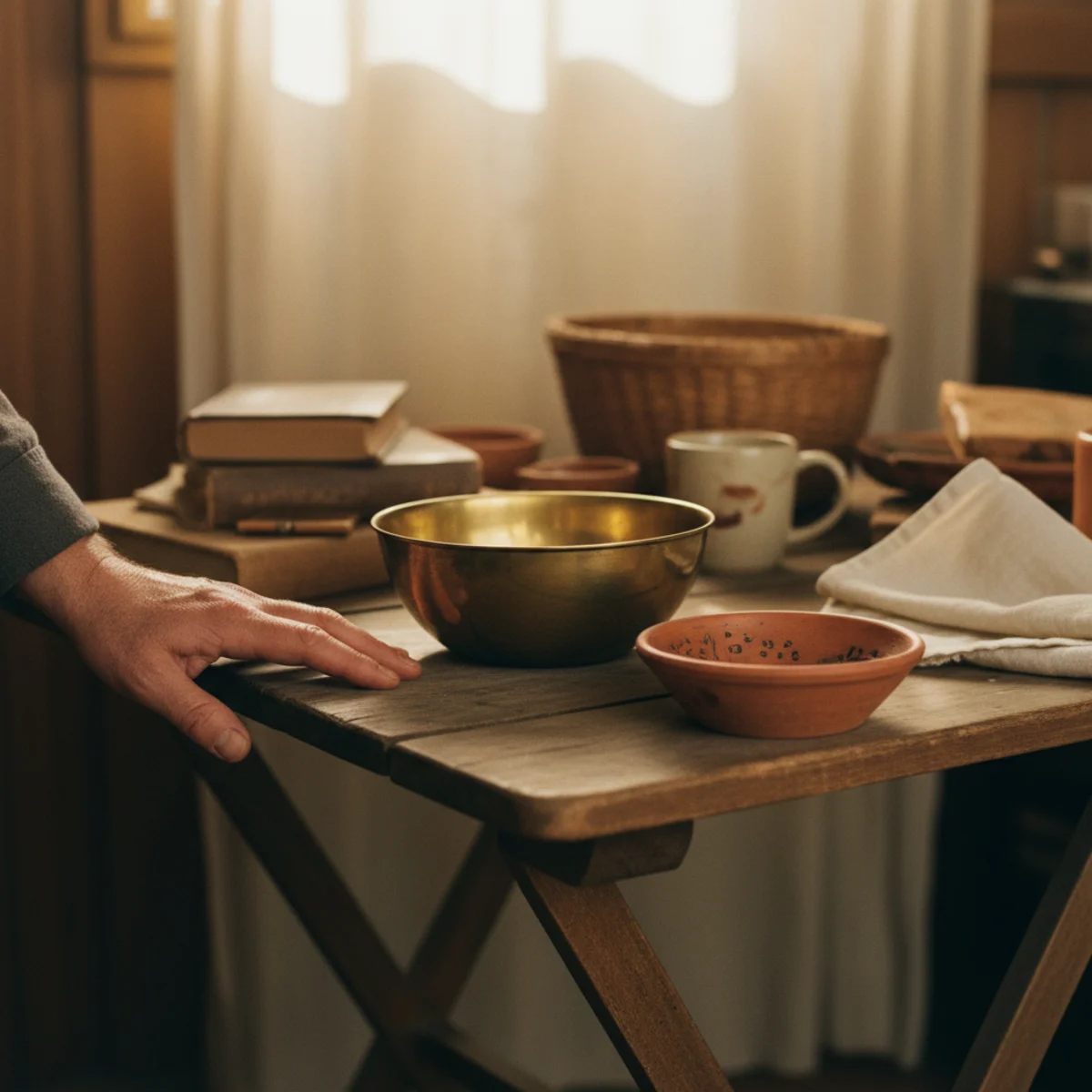
Affordable vintage decor is secondhand furniture, lighting, textiles, art, and objects bought below retail from estate sales, thrift stores, consignment shops, and online marketplaces. The 'affordable' part is largely about the source and the timing — the same brass lamp is fifty dollars at an antique mall and nine at an estate sale's final hour.
The categories worth hunting are the ones where age genuinely beats new: solid-wood furniture, brass and ceramic lamp bases, real wool rugs, antique mirrors, framed art, and vintage textiles. These develop patina and outlast anything new at the same price. The skill is buying for material and bones — the dated shade, the chipped paint, the musty smell are all cheaply fixable; structural damage and stains are not.
More in Budget you may love
See allWhy everyone's hunting vintage in 2026
Budgets tightened and the brand-new look fell out of fashion at the same time, sending people toward secondhand for both reasons. Marketplace and estate-sale culture exploded, and 'affordable vintage decor' and 'where to find vintage' rank among the fastest-climbing home searches.
The honest appeal is that vintage is simply where the warmth is. A solid oak dresser for forty dollars out-warms a particleboard one at four hundred, and a wool rug with a faded corner reads richer than anything new at the price. The sustainability angle — keeping good pieces out of landfill — is real, but mostly people have rediscovered that the gathered, secondhand room feels better than the catalog one.
8 places to find affordable vintage decor
01Estate Sales — The Highest-Quality Lowest-Prices Source
Estate sales are the single best vintage-decor source by ratio of quality to price — pieces are typically 50 to 80 percent below thrift-shop prices for equivalent quality, and the inventory comes from real homes accumulated over decades rather than donated castoffs. The trade-off is timing: estate sales reward arriving 60 to 90 minutes before opening, and the best pieces are gone within the first hour. The discipline is the price of admission.
Find estate sales at EstateSales.net (most comprehensive listing) and EstateSale.com for your area. Sales typically run Friday through Sunday with progressive discount tiers (Friday full price, Saturday 25% off, Sunday 50% off). Strategy: arrive Friday at the opening hour minus 60 to 90 minutes for the best inventory; arrive Sunday at opening for the best discounts on remaining items. Target categories: solid wood furniture ($40 to $200), vintage brass and ceramic lamps ($10 to $40), wool and Persian rugs ($100 to $400), framed vintage art ($5 to $40), studio pottery and stoneware ($3 to $25), real silver and brass serving pieces ($10 to $80). Avoid: anything described as 'antique' (usually marked up), plastic-era pieces from the 1980s-90s, anything with visible major damage.
AFFILIATE SLOTSOURCEEstateSales.net + EstateSale.com listings, arrive 60-90 minutes early Friday openingAdd affiliate URL when configuredWhy it works
Because estate sales sell pieces directly from a single home accumulated over 30 to 60 years — the inventory has the coherence and quality of a curated collection, not the random scattering of donated thrift pieces. Estate sales also price aggressively (the family wants to clear the house), where thrift shops mark up to fund their operations. The same lamp at an estate sale at $25 might be $80 at a thrift shop and $300 retail — the estate sale catches the piece at its lowest possible price.
Pro tip — Bring cash in small bills (twenties, tens, fives) — estate sales rarely take cards in the first hour, and exact-change negotiation goes faster than waiting for a manager to come authorize a card payment. The cash-in-hand also signals serious buyer to the sale operators, who'll often quote you better prices than non-cash shoppers.
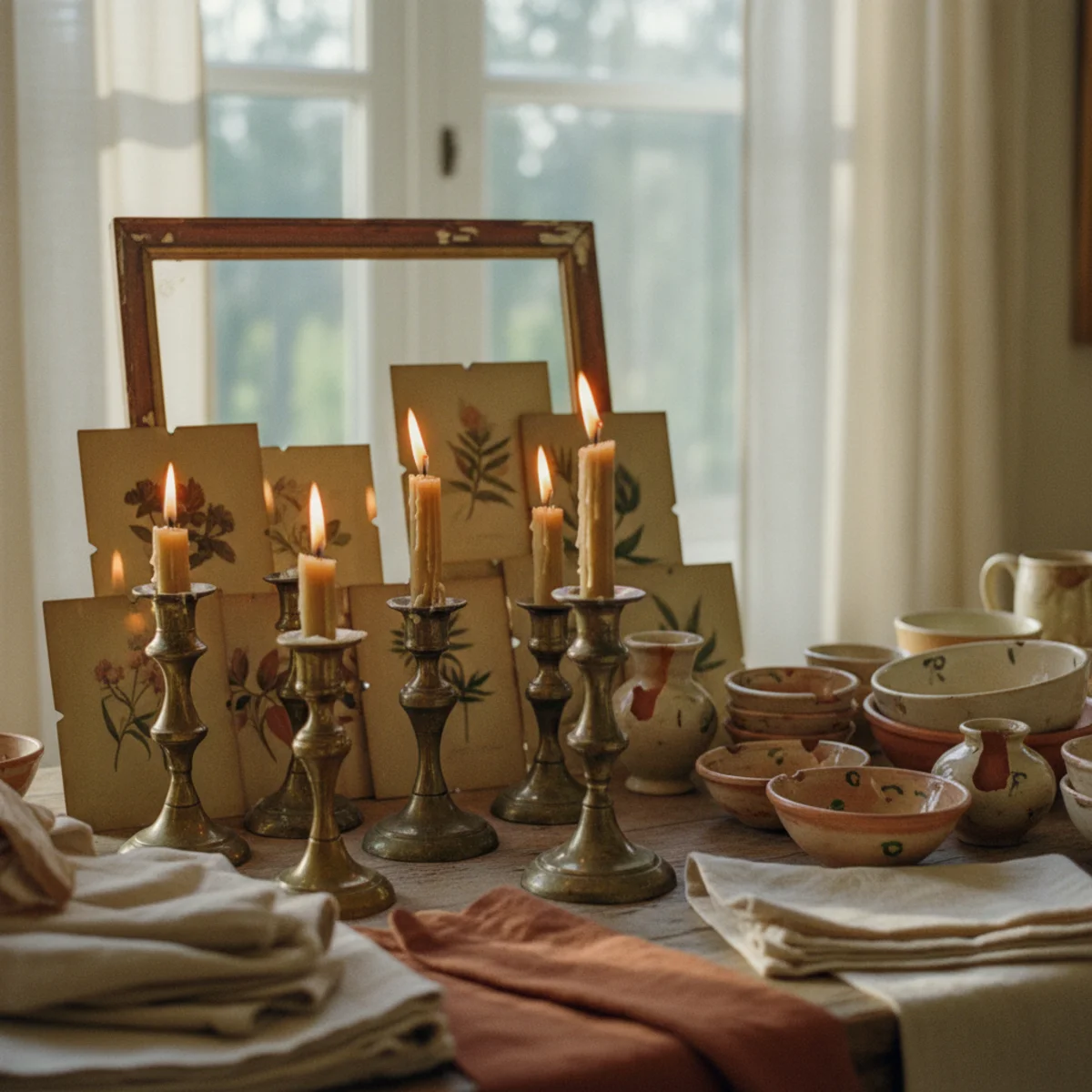
Estate sale Friday morning, 60 minutes before opening — the source with the best ratio of quality to price. See also: vintage brass and ceramic lamps
02Thrift Stores — The Steady Stream
Thrift stores (Goodwill, Salvation Army, local independents, Habitat ReStore) offer continuous inventory turnover with consistent price ranges — never the absolute best deals (estate sales beat them on price) but consistently available 7 days a week with frequent new finds. The hunting strategy: visit weekly or bi-weekly, learn your local stores' best days for new inventory drops, and scan quickly rather than browsing thoroughly. The volume is the advantage.
Best thrift sources: Goodwill (price-consistent, daily inventory turnover, occasional gems), Salvation Army (cheaper than Goodwill, more variable quality), Habitat ReStore (best for furniture and home-improvement materials, occasional vintage pieces, lowest prices), local independent thrift shops (variable quality, sometimes surprising). Each location has specific new-inventory days — call ahead to ask 'when do you put out new inventory?' and visit on those days. Target categories: solid wood furniture ($30 to $200 at ReStore), framed art and frames ($3 to $20), ceramics and stoneware ($1 to $15), lamps that need rewiring ($5 to $30), wool throw blankets ($5 to $20), books for coffee-table styling ($1 to $5 per hardcover).
AFFILIATE SLOTSOURCEGoodwill, Salvation Army, ReStore — weekly 10-minute scans on new-inventory daysAdd affiliate URL when configuredWhy it works
Because estate sales are infrequent (typically 2 to 5 per weekend in any given city), while thrift stores have continuous inventory that turns over weekly. Estate sales reward the rare lucky hit; thrift stores reward consistent presence. Most warm-home builds combine both — major pieces from estate sales (rare but high-value), supporting accessories from thrift stores (frequent but lower-value). The volume of thrift hunting compensates for the lower hit rate per visit.
Pro tip — Develop a 10-minute weekly thrift-store walk-through rather than browsing — quick scan of the housewares, furniture, and book sections (the three highest-value areas) takes 10 minutes if you know the layout, and the weekly frequency catches new inventory before other regulars do. Browsing takes hours and rarely finds more pieces than the focused scan.
Thrift store weekly 10-minute scan — the steady stream of supporting-cast vintage pieces that build a warm home. See also: lamps that need rewiring
03Facebook Marketplace — The Negotiation Game
Facebook Marketplace is the largest vintage furniture marketplace in the world — far broader inventory than any thrift shop or estate sale, with sellers ranging from individuals clearing one piece to dealers running constant inventory. The discipline: negotiate aggressively (20 to 40 percent below asking is standard), respond quickly to good listings (the best pieces sell within hours), and inspect carefully before committing. Best for medium-to-large furniture, rugs, and statement lamps.
Search Marketplace for specific terms: 'vintage', 'mid-century', 'oak', 'walnut', 'brass', 'Persian rug', 'mid century lamp', and specific brand names (Eames, Knoll, Heywood-Wakefield, Pendleton, Pottery Barn). Set up saved searches to alert you when new listings post. Strategy: message immediately on good listings ('Is this still available? I can pick up today.'), arrive within 24 hours with cash, negotiate 20 to 30 percent off asking ('Would you take $X?' rather than insulting offers), inspect before paying. Best categories: solid wood furniture ($40 to $400), vintage rugs ($100 to $500), large statement lamps ($30 to $150), upholstered chairs and sofas ($80 to $400), large mirrors ($40 to $200). Worst categories: small ceramics (better at thrift), small framed art (better at thrift).
AFFILIATE SLOTSOURCEMarketplace saved searches + quick response + 20-30% below asking negotiationAdd affiliate URL when configuredWhy it works
Because Marketplace sellers post pieces they want to clear quickly, and the listing duration is finite — pieces that sit unsold for a week start getting price drops or negotiation flexibility. Estate sales and thrift shops have fixed prices; Marketplace has price elasticity baked into the listing format. The discipline of polite-but-direct negotiation typically saves 20 to 30 percent on every transaction, which compounds dramatically across multiple purchases over a year of warm-home building.
Pro tip — Always offer 30 to 40 percent below asking on first contact — sellers often accept 20 percent below or counter, and starting low gives you negotiation room. The phrase 'Would you take $X?' (with a specific number, not vague 'lower') works better than 'What's your best price?' which puts the seller on guard. Specific offers get specific yeses or counters.
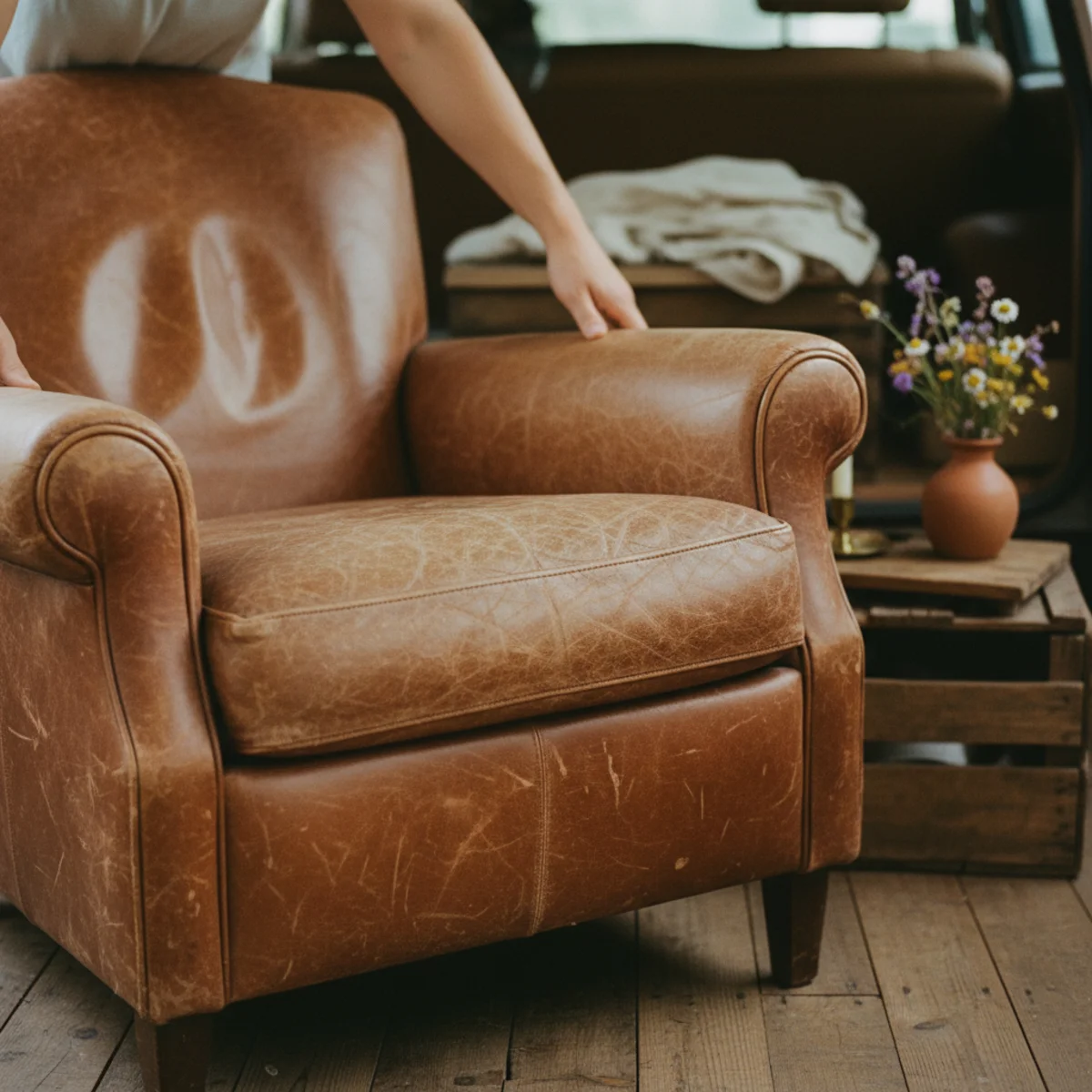
Vintage oak dresser on Marketplace at $90 — the negotiation source for medium-to-large vintage furniture. See also: vintage rugs
04Chairish and 1stDibs Sale Sections — The Patient Strategy
Chairish and 1stDibs are the premium online vintage marketplaces — typically expensive at full price, but both have sale sections where dealers reduce pieces 40 to 80 percent below original listings. The strategy is patience: browse the sale sections monthly, save pieces you'd buy at half price, and pounce when they drop. The same dealers, same quality, dramatically lower prices.
Chairish (chairish.com) and 1stDibs (1stdibs.com) — both have 'Sale' or 'Reduced' sections accessible from the main navigation. Pieces listed full-price at $400 to $2,000 often drop to $80 to $600 after 60 to 120 days unsold. Strategy: browse sale sections monthly, save pieces using the wishlist feature, monitor price drops via email alerts. Best categories: small statement furniture (side tables, accent chairs, small consoles), curated vintage lighting (more vetted than Marketplace), high-quality vintage rugs (typically authenticated), framed vintage art (often dealer-curated), small antique objects (better than estate-sale-luck-of-the-draw). Negotiation: most sale-section pieces have 'Make an Offer' option — start at 30 to 50 percent below sale price.
AFFILIATE SLOTSOURCEChairish + 1stDibs sale sections, monthly browse + wishlist + email alerts + offer 30-50% below sale priceAdd affiliate URL when configuredWhy it works
Because Chairish and 1stDibs dealers have inventory carrying costs — pieces sitting unsold for months cost the dealer storage, photography, and listing fees. The sale sections are where dealers cut prices to clear inventory, and the buyer benefits from the same authenticated, high-quality pieces at thrift-shop-equivalent prices. The dealers have already vetted authenticity and condition (unlike Marketplace's caveat-emptor reality), so the premium platforms are actually safer for high-value vintage at the reduced prices.
Pro tip — Save specific high-value pieces ($800 to $2,000 originally) and check back every 30 to 60 days — the pieces that survive multiple sales cycles often drop to 70 to 80 percent off original, at which point they're price-competitive with Marketplace but with full dealer authentication. The patience pays off on the highest-quality pieces.
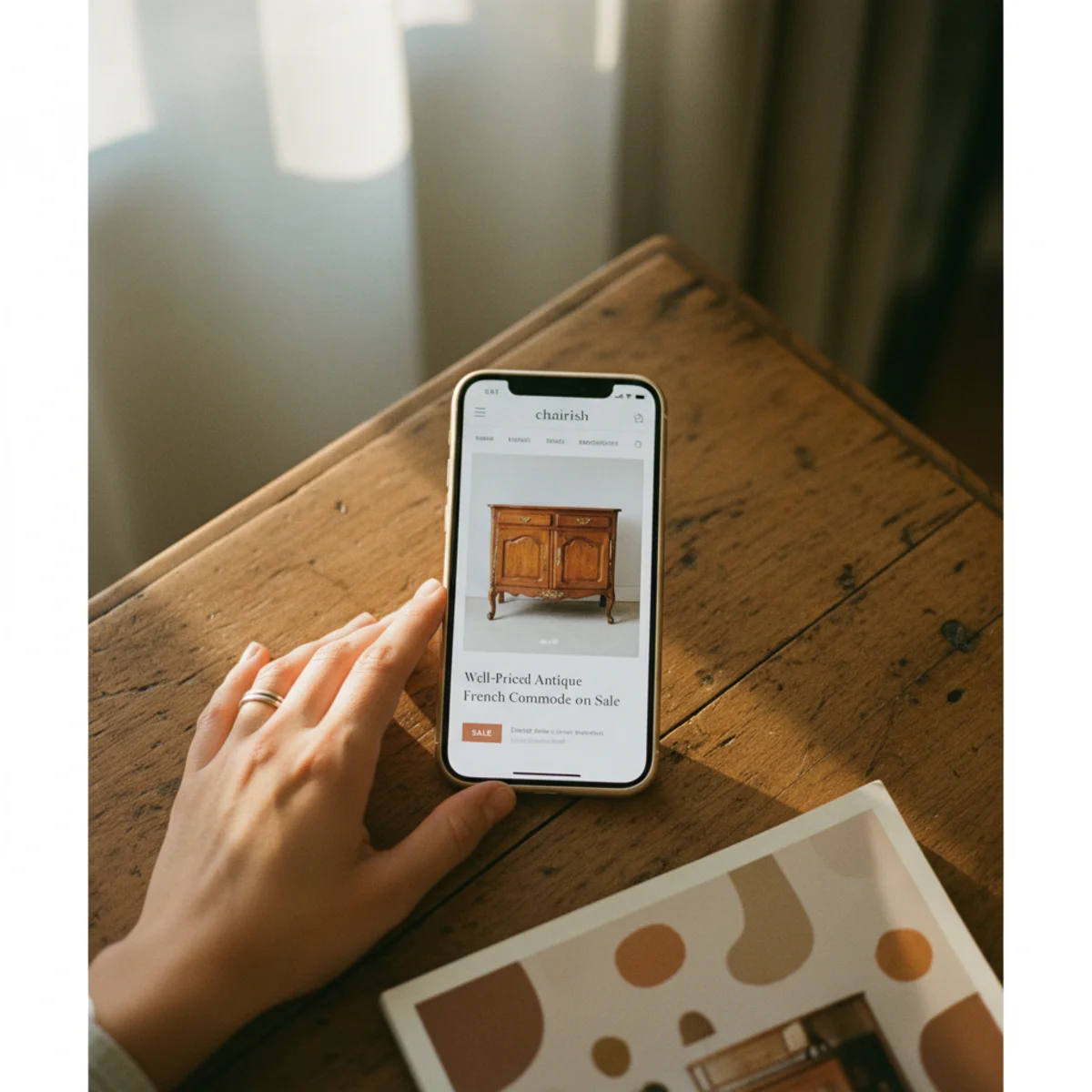
Chairish sale section, mid-century chair at 60% off — premium dealers' clearance with full authentication. See also: vintage lighting
05eBay — The Specific-Search Specialist
eBay is the most-overlooked vintage source — best when you know exactly what you're looking for (specific brand, specific model, specific era) rather than browsing broadly. The search filters let you target 'vintage Pendleton wool blanket' or '1970s brass desk lamp' with surgical precision. Auctions can deliver pieces 50 to 80 percent below other sources for hunters who can wait 7-day cycles.
eBay search strategies: use specific brand and model names ('Pendleton wool blanket', 'Eames lounge chair vintage', 'Mid-century brass lamp', 'Persian Heriz rug'), filter for 'Used' condition with seller location near you (saves shipping), set up Saved Searches to alert you when new listings post. Decide whether to bid (auctions, lower final prices) or buy-it-now (fixed prices, instant commitment). Strategy: bid on auctions in the final 30 seconds with your max acceptable price; never bid more than your max even in heat-of-moment. Best categories: small-to-medium decor (ships easily), specific-brand vintage (Pendleton, Mikasa, Wedgwood, Heath Ceramics), framed vintage art and prints, vintage textiles (wool blankets, kilim rugs), small brass and ceramic objects.
AFFILIATE SLOTSOURCEeBay specific-brand searches + Saved Searches + auction bidding final 30 seconds OR Best Offer negotiationAdd affiliate URL when configuredWhy it works
Because eBay's national-sized buyer base creates more competition for unusual pieces but also more sellers offering them — Marketplace's local focus means you're limited to your metro area's inventory, while eBay accesses pieces from sellers in every state. For common categories (mid-century sofas, oak dressers), Marketplace is faster and avoids shipping; for specific brand-name vintage (Pendleton blankets, Heath ceramics, specific lamp models), eBay has selection that local sources can't match. The two complement rather than compete.
Pro tip — Use eBay's 'Best Offer' feature on Buy-it-Now listings whenever offered — the seller has typically listed the price 20 to 40 percent above their minimum acceptable, and offering 25 to 35 percent below asking gets accepted more often than people expect. The phrase 'best offer' literally invites negotiation; many buyers ignore it and pay full price.
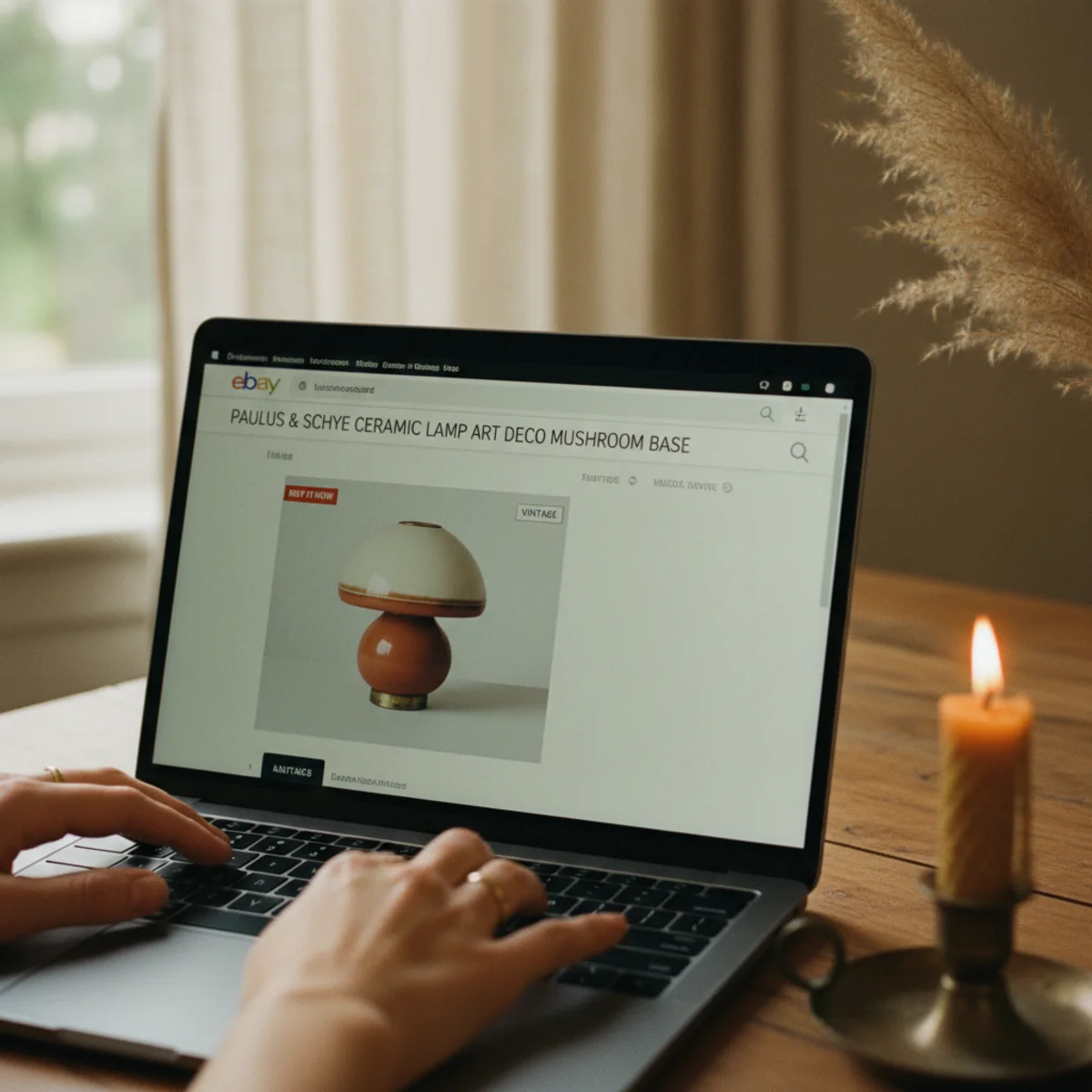
eBay specific-brand search — the surgical-precision source for hunting exact pieces by name and era. See also: Persian Heriz rug
06Garage and Yard Sales — The Hunter's Game
Garage and yard sales are the wildest-variance source — anywhere from junk to incredible finds at $1 to $20. The hunting requires Saturday morning commitment (most sales run 7am to 2pm), willingness to drive a circuit of multiple sales per morning, and the ability to spot quality among bulk junk. The reward: occasional once-in-a-decade finds for nearly nothing.
Find local garage sales via Craigslist 'garage sale' listings, neighborhood Facebook groups, GarageSaleMap apps, and Saturday-morning drive-by spotting. Strategy: plan a 4 to 6-sale circuit Saturday morning (8am to noon), prioritize 'estate' or 'moving' sales over basic garage sales (better quality inventory). Bring cash in small bills; negotiate everything ('Would you take $5?' on a $12 item is standard). Target: vintage solid wood furniture (occasional $20 to $80 finds), brass and ceramic lamps ($5 to $25), framed art and prints ($1 to $10), wool throws and blankets ($2 to $15), ceramics and stoneware ($1 to $10), tools and hardware (occasionally vintage brass pulls at $0.25 each). Avoid: anything obviously broken, anything still in retail packaging (means new bought-by-mistake, not vintage).
AFFILIATE SLOTSOURCESaturday morning circuit of 4-6 sales, cash in small bills, prioritize estate/moving salesAdd affiliate URL when configuredWhy it works
Because garage sales offer the lowest absolute prices of any vintage source — the seller's primary goal is to clear the garage, not maximize per-item revenue. The same vintage lamp might be $40 at an estate sale, $80 at a thrift shop, and $5 at a garage sale because the seller just wants it gone before Sunday. The trade-off is hit rate — most garage sales have nothing worth buying, but the rare strong sale produces pieces at prices no other source can match.
Pro tip — Drive the circuit slowly through your target neighborhoods on Saturday mornings even without specific sale listings — about a third of garage sales aren't listed online, and the unlisted ones often have the least competition. The 'spot the sale, pull over' approach often delivers better pieces than driving directly to listed sales.
Saturday morning garage sale circuit — the lowest absolute prices for hunters willing to drive a route. See also: brass pulls
07Architectural Salvage Yards — The Specialty Source
Architectural salvage yards specialize in pieces rescued from demolished or renovated buildings — vintage doors, hardware, lighting fixtures, mantels, columns, stained glass, mirrors. The inventory is unique and unrepeatable; once a salvage piece is gone, you'll never find the exact equivalent again. Prices range from $5 (small hardware) to $2,000+ (architectural mantels) with most usable decor pieces in the $20 to $200 range.
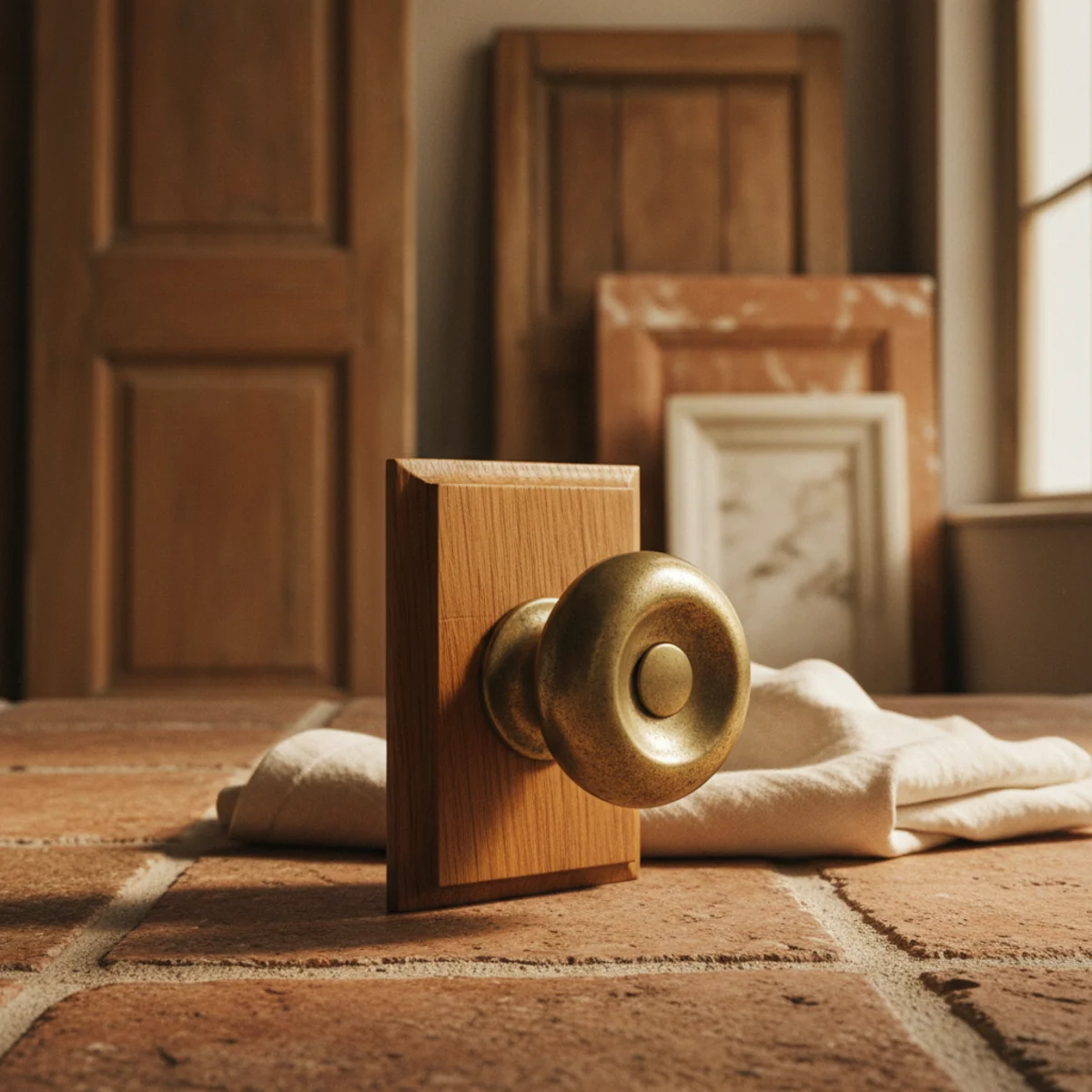
Find architectural salvage near you via Google 'architectural salvage [city]'. Notable national chains and well-known regional yards: Salvage One (Chicago), Olde Good Things (NYC and online), Pasadena Architectural Salvage, Caravati's (Richmond), Black Dog Salvage (Roanoke, online). Browse inventory in person; most salvage yards don't fully digitize their inventory. Target categories for warm-home decorating: vintage brass and ceramic light fixtures ($30 to $200), old doors that can become tables or headboards ($40 to $200), reclaimed wood pieces, ceramic doorknobs and antique pulls ($2 to $25 each), wrought iron and aged brass hardware, old framed photographs, ornamental ceramic tiles for backsplashes ($1 to $5 each).
AFFILIATE SLOTSOURCEArchitectural salvage yards for unique pieces: doors, light fixtures, hardware, reclaimed woodAdd affiliate URL when configuredWhy it works
Because architectural salvage pieces have provenance and uniqueness that other vintage sources can't match — a 1920s brass sconce rescued from a demolished hotel has specific history and irreplaceable character. The piece can't be reproduced; it's the actual artifact. For specific decor needs (vintage hardware to swap on a new dresser, a unique mirror frame, a single statement light fixture), architectural salvage delivers what no other source can match. The prices are higher than thrift but lower than retail antique stores.
Pro tip — Visit architectural salvage yards specifically for hardware (drawer pulls, doorknobs, hinges, hooks) — the per-piece prices ($2 to $25) are dramatically lower than reproduction-vintage hardware retailers, and the pieces have real age that reproduction can't match. A complete set of vintage brass pulls for a dresser from salvage might cost $25 to $80; the same look in reproduction hardware costs $80 to $300.
Architectural salvage yard — the source with unrepeatable pieces and specific provenance. See also: brass pulls
08Local Auction Houses — The Research Reward
Local auction houses sell estate-level inventory at prices that often beat estate sales for high-value pieces — vintage rugs, fine furniture, art, ceramics. The strategy requires research before bidding (knowing what pieces are worth) and willingness to attend in person or online. Most metro areas have 2 to 4 local auction houses running weekly or bi-weekly auctions; the prices can be 60 to 80 percent below retail for rare pieces.
Find local auction houses via Google '[city] auction house', LiveAuctioneers.com (aggregates many auctions), AuctionZip.com. Notable national reach: Heritage Auctions, Bonhams (high-end). Strategy: review the auction catalog online 1 to 2 weeks before the sale, research each piece you're interested in (search comparable sales online), set a maximum bid you won't exceed. Attend in person or bid live online. Pay attention to the buyer's premium (typically 15 to 25 percent on top of the hammer price). Best categories: vintage rugs and textiles (often dealer-quality at home-buyer prices), fine furniture (occasional bargains in lots), framed vintage art and paintings (auction the cheapest fine-art source), specific brand vintage (Pendleton, Knoll, Eames, Heywood-Wakefield).
AFFILIATE SLOTSOURCELocal auction houses + LiveAuctioneers.com, research catalog 1-2 weeks ahead, set max bidAdd affiliate URL when configuredWhy it works
Because auction prices are determined by competing bidders in real-time — when there's low interest in a specific piece, it sells far below retail value. A vintage Persian rug listed at $1,500 retail might sell at auction for $300 if only two bidders are interested. The buyer's reward for research (knowing the rug's actual market value) and patience (waiting for the right auction with the right piece) is significant discounts on high-quality pieces. The trade-off: occasional disappointments when interest spikes and prices exceed expectations.
Pro tip — Bid 30 percent above your gut comfort but never above your researched max — many auction wins happen at unexpectedly low prices, but only for bidders willing to commit to slightly more than felt comfortable. Set your max based on comparable sales research; bid up to it but never above. The discipline of pre-set maximums is what separates auction successes from regrets.
Local auction house, researched bidding — the source where Persian rugs at $300 sometimes hammer down. See also: vintage rugs and textiles


How to shop vintage decor without regret
Knowing where to look is half of it; knowing what to grab is the rest.
- 1Pick a category before you go
Hunt for one thing — lamps, or frames, or a rug — so the volume of stock doesn't overwhelm you. A scattered hunt comes home with junk.
- 2Inspect the bones
Knock for solid wood, check rug backs for dry-rot, test that drawers run true. Cosmetic flaws are fine; structural ones aren't.
- 3Buy what you can fix cheaply
A dated shade, an ugly knob, a layer of grime, a musty smell — all fixable. Buy the brass base, the oak frame, the wool pile.
- 4Time it right
Final day of an estate sale, early or late at a yard sale, markdowns on the marketplaces. Timing is where 'affordable' lives.
Quick tips
- Go to estate sales on the final day, when prices drop to clear.
- Hunt one category per trip so the stock doesn't overwhelm you.
- Carry a tape measure; the best find is useless if it won't fit.
- Look for badly-photographed marketplace listings — the bargains hide there.
- Budget for a rewire, a shade, or a wash; the fix is part of the cost.
- Walk away from active woodworm, water stains, and pet-urine smell — some damage isn't worth it.
Best source by what you need
Estate sales and Facebook Marketplace for solid-wood pieces at the lowest prices.
Estate sales, eBay, and thrift stores for brass and ceramic lamp bases; rewire as needed.
Estate sales and marketplaces for real wool rugs; air them out in the sun before bringing them in.
Thrift stores and eBay lots for framed pieces and bundles of empty frames to reuse.
The character in a room comes from the things you had to hunt for, not the things you could click to buy.
Frequently asked questions
Where can I find affordable vintage decor?+
What's the best source for vintage lamps?+
How do I negotiate prices on Facebook Marketplace?+
Are estate sales worth the early-morning commitment?+
Can I trust the authenticity of vintage pieces on these sources?+
What's the fastest way to find vintage decor on a tight timeline?+
Affordable vintage decor is mostly about source and timing: estate sales on the final day, badly-photographed marketplace listings, thrift stores visited often and quick. Hunt one category at a time, buy for material and bones, and budget for the cheap fix. We'd chase the worst-looking listings hardest — the dark photo and the dated shade are exactly where the bargains hide, and a nine-dollar lamp that took a rewire still beats anything new on the shelf.