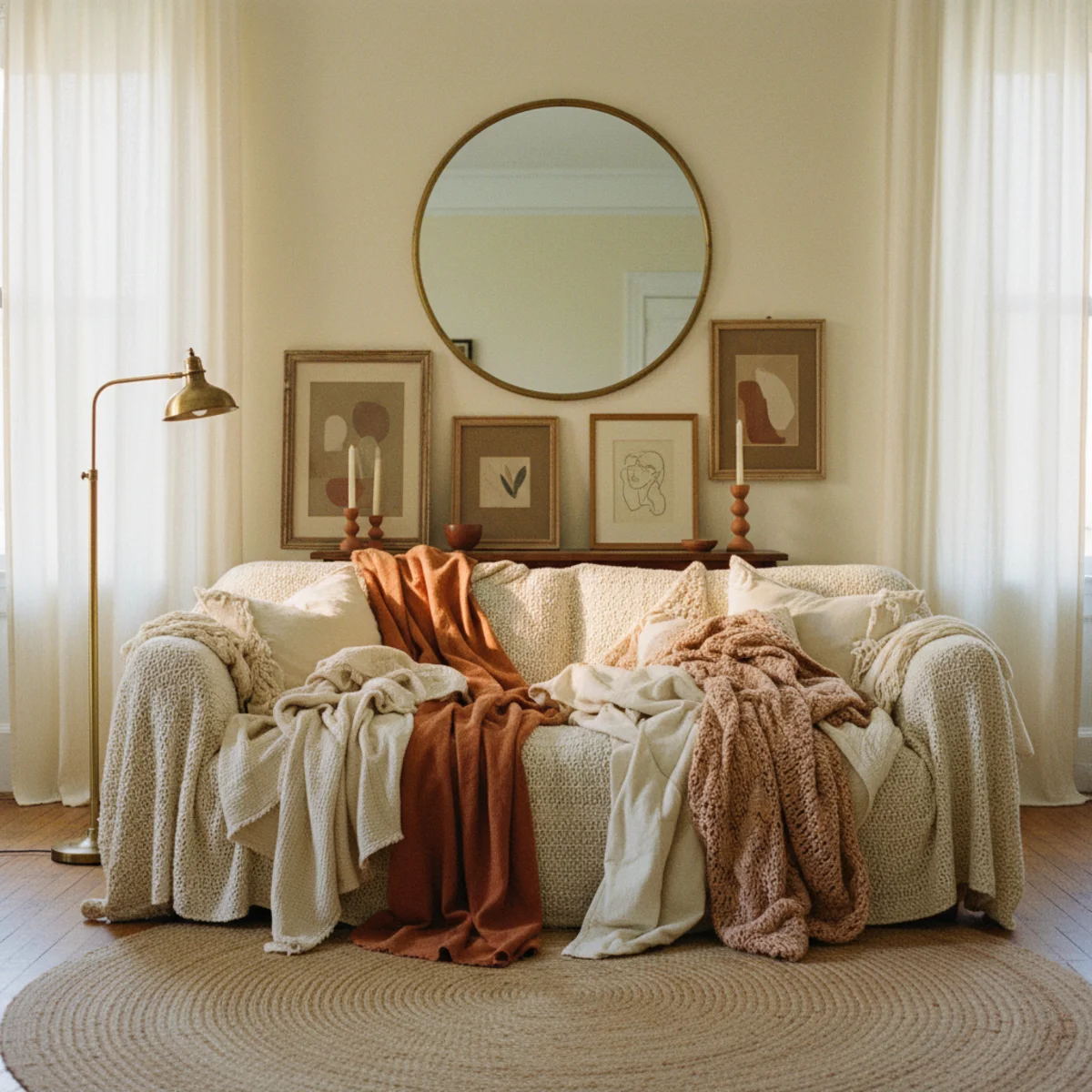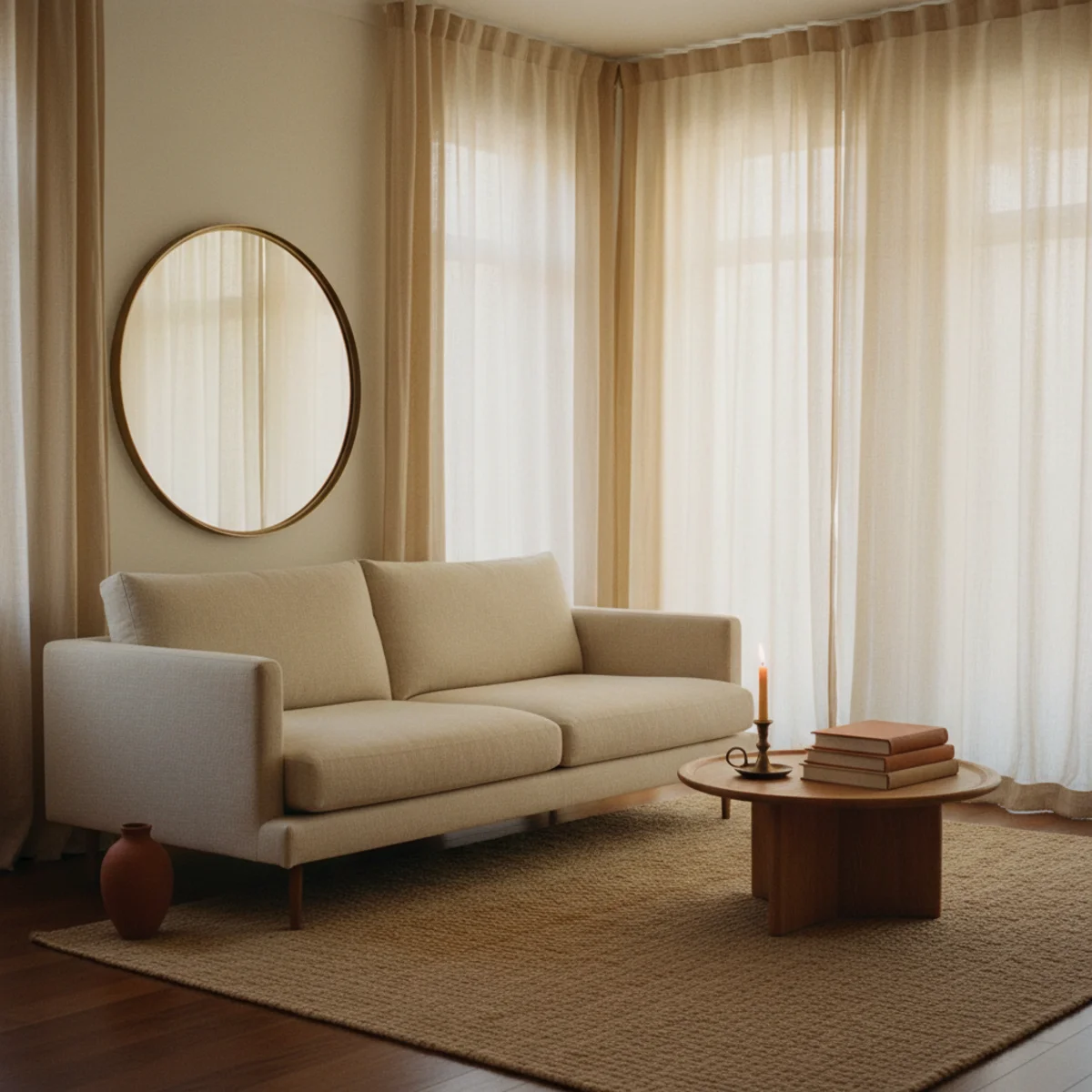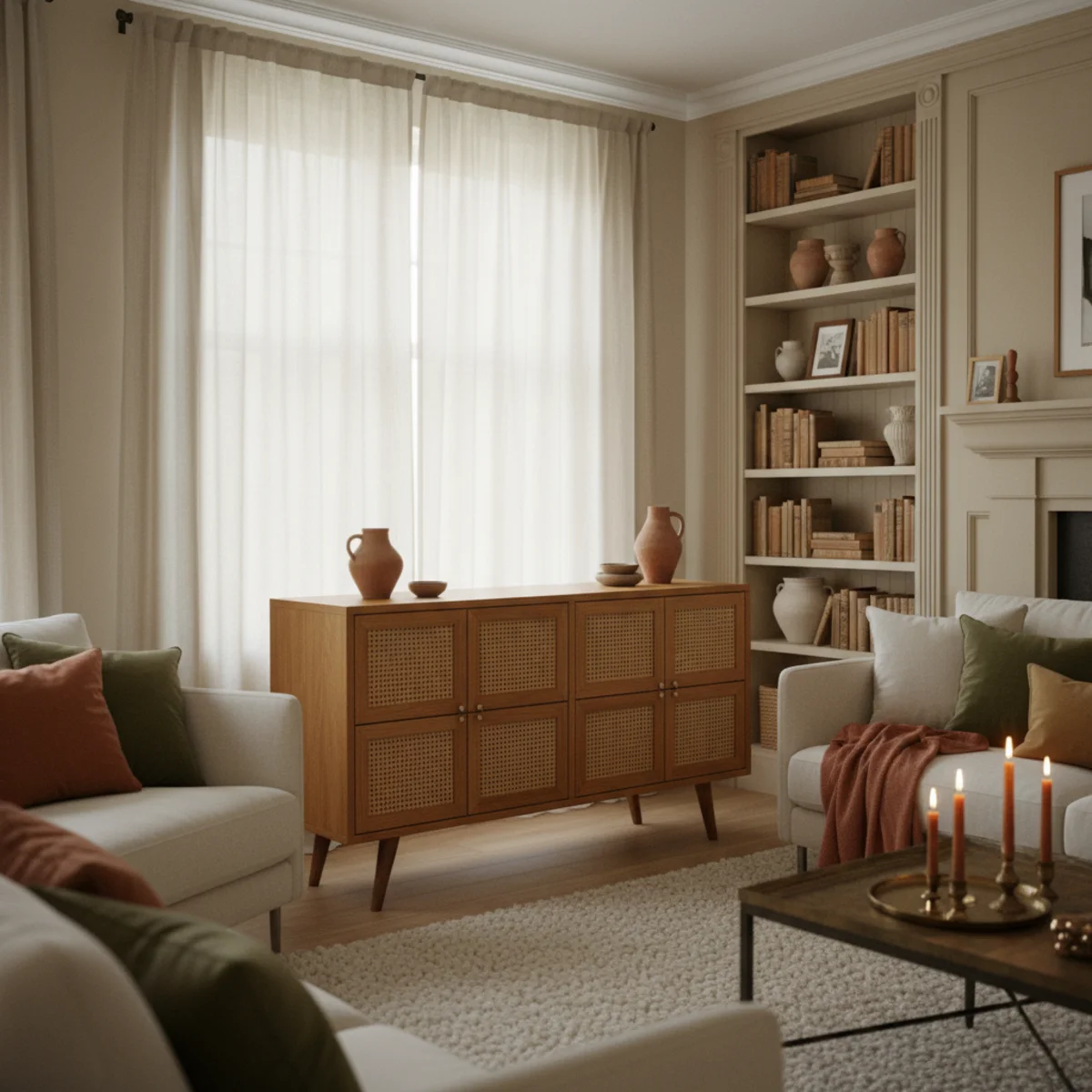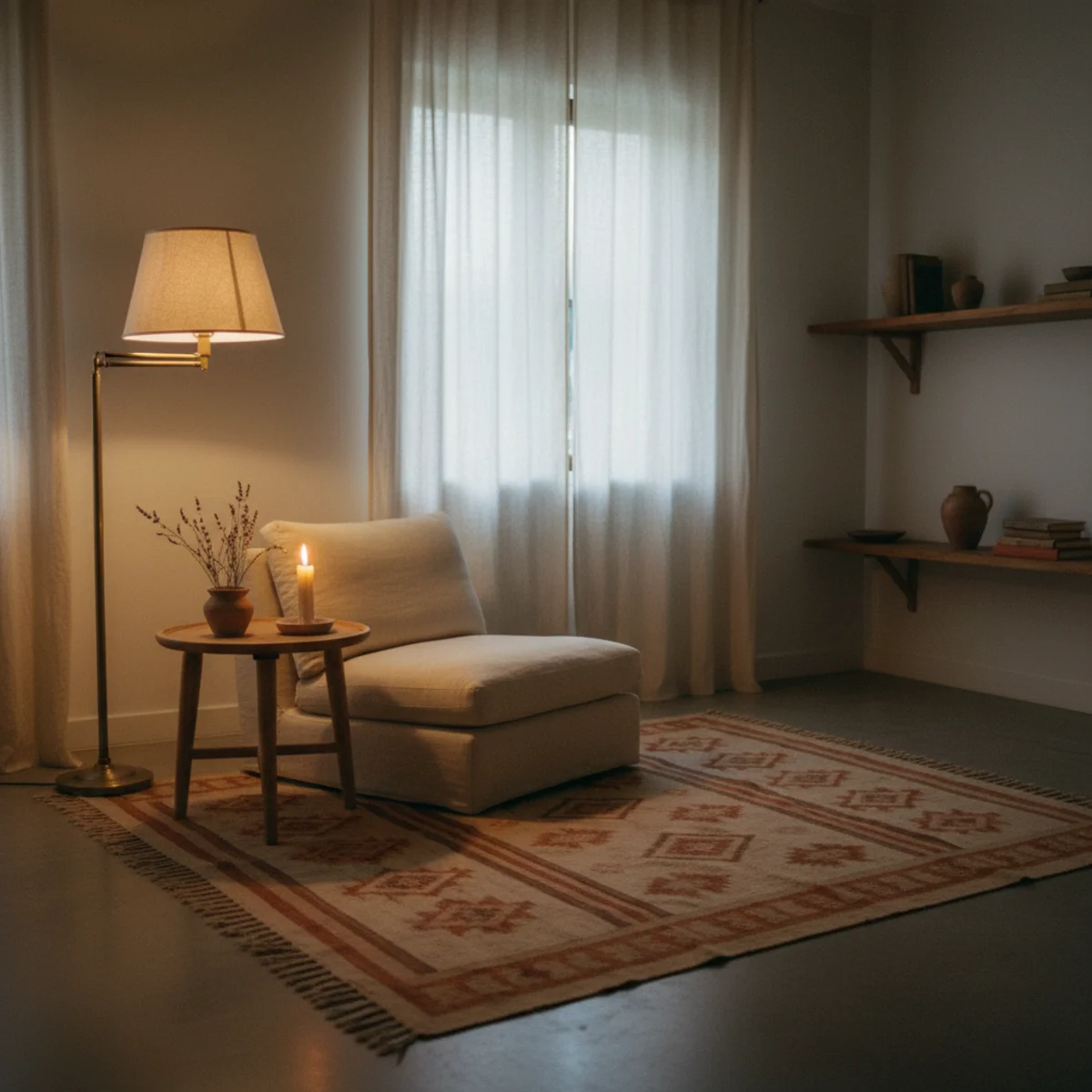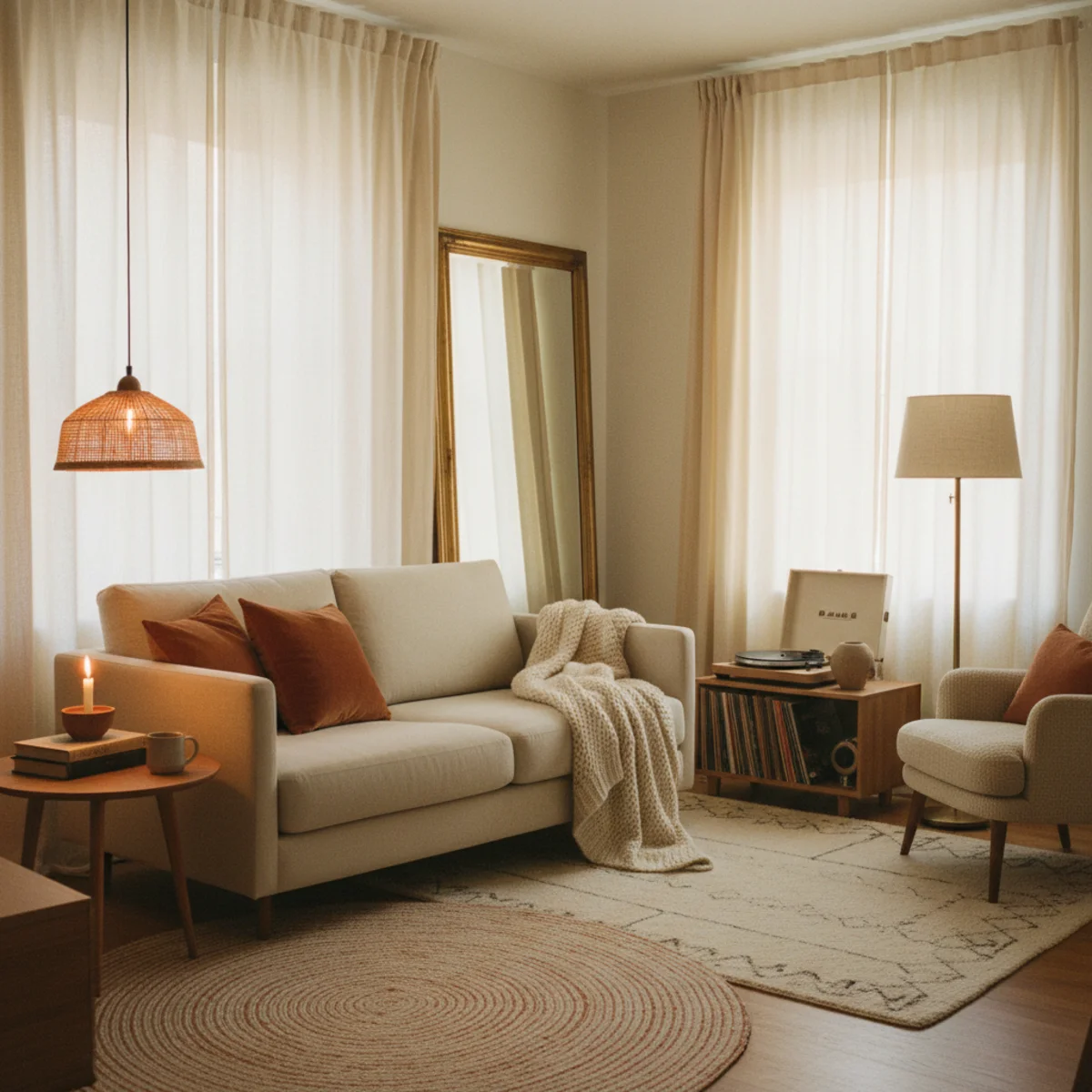
These thirteen small-apartment ideas are tested across actual studios under 450 square feet, one-bedrooms under 650 square feet, and tight rentals where every furniture choice has to earn its floor space. Each move below names the exact furniture proportions, vertical-storage solutions, and rental-friendly tricks that consistently make tight spaces feel larger without requiring renovation. None of these moves require landlord approval; almost all are reversible.
Small apartments work best when every piece of furniture serves multiple functions, every vertical surface is used for storage, and every zone is defined intentionally. The discipline of constraint is the advantage — small apartments reward editing more than shopping, planning more than buying. The thirteen principles below all push toward this same direction: fewer pieces, better-chosen, occupying defined zones with deliberate transitions between them.
By the end of this guide, you'll know exactly which multifunctional furniture earns its space, how to define zones in a studio without walls, the vertical-storage moves that exploit ceiling height, and the personal hero piece that prevents every small apartment from looking the same.
WHAT'S INSIDE
- The multifunctional pieces (storage ottoman, sofa bed, lift-top coffee table) that work harder per square foot
- Why vertical storage to the ceiling beats horizontal everywhere in small apartments
- The zone-definition tricks that turn studios into 2-3 rooms without walls
- The leggy-everything rule that visually doubles a small apartment's floor
A small space rewards editing and double-duty thinking. Every piece has to work twice, and the clutter has nowhere to hide — which is a gift.
— Apartment Therapy [citation needed — verify before publish]
What makes a small apartment work?
A small apartment works when every piece earns its place through multiple functions, vertical space is used fully, zones are clearly defined, and clutter is contained — all while warmth is layered in so the space feels cozy rather than merely efficient. The constraint is the design driver: limited space forces editing and double-duty thinking that often produces a better-considered home than a large one.
The core moves are spatial and they compound. Multifunctional furniture — a storage ottoman, a sofa bed, a console that's also a desk — earns its footprint twice. Vertical storage uses the cubic space small apartments waste. Defined zones (a rug and a lamp marking the living area in a studio) create a sense of separate rooms. And containing clutter is non-negotiable when there's nowhere to hide it. Layer in warm light, texture, and one or two personal pieces, and a small apartment lives big and feels warm at once.
More in Budget you may love
See allWhy small apartment living matters in 2026
More people are living in small apartments for longer, by economics and by choice of location, and small-space decorating became its own discipline — Pinterest's small apartment searches climb every year, toward multifunctional, zoned, warm small-space living.
The honest appeal is that small-space constraints, handled well, produce genuinely good homes. As warm minimalism and the cozy-home movement spread, people learned that a small apartment edited hard, zoned smartly, and warmed thoughtfully can feel better than a large under-considered one. Vintage furniture's smaller scale, multifunctional pieces, and the warmth-per-dollar approach all suit small-space living perfectly, which is why decorating a small apartment shed its make-do reputation and became aspirational.
26 small apartment decorating ideas
01Choose Multifunctional Furniture
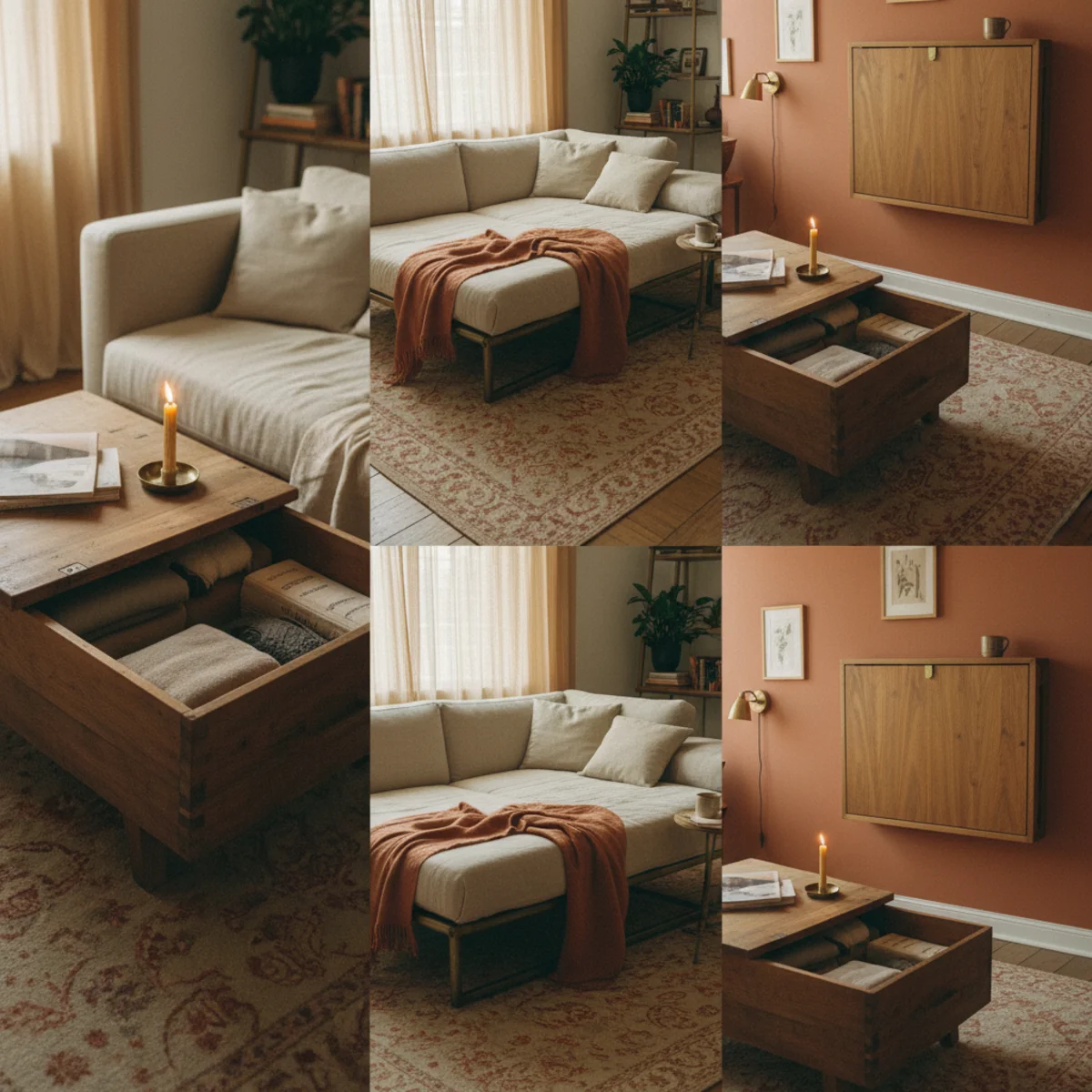
Small apartments demand furniture that does more than one job — storage ottoman as coffee table, sofa bed for guests, lift-top coffee table for dining, console with hidden storage drawers. Every piece that serves two or three functions saves the floor space a separate single-function piece would have consumed. The discipline: ask of every furniture purchase 'what else can this do?' before committing.
Best multifunctional pieces: STORAGE OTTOMAN ($250 to $700) — coffee table, footrest, extra seat, hidden storage. LIFT-TOP COFFEE TABLE ($300 to $700) — coffee table that lifts to laptop or dining height. SOFA BED OR DAYBED ($400 to $1,500) — primary seating that converts for occasional guests. CONSOLE WITH DRAWERS ($200 to $600) — surface area plus hidden storage. NESTING TABLES ($150 to $400 for a set of 3) — three tables that store as one. EXPANDABLE DINING TABLE ($300 to $1,000) — small daily, larger for entertaining. Pick 2 to 3 multifunctional pieces per studio or small one-bedroom; the rest can be standard single-function. The compound floor-space savings are dramatic.
AFFILIATE SLOTFURNITURE2-3 multifunctional pieces: storage ottoman, lift-top coffee table, sofa bed, console with drawersAdd affiliate URL when configuredWhy it works
Because floor space is the binding constraint in any apartment under 700 square feet — every piece of furniture has to justify its footprint against the others. A storage ottoman that replaces a coffee table plus a separate storage piece saves the floor area the second piece would have consumed. The compound effect across 3 to 5 multifunctional pieces typically saves 20 to 30 square feet of apartment floor space — the equivalent of an entire small bedroom.
Pro tip — Choose the multifunctional pieces where the secondary function gets actual use — a sofa bed gets occasional guest use, a storage ottoman gets daily storage and footrest use, a lift-top coffee table gets weekly laptop use. Avoid multifunctional pieces where the secondary function is theoretical (an expanded dining table you never actually expand) — the function tax (slightly worse at the primary purpose) only pays off when the secondary purpose is real.
Storage ottoman as coffee table — footrest, extra seat, hidden storage, all in one floor footprint. See also: storage ottoman
02Go Vertical With Storage to the Ceiling
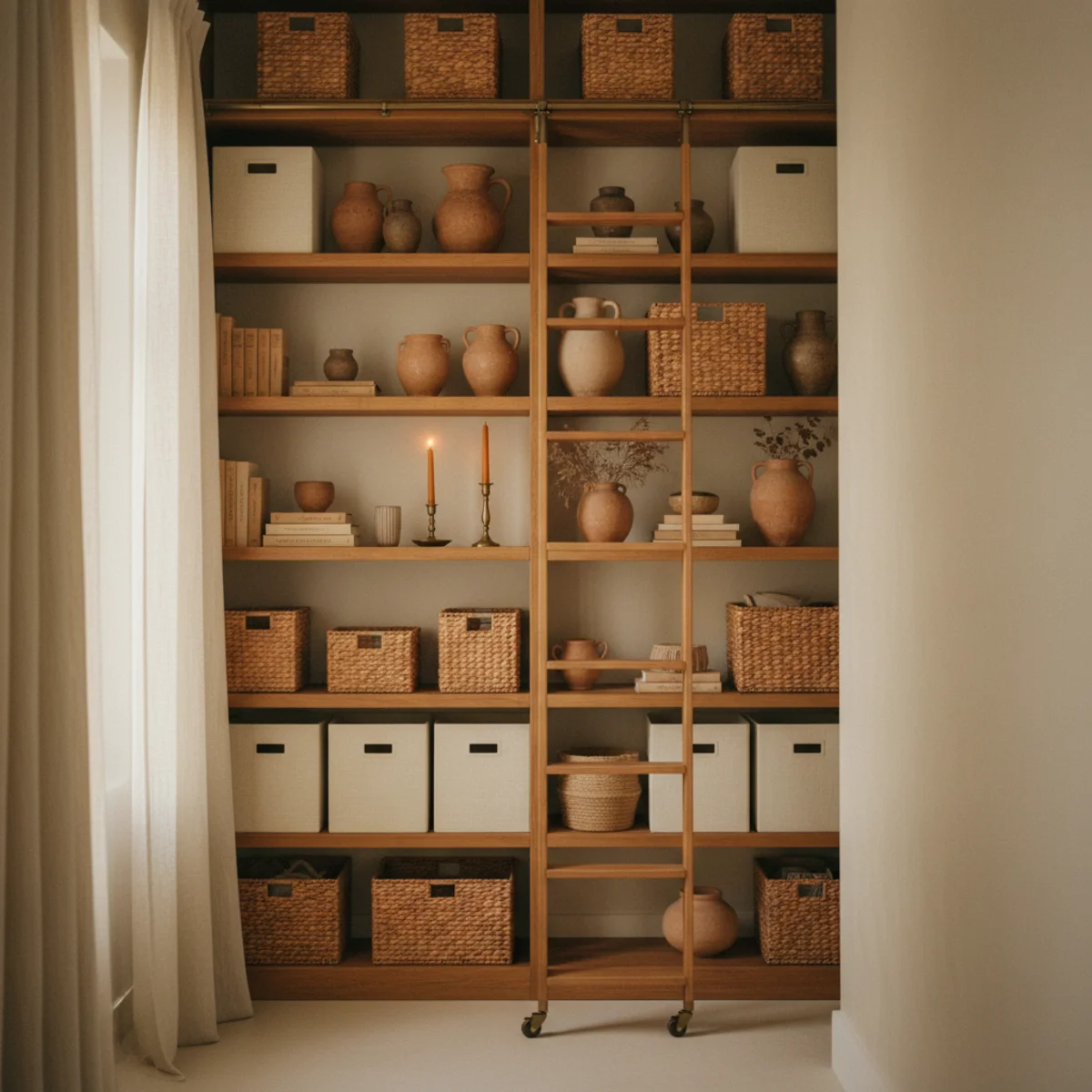
Small apartments have limited horizontal floor area but the same vertical space as larger homes — exploit the ceiling. Storage that extends to within 12 inches of the ceiling holds 2 to 3 times the items that mid-height storage holds, in the same floor footprint. The vertical move also draws the eye upward, which makes the ceiling read higher and the apartment read larger.
Tall storage approaches: IKEA BILLY bookcase extender (adds 14 inches of vertical storage above standard BILLY at $30 to $50), tall narrow bookshelves at 84 to 90 inches tall (West Elm Mid-Century tall narrow at $700, IKEA BILLY 80-inch at $120), floor-to-ceiling pantry shelving in tight closets ($40 to $100 in materials, weekend DIY), kitchen open shelving up to ceiling height. Position tall pieces against walls where they won't block sightlines. Top sections (above 6 feet) store rarely-used items; middle sections (3 to 6 feet) store daily items; bottom sections (below 3 feet) store heavy or bulky items. Anchor all tall pieces to the wall to prevent tip-over.
AFFILIATE SLOTSTORAGETall storage to within 12 inches of ceiling: tall bookshelves, floor-to-ceiling pantries, above-door shelvingAdd affiliate URL when configuredWhy it works
Because the floor-area-to-storage-volume ratio is dramatically better for tall narrow furniture than for wide low furniture. A 84-inch tall bookshelf at 30 inches wide consumes about 3 square feet of floor area while providing 40+ square feet of usable shelf surface — the highest floor-to-storage ratio of any furniture type. The same shelf surface in a wide low bookshelf consumes 8 to 12 square feet of floor, double or triple the footprint. In small apartments, every square foot of floor matters.
Pro tip — Add ceiling-mounted shelves above doorways for the often-wasted 12 to 18 inches of vertical space above standard interior doors — these shelves hold books, baskets of stored items, or decorative objects in a zone most apartments ignore entirely. The shelves install for $20 to $40 in materials (single board plus brackets) and add 15 to 25 square feet of storage to most apartments.
Tall narrow bookshelf to within 12 inches of ceiling — using vertical space that small apartments otherwise waste. See also: tall narrow bookshelves
03Define Zones in a Studio Without Walls
Studio apartments combine living, sleeping, dining, and sometimes working into one room. The fix isn't building walls — it's defining zones with furniture placement, rug boundaries, lighting changes, and visual breaks. Five or six well-defined zones in a 400-square-foot studio reads more like a small house than one large room, even though no physical barriers exist.
Five zone-definition tools: (1) RUG BOUNDARIES — each functional zone (living, dining, sleeping) has its own rug defining its floor footprint. (2) FURNITURE BACKS — position the sofa back facing the sleeping zone (the back becomes the visual wall). (3) LIGHTING CHANGES — different lamp arrangements per zone (table lamps in living, pendant in dining, bedside lamps in sleeping). (4) HEIGHT BREAKS — tall bookshelf between zones acts as a visual divider. (5) CURTAIN OR FOLDING SCREEN — fabric or wood folding screen between sleeping zone and rest. Define 3 to 5 zones per studio: living, dining, sleeping, working (if needed), entry/kitchen. Each zone has its own defined floor footprint, lighting setup, and styling.
AFFILIATE SLOTZONESDefine 3-5 zones with rugs, furniture backs, lighting changes, height breaks, or folding screensAdd affiliate URL when configuredWhy it works
Because the brain processes one undifferentiated room as one zone — even a 400-square-foot studio feels small if it reads as one continuous space. The same square footage divided into 4 to 5 defined zones reads as a small home with multiple rooms, which feels significantly more spacious psychologically. The defined zones also support different activities (work focuses in working zone, rest happens in sleeping zone) which the brain associates with their physical positions, improving sleep quality and work productivity.
Pro tip — Use a tall folding screen (3-panel or 4-panel at 60 to 72 inches tall, $80 to $300 from West Elm or vintage thrift) to define the sleeping zone in a studio — the screen creates real visual separation without the permanence of walls. The screen can also fold flat for storage when not needed (during the day if the bed is the daybed type).
Living zone, sleeping zone, dining zone — three rugs, one sofa back, one folding screen, all in 400 square feet. See also: tall folding screen
04Float Furniture Off the Walls
The instinct in small apartments is to push every piece against the wall to maximize floor space — but the move actually makes the apartment feel smaller. Floating sofas, beds, and consoles 4 to 8 inches off the wall creates a visual gap that reads as breathing room, and the gap can also be used productively for cord management or narrow storage. The result feels more spacious despite occupying the same total floor area.
Float major furniture 4 to 8 inches off walls: SOFA — pull 4 to 6 inches off, add a narrow console behind it (10 to 14 inches deep per the small-living-room rules). BED — pull 4 to 8 inches off, use the gap for cord management to bedside lamps. DESK — pull 4 to 6 inches off, use the gap for under-desk cable tray. CONSOLE — pull 2 to 4 inches off, prevents the wall and console from reading as one continuous surface. The floating discipline applies to all major furniture; only built-ins (kitchen cabinets, closet shelves) should sit flush against walls.
AFFILIATE SLOTARRANGEMENTFloat major furniture 4-8 inches off walls; use gaps for narrow storage or cord managementAdd affiliate URL when configuredWhy it works
Because furniture flush against walls reads as continuous with the walls themselves — the visual mass extends from floor through furniture to ceiling. Floating furniture 4 to 8 inches off creates a visible gap of wall-behind-furniture, which the brain reads as 'more wall visible' and therefore 'more space than I thought.' The trick is purely psychological but consistent across small-apartment experiments. The same furniture in the same room reads as different volumes based on whether it's pushed against walls or floating.
Pro tip — Use the gap behind floating furniture for narrow storage that would otherwise consume floor space — a thin console behind the sofa (per the small-living-room-ideas rules), a small basket for charging cables behind the bed, a narrow bookshelf behind the desk. The gap converts wasted vertical wall space into productive narrow storage.
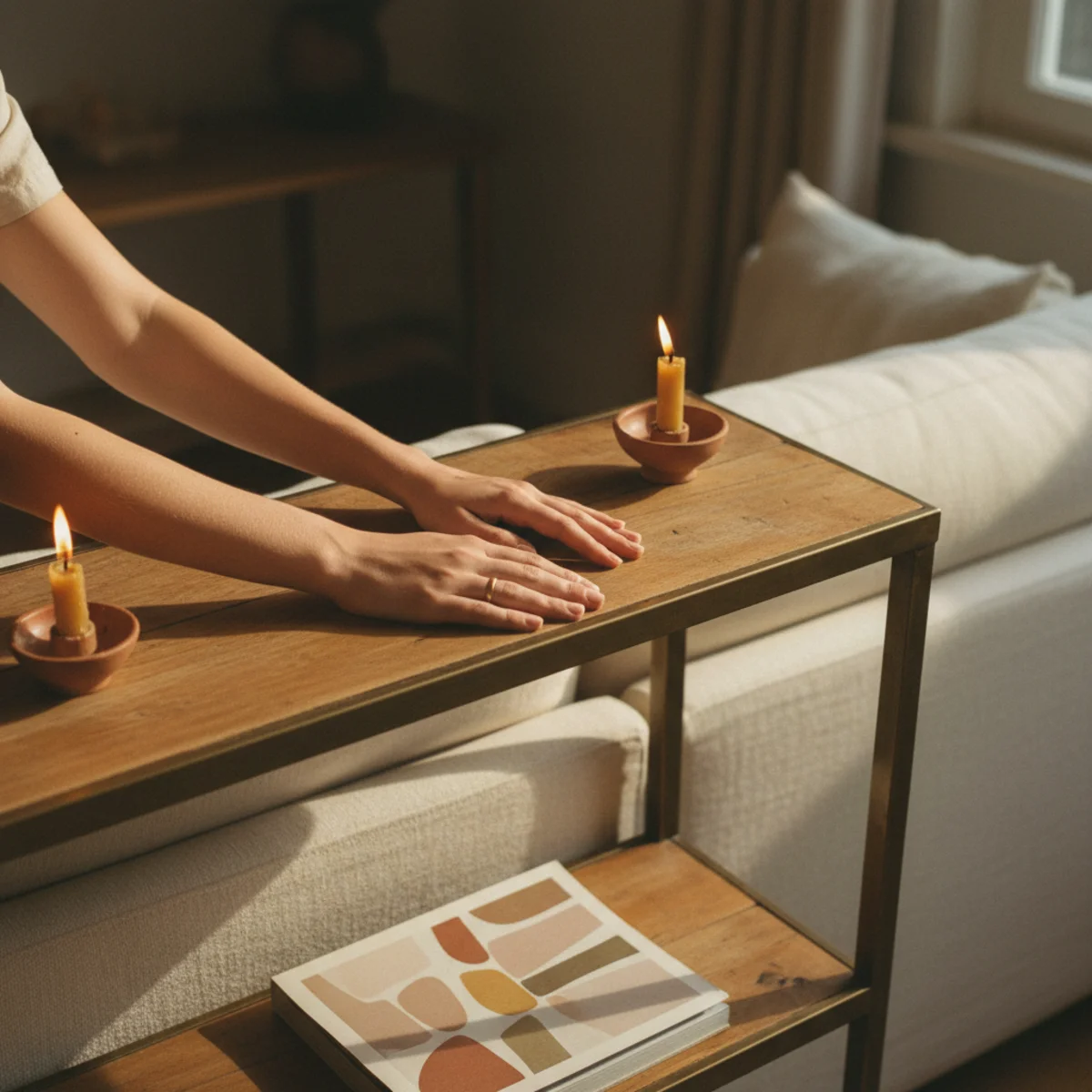
Sofa pulled 6 inches off the wall, narrow console behind — the visual gap that makes small rooms feel larger. See also: console behind
05Use a Big Mirror to Bounce Light
Small apartments suffer most when natural light is limited — and one large mirror placed opposite the primary window dramatically multiplies the available light by bouncing it across the room. The mirror also visually doubles the apparent room size by reflecting the opposite view. One large mirror (36 to 60 inches in long dimension) is the single most-impactful small-apartment wall decision.
Choose a mirror 36 to 60 inches in long dimension, framed in warm wood or aged brass, or unframed with beveled edges. Position on the wall opposite the largest window (or perpendicular to it, angled to catch and reflect the light). The mirror's lower edge should be 6 to 12 inches above the surface below it (console, sofa back, or bed headboard). Sources: IKEA STOCKHOLM round at $250, IKEA HOVET full-length at $180, vintage gilt or wood-framed at $80 to $300 from estate sales, Article or West Elm at $200 to $600. One large mirror outperforms two medium mirrors or three small mirrors for the light-bouncing effect.
AFFILIATE SLOTWALLSingle mirror 36-60 inches in long dimension positioned opposite the primary windowAdd affiliate URL when configuredWhy it works
Because light bounces off a large continuous mirror surface in a coherent reflection, while multiple small mirrors scatter the bounce in fragmented sections. The brain reads a single large reflection as 'opposite room visible there' (perceived size doubles), while it reads multiple small reflections as 'mirrors there.' The single large mirror is what creates the actual perceived-size doubling that small apartments benefit from.
Pro tip — Position the mirror so the bottom edge is at counter or console height — the reflection should show the room from a normal standing eye level, not the floor or the ceiling. A mirror centered too high reflects the ceiling and walls (less useful); a mirror centered at human eye level reflects the room as you'd see it, doubling the experiential space.
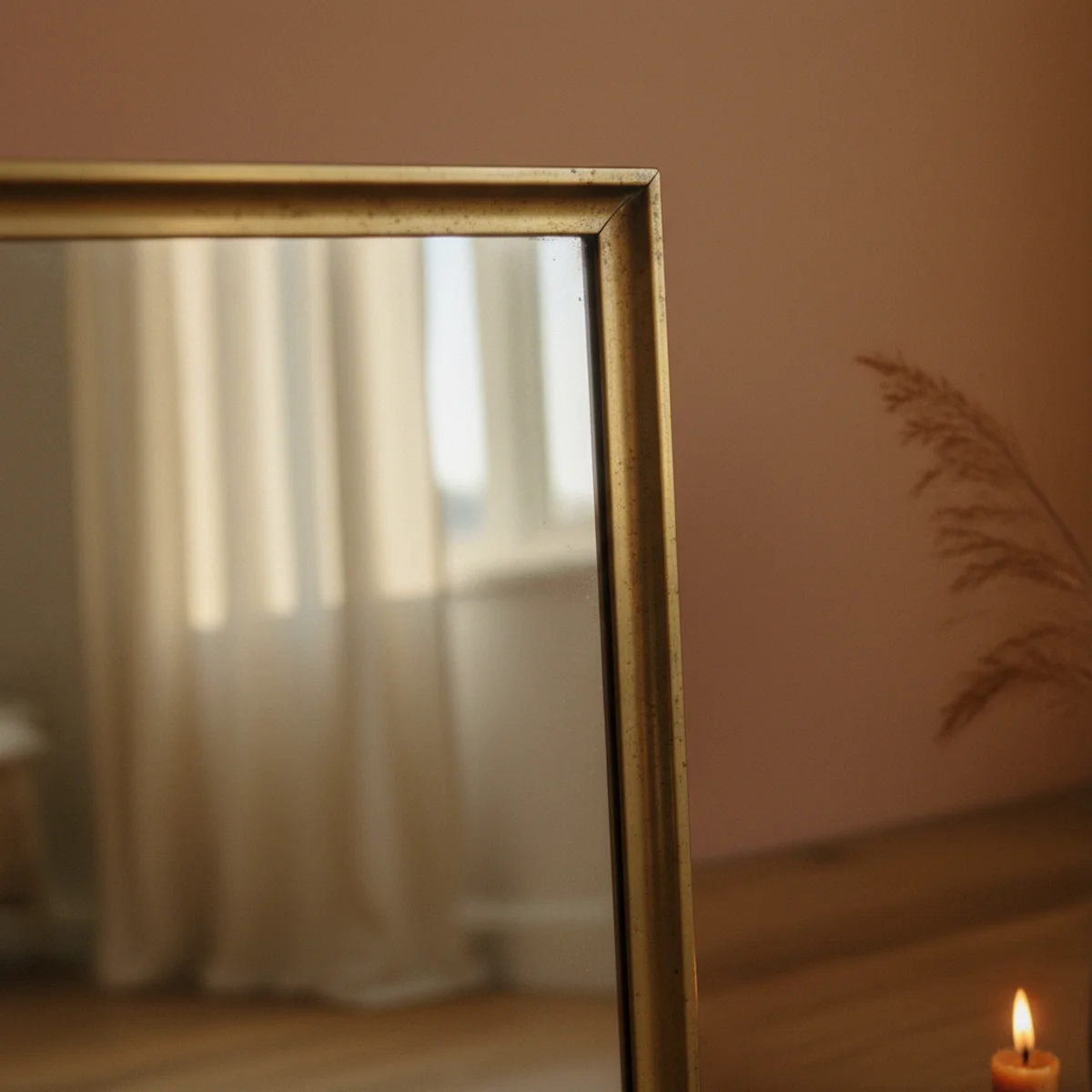
One 48-inch mirror opposite the window — the light multiplier and apparent-size doubler in any small apartment. See also: vintage gilt
06Hang Curtains High and Wide
Small-apartment curtains benefit even more than larger-room curtains from the high-and-wide rule — rod 4 to 6 inches below the ceiling, rod extending 6 to 12 inches beyond the window frame on each side. The trick visually doubles the apparent window size, raises the ceiling, and softens every other element. Cost: $50 to $150 for the rod and curtains; impact: transformational.
Mount the rod 4 to 6 inches below the ceiling (not just above the window) and extend it 6 to 12 inches beyond each side of the window frame. Use simple iron or brass rods ($30 to $80 from West Elm). Hang two unlined linen panels per window in oat or natural cream ($40 to $150 per panel from IKEA AINA, Quince, or H&M Home). Panels should be wide enough that when fully open they stack beside the window (revealing the entire glass) and when closed they cover the entire window plus the extended rod sections. Length: ceiling to floor with 1 to 2 inches puddle. Sources for no-sew DIY at $50 per panel: see diy-home-decor-ideas guide.
AFFILIATE SLOTWINDOWSRod 4-6 inches below ceiling, extended 6-12 inches beyond window each side, with linen panelsAdd affiliate URL when configuredWhy it works
Because small-apartment windows are usually small (one window per room is typical), and the curtain trick visually multiplies the apparent window size by 30 to 60 percent. The trick is most effective in rooms with small windows; large windows already have the visual scale. For a typical 36-inch-wide apartment window, extending the rod to 60 inches wide and mounting it at ceiling height makes the window read as if it's roughly the size of a large house window, transforming how the room reads.
Pro tip — Use ring clips ($8 from IKEA for a 10-pack) to hang the panels — they let you adjust the panels' position on the rod quickly and don't require sewing pockets in the curtains. The ring clip approach also lets you swap curtain panels for different seasons or moods without remounting hardware.
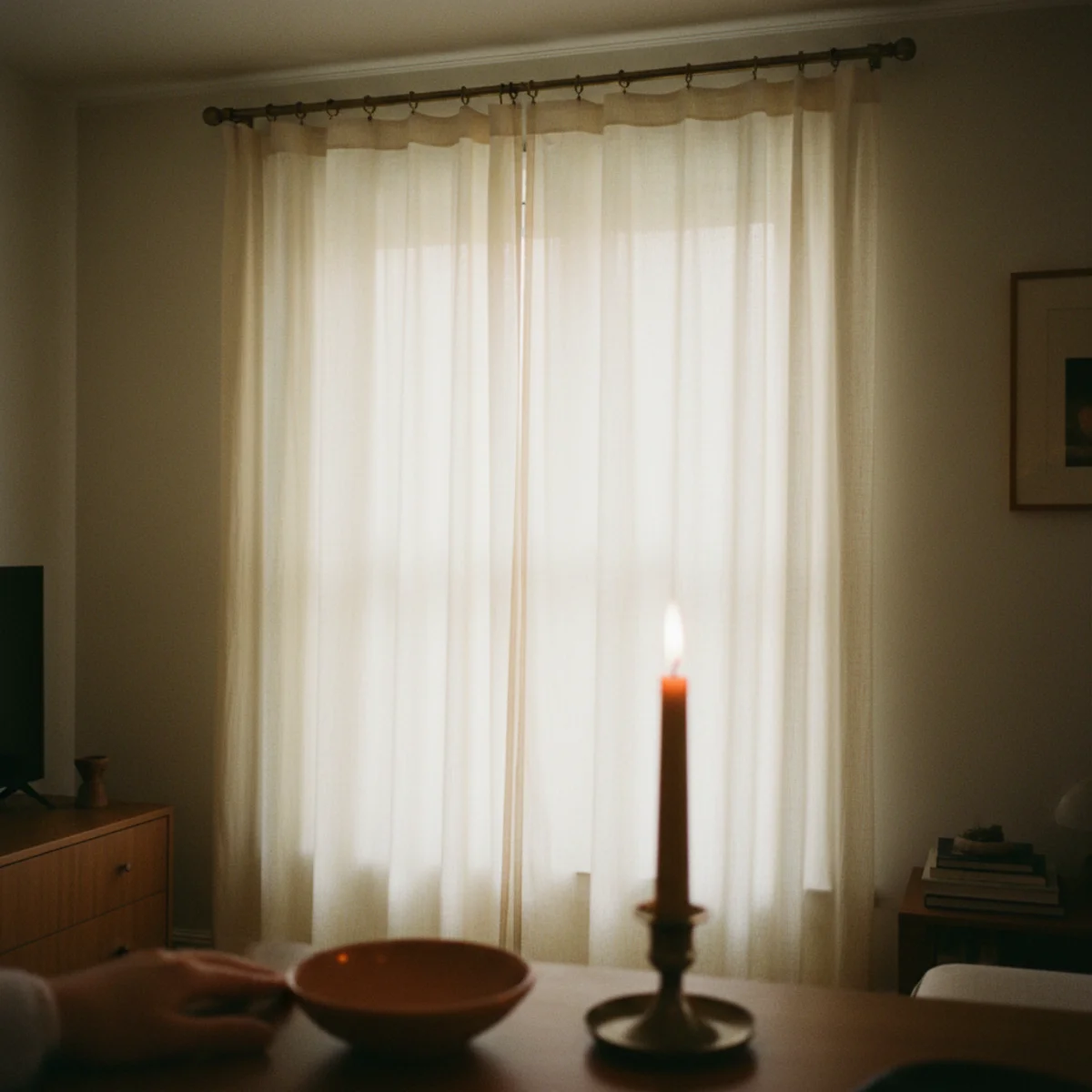
Rod 4 inches below ceiling, 8 inches beyond window each side — doubling apparent window size in small apartments. See also: no-sew DIY
07Choose Leggy Furniture Everywhere
Floor visibility is the small-apartment design language. Every piece of furniture — sofa, chairs, console, side tables, bed frame, dining table — should have visible legs that lift the piece off the floor. The visible floor underneath creates visual continuity across the room and reads as significantly more spacious than the same square footage with flush-to-floor furniture.
Leggy furniture targets across the apartment: SOFA with 6 to 10-inch tapered legs (per small-living-room-ideas), CHAIRS with visible wooden or metal legs (no skirted chairs), CONSOLES on 4 to 6-inch legs, SIDE TABLES with visible legs (avoid drum-shaped or solid-base side tables), BED FRAME with visible legs raising the mattress 12 to 18 inches off the floor, DINING TABLE with thin wooden legs (avoid pedestal bases). The visible-floor principle becomes a consistent design language across the whole apartment, which reads as deliberate rather than accidental.
AFFILIATE SLOTFURNITURELeggy furniture across sofa, chairs, console, side tables, bed frame, dining tableAdd affiliate URL when configuredWhy it works
Because the visible-floor trick compounds across multiple pieces — a leggy sofa alone makes the living zone read larger, but leggy sofa plus leggy chairs plus leggy console plus leggy side tables makes the entire room read continuously larger. Inconsistent leg styles (one leggy piece beside one flush piece) break the visual continuity and lose the effect. The discipline of all-leggy is what makes the trick work at apartment scale.
Pro tip — If you can't replace existing flush-to-floor furniture, lift it onto tapered wood furniture risers ($20 to $40 from Amazon or IKEA EKBY) — the risers add 4 to 6 inches of visible floor underneath and convert any flush piece into a leggy one. The trick is especially effective for sofas and bed frames; both transform dramatically with the visible-floor effect.
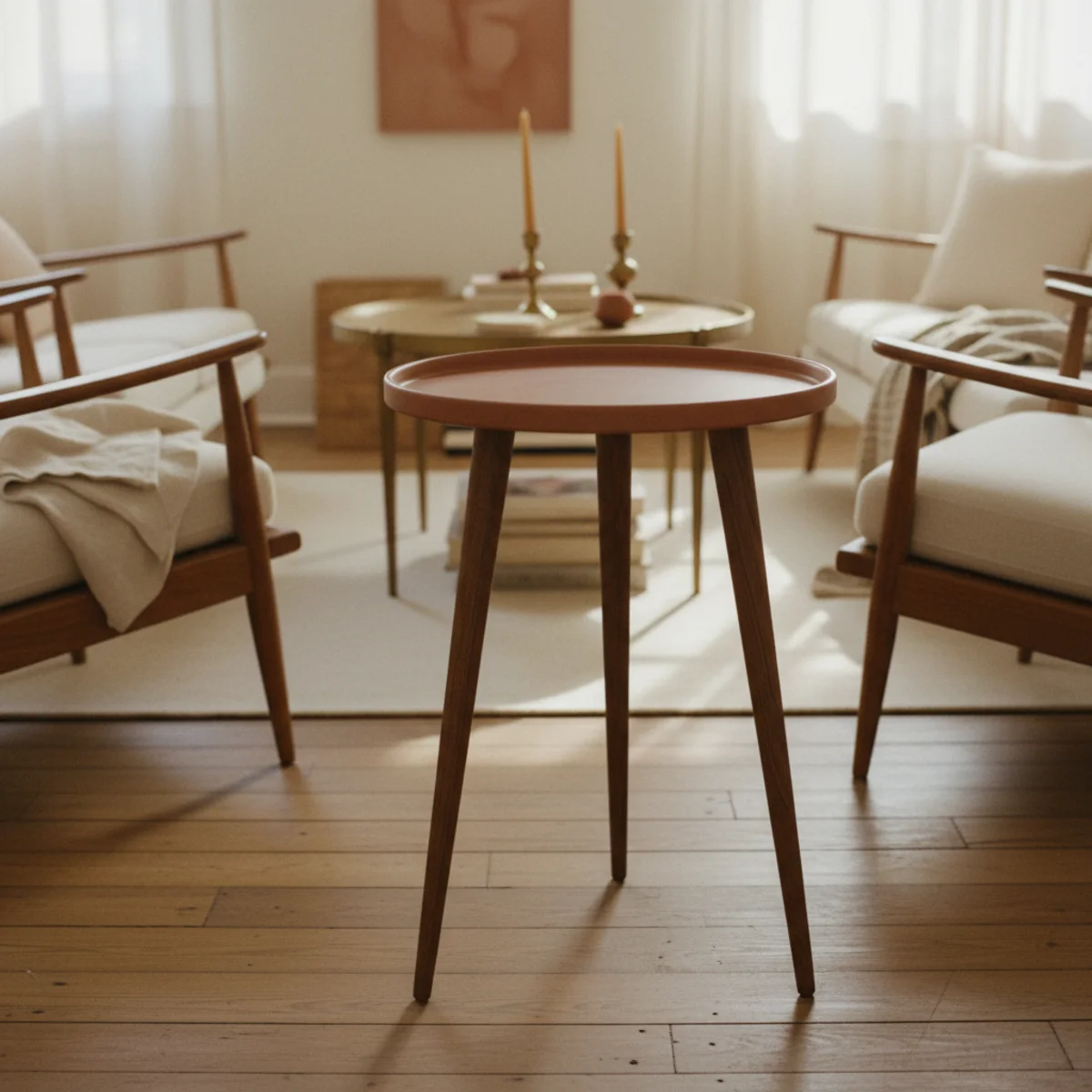
Every piece on visible legs — the consistent visual language that doubles small-apartment floor perception. See also: tapered wood furniture risers
08Contain the Clutter Aggressively
Small apartments fail when clutter accumulates on every surface — and they have less surface to accumulate on. The fix is aggressive containment: every category of daily-use item has a designated container (basket, drawer, tray) and nothing lives on counters or tables permanently except styled objects. The discipline is the design.
Designated containment per category: KEYS AND DAILY ESSENTIALS in the entry tray (per entryway-decor). MAIL in a single mail organizer on the entry console or kitchen counter (replace weekly). KIDS' TOYS in lidded baskets ($30 to $80 each in seagrass or rattan, one per kid). REMOTES in a small tray on the coffee table or in a lift-up sofa armrest. CHARGING CABLES in a closed drawer with a hidden power strip. BLANKETS in the storage ottoman (per multifunctional furniture). MEDICATION AND TOILETRIES in closed bathroom cabinets, not on counters. Each category has one defined home; anything found outside its home gets returned weekly. The aggressive containment is what makes small apartments read styled rather than chaotic.
AFFILIATE SLOTORGANIZATIONDesignated container per daily-item category + weekly 15-minute clutter return sessionAdd affiliate URL when configuredWhy it works
Because the same volume of clutter in 1500 square feet looks acceptable but in 400 square feet looks overwhelming — small apartments amplify visible clutter dramatically. Containment compensates by hiding the same clutter that would otherwise dominate the visual field. Without aggressive containment, small apartments inevitably read as cluttered regardless of how nice the underlying decor is. With it, the same apartment reads as composed and intentional.
Pro tip — Schedule a weekly 15-minute clutter-return-to-homes session — walk the apartment with a basket, gather everything that's drifted out of its designated container, return each item to its home. The 15-minute weekly investment prevents the slow drift toward chronic clutter; without it, every small-apartment styling effort gradually decays.
Every category in its designated container — aggressive containment that prevents small-apartment chaos. See also: entryway-decor
09Add Warm Layered Light Throughout
Small apartments suffer most when relying on overhead light alone — the bright cool light flattens the limited space into one undifferentiated room. The fix is the same warm-layered-lighting system from cozy-living-room-ideas, applied across the apartment: multiple table lamps and floor lamps at 2700K, all on smart plugs timed to sunset, overhead off after dark. Each zone gets its own lamp layer; the transitions read as different rooms.
Apartment-wide lighting setup: LIVING ZONE — 2 table lamps + 1 floor lamp at 2700K (per cozy-living-room-ideas). DINING ZONE — 1 pendant or small chandelier at 2700K, dimmable. SLEEPING ZONE — 2 matched bedside lamps at 2700K (per master-bedroom-ideas). KITCHEN ZONE — 1 small counter lamp at 2700K plus dimmed overhead. ENTRY ZONE — 1 console lamp at 2700K on smart plug. Total bulb count: 6 to 10 lamps across a typical small apartment. All at 2700K. All on smart plugs scheduled to sunset for the automatic transition. The whole apartment shifts to warm mode every evening without anyone touching a switch.
AFFILIATE SLOTLIGHTING6-10 lamps at 2700K across zones, all on smart plugs scheduled to sunsetAdd affiliate URL when configuredWhy it works
Because small apartments can't visually expand through square footage — they have to expand through atmospheric variation. Different lighting in different zones creates the perception of different rooms, even in a single-room studio. Without lighting layering, a small apartment reads as one large overhead-lit room; with layering, the same apartment reads as multiple zones with distinct moods. The lighting is the room-divider that walls would be in a larger home.
Pro tip — Use a single Lutron Caséta smart bridge ($55) plus 6 to 10 smart plugs ($15 each from TP-Link Kasa) — the unified smart-home system lets you control all the apartment's lamps from one app or one button. The 'evening' scene turns on every warm lamp in the apartment simultaneously, creating an instant atmospheric shift that no individual lamp switch can achieve.
Multiple warm lamps across zones — the atmospheric variation that walls would create in larger homes. See also: 2700K
10Use Fold-Down or Nesting Pieces
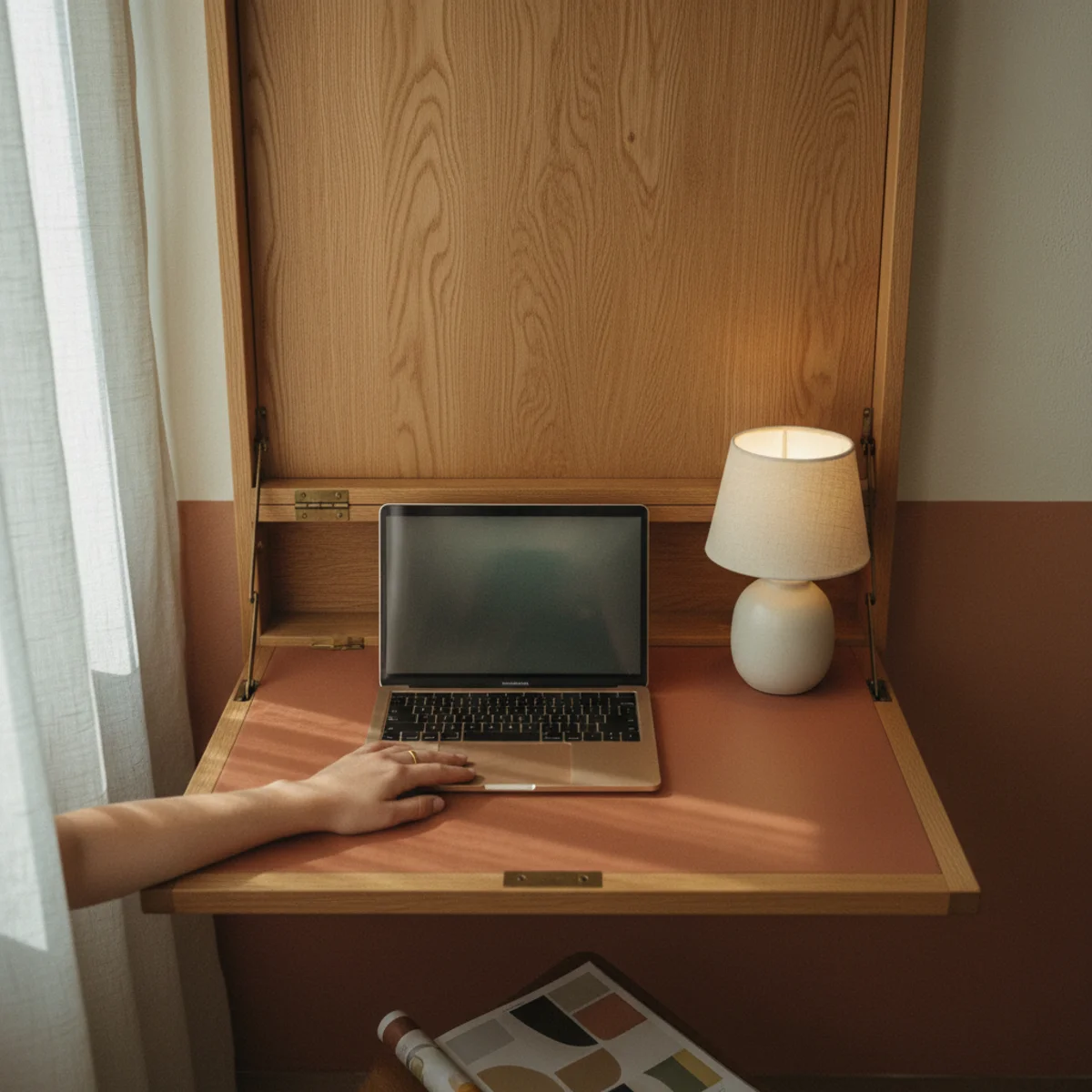
Small apartments need furniture that disappears when not needed — fold-down wall desks, nesting tables that stack into one, fold-up dining tables, drop-leaf side tables, futons that convert. The fold-and-stash pieces preserve floor space when not in use, while still serving their function when needed. The trade-off is occasional setup time; the gain is significant floor space recovered.
Best fold-and-stash pieces: WALL-MOUNTED FOLD-DOWN DESK ($150 to $400 from IKEA NORBERG, Wayfair, or DIY) — folds flat against wall when not working. DROP-LEAF DINING TABLE ($200 to $500) — small everyday, expanded for meals. NESTING TABLES ($150 to $400 for set of 3) — three tables stack as one. FUTON SOFA BED ($200 to $600) — sofa most of the time, occasional bed. WALL-MOUNTED FOLDING DINING TABLE ($120 to $300) — table when needed, flat when not. Each piece costs more than a single-function equivalent but saves significant floor space across normal-use hours. Pick 2 to 3 fold-and-stash pieces per studio or small apartment.
AFFILIATE SLOTFURNITURE2-3 fold-and-stash pieces: wall fold-down desk, drop-leaf table, nesting tables, futonAdd affiliate URL when configuredWhy it works
Because small-apartment furniture sits in your living space 16+ hours per day for most pieces — even pieces you use only 30 minutes daily occupy that floor space the other 23.5 hours. Fold-and-stash pieces invert the ratio: the piece occupies its floor only when actively used, and stows the rest of the time. A wall-mounted fold-down desk consumes 0 square feet of floor for 22 hours per day and 12 square feet for the 2 hours you work at it. The trade-off heavily favors fold-and-stash in any small apartment.
Pro tip — Choose the fold-down desk over a permanent small desk if you work from home only occasionally — the desk that folds against the wall when not working preserves the living area as living area, while a permanent desk in a small apartment converts the apartment into a partial office permanently. The mode-switch capability is the key value.
Fold-down desk extended for working hours — folds flat against the wall the rest of the day. See also: DIY
11Keep a Tight Warm Palette Across Zones
Small apartments work best with a single tight palette applied consistently across all zones — same warm white walls, same warm wood furniture, same earth-tone textiles. The palette discipline makes the apartment read as one cohesive space rather than as separate rooms with conflicting styles. Mixing palettes across zones in a small apartment creates visual chaos that the limited space cannot absorb.
The apartment-wide palette: PRIMARY NEUTRAL (60 to 70% of visible color) — warm cream, oat, or earthy off-white walls and large upholstery across all zones. SECONDARY ACCENT (20 to 30%) — one or two saturated warm tones (rust, sage, terracotta, deep navy) applied consistently across all zones — same accent in living, dining, sleeping. WOOD-AND-BRASS (10 to 20%) — warm wood for furniture and frames, aged brass for hardware and lamp bases, all matching across rooms. Avoid: different paint colors per zone (in a single-room studio), mixed metal temperatures (chrome in kitchen, brass elsewhere), conflicting wood tones (oak in living, pine in bedroom). The palette consistency across zones is what makes small apartments read as one home.
AFFILIATE SLOTPALETTEThree tones consistently across all zones: primary neutral 60-70%, accent 20-30%, wood-brass 10-20%Add affiliate URL when configuredWhy it works
Because the eye can see multiple zones simultaneously in a small apartment — looking from the living zone, you also see the dining zone and possibly the sleeping zone. Conflicting palettes across visible zones creates visual chaos; consistent palette reads as deliberate. In larger homes, the rooms are separated by walls and viewed one at a time, which lets each room have a slightly different palette. Small apartments can't afford the variation; the consistency becomes the design.
Pro tip — Write your three-tone palette on a small card and keep it in your wallet or on your phone — before any purchase, check whether the new piece fits the existing palette. The discipline of explicit palette enforcement prevents the slow creep toward five or six tones that small apartments specifically cannot handle.
Same three tones across every zone — palette consistency that turns multiple zones into one cohesive home. See also: warm cream
12Add One Personal Hero Piece
Every small apartment needs one personal hero piece — one statement element that signals 'a specific person lives here, not a generic apartment renter.' A vintage Persian rug, an unusual piece of inherited art, a particular chair, an heirloom — something with specific personal meaning that anchors the apartment's identity. Without the hero piece, even beautifully styled small apartments read as generic.
The personal hero piece options: VINTAGE PERSIAN RUG from a specific region you've visited or feel connected to ($150 to $500 from Marketplace or auction). UNUSUAL INHERITED FURNITURE — a grandparent's chair, an aunt's writing desk, a family piece. UNUSUAL ART — a piece from a particular artist, a vintage map of a meaningful place, a large framed photograph from a significant trip. CRAFT PIECE — handmade pottery or sculpture from a craft fair where you met the artist. The hero piece should be 1 large or visually-significant piece; supporting decor doesn't need to be unusual but the hero piece does. The hero gets pride-of-place positioning (visible from entry, primary sightline).
AFFILIATE SLOTIDENTITYOne personal hero piece: vintage rug, inherited furniture, unusual art, or craft pieceAdd affiliate URL when configuredWhy it works
Because small apartments are typically constrained to standard furniture sizes and configurations — most small-apartment styling looks similar across thousands of similar units. The hero piece is the distinguishing element that makes your apartment yours rather than yet another well-styled small apartment. The hero piece signals personality and identity in a way that perfect styling alone cannot. Without it, the apartment reads as generic-good; with it, it reads as specifically-you.
Pro tip — Position the hero piece in the apartment's primary sightline (visible from the entry doorway) so everyone — yourself and visitors — sees it first. The piece gets the most viewing time across the apartment, and it sets the impression for every visitor. The hero piece in a secondary corner doesn't have the same identity-signaling power.
Vintage Persian rug as the hero — the identity signal that turns generic small apartment into specifically yours. See also: vintage Persian rug
13Use the Back of the Door for Storage
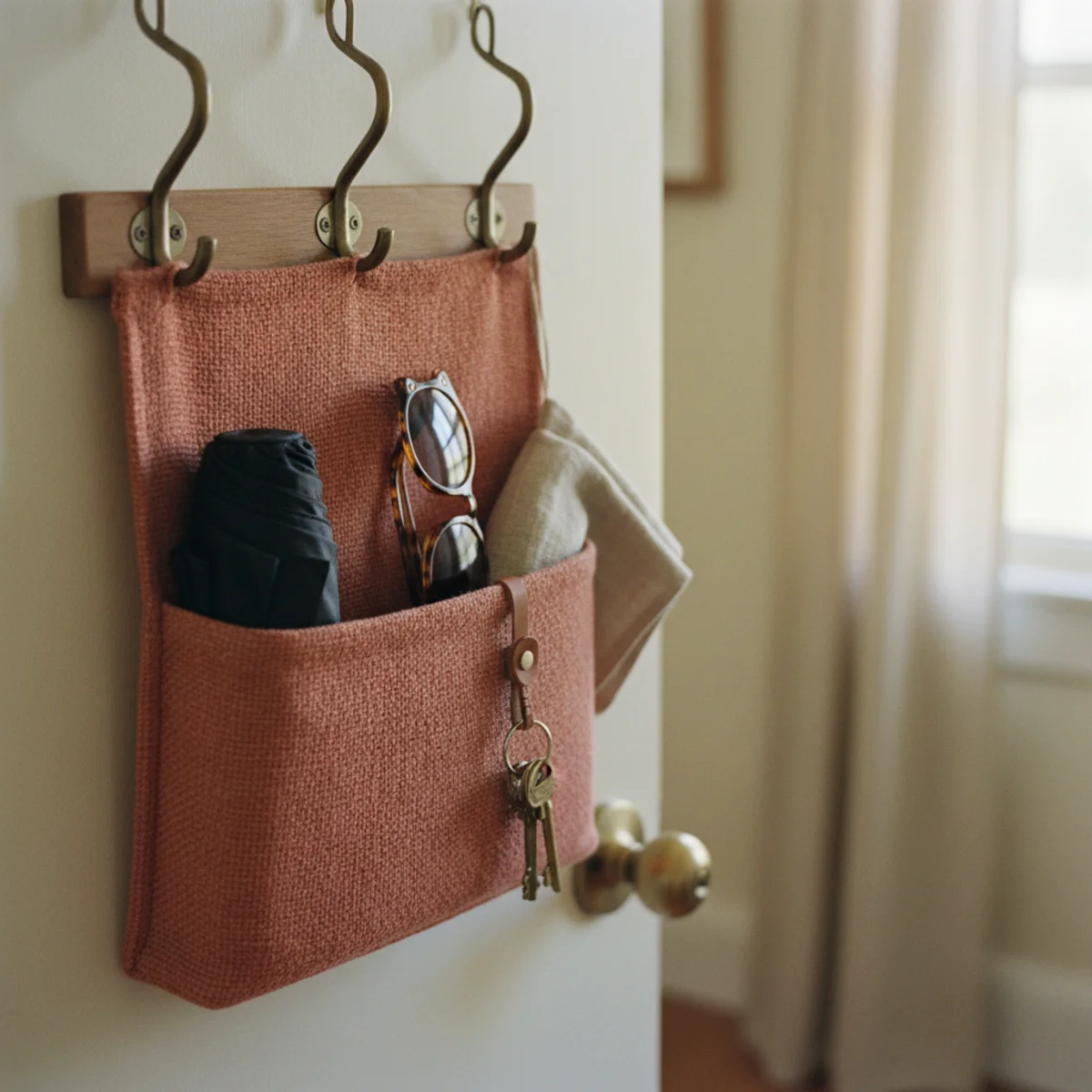
The back of every door in a small apartment is wasted vertical space — exploit it. Over-the-door storage racks, hooks, organizers, and shoe holders convert 5 to 8 square feet of otherwise-unused door area into productive storage. The trick works on bedroom doors, bathroom doors, closet doors, and pantry doors — every interior door in the apartment can become storage.
Best behind-door storage: SHOE ORGANIZER WITH POCKETS ($15 to $40) — holds 20+ pairs of shoes or repurposed for craft supplies, snacks, toiletries. HEAVY-DUTY HOOKS ($5 to $15 per door) — hold robes, bags, towels, sweaters. MESH OR FABRIC ORGANIZER ($20 to $50) — pockets for accessories, books, small items. JEWELRY ORGANIZER ($30 to $80) — necklaces, earrings, belts behind bedroom door. SLIM SHELVING UNIT ($60 to $150) — narrow shelves mounted directly to the door for pantry items, books, or supplies. Pick the door-storage approach based on what's nearby — bedroom door gets robes and bags, bathroom door gets towels and toiletries, kitchen door gets pantry items.
AFFILIATE SLOTSTORAGEOver-the-door shoe organizer, heavy hooks, mesh organizer, or slim shelving on every interior doorAdd affiliate URL when configuredWhy it works
Because doors are functional infrastructure (they open and close), and the brain doesn't process them as storage surfaces by default. But the back of every interior door is typically 24 to 36 inches wide by 60 to 72 inches tall — roughly 12 to 18 square feet of vertical surface that goes entirely unused without intervention. Adding behind-door storage to even half the doors in a small apartment recovers 30 to 50 square feet of storage capacity that the apartment otherwise wastes.
Pro tip — Choose over-the-door organizers that don't damage the door — slim metal hooks at the top of the door, not screw-in hardware. The renter-friendly approach lets you add and remove the storage without security deposit issues, and the same hooks work across moves to different apartments.
Back of the bedroom door — twelve square feet of vertical storage that small apartments otherwise waste entirely. See also: renter-friendly
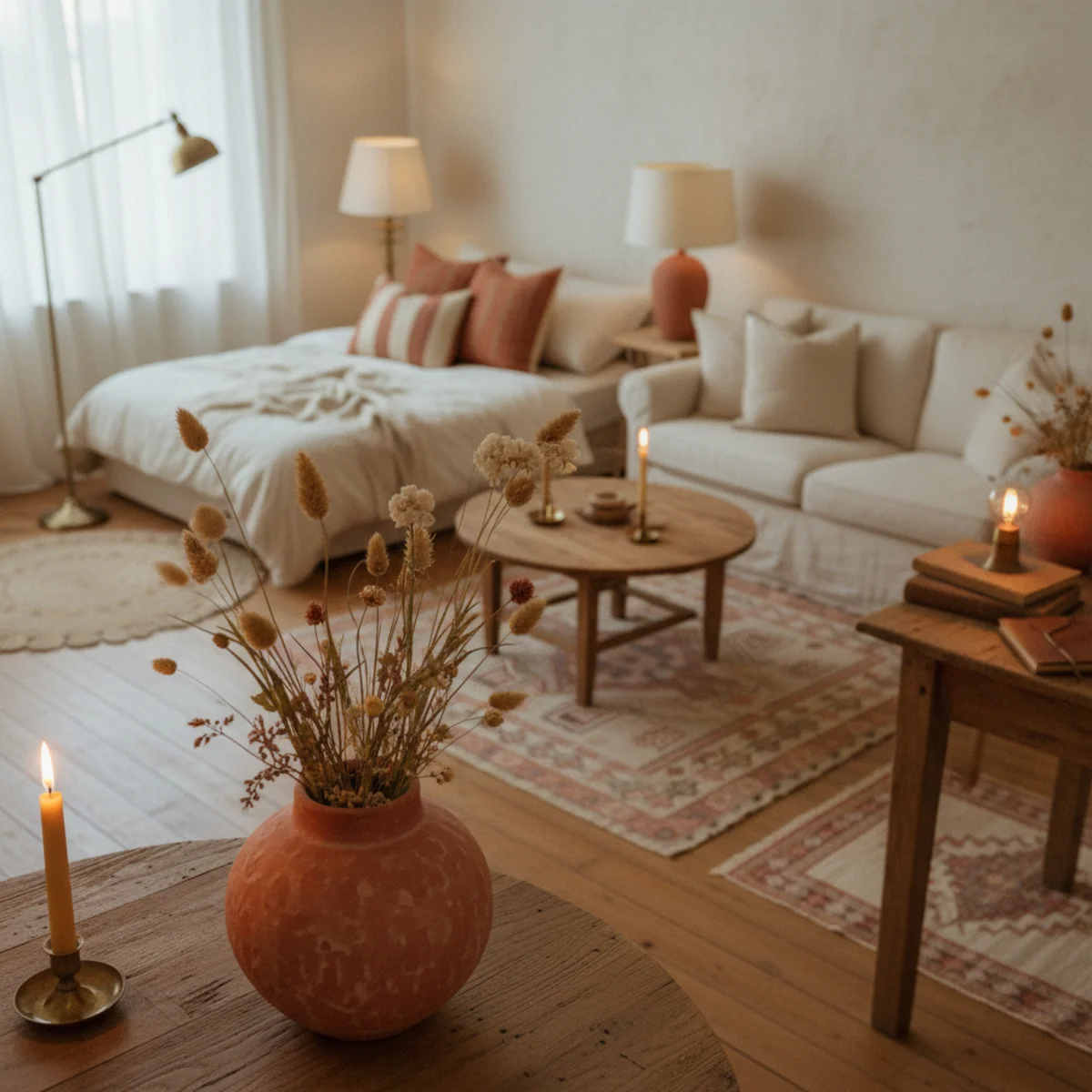
How to decorate a small apartment step by step
Edit, zone, go vertical, then warm it up. Work in this order.
- 1Edit to what earns its place
Keep only pieces that work — ideally twice. In a small apartment, every item has to justify its footprint, and editing is the first move.
- 2Choose multifunctional pieces
Add double-duty furniture — a storage ottoman, a sofa bed, a console-desk — so each piece earns its space more than once.
- 3Define zones and go vertical
Use rugs and lamps to mark zones in open or studio spaces, and use vertical storage to free the floor.
- 4Warm it up
Layer warm light, a tight palette, contained clutter, a big mirror, high curtains, and one personal hero piece so it feels cozy, not just efficient.
Quick tips
- Make every piece earn its place — ideally work twice with multifunctional furniture.
- Go vertical with storage to use the cubic space small apartments waste.
- Define zones with rugs and lamps to create a sense of separate rooms.
- Float at least one piece off the wall — lining every wall reads cramped.
- Contain clutter in baskets and closed storage, since it has nowhere to hide.
- Layer warm light and one personal hero piece so it feels cozy, not just efficient.
Small apartments by type
Zone the living, sleeping, and work areas with rugs, lamps, and a bookshelf divider; multifunctional everything.
Lean on scale tricks — leggy furniture, a big mirror, high curtains — and double-duty pieces; see our small living room ideas.
Thrifted multifunctional pieces and warmth-per-dollar moves; see our decorating on a budget guide.
Portable, no-hole solutions — leaning mirror, plug-in lamps, freestanding storage; see our apartment living room guide.
A small apartment rewards editing and double-duty thinking. Every piece works twice, the clutter can't hide — and that's a gift.
Frequently asked questions
How do I make a small apartment feel bigger?+
What furniture works best in small apartments?+
How do I define zones in a studio apartment?+
How do I store everything in a small apartment?+
Should I paint a small apartment dark or light?+
What's the most important small-apartment decorating rule?+
A small apartment forces good decisions — every piece has to earn its place, ideally twice, and the clutter has nowhere to hide, which turns out to be a gift. Edit hard, choose multifunctional furniture, define zones, go vertical, and float a piece off the wall, then layer in warm light and one personal hero piece. We'd start by editing to only what works and adding double-duty pieces; the constraints produce a better-considered, cozier home than a large under-edited one. Live big in less by making every square foot work twice and feel warm.