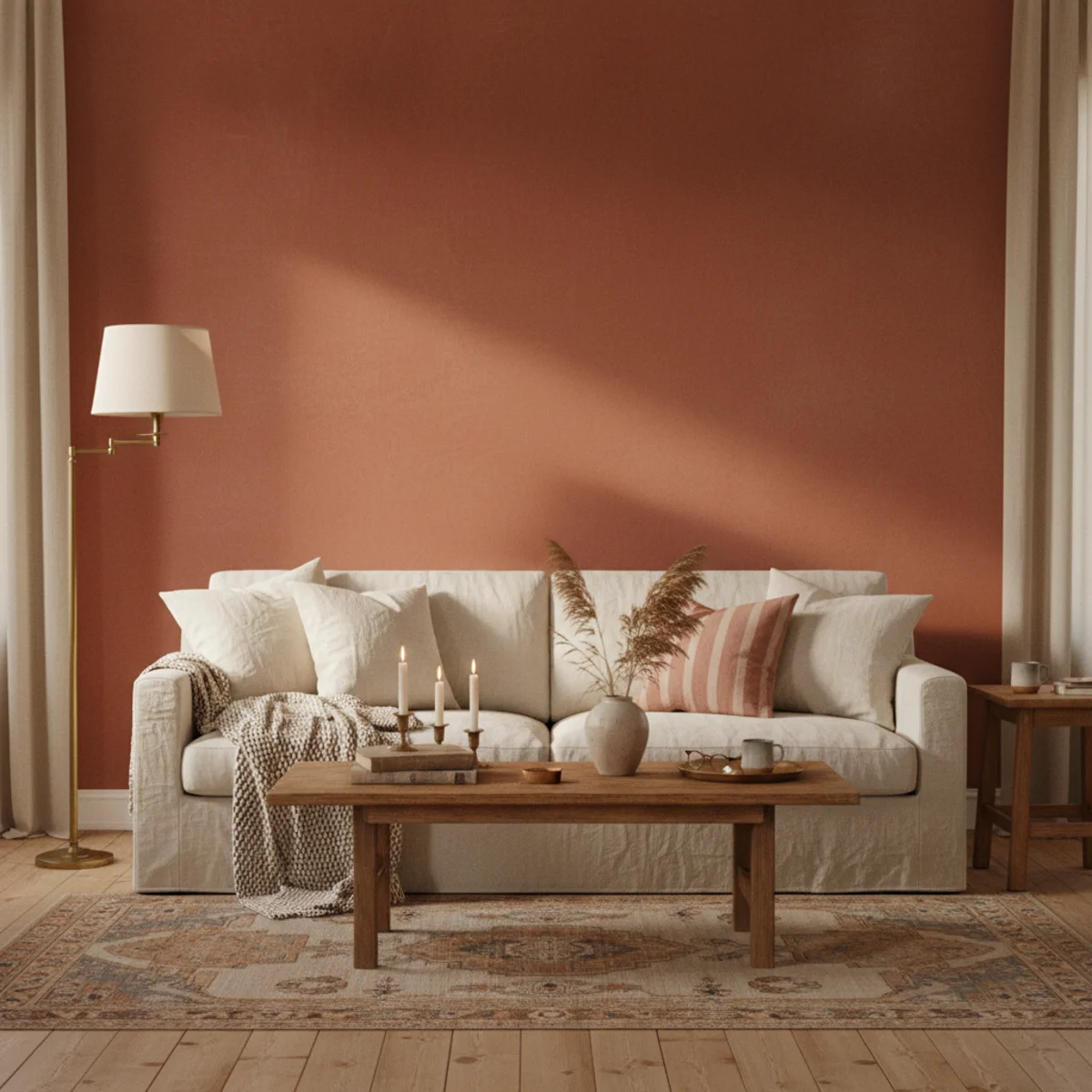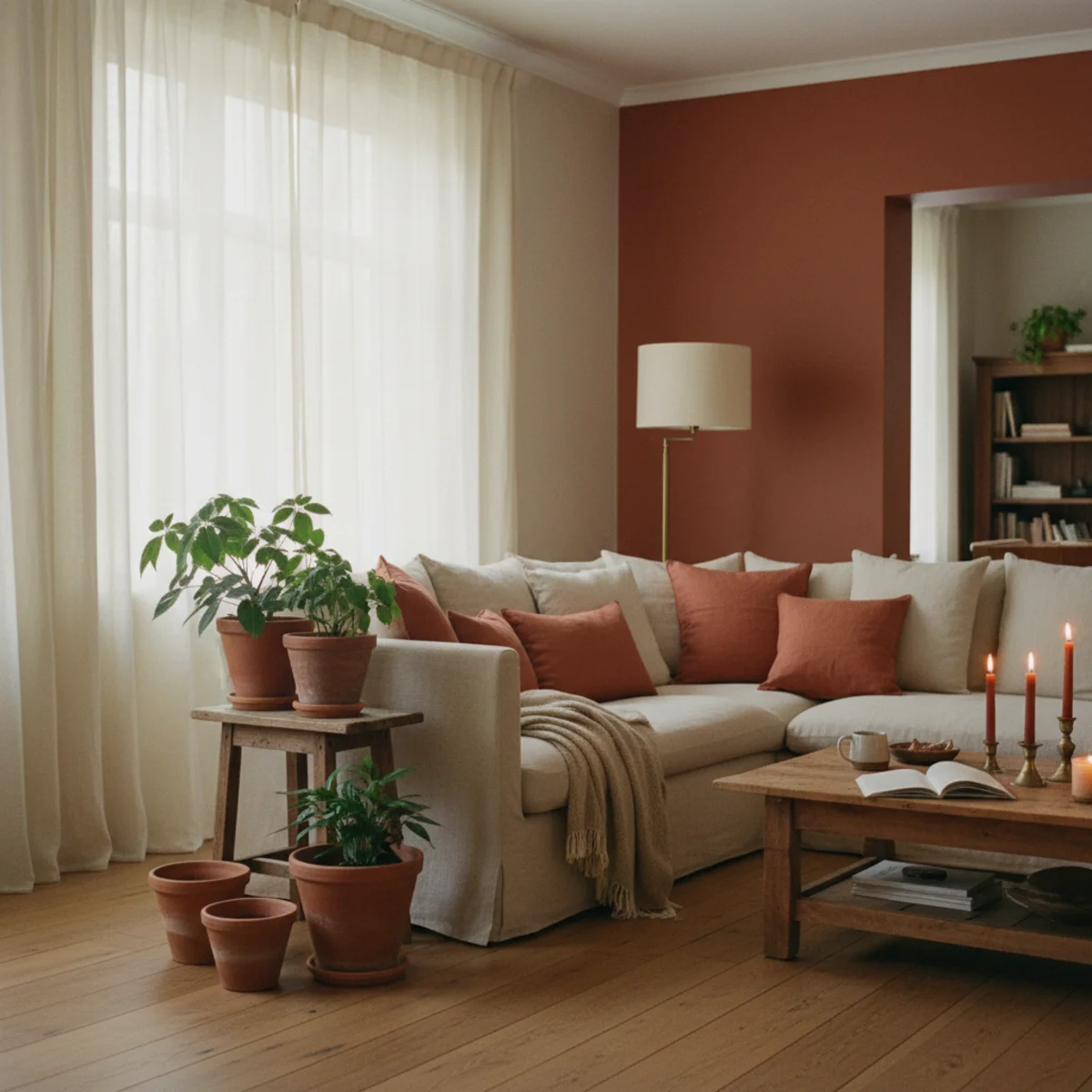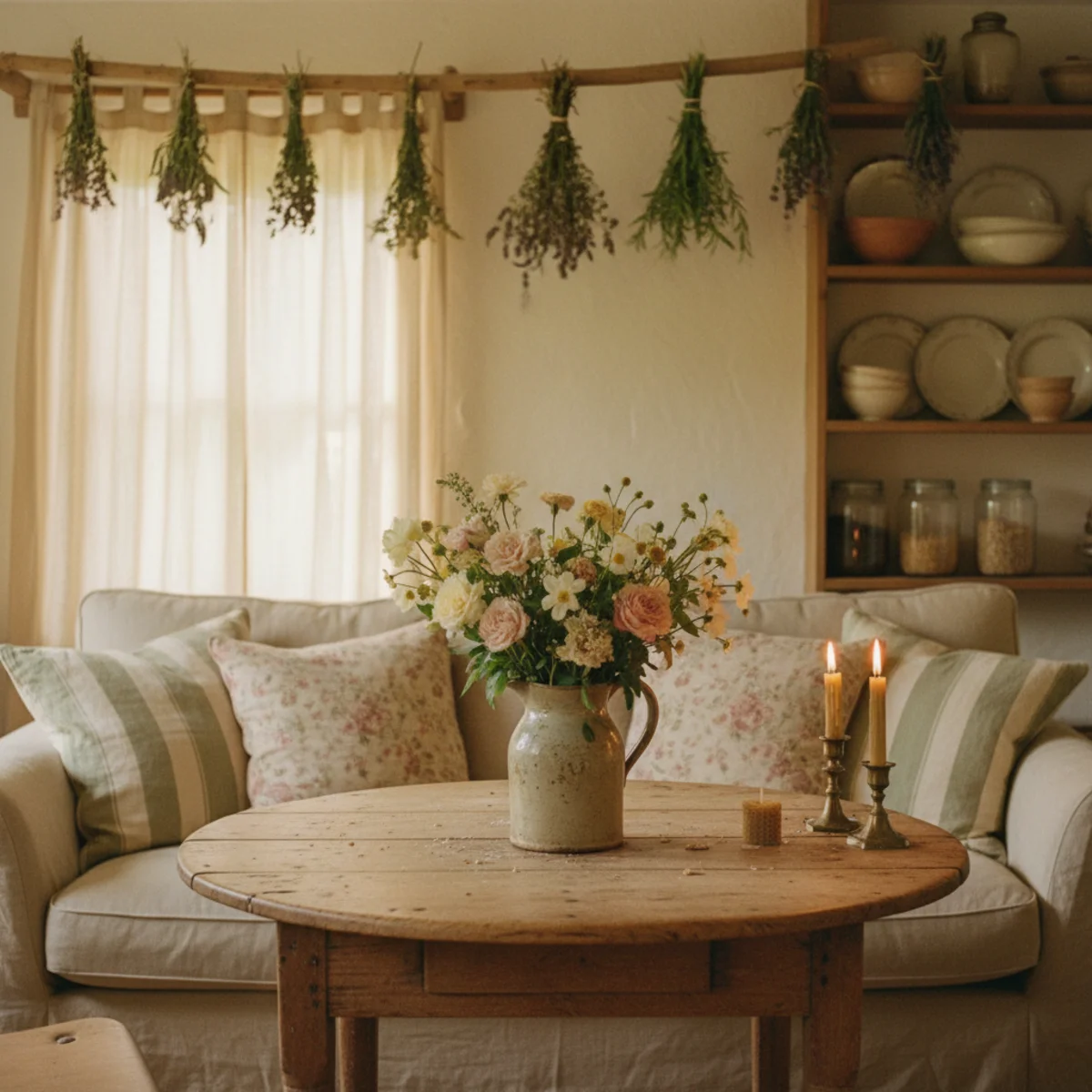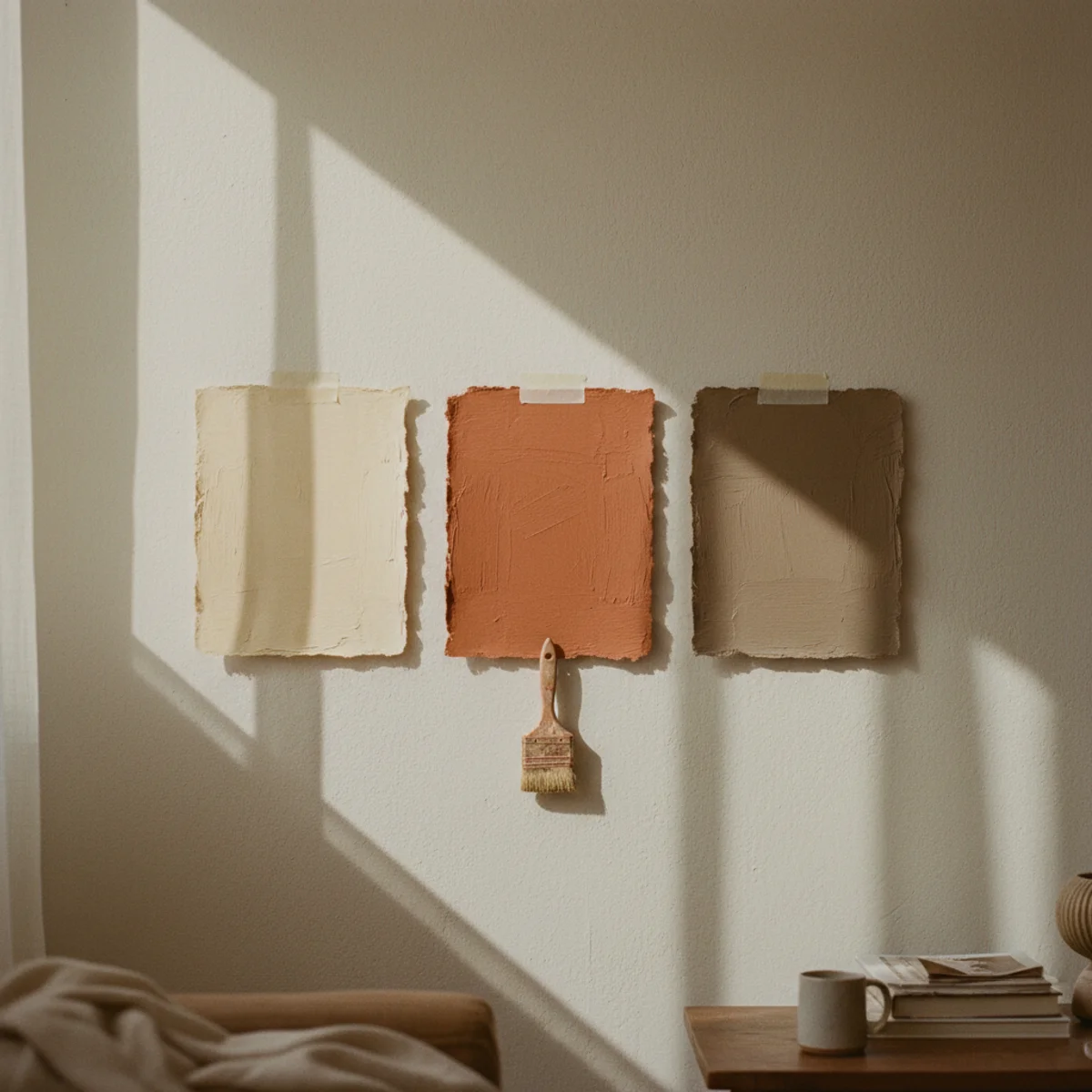
These twelve sage green decor applications are tested across real homes in real rooms — north-facing and south-facing bedrooms, painted kitchen cabinets in actual use, tiled bathrooms, curtained living rooms, painted dressers, and ceramic collections. Each application below names the specific sage shade that works (F&B Cromarty 285, BM Saybrook Sage HC-114, SW Sage SW 2860), the lighting conditions that support it, the pairing materials that strengthen it (brass, warm wood, terracotta accents), and the common mistakes that kill it (wrong undertone, wrong paired metal, cool overhead lighting).
Sage green has been one of the most-popular interior color choices across 2020 to 2026 — and the popularity has produced a significant range of quality from authentically warm sage decor to commercial fast-décor sage that reads as trend participation rather than as considered color choice. The twelve applications below distinguish the sage uses that age well and feel genuinely warm from the ones that fade quickly or read as dated.
By the end of this guide, you'll know exactly where to apply sage green and which specific shades to use — the kitchen cabinets, the accent wall, the linen bedding, the sage-and-brass pairing, the velvet cushion accent, the built-in or bookcase paint, the bathroom tile, the front door, the linen curtains, the wood pairing, the painted dresser, and the ceramics and vases that ground the palette.
WHAT'S INSIDE
- Why sage kitchen cabinets age better than white and feel warmer than grey
- The sage-and-brass pairing — the specific metal combination that makes sage read warm
- Which sage shade is correct (F&B Cromarty 285) versus which generic 'sage' misses
- Sage linen bedding as the lowest-commitment entry to a full sage room
Green is the easiest color to live with because the eye reads it as nature. Get the undertone right and it never tires you.
— House Beautiful [citation needed — verify before publish]
What is sage green, exactly?
Sage green is a muted, grayed-down green named for the herb — soft, earthy, and low in saturation, sitting somewhere between gray, green, and brown. The warm sages lean toward olive and gray-brown; the cooler ones lean toward mint and blue-green, which is where sage goes wrong in a warm home.
What makes it so usable is that the eye reads green as nature, so a muted sage feels restful rather than demanding. It functions almost as a neutral, pairing with oak, brass, cream, and clay with ease. The catch is the undertone: the same sage can read gray-green in one light and mint in another, so — like all paint — it needs testing on the wall, not the chip.
More in Color Stories you may love
See allWhy sage green is everywhere in 2026
Sage rode the warm-earthy wave to become one of the most-searched decorating colors, especially for kitchen cabinets, where it replaced both white and navy as the warm-neutral choice. Pinterest's sage green searches climb every year, spanning paint, cabinets, bedding, and tile.
The appeal is its calm flexibility. As the cozy, nature-leaning home took over, people wanted a color that felt earthy and restful without going dark — and sage delivers exactly that, reading almost neutral while still adding warmth and life. It's the green that works in a cottage kitchen, a modern bedroom, or a warm-minimalist living room alike.
22 ways to use sage green decor
01Sage Kitchen Cabinets
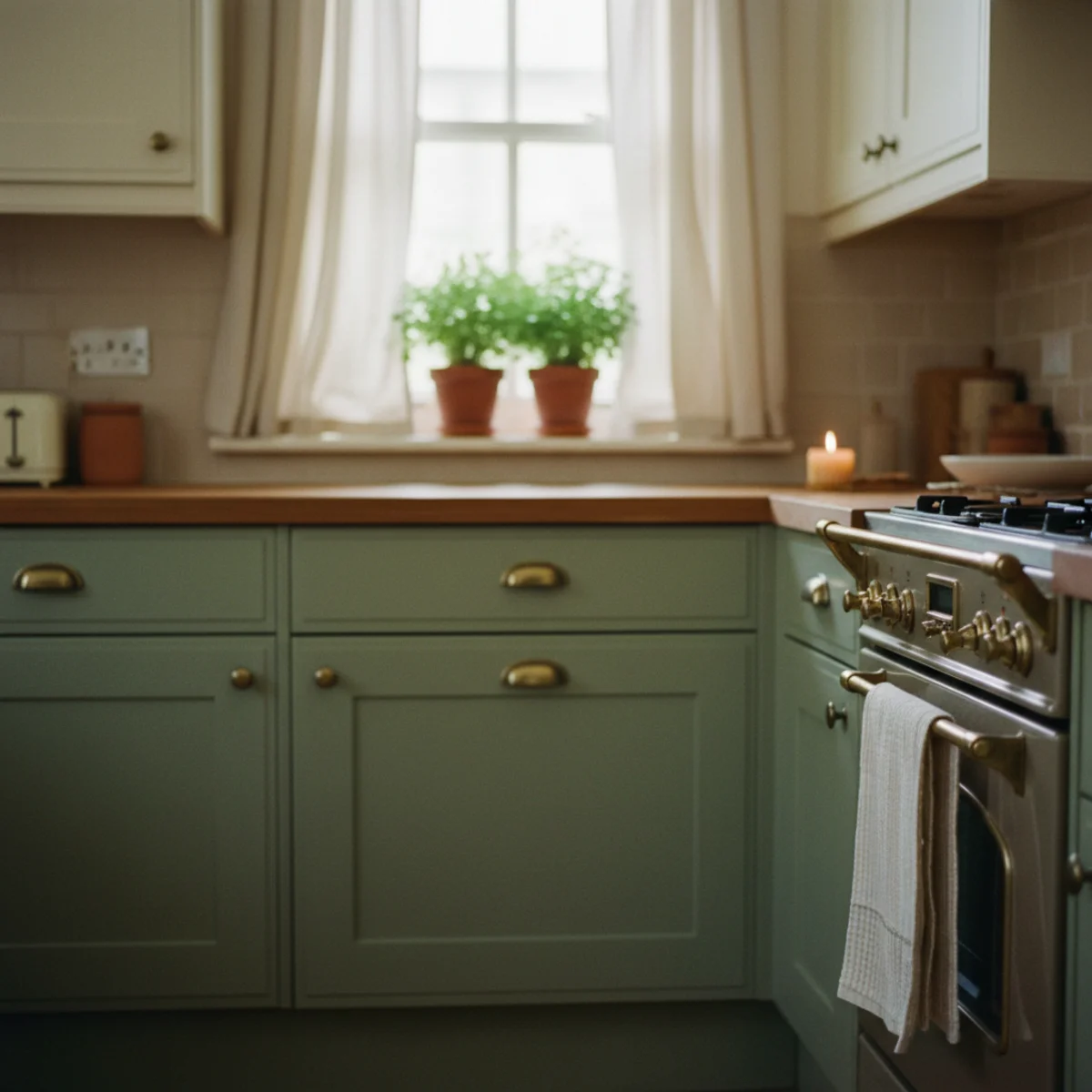
Sage painted kitchen cabinets are the highest-commitment sage application and the most-transformative — a kitchen with sage lower cabinets (or all cabinets) with brass hardware reads as warm, considered, and timeless in a way that white cabinets specifically miss. Best shades: Farrow & Ball Mizzle 266, Benjamin Moore Saybrook Sage HC-114, Sherwin Williams Sage SW 2860.
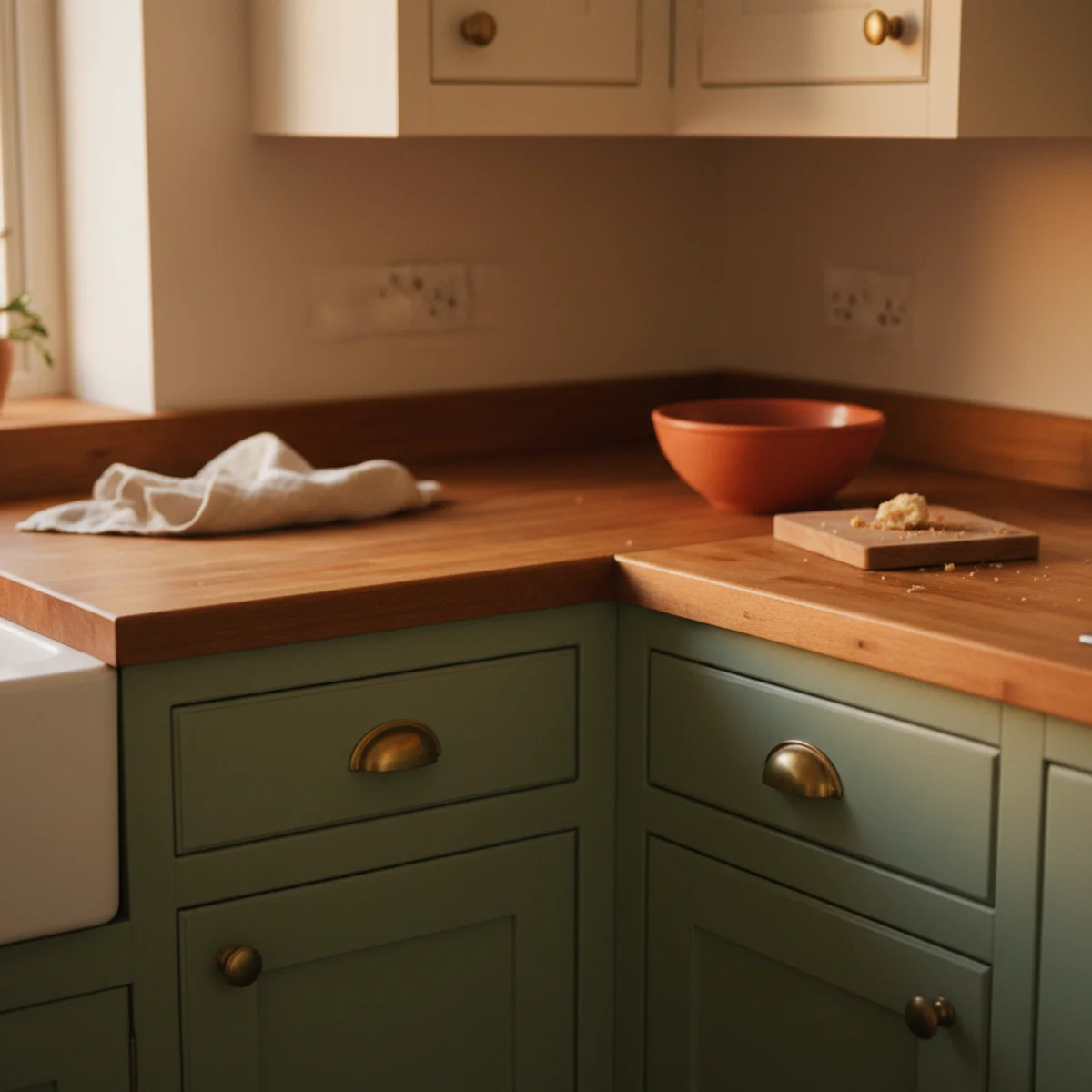
Sage kitchen cabinet specifications: SHADE SELECTION — F&B MIZZLE 266 (soft warm sage with subtle grey-green undertone, classic kitchen cabinet choice) at $115-130 per gallon, BM SAYBROOK SAGE HC-114 (slightly warmer, more accessible at $75-90 per gallon), SW SAGE SW 2860 ($80-95 per gallon). AVOID — generic 'sage' from budget paint lines, green-yellow sage that reads olive-military, overly-blue sage that reads seafoam. CABINET PREP — clean all cabinet surfaces with TSP cleaner ($8-12), lightly sand with 120-grit, prime with quality bonding primer ($15-25 per quart). PAINT TYPE — semi-gloss or satin for kitchen cabinets specifically (easier to clean than eggshell or matte). HARDWARE UPGRADE — replace existing hardware with aged brass or unlacquered brass ($4-15 per knob, $8-25 per pull from House of Antique Hardware, Rejuvenation, or Schoolhouse). The sage-and-brass combination is the signature; chrome or stainless hardware fights the sage. UPPER CABINETS — option: keep upper cabinets in warm cream (BM White Dove OC-17) while painting lower cabinets in sage. The two-tone approach lightens the kitchen while still delivering sage warmth. COUNTERTOPS — sage cabinets pair best with warm stone countertops (butcher block, warm marble, quartzite with warm veining) rather than cool white quartz. TOTAL COST — labor intensive DIY project (1-2 weekends) at $200-500 in materials, or professional painter at $1,500-4,000.
AFFILIATE SLOTAPPLICATIONF&B Mizzle 266, BM Saybrook Sage HC-114, or SW Sage SW 2860; semi-gloss finish; aged brass hardware; warm stone countertopsAdd affiliate URL when configuredWhy it works
Because white kitchen cabinets require perfect maintenance to read well — any yellowing, scuffing, or grime reads as 'grimy white' where sage cabinets with wear develop patina rather than grime. Sage also doesn't show the cooking splatters and everyday kitchen use marks that white shows dramatically. The warm character of sage also doesn't shift with changing home style trends the way that pure white does (current-white reads differently across decades); warm sage has decades of precedent in traditional farmhouse and European kitchen design that makes it read timeless rather than trend-specific.
Pro tip — Paint one cabinet door first and live with it for one week before committing to the full kitchen — the single-door test at $5-10 in paint and primer reveals whether the specific sage reads correctly in your kitchen's lighting under both daylight and evening artificial light before you commit to the full project.
F&B Mizzle 266 lower cabinets with aged brass pulls and butcher block — sage kitchen aging better than white. See also: warm-paint-colors
02A Single Sage Accent Wall
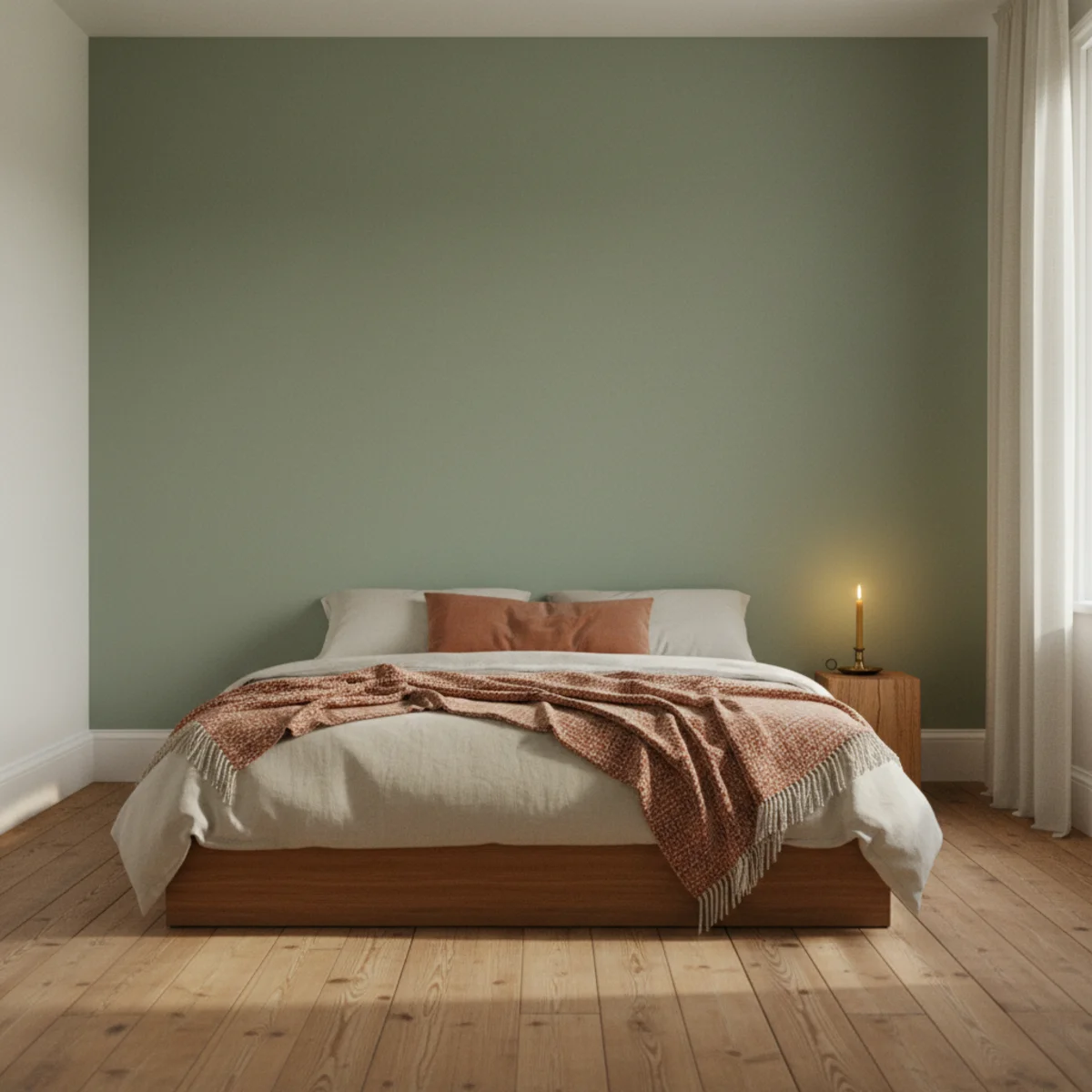
A single sage accent wall (behind the bed, behind the sofa, or at a dining room feature wall) delivers the sage-green character in a lower-commitment application than full-room sage. The accent wall reads more impactful with surrounding cream or warm white walls and warm lighting at 2700K. Best shades: Farrow & Ball Cromarty 285, Benjamin Moore Saybrook Sage HC-114.
Sage accent wall specifications: WALL SELECTION — the wall that gets the most natural light OR the wall behind the room's primary furniture piece (bed, sofa, dining table). The primary furniture position is the most-viewed wall; the sage accent there dominates the room's visual register without overwhelming. SHADE — F&B CROMARTY 285 (soft warm sage with slight grey-blue undertone, the most-designer-referenced sage) at $115-130 per gallon, BM SAYBROOK SAGE HC-114 at $75-90 per gallon. SURROUNDING WALLS — warm cream (BM White Dove OC-17 or F&B Pointing 2003) — the contrast between sage accent and cream surrounding walls is what makes both read properly. LIGHTING — multiple warm 2700K sources (table lamps, wall sconces, no cool overhead during evening). Cool overhead light flattens sage to grey-green; warm 2700K light brings out the sage's warm undertones. WHAT TO HANG ON THE ACCENT WALL — sage accent walls work best with warm-toned art: brass-framed pieces, vintage botanical prints, warm-toned oil paintings. Cool or bright-colored art fights the sage. Leaving the sage wall partially empty (with one statement piece rather than gallery wall) maximizes the color's impact.
AFFILIATE SLOTAPPLICATIONF&B Cromarty 285 or BM Saybrook Sage HC-114; behind primary furniture piece; surrounding walls in warm cream; warm 2700K lightingAdd affiliate URL when configuredWhy it works
Because most rooms have one dominant visual wall (the wall you see when you enter, or the wall behind the primary furniture) and that wall carries most of the color impact. Painting only that wall in sage delivers 70-80% of the full-room sage impact at 25% of the commitment (one wall versus four). For households unsure of full-room sage, the accent wall is the right test: if it feels too much, the three surrounding walls bring it back; if it feels right, future full-room application is confirmed.
Pro tip — Paint the accent wall one shade darker than your primary sage choice for the maximum architectural impact — if the room's primary sage would be F&B Cromarty 285, consider F&B Mizzle 266 (slightly deeper) for the accent wall. The deeper shade creates a receding effect that makes the wall read as if it's behind the room's primary furniture, adding architectural depth.
F&B Cromarty 285 accent wall behind bed with cream surrounds — single wall delivering 70-80% of full-room sage impact. See also: master-bedroom-ideas
03Sage Linen Bedding
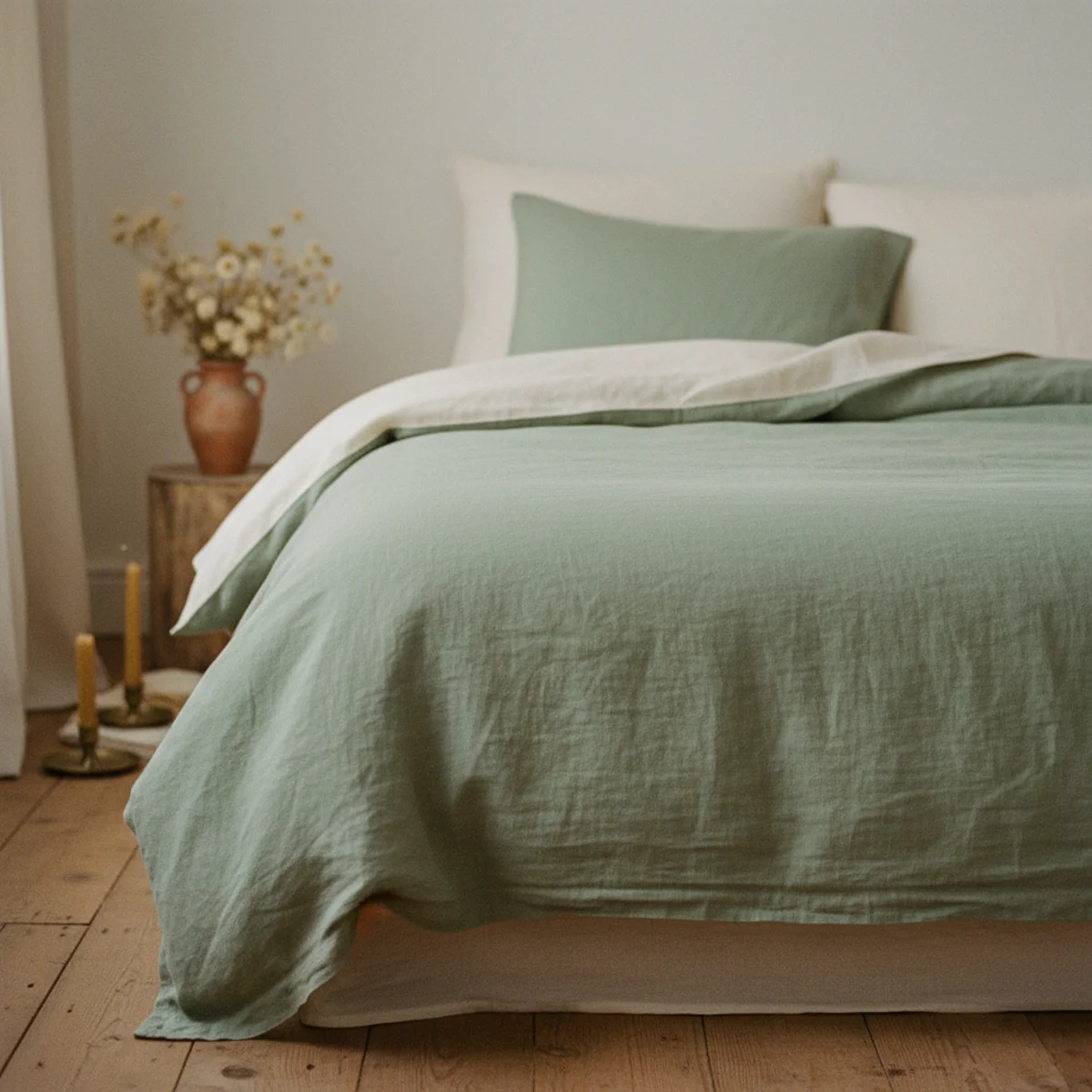
Sage linen bedding is the lowest-commitment entry point for sage in the home — a sage duvet cover or sage pillowcases within a cream-and-oat bedding mix adds the sage character without any permanent commitment. Sage linen also ages beautifully (the color develops into softer muted sage as the linen softens across washes). Best sources: Quince, Magic Linen, Coyuchi at $60-200 per piece.
Sage linen bedding specifications: SHADE — look for 'sage,' 'muted sage,' 'sage green,' 'eucalyptus,' or 'green tea' in linen bedding lines. The washed linen dyeing process naturally produces the muted sage tone (brighter than desired when new, softening to right sage with washing). BRANDS AND PRICES — QUINCE Washed Linen at $60-100 per duvet cover, sage colorway often available ($80-120), MAGIC LINEN at $80-150 per duvet cover with sage option, COYUCHI at $200-300 per duvet cover with earth-tone sage, BROOKLINEN at $200-280 per duvet cover, PARACHUTE at $150-250 per duvet cover. WASH BEFORE USE — wash sage linen 2-3 times before first use; the sage deepens slightly and softens. MIX-AND-MATCH APPROACH — sage duvet cover with cream fitted and flat sheets (per best-linen-bedding mix strategy). The sage-and-cream mix is more interesting than all-sage. ADD TERRACOTTA OR WARM RUST ACCENT — one terracotta or warm rust pillowcase adds the sage-terracotta complementary color relationship that makes warm sage bedrooms feel especially rich. PAIRED MATERIALS — brass lamps and hardware near the bed, warm wood bed frame, warm wood or brass-handled nightstands.
AFFILIATE SLOTAPPLICATIONSage washed linen duvet cover from Quince ($80-120), Magic Linen ($80-150), Coyuchi ($200-300); paired with cream sheets and terracotta pillow accentAdd affiliate URL when configuredWhy it works
Because linen bedding is removable and replaceable — if the sage doesn't work in your bedroom, you change the duvet cover. Unlike sage-painted walls or sage cabinets, sage bedding is a $80-200 experiment with zero commitment beyond a reversible textile purchase. The bed is also the visual anchor of the bedroom, so sage bedding delivers significant room-level color impact while remaining technically movable. The sage-linen combination also specifically benefits from the linen's textural character — the slubby washed-linen surface reads warmer in sage than any smooth fabric would.
Pro tip — Order sage linen bedding samples from Coyuchi or Magic Linen before committing to the duvet cover — both brands offer fabric swatches ($5-10) that let you confirm the sage shade in your bedroom's specific lighting before purchasing the full-price item. The bedroom's light strongly affects how sage reads; the swatch test prevents the wrong-shade disappointment.
Sage duvet, cream sheets, terracotta pillow — mix-and-match combination with linen's natural warmth. See also: best-linen-bedding
04Sage and Brass Together
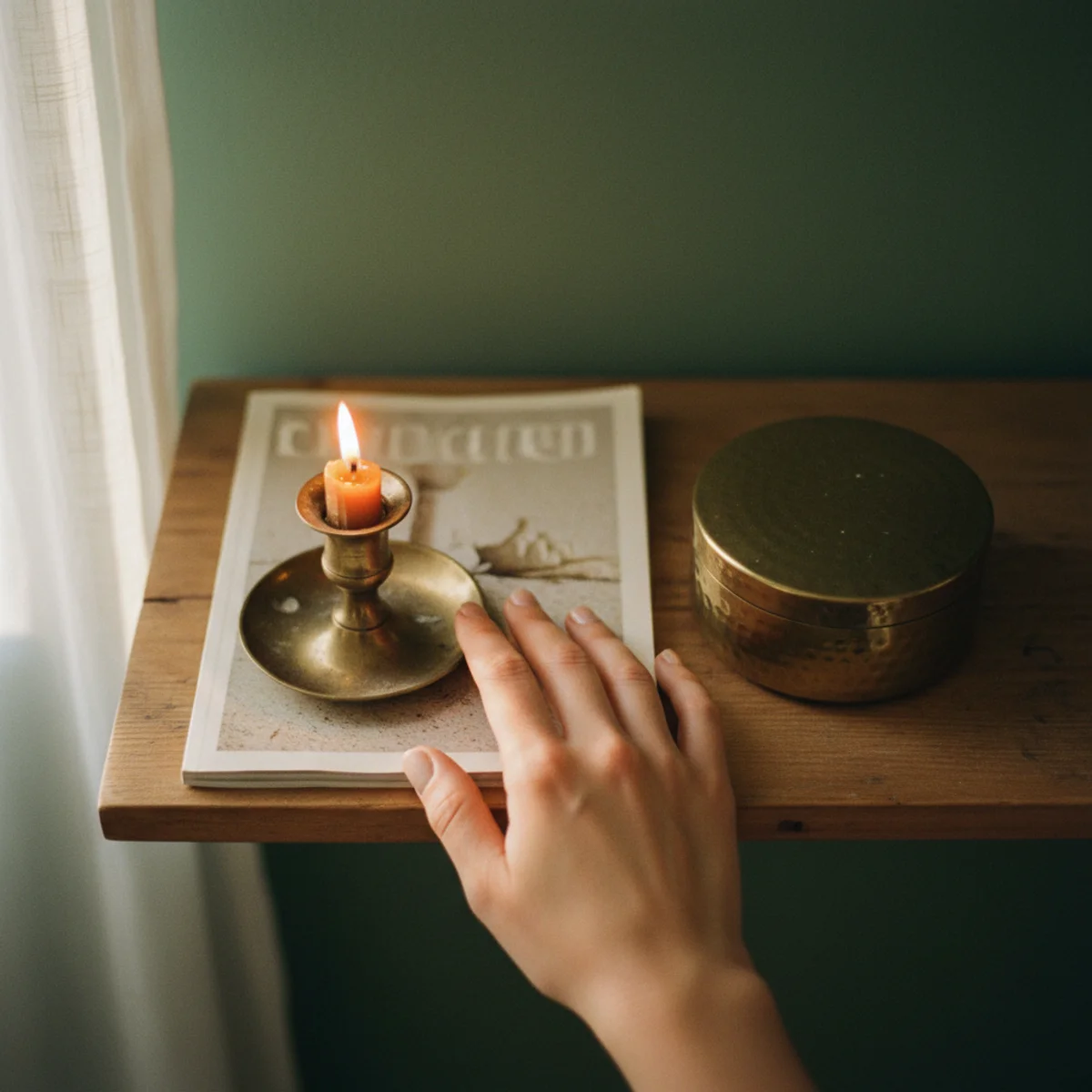
The most-reliable sage decor pairing is sage-and-brass — the warm gold of aged brass (candlesticks, lamp bases, hardware, cabinet pulls) against sage green creates the warm-natural palette that makes sage read as collected and warm rather than as cool or trendy. The pairing works in any room and at any scale of sage application.
Sage and brass pairing applications: CABINET HARDWARE — aged brass or unlacquered brass knobs and pulls on sage-painted cabinets or furniture ($4-15 per knob, $8-25 per pull from House of Antique Hardware, Rejuvenation, or Schoolhouse). The hardware choice is the single most-impactful finishing decision for sage cabinet projects. TABLE LAMPS WITH BRASS BASES — ceramic table lamps with brass base detailing or solid aged brass bases on sage-adjacent surfaces. BRASS CANDLESTICKS — vintage brass candlestick cluster (per candle-styling and mantel principles) in sage-painted rooms. PICTURE FRAMES in aged brass or gilded-brass around art on sage walls. BRASS FAUCETS AND FIXTURES in sage-tiled bathrooms. BRASS-TRIMMED FURNITURE — brass-footed chairs, brass-detail coffee tables. THE PAIRING RULE — only aged, unlacquered, or antique brass works with sage. Bright polished brass and chrome fight sage; aged brass supports it. The patina is what makes brass warm enough to pair with the green-grey of sage. Modern gold (high-gloss, yellow-gold) also fights sage.
AFFILIATE SLOTPAIRINGAged or unlacquered brass hardware, lamps, candlesticks, picture frames, and faucets paired with sage — NOT bright polished or chromeAdd affiliate URL when configuredWhy it works
Because aged brass and sage green are complementary in the sense of temperature balance — sage is slightly cool (the grey-green character), aged brass is warm (the oxidized gold character), and the two together create the warm-cool balance that neither achieves alone. Sage with chrome is cool-and-cool (reinforcing rather than balancing); sage with aged brass is cool-and-warm (balancing and enriching). The specific aged character of vintage brass also adds the collected-warm aesthetic that new polished hardware lacks.
Pro tip — Convert existing chrome or nickel hardware to aged brass with Rust-Oleum Aged Brass spray paint ($10-12 per can) before investing in replacement hardware — the spray conversion takes 20 minutes and produces an acceptable aged-brass result that lets you test the sage-and-brass pairing before committing $200-400 to new hardware.
Unlacquered brass pulls on sage dresser — the warm-and-cool balance that makes sage read collected. See also: warm-paint-colors
05A Sage Velvet Cushion
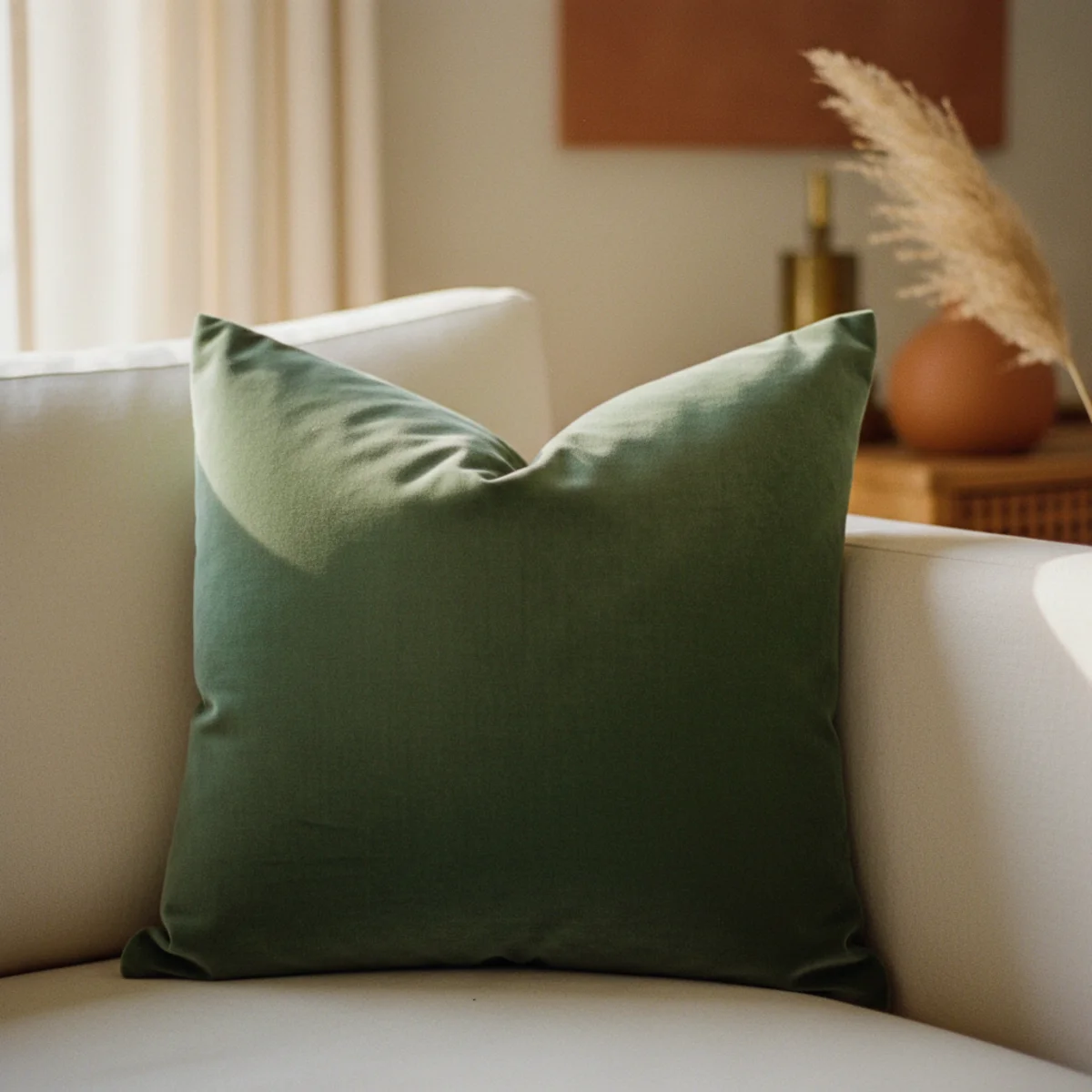
A single sage velvet cushion among cream and oat linen cushions on a sofa or bed is the lowest-cost, fastest sage accent application — no paint, no construction, no long-term commitment. The velvet texture specifically makes sage read richer and more luxurious than the same color in plain cotton or linen. Cost: $25-80 per cushion.
Sage velvet cushion specifications: SHADE — sage in velvet looks slightly different than sage in linen (velvet pile deepens the color; the sage reads richer and slightly more saturated than equivalent linen). Look for muted sage rather than bright green in velvet applications since the pile saturation will intensify slightly. BRANDS — ANTHROPOLOGIE has reliable sage velvet ($48-68 each), CB2 at $50-80 each, H&M HOME at $20-35 (budget option), Etsy artisans at $30-60 (various sage and eucalyptus velvet options). SIZE — 18x18 or 20x20 inches for standard accent cushion. 12x24 for lumbar option. FILLING — down alternative insert sized 2 inches larger than cover for full plump appearance. POSITIONING — one sage velvet cushion among 3-4 cream or oat cushions on the sofa, OR one among cream bedding pillows. The sage stands out precisely because it's the exception. SEASON-APPROPRIATE — sage velvet reads especially right in autumn and winter (velvet is a seasonally-appropriate rich texture), slightly overdressed for summer (swap to sage linen for warmer months). PAIRED TEXTILES — sage velvet pairs best with cream linen (smooth-and-nubby contrast per textile layering principles), chunky knit oat throw, natural fiber area rug.
AFFILIATE SLOTAPPLICATIONSingle sage velvet cushion 18x18 or 20x20 among cream linen cushions from Anthropologie ($48-68), CB2 ($50-80), or H&M HOME ($20-35)Add affiliate URL when configuredWhy it works
Because velvet pile absorbs and reflects light differently at different viewing angles — the pile creates shimmer and depth in the sage color that flat-woven fabrics (linen, cotton) don't have. Looking at velvet from different angles produces slightly different color readings (darker when viewed with pile, lighter when against pile) which gives the color visual richness. The same sage in flat linen reads one-dimensional; in velvet it reads multi-dimensional. The richness makes a single sage velvet accent stand out more than three sage linen cushions would.
Pro tip — Brush velvet cushions with a soft-bristle clothing brush in the pile direction every few weeks — velvet pile can flatten in sitting areas, and regular brushing maintains the pile's depth and color richness. A 30-second weekly brush extends the velvet cushion's visual life significantly.
Single sage velvet among cream linen — pile depth making one cushion read richer than three flat-fabric would. See also: throw-blanket-layering
06Sage on a Built-In or Bookcase
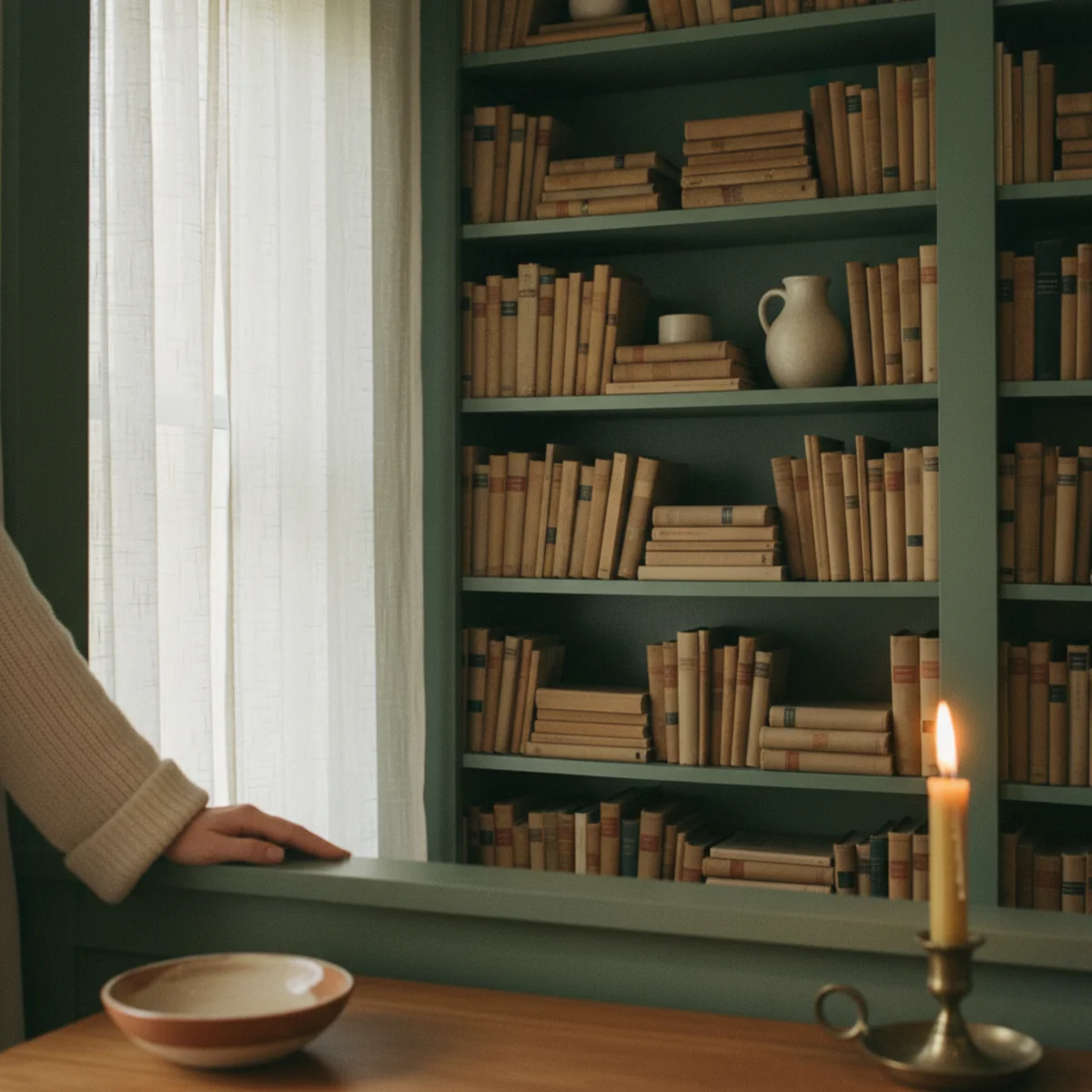
Painting a built-in bookcase, shelving unit, or recessed alcove in sage creates the popular 'painted interior' effect — the back wall of the bookcase in sage against the room's cream or white walls draws the eye inward and makes the bookcase contents read as curated display. Best shade for bookcase interiors: Farrow & Ball Cromarty 285 or Benjamin Moore Saybrook Sage HC-114.
Sage bookcase application process: TARGET SURFACES — built-in bookcase backs (the wall surface behind the shelves), freestanding open bookcase back panel, recessed alcove walls, built-in cabinet interiors. PAINT PREP — clean surface, sand lightly, prime if switching from white to sage (one coat of tinted primer at approximately the same color). SHADE — F&B CROMARTY 285 or BM SAYBROOK SAGE HC-114 for the back panel; same shade OR one step lighter for the bookcase frame itself (matching both creates unified sage, frame-lighter-than-back creates depth effect). PAINT TYPE — eggshell for bookcase interiors (easier to clean than matte while less reflective than semi-gloss). DIY TIME — 2-4 hours for a standard bookcase back, more for built-in systems. TOTAL COST — $40-80 for a single bookcase application. STYLING ON SAGE BOOKCASE — objects on sage shelves are strongly enhanced by brass and warm wood elements (the sage background makes the brass pop). Add vintage brass bookends, brass-framed photos, warm wood decorative objects. Books with cream or warm-toned spines read particularly well against sage backgrounds. FREESTANDING BOOKCASES — IKEA BILLY with sage-painted back panel (available pre-painted or DIY) is the most-common application; adds significant visual value to an otherwise plain shelf.
AFFILIATE SLOTAPPLICATIONF&B Cromarty 285 or BM Saybrook Sage HC-114 on bookcase back panels, built-in alcoves, or recessed cabinet interiors; eggshell finishAdd affiliate URL when configuredWhy it works
Because the bookcase back panel is a bounded surface (framed by the bookcase's own structure) that can handle a saturated or committed color that the room's open walls might not. The architectural framing lets the sage read as intentional accent rather than as dominant color. The same sage that would be 'too much' on all four walls of a small room reads as just right within the defined bookcase boundary. The objects on the shelves also gain visual definition when photographed or viewed against the sage background — the color creates backdrop that makes each object read more clearly.
Pro tip — Paint the bookcase back panel BEFORE filling the shelves — remove all books and objects, paint the back, let dry completely (24-48 hours), then re-fill. Attempting to paint around existing shelf contents produces inevitable drips and uneven edges. The full clear-and-paint approach, though more effort, produces dramatically better results.
Sage-painted bookcase back panel — bounded color making objects read distinctly and dramatically. See also: shelf-styling-ideas
07Sage Tile in a Bathroom
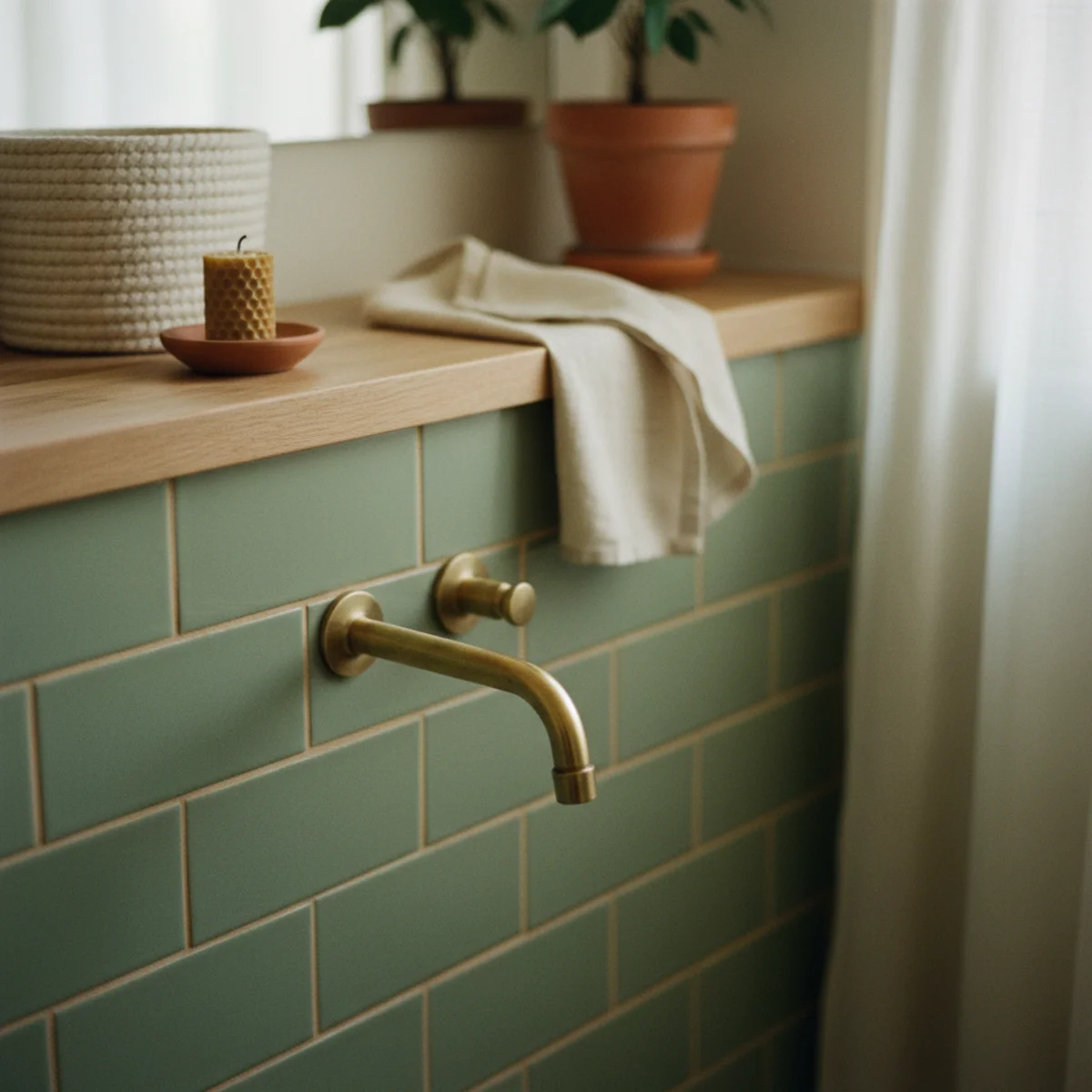
Sage green tile in a bathroom — whether subway tile on all walls, Zellige tile for texture, or small hexagon floor tile — creates warm botanical-spa atmosphere that neither white nor grey tile can match. Sage tile ages particularly well in bathrooms because the color's grey-green character complements the natural patina of brass fixtures. Cost: $3-15 per square foot for standard sage subway tile.
Sage bathroom tile specifications: TILE TYPES — SUBWAY TILE in sage glaze at $3-8 per square foot (Home Depot, Tile Shop, Ann Sacks for premium). ZELLIGE TILE (handmade Moroccan terracotta with sage glaze, irregular surface texture) at $10-30 per square foot from specialty retailers — the irregular surface and slight color variation across tiles is the defining quality. HEXAGON FLOOR TILE in sage at $5-15 per square foot. TILE SIZE CHOICE — standard subway 3x6 is reliable, longer subway 3x12 or 4x12 reads more modern, small hexagon 1-inch or 2-inch reads more detailed. GROUT COLOR — warm cream or warm grey (NOT bright white or cool grey). The grout color significantly affects the final tile reading; warm cream grout with sage tile reads more organic and warm, cool white grout reads more clinical. FIXTURE PAIRING — brass faucets and shower fixtures mandatory for warm reading (per sage-and-brass rule). COMPLEMENT COLORS — cream or warm white walls above sage tile (wainscot application), warm wood vanity or accessories, natural stone countertop. ZELLIGE SPECIFICALLY — the handmade irregular surface of Zellige tile produces the most-warm and characterful sage bathroom application, but installation requires experienced tile setter (not DIY for most households) and full material costs $2,000-6,000 for a typical bathroom.
AFFILIATE SLOTAPPLICATIONSage subway tile ($3-8 per sq ft) or Zellige tile ($10-30 per sq ft) with warm cream grout and brass fixtures; small or standard scaleAdd affiliate URL when configuredWhy it works
Because bathroom tile is a bounded surface (walls and floor of a specific room) that handles saturated committed color better than the open walls of larger rooms. The smaller scale of bathrooms also means the sage tile creates immersive botanical-spa character that would feel overwhelming in a large room. The tile material itself (hard, water-resistant surface) also ages sage differently than painted walls — tile sage develops patina slowly and evenly across decades, where painted sage requires maintenance. Sage tile in a bathroom is a 20-year decision that consistently reads well across that time.
Pro tip — Order sage tile samples (usually $2-5 per sample tile) and place in the actual bathroom under both natural light and artificial light before ordering the full tile quantity — sage reads very differently in bathroom conditions (high humidity, combination of natural and artificial light) than in tile showrooms under commercial lighting.
Sage subway tile with cream grout and brass faucet — botanical spa atmosphere in a bounded space. See also: warm-paint-colors
08A Sage Front Door
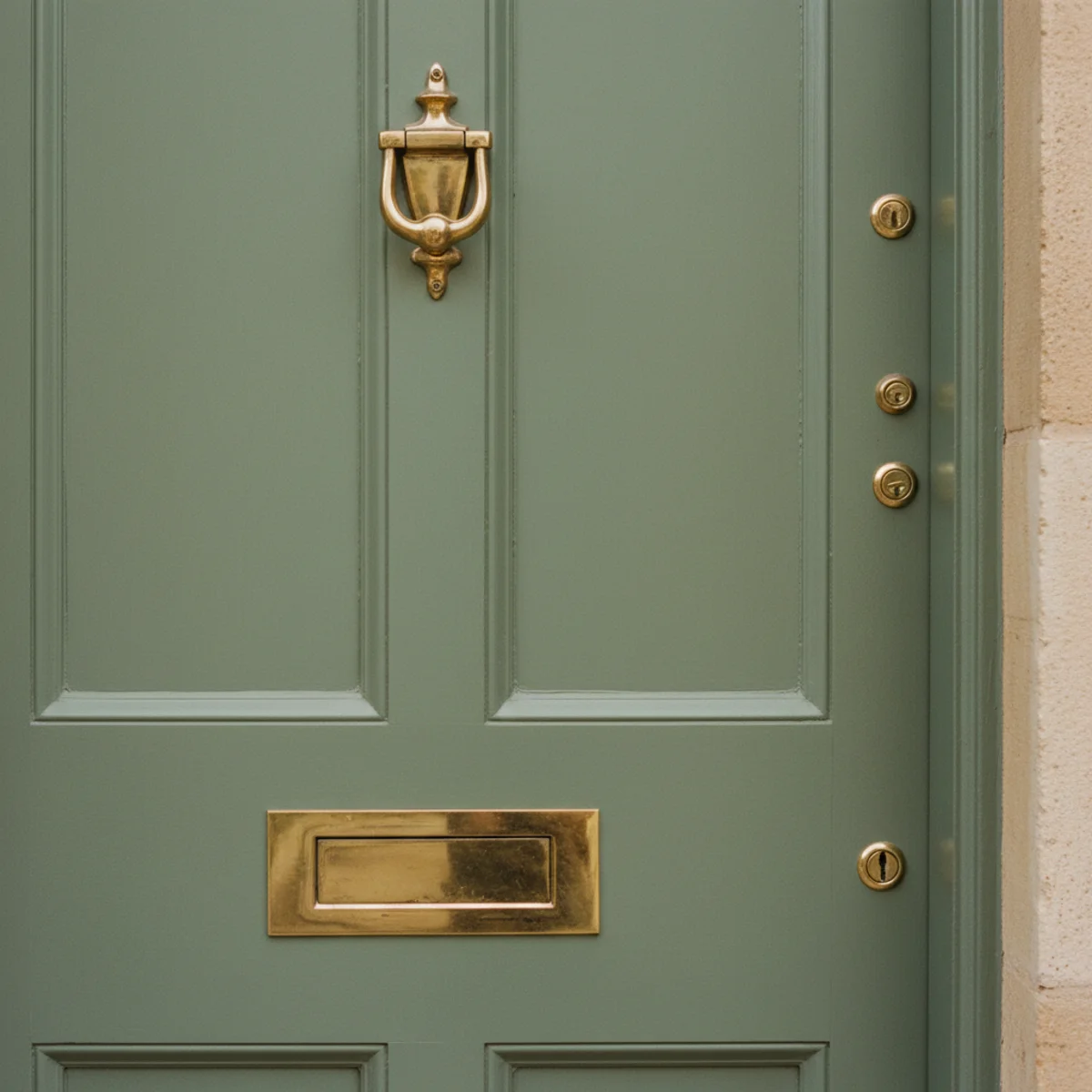
A sage-painted front door is the most-visible exterior sage application — it reads from the street, creates the first warm impression, and requires only one door's worth of paint. Best exterior sage shades: Farrow & Ball Mizzle 266, Benjamin Moore Salamander 2050-20, Sherwin Williams Rosemary SW 6187.
Sage front door specifications: SHADE — for EXTERIOR APPLICATION, choose slightly deeper sage than interior shades (exterior fades in sun; deeper shade holds better over time): F&B MIZZLE 266 at $115-130 per gallon (1 gallon covers multiple doors), BM SALAMANDER 2050-20 (deep warm sage for exterior use) at $75-90 per gallon, SW ROSEMARY SW 6187 (warm olive-sage for exterior) at $80-95 per gallon. PAINT TYPE — 100% acrylic exterior semi-gloss or gloss for front door specifically (handles UV exposure, cleaning, and hardware contact better than interior paints). HARDWARE — aged brass door knocker, aged brass house numbers, aged brass door lever or knob ($30-150 per piece from Rejuvenation, House of Antique Hardware, or Etsy). PREP — clean door thoroughly, sand any peeling or rough areas, prime if switching from dark to light or light to dark color. FRONT DOOR PAINTING TECHNIQUE — remove door from hinges if possible for easiest painting (paint on sawhorses), OR paint in place with car detailing tape protecting the glass and hardware. Two coats minimum for full color depth. CURB APPEAL — sage front door works best with neutral exterior (cream, white, grey, brown, warm stone) rather than with an already-colorful exterior. The sage door should be the color statement against a neutral backdrop.
AFFILIATE SLOTAPPLICATIONF&B Mizzle 266, BM Salamander 2050-20, or SW Rosemary SW 6187; exterior semi-gloss; aged brass hardware; cream door frameAdd affiliate URL when configuredWhy it works
Because sage has the right color character for exterior doors specifically — the grey-green reads as sophisticated and botanical rather than as aggressive or trendy, it complements brick, stone, wood siding, and stucco exteriors equally, and it ages well in exterior conditions (the inevitable slight fading of exterior paint over years reads as patina on sage rather than as deterioration). A sage door also creates warm welcoming character from the street that white or dark doors don't provide — it signals 'a household with personality lives here' without being aggressively unusual.
Pro tip — Paint the door frame (the exterior door casing) in a warm cream (one shade lighter than the door) while painting the door in sage — the cream frame with sage door creates a composed exterior vignette that single-door painting without frame treatment doesn't achieve. The total additional painting cost is minimal; the visual improvement is significant.
F&B Mizzle 266 front door with brass knocker — botanical warmth visible from the street. See also: entryway-decor
09Sage Curtains in Linen
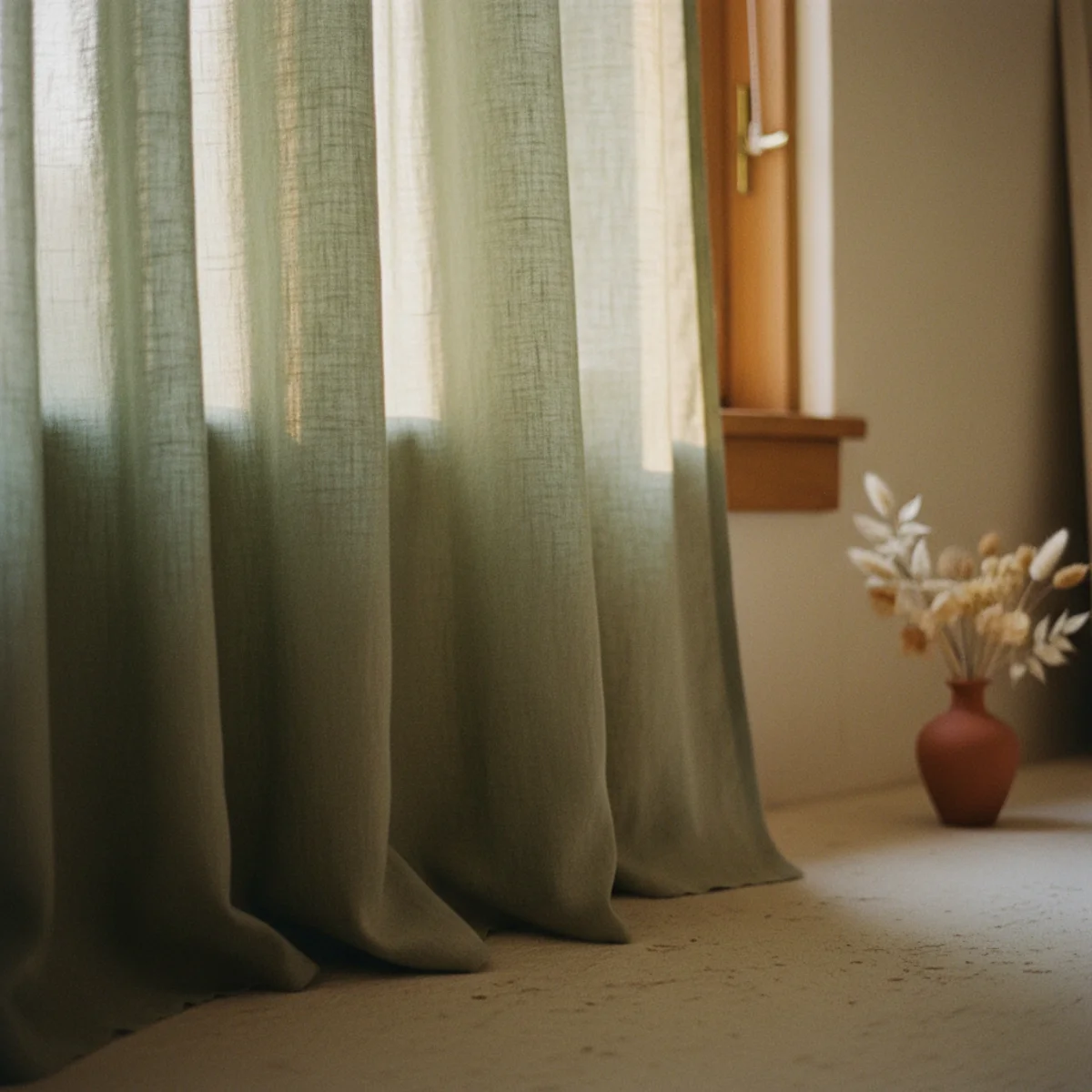
Sage linen curtain panels hung ceiling-to-floor add significant room-level color character without requiring paint — the soft fabric movement and natural linen texture creates warmth that paint can't provide. Sage linen curtains work especially well in living rooms and bedrooms with warm wood floors and cream walls. Cost: $50-150 per panel from Quince, H&M HOME, or Etsy artisans.
Sage linen curtain specifications: FABRIC — 100% linen or linen-cotton blend in sage or eucalyptus. Washed linen drapes better and reads warmer than crisp linen. SHADE — look for muted sage or eucalyptus rather than bright green. Many linen curtain lines offer 'natural,' 'sage,' or 'green tea' in the muted-warm register. BRANDS AND PRICES — QUINCE linen curtain panels at $60-80 each (excellent quality-to-price), H&M HOME linen panels at $30-50 each (budget option), ETSY ARTISAN LINEN CURTAINS at $80-200 each for custom-sized and more refined options, SCHOOLHOUSE at $150-300 each for premium. DIMENSIONS — ceiling-to-floor panels (measure from ceiling to 1/2 inch above floor) for maximum visual height. Width: 1.5 to 2x the window width per panel for appropriate fullness. HANGING — simple ring-clip curtain rings on a brass curtain rod (1-inch diameter brass rod at $20-60 for 4-8 foot length). High mounting (4-8 inches below ceiling) makes windows appear taller. PAIRING — sage linen curtains read best against cream or warm white walls, with warm wood floors, and with brass hardware throughout. Sage curtains on cool grey walls fight rather than support. LIGHT BEHAVIOR — linen curtains in sage filter light to a warm olive-green tone during daylight, which adds warm character to the room throughout the day.
AFFILIATE SLOTAPPLICATIONSage washed linen panels ceiling-to-floor from Quince ($60-80), H&M HOME ($30-50), Etsy artisans ($80-200); brass rod with ring clipsAdd affiliate URL when configuredWhy it works
Because linen's natural slubby texture reads warm in a way that synthetic fabrics specifically don't — the visible irregularity of natural linen fiber, the slight drape variations of a hand-finished hem, the way washed linen develops character with each wash. The same sage color in polyester curtains reads as commercial; in natural linen it reads as considered. The light-filtering character of linen also matters — the warm olive-green filtered light that natural linen produces during daylight adds atmospheric warmth to the room throughout the day.
Pro tip — Buy linen curtain panels in a slightly-longer-than-needed length and allow them to puddle 1-2 inches on the floor — the slight puddle at the floor reads as luxuriously generous rather than as purchased-too-long. The puddle also means you don't need precise hemming, which saves sewing time or hemming cost.
Sage linen panels ceiling-to-floor — soft fabric warmth and warm olive-green light filtering through linen. See also: cozy-living-room-ideas
10Sage With Warm Wood
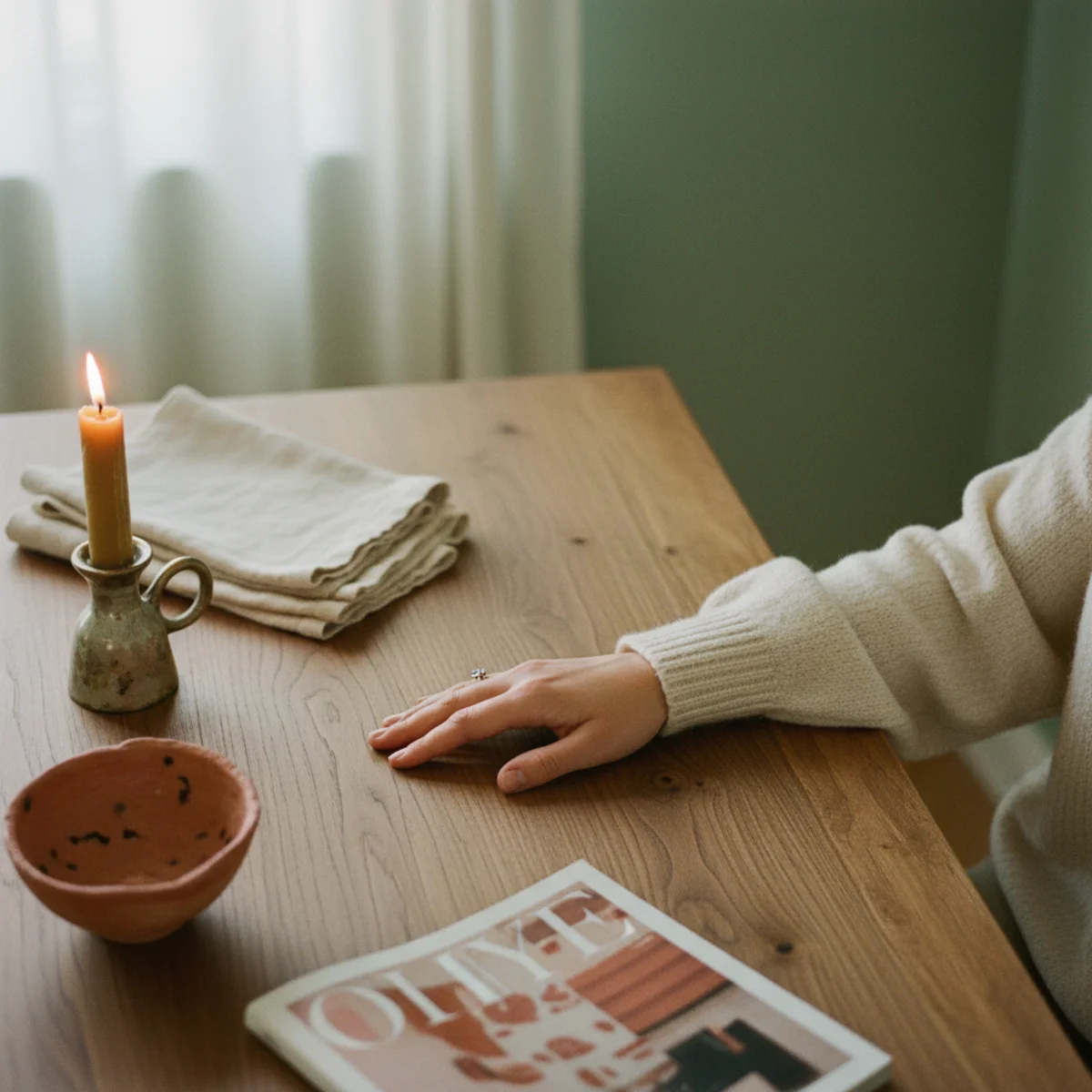
The sage-and-warm-wood combination is the most-reliable sage decor pairing after sage-and-brass — warm honey oak, walnut, or teak against sage walls or sage objects creates the natural-warm palette that makes sage feel genuinely warm rather than cool-modern. The pairing is as historically grounded as sage-and-brass: Scandinavian and Japanese interior traditions both combine natural wood tones with muted greens.
Sage and warm wood pairing applications: SAGE WALLS + WARM OAK FLOORS — natural honey oak or light oak flooring against sage walls creates the Scandinavian warm-natural palette. The grain of the wood adds texture against the flat sage. SAGE CABINETS + BUTCHER BLOCK — sage kitchen cabinets with butcher block countertop (warm blonde wood) is the classic combination. SAGE FURNITURE + WARM WOOD ACCESSORIES — sage-painted furniture (dresser, bookcase) with warm wood decorative accessories on top (wooden bowls, cutting boards, wood-handled objects). SAGE WALLS + WALNUT FURNITURE — mid-century walnut furniture against sage-green walls is one of the signature vintage-modern interior combinations. WOOD TONES THAT WORK — warm honey oak, warm walnut, warm teak, oiled pine with visible grain, warm mahogany. WOOD TONES TO AVOID — grey-washed or grey-stained wood (too cool for sage's warm-natural register), high-gloss varnished wood (reads commercial), very dark ebonized wood (fights rather than complements). THE PAIRING PRINCIPLE — both sage and warm wood are natural materials in the warm-natural family. The pairing reinforces the natural-material aesthetic that both individually signal.
AFFILIATE SLOTPAIRINGSage walls or cabinets + warm honey oak OR walnut OR teak OR oiled pine; avoid grey-washed wood or high-gloss varnished woodAdd affiliate URL when configuredWhy it works
Because both are natural-material colors existing in the warm-natural part of the spectrum — sage occupies the warm grey-green range that forest foliage occupies in nature, warm wood occupies the honey-gold range that sunlit wood occupies in nature. The brain reads the combination as 'natural materials from the same ecosystem' which produces the same warm-organic feeling that actual forests produce in the people who walk through them. The combination also works because warm wood's yellow-orange character provides the complementary warmth that balances sage's cool-grey character, similar to how aged brass works — but at larger scale and with more texture.
Pro tip — Warm wood floors with grey or cool-grey stain fight sage significantly — if your floors are grey-stained rather than natural warm wood, consider either over-staining to a warmer tone (if floor condition allows) or using area rugs in warm tones to create warm wood visual anchors within the sage rooms.
Sage walls with warm oak floors and walnut credenza — natural materials from the same warm-natural spectrum. See also: scandinavian-living-room
11A Sage-Painted Dresser
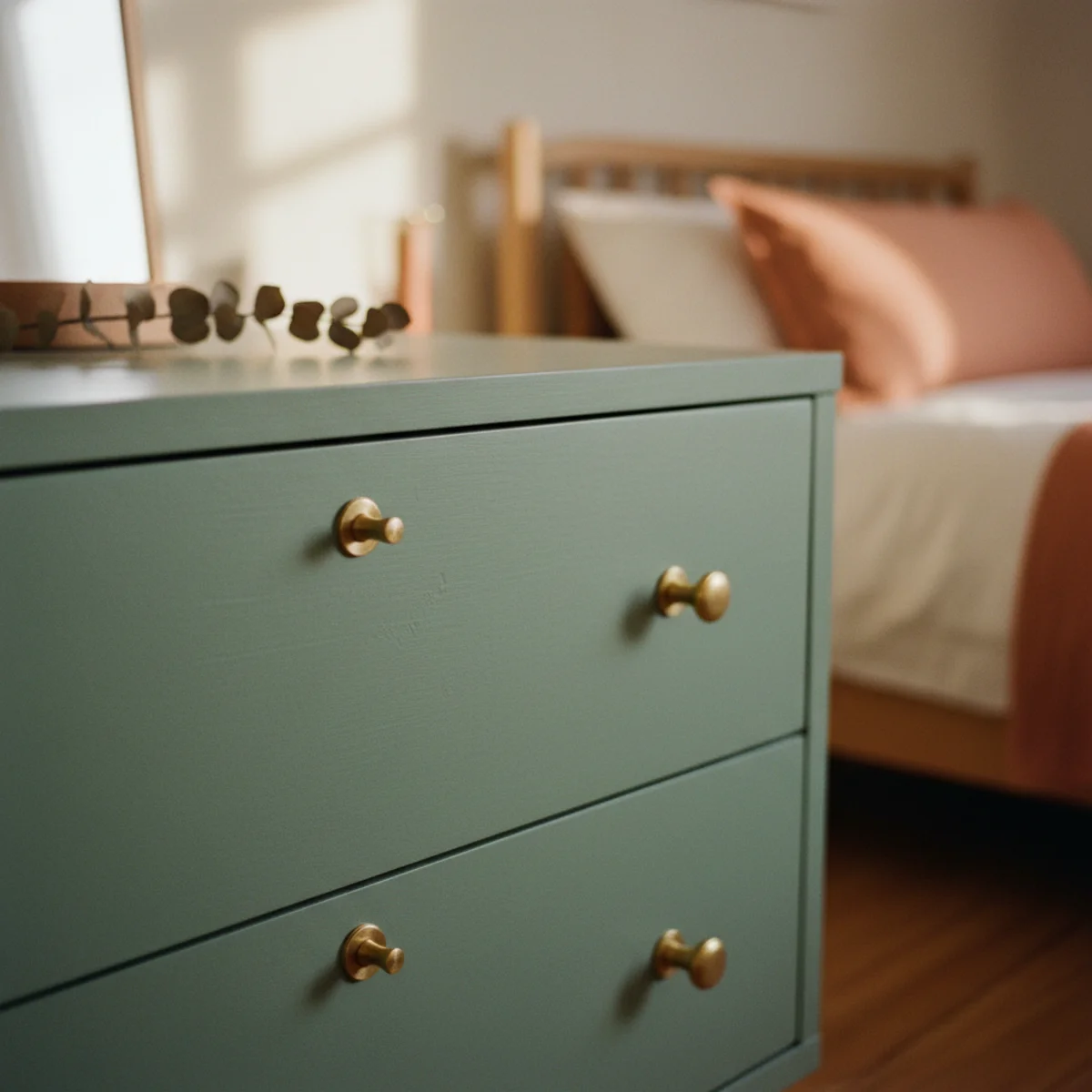
Painting a vintage or thrifted dresser in sage is one of the most-satisfying single-piece furniture transformations — the paint preserves the dresser's character while adding sage's warm-natural color, and the painted surface reads significantly more interesting than either bare wood or white-painted versions. Cost: $15-60 in paint plus the dresser ($50-200 thrifted).
Sage dresser painting process: DRESSER SOURCING — solid wood dresser from estate sales, Marketplace, thrift stores at $50-200. Look for intact drawer construction and good bone structure; surface condition matters much less since you're painting it. PREP — clean all surfaces with TSP or sugar soap. Lightly sand drawer fronts and top surface with 120-grit. Repair any drawer joints with wood glue if needed. PRIME — one coat of bonding primer ($10-20 per quart) to ensure paint adhesion, especially over any existing lacquer or gloss finish. PAINT — two coats of chalk paint OR milk paint in sage shade at $20-50 per quart. Good sage options for chalk paint: Annie Sloan Chalk Paint in Antibes Green (slightly brighter sage, mixes to muted with white) or Quart + Graphite for more muted result, or FUSION MINERAL PAINT in Eucalyptus ($30-35 per quart, excellent for furniture). FINISH — apply clear soft wax ($15-25) or matte top coat ($12-20) in 1-2 coats after paint dries. Wax gives slight sheen and protection; matte top coat is more durable for heavy-use drawers. HARDWARE — replace existing hardware with aged brass knobs or pulls ($4-15 each). The sage-and-brass combination on a dresser is especially strong. PLACEMENT — sage dresser reads best against cream or warm white wall, with warm wood floors, and warm lamp nearby.
AFFILIATE SLOTAPPLICATIONThrifted solid-wood dresser ($50-200) + Fusion Mineral Paint in Eucalyptus or chalk paint in sage + clear wax + aged brass hardwareAdd affiliate URL when configuredWhy it works
Because vintage solid-wood dressers (which are what estate sale and thrift store sourcing produces) have construction quality, proportions, and character that new budget furniture specifically lacks. The dovetail drawer joints, the solid wood drawers, the sculptural hardware positions, the slightly-eccentric proportions — all of these make the painted vintage dresser more interesting than a new dresser painted the same color. The transformation project also produces genuine investment in the piece that purchased furniture doesn't create.
Pro tip — Use Fusion Mineral Paint for dresser painting rather than chalk paint if durability matters — Fusion requires no top coat (the paint itself is self-sealing) and produces a harder surface than wax-sealed chalk paint. For a heavily-used bedroom dresser, the durability difference is significant across years of daily drawer opening.
Thrifted dresser in sage chalk paint with brass knobs — vintage character preserved and warmed by the paint. See also: thrifted-decor-ideas
12Sage Ceramics and Vases
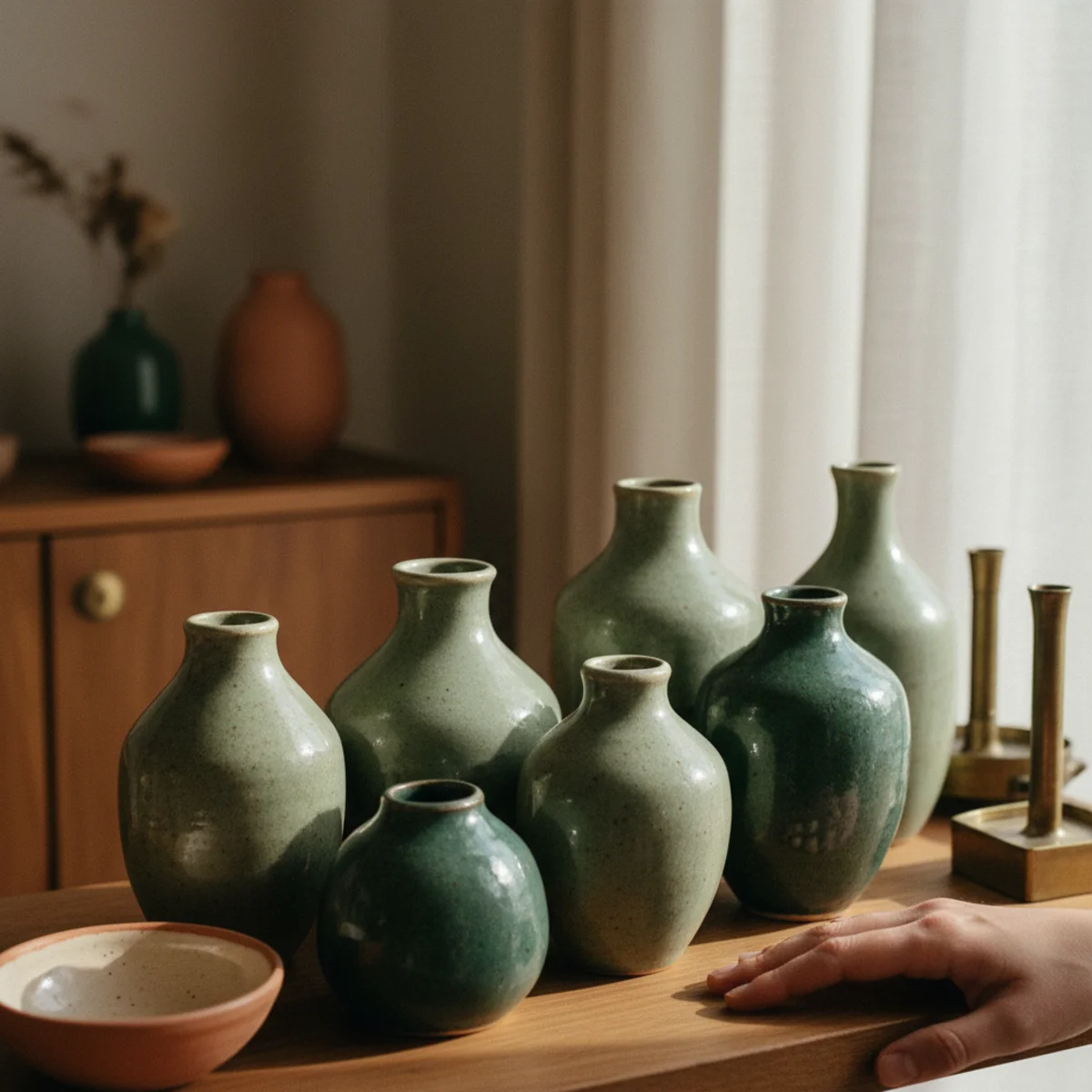
Sage green ceramic vessels and vases are the lowest-commitment, smallest-scale sage decor application — individual pieces that add sage color at object level without committing to paint or textiles. Sage ceramics work in every room (kitchen, bathroom, bedroom, living room) and pair directly with the sage-and-brass and sage-and-warm-wood principles at intimate scale. Cost: $15-80 per piece.
Sage ceramics sourcing and use: HAND-THROWN CERAMICS — individual sage or eucalyptus-glazed hand-thrown vases, pitchers, bowls from Etsy artisans ($20-80 each), local pottery studios ($25-100 each), pottery markets ($15-50 each). The slight glaze variation and throwing marks that hand-thrown pieces carry are particularly beautiful in sage (the color variation across the glaze surface is the sage's best quality). COMMERCIAL OPTIONS — Anthropologie sage ceramic vessels at $28-60, West Elm sage vases at $20-50, Target Threshold sage ceramics at $15-30 (budget option). VINTAGE SAGE CERAMICS — estate sales and thrift stores occasionally yield sage or green-glazed vintage pottery at $5-30. Worth seeking. PLACEMENT — single sage vase as table surface accent, 2-3 grouped sage ceramic vessels on a shelf (creating a sage cluster within otherwise cream/oat shelf composition), sage bowl as kitchen counter object, sage mugs hung on hooks in coffee corner. WHAT TO PUT IN SAGE VASES — dried pampas, dried eucalyptus, fresh-cut foliage, dried wheat, a single stem flower. The sage-and-organic-material combination is consistently beautiful. COLLECTION APPROACH — build a sage ceramic collection across 6-12 months through varied sources (Etsy artisans, estate sales, local pottery) for the most-interesting visual collection.
AFFILIATE SLOTAPPLICATIONHand-thrown sage glazed vases, bowls, pitchers from Etsy artisans ($20-80), local pottery ($25-100), Anthropologie ($28-60), or estate sale vintageAdd affiliate URL when configuredWhy it works
Because hand-thrown ceramics have glaze variation, slight asymmetry, throwing marks, and foot-ring character that machine-produced ceramics specifically eliminate for commercial consistency. Sage glaze is particularly beautiful when it has variation — darker sage in recesses, lighter sage on raised surfaces, small glaze drips at the foot ring. These qualities carry wabi-sabi character that makes the object interesting across months and years of viewing. Machine-produced consistent sage ceramics read correctly on first glance but become visually boring across extended acquaintance.
Pro tip — Buy sage ceramics in groups of three from one maker for visual coherence — three pieces from the same maker will have similar glaze character and proportional sensibility that creates a coherent mini-collection, while three pieces from three different makers create the mixed-collected look. Both approaches work; choose based on whether you want coherent or eclectic shelf composition.
Three hand-thrown sage ceramics with glaze variation and dried eucalyptus — wabi-sabi character at object scale. See also: what-is-japandi-style
How to use sage green without it going wrong
Sage surprises people more than any color. These steps keep it warm and earthy.
- 1Choose an olive-leaning sage
Warm sages lean toward olive and gray-brown; cool ones lean mint and blue-green. For a warm home, pick the olive side.
- 2Test it large, in your light
Brush big swatches on more than one wall and watch them all day. Sage shifts more dramatically between lights than most colors.
- 3Pair it with warmth
Set sage against oak, brass, cream, and clay — warm materials keep it from reading cold or fluorescent.
- 4Start small if unsure
Test sage on a dresser, a cushion, or some ceramics before committing a whole wall or kitchen.
Quick tips
- Choose an olive- or gray-brown-leaning sage, never a mint-leaning one, for a warm home.
- Pair sage with brass and warm wood; skip chrome and cool grays beside it.
- Test large swatches at several times of day — sage shifts more than almost any color.
- Start with a painted dresser or a cushion to confirm the undertone before a whole wall.
- The more warm wood in a room, the warmer your sage will read.
- Use undyed linen rather than white alongside sage for a cozier pairing.
Sage green by room
Olive-leaning sage cabinets with oak open shelving and brass hardware — the most popular sage use there is.
A single sage accent wall or sage linen bedding for a calm, restful palette.
Muted sage zellige or subway tile for a small, natural retreat.
Sage as an accent — a velvet cushion, a painted built-in, or ceramics — rather than the whole room.
Sage is the green the eye reads as nature. Keep it on the olive side and it never tires you.
Frequently asked questions
What is sage green decor?+
Which sage green paint shade should I use?+
What colors go with sage green?+
Is sage green a warm or cool color?+
Where is sage green best used in a home?+
What metal hardware works best with sage green?+
Sage green is the calmest, most flexible color in the warm-home palette — but only if you choose the olive-leaning side and pair it with warmth. Test it large and all day, because sage surprises people more than any other color, and set it against oak and brass rather than chrome and gray. We'd paint a thrifted dresser sage before committing a whole kitchen; a month living with the dresser tells you whether the undertone is right, and then the wall is the easy part.