This guide is based on actual bedding materials tested across multiple seasons of real sleeping use — couples with different temperature preferences, hot sleepers in warm climates, cold sleepers in northern winters, and the specific layering strategies that handle these varied needs. Each category names the specific material properties (breathability, warmth retention, texture against skin, aging quality), the price ranges at quality versus budget, the best brands and where to buy, and what makes that material the right choice for specific sleep conditions.
Bedding material matters because you spend 7-9 hours against it daily — more daily contact than any other home textile. The material that reads well at a distance and feels wrong against skin produces worse outcomes than the material that looks simpler but feels right. This guide prioritizes feel and function over visual appeal, because cozy bed experience is primarily sensory rather than visual.
By the end of this guide, you'll know which bedding material fits your sleep style — the breathable linen investment, the crisp cool percale standard, the smooth warm sateen, the winter flannel, the casual jersey cotton, the silky bamboo and Tencel alternative, the seasonal layering strategy, and which to skip (high-thread-count poly blends).
WHAT'S INSIDE
- Why linen's temperature regulation makes it the only all-year bedding material
- The difference between percale and sateen cotton — and which to choose based on your sleep temperature
- Flannel for the coldest winter nights — specifically when it earns its place over linen
- The seasonal layering strategy that adapts one bed across all four seasons
Thread count is the great bedding myth. Fiber and weave decide how sheets feel — buy for those and ignore the number.
— Real Simple [citation needed — verify before publish]
What makes good bedding?
Good bedding comes down to fiber and weave, not thread count — which is largely a marketing number, easily inflated and meaningless above a point. The fiber sets the character: linen is breathable, textured, and softens for years; cotton is the versatile standard; and the weave decides the feel — percale is crisp and cool, sateen is smooth and warm, flannel is brushed and cozy for winter.
Matching the bedding to how you sleep and the season is the whole skill. A hot sleeper wants breathable linen or crisp cool percale; someone who likes a warm, silky bed wants sateen; winter wants flannel or heavier linen. Quality cotton means long-staple fibers (Egyptian or Supima), and quality linen means European flax — both far more telling than thread count. Buy the right fiber and weave for you, and the bed becomes the cozy refuge it should be.
More in Shopping Guides you may love
See allWhy bedding quality matters more in 2026
As the cozy bedroom became a protected retreat, people started investing in bedding as a once-a-decade purchase rather than a seasonal grab — Pinterest's best bedding and linen sheets searches climb every year, toward natural fibers and away from the thread-count arms race.
The honest shift is that people learned thread count is mostly a myth and started buying for fiber and weave instead. As warm, layered beds prized natural texture, linen and quality cotton replaced the high-thread-count poly-blend sheets that promised luxury and delivered a hot, slippery night. Buying fewer, better sheets that last and improve — like European-flax linen — became the smarter approach, which is exactly where the category went.
The best bedding types, compared
01Linen — The Breathable Investment
Linen is the all-year bedding material — it sleeps cool in summer (the most breathable natural fiber) and warm in winter (the heavy linen duvet cover with down or wool insert provides excellent winter warmth). The single investment that best serves the whole year. Price range: $80-300 per piece for quality, with sweet spot at $100-180.
Linen bedding quality and sourcing: QUALITY INDICATORS — European flax (Masters of Linen certified or verified French/Belgian origin), mid-weight 165-185 gsm, stonewashed or pre-washed finish. Full guidance in best-linen-bedding shopping guide. Best brands: Quince ($80-120), Magic Linen ($80-150), Coyuchi ($200-400), Cultiver ($300-500). MIX-AND-MATCH STRATEGY — separate pieces in coordinated palette build over time. Cream or oat sheets as the washable daily-use base; earth-tone duvet cover as the visual anchor; different-but-coordinated pillowcases. AGING CHARACTER — quality linen improves across years of washing and use, developing softness and character rather than declining. A well-cared-for linen sheet set lasts 10-15 years. TEMPERATURE RANGE — works from about 60°F to 80°F sleeping temperature. For below-60°F rooms or cold sleepers, supplement with a light wool blanket as an additional layer rather than switching to heavier fabric; the linen base layer remains appropriate with the wool supplement.
AFFILIATE SLOTMATERIALEuropean flax linen at 165-185 gsm, stonewashed from Quince ($80-120), Magic Linen ($80-150), Coyuchi ($200-400); year-round primary bedding investmentAdd affiliate URL when configuredWhy it works
Because linen's hollow fiber structure provides temperature regulation that other fibers lack — it wicks moisture in warm conditions (summer cooling function) and provides insulation in cool conditions (winter warming function). The same linen sheet that feels cool in July feels appropriately warm in November because the fiber adapts to the ambient conditions. Cotton, flannel, and sateen are all single-direction temperature performers (cotton cool, flannel warm, sateen warm-smooth); linen is bidirectional. The year-round versatility makes it the single best bedding investment.
Pro tip — Pre-wash linen bedding 3 times before first use — quality linen becomes significantly softer with each wash, and the first 3 washes produce the most-dramatic improvement. First night on pre-washed linen is significantly more comfortable than first night on fresh-from-package linen.
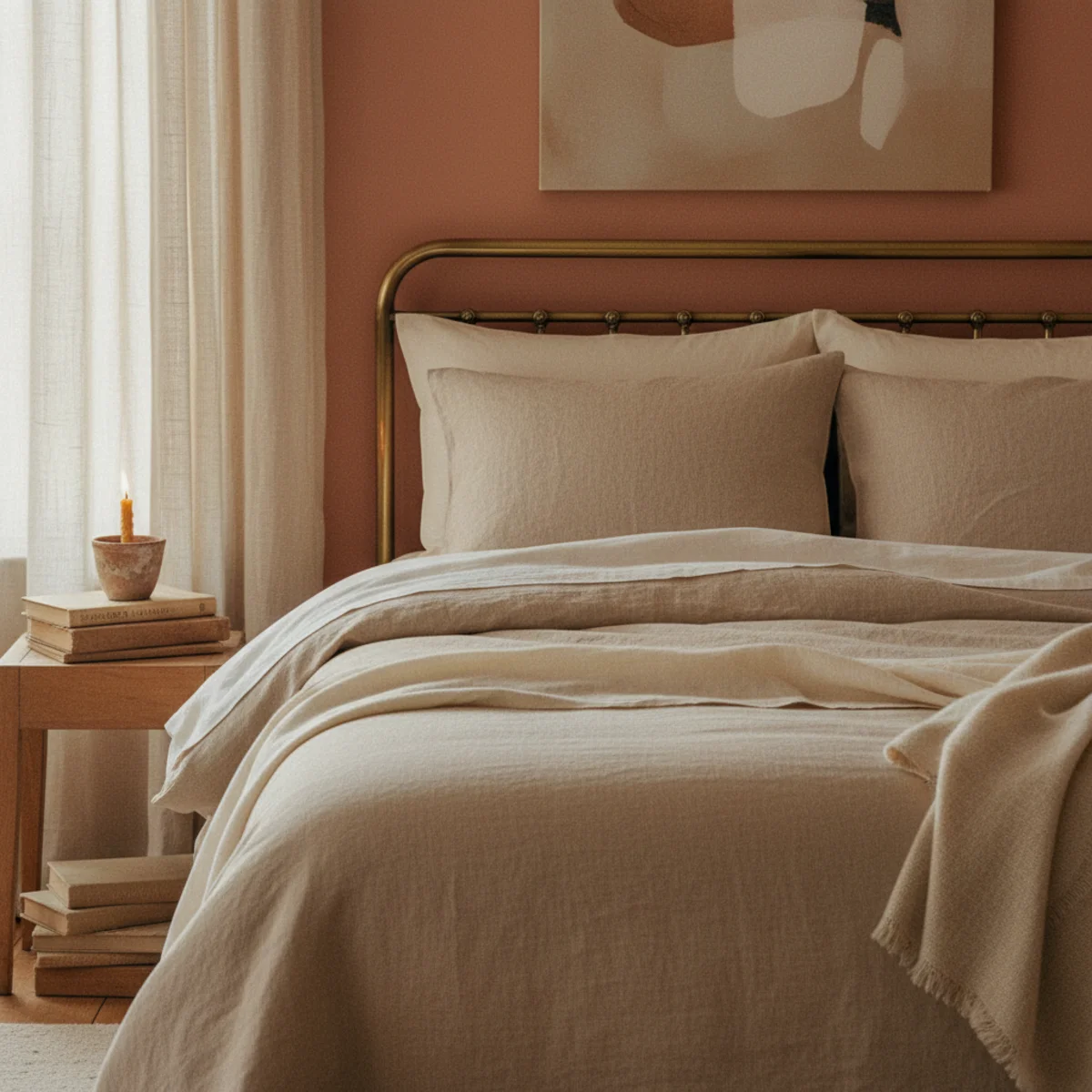
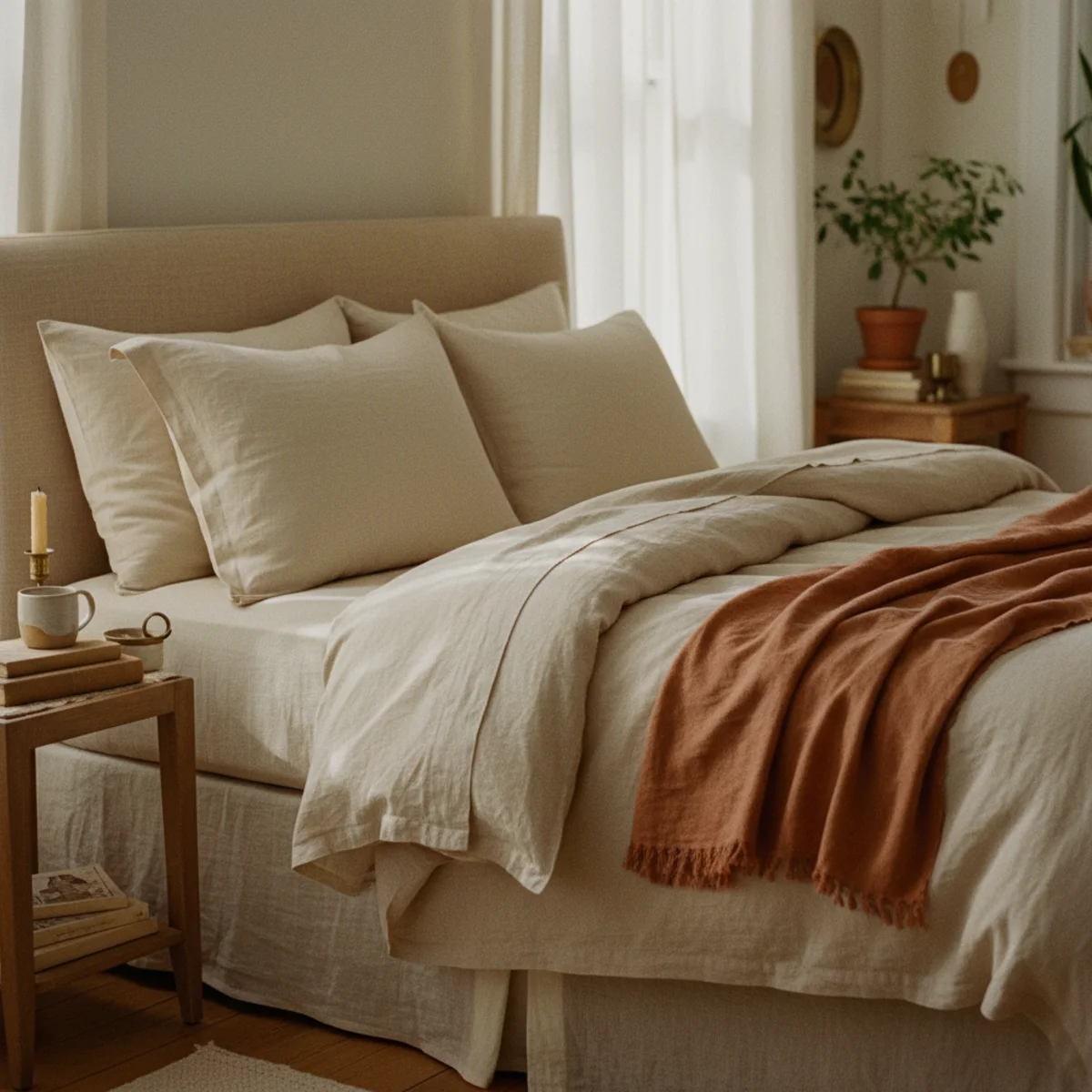
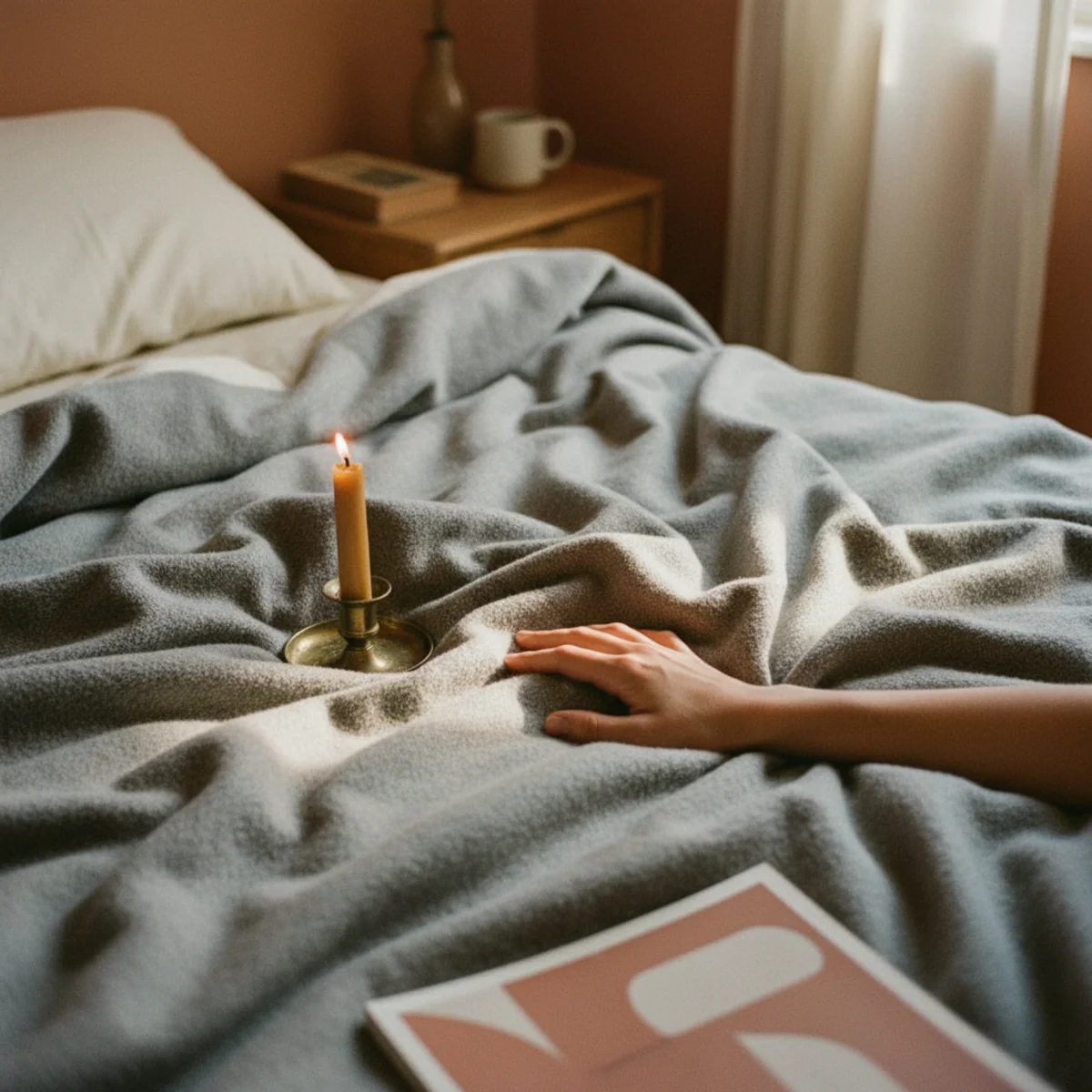
Washed oat linen with natural slubby texture — the year-round investment that adapts to summer and winter. See also: best-linen-bedding
02Cotton Percale — The Crisp, Cool Standard
Cotton percale (plain one-over-one-under weave) is the cool, crisp cotton standard — slightly cool to the touch, gets crisper with washing rather than softer, and has the specific 'fresh hotel sheets' feel that many people find most comfortable for sleep. Best for warm sleepers, warm-climate households, and anyone who finds linen's texture too natural-fiber rough. Price range: $60-200 per piece.
Percale bedding quality: THREAD COUNT — 200-400 thread count is the sweet spot for percale. Higher thread count in percale can feel soft but is often achieved through thinner lower-quality threads twisted together (multi-ply) rather than through higher fiber quality. 200-300 with long-staple cotton is better than 400 with shorter-staple. MATERIAL — 100% long-staple cotton (Supima or Egyptian) for the best percale experience. BRANDS — Brooklinen Luxe Percale at $140-300 per sheet set (most consistently recommended), Parachute Classic ($140-280), Pottery Barn ($100-280), Target Threshold percale ($40-120 for budget option). FEEL — cool and slightly stiff initially, softening slowly over many washes. After 50 washes it reaches peak softness while retaining crispness. CARE — machine washable, dryer-safe. Becomes softer with air-drying. BEST FOR — warm sleepers, hot summer nights, anyone who loves the hotel-crisp-sheet feel, warm climates. NOT IDEAL FOR — cold sleepers or very cold climates where the cooler percale touch is uncomfortable.
AFFILIATE SLOTMATERIAL100% long-staple cotton percale, 200-400 thread count from Brooklinen ($140-300), Parachute ($140-280), or Target Threshold ($40-120) for budget; for warm sleepersAdd affiliate URL when configuredWhy it works
Because the loose plain weave of percale allows more air circulation than tighter weaves (sateen), providing a perceptibly cooler feel against skin. The one-over-one-under thread arrangement creates a matte, slightly rough surface that doesn't trap heat the way smooth sateen does. For warm sleepers who wake up overheated, percale's breathability is functionally significant; for cold sleepers who need warmth retention, it's a disadvantage.
Pro tip — Line-dry percale sheets if possible — air drying produces the characteristic crisp percale feel that dryer-dried percale loses (dryer softens the texture). Line-drying also reduces the iron frequency since air-dried percale has better natural drape.
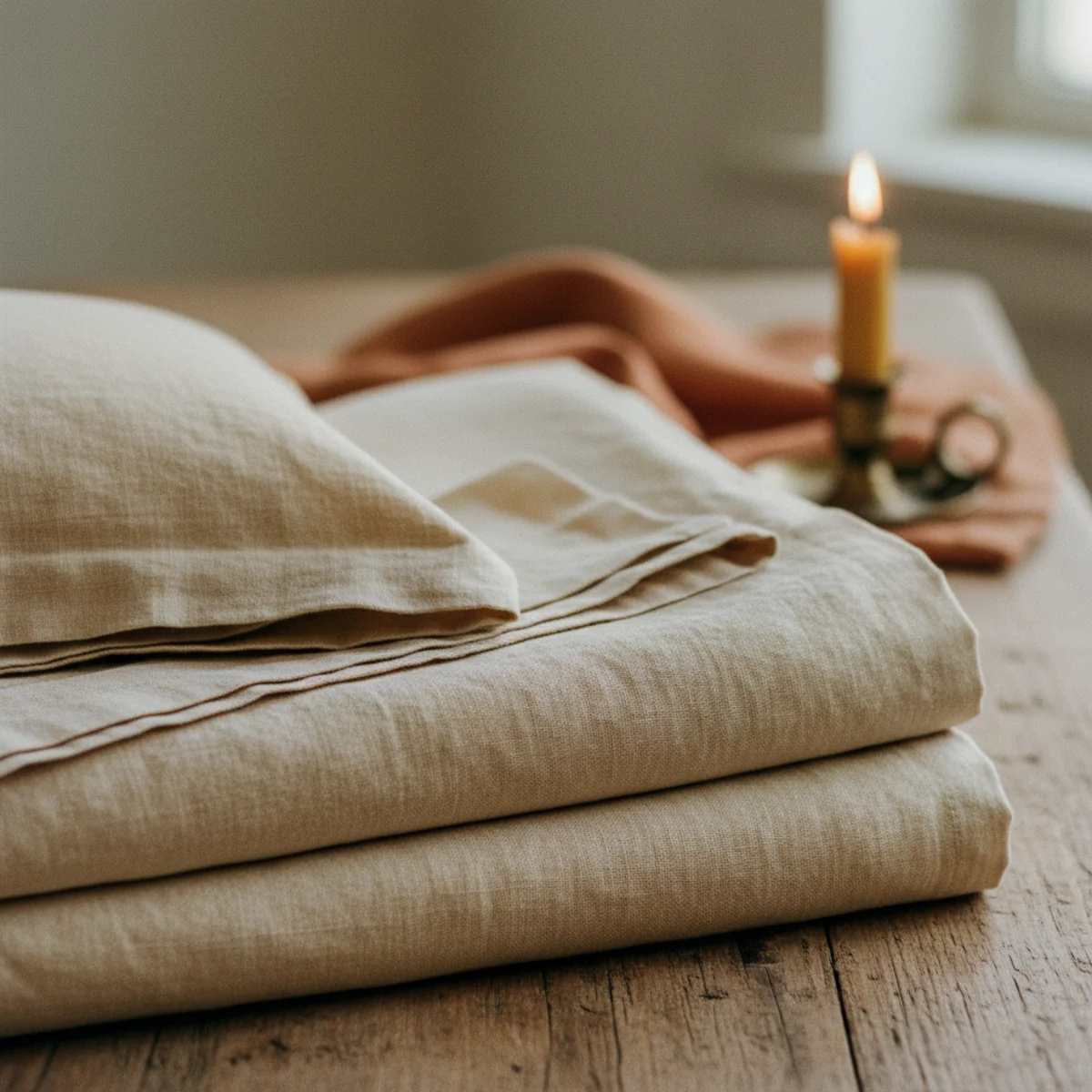
Crisp cotton percale with matte texture — cool, breathable, and specifically right for warm sleepers. See also: cozy-bedroom-inspo
03Cotton Sateen — The Smooth, Warm Option
Cotton sateen (four-over-one-under weave) is the smooth, warm, slightly lustrous cotton — it has the silky smooth feel against skin that percale lacks, retains more body heat (warmer sleeping), and has a subtle sheen that reads richer than percale visually. Best for cold sleepers and cool climates. Price range: $60-250 per piece.
Sateen bedding quality: CONSTRUCTION — the four-over-one-under weave creates more thread surface area against the skin, producing the smooth silky feel. The denser weave also retains heat better, which cold sleepers appreciate. THREAD COUNT — 300-600 thread count for sateen. Higher thread count makes more sense for sateen than percale because the tighter weave benefit from finer threads. BRANDS — Brooklinen Classic Core ($120-250 per set), Parachute Sateen ($130-260), Pizuna ($50-120 budget sateen), Peacock Alley ($150-350). FEEL — smooth, slightly cool to initial touch but quickly warming to body temperature, silky. Does not get as crisp as percale; stays smooth. CARE — machine washable; some sateen becomes slightly pilled with rough agitation. Use delicate cycle or low-heat. VISUAL — the subtle sheen of sateen reads richer than percale in photographs and in person. The sateen bed has a slightly luxurious visual register that percale doesn't. BEST FOR — cold sleepers, cool-climate homes, anyone who finds percale too rough against skin, households wanting the slightly-richer visual.
AFFILIATE SLOTMATERIAL300-600 thread count long-staple cotton sateen from Brooklinen ($120-250), Parachute ($130-260), or Pizuna ($50-120) budget; for cold sleepers and cool climatesAdd affiliate URL when configuredWhy it works
Because the denser weave retains more body heat — the fewer air gaps in sateen's over-under pattern mean less air circulation (warmer) compared to percale's looser weave (cooler). Cold sleepers experience this as 'the sheets warm up quickly and stay warm'; warm sleepers experience it as 'the sheets feel hot by 2am.' The material's thermal properties are the same; whether they're an advantage or disadvantage depends entirely on the sleeper's temperature preference.
Pro tip — Choose sateen in cream or warm oat tones specifically — the sateen's subtle sheen reads more beautifully in warm tones than in cool white, and the warm colors with the sateen's visual richness produces the specific warm-luxurious bed aesthetic that cozy bedrooms aim toward.
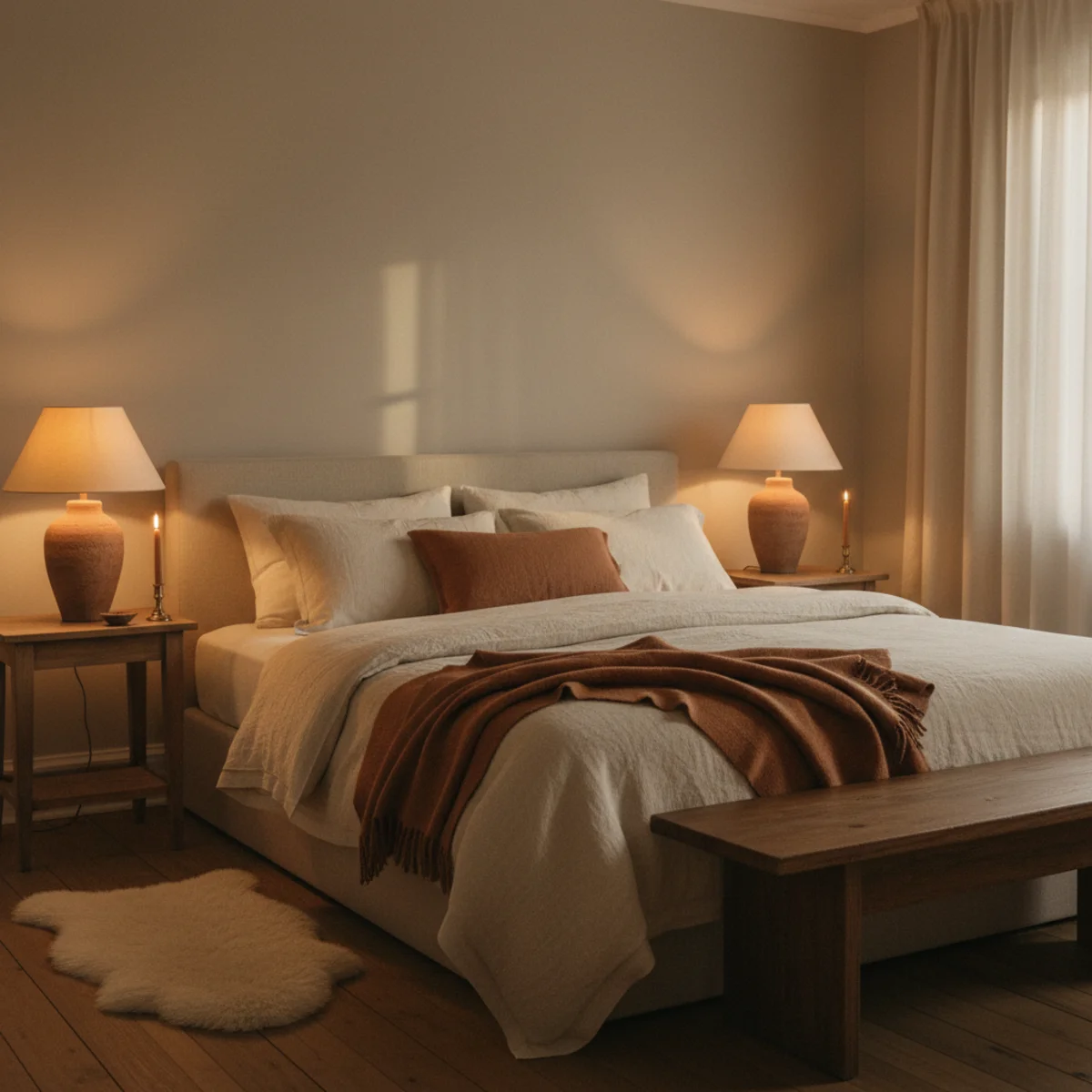
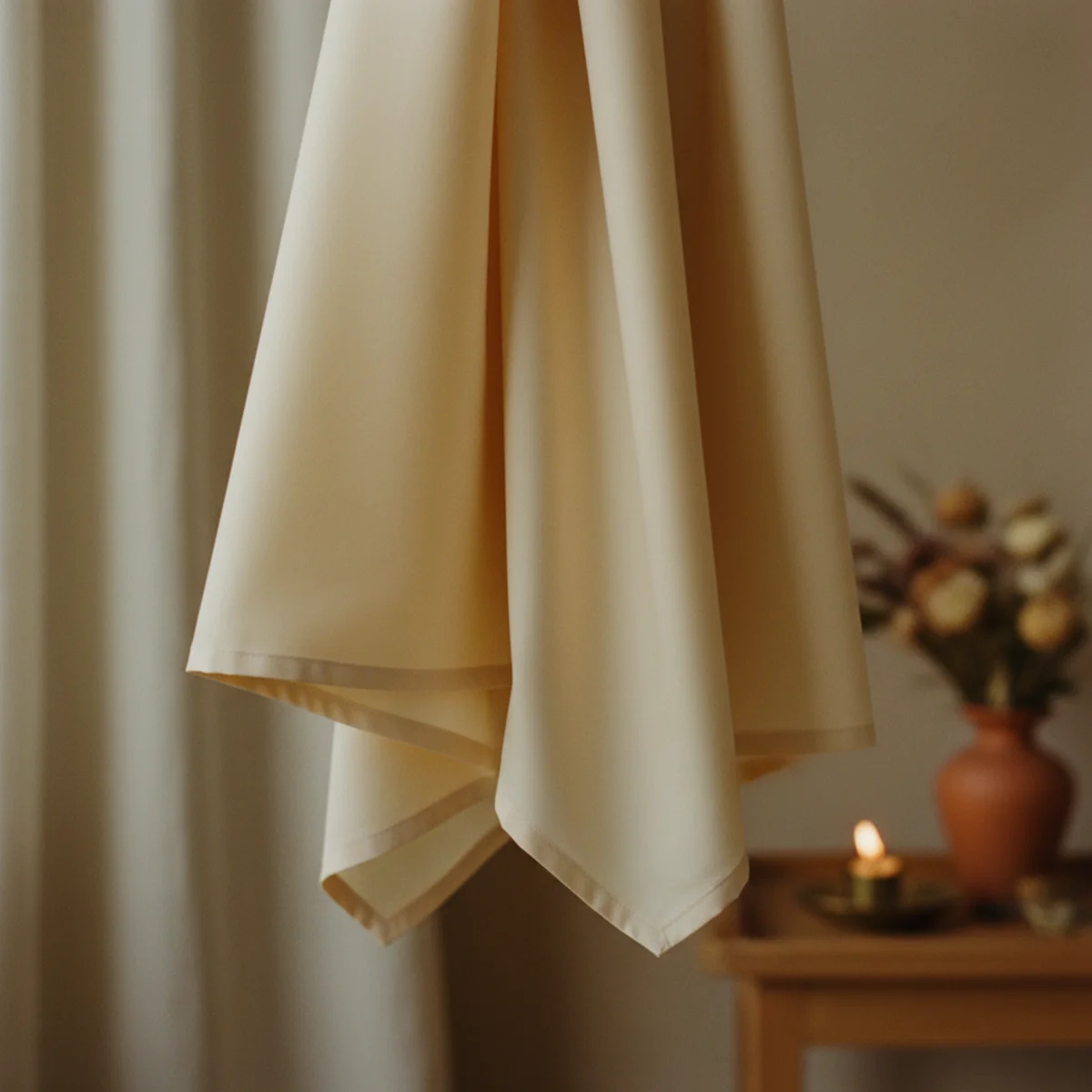
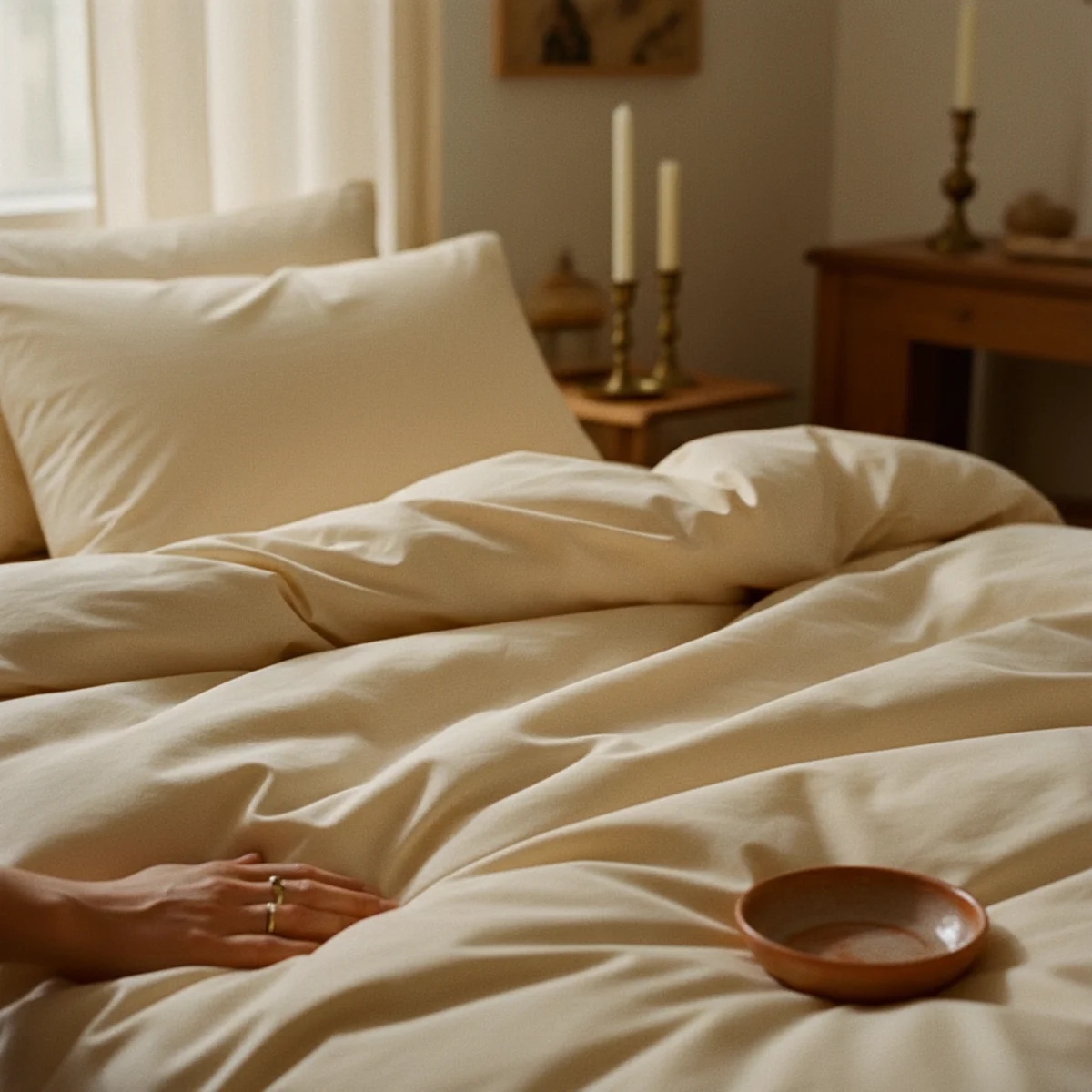
Warm cream sateen with subtle sheen — smooth, slightly warm-retaining, specifically right for cold sleepers. See also: cozy-bedroom-inspo
04Flannel — The Winter Cozy
Flannel bedding is the cold-season specialist — the brushed cotton or wool-blend flannel surface creates the warmest-feeling bedding category, appropriate for the coldest winter months and specifically comfortable when the bedroom temperature drops below 60°F. Not a year-round material; a winter-specific one that earns its place during the season's coldest weeks.
Flannel bedding quality: WEIGHT — flannel weight is measured in grams per square meter (gsm). 150-170 gsm is lightweight flannel (comfortable in mid-cool weather), 170-200 gsm is standard weight (most versatile), 200+ gsm is heavyweight (for coldest conditions). MATERIAL — 100% cotton flannel or cotton-blend. The brushing process (raising the fiber surface) is what creates flannel's distinctive warmth, not a different fiber type. BRANDS — L.L. Bean Flannel at $80-150 per sheet set (the most-recommended for quality and durability), Pendleton ($100-200), Vermont Flannel ($80-150), Target flannel ($30-80 budget). COLORS — flannel is traditionally available in warm tartans, plaids, and solid warm tones. For cozy bed aesthetic, choose solid cream, warm oat, or soft sage rather than bold plaids. CARE — machine washable; flannel maintains quality for many years with proper care (cold water, low heat dry). SEASON TIMING — bring out flannel sheets in October-November when first cold nights arrive; store in May-June when warm nights return.
AFFILIATE SLOTMATERIAL100% cotton flannel 170-200 gsm from L.L. Bean ($80-150), Pendleton ($100-200), or Target ($30-80); use October-May; solid cream or oat preferred over bold plaidsAdd affiliate URL when configuredWhy it works
Because flannel's warmth comes from the physical texture of the brushed fiber surface rather than from the fiber's inherent thermal properties — the fuzzy brushed surface traps warm air in microscopic pockets against the skin, creating a warming effect that smooth cotton at the same thread count cannot achieve. This specific warmth quality is exactly what very cold nights require and exactly what mild nights don't need. The seasonal specificity makes flannel the right choice for the season subset where it's appropriate rather than a compromise across all conditions.
Pro tip — Buy flannel sheets in slightly larger sizes than needed (king flannel on queen bed) — flannel shrinks 3-5% in the first few washes regardless of care instructions, and buying slightly large compensates for this shrinkage. The extra size also allows for generous tuck-in at the mattress edges that disappears after the first few washes.
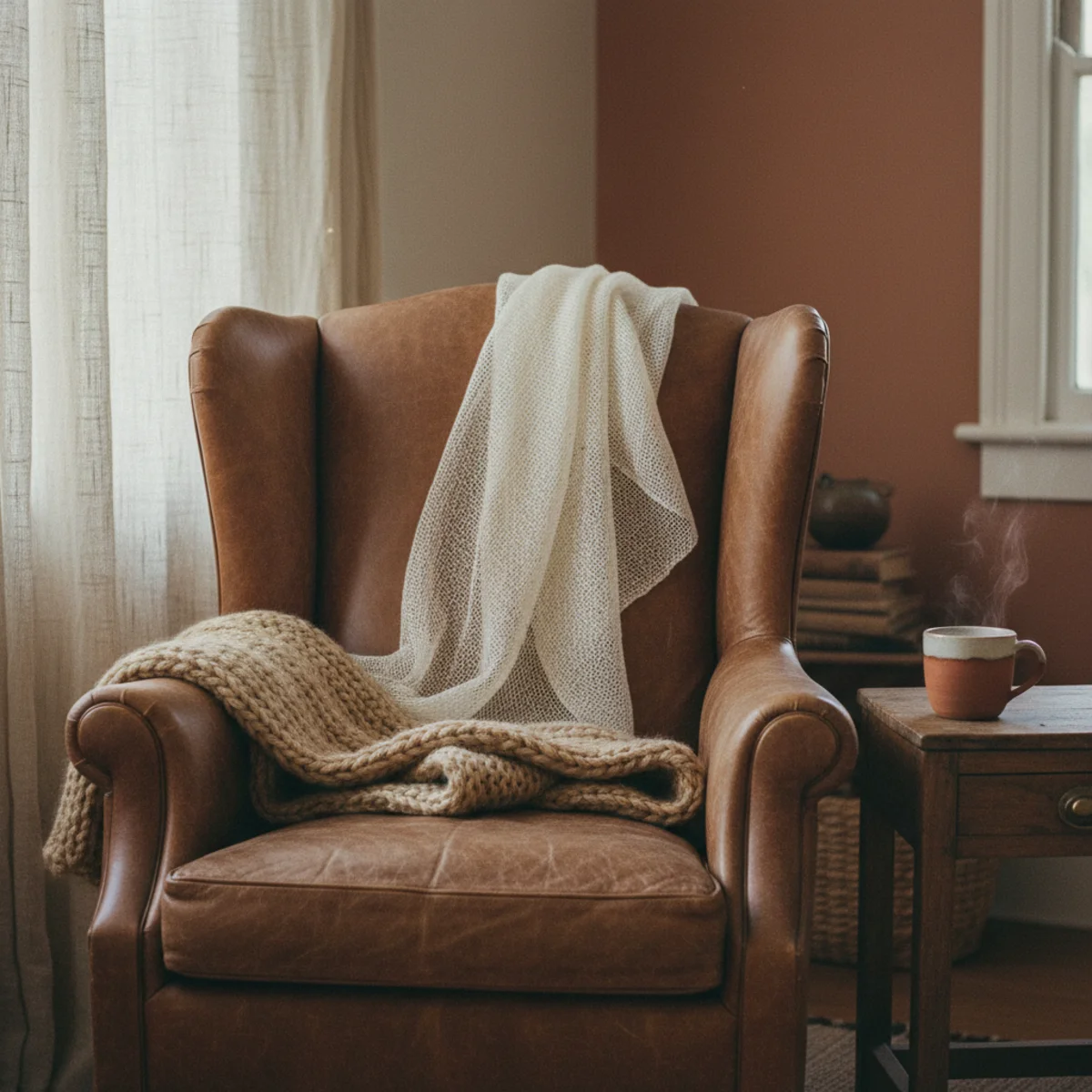
Cream flannel with brushed surface — the winter-specific warmth that October through April calls for. See also: winter-decor
05Cotton Jersey — The Casual, Soft Pick
Cotton jersey (the T-shirt-fabric of bedding) is the casual, maximally-soft bedding material — feels like sleeping in your favorite worn-in cotton T-shirt. Less crisp than percale, warmer than percale, softer than most linens. Best for households that prioritize softness and casual comfort over visual formality or precise temperature regulation. Price range: $40-150 per piece.
Jersey bedding quality: MATERIAL — 100% cotton jersey or cotton-modal blend. The knit construction (versus woven in percale and sateen) produces the stretchy soft T-shirt character. BEST BRANDS — Parachute Jersey ($100-200 per set), Target Threshold jersey cotton ($30-100), H&M jersey bedding ($40-100), IKEA jersey options ($30-80). FEEL — soft, stretchy, somewhat warm, casual. Gets softer with washing rather than crisper. The stretch allows the fitted sheet to accommodate mattress movement. VISUAL — jersey has a casual informal appearance that reads as less dressy than percale or sateen. For cozy bedroom aesthetic that prioritizes inhabited warmth over formal presentation, this is appropriate. CARE — machine washable and dryer-safe; jersey can pill with rough machine agitation. BEST FOR — households that primarily want maximum softness, children's rooms (soft and forgiving), guest rooms, casual bedroom setups. NOT IDEAL FOR — households that want visual crispness, very warm sleepers (jersey is warmer than percale), or households investing significantly in bedroom styling (visual quality doesn't match the material's performance at the same price as higher-quality alternatives).
AFFILIATE SLOTMATERIAL100% cotton jersey from Parachute ($100-200), Target ($30-100), or IKEA ($30-80); best for maximum softness priority, children's rooms, casual guest roomsAdd affiliate URL when configuredWhy it works
Because jersey's knit construction is not a quality marker but a design choice — it produces genuinely different sleep experience than woven cotton (softer, stretchier, more casual) rather than inferior experience. The question is whether that specific experience is what the household wants. Households that genuinely want the T-shirt-fabric softness get exactly that from jersey; households that want crisp crispness or visual richness should choose percale or sateen instead. Jersey is not a budget substitute for woven cotton; it's a different product category for different preferences.
Pro tip — Jersey is the best bedding material for children's beds specifically — the stretchy soft forgiving quality makes fitted sheets stay on through active child sleeping, the soft surface is comfortable against sensitive skin, and the material withstands frequent washing without quality degradation. Budget $30-80 for jersey sheets per child bed; invest the higher budget in adult bedrooms.
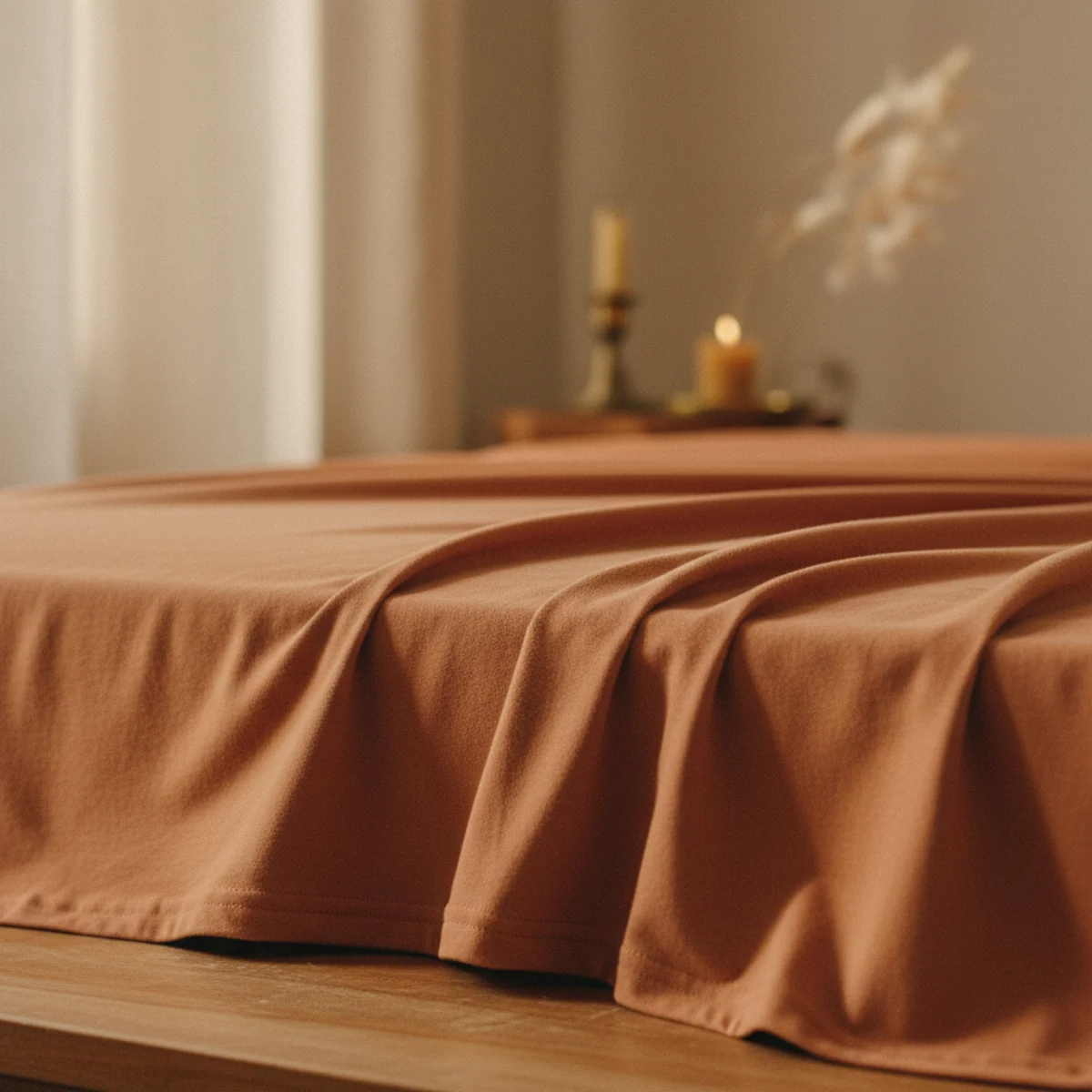
Cotton jersey with knit texture — the T-shirt-fabric softness for households that prioritize casual maximum-soft over visual formality. See also: bedroom-cozy-ideas
06Bamboo and Tencel — The Silky Alternative
Bamboo viscose and Tencel lyocell are the smooth, silky, temperature-regulating synthetic-process alternatives to natural fibers — they feel remarkably smooth against skin (more so than most cotton), wick moisture well (temperature-regulating quality), and are particularly popular with hot sleepers who want softness beyond what cotton provides. Price range: $60-200 per piece.
Bamboo and Tencel bedding: BAMBOO VISCOSE — soft, silky texture, moisture-wicking, temperature-regulating. The softness is the defining quality; similar feel to high-quality sateen but with better moisture management. BEST BAMBOO BRANDS — Cozy Earth ($150-400), Ettitude ($100-200), Bamboo Supply Co ($80-150), Cariloha ($100-250). TENCEL LYOCELL — stronger fiber than bamboo viscose, similar silky smooth quality, certified sustainable production from wood pulp. BEST TENCEL BRANDS — Parachute Tencel ($120-250), Pottery Barn Tencel ($100-250), Sunday Citizen ($100-200). ENVIRONMENTAL CONSIDERATION — both bamboo viscose and Tencel involve chemical processing of plant material; Tencel's closed-loop process is more environmentally controlled (the same chemicals are recovered and recycled) where bamboo viscose processing is less controlled. Choose Tencel-certified or OEKO-TEX-certified bamboo if environmental impact matters. BEST FOR — warm sleepers who want softness, anyone with sensitivity to rough fiber textures, households that specifically want silky smooth feel. NOT A NATURAL FIBER — despite marketing as 'bamboo bedding' or 'plant-derived,' both are processed materials. The fiber has been chemically dissolved and reformed, losing most of the source plant's original qualities except softness.
AFFILIATE SLOTMATERIALBamboo viscose from Cozy Earth ($150-400) or Ettitude ($100-200); Tencel from Parachute ($120-250) or Pottery Barn ($100-250); for maximum silky-smooth priorityAdd affiliate URL when configuredWhy it works
Because the silky smooth quality they provide is genuinely different from (and for some preferences, superior to) what natural fiber options deliver. The smoothest linen is not as smooth as Tencel; the smoothest percale is not as smooth as quality bamboo viscose. For households that specifically want silky smooth as the primary bedding characteristic, bamboo and Tencel deliver it more consistently and at lower cost than silk (the only natural equivalent). They're not inferior substitutes for linen or cotton; they're a specific product category for specific preferences.
Pro tip — Wash bamboo and Tencel bedding on a gentle cycle with mild detergent and air dry or tumble dry on low — the smooth fiber is more susceptible to agitation damage than cotton or linen. Harsh agitation in a standard wash cycle can create pilling on bamboo and Tencel surfaces within a few washes.
Cream Tencel with silky surface — the smooth alternative for warm sleepers who want softness beyond cotton. See also: best-linen-bedding
07Layering by Season
The cozy bed isn't defined by one material but by the right combination of materials layered appropriately for each season. A foundational linen base, with layers added and removed across the year, produces the bed that's genuinely cozy in every season rather than optimal in one season and tolerable in others.
Seasonal bed layering strategy: YEAR-ROUND BASE — linen fitted and flat sheets (cream or oat, stonewashed). These stay on the bed in all seasons. DUVET or PRIMARY LAYER — vary by season: SUMMER: linen duvet cover with lightweight fill insert (300 fill-power down or light cotton alternative), OR just the linen flat sheet alone on warmest nights. SPRING/AUTUMN: linen duvet cover with medium fill (500-600 fill-power down or medium wool duvet). WINTER: linen duvet cover with heavy fill (700-800 fill-power down or heavy wool duvet), PLUS a lightweight wool blanket between the flat sheet and duvet for additional warmth when needed. BONUS LAYER — a lightweight merino or cashmere throw folded at the foot of the bed. Available for cold nights, decorative on moderate nights, stored under the bed in summer. PILLOWCASE ROTATION — linen pillowcases year-round for the same breathability benefit as the sheets. SEASONAL ADJUSTMENT PRINCIPLE — the layering changes but the linen base layer stays constant. The adjustment is made through the duvet fill weight (swapped once in spring and once in autumn) rather than through sheet material changes.
AFFILIATE SLOTSTRATEGYLinen base sheets year-round + seasonal duvet fill swap (light for summer, heavy for winter) + wool blanket as winter addition + merino throw at foot; 2 annual fill swapsAdd affiliate URL when configuredWhy it works
Because no single material optimizes across all sleeping conditions year-round. Even linen (the most versatile) benefits from supplementation in the coldest months. The layered approach lets each material do what it does best: linen regulates temperature as the skin-contact layer, down or wool provides warmth where needed in the fill layer, merino or cashmere throw provides the additional-layer option for unexpected cold nights. The combination is more comfortable across the full year than any single material at any investment level.
Pro tip — Store off-season bedding in breathable cotton bags with cedar sachets — the cedar prevents moth damage (especially important for wool fills and merino throws) and the breathable bag prevents moisture accumulation that plastic storage produces. Two storage bags per household covers the full seasonal rotation: summer-weight fill stored in winter, winter-weight stored in summer.
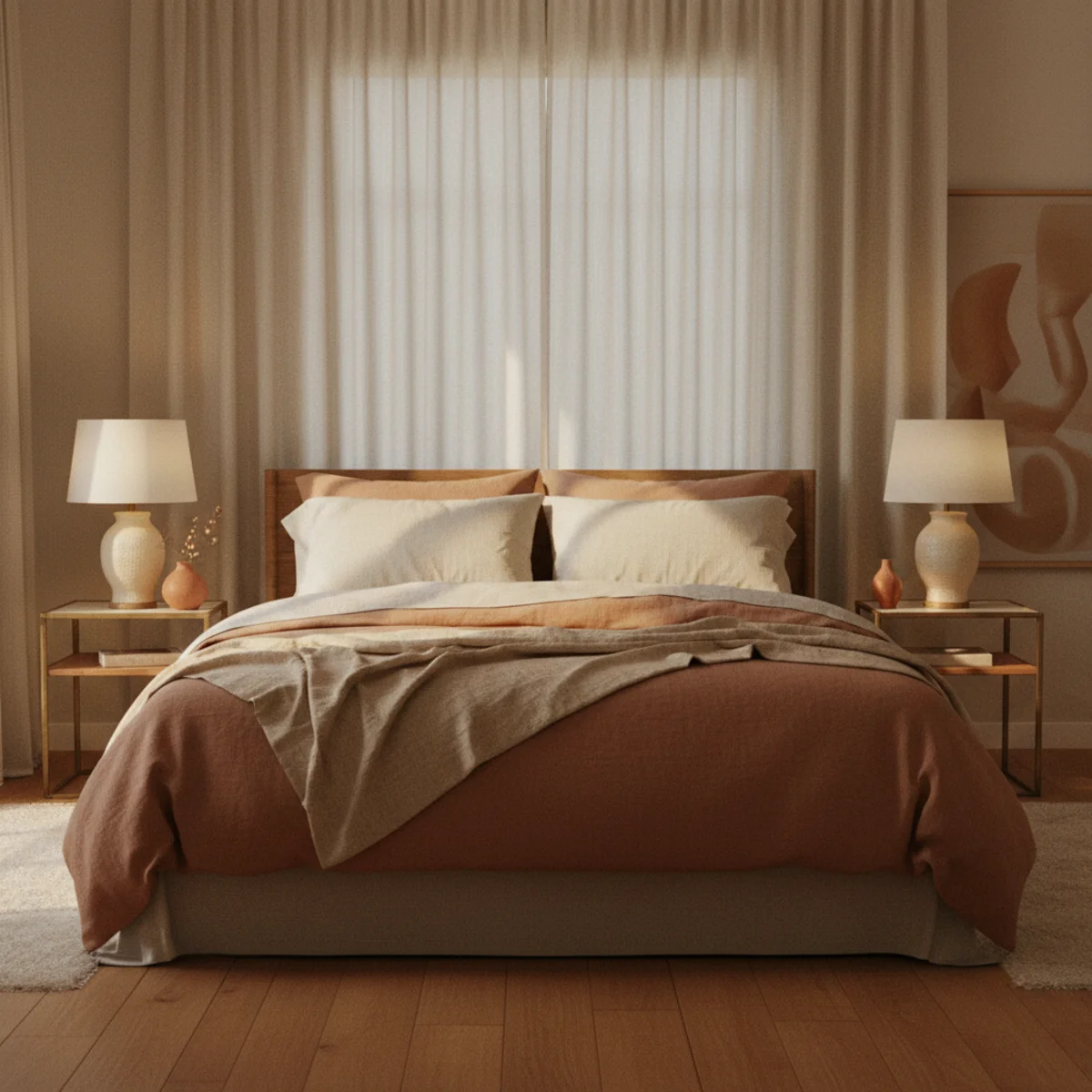
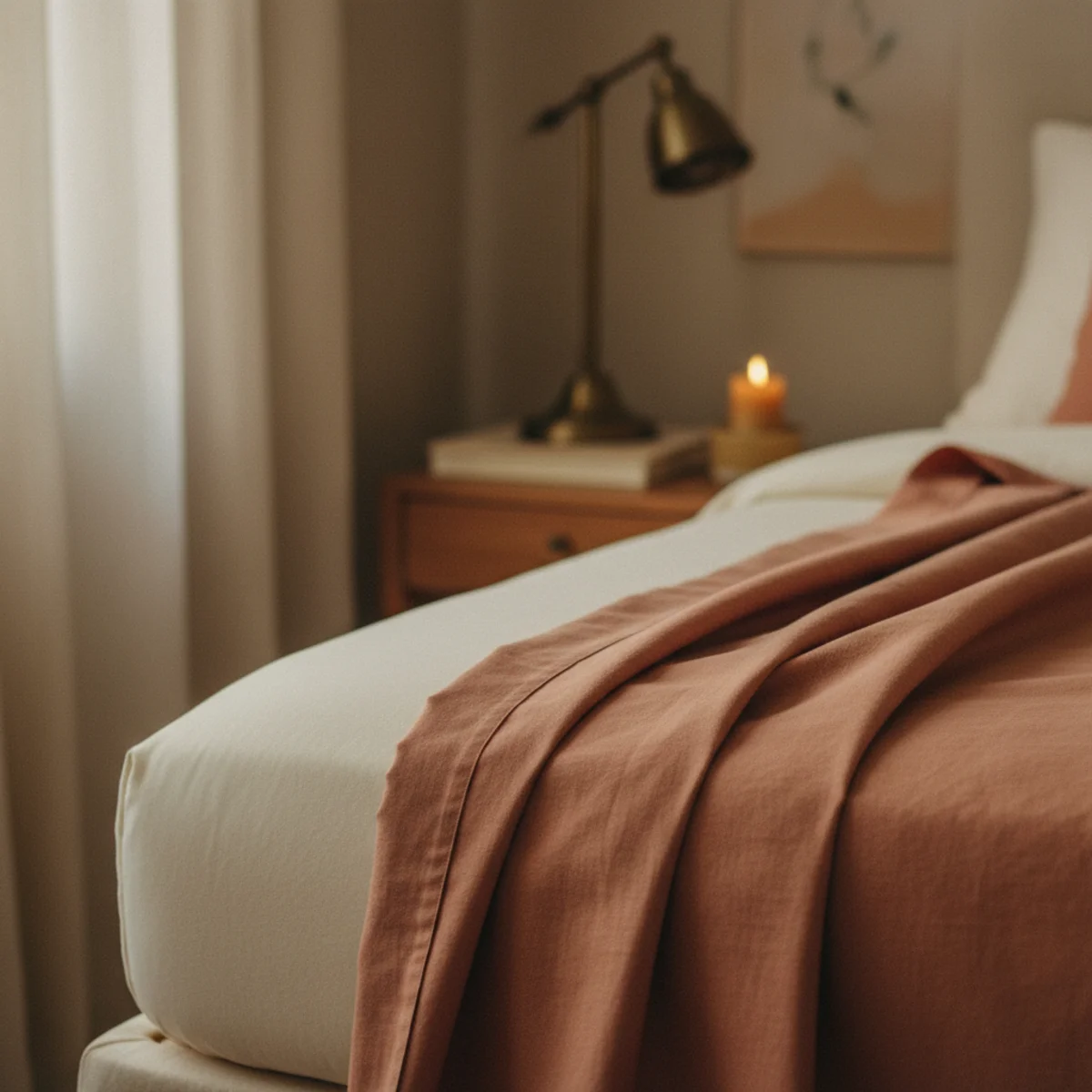
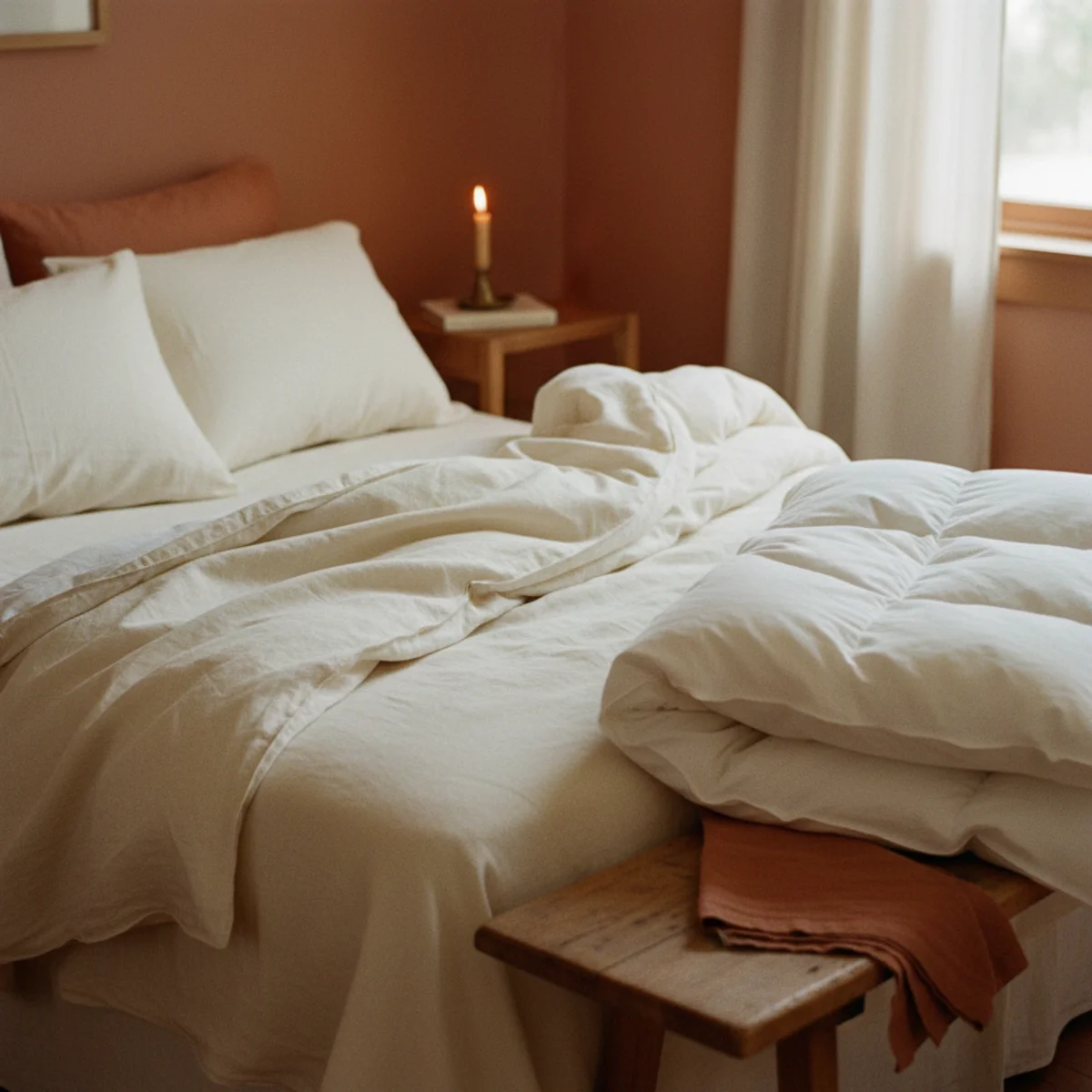
Linen base, linen duvet, wool blanket at foot — three layers adapting across the year with seasonal fill weight changes. See also: throw-blanket-layering
08Skip — High-Thread-Count Poly Blends
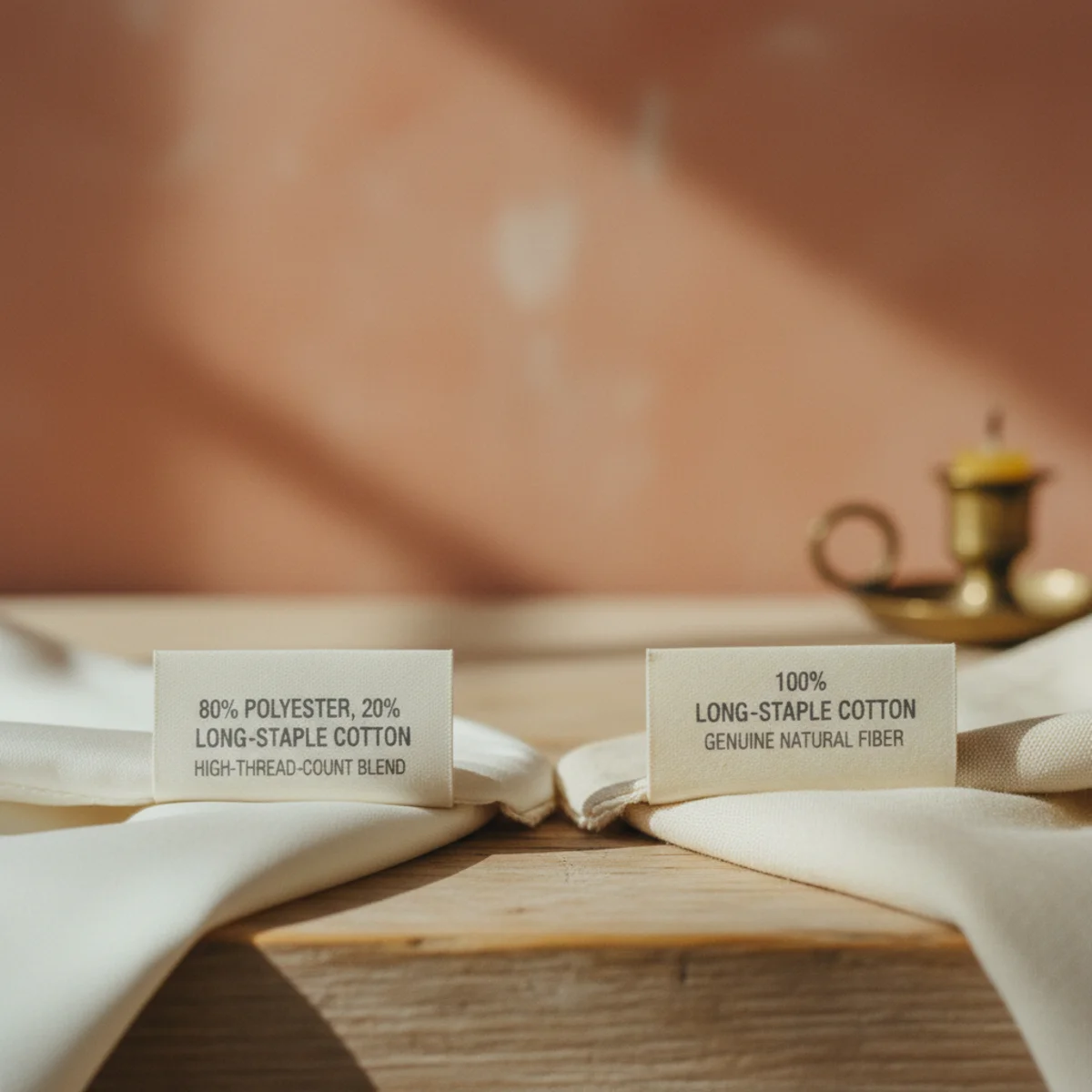
The single most-important bedding shopping warning: skip high-thread-count polyester-cotton blend sheets regardless of the thread count number. These products (typically sold as '800 thread count,' '1000 thread count,' or 'luxury Egyptian-blend') are predominantly polyester with minor cotton content, which sleeps hot, feels synthetic, and presses into pillowy thinness within 20-30 washes.
Poly-blend bedding identification and rejection: THE THREAD-COUNT MARKETING TRICK — thread counts above 600 in affordable bedding are almost always achieved by counting individual plies rather than individual threads (a 3-ply thread in a 300-count weave gets counted as 900 threads). High thread counts in budget bedding signal over-marketing rather than quality. MATERIAL CONTENT — check the material content label. Anything listing 'polyester,' 'microfiber,' or a percentage of polyester alongside cotton is a poly blend. 80/20 cotton-polyester and 60/40 cotton-polyester blends are common in high-thread-count 'luxury' budget bedding. WHY POLY BLENDS FAIL — sleep hot (polyester doesn't breathe), feel plasticky over time (synthetic surface aging), press thin within 20-30 washes (microfiber compresses), contribute microplastics to water systems. WHAT TO BUY INSTEAD — Percale or sateen at TRUE 200-400 thread count in 100% long-staple cotton at $40-120 from Target Threshold (genuinely delivers at budget), Brooklinen ($120-250 for quality), or Parachute ($130-280). The true 300 thread count 100% cotton outperforms the false 1000 thread count polyester blend in every dimension.
AFFILIATE SLOTAVOIDSkip high-thread-count polyester-cotton blends regardless of thread count number; choose 200-400 TC 100% long-staple cotton percale or sateen insteadAdd affiliate URL when configuredWhy it works
Because thread count is only meaningful as a quality indicator within a single material type — 400-thread-count long-staple Egyptian cotton is better than 200-thread-count short-staple cotton because they're the same fiber type. But any-thread-count polyester blend is functionally inferior to 200-thread-count natural cotton because the materials have different properties. The number measures weave density, not material quality; polyester at any thread count still sleeps hot and feels synthetic. The marketing leverages consumers' reasonable assumption that higher thread count means better; the reality is that the thread count number is meaningless across material types.
Pro tip — Read the full material content before any bedding purchase — not just 'cotton' in the product name but the actual percentage content in the fine print. 'Hotel-luxury cotton sheets' that are 40% polyester in the material content label are 40% synthetic plastic regardless of the marketing language above the label.
Skip high-thread-count poly blends — 100% long-staple cotton at 200-400TC outperforms synthetic at any thread count. See also: best-linen-bedding
How to choose bedding
Match fiber and weave to how you sleep and the season. Four questions sort it.
- 1Decide how you sleep hot or cold
Hot sleeper: breathable linen or crisp percale. Cold sleeper or winter: flannel, sateen, or heavier linen. This is the first and biggest decision.
- 2Choose the fiber
Linen for breathable, textured, long-lasting; long-staple cotton for the versatile standard; bamboo or Tencel for silky and cool. Read the fiber, not the thread count.
- 3Pick the weave
Percale for crisp and cool, sateen for smooth and warm, flannel for brushed and cozy. The weave decides the feel as much as the fiber.
- 4Layer for the seasons
Buy a lighter set for summer and a warmer one for winter, and rotate. Store the off-season set clean in breathable bags.
Quick tips
- Ignore thread count; buy for fiber (European flax, long-staple cotton) and weave instead.
- Match the bedding to how you sleep — breathable linen or percale for hot sleepers.
- Choose percale for crisp and cool, sateen for smooth and warm, flannel for winter.
- Rotate bedding by season and store the off-season set clean in breathable bags.
- Stonewashed linen arrives soft; crisp linen softens over a month.
- Skip high-thread-count poly blends — they sleep hot and slippery despite the number.
The best bedding by sleeper
Breathable European-flax linen or crisp cotton percale, both cool and airy.
Brushed flannel, smooth sateen, or heavier linen for warmth.
Washed linen in undyed earthy tones, mixed rather than matched; see our best linen bedding guide.
Long-staple cotton percale, or a single quality duvet cover over existing sheets.
Thread count is the great bedding myth. Buy for fiber and weave, match it to how you sleep, and the bed becomes the best part of the day.
Frequently asked questions
What's the best bedding for a cozy bed?+
What's the difference between percale and sateen sheets?+
When should I use flannel sheets?+
Is linen bedding worth the cost?+
How do I choose between linen and cotton for bedding?+
What's the best thread count for sheets?+
Bedding is the rare purchase you feel every single night, and the marketing points you at the wrong thing — thread count is mostly a myth, while fiber and weave decide everything. Match breathable linen or crisp percale to a hot sleeper, sateen or flannel to a cold one, and rotate by season. We'd buy European-flax linen for summer and flannel for winter and ignore thread count entirely; choosing for fiber and how you sleep, rather than a number on a box, is what turns the bed into the best part of the day.