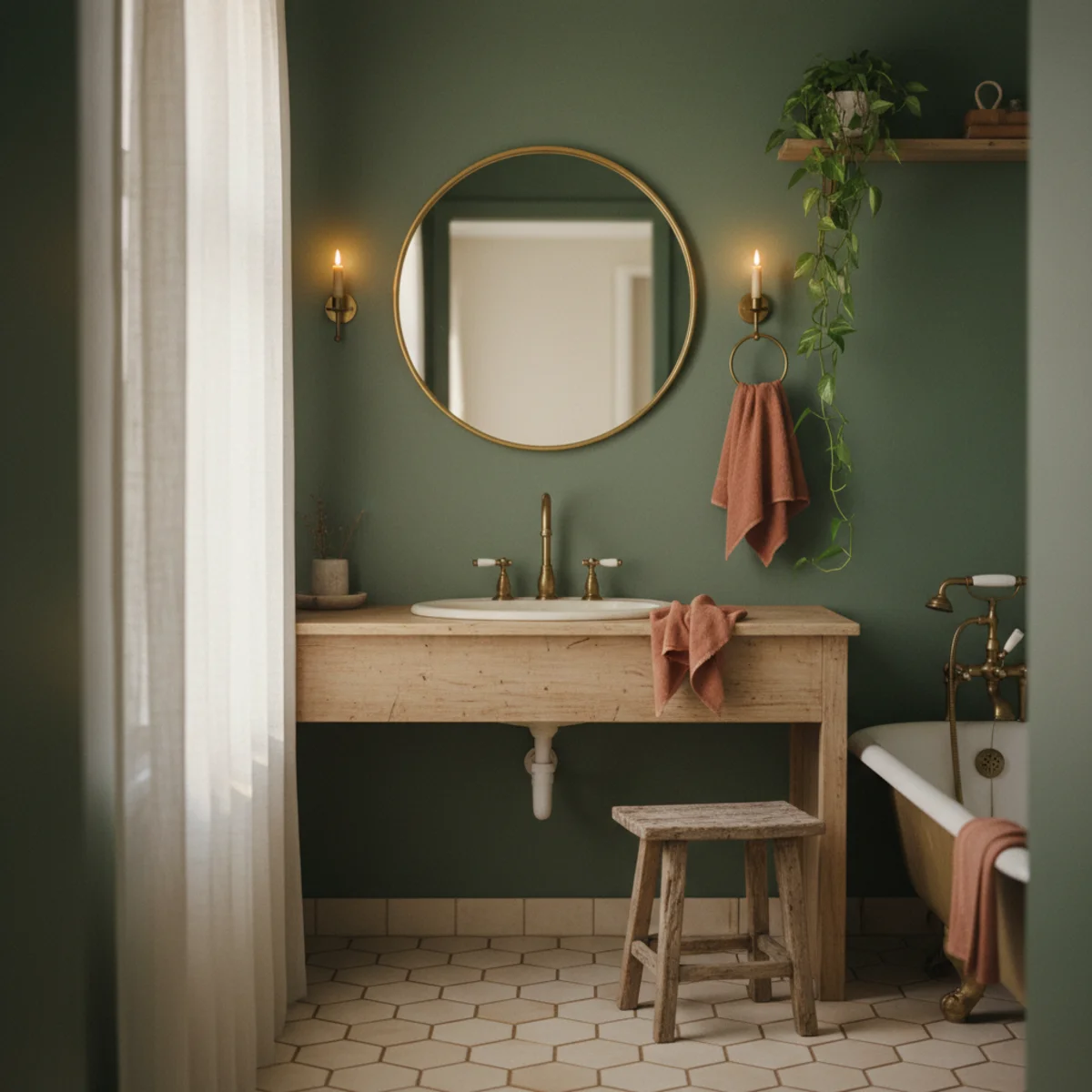
These twelve small bathroom principles apply to full baths under 60 square feet and half-baths, where every surface is seen at close range and every material choice registers directly with everyone who uses the space. Each principle names the specific move, the exact products and costs, and the reason that particular change improves warm character more than visual size.
The small bathroom's warmth challenge is different from the small living room's: it's a wet environment with specific material requirements, where natural wood needs waterproofing, where tile dominates the surface area, and where the mirror and lighting work together as a primary compositional element. The twelve moves below address the bathroom's specific constraints while applying the same warm-home principles of natural materials, warm light, and organic textures.
By the end of this guide, you'll know exactly how to make a small bathroom warm — hanging a large mirror to extend the space, adding warm-toned tile, bringing in a wood stool or shelf, swapping to brass fixtures, going vertical with storage, using a real linen towel, lighting warmly at face height, adding a small plant, choosing a warm or bold color, keeping the floor clear, adding a textured bath mat, and styling a tray with objects.
WHAT'S INSIDE
- Why a large mirror in a small bathroom works harder than any other single addition
- Warm-toned tile — the surface that determines the bathroom's ambient light temperature
- Brass fixtures — the hardware swap that transforms the room's material language
- Warm sconce light at face height — the only bathroom lighting that flatters
Small bathrooms reward warmth more than any room — they start so cold and hard that a little wood, soft light, and texture transforms them.
— House Beautiful [citation needed — verify before publish]
What makes a small bathroom feel bigger and warmer?
A small bathroom feels bigger and warmer through a combination of light-reflecting surfaces and smart storage for the space, and warm materials and soft touches for the coziness. The two goals work together: clearing clutter and bouncing light makes a tight room feel larger, while wood, warm metal, soft textiles, and good lighting make a cold hard room feel inviting.
The space tricks are familiar — a large mirror to bounce light, vertical storage to clear surfaces, a light or warm color, and a clear floor. The warmth tricks are what most people skip in a bathroom: a wood stool or shelf, brass fixtures instead of chrome, a real linen towel, warm lighting at face height, a small plant, and warm-toned tile like zellige or terracotta. Combine the two and a small bathroom stops being the coldest room and becomes a small, warm retreat.
More in By Room you may love
See allWhy small bathroom warmth matters in 2026
As the warm-home aesthetic reached every room, the bathroom — long treated as purely functional — got the warmth treatment, and the small bathroom especially, since it starts so cold and hard. Pinterest's small bathroom searches climb every year, toward warm materials, zellige tile, and cozy touches over clinical white-and-chrome.
The honest appeal is that the bathroom is one of the few rooms you're in every day with full attention, and a cold hard one is genuinely unwelcoming. As warm materials, brass, and natural texture spread through the home, the small bathroom proved the most transformable — because it starts coldest, a little wood, soft light, and texture does the most. The 2026 small bathroom feels bigger through smart space tricks and warmer through materials the clinical version lacked.
24 small bathroom ideas
01Hang a Large Mirror
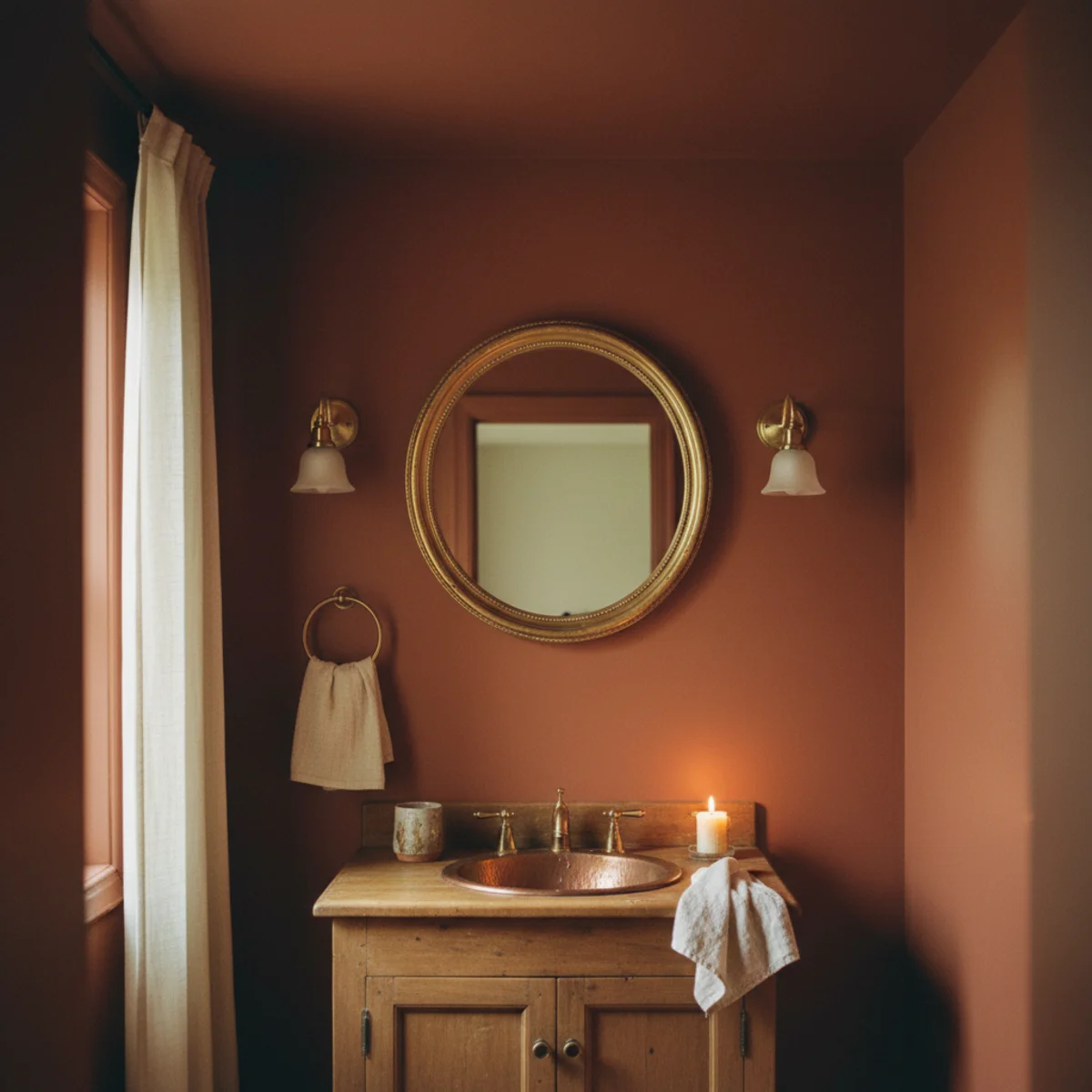
A large mirror — ideally 80 to 90% of the vanity width and at least 24 inches tall, or a full wall-width mirror above the vanity — is the small bathroom's most-impactful single addition. The mirror doubles the perceived depth of the room, reflects warm light throughout the space, and creates the composed focal wall that any small bathroom needs. Cost: $60-300 for a quality framed mirror.
Small bathroom mirror specifications: SIZE — as large as the wall above the vanity accommodates. Full vanity width minus 2-3 inches on each side is the ideal: for a 36-inch vanity, a 30-32-inch wide mirror. Full-width mirrors that span wall-to-wall above the vanity maximize light reflection and perceived space. HEIGHT — 24-36 inches tall for standard vanity mirrors. Taller mirrors (36-48 inches) above the vanity reflect more of the room and extend the space-doubling effect upward. FRAME — aged brass frame ($80-200 from West Elm, CB2, or Amazon), vintage gilded frame from estate sales ($30-100), or round brass frame ($60-180). The frame material belongs to the bathroom's warm palette. ROUND MIRROR — a large round mirror (24-30 inches diameter) above a vanity reads as a distinct design choice and fits well with deep-painted or wallpapered bathroom walls. POSITIONING — mirror center at approximately 60 inches from floor (slightly higher than eye level to reflect more of the room from the standing position). INSTALLATION — into wall studs or with heavy-duty drywall anchors rated for the mirror weight.
AFFILIATE SLOTMIRRORFull vanity width minus 2-3 inches on each side; aged brass or vintage gilded frame ($60-300); center at 60 inches from floor; as large as wall accommodatesAdd affiliate URL when configuredWhy it works
Because a large mirror performs three simultaneous functions that nothing else achieves: it doubles the apparent depth of the room (the reflection behind the mirror reads as additional room), it multiplies the light (warm sconce light reflects back from the mirror and fills the room with doubled warm light), and it creates a composed focal wall (the large mirror with flanking sconces reads as an architectural element rather than as a utility fixture). No other single item in a small bathroom performs three simultaneous room-improving functions.
Pro tip — Mount the mirror as close to the wall sconces as possible without overlapping — the proximity of mirror edge to sconce creates the side-lighting reflection that fills the bathroom with warm light from multiple angles. A mirror positioned 2-3 inches from each flanking sconce maximizes this warm-light multiplication effect.
Large brass-framed mirror spanning near the full vanity width — three simultaneous improvements in one installation. See also: powder-room-decor
02Add Warm-Toned Tile
The tile in a small bathroom determines its ambient light temperature more than any other element — cool white tile reflects cool light throughout the space; warm cream, terracotta, or warm grey tile reflects warm light. If any remodeling is planned, warm tile is the highest-impact material investment. If remodeling isn't planned, warm-toned tile on a single feature wall or floor is achievable at modest cost.
Warm bathroom tile options: TERRACOTTA FLOOR TILE — 4x4 or 6x6 unglazed or glazed terracotta on the bathroom floor, $2-6 per sq ft. The most warm-reading bathroom floor of any option. WARM CREAM SUBWAY — 3x6 cream or warm white subway tile (not cool bright white) with warm tan grout for walls and shower surround. $0.50-2 per tile. ZELLIGE-STYLE HANDMADE TILE — irregular-surface handmade tile in warm cream or warm sage from specialty tile retailers. $8-20 per sq ft, more expensive but produces the most organic warm character. WARM HEXAGONAL FLOOR — small warm cream, warm blush, or muted sage hexagon tile with warm grout. $3-8 per sq ft. ENCAUSTIC CEMENT TILE — patterned cement tile in warm earth tones for floor feature or wet wall. $8-15 per sq ft. GROUT COLOUR — always warm buff or warm tan. Bright white grout with warm tile creates cold visual interruption that undercuts the tile's warmth. WARM-TONED GROUT ALONE — if tile replacement isn't possible, regrout existing cool tile with warm tan grout ($8-15 for a tube, replaces grout with an oscillating tool). The warm grout shifts the tile's reading toward warmer.
AFFILIATE SLOTTILEWarm cream subway ($0.50-2/tile), terracotta floor ($2-6/sq ft), or zellige-style handmade ($8-20/sq ft); always warm buff or tan grout; or regrout only ($8-15) as lowest-cost warm shiftAdd affiliate URL when configuredWhy it works
Because tile is a reflective hard surface covering typically 60-80% of a bathroom's surface area (floor, walls, shower surround). The light that enters the bathroom from the sconces, overhead fixture, and window bounces off this dominant surface material and back into the room at the tile's own color temperature. Cool white tile reflects cool-tinted light; warm cream tile reflects warm-tinted light. The tile is the bathroom's primary light-reflector, and its color determines the ambient warmth of all light in the space.
Pro tip — Order 10% more tile than calculated square footage — tile breakage during installation typically runs 5-8%, and having extra allows for repairs without needing to source a later production batch (which often doesn't match perfectly). Store the excess tiles in a labeled box for future repairs.
Warm cream subway tile with tan grout — warm-tinted light reflection across the bathroom's dominant surface material. See also: terracotta-color-palette
03Bring In a Wood Stool or Shelf
A small wooden stool beside the tub or shower, or a simple wooden floating shelf beside the vanity, introduces the warm natural material that all-tile bathrooms miss. The warm wood grain against cool tile and chrome surfaces creates exactly the warm material contrast that makes bathrooms feel inhabited rather than merely functional. Cost: $25-100.
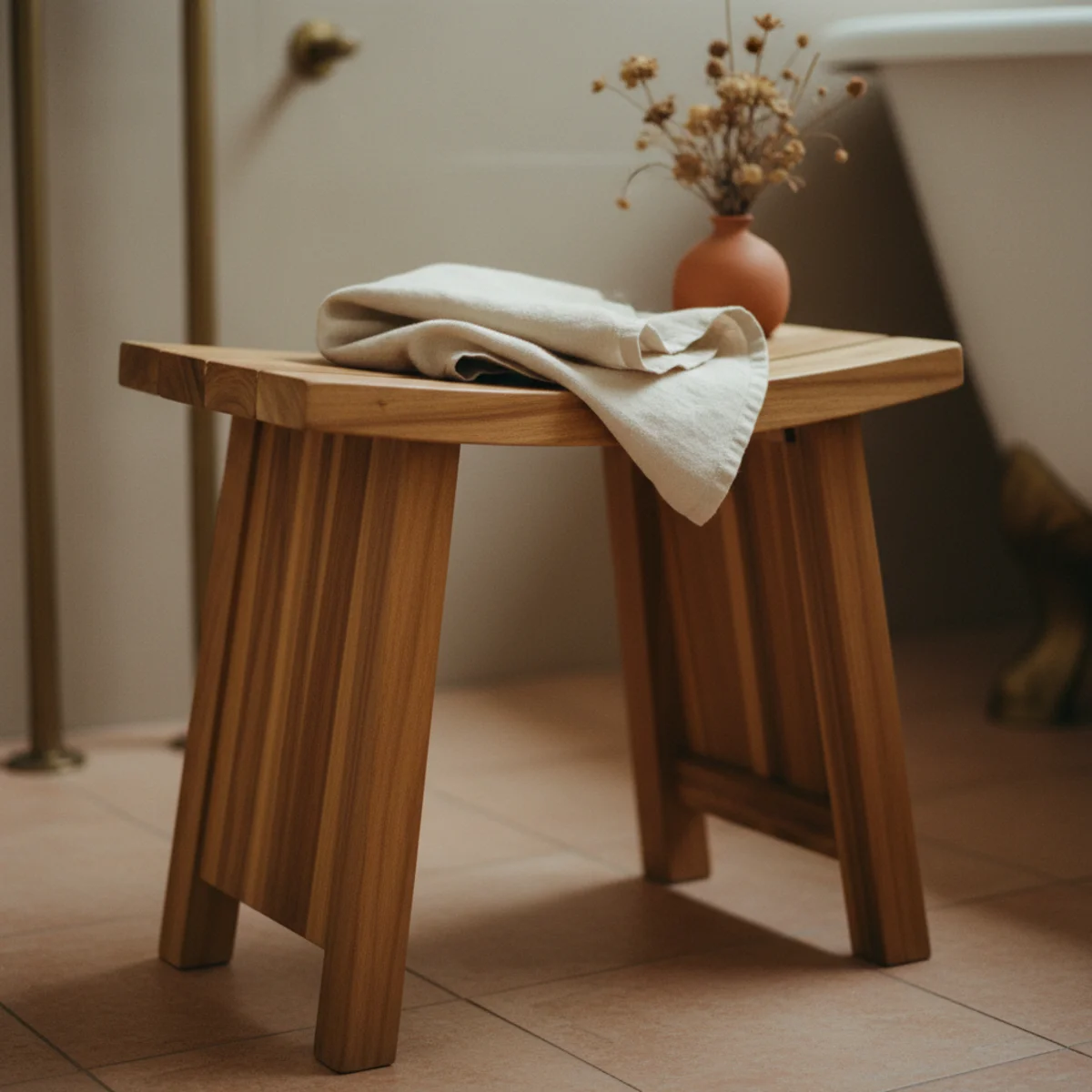
Bathroom wood stool and shelf options: TEAK SHOWER STOOL — teak is naturally water-resistant, develops beautiful silver patina with moisture, and reads as warm-collected in bathrooms. $40-120 from bathroom retailers, IKEA, or Amazon. Teak's oils prevent rot and fungus growth in wet environments. SIMPLE WOODEN STEP STOOL repurposed — a small vintage wooden step stool ($10-30 from estate sales) beside the tub for towel or product staging. Seal with exterior-grade clear sealer ($10-15) for moisture resistance. FLOATING WOOD SHELF — a simple 1x6 or 1x8 inch solid wood shelf ($15-30 for the wood, $5-10 for brackets) mounted beside the vanity or above the toilet. Sand, oil with Danish oil or apply matte sealant for moisture protection. Mount into studs. BAMBOO SHELF — bamboo floating shelf ($25-60) from IKEA or Amazon, naturally moisture-resistant. WOOD ELEMENT PRINCIPLE — even one small wood element (a small shelf, a teak stool, a wooden soap dish) in a bathroom introduces the warm organic material contrast that chrome, porcelain, and tile alone cannot provide. The warm wood is the bathroom's single most-effective 'living material' anchor.
AFFILIATE SLOTMATERIALTeak shower stool ($40-120), wooden step stool sealed with exterior clear coat ($10-30 estate sales + $10-15 sealer), or floating wood shelf ($20-40 with brackets)Add affiliate URL when configuredWhy it works
Because wood is the bathroom's only warm organic material — everything else (tile, porcelain, chrome, mirror glass) is a cool hard manufactured surface. The grain variation, natural color warmth, and organic imperfection of wood registers as categorically different from every other bathroom material. In the absence of natural light (most bathrooms have limited windows), the wood element provides the organic warmth that the bathroom's other surfaces specifically lack.
Pro tip — Apply a penetrating teak oil or exterior-grade Danish oil to any bathroom wood piece annually — the moisture in bathroom environments gradually dries out wood oils over time. Annual re-oiling maintains the warm teak color and prevents the wood from drying, cracking, or graying faster than natural aging would produce.
Teak stool beside the tub — organic warmth against all the manufactured hard surfaces. See also: modern-farmhouse-decor
04Swap to Brass Fixtures
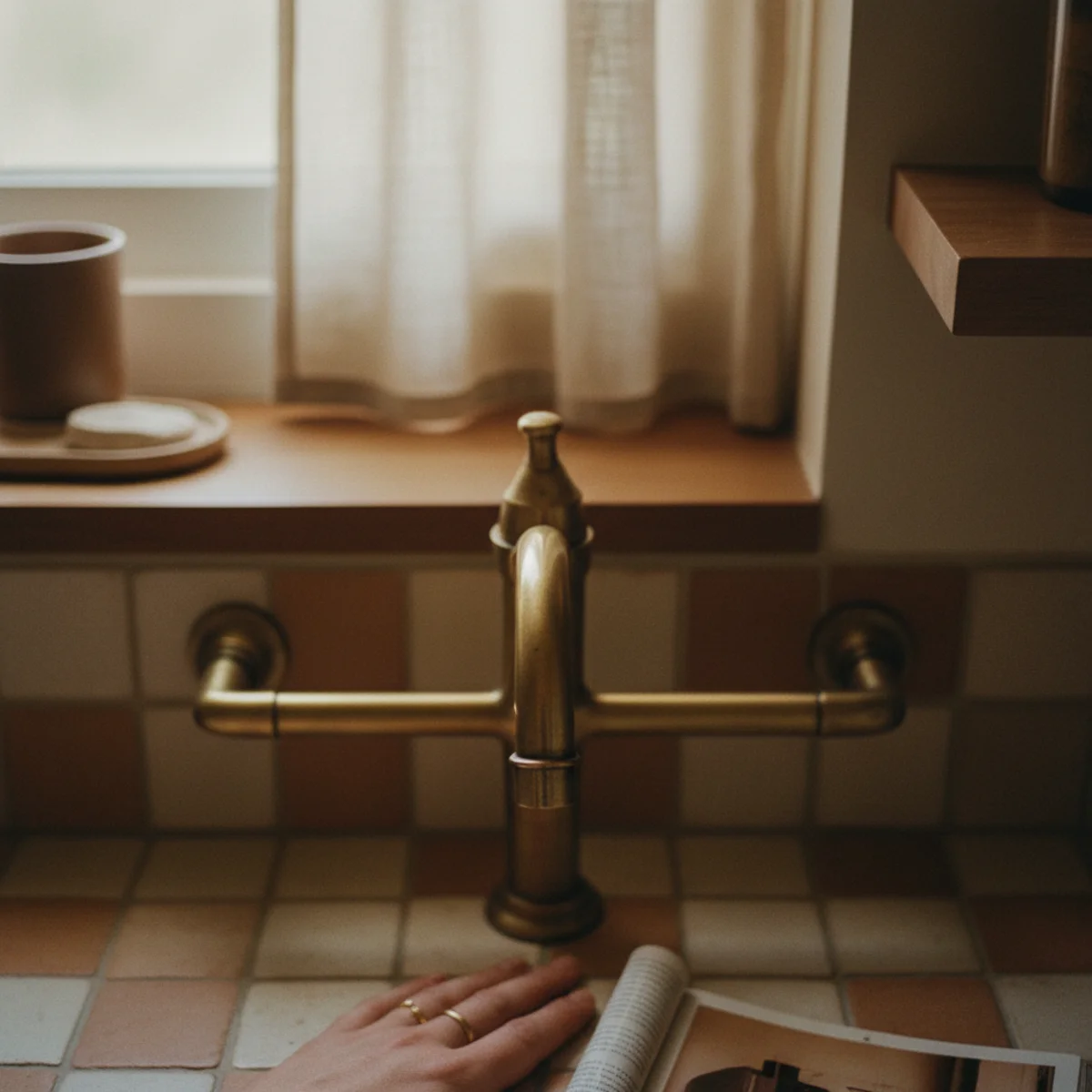
The bathroom fixture swap — faucet, towel bar, toilet paper holder, shower curtain rod, robe hooks — from chrome or brushed nickel to aged or unlacquered brass is the highest return-per-dollar warm transformation in any bathroom. The warm brass reads as deliberately chosen; chrome reads as builder default. Cost: $150-400 for a full bathroom hardware set.
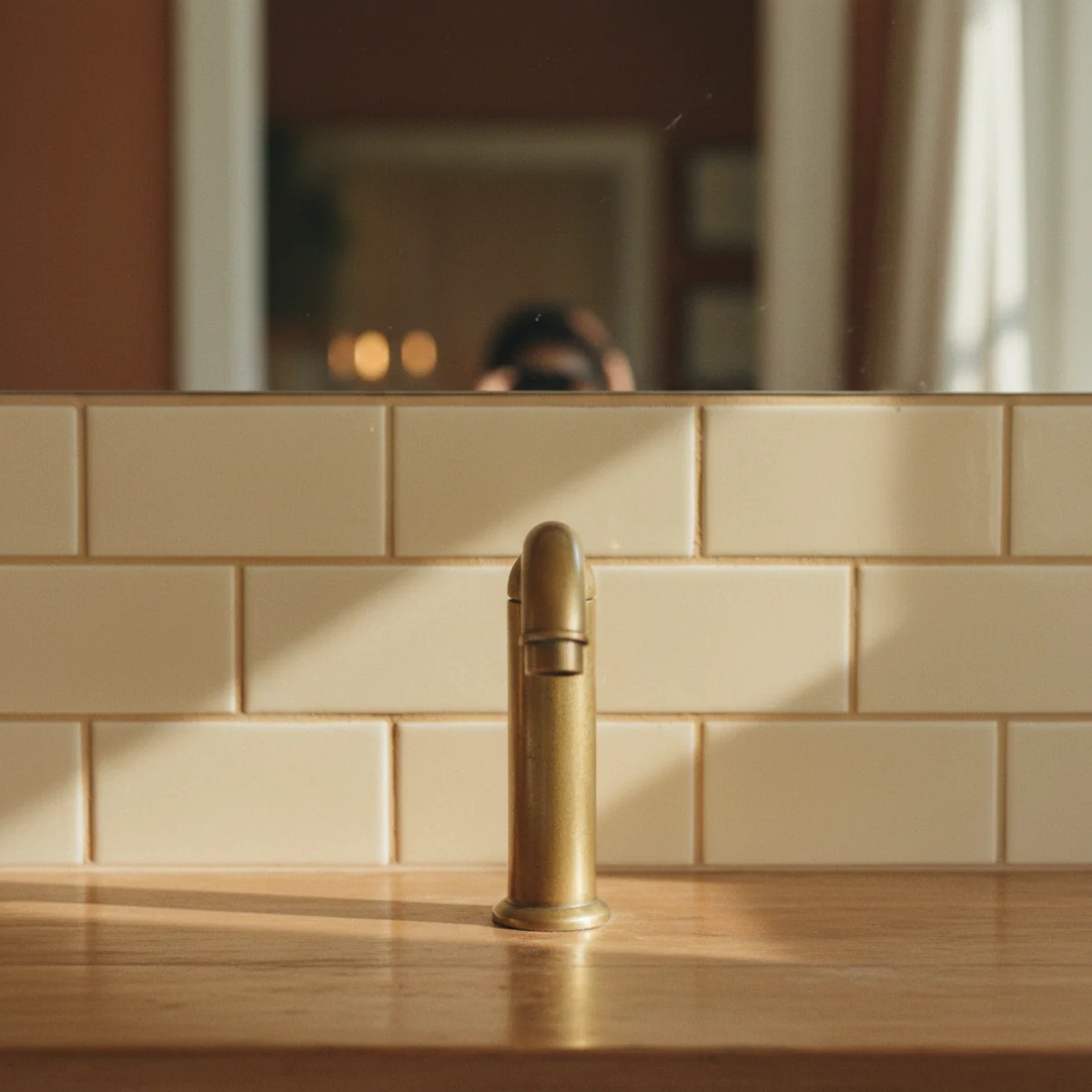
Bathroom brass fixture swap: FAUCET — aged brass or unlacquered brass basin faucet at $100-250 (Moen, Delta, Kohler all available in Champagne Bronze or brushed gold, which are their warm brass-adjacent finishes). For genuine aged brass: specialty plumbing suppliers or Etsy vintage faucet sources. TOWEL BAR — aged brass at $25-60 from Rejuvenation, Schoolhouse, or Amazon. TOILET PAPER HOLDER — aged brass at $20-50. ROBE HOOK — aged brass at $15-35. SHOWER CURTAIN ROD — aged brass or matte gold at $30-80. SHOWER HEAD — brushed gold or unlacquered brass at $50-200. BATHTUB FAUCET — if replacing: aged brass floor-standing or wall-mounted faucet at $200-600. CONSISTENCY — all pieces from the same finish family within the same warm brass temperature. Don't mix aged brass with warm gold; the slight differences in tone register as mismatched at close range. BUY ALL AT ONCE from one product line or one supplier for finish consistency. INSTALLATION — most fixture swaps are direct replacement. Faucet replacement requires turning off water supply ($0 skill, 30-60 minutes). More complex changes (shower head, bathtub faucet) may need a plumber ($80-150 per hour).
AFFILIATE SLOTFIXTURESAged brass or unlacquered brass faucet ($100-250), towel bar ($25-60), TP holder ($20-50), shower rod ($30-80), hooks ($15-35); all same finish from one supplierAdd affiliate URL when configuredWhy it works
Because fixtures are the bathroom's most-visible metal elements — the faucet, towel bar, and hardware are seen and touched multiple times daily. Chrome reads as the default commercial choice because it is: chrome is specified as the builder standard in nearly all new construction because it's the cheapest option. Aged brass reads as chosen because it never appears by default — someone specifically decided to install it. This signal (that each piece was deliberately selected) registers as warm character regardless of the individual fixture's aesthetic quality.
Pro tip — Start with the towel bar and toilet paper holder ($45-110 for both) before the faucet — these are simple one-screw-per-bracket replacements that take 20 minutes and immediately shift the bathroom's metal language. The faucet replacement requires water shut-off and more involvement; test the brass language with the simpler pieces first.
Aged brass faucet and towel bar — deliberately chosen warmth against the chrome-default standard. See also: powder-room-decor
05Go Vertical With Storage
Small bathroom storage should go vertical rather than horizontal — tall ladder shelves, vertical wall niches, stacked open shelves above the toilet, or a narrow tall cabinet in an unused corner. Vertical storage keeps the floor clear (making the room feel larger), uses the wall height that horizontal arrangements waste, and provides the visual vertical line that small rooms benefit from.
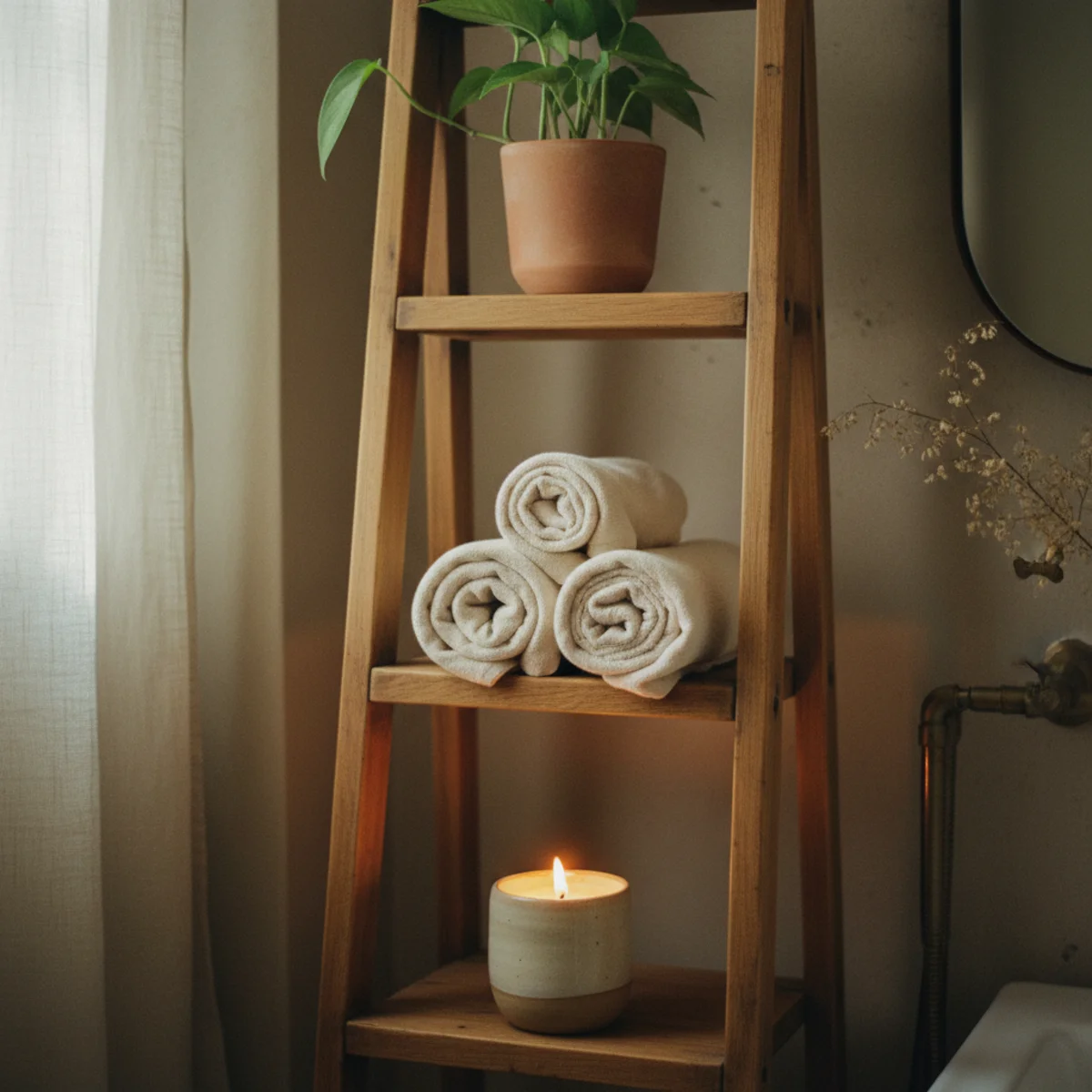
Vertical bathroom storage options: LADDER SHELF — 60-72 inch tall wooden ladder shelf leaned against the wall ($60-150 from IKEA, Target, or Amazon). Holds towels on rungs and products on narrow shelves. Natural wood or painted. FLOATING SHELVES ABOVE TOILET — 2-3 small floating shelves stacked above the toilet tank ($25-60 for all shelves from IKEA LACK system or similar). Stores extra towels, candles, small plants. WALL NICHE IN SHOWER — a recessed niche in the shower tile wall for shampoo and product storage (built during tile installation or retrofitted). Products stored in the niche rather than on a shelf at floor level. NARROW CABINET IN CORNER — a 12-inch deep, 24-inch wide, 72-inch tall corner cabinet ($100-300) using otherwise-dead corner space. MEDICINE CABINET — a recessed or surface-mounted medicine cabinet at vanity height for product storage, replacing or supplementing the mirror. The FLOOR CLEARANCE PRINCIPLE — every item lifted off the bathroom floor makes the room appear larger at floor level. Vertical storage serves both the storage function and the visual floor-clear benefit simultaneously.
AFFILIATE SLOTSTORAGELadder shelf ($60-150), floating shelves above toilet ($25-60), or narrow corner cabinet ($100-300); keep floor clear; style with consistent warm-palette objectsAdd affiliate URL when configuredWhy it works
Because the eye reads floor space as the room's primary space indicator in small rooms — at floor level, the bathroom is whatever square footage it is. The more floor is visible at floor level, the more the room reads as its actual size (rather than smaller). Every object on the floor reduces the perceived floor area; lifting storage to vertical wall positions reveals floor that makes the room read larger. Vertical storage is simultaneously practical (more capacity) and visual (more perceived floor space).
Pro tip — Style the ladder shelf or open shelves with a consistent palette — rolled cream linen towels, warm ceramics for product storage, one small plant on a lower shelf. The consistent warm palette on the vertical storage makes it read as a composed installation rather than as accumulated bathroom storage.
Wooden ladder shelf with rolled towels and small ceramics — vertical storage freeing floor for perceived space. See also: entryway-decor
06Use a Real Linen Towel
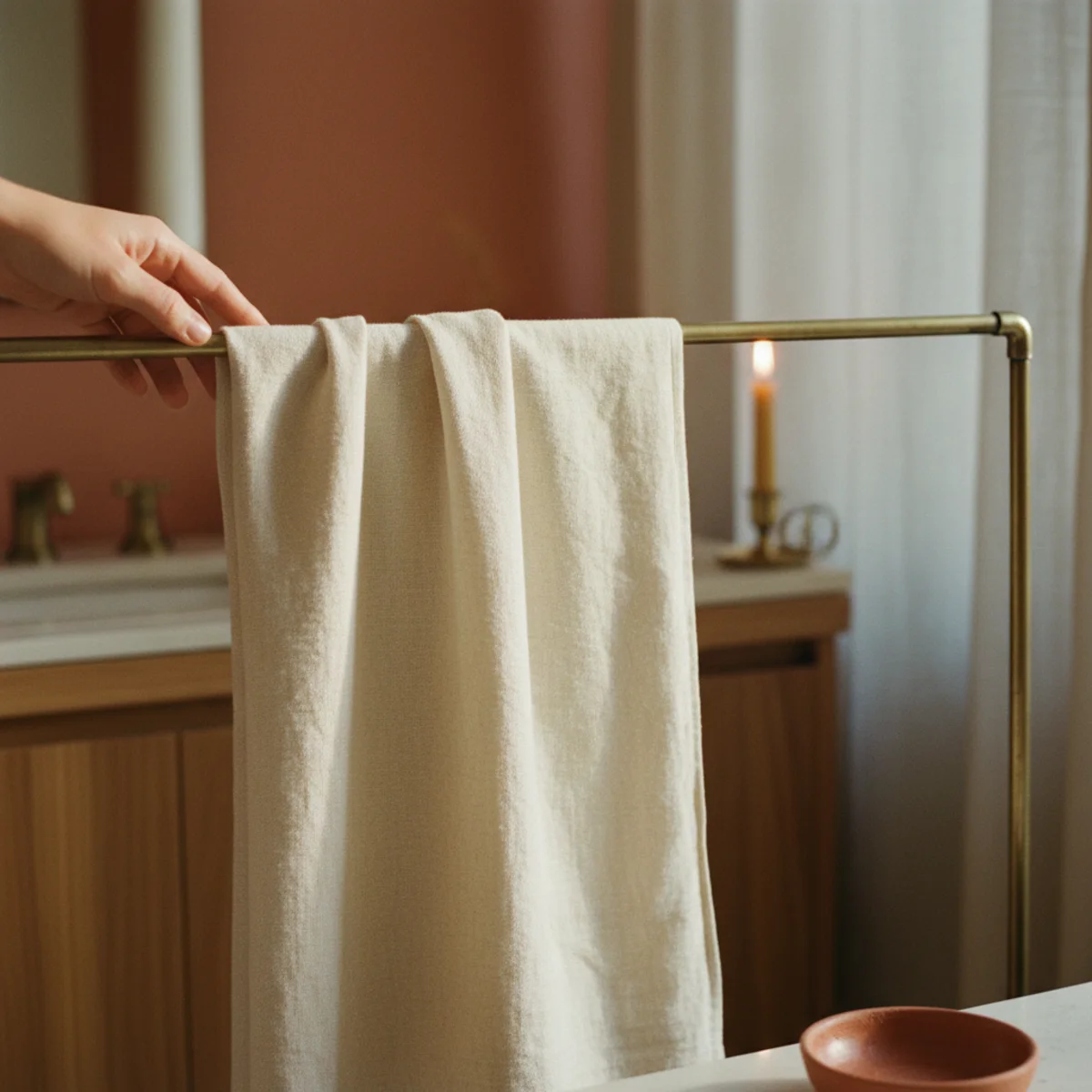
Real linen or quality waffle-cotton towels — hung on the brass towel bar, displayed on the ladder shelf, or rolled and arranged in a small basket — signal warm-home care at the direct-touch level that every bathroom visitor experiences. The texture, weight, and natural fiber quality of a linen or waffle-cotton towel register immediately at use; synthetic terry registers as generic regardless of decoration around it.
Bathroom towel specifics: WASHED LINEN TOWELS — 100% linen bath towels in warm cream, oat, or soft sage. $30-60 each from Quince, Magic Linen, or Etsy linen makers. Pre-wash 3-4 times before first use (linen towels become significantly softer with each wash). WAFFLE COTTON TOWELS — highly absorbent, soft, and beautiful when hung. $20-50 each from Target Threshold waffle collection, Brooklinen, or Parachute. TURKISH PESHTEMAL — the traditional Turkish flat-weave towel. $20-50 each. Lighter weight than standard terry, dries quickly, beautiful striped design in warm earth tones. ROLLED DISPLAY — rolling 3-4 towels and stacking them in a small open basket or on a shelf is both practical and visually composed. Roll tight, ends out. HANGING PRESENTATION — hang one towel per bar, ensuring the hem is visible at the bottom edge (the hem detail reads as quality at close range). For double bars: one hanging towel, one loosely draped. TERRY ALTERNATIVE — if replacing all towels isn't immediately affordable, add one peshtemal or linen hand towel alongside existing terry bath towels. The one quality piece signals the intended direction.
AFFILIATE SLOTTEXTILEWashed linen bath towel ($30-60 each from Quince or Magic Linen), waffle cotton ($20-50), or Turkish peshtemal ($20-50); warm cream, oat, or sage; pre-wash 3x before first useAdd affiliate URL when configuredWhy it works
Because towels are the bathroom's most-touched textile — used by every person who bathes, handled multiple times daily, and experienced at the most tactile moment (post-shower when the skin is sensitive). The material quality of a linen or waffle-cotton towel registers as care at the moment of direct contact in a way that wall colors, fixtures, and mirror frames (which are seen but not touched) cannot approach. The towel is the bathroom's most direct sensory communication to every user.
Pro tip — Wash linen towels on a warm gentle cycle and hang to dry rather than tumble drying — air-dried linen towels have a slightly textured character that is more specific to linen than the softened-smooth result of tumble drying. The slight texture of air-dried linen is part of its warmth character.
Washed cream linen on brass towel bar — the most-touched element communicating warm-home care at direct contact. See also: best-linen-bedding
07Light It Warm at Face Height
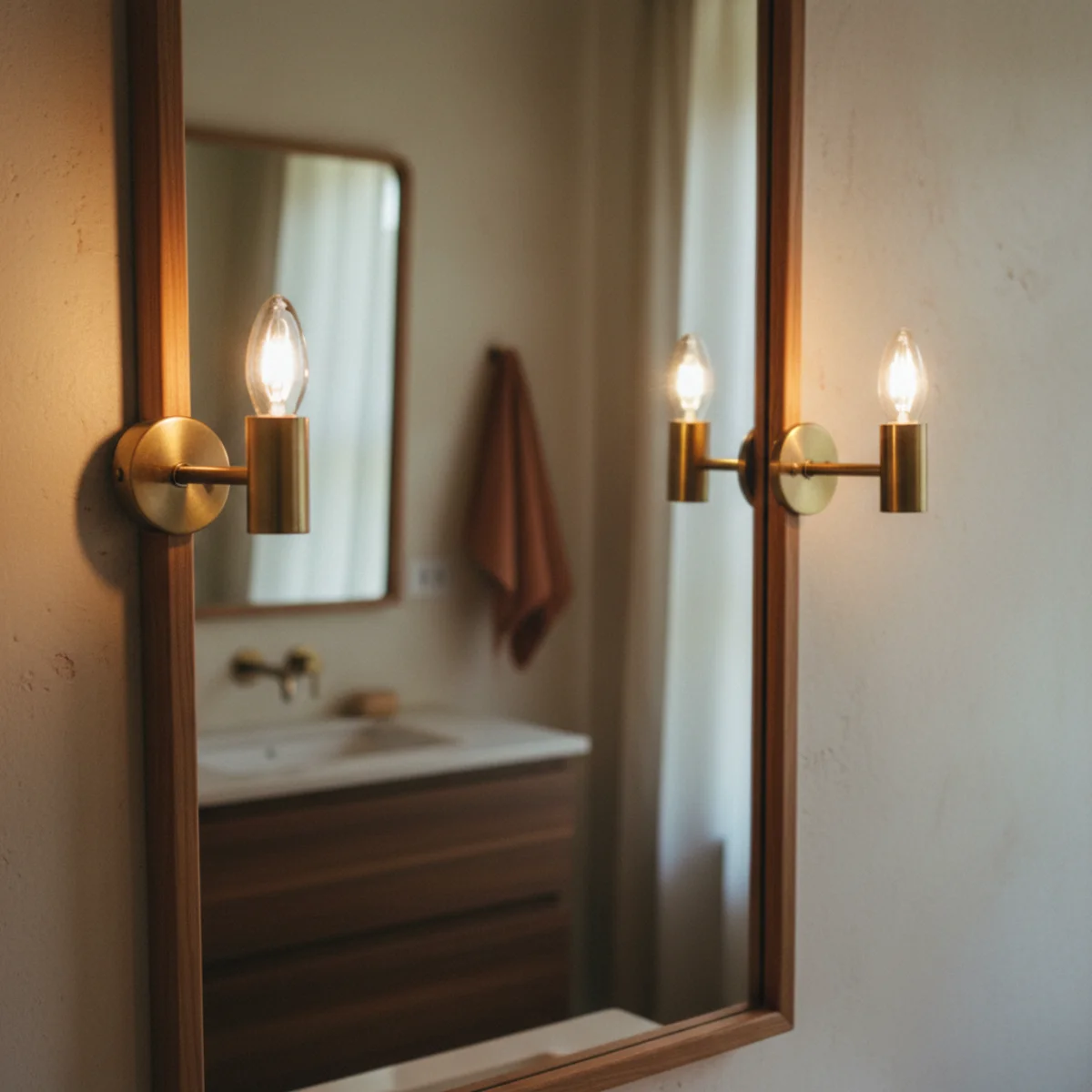
The same principle as the powder room: warm sconces flanking the mirror at eye level (60-65 inches from floor) provide the most flattering and most atmospheric bathroom lighting. Overhead fixtures alone create unflattering downward shadows on the face. Warm sconces at face height, combined with the overhead dimmed to 20-30% for general use, transform any bathroom from functional space to warm retreat.
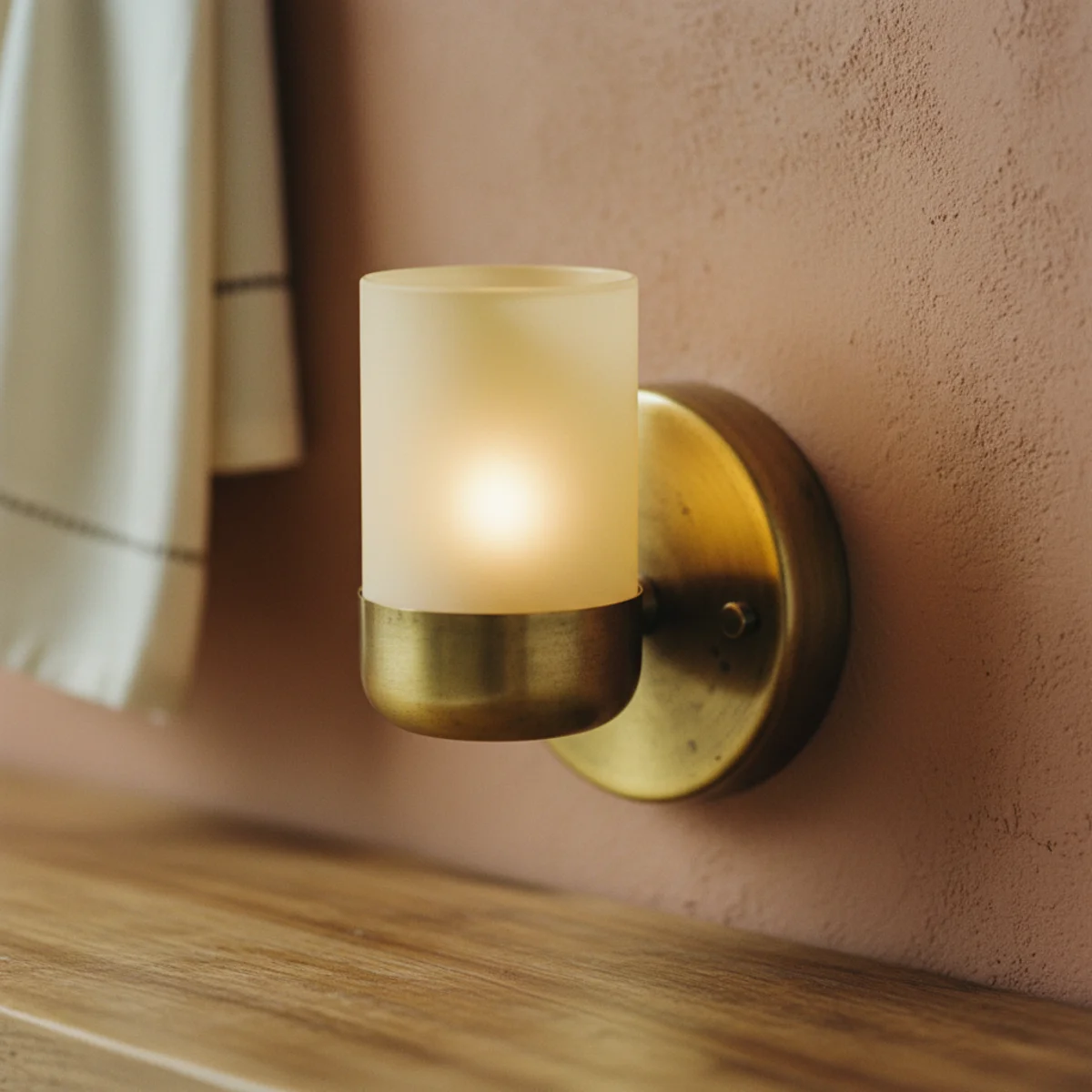
Small bathroom sconce lighting: POSITION — one sconce on each side of the mirror at 60-65 inches from floor, or positioned at the sides of the medicine cabinet face if a medicine cabinet replaces the standard mirror. STYLE — aged brass sconces with warm bulbs ($60-200 each). For small bathrooms, smaller sconces (sconces under 10 inches in total dimension) work better than large ones that crowd the limited mirror-flank space. PLUG-IN OPTION — plug-in sconces with decorative cord covers ($80-200 each) for bathrooms without existing electrical in the right position. BULB — warm 2700K LED at 40-60W equivalent. Edison-style warm LED in open-shade sconces for maximum warm atmosphere. DIMMER — sconces on dimmer switches allow full-brightness for grooming and low-intensity for warm atmosphere during baths or quiet mornings. OVERHEAD LIGHT — keep the existing overhead fixture but add a dimmer switch ($15-25). Use overhead at 20-30% in conjunction with sconces. BATHROOM FAN LIGHT COMBINATION — if the overhead is a combination fan/light, the lighting cannot be dimmed independently from the fan. Consider a separate ceiling-mounted low-profile light on its own dimmer if the fan-light combination produces too much cool overhead light.
AFFILIATE SLOTLIGHTINGAged brass sconces at 60-65 inches on each side of mirror ($60-200 each); 2700K warm bulbs; dimmer on overhead at 20-30%; plug-in with cord cover if no existing electricalAdd affiliate URL when configuredWhy it works
Because overhead bathroom lighting produces shadows from above (the same light direction that makes faces look tired and unwell in photographs taken from above). Flanking sconce light at eye level fills these shadows from the sides, producing the flattering, accurate, warm facial illumination that mirrors actually require. The functional benefit (accurate appearance assessment) and the atmospheric benefit (warm golden glow from multiple side sources) coincide. Face-height warm sconces are the only bathroom lighting approach that serves both purposes simultaneously.
Pro tip — Install vanity sconces before painting the bathroom walls to avoid working around finished painted surfaces — the sconce installation requires drilling pilot holes and accessing electrical boxes, which produces debris and requires wall patching. Completing the electrical work before painting means only one patch-and-paint session for sconce holes rather than two.
Brass sconces at face height with dimmed overhead — the only bathroom lighting that serves both flattering illumination and warm atmosphere. See also: best-lamps-warm-light
08Add a Small Plant
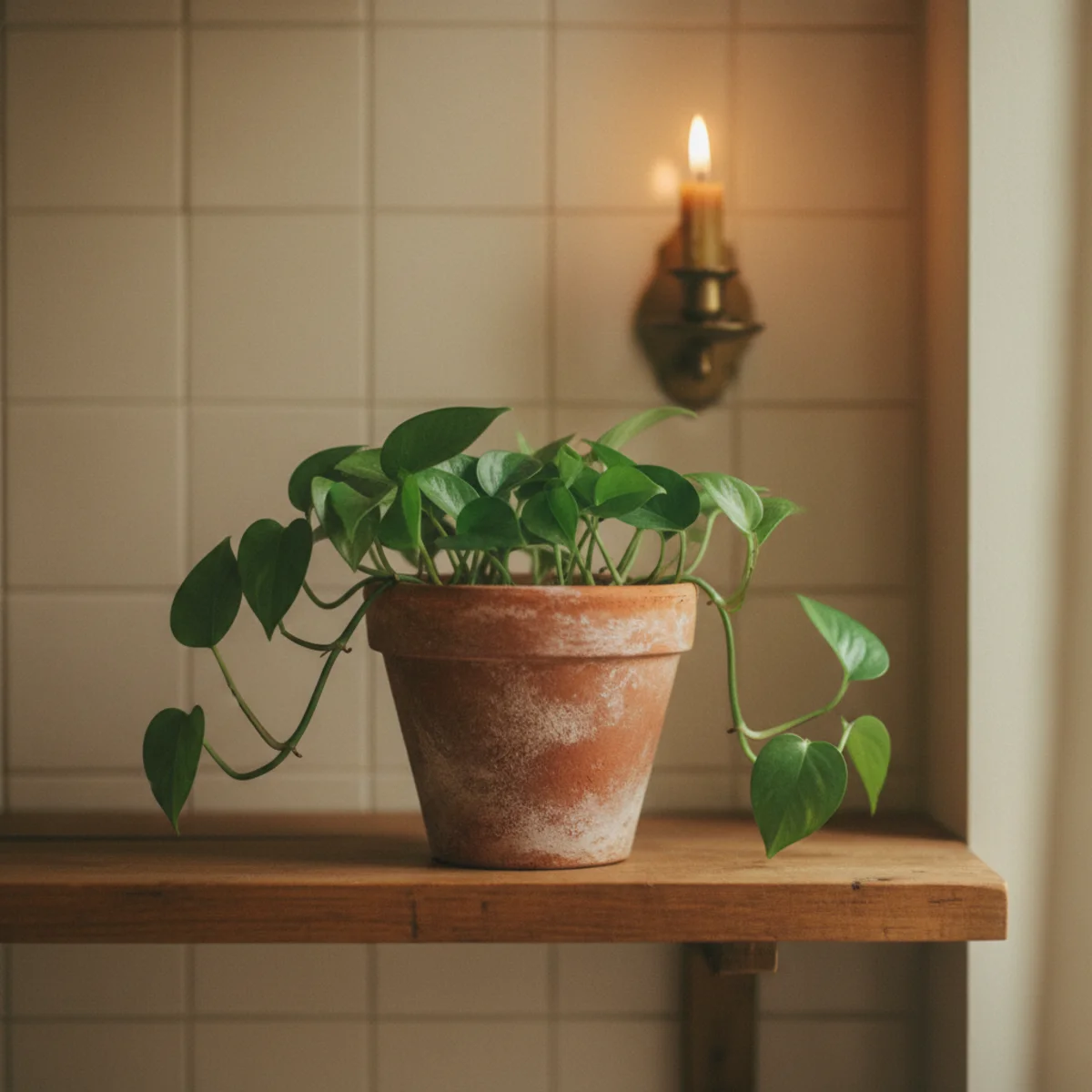
A small plant in the bathroom — a trailing pothos on the windowsill, a small peace lily on a shelf, a trailing ivy above a cabinet — adds organic life to the all-hard-surface environment. Bathrooms have the humidity that most tropical plants specifically benefit from, making the bathroom one of the easiest plant environments in the house despite the low light. Cost: $5-20.
Bathroom plant specifics: BEST PLANTS FOR BATHROOMS — POTHOS (Epipremnum aureum): thrives in humidity and low light, trails beautifully from a shelf or above a cabinet. ZZ PLANT: handles low light and occasional neglect. PEACE LILY (Spathiphyllum): grows toward the light from wherever placed, produces dramatic white flowers, handles low light and humidity. TRAILING IVY: trails from shelves in humidity, handles low light. FERN (Boston, sword, or maidenhair): requires high humidity — the bathroom is literally the best room in the house for these. Air plant (Tillandsia): requires no soil, absorbs moisture from the bathroom's humid air, minimal care. PLACEMENT — on the windowsill (maximum natural light), on a shelf near the window, on top of the toilet tank, or hanging in a small macramé hanger from a ceiling hook. LIGHT CONSIDERATION — most small bathrooms have small windows, but even a small window provides sufficient light for pothos, ZZ, and peace lily. HUMIDITY BENEFIT — shower steam and sink humidity specifically benefits tropical plants; bathroom plants typically look more lush and healthy than equivalent plants elsewhere in the home.
AFFILIATE SLOTORGANICPothos ($6-12), peace lily ($10-20), or fern ($8-20) on windowsill, shelf, or macramé hanger; bathroom humidity benefits tropical plants specificallyAdd affiliate URL when configuredWhy it works
Because most popular houseplants are tropical species that evolved in humid rainforest environments. The average home interior has 30-50% humidity; tropical plants prefer 50-70%. Bathrooms after showering reach 70-80% humidity, providing the specific moisture level that tropical plants evolved in. The bathroom is the closest approximation to a tropical plant's natural environment that a standard home contains. Plants in bathrooms typically grow faster, have larger leaves, and show fewer dry-air stress signs than the same plants elsewhere.
Pro tip — Choose a trailing pothos specifically for above-cabinet or above-mirror positioning — pothos can trail 3-5 feet from a starting position over 6-12 months, eventually framing the bathroom mirror with organic greenery. The long trailing vine from a single plant on a high shelf creates a disproportionate botanical impact at very low cost ($6-12 for the plant).
Trailing pothos on bathroom shelf — tropical plant thriving in the humidity it evolved to prefer. See also: indoor-plant-corner
09Choose a Warm or Bold Color
Painting the bathroom walls (not tile) a warm color — from the deepest terracotta to the most subtle warm cream — shifts the room's temperature more efficiently than almost any material change at equivalent cost. For small bathrooms, the same principle as powder rooms applies: deep color reads as atmospheric rather than oppressive in brief-use rooms. Cost: $30-60 for a quart.
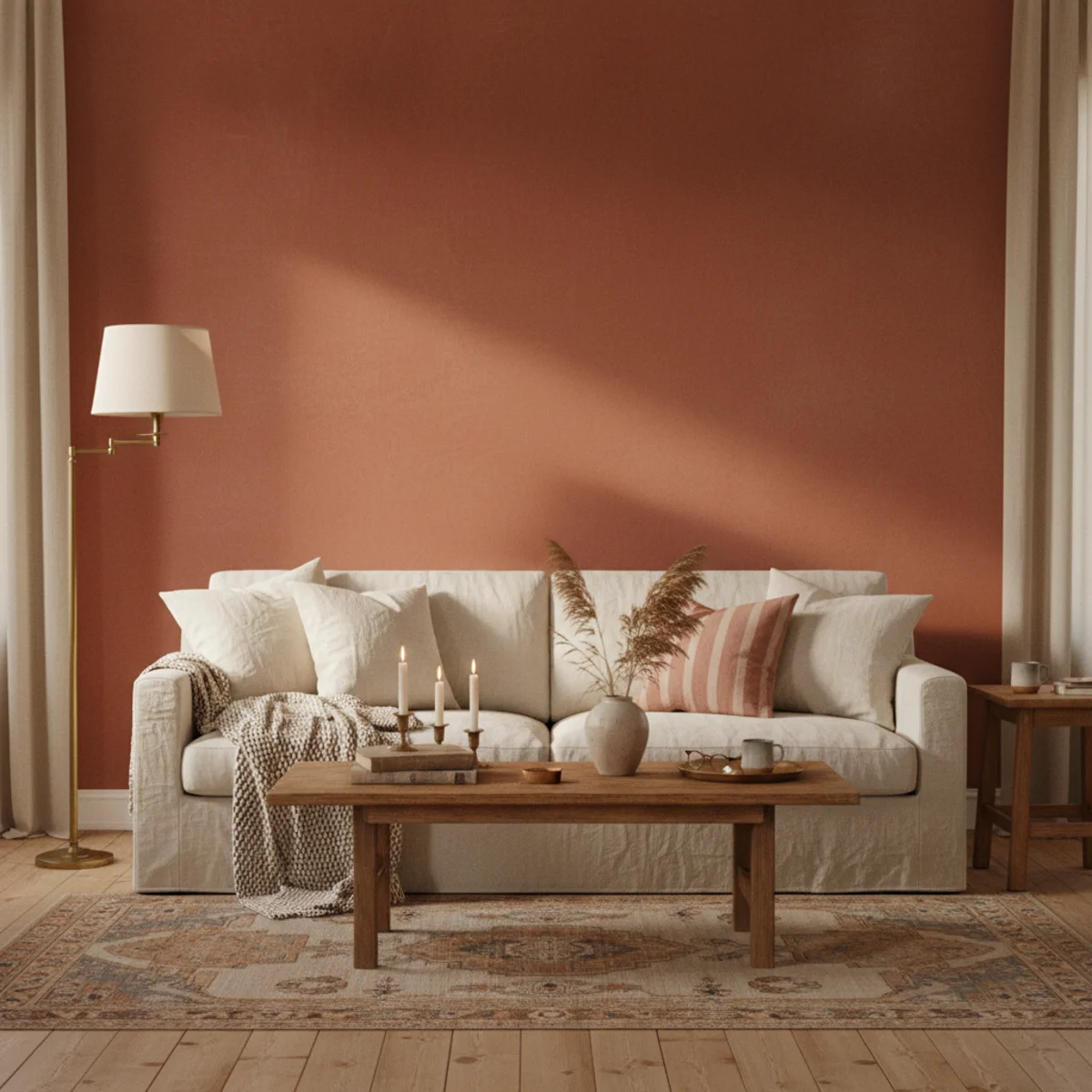
Small bathroom paint options: DEEP TERRACOTTA — BM Pottery 1297 or F&B Red Earth 64. The most warm-reading bathroom wall color; references the same earthy warmth as terracotta tile. WARM CHARCOAL — F&B Off-Black 57 for a sophisticated atmospheric bathroom. Works with brass fixtures and white tile. FOREST GREEN — F&B Calke Green 80 or BM Forest Green for a biophilic bathroom retreat. DEEP NAVY — F&B Hague Blue 30, paired with brass fixtures and warm cream tile. WARM CREAM — F&B Pointing 2003 or BM Soft Chamois OC-13 as the minimum warm intervention. If deep color is too much, warm cream replaces cool white as the most-impactful minimal change. HUMIDITY-RESISTANT PAINT — use bathroom-specific paint or add a mildew-resistant additive ($5-10) to standard paint. Benjamin Moore ADVANCE and SW Emerald are both humidity-resistant; standard wall paint is not. MOISTURE-VULNERABLE AREAS — don't paint tile or areas that get direct water contact; paint the dry walls above tile and the ceiling in non-shower areas. THE CEILING — paint the ceiling the same deep color as the walls for the bathroom cocoon effect (same principle as the powder room). Even in a full bathroom, same-color ceiling-and-walls reads as designed rather than enclosed.
AFFILIATE SLOTCOLORDeep terracotta (BM Pottery 1297), charcoal (F&B Off-Black 57), forest green (F&B Calke Green 80), or navy (F&B Hague Blue 30); humidity-resistant paint; ceiling same color as wallsAdd affiliate URL when configuredWhy it works
Because the perception of color is primarily duration-dependent — a deeply saturated warm color that would feel heavy after 8 hours of bedroom occupation reads as immersive and atmospheric after 10 minutes in a bathroom. The brain processes brief intense sensory experiences as pleasurable rather than oppressive; it's only extended exposure that tips intense color from enveloping to draining. Small bathrooms used for 5-15 minutes at a time are exactly the right duration for deep color commitment.
Pro tip — Paint the bathroom ceiling in the same deep color as the walls — the ceiling reflects in the mirror and in the tile surfaces, multiplying the deep color's warmth throughout the space. A deep terracotta ceiling over cream tile and brass fixtures reads as specifically designed; cream ceiling over deep terracotta walls reads as incomplete.
Deep forest green walls above white tile with brass fixtures — deep color as atmospheric rather than oppressive in a 10-minute daily use room. See also: warm-paint-colors
10Keep the Floor Clear
In small bathrooms, floor clutter — product bottles, a scale, extra storage containers, a wastebasket larger than needed — all reduce the visible floor area that makes the room read its actual size. Keeping the bathroom floor clear (only the bath mat and the teak stool, nothing else) produces the maximum visual space from the room's actual square footage.
Floor-clear discipline for small bathrooms: WHAT BELONGS ON THE FLOOR — teak stool (one item, specific purpose), bath mat (one item directly in front of the tub/shower), small wastebasket (one item, as small as functional). Ideally: two items on the floor, three maximum. WHAT GOES VERTICAL — all product storage on shelves, in medicine cabinet, or in under-sink cabinet. Shampoo and soap in a shower niche or on a shower caddy (caddy hung from shower head). WASTEBASKET — the smallest functional size that works for daily use. A 2-3 quart wastebasket in a small bathroom is appropriate; a large kitchen-sized can takes disproportionate floor space. UNDER-SINK — maximize under-sink storage. Tension-rod organizer under the sink ($5-10) doubles storage capacity by adding a hanging row for spray bottles. Small stacking bins organize the under-sink zone so nothing migrates to the floor. WALL-MOUNTED TOILET PAPER HOLDER — a wall-mounted holder eliminates the floor-standing spare roll holder that some bathrooms use. THE DAILY RESET — the bathroom floor clear requires a 2-minute end-of-morning reset: towels hung, any fallen items returned to shelves, mat straightened. The 2-minute daily reset maintains the floor-clear benefit indefinitely.
AFFILIATE SLOTDISCIPLINEMaximum 2-3 items on bathroom floor (teak stool, bath mat, small wastebasket); all other storage vertical; 2-minute daily floor-clear reset; under-sink fully organizedAdd affiliate URL when configuredWhy it works
Because the floor is the horizontal plane that the eye uses to measure room size at the first glance — the amount of visible floor at the first moment of entry is processed as the room's spatial scale. Objects on the floor interrupt this reading and make the room feel smaller than it is. Every inch of floor cleared reads as additional room at the spatial register. The same bathroom with a clear floor and one with 6 items on the floor reads as different sizes even though the actual square footage is identical.
Pro tip — Photograph the bathroom from the doorway at standing height and count the objects visible on the floor — the photo reveals floor clutter more honestly than looking at the room from within it. The objective count of floor objects reveals opportunities for vertical relocation that daily familiarity makes invisible.
Clear floor with bath mat and teak stool only — the eye reading full visible floor area as the room's maximum apparent space. See also: warm-minimalism
11Add a Bath Mat With Texture
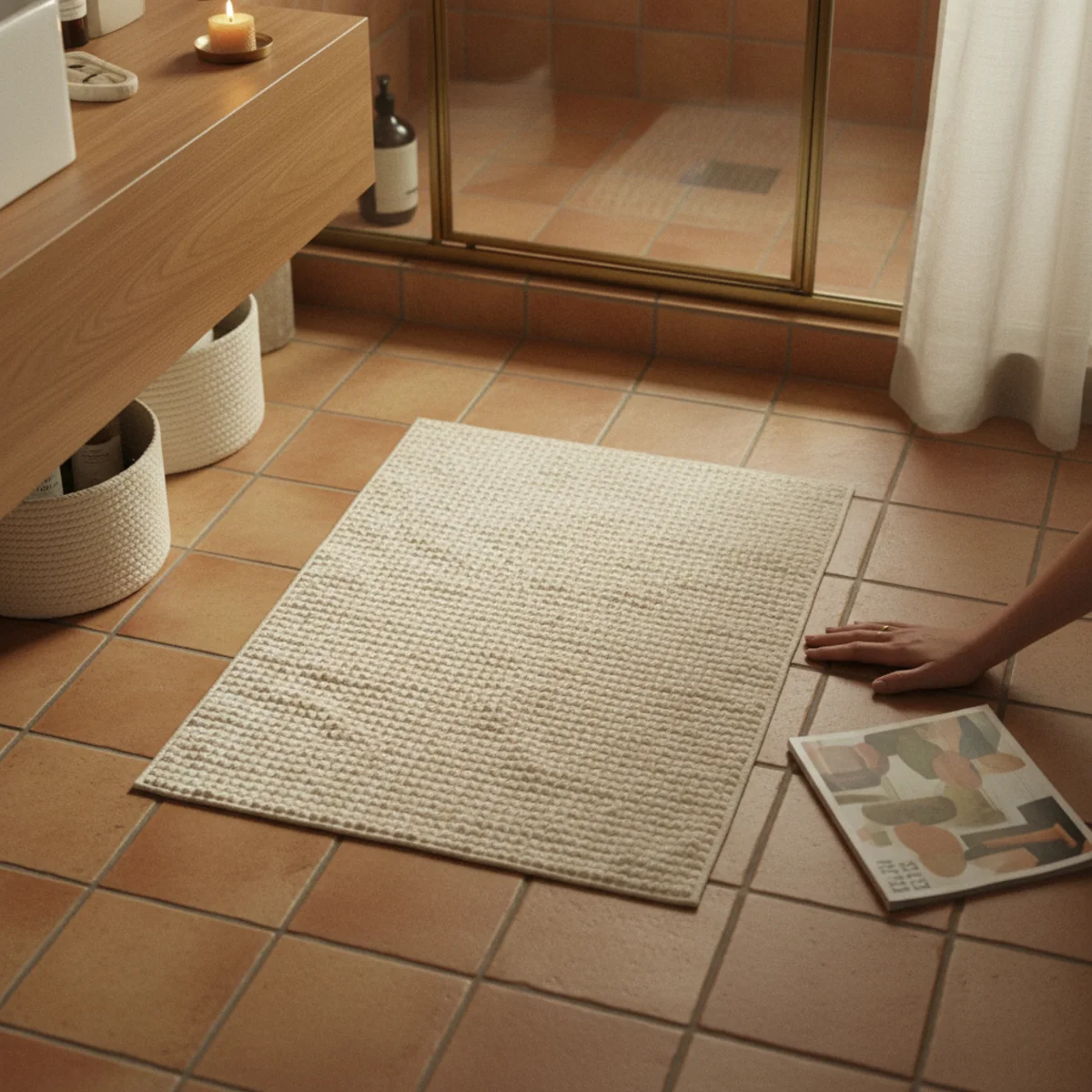
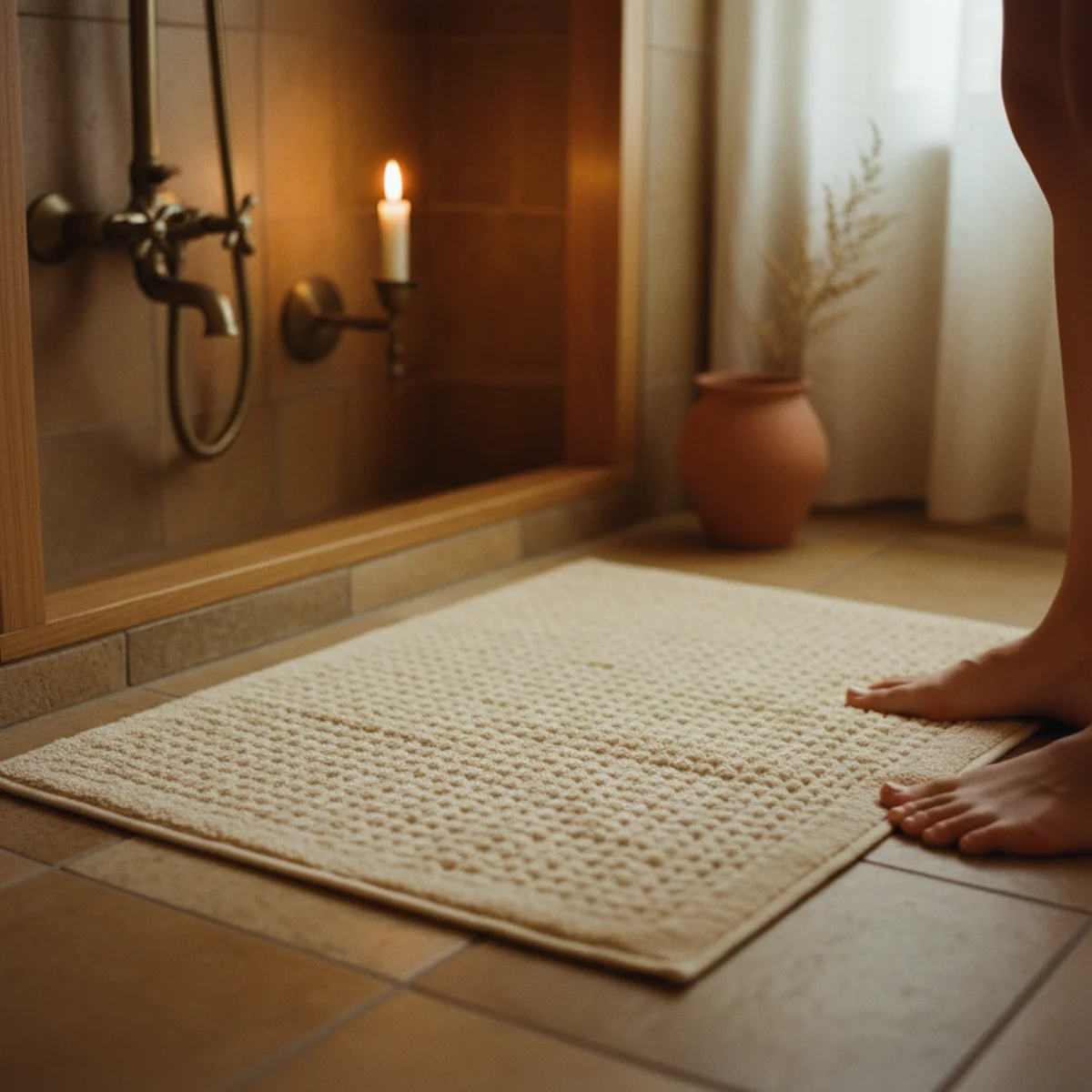
The bath mat is the bathroom floor's only textile element — and a textured natural-material bath mat (woven cotton, tufted wool, Turkish peshtemal, or natural stone mat) reads as warm-home care at the directly-felt level. The underfoot texture of a quality bath mat registers every morning as the first tactile contact of the day. Cost: $20-80.
Bath mat options: WAFFLE COTTON BATH MAT — woven cotton waffle texture, machine washable, highly absorbent, reads as intentional warmth. $20-50 from Target Threshold, Pottery Barn, or Brooklinen. TURKISH TOWEL BATH MAT — a peshtemal folded to bath mat dimensions, placed flat in front of the shower or tub. Doubles as a bathmat and as an extra towel. $20-40. TUFTED WOOL OR COTTON RUG as bath mat — a small 2x3 foot wool rug positioned as bath mat adds more character than purpose-made bath mats. $40-100 from Rugs USA or handmade from Etsy. NATURAL STONE BATH MAT — smooth river stones set in a flexible natural-rubber base. Cool to the touch, self-draining, very spa-specific. $30-60. LINEN BATH MAT — woven linen at bath-mat dimensions. Dries quickly, soft after washing, warm neutral tones. $25-60 from Quince or linen retailers. THE COLOUR — warm cream, oat, soft sage, warm rust, or natural linen. Matches or complements the towel color for visual cohesion at floor level. WASHING — all bath mats require regular washing. Weekly washing prevents the bacteria and mold accumulation that bathroom humidity encourages. A beautiful bath mat that smells wrong negates its warm-material quality entirely.
AFFILIATE SLOTTEXTILEWaffle cotton ($20-50), Turkish peshtemal mat ($20-40), small wool rug ($40-100), or natural stone mat ($30-60); warm cream or oat; wash weekly; own two for rotationAdd affiliate URL when configuredWhy it works
Because the bath mat is the first surface your bare feet contact after bathing — the moment of the day when the skin is most sensitive and tactile experience is most amplified. The specific texture of a waffle-cotton mat or the smooth river stones of a natural stone mat registers more intensely at this moment than at any other time. A beautiful bath mat is experienced as warm character specifically because the sensory timing (right after bathing) makes every texture notable.
Pro tip — Own two bath mats and rotate them weekly — one in use, one freshly laundered. The always-clean rotation prevents the gradual mold and odor development that single bath mats suffer with bathroom humidity, and the weekly swap becomes a minor ceremony that keeps both mats in consistently good condition.
Waffle cotton bath mat in warm cream — first tactile contact of the day at the moment of highest sensory sensitivity. See also: bedroom-cozy-ideas
12Style With a Tray and Objects
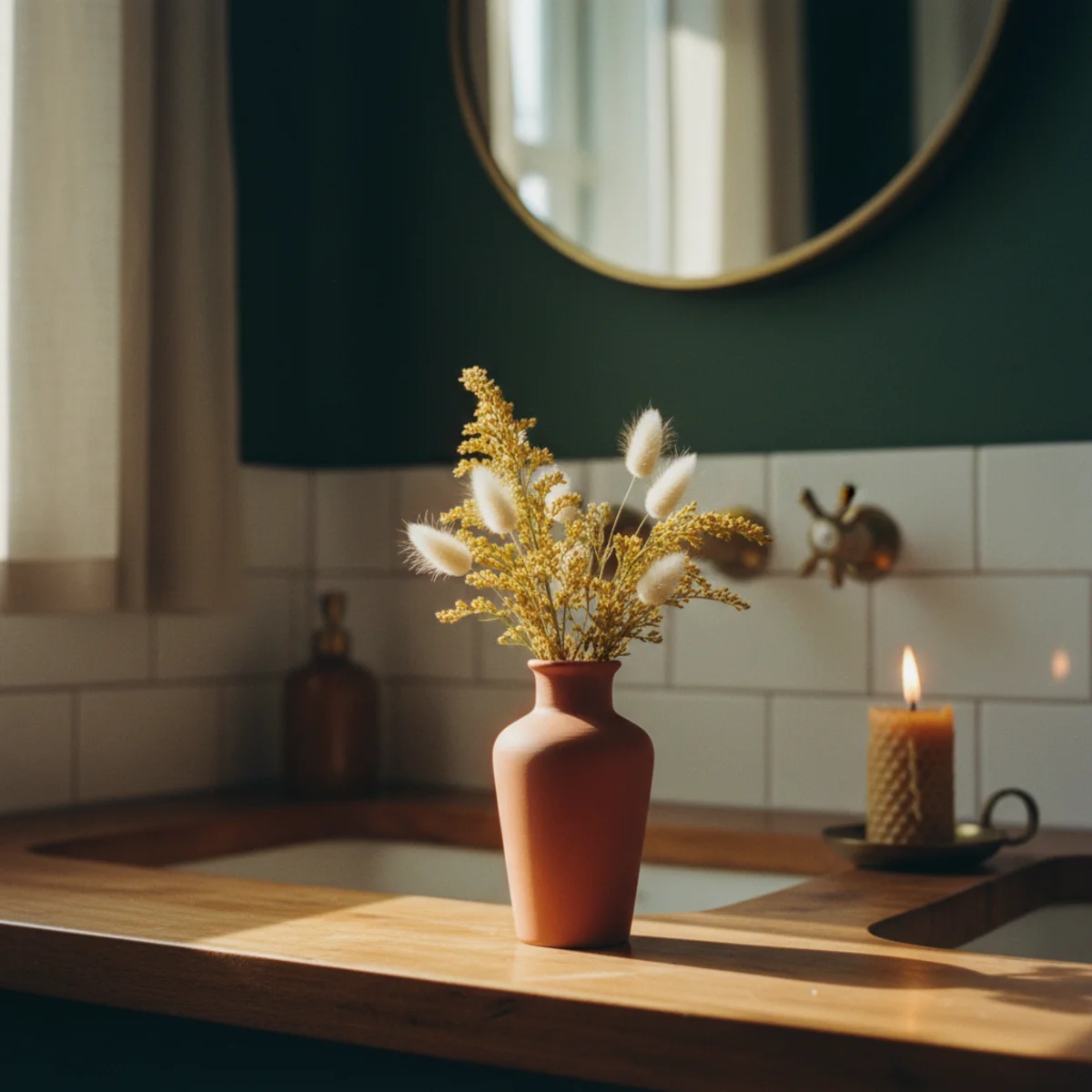
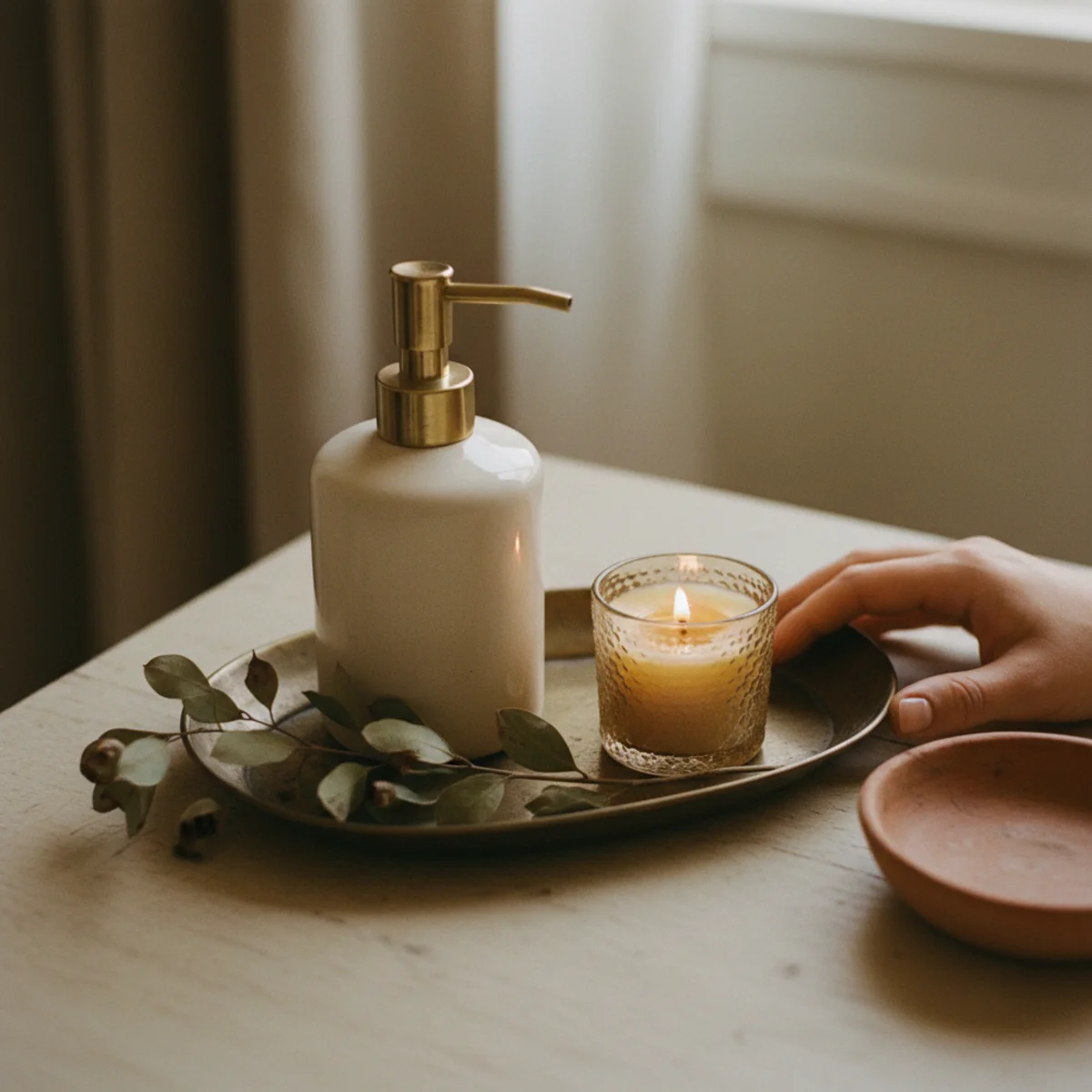
A small tray on the vanity — brass, warm wood, or ceramic — containing the bathroom's daily-use products organized and a few warm aesthetic objects (small ceramic, one beeswax votive, a small spray of dried botanicals) creates the composed vanity vignette that separates a warm bathroom from a product-cluttered one. The tray defines the zone and contains the items within a warm border. Cost: $15-40 for the tray.
Bathroom vanity tray styling: TRAY SELECTION — small aged brass tray ($15-35 from Amazon or HomeGoods), small ceramic tray ($20-50 from Etsy artisans), or warm wood tray ($20-40). 8x10 to 10x12 inches for standard vanity. TRAY CONTENTS — daily-use products organized: soap dispenser (pump dispenser in warm ceramic or glass, $15-30), hand lotion ($10-20), one toothbrush holder (ceramic). AESTHETIC ADDITIONS INSIDE THE TRAY — small beeswax votive candle ($5-10) in glass holder, one dried botanical sprig in small ceramic vase, one small crystal or stone (smooth river stone or piece of raw crystal). THE TRAY ORGANIZATION PRINCIPLE — everything inside the tray reads as composition; everything outside the tray reads as clutter. Items that don't fit within the tray's boundaries go elsewhere (under sink cabinet, medicine cabinet). SWAP PUMP DISPENSERS — decant soap and lotion into ceramic or glass pump dispensers rather than using commercial plastic bottles. $15-30 for matched pump set. The dispenser swap eliminates the most-visually-disruptive element on most vanity surfaces (commercial plastic product labels). SMALL BEESWAX CANDLE — a small beeswax votive or tealight in the tray, lit during baths and evening bathroom use. The warm flame within the tray creates the bathroom's most-intimate atmospheric moment.
AFFILIATE SLOTSTYLINGSmall brass or ceramic tray ($15-50); ceramic soap dispenser, small beeswax votive, one dried botanical, one smooth stone inside; swap plastic product bottles for ceramic pumpsAdd affiliate URL when configuredWhy it works
Because the tray creates a visual boundary that the eye reads as 'composed arrangement' — everything inside the tray belongs to the tray's arrangement; everything outside is a separate item. The same 5 objects on a vanity without a tray read as 5 objects scattered; the same 5 objects arranged within a tray read as one composed vignette. The tray performs the organizational function that the eye applies to any bounded field: everything within the boundary reads as intentional grouping.
Pro tip — Keep the vanity tray edit to 5-6 items maximum — more items within the tray's boundaries produce a full tray rather than a composed vignette. Full trays read as accumulated storage; edited trays read as curated arrangement. Apply the same subtraction discipline to the tray that applies to all small-space surface styling.
Brass tray with ceramic dispenser, beeswax votive, dried sprig — tray boundary converting scattered products into composed vignette. See also: shelf-styling-ideas
How to make a small bathroom feel bigger and warmer step by step
Bounce light and clear clutter for space; add warm materials for coziness. Work in this order.
- 1Bounce light and clear surfaces
Hang a large mirror to double the light, and add vertical storage to clear the surfaces and floor that make a small room feel cramped.
- 2Warm the light
Replace harsh overhead glare with warm 2700K sconces at face height beside the mirror, so the room flatters and warms.
- 3Add warm materials
Bring in a wood stool or shelf, swap chrome fixtures for brass, and add warm-toned tile or color. These warm the cold hard surfaces.
- 4Add soft touches
Finish with a linen towel, a textured bath mat, a small plant, and a styled tray. Now it's a small warm retreat, not a cold work zone.
Quick tips
- Hang a mirror bigger than feels obvious; it doubles the light and the sense of space.
- Swap chrome fixtures for brass — warm metal against tile is the reliable warming move.
- Add a wood stool or shelf; wood warms the porcelain-and-tile hardness instantly.
- Go vertical with storage to clear the surfaces and floor that make a small bath feel cramped.
- Light it warm with 2700K sconces at face height, not a harsh overhead.
- Add a linen towel, a textured mat, and a plant for the soft touches a bathroom lacks.
Small bathrooms by approach
A large mirror, warm white walls, brass, wood, and a clear floor to feel as big and warm as possible.
A deep warm color or bold tile in the small space; see our powder room decor guide.
Removable touches — a stool, a mirror, brass-look fixtures, a linen towel, a plant — that warm it with no reno.
A large mirror, warm sconces, light-reflecting surfaces, and humidity-loving plants like ferns.
The small bathroom starts as the coldest, hardest room — which makes it the one a little wood, brass, and warm light transforms most.
Frequently asked questions
How do I make a small bathroom feel warm and cozy?+
What makes a small bathroom look bigger?+
What tile is best for a small warm bathroom?+
What fixtures should I use for a warm bathroom?+
What plants grow best in a bathroom?+
The small bathroom starts as the coldest, hardest room in the house — tile, porcelain, chrome, harsh light — which makes it the one that rewards warmth most. Combine the space tricks (a big mirror, vertical storage, a clear floor) with warm materials (wood, brass, texture, soft light) the clinical version lacks. We'd swap the chrome for brass and add a wood stool with a linen towel before anything else; no wall moved, no renovation, and the grimmest room becomes a small warm retreat. It starts coldest, so a little warmth goes furthest here.