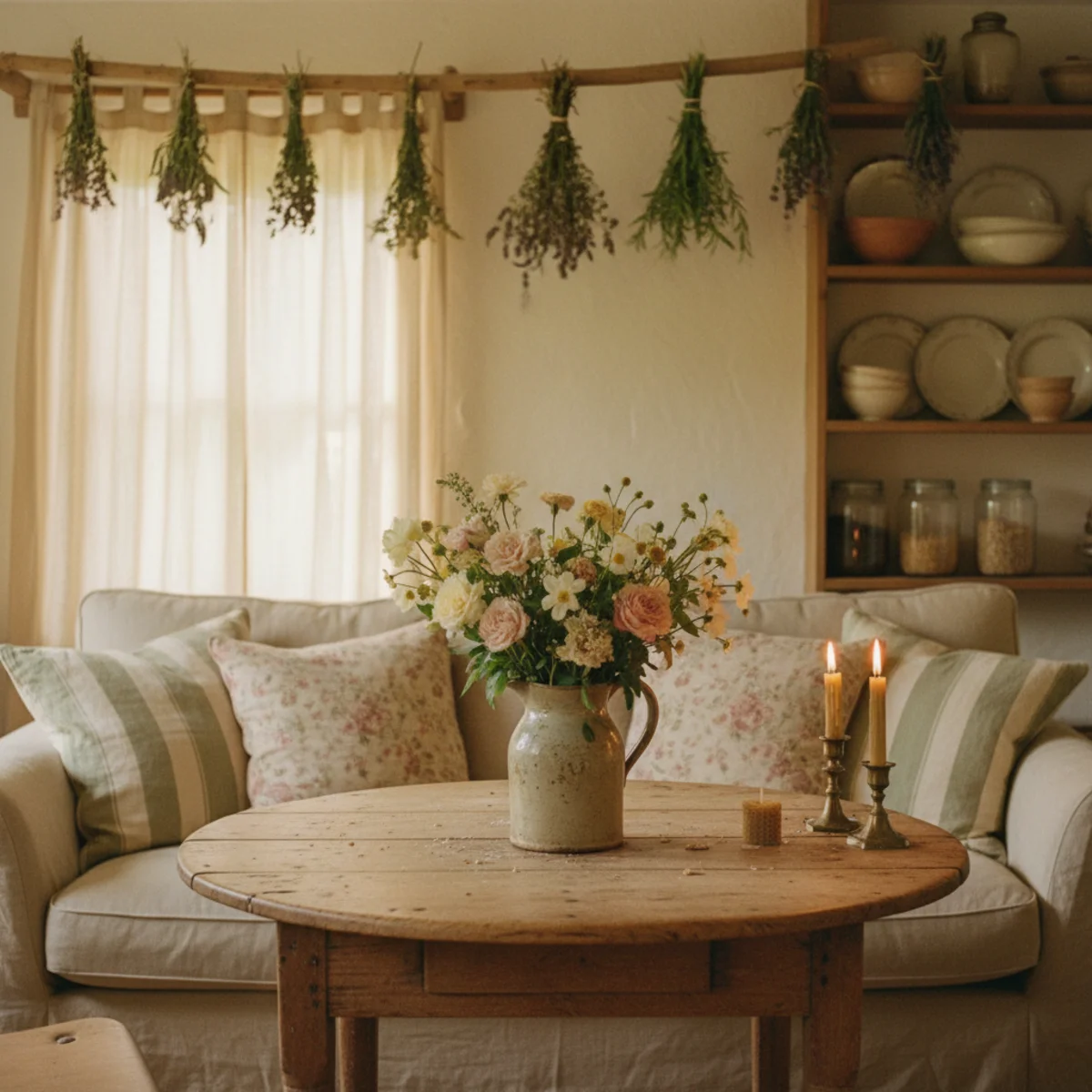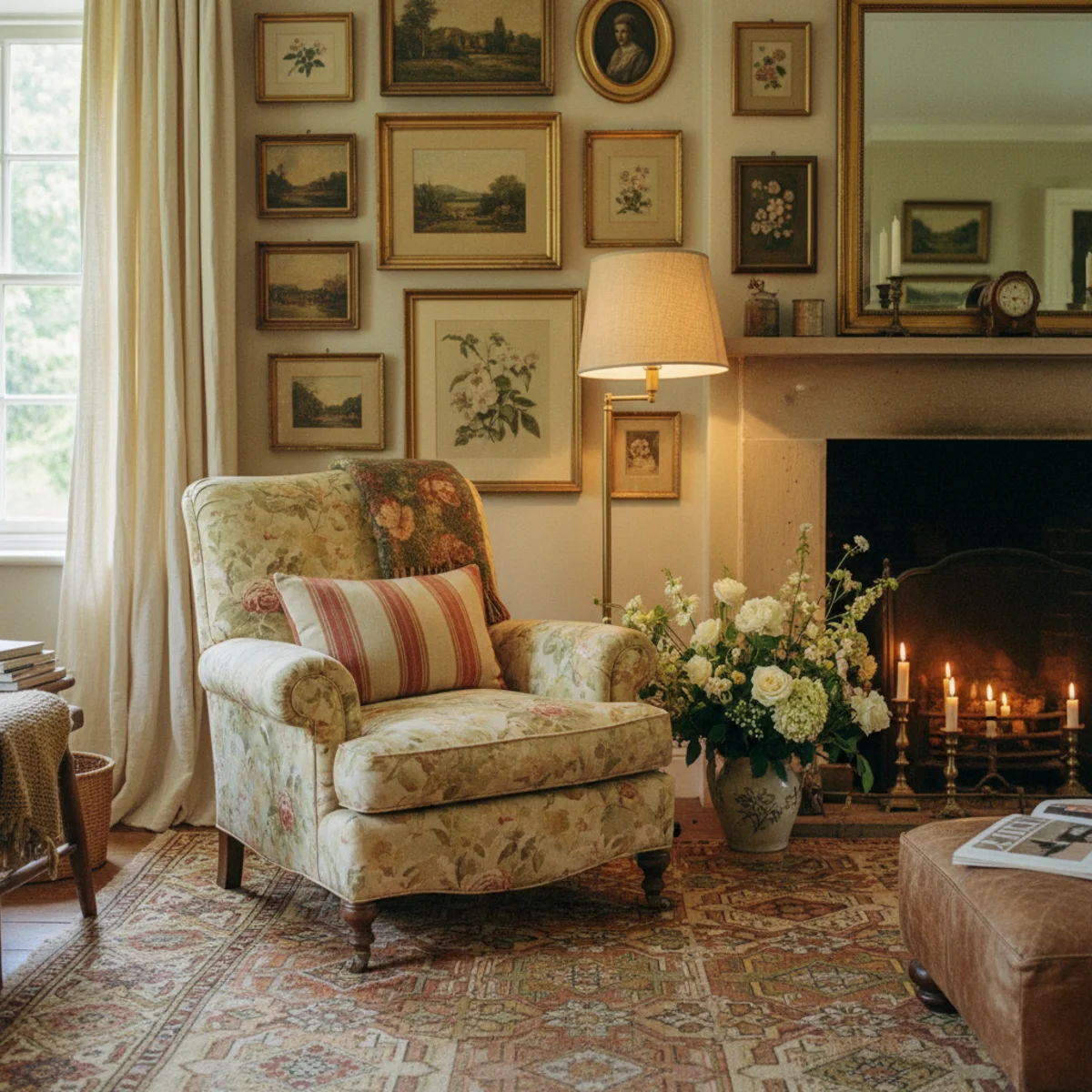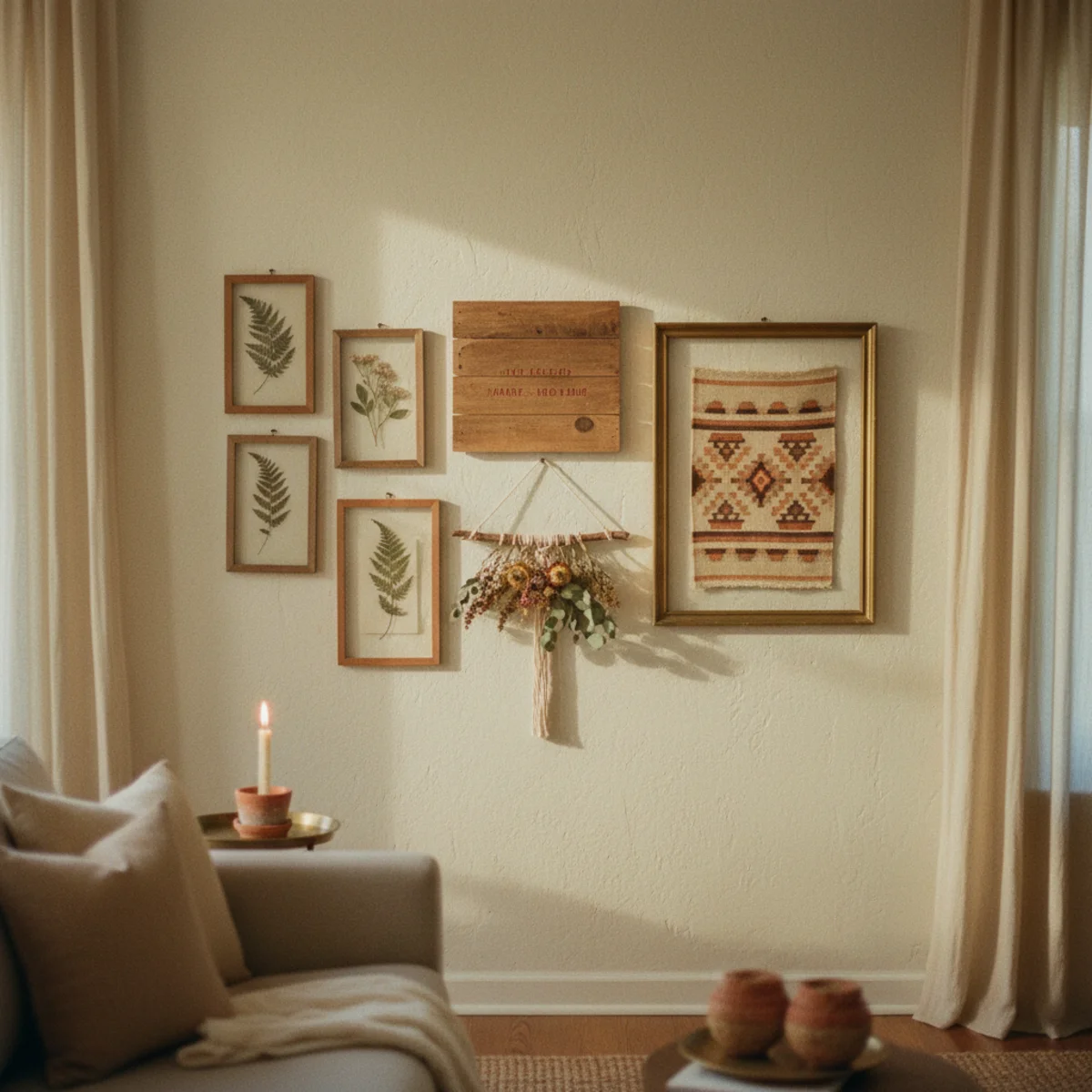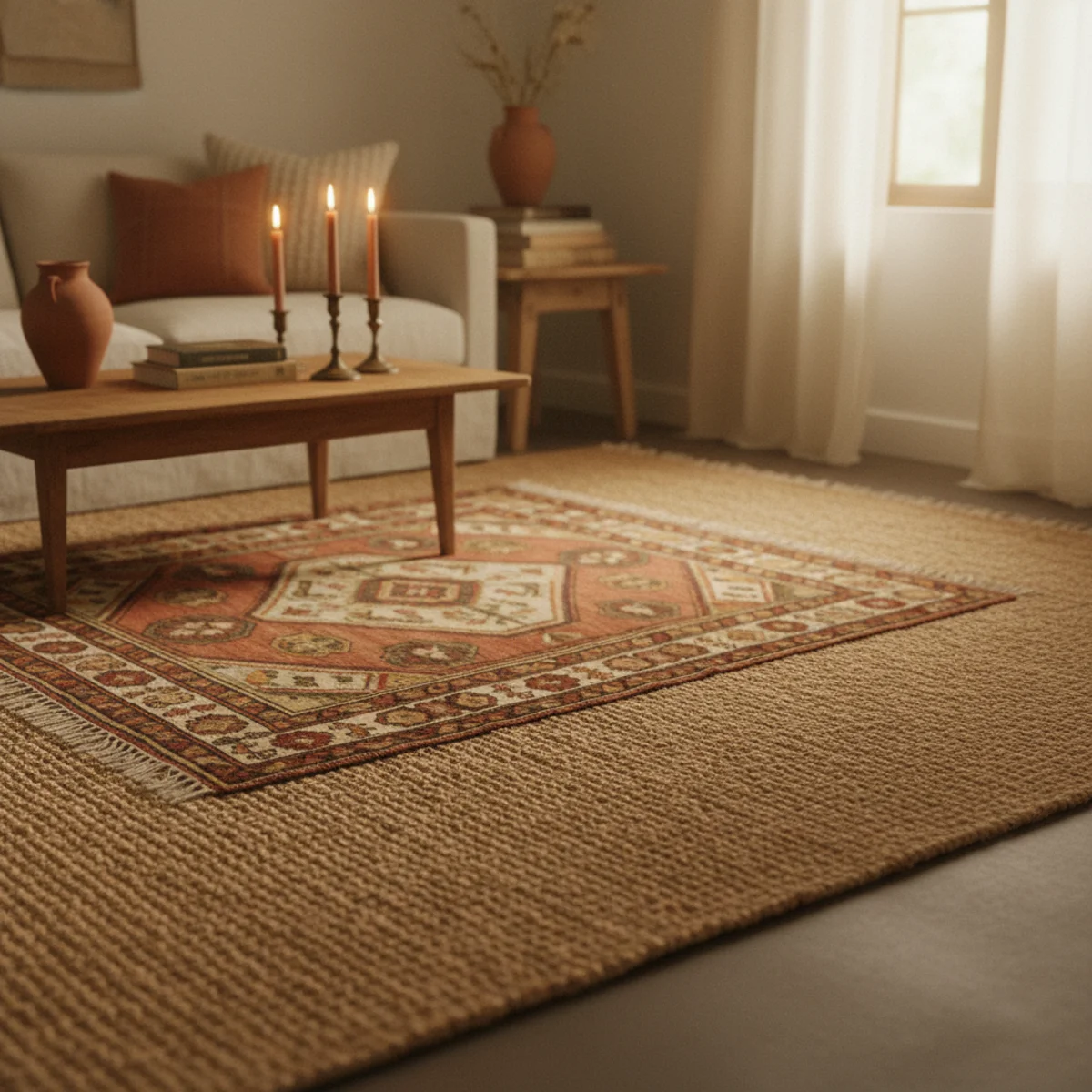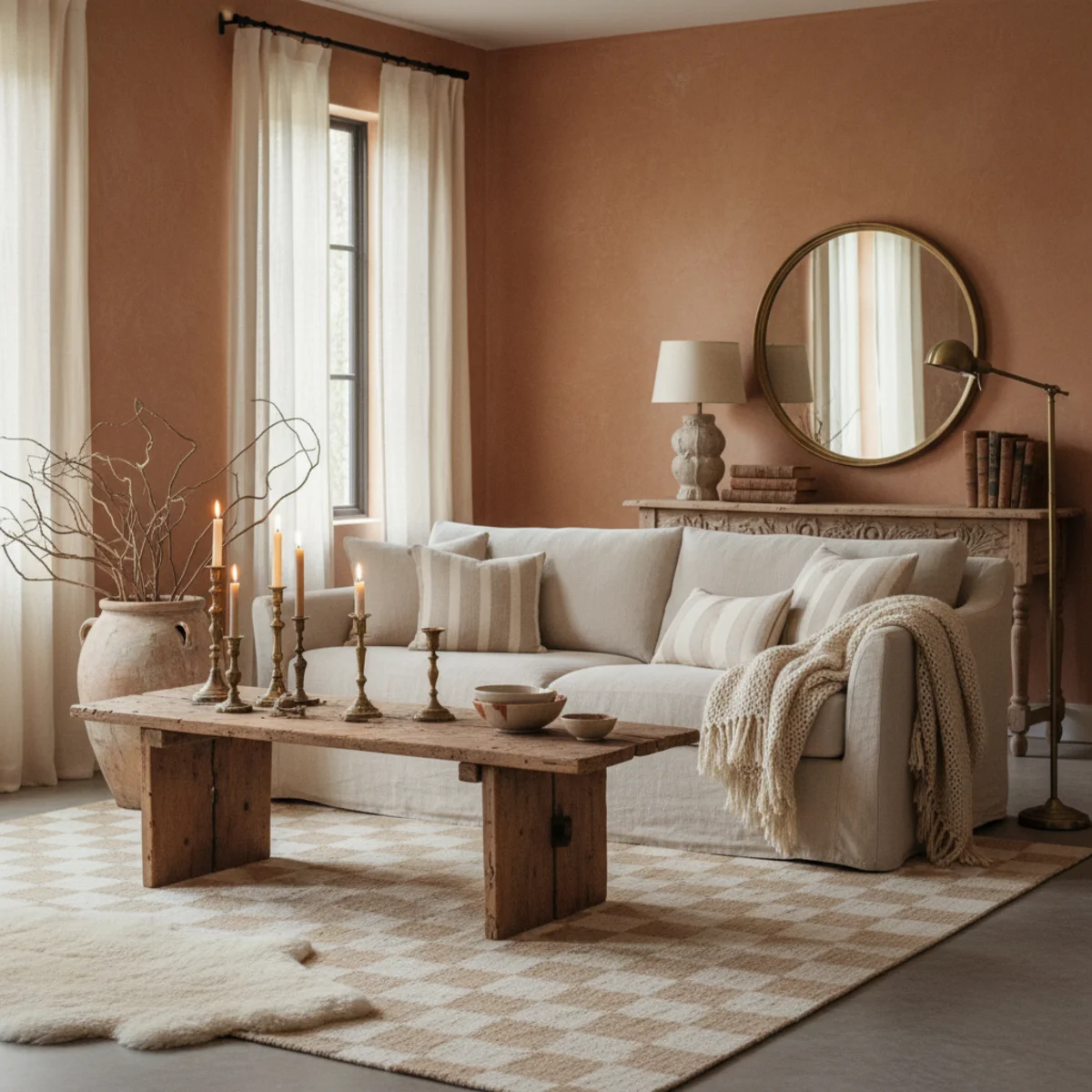
These twelve modern farmhouse decor ideas are tested in actual homes where the style had drifted into beige-grey commercial farmhouse and needed to come back to its warm collected roots. Each move below names the exact substitution: drop the grey for earthy warmth, skip mass-produced signs for genuine vintage finds, choose practical comfortable furniture over the showroom-perfect kind. The goal is a modern farmhouse that reads as personal collection assembled over years rather than as a Pinterest board purchased at HomeGoods in one trip.
The original appeal of modern farmhouse was warmth — old wood floors, vintage textiles, family furniture, hand-thrown ceramics, things that earned their character over decades. The style failed when commercial producers manufactured the surface aesthetic (shiplap walls, weathered signs, mass-produced 'Gather' signs, ship-grey paint) without the underlying warmth. The fix is the opposite direction: warm earth tones, genuine vintage, useful objects with real patina.
By the end of this guide, you'll know exactly which corrections bring modern farmhouse back from commercial trend to warm collected style — the palette swap from grey to earthy warm, the vintage finds that beat any mass-produced 'farmhouse' decor, the texture layering, and the seven other moves that turn beige-grey commercial farmhouse into rooms that feel collected over years.
WHAT'S INSIDE
- Why dropping the cool greys for warm earth tones is the single biggest farmhouse correction
- How to source genuine vintage finds that beat any 'farmhouse' aisle at the retail store
- The texture layering (linen, wool, leather, woven) that gives farmhouse rooms collected depth
- Why skipping the mass-produced signs is the easiest farmhouse upgrade you can make
Modern farmhouse works when it feels collected and warm, not when it's bought as a matching set from one store.
— Studio McGee blog [citation needed — verify before publish]
What is modern farmhouse decor?
Modern farmhouse blends the rustic warmth of a traditional farmhouse — natural wood, vintage pieces, practical comfort — with cleaner, more contemporary lines and a simpler palette. At its best it's cozy and grounded; at its worst it's the mass-produced version, all grey shiplap, black-and-white contrast, and identical store-bought signs.
The warm, updated take that's grown popular leans away from that cliché. It swaps cold grey for muted earthy tones — clay, sage, warm white — keeps the natural wood and exposed beams, and brings in genuine vintage and collected pieces rather than a matching big-box set. The contemporary lines stay, but the warmth comes from real materials, texture, and the sense that the room was gathered over time rather than bought all at once.
More in By Room you may love
See allWhy modern farmhouse evolved in 2026
Modern farmhouse dominated the 2010s so completely that it tipped into cliché, and the backlash sent it in two directions: away entirely for some, and toward a warmer, more authentic version for others. Pinterest's modern farmhouse searches stay high but have shifted toward 'warm' and 'cozy' and away from grey and shiplap.
The honest evolution mirrors the whole warm-home movement: out with cold grey and mass-produced sameness, in with earthy color, natural materials, and genuine vintage. The 2026 modern farmhouse keeps the comfort and the natural wood that made it appealing, drops the clichés that made it tired, and lands much closer to the warm, collected, secondhand-leaning home people now want.
12 ways to get warm modern farmhouse decor
01Drop the Grey for Earthy Warmth
The single biggest correction to commercial modern farmhouse is dropping the cool greys for warm earth tones. The original farmhouse palette was creams, oat, terracotta, sage, warm wood, aged brass — never the cool blue-grey that took over from 2015 onward. The grey-to-earth shift transforms the whole room's temperature from cold-commercial to warm-collected.
Color palette correction: REPLACE cool greys (Sherwin-Williams Repose Gray, Benjamin Moore Coventry Gray, builder-grade grey) with WARM EARTH TONES — Farrow & Ball Setting Plaster 231 (warm plaster pink), F&B Pointing 2003 (warmest off-white), BM White Dove OC-17 (warm cream), F&B Mizzle 266 (muted sage), BM Soft Chamois OC-13 (warm cream with yellow undertones). Apply to walls and ceiling. The grey-undertones in commercial farmhouse paint colors are what create the cold-showroom feel; warm undertones (yellow, red, pink) reverse the effect. Pair with warm wood floors (oak, walnut, oiled pine), warm-tone linens (oat, cream, terracotta — never blue-grey), warm brass hardware. The whole palette shifts from cool to warm.
AFFILIATE SLOTPALETTEReplace cool greys with F&B Setting Plaster, Pointing, BM White Dove, F&B Mizzle, or BM Soft ChamoisAdd affiliate URL when configuredWhy it works
Because commercial paint companies and big-box retailers manufactured 'farmhouse' as a marketable aesthetic in the mid-2010s, and grey paints (which had been trending in modern minimalist design) were applied to the farmhouse category without examining whether they fit the underlying warmth principle. The result was greige (grey-beige) farmhouse, which combines the worst of both: too cool for warm-home aesthetic, too washed-out for clean modern. The correction is back to genuine warmth — every color choice should ask 'does this read warm or cool?' and choose warm.
Pro tip — If you committed to grey-painted walls and don't want to repaint the whole room, add warm-tone textiles aggressively — terracotta throws, cream linen cushions, warm-wood furniture, brass hardware. The textiles can neutralize cool grey walls if applied in sufficient volume; the room reads warm because of textiles even though walls remain cool. Eventually repaint when the project budget allows.
Setting Plaster walls, oat linen sofa, terracotta accents — the warm earth palette that commercial grey-farmhouse abandoned. See also: F&B Setting Plaster
02Keep the Natural Wood
Modern farmhouse went wrong when wood floors got painted white or stained grey to match the commercial palette. The fix is back to natural wood — oak, walnut, oiled pine, reclaimed wood — left to age naturally with periodic Danish oil refreshes. The visible grain and natural color variation is what made original farmhouse warm; painting it over removes the warmth at the source.
Wood elements to keep natural: FLOORS — refinish painted or grey-stained floors back to natural color (oak, walnut, or reclaimed pine). Sand to bare wood, finish with Danish oil ($12 per quart, lasts years) or hard-wax oil ($60 to $100 per quart, more durable) for the warm matte natural look. CEILING BEAMS — strip whitewash or paint off any exposed beams to expose the natural wood underneath. FURNITURE — keep wood tables, dressers, console tables in their natural color rather than painting them. CABINETRY — replace painted-white shaker cabinet doors with natural wood doors (or refinish existing wood beneath the paint). The visible grain across multiple wood elements in the room is what creates the warm collected farmhouse aesthetic.
AFFILIATE SLOTMATERIALSStrip painted floors, beams, furniture back to natural wood; finish with Danish oil or hard-wax oilAdd affiliate URL when configuredWhy it works
Because wood grain is irregular, organic, full of natural variation — it's the visual opposite of factory-perfect surfaces. The original farmhouse aesthetic was about old wood that had patina and character; painting it white or grey covers exactly the elements that created the warmth. The fix isn't adding wood to a painted-wood room; it's removing the paint or replacing the painted elements with natural wood. The grain has to be visible for the warmth to read.
Pro tip — Use Danish oil rather than polyurethane or varnish on wood floors and furniture in modern farmhouse rooms — Danish oil produces the warm matte finish that natural wood deserves, where polyurethane and varnish create high-gloss plastic-looking surfaces. The matte versus gloss finish choice is what distinguishes warm farmhouse wood from refinished-modern wood.
Oak floors, exposed beams, natural wood furniture — visible grain across every wood element. See also: Danish oil
03Add Genuine Vintage Finds
Mass-produced 'farmhouse' decor from big-box retail looks mass-produced because it is. The fix is sourcing genuine vintage finds from estate sales, Marketplace, antique stores, ReStore — pieces with real age and real patina that no factory can replicate. One genuine $80 vintage piece does more for farmhouse aesthetic than $400 of mass-produced 'farmhouse-style' items.
Genuine vintage sources: ESTATE SALES (Saturday morning, often 50-90% off retail equivalent), FACEBOOK MARKETPLACE (filter by 'vintage' or 'antique' categories), CRAIGSLIST FREE SECTION (people moving giving away genuine pieces), HABITAT FOR HUMANITY RESTORES (donated household items), AUCTION HOUSES (online and local), FLEA MARKETS (typically monthly). What to look for: SOLID WOOD FURNITURE (oak, walnut, mahogany — never veneer over particleboard), HAND-THROWN POTTERY AND CERAMICS (visible thrower's marks), CAST IRON COOKWARE (genuinely useful and decorative), VINTAGE TEXTILES (kilims, hand-quilted pieces, embroidered linens), BRASS AND COPPER HARDWARE AND FIXTURES, WOODEN BOWLS AND CUTTING BOARDS (visible use marks), GLASS DEMIJOHNS AND BOTTLES, FRAMED VINTAGE BOTANICALS OR MAPS. Budget $50 to $200 per genuine piece; the patina is real because the use is real.
AFFILIATE SLOTPIECESEstate sales, Marketplace, antique stores; budget $50-200 per genuine vintage pieceAdd affiliate URL when configuredWhy it works
Because real patina comes from real use across decades — scratches from real meals, edge wear from real hands, fading from real sunlight. Factory-produced 'distressed' surfaces try to fake this but never get it right; the irregularities are too regular, the wear patterns don't match how items actually wear, the colors are too consistent. The human eye reads the difference even when it can't articulate why. Real vintage signals 'this has a story'; manufactured-vintage signals 'this was made to look like it has a story.' The first reads as collected; the second reads as fake.
Pro tip — Buy one genuine vintage piece per month — even $30 to $80 at estate sales accumulates significant collection across a year. The slow accumulation also lets you learn what genuine pieces look like versus knockoffs; you become a better thrifter over time, which compounds the value of every later purchase.
Cast iron, hand-thrown pottery, vintage wooden bowls — real patina that mass-production cannot replicate. See also: Marketplace
04Skip the Mass-Produced Signs
The 'Gather,' 'Family,' 'Blessed,' and 'Joanna-knockoff' signs at HomeGoods, Hobby Lobby, and Kirkland's are the visual shorthand for commercial-fake farmhouse. Skip them entirely. If you want text decor, the alternatives are vintage advertising signs from estate sales, framed botanical or map prints, or no text decor at all. The signs were never part of the original farmhouse aesthetic; they were a commercial addition that became the trend's downfall.
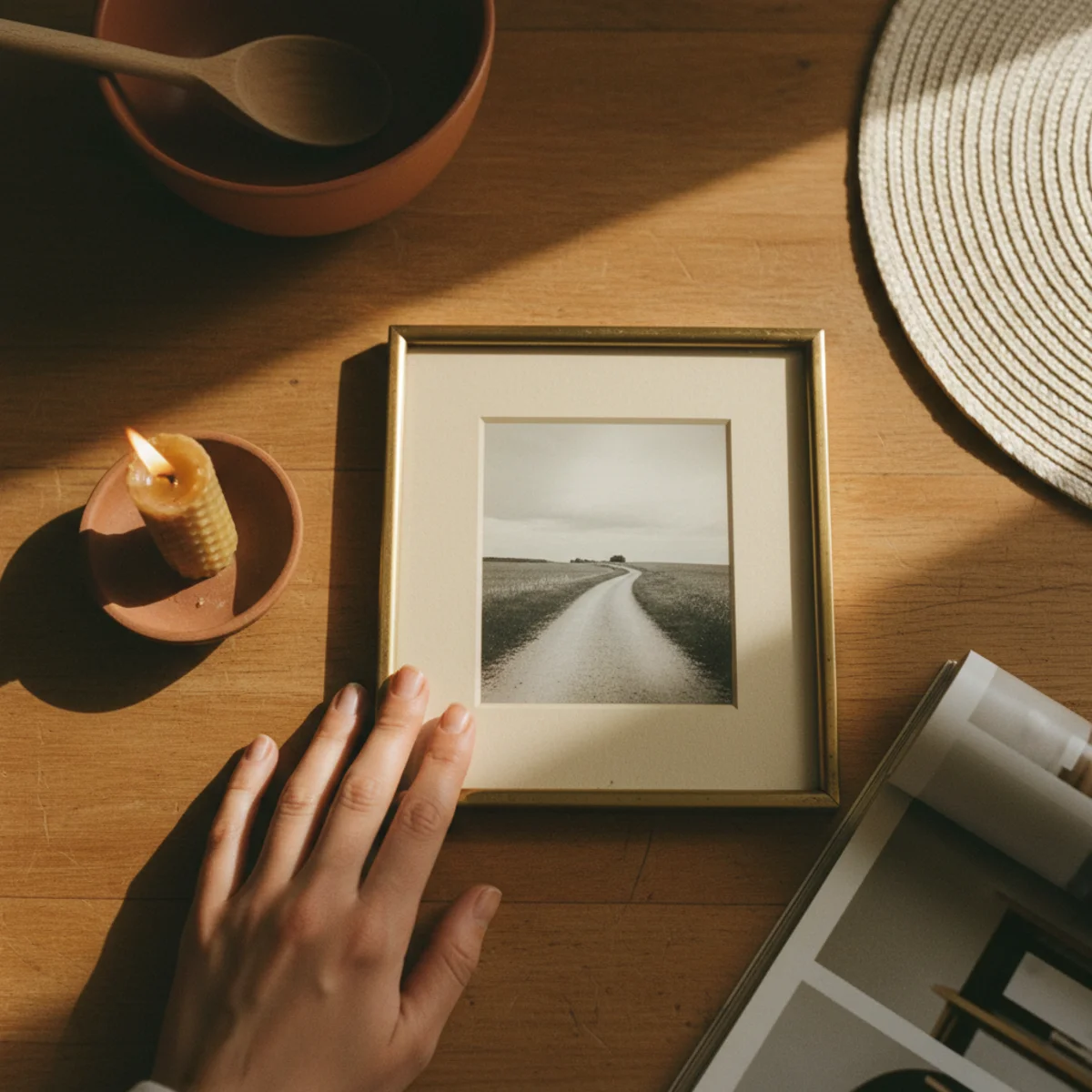
What to skip: 'Gather,' 'Family,' 'Blessed,' 'Home Sweet Home,' 'Eat,' 'Drink,' 'Coffee,' or any single-word or short-phrase commercial sign sold at big-box retailers. These signs are mass-produced in factories with deliberate distressing applied, often share fonts and color palettes across thousands of homes, and signal 'commercial farmhouse' to any visitor familiar with the trend. What to use instead: GENUINE VINTAGE ADVERTISING SIGNS from estate sales or antique stores at $30 to $150 each (real age, real wear, often regional or specific). FRAMED VINTAGE MAPS of your region or somewhere meaningful at $30 to $100. FRAMED BOTANICAL PRINTS (Pressed Penny on Etsy at $15 to $40, vintage at $20 to $80). PHOTOGRAPHS of your family or meaningful places. OR NO TEXT DECOR AT ALL — wood, ceramics, and textiles tell the story without literal words.
AFFILIATE SLOTDECORSkip 'Gather/Family/Blessed' signs; use vintage advertising signs, maps, botanicals, or no textAdd affiliate URL when configuredWhy it works
Because the signs distill what went wrong with commercial farmhouse into a single object: factory-produced, identically distressed, generic message, sold at scale, signaling that the homeowner shops the farmhouse aisle. Removing the signs alone improves any farmhouse room dramatically because it removes the visual cue most strongly associated with the commercial trend. The space the signs occupied can be filled with genuinely meaningful items, or left empty — both better than the signs.
Pro tip — If you currently own mass-produced signs and want to phase them out, replace one per quarter with something more genuine — a framed vintage map from Marketplace, a genuine vintage advertising sign from an estate sale, a framed family photograph. The slow swap costs little per quarter and gradually transforms the room's aesthetic over a year.
Genuine vintage advertising sign, framed botanicals — the alternatives to commercial 'Gather' farmhouse signs. See also: estate sales
05Use a Neutral Linen Sofa
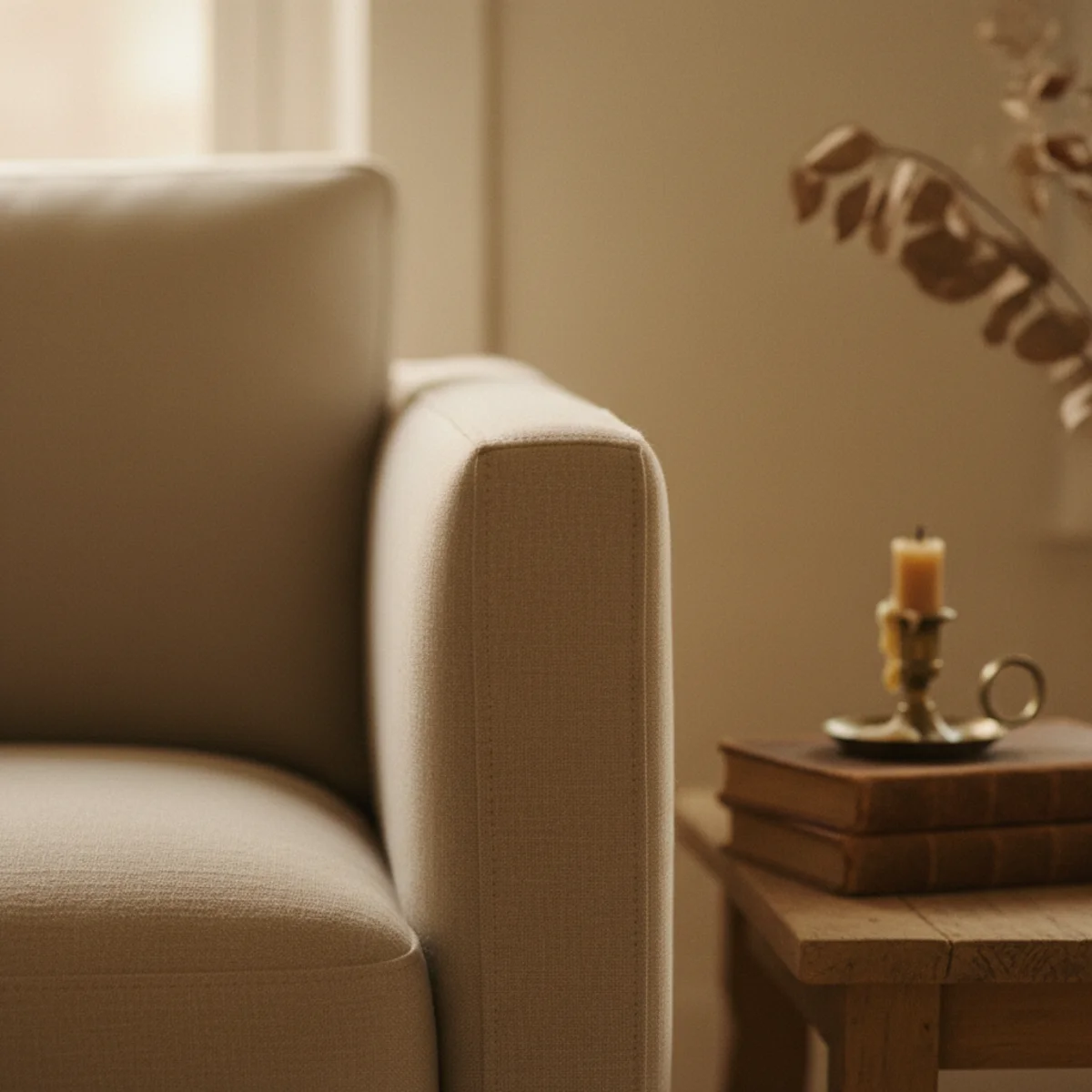
The right modern farmhouse sofa is upholstered in unbleached or oat linen — not white (impractical), grey (too commercial), navy (wrong palette), or leather (wrong texture). Linen in warm neutrals reads as the foundational textile of the room, ages beautifully across years of use, and pairs with every other warm-farmhouse element. Cost: $1,200 to $3,000 retail; $200 to $800 thrifted.
Sofa specs for modern farmhouse: 80 to 96 inches long, slipcovered for easy washing, in unbleached linen (oat, natural, cream) or warm tan/sand tones. Avoid pure white linen (shows every spot), grey linen (too commercial), and saturated colors. Best brands: ARTICLE Sven or Burrard slipcover at $1,400 to $2,200, POTTERY BARN Comfort Square Arm slipcovered at $2,000 to $3,500, REJUVENATION Robertson slipcover at $3,000 to $4,500, IKEA EKTORP slipcover at $549 (the budget option that genuinely works), THRIFTED at $200 to $800 from Marketplace (often barely-used pieces from upgrades). Pair with 4 to 6 cushions in mixed linen and boucle textures, plus one wool throw.
AFFILIATE SLOTFURNITURE80-96 inch linen sofa in oat, natural, or cream; slipcovered for washable practicalityAdd affiliate URL when configuredWhy it works
Because linen has natural slubs, slight irregularities, and aging characteristics that match the warm-collected farmhouse aesthetic perfectly. Cotton reads too crisp and modern; velvet too formal; leather too modern-industrial. Linen wrinkles slightly when sat on, which is part of its character (not a flaw), and the wrinkles reinforce the lived-in feel. Linen also accepts and reflects light beautifully, which warm linen-upholstered sofas use to advantage in well-lit farmhouse rooms.
Pro tip — Choose a slipcovered linen sofa over an upholstered one — the removable washable slipcovers handle real-life use (kids, pets, spills) while preserving the warm linen aesthetic. Permanent linen upholstery looks identical when new but becomes problematic when life happens; the slipcover version handles 10+ years of family use where permanent upholstery handles 3.
Slipcovered oat linen sofa with mixed-texture cushions and wool throw — the foundational textile that warm farmhouse needs. See also: Article Sven
06Layer in Texture
Modern farmhouse rooms rely on texture variation rather than color variation — the warm palette stays restricted (creams, oat, terracotta, sage, wood, brass) but textures multiply across linen, wool, leather, woven natural fibers, ceramics, cast iron, raw wood. The texture layering is what creates visual depth without breaking the warm palette discipline.
Required textures across a modern farmhouse room: LINEN — sofa upholstery, throw cushion covers, curtains, table linens, dining napkins. WOOL — throws, rugs, blankets, sweaters left on chair backs. LEATHER — one armchair, an ottoman, framed leather objects, leather-bound books. WOVEN NATURAL FIBER — seagrass baskets, jute rugs, rattan stools, woven trays. CERAMICS — hand-thrown pots, stoneware bowls, ceramic lamps, terracotta planters. CAST IRON — Dutch oven on the stove, cast iron skillet, candleholders, hardware. RAW WOOD — floors, beams, furniture, cutting boards. ROUGHLY 6 to 8 distinct textures across the room, each appearing in multiple places (linen sofa plus linen cushions plus linen curtains, etc.). The repetition of each texture is what makes the layering read deliberate.
AFFILIATE SLOTMATERIALSLayer 6-8 textures: linen, wool, leather, woven natural fiber, ceramic, cast iron, raw woodAdd affiliate URL when configuredWhy it works
Because the warm-farmhouse palette is intentionally restricted — too many colors break the warm-collected feel and read as commercial-busy. Texture provides the visual interest that color would otherwise — the eye reads linen-versus-wool-versus-leather as visual variation even when all three are in the same oat color family. Texture is also tactile (you feel it when you sit, when you wrap a throw, when you touch a basket), which adds the sensory layer that color-only design lacks.
Pro tip — Audit your room for missing textures — if you have lots of linen but no wool, your textile layer is incomplete. If you have wood and ceramic but no leather, you're missing an animal-skin layer. Identify the gaps and fill them with one or two pieces at a time (one leather pouf, one wool throw, one woven basket) for compound texture layering over months.
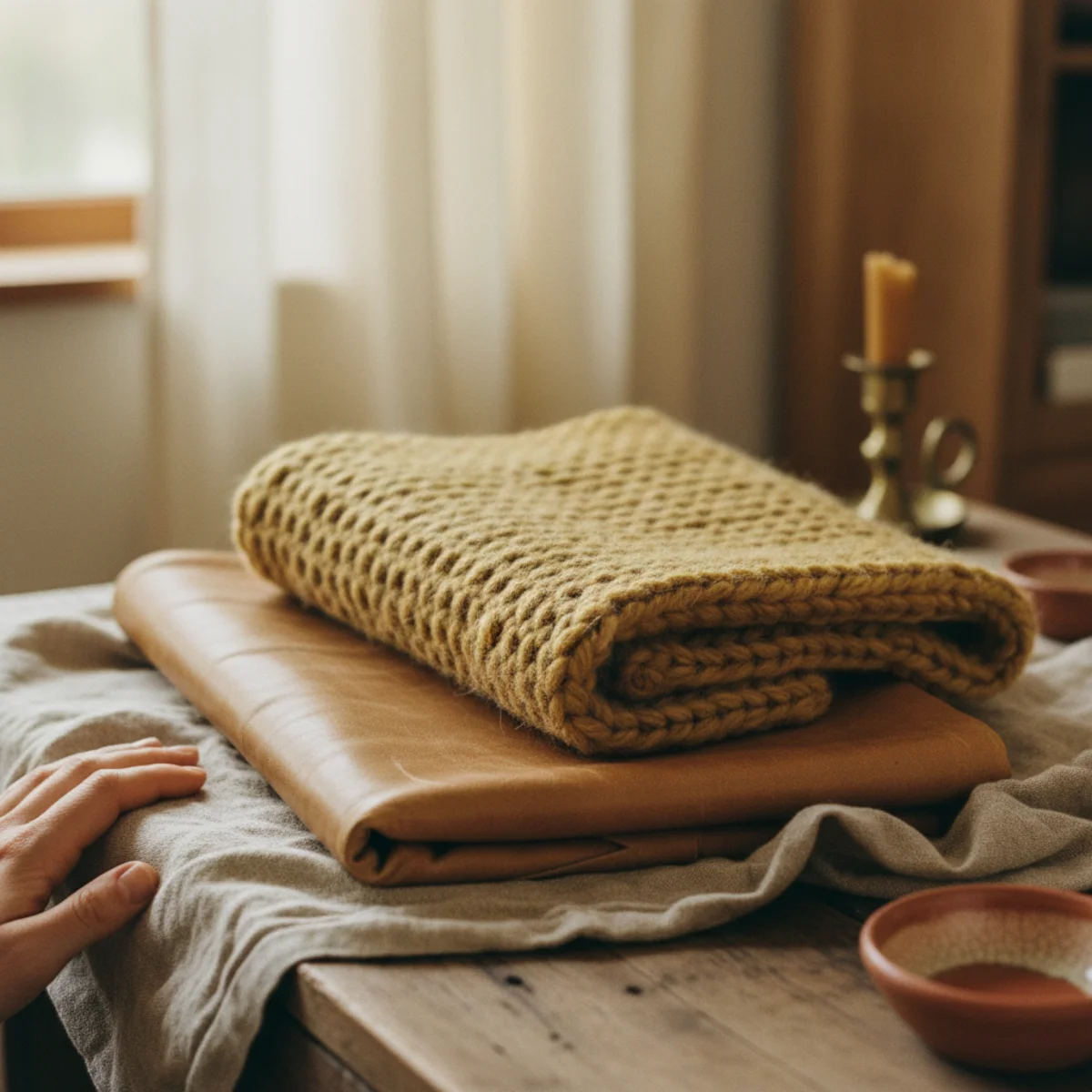
Linen, wool, leather, woven, ceramic, cast iron — six textures in one warm palette. See also: throw-blanket-layering
07Add Vintage Black Accents Sparingly
Modern farmhouse benefits from small amounts of black for contrast — vintage cast iron pieces, oiled bronze hardware, dark wood frames, an antique iron candleholder. The key word is sparingly: 5 to 10 percent of the room's visual weight in black, never the dominant tone. Too much black tips farmhouse into industrial-modern; too little leaves the warm palette feeling flat.
Where to add small amounts of black: VINTAGE CAST IRON — Dutch oven on the stove, cast iron skillet hanging or on cooking range, vintage iron candleholders ($20 to $80 each from estate sales). OILED BRONZE HARDWARE — black-bronze drawer pulls and door knobs ($5 to $20 each). DARK WOOD FRAMES — one or two pieces of art framed in walnut, ebonized wood, or dark oak. WROUGHT IRON — vintage iron towel bars, iron curtain rods, iron firewood holders. ONE OR TWO BLACK ACCENTS — a black-painted accent chair (only one in the room), a black ceramic piece, a black framed photograph. Total black across the room: 5 to 10 percent of visual weight, distributed in small accents rather than concentrated in one large piece.
AFFILIATE SLOTACCENTS5-10% black via cast iron, oiled bronze hardware, dark wood frames, wrought iron - never dominantAdd affiliate URL when configuredWhy it works
Because black is the most visually weighty color — too much pulls the room toward modern-industrial and away from warm-farmhouse. The sparingly rule ensures black functions as accent rather than as theme; small amounts add contrast and visual punctuation, large amounts dominate. The contrast also makes the warm tones read warmer — black-against-cream reads warmer than cream-only because the contrast emphasizes the warmth of the cream.
Pro tip — Use oiled bronze (not pure black) hardware for the closest-to-black-without-being-black accent — the slight warm tone in oiled bronze keeps the metal in the warm-palette family while still providing the dark visual contrast. Aged brass, oiled bronze, and patinated copper all work; chrome and stainless steel do not.
Cast iron, oiled bronze pulls, dark walnut frame — black accents distributed sparingly across the warm palette. See also: oiled bronze
08Choose Practical Comfortable Furniture
Modern farmhouse rooms get used by real families, not showroom photographers. The fix is choosing furniture that prioritizes practical comfort over visual perfection — deep-seat sofas, soft cushions, slipcovers that wash, dining chairs you can actually sit in for two hours, ottomans that hold storage. The lived-in functionality is part of what makes warm farmhouse rooms feel collected rather than staged.
Practicality principles: SOFAS with deep seats (22+ inches) and soft cushions that conform to bodies, not stiff-and-perfect showroom seats. SLIPCOVERS that come off for washing (not permanent upholstery). DINING CHAIRS comfortable for 2-hour meals (cushioned seats, supportive backs, not just visual). OTTOMANS WITH STORAGE for blankets, books, kids' toys. WIPEABLE FINISHES on dining tables (oiled wood with periodic refresh, not lacquered surfaces that show every scratch). LIGHT FIXTURES with dimmer switches (functional warmth, not just visual). REAL FIREPLACE if available (functional warmth source, not decorative). The discipline: every furniture choice should pass the 'would this work for daily use across years of family life?' test.
AFFILIATE SLOTFURNITUREDeep-seat sofas + slipcovers + comfortable dining chairs + storage ottomans + wipeable finishesAdd affiliate URL when configuredWhy it works
Because modern farmhouse aesthetic depends on the lived-in feel — pillows slightly disheveled, throw blankets actually used, dining chairs showing scuffs from real meals. Pristine showroom furniture fights this aesthetic; comfortable furniture supports it. The practicality also means the room actually functions as a home rather than as a photography location, which compounds the warm-collected feel across years of real use.
Pro tip — Choose lower-quality but more comfortable furniture over higher-quality but less comfortable furniture — a $700 deep-seat slipcovered sofa beats a $2,000 stiff-but-elegant designer sofa for actual farmhouse use. The comfort gets used daily; the design quality just looks at you across the room.
Deep-seat slipcovered sofa, storage ottoman, comfortable chairs — practical infrastructure that supports real family life. See also: deep-seat sofas
09Display Useful Things
Modern farmhouse rooms work best when displayed objects are also useful objects — cast iron skillets that get cooked in, wooden cutting boards that get used, ceramic bowls that hold fruit, copper pots that simmer real food. The functional displays read as collected over years of real use rather than as decorative accumulation. The discipline: if you wouldn't actually use it, don't display it as decor.
What to display that's also useful: CAST IRON COOKWARE hanging from a pot rack or on open kitchen shelves (use in regular cooking). WOODEN CUTTING BOARDS leaning against backsplash (used daily for prep). HAND-THROWN CERAMIC BOWLS holding fruit, bread, or dry goods. COPPER POTS AND PANS hanging from a pot rack (used for actual cooking). WOODEN BOWLS displayed but also used for salads or fruit. CAST IRON CANDLEHOLDERS holding actual lit candles. VINTAGE TEXTILES (table runners, napkins) used at real meals. STACKS OF QUALITY BOOKS that get read, not just displayed. AVOID: items purchased solely for display and never used (decorative ladders, faux books, plastic 'farmhouse' ceramics, fake antlers).
AFFILIATE SLOTDECORDisplay functional items: cast iron, cutting boards, ceramics, copper, vintage textiles - all actually usedAdd affiliate URL when configuredWhy it works
Because original farmhouse aesthetic emerged from genuine farm households where every object had a function — decoration was secondary to use. Modern farmhouse that displays only-decorative objects breaks this principle and reads as performative. When the displayed cast iron is the cast iron that gets cooked with, the displayed wooden bowls hold the actual fruit, the displayed candleholders hold actual candles that get lit, the room reads as inhabited rather than as styled.
Pro tip — Audit one shelf or surface monthly for items that are purely decorative — if you haven't used something in 6+ months, either start using it or donate it. The discipline prevents the slow drift toward purely-decorative accumulation that turns warm farmhouse into HomeGoods showroom.
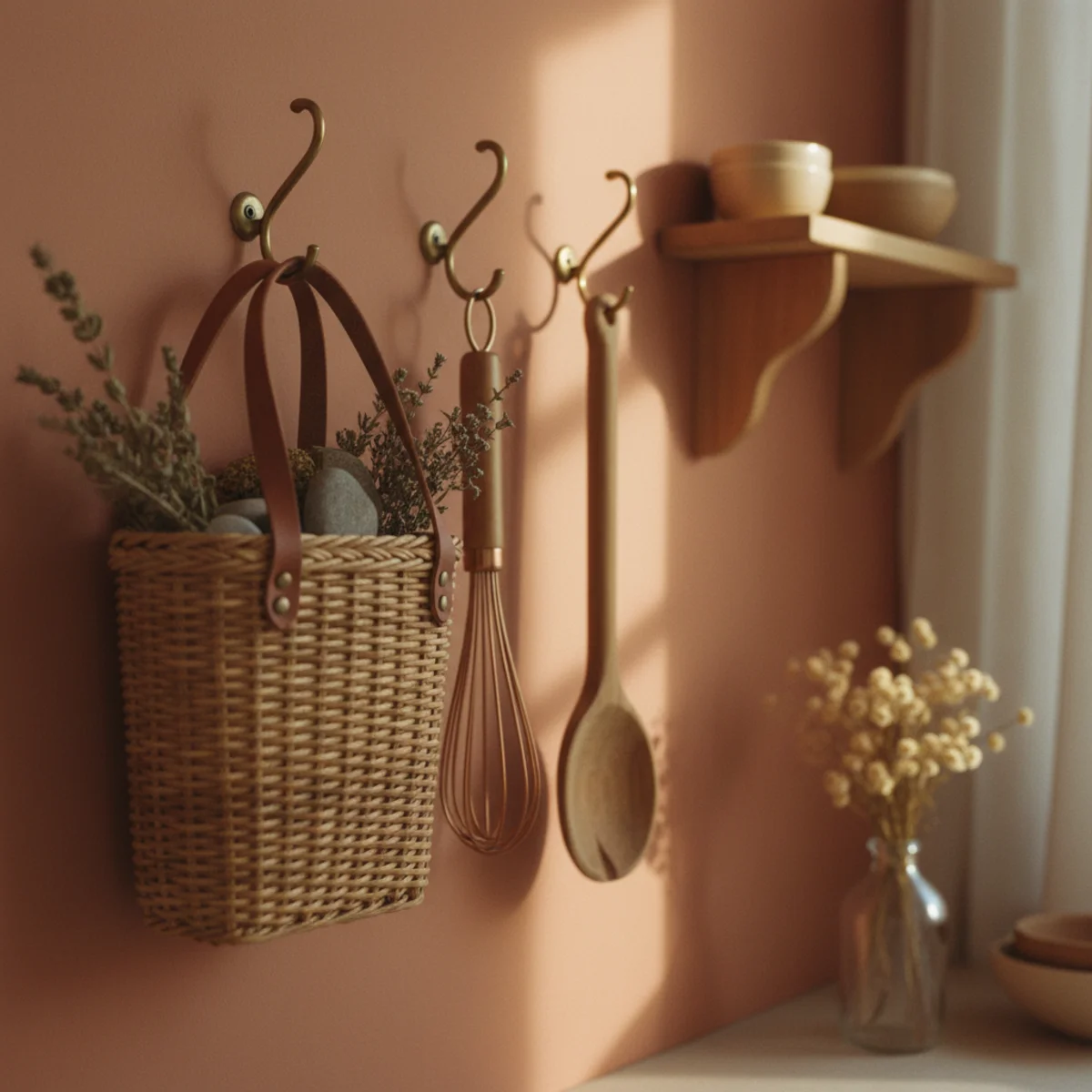
Cast iron, cutting boards, copper pots — useful objects displayed as decor, all actually used in cooking. See also: wooden cutting boards
10Add Warm Layered Light
Modern farmhouse rooms benefit from the same layered warm lighting as any other warm-home room — but with a special emphasis on candles, dimmed pendants, and warm 2700K bulbs throughout. Overhead-only farmhouse lighting reads as 'kitchen with farmhouse decor'; layered warm lighting reads as 'warm farmhouse living space.'
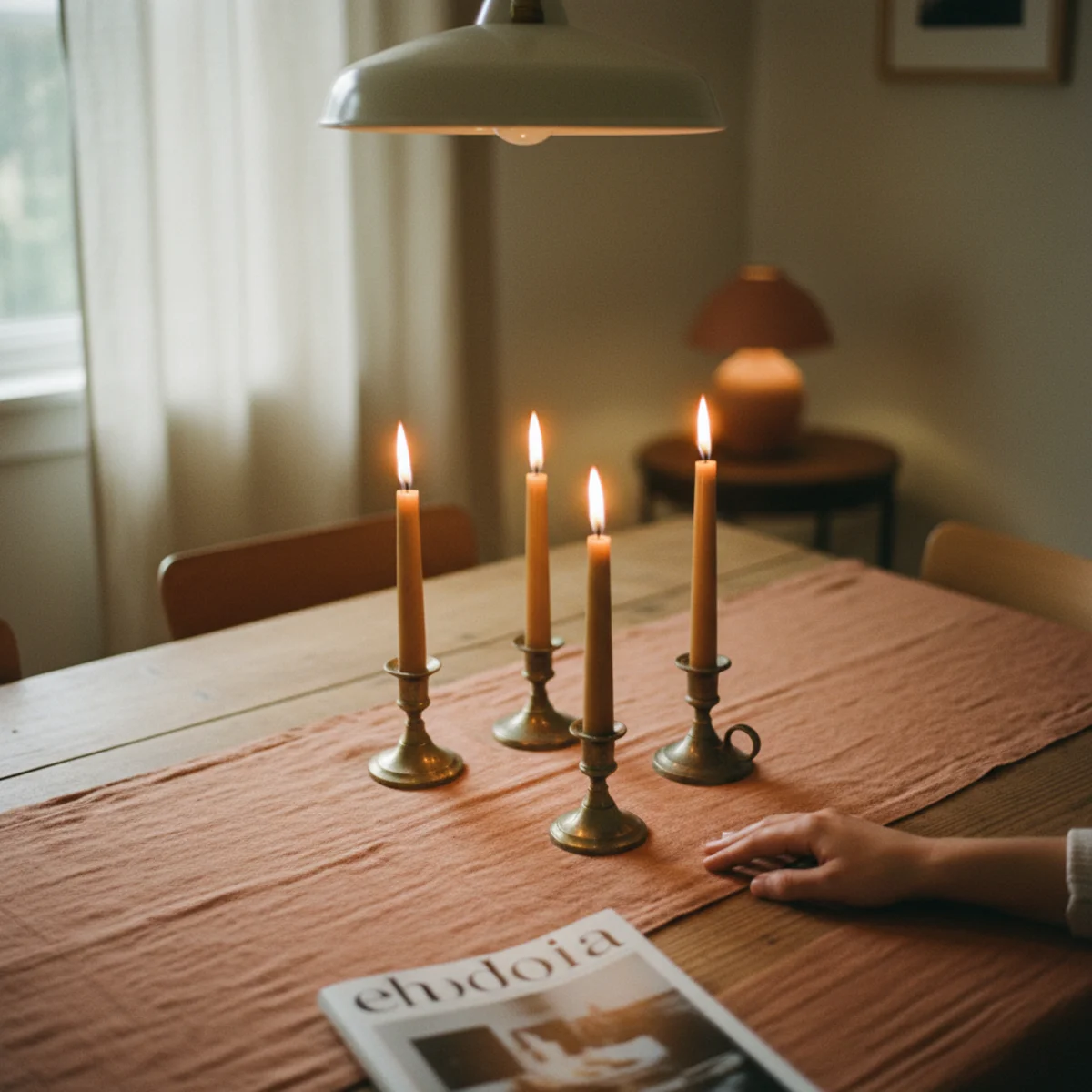
Layered farmhouse lighting setup: ONE OR TWO PENDANTS over key zones (dining table at 30 to 34 inches above table per dining-nook-ideas, kitchen island at 32 to 36 inches above counter). MULTIPLE TABLE LAMPS at 2700K across surfaces (two in living room per cozy-living-room-ideas, two in master bedroom per master-bedroom-ideas). VINTAGE OR HANDMADE PENDANTS in warm metal (brass, copper, oiled bronze) — not factory-standard fixtures. WALL SCONCES in entries and beside seating zones. CANDLES IN ABUNDANCE — taper candles in vintage brass holders, pillar candles in groupings, votives in jars across surfaces. SMART PLUGS on every lamp scheduled to dusk. Total light sources per room: 5 to 8 distinct fixtures, all at 2700K LED, plus 3 to 8 candle locations. The cumulative warm-light layering creates the cocoon-effect that overhead-only lighting cannot.
AFFILIATE SLOTLIGHTINGPendants + multiple table lamps + sconces + abundant candles, all at 2700K with vintage characterAdd affiliate URL when configuredWhy it works
Because farmhouse rooms typically have substantial architectural character (exposed beams, real wood, vintage fixtures) and the right light is what reveals or hides this character. Cool overhead light flattens the character; warm layered light highlights it. Candles specifically work in farmhouse rooms more than in modern rooms because they match the historical-warm aesthetic — old farmhouses literally were lit by candles, and the visual reference is preserved by including them in modern lighting.
Pro tip — Add at least one vintage or handmade pendant per room — even if you keep other lighting modern, the one character-fixture per room signals that lighting choices were considered rather than defaulted to builder-standard. Vintage brass pendants run $80 to $300 from Marketplace; handmade clay or ceramic pendants run $150 to $500 from Etsy artisans.
Vintage pendant, multiple lamps, sconces, candle clusters — the warm-light layering that overhead-only cannot match. See also: cozy-living-room-ideas
11Bring In Greenery and Branches
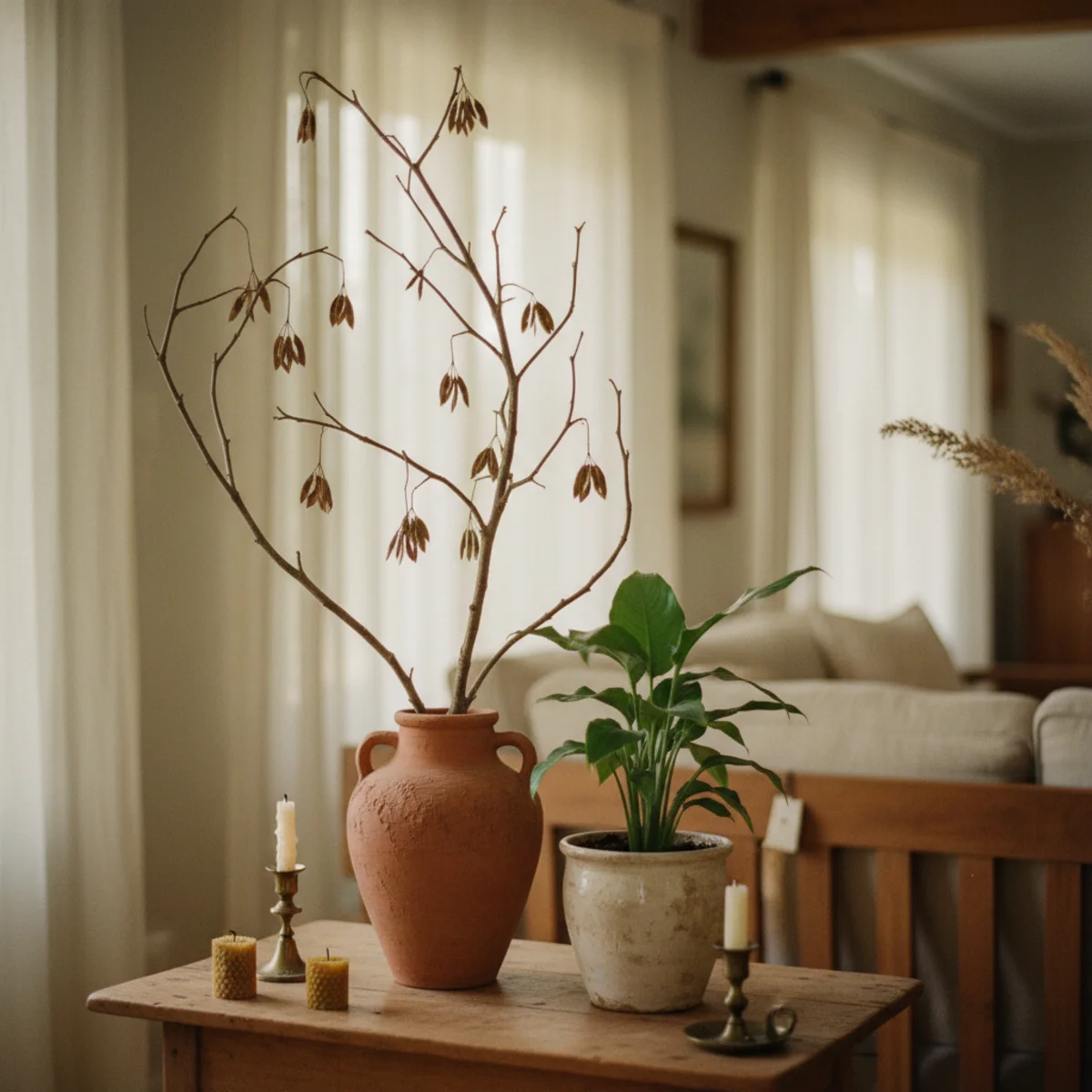
Modern farmhouse rooms need living elements — large floor plants, herbs in windowsills, branches in tall vases, dried botanicals in winter. The greenery adds the natural organic shapes that the rest of the warm-collected aesthetic supports. Fresh-cut branches in a tall heavy ceramic vase or vintage demijohn are especially farmhouse-appropriate.
Best farmhouse greenery: LARGE FLOOR PLANT beside the sofa (snake plant 3 to 4 feet, fiddle leaf fig 4 to 5 feet, olive tree 4 to 6 feet — $40 to $200 depending on size). TALL BRANCHES in a heavy ceramic or glass vase (eucalyptus, olive branches, dried wheat, magnolia branches — 24 to 36 inches tall, $5 to $30 fresh-cut or $20 to $50 dried). HERBS IN WINDOWSILL kitchen pots (rosemary, basil, thyme, mint — useful for cooking, decorative for the kitchen, $4 to $10 per pot). DRIED BOTANICALS in winter (eucalyptus, lavender, dried hydrangea — last 1 to 2 years, $15 to $50 per bunch). WREATHS on doors and walls (dried herbs, evergreen for winter, woven willow — $20 to $80 each). The combined greenery: 4 to 6 distinct living or organic elements per room.
AFFILIATE SLOTPLANTSLarge floor plant + tall branches in heavy vase + windowsill herbs + dried botanicals + wreathsAdd affiliate URL when configuredWhy it works
Because farmhouse aesthetic is rooted in agricultural-rural life where plants and natural materials were everywhere — the greenery is a visual reference to that original context. Modern farmhouse rooms without plants read as commercial-farmhouse showrooms; rooms with abundant plants read as actual farmhouse-inspired homes. The plants also add organic shape and natural color variation that the otherwise-restrained warm palette benefits from.
Pro tip — Cut your own branches when possible — eucalyptus branches from a friend's tree, magnolia from a neighborhood walk, olive branches from a yard tree. The free fresh-cut branches in a heavy vase often outperform expensive florist arrangements for farmhouse aesthetic, and they last 2 to 4 weeks in water (or dry out gracefully for ongoing display).
Tall plant, vase of olive branches, herbs, dried wreath — organic life across the farmhouse room. See also: olive branches
12Keep It Collected, Not Matched
The single most-important modern farmhouse principle is collected, not matched. Matching sets (matching dining chairs, matching cushion sets, matching candleholders) read as commercial; mixed pieces with related-but-not-identical character read as collected over years. The discipline applies to every category: furniture, textiles, lighting, ceramics, art. Match restraint creates the warm-collected farmhouse feel.
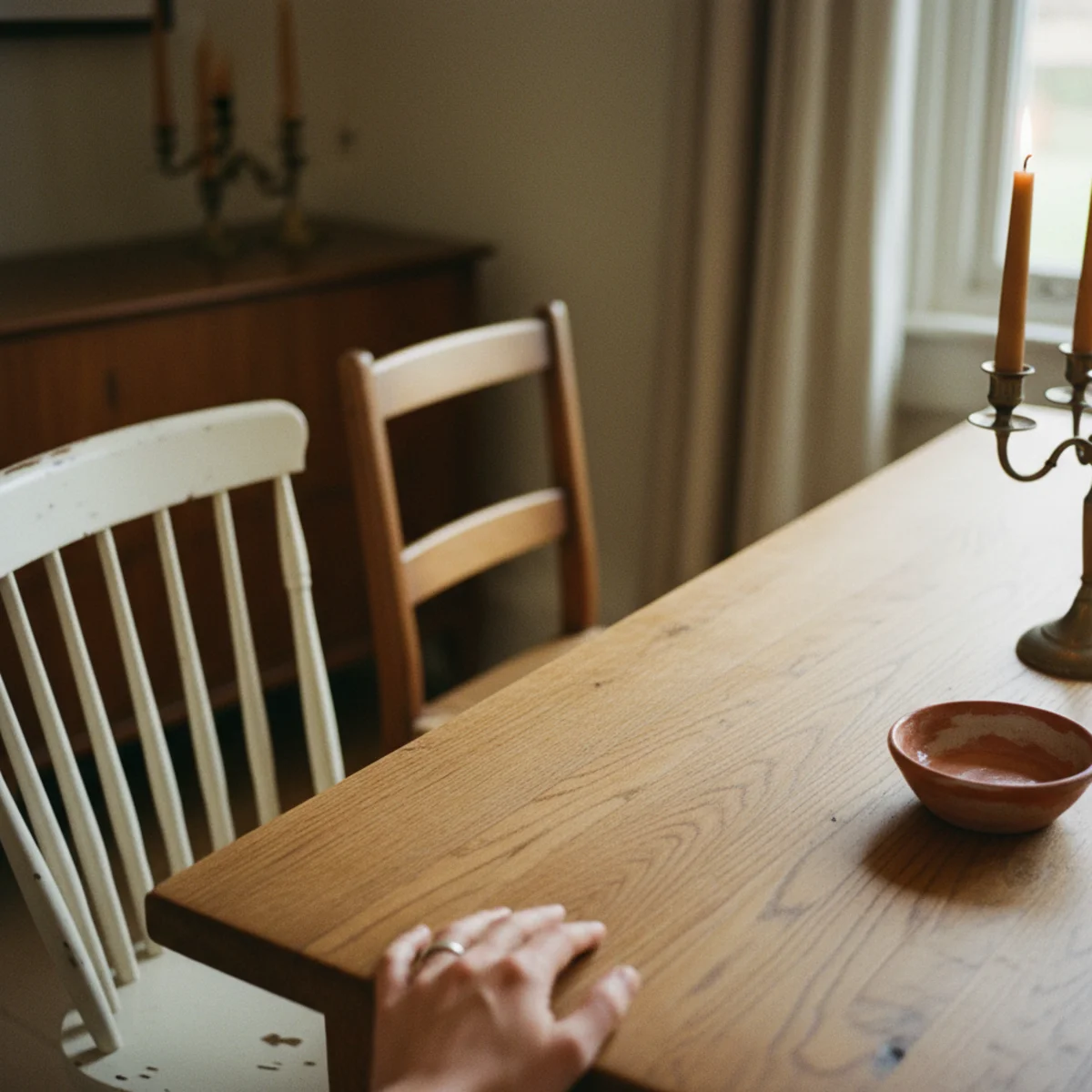
Apply the collected-not-matched rule across categories: DINING CHAIRS — mix 4 to 6 vintage chairs that share period or material but differ in exact design (3 wooden + 1 caned, for example, rather than 4 identical). CUSHIONS — mix textures and patterns within the same warm palette (linen + boucle + knit wool, not a matching set of 4 identical pillows). LAMPS — pair lamps in matching style for bedside (rule of symmetry, see master-bedroom-ideas) but mix lamp styles across the rest of the house. CANDLEHOLDERS — mix brass and ceramic and iron across a single grouping. CERAMICS — mix hand-thrown pieces from different makers and eras. ART — mix framed botanicals with vintage maps with family photographs in different frame styles. The intentional unevenness is what creates the collected feel.
AFFILIATE SLOTPRINCIPLEMix dining chairs, cushions, lamps, candleholders, ceramics, and art - share palette, differ in designAdd affiliate URL when configuredWhy it works
Because matching sets are the visual hallmark of buying-at-once at a retail store — exactly the commercial farmhouse aesthetic the original style rejected. Mixed pieces that share palette and period but differ in design read as accumulated over years from estate sales, gifts, inheritance, and considered purchases. The brain processes one as 'bought yesterday from West Elm' and the other as 'collected across decades from many sources,' even when both are technically purchased recently. The discipline of mixing is what creates the warm-collected illusion regardless of actual acquisition timeline.
Pro tip — When buying any new piece for modern farmhouse, ask 'does this match what I have, or does it complement what I have?' Matching reads as set-purchase; complementing reads as collected. Pieces should share warm palette and warm material category but differ in specific design, era, or maker. The complementary-not-matching discipline is the single most important farmhouse buying rule.
Six mixed-style vintage chairs sharing wood tone — the collected unevenness that retail matching cannot replicate. See also: see master-bedroom-ideas
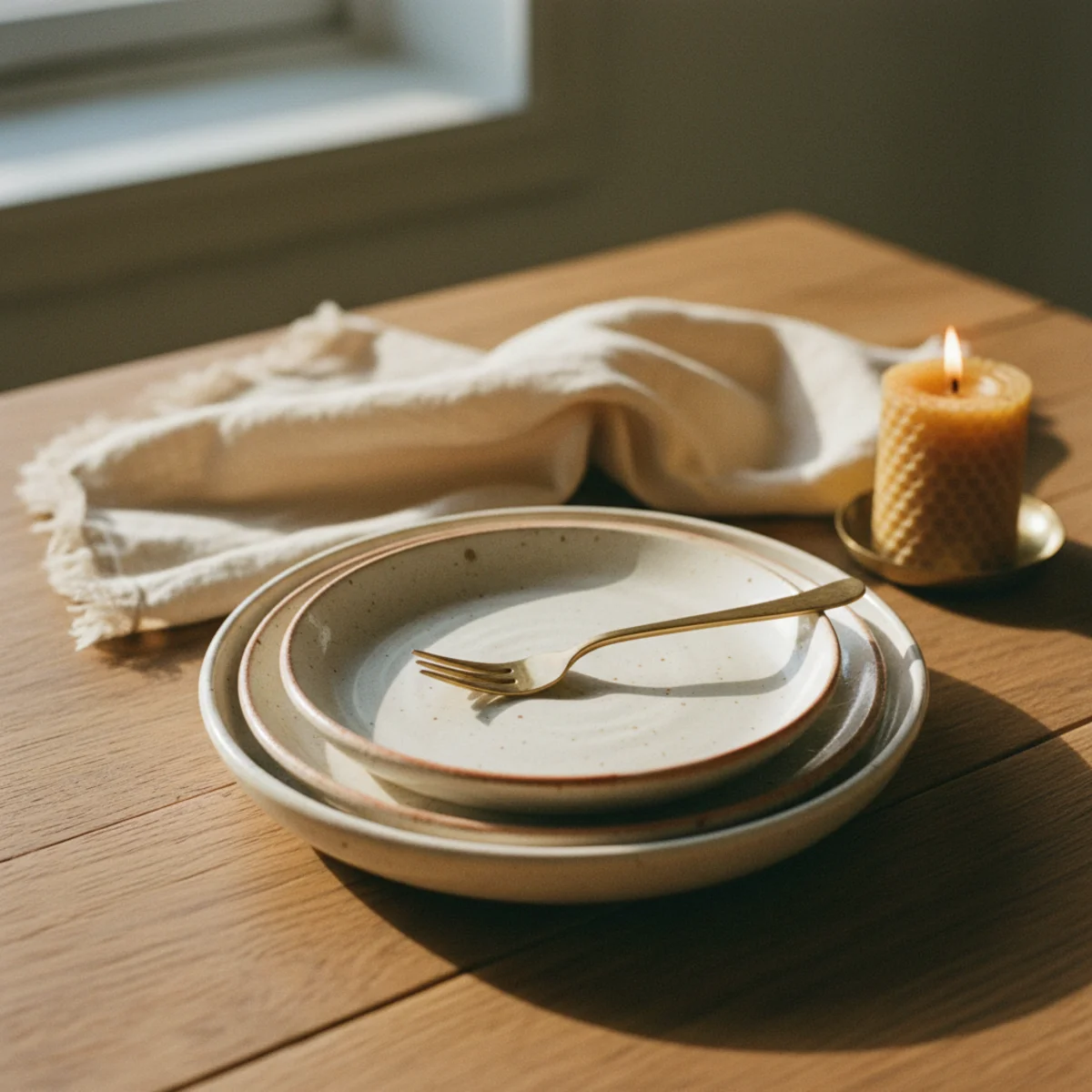
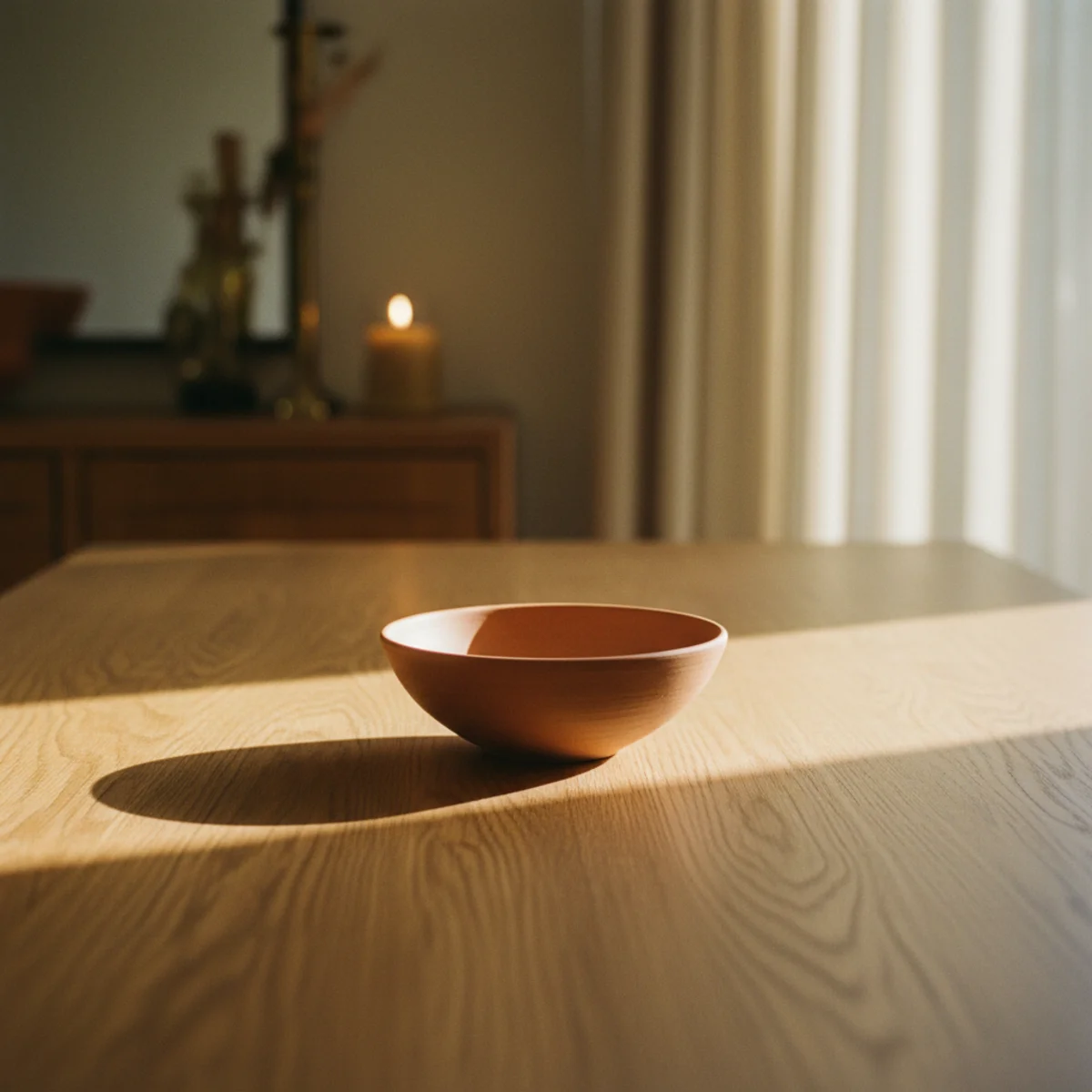
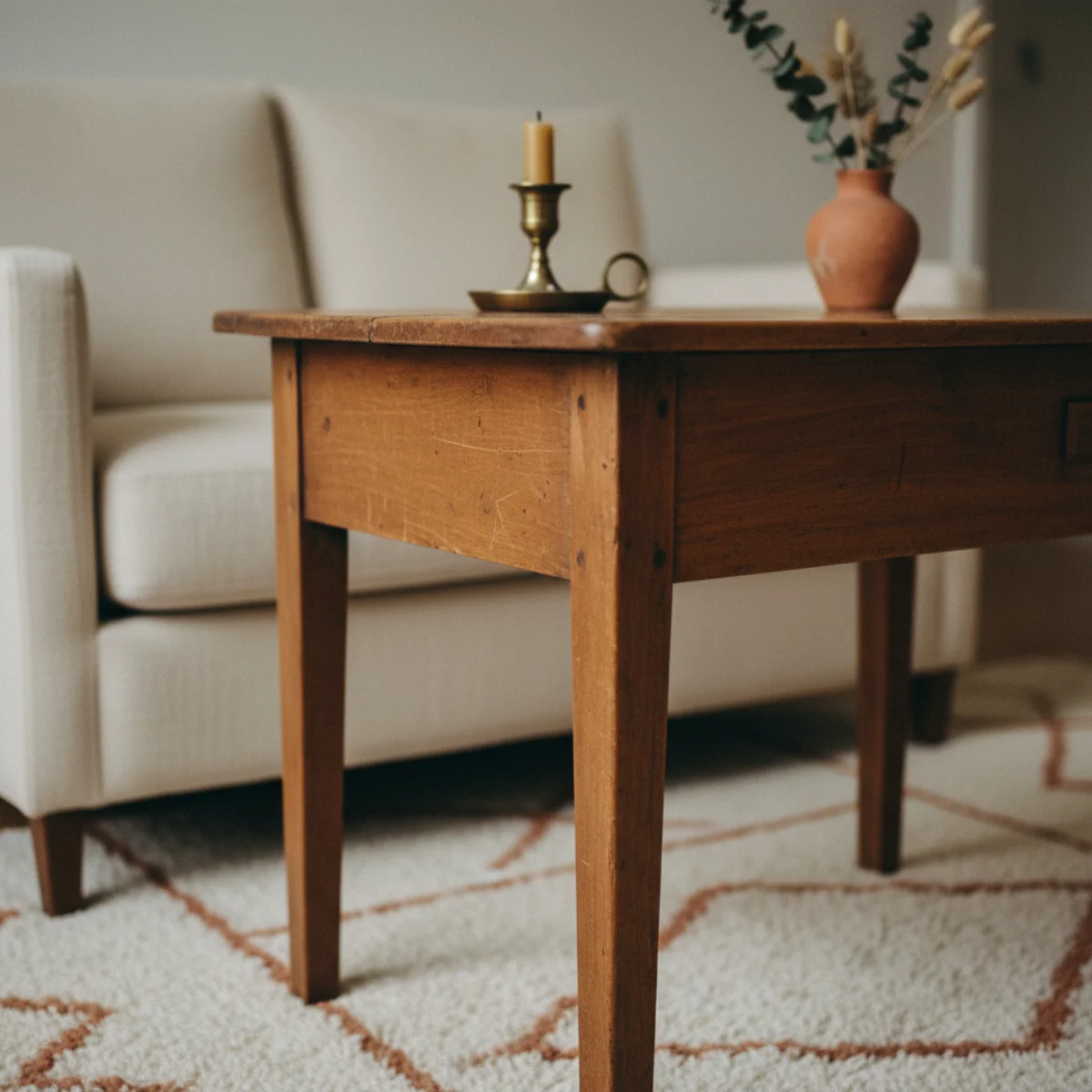


How to get warm modern farmhouse decor step by step
Keep the wood and the comfort, drop the grey and the clichés.
- 1Warm the palette
Swap any cool grey for earthy tones — clay, sage, warm white, oat. This single shift updates the whole look.
- 2Anchor with natural wood
Keep or add exposed wood — beams, a reclaimed table, oak floors — in honest, natural finishes.
- 3Bring in genuine vintage
Add real antique and secondhand pieces — a dresser, a rug, an old crock — rather than a matching store set.
- 4Layer texture and warm light, then edit the clichés
Add wool, linen, and a jute rug, light it warm, and remove the mass-produced signs and excess grey.
Quick tips
- Swap cool grey for warm earthy tones — it's the single biggest update to the look.
- Keep real or reclaimed wood; it beats anything painted to look distressed.
- Shop genuine vintage rather than buying a matching set from one store.
- Lose the mass-produced word-art signs; hang real art or a vintage mirror instead.
- Use black accents sparingly; too much returns to the dated cliché.
- Build the room over time so it reads collected and personal, not catalog.
Modern farmhouse by approach
Earthy color, natural wood, genuine vintage, and layered texture — the updated 2026 take.
Softer and more floral, leaning toward cottagecore; see our cottagecore decor guide.
Open shelving with earthenware, a reclaimed-wood island, warm white cabinets, and brass fixtures.
A few warm farmhouse elements — a reclaimed table, a vintage rug — in an otherwise contemporary space.
Modern farmhouse grew up by dropping the grey and the signs and remembering it was always about warm wood and collected comfort.
Frequently asked questions
What's wrong with the modern farmhouse trend now?+
What colors should I paint a modern farmhouse?+
Should I have shiplap walls in a modern farmhouse?+
Where do I find genuine vintage pieces for modern farmhouse?+
Should I display 'Gather' or 'Family' signs in modern farmhouse?+
What kind of sofa works for modern farmhouse?+
Modern farmhouse grew up: the warm 2026 version keeps the natural wood and lived-in comfort that made it appealing while dropping the cold grey, the shiplap overload, and the mass-produced signs. Swap the grey for earthy warm tones, shop genuine vintage over matching sets, and build the room over time. We'd change the palette first — warm white and clay instead of grey instantly updates the whole look. Collected and warm beats matched and grey, every time.