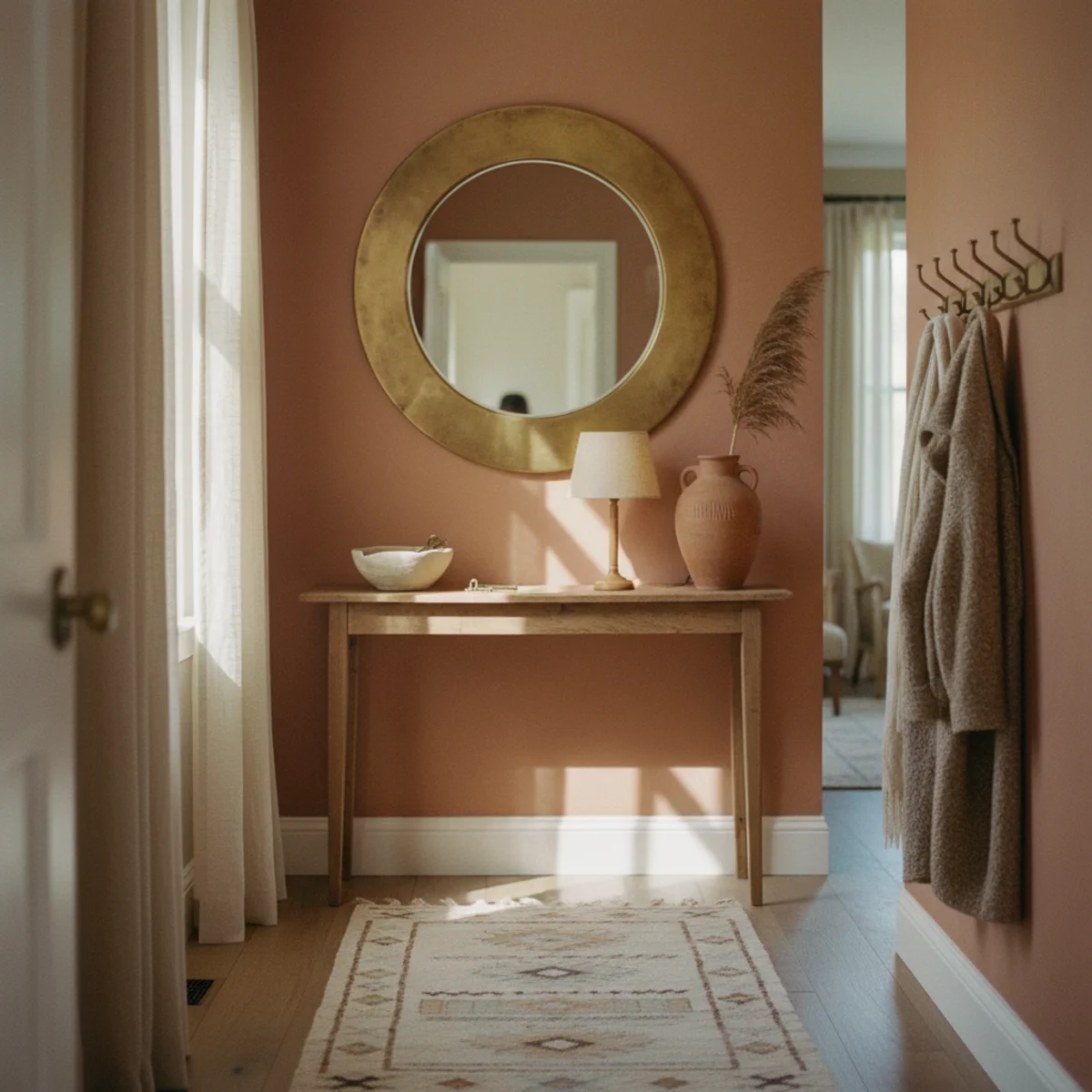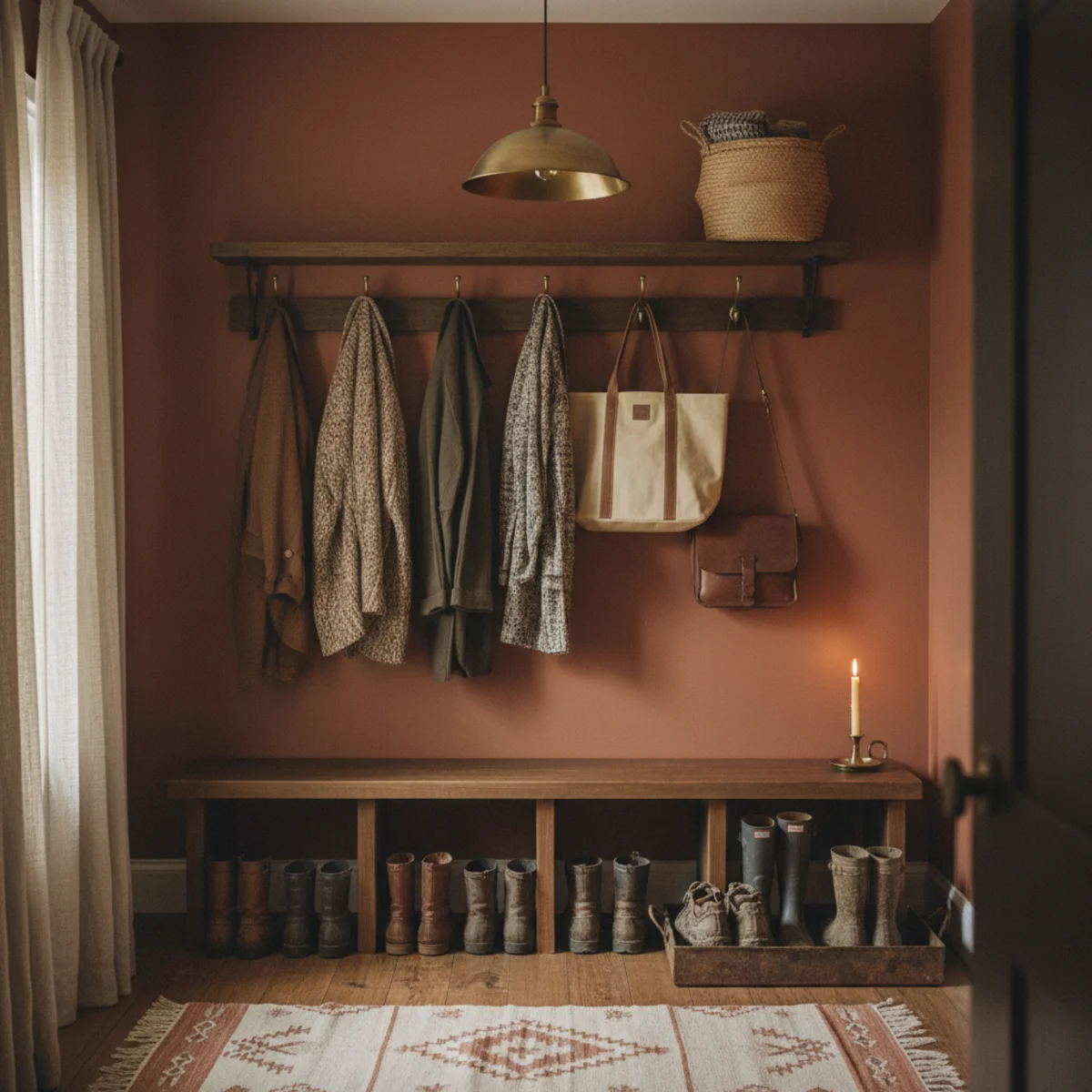
These twelve mudroom ideas are tested across actual hard-use entries — back doors from snowy winters, garage-to-house transition rooms, side-entry hallways used by kids and pets year-round. Every move below balances pure function (the mudroom has to handle wet coats, muddy boots, and dripping bags) with warmth (the mudroom is also part of your home, not a separate utility zone). The principles below name exact materials, dimensions, and hardware specs that survive daily abuse while still reading as part of a warm home.
Most mudroom failures come from picking sides — either pure function (industrial-feeling utility room) or pure aesthetic (beautiful space that falls apart under real use). The fix is choosing materials and infrastructure that are both functional and warm: durable wipeable wood instead of cold tile, brass hooks instead of plastic, woven baskets instead of plastic bins. The mudroom is where this both-and approach matters most.
By the end of this guide, you'll know exactly which bench dimensions hold gear for a household, the hook-per-person rule that prevents the floor-coat pile, the rug type that survives wet boots, and the seven other moves that turn the mudroom from utility room to functional welcome.
WHAT'S INSIDE
- The bench at 17 to 19 inches tall with cubbies underneath that holds the whole household's gear
- Why one hook per person beats general 'lots of hooks' for actual mudroom function
- The durable runner that survives wet boots and still adds warm-home textile layer
- The boot tray placement that prevents mud and water from spreading across the floor
A mudroom earns its name by absorbing the mess so the rest of the house stays calm. Function first, then warmth on top.
— House Beautiful [citation needed — verify before publish]
What makes a mudroom work?
A working mudroom contains the daily mess of coats, shoes, and bags through three things: a place to sit, a hook or cubby per person, and storage for the overflow — all in durable, easy-clean finishes. It's the most function-driven room in the house, but it doesn't have to be cold; warm materials and a little styling keep it from reading like a utility locker.
The bench-and-hooks combination is the backbone. A bench gives you somewhere to sit and pull off boots, with baskets or cubbies underneath for shoes; a row of hooks — one per family member — handles coats and bags without a bulky rack. Add a durable runner that hides salt and mud, a tray for wet boots, and the room does its job. The warmth comes from wood, woven baskets, and a coat of warm paint over the practical bones.
More in By Room you may love
See allWhy mudrooms matter more in 2026
As open-plan homes blurred the line between entry and living space, the mudroom became the valued buffer that keeps the chaos contained — Pinterest's mudroom searches climb every year, especially around bench-and-hook built-ins and drop-zone organization. The look has gone warm and built-in rather than purely utilitarian.
The driver is practical: more people working and schooling from home means more daily traffic through the entry, and a dedicated drop zone keeps that traffic from spilling into the living areas. As the warm-home aesthetic spread, even this most functional room got the warmth treatment — durable, yes, but with wood, baskets, and warm paint rather than cold plastic bins.
22 mudroom ideas that handle real life
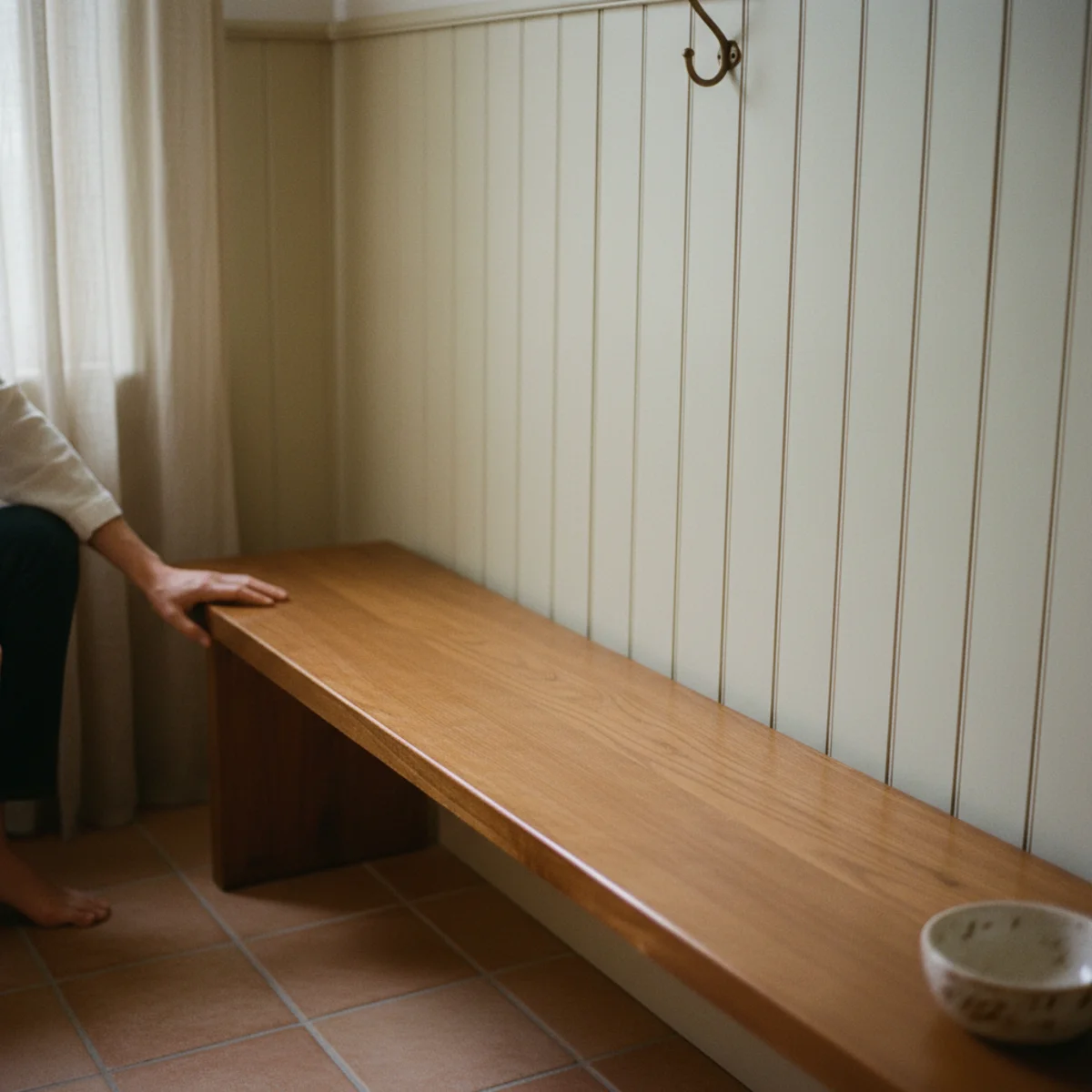
01Add a Bench to Sit and Unload
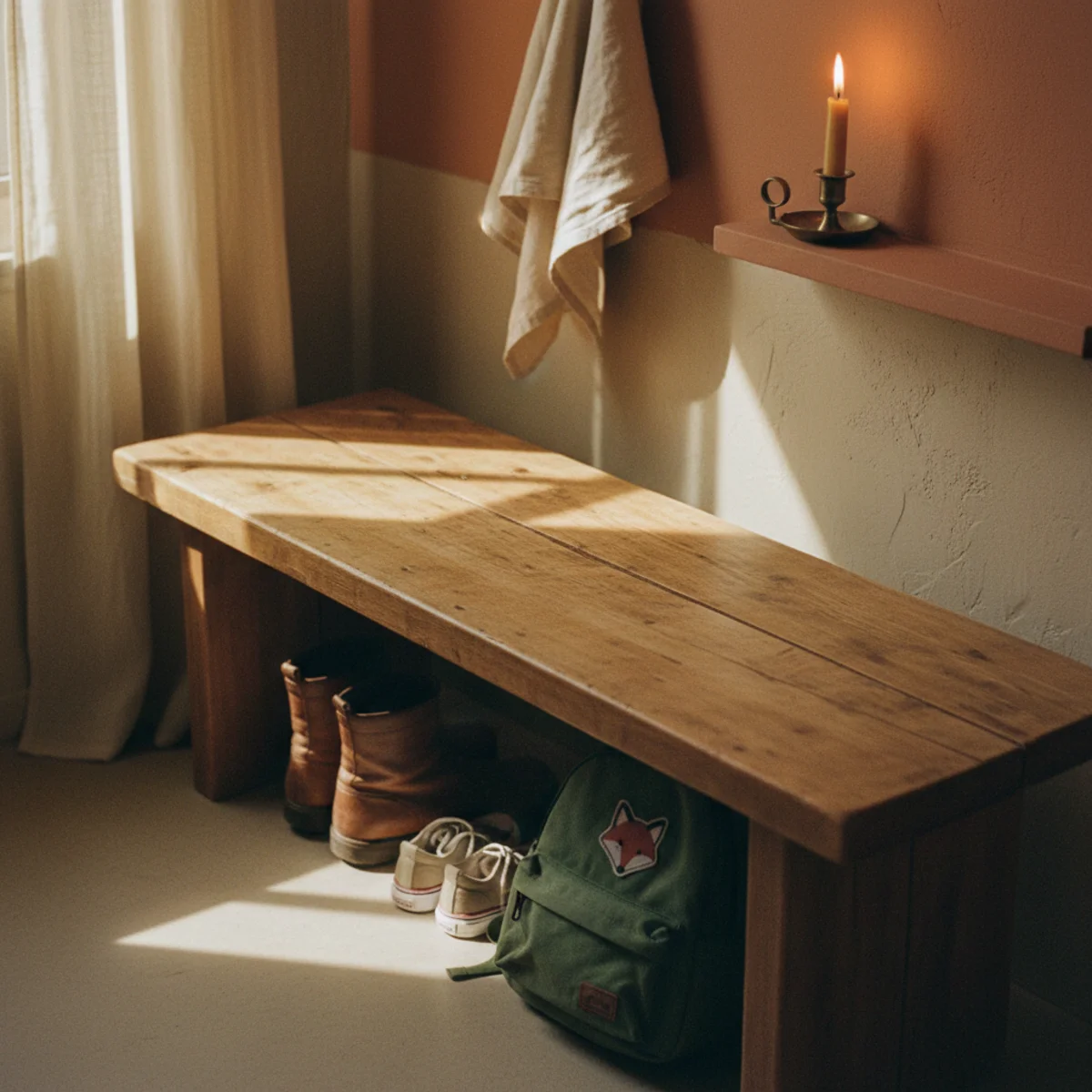
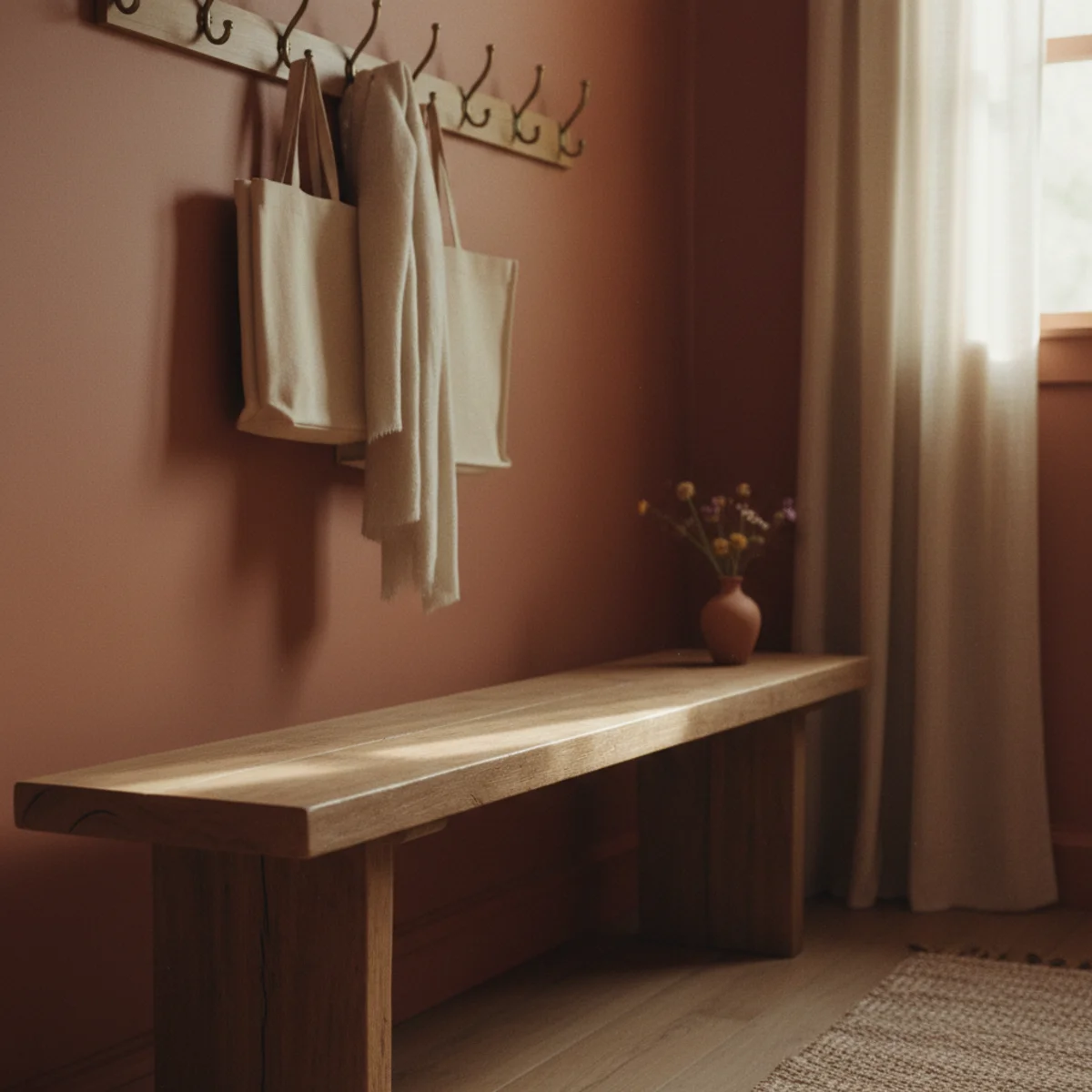
The single most-important mudroom element is a bench — the place to sit while pulling off boots, unloading bags, removing winter outerwear. Without a bench, every transition through the mudroom happens standing or balancing against a wall, which makes the room frustrating to use and pushes the chaos into adjacent rooms. A bench 36 to 60 inches long at 17 to 19 inches tall solves the core mudroom problem.
Choose a bench 36 to 60 inches long, 14 to 18 inches deep, 17 to 19 inches tall. Materials: solid wood (oak, walnut, or oiled pine) is the best balance of durability and warmth; upholstered benches don't survive wet boots and muddy bags well. Add cushion ($30 to $80) for comfort but choose a removable washable cushion for cleanup. Sources: IKEA HEMNES at $130, Article Otto at $349, vintage at $40 to $150 from Marketplace. The bench depth should leave room for cubbies or storage underneath (rule 7). Position against the longest unbroken wall in the mudroom, with the bench facing the entry door so users sit naturally while removing footwear.
AFFILIATE SLOTFURNITURESolid wood bench 36-60 inches long x 14-18 deep x 17-19 tall with storage underneathAdd affiliate URL when configuredWhy it works
Because boot-and-shoe transition is the daily friction point in any mudroom, and standing while removing footwear is uncomfortable, awkward, and signals 'this is a transit room, not a real space.' The bench transforms transition from awkward standing to comfortable sitting, which makes the whole mudroom experience read as designed for actual use rather than as compromise infrastructure. The bench is also the visual anchor that turns 'utility room' into 'mudroom' — a real defined room with seating.
Pro tip — Use the space under the bench (between the legs) for boot storage and gear baskets — the typically-wasted underbench area becomes the highest-density mudroom storage. Position 2 to 4 woven baskets under the bench for boots, hats, gloves, dog gear; the baskets contain the chaos while the bench top stays clear for sitting.
Forty-eight inch oak bench with baskets underneath — the central infrastructure that turns transit room into mudroom. See also: vintage at $40 to $150
02Install One Hook Per Person
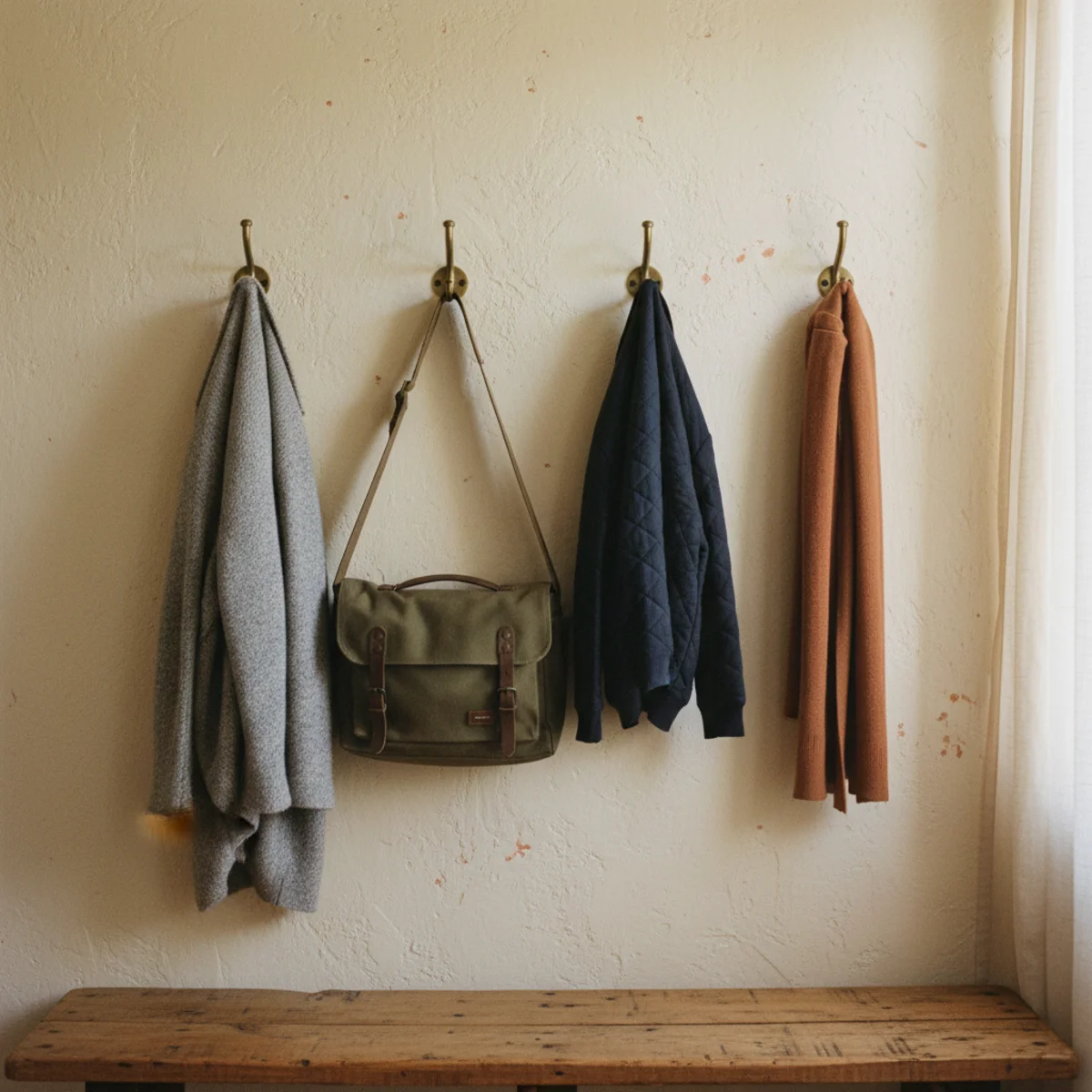
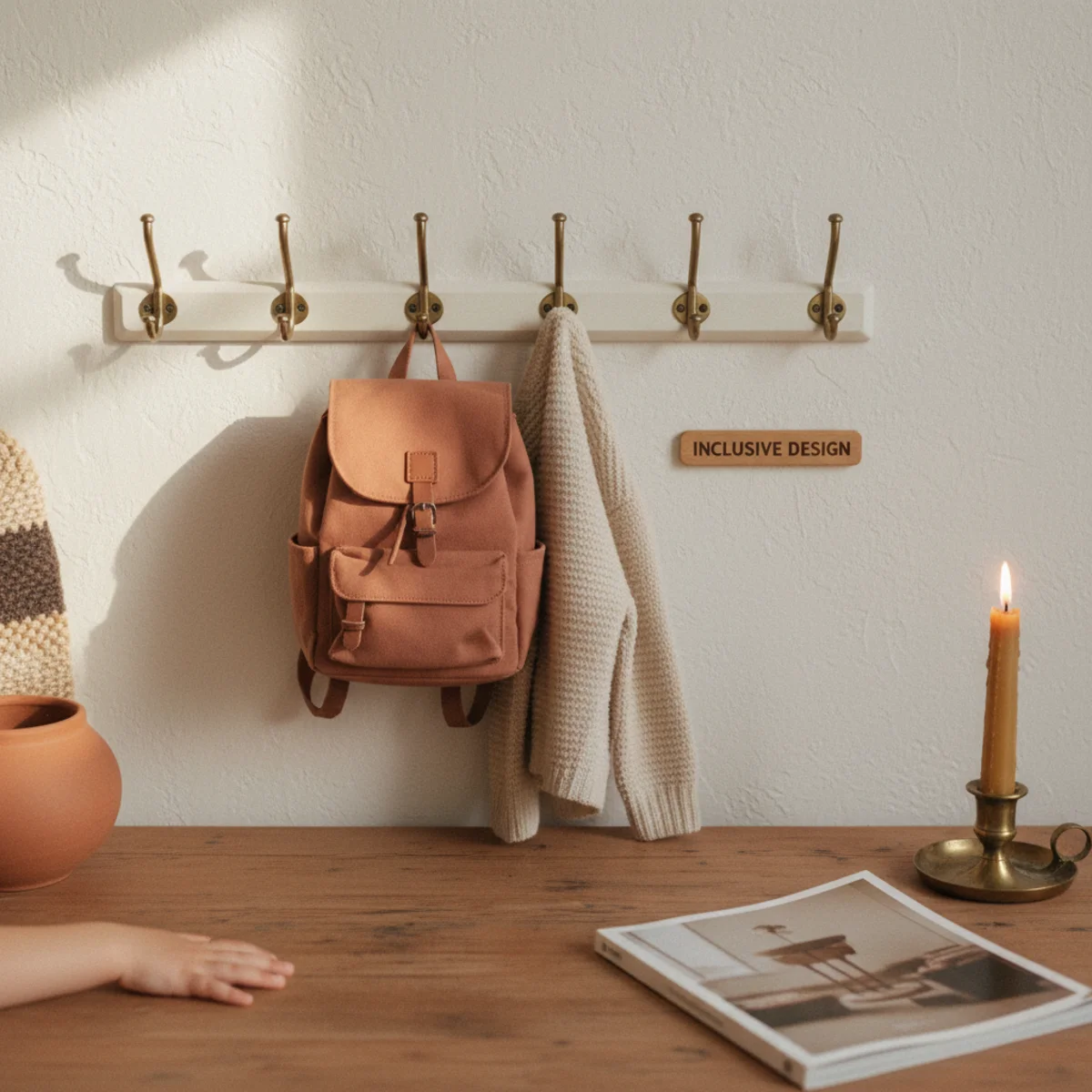
The most-violated mudroom rule is hook count. A row of 'lots of hooks' fails because nobody has a designated spot, which means coats accumulate randomly until the wall fills up and overflows. The fix is one hook per person in the household at the right height for each person — adult hooks at 60 to 66 inches, kid hooks at 36 to 42 inches. The personal designation is what makes the hooks actually function.
Count household members and add one hook each plus 1 to 2 guest hooks. Heights: adults at 60 to 66 inches (adult shoulder height), kids at 36 to 42 inches (kid shoulder height — usually a second row below the adult row), one hook for guests slightly higher than adult hooks. Materials: heavy-duty solid brass or oiled bronze at $4 to $20 per hook from House of Antique Hardware, or basic heavy-duty hooks at $5 to $15 from Home Depot. Mount into wall studs (mudroom hooks bear real weight from wet winter coats). Optional: small label or photo above each hook indicating whose it is — particularly helpful for young kids learning to hang their own coats. The personal designation is what prevents the random-pile failure mode.
AFFILIATE SLOTFUNCTIONOne hook per household member + 1-2 guest hooks; adults 60-66 inches, kids 36-42 inchesAdd affiliate URL when configuredWhy it works
Because shared infrastructure becomes nobody's responsibility — when 'any hook is fine,' coats end up on chairs and floor because nobody owns a specific landing zone. When each person has a designated hook, the system reads as 'your coat goes here' rather than 'find an open hook,' which the brain processes as a directive rather than as one option among many. The personal designation also lets younger kids learn 'my hook' as a household routine, which compounds across years into self-sufficient mudroom use.
Pro tip — Color-code or label the hooks with small painted dots, photos, or written names — particularly for households with multiple kids whose coat colors might be similar. The visible identification makes the personal-hook system explicit and prevents the 'whose hook is whose' debates that erode the discipline. A small wooden tag with each person's name at $5 each (from Etsy) is the elegant solution.
One hook per person with name tags — the personal infrastructure that ends the random coat pile. See also: House of Antique Hardware
03Use Baskets for the Overflow
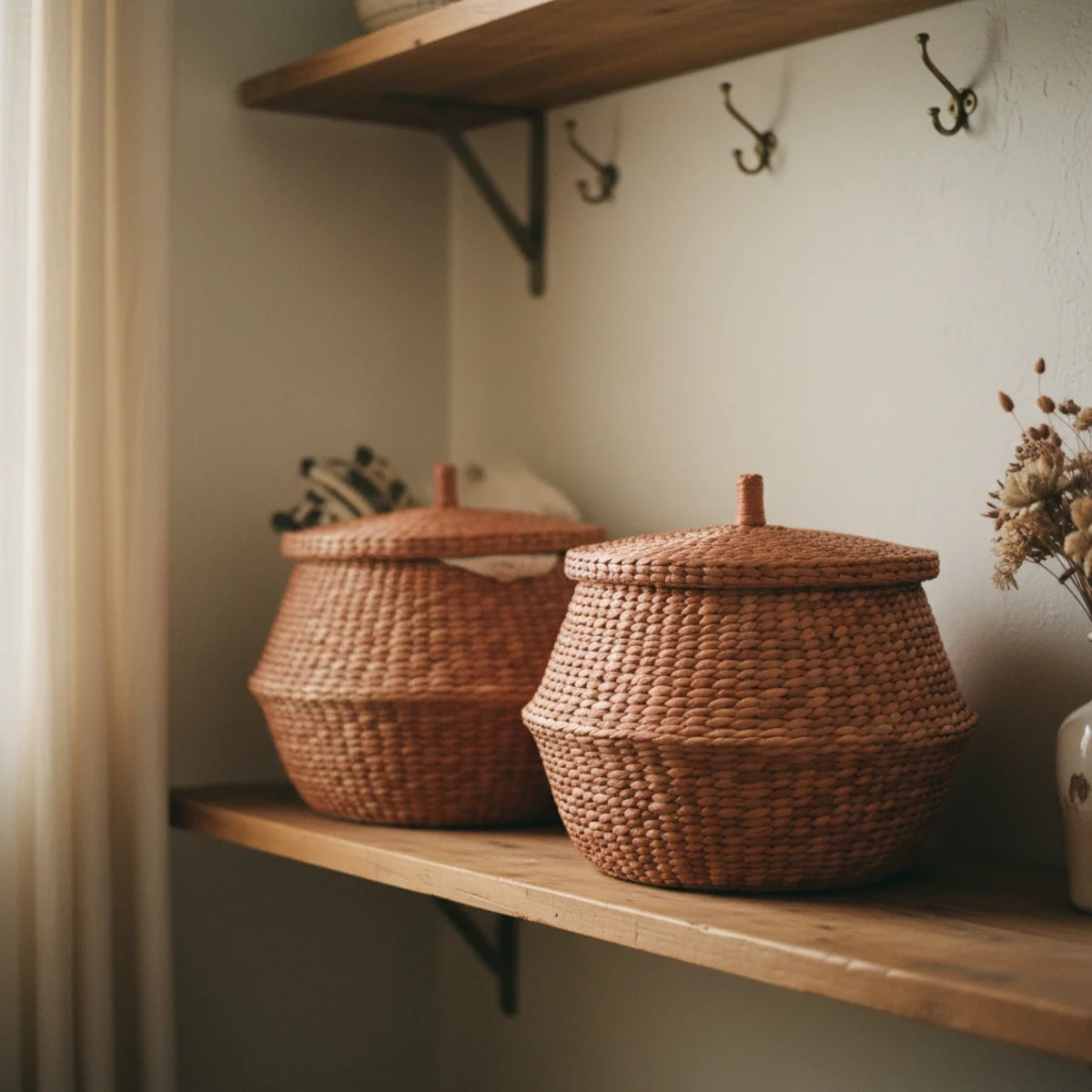
Beyond the hook-per-person and the bench-underneath baskets, every mudroom needs overflow baskets — for hats, gloves, scarves, sunscreen, dog leashes, anything that doesn't hang on a hook or live elsewhere. Lidded or open woven baskets in seagrass, water hyacinth, or rattan contain the seasonal accumulation while reading as warm-home rather than utility-storage.
Best mudroom baskets: large open-top baskets 14 to 20 inches across in seagrass or water hyacinth ($25 to $60 from IKEA NIPPRIG, Pottery Barn, or Target), lidded baskets 14 to 18 inches across for hidden storage ($30 to $80), wire baskets with linen liners ($30 to $60 for combination). Place 4 to 8 baskets across the mudroom: 2 to 4 under the bench (boots, household-specific gear), 2 to 3 on shelves above the hooks (hats, gloves, scarves), 1 to 2 on the floor in a corner (dog gear, large bags). Label baskets with small wooden tags or chalkboard labels if multiple categories — 'hats,' 'gloves,' 'dog,' 'umbrellas' — to keep the system working across seasonal changes.
AFFILIATE SLOTSTORAGE4-8 woven baskets in seagrass, hyacinth, or rattan across bench, shelves, and cornersAdd affiliate URL when configuredWhy it works
Because plastic bins read as utility-storage and break the warm-home aesthetic that mudrooms can otherwise have; woven natural-fiber baskets read as part of the home decor while still containing the same chaos. The functional difference is minor (both contain items), but the visual difference is significant — a mudroom with woven baskets reads as 'organized warm room' while the same mudroom with plastic bins reads as 'storage closet with hooks.' The trade-off cost ($20 more per basket for woven vs plastic) pays back in aesthetic for the room you walk through dozens of times daily.
Pro tip — Reserve one basket as the 'returns and outgoing' bin — items that need to go back to library, items destined for donation, items the kids forgot at school yesterday. The dedicated outgoing bin prevents these items from cluttering hooks and bench, and the central location makes morning grab-and-go more efficient.
Four woven baskets across bench and shelves — overflow storage that reads warm rather than utility. See also: IKEA NIPPRIG
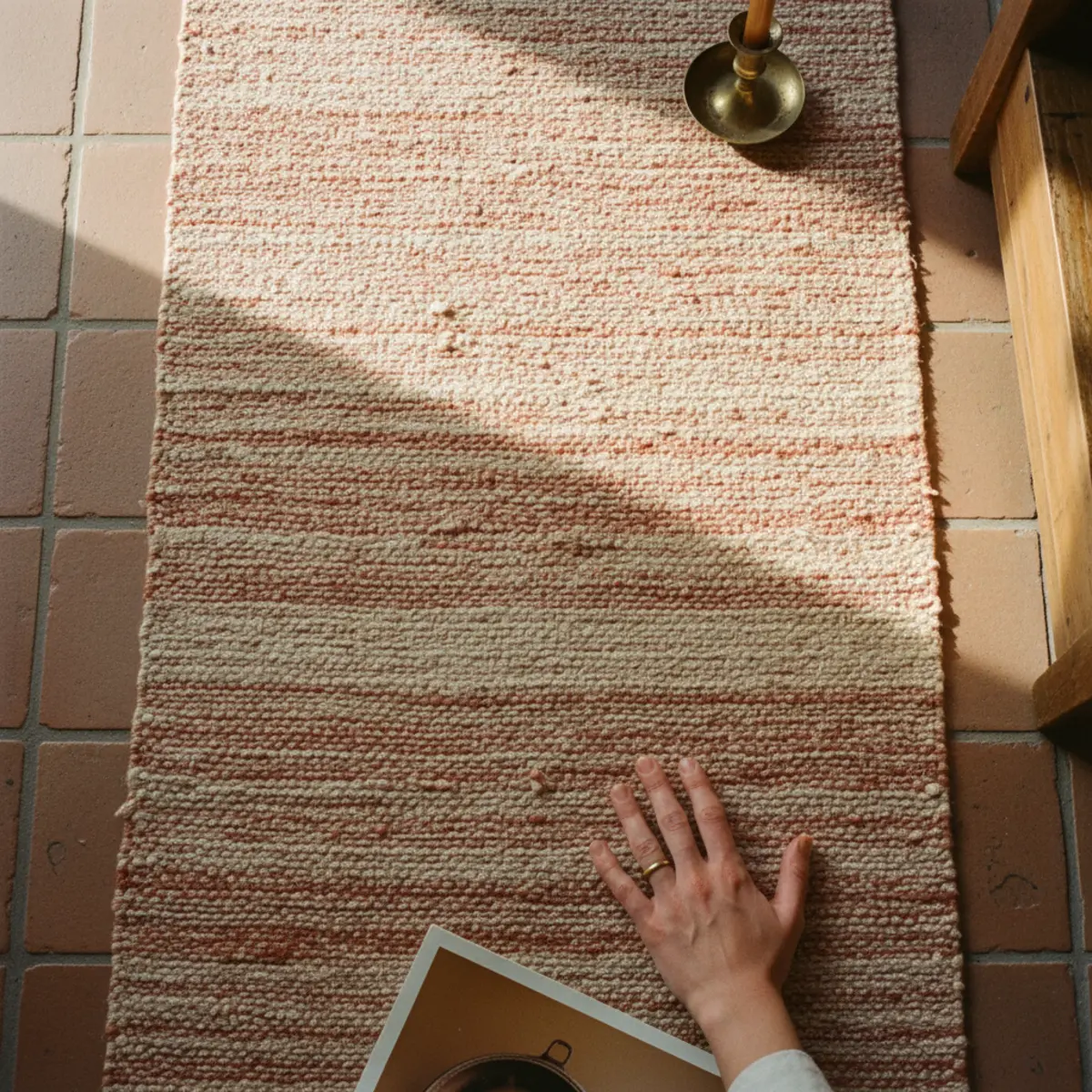
04Choose a Durable Forgiving Runner
Mudroom floors take heavy daily abuse — wet boots, snow, mud, kid spills, pet messes. The wrong rug fails in 6 months; the right rug survives years of hard use while adding the warm-home textile layer mudrooms otherwise lack. The choice is durable wool, indoor-outdoor synthetic, or jute — not delicate vintage pieces that belong in the living room.
Best mudroom rug types: DURABLE WOOL (especially flatweave like kilims) — survives wet boots, easy to spot-clean, $80 to $300 for 3x6 or 4x6 sizes. INDOOR-OUTDOOR POLYPROPYLENE — designed for harsh conditions, hose off if needed, $40 to $150 from Annie Selke, Ruggable, or Rugs USA. JUTE OR SISAL — natural fiber, hides dirt well, but harder to clean than wool; $60 to $200. AVOID: vintage Persian (too delicate), cotton or shag (absorbs moisture and stains), expensive wool rugs you'll regret ruining. Position the rug along the path from the door to the bench, covering the high-traffic zone. Use a non-slip rug pad underneath ($15 to $30). Replace every 3 to 7 years depending on use — mudroom rugs aren't forever, they're functional tools.
AFFILIATE SLOTFLOORDurable wool flatweave, indoor-outdoor polypropylene, or jute runner 3x6 to 4x8Add affiliate URL when configuredWhy it works
Because the rug protects the floor underneath from constant wet-and-muddy abuse — without the rug, the actual flooring takes the damage. The right rug becomes a sacrificial layer that catches the worst of the abuse while still adding visual warmth. Cheap polypropylene rugs are sometimes the right answer specifically because they're replaceable; spending too much on a precious rug in a mudroom creates the wrong incentive (you protect it instead of using it). Match the rug investment to the abuse expected.
Pro tip — Consider Ruggable rugs for mudrooms specifically — the rug top separates from the non-slip pad and goes in the washing machine. After a particularly bad mud day or a winter season, the rug comes clean in a normal wash cycle, where traditional rugs require professional cleaning at $60 to $150. The Ruggable trade-off (slightly thinner profile) is worth the maintenance ease in this room.
Durable wool flatweave runner — the warm textile layer that survives daily mud and wet boots. See also: Ruggable
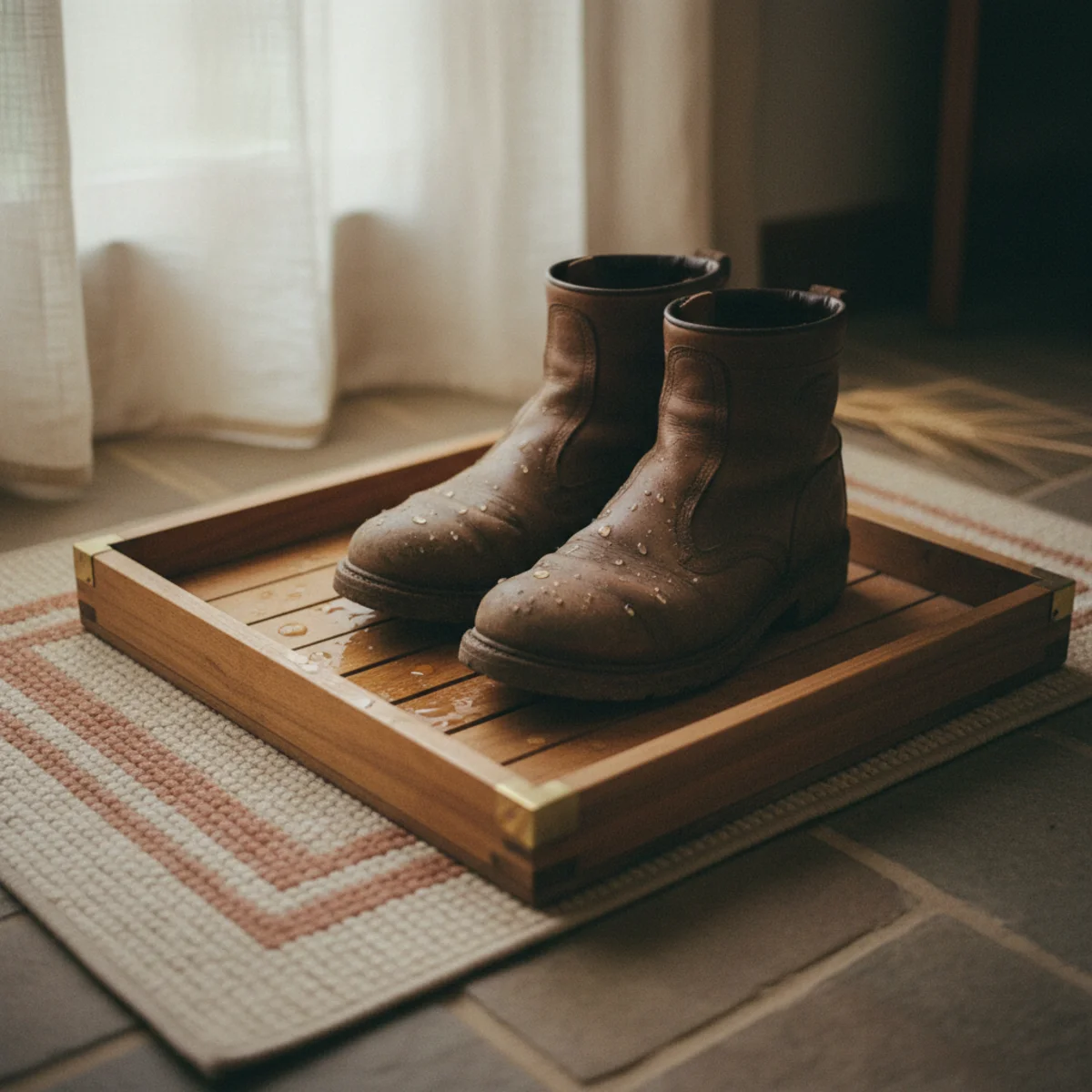
05Set Out a Tray for Wet Boots
Wet boots dripping on the floor create the slow-spread of water that ruins mudroom floors, runners, and adjacent rooms. The fix is a designated boot tray — a shallow watertight container near the door where wet boots go immediately on entry. The tray contains the water, lets it evaporate, and prevents the slow damage that mudrooms otherwise accumulate.
Best boot tray options: galvanized metal tray 24 to 36 inches long x 12 to 18 inches deep x 1 to 2 inches tall ($25 to $50 from Tractor Supply, Amazon, or Home Depot — built for serious wet-boot use), rubber boot tray ($15 to $30 — lighter weight, good for moderate use), wooden boot tray with sealed finish ($40 to $100 — looks warmer, less waterproof). Position immediately inside the door, before the bench and hooks. Capacity: holds 4 to 8 pairs of boots depending on size. Wipe out weekly during wet seasons. Add a small absorbent rug or microfiber mat ($10 to $20) on top of the tray to absorb the first heavy drip before boots are removed and placed on the tray itself.
AFFILIATE SLOTFUNCTIONGalvanized metal, rubber, or sealed-wood boot tray 24-36 inches long inside entry doorAdd affiliate URL when configuredWhy it works
Because without the tray, wet boots become the source of every spread-water problem in the mudroom and adjacent rooms — water drips on the floor where boots are removed, then tracks across the runner as boots are moved to storage spots, then sits in front of the bench as boots are kicked off. The tray contains the water at the source, immediately on entry, before it spreads. The single piece of infrastructure prevents 80 percent of mudroom water damage.
Pro tip — Add a small mesh or grate insert on top of the tray ($15 to $30 from Amazon) so boots sit on the mesh while water collects underneath — the boots dry faster (air circulation around all sides) while the water stays contained below. The mesh insert is the difference between a functional boot tray and an excellent one.
Galvanized boot tray with mesh insert — the water container that prevents 80% of mudroom water damage. See also: Tractor Supply
06Use Durable Wipeable Finishes
Mudroom surfaces take constant abuse — water splashes, mud streaks, boot scuffs, pet hair, kid handprints. The fix is choosing finishes that wipe clean rather than show damage: semi-gloss or eggshell paint instead of matte, oiled wood with regular maintenance instead of unfinished, sealed concrete or large-format tile instead of grout-heavy patterns. The right materials survive abuse while still reading warm.
Material recommendations: WALLS — semi-gloss or eggshell paint (wipes clean with damp cloth without showing streaks). Warm colors work but choose forgiving tones (deep clay, warm olive, muted charcoal hide marks better than light cream). FLOOR — large-format tile (12x24 or larger to minimize grout lines that trap dirt), sealed concrete, or sealed engineered hardwood. Avoid: matte paint on walls (shows wipe marks), small mosaic tile (grout dirt accumulation), unsealed wood (absorbs moisture). BENCH AND SHELVING — solid wood with periodic Danish oil refresh ($12 every 6 months), or wood with sealant. The discipline: every visible surface in the mudroom should be either wipeable or sacrificial-and-replaceable, never delicate-and-precious.
AFFILIATE SLOTMATERIALSSemi-gloss/eggshell paint + large-format tile or sealed concrete + sealed wood furnitureAdd affiliate URL when configuredWhy it works
Because mudroom finishes face year-round wet-and-muddy abuse, unlike any other interior room. Delicate matte finishes that work in living rooms collect smudges and water marks within months; the same matte finish in a mudroom looks ruined within a year. Wipeable finishes (semi-gloss, sealed wood, large-format tile) survive the abuse while still reading as part of a warm home rather than as commercial utility. The forgiveness of the materials is what lets the mudroom be both functional and warm.
Pro tip — Pick a forgiving wall color — F&B Mizzle 266 (muted sage), BM Kendall Charcoal HC-166 (warm charcoal), or F&B Bancha 298 (deep olive) all hide scuffs and marks better than warm whites. The slightly-darker color also visually anchors the busy mudroom (lots of hooks, baskets, gear visible) rather than fighting it.
Semi-gloss walls, large-format tile, sealed wood — every surface wipeable, the mudroom survives daily abuse. See also: Danish oil
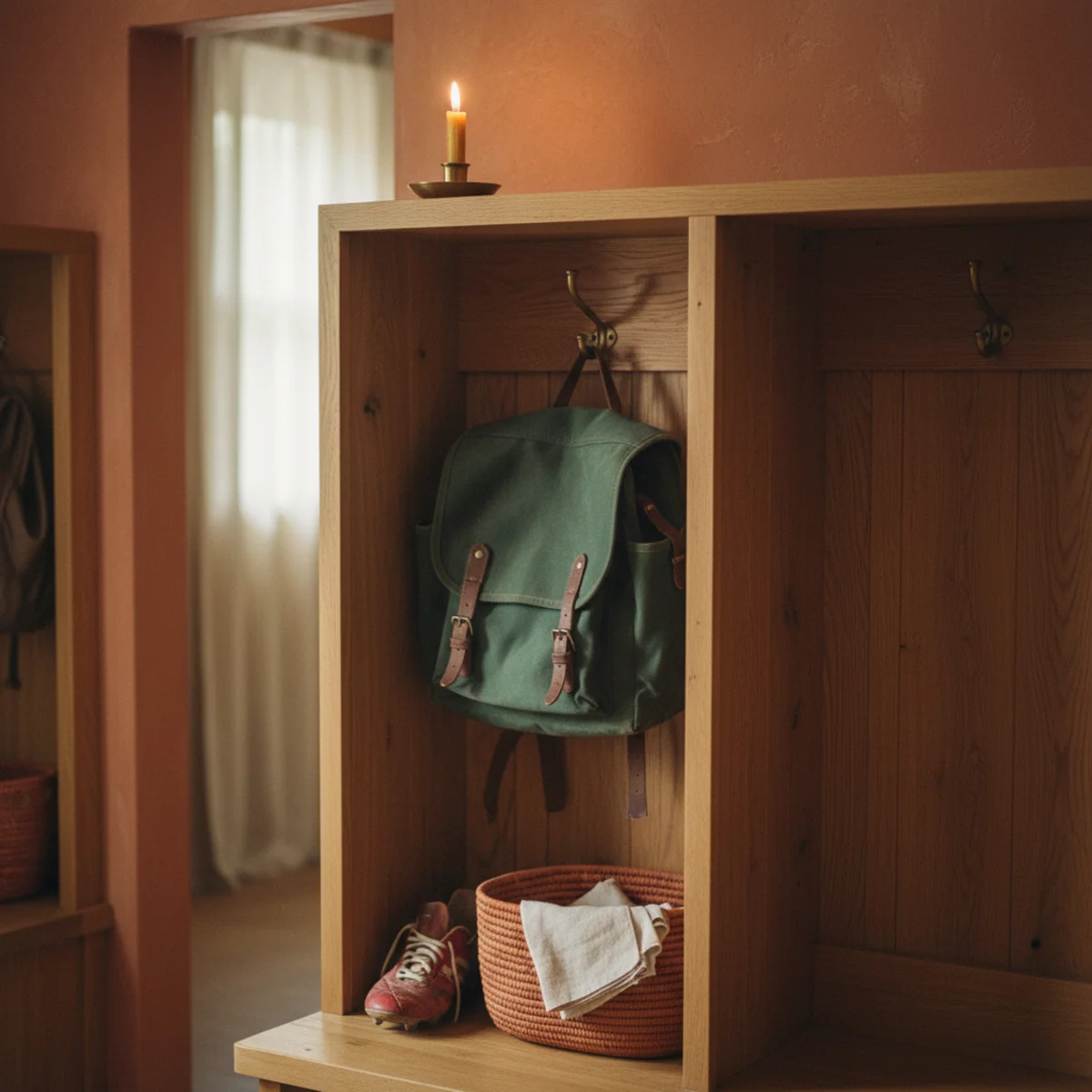
07Add Cubbies or Lockers for Each Person
Beyond hooks, each person in the household benefits from a personal cubby or locker — a defined zone for their seasonal gear, sports equipment, school items. Built-in cubbies (custom or IKEA-hacked) or freestanding lockers (vintage or new) give each person ownership of their mudroom area, which compounds the personal-designation principle from rule 2.
Two approaches: BUILT-IN CUBBIES — frame open shelving 12 to 18 inches wide x 14 to 18 inches deep x 24 to 60 inches tall per person, with bench seat at the bottom and hook above. Custom $300 to $1,500 per cubby system; IKEA TROFAST hacks at $150 to $400 per system; DIY at $80 to $200 per cubby in materials. FREESTANDING LOCKERS — vintage school lockers ($150 to $400 each from Marketplace or architectural salvage) for industrial-warm aesthetic; modern open-locker shelving ($100 to $300 each from Pottery Barn or Container Store). Each person's cubby/locker holds their season-appropriate gear: school bag, sports equipment, seasonal coat, winter accessories. Label with name or initial above each cubby.
AFFILIATE SLOTSTORAGEBuilt-in cubbies, IKEA hacks, or vintage lockers - one per household member, 12-18 inches wideAdd affiliate URL when configuredWhy it works
Because the hook alone (per rule 2) handles only the daily coat, not the larger gear that accumulates across seasons — sports equipment, backpacks, helmets, winter accessories. Without designated storage, this gear accumulates on the floor, the bench, or wherever there's surface area. The cubby gives each person ownership of a vertical zone for all their stuff, which prevents the floor pile and signals that their stuff has a home rather than just a temporary landing spot.
Pro tip — Use the IKEA TROFAST system or BILLY bookcases with added baskets as DIY cubby alternatives — significantly cheaper than custom built-ins, fully personalized through paint and pull replacement, and reconfigurable as kids grow. A four-person mudroom can be fully outfitted with cubbies for $400 to $800 in IKEA materials rather than $2,000+ in custom carpentry.
One cubby per person — vertical storage with bench, hook, and basket for the whole household's gear. See also: IKEA TROFAST
08Build In a Drop Zone for Daily Items
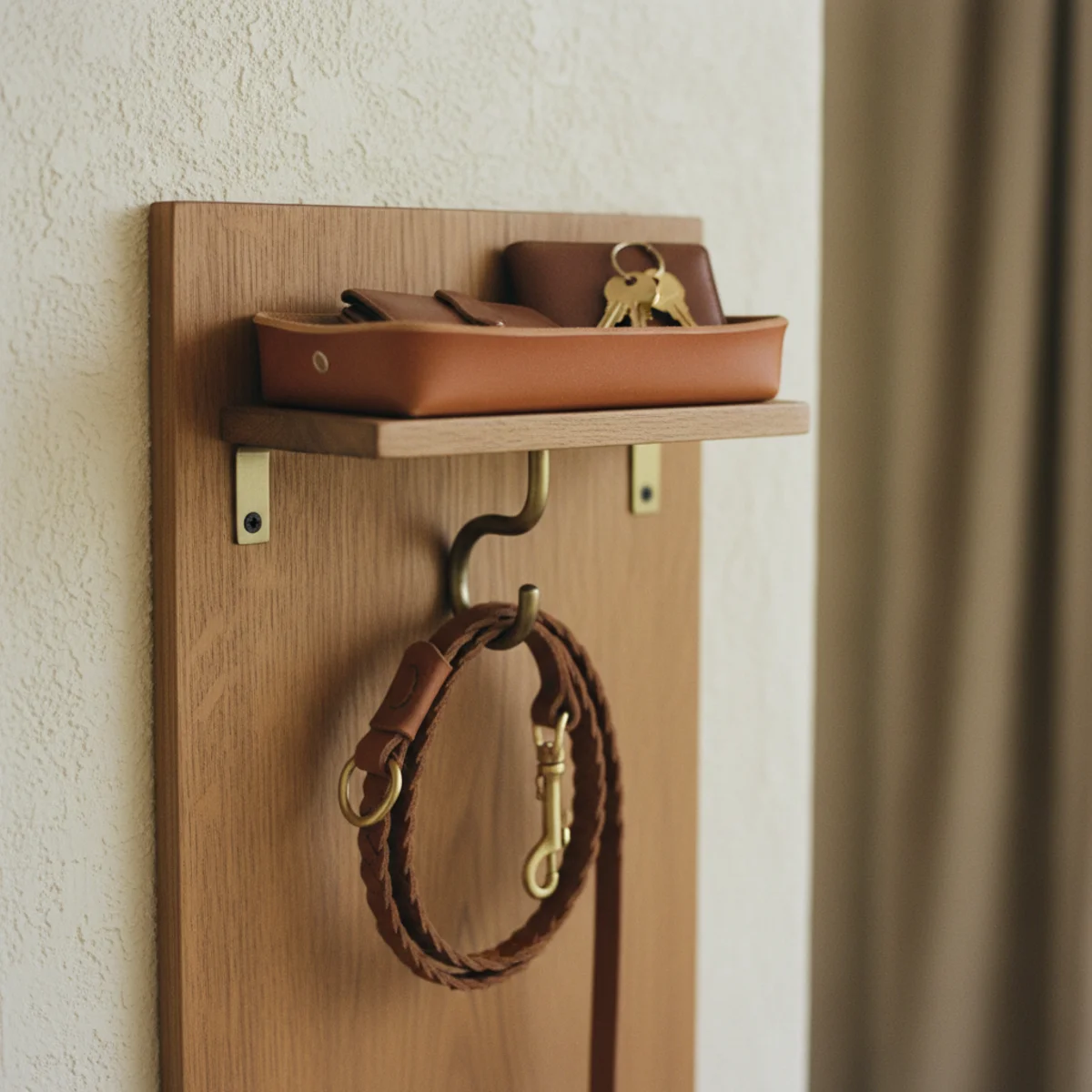
Every mudroom needs a drop zone — a small surface for keys, mail, sunglasses, daily essentials that accumulate the second someone walks in. A small ledge, a console, or even a wall-mounted shelf above the bench creates the designated drop zone. Without it, daily items scatter across the bench, the floor, or get carried into other rooms where they don't belong.
Drop zone options: (1) SHELF ABOVE THE BENCH — a 1x6 floating shelf 36 to 48 inches long mounted at 60 to 66 inches above the floor (above hooks for adults). Holds keys, mail, small bowls for change. (2) SMALL WALL-MOUNTED LEDGE — narrow ledge 4 to 6 inches deep, 24 to 36 inches long, mounted at counter height (36 to 40 inches above floor). Surface for keys and mail. (3) SMALL CONSOLE — 24 to 36 inches wide narrow console against a wall, with hooks or shelf above. More substantial than a ledge but takes more space. Include a small ceramic or wooden bowl 6 to 10 inches across as the keys drop zone ($5 to $30 thrifted or new), and a small mail organizer to contain incoming-mail piles ($15 to $40).
AFFILIATE SLOTORGANIZATIONShelf, ledge, or console for drop zone + small bowl for keys + small mail organizerAdd affiliate URL when configuredWhy it works
Because keys, sunglasses, mail, and small items have nowhere to land in most mudrooms — they end up in pockets (then forgotten), on the bench (visual clutter), on the floor (lost), or carried into other rooms where they don't belong. The drop zone creates a designated home that intercepts the items immediately on entry, before they scatter. The infrastructure handles a real daily friction problem with minimal investment.
Pro tip — Add a small magnetic strip on the wall above the drop zone for keys with metal fobs — the keys stick to the magnetic strip at eye level, which prevents lost-keys searches and adds a small functional-looking element. The $5 magnetic strip from Amazon is the small detail that makes the drop zone exceptional.
Wooden shelf above the bench with bowl and mail organizer — the drop zone that intercepts daily items. See also: ceramic or wooden bowl
09Warm It With Wood and Paint
Mudrooms get treated as utility rooms by default — cold tile floors, white walls, generic painted MDF. The fix is bringing the same warm-home aesthetic into the mudroom that the rest of the house has: solid wood bench and shelves, painted accent walls in warm earthy tones, brass or aged-bronze hardware, woven baskets. The mudroom can be both functional and warm; the choice of materials is what determines which.
Warm-mudroom materials: WOOD — oak, walnut, or oiled pine for the bench, shelves, hooks, frames. PAINT — deep warm tones (F&B Mizzle 266, Bancha 298, BM Kendall Charcoal HC-166) on all four walls plus ceiling for the cocoon effect. Semi-gloss or eggshell finish for durability. METALS — aged brass or oiled bronze for hooks, fixtures, pulls. WOVEN — seagrass, water hyacinth, or rattan for baskets. Combine these warm materials with the functional infrastructure (durable rug, boot tray, cubbies) for both-and design. Avoid: white painted MDF (reads commercial), chrome or stainless hooks (cold), plastic bins (utility). The materials are what make the mudroom feel like part of the home rather than a separate utility zone.
AFFILIATE SLOTMATERIALSSolid wood + deep warm paint (Mizzle, Bancha, Kendall Charcoal) + aged brass + woven basketsAdd affiliate URL when configuredWhy it works
Because the mudroom is the first room you enter from outside and the last room you see leaving — the materials shape the daily transition between outside and home. Cold utility materials reinforce 'utility zone' even when the mudroom has all the functional pieces; warm materials reinforce 'welcome home' even when the same room handles muddy boots and wet coats. The functional and aesthetic choices are independent; warm mudrooms aren't less functional, they're equally functional with warmer materials.
Pro tip — Paint just the wall behind the bench in a deep accent color (Bancha olive, Hague Blue navy, or Kendall Charcoal) — the rest of the walls in a complementary warmer tone. The single accent wall anchors the bench-and-hooks zone visually and adds the dramatic mudroom color without committing the whole room to the deep tone.
Oak bench, Bancha accent wall, brass hooks, seagrass baskets — functional infrastructure with warm-home materials. See also: F&B Bancha 298
10Add a Separate Row of Hooks at Kid Height
Mudrooms in households with kids need separate kid-height hooks at 36 to 42 inches above the floor — kid shoulder height. Without the kid-height row, kids can't hang their own coats, which means parents end up doing it or coats land on the floor. The kid-height hooks teach self-sufficiency and prevent the daily 'pick up your coat' conversation.
Install 3 to 5 hooks at 36 to 42 inches above the floor for kid coats, schoolbags, and accessories. Position below the adult row of hooks if wall space is limited, or on a separate wall section if you have space. Use the same hook style as the adult row (warm brass or oiled bronze at $4 to $20 per hook) for visual cohesion. Add small labels or pictures above each kid hook for younger kids who can't yet read names — a small photo of each kid is the most reliable identifier. Pair the kid-hook row with a kid-height cubby system below or beside it for backpacks and large gear. The lower height is what makes the system work for kids; without the right height, even the right number of hooks fails.
AFFILIATE SLOTFUNCTION3-5 kid-height hooks at 36-42 inches above floor with labels or photos for younger kidsAdd affiliate URL when configuredWhy it works
Because kids can't physically reach adult-height hooks (60+ inches) without standing on something — and kids who can't reach their hooks don't hang their coats, which becomes the daily floor-coat problem. The kid-height row at 36 to 42 inches puts hooks within reach of kids ages 4 and up. The accessibility is what makes self-sufficient coat-hanging possible, which becomes the household routine rather than the parent's task.
Pro tip — Lower the kid hooks slightly as kids grow — 36 inches works for kids ages 4 to 6, 42 inches works for kids ages 7 to 12. Reposition annually if needed; the small effort prevents the kid hooks from becoming useless as kids outgrow the lower height. Older teenagers (12+) graduate to the adult hook row.
Kid-height hooks at 38 inches with photo labels — the accessibility that ends the floor-coat problem. See also: guest-bedroom-decor
11Include a Spot for Pet Gear
Households with dogs (and sometimes cats) need a designated pet zone in the mudroom — leashes, harnesses, treats, towels for wet paws, sometimes food storage. Without designated pet gear storage, the gear accumulates wherever there's space or gets stored in non-ideal locations. A small pet zone in the mudroom contains the gear and signals that pets are part of the household, not afterthoughts.
Pet zone components: 2 to 3 hooks at 48 to 54 inches above the floor for leashes and harnesses (medium height — accessible from standing but high enough that the dog can't reach), one basket on the floor for current outdoor gear (dog jacket in winter, sun-protection in summer), one shelf or cabinet for treat storage (out of dog reach — typically 60+ inches above the floor), a small low-position towel hook for wet-paw towels at 24 to 30 inches above the floor near the entry door. For households with cats: similar setup minus the leash hooks, plus a small basket for cat carriers near the door. Total pet zone footprint: 24 to 36 inches of wall width and 1 to 2 feet of floor depth.
AFFILIATE SLOTPETS2-3 leash hooks at 48-54 inches + basket for outdoor gear + treat shelf out of reach + paw towel hookAdd affiliate URL when configuredWhy it works
Because pet gear gets used at the moment of entry/exit — leashes go on as you head out, treats happen when the dog comes in, paw towels work immediately after walks. Storing pet gear elsewhere in the house creates daily friction (walk to closet, retrieve leash, return to door); storing it in the mudroom keeps everything at the point of use. The dedicated pet zone signals that pets are part of the household routine, not afterthoughts to be accommodated.
Pro tip — Add a small hook at dog-shoulder height (typically 18 to 24 inches above the floor depending on dog size) for the dog's harness so it's ready to grab during walks. The accessible position lets the routine happen quickly and signals that dog walks are a normal, anticipated household activity.
Dedicated pet zone with leashes, gear basket, treat shelf — pets as part of the household, not afterthoughts. See also: small low-position towel hook
12Add Warm Light for the Dark Months
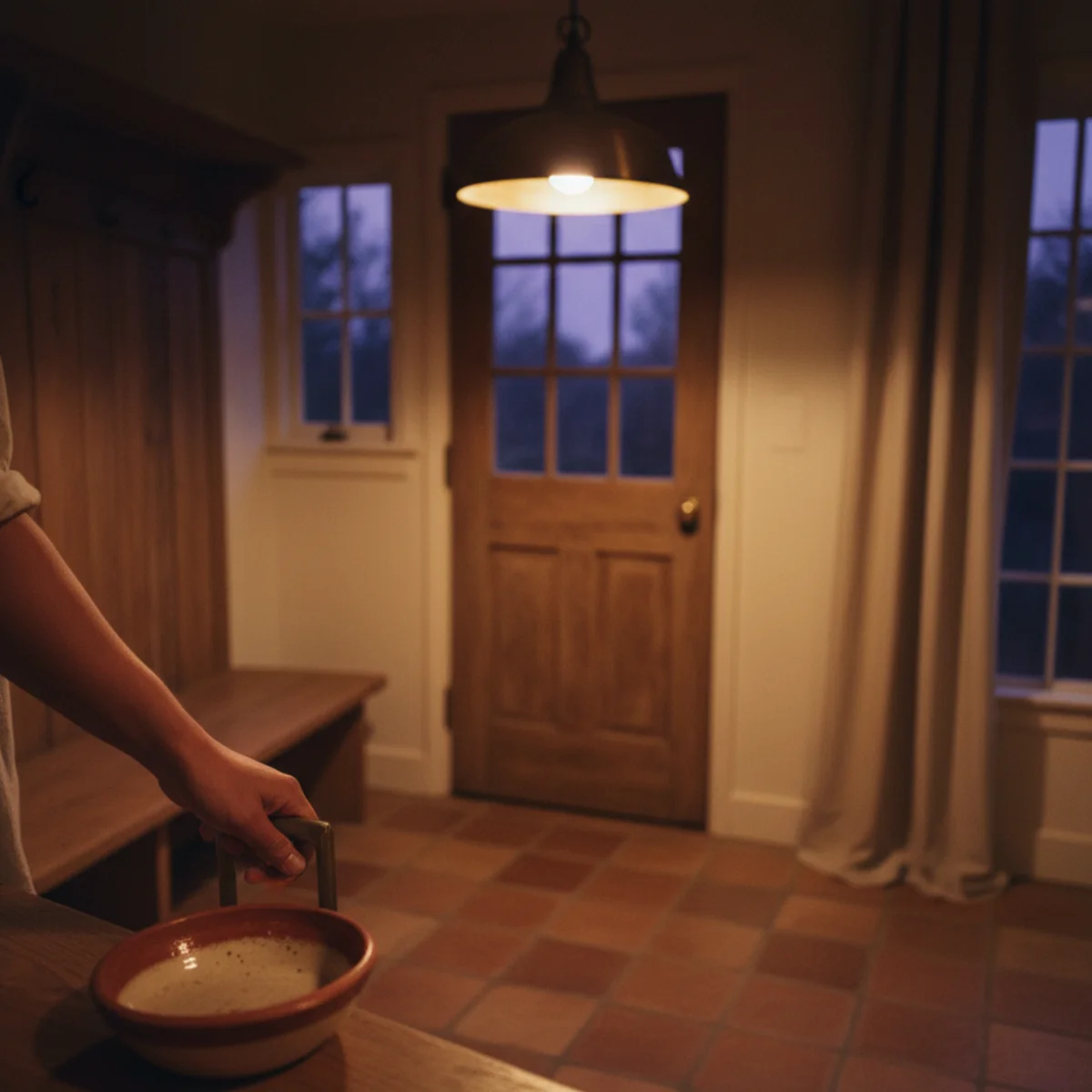
Mudrooms are often the darkest interior rooms — small, often without windows, lit only by harsh overhead fixtures. The fix is layered warm lighting: one wall sconce or pendant at 2700K plus one small table lamp on the drop zone surface. The dual-source warm light transforms the mudroom from harsh-utility to welcome-home, especially during the dark months when arriving home means arriving in the dark.
Layered mudroom lighting: (1) ONE WALL SCONCE OR PENDANT at 2700K LED — wall sconce at 60 to 66 inches above the floor on the bench wall, or pendant centered over the mudroom floor space. Brass or warm-toned ceramic finishes ($60 to $250 each). (2) ONE SMALL TABLE LAMP on the drop zone surface — 14 to 20 inches tall ceramic or brass with 2700K bulb ($25 to $80 thrifted or new from IKEA SVALLET). Wire the table lamp to a smart plug or motion sensor so it turns on when someone enters the mudroom. (3) DIMMED OVERHEAD — the existing overhead light at 2700K but dimmed to 50 percent for evening, full brightness only for daytime task needs. The combined layered warm light makes the mudroom feel welcoming on dark winter evenings.
AFFILIATE SLOTLIGHTINGWall sconce or pendant + small table lamp on drop zone + dimmed overhead, all at 2700KAdd affiliate URL when configuredWhy it works
Because the mudroom is the first room you enter from outside — arriving home in winter darkness means arriving in the dark mudroom first, which sets the emotional tone for re-entering the home. Harsh fluorescent overhead light reinforces 'utility room' and reads as cold; warm layered light at 2700K signals 'welcome home' and softens the transition from outdoor cold to indoor warmth. The lighting compounds across the daily winter arrival-home moment, which is one of the household's most-repeated emotional transitions.
Pro tip — Add a motion sensor to the drop-zone lamp so it turns on automatically when someone enters the mudroom — the lamp greets you at the moment of arrival without requiring a switch flip. The $15 motion-sensor smart plug from Amazon adds the welcoming-automatic-light effect for minimal cost.
Sconce, table lamp, dimmed overhead — three warm sources that turn dark winter arrivals into welcoming homecomings. See also: smart plug

How to organize a mudroom step by step
Build the system first, then warm it up. Work in this order.
- 1Add a place to sit
Put in a sturdy bench, ideally with baskets or cubbies below, so people can sit to deal with boots and shoes.
- 2Assign hooks and storage
Mount one hook and one basket or cubby per person, into the studs, so everyone has a place that's theirs.
- 3Protect the floor
Lay a durable, dirt-hiding runner and add a boot tray to contain the wet, muddy traffic.
- 4Warm and finish it
Add wood, woven baskets, warm paint, warm light, and a small drop zone for keys and mail. Function first, warmth on top.
Quick tips
- Assign one hook and one basket per person; a shared system always collapses into a pile.
- Mount hooks and benches into studs — loaded hooks pull anchors out of drywall.
- Choose a dark or patterned runner that hides mud and salt between washes.
- Add a boot tray with a lip to contain the puddle and keep the floor safe.
- Use semi-gloss paint on the lower walls so they wipe clean.
- Add a lower row of hooks at about 40 inches so kids hang their own coats.
Mudrooms for different homes
A built-in bench with cubbies and lockers, a hook per person, durable tile, and a drop-zone shelf.
A bench, a row of hooks, and baskets below in a hallway or by the back door.
A bench, a row of hooks, a boot tray, and a runner by the front door; see our entryway decor guide.
A locker per child, a lower hook row, labeled baskets, and washable everything.
A mudroom only stays organized when everyone has a hook that's theirs. The system is the whole design.
Frequently asked questions
What should every mudroom have?+
What's the best bench for a mudroom?+
How many hooks does a mudroom need?+
What kind of rug works in a mudroom?+
How do I make a mudroom feel warm instead of utility?+
Where do I put pet gear in a mudroom?+
A mudroom is the most function-first room in the house, but it doesn't have to be cold. Build the system first — a bench, one hook and one basket per person, a durable runner, a boot tray — then warm it with wood, baskets, and warm paint. We'd assign everyone their own hook before anything else; a shared system collapses into a coat avalanche every time, and a mudroom only stays organized when each person has a place that's theirs. Function first, warmth on top, and the chaos finally stays at the door.